Midnight Diner (深夜食堂, Shinya Shokudo, Joji Matsuoka, 2015)

mainvisualYaro Abe’s manga Midnight Diner (深夜食堂, Shinya Shokudo) was first adapted as 10 episode TV drama back in 2009 with a second series in 2011 and a third in 2014. With a Korean adaptation in between, the series now finds itself back for second helpings in the form of a big screen adaptation.

Midnight Diner is set in a cosy little eatery which only opens between the hours of midnight and 7am. Presided over by the “Master”, a mysterious figure himself with a large unexplained scar running down one side of his face, the restaurant has only one regular dish on its menu but Master is willing to make whatever his customers want provided he has the ingredients. Regulars and newcomers mingle nightly each with their own, sometimes sad, stories while Master offers them a safe place to think things through coupled with his gentle, all knowing advice.

The big screen movie plays just like a series of connected episodes from the television drama yet manages unify its approach into something which feels consistently more cinematic. Keeping the warm, nostalgic tone the film also increases its production values whilst maintaining its trademark style. The movie opens with the same title sequence as its TV version and divides itself neatly into chapters which each carry the title of the key dish that Master will cook for this segment’s star. A little less wilfully melodramatic, Midnight Diner the movie nevertheless offers its gentle commentary on the melancholy elements of modern life and its ordinary moments of sadness.

Fans of the TV drama will be pleased to see their favourite restaurant regulars reappearing if only briefly, but the film also boosts its profile in the form of some big name stars including a manager of another restaurant in town played by Kimiko Yo who seems to have some kind of history with Master as well as a smaller role played by prolific indie star of the moment Kiyohiko Shibukawa and the return of Joe Odagiri whose character seems to have undergone quite a radical change since we last saw him.

The stories this time around feature a serial mistress and her dalliance with another, poorer, client of the diner; a young girl who pulls a dine and dash only to return, apologise and offer to work off her bill; a lovelorn widower who’s come to Tokyo to chase an aid worker who probably just isn’t interested in him; and then there’s strange mystery of a mislaid funerary urn neatly tieing everything together. Just as in the TV series, each character has a special dish that they’ve been longing for and through reconnecting with the past by means of Master’s magic cooking, they manage to unlock their futures too. As usual, Master knows what it is they need long before they do and though he’s a man of few words, always seems to know what to say. One of the charms of the series as a whole which is echoed in the film is that it’s content to let a few mysteries hang while the central tale unfolds naturally almost as if you’re just another customer sitting at the end of Master’s counter.

Shot in more or less the same style as the TV series favouring long, static takes the film still manages to feel cinematic and its slight colour filtering adds to the overall warm and nostalgic tone the series has become known for. Once again offering a series of gentle human stories, Midnight Diner might not be the most groundbreaking of films but it offers its own delicate insights into the human condition and slowly but surely captivates with its intriguing cast of unlikely dining companions.
The Piper (손님, Kim Gwang-tae, 2015)

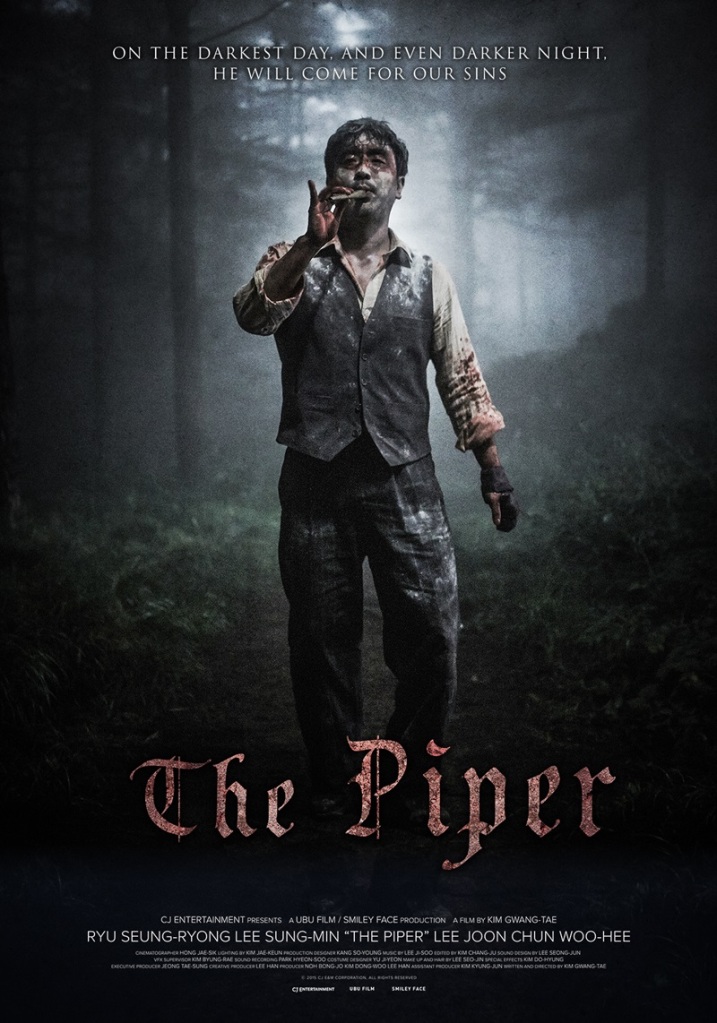
PiperPosterReview of Kim Gwang-tae’s The Piper (손님, Sonnim) up at UK Anime Network. I really liked this one!


The piper must be paid. So goes the old saying, and with good reason – one should always honour one’s promises but even so there are those should not be crossed. So the denizens at the centre of the mysterious hidden village in the debut feature from Korean director Kim Gwang-tae come to discover as they’re repaid for some not quite unforgotten sins when a travelling piper and his invalid son come calling.

Kim Woo-ryong is a travelling piper with a crippled leg journeying to Seoul with his young son after hearing that there is an American doctor there who may be able to treat the boy’s TB if only they can reach the city in time. After walking through the countryside they eventually come across a village which isn’t marked on any map and beg shelter from the village chieftain there. Life in the village seems like a scene from the middle ages, everyone is wearing traditional clothing and there’s something more than a “stranger in town” vibe about the way they look at Woo-ryong and his son Young-nam. The chieftain allows the pair to stay but warns them they can reveal nothing of the outside world to the village’s inhabitants and especially not that the Korean war is already “over” and has been for some time. Later Woo-ryong and Young-nam wander into a village dispute and in a fit of over helpfulness Young-nam exclaims he’s sure his dad can fix the problem (though he doesn’t know what it is). Woo-ryong jumps to the conclusion it must be about the rats which plague the town and offers to take care of them. The chieftain offers him the price of a cow if he can rid the town of vermin, but one gets the impression there’s more than one kind of rodent lurking in this strange, isolated place.

If you know the classic children’s fable, The Pied Piper of Hamelin, you likely know the outcome won’t be a pleasant one though the events of the The Piper turn a little bloodier and even more supernatural than in the Brothers Grimm  fairytale. The story starts out pleasant enough as Woo-ryong and Young-nam start to make friends in the village – Woo-ryong playing his pipe and Young-nam enjoying spending some time with the other children. However, from their very first entrance you can tell there is something very wrong in this community. There’s not just suspicion or curiosity in the way the villagers stare at the strangers, there’s fear too. Woo-ryong is a middle aged man with a lame leg, and Young-nam is a weedy 10 year old boy with a lung disease. They are no threat to anyone, what do these people have to fear?

The chieftain himself is obviously quite a sinister fellow. He charms Woo-ryong but lies to him when asked for guidance about the journey on to Seoul and seems to instil nothing but fear in the eyes of the other inhabitants. Woo-ryong strikes up a tentative romance with the village’s reluctant shaman which further raises the chieftain’s concerns – perhaps, he thinks, he doesn’t need to pay this piper after all. As might be expected, there’s a dark past at play here. Everyone is so terrified of the war, which they still believe is going on, and the things they’ve already done to survive that they’re prepared to go along with whatever their leader says to maintain their peaceful village life. Mob mentality at its worst, even those who were growing closer to the pair of strangers are quick to turn on them in a paranoid frenzy.

Like the original story, the moral is that you reap what you sew and if you don’t keep your promises, you deserve everything that’s coming to you. These are people who have lived in difficult times and done cruel things to survive. The rats which plague the town take on an almost supernatural air and have apparently developed a taste for human flesh. They become a kind of metaphor, a haunting presence which refuses to allow the villagers to forget the crimes they’ve committed and reminds them that their present safety was bought with innocent blood. A perfectly pitched fairytale with an all pervading sense of dread and foreboding, The Piper is an impressive effort from first time director Kim Gwang-tae and marks him out as a promising new voice in the world of Korean cinema.


Reviewed at the London Korean Film Festival 2015.


The Shameless (무뢰한, Oh Seung-uk, 2015)

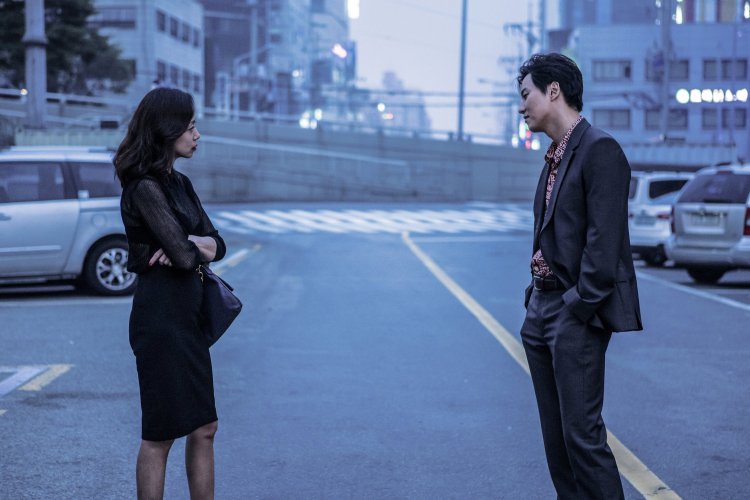
fullsizephoto602641Review of Oh Seung-uk’s The Shameless (무뢰한, Moorwehan) up at UK Anime Network. I read some lukewarm reviews but I actually really liked this one (though I’m a sucker for B-movie noirs and my tolerance for melodrama is sky high)!


Director Oh Seung-uk maybe best known as the screenwriter behind such varied and well respected efforts as Green Fish (directed by Korean auteur Lee Chang-dong), Christmas in August and H, but way back in 2001 he made a minor splash at Cannes with his existential gangster piece, Kilimanjaro. The Shameless sees him one again turn to the shady world of underground crime though this time what he’s interested in is a romantic melodrama laced with deadly film noir morality.

Recently divorced police detective Jung Jae-gon has been handed what seems like a fairly straightforward murder. They already know who the killer is and the motive behind the crime, all that remains is to track the guy down. Luckily they also know that Park, a gangland thug, has a regular girlfriend, Kim Hye-kyung, who works at a seedy downtown bar. Through tailing her they’ll find their man. This is where things get sticky. Said girlfriend is the former lover of the head of another crime syndicate who’d now like to use Park’s current predicament to exact some revenge on the drifter who’s stolen his girl. Roping in a disgraced ex-cop, the gang offer Jae-gon a significant amount of money to cripple Park during his arrest and take him out of the picture for good. Jae-gon is conflicted. The way he sees it, the day you can’t tell which side you’re really on is the day you need to hand back your badge, but Jae-gon’s in need of money, this guy used to be his friend and then, there’s the girl…

Right here you have all the essential elements of your classic film noir. Basically good, if imperfect, detective receives an offer he can’t refuse and ultimately accepts it against his better judgement in part because of a femme fatale that he just can’t get out of his mind even if the more rational part of his brain knows this is something that is never going to happen. Before you know it, Jae-gon has researched Park’s history and adopted the persona of a former cellmate before taking an undercover job at Hye-kyung’s bar and attempting to become close to her in the hope that she’ll eventually lead them to Park’s whereabouts. Of course, he starts falling for her too and though she remains doggedly committed to Park, something in her begins to warm to him in return. This is a situation which can never end well and its classic B-movie style inevitability only adds to the eventual pathos of its deliberately downbeat ending.

The film is called The Shameless for a reason – nobody looks good in this shady world of corrupt cops and vicious gangsters who will stop at nothing to get what they want. The fact that you can barely tell who is on which side is a good indicator of the levels to which this world of chaos has become warped. Even the police are literally “shameless” stooping so far as to indulge in an interrogation technique which is, in fact, a sexual assault. At least the gangsters are abiding by their own rules.

The picture has a slick, stylish aesthetic which is perfectly in keeping with its morally grey, film noir inspired mood. It’s full of existential angst and the ennui of modern, aimless life. As usual for this kind of film, Hye-kyung repeatedly gets the short end of the stick – used and abused by faithless men, so massively in debt it’s almost impossible she’ll be able to extricate herself from the seedy world of hostess bars and petty gangsters before its too late. She’s only one victim of the pervasive sexism that defines this harsh world. Clinging desperately to Park, Hye-kyung’s one and only escape route is to hope one of these feckless men is the one who can take her away from this place.

Needless to say this isn’t one of those films where everyone gets what they want and walks off into the sunset of eternal happiness, but perhaps it isn’t as apocalyptic as the original premise might promise. That is actually something of a problem as the slightly softer ending undercuts the film’s emotional resonance and ultimately leaves one feeling a little less than satisfied. Still, even if The Shameless fails to hit its mark at the very end, Oh has still crafted a stylish and beautifully photographed neo-noir romance that stays true to its classic B-movie roots whilst also embracing the best of the modern crime movie.


Reviewed at the London Korean Film Festival 2015.


Veteran (베테랑, Ryoo Seung-wan, 2015)

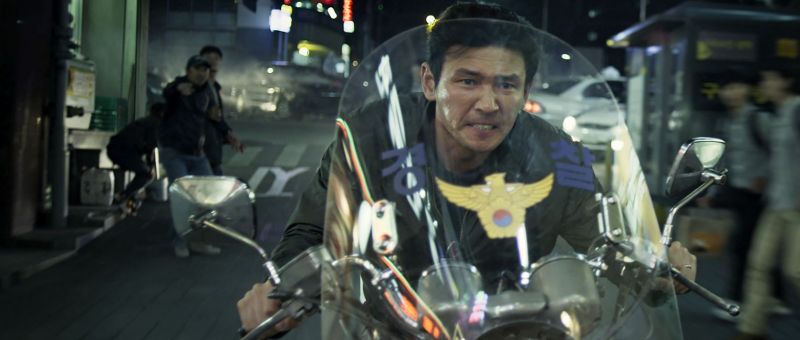
1439210220_베테랑1Review of Ryoo Seung-wan’s Veteran (베테랑) – first published on UK Anime Network.


One of the top Korean box office hits of 2015, Ryoo Seung-wan’s Veteran is a glorious throw back to the uncomplicated days of ‘80s buddy cop crime comedy thrillers. A little less than subtle in its social commentary, Veteran nevertheless takes aim at corrupt corporate culture and the second generation rich kids who inherit daddy’s company but are filled with an apathetic, bored arrogance that is mostly their own.

Seo Do-cheol (Hwang Jung-min) is, as one other officer puts it, the kind of police officer who joined the force just to beat people up. He loves to fight and isn’t afraid of initiating a little “resisting arrest” action just to make things run a little more smoothly. However, when he strikes up a friendship with a put upon truck driver and his cute as a button son only to miss a crucial telephone call that eventually lands said truck driver in the hospital, Do-cheol’s sense of social justice is inflamed. After trying to join a trade union, Bae, the truck driver, is unceremoniously let go from his company. On taking his complaint directly to the head of Sin Jin Trading, play boy rich kid Tae-oh, Bae is subjected to the most cruel and humiliating “interview” of his life before apparently attempting to commit suicide after having realised the utter hopelessness of his situation. Incensed on his new friend’s behalf, Do-cheol is determined to take down these arrogant corporatists what ever the costs may be!

Veteran makes no secret of its retro roots. It even opens with a joyously fun sequence set to Blondie’s 1979 disco hit, Heart of Glass. Like those classic ‘80s movies, Veteran manages to mix in a background level of mischievous comedy which adds to the overall feeling of effortless cool that fills the film even when things look as if they might be about to take a darker turn. The action sequences are each exquisitely choreographed and filled with sight gags as the fight crazy Do-cheol turns just about any random object that appears to be close to hand into an improbable weapon.

Make no mistake about it either, this is a fight heavy film. Though Veteran has a very masculine feeling, it is to some degree evened out by the supreme Miss Bong whose high class high kicks can take out even the toughest opponents and seem to have most of her teammates looking on in awe, and the withering gaze of Do-cheol’s put upon wife who seems determined to remind him that he’s not some delinquent punk anymore but a respectable police officer with a wife and child who could benefit from a little more consideration.

Indeed, Tae-oh and his henchmen aren’t above going after policemen’s wives in an effort to get them to back off. Though this initial overture begins with an attempt at straightforward bribery (brilliantly dealt with by  Mrs. Seo who proves more than a match more the arrogant lackeys), there is a hint of future violence if the situation is not resolved. Tae-oh is a spoiled, psychopathic rich kid who lacks any kind of empathy for any other living thing and actively lives to inflict pain on others in order to breathe his own superiority. Probably he’s got issues galore following in his successful father’s footsteps and essentially having not much else to do but here he’s just an evil bastard who delights in torturing poor folk and thinks he can do whatever he likes just because he has money (and as far as the film would have it he is not wrong in that assumption).

He also loves to fight and finally meets his match in the long form finale sequence in which everything is decided in a no holds barred fist fight between maverick cop and good guy Do-cheol and irredeemable but good looking villain Tae-oh. Veteran never scores any points for subtlety and if it has any drawbacks it’s that its characterisations tend to be on the large side but what it does offer is good, old fashioned (in a good way) action comedy that has you cheering for its team of bumbling yet surprisingly decent cops from the get go. Luckily it seems Veteran already has a couple of sequels in the pipeline and if they’re anywhere near as enjoyable as the first film another new classic franchise may have just been born.


Reviewed at the first London East Asia Film Festival and the London Korean Film Festival.

Ryuzo and the Seven Henchmen (龍三と七人の子分たち, Takeshi Kitano, 2015)

142984037484393493178_ryuzo-7nin-kobuntachi-g4First published on UK Anime Network – review of Takeshi Kitano’s Ryuzo and the Seven Henchman (龍三と七人の子分たち Ryuzo to Shichinin no Kobuntachi) from LFF 2015.


Most people probably know Takeshi Kitano best for his series of ultra violent ’90s gangster movies, his role as the sadistic teacher in the controversial Battle Royale or as the host of bizarre Japanese endurance game show Takeshi’s Castle. However, in Japan he’s probably best known as a comedian though few of his comedy films have ever made it overseas. This may change with his latest effort, Ryuzo and the Seven Henchmen, which both takes him back to his yakuza roots and celebrates his comedic talents.

Ryuzo “the demon” was once a yakuza more feared the than respected whose very name alone made women swoon and struck fear into the hearts of men. Now though, he’s a grumpy grandpa living with his ultra conservative son who’d rather the neighbours didn’t know he had a gangster living in his house. After some punks make the mistake of trying an “ore ore” scam on him, Ryuzo gets back into the spirit of his gangster days and takes the guy down in a classic intimidation play. However, some of his other yakuza buddies also seem to be getting into trouble with upstart youngsters and once again it’s up to Ryuzo and his seven old timer yakuza buddies to set the town to rights.

The world has changed since Ryuzo and his guys were ruling the streets. In the old days the yakuza were a family, they had rules and ethics and they stuck to them. They saw themselves both as heroic outlaws and as defenders of the rights of ordinary people (even if they made their money through extorting those very people they claimed to protect). This new brand of crooks doesn’t care about honour, or morality or human kindness – they aren’t above conning the vulnerable into falling for obvious telephone scams or loaning large amounts of money to desperate people at ridiculously high interest just to make a buck. These guys are “business men” running a “legitimate enterprise” where the only rules are that you get rich and stay rich.

Ryuzo and co may be old, but they still have their honour and their pride. Watching the old guys trying to relive their former glory days is often funny, if a little sad as their grand schemes take on the absurd quality of little boys playing cops and robbers. It goes without saying that the film is hilarious though perhaps takes certain instances of low humour a too little far. Each of the main eight old timer yakuza has his own particular strength which endures despite their advanced ages though perhaps in slightly different forms and even if they’re coasting on former glory none of them has forgotten their former status.

Though not quite a return to the artistic highs of Sonatine or Hana-bi, Ryuzo and the Seven Henchmen is nevertheless an entertaining mix of Kitano’s tough guy yakuza and absurd comedian personas. Unlikely to walk away with any awards or lasting praise, Ryuzo and the Seven Henchmen is sure to be remembered fondly for its expertly timed and often gleefully absurd humour.


Reviewed at LFF 2015.


Mountains May Depart (山河故人, Jia Zhangke, 2015)

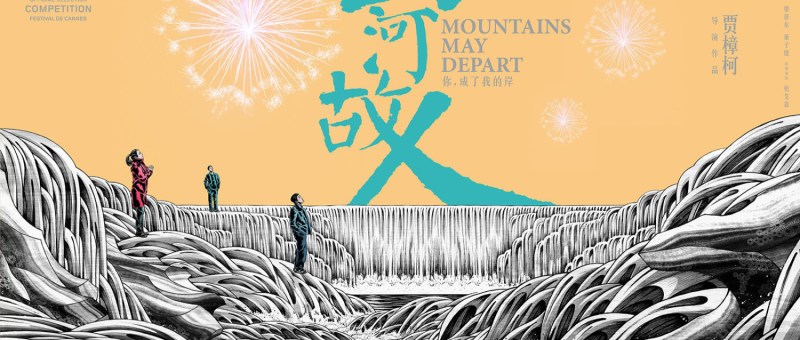
mountains may depart poster verticleJia Zhangke has made something of a career out of charting his nation’s history through the lives of ordinary people caught up in the business of living when everything about them is changing. Mountains May Depart (山河故人, Shānhé gùrén) isn’t the first of his films to span a comparatively wide period of time, though it is the first to venture into the “future” if only by a decade or so. Through a story of dislocation and isolation both cultural and personal, Jia has traversed the melancholy odyssey of those who grow up to discover that all the wrong choices have already been made.
The film begins at Chinese New Year 1999 – the dawning of a new age. Tao line dances and conga lines to The Pet Shop Boys’ Go West before joining in the celebrations by singing a song in the town square. She’s good friends with Liangzi whose company she seems to enjoy and they seem to get on together very well but it’s unclear if there’s anything more to it than that. Obnoxious rich boy Jiangsheng is also VERY interested in Tao and resents her friendship with Liangzi. Eventually things come to a head and Tao has to choose, and she does but in trying not to hurt anyone she ends up hurting everyone. On Tao’s eventual marriage to Jiangsheng, Liangzi, heartbroken, leaves town intending never to return. The segment ends with the birth of Tao and Jiansheng’s son, Dollar.

In 2014, Tao is divorced and Jiangsheng has taken her son to live with him in Shanghai where he’s a high stakes capitalist mogul. Liangzi, meanwhile, has married and had a child but has ended up working in a coal mine and has now become gravely ill. Unable to work he returns home and considers asking friends and family to help him through these difficult times. Sometime later a family tragedy occurs – the one silver lining being that Tao gets to see Dollar again but he barely remembers her and makes constant phone calls to his “mommy” in Shanghai.

In 2025, Dollar and Jingsheng have moved to Australia. Dollar is taking classes in Chinese which he barely remembers while Jingsheng has become a dishevelled and angry old man. Dollar has almost no memory of his real mother or his childhood in China and starts up an oedipal relationship with a lonely, middle-aged Chinese woman.

Jia paints the passing of time through a series of expanding screen ratios – beginning with 4:3 in 1999, to 16:9 in 2014 and finally 2.35:1 in 2025. The world literally gets bigger, wider, and our focus shifts from Tao to a more expansive canvas of displaced Chinese citizens finally reaching far across the seas. The first segment is more like Jia’s earlier films as Tao is caught between two lovers with possibly tragic consequences whereas the second part has more in common with his more recent work but part three takes things in an entirely new direction.

The 2025 segment doesn’t even feature Tao until the very end and focuses on her son – the ironically named “Dollar”. Having lived the last ten years in Australia he barely speaks Mandarin and has become an angry young man determined to drop out of college because “nothing really interests” him. Jinsheng never learned English and the pair can’t communicate. Gone is Jinsheng’s swagger – now he has a paunch, dishevelled hair and an unruly mustache. In 1999 he dressed in the self consciously stylish clothes of someone who has money and really wants you know it, but now his clothes are worn out and typical of any old man you might find sitting reading a paper on the side of a road. Dollar is lost. Eventually he strikes up a friendship with his Chinese teacher that’s founded on the shared loneliness of two people who’ve been separated from their homelands and loved ones. Looking for his mother in all the wrong places, Dollar’s eventual romance is likely to end in tears but luckily his Chinese teacher is a wise and kind woman who is able to offer some of her wisdom and a steady hand of guidance.

Though much has been made of the “futurism” of the 2025 segment, it’s in no way a science fiction experiment. The chief difference, as might be expected, is in technology though even this is subtle – see through tablets, electronic displays rather than blackboards (only a little more advanced than many institutions already use) and a much more intuitive embedding of google translate. More distracting are the strange anachronisms – vinyl records being played on a classroom turntable, visiting a travel agent to book a flight (does anyone even do this now?) and a preference for older cars. Most damaging though is that, as it’s set in Australia, the bulk of the dialogue is in English which somehow never sounds convincing despite the quality performances on offer.

Dollar wants his freedom from his overbearing, failure of a father though freedom itself is also a burden. The son flails aimlessly while the literal motherland, Tao, is alone, abandoned and forgotten. There’s something quite heartbreaking in the way Jia sculpts his overarching story. We begin with so much hope as Tao and her friends dance enthusiastically to the rather ironic choice of Go West in 1999 as her life is just beginning. When she dances to it again, alone, with the snow falling all around her it’s as if she’s crawled inside a memory, reliving a happy day rather than exulting in the now.

Mountains May Depart is a rich and complex film that is heavy with symbolism and metaphor. Jia wants to ask us where we’re going, and where we’ve been – China’s modernisation has occurred at such a breakneck speed that it’s left an entire nation bewildered. Facing a choice between “going west” and “taking care” of Chinese values (Sally Yeh’s 1990 Cantopop hit Take Care forms the opposing musical motif of the film) many, like Tao, have found themselves choosing poorly and paying a heavy price. What’s in store? A lonely, but wealthy, future devoid of all human connection where “sons” forget their “mothers”? The title suggests old friends like mountains and rivers never part but once the erosion sets in mountains crumble and rivers run dry – you have to look around you and remember what it is that’s really worth living for.


This is getting a full UK release from New Wave Films in Spring 2016!

For the curious here is Sally Yeh’s (葉蒨文) 1990 Cantopop hit Take Care (珍重) which does its best to tug at the heartstrings throughout the later part of the film (and largely succeeds).

First published by UK Anime Network.

Assassination Classroom (映画 暗殺教室, Eiichiro Hasumi, 2015)

photo_4First Published on UK Anime Network in November 2015.


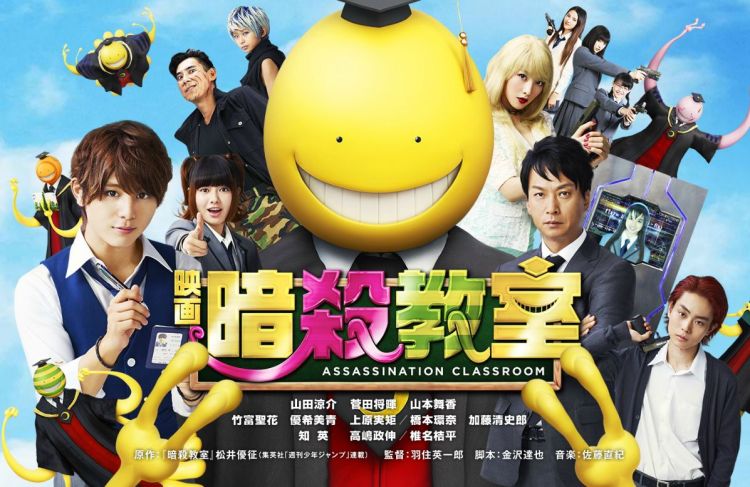
You might make the mistake of thinking that the E in class 3E just means it’s the 5th 3rd year class, or that it stands for “elite” and contains some of the top students in the school. You’d be wrong, “E” stands for “end” because these are the no hoper kids that everyone’s already written off as having no future. However, it’s precisely these kids that a mysterious extraterrestrial being insists on becoming the teacher of in return for not destroying the Earth (just yet). Nicknamed UT (unkillable teacher), the giant yellow octopus-like creature has already destroyed 30% of the moon just for kicks and has now set the challenge that if the boys and girls of class 3E fail to assassinate him before graduation he’ll destroy the Earth too.

The ironic thing is, UT is the best teacher they’ve ever had, but to pass the course (and save the world) they have to kill him. The high schoolers are also under the tutelage of a self defence forces officer for their military training and a sexy assassin who randomly ends up becoming their English teacher (and giving them one of the least appropriate English lessons ever recorded on film). Every morning they bow and then pull out their various kinds of firearms as UT takes the register whilst flitting about dodging bullets. Despite wanting to destroy the Earth, UT is 100% committed to training his students both in the arts of assassination and in the more regular subjects. Because of his super speed and ability to be in several places at once he has time for everybody and is quick to work out each of his charge’s specific weaknesses and help them work on those to become better people as well as ace students.

Still, the students are supposed to kill their teacher and there’s a little bit of sadness creeping in as they inevitably grow closer to UT and his quirky antics. Up ’til now everyone has given up on them and now they’re supposed to kill the one person who’s actually trying to help. Of course, even while this surreal situation is going on these are just regular high school kids undergoing regular high school stuff like wanting to sneak into the girls’ changing rooms or having a crush on someone who hasn’t even noticed you. Despite the impending end of the world, the kids of Class 3E are just enjoying their time trying to work out ever more complex ways of trying assassinate their seemingly invincible teacher.

UT himself is strangely adorable with his giant yellow smiley face style head and bizarre little laugh. He also changes color according to his mood and has a tendency to go off on tangents with one notable example which turns into a long form ‘80s style melodrama about abandoned single mothers before being politely shut down by the bored students. Assassination Classroom is undoubtedly bizarre, surreal and full of absurd humour but all the better for it. It’s just very silly but has an undeniably clever and very witty script that proves near impossible to resist.

To put it mildly, Assassination Classroom is just heaps of zany, crazy fun. It also manages to be genuinely heartfelt as we come to care for this rag-tag bunch of no hopers but also for UT himself as we start to hope the kids will somehow fail and succeed at the same time so we can save both the world and UT. The film drops us a few hints about UT’s backstory but stops short of offering a full explanation for the crazy goings on. Thankfully a sequel, Assassination Classroom: Graduation Day is already in production and even if it doesn’t offer any answers, Assassination Classroom is already one of the most enjoyably absurd offerings to come out of Japan this year.


Assassination Classroom receives its UK premiere at the Leeds International Film Festival on 15th November 2015.

Look out for a review of Tag which is also playing at the festival as it Happy Hour, and Our Little Sister.


Asleep (白河夜船, Shingo Wakagi, 2015)

asleep posterBased on the third of three short stories in Banana Yoshimoto’s novel of the same name, Asleep (白河夜船, Shirakawayofune) is an apt name for this tale of grief and listlessness. Starring actress of the moment Sakura Ando, the film proves that little has changed since the release of the book in 1989 when it comes to young lives disrupted by a traumatic event. Slow and meandering, Asleep’s gentle pace may frustrate some but its melancholic poetry is sure to leave its mark.
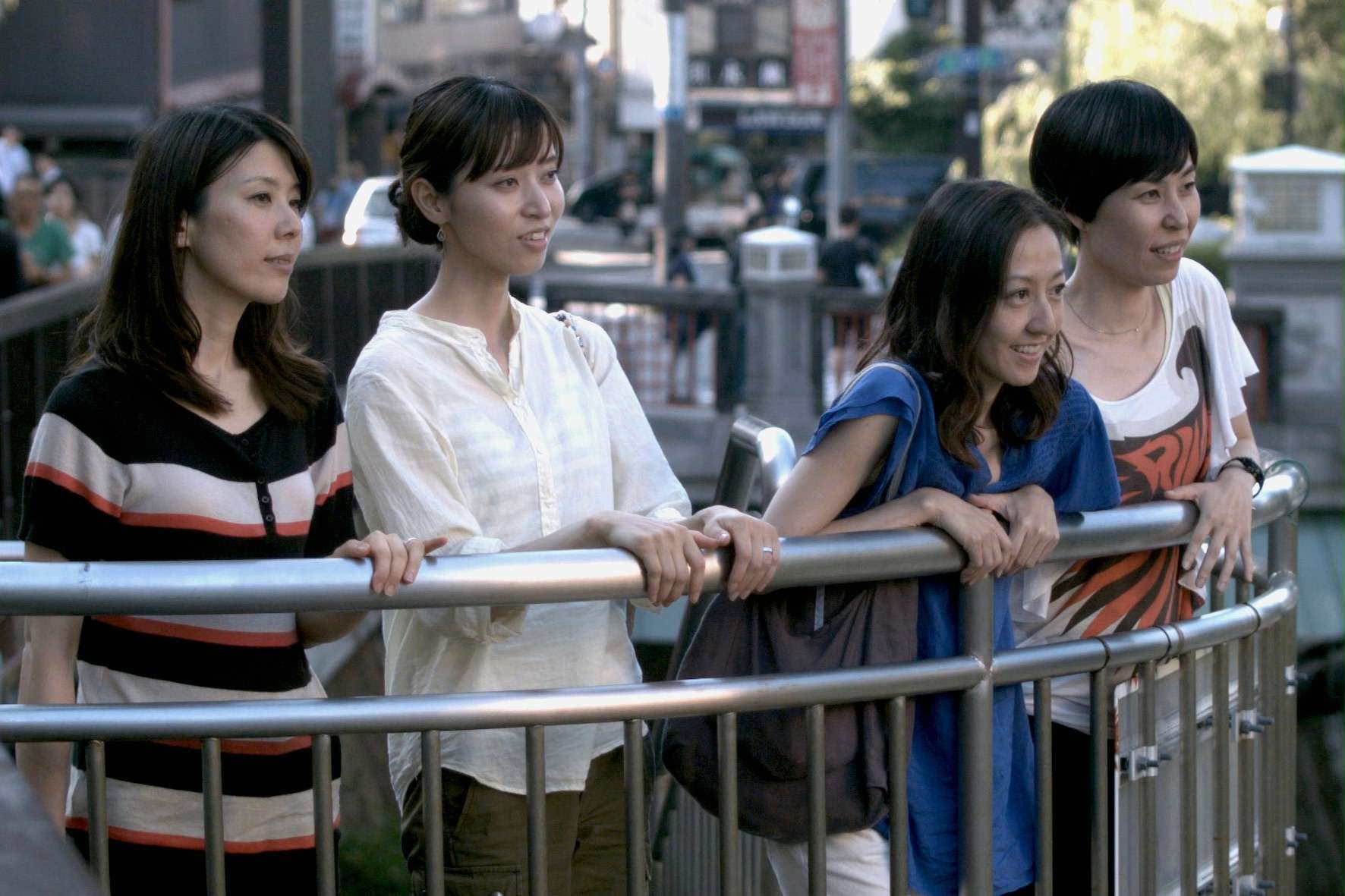
Terako (Sakura Ando) is a young woman who sleeps a lot. Almost all the time, in fact. The kept woman of a married man whose wife, oddly enough, is in a coma following a traffic accident, Terako has been in a kind of limbo since her former roommate and good friend committed suicide by taking an overdose of sleeping pills. Prior to her death, Shiori had taken up an unusual occupation – she lies next to lonely strangers who just want to know that someone is watching over them while they sleep and will be there when they awake. This also meant that she rarely had the opportunity to sleep herself as her occupation demanded keeping a watchful eye over her charges and falling asleep on the job seemed like a lapse of professionalism.

Mr. Iwanaga, Terako’s boyfriend, is an enabler of the first order. He prefers that Terako not work so that she’s available for him whenever he feels the need to call meaning that she’s always at home, sleeping. She sleeps and sleeps but finds no relief from her exhaustion. Even her dates with Iwanaga feel “like the shadow of a dream”. The constant flashbacks and meandering timelines perfectly reflect someone trying to think through the distorted reality of fractured sleep where the boundaries between dream and reality have become impossibly blurred.

There’s an odd sort of triumvirate of sleeping women here – Terako herself who does little but sleep but is still constantly exhausted, Shiori who denied herself sleep until ultimately deciding to take enough sleeping pills to go to sleep forever and Iwanaga’s wife who’s trapped in coma. At one point, in a conversation which either happened some time ago or not at all, Shiori remarks that Iwanaga has Terako “on pause” because he’s afraid to move on from his wife (the fact of his having an affair while his wife is lying in a hospital bed even has Terako labelling him a cold, unfeeling man but then she says she likes that kind of thing anyway). It’s as if she’s waiting for someone to hit the spacebar to wake her up again, though Iwanaga is “on pause” too – torn between the choice of abandoning his wife who will likely never wake up and being labeled heartless, or sacrificing the rest of his life in devotion to a memory.

Help does come, in a way, through the intervention of a either a dream or a kind of cosmic transference – an impossible conversation between two women equally in need of it. Shingo Wakagi’s adaptation is more interested in psychology and existential questioning than it is in hard realities or concrete solutions. A vignette of a moment in a young woman’s life, Asleep gives us little in the way of backstory or explanatory epiphanies, and finally ends in the characteristically ambiguous way many Japanese novellas often do though there is a hint at a possible shift in Terako’s life offered by the final images. A poetic meditation on dream, memory, grief and loneliness, Asleep is beautifully framed, if appropriately distant, look at modern life in limbo.


Reviewed at Raindance 2015

First Published on UK Anime Network in 2015.

Happy Hour ハッピーアワー ( Ryusuke Hamaguchi, 2015)

get.doThere are a number of films which centre around an unexpected disappearance. The negative space of the missing person both in their physical and emotional absence brings with it its own mini black hole, sucking those left behind into a pit of confusion and despair which forces them to consider their own lives in more detail than they’d ordinarily be comfortable with. For the four women at the centre of Happy Hour, a five and a bit hour long film from Ryusuke Hamaguchi (The Depths, Touching the Skin of Eeriness) the sudden escape of the “lynchpin” Jun sends each of the women into a tailspin as they re-examine their stable, if unfulfilling, existence.

The four women are Sakurako – a housewife and mother to a teenage son, Jun – her best friend since middle school, Fumi – who works in events and is married to an editor, and Akari – a divorced nurse. The four became friends just because Jun thought they’d all get on so introduced Fumi and Akari forming the little quartet of late 30s ladies. They hang out together and talk about the general kinds of things women talk about – their husbands, jobs, children etc. However, Jun has a secret she hasn’t told the group. She’s in the middle of contesting a divorce from her emotionally abusive husband who refuses to consent, necessitating a long and nasty court battle. When the truth is revealed in an unwise way, it causes a rift in the group and brings the cracks in its foundations closer to the surface. When the gang enjoy one last trip to a hot spring, Jun stays behind and then never comes home. Without their binding thread, will the three women’s relationships to each other and to the other people in their lives be able to survive?

Each of the women in Happy Hour has her own particular sadness. Each in each, they’re all lonely or in some way dissatisfied with the way their lives have turned out. Sakurako married her high school sweetheart, has a nice home, a not unhappy marriage and a teenage son who’s doing OK until he gets himself into a more serious situation. However, her husband believes in a strict division of labour where he takes care of everything outside of the home (i.e. earning the money) and she the inside meaning he has little input into the raising of his son and refuses to help her when she really needs his support. She longs to be noticed again – as a woman, but also as a person outside of “wife” or “mother” which have begun to sound more like job titles or names of appliances rather than warm terms for the most important person in your life.

Fumi’s problem is similarly common – she resents her husband’s interest in another woman. Though Fumi and Takuya look like a model couple, they both work so much that they’re hardly ever together and are in danger of drifting apart. Takuya seems taken with a young novelist he’s working with and though Fumi says she doesn’t have a problem with it because she trusts him, she does and she doesn’t. Matters come to a head first at the hot springs resort where the women are taking a holiday while Takuya escorts Nose, the novelist, as she explores the resort for a series of onsen themed short stories. Later when Nose arrives for a book reading, Fumi’s frustration is palpable as Takuya’s clueless insensitivity continually places her in an awkward position.

Akari’s problems aren’t atypical either as finding herself divorced at 38 she’s the only one in her group of friends without a husband and perhaps worrying about running out of time to find one. She’s the loud mouth of the group, the one who isn’t afraid to speak her mind though she tends to speak without thinking and make the situation worse. However, her brashness is masking a deeper lack of confidence as she worries about being valued both inside and outside of work. Though we’re constantly told how important she is in her working environment both as a steady pair of hands and as a mentor to the younger members of staff, doubt seems to creep into her mind and she finds complements hard to believe.

The person we get to spend the least amount of time with is Jun, whose problems are a little more unusual. Married to a scientist with a cold and logical approach to life, her marriage has turned into a prison sentence with an unrelenting gaoler of a husband. Kohei’s love is selfish to the extreme, he says he loves Jun so he has to keep her even though he knows she doesn’t want him.

Occasionally, the four begin to feel like archetypes in somewhat contrived situations designed to help the film explore the contemporary lives of middle-aged women. Perhaps Jun really did select them for their complementary qualities – a little like a girl group with the fluffy one, the quiet one and the feisty one, but every so often it’s a little on the nose. Hamaguchi largely manages to make the extreme running time work for him by giving his characters the necessary breathing space, allowing key episodes the room to develop into deliberate tedium. Both the early workshop and later book reading, almost the two axes of the film, play out in essentially real time, pushing towards a particular kind of abstract realism.

Happy Hour fully justifies its mammoth running time but does undoubtedly stumble at certain stages. Still, it supplies ample room for exploring the everyday lives of its wide-ranging cast and more particularly of its central group of women each of whom, essentially, just want to be seen. Turning in surprisingly pleasing production values for its low budget approach, Happy Hour is an ambitious if not always successful film but even where it fails it’s never less than interesting.