Little Forest (リトル・フォレスト 夏・秋 / 冬・春, Junichi Mori, 2014/15)

Divided into four hour-long segments, Little Forest (リトル・フォレスト) opens with a voice over from Ichiko (Ai Hashimoto) introducing us to Komori, her home village. High in the mountains, Komori is a community of farmers without a single store though there is a farmer’s co-op if you make the half-hour bike ride to the high street. It’s downhill so not so far on a bike on your way, but a good 90 minute walk in the winter snow. Most people do their shopping at the supermarket a few towns over but if Ichiko wants to go there it takes her the best part of a day. Ichiko, however, has a taste for doing things herself and so she grows most of her own food or barters for that which she doesn’t have with some of the other sharecroppers. Always with one eye on the future and particularly for the winter to come, Ichiko preserves her produce and makes the most of all she has.

Despite her feelings of inadequacy and incompleteness, Ichiko throws herself into the business of farming, weeding her rice field and preparing for the harvest all alone. She doesn’t seem to mind the solitude or the monotony, rejoicing in cooking the food she has grown and savouring each of its flavours. A gifted cook, Ichiko also likes to experiment, finding new ways to use each of the vegetables in her garden and trying them out on her two old school friends Yuta (Takahiro Miura) and Kikko (Mayu Matsuoka).

Yuta, like Ichiko, tried life in the city but ultimately decided to come home to the country. Despite wanting nothing but escape, Yuta found that he couldn’t adapt to the city’s insincerity. He missed real conversation and the ability to talk seriously about serious things whilst learning from others – something he so admired in the village. Ichiko, rather than empathising with him, is a little jealous. Yuta came home to face himself and discovered who he really was whereas she suspects she came back to escape doing exactly that. In short, she ran away and is living in hiding.

Yuta, adopting the gentle tones he was so in praise of, almost points this out to Ichiko albeit in a subtle way by telling her that he admires the way she does everything for herself but that he’s worried she may have missed the point. Ichiko’s need for independence is perhaps a reaction to abandonment by her mother which apparently happened quite abruptly in her teenage years. Her mother’s letters are vague and don’t include a return address or any details regarding where, how, or with whom she is currently living. Her last letter, however, seems to contain some relevant advice in the form of various excuses. Ichiko’s mother tells her that she was worried she’d just been wandering round in circles but finally realised that the arc of her life has been more like a spiral. Never taking the same path twice, she learned as she went and so finding yourself back at the start is not the same as never having set off.

Rather than actively making the choice, Ichiko merely commits to making it. Realising that it’s time to come out of hibernation and figure out where it is she wants to be rather than simply allowing Komori to become her default setting, the decision is made quickly and keenly. Yet it takes time, effort, and experience to bring something to fruition and, skilled as she is, Ichiko still has a few things to learn. Filled with wonderful food and idyllic scenery, Little Forest is perhaps an idealised view of country life – the kind of life lived by those who know how to live happily even when life is hard, but there is truth in its age old wisdom as long as you know how to harvest it.


Released as two two-part movies: Summer/Autumn (2014) & Winter/Spring (2015)

Summer/Autumn trailer (no subtitles)

Winter/Spring trailer (no subtitles)

https://www.youtube.com/watch?v=Agqqgb0TbOQ

Marlina the Murderer in Four Acts (Marlina Si Pembunuh Dalam Empat Babak, Mouly Surya, 2017)

Marlina posterIf a widow poisons a bunch of bandits before decapitating their leader but no one bothers to investigate, has she committed any crime? Adopting the trappings of the spaghetti western, Mouly Surya’s Marlina the Murderer in Four Acts (Marlina Si Pembunuh Dalam Empat Babak) is less a tale of revenge than of survival. Marlina’s world is out to get her – a lone widow with property (and debt) is a magnet for the unscrupulous who think they can take what she has with little resistance. They are very wrong. Marlina has had enough of stoically putting up with the various trials fate has seen fit to send, and this time she intends to fight back with whatever resources are available to her.

We first meet Marlina (Marsha Timothy) one evening, home alone (except for the mummified corpse of her late husband sitting silently in the corner) on the small ranch she now operates without assistance. An unexpected visitor arrives by motorcycle and lets himself in, literally invading her property safe in the knowledge that she lacks the strength to eject him. The man, Markus (Egy Fedly), informs her that his men will soon arrive and if she’s “lucky” and they have time, they intend to have their way with her in addition to making off with her cattle and anything else that will fit in the van. Markus also asks Marlina to make him some chicken soup, which is something he’ll later regret. Or would have regretted if Marlina hadn’t hacked his head off with a machete while he raped her. Having poisoned all but two of the bandits and beheaded Markus, Marlina neatly tidies the bodies away into a cupboard, trusses up Markus’ head, and takes it with her on a journey to the police station to report her crime (and hopefully gain their protection against the other two bandits still on the loose).

Marlina has had her share of troubles. Having lost a child and now her husband, Marlina is a lone woman which makes her particularly vulnerable in an intensely patriarchal society. The bandits think she’s easy pickings because she is undefended. Entirely alone with no close neighbours and no apparent family members to fall back on, Marlina has only herself. This has however made her tough and resourceful, acutely aware of her precarious position and instantly wise to the bandits’ plans. Terrified but biding her time, she attempts to placate them until she manages to retrieve her poison berries (carefully stored for just such an occasion?) and slide them into the chicken soup Markus has been so kind as to order.

Unsure what to do next, Marlina looks to the police for guidance. Her friend, Novi (Dea Panendra) – 10 months pregnant, reminds her that the police won’t do anything about the bandits and she’ll only get herself in trouble. Novi advises her to come to church instead and gain peace of mind by confessing her sins, only Marlina doesn’t think she’s committed any. Novi’s prognostication about the police proves (partly) correct. Marlina sits in the waiting room, anxious and irritated, while the policemen continue their game of ping pong. When one finally does take her statement, he listens patiently and asks relevant questions, but eventually declares that they won’t be able to investigate because they don’t have any cars today and, being underfunded, won’t have the proper tools for weeks. Likewise, they can’t investigate the rape because they don’t have any rape kits or access to doctors and without evidence there is no crime. Marlina leaves a free woman but one with seven bodies in her cupboard she doesn’t know what to do with and two crazed bandits after her to retrieve their boss’ head.

If anyone’s going to save Marlina, it’ll have to be Marlina herself. Unfortunately a literal busload of other people including Novi and an older lady trying to get some ponies to her nephew’s wedding to rectify a shortfall in the dowry have got mixed up with the bandits’ ongoing vendetta. Where Marlina has become tough and independent, Novi is intent on getting her useless husband to listen to her and not the voice of superstition which attributes the late arrival of their child to “breech birth” as a symptom of promiscuous infidelity. Despite her devotion to him, Novi’s husband kicks his heavily pregnant wife to the ground and leaves her in the hands of mischief making bandit Franz (Yoga Pratama). Alone with Franz in Marlina’s house, Novi fights back horror to grab one of the dead bandit’s machetes but finds herself unable to strike until struck by the twin pains of labour and the screams of another woman in distress.

Beautifully photographed and filled with the wide-open plains and middle distance perspective of the 70s exploitation-leaning western, Marlina the Murderer is also a marvel of magical realism where headless corpses contribute to the soundtrack and pester our heroine for a restitution to which they are not entitled. Absurdist humour undercuts the grimness of Marlina’s plight and allows a kind of warmth to shine through as our two heroines find the strength to save each other, united in female solidarity. 


Currently on release at selected UK cinemas courtesy of Filmhouse.

Original trailer (English subtitles)

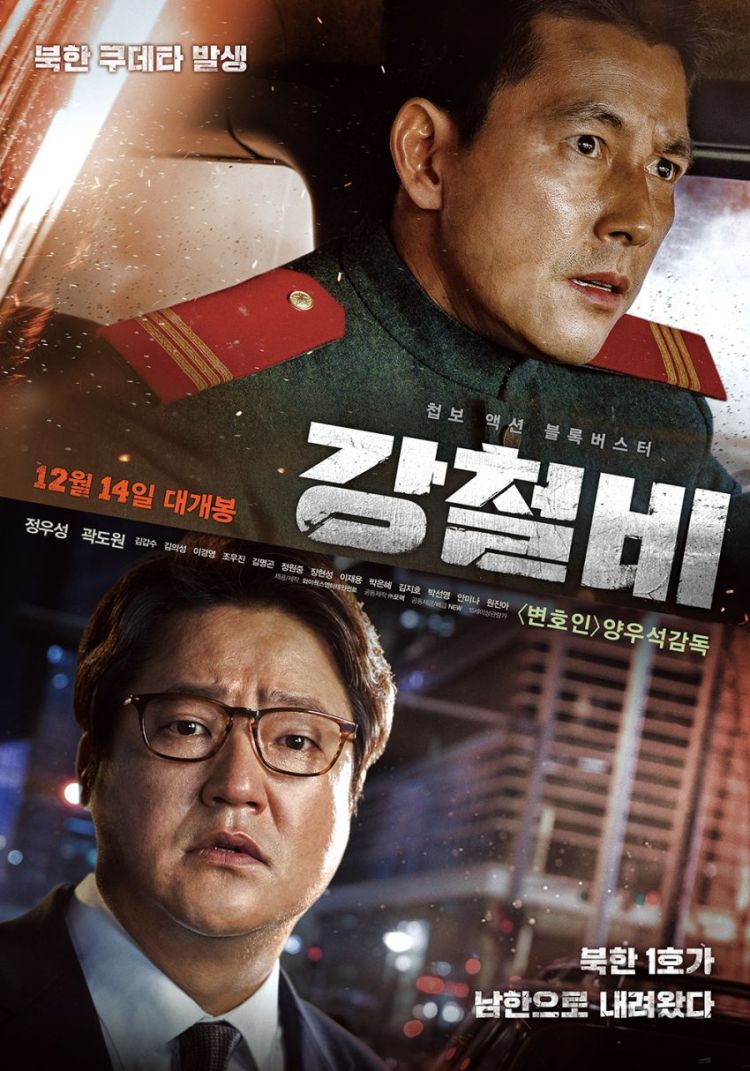
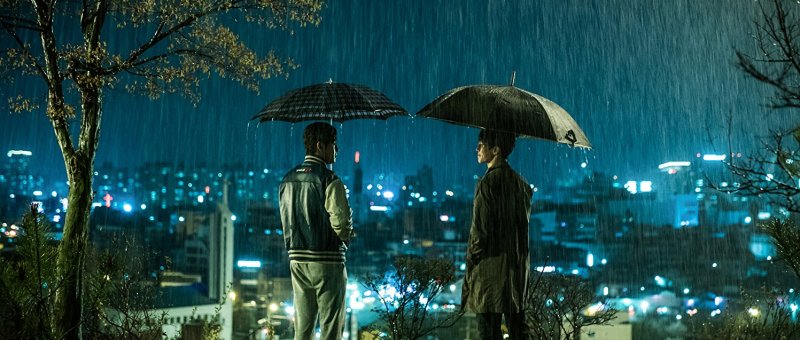
Steel Rain (강철비, Yang Woo-suk, 2017)

Steel Rain posterA little way in to Steel Rain (강철비, Gangchulbi), one of its heroes – a Blue House official, gives a pointed lecture on Korea’s past to some students of Geopolitical History. Fiercely critical of Korea’s previous subjugation by Japan, he laments that his nation was not able to free itself from the Japanese yoke and was awarded its freedom with the end of a wider political conflict which saw the Japanese “empire” collapse. According to Kwak Cheol-u, Korea has never quite lost its cultural admiration for its former colonisers which is why its most prominent corporations – Samsung, Haeundae etc, are all direct competitors with similar Japanese firms (and are only now pushing past them in terms of global market penetration and technological innovation).

Switching tack, he wonders why it is that Japan lost a war and Korea got cut in two by two new “colonising” forces. In his oft observed mantra, Kwak (Kwak Do-won) insists that the citizens of a divided nation suffer more from those who seek to manipulate the division for their own ends than they do from the division itself, which is where we find ourselves in the contemporary era of my button’s bigger than his button in which “capitalist pig dogs” face off against “dirty commies”. Adapting his own webcomic, Yang’s action thriller is among the most recent in a long line of North/South buddy movies and even if its cold-war paranoia feels distinctly old hat, it just goes to prove that everything old is new again.

Eom Cheol-u (Jung Woo-sung), a former North Korean special forces agent, is called back into the fold by his old commander for a very special mission. Tensions are about to boil over in the perpetually precarious state and the Dear Leader’s life is under threat from a suspected coup. Eom is to silence one of the conspirators in return for which he will be given elite status and his family will be well looked after. Unfortunately, the mission does not go to plan and Eom ends up witnessing a missile strike on a welcome meeting at a Chinese managed factory in which the (mostly young and female) employees are murdered in cold blood. Managing to escape with the Dear Leader himself who is seriously wounded, Eom travels over the border along with two young girls. From this point on he’s in conspiracy thriller territory trying to work out just what’s going on and who he can really trust.

The symbolism is rammed home by the fact that our two heroes, Kwak and Eom, have the same first name – Cheol-u, only one uses the characters for “strong friendship” and the other “bright world”. Taken together they paint a pretty picture, brothers in arms despite the political difficulties which place them on differing sides of an arbitrary line drawn up by a foreign power without much consideration for those divided by it. As in many North/South buddy movies of recent times, the North Korean agent displays the best qualities of his nation in his essential “goodness” – a caring husband and father, he executes his mission with maximum efficiency but bears no ill will towards those outside of it and is keen to protect the people of North Korea from almost certain doom should a nuclear war break out between the two peoples. Kwak, by contrast, is more of a schemer whose moral universe is much less black and white. A fluent Mandarin speaker he’s in tight with a North Korean official who keeps trying to talk him into taking a research post at a Chinese university while his family life is somewhat complicated thanks to a divorce from his plastic surgeon wife.

Meanwhile, the film is at pains to point out that Korea became the focus point of the first East/West proxy war and, in Kwak’s view at least, remains insufficiently important in the eyes of its “allies” to merit much direct consideration. Thus our boardroom squabbles are often reduced to the looming face of the American President “advising” the Korean officials on the best course of action while others worry about what Japan is going to think and wonder if the US secretly values the opinion of the Japanese more than the Koreans on the ground. The situation is further complicated by the fact that the government is in a transitionary phase in which a new president has been elected but not sworn in. The crisis may well play out entirely within the old president’s final hours which means that diplomatically he has little to lose and as he is a conservative, might as well milk the situation for all it’s worth. In short, he’s as keen to ruffle diplomatic feathers and bring the situation to a head as everyone else is and war looks more likely than not. The central message is that, as Kwak is fond of implying, governments care little for their people or that millions may die when idea of division is so easily manipulated, especially if it’s not “their” people who will be doing the dying.

Not for nothing is the new president seen reading copy of Willy Brandt’s book on successful reunification, even if he begs his outgoing predecessor to consider the economic impact of any possible change in relations with a Northern neighbour. The North Korean official also warns that China is not keen on the idea of a war seeing as that will necessarily mean an influx of North Korean refugees no one wants to take responsibility for. The cold war may be about to turn hot, but the heroics that cool it down turn out to be of a much less gung-ho nature than might be expected, relying on personal sacrifice and a perhaps outdated code of honour. Nevertheless, the crisis is averted not through macho posturing but through “diplomatic channels” and a careful balancing of powers. Perhaps not so farfetched after all.


Streaming worldwide via Netflix.

Steel Rain will also receive its international festival premiere as the opening night gala of the Udine Far East Film Festival on 20th April.

Far East Film Festival trailer (no subtitles)
Mary and the Witch’s Flower (メアリと魔女の花, Hiromasa Yonebayashi, 2017)

Mary and the witch's flower posterWhen Studio Ghibli announced that it would be ceasing production, it couldn’t help but feel like the end of an era. The studio which had made Japanese animation an internationally beloved art form was no more. Into the void stepped a brand new animation studio which vowed to pick up the Ghibli gauntlet – Studio Ponoc was formed by former Ghibli producer Yoshiaki Nishimura who enlisted a host of other ex-Ghibli talent including Arrietty director, Hiromasa Yonebayashi. 

Mary and the Witch’s Flower (メアリと魔女の花, Mary to Majo no Hana), Ponoc’s first feature is, like Yonebayashi’s When Marnie was There, an adaptation of a classic British children’s novel. Part of the ‘70s children’s literature boom, Mary Stewart’s The Little Broomstick was more or less forgotten until the film, paradoxically, brought it back into print. Like many post-war children’s novels, The Little Broomstick is the story of a clever and kind little girl who thinks she doesn’t quite fit in. Mary and the Witch’s Flower is no different in this regard, even in updating the tale (seemingly) to the present day as its spiky heroine finds herself taking on mad scientists and crazed witches in a strange fantasy realm all while trying to get used to the comparatively gentle rhythms of country life.

Mary Smith (Hana Sugisaki) is bored. She hates her frizzy red hair which a horrible local boy, Peter (Ryunosuke Kamiki), uses as justification to describe her as a “red haired monkey”, and fears that the rest of her life will merely be a dull exercise in killing time until its inevitable conclusion. Mary has just moved in with her Great-Aunt Charlotte (Shinobu Otake) in the country while her parents are apparently working away and, as she still has a week left of summer holidays until school starts, she’s desperate for something to do. Unwisely following two cats into a misty forest, she chances upon a mysterious flower – the “Fly By Night” which blooms only once every seven years. With no respect for nature, Mary picks herself some of the pretty bulbs to take back to the gardener but unwittingly opens up a portal to another world. Taking hold of an abandoned broomstick, she finds herself swooped off to Endor College – an elite institution of witchcraft and wizardry where she dazzles all with her magical skills. Thinking she’s finally found her place, Mary is content to go along with everyone’s assumption that she is the new student they’ve been waiting for but on closer inspection, Endor College is not quite all it seems.

Mary’s initial dissatisfaction with herself is somewhat sidelined by the narrative but there’s something particularly poignant about her loathing of her red hair. In British culture at least, those with red hair often face a strange kind of “acceptable” prejudice, bullied and ostracised even into adulthood. Thus when Peter calls Mary a “red haired monkey” it isn’t cute or funny it’s just mean and she’s probably heard something similar every day of her life. When she rocks up at Endor and they tell her that her red hair makes her special and is the sign of high magic potential, it’s music to her ears but it’s also, perhaps, reinforcing the idea that simply having red hair makes her different from everyone else.

Feeling different from everyone else perhaps allows her to look a little deeper into the world of Endor than she might otherwise have done. Despite her conviction that she doesn’t fit in and is of no use to anyone, Mary is never seriously tempted by the promises of Endor which include untold power as well as a clear offer of acceptance and even respect. When she realises that the couple who run the school – a witch and a scientist, have been abusing their powers by committing heinous acts of experimentation on innocent “test subjects”, Mary learns to stand up for those who can’t stand up for themselves even if she couldn’t have done it for herself.

Messages about the seductive power of authoritarian regimes exploiting feelings of disconnection, the scant difference between magic and science, and the need for respect of scientific ethics in the pursuit of knowledge, all get somewhat lost amid Mary’s meandering adventures, as does Mary herself as her gradual progress towards realising that she possessed her own “magic” all along ticks away quietly in the background. Yet the biggest problem Mary and the Witch’s Flower faces is also its greatest strength – its ties to Studio Ghibli. With echoes of Yonebayashi’s previous adaptations of classic British literature, Mary and the Witch’s Flower also indulges in a number of obvious Ghibli homages from the Ponyo-esque flying fish and Laputa influenced design of Endor to the overt shot of Mary riding a deer on a rocky path, and the unavoidable girl+broomstick echoes of Kiki’s Delivery Service. Even if Mary and the Witch’s Flower cannot free itself from the burden of its legacy, it does perhaps fill the void it was intended to, if in unspectacular fashion.


Mary and the Witch’s Flower will be released in UK cinemas courtesy of Altitude Films in May 2018.

Original trailer (English subtitles)

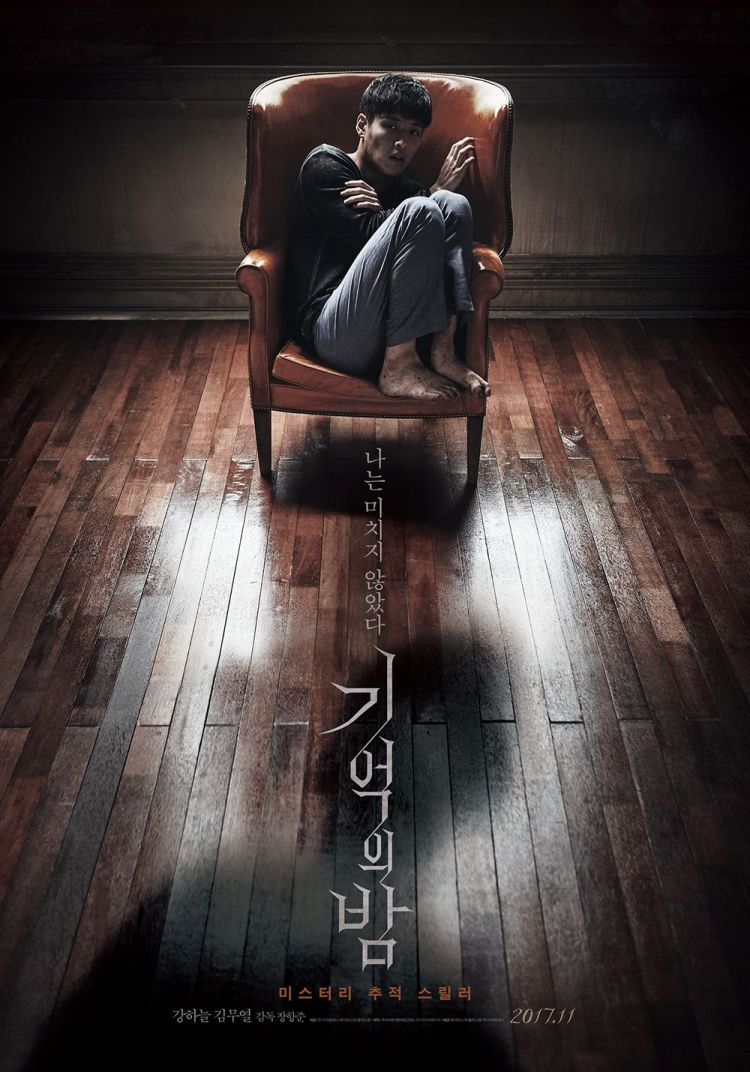
Forgotten (기억의 밤, Jang Hang-jun, 2017)

forgotten posterEver wondered if you’re living in a simulacrum? Strangely, the thought isn’t one which occurs to the hero of Jang Hang-jun’s Forgotten (기억의 밤, Gieokui Bam) despite his sense of déjà vu and the uncanny eeriness of his world. Then again, perhaps that’s because he is wilfully complicit in his own life lie, afraid to open the door and confront the ghosts trapped inside his psyche seemingly desperate get out. A tense psychological thriller, Forgotten is also a symbolist drama in which Jin-seok, a man literally trapped in the past, is forced to free himself from a locked room mystery only to discover his own dark truths.

Following some distressed sounds from someone who claims not to be able to remember whatever it is they’re being interrogated about, we find a young man, Jin-seok (Kang Ha-neul), peacefully asleep on his mother’s shoulder as his family drive to their new home. Jin-seok is an anxious young man under a lot of stress studying to retake university exams while his brother, Yoo-seok (Kim Mu-yeol), is the archetypal good Korean son. He is handsome (if a little geeky looking), clever, good at sports, patient and kind. In short Yoo-seok is everyone’s hero, not least his little brother’s, while Jin-seok is a nervous wreck who rarely leaves the house and makes sure to have his discman with him when he does to block out the noise and fury of city life. According to the prominently displayed calendar, it is May 1997.

Things start to go awry when Jin-seok finds out that the house’s previous owner has left some property in the upstairs room which he will collect at a later date. The family aren’t supposed to go in there ’til he does and so the brothers will be sharing a room. Jin-seok is however fascinated by the locked door and the strange noises he thinks he can hear coming from upstairs. Things go from bad to worse when Jin-seok witnesses Yoo-seok being kidnapped in the street only to return 19 days later with no memory of where he’s been. Little by little, Jin-seok comes to doubt that the man who has returned is really his brother, but if he isn’t, then who is he and why is any of this happening?

Like all good gothic mysteries, the first problem is Jin-seok’s supposedly fragile mental state. His family repeatedly check he’s taking his medication and take care to ensure his life is as stress free as possible, apparently afraid that he will relapse into some kind of breakdown the cause of which may be partly the reason that the family has moved to a quieter area. Thus neither he nor we can be sure if everything he experiences is real, a product of his strained mind, or a problem with his medication.

Wedded to this story is the coded past of Korea in 1997 struck by the Asian economic crisis which, the film seems to say, provoked a kind of paranoid madness generalised across society. In this difficult climate in which jobs were scarce and even those in professional occupations faced a significant drop in living standards, extreme solutions began to seem attractive. A young woman and her daughter are murdered and the killer never caught, a little boy orphaned and abandoned by his relatives who keep his family’s money for themselves, a young man resolves to commit a terrible transgression in the hope of saving a loved one, and all because of a tragic accident and some random numbers on a screen. 

Jang Hang-jun turns the relatively low budget to his advantage in creating a world of intense uncanniness, somehow realer than real but never quite right. Gradually peeling back the layers of Jin-seok’s existence to expose the wires below, Jang’s artistry becomes apparent as the world comes into focus albeit presenting a different kind of mystery. Anchored by the impressive performance of a deglammed Kang Ha-neul, Forgotten is as bleak a tragedy as they come. The truth may set one free, but not quite in the way the saying implies and there are some things with which is it impossible to live. The unseen legacy of a traumatic era sends its invisible shockwaves through the present and out into the future, and perhaps the only way to survive them is to avoid opening the door.


Streaming worldwide via Netflix.

Original trailer (no subtitles)
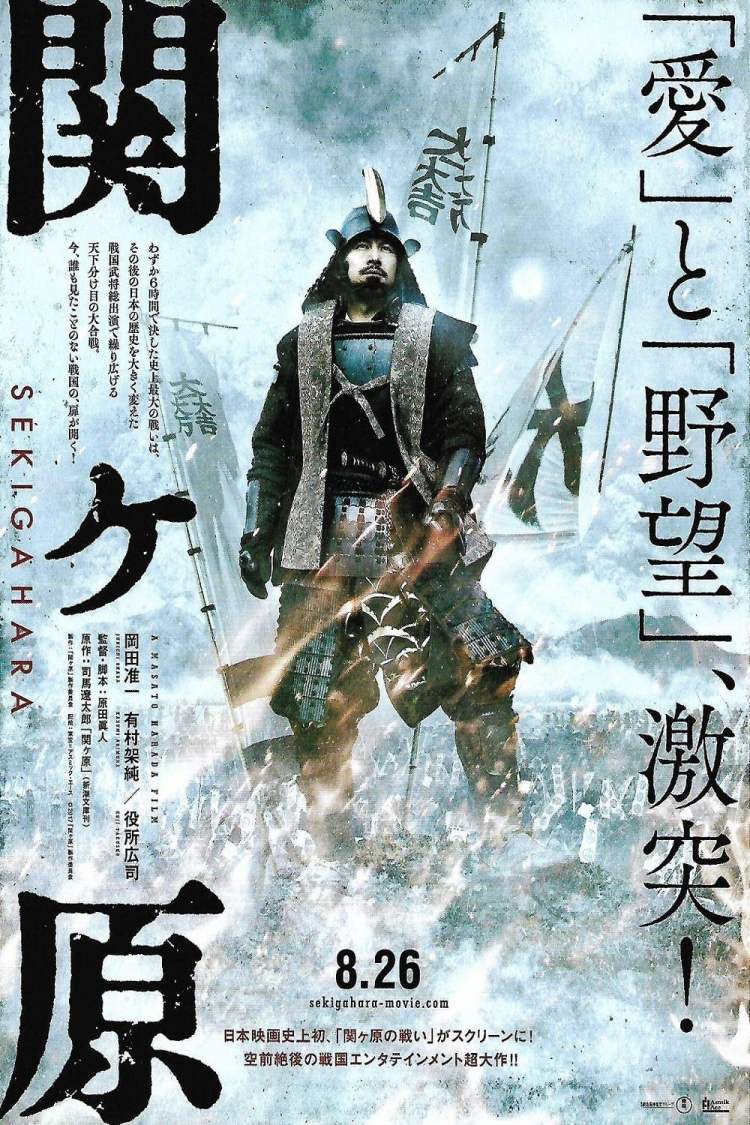
Sekigahara (関ヶ原, Masato Harada, 2017)

Sekigahara posterWhen considering a before and an after, you’d be hard pressed to find a moment as perfectly situated as the Battle of Sekigahara (関ヶ原). Taking place on 21st October 1600 (by the Western calendar), Sekigahara came at the end of a long and drawn out process of consolidation and finally ended the Sengoku (or “warring states”) era, paving the way for the modern concept of “Japan” as a distinct and unified nation. In actuality there were three unifiers of Japan – the first being Oda Nobunaga who brought much of Japan under his control before being betrayed by one of his own retainers. The second, Toyotomi Hideyoshi, continued Oda’s work and died a peaceful death leaving a son too young behind him which created a power vacuum and paved the way for our third and final creator of the modern Japanese state – Tokugawa Ieyasu whose dynasty would last 260 years encompassing the lengthy period of isolation that was finally ended by the tall black ships and some gunboat diplomacy.

Loosely, we begin our tale towards the end of the rule of Toyotomi Hideyoshi (Kenichi Takito) though, in a nod to the novel, director Masato Harada includes a temporal framing sequence in which our author depicts himself as a boy during another war sitting in these same halls and hearing stories of heroes past. As well he might given where he was sitting, the narrator reframes his tale – our hero is not the eventual victor, Tokugawa Ieyasu, but a noble hearted retainer of the Toyotomi, Mitsunari (Junichi Okada).

Riding into battle, Mitsunari reminds his men that this is a war of “justice and injustice” – they cannot lose. Yet lose they do. The narrator recounts Mitsunari’s improbable rise as an orphan taken in by Hideyoshi on a whim who nevertheless became one of the most powerful men in late 16th century Japan. Despite his loyalty to his master, Mitsunari cannot abide the cruelty of the samurai world or its various modes of oppression both in terms of social class and even in terms of gender. He resents the subversion of samurai ethics to facilitate “politics” and longs to restore honour, justice, and fairness to a world ruled by chaos. Rather than the bloody uncertainty and self-centred politicking that define his era, Mitsunari hopes to enshrine these values as the guiding principles of his nation.

On the other hand, his opponent, Tokugawa Ieyasu (Koji Yakusho) is famed for his intelligence and particularly for his political skill. Hoping to swoop into the spot vacated by Hideyoshi which his young son Hideyori is too weak to occupy, Ieyasu has been playing a long game of winning alliances and disrupting those other candidates had assumed they had secured. Unlike Mitsunari, Ieyasu is ruthless and prepared to sacrifice all to win his hand, caring little for honour or justice or true human feeling.

The framing sequence now seems a little more pointed. Sekigahara becomes a turning point not just of political but ideological consolidation in which Mitsunari’s ideas of just rule and compassionate fair mindedness creating order from chaos are relegated to the romantic past while self interest triumphs in the rule of soulless politickers which, it seems, travels on through the ages to find its zenith in the age of militarism. Mitsunari is the last good man, prepared to die for his ideals but equally prepared to live for them. His tragedy is romantic in the grander sense but also in the more obvious one in that his innate honour code will not let him act on the love he feels for a poor girl displaced from Iga whose ninja service becomes invaluable to his plan. With a wife and children to consider, he would not commit the “injustice” of creating a concubine but dreams of one day, after all this is over, resigning his name and position and travelling to foreign lands with the woman he loves at his side.

Working on a scale unseen since the age of Kurosawa, Harada patiently lays the groundwork before condensing the six hours of battle to forty minutes of fury. The contrast between the purity of the past and the muddied future is once again thrown into stark relief in the vastly different strategies of Ieyasu and Mitsunari with Ieyasu’s troops armed to the teeth with modernity – they fire muskets and shout cannon commands in Portuguese while Mitsunari’s veteran warriors attempt to face them with only their pikes and wooden shields. Unable to adapt to “modern” warfare and trusting too deeply in the loyalty of his comrades, Mitsunari’s final blow comes not by will but by chance as a young and inexperienced vassal vacillates until his men make his decision for him, betraying an alliance he may have wished (in his heart) to maintain. Goodness dies a bloody death, but there is peace at last even if it comes at a price. That price, for some at least, may have been too great.


Original trailer (no subtitles)

Of Love & Law (愛と法, Hikaru Toda, 2017)

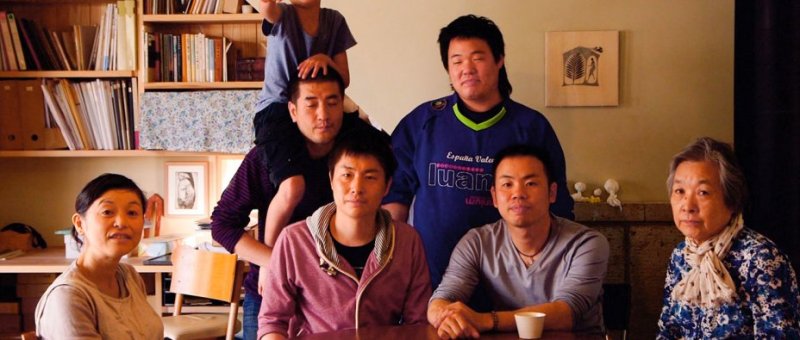
of love and law posterIn Japan the nail which sticks out is hammered down. Conformist societies promise mutual support, but all too often only when it suits the collective – those not deemed part of the club are wilfully left to fend for themselves with the dangled promise of readmission if one promises to reform and abide by the rules. We first met the couple at the centre of Hikaru Toda’s Of Love & Law in her previous documentary, Love Hotel, which documented their struggles with discrimination in frequently being turned away by establishments who did not wish to rent a room to two men. A same sex married couple in Japan’s second city of Osaka, Kazu and Fumi run their own law firm and operate under the mission statement of representing those who often find themselves without a voice in a culture which favours silence.

Opening at a local Pride event, the camera attempts to capture some talking heads but no one will bite. Asked for comments, the visitors each refuse to show their faces, revealing that they aren’t fully out, fearing that it might cause problems for them at work, or just embarrassed to go on the record about something so taboo. Though the law practice is not limited to representing LGBT issues, they are clearly a key concern to Fumi and Kazu who spend their “free” time engaging in outreach projects trying to foster a little more education and understanding of sexual minorities. Kazu brings this home when he tells his own coming out story in which his stunned mother exclaimed that she’d never heard of anything like this and therefore could not understand it. The problem wasn’t prejudice, it was ignorance mixed with fear.

Ignorance mixed with fear could equally well describe most of the cases brought against Kazu and Fumi’s clients. The protagonist of the second strand – artist and mangaka Rokudenashiko whose legal troubles even made the foreign press, attributes many of these issues to an inability to “read the air” or aquedately understand the unspoken rules of society and then silently abide by them. The law firm makes a point of defending those who have chosen to fly in the face of social convention, flying a flag for the freedom of choice in a society which often deliberately suppresses it.

The freedom of choice is certainly a key issue for the teacher suing the Osakan school that fired her for refusing to stand for the national anthem. Arguing that standing when one is forced to stand is hardly a declaration of patriotism and fearing the lurch to the right which has made even implicit indifference to the Imperial family a hot button issue, the teacher puts her foot down but finds that few will listen. Similarly, Rokudenashiko finds herself arrested for obscenity regarding her vagina themed artwork while the court undermines its own argument by accidentally proving that her work has socio-political merit.

Yet Rokudenashiko and the teacher have each, in a sense, made a firm decision to challenge the intransigence of their society, hoping to prevent a further decline even if not overly hopeful of improvement. Other clients on the roster include a fair few who are accidentally undocumented through no fault of their own thanks to Japan’s arcane and idiosyncratic legal system which makes it difficult to register births of children born out of wedlock or in difficult family circumstances meaning that youngsters sometimes grow up without the proper papers leading to problems with accessing education, employment, healthcare and welfare provisions. Getting someone a birth certificate who doesn’t currently “exist” can prove a taxing ordeal, especially as government officials often regard children born to “immoral” women as “unworthy” of care or attention.

Getting a call from the mother of a victim, Fumi is shocked when she makes a point of enquiring about the nationality of the perpetrator. He is unsurprised but disappointed in witnessing the various ways one oppressed person (both the victim and plaintiff are from impoverished, single parent backgrounds) can turn their oppression back on others as an odd kind of social revenge. Luckily, however, there are good people everywhere such as the fine young man Fumi and Kazu end up temporarily fostering after his care home is unexpectedly closed down. Kazuma accepts their relationship without a second thought, enjoys learning to cook from Fumi and blends right into Kazu’s extended family who each seem as warm and accepting as the couple themselves. Family is not about a register, it’s having a place to go where they’ll always take you in. Fumi doesn’t trust society because society shirks its responsibilities, but thankfully there are those who know better and continue on in hope tempered with patience.


Screened at BFI Flare 2018.

Malila: The Farewell Flower (มะลิลา, Anucha Boonyawatana, 2017)

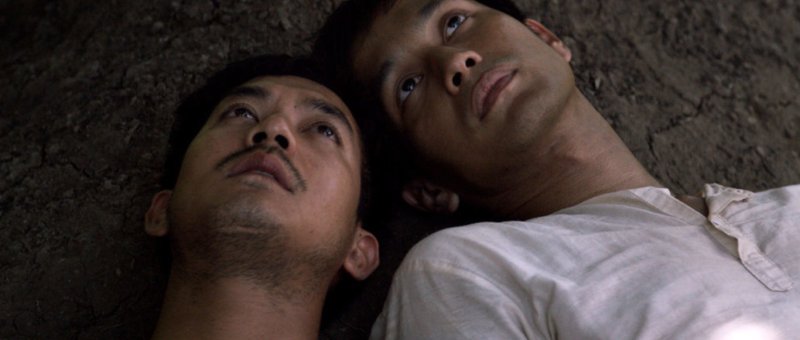
Malila posterAnucha Boonyawatana’s second feature, Malila: The Farewell Flower (มะลิลา), opens with a quotation from a 19th century poem. The poem laments that even a Baisri painstakingly created to honour the gods will eventually be cast away once it has served its purpose. No longer divine, its soul departed, the ornament is just another thing to be disposed of. Like the beautiful Baisri, two men’s souls will briefly intertwine only for the flowers of their love to wither on the vine, fading away with the great work still incomplete. This incompleteness, the lingering sense of absence and irreconcilable longing, propel the one left behind onto a spiritual journey hoping to discover if the answers to his need lie within or are not to be found at all.

Shane (Sukollawat Kanarot), the owner of a jasmine plantation, has recently begun to rebuild his life following a period of heavy drinking during which his wife left him and his young daughter was killed by a python in the jungle. Reuniting with his former lover, Pich (Anuchit Sapanpong), Shane is distraught to find out that he is terminally ill with lung cancer and has decided to give up on conventional medicine and devote the rest of his life doing the things that make him happy. Pich’s one form of “treatment” is in his constant making and dispatching of “Baisri” – ornaments constructed from leaves and flowers for ceremonial occasions which, painstakingly created, must be sent away on the river after they have fulfilled their purpose.

Jasmine flowers are, as Pich remarks, too weak – they wither before the Baisri is completed. Though the two men are able to rekindle their romance, their time is limited. Shane contemplates becoming a monk in the hope that his good karma can be transferred to Pich but it is not to be. Alone, he sets out on a spiritual journey guided by another monk hoping to encounter the ghosts of himself and of his loves to absolve himself of his guilt and loneliness.

Set against the beautiful Thai landscape, Malila is a tale of fading flowers and eternal regrets. The art of Baisri requires intense focus and dedication in order to repurpose and reorder nature into something essentially manmade but beautiful. Later, during his quest, Shane will be met with a terrifying though no less intense experience when his guide and fellow monk instructs him in the art of corpse meditation. The sight of the body, putrid and infested with hungry maggots busily going about their business, presents a strong contrast with the otherwise idyllic scenery and forces a more literal contemplation of the process of decay as the human form dissolves leaving only memory and a ghost of past emotion in its place.

Ironically, or perhaps not, a Baisri is intended to mark a new beginning – a “farewell” on an onward journey. Shane sets off on a spiritual quest, suffering nobly in the forests with their frequent rainstorms and learning to be in the moment in the company of the comparatively better experienced monk who guides him, a former soldier now on the spiritual path. His search is internal but illuminated by the world around him and his gradually increasing connection with it.

Eventually transcending this world for another, Shane begins to find his answers and finally cleanses himself of his loss and suffering. Mixing lyrical poetry with beautifully photographed naturalism, Anucha Boonyawatana tells a painful tale of love lost and found, hearts broken and repaired, and finally of acceptance both of one’s self and of the transience of all things. Malila: The Farewell Flower is a parting gift to a departing love, filled with sorrow and regret but also with beauty even in decay.


Screened at BFI Flare 2018.

Original trailer (English subtitles)

The Third Murder (三度目の殺人, Hirokazu Koreeda, 2017)

Third Murder posterJapanese cinema has often put the justice and legal system on trial and found it wanting. From Yoji Yamada’s Flag in the Mist in which a “selfish” lawyer contributes to the death of an innocent man, to Yoshitaro Nomura’s spiralling, feverish The Incident, Yoshimitsu Morita’s Kafka-esque Keiho, Gen Takahashi’s pointed Court of Zeus, and Masayuki Suo’s comparatively more straightforward I Just Didn’t Do It, the entire justice system takes on an almost spiritual quality of absurdity, tormenting the accused for the sake of a pantomime of justice, little caring for his or her guilt or innocence and intent only on propping up its own sense of absolute authority.

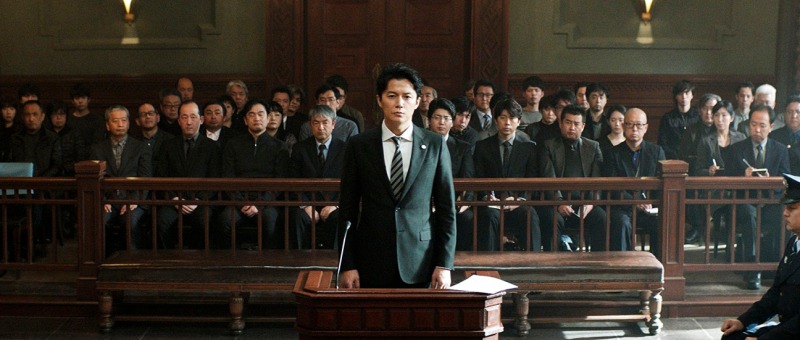
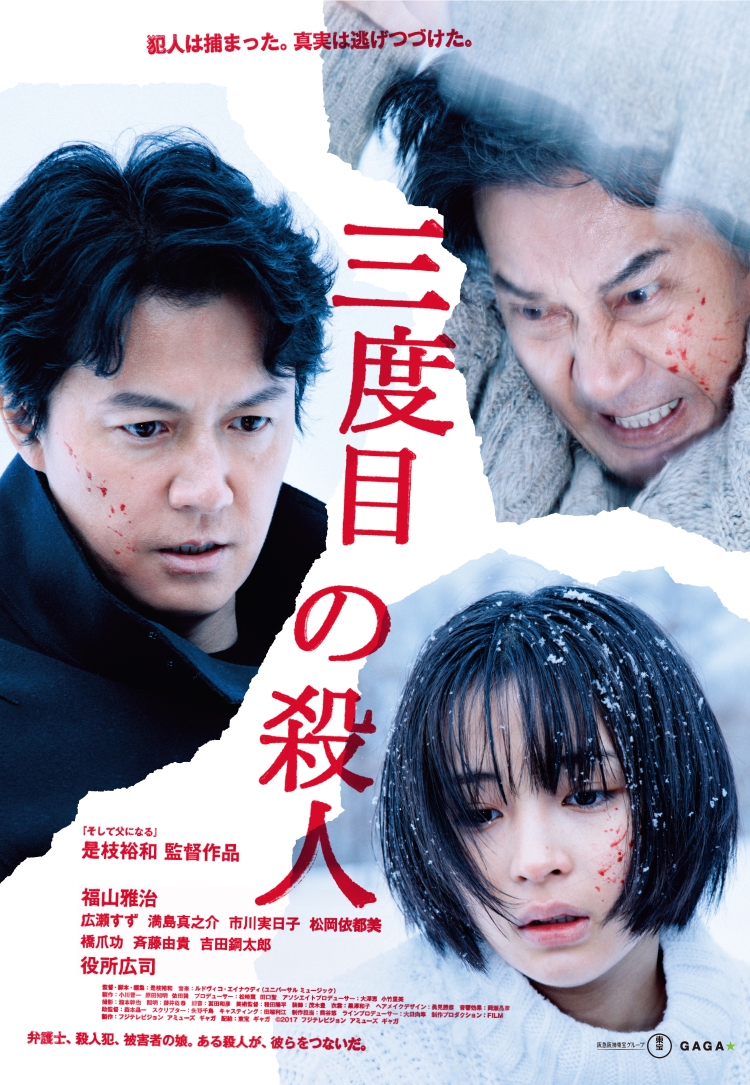
Like Yoji Yamada in Flag in the Mist, The Third Murder (三度目の殺人, Sandome no Satsujin) finds director Hirokazu Koreeda in unfamiliar territory though, at heart, it all comes back to family. A top lawyer, Shigemori (Masaharu Fukuyama), currently in the middle of a divorce, is asked to represent a man who has freely confessed to murder. As the son of the original judge who sentenced the accused, Misumi (Koji Yakusho), to the 30 year sentence he had not long been released from before (allegedly) committing the crime, Shigemori feels a responsibility to act but is frustrated by his client’s constantly shifting story. Nothing he says adds up, and every new angle Shigemori uncovers provokes only more doubt as to the true nature of the case at hand.

Shigemori, somewhat condescendingly, criticises the junior lawyer in the office for his naivety in wanting to to investigate the crime. Understanding and empathy are “unnecessary” in defending a client. The business of a lawyer, on either side, is to assess the evidence at hand, create an argument that withstands scrutiny, and eventually triumph in debating one’s opponent. In the face of the law, the “truth” is an irrelevance.

Shigemori’s cynicism is however rocked by the eerie presence of Misumi who seems to carry with him a kind of deepening emptiness. Misumi has already served 30 years in prison for the murder of two loansharks, the theft of their money, and an act of arson committed on their property to disguise the crime. Shigemori’s father, now a much older man, laments his youthful naivety in handing down a compassionate judgement which took into account the mitigating circumstances – Misumi’s troubled childhood, his poverty, the dire economic situation in which the closure of the local mines had led to mass unemployment and provided fertile ground for unscrupulous money lenders, and a series of personal tragedies which may have unbalanced his mind, but now he thinks some people are just bad and Misumi’s third murder is, in a sense, also his responsibility in allowing him the freedom to commit it.

Yet, there is also a doubt that Misumi’s first crimes are even his. We are told that, like the current case, Misumi couldn’t stick to one story – a common phenomenon with those who confess under duress, saying yes to everything in order to make the questioning stop but later forgetting what exactly they confessed to. Misumi later says he confessed only because he was told that confessing was the only way to avoid the death penalty which, ironically enough, is what he now faces. He also claims he was intimidated by the (admittedly stern) prosecutors, and when it looks as if a new trial may be necessary, the judge opts for the most “judicially economical” solution to incorporate the new demands into the current trial for reasons which the lawyers attribute to his personal need to get the case off his docket in good time so as not to muddy his own reputation. Japan’s 99% conviction rate is less an endorsement of judicial efficiency than a worrying indictment of the legal process in which trials are mere formalities held for show, a pantomime intended to reinforce an idea of “justice” which does not quite exist.

The weight of justice itself is called into question. We learn that the victim was guilty of several crimes, some of them more forgivable than others. Yet is his death “justice” or “murder”, was he “killed” or was the act one of “salvation” for his victims? There are no easy answers and the uncomfortable fact remains that one kind of justice may not necessarily be any different from another. Misumi remains a cypher, his motives for committing the crime(s) (if he even did commit them at all) unclear yet there is also something in him that suggests he is merely a reflection of ourselves, a projection of our own primal need to see justice done that our civil selves have tried and failed to codify into a universally recognised system of fairness known as law. Then again perhaps all we really want is a story we can understand and empathise with, perhaps we don’t want justice at all – we want narrative, a strategy for defence against the cruel and arbitrary charges of an unforgiving world. Shigemori stands at a crossroads, cleansed of his cynicism but unsure what to replace it with, as, perhaps, as we.


Currently on limited release in UK cinemas courtesy of Arrow Academy.

International trailer (English subtitles)

Have a Nice Day (大世界 / 好极了, Liu Jian, 2017)

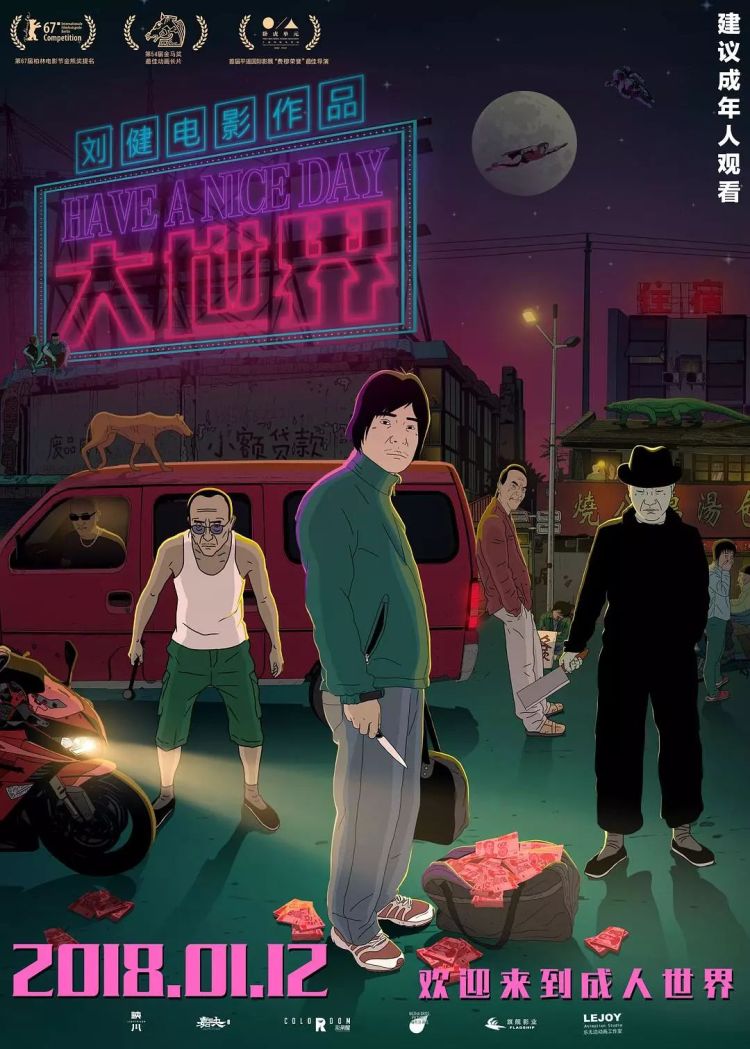
Have a Nice Day poster 1Even when everything is pointless, still you have to try to live. “Spring is spring”, as the opening quote by Leo Tolstoy proclaims and so there is life even among the ruins which, in this case, exist in the mysterious “development zone” somewhere in the modern China. This backstreet noir takes place in a world of near apocalyptic dilapidation though the effect is more one of incompleteness than destruction, as if an over excited city planner had randomly started projects one after another but suddenly tired of each of them. Jack Ma may have affirmed that everyone has a dream in his heart, but the dreams here are small and mostly unattainable, locked into a claustrophobic atmosphere of inescapable despair.

Xiao Zhang (Zhu Changlong), a lowly construction driver, decides to seize his chance of happiness with both hands in lifting a vast sum of cash which belongs to mob boss Uncle Liu (Yang Siming). Uncle Liu, however, is busy torturing his childhood friend for supposedly sleeping with his wife. He sends his best guy, enigmatic hitman Skinny (Ma Xiaofeng), after Zhang but before Skinny can get to him, Xiao Zhang is is picked up by “inventor” Yellow Eyes (Cao Kou) whose X-ray specs have spotted the money and decided it’s too good an opportunity to miss. He takes off with his kind-of-girlfriend (Zheng Yi) who is also the sister-in-law of a guy who works with petty gangster Lao Zhao (Cao Kai) who is the guy Xiao Zhang took the money from in the first place. Meanwhile, the mother of Xiao Zhang’s girlfriend has asked her niece, Ann Ann (Zhu Hong), to have a look into what’s going on with Xiao Zhang because he’s been sending some very suspicious messages.

Everything here is in transit. Hitman Skinny is fond of telling people that he’s “just passing through” but so is everyone else, there is nothing here to stop for, except that it’s impossible to escape. All the significant places are also points of transit or hope for connection – the “Integrity” internet cafe, a “business” hotel, a road which leads nowhere through a landscape permanently “under construction”. Everything is half formed or falling down, the world is indistinct as if it hasn’t discovered its own identity and has tried to cobble something together from the back streets of other cities glanced in violent movies from somewhere far away.

Xiao Zhang, (almost) our hero, is almost the same – he tells Skinny that his dream was to be a man like him rather than the spineless coward he feels himself to be because guys like him always seem so cool in the movies. Doubtless Skinny doesn’t seem so “cool” with his foot on Xiao Zhang’s chest, but Xiao Zhang’s need is as much about escape as it is a matter of practicality. Though the practicality is ironic enough – he wants the money to pay for more plastic surgery for his fiancée whose face has apparently been ruined by a botched operation. Xiao Zhang hopes they can escape to South Korea, world capital of cosmetic procedures, where they can repair what the modern China has destroyed.

It isn’t difficult to see why Have a Nice Day (大世界, Dàshìjiè, previously titled 好极了, Hǎojíle) rubbed the censors the wrong way. Liu’s vision of the China of today is a lawless wasteland in which despair and inertia reign while those of the post ‘80s generation flail wildly in the wind, drinking in overseas culture from Hong Kong and the West and wanting more than their society can give them. In a running joke everyone has a startup idea they’re sure will be the next big thing but when it comes right down to it, even with the money they’ve no idea what they’re doing. Two boys chatting idly about the future find only futility with one lamenting that if he wanted to make it he’d have gone to England to study, only for the other to ask what the point would be now the UK has left Europe. He has a radical startup idea of his own – a restaurant! After all, people will always need to eat. You have to admire his practicality, even if bemoaning his lack of imagination.

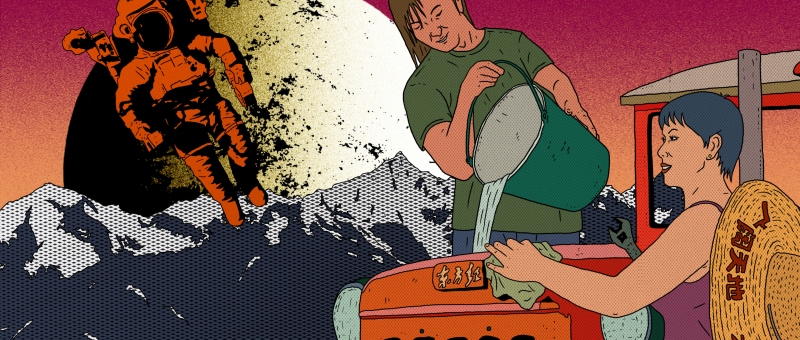
Meanwhile, the cousin of Xiao Zhang’s fiancée and her boyfriend, having figured out that Xiao Zhang really does have the money and intending to take it from him, fantasise about finding their own “Shangri-La”. Breaking into a lengthy karaoke-style video sequence, Liu paints a jagged picture of Ann Ann’s visual ideology which quickly descends into a mish-mash of Mao-era socialist propaganda posters and their collections of cheerful country women enthusiastically driving tractors and juggling sheep while posing in traditional Chinese dress with children in neckerchiefs reading improving literature. Everything is for sale, even apparently the innocence of the past. A friend of Lao Zhao’s expounding on the nature of freedom describes it as a three tiered system – the farmer’s market, supermarket, and online, your degree of personal autonomy and happiness reduced to a question of how the place you buy your groceries informs your sense of self worth.

Rampant capitalism has led to moral as well as physical decay as the half-finished buildings collapse under the weight of national hubris, a weathered statue standing in for a real life policeman as the hollow representation of the authority of an absent regime. Animated with an oddly naturalistic minimalism and filled with whimsical absurdity, Have a Nice Day serves as a condemnation of the last 30 years of Chinese history but it does so with a wistful irony. After all, it’s not as if things are much better anywhere else.


Have a Nice Day is released in UK Cinemas on 23rd March courtesy of Mubi. Check the official website to find out where it’s screening near you.

International trailer (English subtitles)