The Blood of Wolves (孤狼の血, Kazuya Shiraishi, 2018)

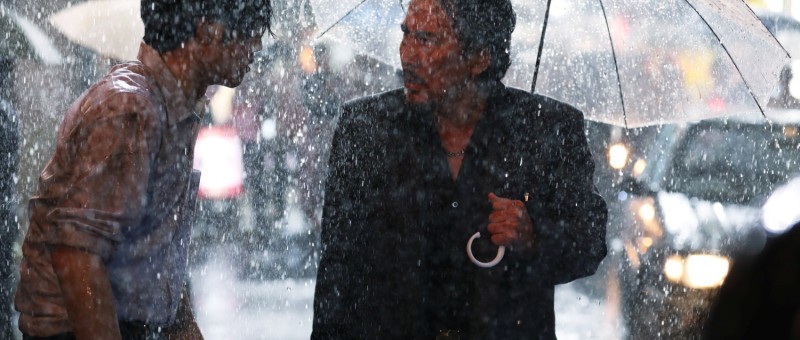
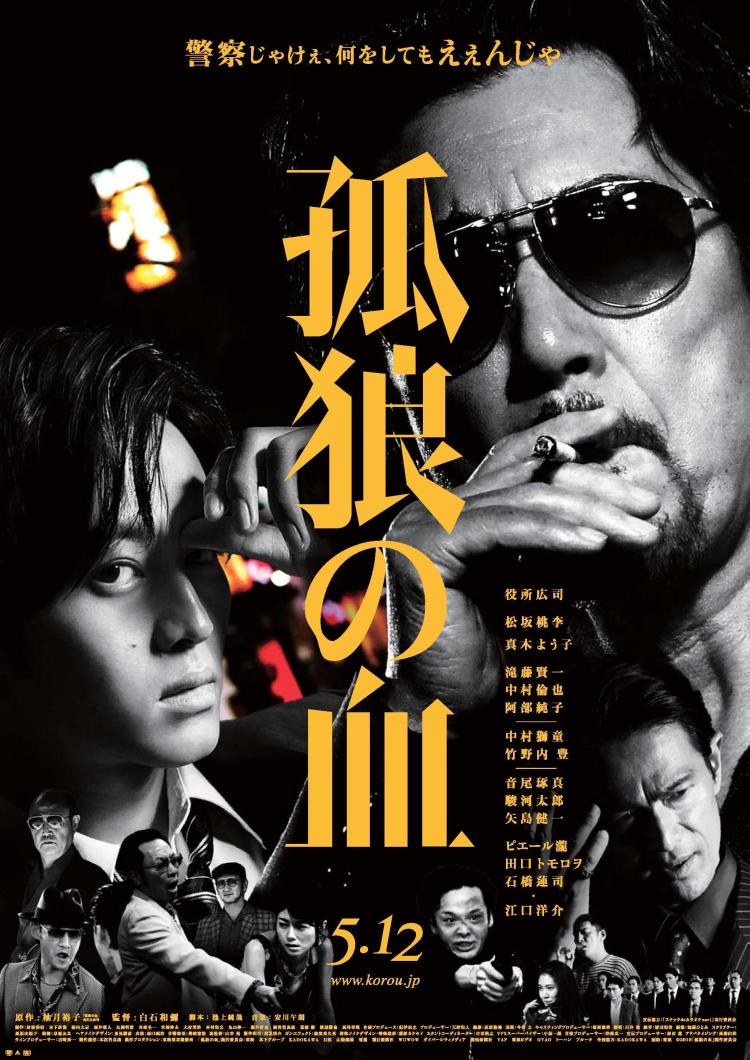
korou_honpos_0220_fin.aiJapanese cinema, like American cinema, is one of the few in which the hero cop is a recognisable trope. Though they may be bumbling, inefficient, obsessed with bureaucracy, or perhaps just lazy, police in Japanese cinema are rarely corrupt or actively engaged in criminality. Even within the realms of the “jitsuroku” gangster movie, the police maintain a fringe presence, permitting the existence of the underground crime world in order to contain it. “Jitsuroku” is, in a fashion, where we find ourselves with Kazuya Shiraishi’s throwback underworld police story, The Blood of Wolves (孤狼の血, Koro no Chi). Set in 1988, the end of the Showa Era which had seen the rebirth of post-war Japan and the ascendency of yakuza thuggery, The Blood of Wolves is based on a novel by Yuko Yuzuki rather than a “true account” of life on the frontlines of gangsterdom, but otherwise draws inspiration from the Battles Without Honour series in updating the story of nihilistic yakuza violence to the bubble era.

In 1988, a young accountant “goes missing” sending his sister to ask the police for help in locating him. The case gets passed to sleazy detective Ogami (Koji Yakusho) and his new rookie partner, Hioka (Tori Matsuzaka). Ogami leers disturbingly at the dame who just walked into his office before dismissing the newbie and extracting a sexual favour from the distressed relative of the missing man. Unfortunately, the accountant turns up dead and the bank he worked for turns out to be a yakuza front caught up in a burgeoning gang war between the Odani with whom Ogami has long standing connections and the gang from the next town over who are looking to increase their territory.

Ogami, a chain smoking, hard drinking, womanising detective of the old school, has one foot in the yakuza world and the other on the side of law enforcement. Hioka, a recent graduate from the local but also elite Hiroshima University (something of a rarity in his current occupation), is not quite sure what to make of his new boss and his decidedly “unorthodox” methods, becoming increasingly concerned about the way the police force operates in a town defined by organised crime. Deciding that Ogami has gone too far, he eventually makes the decision to go to IA with a list of complaints but there’s still so much he doesn’t know about Hiroshima and it is possible he may have picked the wrong side.

What he discovers is that the police force is so intrinsically rotten as to have become little more than a yakuza gang itself, only one with the legal right to carry guns and a more impressive uniform. Ogami, for all his faults, apparently has his heart in the right place. His “friendships” with gangsters are more means to an end than they are spiritual corruption, gaining leverage that will help him keep a lid on gang war – after all, no one wants a return to the turbulent days of the 1970s when the streets ran red with the blood of unlucky foot soldiers and that of the civilians who got in their way. Meanwhile Hioka, starting out as the straight-laced rookie, is himself “corrupted” by the corruption he uncovers, developing a complex mix of disgust and admiration for Ogami’s practiced methods of manipulation which, apparently, place public safety above all else.

Ogami, as he tells the conflicted Hioka, knows he walks a tightrope every day, neatly straddling the line between cop and yakuza, and the only way to stay alive is to keep on walking knowing one slip may lead to his doom. He may say cops can do whatever they like in pursuit of “justice” (and he does), but Ogami has his lines that cannot be crossed, unlike others in his organisation who care only for themselves and have long since given up any pretence of working for the public good.

Shiraishi channels classic Fukasaku from the noticeably retro Toei logo at the film’s opening to the voice over narration, garish red on screen text, and frequent use of freeze frames familiar from the Battles Without Honour series and associated “jitsuroku” gangster fare that followed in its wake. Moving the action up to 1988, the gangster world is once again in flux as it tries to corporatise itself to get in on the profits of bubble era prosperity which largely has no need for the thuggish gangster antics of the chaotic post-war years in which the yakuza could paint itself as a defender of the poor and oppressed no matter how ridiculous it might have been in reality. Ogami is a dying breed, a relic of the Showa era meeting its natural end, but perhaps you need to be a wolf to catch a wolf and guardian spirits can come in unexpected forms.


Screened at the 20th Udine Far East Film Festival.

Original trailer (English subtitles)
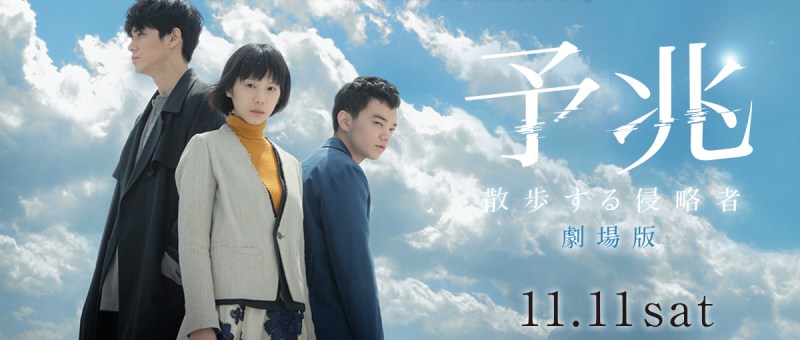
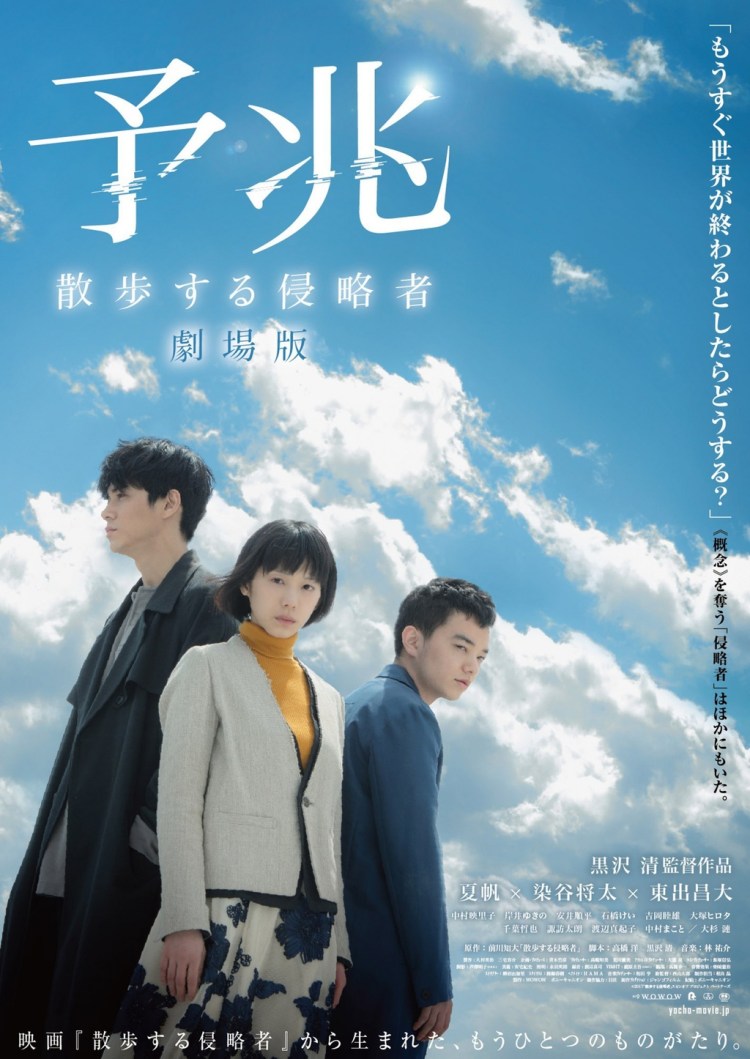
Yocho (Foreboding) (予兆 散歩する侵略者, Kiyoshi Kurosawa, 2017)

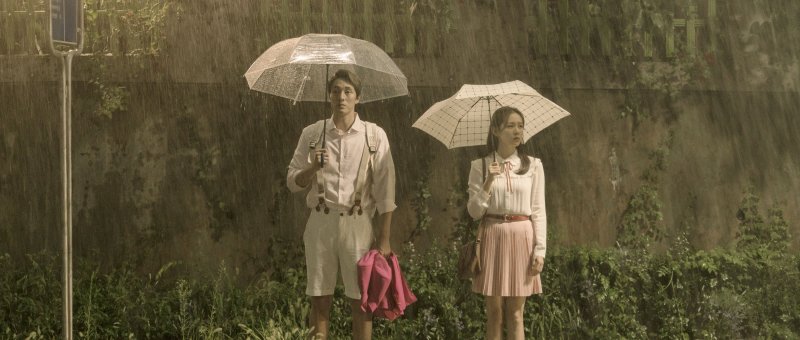
Yocho posterBefore We Vanish, Kiyoshi Kurosawa’s take on the alien invasion drama, was an oddly romantic affair which made a case for the ineffability of love as the only possible form of human salvation. Meanwhile, cheating on cinema with television, Kurosawa tells us a different story. Yocho (Foreboding) (予兆 散歩する侵略者, Yocho: Sanpo Suru Shinryakusha) was first conceived as a TV drama running as a companion piece to the big screen experience but its canvas is noticeably darker. At heart, we have the same story with a slight variation as a bold wife attempts to save her weak willed husband from alien manipulation, risking all to keep him safe him while the world burns around her. What we see this time is less the enduring power of love as a force for good, than yet another form of human weakness which encourages selfishness and creates a space into which nefarious forces may move.

In contrast to Masami Nagasawa’s conflicted, wounded wife of Before we Vanish, Etsuko (Kaho) is happily married to Tatsuo (Shota Sometani) who works at the local hospital. As she loves her husband so much, Etsuko is quick to realise there’s something not quite right in the way he’s been silently gazing off into space and walking around like a man possessed. Meanwhile, she’s accosted by a friend at work who asks to stay over because she’s too afraid to go home on account of “the ghost”. Eventually Etsuko goes investigating and discovers “the ghost” is really just her friend’s dad only her friend seems to have forgotten all about him and doesn’t quite understand what a “father” is anymore. Fearing the worst, Etsuko arranges to take her to the hospital, which is where she comes into contact with the strange and intimidating Dr. Makabe (Masahiro Higashide).

Dr. Makabe is one of the alien invaders seen in Before We Vanish who have come to Earth on a scouting mission ahead of its destruction. His mission is to steal “concepts” from people’s heads so the aliens can catalogue soon to be extinct humanity. Makabe has recruited Tatsuo to be his guide but this is a very different arrangement to that Shinji makes with his “wife” Narumi. Tatsuo is not so much an interpreter as an informant. His “job” is to select Makabe’s “victims” in return for preferential treatment when the apocalypse arrives. Increasingly conflicted in betraying his own species, Tatsuo is going slowly off the rails while the world disintegrates all around around him.

Etsuko, meanwhile, has a kind of superpower of her own in that she is apparently “immune” to alien interference. They can’t take concepts from her, they can’t manipulate her will, and they can’t break her bond with her beloved (if slightly useless) husband. The power of love still reigns supreme but this time it’s not entirely a good thing as Etsuko, who has the means to resist the evil invaders, focusses on rescuing her one true love rather than defending humanity. Love is her weakness, whereas Tatsuo’s seems to be a low lying resentment of his lack of authority. A showdown with Makabe sees him offer a grim prognosis, as long as humans lust for power there will be no escape.

Makabe, meanwhile, has experienced the opposite revelation to his Before we Vanish counterpart in learning about death and human fear of mortality. Suddenly knowing what it means to die, he understands something of human existence, realising that death is forever beside you. Love maybe be the cure for “eternal loneliness”, but Makabe’s enlightenment is born of fear and darkness rather than human warmth.

Yocho, in a sense, mirrors Before We Vanish but in a darker hue. Etsuko and Tatsuo maybe a “happier” couple than Shinji and Narumi, but Tatsuo has already crossed to the dark side, abandoning his humanity and committing heinous and unthinkable acts on behalf of his alien master out of fear and desire. Makabe, taking Tatsuo to task, points out his weakness in his need for painkilling drugs to overcome the punishment Makabe has handed down for his betrayal. Humans, he says, always choose the comforting lie over the painful truth, swallowing pain killers rather than killing the pain by dealing with its root cause. This is in a way what Etsuko has chosen to do in her quest to save Tatsuo rather than using her skills to resist the alien invasion, though Makabe remains oddly fascinated by her various unusual qualities. Foreboding fills the frame as Etsuko meditates on the various oddities of her world while the skies thunder behind her, sending curtains billowing ominously in the absence of wind. A wounded Makabe ironically remarks that he has “underestimated the power of love”, reminding us that the greatest of human strengths is also its weakness, promising destruction as much as salvation.


Screened at the 20th Udine Far East Film Festival.

Original trailer (English subtitles)
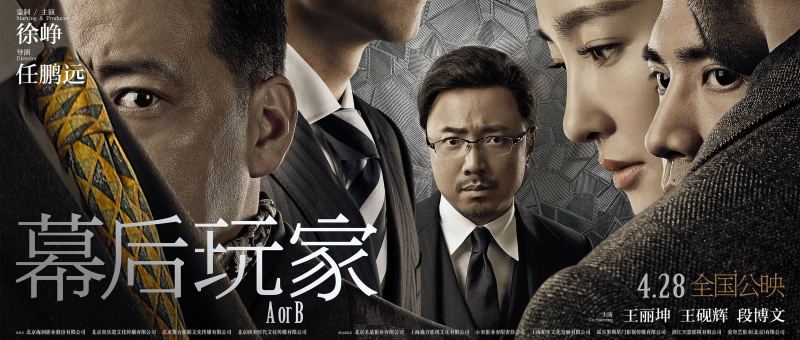
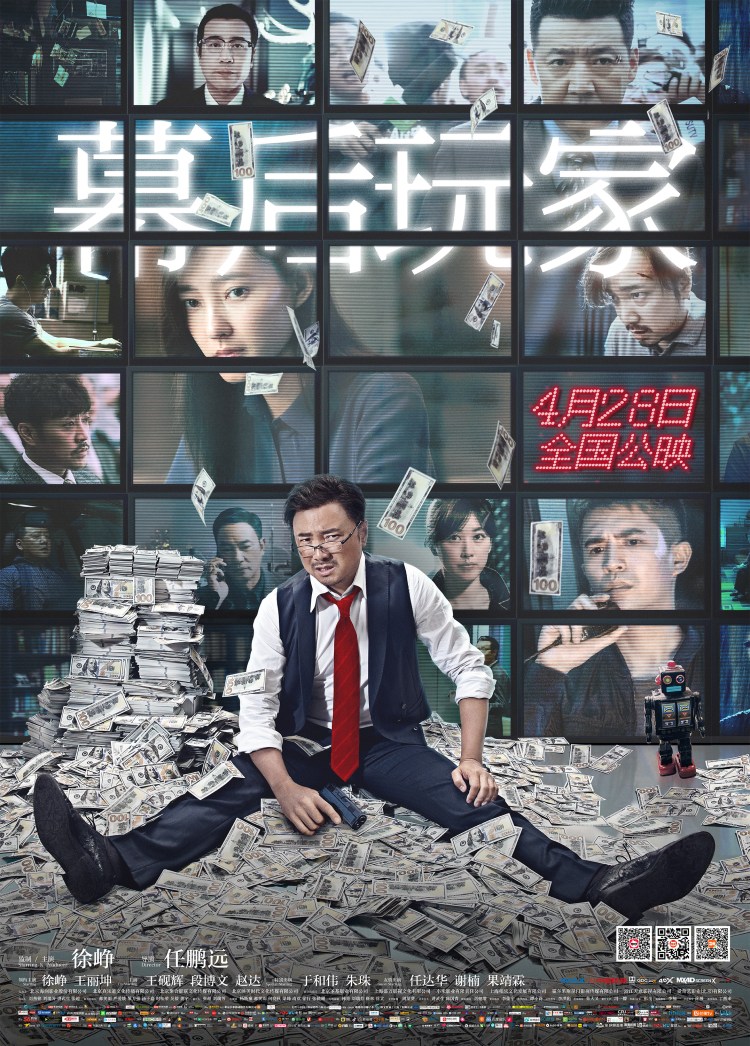
A or B (幕后玩家, Ren Pengyuan, 2018)

A or B poster 2It’s difficult not to read every film that comes out of the Mainland as a comment on modern China but there does seem to be a persistent need to address the rapid changes engulfing the increasingly prosperous society through the medium of cinema. A or B (幕后玩家, Mùhòu Wánjiā) is the latest in a long line of thrillers to ask if the pursuit of economic success has resulted in the decline of traditional morality. Life is, according to a mysterious voice on the other end of a walkie talkie, a series of choices – A or B, you or me. When someone says they have no choice, what they usually mean is that they have chosen me over you and expect the decision to be understood because if the situation were reversed, you would have done the same.

Corrupt financial billionaire Zhong Xiaonian (Xu Zheng) has been content to justify himself with this excuse. Having ousted his predecessor through blackmail and manipulation, he rose to be the head of a vast corporate empire while Zeng (Simon Yam), his former boss, committed suicide, a ruined and humiliated figure reduced to abject despair by Zhong’s campaign of malicious finagling. Despite his vast wealth, Zhong’s appetite for success remains unsatisfied while his wife Simeng (Wang Likun), disgusted by his ongoing descent into avaricious amorality, threatens to leave rather than watch him destroy himself.

With a number of schemes in operation, Zhong returns home drunk one evening to find his wife gone, collapsing into a restless drunken stupor. When he wakes up he discovers that he is now trapped inside his mansion – the windows have been boarded up and all the doors locked. Finding a walkie talkie in a box, Zhong is messaged by a mysterious voice who tells him that every morning at 9.30 (just as the financial news begins) he will be given a binary choice. Zhong must choose A or B or his kidnapper will set both in motion.

A or B is a complex kidnap thriller, but it’s also the story of a marriage and a metaphor for the compromises of modernity. Zhong, once an ambitious youngster from a humble background, claims he set himself on the road to ruin in pursuit of a “good life” on behalf of his wife. His wife, however, has a wildly different view of a “good life” to that of her husband. Simeng sacrificed her journalistic ambitious of becoming a war photographer to shift into technology in order to better understand Zhong only to be forced to give that up too when her discoveries of his duplicities began to alarm her. What Simeng wanted was less the huge mansion and expensive jewellery than a stable life of ordinary comfort with a loving and attentive husband who strived to understand her in the way she tried to understand him – something Zhong has completely failed to realise in his male drive to get ahead. Simeng threatens to leave, not because Zhong’s increasing moral depravity has killed her love for him, but that through leaving (and taking a number of his shares with her) she may be able to wake him up and put a stop to his headlong descent into amoral criminality.

Zhong has indeed fallen quite far as his first few A or B choices make clear. It doesn’t take him long to decide to throw a lifelong friend under the bus rather than further damage his business enterprise, only latterly making a frantic appeal to his captor to find out what happened to him. Confronted by the very real and often tragic consequences of his “choices” Zhong is forced into a reconsideration of the last decade of his life. Rather than ruminate, his first instinct is for action and so he sets about trying to escape his makeshift cage little knowing that his captor may have factored his ingenuity in to their original plan. He cannot however escape his final responsibility for becoming the man he is and faces the ultimate binary choice – to continue as he is and slide further down the road to ruin, or turn himself in to the police admitting his wrongdoing and pledging to start again on a more comfortable moral footing.

The identity of the kidnapper and their motives may be fairly easy to guess, but director Ren Pengyuan keeps the tension high as Zhong – played by comedy star Xu Zheng flexing his dramatic muscles, battles himself while trying to bridge the gap between the man he’d like to be and the one he has become. Fiercely critical of the empty materialism that has begun to define modern success, A or B insists that there is a choice to be made when it comes to deciding what gets sacrificed in the quest for prosperity. Zhong at least seems to have rediscovered what is important, reaffirming his commitment to an honest, if simpler, life warmed by the humble pleasure of wanton soup delivered by loving hands.


A or B opens in selected UK cinemas on 4th May courtesy of Cine Asia – check out the official website to find out where it’s playing near you.

Original trailer (English subtitles)
Be with You (지금 만나러 갑니다, Lee Jang-hoon, 2018)

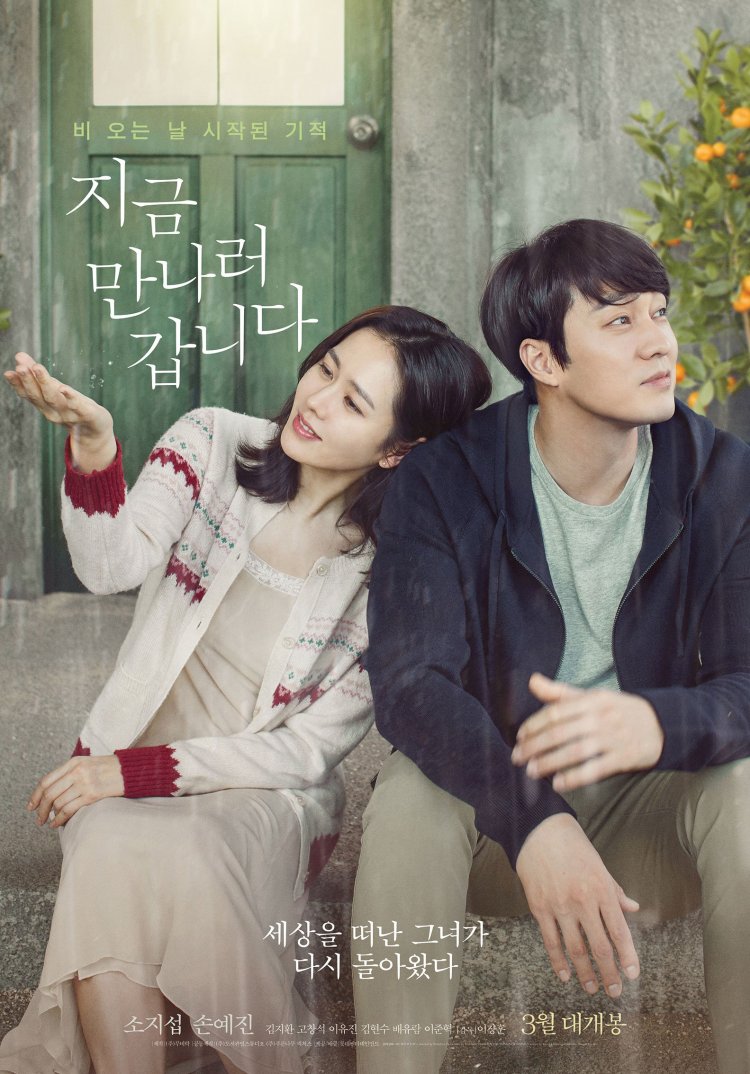
be with you Korean posterWhen Nobuhiro Doi’s Be With You was released in 2004, it followed the even more popular Crying Out Love in the Centre of the World as the second in a wave of “jun-ai” or “pure love” romantic dramas in which the heroes and heroines struggle to move past romantic tragedy. Where Be With You differed from the genre norm was on its focus on a love that was already successful – the couple were older, had married, and even had a son before their happiness was taken from them by a cruel illness. Lee Jang-hoon, adapting the source novel by Takuji Ichikawa, shifts the setting to Korea but more or less follows Doi’s blueprint with a number of notable exceptions.

Rather than the framing sequence which kicks off the original, Lee opens with the beautifully illustrated picture book Soo-a (Son Ye-jin) made for her son shortly before she passed away. In the book a cute mummy penguin lives up above in Cloudland watching her baby through a crack in the clouds. When the rainy season arrives, the mummy penguin will be able to catch the Raindrop Train to come back to Earth, but before the summer ends she’ll have to return else she’ll lose her place among the clouds and won’t be able to watch over her son even from afar.

Little Ji-ho (Kim Ji-hwan) has taken the book to heart and really believes his mother will come back when the first rains fall. His father, Woo-jin (So Ji-sub), knows better but hasn’t the heart to tell his son that the book is just a story and that he will never see his mother again. Against the odds, Ji-ho and Woo-jin do indeed find a woman who looks exactly like Soo-a collapsed in an abandoned railway tunnel in the forest but she has no memory of her life as a wife and mother or of the family who’ve been patiently waiting for her return.

In contrast to her counterpart in Doi’s original, Son Ye-jin’s Soo-a is a much less passive presence, less inclined to simply go along with her new circumstances and keen to remind us that the decision to “work or lurk” is entirely her own. Likewise, Lee scales back on Woo-jin’s disability, rendering it far less visible than it had been in Doi’s adaptation. Bar some barbed comments from insensitive relatives at Soo-a’s funeral who question Woo-jin’s ability to raise his son alone, Woo-jin suffers little by the way of stigma regarding his medical condition though he does worry he might have embarrassed his son by pushing himself too hard at a school sports day and making himself ill in the process. Rather than the typical “jun-ai” selfish selflessness which caused the hero to breakup with his one true love out of a noble desire not to be a burden, Woo-jin’s decision is perhaps more out of pride and insecurity than it is out of misplaced consideration.

Nevertheless the timeless innocence of the couple’s early courtship (such as it was) retains its essential sweetness. As Soo-a can’t remember her romantic past, Woo-jin recounts his recollection of it to her in all its painful honesty, and in return later gets to hear her side of events thanks to the diary she left behind for him to read. Having met in high school, the pair entertained crushes on each other they assumed were unrequited, never quite working up the courage to declare themselves and squandering opportunities through nerves and awkwardness. Reliving their original romance the couple fall in love all over again only to be parted by a season’s end.

Yet it is familial love rather than the romantic which eventually takes centre stage as the love of Soo-a and Woo-jin envelops their son in something deeper and richer than your average tragic love story and becomes all the more poignant for it. Realising her time is short, Soo-a sets about teaching her husband and son how to live without her – showing Ji-ho how cook eggs, how to do the washing, how to keep the place tidy etc while giving them a few more happy memories to see them through and reminding them to take care of each other in her absence. Dreamlike and ethereal as Lee effortlessly blends one time period into another in a vast web of memory, Be With You is a heartbreaking drama in which a family must attempt to come to terms with irreparable loss through learning to treasure past happiness and living on in its memory.


Screened at the 20th Udine Far East Film Festival.

Also screened as the first in a series of teaser screenings for the upcoming London Korean Film Festival. The next screening in the series will be Memoir of a Murderer on 21st May, Regent Street Cinema.

International trailer (English subtitles)

The Name (名前, Akihiro Toda, 2018)

b5_ol

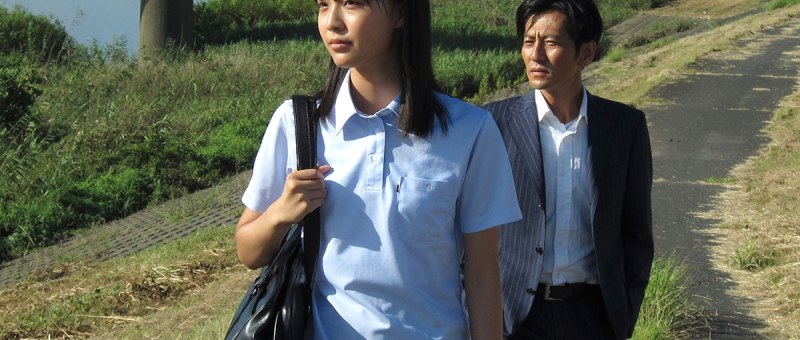
Names are a complicated business. Most people do not choose them for themselves, yet they come to define an identity or at least provide a substantial peg on which to hang one. If you give someone a fake name you are by definition shielding your essential self from view, refusing connection either in fear of discovery or intention to harm. The protagonist of Akihiro Toda’s The Name (名前, Namae) adopts several different titles as a part of his increasingly disordered everyday life in which he takes a hammer to his original identity in an ongoing act of guilt-ridden self harm. Meanwhile, his teenage would-be saviour, engages in a little role play of her own hoping to discover an essential truth about herself only to be disappointed, in one sense, and then perhaps find something better.

Masao Nakamura (Kanji Tsuda), if that is his real name, is not just leading a double life but is currently engaged in a number of iffy scams each compartmentalised under a different title and in which he plays an entirely different version of himself. Once a successful businessman, personal tragedy, marital breakdown, and bankruptcy have left him a floundering, cynical mess living in a rundown rural hovel with a pernickety neighbour and a decidedly lax approach to housekeeping. Masao’s main “job” appears to be working in a recycling plant where he’s managed to wangle a preferential contract by telling the higher-ups that his (non-existent) wife is seriously ill in hospital. Just as Masao’s scheme is about to be discovered, a mysterious teenage girl suddenly appears out of nowhere and plays along with Masao’s sob story, claiming to be his daughter come to remind him that he needs to leave earlier today because mum has been moved to a different hospital (which is why his boss’ contact had never heard of her).

Emiko Hayama (Ren Komai), as we later find out, is a more authentic soul but has decided on a brief flirtation with duplicity in observing the strange and cynical life of the morally bankrupt Masao. Facing similar issues but coming from the opposite direction, the pair meet in the middle – regretful middle-age and anxious youth each doing battle with themselves to define their own identities. Like Masao, Emiko is also living in less than ideal circumstances with her bar hostess single-mother, forced into adulthood ahead of schedule through the need to take care of herself, purchasing groceries, cooking, and keeping the place tidy. Thus her approach to Masao has, ironically enough, a slightly maternal component as she tries to get him back on his feet again – cleaning the place up and giving him something more productive to do than wasting his idle moments in bars and other unsavoury environments.

Masao’s current problems are perhaps more down to a feeling of failure rather than the failure itself. Once successful, happily married and excited about the future, he felt it all crash down around his ears through no real fault of his own. Nevertheless he blamed himself – his intensive work ethic placed a strain on his relationship with his wife and his all encompassing need for success blinded him to what it was that really mattered. By the time he realised it was already too late, and so it’s no surprise that he longs to escape himself through a series of cardboard cutout personalities, enacting a bizarre kind of wish fulfilment coupled with masochistic desire for atonement.

Now cynical and morally apathetic, Masao lets Emiko in on a secret about the grown-up world – it’s all lies. You have to put on disguise or two to get by; the world will not accept you for who you really are. Teenage girls might know this better than most, though Emiko is a slow learner. She might tell Masao that pretending to be other people is fun, but the one role she hasn’t yet conquered is that of Emiko Hayama – something which particularly irritates the demanding director of the theatre club she’s been cajoled into joining. Like Masao, Emiko’s life begins to fall apart through no fault of her own as she finds herself swallowed up by a typically teenage piece of friendship drama when her best friend’s boyfriend dumps her in order to pursue Emiko. Branded a scheming harlot and ejected from her group of friends, berated by the director of the theatre troupe, and having no-one to turn to at home, Emiko finds herself increasingly dependent on the surrogate father figure of Masao who is happy enough to play along with the ruse so long as it is just that.

Through their strange paternal bond, Emiko and Masao each reach a point of self identification, figuring out who it is they really are whilst facing the various things they had been afraid to face alone. Lamenting missed opportunities while celebrating second chances, The Name makes the case for authenticity as a path to happiness in a world which often demands its opposite. Melancholy but gently optimistic, Akihiro Toda’s peaceful drama is a heartwarming tale of the power of unexpected connection and the importance of accepting oneself in order to move into a more positive future.


Screened at the 20th Udine Far East Film Festival.

Crossroads: One Two Jaga (十字路口, Nam Ron, 2018)

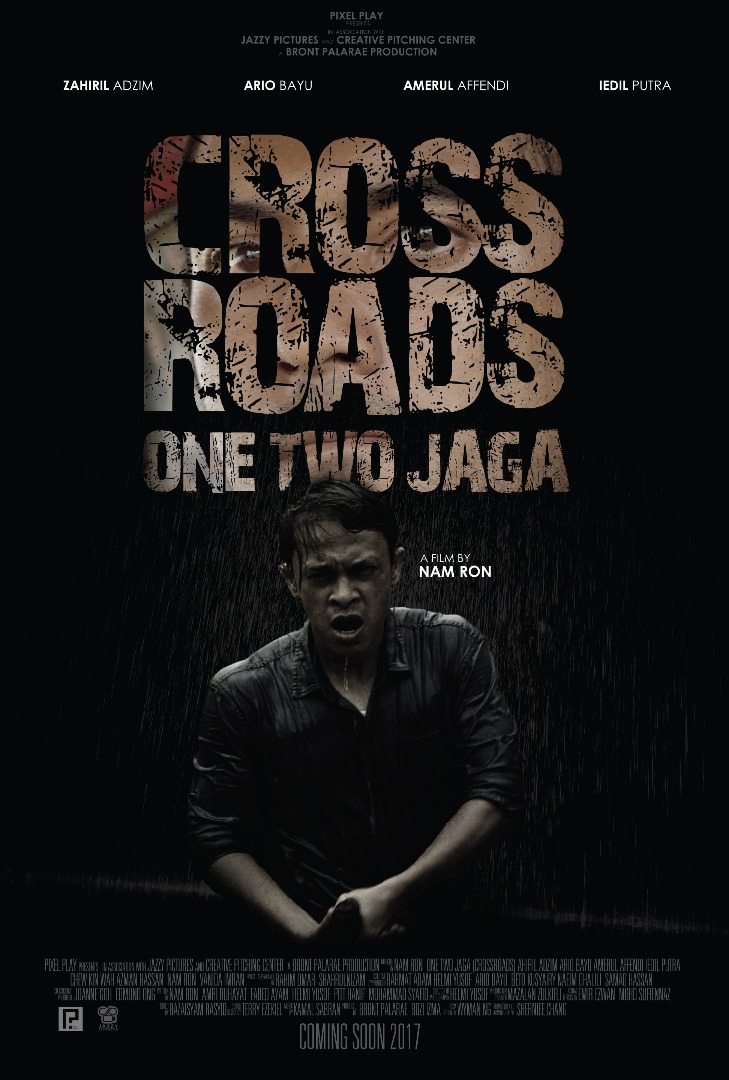
crossroads one two jaga posterThe world is increasingly interconnected but far from greater freedom and increased possibilities, exploitation is often all that awaits those seeking opportunities overseas. Crossroads: One Two Jaga (十字路口) places the undocumented migrant worker at its centre and uncovers a deeply entrenched system of corruption and hypocrisy in which the line between the forces of order and chaos is so thin as to be barely discernible. The migrant worker is exploited twice over – once by the employers and again by the police who blackmail and extort, pulling in anyone who seems “suspicious” whenever they find themselves short of a few pennies. With no recourse to the “law” and no route “home”, there is little hope for a brighter future for any but those who seek to profit from other people’s misery.

Beginning at the end, we open on the bruised face of a young man who has prominent stitches on his cheek. Something tells us he is a police officer, but he is in questioning over the death of a young boy, killed by a bullet from his weapon. The officer looks stunned and claims to know nothing. As it turns out he may be telling the truth, but he alone is responsible for a child’s death, on the one hand, and exposing a corrupt police chief, on the other.

Flashing back, Joko (Izuan Fitri) – the son of Indonesian migrant worker Iman (Ario Bayu), wants to go for a ride with Adi (Amerul Affendi) – the adult son of Mr. Sarip (Azman Hassan) who runs a small construction firm (among other enterprises). Iman doesn’t really want his son to go, but he ignores him and goes anyway. Iman has another problem on his hands – his sister, Sumiyati (Asmara Abigail), who has left the family she was working for as a maid and wants to go home to Indonesia. Mr. Sarip says he can help with that (for a price) but Sumiyati is stopped by Hassan (Rosdeen Suboh) and his rookie partner Hussein (Zahiril Adzim). Hassan really just wants a bribe because his wife really needs money to avoid family embarrassment, but things goes south when Iman ropes in Adi to try and help him out only to escalate the situation into a declaration of war on the “rogue” policemen.

Undocumented workers exist in a kind of grey area which makes it possible for the unscrupulous to misuse them for their own ends. Sumiyati, like many young women, has gone abroad to work as a maid but found herself kept a virtual prisoner by her employer who holds her passport as a guarantee. With job parameters unclear, she finds herself not only maid but cook, babysitter, and office assistant and all for almost no pay. Fed up she upped and left, but lost her passport in the process leaving her with no legal way back to Indonesia which is where she’s decided she’d rather go. The only way “home” is through the back door channels operated by men like Mr. Sarip who have fingers in many pies and friends in all the right places.

Ordinarily speaking, a righteous rookie cop would be our hero, but we already know Hussein is our villain. Though he wants to enforce the letter of the law and resents the casual corruption of other officers, it’s his hotheadedness and refusal to play the long game which eventually cause so much trouble. Accidentally or otherwise, he does manage to unmask the kingpin responsible for holding together a system of corruption running from the top of the force down, collaborating with the criminals and turning a blind eye to real “crime”, but it comes at a heavy price and one to which Hussein seems worryingly indifferent.

Stylishly shot, Crossroads weaves a complex picture of interconnected exploitations in which the innocent are made to pay the price for the world in which they live. Realist in essence but expressionist in intent, gritty images of children disposing of bodies mingle with a father’s nightmare as blood colours the rain soaked ground and a young woman disappears in its miasmic haze. Malaysia maybe the crossroads of Asia, but it also finds itself at something of a junction unsure in which direction to turn, unwilling to confront the darkness that lies at the heart of the modern society.   


Screened at the 20th Udine Far East Film Festival.

Official trailer (English subtitles)

Maquia: When the Promised Flower Blooms (さよならの朝に約束の花をかざろう, Mari Okada, 2018)

maquia poster 1Perhaps because of its often adolescent target audience, the “hahamono” or mother movie is a relatively rare genre in the world of anime despite its importance in other Japanese media. Wolf Children aside, most anime prefer to focus on the problems of young people dealing with an absentee or unreasonable parent who unwittingly enables the teen to undergo the adventures shortly to ensue. Maquia: When the Promised Flower Blooms (さよならの朝に約束の花をかざろう, Sayonara no Asa ni Yakusoku no Hana wo Kazaro), is an exception to the rule in examining the complex nature of motherhood with a sideline in the legacy of familial disconnection, alienation, and the cyclical natures of life and memory. Flawed if ambitious, the first directorial feature from scriptwriter Mari Okada is a sprawling fantasy epic but one with its heart firmly on its sleeve.

Maquia (Manaka Iwami) is a member of the Separated Clan – an Iolf who weaves time and life into being. The life in Iolf is idyllic, if dull, and consists of little other than weaving. Maquia’s tomboyish friend, Leilia (Ai Kayano) rejoices in daring stunts and precocious flirtations that the shy and introverted Maquia can only dream of, while Maquia, an orphan, feels herself alone and remains somehow incapable of bonding with the other children. When Iolf is raided by Mesarte soldiers, Maquia is carried off by one of their great stone dragons. Now forced to explore the world outside of Iolf, Maquia chances on the remains of a ruined camp, stumbling over bodies only to discover a howling baby boy still held in the icy grip of his mother who tried her best to protect him even as she died. Perhaps identifying with another soul so completely alone, Maquia picks the boy up and decides to raise him though she is barely more than a child herself.

As the Iolf age much slower than the average human, Maquia’s quest to find true connection through maternity is destined to end in tragedy. Maquia christens her son Arial (Miyu Irino) and finds a home with a kindly ranch woman raising two sons of her own alone after her husband was killed by a rabid dragon, and begins to bond with her little boy. Meanwhile Leilia has been kidnapped and forced married to the Mesarte prince in the hope that his heir will inherit some Iolf lengevity. While Maquia is beginning to find connection, Leilia now tastes isolation as an imprisoned minority in the imperial court where she is also separated from the daughter born from a non-consensual union but loved all the same.

Though she already feels so alone, Maquia is warned by her Elder that if she wants to experience true loneliness she need only fall in love with a mortal. Maquia falls in love, or rather tries to, but as a mother rather than a lover. Pouring everything into her child Maquia knows the day will come when she must lose him, but for her it is in a more concrete sense than the normal breaking of a mother/son bond. The notion of mortality and differing lifespans is somewhat uncomfortably dramatised by the passing of the aged family dog who reaches the end of his journey long before his master. Though the message is sound is enough it does rather negate Maquia’s insistence that Arial is not a toy, implying that humans are almost like pets to the long-lived Iolf, something to be loved and fussed over in knowledge of its impermanence but something to which a lesser attachment is formed. 

Maquia, however, hurtles in the opposite direction, vowing to sacrifice all of herself in service of her son. Turning down a suitor in order to remain true and pure as an idealised mother figure, Maquia perhaps takes a retrograde step in agreeing to negate her own personality to become “a mother”, but like the classic hahamono, her overwhelming love proves too much for her growing son who grows tired of the burden of a mother’s expectation, longing to be free of her somewhat suffocating need to protect him while belittled by the knowledge that he, a mortal yet still a man, is incapable of protecting her. Maquia must find the strength to let her son go if she is to see him grow, but to do so will require a shift in self-knowledge born of truly learning what it means put another’s interest above one’s own.

Maquia’s struggles play out in parallel with the ongoing political drama surrounding the corrupt and oppressive Mesarte regime which seeks to rule by fear and violence, stealing the gifts of the Iolf only to abuse them. No matter the genesis, Prince Hazel seems to have formed a genuine attachment to his stolen bride (even if it is not returned) and does what he can to “protect” her, while her former love from the Iolf, Krim, has gone half mad through love denied, kidnapping Maquia to rope her into a half-baked rescue plot before threatening to burn the world if he cannot have his love for the price he is willing to pay.

The question is one of whether it is better to connect fully in the knowledge of a coming heartbreak, or hold back in self protection. In this Maquia learns the true meaning of her Elder’s instruction and begins to realise that the fabric that she weaves is spun from love and memory. Nothing is ever truly lost, merely laid down for someone else to pick up, and while parting is inevitable meeting is not and is something to be treasured no matter how painful it may be.


Distributed in the UK by Anime Limited

Original trailer (English subtitles)
Note: there seems to be some variation in the translation of the names of various characters, this review uses Anime Limited‘s list.

Operation Red Sea (红海行动, Dante Lam, 2018)

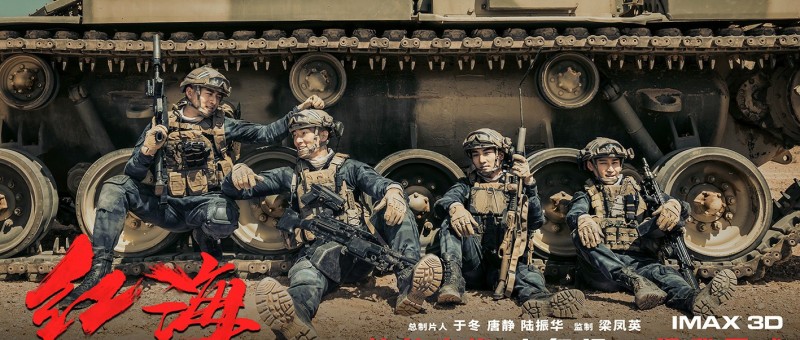
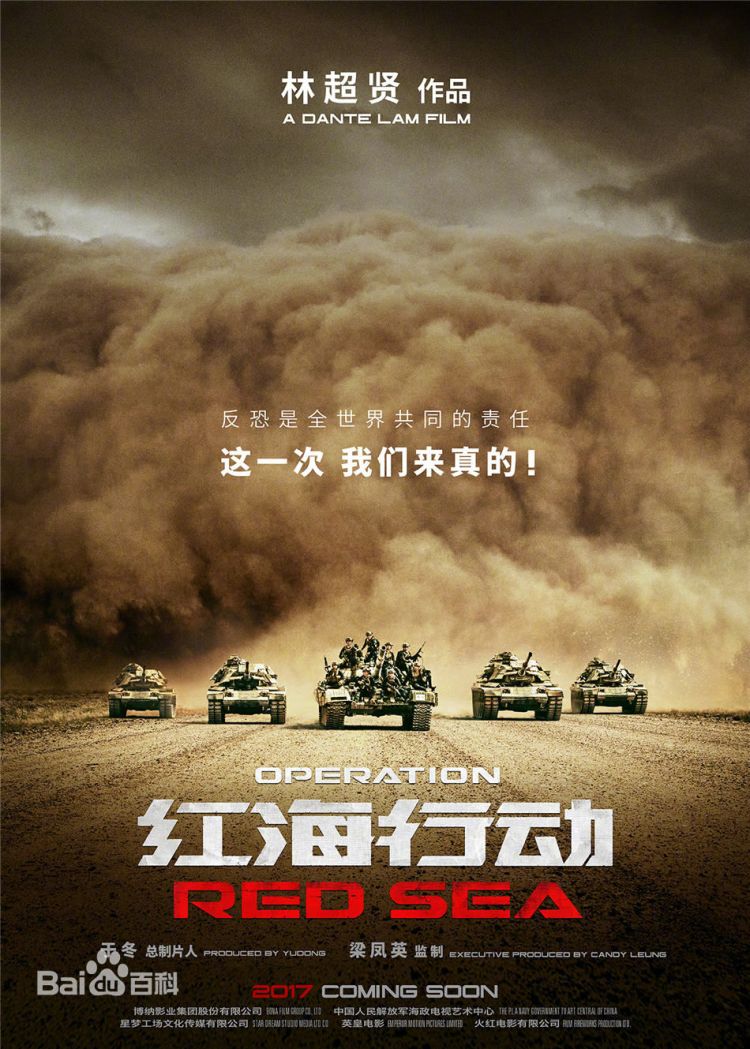
Operation Red Sea posterDante Lam, a Hong Kong action icon, is one of many to have begun looking North, tempted by the bigger budgets and audience potential of the Mainland. Following 2016’s Operation Mekong, Lam is back on manoeuvres with a second in what may develop into a series, Operation Red Sea (红海行动, Hónghǎi Xíngdòng). Red Sea is not connected to Mekong in terms of narrative and only features a cameo by the earlier film’s star, Zhang Hanyu, who remains firmly ensconced on the bridge of the all powerful Chinese warship while an elite troop of special forces handles the rapidly deteriorating situation on the ground, but it is once again “inspired” by a true story and perfectly positioned to show the Chinese security services in a more than favourable light.

The action begins in 2015 when the Chinese navy wades in to defend a merchant ship attacked by Somali pirates, managing to apprehend the “bad guys” with a minimum of bloodshed before they escape Chinese waters. Having suffered a casualty, the squad are then dispatched to rescue Chinese citizens caught up in an Middle Eastern coup. Their mission is helped and hindered by intrepid Chinese-French journalist, Xia Nan (Hai Qing), who has discovered evidence that a dodgy “businessman” caught up in the attack is in possession of a consignment of “yellowcake” along with a deadly dirty bomb formula which he plans to sell on to the terrorists currently waging war on the city.

Though Operation Red Sea is, perhaps, no more jingoistic than any British or American war film, its focus is more definitively centred on home concerns than an attempt to police the world. The Chinese military exists to defend Chinese citizens, even if those citizens are increasingly scattered throughout an unstable world. This presents a point of conflict between idealistic, and occasionally reckless, journalist Xia Nan whose mission is to stop the terrorists and rescue her friends, and the soldiers whose primary mission is to evacuate Chinese citizens though they hope to be able to provide assistance to citizens of other nations too if their mission parameters allow.

The Jiaolong, elite Chinese special forces, are indeed an impressive fighting force who proceed with military precision but are not without compassion. Informed by a local soldier that the terrorists often force civilians to become suicide bombers, the team’s bomb disposal officer puts himself at great risk to defuse a device and free a man destined to become a car bomb, rather than simply neutralising the threat. Protecting Chinese in peril is the official goal, but on a human level the soldiers are overcome with sorrow and anger for the local population, lamenting that they may have saved some lives but many have lost their homes and they will simply leave them behind to deal with the situation alone when they succeed in their mission of evacuating stranded Chinese diplomatic personnel.

Despite the overtly propagandistic elements which paint the Chinese military as a force for good, fighting bravely for their countrymen overseas, the landscape of war Lam paints is a hellish one full of blood, guts, and scattered body parts. Much of the film plays as a two hour recruiting video for the Chinese navy – it’s almost a surprise there aren’t people waiting with clipboards outside the theatre, but it’s difficult to believe anyone would be in a big hurry to sign up after witnessing the pure human carnage of a foreign battlefield and the very real threats the soldiers subject themselves to all while stoically pursuing their mission, committed to the protection of their nation and people.

Nevertheless Lam’s spectacle is impressive and action choreography unsurpassed. Working on a huge scale with everything from snipers to tank battles, Lam keeps the tension high as the team attempt to adapt to a situation which is rapidly deteriorating leaving them all but stranded behind enemy lines where each and every one of them faces a very real threat of death or serious injury. Despite an overuse of CGI slow motion bullet vision, Operation Red Sea largely earns its bombast with relentless fury, leaving its propaganda aims to dangle the background until the final coda which seeks to remind us that China rules the waves and will protect its citizens and territory wherever they may be.


Currently on limited release in UK cinemas courtesy of China Lion.

Original trailer (English subtitles)

Monster Hunt 2 (捉妖記2, Raman Hui, 2018)

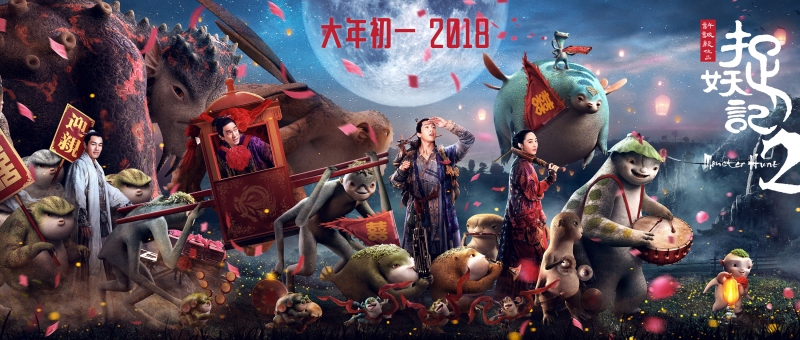
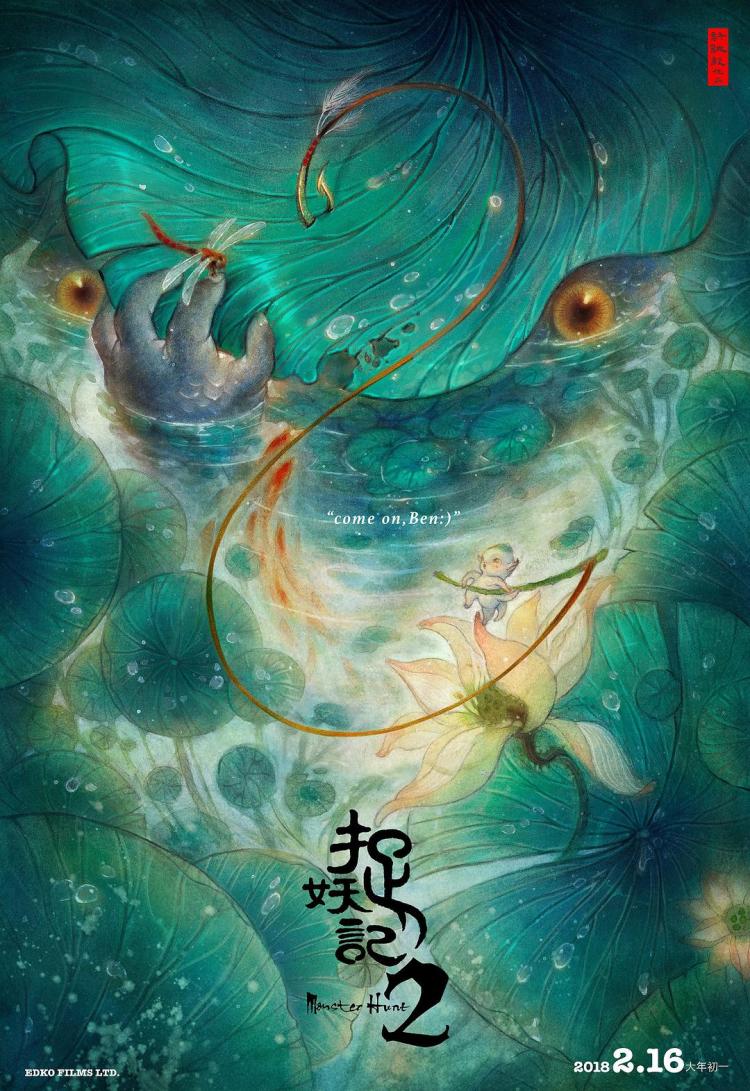
Monster Hunt Poster 2Despite numerous production difficulties, Monster Hunt went on to become a bona fide box office smash and international pop culture phenomenon on its release in 2015. Children and adults alike fell in love with the adorable little radish monster Wuba who, in grand fairytale tradition, is the secret heir to all of Monsterdom and the subject of a prophecy which posits him as the long awaited unifying force set to restore equality between humans and their Monster brethren. By the time this sequel, Monster Hunt 2 (捉妖記2, Zhuō Yāo Jì 2), rolls around, things are looking up for Wuba seeing as no one’s actively trying to eat him, but like so many kids in modern China he misses his human mum and dad who made a difficult decision at the end of the last film that Wuba should live with Monsters in Monsterland because it just wasn’t safe for him in the human realm.

Consequently Wuba has been living happily in the forest where the Monsters have made a little village for themselves. The Monster village is a place of laughter and song where everyone is welcome and they dance cheerfully all night long. That is, until evil monsters turn up looking for Wuba again, destroying the village and leaving him on the run all alone back in the human world. Meanwhile, Tianyin (Jing Boran) and Xiaolan (Bai Baihe) are on a quest to look for Tianyin’s long lost dad – a famous monster hunter who left Tianyin behind as a child to keep him safe, just like Tianyin had to leave Wuba. Nevertheless, though Tianyin and Xiaolan have developed a sparky domesticity, they’re both unwilling to admit how much they miss little Wuba and wish they could go get him back from Monsterland even if they know he’s probably safer hidden away from those who might want to do him harm. While looking for Tianyu and Xiaolan, Wuba gets himself semi-adopted by a very odd couple of chancers in the form of shady gambler Tu (Tony Leung) and his monster partner Ben-Ben.

Once again the theme is family. Monster Hunt spoke, perhaps, to all those separated families in modern China or more particularly to the children in revealing that parents sometimes have to make difficult choices and end up living apart from their kids so that they can give them a better life. Monster Hunt 2 accepts the premise but then provides an emotional correction in making plain the pain Tianyu and Xiaolan feel on being separated (perhaps forever) from Wuba, until they eventually settle on tracking him down and facing whatever dangers come their way together. They come to this realisation after saving a mother and son who’ve been (unfairly) arrested by the Monster Hunt Bureau and witnessing their happiness just in being together despite the sticky situation they may be in.

Meanwhile Wuba, sad and alone, is happy to have found himself a surrogate family in the form of kindly Ben-Ben and the spiky Tu – a virtual mirror of Tianyu and Xiaolan when they first met. As in the first film, Tu originally takes Wuba in because he wants to sell him to Madame Zhu (Li Yuchun) – a woman he has cheated in both love and money, whose patience apparently knows no end. This brief episode of Wuba and his two new uncles is a subversive one in terms of mainstream Chinese cinema, and unlike the early union of Tianyu and Xiaolan there is little comedy in the easy coupledom of Ben-Ben and Tu who become two men raising a child together in relative happiness. This is perhaps the reason for the strange coda in which Tu and Ben-Ben have a brief chat about girls, relegating Tu’s earlier awkward admission of affection one more of brotherhood than love and affirming their total heterosexuality (both the female love interests are also from the same species, just to make things crystal clear).

Yet the message is strong – families want to stay together, parents want to be with their kids and kids want to be with their parents so maybe the world should just let them, even if those families aren’t quite like everyone else’s. With much better production values than the first film and a much more consistent tone, Monster Hunt 2 is a vast improvement on its predecessor though it treads more or less the same ground and is content to meander between several set pieces with more than a few seemingly extraneous sequences of Tu getting up to mischief or Xiaolan using her feminine wiles on a nerdy inventor (though these at least add to the more complex arc of the feminised Tianyu and masculine Xiaolan each moving towards a gender neutral centre). Monster Hunt 2 maybe more of the same and little more than the next instalment in a series, but nevertheless its winning charm and gentle warmth are enough to ensure there will still be devotees of Wuba ready to reserve their seats for the inevitable part three.


Currently on limited release in UK cinemas. Screening locations for the UK, Ireland, US and Canada available via the official website.

International trailer (English subtitles)

Detective Chinatown 2 (唐人街探案2, Chen Sicheng, 2018)

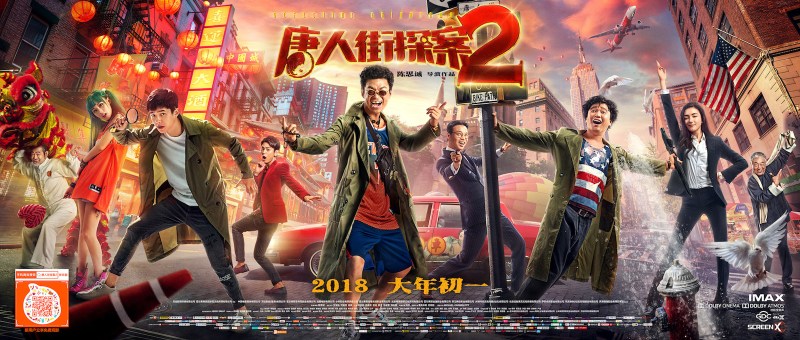
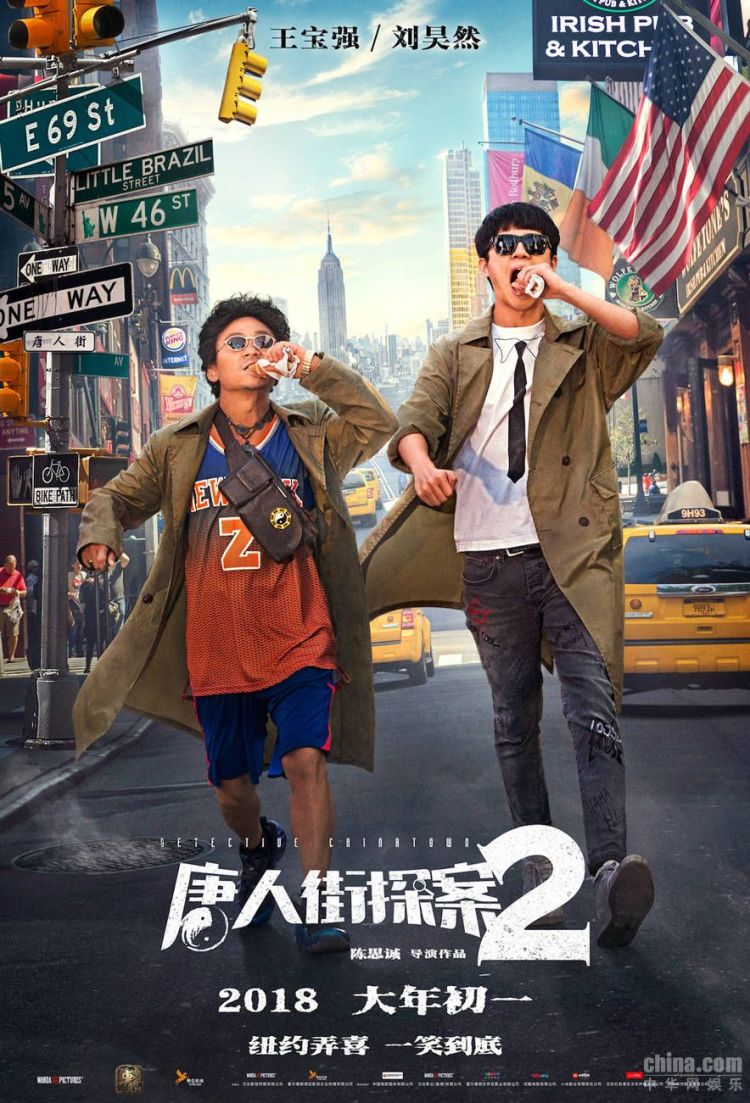
Detective Chinatown 2 posterBox office smash Detective Chinatown successfully pulled off the difficult feat of merging amusing buddy cop comedy with a holiday setting and intriguing cerebral mystery. Given the success of the first film it’s no surprise that the boys are back in town, or, as teased in the finale, in New York where another strange crime awaits their particular talents. Firmly a Chinese production taking place in an American city (though one using American crews), Detective Chinatown 2 (唐人街探案2, Tángrénj Tàn Àn 2) tries its best to maintain its unique character while shifting into American crime thriller territory, even if hampered by a stereotypical view of its target culture and some decidedly ropey English language dialogue.

Qin (Liu Haoran), now apparently a student at the police academy, has been tricked into coming to New York for Uncle Tang Ren’s (Wang Baoqiang) wedding to his love interest from the first film, Ah Xiang (Tong Liya). When he arrives, however, Qin quickly figures out that he’s in a room with some of the world’s best detectives – Ah Xiang left Tang Ren for someone with more money and so Tang Ren wants Qin to help him solve a mysterious New York murder for the reward promised by one of the victims’ grandfathers, a Chinatown gangster named Uncle Seven (Kenneth Tsang). Qin likes a good mystery so sticks around though the situation becomes decidedly more complicated after he finds and discounts the main suspect, Song Yi (Xiao Yang), leaving the trio on the run from the authorities, other detectives vying for the reward, and Uncle Seven’s guys some of whom have their own ulterior motives.

The most satisfying element of Detective Chinatown lay in the genuinely intricate nature of its locked room mystery and elegance of its resolution. Detective Chinatown 2 shifts away from the classical style of a European drawing room mystery for something altogether flashier and more American in keeping with its setting. It is, however, guilty of more than the faults of its genre in heavily signposting its solution from the midway point leaving any serious thriller fan twiddling their thumbs waiting for the penny to drop with ace detective Qin. Though a secondary twist offered after the killer has been unmasked helps to undercut the disappointment of such an anticlimax, it is not quite enough to compensate for the crushing obviousness of the central mystery.

Likewise, where Detective Chinatown existed firmly within a small Chinese enclave of Bangkok where everyone knew everyone, the move into the metropolis of Manhattan robs the film of its small-town charm. Despite the “Chinatown” tag, Chinatown itself is not a big player and as both of our guys are now full outsiders in another culture, we’re treated to a much less nuanced take on local stereotypes with several running gags likely to raise audience hackles with their tone-deaf approach to visualising the multicultural city. All of that aside, shooting in Central Manhattan with American crews also means much less creative freedom leaving the set pieces perhaps less impressive in terms of scale and ingenuity while the cinematography occasionally feels much more like standard American television than a big budget Chinese comedy.

Nevertheless the odd pairing of loudmouth Tang Ren and the comparatively subdued Qin, whose powers find even more impressive means of visualisation as he literally lifts buildings off a map and moves them round, remains the key selling point even though each half of the pair is also subjected to a bizarre round of sexual harassment from a biker boss with a tiny Chinaman fetish to a kung fu master with possible Alzheimer’s respectively. Though Chen generally relies on slapstick, the gags have a decidedly topical flavour – a police chief with terrible hair who makes off colour jokes and wants to build a wall to keep out all the annoying Chinese guys he can’t be bothered to deal with, for example, or the repeated references to immigration and the various dangers faced by those who’ve come from somewhere else and are trying to make a life for themselves. Yet the guys also keep running into people who unexpectedly speak Mandarin – perhaps a sign of the equally unexpected elevated status of Chinese visitors and their all important economic power. Detective Chinatown 2 is a mild disappointment after the duo’s impressive debut, but nevertheless does enough to spark interest in the teased Tokyo-set third instalment.


Currently on limited UK cinema release courtesy of Cine Asia. Screening details for UK, Germany, Australia, and New Zealand available via official website.

Original trailer (English subtitles)