BON-UTA, A Song from Home (盆唄, Yuji Nakae, 2019)

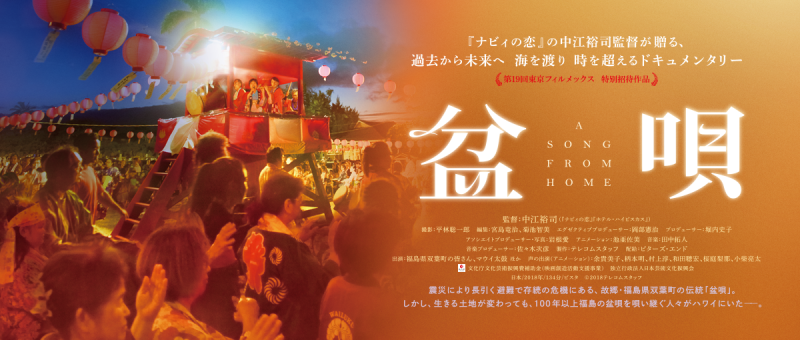
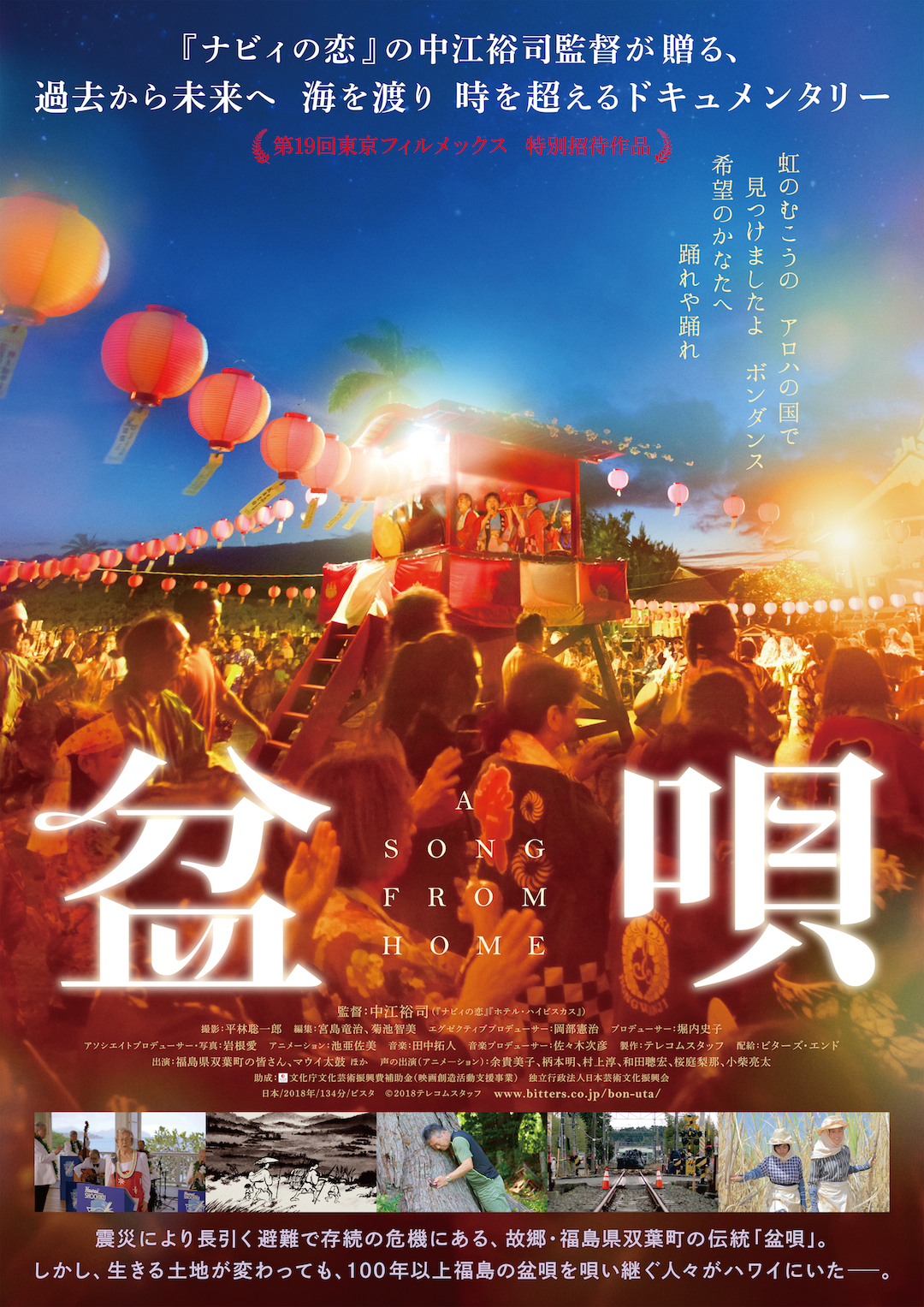
Exiled from their homes, the residents of Futaba lost more than just their material possessions when the area was declared uninhabitable following the Fukushima nuclear disaster. With former residents scattered all over the country never knowing when or if they will be able to return, a community has been ruptured and its history is in danger of dying out. Yuji Nakae’s poignant documentary Bon-Uta (盆唄) explores this sense of loss through the prism of the Bon dance while meditating on the notion of exile in comparing the experiences of migrants and Hawaii and their descendants. 

A photographer, Ai, has been photographing Bon dances in Japan and Hawaii and was struck by the Hawaiian response to the 2011 earthquake, seeing as many of the Japanese-Americans living in Hawaii traced their ancestry back to the Fukushima area. Hisakatsu and Haruo, childhood friends from Futaba, travel to Hawaii and observe the Bon dance, reflecting that it is different from that in Japan but perhaps in some ways better. Seeing how they have incorporated many different styles of Bon dance gives them the idea that they could save the Futaba dance by teaching it to the Hawaiian dancers, placing it in a kind of depository so that in 50 or a 100 years if Futaba becomes habitable again, their descendants could relearn it. But what they quickly discover is that it’s difficult to teach something that each of them has spent their whole lives learning in a matter of days, while the fact is that the community itself is central to the dance which loses its meaning when performed by those who’ve never been there. 

Nakae begins to meditate on insiders and outsiders as an older woman returns to her family home in the exclusion zone and uncovers papers from the 19th century which recount the discrimination her own family faced on being encouraged to move to the village following a massive famine which had reduced its population by two thirds. Now outsiders in the areas in which they have resettled, the former Futaba residents lament that they can no longer practise their art because their homes are in much more urbanised locations where neighbours are in close proximity and they fear disturbing them with the noise. The film equates their yearning for their lost community to that felt by those who emigrated to Hawaii in the 19th century hoping to escape rural poverty but often found themselves trapped, unable to return because of the low pay and exploitative conditions of the island’s sugar plantations. 

The Hawaiian migrants sang songs of exile, of how they missed their homes and families and how hopeless felt in the false promises that had been made to them of better lives abroad. Even in this, their culture survived while another, now elderly, woman recounts singing for a Japanese orchestra during the war when such songs were technically forbidden as other young men keen to claim their identity as Japanese-Americans enlisted in the military. The former Futaba residents begin to see new hope that they too could find a way to preserve a sense of their hometown even if they can’t return to it, deciding to organise a Bon dance of their own in another town bringing together the unique dances of each district while honouring the spirits of those who have passed away. 

Hisakatsu writes a new Bon song of his own from the point of view of a cherry tree in Futaba to ward off the “ogres” which stand in for radiation as the tree looks forward to blossoming once again, hoping the people will eventually return. Featuring a lengthy animated sequence recalling the experiences of the 19th migrants to Futaba who found themselves rejected as outsiders while reflecting on the contemporary exile of the former residents, the film eventually discovers a note of positivity and hope that even now scattered and unable to return to their homes the community can survive through the practice of its culture in passing on the unique local Bon dance to successive generations just as the migrants in Hawaii passed theirs on to their children in the hope they too might one day be able to return home.


Trailer (English subtitles)
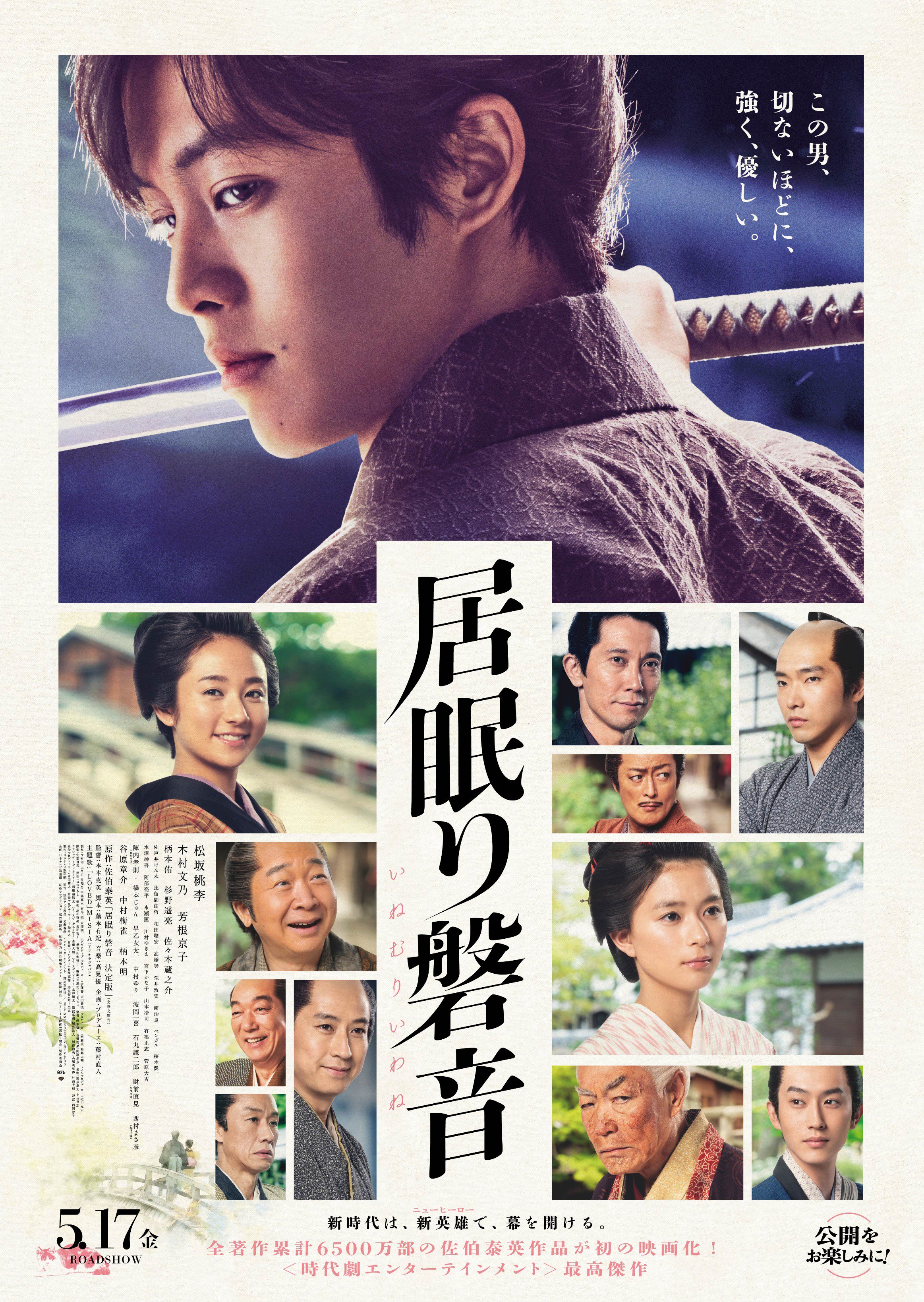
Iwane: Sword of Serenity (居眠り磐音, Katsuhide Motoki, 2019)

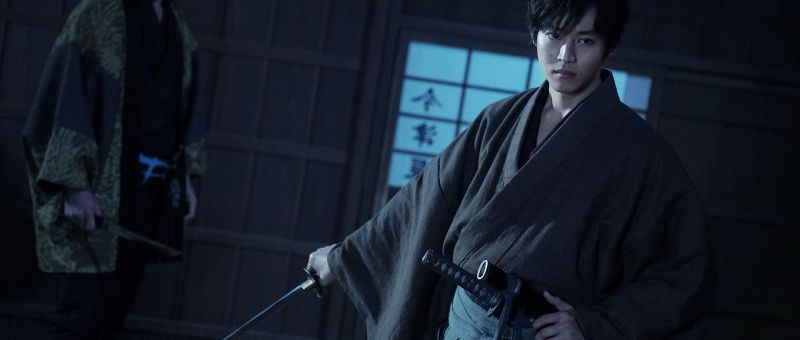
The contradictions of the samurai code conspire against one noble-hearted young man in Katsuhide Motoki’s adaptation of the long running series of historical novels by Saeki Yasuhide, Iwane: Sword of Serenity (居眠り磐音, Inemuri Iwane). Yet this truly serene samurai is a stoical sort, learning to bear his pain with fortitude while standing up for justice in an increasingly corrupt Edo where money rules all while an ascendent merchant class continues to challenge the fiercely hierarchical social order. 

Beginning in 1772 which turned out to be a disastrous year, the tale opens as hero Iwane (Tori Matsuzaka) prepares to return home after completing his three year rotation in Edo in the company of childhood friends Kinpei (Tasuku Emoto) and Shinnosuke (Yosuke Sugino). Shinnosuke is in fact married to Kinpei’s sister Mai, while Iwane will himself be married to Kinpei’s other sister Nao immediately on his return so close are they. As Iwane’s father tells him, there are great hopes for these young men that they can “turn our outdated clan around”, but events will conspire against them. Spoiling the happy homecoming, Shinnosuke is accosted by a drunken uncle who convinces him Mai has been unfaithful in his absence with the consequence that he kills her immediately on his return home. Unable to understand this turn of events, Kinpei confronts his friend but eventually kills him, while Iwane is then forced to kill Kinpei after he goes on murderous rampage in revenge for the wrong done to his sister. 

In trying to mediate the case, the argument is put forward that Shinnosuke acted rashly and should have brought his suspicion to the authorities rather than opting for summary execution. The lord however disagrees, condoning Shinnosuke’s actions under the rationale that to do so would have been considered “weak minded” while as Shinnosuke himself had claimed he acted in accordance with the samurai code in which female adultery is illegal and punishable by death. By contrast, he finds Kinpei’s rashness offensive, insisting that he also should have recognised the legitimacy of his sister’s murder and simply left quietly with her body. Having learned the truth in which his childhood friends became victims of clan intrigue, romantic jealousy, and tragic misunderstandings in this Othello-like plot, Shinnosuke and childhood sweetheart Nao are also consumed by the rashness of samurai law each exiled from their clan and cast adrift in Edo-era society. 

Edo-era society is however also itself corrupt. Some months later, Iwane has returned to Edo as a lowly ronin lodging with a kindly old man, Kinbei, who helps him find a job firstly gutting eel then as a bodyguard at a money exchange which has been receiving anonymous threats they assume are from rival broker Awaya who has hatched a nefarious plan to manipulate the currency market to stop the current Shogun introducing a new unit which can be used in both Edo and Kyoto which would understandably cut into his already corrupt business model. Luckily, Imazuya is an honourable man who backs the new currency plan and wants to do the right thing which makes him a perfect fit for Iwane’s innate sense of justice. “You don’t know the way of the merchant” Awaya snaps at him, suggesting both that the samurai are already on their way down as the merchants rise and that his unwillingness to play dirty will be his downfall. Nevertheless, Iwane is the type to adapt quickly, instantly coming up with a way to play Awaya at his own game and kick his destructive amoral capitalism to the curb. 

Meanwhile, he continues to pine for Nao while drawing closer to Kinbei’s earnest daughter Okon (Fumino Kimura). As we discover Nao is also a victim of an intensely patriarchal social order but through the tragedy that befalls them also finds strength and agency making a life changing decision that allows her to become independent while looking after her family if in the knowledge that the childhood romance she shared with Iwane is a thing of the past. Iwane too agrees that he is trapped in a living hell of guilt and grief, yet choosing to go on living anyway as calm and cheerful as he’d ever been while standing up to Edo-era corruption though uncomfortably enough this time against the destabilising influence of the rising merchant class and therefore in contrast to most jidaigeki reinforcing the legitimacy of the samurai order which has paradoxically also ruined his life with its rigid and implacable social codes. In any case, Motoki’s classic chanbara melodrama has a serenity of its own as the cheerfully laidback hero resolves to live his life by a code of his own free of samurai constraint. 


Trailer (no subtitles)

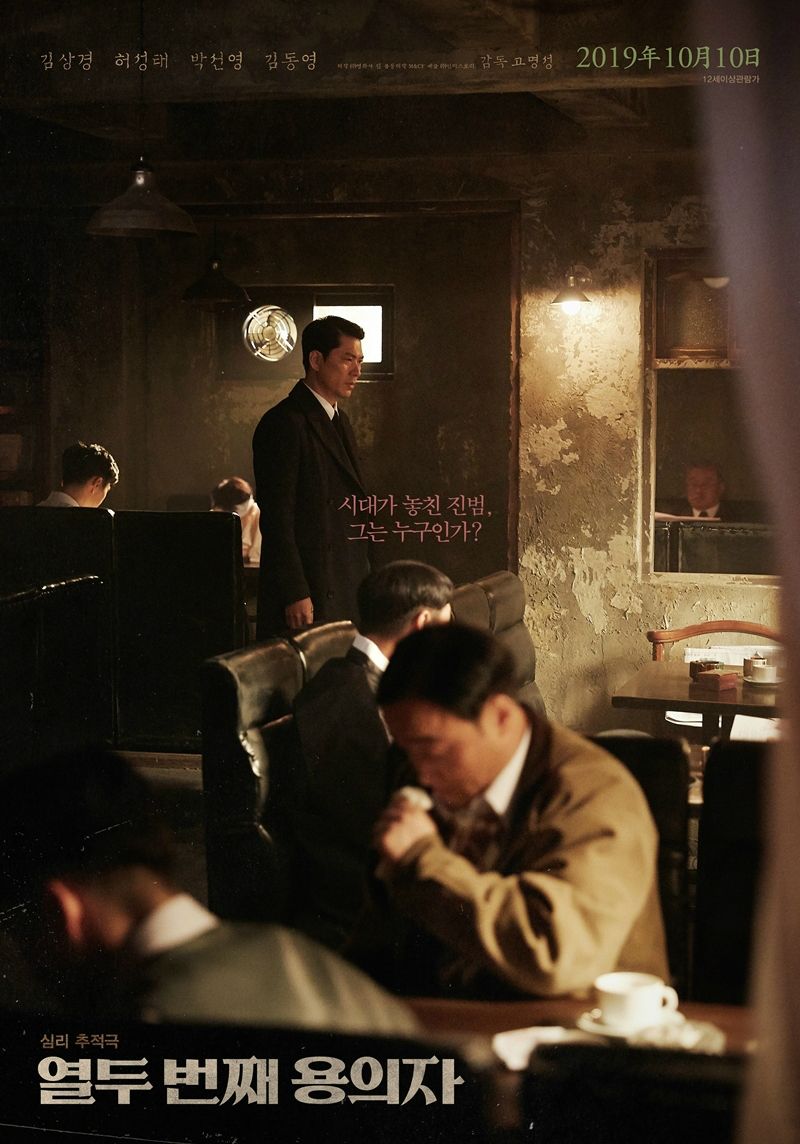
The 12th Suspect (열두 번째 용의자, Ko Myoung-sung, 2019)

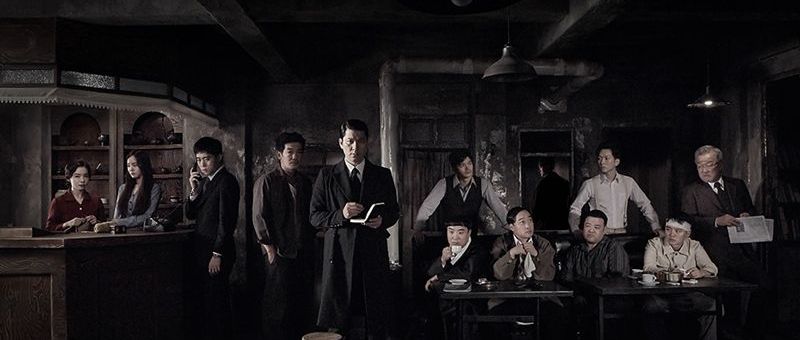
An inspector calls on a small group of artists in the immediate aftermath of the Korean War in Ko Myoung-sung’s taut psychological thriller, The 12th Suspect (열두 번째 용의자, Yeoldu beonjjae Yonguija). Set almost entirely within a tiny tea house, Ko’s steely drama lays bare the contradictions of the new society in slide towards authoritarianism which is itself a product of the failure to deal with the legacy of the colonial past while preoccupied about the “communist” threat in the quite literally divided nation. 

The Oriental Teahouse is home to a collection of poets, painters, and Bohemians seeking refuge from the everyday difficulties of life in the post-war city. Their peaceful idyll is rocked by the revelations that one of their number, Doo-hwan, died on a mountain the previous evening most likely murdered. As it turns out, no one seems to have liked Doo-hwan very much. He was “hateful and ignorant” not to mention a bad poet though many are sceptical of the story wondering if he might simply have had an accident. In any case, the newcomer to the cafe turns out to be a policeman, Ki-chae (Kim Sang-kyung), who confirms that Doo-hwan died of a gunshot wound and sets about asking a series of increasingly intense questions about his relations with the cafe’s denizens. 

To begin with, Ki-chae seems to be a Columbo-like avuncular detective, polite and sympathetic in his questioning until revealing his true purpose at which he turns into something of a firebreathing demon with a very particular vision of “justice”, hunting down “communist spies” in order to keep the South safe. As the murder weapon appears to be a Soviet-issue pistol, he assumes the killer(s) may be linked to the North accusing one of the patrons of having aided and abetted a cousin who was on the other side while throwing a book on Stalin at a university professor who desperately tries to explain that he’s had it since studying in Russia in his youth when times were different. 

Meanwhile, the policeman’s authoritarian sense of justice is gradually exposed as a kind of fascim born of his experiences under Japanese colonial rule. Doo-hwan may have died because of his actions during in the war when he collaborated with Japanese officers agreeing to send young men from his village as conscript soldiers to die for Japan on the frontlines or else as exploited slave labour in the coal mines. Ki-chae is hiding his own dark past while his quest for justice is riddled with corruption masked as patriotism as he vows to wipe out the “communist” threat in order to build a more secure Korea. “The existence of communists is a great misfortune to this country and also a danger” he adds before descending into a violent rage stamping on the face of his interviewee. 

His almost hysterical anti-communism is manifested in a general hatred for the kind of people who frequent the Oriental Teahouse, firstly taking them to task for their lifestyles in a time of chaos and privation while later viewing them as cowardly shirkers evading their duty to go to war. “I won’t let you ruin our country” he snarls while simultaneously embarking on an ill thought through argument that the communists are unfairly benefitting from the dire economic situation to “provoke good people”. He justifies his actions in insisting that everything he does is in order to prevent another “horrible war” while continuing to intimidate them into some kind of confession. His questioning reveals the petty jealousies and minor tensions between the artists along with the unreliability of their testimony while eventually exposing their small acts of resistance, cafe owner Suk-hyeon (Heo Sung-tae) determined to stand up to authoritarianism rather than forever be oppressed by it though others it seems are frightened enough by the potential dangers of rebellion to consider turning on their friends and allies. Locked in the tiny cafe with two soldiers blocking the exit, the artists are cornered and terrified as Ki-chae pits one against the other while all around them the prognosis looks bleak in a society in which men like Ki-chae wield ultimate power controlling the future through burying the past.


Original trailer (English subtitles)

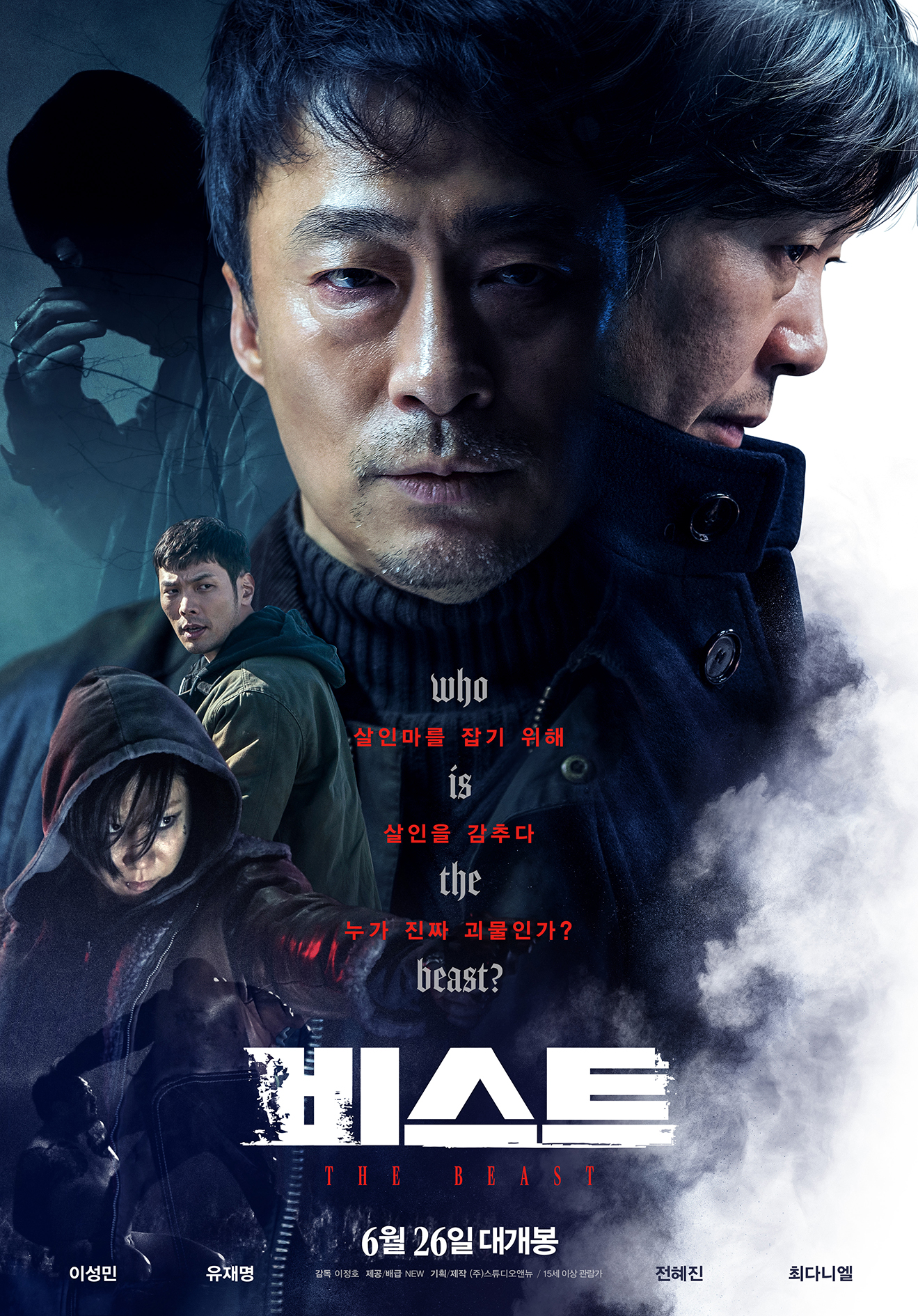
The Beast (비스트, Lee Jung-ho, 2019)

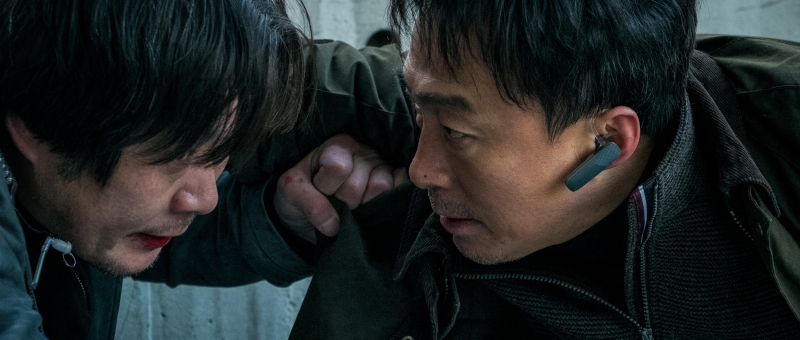
Internal police politics frustrate the hunt for a potential serial killer in Lee Jung-ho’s dark social thriller, The Beast (비스트) inspired by Oliver Marchal’s 36 Quai des Orfèvres. As a pathologist suggests, we all may have a hidden beast and it’s certainly true of the film’s conflicted protagonist, thuggish policeman Inspector Jung (Lee Sung-Min) who finds himself dragged ever deeper into a mire of corruption as a natural result of a series of bad decisions that started long ago, while his rival, Captain Han (Yoo Jae-Myung), presents the facade of efficient modern policing but inevitably turns out to be little better. 

As the film opens, Jung and his subordinate Yang are each wearing balaclavas while driving a heavily tattooed man out into the middle of nowhere though only for the purposes of frightening him so that he’ll back off their informant, local bar owner Madame Oh (Kim Ho-jung). Jung’s inner conflict is palpable as stares at his bloodied, shaking hands asking himself how it is it’s come to this while Yang later reminds him not to become too attached to his sources because once they’ve exceeded their usefulness they’ll simply be arrested. While all of this is going on, the police force is under immense pressure and receiving a lot of negative press over their handling of the case of a missing teenage girl, Mi-jin. Unfortunately, the girl later turns up dead with the murder enquiry split between two teams, those of Jung and Han each of whom are in the running to take over from the superintendent who before all of this happened was about to be promoted which is why he is desperate to solve the case as soon as possible. 

It might at first be tempting to read Jung and Han as representatives of different kinds of policing with their rivalry representing a battle for the soul of the police force only as it turns out each is merely corrupt in their own way. Jung is very much of the jaded veteran cop school, wanting to shift the case off his books as soon as possible by pushing the most likely suspect to confess. In this case that’s a shady pastor at a church Mi-jin used to frequent who was found in possession of her underwear and a series of photos of very young girls. Jung pushes the pastor to “confess” by selling him a story that a woman he was accused of assaulting in university took her own life as did her mother while her father later developed cancer as a result of all the stress and tragedy. Of course the pastor breaks down insisting that he killed her and it’s all his fault, only he’s talking about the other girl not that Jung cares too much about that. Han meanwhile quickly exonerates him by doing actual investigating, but only really so that he’ll still be in the running to solve the case and get the big promotion thereby besting his former partner turned rival. Jung had been the first to mention the possibility of an active serial killer only to be shut down because that would mean they’d lose the case to Major Crimes and therefore the personal opportunities for career advancement solving it would present. 

Both men eventually end up at the showdown by each of their respective routes implying there’s little practical difference between them. Han jeers that he can’t tell anymore if Jung is a bad guy or a cop but all he can answer is that it might be a matter of perspective, while he is also aware of Han’s backdoor deals and willingness to compromise himself in order to win advancement. In the midst of all this jockeying for power, it gets forgotten that a young woman lost her life in the most heinous of ways while whoever really did it may still be out there looking for the next girl to torture and kill. Everyone may indeed have a beast inside them, Jung already acquainted with his in his morally compromised soul while Han battles his internal ambition but the real beast may be the contemporary city and the infinitely corrupt hierarchies of the modern Korea along with the toxic masculinity that forces these men to betray their ideals simply not to be accounted a failure trapped at the bottom of the pyramid by their own problematic righteousness. When they’ve served their usefulness, the system chews them up and spits them out but until then it’s only hanging on as long as they can in the utter futility of a morally bankrupt existence. 


International trailer (English subtitles)

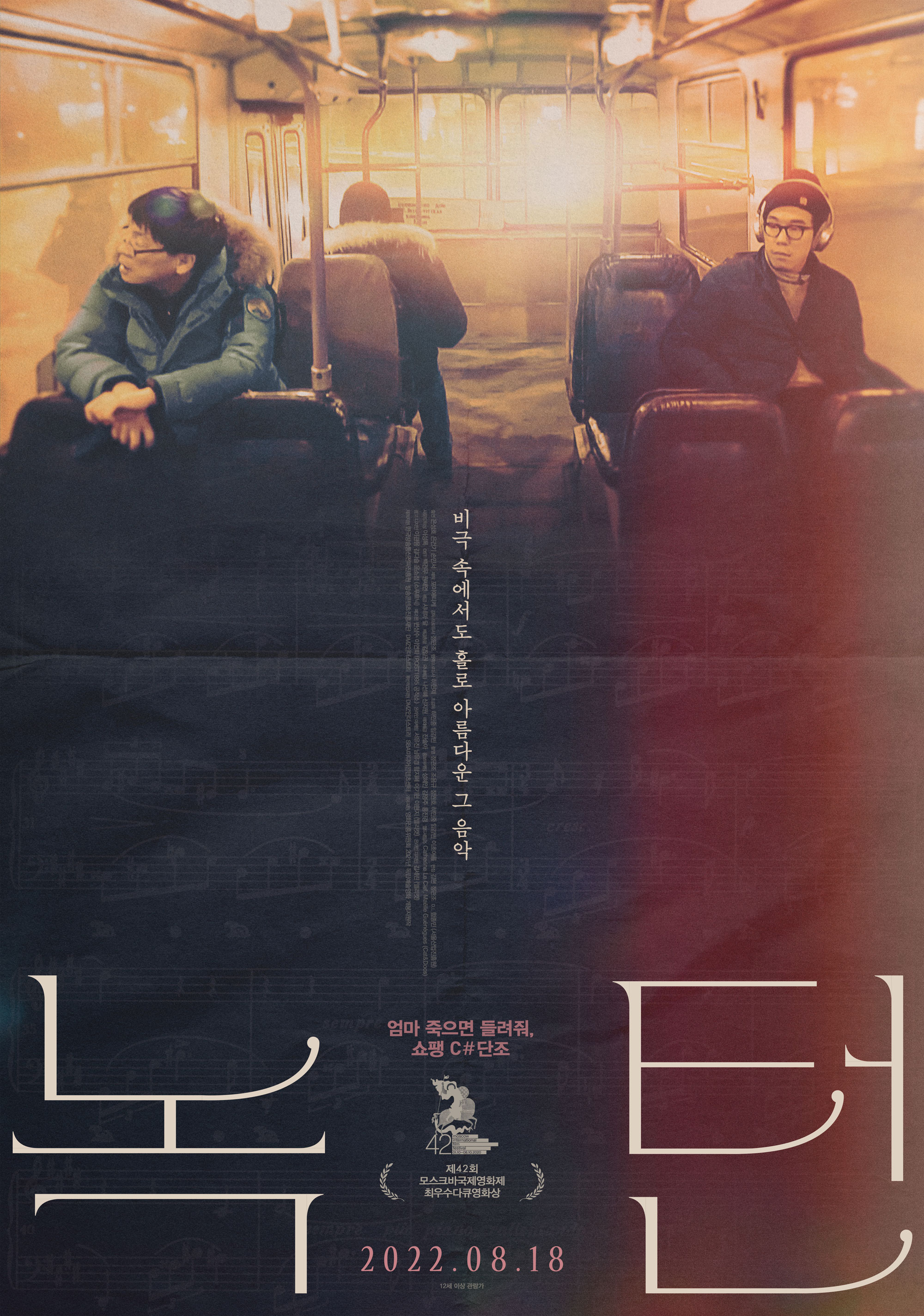
Nocturne (녹턴, Jeong Gwan-jo, 2019)

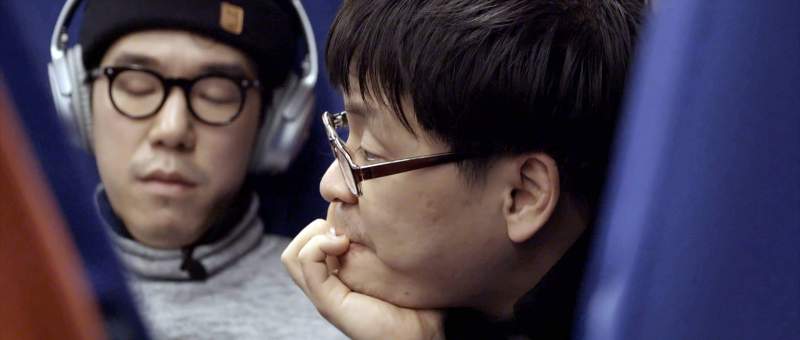
“Every day is a battlefield” the mother of Eun Seongho, one of the protagonists of Jeong Gwanjo’s documentary Nocturne (녹턴) exclaims while trying to keep her son in line during a difficult journey on the underground. Seongho is autistic and has learning difficulties. He is very dependent on his mother, Minseo, who raised him and his brother Geongi alone after their (never seen) father left the family. But while Minseo does her best to push Seongho towards a stable career as a classical musician, Geongi seems to flounder extremely resentful of his mother and brother in feeling both burdened and excluded. 

Geongi later claims that he does not feel part of the family and as a child assumed that his mother disliked him as all of her time was taken up with trying to care for Seongho. Now as an adult he struggles to settle, once training as a concert pianist himself but later dropping out of university to start a business which he says failed because of a scam. “There are no nice people in this world,” he sighs while openly wondering what sort of man he’d be if only he’d had the same love and attention poured on him as Seongho had heavily implying he’d have made much more of his life.

Seongho’s language skills are limited and he is easily distracted, unable to sit still and often jumping around like a child or else making high pitched noises to release some of his frustration. Of course, all of this is particularly difficult in the rarefied world of classical music which depends on a sense of formality and decorum. Minseo painstakingly rehearses with him, reminding Seong-ho to lift the tails of his suit as he sits at the piano and place his hand on the edge of the keyboard as he bows. His music teacher berates him for not practicing and then lying about it, telling Minseo he’s at the end of his tether as he feels he does not know how to get through Seongho while himself frustrated by his slow progress and knowing that only increases the pressure on Seongho who will then become avoidant and unwilling to play at all. 

Minseo seems to be hoping that Seongho will be able to support himself financially through his music and is acutely aware that caring for him will become more difficult as she ages while she obviously cannot be there for him forever. The manager of residential centre she takes him to grimly adds that many parents of children like Seongho hope that they will be able to bury their children with their own hands while Minseo wonders if she’d be able to go peacefully outliving him  by just a few moments.

All of which is the reason that she places so much pressure on Geongi to take care of his brother so that Seongho will be looked after once she’s gone. But that only deepens Geongi’s resentment feeling as if he only exists as a caretaker for Seongho and his own life is unimportant, wilfully sacrificed by his mother whom he cannot forgive for the sense of rejection he feels. He claims not to resent Seongho himself, but doesn’t see why he should sacrifice his life for him and firmly refuses the responsibility. Meanwhile, be becomes a heavy drinker working several low paying jobs to get by while practicing piano in his spare time. 

Yet after agreeing to accompany him to St. Petersburg where ends up playing the piano for him after a snafu with the sheet music, Geongi comes to a new understanding of his brother explaining that as they played together it finally felt as if they were really conversing and Seongho for the first time felt like a big brother to him. Echoing the universal language of music, the film never shies away from the difficulties faced by those responding to Seongho’s complex needs or his own in his inabilities to make himself understood or when his behaviour confuses others such as his need to touch things on the subway, but does ultimately discover a kind of rebalancing as Geongi finds new ways to connect with his brother along with a new acceptance of himself.


Nocturne screened as part of this year’s London Korean Film Festival.

Original trailer (UK subtitles)

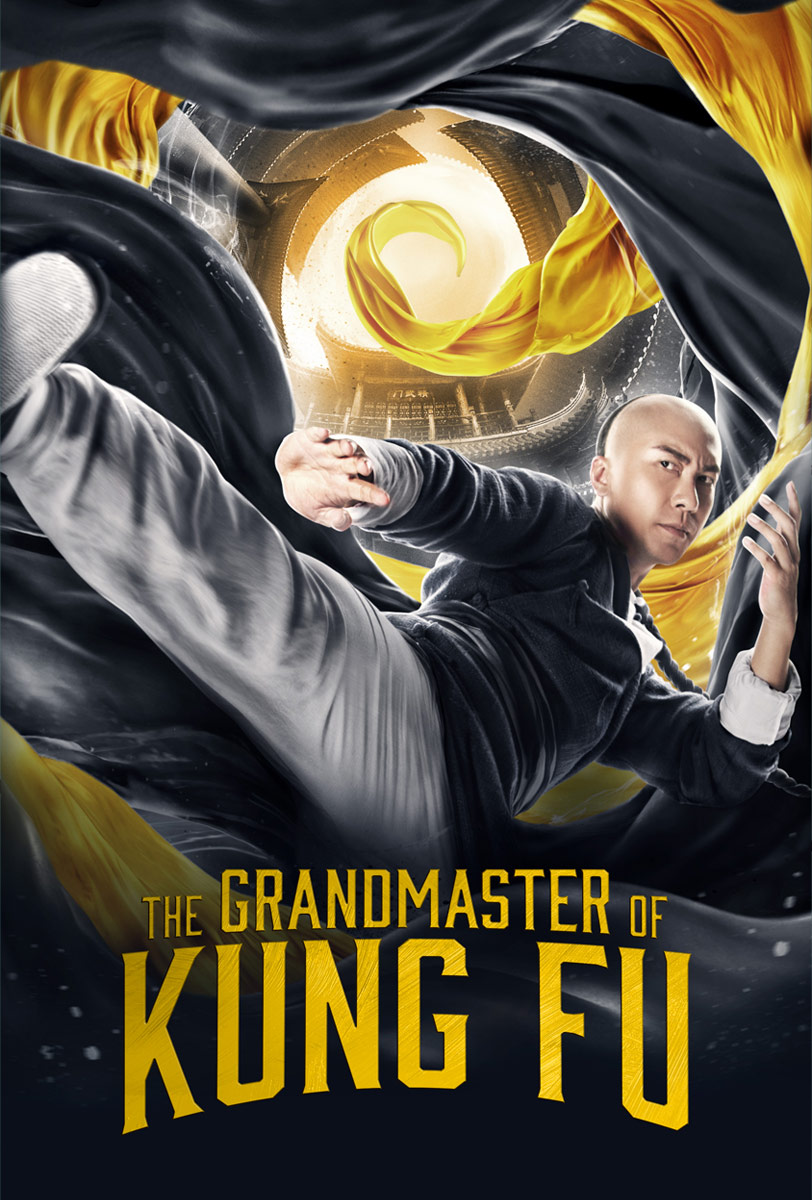
The Grandmaster of Kung Fu (霍元甲之精武天下, Cheng Siyu, 2019)

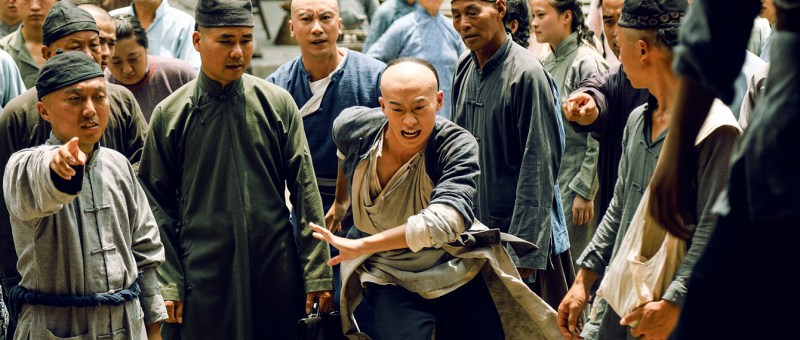
“Chinese martial arts are unimpressive” sneers a Japanese soldier as a member of an aikido school which has just received permission to open in the martial arts homeland of Tianjin. Boasting surprisingly high production values in comparison with the average Chinese action movie streamer, The Grandmaster of Kung Fu (霍元甲之精武天下, huò yuán jiǎ zhī jīng wǔ tiānxià) once again sees a humble man stand up on behalf of all of China against an oppressive coloniser this time intent on fighting them on their own ground by beating the locals in a “fair” fight pitting Chinese boxing against Japanese martial arts. 

Set at a complex historical moment, the film opens with the news that new regulations have taken hold at the Imperial University which will introduce Western learning to China but that many fear it’s a ruse to open the door to a Japanese invasion. That does seem to be the case in Tianjin which is soon occupied by unpleasant and duplicitous Japanese military officers who plan on opening a martial arts school of their own to rival those already in the town and eventually take it over. Meanwhile, the chairman of the Wu Shu association is about to step down and is holding a contest to find his successor. The burly Zhao quickly sees off all challengers until the arrival of mysterious stranger Huo Yuanjia (Dennis To Yu-hang) places his victory in jeopardy. Zhao plays a few underhanded moves, but an irritated Yuanjia essentially lets him win knowing his next blow may kill him. Zhao seems like the wrong person to lead the association now that it is threatened by the Japanese but eventually encourages Yuanjia to take a stand refusing to allow the proud traditions of Tianjin to be destroyed by the burgeoning Japanese empire who brand China the “sick man of Asia”.

Indeed, from the offset the Japanese are shown to be cruel and dishonourable despite the captain’s early words that they should play strategically in their quest to colonise China. Colonel Takeda is in someways much more even handed, openly reprimanding his men for acting in a way that reflects badly on the Japanese such as ordering the entire school to attack Yuanjia after he defeats aikido champ Anbei. But even Takeda is playing the long game, hoping that he can break the spirit of the Chinese by defeating them at martial arts leaving them so demoralised that they will give up on all thoughts of rebellion. Yuanjia is not however so easily beaten and neither is China as he very directly says to the japanese soldiers who try to shut him down. He frames his battle as one that will decide the course of the entire nation, that if he fails to stand up to the Japanese now then China will forever be oppressed by foreign powers though as he’s also fond of pointing out, he’s “just” a porter that the martial arts society didn’t even really want to accept before he showed them what he can do.

Nevertheless, he finds himself torn by the admittedly well-worn plot device of a nagging wife who doesn’t like him going off fighting and would much rather he stay at home even if it means all of China falls. Even she eventually comes round and gives him a precious amulet that becomes his saving grace. Chinese kung fu is he points out all about love and the desire to protect, whereas as according to Takeda Japanese martial arts are all about conquest and destruction. Yuanjia tells him that there’s no need to look for a winner or a loser in a contest of martial arts, and that in the end he cannot win because his philosophy is soulless and little more than meaningless violence while his is rooted in love and country. Martial arts is about applying peace, he explains, not bullying the weak (which seems like an odd concession in its characterisation of China as a defenceless victim only Yuanjia can save). 

Running a tight 74 minutes, the film boasts a series of impressive fight sequences performed by genre star Dennis To along with a series of above average performances as the small band of Tianjin martial artists attempt to preserve their traditions while taking a stand against foreign incursion which might in is own way have a few uncomfortable implications in its nationalistic dimensions. Nevertheless, it boasts surprisingly good production values for a straight to streaming movie and largely manages to sell its admittedly familiar tale with considerable panache.


The Grandmaster of Kung Fu is released in the US on Digital, blu-ray, and DVD on Jan. 31 courtesy of Well Go USA.

US release trailer (English subtitles)

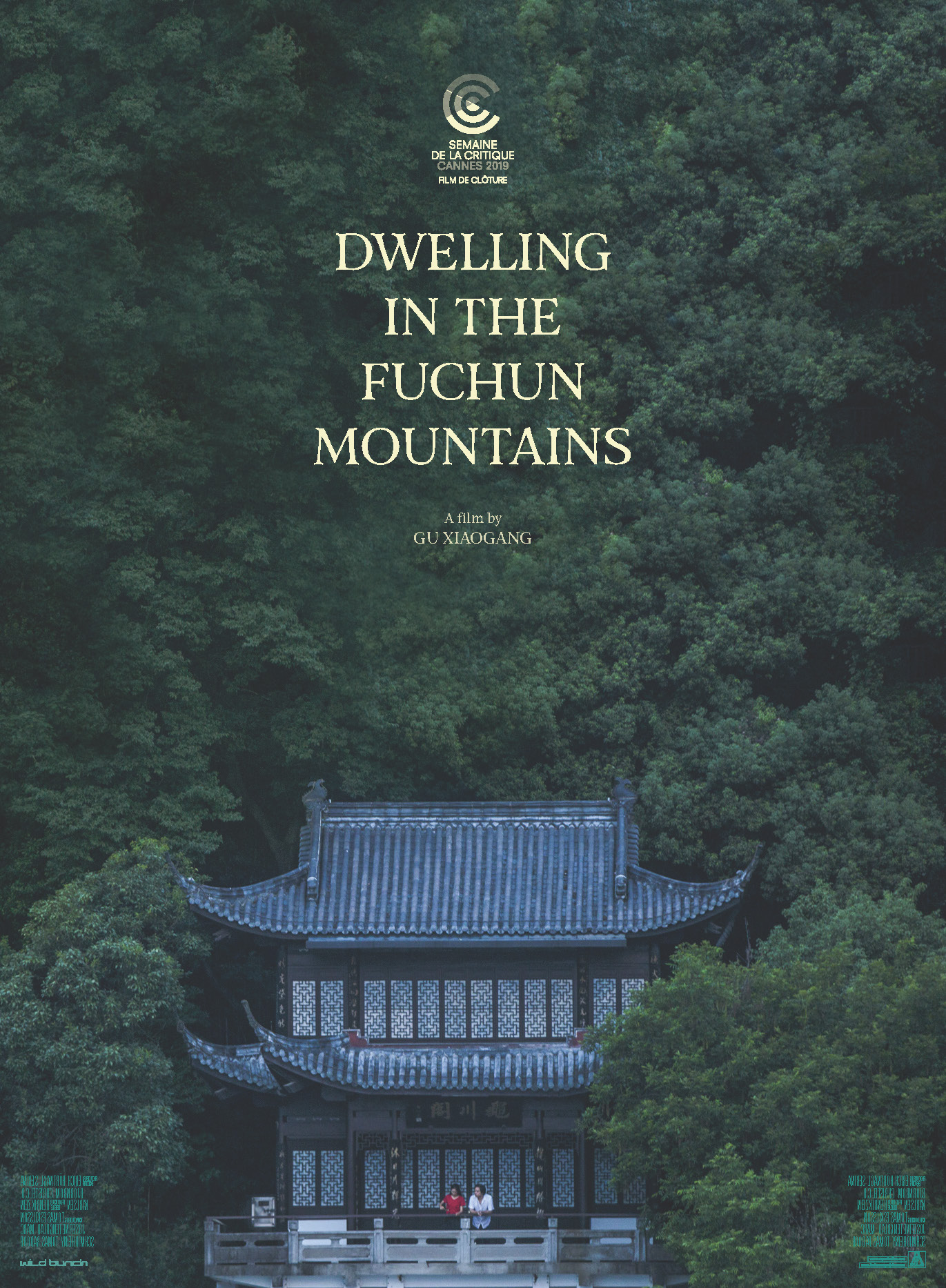
Dwelling in the Fuchun Mountains (春江水暖, Gu Xiaogang, 2019)

“The family should be peaceful and united” according to an exasperated aunt but then again “family is a pain”. Gu Xiaogang’s stunning debut feature Dwelling in the Fuchun Mountains (春江水暖, chūn jiāngshuǐ nuǎn) takes it name from a famous classical painting and unfurls a tale of familial strife born of intergenerational tension which is also a tension in the earth between new and old as this “traditional Chinese landscape” as someone describes it pointing at another painting is gradually eroded by a destructive modernity. 

This ambivalence is clear in the opening scene which takes place in the family restaurant where they are currently celebrating the 70th birthday of the family’s matriarch. What first seems atmospheric, even romantic as someone describes it, in the candlelit space is revealed to be simply a power cut and a symptom of the imperfect modernity visiting itself on the town. In any case, grandma later collapses in the process of handing a red envelope to her grandson and is taken to hospital where it is revealed that she has suffered a stroke which has accelerated the course of her dementia. The question then becomes who will accept the responsibility of caring for her with each of her four sons secretly hoping that someone else will volunteer. 

Grandma is in many ways the film’s moral authority, at one point quite literally adrift in the modern society. She no longer recognises her daughter-in-law Fengjuan (Wang Fengjuan) and avoids taking her medication believing that she’s being poisoned but pines for her youngest son whom she says spends the most time with her and is the most obedient but in fact appears the least interested of all the brothers. When he finally visits her to show off the fiancée everyone told him he had to get to put her mind at ease before it’s too late all she can do is stare at the moon. On the other hand, she is the one firmly on the side of the young, telling her granddaughter Guxi (Peng Luqi) to marry a man she chooses for herself rather than be swayed by the wishes of her parents and wind up miserable as she herself seems to have been. 

Guxi is in a relationship with local teacher Jiang (Zhuang Yi) who might otherwise be thought a catch in that he has a good job and stable income as well as access to a preferential mortgage programme for those in his profession, but Fengjuan envisions more insisting Guxi marry the son of an influential businessman in part to ease her own financial worries. As Guxi suggests, her mother’s idea of happiness is different from her own. Having suffered privation in their youth the older generation prioritise material comfort but in their old age may become lonely or resentful in the emptiness of their familial relationships. Yet to defy her parents’ wishes is emotionally difficult, her eventual decision to choose Jiang over them a minor revolution.

Meanwhile the lives of each of the brothers is overshadowed by debt both financial and moral in the continual horse trading of family life. Third brother Youjin (Sun Zhangjian) is a petty gambler in trouble with loansharks who eventually trash oldest brother Youfu’s (Qian Youfa) restaurant trying to get him to pay up, while second brother Youhong (Sun Zhangwei) and his wife are owed money from various parties but eventually come into some by making themselves homeless agreeing to sell their home to developers intending to cash buy a fancy apartment for their factory worker son and the bride which has been picked out for him. “We lived here for 30 years. It was demolished in three days” Youhong’s wife laments as the city is demolished and rebuilt all around them in preparation for the 2022 Asian Games. The promised new transport connections ironically emphasise how much they will add to the town by making it quicker and easier to go somewhere else but there is a genuine sense of poignancy in Gu’s slow panning motion through a derelict apartment across to the shiny new one about to be completed behind it. 

In one of the soon-to-be dismantled buildings, the youngest brother recovers a suitcase with a love letter inside it dated April 1989, a relic from another China though telling the same old story of young love thwarted by parental authority. Closest to her grandmother and third uncle Youjin who eventually reclaims her from the old person’s home where the other brothers had decided to send her while caring for his 19-year-old son with Down’s Syndrome, Guxi brands her family selfish and laments that they can’t get past all of these arcane rules and petty power games to love and support each other as a family should ironically taking grandma’s advice in refusing to perpetuate the cycle of resentment by marrying a man she doesn’t love just to please them. Gu films this unfolding tale with a series of breathtaking tracking shots along the river as if running one’s eyes over a scroll painting while giving in to the oneiric quality of the rolling mists that hang over this changing landscape. Apparently the first volume of a trilogy of films set along the Fuchun river, Gu’s minimalist epic is a poignant evocation of a hometown memory both transient and eternal.


Dwelling in the Fuchun Mountains streamed as part of Odyssey: a Chinese Cinema Season.

Original trailer (English subtitles)

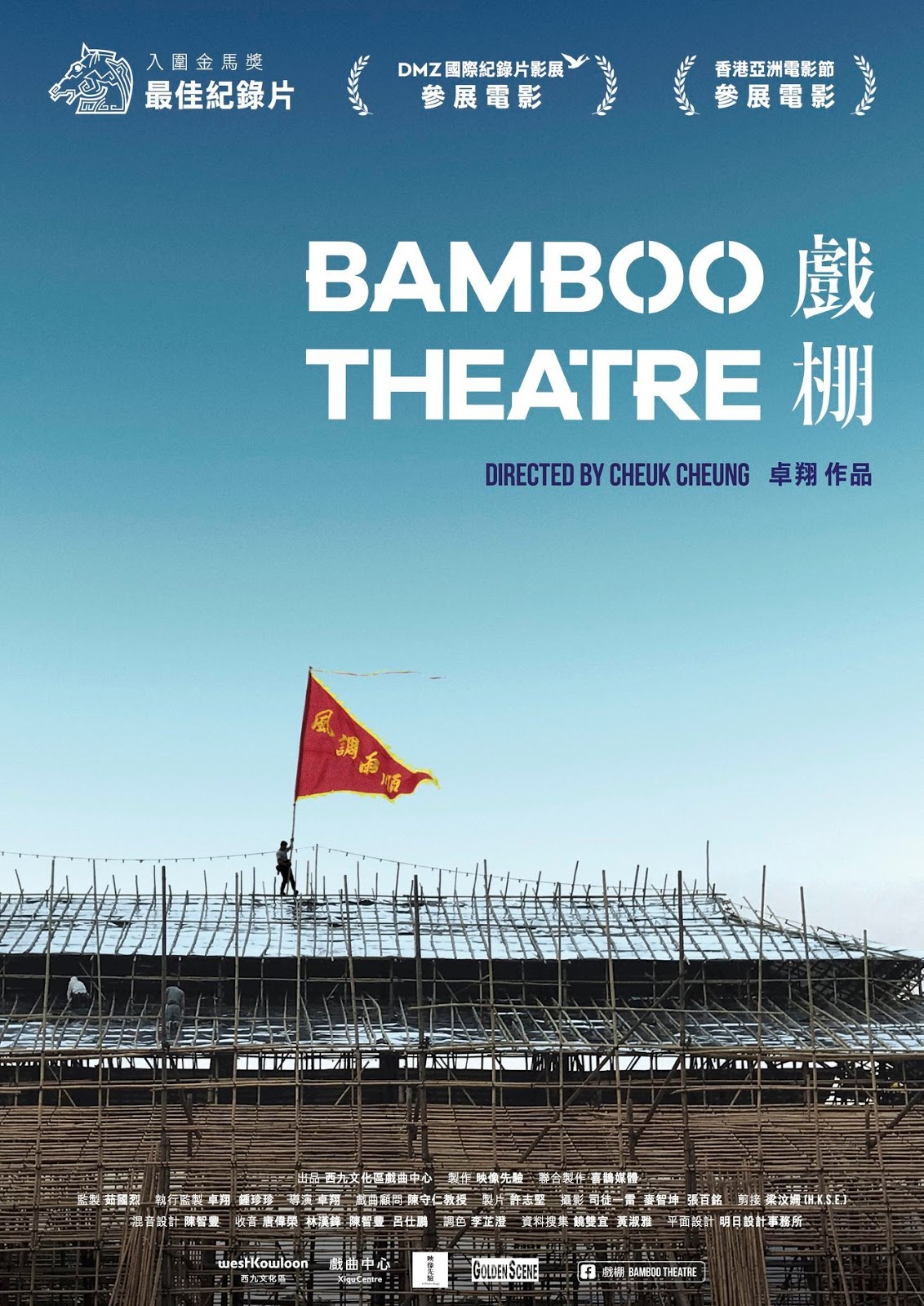
Bamboo Theatre (戲棚, Cheuk Cheung, 2019)

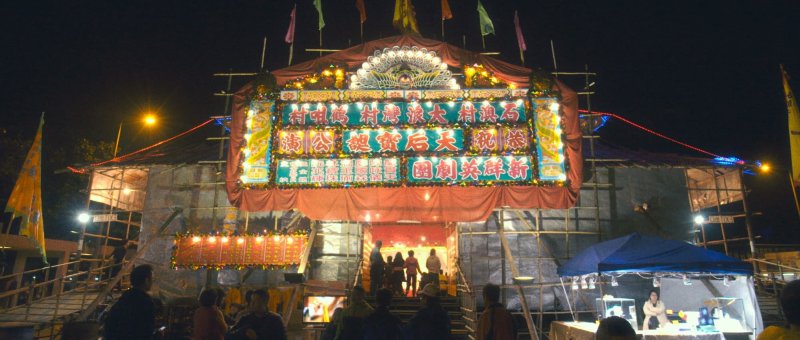
Cheuk Cheung’s otherwise observational documentary Bamboo Theatre often interrupts the action with a series of title cards beginning “this is a space”, a space for ritual, for culture, for the traditional and for its evolution both manmade and somehow spiritual. Bamboo Theatre (戲棚) is in fact Cheuk’s third documentary on the subject of Chinese opera having apparently developed an interest through a chance encounter that left him surprisingly moved, but the focus this time is as much on the building as it is on the art emphasising the ironic endurance of these transient structures forever dismantled and rebuilt in a constant process of change and renewal. 

As the closing titles reveal, the number of bamboo theatres operating across Hong Kong has dropped by 30% though the traditional practice continues to endure with communities across the islands conducting ritual to honour the birth of Tin Hau, goddess of the sea. Built entirely from bamboo without the use of a single nail, the structures are a marvel of engineering yet intended to stand for less than two months, performances taking place for only three to seven days before the entire theatre is dismantled and transported to its next location to be resurrected anew. Cheuk elegises the disappearing art form through long sequences of painstaking construction scored with classical music as if to lament the dying nature of the craft while bearing testament to its survival as the company crafts its own space with its own hands not only a stage and makeshift covering but a warren of backstage corridors where costumes are steamed and pressed while actors rehearse or put on their makeup. A scenic boat is even is whipped up mid-performance seconds before being tracked on stage. 

Meanwhile, the theatre creates its own kind of spectacle outside its doors a mini festival taking place in the open air with stalls selling nicknacks and street food. The audience appears diverse, a mixture of small children accompanied by parents or grandparents along with elderly spectators attending alone, the kids well behaved and engaged with this very traditional art form. As another of the title cards reminds us, this is a space for entertaining both people and the gods, ritual and enjoyment presented with equal importance which explains perhaps how this incredibly laborious practice has managed to endure in an age which largely values convenience. 

Then again as one performer complains in one of the few scenes featuring dialogue, why don’t they put up a mobile toilet for the performers along with the rest of the structure, their personal convenience it seems valued comparatively little. A mess of hanging cloths, the backstage areas appear more spacious than one might expect, but are also subject to their own arcane rules a sign reminding women not to sit on crates for the gods though it seems unlikely anyone is doing very much sitting at all given the general business of backstage of life. Even once the audience has gone home, an old man commandeers the darkened stage to practice his art singing to an empty auditorium in an otherwise silent night. 

Having begun the film with a theatre’s construction Cheuk closes with its dismantling, foil sheeting from the roof clashing to the floor with apocalyptic intent yet also suggesting that this is how something survives, taken down in one place to be rebuilt in another the same but different, transient and eternal. In this way, xiqu opera survives its ritualised nature taking on an almost mystical dimension in its constant acts of appearance and disappearance though perhaps it’s ironic to think of something so obviously built by human hands as “intangible” culture. Even so, the enduring power of the bamboo theatre captured with an ethereal distance through Cheuk’s sensitive lensing is perhaps a sign of hope for the future in the face of persistent anxiety that such iconic local traditions are always at the risk of erasure. 


Bamboo Theatre screens in Chicago on April 2 as part of the 14th season of Asian Pop-Up Cinema.

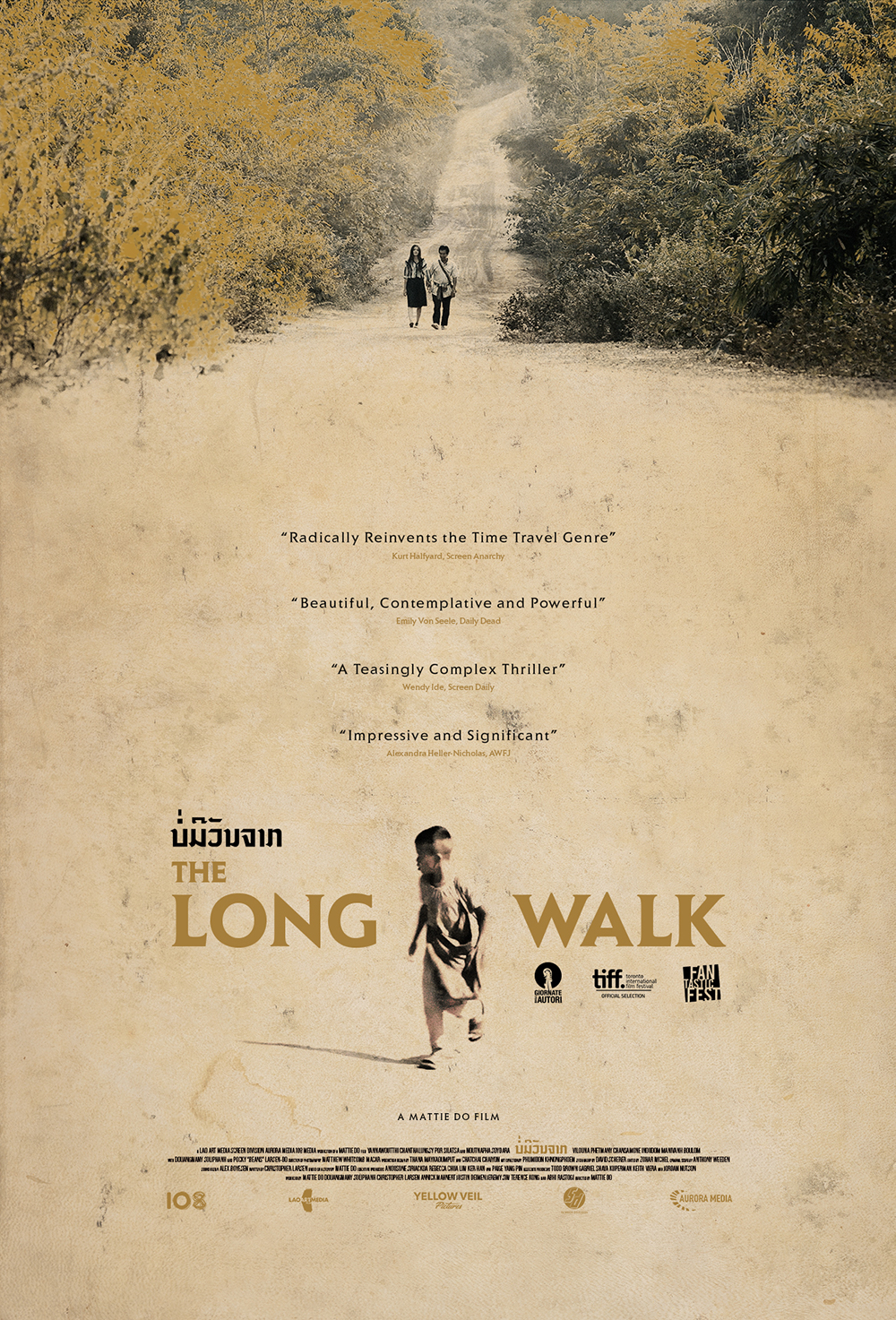
The Long Walk (ບໍ່ມີວັນຈາກ, Mattie Do, 2019)

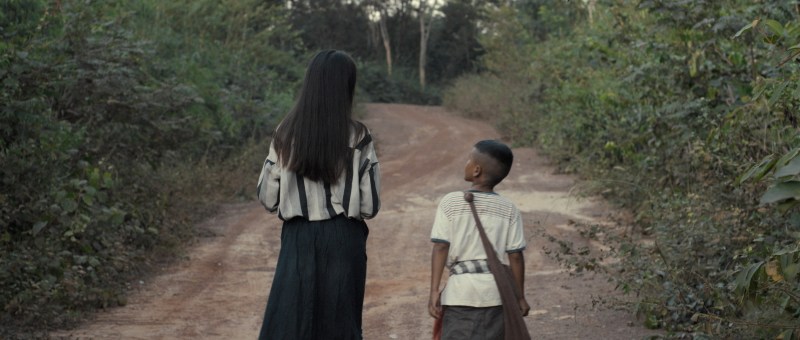
“How long have we been walking this road? Is it 50 years already? And you’ve never said a word” an old man (Yannawoutthi Chanthalungsy) reflects on reuniting with a ghostly presence (Noutnapha Soydala) that has accompanied him for almost all of his life if silently. An elliptical ghost story, Mattie Do’s The Long Walk (ບໍ່ມີວັນຈາກ, Bor Mi Vanh Chark) is indeed about the meandering path we all must take but also a meditation on grief and loneliness and what it means to die. 

Beginning in the near future around 50 years from now, the film opens with an old man literally looting his past freeing an old motorbike before nature can reclaim it so he can take it apart and help it move on to its next life with a little help from the local pawn broker. Though life in this small rural village might not be so distinguishable from that of 50 years previously or even 50 years before that, modernity has crept in with transactions largely carried out via an embedded chip in the forearm which can also tell the time. On his arrival in town, the old man begins to hear a rumour that the old lady who ran the local noodle shop and had apparently been suffering with dementia has gone missing with the worry being that she may have ventured into the forest and become lost as perhaps has the old man if in a less literal sense . 

The old man is well-known locally for the ability to contact spirits often spotted on the road chatting to his ghostly companion whom no one else can see, but as we come to understand his personal cosmology may in a sense be problematic in that the presence of a ghost is like a bug in the system, something trapped in the wheel of time that shouldn’t really be there impeding its movement. The old man knows the noodle seller is dead because he found her body and moved it to be closer to other departed spirits telling her that she will never be alone again, but in doing so he’s unfairly holding on to something that should be let go for the benefit of all. The first ghost, his constant companion, is that of a young woman he found dying in the woods when he was just a child (Por Silatsa), holding her hand until she was gone. In a sense he has never let it go nor she his. 

Nearing the end of his life, the old man’s philosophy has hardened while he himself begins to fear for his own mortality drawn back into the past towards the early bereavement of his mother’s death. We might in a sense read his increasing confusion as a sign of dementia, that he’s trying to reorder a reality of which he is no longer certain while attempting to change his history with the help of his companion who is able to transport him back into the past in the hope that he can ease the pain of his childhood self while in roundabout way bringing his mother into his own old age so that he himself will not be lonely. 

What he discovers, however, is that his interventions send the world in a darker direction than he’d expected in which he discovers unpleasant truths about himself eventually coming to realise the fallacy of his life’s philosophy. “I never helped any of those women” he sighs, “they suffered more for it”, acknowledging that he trapped these lost souls in a kind of limbo in which he is also is mired in preventing them from “moving on” forced on a circular journey caught between life and death. 

At heart a tale of grief, loneliness, and guilt, The Long Walk also hints at the fracturing bonds between people in an increasingly modern society in which everyone is technically connected at all times via the chips embedded in their forearms now essential for everyday life. Looking back on his childhood, the old man remembers his father trying to take advantage of a scheme run by a foreign company supposedly to help farmers that only leads to getting solar panels installed on his farm which are in fact completely useless to him when all he wanted was a tractor, their lives had no need of electricity and its arrival benefitted them not at all. 

Meanwhile, the old man is resentful towards the noodle seller’s daughter (Vilouna “Totlina” Phetmany) for neglecting her elderly mother who was all alone and could no longer care for herself, she having left for the city never to return possibly because as we later find out she feared that her sexuality may not be accepted in the still traditional community. The old man thinks he’s helping people escape lives of loneliness and despair by giving them a painless eternity but in reality his actions are merely self-serving, attempting to hold on to something that should have been set free. Dreamlike and elliptical, Do’s meandering tale is part ghost story and part time loop conundrum, filled with the beauty of nature but also all of its pain and terror in the ever present shadow of mortality. 


The Long Walk is available now in the US on VOD courtesy of Yellow Veil Pictures and will be released on blu-ray on March 29.

Trailer (English subtitles)
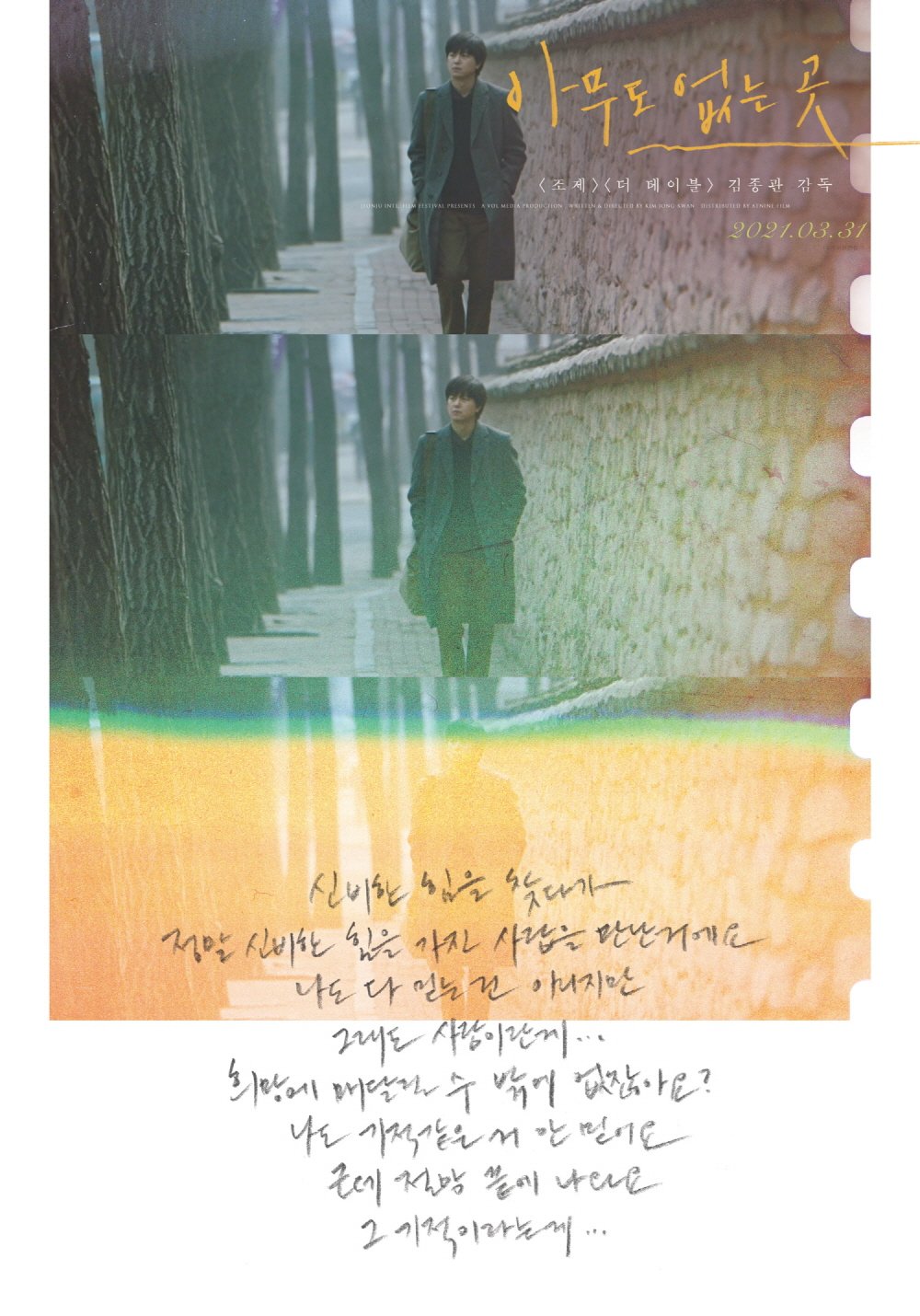
Shades of the Heart (아무도 없는 곳, Kim Jong-kwan, 2021)

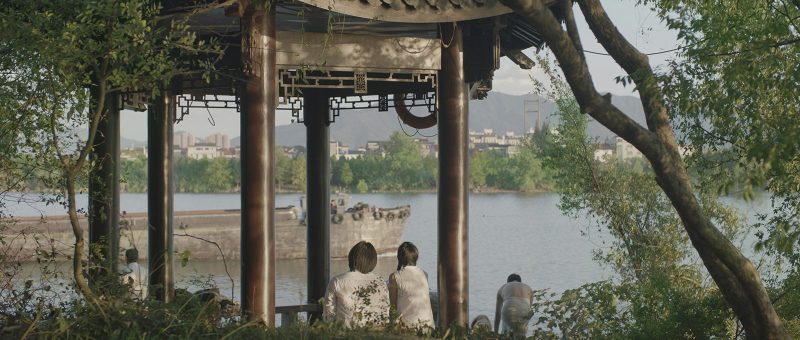
“I see hope! Let’s change direction” a distressed woman shouts in a park, “We should follow the wind, let’s hold hands that way you won’t get lost.” Her interjection is perhaps unexpected, in its own way sad, but also a sign offered to the melancholy protagonist of Kim Jong-kwan’s Shades of the Heart (아무도 없는 곳, Amoodo Eobneun Got), a man who has become without quite realising it “someone who waits” yet through encounters serendipitous and otherwise begins to see new paths in front of him, turning a corner into another story.

Novelist Chang-seok (Yeon Woo-Jin) has just returned to Seoul after seven years abroad following the breakdown of his marriage in the UK. He has begun to have strange dreams, seeing an older version of himself and presumably his wife walk away from him and eventually disappear. Yet each of the people he meets is also in someway burdened by a sense of loss or despair, his first meeting with his mother who appears to have some kind of dementia and does not initially recognise him thinking once again she’s on her first date with his father. Her sadness is the loss of past and present but also of future, telling her son on finally recognising him not to smoke so much so he won’t die young like his dad. 

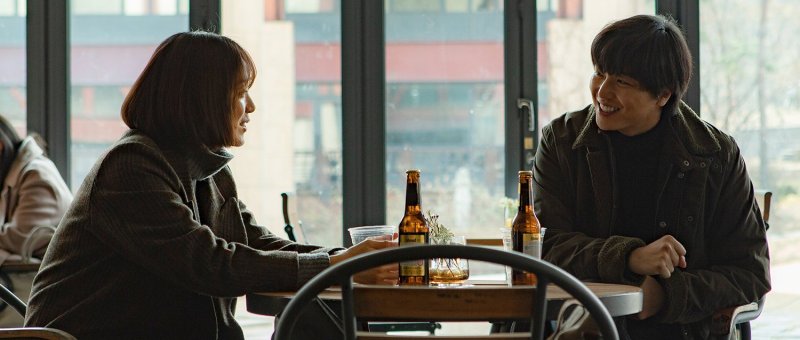
Chang-seok had apparently given up smoking, but is motivated to start again perhaps seeing little point in extending his life, accepting some unusual Indonesian cigarettes from a former colleague now his editor who eventually tells him of her failed love affair with a young exchange student which apparently ended partly because he could not acclimatise himself to the harsh winters of Seoul. The other reason perhaps echoes something in Chang-seok’s own life though also tinged with a different sense of sadness. A serendipitous meeting with a former acquaintance meanwhile takes a turn for the strange, photographer Sung-ha (Kim Sang-Ho) somewhat manic in his ecstasy in having run into Chang-seok explaining that his wife is terminally ill yet a Buddhist monk had told him he’d run into someone he knew who would bring him luck. On the other hand, Sung-ha also shows him a vial of cyanide he’s managed to procure apparently planning to use it to take his own life after his wife dies but now filled with an almost certainly false hope in the strange power of religious mysticism. “I don’t believe in all that, but people.. they need to hang their hope on something” he explains.

Chang-seok may not have much of a sense of hope, but what little he has he’s hung on people or on art. He is forever “waiting” for someone who may or may not arrive or even exist, making notes in his notebook or wandering around the surprisingly lonely streets of Seoul after dark pausing by the now obsolete phone booths filled with the detritus of city life unsure whether or not to make a call. His final conversation is with a woman who tells him that she has no memories of her own, having been robbed of her past, and more, in an accident and now “buys” them off her customers swapping free drinks for personal stories while writing poems about their lives. “No one is coming, but he became someone who waits” she writes of Chang-seok, their meeting oddly mirroring his first in its mixture of fiction and reality along with relationships forged through the exchange of stories true or otherwise. As he’d said, sometimes a made up story can be the more truthful. 

“But they come in the depth of despair, miracles” Sung-ha had added hopefully seconds after saying he didn’t believe in them, each of Chang-seok’s encounters a tiny miracle in itself. Imbued with a deep sense of melancholy and loneliness, Kim’s delicately scripted ethereal drama is an exercise in grief and despair Chang-seok’s sense of fiction and reality beginning to blur even as he begins to find the urge to write again and with it perhaps to live again too. “I see hope!” the woman shouts once more, restored something as she takes her place in a new story, Chang-seok turning the corner and beginning once again to dream. 


Shades of the Heart screens 14th November as part of this year’s London Korean Film Festival.

Original trailer (English subtitles)