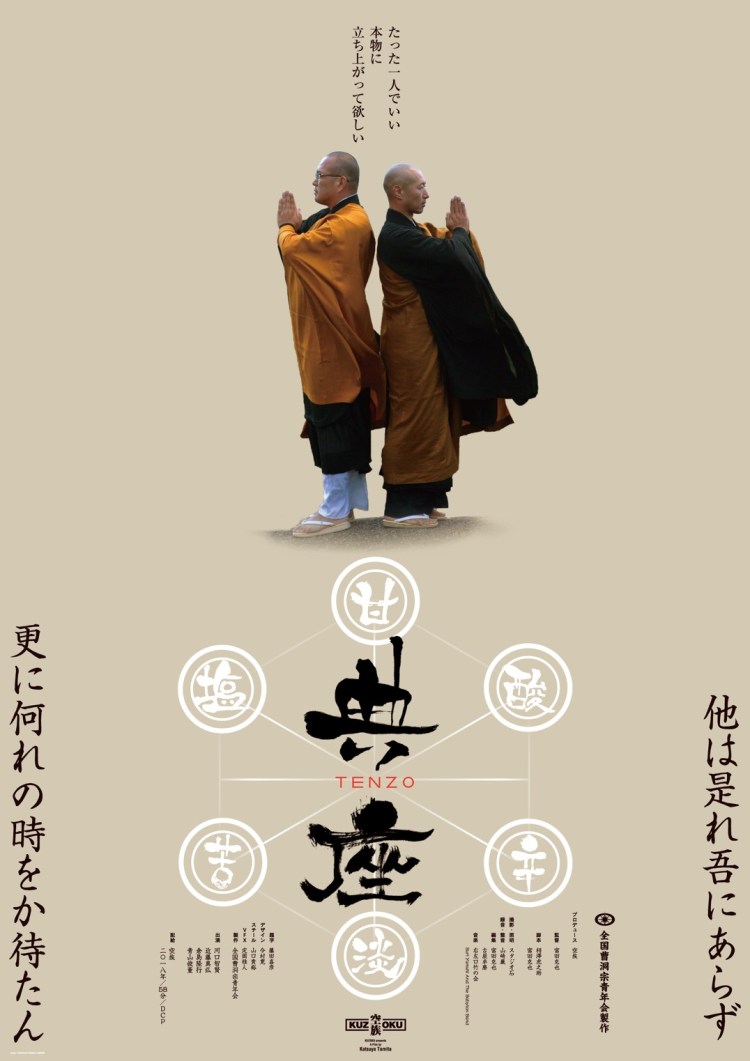
Tenzo (典座 -TENZO-, Katsuya Tomita, 2019)

Tenzo posterIf you think the world has declined, how should you continue to live in it? The monks at the centre of Katsuya Tomita’s documentary hybrid Tenzo (典座 -TENZO-) have committed themselves to living intensely in the moment, following the teachings of zen master Dogen and embracing the uniqueness of each and every day even in its banality. But the search for truth necessarily takes one away from demands of daily living, from the entrenched suffering that pushes record numbers of people towards suicide and leaves others feeling as if they have no hope for the future.

Monk Chiken once felt hopeless himself. In Japan, temples are a family business and it is expected that the oldest son will succeed whether he feels any call to religion or not. Chiken, as a young man, did not and resented his lack of choice in his future, but eventually came around to the idea of being a monk in part in recognition of a need for increased spiritual support in a nation he, and others, felt to have lost its way. 10 years previously, he spent some time in a monastery before returning home, getting married, and becoming a father.

At a loss for what to do, Chiken decided to bring temple food to the people by holding cookery classes as a kind of local outreach project. Believing that food is medicine which nourishes the soul as well as the body, he hoped to help repair the connection between people and nature. He also believes, perhaps privately, that the gradual decline of the environment has contributed to his son’s serious allergies and that though a wholesome diet may help, it may not be enough to prevent him coming to harm.

Other ways he tries to help include taking calls from people in distress and listening to their troubles. Chiken is part of a collective of local monks helming a helpline in the Fukushima area for those who want someone to talk them out of taking their own lives. That’s not to say, however, that being a monk necessary makes one free of troubles. Chiken occasionally resents himself for not being there for his family, snapping at his wife and unable to visit his son in the hospital because of ceremonial duties. Faced with a call from another monk on the helpline, he simply doesn’t answer. The other monk, Kondo, retreats to a nearby window and vapes while staring at the moon, proving that monks are regular people too who drink and smoke and live their lives while continuing to search for the truth.

For some, however, the rug has been unexpectedly pulled from under them, making any sense of truth they may have discovered seem hollow. Ryugyo, like Chiken, was the son of a Buddhist priest but he lost his family temple to the earthquake and nuclear disaster. Still living in cramped temporary housing, he makes ends meet as a construction worker, occasionally visiting some of his old neighbours in the place of a monk while lobbying to get the funds together to build a new temple. Originally not sure he should be part of the helpline seeing as he’s no longer, technically speaking, a monk he finds himself pouring out his troubles to a stranger.

Chiken, meanwhile, finds himself branching out in his search for truth – heading to Shanghai and Dogen’s temple looking for guidance towards a way forward. He meets with an esteemed nun who tells him that his youthful sense of rebellion was only natural and probably a good thing because becoming a monk should be a choice not an obligation. She laments that Buddhism in Japan has become “corrupt”, that the demise of the old apprentice system in favour of patrilineal inheritance has led to a decline in rigour. Chiken feels as if it’s the world which has declined, that the post-war drive towards economic stability and its eventual implosion have resulted in an empty consumerism which is contributing to an ongoing sense of hopeless malaise. Trapped in a limbo of his own Ryugyo may feel something similar, wondering how to rebuild while conducting lonely services over ruined graveyards. What they do is return to Dogen, living in the everyday and continuing to look for truth to counter the meaninglessness of the consumerist society.


Screened at the ICA as part of their Katsuya Tomita retrospective.

Original trailer (no subtitles)
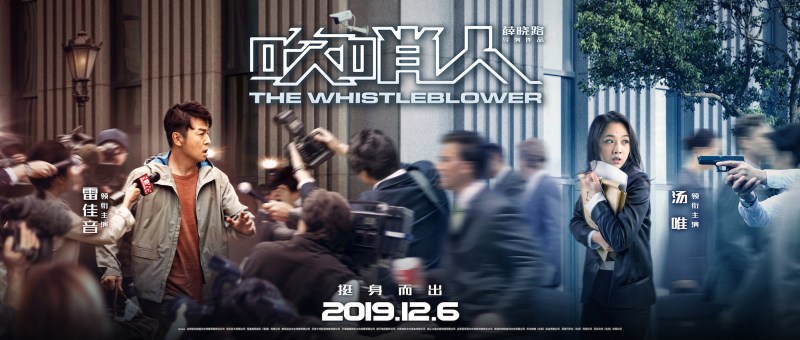
The Whistleblower (吹哨人, Xue Xiaolu, 2019)

Whistleblower poster 2One of the many ironies of an intensely authoritarian system which prizes the self-criticism as a means of enforcing discipline is that whistleblowing, as opposed to “informing” on individuals, is not only frowned upon but actively dangerous. It is, after all, suggesting the Party may have made errors in judgement which have gone on to become systemic. It’s not surprising that the Party would not like to have them pointed out. Nevertheless, in these new times in which anti-corruption has become a minor buzzword, whistleblowing has been re-designated as a public service, though perhaps in not so much different a way as “informing” was in the old days and probably it very much depends on who and what one wishes to blow the whistle.

This the earnest hero of Xue Xiaolu’s The Whistleblower (吹哨人, Chuīshàorén) finds out to his cost when he is unwittingly alerted to a possible conspiracy and entrenched corruption among his co-workers. Mainland-born Mark (Lei Jiayin) works for a top Australian energy company keen to do business with China, though as they keep reminding him he is one of only two Chinese members of personnel, the other being the mysterious Peter (Wang Ce) whose unexpected absence is the reason Mark has been sent on a swanky but possibly illegal jolly to a resort to charm a delegation from a Chinese coal company. Two things immediately go wrong for him – the wife of the company’s (absent) CEO turns out to be his long lost first love Siliang (Tang Wei) who broke up with him because she wanted someone richer, and Peter turns up to the party in a dishevelled state to shout at him about something that happened in uni, which later turns out to be a coded clue to “check the gate”.

Needless to say, Siliang who seems to be in the middle of trying to break up with her husband, and Mark, who is married with a young son, “reconnect” before she dutifully runs off to a catch a plane which later crashes killing everyone on board. Peter is then found dead of an apparent insulin overdose, but even if he’s suspicious Mark doesn’t think much of it until he realises Siliang is still alive and on the run from her corrupt CEO husband who is apparently trying to have her killed because she knows too much about his dodgy dealings.

The Whistleblower tries to have it both ways in insisting that Siliang is simultaneously a greedy, ruthless, criminal mastermind, and such useless lady of the manor sort that she doesn’t know you can’t put metal in the microwave and is a terrible getaway driver because she’s always had chauffeurs. We’re told that she broke up with Mark because of his lack of materialism, marrying a top CEO for wealth and status and helping him conduct bad faith business by managing his bribes, but may now be conflicted – not only because her husband is trying to kill her, but because she’s realised her mistake and is attracted to Mark’s untarnished innocence. Her taste for corruption was, however, a moralistic one in that she would apparently never have condoned bribery if she knew that the technology really was unsafe and posed a threat to ordinary Chinese people.

It might be telling in one sense that this battle is being fought in Africa meaning that whatever problems there are with this innovative pipeline system are uncomfortably being worked out among less powerful people far away from either the Australian energy giant or the complicit Chinese coal company looking for new paths forward. The central implication, however, is that this kind of corruption is an element of Western imperialism rather than homegrown. The villains are the bigwigs at the Australian conglomerate, one of whom speaks fluent Mandarin but is apparently not much of a friend of China. Mark tries to expose them, turning against a company which is always keen to remind him that he is a foreigner (Australian PR pending), only to find himself at the centre of a smear campaign which seems like it would play much better on the Mainland, chased by thugs, and targeted for elimination.

The message that Mark gets, looking on with hope at a bright red sign reading “rebuild your life”, is come home – don’t do business with corrupt foreigners, help make China great again. A series of textual explanations appended to the film’s conclusion attempt to explain the word “whistleblower” to an audience that might not be familiar with it, pointing out that most developed nations have instituted legislation to protect those who attempt to expose illicit business practices but that China is lagging a little behind though it too apparently introduced legal protections in 2016 as part of its intensive drive to reduce corruption among petty officials. Mark has done the “right” thing, and he’s paid a price for it, but, the film says, his is the example to be followed in standing up to oppressive global corporate corruption which will eventually imperil the ordinary men and women of China if consumerist zeal wins out over national integrity.


The Whistleblower opens in selected UK cinemas on 6th December courtesy of Cine Asia.

UK trailer (English subtitles)

Promare (プロメア, Hiroyuki Imaishi, 2019)

Promare poster 1It’s one of life’s ironies, sometimes the best way to stop a fire is to scorch the earth. The heroes of Studio Trigger’s first theatrical feature co-produced with XFLAG, Promare (プロメア, Puromea), are embodiments of fire and ice – a “mutant” who can shoot flames from his fingertips, and a fireman with a “burning soul”. Yet what they discover is that there is a peculiar power in their innate contradictions, actively harnessing the energy of their opposition to combat a man who thinks nothing of burning the world to save his own skin.

Our hero, Galo (Kenichi Matsuyama), is a firefighter with the Burning Rescue squad who has a talent for cheesy one liners and an overinflated sense of confidence in his own abilities. 30 years previously, the world was plagued by a series of strange incidents of spontaneous combustion later attributed to the “Burnish” phenomenon in which some members of humanity developed a mutation that allowed them to manipulate fire. The danger eventually died down, but the “Burnish” as they came to be known continued to exist in society as a kind of oppressed underclass, viewed with fear and suspicion and largely unable to live “normal” lives even if they wanted to. On a supposedly “routine” job, Galo unexpectedly encounters the leader of the Mad Burnish “terrorist” organisation and determines to bring him in, eventually awarded a medal for his pains.

As might be assumed, however, all is not as it seems. The Burning Rescue squad work for Galo’s mentor, Kray Foresight (Masato Sakai), now the governor and an enormously wealthy, influential man thanks to his advances in scientific firefighting technology. Kray reveals that the Earth is sitting on a volatile layer of magma somehow connected to the existence of the Burnish which threatens to destroy the planet if it cannot be properly controlled. This is a kind of justification for Kray’s ultra hardline stance against the Burnish who are hunted down and captured by the Freeze Force (see what they did there?) simply for living their lives even if they have committed no crimes.

Despite the nature of their work, the Burning Rescue squad are a more progressive bunch. They don’t approve of the social prejudice against the Burnish many of whom are just minding their own business and pose no threat to anyone, nor do they approve of the role the Freeze Force seems to play in their society. Mostly what they care about is stopping fires and making sure people endangered by them are eventually saved. They know that the Freeze Force’s persecution of the Burnish is at best counterproductive and fuelling the kind of resentment that makes them want to burn things. Wandering into the Mad Burnish hideout, Galo sees a different side to their struggle and learns a few home truths about his own side from the dashing rebel leader Lio Fotia (Taichi Saotome).

Burning Rescue and the Mad Burnish ought to be opposing poles but display a curious symmetry in their fierce loyalty to their own and emphasis on team work. Others, meanwhile, think only of themselves, coming up with nefarious plans to let the planet burn and move to a new intergalactic home with a starter stock of the most “valuable” 10,000 humans while everyone else succumbs to the flames. The Burnish become merely fuel, sacrificed for a “greater good” for a “chosen few”.

Galo and Lio think they’re “chosen ones” too, in a sense, but are flatly told that their role in events is really just fortuitous coincidence. Nevertheless, the fate of the world depends on their ability to bridge their differences, harnessing the unique capabilities of fire meeting ice against the forces of cold self-interest. Sometimes the only way to stop a fire is to let it burn out bright, which is what the guys discover in trying to find a way to quell that troublesome magma. Recreating the anarchic spirit of Kill la Kill, Studio Trigger’s first theatrical feature is a colourful riot of post-modern absurdity, but has its heart firmly in the right place with a strong progressive pro-diversity message in which we save the world only by saving each other.


Original trailer (English subtitles)

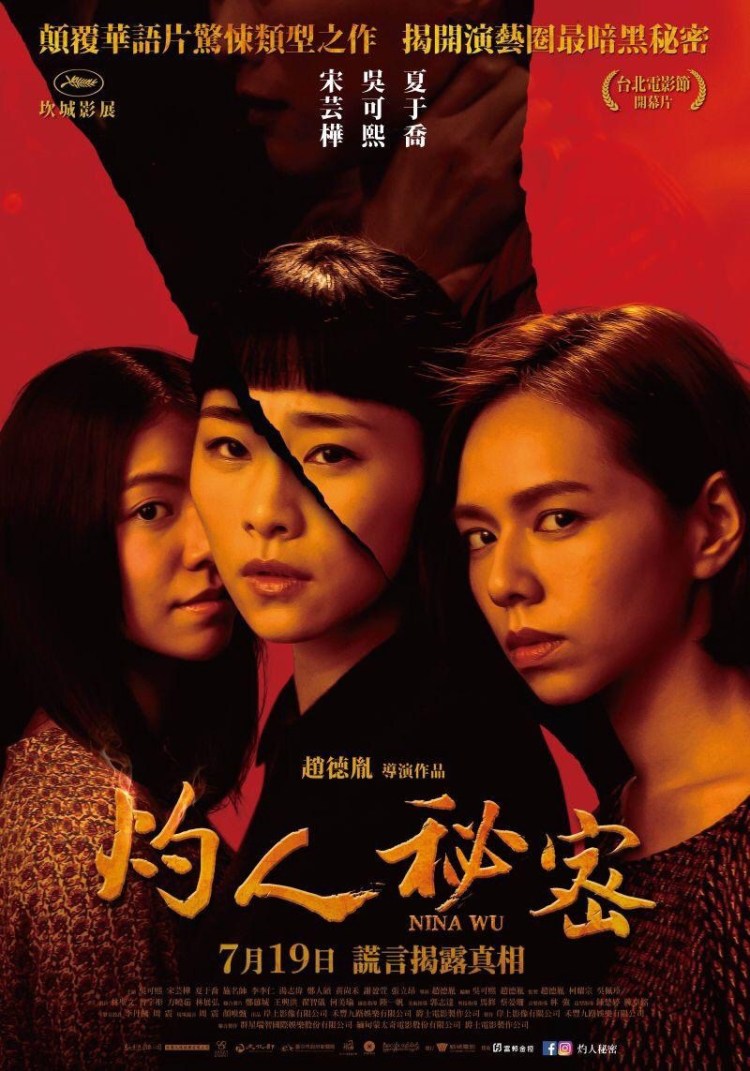
Nina Wu (灼人秘密, Midi Z, 2019)

Nina Wu poster 1“They’re not just destroying my body but my soul” complains an exploited woman in a film within a film, “I’ll do something you’ll all regret” she adds, only the actress never will. Penned by leading actress Wu Ke-xi, Nina Wu (灼人秘密, Zhuó Rén Mì) provides a timely exploration of the gradual erasure of the self the pursuit of a dream can entail in a fiercely patriarchal, intensely conservative culture. Arriving in the wake of the #metoo scandal the film goes in hard for industry exploitation but never tries to pretend that these are issues relating to the film industry alone or deny the various ways it informs and is informed by prevailing social conservatism.

Originally from the country, the titular Nina Wu (Wu Ke-xi) has been in Taipei for eight years trying to make it as an actress but is still awaiting that big break. Aside from some small bit parts and commercial jobs, she supports herself by working in restaurants with a side career as a live-streaming webcam star. Then, just as she’s starting to think it’s too late, a call comes through – she’s in the running for the lead in a high profile period spy thriller. The only snag is that the part requires full frontal nudity and explicit sex scenes.

Nina is understandably conflicted. Aside from the potential discomfort, taking a part in the kind of film this could turn out to be is a huge gamble that could either make or break her career (just look at what happened to Tang Wei after Lust Caution, itself a period thriller about a female assassin who falls for her target). Nina’s unsympathetic agent skirts around the fact this might be her last chance while promising to respect her decision, implying it’s this or nothing. Of course, neither he nor the sleazy director inviting parades of identically dressed hopefuls up to his hotel room where he forces them to engage in dubious acts of degradation for his own enjoyment will admit that the reason they want a “fresh face” isn’t for any artistic motivation but that no well established actress with a proper agent would ever take a role like this (and even if she did, she couldn’t be pushed around in the same way).

Convincing herself to do whatever it takes, Nina takes the part but goes on to suffer at the hands of a controlling and tyrannical director who psychologically tortures and physically abuses her supposedly in order to get the performance he wants rather than the one she chooses to give him. A repeated motif sees hands continually around Nina’s throat as if she were being permanently strangled, unable to speak or express herself, permitted breath only when compliant with the desires of men.

Subsuming herself into the part, Nina avoids having to think about the various ways her offscreen life is also a performance or of her own complicity in the erosion of her emotional authenticity. A visit home reveals a difficult family environment with a father (Cheng Ping-chun) losing out in the precarious modern economy, while she, now the “famous actress”, wonders if she was happier as an am dram bit player staging inspirational plays for children. The secret she seems so desperate to conceal seems to be her same sex love, sacrificed for a career in Taipei and now perhaps unsalvageable. Her lover has moved on, preparing to marry a man and embark on a socially conventional life. If she too has made her peace with sacrificing a part of her true self, she does at least seem superficially “happy” in contrast to Nina’s gradually fracturing psyche.

Meanwhile, Nina becomes paranoid that a mysterious woman is stalking her. Apparently another hopeful also driven mad by the demands of an exploitative industry, the woman is convinced Nina has taken what was rightfully hers and done so by selling her body for career advancement. Yet as time goes on we begin to wonder if the film ever happened at all or is only a part of Nina’s fabricated delusion sparked Marienbad-style by the single traumatic event on which the film ends, filled as it is with a lingering sense of tragic defeat. Nina Wu never takes her longed for revenge, even if she (perhaps) gains it in a kind of success, but silently endures as the misuse of her body begins to destroy her soul and leaves her nothing more than an empty vessel on which the desires of others are projected.


Nina Wu was screened as part of the 2019 London East Asia Film Festival.

Original trailer (English subtitles)

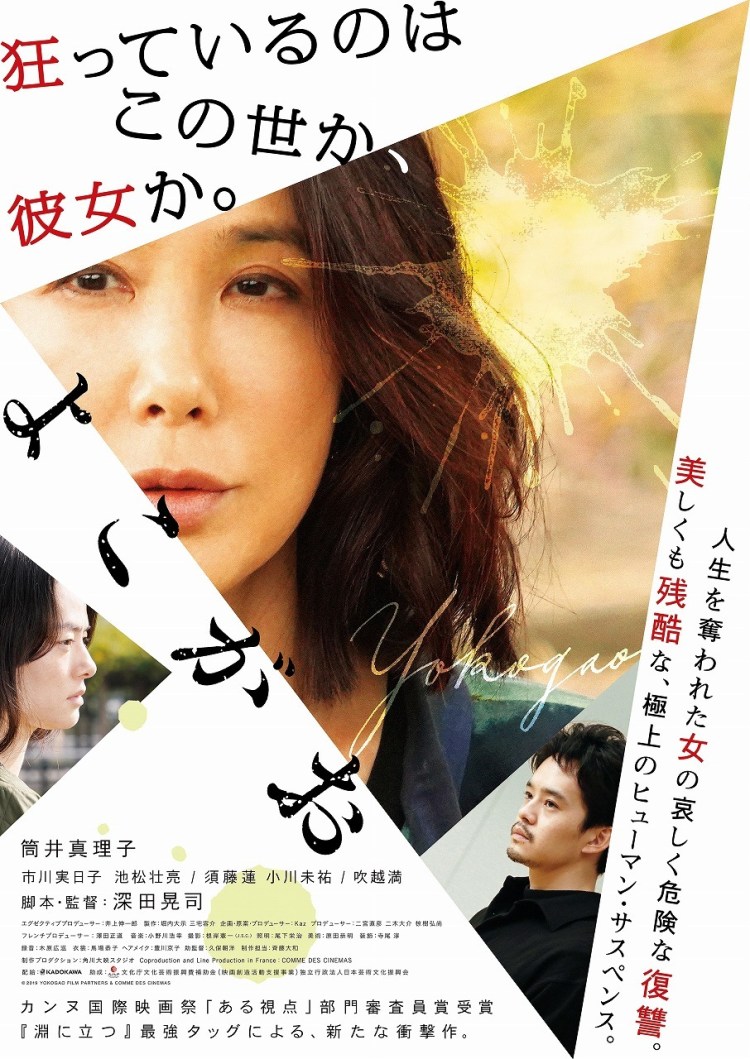
A Girl Missing (よこがお, Koji Fukada, 2019)

A Girl Missing poster 1In Harmonium, Koji Fukada explored the death of the family unit as a harried father found the foundations of his home eroded by a mysterious “stranger” with whom he shared an unspoken connection. A Girl Missing (よこがお Yokogao) pushes a little deeper in demonstrating how profoundly the foundations of a life can be shaken by frustrated connections, misunderstandings, and unspeakable desire. Probing deeper still, it wants to ask us on what foundations we’ve chosen to build our selfhoods, why it is that we don’t know ourselves without those tiny markers that tell us where we stand, and if it is really possible to rediscover a sense of self if we somehow go missing from our own lives.

Beginning in the mysterious second timeline, Fukada opens with the heroine changing her identity through the time-honoured fashion of a haircut. Calling herself Risa, she brushes off the hairdresser’s suggestion that they’ve met before, but she hasn’t chosen this salon because of its reputation or proximity to her home. Flashing back some months, we see the same woman looking a little softer and apparently working as a homecare nurse known as Ichiko (Mariko Tsutsui) to an elderly woman dying of stomach cancer. Ichiko’s colleagues worry that she’s becoming too emotionally involved with the Oishi household, helping the two daughters – uni student Motoko (Mikako Ichikawa) and high schooler Saki (Miyu Ogawa), study in cafes in her off hours, but she enjoys playing mother and does after all like to help. Meanwhile, she’s also happily engaged to a doctor (Mitsuru Fukikoshi) with a young son and looking forward to starting a brand-new family life of her own.

All that is derailed, however, when Saki goes missing in a suspected abduction on her way home from cram school. Thankfully, she’s found alive, unhurt, and apparently relatively well adjusted a few days later and anyone would assume the drama to be over, only it turns out that the suspect is Ichiko’s own nephew whom she briefly introduced to Saki at a cafe on the night in question. Feeling tremendously guilty and confused though she herself had nothing to do with the incident, Ichiko feels she must confess and make a formal apology to the Oishis but Motoko stops her fearing that the family will fire Ichiko and she’ll never see her again. Ichiko decides to trust Motoko and keep quiet, but it will prove to be a bad decision not least because it is in such sharp contrast to her otherwise straightforward and honest character.

The film’s Japanese title, “Yokogao” or “profile” reminds us that it is not possible to see the entirety of any one thing, only a single facet and more often that not the facet that it particularly wants you to see. Ichiko is guileless, innocent, and naive in her innate kindness. She doesn’t see how her relationship with the Oishi girls could eventually become problematic because, as a nurse, she’s used to doing what needs to be done when it needs doing. What we see of her is a woman about to marry “late” by the standards of her society into a readymade family, an intensely maternal figure looking for people who need mothering. Meanwhile, Saki’s disappearance exposes cracks in the Oishi household, Motoko’s grumpy response of “would you rather it was me?’ to her mother’s wails of “why her?” beginning to explain some of her seeming disaffection with her family.

Yet as much as there may be a maternal component in her desperation to keep Ichiko in her life, we can infer from all her plaintive looks that there is another kind of desire in play, one which she seems to regard as unspeakable. Ichiko, oblivious, does not quite realise the depth to which her accidental rejections wound the troubled young woman but equally could not anticipate the casual cruelty of her petty revenge. Upset that Ichiko is not catching her drift, Motoko leaks her connection to the case to the papers, and then tells them a secret shared in confidence to pour salt on the wound. Instantly regretful and caught in the white heat of passion, Motoko fails to realise the extent to which her desire to return the hurt done to her will only wound her more in ensuring Ichiko disappears from her life for good.

Ichiko then does something much the same, reinventing herself as “Risa” she lives in an empty apartment overlooking Motoko’s with the sole aim of taking revenge against the woman who pretended to be her friend and then betrayed her. But Ichiko does not understand why Motoko did what she did, and so her own revenge is also a misplaced act of self harm which causes her to absent herself from herself, assuming another identity better disposed to cruelty but finding it an awkward fit.

Fukada places emotional repression at the heart of all. Ichiko, despite her kindness, keeps others at a distance without entering into true intimacy with anyone, while Motoko apparently struggles to articulate perhaps even to herself the truth of her own feelings, childishly hitting back when slighted and unable to bear the possibility that she is in love with someone who cannot return her feelings. Forever at odds, they see each other only in profile. The desire for revenge destroys them both, but despite the pain and inescapability of regret, they have to find new ways of going on, making little nicks on their identities to help them remember who they really are. A melancholy tale of frustrated desires, A Girl Missing flirts with constructed identities polluted by social toxicity but leaves its heroines on (slightly) firmer ground in having at least taken what control they can over the forces which destabilise them.


A Girl Missing was screened as part of the 2019 London East Asia Film Festival.

Original trailer (no subtitles)
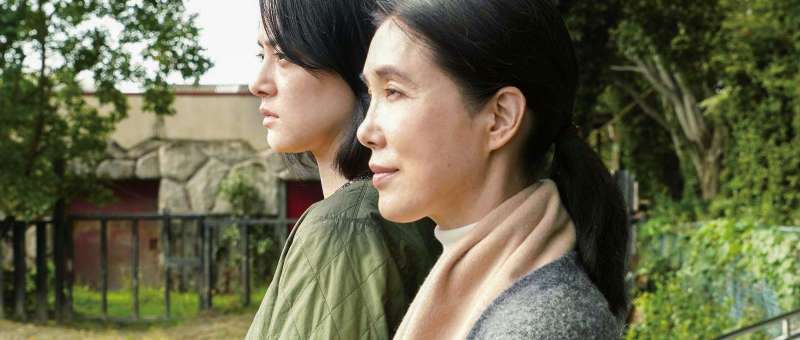
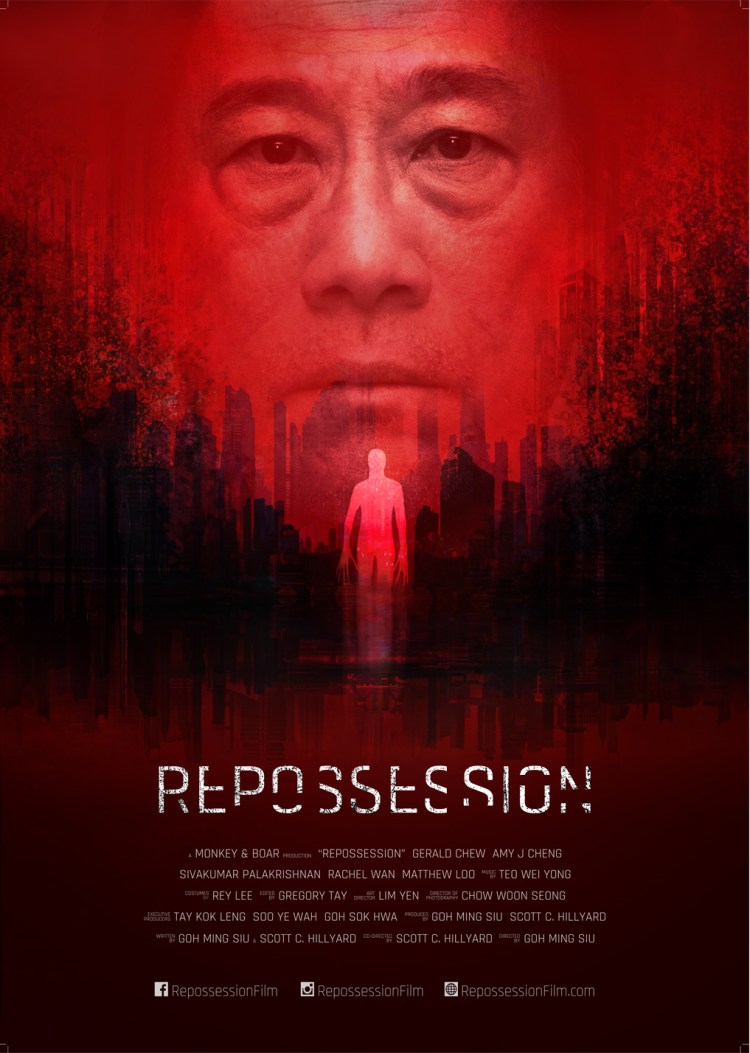
Repossession (Goh Ming-siu & Scott Chong Hillyard, 2019)

Reposession poster“I bet he doesn’t even know he’s in a cage” the “hero” of Repossession is told on asking his best friend if he thinks a hamster they’re looking at is happy on his little wheel. Like the rest of us, he’s ensnared by a cage called capitalism, but also by series of smaller cages inside it which range from toxic masculinity and persistent social conservatism, to the supernatural and the ghosts of past trauma. The biggest demon of them all, however, is pride, and as is so often the case, it’s those around him who will eventually pay the price.

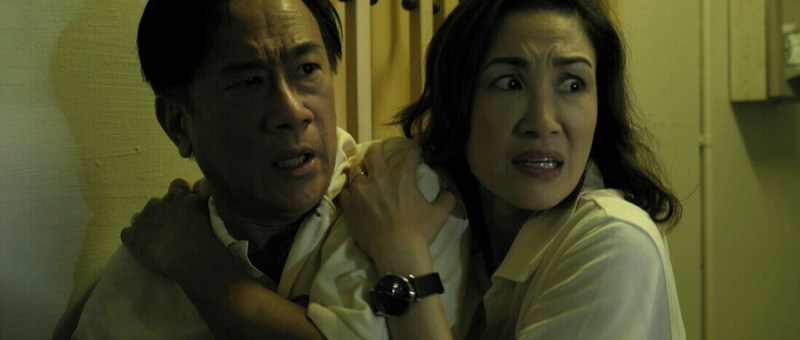
50-something Jim Tan (Gerald Chew) is a success. He’s got a high ranking salaryman job which evidently pays enough for a multi floor apartment with its own private pool in one of Singapore’s most exclusive housing complexes, as well as a six figure luxury car. Given his relative seniority, it therefore seems slightly absurd that he’s pulled aside one day by a younger man from HR who tells him that he’s been identified as one of several employees to have underperformed in the previous year and is being a given a choice – accept a termination or agree to resign. Jim is upset. He insists on seeing someone higher up but all to no avail and is eventually fired after making a scene in an admin assistant’s office.

Jim tries to tell his wife, Linda (Amy Cheng), he’s lost his job, but loses the stomach for it when she starts telling him that their daughter’s (Rachel Wan) uni fees are going up and they’ve been invited to a swanky wedding at which they’ll be expected to contribute a hefty gift. Confident he can get another job despite the fact he’s over 50 and will be applying as someone fired from his last position, Jim becomes one of the many salarymen ghosts haunting the local parks, leaving for work as normal in the morning but with nowhere to go. All around him he starts hearing voices shaming him for being one of those men, a failure, someone who couldn’t provide for his family, a loser without a job too deluded to realise that men over 50 don’t get hired in Singapore’s competitive job market – something rammed home to him when he finds himself sitting on sofas next to fresh-faced graduates interviewing for entry level positions at a fraction of his previous salary.

Jim’s friend tells him that perhaps this is for the best, that perhaps the universe is telling him it’s time to take a break and play some golf. He asks him what the point of all this ceaseless toil really is, to which Jim poignantly answers that he did it for his family but the claim is exposed as somewhat hollow when he starts to hide the unpaid bills right next to his world’s best dad mug. Jim inhabits a conservative world in which men provide and women stay home. It’s important to him that he’s built a comfortable life for his wife and daughter in the status conscious society, but he’s entirely blind that in doing so he’s fenced them inside a cage of their own. Jim’s wife Linda gave up her job and started a charitable organisation, doing good deeds looking after vulnerable people and busying herself with philanthropy. Finally learning about their money troubles, she quite reasonably decides it’s time to get a paying job again but her determination to help save their family only further wounds Jim’s fragile sense of male pride as man who can no longer support his wife and daughter even as he “degrades” himself using his flashy car to pick up fares as an Uber driver.

Jim is a man haunted by a sense of failure stemming back to a traumatic incident in which he failed to protect his younger sister whose ongoing medical bills are another worry on top of his domestic responsibilities. He sees himself, rightly or wrongly, as pursued by a soul sucking monster which is why everyone is always telling him he looks “drained”, neatly explaining his recent spell of bad luck. The real “monster”, however is the one inside – latent male violence born of an inferiority complex and resentment towards a high pressure society in which economic success and social status are the only things that count. Jim struggles to “repossess” himself, while watching his demons try to repossess the people he loves, but never realises quality of the fear that he’s fighting. “What makes you think you’ve hit rock bottom?” a passenger ominously asks him. When you’re sitting this far from the bars you hardly notice the cage at all.


Repossession was screened as part of the 2019 Five Flavours Film Festival.

Original trailer (English, no subtitles)

Where We Belong (ที่ตรงนั้น มีฉันหรือเปล่า, Kongdej Jaturanrasmee, 2019)

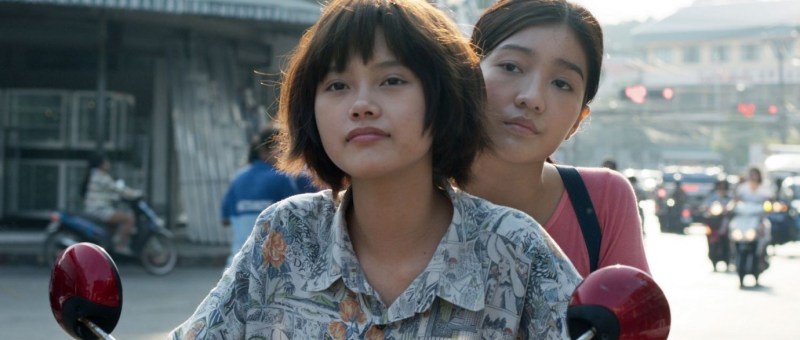
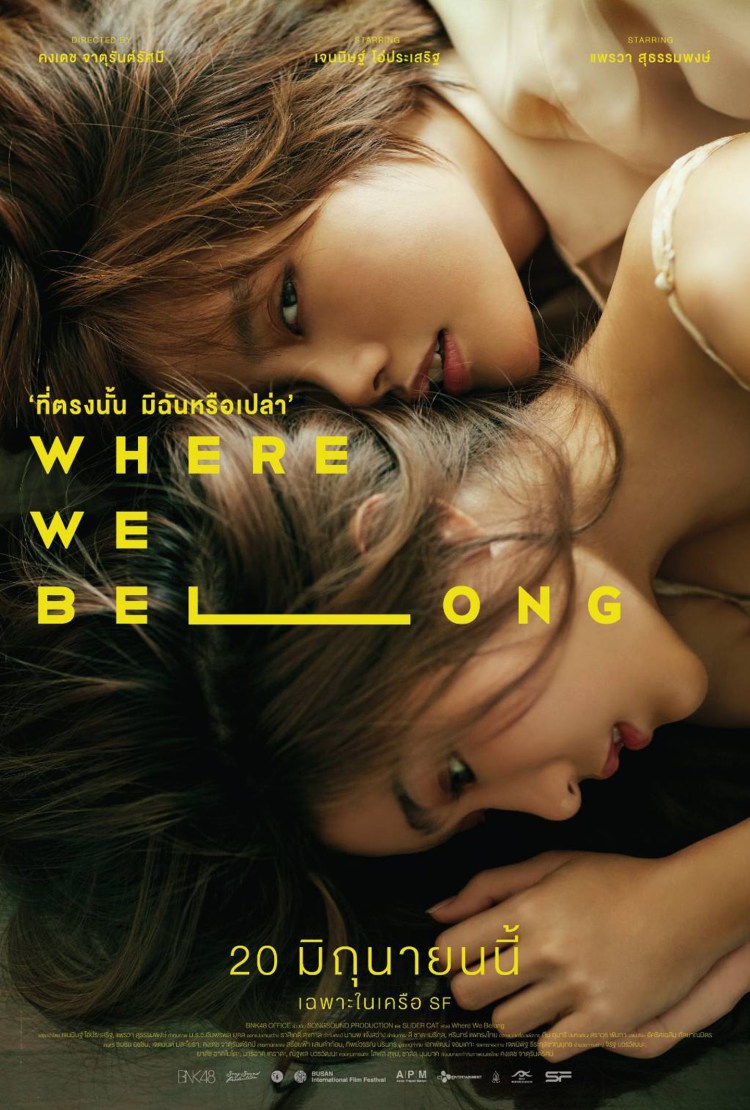
Where We Belong poster 1“I don’t understand, is life supposed to be this sad?” asks a dejected teen at the centre of Kongdej Jaturanrasmee’s Where We Belong (ที่ตรงนั้น มีฉันหรือเปล่า). Life is indeed sad, and the lesson she’s still too young to learn is that sometimes people don’t come back, things don’t get finished, and you just have to live with all your regrets while trying (but mostly failing) to do better next time. Starring members of Thailand’s BNK48 (the Thai offshoot of Japan’s AKB48 and the recent subject of a documentary by Nawapol Thamrongrattanarit), Where We Belong is part coming-of-age tale and part zeitgeisty take on contemporary Thai youth as it finds itself increasingly disconnected from the social conservatism of its parents’ generation but floundering when asked to find a new direction in which to strike out.

Highschooler Sue (Jennis Oprasert) is a case in point. Unbeknownst to her conservative father (Prawit Boonprakong), she’s applied for a scholarship to study abroad in Finland. Talented in English, she’s not much idea of what she wants to do with her life but knows that she has to get out of her small-town existence and away from the family noodle shop she feels is tying her to a future not of her choosing. Her best friend, Belle (Praewa Suthamphong), meanwhile is resolved to stay at home but doesn’t have much direction either save her attachment to her elderly grandmother (Saheoiyn Aophachat). Belle’s mother left the family a long time ago and lives a vacuous consumerist life in Bangkok, something which Belle is also keen to reject.

Meeting up with a friend at a local internet cafe, Belle is unsurprised to find it so full because nobody wants to go home to their parents right now owing to the intense pressure on them to succeed. That pressure is, however, slightly at odds with their traditional expectations for their children. No one expects much of young girls like Sue and Belle, even if they superficially want them to do well in their exams. Sue’s mother passed away some years ago, and her distant father is dead set against the idea of her travelling abroad, terrified that once she’s seen the world she won’t look back. Everyone expects her to take over the noodle shop, insisting that it’s an important part of the local culture and can’t simply be another sacrifice to progress like so many tiny eateries and family businesses abandoned by youngsters looking for a brighter future somewhere else.

Trying to defend her friend, Belle tells the customers in Sue’s restaurant that they can keep their “stupid heritage” to themselves, even while planning to stay home and be the good daughter. Unfortunately her words backfire, further placing her at odds with the conflicted Sue who is still trying to process the implications of her transnational move. While she remains in a kind of denial, it’s Belle who’s trying to sort everything out for her – returning old comic books to the library, getting their old band back together, and even trying to help her patch things up with a friend she’s fallen out with even though Belle herself is a little jealous of the close relationship they once had. She does these things because, as she hints to their friend at the library, she’s afraid Sue won’t come back and knows on some level that their present relationship, whatever happens after, is going to change even it doesn’t exactly end.

Belle’s grandmother has a strange habit of staring out the window, waiting for a boy who said he’d meet her the next day decades earlier but never came back. Belle doesn’t want to be her flighty mother living a superficial life in the city, but Sue doesn’t want to end up like grandma waiting around for something that’s never going to happen. At her interview, she’s honest in her replies, admitting that she currently has no dream other than getting out of Thailand, but cleverly adding that by going to Finland where they have the world’s best education she hopes to figure out what her life’s dream might be.

What the two girls discover is that life is a series of goodbyes. They’re on different paths, and that’s sad, but it’s just the way things are. Before she goes, Sue tries to put her affairs in order with varying degrees of success – trying to come to terms with her mother’s death, telling a boy she likes about how she really feels (but failing to take things further), and patching up old friendships while also accepting that sometimes they just end with no real resolution only a sense of regret. Eventually they figure out where they belong. Sue leaves, and Belle is alone surrounded by familiar absences, but life goes on, and it’s sad, but that’s how we live.


Where We Belong was screened as part of the 2019 Five Flavours Film Festival.

Original trailer (English subtitles)

Balloon (气球 / དབུགས་ལྒང་, Pema Tseden, 2019)

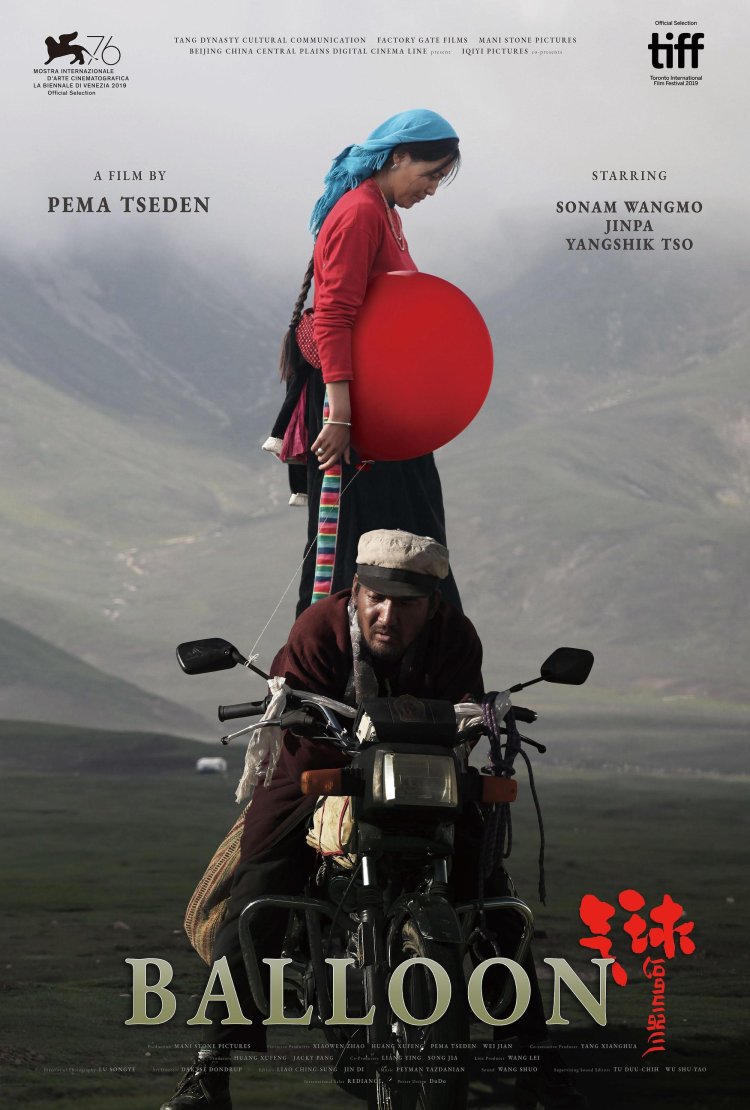
Balloon poster“The world has changed but you’re still so conservative”, a bemused doctor exclaims on learning that a female patient would rather wait around for a woman doctor than disclose a “woman’s problem” to a man. Set in ’80s Tibet, Pema Tseden’s seventh feature, Balloon (气球, Qìqiú / དབུགས་ལྒང་), finds itself at the intersection of multiple worlds and changing times as a small family is quietly torn apart by societal forces beyond its control.

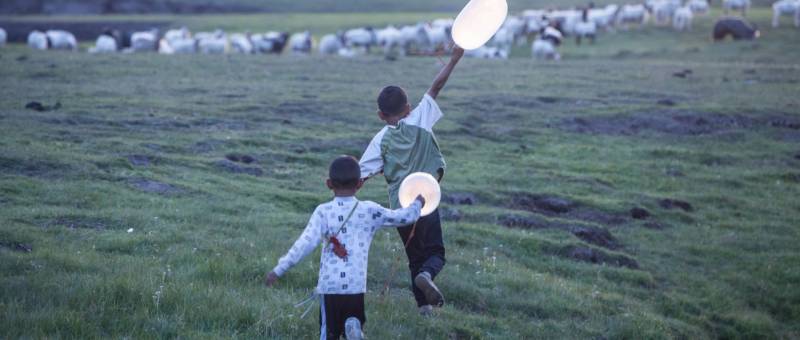
As the film opens, the family’s two youngest sons are busy spying on dad and grandad through the fuzziness of an overinflated balloon. Only, unbeknownst to them, it isn’t a balloon at all but a condom, a slightly embarrassing harbinger of modernity now necessitated by the recently instituted One Child Policy. With the oldest boy away at high school, Dargye (Jinpa) and his wife Drolkar (Sonam Wangmo) have three kids already and paying the fine on a fourth would more or less mean financial ruin. Thankfully, the condoms are free – the only problem being that Drolkar has to go to the clinic in town to ask for them which she finds extremely embarrassing, so much so that she can’t even bear to say the word, almost winking as she whispers “the free things” before quickly stuffing them in her pocket. 

What Drolkar wanted to ask the doctor about, however, was the possibility of sterilisation. With the kids constantly nicking the condoms along with the chance that they aren’t 100% reliable, she is in constant worry of what it might mean for the family if she becomes pregnant with a fourth child, especially, she tells the doctor, because Dargye seems to be in a particularly amorous mood at the moment which increases the chances of something going “wrong”. The female doctor can’t quite understand Drolkar’s prudery, or her slightly “old-fashioned” way of thinking. The doctor, obviously, enjoyed a university education. She has a career of her own and a clearly defined individual life as something other than a wife and mother. She wonders why anyone would want to have so many children in this day and age. Having only one means she can devote all of her resources in one direction, ensuring her child can have a good education and the best start in life, whereas Dargye has just had to sell a cow to pay for his eldest’s school fees while the second two stay home.

For Drolkar, who was perfectly happy with the way things were, the world is still an intensely patriarchal place and even if she wanted to (which she doesn’t, really), it’s probably too late to become anything other than a wife to her husband and mother to her sons. This her sister Ani (Yangshik Tso) learned to her cost. Venturing pick up her nephew Jamyang from school she ends up running into an old flame who apparently ruined her life though some kind of “misunderstanding” which led to her leaving home to become a nun. Now a divorced teacher and apparently rising literary star, he hands her a book inspired by their love affair which he hopes might help to explain whatever it was that happened between them, but Drolkar, still outraged on her sister’s behalf, prevents her from reading it – firstly by throwing it on the fire causing Ani to get her fingers burned (again, but literally) pulling it out, and then by telling Ani’s ex to take the book back and refrain from causing any more trouble dragging up the past.

Yet as much as she’s Dargye’s wife Drolkar tries to assert her authority in other ways aside from taking control of her sister’s romantic future. More practical than her husband, it’s she who is in charge of the condoms, and she who worries about the potential effects of a problematic pregnancy on their family. In a society as patriarchal as this, some might say that such things are in any case a woman’s responsibility, but Drolkar’s belief that bearing a child or not is her own decision eventually places her at odds with her husband who becomes temporarily violent when faced with his impotence, powerless to prevent his wife aborting their baby if that’s what she decides, but also at the mercy of the Chinese state who have arbitrarily decided that something as natural as conceiving a child is now a crime.

For Dargye and his family who live traditional lives far from the urban centres of the modern state, it isn’t only the pain and sadness of being forced to abort their child against their will which burdens them but a spiritual taboo in knowing that the child whose birth they’d be denying may be the reincarnated soul of a much loved relative. Drolkar is forced to choose between her Buddhist beliefs and the demands of Chinese communism, her husband’s wishes and those of the state acting as father. Of course she tries to choose her family, but whichever decision she makes may destroy it either through her husband’s resentment or the costs involved with trying to defy the political reality.

Grandad laments that everyone rides motorbikes these days, you never see horses anymore. Times have indeed changed, but in some ways more than others. While Dargye seems to draw vicarious power from the randy ram he’s borrowed from his friend to stud his sheep, a figure of robust and virile masculinity, he’s effectively neutered by the society in which he lives. Conversely, Drolkar, according to the doctor at least, ought to feel herself liberated but is left with no real choice at all. Only the kids, cheerfully playing with the instruments of their parents’ oppression, have learned to find innocent joy in the midst of such uncertainty while the modern world creeps in all around them.


Balloon was screened as part of the 2019 Five Flavours Film Festival.

Original trailer (English subtitles)

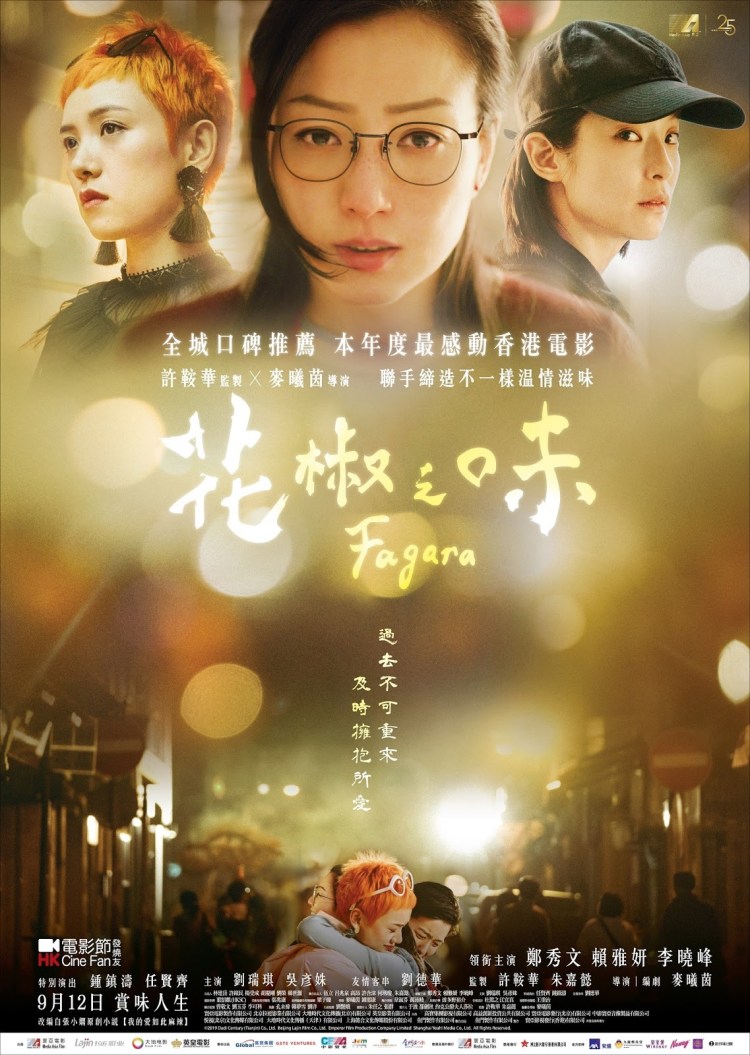
Fagara (花椒之味, Heiward Mak, 2019)

Fagara poster 2“We remember the bad and forget the good” a regretful mother laments, trying to find the right words to connect with her emotionally distant daughter. Heiward Mak’s adaptation of the Amy Cheung novel Fagara (花椒之味, Hjiāo zhī Wèi) melts a subtle One China narrative into a heartwarming meditation on unexpected connections and the modern family as three women from three cultures discover an instant and easy bond, meeting as sisters in adulthood united in a shared sense of hurt and disappointment but learning to find the good among the bad as they process the legacy of their late father and the pain he left behind.

Harried middle-aged travel agent Acacia (Sammi Cheng Sau-man) spends her days fending off junk calls and booking discreet getaways for executives going on “business trips” with their secretaries. So, when she gets a panicked message that her estranged father Ha Leung (Kenny Bee) is in hospital she naturally assumes it’s a scam, only it’s not – she needs to get across the Harbour to Victoria Hospital, but in a motif that will be repeated finds it difficult to get a cab willing to take her. By the time she arrives, it’s too late. Her dad has passed away. So little does she know about him that she has to double check what year he was born on his driving licence, passed to her by a young man working at her father’s “family” hotpot restaurant.

On charging his phone, Acacia is shocked to discover that he’s been exchanging text messages with two other young women, apparently his daughters from other relationships in Taiwan and on the Mainland. Thinking they ought to at least know, Acacia invites them to the funeral, which, embarrassingly enough, she has arranged as a Taoist ceremony because she was unaware her father was actually a Buddhist (something apparently known to some of the other guests only they were too polite to say). Meeting for the first time and setting aside their mutual resentments, the three women find an easy connection, uniting to save the restaurant by figuring out Ha Leung’s secret recipe for his famed Fagara soup.

Though Mak largely minimises the obvious political allegory in favour of the human story, it’s impossible to miss the message that these three women are all daughters of the One China, let down by a well meaning but flawed “father” who nevertheless loved them all if imperfectly. Given the current tensions, some might find the implications of that message trite at best, but you can’t argue with the positivities of finding common ground as children failed by distant paternity, or as Acacia puts us, “regardless of the choice he made, he hurt us all”.

Cherry (Li Xiaofeng), the daughter from the Mainland, counters that she was never “hurt” because she was never anyone’s “choice”. Abandoned twice over, Cherry has lived with her grandmother (Wu Yanshu) since her mother remarried in Canada, leaving her behind. A young woman of her times, she’s staked everything on Instagram fame, rejecting the idea of marriage in favour of perpetual independence but unselfishly. The most family oriented of the sisters, she is determined to take care of her grandmother even while she tries to push her away partly in vanity, afraid to let her see the vulnerability of ageing, and partly not wanting to feel as if she’s trapped her granddaughter in a life of servitude to an old woman that will leave her lonely in her own old age.

Acacia meanwhile also remains lukewarm on the idea of “family”, resentful towards her father and insecure in her relationships, breaking up with a meek but supportive fiancée (Andy Lau Tak-wah) because he was only ever bold enough to say he was “OK” with getting married. Striking up a friendship with a cheerful doctor (Richie Jen Hsien-chi) who knew her father, she meditates on her future while trying to sort out her complicated feelings about her father’s “family” hotpot shop.  What she discovers is that her father, while useless at the business of family, had a gift for the family business, turning the hotpot shop into a makeshift community offering second chances to those who couldn’t find them elsewhere.

Uncle Leung, as they called him, was also the only one to encourage Taiwanese daughter Branch (Megan Lai) to follow her dreams when everyone else told her to give up and settle down. Unlike Acacia and Cherry, Branch has a relationship, albeit a strained one, with her mother (Liu Juei-chi) who, as she reveals to Acacia, struggles to connect with her daughter, never quite knowing the right words to say, always striking on the ones sure to work the wound. Heavily coded as gay, Branch is aloof and closed off, literally shutting a devoted young woman out of her life, but begins to brighten on connecting with her sisters, shifting from silent but deeply felt sadness at the funeral to a cheerful solidarity helping to make the restaurant a success. Of course, it turns out that the secret ingredient in the soup was memories of everyone Ha Leung had loved, literally a “family hotpot”. Finally learning to remember the good as well as the bad, Acacia finds the strength to forgive her father, seizing her independence and driving off into a freer future full of possibility but with her sisters, in spirit at least, right alongside her.


Fagara was screened as part of the 2019 Five Flavours Film Festival.

Original trailer (English subtitles)

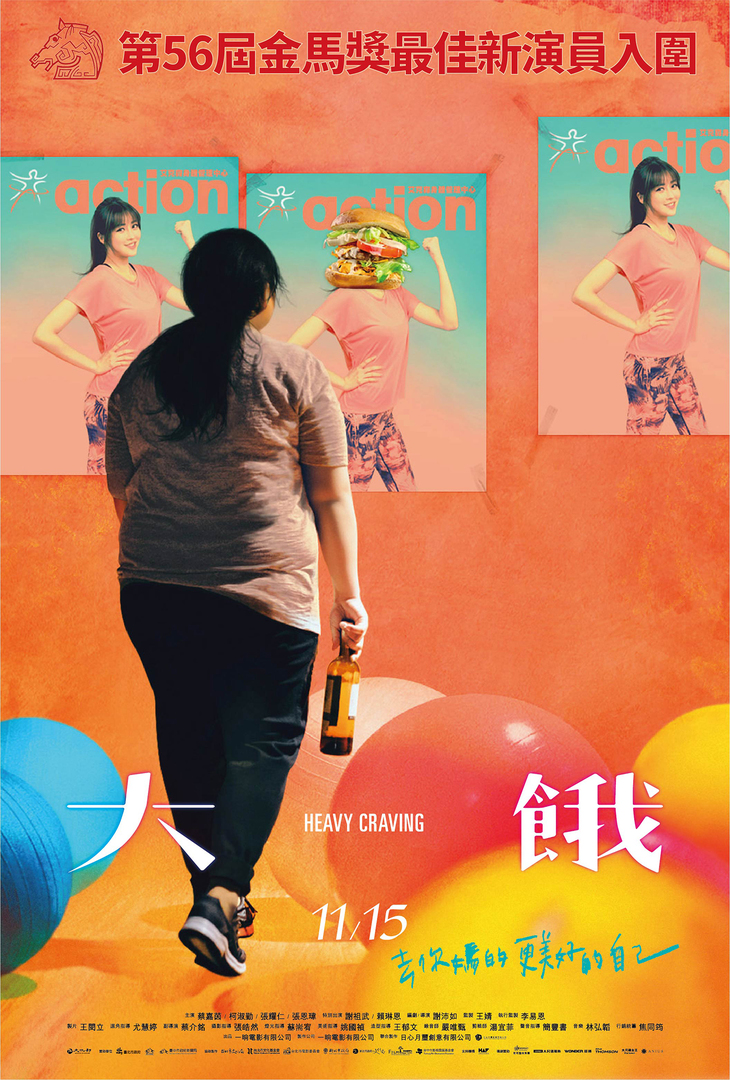
Heavy Craving (大餓, Hsieh Pei-ju, 2019)

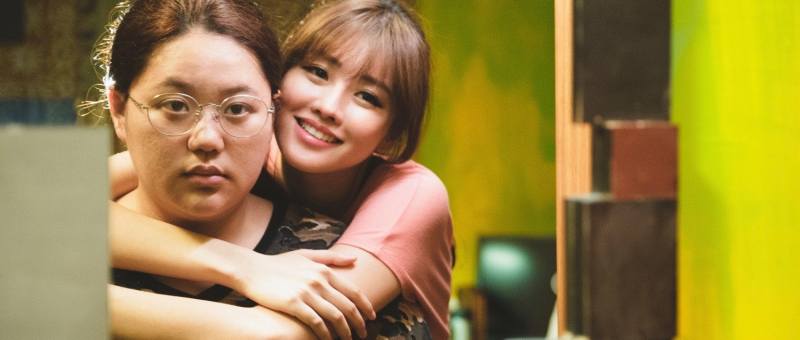
Heavy Craving poster 1“Just look at yourself” the heroine of Hsieh Pei-ju’s Heaving Craving (大餓, Dà È) is constantly told, as if she should simply know why she’s not getting on in life. Ying-juan (Tsai Jia-yin) is a larger lady in a culture which prizes conformity, insisting on its own narrowly defined notions of “beauty” and rejecting all which lies outside them. Though she’s perhaps “happy” in herself, at least to a point, Ying-juan harbours an intense sense of inferiority which is not helped by her emotionally distant yet judgemental mother whose less than gentle prodding presents an additional barrier to her daughter’s forward motion.

When we first meet Ying-juan, she’s buying a trolly full of puddings from the supermarket, in fact clearing out their entire stock. A woman behind her complains that she can’t see any on the shelves, noticing that they’re all in Ying-juan’s trolley and silently judging her, assuming that she’s going to eat them all herself. Ying-juan takes a box out and gives them to the woman, well accustomed to this kind of disapproval though as we later discover the puddings were actually for the kids at the school where she is temporarily working as a cook. These kinds of micro-aggressions are a constant occurrence in Ying-juan’s everyday life. She tries to give up her seat on a bus to an elderly lady, but everyone tells her to sit down because she’ll block the aisle. She thinks about getting another job in a restaurant but realises that the kitchen is too narrow for her to move about freely, and then there are horrible kids in the street who like to throw eggs at the local “fatso”.

Despite her kind heart and affable nature, Ying-juan is constantly told that she’s undesirable and that her unconventional looks are an embarrassment to those around her. Ying-juan’s mother (Samantha Ko Hoi-ling), a skinny, elegant woman, practices yoga and puts great effort into being presentable. She’s “ashamed” to introduce her daughter looking as she does and constantly makes excuses, eventually signing her up for weight loss courses as a “birthday present” under the pretext that she’s trying to help Ying-juan get her mojo back so she can get going with a “proper” career and perhaps a relationship.

The weight loss courses, which we are first introduced to by means of a creepy advert, are almost akin to a dodgy cult promising to introduce participants to their “better selves”. Ying-juan is not really invested and somewhat dismissive of the the impatient life coach’s theatrical manner, but after she meets a handsome delivery driver, Wu (Chang Yao-jen), who comes to her defence when a neighbour tries to sexually assault her, she decides to give them a go. Though she tries to follow their guidance even as they try to sell her expensive “supplements”, treatments, and finally an operation, Ying-juan cannot seem to lose the weight, leading her to feel even more inadequate that she did before.

Underneath it all, she wonders if anyone is going to like the “real” her, that perhaps her size wasn’t the problem and she’s just not someone people will want around whether she conforms to their desires or not. A caring and nurturing person, Ying-juan loves to cook but her mother doesn’t even come home in time for her birthday dinner, which she cooked herself because going to restaurants is no fun when people judge you for what or how much you’re eating.

Judgement is indeed the primary problem, and when it’s connected to your appearance that’s something you cannot hide. Wu, confiding in her that he used to be bigger himself, tells Ying-juan that he eventually came to the conclusion that changing other people is too hard, it’s faster to change yourself, but his words have a rosier connotation than it at first seems in that it’s not so much that Ying-juan needs to lose weight as it is that she needs to feel more comfortable in herself so that she’s not enduring judgement but actively rejecting it. It’s a lesson she begins to discover after bonding with a lonely little boy, Xiao-yu (Chang En-wei), whom she accidentally discovers likes to wear dresses.

Like Ying-juan’s mother, Xiao-yu’s does not approve of her son’s difference and has apparently already sent him to several doctors to try and get it fixed. Because he doesn’t like upsetting his mum, Xiao-yu vowed not to wear girls’ clothes anymore, but living with shame and repressing a part of your true self is a painful and heavy thing, especially for a child. The mothers might say that they’re looking out for their kids, that they know their lives will be harder if they seem to be “different” and that therefore they want them to fit in and be “likeable”, but it’s also true that they are embarrassed and ashamed to have have children that don’t “measure up” to the norm, preoccupied with the way their difference reflects on them as people and as parents.

Luckily, Xiao-yu has a friend like Ying-juan who tells him that it’s OK to be himself and there’s nothing wrong in liking to wear pretty dresses even if she hasn’t quite learned to extend herself that same generosity. After trying everything and finally being robbed of her sense of taste, she begins to rediscover what’s important seeing a chubby little boy living his best life by thoroughly enjoying a tasty sandwich and radiating joy, while a pair of skinny women walk past grumpily judging others for their lack of self-control when they themselves are wilfully repressing their desires and probably a little bit miserable on the inside. The creepy self help video from the beginning was right in one respect, in that what Ying-juan craves is happiness but that’s not something you find by following other people’s arbitrary rules, only in accepting yourself and embracing joy where you find it.


Heavy Craving was screened as part of the 2019 Five Flavours Film Festival.

Original trailer (Traditional Chinese / English subtitles)