The Wild Goose Lake (南方车站的聚会, Diao Yinan, 2019)

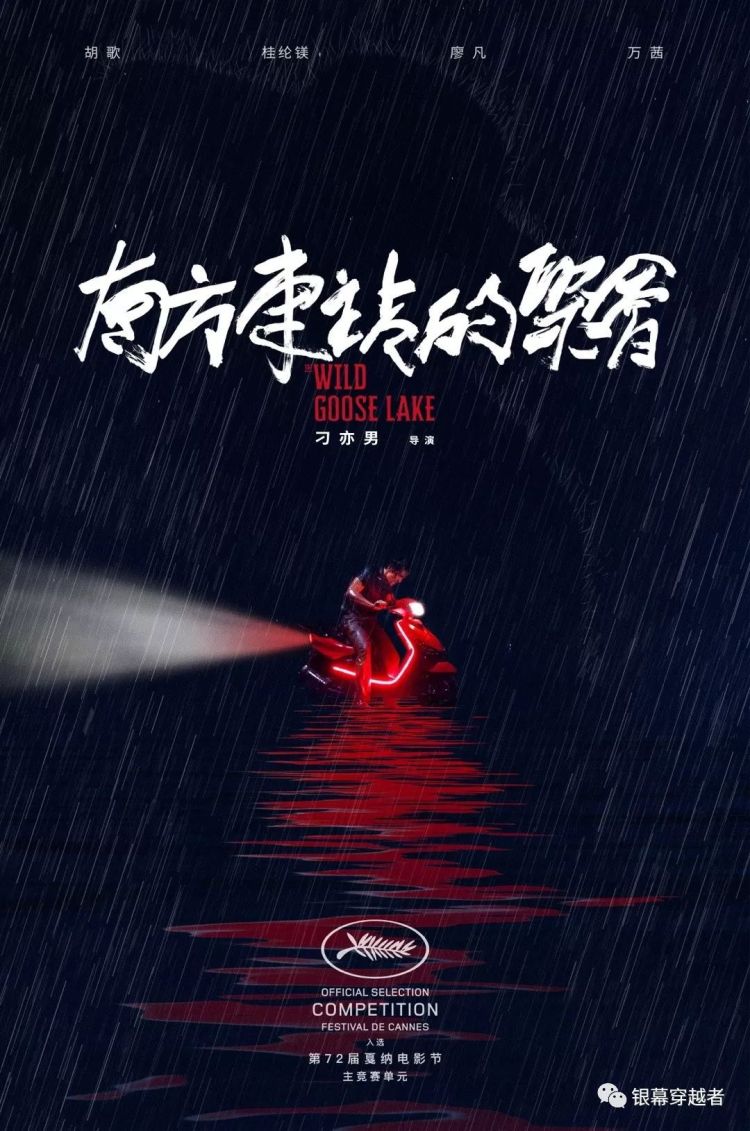
wild goose lake poster 1Chaos and desperation are about as far as it’s possible to get from the image of the modern China the nation’s cinema has been keen to project, but that’s exactly where we find ourselves in the murky world of The Wild Goose Lake (南方车站的聚会, Nánfāng Czhàn de Jùhuì). Diao Yinan’s Black Coal, Thin Ice followup finds the director in much the same territory only this time embracing the absurdity of existential flight as his twin heroes seek impossible escape in the garish neon of a provincial underworld.

Diao opens on the rain-drenched streets as sullen gangster Zhou Zenong (Hu Ge) waits impatiently for a rendezvous with his estranged wife Shujun (Wan Qian), only to be met by a stranger – “bathing beauty” Aiai (Gwei Lun-mei), who explains she won’t be coming. A lengthy flashback reveals that Zenong is currently on the run after getting embroiled in a dispute over turf assignments at some kind of gangster briefing session during in which one of his guys shot one of the Cat brothers’ men in the leg. To settle the matter, the boss proposes a good old-fashioned competition to see who can nick the most bikes in one night with the winner getting the prime spot, but Zenong doesn’t know he’s been set up and mistakenly kills a policeman after being attacked by Cat Eyes. Realising there’s no longer any way out for him, Zenong’s last hope is to keep the police at bay long enough to get back in touch with his wife and convince her to turn him in to the police so that she can claim the reward money.

Like many men of his generation, Zenong couldn’t find the kind of honest work that would allow him to provide for his family and so he left home. Too ashamed to own his no-good gangster ways, he stayed away for five years but all that’s on his mind is family and this is the only chance that he will ever have to provide for them. Shujun isn’t even really sure she wants anything to do with her absentee husband, but is dragged back into his orbit once again harassed by the police every step of the way.

In striking contrast to most Chinese crime dramas, these police are far from a force for order. Describing Wild Goose Lake as a lawless land, they have their very own briefing to formulate a plan to catch Zenong but aren’t averse to underhanded tactics like threatening Shujun and trying to undermine her attachment to her husband through a fabricated story about a pregnant girlfriend. The line between cop and thug isn’t so thick as you’d think it would be, and you can’t trust the police any more than brotherhood or honour amongst thieves.

Devoid of morality, Wild Goose Lake is indeed a chaotic place defined by shifting loyalties and unexpected betrayals. Fights break out without warning, plans change, and there are no safe spaces. Bumbling as they are, the police are everywhere watching everything and trying to blend in. Anyone might be a cop, or secretly working against you. Zenong is on the classic wrong man path, except that he’s the right man and he knows it. He might not have pulled the trigger if he knew it was a policeman he was firing at, but pull the trigger he did and now he’ll have to make peace with it. Trying to outrun the law only so long as to subvert it, he finds himself slipping past checkpoints distracted by pointless officiousness and consistently evading the net.

When Shujun is unable to make it to the rendezvous, Aiai offers to take her place by turning Zenong in and claiming the reward money to pass it on to Zenong’s wife (minus a small fee), meaning they will need to trust each other until the mission is completed. Aiai, a dejected young woman supplementing her income with casual sex work as one of the “bathing beauties” found at the lake, longs to escape her dead end existence, eventually telling the policeman she’d use the reward money to open a small store back in her hometown. Like Shujun, she lives in a fiercely patriarchal, unforgiving society  from which there is little sign of escape or independence. Yet, as afraid of everything Zenong represents as she eventually becomes, Aiai remains steadfast and true, keeping her promise and paving the way towards a brighter future for Shujun and her son away from the haphazard chaos of Wild Goose Lake. An absurdist fable drenched in neon, Diao’s conception of life on the margins of provincial China is as bleak as they come but eventually finds space for positivity on returning to a world more ordinary in which two women walk away from the traumatic past arm in arm and the law has to be content to let them go.


The Wild Goose Lake was screened as part of the 2019 London East Asia Film Festival.

International trailer (English captions)

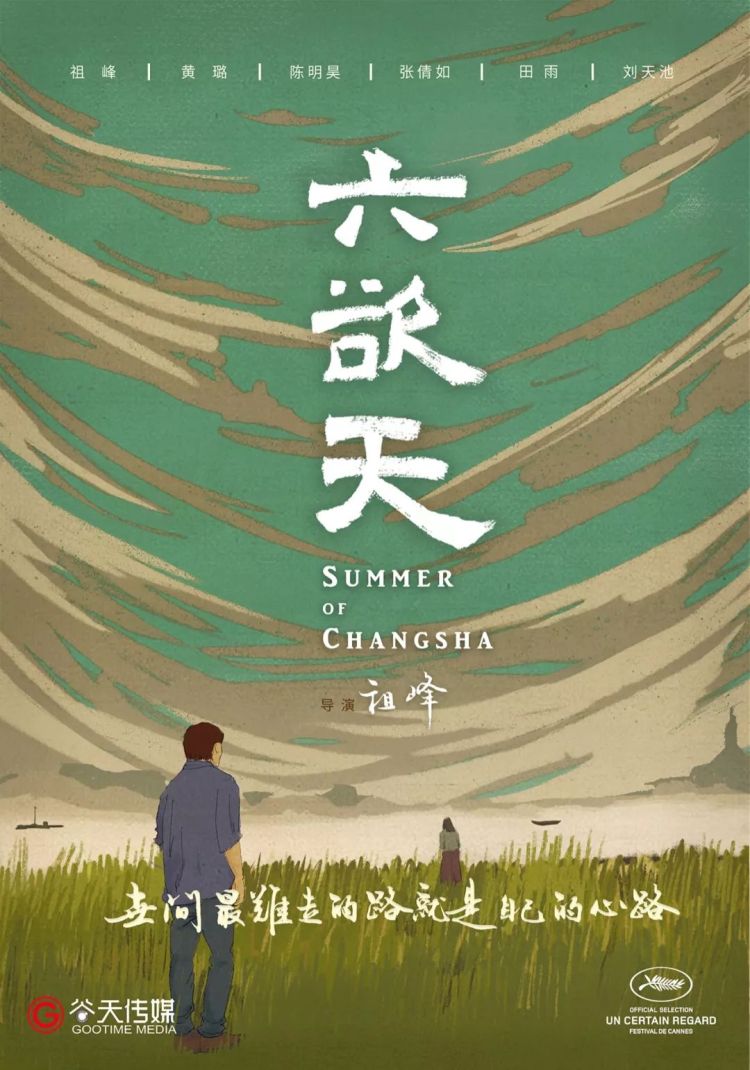
Summer of Changsha (六欲天, Zu Feng, 2019)

Summer of Changsha poster 1Escaping from the traumatic past is fast becoming a favourite theme of Chinese cinema, but Summer of Changsha (Liù Yù Tiān) swerves away from the neon-lit, rain-drenched streets of your average melancholy police procedural for the fetid air of sun-baked provincial China where death haunts the shadows. Each dealing (or failing to deal) with guilt and responsibility, a depressed detective and seemingly emotionless doctor bond through a shared sense of impossibility only to discover that there may be a way out after all only not of the kind they might have assumed.

Detective Bin (Zu Feng) has already handed in his resignation but has no real plans for his post-police life. Consumed by powerlessness and regret over failing to prevent the death by suicide of his girlfriend who had been living with longterm depression, he cannot seem to find a place for himself back in the world. When a severed arm is fished up from a local lake, he gets a new sense of purpose and eventually connects the lonely limb to a missing persons ad found after trawling the internet which mentions a prominent scar on the right hand.

The ad was placed by a doctor, Li Xue (Huang Lu), who emotionlessly confirms to Bin and his earthier partner Lei (Chen Minghao) that she believes the hand to be her brother’s, shocking them by correctly guessing where they might have found it. Xue tells them that her brother Yi appeared to her in a dream and showed her where the rest of his body parts are – something later confirmed to be true when the three drive out to a remote spot and dig up a suitcase buried under a tree.

Strangely, Bin takes the “dream” theory at face value with only Lei seemingly unconvinced. He never quite entertains the obvious conclusion that Xue knows where the body parts are because she put them there, even after discovering that the pair were seen to be arguing recently and that their relationship became strained after a tragic accident during which Xue’s daughter, who was suffering with a heart condition, sadly passed away.

What draws Bin to Xue is a shared sadness, a deepening gulf of introspection which, ironically, convinces them they exist outside of regular society and should not permit themselves genuine human connections. Xue’s animosity towards her brother, it seems, was less because of what happened to her daughter than because of his conversion to Buddhism which had, she felt, allowed him to move on and start to forget about their past. By contrast, Xue condemns herself to a life of suffering as atonement, wilfully carrying on an affair with a married surgeon (Tian Yu) she doesn’t seem to like very much solely because his research area was closely connected to her daughter’s condition and if she’d lived he might have saved her. Bin, meanwhile, criticises his partner Lei for trying to ghost a girlfriend, cute as a button Ting Ting (Zhang Qianru), because he thought she was annoying, but finds himself doing the same thing after he sleeps with her when she approaches him for comfort only for her to become emotionally attached.

Ting Ting wants to help him overcome his emotional pain, but Bin isn’t sure he can. Like Xue, his grief and guilt have made him selfish and self-involved. Reconnecting with his late girlfriend’s family, he has the urge to make some kind of confession in order to ease his burden only for her sister (Liu Tianchi) to rightly round him for the cruelty of what he’s about to do. She was just starting to move on with her life, and now Bin’s sudden chattiness seems primed to stir everything up again. His desire to ease his conscience is entirely for his own benefit whatever he might say about wanting the family to know the truth. Each conflicted by their awkward connection, neither Xue or Bin can see a way out of their suffering because they don’t believe they deserve one.

To stave off the inevitable, they continue investigating the mysteries behind Yi’s death but the answers they find turn out to be depressingly banal. While a mysterious collective of Buddhists release fish back into the rivers (perhaps not as responsible as it first sounds), the pair remain similarly trapped in a solipsistic world of suffering little realising the consequences of their (in)actions on those around them. Yet solving the case in its entirety does at least offer the opportunity of new beginnings, however far they choose to take them. A detached exploration of the entrenched effects of trauma, guilt, and regret, Summer of Changsha is not quite the film it first appears to be but an icy journey from the cold heat of summer into the unexpected warmth of winter snow as its dejected leads learn to look for new directions towards a less uncomfortable future.


Summer of Changsha was screened as part of the 2019 London East Asia Film Festival.

Original trailer (English subtitles)

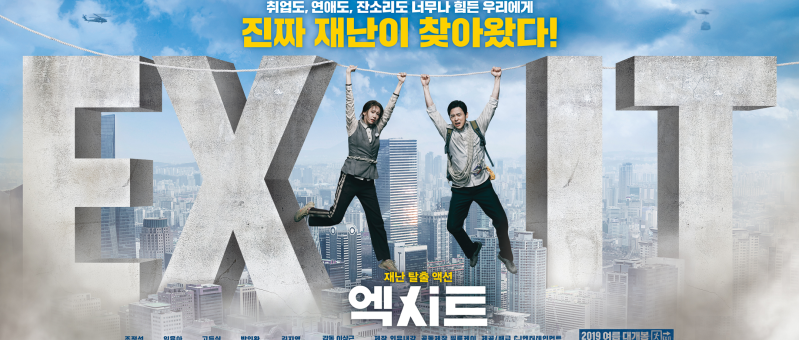
EXIT (엑시트, Lee Sang-geun, 2019)

Exit poster 2“Hell Joseon” manifests as “toxic gas” in Lee Sang-geun’s Exit (엑시트). Millennial “slackers” losing out in Korea’s increasingly cutthroat economy find themselves consumed by their own sense of failure while those around them only compound the problem by branding them useless, no-good layabouts, writing off the current generation as lazy rather than acknowledging that the society they have created is often cruel and unforgiving. Yet, oftentimes those “useless” skills learned while having fun are more transferable than one might think and the ability to find innovative solutions to complex problems something not often found in the world of hierarchical corporate drudgery.
30-something Yong-nam (Jo Jung-suk) spends his days in the park surrounded by grannies and has earned the nickname “IBM” – Iron Bar Man, for his athletic pursuits. The local kids have even come up with an origin story for him that his girlfriend must have died after falling off one and so now Yong-nam is some kind of “village idiot” with an overwhelming need to master the monkey bars. The truth is, however, that Yong-nam has nothing much of anything else in his life. His continual failures to find employment are an embarrassment to his family, and even his little nephew (Kim Kang-hoon) is so ashamed of him that he routinely blanks Young-nam in the street. With mum’s (Go Doo-shim) 70th coming up, everyone is very keen that Yong-nam look the part and try not to embarrass them.

Yong-nam is also quite invested in not being an embarrassment because the only reason he booked this fancy restaurant that’s a two hour drive away is that he’s heard his university crush Eui-ju (Im Yoon-ah) works there. Back in uni when they were both members of the rock climbing club, Yong-nam asked Eui-ju out but she was only interested in friendship so he started avoiding her out of embarrassment. Not really any more mature, he lies that he’s a high flying hedge fund manager rather than admit that his life has not been going well. Eui-ju, meanwhile, is the vice-manager of this events centre but shrugs the job off as not much better than part-time when in reality she’s really running the place while her sleazy boss (Kang Ki-young) who’s only in the position because it’s his dad’s company constantly sexually harasses her and shows no signs of taking no for an answer.

When toxic gas floods the city, however, the pair are instantly in their element. They know how to conjure makeshift stretchers from stuff that’s lying around and how to try and draw attention to yourself when you’re in need of rescue, but find their ideas dismissed by Yong-nam’s confused, conventional family members well used to ignoring crazy uncle Yong-nam. To survive they’ll have to trust him and his rock climbing prowess as he shins his way to the top of the building where salvation seems more of a possibility.

Crisis aside, Yong-nam lives in a world of constant anxiety where he’s forever receiving disaster alerts on his phone for things he never thought he’d have to worry about, and his mother spends her evenings diligently copying down ways to prevent cancer from TV documentaries. Yong-nam’s dad (Park In-hwan) would rather chill out with some soap operas, but it seems you can’t drown out existential dread with vicarious drama. Having more or less given up, Young-nam hasn’t even been going to his climbing club. After all, if you can’t get a foot on the ladder, what use is the ability to climb? “Our lives are the disaster” Yong-nam’s similarly troubled friend exclaims, but the sudden threat of toxic gas does at least give the dejected young man motivation to prove himself in demonstrating that his skills are useful, even essential, rather than frivolous or eccentric as his family members previously believed them to be.

Eui-ju, meanwhile, is kept in her place by a combination of sexism and the demands of a hierarchical society which prevent her from fulfilling her true potential by convincing her that she has to be polite to her odious boss. Teaming up with Young-nam, the pair work as equals and support each other as they try to find ways to survive. No damsel in distress, Eui-ju is finally able to take an active role in her own destiny while also making sure to save other people along the way, often at the expense of the pair’s own chance to escape.

In a loose moment, Yong-nam declares that he’s only applying for jobs in one of the shiny skyscrapers from now on because those guys probably got saved first, but in the end it’s their plucky never say die spirit which saves them, in more ways than one, as their exploits go viral with their millennial brethren who eventually motivate the drone squad to try and keep them safe. There may be no exit from Hell Joseon, but as Yong-nam and Eui-ju discover, you don’t have to listen when people tell you there’s no way out because the only way is up and you won’t know unless you go.


EXIT was screened as the opening night gala of the 2019 London East Asia Film Festival.

Original trailer (English subtitles)

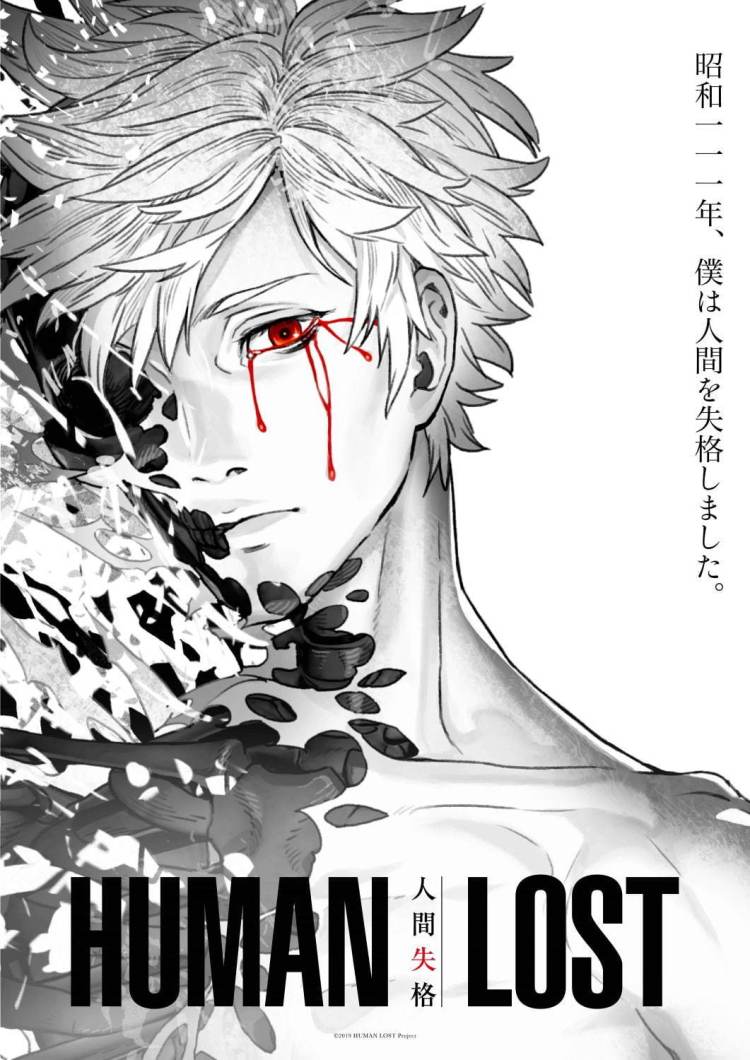
Human Lost (人間失格, Fuminori Kizaki, 2019)

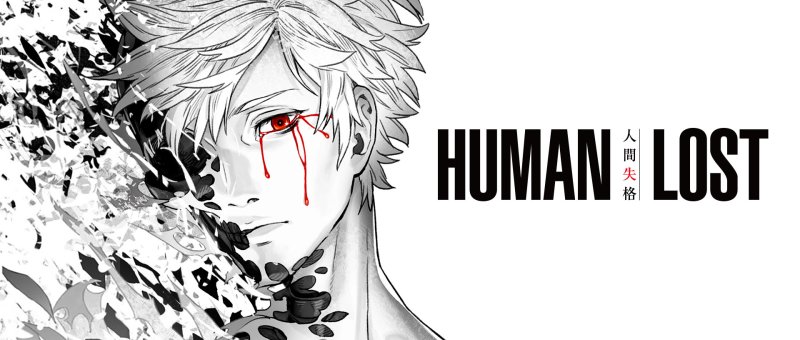
Human lost animeOsamu Dazai’s 1948 masterpiece No Longer Human spins a tale of intense alienation in which a young man unable to connect with the world around him feels himself obliged to put on a mask of buffoonery. Years of trying and failing to fit in eventually take their toll. After meeting a man who turns out to be a bad influence in a painting class, he drifts into a life of dissipation and is committed to a mental institution. After his release, the hero reflects on the harm his actions have caused to others and declares that he is “no longer human”, electing to live a life of isolation rather than risk hurting anyone else.

Human Lost (人間失格, Ningen Shikkaku) is about as loose an adaptation as it’s possible to be, taking only the outlines of Dazai’s original and springing off from the midway point in which the protagonist, Yozo Oba (Mamoru Miyano), is living as a starving, drug addicted artist above a seedy bar. The year is Showa 111 (2036). A series of momentous advances have made natural death a thing of the past and thanks to the S.H.E.L.L. system suffering from disease has been eliminated. However, the future has not been equally distributed and while a cohort of increasingly elderly men and women rule the elite “Inside” as a kind of oligarchy, an oppressed underclass has formed on the outskirts of the city, their “immortal” bodies continually exploited in order to prop up the Inside economy but forever denied the full benefits of system they are prevented from accessing in its entirety.

Meanwhile, those who wilfully disconnect descend into a kind of monstrous barbarity becoming what is known as a “Lost”, a threat to “civilisation” which much be combatted by H.I.L.A.M. – a military organisation which exists to ensure the survival of the S.H.E.L.L. system. When Oba is dragged along by his childhood friend Takeichi (Jun Fukuyama) on a revolutionary raid instigated by the mysterious Masao (Takahiro Sakurai) targeting the Inside, he comes into contact with Yoshiko (Kana Hanazawa) – a young woman who deeply believes in the benefits and possibilities of the S.H.E.L.L. system, convinced that a utopian world in which its benefits are available to all will eventually come to pass.

What ensues is a battle between Yoshiko’s pure hearted idealism, Oba’s despair-fuelled cynicism, and Masao’s embittered nihilism in which he seeks to destroy the S.H.E.L.L. system and “reset” humanity to its original condition. Masao believes that humans need death in order to be human and that its absence from the modern world is an aberration which must be corrected at all costs. He encourages Oba and Takeichi to “take back” their “true form” as a revolutionary act designed to provoke the advent of a saviour who can help him destroy a system he himself created out of love but which later failed him. 

In an ageing society such as Japan’s, it’s impossible to ignore the subtext of a world in which the elderly cling on to power well beyond their right and relegate the young and healthy to a kind of underclass as a consequence. While some humans are “qualified” and afforded special rights, others are labeled as “unqualified” and exist in a kind of underworld locked out from the benefits of a modern society. As Masao points out, those who call themselves “happy” largely do so because of the S.H.E.L.L. system’s programming, while the only truly “free” are those like Oba and Takeichi who wilfully reject it and live a life of suffering.

Of course, Masao exploits them too. He brands Oba his Orpheus, but ironically forgets that the thing everyone knows about Orpheus is that his faith was weak and so he looked back and lost. Yoshiko sacrifices herself for Oba’s potential, further adding to Masao’s awkward metaphor as he declares that “the fate of this woman is to be used”, pushing Oba towards dragging her back from the hell they maybe creating together. Unlike Dazai’s original novel in which the hero is consumed by his sense of otherness and opts for self-exile, Human Lost finds a more positive solution in which Oba commits himself to fighting for Yoshiko’s better world where health and happiness are gifts given to all and not just a privileged few. A mild critique of a hierarchical, inherently unequal society Human Lost makes a passionate plea for idealistic utopianism over introverted despair while suggesting that technological advances set us free only when we share them freely.


Human Lost screens in select US cinemas on Oct. 22 (subtitled) and 23 (dubbed), and in Canada on Nov. 6 (subtitled) and 9 (dubbed) courtesy of Funimation. Check the official website to find out where it’s playing near you!

Original trailer (English subtitles)

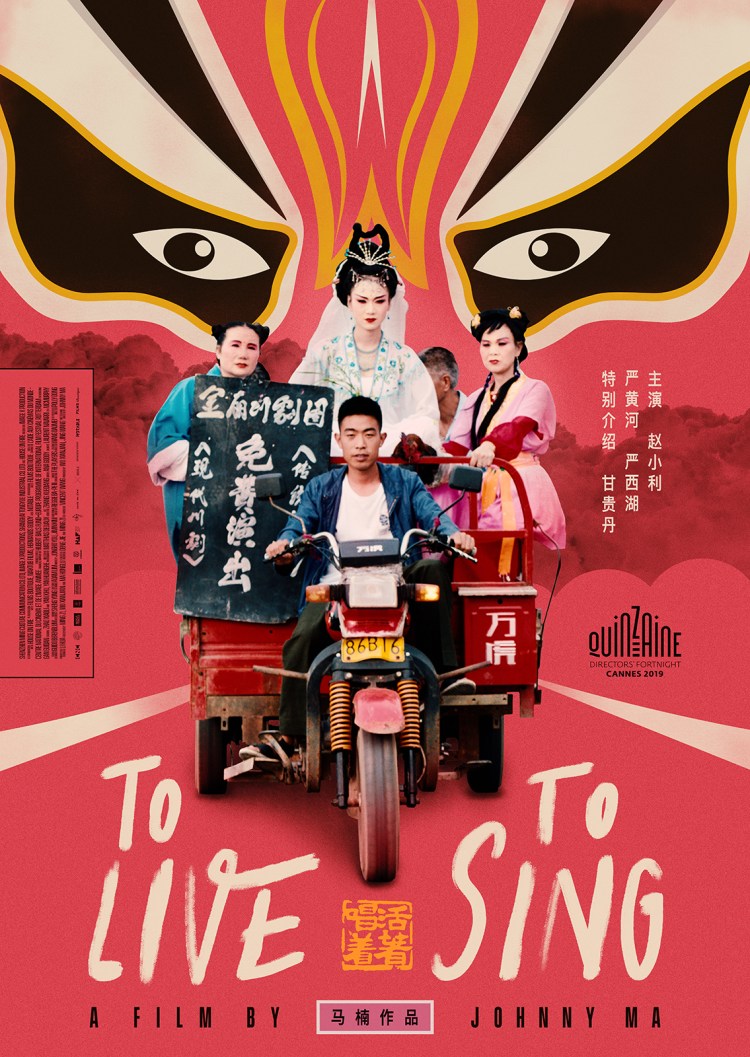
To Live to Sing (活着唱着, Johnny Ma, 2019)

To Sing to Live poster 2“Boundless is the land for all to sing” according to the reverberating strains of a Sichuan Opera troupe practicing their art in the open air, ironically surrounded by the ruins of a decaying land. According to Chinese cinema at least, China is very much “under construction” though there is considerable ambivalence about the costs involved with such rapid “progress”. According to Johnny Ma’s second feature To Live to Sing (活着唱着, Hzhe Chàngzhe), Sichuan Opera maybe one of them though melancholy as it is and performed by real life opera stars, Ma’s film perhaps suggests that art’s transience is an unavoidable consequence of modernity.

We first meet our heroes, the Jinli Sichuan Opera Group, giving a small stage demonstration at a local cultural event straight after a team of high school girls in cheerleader uniforms inexpertly performing a traditional fan dance. Obviously running on a shoestring budget, the troupe gets around by means of a motorbike pickup truck which allows them to advertise on the road. Their main base, however, is a dilapidated theatre in a small corner of a rapidly depleting village.

The theatre, such as it is, is the only holdout surrounded by the rubble of the old town currently being “redeveloped” in keeping with the modern China. The wolf is quite literally at the door as the bulldozers’ claws tear through walls like an all powerful villain in an opera casting a spell of destruction over a disobedient kingdom. Leader of the company, Zhao Li has been ignoring the numerous “for demolition” tags all over the building hoping that something will come up, but now she’s had a letter to tell her that the end is nigh and she has no idea what to do.

Meanwhile, she’s also worrying about the future of the troupe seeing as they are all ageing and, according to her niece Dan Dan, Sichuan Opera isn’t “cool” anymore which why most of their audience members count themselves among the very elderly. Dan Dan, the troupe’s bright hope and leading lady, is conflicted in her role as a potential saviour. Mildly resentful at having been brought up in the trade, she both loves and rejects it, sorry to see it go but sure there is no future for traditional opera in the modern world. In her spare time she dances to K-pop hits alone in her room and, unbeknownst to Zhao Li until she’s guided by to the realisation by the manifestation of a stock Dwarf character, Dan Dan has taken a part-time job singing in a cabaret bar both to express herself and to earn a little extra money.

As the crisis deepens, the opera in Zhou Li’s head intensifies. Entering a dream stage, she finds herself once again in full costume valiantly battling villains only to emerge victorious but alone striking a heroic pose atop a pile of rubble. Worse, her fighting spirit threatens to harm those close to her including her beloved niece Dan Dan who longs to leave the world of opera behind but knows to do so would be to break her aunt’s heart. While her well-meaning husband goes behind her back to try and earn a few extra pennies by selling out the art of opera with a cheap “mask changing” act in a local hotpot restaurant, she makes use of a connection for a last ditch effort to get bureaucracy interested in her case by inviting a local dignitary to a show for which they’ll be pulling out all the stops, but also performing for free to make sure they get the punters in.

Zhao Li’s efforts prove fruitless. You can’t stop progress, after all. But, it’s not just the troupe who feel the sadness of something passing but the audiences too. With no performance scheduled, the old regulars dutifully show up to see the troupe off lamenting that there’s nothing left for them to do in this tiny, crumbling village. Sichuan Opera maybe be “uncool” to some, but it was the only splash of colour in an otherwise dull existence for many of the elderly residents and so it’s sad to say goodbye. At once signalling the tragedy of this moribund world and suggesting it’s time to let it go, Ma closes with a note of poignant, perhaps ironic positivity. “Boundless is the land for all to sing”, the Sichuan Opera troupe reminds us, rendering the ruined building that was its former home irrelevant as they offer their song to the open air for nothing more than the love of it.


To Live to Sing was screened as part of the 2019 BFI London Film Festival.

Clip (English subtitles)

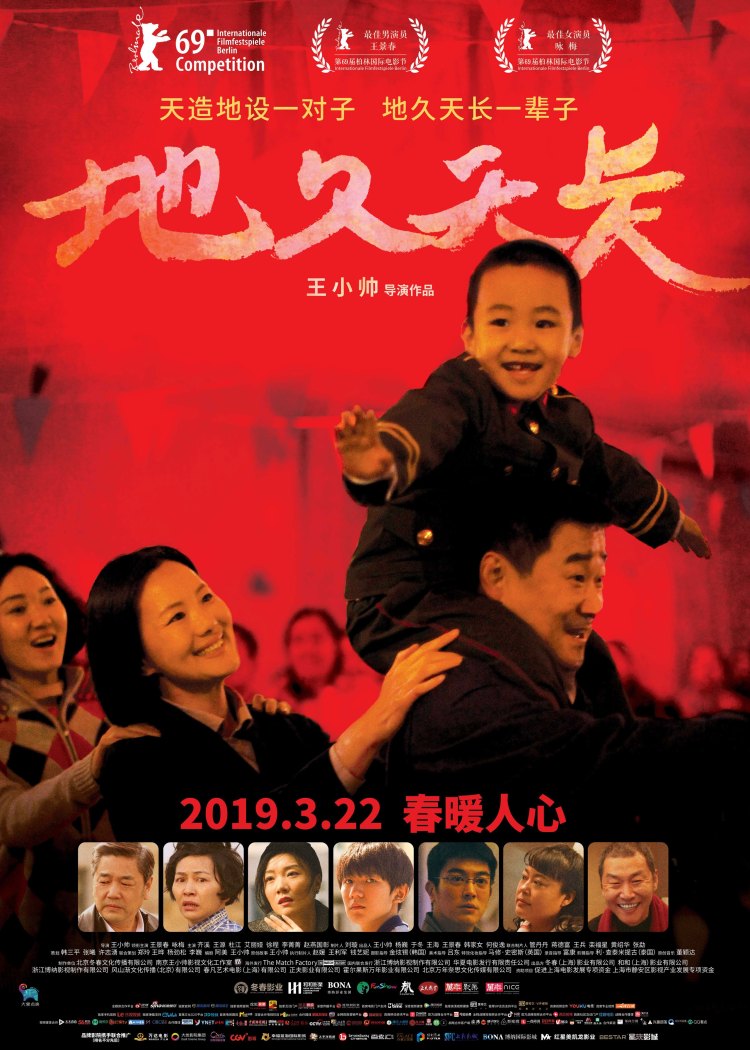
So Long, My Son (地久天长, Wang Xiaoshuai, 2019)

So long my son poster 1“Time stopped moving for us a long time ago” the hero of Wang Xiaoshuai’s So Long, My Son (地久天长, Dì Jiǔ Tiān Cháng) sadly intones, a melancholy relic of another era lightyears away from the gleaming spires of the new China. Following two families over thirty years at the close of the 20th century, Wang’s film, perhaps unlike those of his contemporaries, is not so much quietly angry as filled with tremendous sadness and an unquiet grief for the things which were taken from those who found themselves betrayed by an unforgiving, rigidly oppressive regime.

In the early 1980s, two boys, brothers in all but blood, sit by a river. One is too timid to go in because he cannot swim, while the other, irritated, tries to coax his friend with the promise that they will stay by the shore and he will be there to protect him. Sometime later, we see that a boy has drowned, his parents running fast towards the hospital with the body in their arms but all to no avail. This single event, just one of many ordinary tragedies, is the fracturing point in lives of six previously close friends whose easy, familial relationship is instantly shattered by unspeakable guilt and irresolvable shame.

Liu Yaojun (Wang Jingchun) and his wife Wang Liyun (Yong Mei) have lost their only son, Xingxing, but as someone later points out he needn’t have been their only son if weren’t for the oppressive and needlessly draconian One Child Policy. Haiyan (Ai Liya), the mother of the other boy Haohao and wife of Yaojun’s best friend Yingming (Xu Cheng), rose quickly in the party hierarchy following the end of the Cultural Revolution, becoming ambitious and seduced by her own sense of power. On learning that Liyun had become pregnant with a second child, she marched her friend to the hospital and forced her to undergo an abortion during which Liyun almost died and was left infertile.

The couple lose both their children in the same room, passing underneath the single character for “quiet” that tries to silence even their grief in the face of such cruelty. Silence comes to define their relationships with their former friends who are by turns unsure how to speak to them in the wake of intense tragedy, and fully aware of their complicity. Yaojun and Liyun forgive all. Having lost their own son they only want the best for Haohao, hoping that he is young enough to simply forget the incident and go on with his life, but as the older Haohao later says the guilt became like a tree inside of him that grew as he grew. The silence, more than the guilt or the sorrow, destroys their friendship and makes reconciliation impossible.

Betrayed again, Yaojun and Liyun are two of many laid off from their previously guaranteed government factory jobs following the market reforms of the late ‘80s. To escape their grief they exile themselves to Fujian where they know no one and do not speak the dialect. We discover that they live with a rebellious teenager named Xingxing and wonder if somehow their son survived only to realise later that they have adopted an orphaned boy in a misguided attempt to replace the child they lost. Divided by their grief and frustrated hopes, Yaojun and Liyun grow apart. He drinks to escape his intense resentment towards his powerlessness in an oppressive society, while she yearns to repair their broken family but fears that Yaojun has already moved away from her.

Meanwhile, the modern China leaves them behind. Yingming starts a business and becomes a wealthy man, while Yaojun struggles on with a small repair shop. The couple return to their hometown and the flat they once lived in to find it exactly as it was when they left, improbably surviving while the rest of the factory complex has long been torn down. The statue of Chairman Mao is still there, but now he stands incongruously outside a giant shopping mall offering ironic comment on China’s rapid progress towards rampant capitalist consumerism. Haiyan, filled with shame and remorse, seeks reconciliation near the end of her life, but as others point out no one blames her for doing her job – she was a victim of the system too, if perhaps a willingly complicit one who allowed fear and need for approval to overrule her sense of humanity. Those were dark days in which one might be arrested and perhaps killed just for dancing. Following emotional rather than temporal logic, Wang’s non-linear tale bounces through 30 years of history as its stoic protagonists attempt to endure the cruelty of their times, but eventually lands on a note of hopeful restitution in which the “Everlasting Friendship” is finally restored and the family repaired, the silence broken and time in motion once again.


So Long, My Son was screened as part of the 2019 BFI London Film Festival.

International trailer (English subtitles)

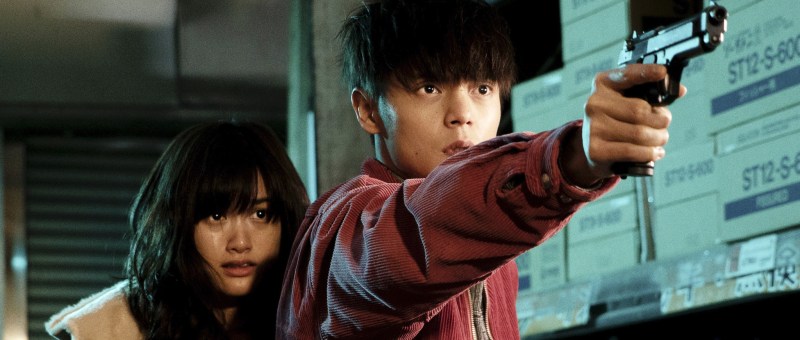
First Love (初恋, Takashi Miike, 2019)

First love poster 1Taking a deep dive into Showa era nostalgia repurposed for the modern era, Takashi Miike returns to the world of jitsuroku excess with an ironic tale of honour and humanity. Quite literally all about the jingi, First Love (初恋. Hatsukoi) takes a pair of exiled loners betrayed by the older generation, and allows them to escape their sense of futility through simple human connection while the nihilistic gangster underworld slowly implodes all around them.

Sullen boxer Leo (Masataka Kubota) is so filled with ennui that nothing really excites him, not even success in the ring. An unexpected KO, however, sends him off to the doctor’s where he is told that he has a possibly inoperable brain tumour and very little time left to live. That is perhaps why he decides to punch a policeman in defence of a young woman running away and desperately pleading for help. Yuri (Sakurako Konishi), known as “Monica” to her captors, was sold to the yakuza by her father and has since become dependent on drugs. Little known to either Leo or Yuri, they are about to become embroiled in a long brewing turf war between the local yakuza and the Chinese Triads engineered by jaded underling Kase (Shota Sometani) who has enlisted rogue policeman Ohtomo (Nao Omori) to help in a plan to steal his gang’s drug supply and have Ohtomo sell it on in the same way he does with “confiscated” narcotics while blaming the whole thing on the Chinese.

Abandoned at birth, Leo is a man who doesn’t know his history and so doesn’t know himself. He tells a reporter that there is no particular reason that he boxes save that he doesn’t know how to do anything else, yet the fighter’s all that remains and “boxer” has become his entire identity. A passing fortune teller advises him that he loses because he only fights for himself and if he truly wants to win he needs to learn to fight for someone else, but Leo is used to being alone and believes he has no need of other people. Knowing he’s going to die means, paradoxically, that he has infinite potential because he has nothing left to lose.

Leo punching out the policeman reawakens in Yuri a memory of her “first love”, a high school classmate who tried to defend her against her abusive father whose ghost still haunts her in drug-fuelled hallucinations. The ultimate proof of the yakuza’s ironic lack of “jingi” or “honour and humanity” when it comes to the treatment of women, Yuri was betrayed first by her father and then by the petty street thug who got her hooked on drugs as a means of control and exploited her body for financial gain.

Ironically enough, it’s a Chinese Triad who proves the ultimate heir to “jingi” having come to Japan because of her love for classic Toei gangster hero Ken Takakura only to discover that kind of nobility is something you only see in the movies. While the yakuza lament that they’re at a disadvantage fighting the Chinese because they don’t need to worry about “honour” as dictated by their code, they are quick enough to scream vengeance when Kase convinces them that it was the Triads who offed their street fixer (Takahiro Miura) to get back at recently released gangster Gondo (Seiyo Uchino) who is the reason that the Triad boss is nicknamed One-Armed-Wang. Gondo and Wang are already on a collision course as representatives of their respective ideologies with Gondo perhaps the last true yakuza standing, faithful to his code to the end.

Sensing his strong sense of jingi, the romantic Triad allows Leo to escape with Yuri as if recognising that neither of them belong in this nihilistic world of pointless and internecine violence. Despite proclaiming that he had no need of other people, it’s Leo’s humanity that eventually saves him as he realises that he was always going to die and rediscovers his true strength through fighting to protect someone else. Yuri, meanwhile, finds the will to live again in making peace with the past and laying old ghosts to rest thanks to Leo’s altruistic decision to protect her. Echoing Fukasaku’s classic crime cycle in its severed heads and funky ‘70s jazz score remixing the iconic theme tune, Miike ups the ante with a series of outlandishly idiosyncratic gags as Kase’s nefarious scheme snowballs into a darkly humorous crescendo of ridiculous brutality, but ultimately rejects the futility of a world without jingi in allowing his pure hearted heroes the possibility of escape, saved rather than consumed by their sense of honour and humanity.


First Love was screened as part of the 2019 BFI London Film Festival.

Original trailer (English subtitles)

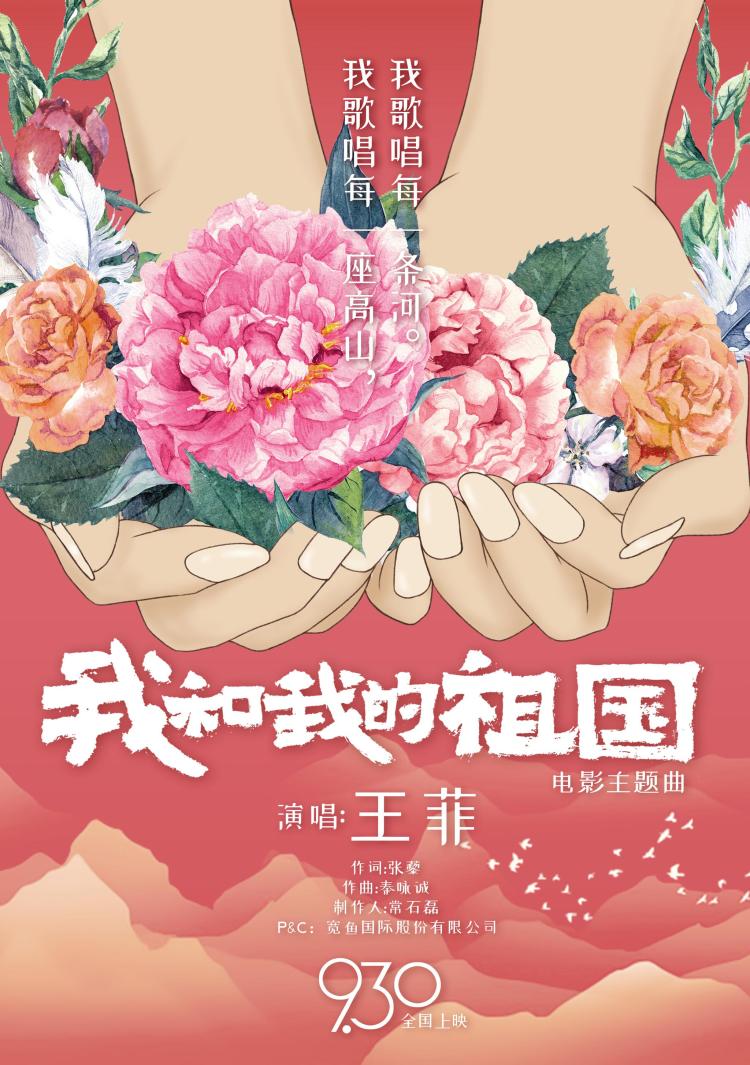
My People, My Country (我和我的祖国, Chen Kaige, Zhang Yibai, Guan Hu, Xue Xiaolu, Xu Zheng, Ning Hao, Wen Muye, 2019)

My People My COuntry poster 3Oct. 1, 2019 marks the 70th anniversary of the People’s Republic of China. Supervised by Chen Kaige, My People, My Country (我和我的祖国, Wǒ hé Wǒ dě Zǔguó) presents seven short films by seven directors featuring several notable historical events from the past 70 years though not quite one for every decade (perhaps for obvious reasons). Though different in tone, what each of the segments has in common is the desire to root these national events in the personal as they were experienced by ordinary people rather than how the history books might have chosen to record them.

Told in roughly chronological order, the film opens with the founding of the Republic as comedian Huang Bo plays an eccentric engineer charged with ensuring the operation of an automatic flag pole doesn’t embarrass Chairman Mao at the big moment. In the context of the film as a whole which is fond of flags, this is rather odd because every other flag in the film is raised by hand usually by a soldier taking the responsibility extremely seriously. Yet the point is less the flag itself than the symbolic pulling together of the community to find a solution to a problem. Realising the metal on the stopper is too brittle, the engineers put out an appeal for more with seemingly the entire town turning up with everything from rusty spoons to grandma’s necklace and even a set of gold bars!

This same sense of personal sacrifice for the greater good works its way into almost all of the segments beginning with the story of China’s first atom bomb in the ‘60s for which a pure hearted engineer (Zhang Yi) first of all sacrifices his one true love and then the remainder of his life when he exposes himself to dangerous radiation all in the name of science, while in the film’s most charming episode a young boy is devastated to realise his crush is moving abroad and has to choose between chasing after her and fixing up a TV aerial so his village can see China beat the US at volleyball during the ’84 Olympics. Visions of flag waving glory eventually convince him where his duty lies, but his sacrifice is later rewarded twice over as he becomes a little local hero even if temporarily heartbroken in the way only a small boy can be.

Then again, some people are just a little self-centred like the hero (Ge You) of Ning Hao’s Welcome to Beijing who keeps trying to reconnect with his earnest teenage son only to end up connecting with a fatherless young boy during the 2008 Beijing Olympics. Chen Kaige’s sequence, meanwhile, is inspired by the story of two earthbound astronauts but similarly finds two roguish, orphaned young men connecting with a patient father figure who is able to bring them “home” by showing them a space miracle in the middle of the desert, and in the final and perhaps most directly propagandistic sequence, a tomboyish fighter pilot eventually overcomes her resentment at being relegated to a supporting role to rejoice in her colleagues’ success. Despite the overly militaristic jingoism of the parades with their obvious showcasing of China’s military power, Wen Muye’s “One for All” is in its own sense surprisingly progressive in its advancement of gender equality and mildly subversive LGBT positive themes were it not for a shoehorned in scene featuring a milquetoast “boyfriend”.

Sensitivity is not, however, very much in evidence in the sequence relating to the extremely topical issue of the Hong Kong handover. Out of touch at best, the constant references to the continuing reunification of the One China are likely to prove controversial though admittedly those they would most upset are unlikely to want to sit through a 2.5hr propaganda epic celebrating the achievements of Chinese communism. Nevertheless, it is a little galling to see the “return” to China so warmly embraced by the people of Hong Kong given current events in the city. This perhaps ill-judged sequence is the most overt piece of direct propaganda included in the otherwise unexpectedly subtle series which, despite the flag waving and eventual tank parade, tries to put the spotlight back on ordinary people living ordinary lives through the history of modern China. Of course, that necessarily also means that it leaves a lot out, deliberately refusing to engage with the less celebratory elements of China’s recent history, even as it closes with the fiercely patriotic song of the title performed by some of the ordinary heroes who have inspired its various tales of everyday heroism.


Original trailer featuring Faye Wong’s cover of the well known patriotic anthem from 1985 (no subtitles)

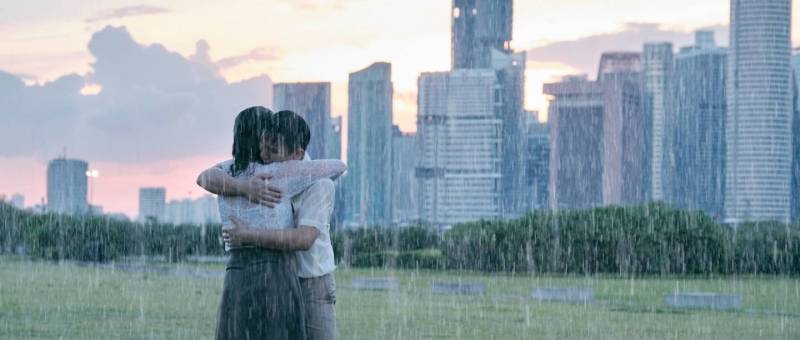
Wet Season (热带雨, Anthony Chen, 2019)

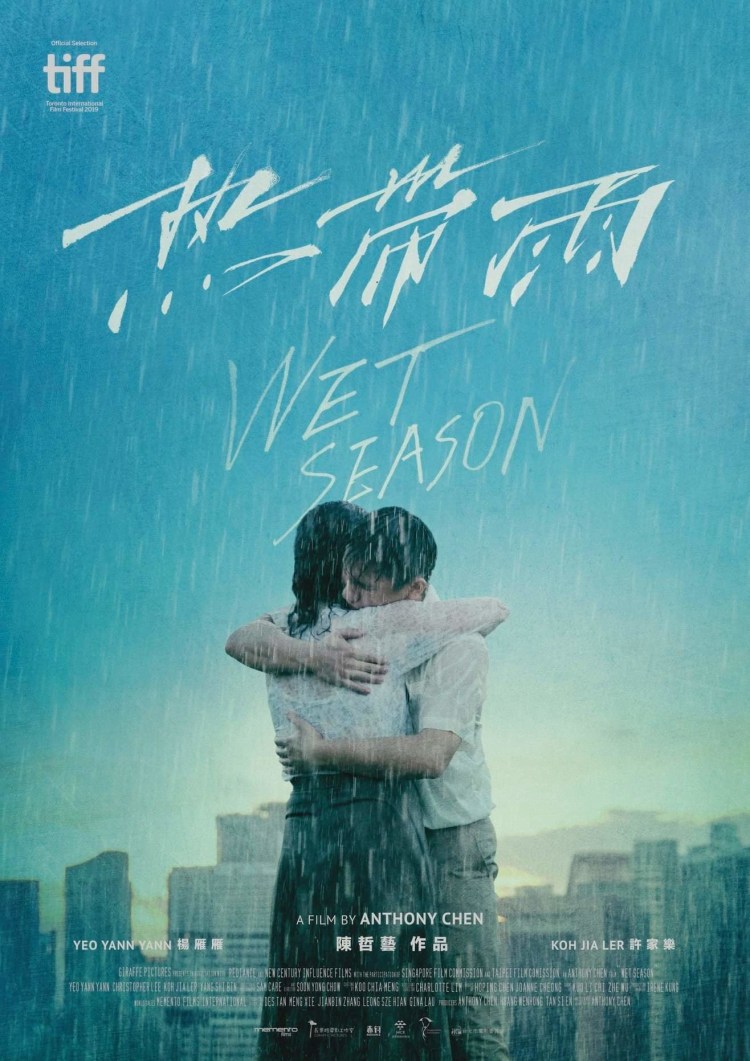
West season posterA middle-aged woman and teenage boy meet at opposite ends of loneliness only for their frustrated connection to end in a destructive act of misplaced desires in Anthony Chen’s acutely observed melodrama, Wet Season (热带雨, Rèdài Yù). Reuniting with Ilo Ilo’s Yeo Yann Yann and Koh Jia Ler, Chen spins a differing tale of fracturing families as his heroine, a perpetual outsider, finds escape in simulacrum but fails to realise the implications of her attempt to nurture a lonely child.

A Mandarin teacher at a local high school, Ling (Yeo Yann Yann) has been undergoing intensive IVF treatment with her emotionally distant husband, Andrew (Christopher Lee Meng Soon), for the last eight years. Repeated disappointments have placed a strain on their relationship and it seems to Ling that Andrew has already given up, rarely coming with her to the clinic and drawing away from her physically and emotionally. Though they have a housekeeper to help during the day, Ling is also the primary carer for Andrew’s bedridden father (Yang Shi Bin) who, despite his kindness and inability to communicate directly, displays only contempt for his son’s continuing moral cowardice.

Unappreciated at home, Ling fares little better in her professional life. It’s clear that no-one takes Chinese language terribly seriously as an academic subject and she remains isolated at school as a Malaysian Mandarin speaker in a largely Anglophone environment with a rather old-fashioned colonial perspective that English is the only useful language. She tries her best to teach her disinterested students, but finds them uncooperative save one young boy, Wei Lun (Koh Jia Ler), who develops a sudden interest in Chinese after imprinting on Ling when she offers to drive him home after running into him at the hospital and discovering no one was coming to fetch him.

Wei Lun’s parents are of the absentee kind, but apparently very keen that he do well in Chinese so he can eventually do business in China. The only student to turn up for remedial classes, Wei Lun starts getting a lot of individual attention, something that arouses the suspicion of a nosy neighbour in his apartment building who also happens to be a chemistry teacher at the school. The pair grow closer with Ling introducing him to her father-in-law who also takes to the boy, allowing him to fill a painful absence at the family table as the son and grandson they never had while he gains the loving attention of a devoted family ready to support him and celebrate his successes.

Yet brought together by shared loneliness, there’s an essential conflict in their differing desires as Ling remains, perhaps wilfully, oblivious to Wei Lun’s obvious crush which runs to something awkwardly maternal and deeper than your average teenage fixation on a sympathetic teacher. As the storms intensify, they seem set on a destructive collision course, approaching the same problem from opposite sides of an unbridgeable divide.

Battling her internalised sense of failure as a wife and mother in her inability to bear a child along with her professional irrelevance as a teacher of “unnecessary” Chinese, Ling finds validation in Wei Lun’s obvious need, allowing herself to feel “wanted” but perhaps misinterpreting that desire in Wei Lun’s adolescent confusion in which the familial and the romantic become hopelessly blurred. Momentary lapse aside, Ling remains essentially maternal, hoping to comfort Wei Lun as he endures his first heartbreak. “My heart hurts”, he tells her, “That’s how it is” she explains to him sadly, “you’ll get used it”.

Stormy weather and reports of civil unrest in Malaysia as an embittered populace rises up against state corruption echo Ling’s sense of anxious hopelessness as she attempts to find accommodation with life’s disappointments, her imploding marriage, and the impossibility of escape. For her at least the storm clouds eventually lift and the rainy season comes to an end giving way to a brighter future and a new start born of the total destruction of the old. Chen’s tale of misplaced desires and ill-defined relationships may be an overfamiliar one, but handled with care and universal empathy. Refusing judgment, Chen’s camera observes its fragile protagonists as they seek escape from their pain and loneliness through the illusion of connection while the storm inside intensifies. Having endured the rains, Ling rediscovers the light, claiming her right to happiness and leaving the wet season far behind.


Wet Season was screened as part of the 2019 BFI London Film Festival.

Original trailer (English subtitles)

Lunana: A Yak in the Classroom (Pawo Choyning Dorji, 2019)

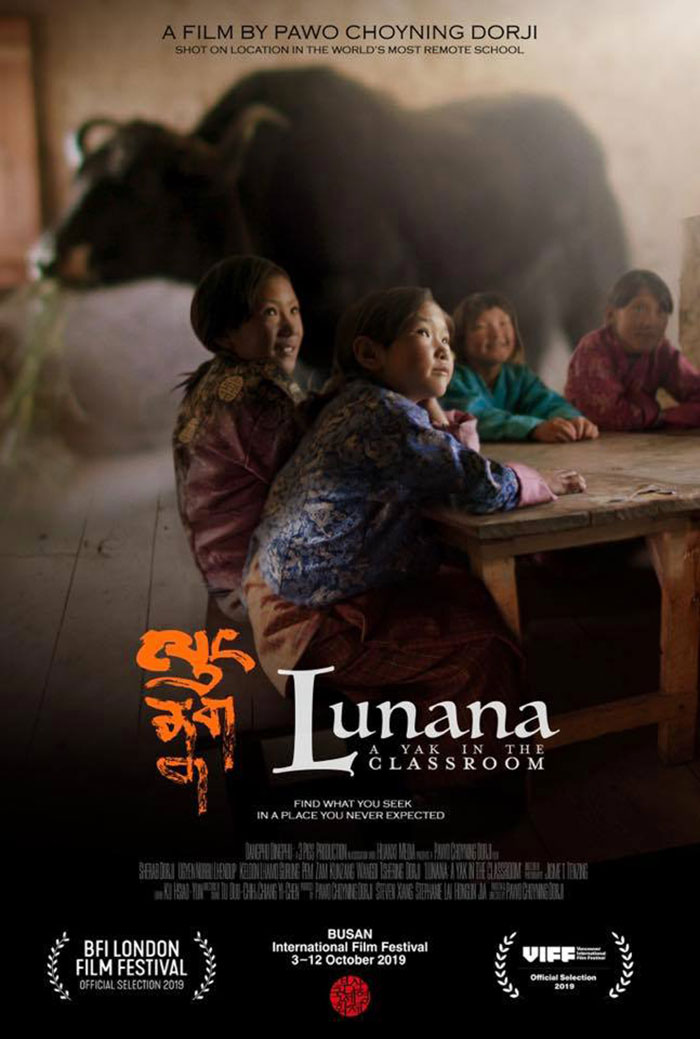
Lunana posterBhutan is, apparently, the happiest place on Earth so why would anyone want to leave it? The Gross National Happiness Project does not seem to have touched the hearts of the young in Pawo Choyning Dorji’s first directorial feature Lunana: A Yak in the Classroom. Highly Westernised and dreaming of consumerist success, these youngsters have their sights set on overseas, unimpressed with the kind of “happiness” packaged to them at home.

20-something Ugyen (Sherab Dorji) is a civil servant serving out his government contract as a teacher while hoping to emigrate to Australia and pursue his dreams of becoming a musician. Ugyen’s conservative grandma may think that a government job is its own kind of success, unable to understand why anyone would want to give it up when so many are striving for just that, but to Ugyen it’s a kind a kind of prison that wants to trap him in a life of dull conventionality. That might be why he’s currently rated among the worst teachers on the payroll with a little more than a year still to run on his term of service. To buck up his ideas, or maybe just as a kind of punishment, the local authority decides that Ugyen should be the one sent up the mountain to Lunana, one of the most remote villages in the country, where they are desperately in need of a new teacher. Ugyen doesn’t really have any choice but to go along with it, hoping that his visa will have come through by the time he gets back which will, after all, only be a few months because the school closes for winter during which the village is cut off by heavy snow.

Lunana is indeed a remote place. You can’t get there by train, or by bus, or even it seems by donkey. From the closet station it’s an eight day walk through rough mountain terrain and city boy Ugyen is not exactly one for hiking. He buys a fancy pair of walking boots, only for his guides to turn up in wellies and forge ahead with steadfast determination, while he ignores their roadside rituals and rolls his eyes at all of this untouched natural beauty. The villagers turn up to great him at a waypoint two hours out from the main settlement so they can all walk back together, and though he remains polite Ugyen cannot hide his resentment on arrival, flatly telling them that the village is even worse than he thought it would be and he wants to turn round and go straight back home.

With only 56 residents and a handful of children, the village runs along ancient rhythms but modernity penetrates even here and the children are enormously excited about the new teacher and how much they are going to learn now that the school will be opening again. Ugyen asks them what they want to be when they grow up and receives some surprising answers – one girl says she wants to be of service to the king, another wants to be a singer, and the lone boy professes that he wants to be a teacher because “teachers touch the future”. Not exactly a deep thinker and somewhat dismissive of his occupation, Ugyen is impressed and chastened by the boy’s answer. Disappointed by the “school’s” primitivism – essentially just an empty stone room, he enlists some of the adult villagers to craft a makeshift blackboard, figuring out how he can replicate chalk with charcoal, and getting a city friend to send some modern equipment such as colourful posters and a new ball for the kids’ improvised basketball court.

Unable to charge his iPod with the temperamental solar power, Ugyen begins to realise that he is in fact living in the world of song where the yak farmers value the ability to sing above all else. One of the village’s pretty young women, Saldon (Kelden Lhamo Gurung), is particularly famed for her rendition of a sad folksong about a yak farmer who has to say goodbye his beloved yak when it is decided it has to be sacrificed for the village. While learning how to live the traditional life – starting fires with dried yak dung and singing for the joy of it, Ugyen begins to see the advantages of simplicity. Life in the village is hard, but the people are kind and happy with what they have. Ugyen may not quite be able to let go of his Australian dream, even as he scrawls folksong lyrics over his prized leaflet, but takes something of Lunana with him in his new respect for his roots and the soulful contemplation of the mountains.


Lunana: A Yak in the Classroom was screened as part of the 2019 BFI London Film Festival.

Festival trailer (English subtitles)