
Daughters (ドーターズ, Hajime Tsuda, 2020)

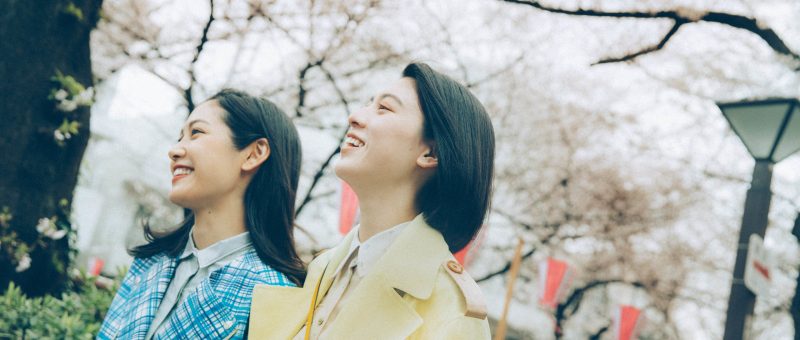
What does it mean to be a woman in the modern society? Two 20-somethings are confronted by just that question when one of them suddenly reveals that she is expecting a baby and plans to raise it alone but would be very grateful for the other’s support. Hajime Tsuda’s Daughters (ドーターズ) is the latest in a long line to ask a few questions about the nature of the modern family but does so through the eyes of these typical young women who find themselves perhaps a little more old-fashioned than they’d assumed as they determine to flout patriarchal norms and raise a child together as a platonic unit. 

High school friends Koharu (Ayaka Miyoshi) and Ayano (Junko Abe) have been living together in a tastefully decorated Tokyo flat for the past few years. Ayano works at a fashion magazine, and Koharu in events planning and installations. They have an active social life and enjoy the benefits of living in a big, vibrant city. All of that must necessarily change, however, when Ayano discovers she is pregnant after a meaningless one night stand with an old friend (Yuki Ito) who is about to accept a transfer abroad and had just been joking about reluctantly having to marry his girlfriend who wants to come with him. After thinking it over, Ayano decides she wants to have the baby without saying anything to the father but her decision comes as a shock to Koharu who is at once stunned by her friend’s sudden transition into adulthood. 

These really are just gals being pals, but there is perhaps something of repressed desire in Koharu’s lingering looks whether it’s actually Ayano that she wants or merely lamenting the imminent end of their lives as young women on the town not to mention a closeness she now fears will be diluted rather than perhaps deepened with the introduction of a third party in their relationship. For her this sudden end to the Tokyo high life may have arrived earlier than she expected, but it would have arrived soon enough in any case. Wanting to support her friend she remains conflicted and mildly resentful, partly it seems of the unnamed father but also despite herself carrying outdated ideas of social propriety firstly trying to dissuade Ayano from having the baby believing that raising it as a single-mother will be impossible. 

Ayano is told something similar by her father (Shingo Tsurumi) on a visit home, though he later comes round after a few stern words from her cheerful grandmother (Hisako Okata) who couldn’t be happier, insisting that children are a blessing however they arrive. At work, however, despite being surrounded by other women, she faces a series of similar discouragements, reminded that she can’t expect to return to the same position after giving birth because her priorities will have changed. She can no longer give “everything” to the company, she will need additional time off if her childcare falls through or her child is ill. She may need to leave early or come in late for the school run. Her boss does not intend this as a criticism but an acceptance of what it means to be a mother and an insistence a choice is being made, leaning into patriarchal, capitalist ideas of the employment contract which values an employee most for their availability rather their productivity or talent.  

Both women, meanwhile, harbour a lingering sense of social stigma when it comes to the subject of unmarried mothers. Koharu angrily fires the English phrase at her friend as if to discredit her decision, while Ayano finds herself earnestly asking her doctor (who appears to have seen through her ruse of introducing Koharu as her “sister”) if she sees a lot of women like her, the compassionate, supportive medical practitioner assuring her that 25% of women giving birth in Tokyo are single and though she has no idea what happened to them afterwards as a woman who has never has a child she is herself envious. Having agreed to raise the child together, Koharu still has her doubts that such an arrangement can really work, unsure of herself until heading off on a sulky solo holiday to the island paradise of Okinawa where she meets a woman (Tomoka Kurotani) who moved halfway across the country to raise her son alone. She seems happy and her son seems to have turned out just fine. 

As in Ayano’s rural hometown with its wide-open vistas, the relaxed Okinawan attitude perhaps bears out the maxim that Tokyo is often more conservative than provincial Japan, Ayano even slightly worried that having a caesarean section doesn’t really count and she’d be failing at motherhood before even really starting. In a symbolic act of transition the two women mirror the construction of a bunkbed on their moving in with the completion of the baby’s cot, built together with “faith in the future in this ephemeral city”. Stylistically innovative, filled with poetic monologues, and moving to the rhythm of a zeitgeisty pop score, Tsuda ends with the deceptively traditional as the two women find themselves confronted with a local festival but find in it strength and an acceptance that it is really OK as they embark on a new phase of their life as a family as entitled to the name as any other. 


International trailer (English subtitles)
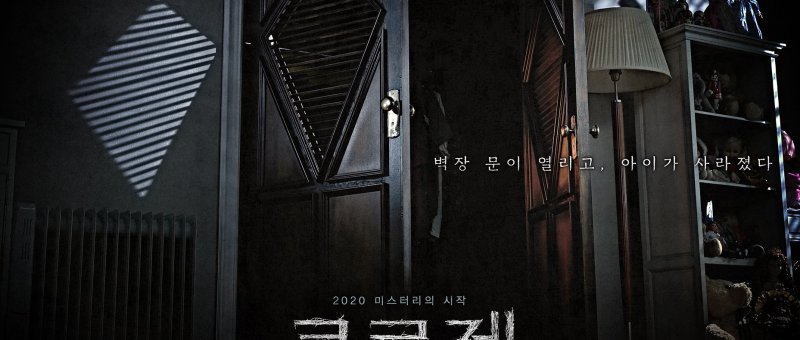
The Closet (클로젯, Kim Kwang-bin, 2020)

Parents in Korean horror films are often uniquely flawed but go to great lengths to redeem themselves through saving their children from supernatural peril. This much is true for the narcissistic hero of Kim Kwang-bin’s grief-stricken ghost story, The Closet (클로젯). The title, perhaps in contrast to its first implications, has a poignant quality as it represents in one sense a place of safety for children trying to protect themselves from the things that frighten them but of course it is no safe place and only leaves them trapped, vulnerable, and traumatised by a world of adult cruelty they are far too innocent to understand. 

Architect Sang-won (Ha Jung-woo) lost his wife in a car accident in which he was driving. He has just bought a large house in the country where it’s quiet and the air is clean to help his young daughter Ina (Heo Yool) recover from her trauma, but his decision is causing trouble in his professional life because his firm prefer their architects to be onsite during in builds and Sang-won obviously needs to be with Ina until he can find a nanny. Ina is generally avoidant around her father, something which probably isn’t helped by her overhearing him blame all his problems on her while arguing with work on the phone, but her personality undergoes an abrupt change after she opens the closet door in her new bedroom, rendering her suddenly cheerful while carrying around a strange doll. 

Sang-won’s first concern is the manky old toy which irritates him because he’d gone to trouble to buy Ina a fancy limited edition doll as a present which she hasn’t played with. Ina is probably ageing out of dolls, and doubtless not that impressed with the supposed pedigree of her father’s gift seeing as neither is she old enough to appreciate a purely decorative present, but in any case Sang-won’s gesture was largely for himself as he proves flagging up how much trouble he went to to get it without, it seems, thinking about what Ina might actually like. When the accident happened, Sang-won was having a minor argument with his wife because he hadn’t made it to Ina’s school concert. He was faintly dismissive, superficially apologetic but clearly unrepentant in choosing his career over his family. Still traumatised over his role in the accident, Sang-won fails to connect with his daughter out of a mix of emotional unavailability, guilt, and intense resentment.

Facing potential humiliation at work on learning he’s been “paired” with a younger architect, Sang-won gets a random local woman to watch Ina, telling her he’ll be away for two months but will visit at weekends. With all of the craziness in the house the “nanny” quits and Ina goes mysteriously missing soon after. Sang-won goes to the police and then the media, but once they catch sight of his medication and mental health profile, he all but becomes a suspect in his daughter’s disappearance, some thinking he killed her and is covering it up and others pitying him as a madman who simply doesn’t remember having harmed his child. An exorcist (Kim Nam-gil), however, has another explanation and Sang-won, though originally sceptical, is forced to trust him because he is the only one who doesn’t think him guilty of murdering his little girl. 

As might be expected, Sang-won’s paternal failures are the root of all his problems. Not only did he neglect his family before the accident, but continues to reject his paternity while rendered a single parent, hoping to palm his daughter off on a nanny so he can go back to concentrating on his career. Questioned by the well-meaning but insensitive exorcist, Sang-won is forced to realise he knows nothing about his little girl. He has no idea if she likes K-pop or if she has any friends. Faced with her continued indifference, he was planning to send her away to an art therapy camp, throwing his hands up in the air and declaring fatherhood too difficult. As the exorcist points out, kids are smart and they know when they aren’t wanted. It’s precisely this feeling of insecurity which has invited in the supernatural. Sang-won will have to prove his paternal love if he truly wants to bring his daughter home. 

The grudge-bearing ghost, it seems, is trying to provide a refuge for all those other children bullied, mistreated, or neglected by the adults who were supposed to protect them, but all Sang-won can do is apologise on behalf of failed fathers everywhere which is, it has to be said, not much of a victory even if refocuses our attention on the true villainy which is sadly much more societal than it is supernatural. In any case, Sang-won doesn’t seem to have changed very much even if he’s had something of a humbling and been superficially restored as a “good” father rededicating himself to raising his daughter. The final sting, however, is perhaps a little on the flippant side even as it reminds us of the evils still lurking in the dark corners of our societies. 


International trailer (English subtitles)
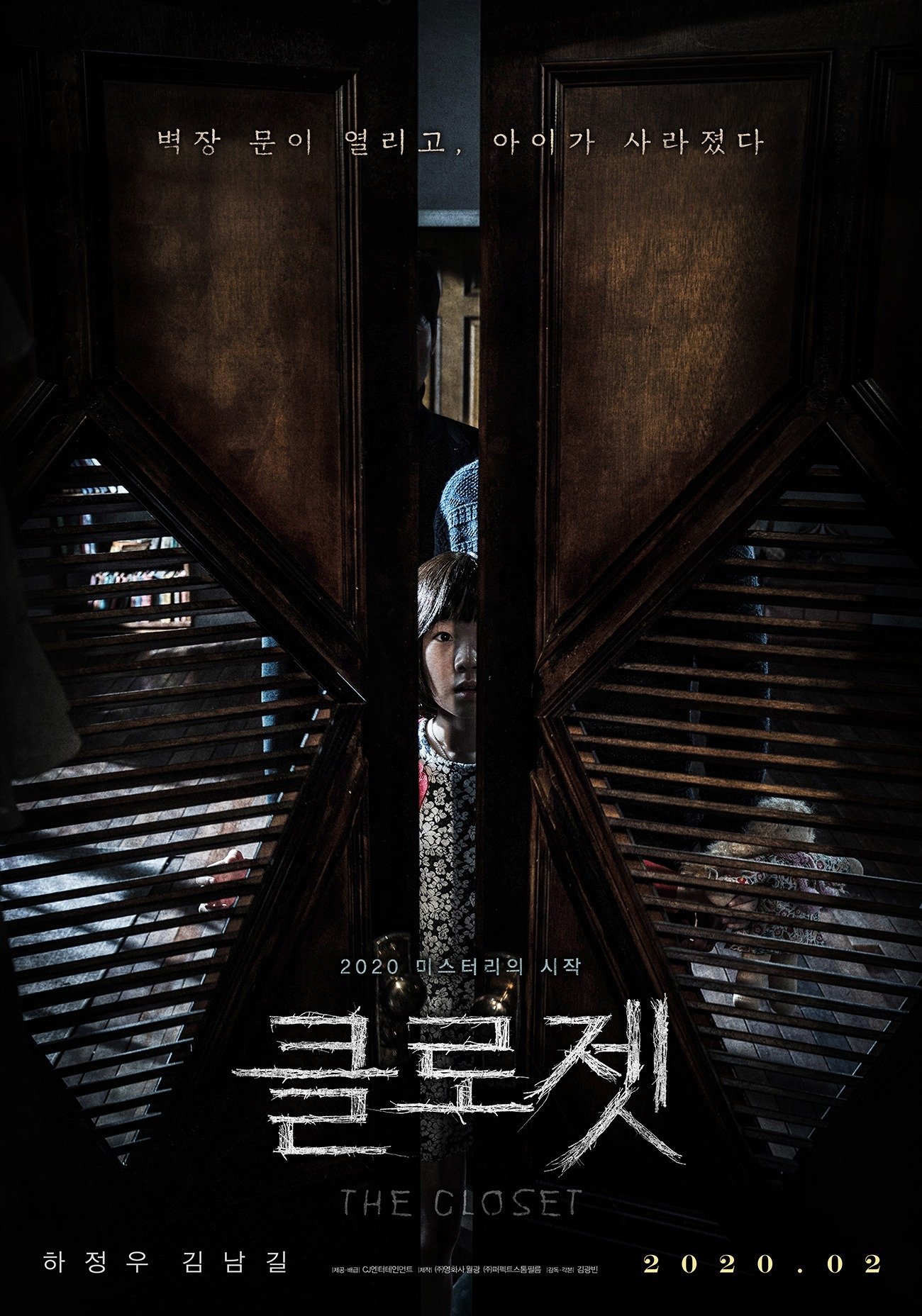
Tokyo Dragon Chef (Tokyoドラゴン飯店, Yoshihiro Nishimura, 2020)

Yoshihiro Nishimura began his career designing makeup and special effects for other directors working in the genre he would later headline, low budget splatter/exploitation primarily produced for the export market. With such legendary titles as Tokyo Gore Police, Vampire Girl vs. Frankenstein Girl, and Helldriver under his belt Nishimura’s reputation for surreal violence is already assured, but Tokyo Dragon Chef (Tokyoドラゴン飯店, Tokyo Dragon Hanten) sees him heading in a different, perhaps unexpected direction with a “family friendly” (depending on your family) musical tale of changing times, intergenerational warfare, and the wholesome soul of ramen. 

Veteran yakuza Tatsu (Yoshiyuki Yamaguchi) has just come out of prison but emerges into a world very different than he left it. His old comrade Ryu (Yasukaze Motomiya) now peddles Nata de Coco out of a tiny van, explaining that a mysterious invader with a third eye, Gizumo (Yutaro), apparently beheaded not only their gang boss but several others in the area effectively killing off the local yakuza scene. Remembering that Tatsu had a reputation as top a cook, a skill he apparently honed inside, Ryu suggests permanently retiring from the life to open a ramen bar. Meanwhile, two rival yakuza, Kazu (Kazuyoshi Ozawa) and Jin (Hitoshi Ozawa), have had exactly the same idea, setting up a van virtually outside and positioning themselves the competition by serving truly ginormous portions literally pushing quantity over quality.  

The truth is that the yakuza as an organisation has entered its twilight period, these older, Showa-style gangsters no longer have much of a place in the modern world hence why they need to find alternative ways of living. This is a fact brought home to them by the main villain who has a bizarre habit of singing Merry Christmas and is something like a youth elitist who resents the privileged status of the middle-aged and older in Japan’s ageing society, insisting that “Japan can’t survive with only old people like you” and that they should step aside to allow the young to rule. His villainy is well and truly signalled by his allegiance to fancy steak dinners which he characterises as high class cuisine suitable for righteous citizens like himself, rejecting the earthy, wholesome charms of the iconic shomin soul food that is ramen. 

The former yakuza, meanwhile, forced to work together, are an unexpected source of egalitarian solidarity. Not only do they eventually add an Okinawan soothsayer (Michi), holding a bright red crystal ball and dressed in traditional Ryukyu fashion while singing in a typical island style, to their ranks but their chief supporter closes all his YouTube videos with “kamsamnida”. Old style gangsters, they intensely resent that Gizumo has taken the battle to the streets in targeting those outside the life such as the Chinese owner of another local ramen bar and the father of their biggest fan, ramen-obsessed high school girl Kokoro (Rinne Yoshida). Yet there is something a little subversive in the irony of these multicultural nods, Kazu and Jin’s rival mascot character Mimi (Saiko Yatsuhashi), a YouTube star famous for eating giant portions who intensely resents being called an “alien”, breaking into cod Korean while the Chinese ramen guy is dressed in the full “Chinaman” outfit complete with fake pigtail. 

Nevertheless, it’s the wholesome charms of authentic ramen which eventually bring people together as the gang prepare to face off against Gizumo who apparently wants to turn the land into some kind of soulless hotel state. The final fight in which the former goons arm themselves only with ramen utensils and noren poles is also not without its share of irony as they turn Gizumo’s weird iconography back against him in despatching his henchmen who are each wearing helmets in the shape of an eyeball which would it seems be something of a handicap in hand-to hand combat even if your opponents were not fearsome gangsters, determined high school girls with vengeance on their minds, “alien” mascots, and spiritualists armed with hazardous balls. A fantastically silly affair, Tokyo Dragon Chef isn’t taking itself too seriously but has wholesome charms of its own in a tale of reformed yakuza, rebirthed communities, and the healing power of ramen as a universal unifier pushing back against snooty, youthful elitism in an ageing society.


Tokyo Dragon Chef is released on DVD & VOD on 25th January courtesy of Terracotta Distribution.

UK Release trailer (English subtitles)

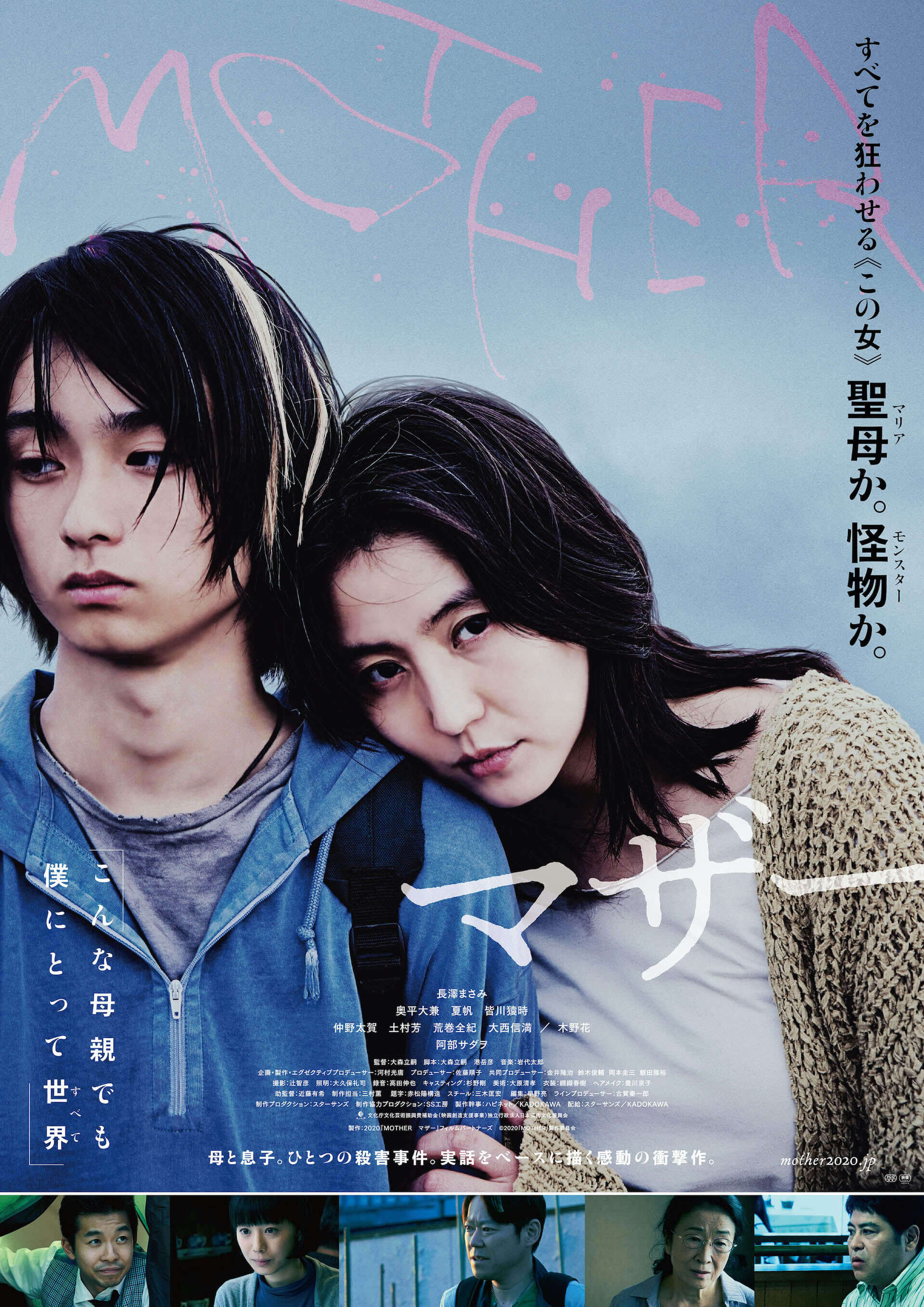
Mother (MOTHER マザー, Tatsushi Omori, 2020)

“Everything about my life has been wrong anyway. But is it wrong to love my mother?” the wounded hero of Tatsushi Omori’s gritty drama plaintively asks, and in his case it’s a complicated question. Inspired by a real life case in which a young man murdered his grandparents, Mother (MOTHER マザー) asks how and why such a thing could have happened and points its fingers firmly at corrupted maternity in the form of its extremely toxic matriarch Akiko (Masami Nagasawa) whose twisted, possessive “love” for her children makes them mere victims of her narcissistic emotional abuse and constant need for validation through male attention. 

Our first introduction to Akiko finds her ditching work to meet her young son Shuhei (Sho Gunji) on the way home from school, inappropriately licking the graze on his knee like a grinning mother cat. She then drags him to her parents for an awkward family meeting, her mother refusing to meet her gaze everyone aware she’s there to extort more money from them which, contrary to her promises of having a well paying job lined up, she will almost certainly blow on pachinko. Her father takes pity on them and gives Shuhei a few notes on the sly, but it’s not long before Akiko has decamped to a nearby video arcade which is where she meets Ryo (Sadao Abe), a host from a host club in Nagoya with whom she begins a steamy relationship. Deciding to return with him, Akiko dumps Shuhei with Ujita (Sarutoki Minagawa), a local council worker she’s been flirting with to get her child support benefits sorted out, and takes off. For unclear reasons, however, Ujita declines to let Shuhei stay in his home, leaving him in Akiko’s apartment which has no access to hot water and eventually no electricity seeing as she almost certainly neglected to pay the bill, meaning he can’t even heat up the packets of instant noodles Ujita bought for him either eating them dry or visiting the local combini. 

At this point, Shuhei is a young child who knows no other life and of course loves his mother. Though she emotionally abuses and manipulates him, he has no real choice not do what she says, including agreeing to lie when she and Ryo attempt to blackmail Ujita by threatening to accuse him of molesting Shuhei while they were away. She wilfully uses his cute kid appeal, sending him alone to badger her parents for money (which they refuse), or tap his estranged father for extra cash for a “school trip” even though Akiko hasn’t let him go to school in months and has already blown the child support he sends every month on pachinko. Yet however much he’s beginning to resent the way she uses him, she’s still his mother and there’s a twisted kind of love there along with a toxic co-dependency that locks them into a constant cycle of need and resentment. 

That’s not to say there aren’t ways out. Every time the glimmer of a better life appears, Akiko’s self-destructive impulses kick back in. A teenage Shuhei (Daiken Okudaira) gets a job as a welder with a kind man who can see his family’s struggling and wants to help, but Akiko can’t let go of Ryo who is apparently on the run from debt collectors. The same thing happens again after the family become homeless, a well-meaning social worker, Aya (Kaho), helping to get Shuhei into a catchup education program for others like him who’ve missed out on schooling for one reason or another, but Akiko doesn’t like anything that reduces her influence over her children and fails to understand Shuhei’s desire to at least be as knowledgable as other kids his age. She tells him that no one likes him, that he’ll be bullied wherever it is he goes, that only she will tolerate him and though he can see it isn’t true, no one is mean to him at school and his social worker is actively trying to help him, he can’t help believing her lies. 

They’re my children, I can do with them as I wish Akiko repeatedly snarls at those who attempt to interfere, viewing Shuhei and his younger sister Fuyuka (Halo Asada) more like minions than kids raised to do her bidding as tools or extensions of her own will yet as unable to cope without them as they are without her. Sympathetic social worker Aya, herself a survivor of childhood abuse, reminds Shuhei that he has the option to separate from his mother but he remains unconvinced. Ironically, her mad, cack-handed plan for riches will eventually separate them in her incitement to violence, Shuhei perhaps in a sense relieved knowing the state will take better care of him than his own mother ever had and perhaps he’ll even be allowed time to read, but he loves her all the same and continues to protect her despite himself hopeful only that his younger sister will escape the same fate. Is it wrong to love a mother whose “love” for you is at best toxic? Perhaps not, but it is in its own way a tragedy all the same. 


Mother is currently available to stream via Netflix in the UK (and possibly other territories)

International trailer (English subtitles)

Theatre: A Love Story (劇場, Isao Yukisada, 2020)

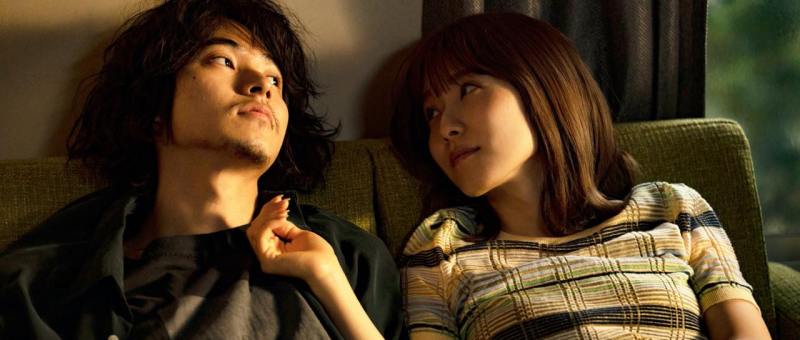
The problem with tortured artists is that rather than be content with destroying themselves, they destroy someone else instead. Japanese cinema has a preoccupation with narcissistic heroes, and even if he does have a rare degree of self-awareness the protagonist of Isao Yukisada’s adaptation of the novel by comedian Naoki Matayoshi, Theatre: A Love Story (劇場, Gekijo), is among the most insufferable in the sheer depths of his resentful self-loathing. The “a love story” suffix is an addition for the English title though it proves true enough in that this is a story about a love of theatre which is really a love of life and possibility only our gloomy hero is still far too much in the shadows to be able to see it clearly. 

Nagata (Kento Yamazaki), whose fear of intimacy appears to be so great that he never gives away his first name, is first found wandering the streets like a zombie, muttering the words “How long will I last?” to himself before coming to a pause in front of a gallery window in which is displayed a painting of a monkey screaming under a full moon. The vision of existential despair appears to match his own and he’s obviously captivated by it, as is a young woman, Saki (Mayu Matsuoka), who quickly walks away after he creates awkwardness by intently staring at her. She tries to escape because, to be honest, not only is he a class A street creep, but he seems as if he might actually be disturbed. He asks her to go on a date the next day (today is too hot), later confessing he wanted to take her for a drink but is broke all of which makes it sound like he wants money as well as her phone number. Feeling sorry for him she gives in and is seemingly not even that bothered when he attempts to order her drink for her without asking what she wants at a nearby cafe. 

In many ways, the “meet cute” of Nagata and Saki typifies the entirety of their relationship which spans the better part of an ill-defined decade. The nicer she is to him, the more resentful he becomes. What the pair have in common is “theatre”. He’s a pretentious, avant-garde playwright, she’s a bubbly aspiring actress whose faith in the genius he keeps insisting he has only reinforces his sense of insecurity. The problem isn’t so much that lack of success is eating away at him, as it is that he actively resents the successes of others. He even becomes irritated when Saki praises Clint Eastwood, as if Clint Eastwood were his competition. Nagata simply can’t stand it when other people are praised as if the mere fact of someone else’s happiness actively depletes his own, has taken something from him, or is solely a reflection of his failures as an artist and a human being. It is really is all about him. He even refuses to take Saki to Disneyland because then he’d be in competition with Disney and if Saki said anything nice at all about the experience it would just piss him off. 

What seems impossible to understand is why Saki stays, especially after Nagata moves in with her and continues to bum around paying no rent while she works three jobs and tries to finish her uni degree. Eventually she asks him for a small contribution, maybe just something towards the utility bills, but he bizarrely replies that it’s her apartment and it’s irrational to pay for someone else’s utilities which is odd seeing as he’s just got out of the bath and has therefore clearly been using the facilities. In his voiceover, he confesses that he said that in order to avoid having a serious conversation and perhaps to mask a sense of internalised shame over essentially being a kept man, something which is only finally brought home to him by an old acting acquaintance, Aoyama (Sairi Ito), who offers him some freelance writing work but that only seems to deepen his artistic crisis as he battles a sense of selling out in neglecting his playwriting. 

If Saki is underwritten it is partly intentional in that we see her only through Nagata’s eyes and he barely looks, seeing in her only a source of a salvation he is too afraid to accept. He snaps at her and calls her stupid, causes her anxiety, embarrasses her in front of her friends and is, as Aoyama puts it, “a jerk”. His behaviour is in any case abusive, but he’s so blinkered that he never notices that she’s the same as him, anxious on an existential level and in search of mutual protection. By the time he’s done with her, she’s no longer so bright and cheerful, well on the way to alcoholism born of depression and sense of failure on reflecting that she’s a woman approaching 30 who has probably failed to make it as an actress in Tokyo, is exhausted by her city life, and has been slowly destroyed by Nagata’s mix of feigned indifference and possessiveness. Aoyama and his best friend from school Nohara (Kanichiro Sato) make a final desperate intervention to save Saki, pointing out that in his toxic narcissism he destroys her to save himself, unable to bear the idea of her awakening to that which he deeply believes but does not want to acknowledge, that really he’s just no good. 

“As long as we have theatre there’s no need to despair” Nagata finally exclaims, rediscovering a love for the form in its capacity to remake the world, to show him both what is and could be as he rewrites his tragic, delayed coming-of-age romance as an emotionally authentic stage play now convinced, like the old Saki, that he really does want everyone to be happy after all. Theatre: A Love Story is the age old tale of the curtain coming down on an arc of one’s life, accepting that something has ended and that it’s OK, it’s just the way life is. Saki, somewhat problematically declares she wouldn’t have it any other way because she loved Nagata for everything he was and if he’d changed he wouldn’t be the same. In a sense we’re left with Nagata’s artistic validation and a tacit condonation of his emotionally abusive behaviour, but then Yukisada undercuts the final message with a melancholy credits sequence in which he perhaps hands back to Saki even in her passivity as she finally looks for an exit.   


Currently available to stream via Amazon Prime Video in the UK (and possibly other territories).

Original trailer (no subtitles)

Secret Zoo (해치지않아, Son Jae-gon, 2020)

A corporate stooge begins to reassess his life choices in Son Jae-gon’s capitalist satire, Secret Zoo (해치지않아, Haechijianha). As someone belatedly points out, no matter how nice you make the enclosure, you can’t get away from the fact you’re in jail and aspiring lawyer Tae-soo (Ahn Jae-hong) might have to admit that he’s no more free than the animals he’s sent to oversee (or not, as we’ll find out) when he’s randomly sent to take over a failed wildlife park at the behest of his shady boss. 

Currently a temp working out his probation at top three legal firm JH Law, Tae-soo is desperate to be taken on as a full-time employee but as he explains to his sister who wants to sue some thugs bullying her son, that largely means he’s basically just an errand boy taking care of the unreasonable demands of their incarcerated clients who are in the main chaebol sons accused of fraud and embezzlement. JH Law is under siege from protestors angry at their role in perpetuating chaebol influence and siding with large conglomerates to frustrate workers’ rights and enable exploitative working practices. Yet it’s not squeamishness that he’s wound up working for such an awful company that has Tae-soo too embarrassed to attend the reunion for the “third rate” uni he graduated from, but shame that he is only a temp not a full-time employee. That’s part of the reason he instantly accepts a strange offer from his boss to head up Dongsan Park with the promise that he’ll be taken on as a regular employee in Mergers and Acquisitions if he can turn it around in three months. 

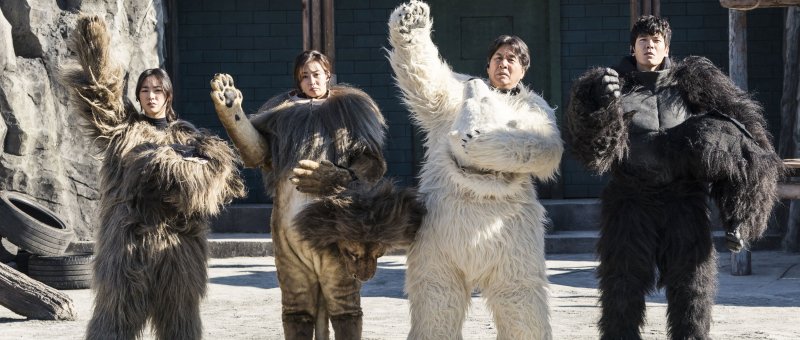
When he arrives, however, Tae-soo gets something of a shock. Most of the park’s most valuable animals have already been seized by its creditors, and international safeguards regarding the trafficking of live animals ensure that he cannot simply buy more within the three month time limit. After being surprised by a stuffed tiger while drunk after the welcome party and catching sight of some photos from a mascot day Tae-soo has a bright idea. They’ll simply have hyperrealistic costumes made and sit in the enclosures themselves keeping far enough away that the customers hopefully won’t know the difference. After all, when someone tells you’re visiting a zoo it probably doesn’t occur to you to question whether the animals are “real”.

Secret Zoo, or more accurately a zoo with a secret, is on one level a mild satire on public perception and fake news. You hear the word zoo and have a set of expectations. Unless something happens to convince you otherwise, your brain naturally smoothes over any minor issues you might have because it would be ridiculous for someone to “fake” a zoo. Despite the evidence of his eyes, the only thing the corporate stooge sent to inspect finds suspicious is the animals’ “funny” names which all end in the same syllable. The zoo becomes an unexpected viral phenomenon when Tae-soo, wearing the polar bear suit, is snapped drinking Coca-Cola just like the advert but even then no one questions the idea that he’s not a real polar bear, or that it’s perhaps not ethical for a polar bear to be drinking Coca-Cola in the first place or for guests to be throwing objects into the enclosures and especially not with the intention of harming the animals. 

Only conflicted doctor So-won (Kang So-ra) questions the zoo ideology, pointing out that however nice they make the enclosures it’s still a prison for animals that they are in essence exploiting. Secret Zoo is at pains to make a direct comparison between Tae-soo caught in the corporate cage of modern-day capitalism and the animals he’s impersonating as prisoners of the world in which they live. Tae-soo’s shady boss is, as might be expected, essentially corrupt. As Tae-soo begins to figure out, if this job were important he wouldn’t be doing it, he’s been sent because he’s desperate and expendable while his boss snidely remarks that it’s not a job to be done by someone “brought up soft” hinting at the class snobbery that further oppresses him as a “weed” coming up from a “third class” university. 

So desperate to achieve conventional success by becoming a member of the elitist club, Tae-soo doesn’t really question what it takes to get there until bonding with the employees and becoming invested in the idea of saving the zoo only to discover that his shady boss never really meant to “save” it anyway. Yet the only solution on offer is it seems merely a nicer cage which in power rests firmly with the same corrupt chaebols only now persuaded that it’s in their interest to be more socially responsible as a means of improving their personal brand which of course merely enables them to continue their exploitative business practices even if implying that Tae-soo too has a modicum of power in the ability to manipulate them. Black Nose, the polar bear driven mad by confinement, cannot be returned to the wild but regains his “freedom” in a polar bear sanctuary in frosty Canada, Dr. So-won too freeing herself of her problematic need to protect him by keeping him close. Tae-soo getting a dose of his own medicine in being observed by a young couple who press him for a selfie as the director of that “fake zoo” seems to have gained a little more awareness of what it’s like to live in the enclosure of an inherently corrupt social system akin to corporate feudalism but like Black Nose has perhaps at least improved the quality of his captivity. 


International trailer (English subtitles)
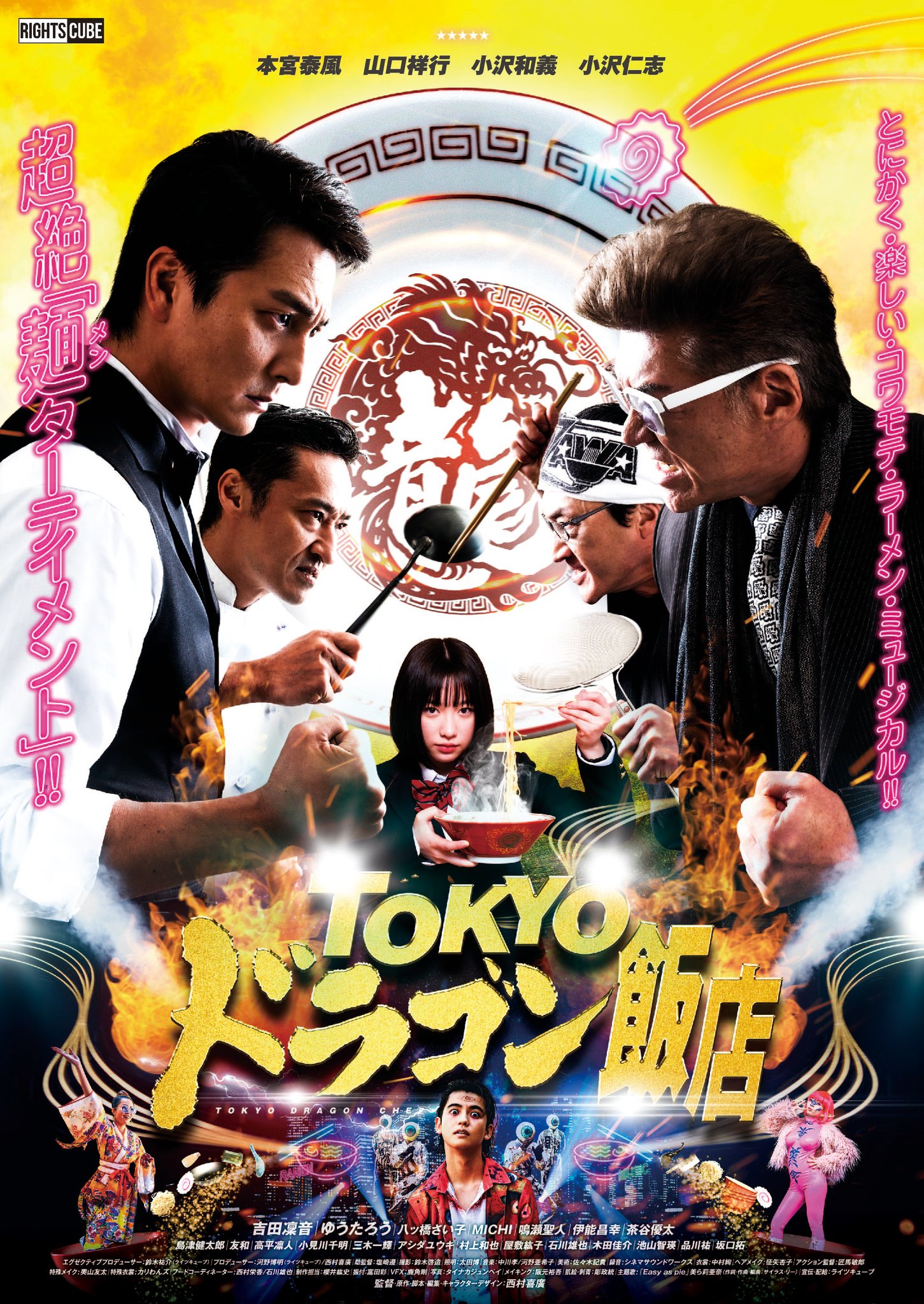
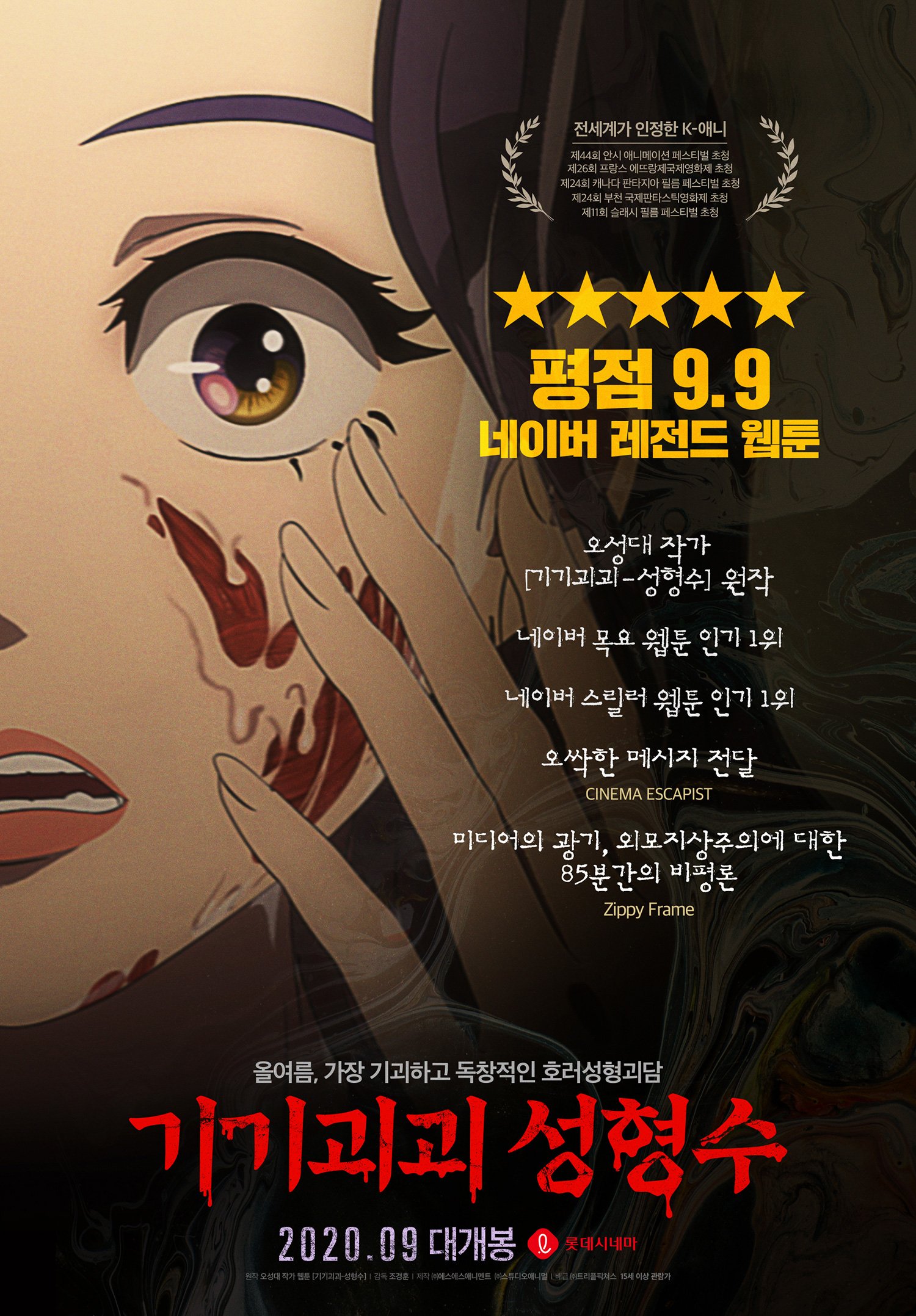
Beauty Water (기기괴괴 성형수, Cho Kyung-hun, 2020)

“Nothing matters more than being beautiful” according to an ironic statement made by a crazed revenger apparently both consumed by and resentful of South Korea’s obsession with conventional “beauty” standards. Beauty may well be in the eye of the beholder, but in this case the beholder has a noticeably conformist eye which is why it’s become something of a running joke that every manufactured pop star, model, or actress, has the same face. Not to be considered “beautiful” is to be relegated to a kind of underclass in which one’s thoughts and achievements are not accounted credible to the extent that employment prospects and class status are often dependent on meeting closely controlled constructs of physical beauty. Though it is true that men are also increasingly subject to these same definitions of attractiveness, they are not usually faced with the same kind of “invisible wall”, as the heroine of Cho Kyung-hun’s animation Beauty Water (기기괴괴 성형수, Gigigoegoe Seonghyeongsu) later puts it, which so limits a woman’s prospects in the fiercely patriarchal society. 

Yaeji (Moon Nam-sook) is a case in point. Ironically working as a makeup artist, she is regularly insulted by those around her including diva of the moment Miri (Kim Bo-young) who has her banished from the room, not wanting to see such an “ugly pig” so early in the morning. Only new recruit actor Ji-hoon (Jang Min-hyeok) treats her with any kind of kindness, remarking on the peculiar beauty of her eyes and later suggesting they do his makeup in a quiet corridor so she won’t be subject to Miri’s green room tantrums. Unexpectedly asked to fill-in for an absent extra sitting at a table laden with food, she later finds herself going viral, branded a “greedy fatty” online while journalists start bothering her at home trying to get her side of the story. She locks herself away in her room and refuses to come out. It’s then that she receives a mysterious text message followed by a parcel containing “Beauty Water”, an experimental substance which claims it can make even the least attractive of people “beautiful”.

“I just want to be loved” Yaeji plaintively claims, fully believing love is something you cannot have when you are not beautiful. Tragically she later realises that she was loved after all in recalling her parents’ reassurances during a traumatic childhood episode in which she came second in a ballet competition convinced that she danced better than the other girl but lost out because of her “ugliness”, but rather than learning to love herself in rejection of socially defined notions of conventional attractiveness Yaeji goes down the dark path of the quick fix entrusting her future to Beauty Water. She rebrands herself as Sul-hye and embarks on the cynical life of a vacuous influencer, dating various wealthy men but dismissing them all in her caustic interior monologue now confident enough to feel she can do better but leveraging only her looks in order to catch a useful man rather than trying to forge a life of independence. She is now fully a prisoner of the oppressive and tightly regimented gender-based social codes of a fiercely patriarchal society. 

Nevertheless, in the grand tradition of experimental serums, Beauty Water changes her soul as well as her face. Obsessed with the pursuit of perfection in beauty, Sul-hye becomes increasingly violent and aggressive, bullying her parents into lending her money for extra treatment by holding them responsible for giving birth to an unattractive child. We hear TV reports of young women in their 20s going missing and half-wonder if Sul-hye herself or someone like her, another victim of Beauty Water, may be responsible, but equally we see that the entire entertainment industry which Sul-hye is now trying to enter as another means of attaining success and fulfilment is entirely built on the exploitation of female “beauty” which is itself used as a means of control. Ji-hoon, apparently kind and sensitive, retires from showbiz because he can’t live with its manipulative cruelty and warns Sul-hye about Miri’s manager whom he believes bought Miri her career through pimping her out to “powerful” men and then embezzled all her money. Miri has since gone mysteriously missing. 

Finally we’re shown that appearances can be deceptive, that the “beautiful” are not always nice, nor exceptional in any other way than their physical appearance, and are unfairly prized by a superficial society. Judged for her purchases at the convenience store Yaeji stumbles on the way home while her building’s security guard offers no help, only the rude instruction that she should lose some weight then she’d be able to walk better. Meeting Sul-hye, the same guard reacts quite differently. Suddenly nothing is too much trouble, which might just be a problem of the opposite order in its vaguely threatening creepiness but just goes to show the extent to which a woman like Yaeji is held in contempt while those like Sul-hye are placed on a pedestal. 

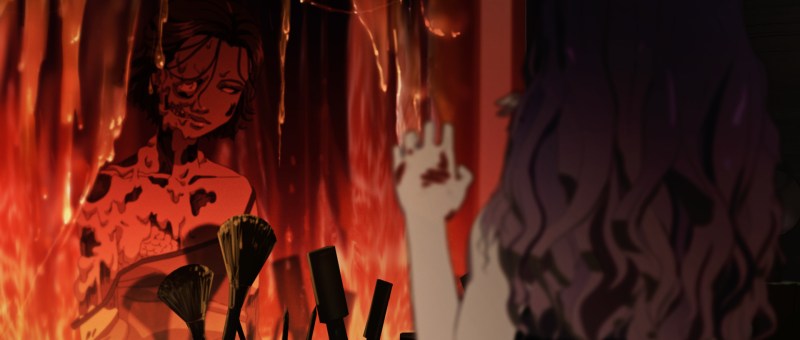
Internalising a sense of shame and inadequacy in “failing” to meet these “arbitrary” standards, Yaeji is content to destroy in order to remake herself. “Say goodbye to the face you know”, Beauty Water’s instructional video teases before descending into surreal gore as a woman literally slices away her ugly facade to expose the beauty hidden beneath. Reminiscent of Perfect Blue, Beauty Water’s B-movie sensibilities send Yaeji/Sul-hye into increasingly paranoid and uncertain territory, desperate to remain “beautiful” so that she might be loved but never learning to love herself while quietly murdering her essential self to attain a soulless image of idealised beauty. A late swerve into an unintended transphobia nevertheless undermines the central messages of the dangers inherent in society’s obsession with aesthetic perfection as the heroine struggles to escape her internalised shame only in an extreme act of self-destructive masking. 


Original trailer (English subtitles)

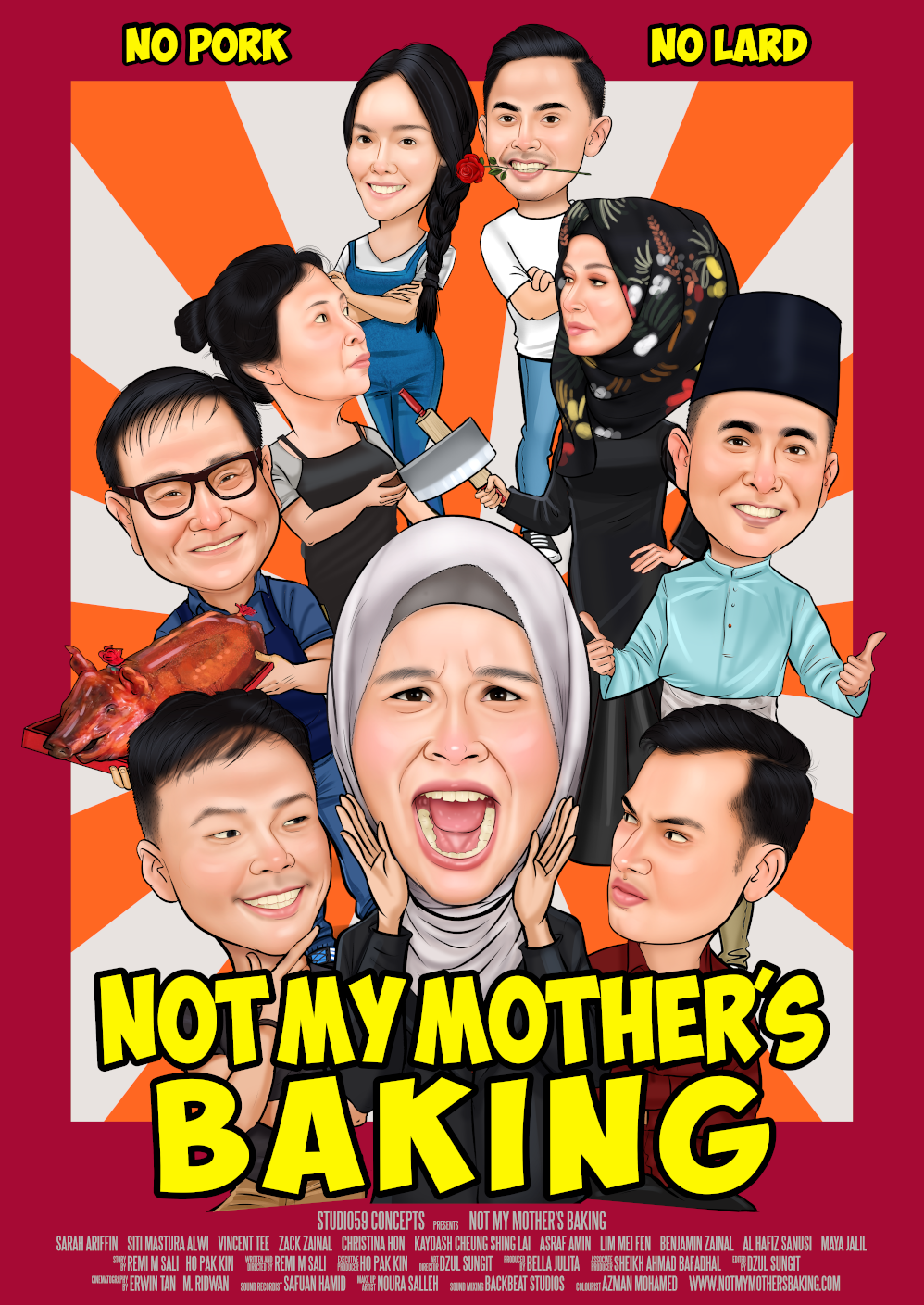
Not My Mother’s Baking (不是我妈妈的烘焙, Remi M. Sali, 2020)

True love conquers all in Remi M Sali’s warmhearted Singaporean rom-com Not My Mother’s Baking (不是我妈妈的烘焙, Búshi Wǒ Māma de Hōngbèi). Spinning a Romeo and Juliet romance between an aspiring Malay Muslim cook and the heir to a roast pork hawker stall, Not My Mother’s Baking is as much about cross-cultural connection as it is about two young people finding their own directions and the strength to pursue them free of parental expectation as they figure out what it is that will really make them happy.

Daughter of celebrity chef Siti (Siti Mastura Alwi), Sarah (Sarah Ariffin) has always lived in her mother’s shadow, harbouring a mild sense of resentment towards her for neglecting her family in favour of her career. The little brother of her best friend Tini (Maya Jalil), Imran (Asraf Amin), who has long been carrying a torch for her suggests starting her own online cookery series to establish her brand as distinct from her mother’s setting her up with Edwin (Kaydash Cheung Shing Lai), an aspiring Chinese video producer. The two do not exactly hit it off thanks to some cultural misunderstandings, but begin to grow closer after they each reluctantly agree to work together in order to avoid having to spend more time with their families, Sarah potentially roped in as a temporary/free assistant to her mum and Edwin needed to help out at his parents’ hawker stand selling roast pork. 

Cheerfully narrated by Edwin’s upbeat dad Mr. Tan (Vincent Tee), this is a story which begins with a wedding and so we know right away that it all works out and Sarah and Edwin will get their happy ending, yet there are a lot of obstacles standing in the way of their burgeoning love story not least a lack of understanding that begins with Edwin somewhat insensitively advising Sarah to remove her headscarf to make a better impression in the videos. Ill-advised by Imran, Edwin is wary of telling Sarah about his family’s occupation firstly in case it causes offence and then later uncertain what level of interaction is permitted between them considering he’s been handling pork. Sarah’s cheeky brother Yusri (Benjamin Zainal) jokes that her potential love interest is not “halal”, but then her parents aren’t quite as against the idea as she might have assumed them to be while she finds herself somewhat conflicted, not least in her ambiguous relationship with the superficially “perfect” Imran whose cheesy pick up lines and tendency to try far too hard perhaps convince her that he might in fact be too perfect or at least the wrong kind of perfect for her. 

Meanwhile, she’s also trying to find her way out of her mother’s shadow as a cook, scoring a hit online when she retitles her show “Not my Mother’s Baking” and affectionately mocks Chef Siti’s signature TV star style claiming to be a little more real and authentic in contrast to her mother’s seeming affectation. In a meta twist, Sarah and her mother are played by real life mother and daughter celebrity chefs Sarah Ariffin and Siti Mastura Alwi, though their onscreen relationship is one defined by rivalry and frustrated connection. Chef Siti is understandably hurt by Sarah’s direct attack on her brand, but it does at least enable an overdue heart to heart which brings the two women closer as they work through their complicated relationship while bonding through their shared love of cooking. 

Edwin, meanwhile, has no real desire to take over the pork stand as his parents expect while no one seems to take his video career very seriously. In a slight twist, the Tans have decided Edwin rather than his sister Joyce (Lim Mei Fen) should take over not because she’s a girl but because she went to university and so they think it’s beneath her, stubbornly refusing to see that Joyce actually loves the business and has a few ideas how to bring it into the 21st century making full use of her skills and education. Unlike Sarah’s family, Edwin’s parents are less keen on a cross-cultural romance because they fear losing their son knowing that to marry a Malay muslim woman means not only leaving the pork shop behind but fully converting to her religion. 

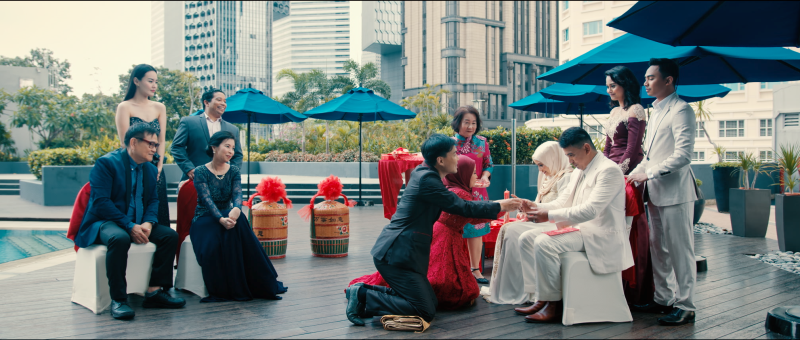
Yet as the female religious leader who accepts his conversion points out (Singapore is apparently the first country to allow women to approve a man’s conversion to Islam), there is no issue with Edwin keeping his Chinese name and it’s not as if he has to cut off contact with his family even considering the problematic nature of their occupation as demonstrated in the couple’s beautifully colourful fusion wedding at which a roast pig is served for the Chinese guests alongside halal Malay cuisine, while Edwin is followed into the ceremony by two large pink dancing lions and the nuptials are concluded with a traditional tea ceremony. A very millennial romance, Not My Mother’s Baking allows its young heroes to forge their own paths outside of those their parents might have chosen for them, proving that love really does conquer all while bringing together two very different cultures each united by the desire to see their children happy. 


Not My Mother’s Baking streams in Poland until 6th December as part of the 14th Five Flavours Film Festival.

International trailer (English subtitles)
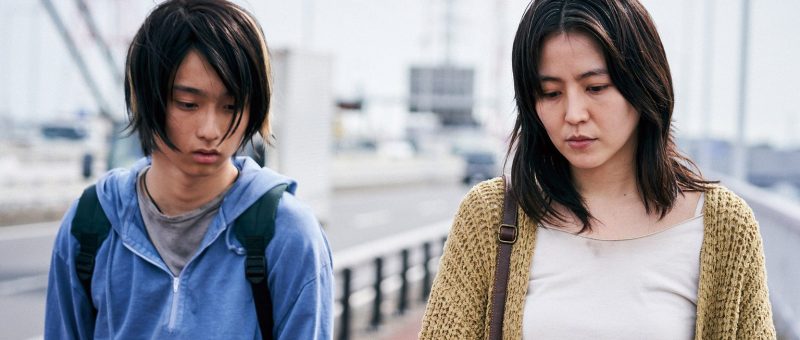
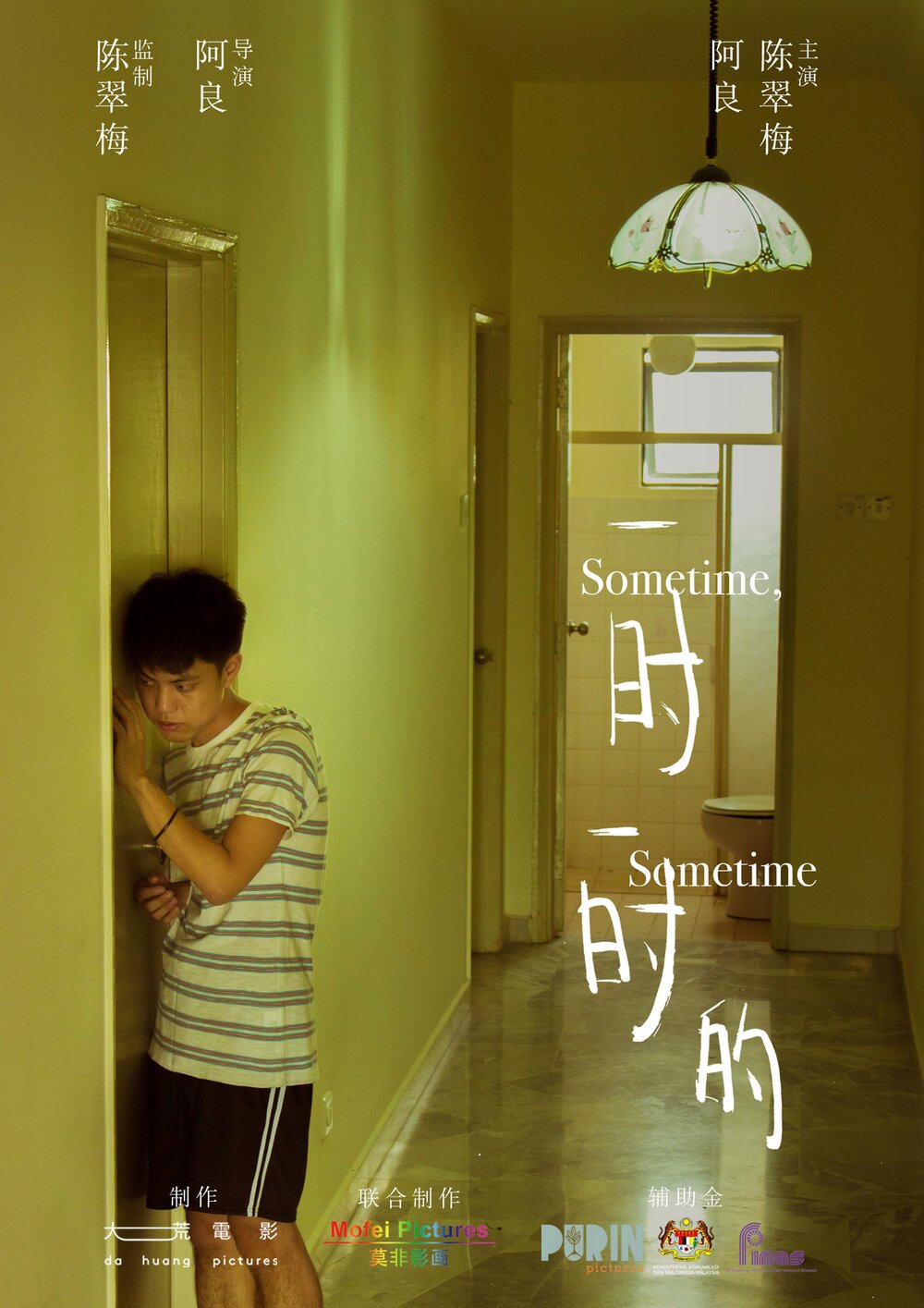
Sometime, Sometime (一时一时的, Jacky Yeap Swee Leong, 2020)

The relationship between mother and son necessarily changes over time, though both find themselves caught in a moment of flux in Jacky Yeap Swee Long’s Sometime, Sometime (一时一时的, Yīshí Yīshí de) in which educational crossroads, employment woes, and unexpected romantic pathways seem set to divide parent and child as they awkwardly swap roles but eventually discover a new equilibrium that will allow them to move forward into individual if perhaps co-dependent futures. 

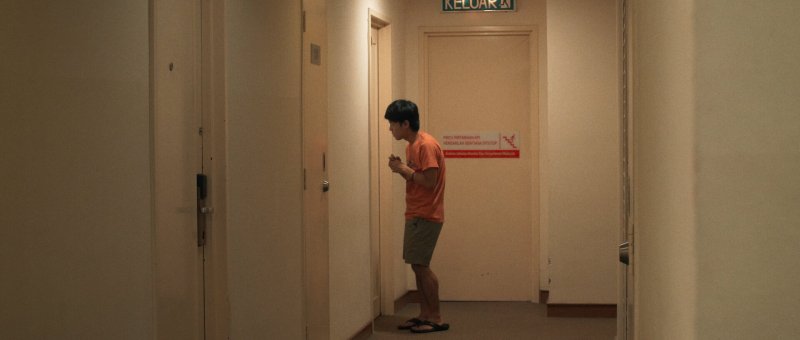
At 16, Zi Kien (Jacky Yeap Swee Leong) is trapped in an educational limbo while he waits for exam results which will help him decide on the further course of his life. Meanwhile, he resents the helicopter parenting of his devoted single mother Elaine (Tan Chui Mui), arousing her suspicion locking his bedroom door when all he was doing was trying on a shirt he bought himself that she later complains is a little on the big side. When he figures out, however, that his mum has got a new boyfriend, Mr. Lee (Loh Kok Man), the situation is reversed. He doesn’t like it that she’s not quite so overly invested anymore and resents for the moment not being the centre of her attention. Insisting on coming along on a dinner date, he is deliberately difficult, suddenly claiming that he’s gone vegetarian despite having been seen eating pork ribs for breakfast solely to mess with Mr. Lee’s proposed order. For his part, Mr. Lee seems not to be particularly bothered, simply adding an egg dish while getting some sweet and sour pork for himself should Zi Kien abruptly change his mind. 

This flip flopping seems to be typical of Zi Kien’s character at least according to his mother who complains he’s sometimes one thing and sometimes another. Today he’s “vegetarian” but then again he might have forgotten all about it by dinnertime tomorrow. A young man at a crossroads, he flounders for direction, perhaps looking for guidance from the older generation but mildly mocked by some of his peers who regard him as a mother’s boy too afraid of upsetting Elaine to think about applying for the lucrative residential jobs at a casino resort as some of his friends are doing. Zi Kien lies that he bought the shirt for potential interviews, only to be railroaded into taking a short term placement at the supermarket where the worryingly domineering Mr. Lee works. “No need to think about it” he insists on hearing Zi Kien’s lukewarm response, acting as if it’s all arranged and leaving the boy with virtually no chance to refuse.

Yet there’s perhaps a part of Zi Kien that responds to the kind of authority that relieves him of the burden of choice. He finds himself parroting back words from Mr. Lee as if they were profound nuggets of wisdom rather than the banal logic of a slightly conservative middle-aged man. His friend Xue-Ting (Yap Jia Ern) even tells him that he sounds like one of her irritating uncles, once again remarking that his shirt looks too big for him and recommending he might be better to try the women’s section (adding that she herself often finds the kids’ selection a better fit). Only later does he start to wonder if there’s not something slightly arrogant in all Mr. Lee’s “guidance”, immediately making suggestions on how the video he showed him might be “improved” if he added some mournful music and interviewed a few more of his friends from the “lost and confused” generation. His birth father later viewing the same video advances something similar only seeing not anxiety but comedy, advising him that adding music might make it “funnier”. Only Xue-Ting thinks the video’s fine as it is, though Zi Kien later tries the same mansplaining logic on her in railroading the longterm vegetarian into trying “real” meat seemingly unaware that it has the potential to make her quite ill.  

Elaine at least seems better placed to resist Mr. Lee when he also tries to railroad her into taking a job at his company on hearing that the mall where she was working in a department store will soon be closing. Curiously, their relationship seems to breakdown afterwards, though he keeps hanging around hoping to catch the “psychopath” who damages cars parked in a particular space without authorisation. Elaine’s decision to get a haircut (one perhaps so disappointing that she ends up wearing an ugly wig) might be as much a reaction to her son’s possibly inappropriate clinginess as to her boyfriend’s domineering nature, but also speaks of her new desire to take control of herself and her life, buying a used car from a friend so they can be truly independent but then teaching Zi Kien how to drive it, not to mention even teaching him how to smoke a cigarette. Zi Kien is anxious enough to spend some of his part-time money on a long wig (an equally awful, retro 80s contraption) to put her back the way she was before, Elaine agreeing to wear it from time to time to show she appreciates the sentiment but later getting herself tidied up with a slightly more fashionable bob. 

Through their respective parallel dramas, mother and son eventually learn to reconfigure themselves for a new future, more comfortable in their roles and perhaps each with new direction. Elliptical and rich with doublings, symmetry, and repetition, Yeap’s gentle summer story is quietly humorous while undoubtedly well observed and filled with a loving empathy for this most essential, if sometimes frustrating, of connections.  


Sometime, Sometime streams in Poland until 6th December as part of the 14th Five Flavours Film Festival.

Festival trailer (English subtitles)

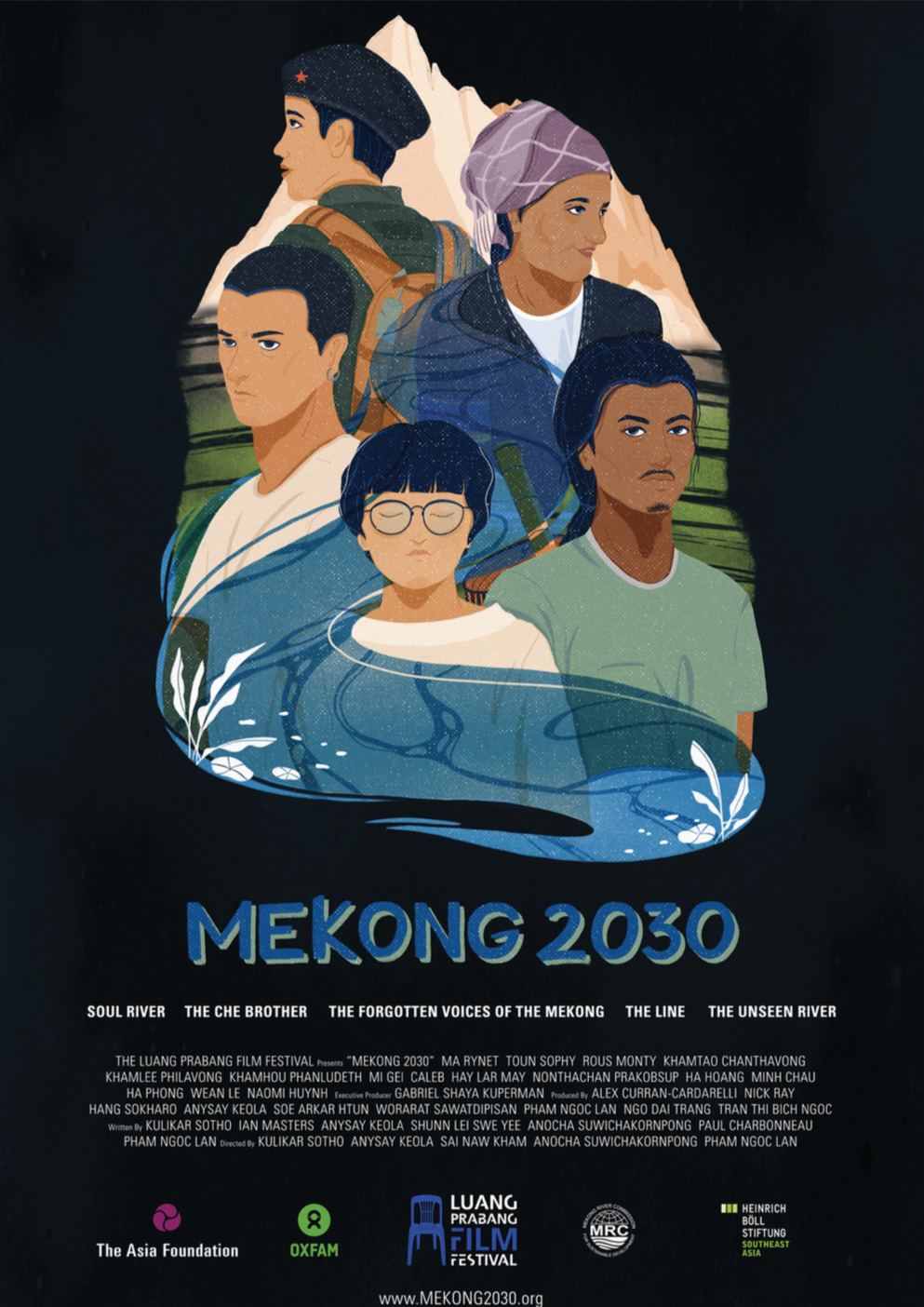
MEKONG 2030 (Kulikar Sotho, Anysay Keola, Sai Naw Kham, Anocha Suwichakornpong, Pham Ngoc Lân, 2020)

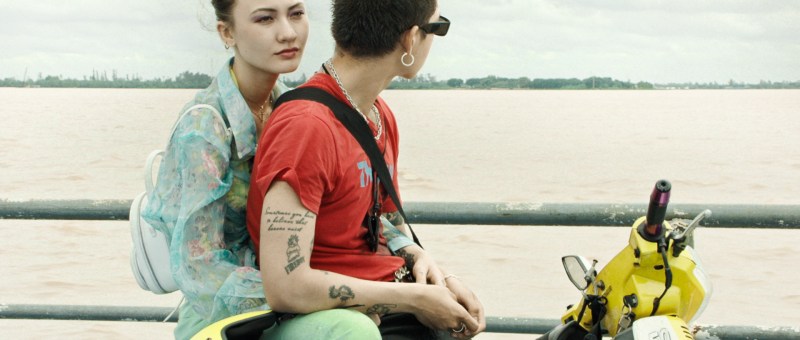
Literally on the shores of an ecological crisis, the communities along the Mekong River know better than most the dangers of climate change and increasing industrialisation. Commissioned by the Luang Prabang Film Festival, MEKONG 2030 takes its cues from the recent “ten years” phenomenon, bringing together five directors from different nations along the Mekong to imagine what the situation might be in a decade’s time. 

Environmental concerns and changing times are clearly at the forefront of Cambodian director Kulikar Sotho’s Soul River in which Klark, an indigenous huntsman, discovers an ancient statue in the forest and determines to sell it to buy a better future for himself and his wife having lost everything in a flood caused by deforestation and the affects of increasing industrialisation. Unfortunately he is challenged by Sok, a former fisherman forced onto the land due to the lack of fish in the river, who claims to be the land’s owner and insists the statue is his. An amusing stand off, Klark’s machete vs Sok’s walkie-talkie, signals their respective positions as avatars of new and old. Nevertheless, the statue is too heavy for one man to carry and so they agree to work together, occasionally quibbling over their respective cuts and irritating Klark’s conflicted wife Ladet whose premonition that the statue is cursed is well and truly borne out as the two men begin to lose themselves in greed and suspicion. Yet as her closing voice over reminds us their sin is emblematic of their times in their irresponsible and arrogant desire to “sell” their nation’s ancestral treasures, be they forests, rivers, or statues the protection of which should have been their only duty. 

Depleting fish stocks and industrial pollution are also a persistent theme in the entry from Laos as a worried sister explains to her student brother concerned to see nets covered in dust on his return home from university. Xe is worried because his sister has a bruise on her face and seems to have separated from her husband and children she says to look after their mother who, as it turns out, is immune to the ongoing plague and therefore a valuable commodity to those hoping to find a vaccine. The bruise was apparently caused when their older brother, who has since become a warlord, kidnapped mum in order to monopolise her exploitation. The sister wants Xe to kidnap her back, but the deeper he gets into this awkward situation the more conflicted Xe feels knowing that whatever is actually going on both of his siblings are in effect determined to bleed his mother dry for economic gain. 

The precarious position of the older generation and the side effects of industrialisation raise their heads again in chapter three, Myanmar’s The Forgotten Voices of the Mekong in which well-meaning young village chief Charlie determines to “modernise” his community by inviting a mining conglomerate to begin digging gold on their land. An old grandma patiently teaching her grandson to care for the local herb grown for its medicinal properties is the voice of opposition, pointing out that there is nothing wrong with their lives as they are and so she feels they don’t need the complications of the “modernity” Charlie is determined to bring them. He tells her that he’s the chief now and so they’ll do as he says and so she calmly walks out of the meeting, but her animosity is soon vindicated when farmers complain their livestock has been poisoned after drinking water contaminated by the mine. Not long after a child is taken ill. Devils devour everything, but there is something we can do the old woman assures her grandson: make the mountains green again. 

Shifting into a more abstract register, Anocha Suwichakornpong’s Thai entry The Line takes the river as a protagonist through the film within the film playing on a gallery wall though apparently in some way unsatisfying to its creator. Speaking in a robotic Mandarin, the video places an ironic voiceover on top of images of the river and the city juxtaposing an incongruous family history with a vision of modernity. Meanwhile, a young intern makes smalltalk with her temporary bosses who seem to have no time for her about a weird animal captured on camera in the river near her hometown, and the artist explains her intention of dramatising a vision of space and time through the story of the river.  

The sense of the Mekong as liquid time recurs in the final instalment, Vietnam’s The Unseen River, in which two stories, one of youth and the other age, run in parallel. While a young couple make a visit to a temple hoping to find a cure for the boy’s restless sleep, a middle-aged woman catches sight of a somehow familiar dog that serendipitously reunites her with her long-absent first love who went abroad to study shortly before they dammed the river. In a piece of possibly unhelpful advice, the old monk tells the young man that all he needs to do is “believe” in the act of sleeping. Sinking into a deep sleep is like surrendering yourself to the current he explains, directly linking the rythms of life to the river while the young monk attributes their youthful llistlessness, the failure to see a future that has prevented the young couple marrying, to the inability to dream. The river is both past and future, dream and reality. It is disconnection with the natural world which has so affected the young man, something he perhaps repairs borrowing the monk’s decommissioned fishing rod to gaze upon the wide river under the light of the moon. 

Giving voice to the anxieties of climate change, overdevelopment, the unequal power dynamics of large corporations operating in rural communities, the erosion of traditional culture, and the loss of the natural world, MEKONG 2030 issues a strong warning against ecological complacency but also rediscovers a kind of serenity in the river’s eternal presence even as it is perhaps flowing away from us. 


MEKONG 2030 streamed as part of this year’s San Diego Asian Film Festival. Readers in Poland will also have the opportunity to stream MEKONG 2030 as part of the 14th Five Flavours Film Festival 25th November to 6th December.

Original trailer (English subtitles)