The Blue Danube (きまじめ楽隊のぼんやり戦争, Akira Ikeda, 2021)

“Just shoot where you’re told and you’ll be fine” a veteran advises an unusually curious newbie when asked who exactly it is they’re shooting at, beginning to question for the first time everything he’s been told. Continuing in the same vein as his 2017 surrealist drama Ambiguous Places, Akira Ikeda’s Blue Danube (きまじめ楽隊のぼんやり戦争, Kimajime Gakutai no Bonyari Senso) follows a more linear though meandering path in its timely anti-war message as the brainwashed hero comes to contemplate the tenets of his society thanks to a naive young man and the healing power of music. 

The small town of Tsuhiramachi has been at war with Tawaramachi across the river for so long no one can remember why it is that they’re fighting, least of all perpetually absent-minded mayor Natsume (Renji Ishibashi) who can’t even remember his own son’s name. Soldier Tsuyuki (Kou Maehara) is woken every day by a marching band, meeting friend and colleague Fujima (Hiroki Konno) in the street and walking over to the barracks where he changes into his uniform and then spends all day firing a rifle across the river. His identical days are disrupted when former thief Mito (Hiroki Nakajima) is conscripted into their group and Fujima is injured in seemingly the only instance of returned fire. Tsuyuki is then transferred to the marching band and begins practicing his trumpet by the water only to be surprised when he begins hearing someone joining him from the other side. 

Everyone in Tsuhiramachi walks with automaton rigidity and talks with an almost ritualistic austerity in which dialogue is repeated endlessly and conversation loops are common. The townspeople dress as if they were stuck in the 1940s though the uniforms are more European than Japanese while Tsuyuki and Fujima wear identical blue suits when travelling to and from their homes. The thief, Mito, meanwhile dresses in a less formal brown shirt and trousers, apparently engaging in stealing from the local simmered food stand for reasons of poverty while his friend, mayor’s son Heiichi (Naoya Shimizu), does so because he can. When the stall owner’s wife catches them, Heiichi allows his father to think he valiantly chased a thief and is made a police officer for his pains continuing to extort food and generally abuse his authority largely conferred through feudal dynastic privilege. 

There is certainly something in Mito’s tendency to frame each of his statements as a questions, asking “Am I a soldier now?” Or “My name is Mito?” when questioned. The lady who runs the diner where Tsuyuki frequently lunches is extremely proud of her son away fighting up river and resents being questioned by Mito, shovelling extra rice into the men’s bowls when impressed by something they’ve said and then taking it back when disappointed. Mito wants to know why it is they’re fighting and who the people across the river really are. Shiroko (Hairi Katagiri) doesn’t approve of asking such taboo questions and affirms that she doesn’t need to meet the residents of Tawaramachi to know that they’re “barbaric”, “horrible” people. Even the owner of the simmered food stall who insists he knows “everything” insists he’s no interest in knowing about Tawaramachi. 

Yet they’re always being told that the “threat” from across the river is increasing even if the mayor has forgotten what the threat exactly is. Meanwhile, an elite troop will soon be arriving to take part in the trials for a brand new super weapon. A disapproving Shirako asks Tsuyuki how music is useful for the war, but he doesn’t know, he’s merely following orders. Music however, along with Mito’s awkward questions, begins to open his eyes as he contemplates whether the trumpeter from across the water can really be so different from himself. He disapproves of Heiichi’s abuse of his authority, of civil servant Kawajiri’s apparent replacing of his wife with another woman because he believes she cannot bear children, and of the army’s treatment of a friend now struggling to find employment having lost his arm for the good of the town. Shiroko insists that dying in war is better than being injured, but the young universally agree that no, it isn’t. In this strangely Kafka-esque world of crypto-militarism and the feudal mentality, Tsuyuki finds freedom and escape in his trumpet but not even these it seems are enough to call the “meaningless” and internecine violence to a halt. Filled with a strangely poignant poetry, Ikeda’s absurdist drama takes aim at lingering authoritarianism but suggests that music may be panacea for human conflict if only we’d stop a little and listen. 


The Blue Danube streamed as part of this year’s Japan Cuts.

Original trailer (English subtitles)
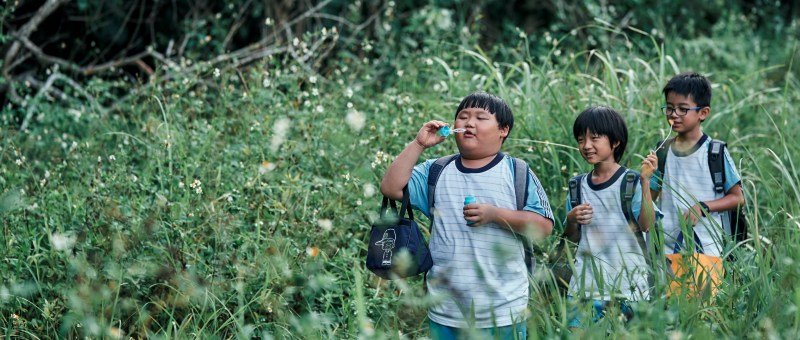
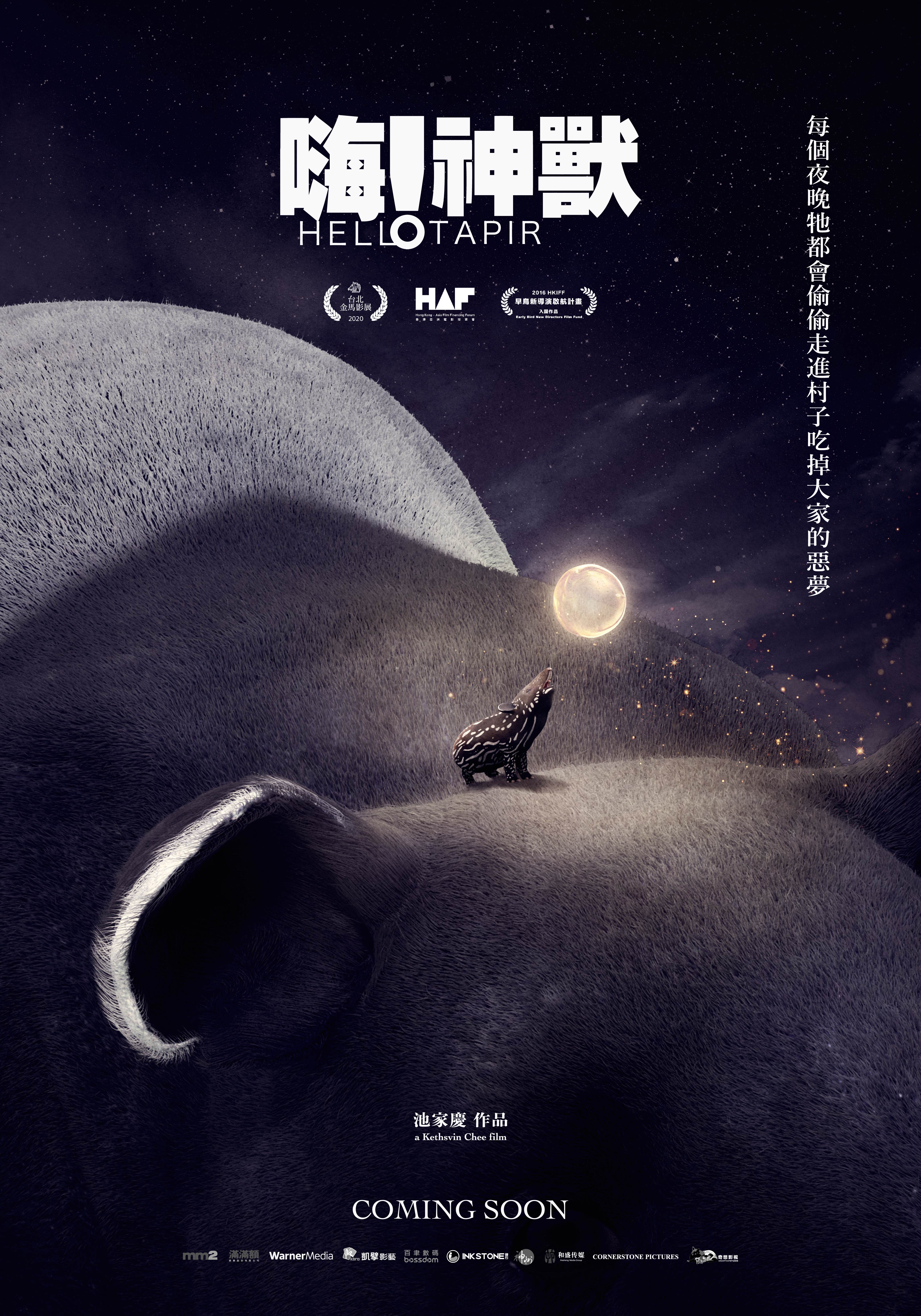
Hello! Tapir (嗨!神獸, Kethsvin Chee, 2020) [Fantasia 2021]

“In this world, everything disappears eventually” according to the prophetic words of the absent father of young Keat in Kethsvin Chee’s charmingly retro children’s fantasy adventure Hello! Tapir (嗨!神獸, Hāi Shénshòu). At heart a tale of grief and a small child’s acceptance of death, Hello! Tapir is also one of gentle adventure as the hero and his two friends search for tapirs in the undergrowth but eventually discover an accommodation with loss in the knowledge that nothing’s ever really gone even if you can’t see it. 

Keat (Bai Run-yin) lives in a small fishing village with his fisherman father (Lee Lee-zen) and grandma (Lü Hsueh-feng) who sells seafood at the market. Captivated by his father’s improbabe tale of having encountered a tapir who eats people’s nightmares in the forest, Keat implores his dad to take him to see it too but Keat’s father Sheng is always too busy and often reneges on his promises. Ominous winds start to blow when news of a typhoon is broadcast over the radio while Keat is angry that no one woke him before his father left on the boat as he had asked them to do. Sure enough, not long after Keat discovers a commotion at the harbour and gathers there has been some kind of accident at sea. His father hasn’t come home and his grandma is frantic but he’s just a little boy and no one is telling him anything. 

Told from a child’s point of view, Chee’s melancholy tale perfectly captures the confusion and resentment of a small boy in the midst of crisis. Keat cannot conceive of the idea his father may never come home again, replying to his friend’s questions that he’ll be back maybe tomorrow or the day after that. After all, he was supposed to take him to see the tapir. Because he’s sure his dad’s coming back, he grows resentful towards his recently returned mother (Charlie Yeung Choi-Nei) who left the family some time previously and had been living in Taipei and his grandmother for taking his father’s place away by boxing up his clothes and preparing to sell the fishing boat which came back empty on its own for scrap. 

Meanwhile he attempts to secure his father’s legacy by searching for the tapir on his own, encountering a baby which later leads him into the forest and towards its giant parent sucking on golden nightmare orbs all the way. Tapirs are obviously not native to Taiwan and so their presence is as decidedly unexpected as their unusual appearance. You would’t expect to see one wandering through town unless it had recently escaped from a zoo, but they are perhaps Keat’s way of processing the loss of his father the adult tapir gently showing him what it was he most wanted but feared to know while comforting him with its reassuringly warm presence. 

On the cusp of adolescence, Keat finds himself squarely between two sets of overlapping worlds caught between the fantasy of nightmare-eating tapirs and the reality of his grief while also remaining firmly in the realms of childhood having innocent adventures with his two friends as they try all sorts of tricks to draw out the mystical creatures just as his mother deals with the difficulties of planning a funeral and making plans for the future without overburdening her son with impending change. Nobody tells Keat anything because he’s just a child and they think he won’t understand, but he understands that they’re not telling him and the knowledge further increases his sense of loneliness and alienation left entirely alone with his grief and anxiety. 

A beautifully drawn magical realist fable, Chee’s charmingly old fashioned kids fantasy adventure makes the most of its idyllic seaside setting replete with a warm and friendly atmosphere despite its concurrent tragedy. Keat is forced to face the reality of his loss, but does so while maintaining a sense of wonder for the natural world secure in the knowledge that all things disappear in the end, but it isn’t the end of the story and death is merely another part of life. Warm and empathetic, Hello! Tapir paints its coastal setting with an uncanny sense of magic coupled with a cosmological sense of security as its young hero begins to come to terms with his loss thanks to the gentleness of sleeping creatures. 


Hello! Tapir streamed as part of this year’s Fantasia International Film Festival. 

Original trailer (English subtitles)
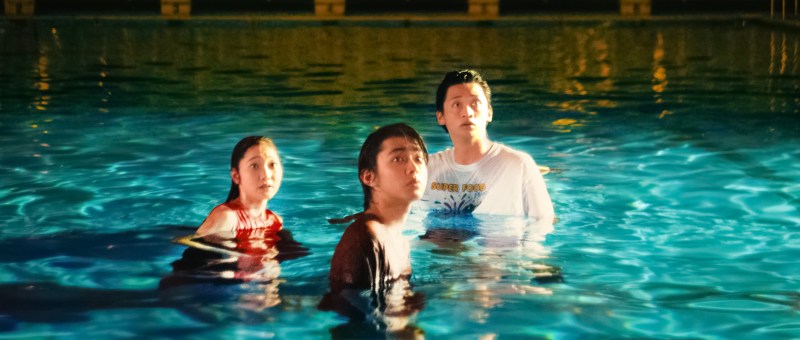
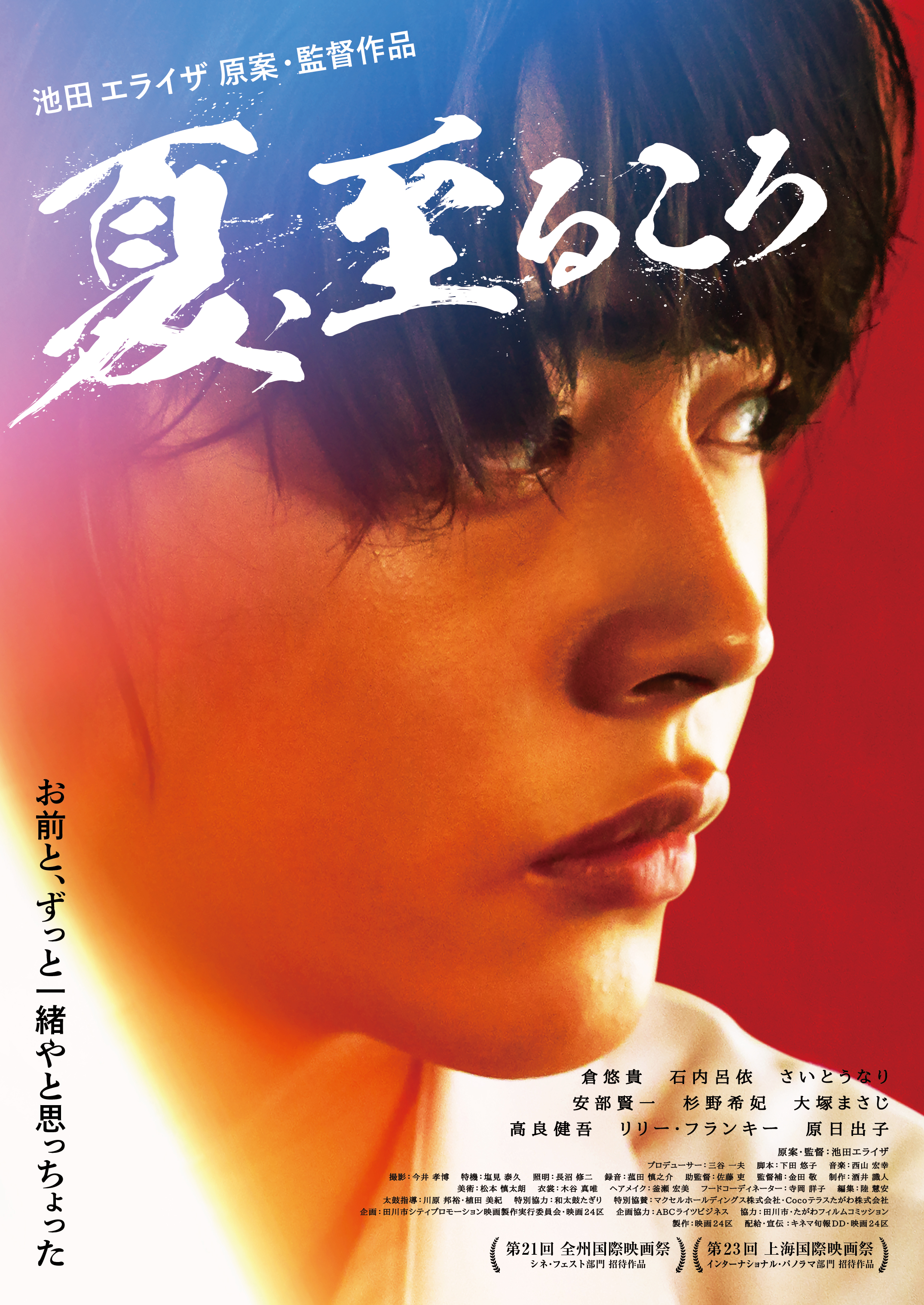
Town Without Sea (夏、至るころ, Elaiza Ikeda, 2020)

“Happiness is something you don’t notice even if it’s right next to you” the hero of actress Elaiza Ikeda’s directorial debut Town Without Sea (夏、至るころ, Natsu, Itaru Koro) is told by a strangely perceptive small child. The nature of happiness is something that seems to be bothering him while he contends with adolescent anxiety little knowing what to do with the further course of his life while fearful in the knowledge that his relationship with his childhood best friend must necessarily change. 

Approaching the final year of high school, taiko-enthusiast Sho (Yuki Kura) has no dreams or aspirations and has been avoiding thinking about what to do after graduation. Pressed by his teacher, all he can offer is that he’d like to become “air”, which is in its own way slightly alarming though it hints at his sense of emptiness and despair. His childhood best friend, Taiga (Roi Ishiuchi), meanwhile has a clearly defined, extremely sensible life plan which is why he’s abruptly giving up taiko so he can attend cram school and get into uni with the aim of becoming a civil servant. As we discover, Sho has been something of a follower making most of his existing decisions based on whatever Taiga was going to do, but he can’t merely follow him this time and will have to come to some sort of decision about his individual future. 

“I can’t walk alone. I don’t know what to do” he confesses to a surprisingly sympathetic teacher (Kengo Kora), while as it transpires Taiga is having similar thoughts. The two boys are much more co-dependent that they assumed, but that very co-dependency begins to drive them apart when coupled with their adolescent anxiety. Taiga fears that he is simply too “boring”, giving up taiko because his carefully honed technique cannot measure up to Sho’s anarchic power. According to him he took up taiko after spotting Sho playing at a festival thinking he looked so “free and cool”, yet Sho equally thinks he’s not as a good a drummer and cannot match Taiga’s meticulous training. Taiga is shifting away from their friendship because he secretly feels inferior and wants to leave before being around Sho makes him feels miserable, a logic Sho is not fully equipped to understand. 

“Why does everybody quit?” he asks in exasperation, meeting a strange young woman who like them wants to pull away from something before she ends up hating both it and herself. Likened by Taiga to the kind of manic pixie dream girl who frequently turns up during the last summer of high school in manga, Miyako (Nari Saito) does not quite come between the two boys in the expected way but does bring out their contradictory qualities before abruptly disappearing from the narrative, ahead of the pair in suddenly deciding that she’ll figure something out on her own. Having decided all he wants is a future of ordinary happiness, Taiga can’t help resenting his friend feeling that whatever decision he makes, getting a job or going to uni, he’ll wind up happy whereas he presumably will not with his unexciting yet sensible life as a civil servant. 

There is an undeniably homoerotic quality to the boys’ friendship, their brief falling out almost like a lovers’ tiff in its melancholy intensity. Sho necessarily fears the loss of his friend, perhaps instinctively knowing he’s chosen a path he likely cannot follow and feeling rejected because of it. He obsessively meditates on the meaning of “happiness” unable to settle on a means of achieving it while unsure of what exactly it means. He asks his friends and family but discovers that happiness means different things to different people, may change over time or not quite be what you first thought it was, or be as simple as a sunny day in your hometown. He does however begin to accept that even if separated, his relationship with Taiga will not necessarily change they will still be “together” if more in spirit than body. Recalling something Taiga had said about the sea which he has never seen, he makes his choice defiant in its independence. Hailing from Fukuoka herself, Elaiza Ikeda’s remarkably assured directorial debut crafts a warm, empathetic coming-of-age tale centring on the intense friendship between two men but discovering a sense of wonder and contentment in the everyday as its conflicted hero finds a sense of rootedness in the strength of his relationships that grants him the freedom to roam. 


Town Without Sea streamed as part of this year’s Japan Cuts.

Original trailer (English subtitles)
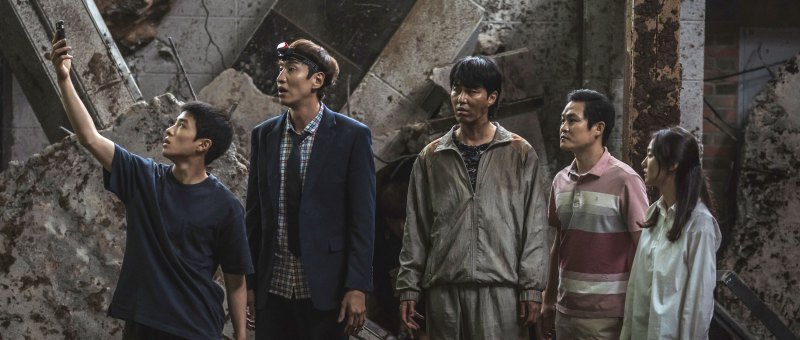
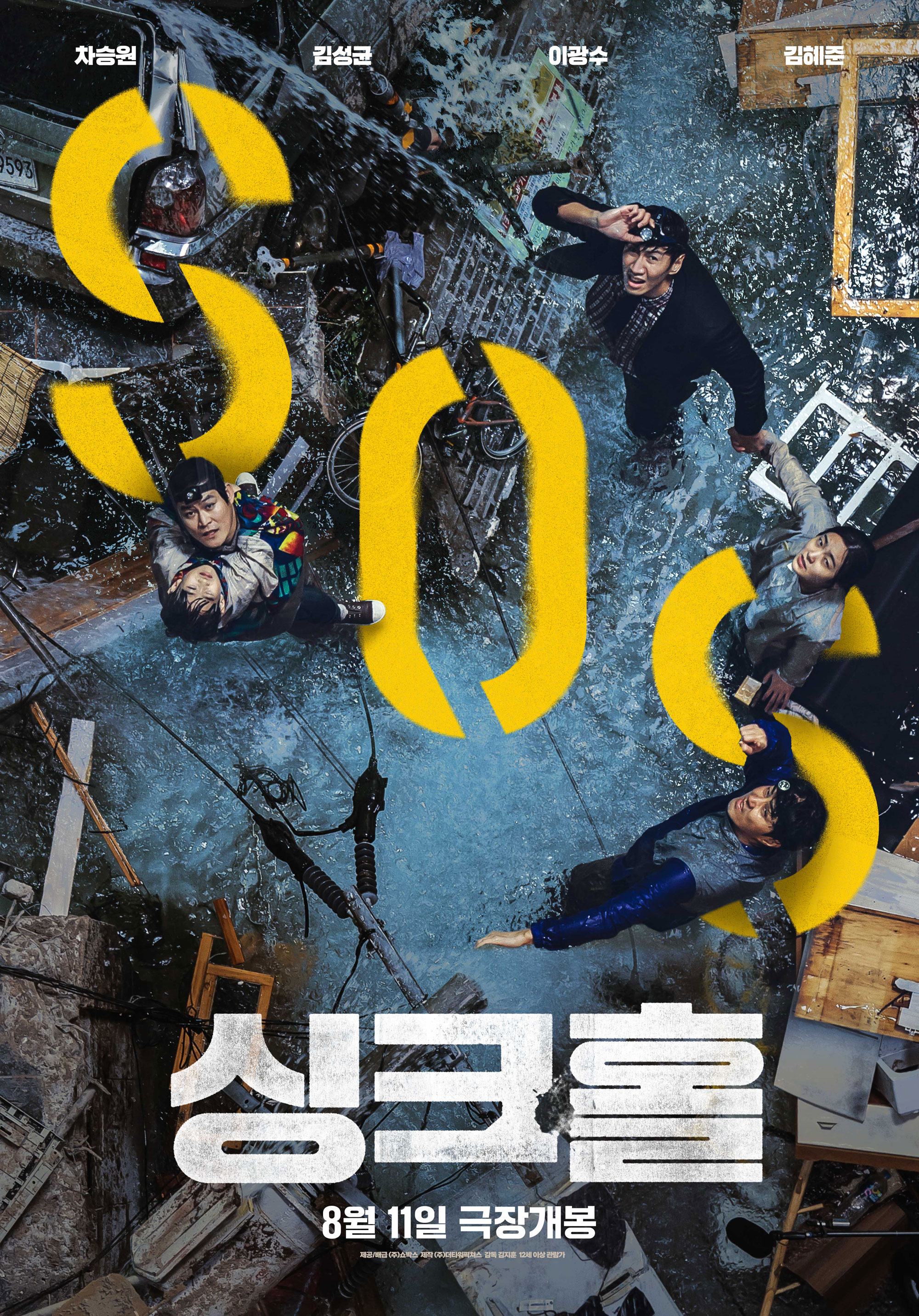
Sinkhole (싱크홀, Kim Ji-hoon, 2021)

Financial security is built on shaky ground in Kim Ji-hoon’s harrowing disaster dramedy Sinkhole (싱크홀) in which one man’s home-owning triumph quite literally crumbles beneath his feet. The latest in a recent series of movies lamenting the sometimes lax safety culture of the Korean construction industry, Sinkhole is also a crushing indictment of a society ruled by house prices in which social status is largely defined by the owning of property while the young in particular struggle to climb out of a deep well of societal despair. 

As the film opens, the Park family is about to move in to their new flat, the first they’ve ever owned albeit with a frighteningly large mortgage, in the middle of a seasonal downpour. Only when they arrive, they discover the movers haven’t even started unloading because their apparently irresponsible neighbour Man-su (Cha Seung-won) has inconsiderately parked his car in front of the entrance and isn’t answering his phone. Patriarch Dong-won (Kim Sung-kyun) ends up in an awkward confrontation with the abrasive apartment dweller which is inconvenient because Man-su apparently works in just about every business in the area which means he continues to run into him just about everywhere he goes. 

Anyway, that’s the the least of his problems because, having made this giant investment, Dong-won can’t help thinking there’s something wrong with his new dream home especially when his adorably polite young son Su-chan points out that his marbles roll across the floor of their own accord. Worried they may have a subsidence problem, Dong-won checks his windows open properly and records evidence of ominous cracks in the pavement outside but struggles to get the other residents to agree to maintenance checks in fear that not getting the answer they want will bring down the value of their property. 

Property prices are apparently everything. Homeownership is an unobtainable dream for many, yet Dong-won already feels insecure in his purchase especially as his colleagues seem relatively unimpressed by the fact his flat is in a recently gentrified area and comparatively modest. Bamboozled into hosting a housewarming, he’s mildly embarrassed to realise the view from his balcony is of nicer, much more expensive luxury flats just across the river which are likely to remain far out of his reach. Nevertheless, his colleague, Seung-hyun (Lee Kwang-soo) declares himself jealous in part because he’s still renting a studio flat and feels that dating let alone marriage is impossible without being in a position to get a multi-room apartment. His colleague Eun-ju (Kim Hye-jun) is in the same predicament but prefers to see it as simply being at a certain stage on the ladder.  

This dream of future security is however quite literally built on shaky ground. There are definitely problems with Dong-won’s new apartment which become increasingly severe from the tilting floors to cracked glass and interruptions with the water supply presumably caused by cost-cutting and shoddy construction practices. When the building collapses into a sinkhole, Dong-won is trapped inside with work colleagues Seung-hyun and Eun-ju along with Man-su and his teenage son Seung-tae (Nam Da-reum). Despite the inherent horror of the situation, Kim keeps the atmosphere light as the small band of survivors attempts to manage as best they can, finding an awkward solidarity while trying to attract the attention of the emergency services and eventually making a daring escape using whatever tools are available to them. 

Even so, as much as the small band of almost strangers bond thanks to their desperate circumstances, there is an uncomfortable conservatism at play especially in the film’s treatment of a working class single mother and her son living in an apartment on the floor below Dong-won’s. That aside, Sinkhole offers a fierce criticism of an increasingly consumerist society in which house prices are all anyone talks about and homeownership is the only badge of social success. 11 years of patient sacrifice is swallowed in an instant, sucked into an abyss of corporate malfeasance, while Dong-won is left to climb out of the hole he’s in on his own. It’s small wonder that some of the survivors decide to drop out of the system altogether, ditching the idea of rooted homeownership for nomadic freedom in buying a small caravan rather than participate in the property market or climb the corporate ladder. “Don’t be happy in 10 years, be happy today!” they enthusiastically chant. The entire society is, it seems, sitting on a sinkhole which might give any minute, what’s the point in investing in a future which could disappear from beneath your feet without reason or warning? 


Sinkhole screened as part of this year’s New York Asian Film Festival.

International trailer (English subtitles)

My Sorry Life (愛のくだらない, Kozue Nomoto, 2020)

A dejected, self-involved TV producer is forced into a moment of introspection when dealing with relationship breakdown and career setback in Kozue Nomoto’s ironic character study My Sorry Life (愛のくだらない, Ai no Kudaranai). Examining a number of social issues from women in the workplace to attitudes to LGBTQ+ people in contemporary Japan, Nomoto’s unflinching drama never lets its abrasive heroine off the hook even as she begins to realise that her own less than admirable behaviour has contributed to her present sense of despair and impossibility. 

Kei (Maki Fujiwara) has been in a relationship with former comedian Yoshi (Akiyoshi Okayasu) for the last five years, but it’s clear that she is beginning to tire of him. The couple are supposedly trying for a baby, but Kei has been taking contraceptive medicine behind Yoshi’s back while complaining that she doesn’t understand why he insists on getting pregnant before getting married when he hasn’t even met her parents. At work meanwhile she’s beginning to feel left behind, secretly jealous when a slightly younger female colleague reveals she’s been promoted to become the lead producer on a variety show and a little resentful when her idea for a programme focusing on the lives of ordinary people as opposed to celebrities is turned down by her bosses. The idea does however bring her to the attention of indie exec Kinjo (Takuma Nagao) who wants to bring her on board to produce a web series he’s about to launch along the same lines. And then, Yoshi drops the bombshell that he thinks he’s pregnant which is, to say the least, unexpected. 

Yoshi’s surprise announcement signals in a sense a reversal of traditional gender roles within their relationship with the man the nester and woman reluctant commitmentphobe. Kei is also the main financial provider, but on some level both resents and looks down on Yoshi for his lack of conventional masculinity having given up his comedy career to work part-time in a supermarket, obsessing over discount produce like the pettiest of housewives but often indulging in false economies such as reduced price yet still extravagant sake. Strangely, Kei goes along with Yoshi’s delusion taking him to a fertility clinic where she assumes they’ll set him straight but thereafter begins staying with a friend who ironically has an infant child and may be experiencing some difficulties in her marriage to which Kei remains entirely oblivious. 

Despite her journalistic desire to witness everyday stories, Kei is often blind to those around her never stopping to wonder if Yoshi is trying to tell her something through his bizarre pregnancy delusion or if her friend might need someone to talk to. She does something similar on spotting the office courier (Yukino Murakami) whom many of the ladies have a crush on using the ladies’ bathroom. Assuming the delivery guy is a lesbian she asks him about coming on the webshow, becoming even more excited when he explains that he’s a transman after inviting Kei to an LGBTQ+ friendly bar where he works part-time. Kei doesn’t realise that her throwaway comment that “that sort of thing is popular now” hurts Shiori’s feelings and leaves him feeling exploited as much as he would like to appear on the programme to raise awareness about LGBTQ+ issues. 

For her part, Kei is obviously not homophobic but does undoubtedly treat Shiori and his friends with a degree of exoticism, declaring that she’s never met anyone like them before while staring wide eyed in wonder as if these concepts are entirely new to her. Kinjo, the producer of the web series, is squeamish when Kei raises the idea, introducing her to a male scriptwriter who obviously already has his own concepts in mind, rudely ignoring Kei’s input while dismissively allowing his drink to drip on her proposal. The studio turn the idea down on the grounds that LGBTQ+ topics are “inappropriate” because there may be children watching and parents won’t want to explain words like “gay” or “lesbian” to their kids. Kei is rightly outraged, but she’s also a hypocrite because her intentions were essentially exploitative and self-interested. She wasn’t interested in furthering LGBTQ+ rights, she just wanted to chase ratings. 

Kinjo dresses up his personal distaste as a dictate from above but it’s clear that he doesn’t really value Kei’s input and continues to treat her poorly for the entirety of the project, blaming her for everything that goes wrong and expecting her to fix it on her own. There’s even an awful moment when Kei’s friend Tsubaki (Sayaka Hashimoto) shows up with her baby and one suspects they may be about to rope her in as a replacement guest, but the result is even worse as Kinjo stares into the pushchair and then throws the pair out while embarrassing Kei in the process. 

“Being busy’s no excuse for being unreliable” Tsubaki sympathetically tells her though it takes a few more setbacks before Kei begins to realise that she’s been unfair and to be honest generally unpleasant to those those around her. Feeling inferior, she makes a point of bumping into an elderly male janitor, treating him with contempt even when he stops to try and help her after she collapses in the office. Only through an ironic moment of emotional honesty which allows her to come to an understanding of her relationships does Kei begin to piece things together, reflect on her own mistakes and anxieties, and realise what it is she really wants. A contemplative reconsideration of accepted gender norms, Nomoto’s gently humorous drama never lets its heroine off the hook but does allow her to find new direction if only through confronting herself and the world in which she lives. 


My Sorry Life streams in the US until Sept. 2 as part of this year’s Japan Cuts.

Original trailer (English subtitles)
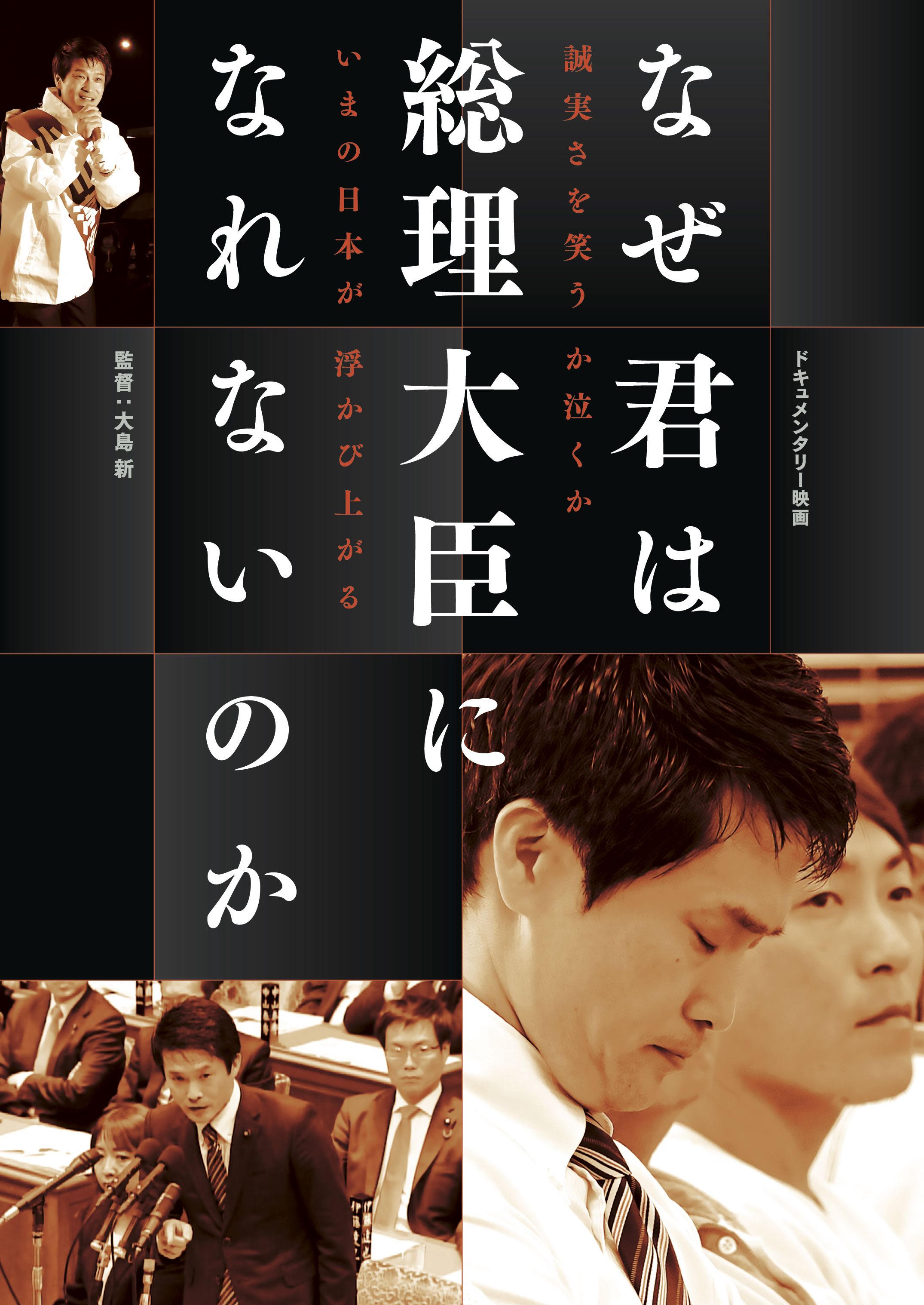
Why You Can’t Be Prime Minister (なぜ君は総理大臣になれないのか, Arata Oshima, 2020)

When Shinzo Abe stepped down in September 2020 citing a recurrence of the chronic illness which had caused him to resign from the same position in 2007 he did so as Japan’s longest serving prime minster having held the post since 2012. The centre-right Liberal Democratic Party has rarely been out of power since its foundation in 1955 though the opposition Democratic Party of Japan did achieve a minor breakthrough in the 2009 election only to lose out again in 2012, its reputation tarnished by a perception that it had not done enough during the 2011 earthquake and tsunami crisis. 

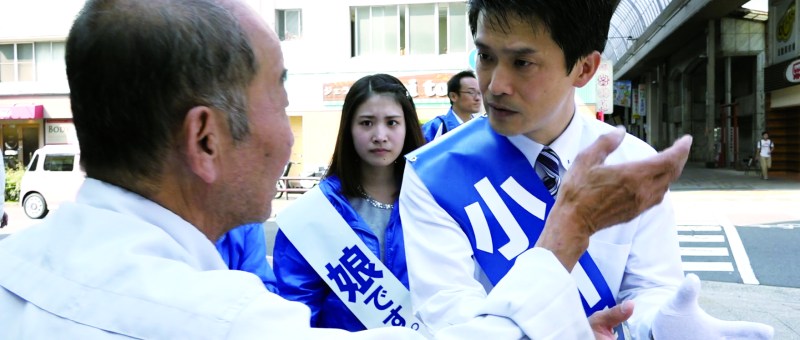
This is the background which informs Arata Oshima’s probing documentary Why You Can’t Be Prime Minster (なぜ君は総理大臣になれないのか, Naze Kimi wa Soridaijin ni Narenai no ka) which follows idealistic politician Junya Ogawa over 17 years from his beginnings as a 32-year-old former bureaucrat standing on a platform of integrity in politics, to a no less idealistic yet perhaps weary middle-aged man now sitting as an “independent” representative. Oshima perhaps partly answers the central question in a lengthy series of opening titles attempting to explain Japan’s rather complicated electoral system which operates both first past the post and proportional representation components. Although mitigated by the additional proportional representation list seats, just as in the UK Japan’s political system remains biased towards the centre-right by virtue of the fact that the leftwing vote is split between a number of different parties. As Oshima also points out, Ogawa’s rival for a first past the post seat is a dynastic candidate whose family is prominent in the local area. 

The other problem, if you want to call it that, is Ogawa’s essential personality and (near) unshakeable idealism. He stands on a platform of integrity in politics in which politicians should be accountable to the people they serve believing that the government has become overly complacent and forgotten about the lives of everyday citizens, the Abe regime famously focussing on their key concerns such as constitutional reform and the military. As such he watches as his more ruthless colleagues surge ahead of him, local rival Tamaki always managing to secure a first past the post seat by playing the political game while he scrapes through on the reserve list. Yet later he makes a fatal mistake, allowing himself to be persuaded to join Yuriko Koike’s Party of Hope after the proposed merger with the DP during the 2017 election. Current governor of Tokyo, Koike is a prominent figure on the conservative scene and member of the ultra-nationalist Nippon Kaigi. It’s not surprising that many of Ogawa’s supporters felt disappointed and betrayed on his decision to follow his mentor Maehara, on the right of the DP, and join the new party which could not credibly claim to reflect the values he’d hitherto espoused while even those accepting his logic that he was simply lending his voice to a unified anti-Abe coalition were put off by Koike’s duplicity in immediately walking back on earlier promises by announcing she would not accept all DP members into the Party of Hope.

“Your face is pretty but your heart is black” is just one of the many comments he receives from disappointed voters while out canvassing, another actively distancing herself from him before angrily remarking that he should have joined the CDP, a rival leftwing party set up by a former DP member Edano which promised to accept anyone who wanted to join. Yet the problem might not be so much the party as Ogawa’s inner conflict, wrestling with himself that he should have stood as an independent even if acknowledging he would have had a much harder time campaigning with no party backing him. His decision obviously conflicts with his pledge of integrity, a broken promise it will prove extremely hard to overcome while his secondary battle is and always will be legacy of the DP’s failure in government leaving many to assume only the LDP is qualified to govern. Following the party’s electoral defeat he does indeed sit as an independent but obviously acknowledges that he has far less influence even than he had as a less powerful list seat representative. 

Ogawa himself attributes his inability to become prime minster by an arbitrary date he’d thrown out after the 2009 opposition win engendered a false sense of hope for long lasting political change to his lack of personal ambition unwilling to do whatever it takes to climb the ladder, preferring to pursue his political goals ahead of his own position. He describes himself as an “otaku of making Japan a better place” and brands himself a centrist while advocating for socialist policies such as a welfare state modelled on that seen in Scandinavia. His parents who along with his wife and children are very much involved in his campaigning wonder if he’s too “pure” for politics, that his inability to compromise is the reason he can’t gain a foothold in the political establishment yet he refuses to give up, later telling Oshima in an otherwise unnecessary Covid-themed coda that if he didn’t think he could be PM he’d stand down right away. Politics needs men like Ogawa, Oshima seems to say, but the electorate isn’t so sure.


Why You Can’t Be Prime Minister streams in the US until Sept. 2 as part of this year’s Japan Cuts.

Original trailer (English subtitles)
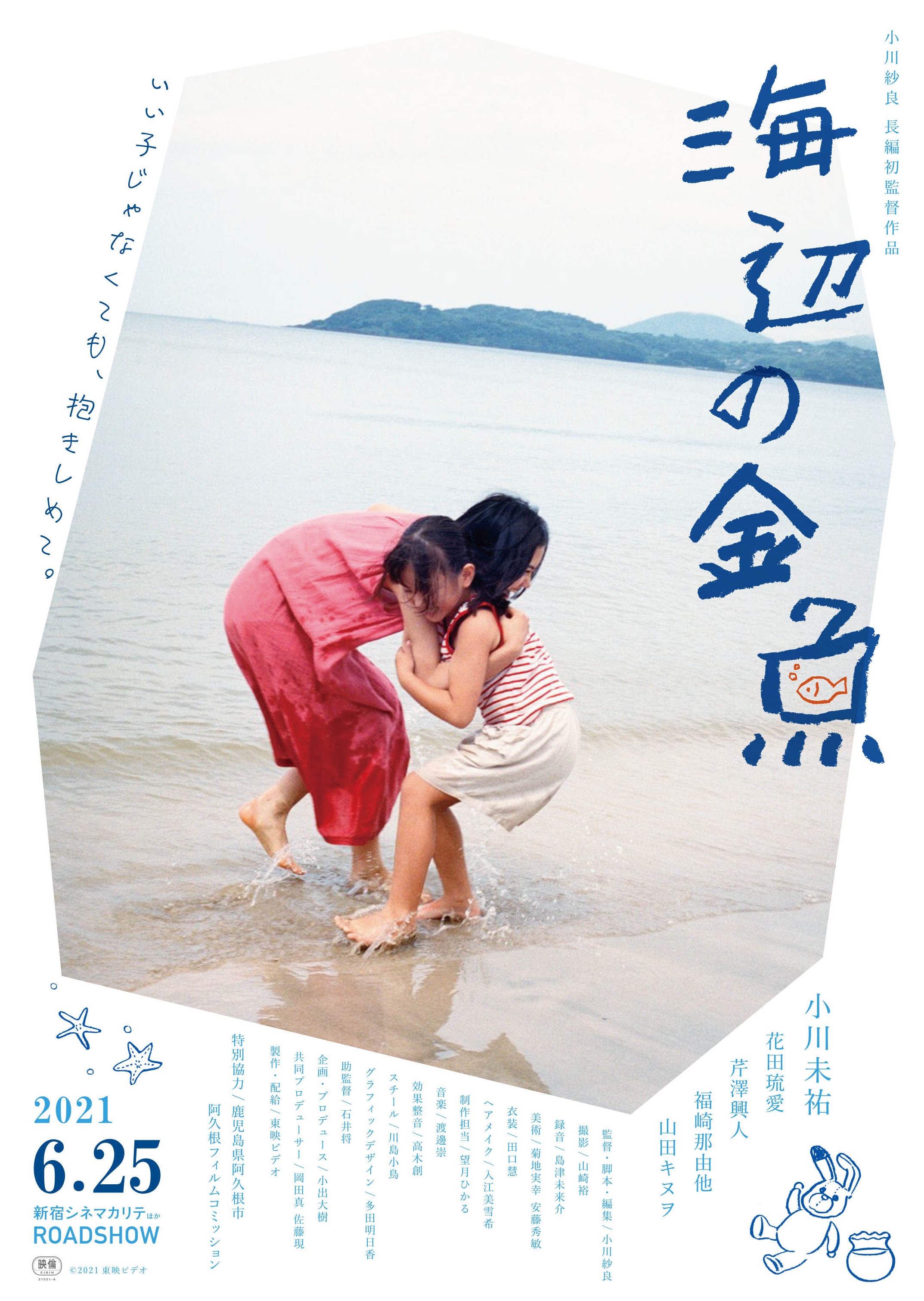
The Goldfish: Dreaming of the Sea (海辺の金魚, Sara Ogawa, 2021)

A young woman begins to come to terms with a painful maternal legacy while bonding with a neglected little girl in Sara Ogawa’s gentle coming-of-age drama, The Goldfish: Dreaming of the Sea (海辺の金魚, Umibe no Kingyo). As the title suggests, the heroine struggles with ambivalent feelings towards her future partly in the unresolved relationship with her mother but also in an unwillingness to move on without the firm anchoring of family, anxious about leaving the safety of her current life behind for the uncertainties of adulthood. 

About to turn 18, Hana (Miyu Ozawa) has been living in a children’s home for the past 10 years while her mother, Kyoko (Kinuo Yamada), has been in prison convicted of mass poisoning at a summer festival though she continues to protest her innocence. Part of Hana’s anxiety about the future stems from the fact that in order to apply for a scholarship to university she would need her mother’s signature, but she is reluctant to get back in contact with her and is even considering not going despite having studied hard with just that goal in mind. Perhaps surprisingly, Hana has kept her original surname and though seemingly living in a different area is largely shunned by her classmates, either because they know of her mother’s conviction or simply because she lives in a children’s home. 

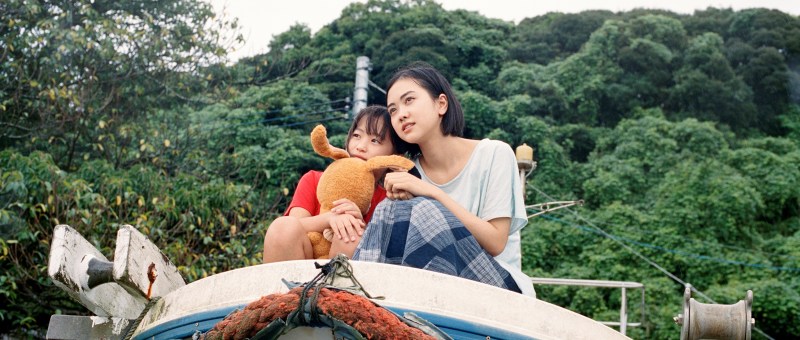
Meanwhile, Hana finds herself bonding with a withdrawn little girl, Harumi (Runa Hanada), brought into the home for unclear reasons while remaining largely silent and keeping herself separate from the other children. Perhaps recognising something of herself in her, Hana takes the young girl under her wing and attempts help her adjust to life in care but is alarmed to notice scars on the back of her neck which may suggest she has been the victim of physical abuse. Of course, Hana has no way of knowing her family circumstances or if her mother was the one was harming her but is confused by Harumi’s obvious longing to return to a place in which she has been subjected to violence. As the sympathetic man running the home, Taka (Tateto Serizawa), reminds her, however, Harumi’s mother is the only one she’s ever known so of course like all children she wants to return to a familiar environment and continues to long for maternal love even if that love is also abusive. 

In her desire to protect Harumi Hana avoids reflecting on the similarities with her own life or relationship with her mother. Though many things remain unclear about her early years, Hana perhaps resents Kyoko for burdening her with a criminal legacy and essentially abandoning her into the foster system though it has to be said the children’s home is a warm and welcoming place where the children are each loved and well cared for. Nevertheless she fixates on her mother’s parting words to “be a good girl”, in a way like Harumi thinking that her separation from her mother is somehow her fault for being “bad” and if only she were good enough her mother would come back. Looking after Harumi she finds herself saying the same thing, fearful that she’s turning into her mother and that her maternity is necessarily corrupted beyond repair.  

Like the goldfish in her fishbowl, she longs for freedom and independence but is also afraid of it. Through the gentle bond they begin to build the two young women save each other and themselves, Hana giving herself permission to fail, to not always be “good” and to live her life in the way she wants unburdened by the stigma of her mother’s crime while Harumi discovers a kind of maternal love that is positive and supportive without the threat of violence. Nevertheless, the release she chooses despite its metaphorical qualities is also potentially destructive in that goldfish are freshwater creatures unlikely to survive in the highly salinated environment of the ocean. Even so in letting go of her trauma she begins to move forward into a more certain adult world, determined to take Harumi with her in providing the care and protection her mother was unable to give her. A gentle coming-of-tale, Ogawa’s subtle, empathetic direction lends a touch of melancholy but also a lyrical, hopeful sensibility as the young women discover in each other the means to overcome their trauma. 


The Goldfish: Dreaming of the Sea streams in the US until Sept. 2 as part of this year’s Japan Cuts.

Original trailer (English subtitles)
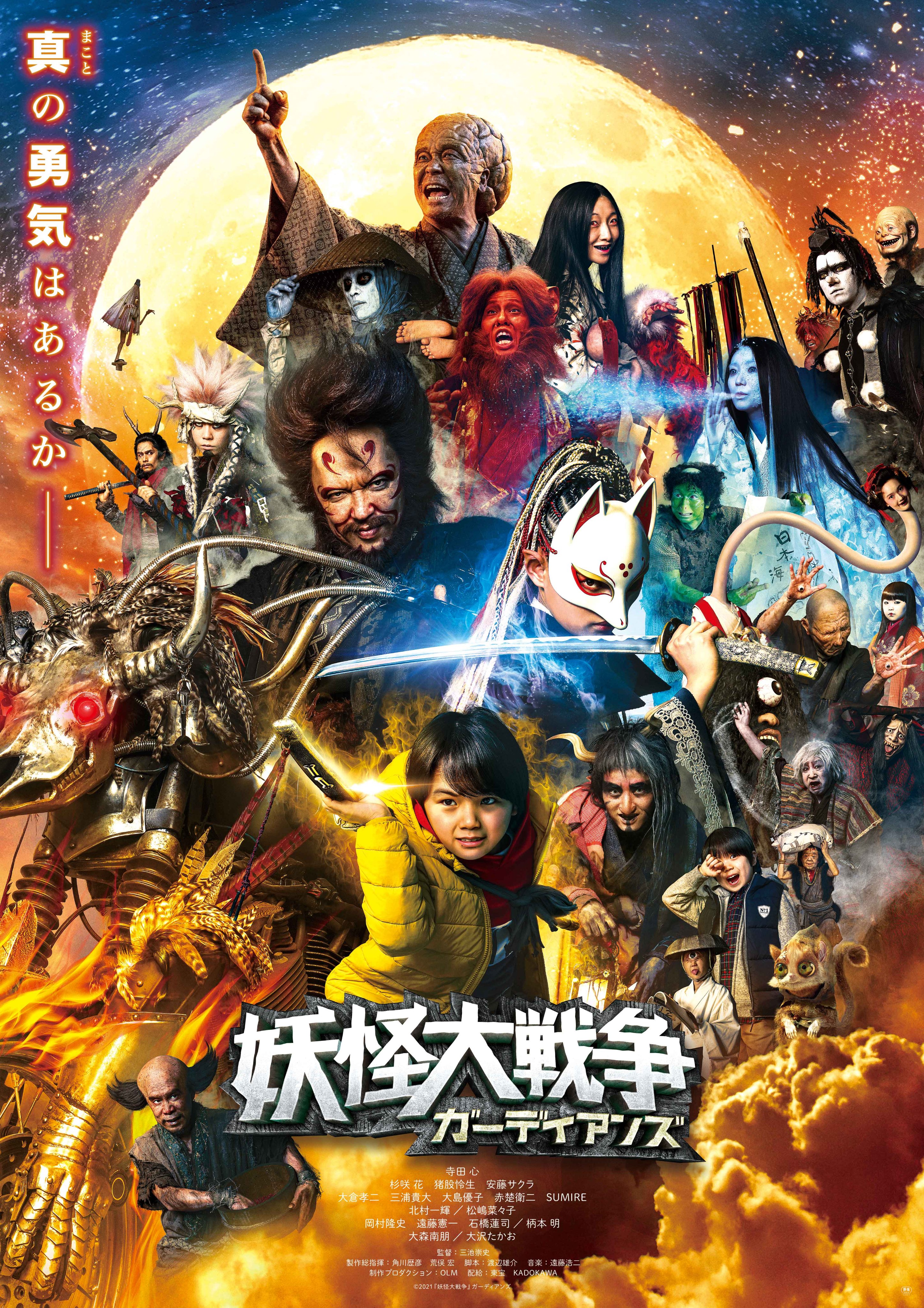
The Great Yokai War: Guardians (妖怪大戦争 ガーディアンズ, Takashi Miike, 2021)

An anxious little boy struggling with his growing responsibility finds himself charged with saving the world in Takashi Miike’s return to the realms of folklore, Great Yokai War: Guardians (妖怪大戦争 ガーディアンズ, Yokai Daisenso Guardians). Not quite a sequel to the 2005 supernatural drama, Guardians once stars a child hero trying to come to terms with his place in the world, but this time takes on another dimension as the pint-sized hero determines to embrace his “humanity” through the very qualities the yokai fear are largely absent among those who “kill and cheat their own kind”. 

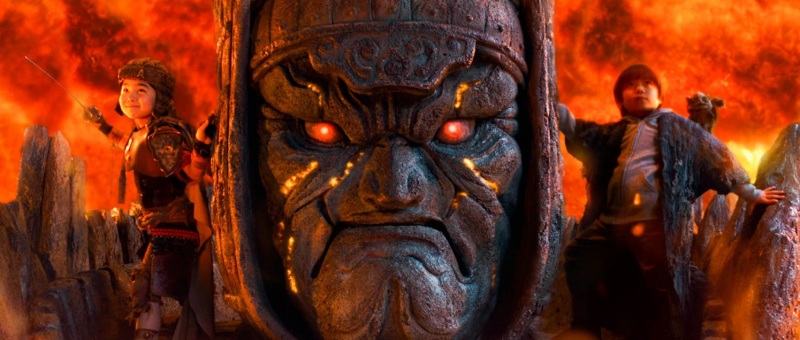
Young Kei (Kokoro Terada) has recently lost his father and as the oldest child has gained an additional responsibility especially towards his younger brother, Dai (Rei Inomata). The other children meanwhile think of him as a scaredy-cat, a small gang of them exploring a disused shrine from which they each pick a fortune from a small box, Kei’s being an ominous red sheet otherwise blank. While Kei had hesitated to enter, Dai did as he was told and waited outside but longed to be included, excited rather than frightened by the creepy old buildings. Later that night, Kei is woken up by a scary yokai leaning over him in bed, covering up one eye so he can see him. Running away in fright the boy finds himself in another world, surrounded by dozens more scary yokai who tell him he’s the descendent of a legendary Edo-era yokai hunter and it’s time for him to accept his destiny by helping the yokai avoid disaster. It just so happens that a bunch of sea creatures trapped underneath a fault line have banded together in a huge ball of resentment that is currently barreling towards Tokyo. The yokai are particularly worried that the monster which they’ve named “Yokaiju” (see what they did there?) will break the seal over the city and release a nameless evil. 

The yokai first tried asking for help among themselves at the “Yammit” or Yokai Summit recently held in Beijing at which supernatural monsters from across the world including vampires, mermaids, and even Bigfoot meet, but were roundly rebuffed. Japanese yokai rarely carry weapons, and they’ve already tried asking Yokaiju nicely not to destroy Tokyo, so they need some help. The yokai that that Kei encounters are mostly of the harmless kind like the guy who just stands around holding tofu or the one who creepily washes azuki beans at inappropriate moments, what they want Kei to do is help them wake up General Bujin, the god war, though others fear the cure may be worse than the disease. Some yokai are even of the opinion that letting Yokaiju run riot is no big deal because humans are generally awful anyway and so deserve little sympathy. 

Little Kei, however, is a counter to their argument. They constantly ask him if he really has the courage to carry his mission through, even at one point taking his brother Dai instead, while Kei struggles with himself understandably afraid of his new destiny. Back in the “real” world, he is of course entirely anxious about his responsibilities as a “big brother” now that his father’s no longer around and especially as his mother is a nurse meaning she often has to work late helping other people. He is however determined to keep his promise to look after Dai, mustering all his courage to push through the scary world of monsters to save him from being sacrificed to General Bujin. He also acts with kindness and generosity of spirit, even on being betrayed by a yokai expressing only sympathy that he’s glad the lonely monster turned out to have more friends than he thought, while also making a point of stopping to save even the bad demons who were trying to kill him after they’re trapped by rockfall because “you can’t just leave a suffering person”. 

Kei’s solution is, ultimately, love not war. Faced with the giant resentment monster he chooses to soothe its pain, teaching the yokai a thing or two about themselves as they rediscover their ancient capacity for compassion and forgiveness. It’s the brothers’ love for each other which eventually saves the world, leading even the most cynical of yokai to hope that the spirit of kindness in this generation might be enough to bring about a human revolution. A good old-fashioned family adventure, Guardians’ charmingly grotesque production design and childlike view of the twilight world of spirits and demons carries genuine magic while its wholesome messages of kindness, acceptance, and personal responsibility can’t help but warm the hardest of hearts. 


The Great Yokai War: Guardians screens on Aug. 28 and Sept. 1 as part of this year’s Japan Cuts.

Original trailer (no subtitles)

Wife of a Spy (スパイの妻, Kiyoshi Kurosawa, 2020)

“If the times have changed you, couldn’t you have changed the times?” the spy’s wife not unreasonably asks of a man she knew to be good and kind yet has done terrible things, perhaps, as has she, out of a misplaced love. Travelling from death is eternal loneliness to love is our salvation, Kiyoshi Kurosawa’s Wife of a Spy (スパイの妻, Spy no Tsuma), co-scripted by Ryusuke Hamaguchi and Tadashi Nohara, picks up a thread from Before We Vanish TV companion Yocho (Foreboding) to suggest that love can in fact be as destructive as hate in its all encompassing single-mindedness as an ordinary housewife uninterested in politics is caught between her progressive, compassionate and aristocratic husband and a childhood friend with an unrequited crush who has since become an ardent militarist. 

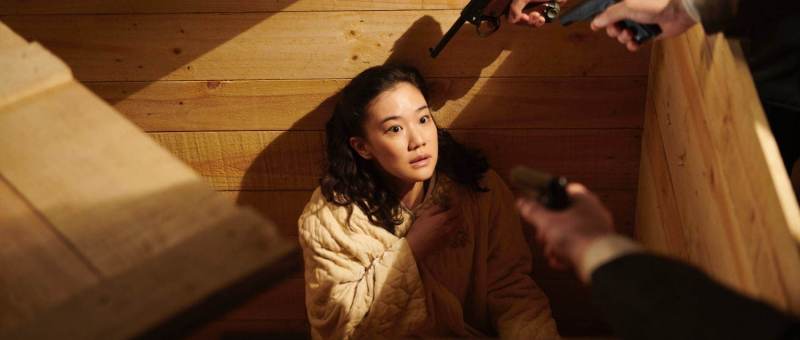
Set in Kobe in 1940, the film opens with a portly British textile merchant, Drummond, dragged from a silk inspection centre by the military police on the suspicion of being a foreign spy. This is appears not to be the case, but as in much of the narrative little is as it seems. The British merchant is a friend and associate of Yusaku Fukuhara (Issey Takahashi), the chairman of a family-owned textile company whose main objection to the idea that Drummond is a spy seems to be that a man of such copious proportions hardly fits his mental image of the word. Yusaku is nevertheless questioned by the local squad leader, Taiji (Masahiro Higashide), who happens to be a childhood friend of his wife Satoko (Yu Aoi), and later risks implication by paying Drummond’s bail. Satoko approves of this decision even if it may be politically unwise, confessing that she thought it “heartless” that Yusaku was messing about making a silent movie in which she starred as a femme fatale spy eventually killed by her lover/rival while his friend was in custody. “You’re always looking so far ahead of me, I feel like a fool” she reflects though as we’ll see she’ll soon be taking him on at his own game, the couple dancing around each other in a deadly waltz of love and betrayal. 

When Yusaku declares that he’s planning to visit Manchuria, partly for adventure and partly on behalf of a doctor friend, Satoko’s main concern is his impending absence though his return brings her little peace. After a woman he and his nephew Fumio (Ryota Bando) had apparently befriended and then brought home is found dead, Satoko makes a dark discovery driven at once by jealousy in Taiji’s vague hints that Yusaku may have been romantically involved with the dead woman, and resentment in realising he is keeping something from her. That something turns out to be his intention to expose the atrocities he witnessed in Manchuria committed by doctors connected to the Kwantung Army. 

Yusaku’s motives for this are rather naive, believing that it will bring the Americans into the war and hasten a Japanese defeat bringing an end to the militarist folly. Nevertheless, the discovery forces the couple into an ideological confrontation, Yusaku insisting that he is a “cosmopolitan” whose allegiance lies in “universal justice” rather to than any nation. To him happiness founded on injustice is an impossibility, while Satoko declares herself able to unsee the inconvenient truth in order to preserve the status quo reasonably pointing out that Yusaku’s “justice” will necessarily result in the deaths of thousands of innocent people. It’s at this point, however, that the tables turn, Satoko setting in motion a series of machinations which at first appear naive and counterproductive but are in fact infinitely ruthless. 

“I’m not afraid of capture or death, I’m only afraid of being separated from you” Satoko insists, willing to burn the world to save her love if also later moved on “seeing” for herself the reality of Japanese abuses in Manchuria. Taking on the role she had played in their silent movie, Satoko becomes the spy revelling in her ruthlessness yet this spy game revolves around the ability to correctly read the emotional lives of others. Having been “warned” by the austere Taiji that she and her husband were too Westernised for the times with their expensive foreign whiskey and international fashions, Satoko puts on kimono in order to curry favour with him hoping to leverage his unrequited love for her. Yusaku meanwhile perhaps banks on something similar, each of them ironically manipulating the apparently conflicted militarist in the conviction that his love is pure and he will therefore continue to protect Satoko, and by extension her husband, as a means of protecting himself. 

Early on, Taiji had confessed to Yusaku that he disliked arresting people which may have been a thinly veiled threat, but also bears out Satoko’s conviction that he is at heart a gentle person though we’ve not long seen him rip out one man’s fingernails in order to present them to another as a warning. Unrequited love has perhaps thrown him into the arms of militarist austerity, hardening his heart while his ardour is sublimated into a misplaced love of country that allows him to justify such heinous acts of inhumanity.  “Hard choices must be made to achieve greet deeds” Satoko herself had said in order to excuse her own act of injustice in sacrificing another man on Yusaku’s behalf, only to later face the same fate in an ironic turn of events either vengeful betrayal or protective act of love depending on how you read the emotional intentions behind them. 

Just as in the silent movie, incongruously scored with a poignant Japanese cover of Jerome Kern & Oscar Hammerstein II’s Make Believe, everyone is playing a role, engaging in an act of deception if only self-directed, yet their act perhaps exposes the truth they were attempting to hide, the spy’s wife becoming the spy but beaten at her own game unable to see the entirety of the board. Commissioned as an 8K feature for a Japanese TV channel, the incongruity of the hyperreal digital photography deepens the sense of the uncanny in the unexpected naturalism of the period setting, a world of constant anxiety with soldiers on the streets and the feeling of being forever watched in the oppressive atmosphere of authoritarian militarism, while standing in strong contrast with the unreality presented by the films within the film both that made by the couple and the brief yet ironic inclusion of Sadao Yamanaka’s Priest of Darkness, another tale of infinite duplicities, given that the director had himself become a casualty of war on the Manchurian front two years previously. Ironically titled, Wife of a Spy situates itself in a state of permanent paranoia in which nothing and no-one is as it seems and love may in its own way be the most destructive force of all while containing within itself the only possible source of salvation no matter its veracity.  


Wife of a Spy  screens on Aug. 27 as part of this year’s Japan Cuts.

International trailer (English subtitles)
Karisome no Koi (“fleeting love”) – Chiyoko Kobayashi (1936)

Midnight (미드나이트, Kwon Oh-seung, 2021) [Fantasia 2021]

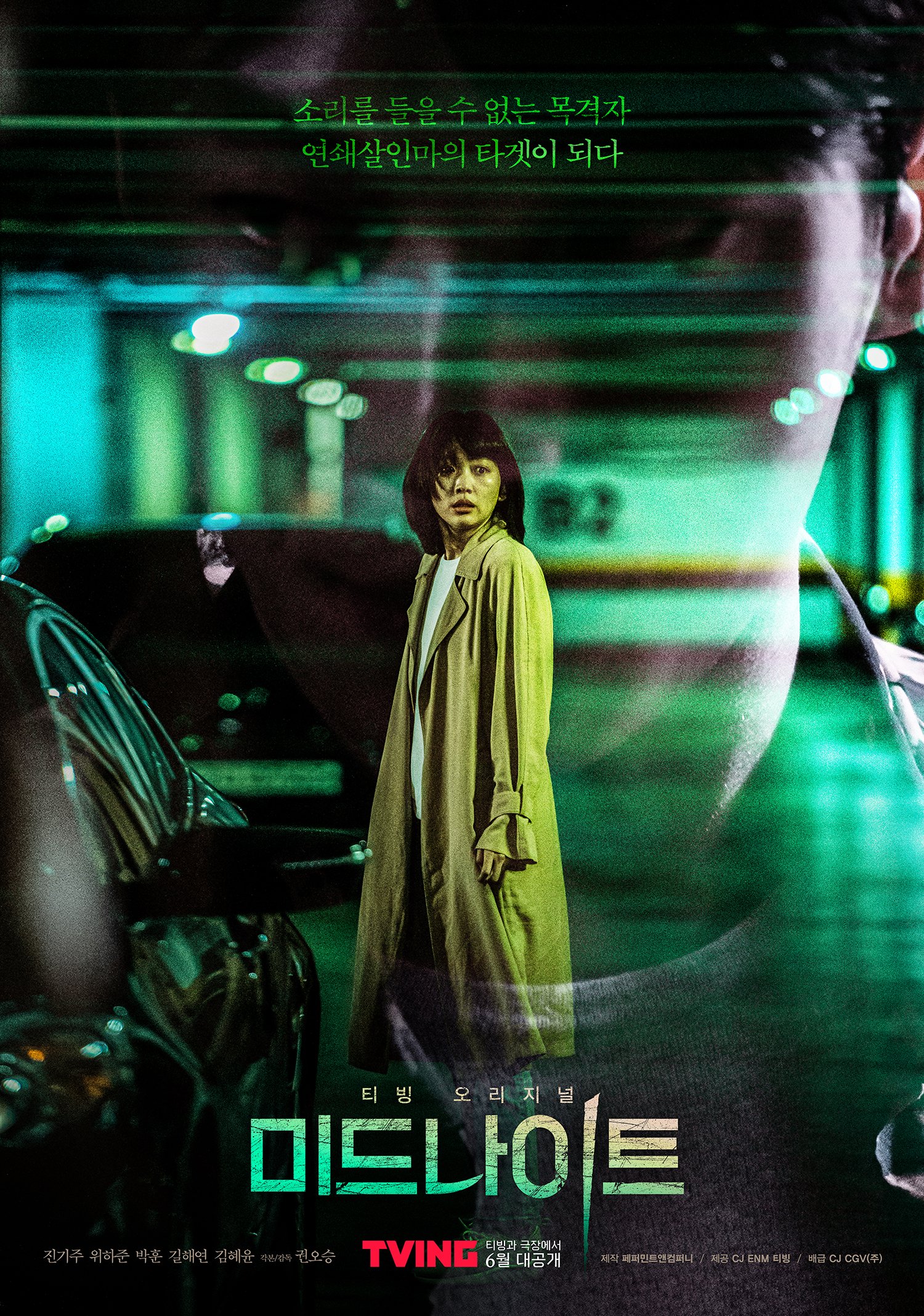
Turns out, if you want to get away with murder in South Korea all you need to do is remain polite, put on a regular business suit, and carry a fancy briefcase. Three women find themselves pursued by the walking embodiment of destructive patriarchy in Kwon Oh-seung’s extraordinarily tense serial killer thriller Midnight (미드나이트) in which a creepy night stalker exploits male privilege and societal prejudice while relentlessly pursuing his prey through the darkened streets of Seoul. 

Our heroine, Kyung-mi (Jin Ki-joo), is a deaf woman working as a customer service representative for the “Care for You” call centre catering to callers who require sign language assistance. The company, however, is not especially caring and makes little effort to include Kyung-mi in office life, leaving her feeling left out and excluded. She attempts to bring this up with her boss when some of the other women complain about being forced to attend an after hours drinking party to entertain clients, but is greeted only with grudging acceptance. At the dinner, meanwhile, the boorish male guests make lewd comments about her appearance assuming she can’t hear them, though she can of course lipread and returns in kind by insulting them in sign language. To get over her sense of discomfort she dreams of travelling to Jeju island for a relaxing beach holiday with her mother (Gil Hae-yeon) who is also deaf. 

Across town, meanwhile, 20-something So-jung (Kim Hye-yoon) is arguing with her security guard brother Jung-tak (Park Hoon) about her outfit for an upcoming blind date. Jung-talk sets a 9pm curfew he later increases to 10 which seems at best over protective, though as it turns out he’s right to worry as not long after 10pm when So-jung is almost home she’s nabbed by vicious serial killer Do-sik (Wi Ha-joon), stabbed, and left in an alley where she manages to attract the attention of a passing Kyung-mi by throwing her white stilettos into the road. In her effort to help, Kyung-mi unwittingly becomes a target for the crazed axe murderer who continues to pursue her despite having ascertained that she cannot identify him. 

Do-sik manages to get away with his crimes by adopting the non-threatening persona of a mild-mannered office worker, swapping his medical mask, baseball cap and hoodie for a regulation issue grey suit and carrying a leather briefcase which turns out to be full of knives and other murdery equipment though of course no one is going to look inside. Ironically he tells Kyung-mi that he’s looking for his sister, trying to earn her trust by convincing her to show him where she last saw So-jung, a ruse which both echoes Jung-tak’s parallel search and his later claim that Kyung-mi is his younger sister apparently in a state of mental distress. He even goes with Kyung-mi and her mother to the police station where gets into a fight with Jung-tak who’s figured out he has his sister only for the police to mistakenly taser the angry man in a shell suit, sending the nice man in a suit on his way with a series of friendly bows and apologies. 

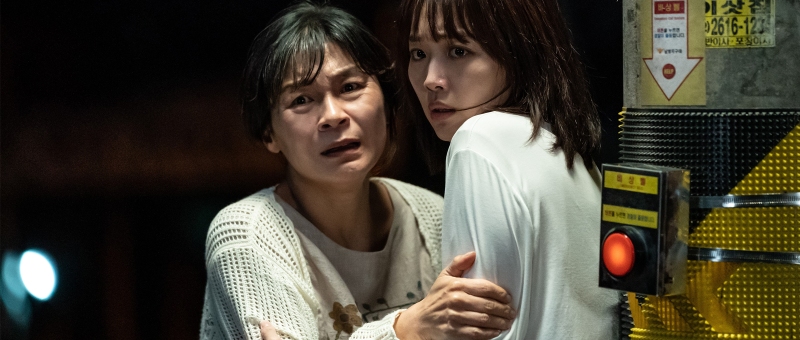
Kyung-mi and her mother meanwhile are rendered doubly vulnerable because of their deafness, unable to hear danger approaching while equally unable to communicate with impatient police officers and passersby even if they are able to silently communicate with each other in ways others can’t understand. Kyung-mi repeatedly hits a panic button on a lamppost that activates the streetlight and contacts local police, but there are no cameras, she can’t hear them and they have no idea why she isn’t speaking. Making a break for it, she ends up in downtown Seoul but to the bystanders who surround her she’s a crazy lady with a knife rather than a young woman pursued by a predatory man. Unable to explain the situation, she is even handed back to Dong-sik who claimed to be her brother by a trio of smug soldiers who find her hiding behind some bins and assume they’re helping by returning a mentally disturbed woman to her responsible adult. 

Yet big brothers make poor protectors. Jung-tak had been so concerned about his sister’s outfit, worryingly overprotective in obsessing over unreturned messages, but in the end it didn’t matter Dong-sik picked her for convenience’s sake. Even the first woman we see Dong-sik snatch was left to walk home in the dark by unchivalrous male colleagues who stole her taxi, chatting to her boyfriend about fried chicken but ultimately paying the price for (wisely) refusing to get into Dong-sik’s van. Dong-sik is only able to get away with his crimes by assuming his male privilege, playing the part of the respectable executive and caring big brother while the police, the ultimate authority figures, defer to him refusing to take Kyung-mi’s claims seriously in an echo of the baseline misogyny displayed by her clients at work. 

The only way to make them listen, she discovers, is in a public act of self harm that ironically exposes Dong-sik for what he really is. Taking place in near real time, Kwon’s extraordinarily tense cat and mouse game finds Kyung-mi desperately trying to escape the midnight city pursued by patriarchal violence and finding little support in an ableist society as she desperately tries not only to save herself but the other women similarly trapped in a labyrinth of seemingly inescapable threat. 


Midnight streamed as part of this year’s Fantasia International Film Festival.

International trailer (English subtitles)