Ballerina (발레리나, Lee Chung-hyun, 2023)

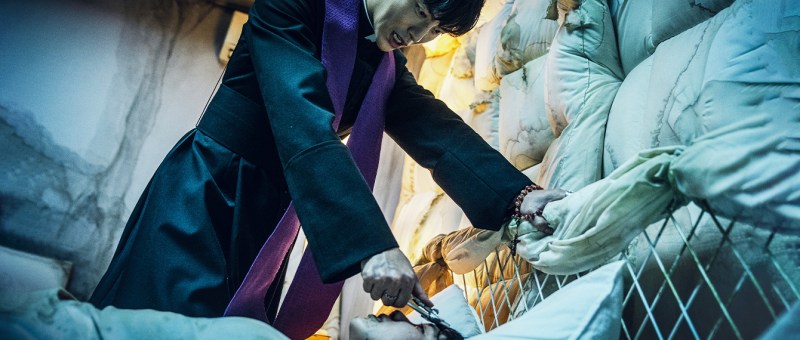
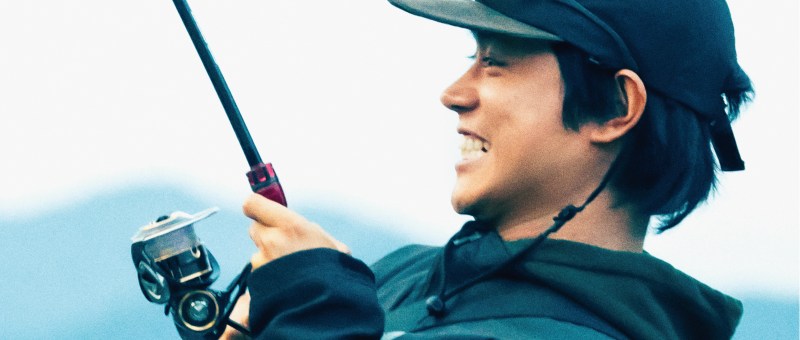
“You’ve blown things way out of proportion,” according to a man who still doesn’t think he’s done anything to deserve dying for. But as his boss told him, though they may exploit women, sell drugs, and kill people, they have rules. Lee Chung-hyun’s pulpy action thriller Ballerina (발레리나) sees a former bodyguard go after the gangster who drugged and raped her friend with the consequence that she later took her own life.

In recent years there have been a series of real life scandals involving women being drugged in nightclubs and sexually assaulted with videos either uploaded to the internet or used as leverage for blackmail often to force women to participate in sex work. Ballerina Min-hee (Park Yu-rim), seemingly the only friend of bodyguard Ok-ju (Jeon Jong-seo), was raped by drug dealer Choi (Kim Ji-hoon) and thereafter quite literally robbed of the ability to dance. Preoccupied with her trauma, she missteps and injures herself ruining her dance career and leaving her with nothing. There is something quite poignant in the fact Choi sells the drugs in the small, fish-shaped bottles that usually house soy sauce in pre-packed sushi given that Min-hee later says that she wants to come back as a fish in her next life and live in the ultimate freedom of the sea. Dance to her seemed to be a means of finding a similar kind of free-floating freedom, but the trauma of Choi’s assault has taken that from her.

Meanwhile, the loss of Min-hee has robbed Ok-ju of something similar. On first re-connecting with her former high school friend, Ok-ju says she worked as some kind of corporate bodyguard but the organisation is clearly larger than that and involved with some additionally shady stuff that suggests her job may actually have involved some sort of spy and assassin work. In any case, it had left her feeling empty as if she were slowly dying inside. Only on meeting Min-hee does she finally start to feel alive again and has apparently left the organisation she was working for in order to live a more fulfilling life though she may not actually have achieved that just yet. There is nothing really to suggest there is anything more between the two women than friendship, though the intensity of Ok-ju’s feelings suggests there might have been.

Even so, there’s more to Ok-ju’s mission than simple revenge as she finds herself taking down the entire organisation in order to make her way towards Choi. She’s aided by another young woman dressed as a high school student (Shin Se-hwi) who looks to her for salvation, explaining that she has a plan, she’s just been waiting for someone like Ok-ju to show up and help her while the former handler Ok-ju turns to in search of support is also a woman making her mission one of female solidarity against ingrained societal misogyny. “You thought we were easy prey,” Ok-ju challenges Choi making it clear that he made a huge mistake though he continues to taunt her about Min-hee and deflect his responsibility insisting that he hasn’t done anything to warrant this kind of treatment because the abuse and trafficking of women is not something he regards as a big deal.

Ok-ju and the girl obviously feel differently. There’s something very satisfying about the way Ok-ju methodically cuts through a host of bad guys without granting them any kind of authority over her. The action sequences are often urgent and frenetic while showcasing Ok-ju’s skills and the lack of them in the male henchmen, but there’s also a fair bit of humour such as her using tins of pineapple to block knife attacks in the convenience store opener. The film indeed has its share of quirkiness such as the geriatric couple who arrive to supply Ok-ju with weapons but mainly have buckets full of revolvers that look like something out of the wild west before grabbing a flamethrower from the back, while the aesthetic also has a stylish retro feel with its purple and yellow colour palette. Pulpy in the extreme, the film’s stripped-back quality provides little background information and keeps dialogue to a minimum but more than makes up for it in its visual language and often beautiful cinematography.


Trailer (English subtitles)
A Muse Never Drowns (ミューズは溺れない, Nozomi Asao, 2022)

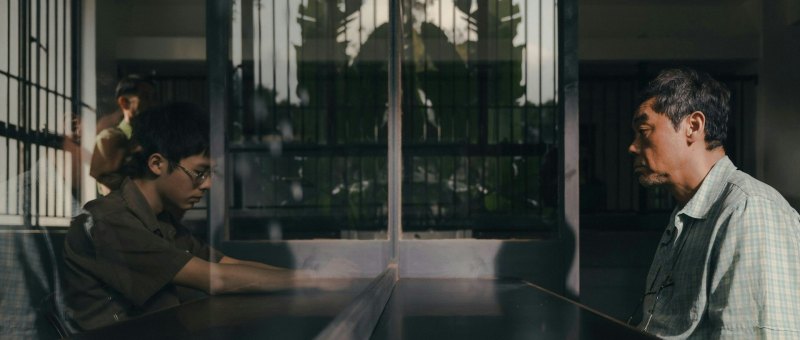
A teenage girl flounders amid a series of changes in her life while questioning her future and identity in Nozomi Asao’s empathetic coming-of-age film, A Muse Never Drowns (ミューズは溺れない, Muse wa Oborenai). Saku (Miku Uehara) is however drowning, a fact brought home to her by the relentlessly aloof Saibara (Mimori Wakasugi) who captures a sense of her panic and despair in a painting of her falling into the local harbour. Yet through their rather tumultuous friendship the pair eventually discover that they aren’t so different after all.

Saibara’s perfectly executed painting destabilises Saku on more than only level, firstly in her discomfort in having been seen and secondly in the insecurity it causes her in her own talent as an artist. Saku had wanted to go to art college, but a teacher harshly corrects her drawing style as if trying to push her towards a more authentic form of expression that’s less worried about getting it right than capturing a sense of what she sees and feels. Lacking confidence that she’ll get in, Saku is thinking about quitting the club in embarrassment but is persuaded to try making something else for the cultural festival while simultaneously receiving an unexpected entreaty from Saibara who wants her to pose for her next painting.

Most of the other students seem to resent Saibara for what they see as her superiority complex, believing she is aloof because she thinks she’s better than them. Because of her blunt manner, Saku too had thought her to be ultra confident and is surprised to realise that Saibara too is filled with doubts and anxieties even if she makes a point of pushing through them. Echoing her teacher’s words, Saibara admits that the lines don’t always come out the way she wants them either but all she can do is try to connect the dots. The reason for her aloofness is a vicious circle of deep-seated loneliness that convinces her she will ultimately be rejected, mirroring Saku’s conviction that she is a “boring” person, and therefore it is easier to remain alone from the start. 

Part of Saibara’s self-rejection is borne of internalised homophobia uncertain if others will accept her sexuality while harbouring a crush on Saku she doesn’t know how to articulate other than through her art while Saku too struggles with her feelings and is confused by the attention she receives from Saibara. Saku’s feelings of insecurity are informed by a sense of embarrassment that she has never experienced a romantic crush like her friend Emi (Kokoro Morita) who likes baseball player Endo despite knowing that likes he Saku, though Emi has also picked up on the way she looks at Saibara and is drawing conclusions about her lack interest in boys. Emi tells her that she accepts her whatever her sexuality is, but is hurt and confused when Saku remains silent and declines the opportunity to open up to her though perhaps partly because she does not really know the answer herself. 

Other than Saibara, Saku is the only one who hasn’t yet returned her careers survey still uncertain of the future direction of her life. Her father has recently remarried and he and her step mother Satomi (So Hirosawa) are expecting a baby all of which has Saku feeling somewhat adrift, displaced within her family and soon to lose her home which has been bought out for a new development project meaning they’ll soon be moving to a new house shorn of the memories of her birth mother and primed for her father’s new start. 

Yet through all her experiences, slowly bonding with Saibara and repairing her friendship with Emi, Saku begins to discover a path towards a more authentic art born of the desire to take things apart and put them back together again while quite literally feeling her way forward with her hands. Coming to terms with her new family circumstances, she builds herself a boat and is no longer drowning but drawing strength from her new found friendships with a renowned sense of possibility for the future while her friends do much the same in the knowledge that they are all scared and uncertain but doing their best to join the dots towards a happier future. 


Trailer (English subtitles)
Wonderwall: The Movie (ワンダーウォール 劇場版, Yuki Maeda, 2020)

It’s funny, in a way, that young people are often the ones fighting to preserve the old while those in middle-age and beyond are largely keen to bulldoze the past for future gain. Yuki Maeda’s campus drama Wonderwall (ワンダーウォール 劇場版, Wonderwall: Gekijoban) sees a collection of students take a stand against the bureaucratic capitalism of their university in their attempt to save a much loved dorm but largely finding their efforts frustrated by an implacable hierarchy. 

The Konoe Dorm at Kyoto University was built in 1913, which is to say the beginning of the Taisho era in which arts and culture flourished in a rapidly modernising and international nation. As one of the students tells us, Konoe is run not by the faculty but the students themselves and operates like a commune in which there is no hierarchy, all are equal and equally responsible. They have regular “meetings” about various domestic problems such as refuse collection which can go on for hours because all decisions must be unanimous while they also operate gender neutral bathrooms so that everyone really can be equal and free to be themselves. It’s impossible not to see the university’s attempts to destroy it as an attempt on the students’ autonomy and an attempt to impose order on their bohemian existence. 

At more than one point, a student remembers walking past the alley that leads to the dorm in the dark and seeing the light glowing from its doors as if beckoning them in. In this space, the students inherit what has been passed down to them while teaching each other and the next generation what they know including the negotiation skills they’ve been using to argue their case in their ongoing battle with the faculty. The film’s title refers to a plastic screen that was placed in the student affairs office separating the students from the staff so that they could no longer meet them on their own terms. The narrator likens the wall to the one that fell in Berlin in 1989 and laments that back then we knocked walls down but now we only throw them up. The students argue that the dorm is well built and of architectural interest while it would otherwise be possible to renovate and bring it up to current earthquake codes if only the university would agree. Tragically, a sympathetic teacher who is forced to agree with them is then compelled to reverse his decision and shockingly dies not long after presumably from the stress of the situation along with his own inner conflict regarding the treatment of the students. 

Mifune (Satoshi Nakazaki), the leader of the protests, eventually becomes disheartened. They managed to oust the old battleaxe from the front desk and assumed they could take a step forward to the next boss, but she was merely replaced and by a pretty young woman to boot leaving the guys feeling like they’ll never win. It transpires that the university wants the land the dorm sits on to build a high rise along with additional medical and engineering labs as these are the subjects that bring in funding which is otherwise thin on the ground from the current government. Yet as a visitor says, if prosperity made you happy there wouldn’t be so many young people who feel they have no option other than to take their own lives. If so many people are fighting for its survival, the dorm must have something essential for human happiness. Mifune comes to describe his feeling for the building as something like love in the warmth with which it inspires him.

Quite poignantly, Maeda ends on a series of title cards revealing that the university now refuses to speak to the student body at all and has in fact silenced them, even going so far as to sue 15 tenants who refused the order to move out. Another of the students wonders if the dorm was a victim of its own success, that their “utopian” thinking left them unable to unite for a common goal and perhaps it would have been better if they’d turned to the dark side and gone in all guns blazing in a show of violent defiance. The action shifts to a pair of musical set pieces in which the students and well-wishers play the “Wonderwall” song as a makeshift orchestra breathing life into the rapidly dilapidating building’s walls while continuing to fight for the survival not only of the Konoe Dorm but everything it represents in the freedom and community the students fear will soon disappear from the their lives. 


Original trailer (English subtitles)

The Foggy Mountain (Đỉnh Mù Sương, Phan Anh & Ken Dinh, 2020)

A former prize fighter’s quest for revenge takes him deep into the mountains in Phan Anh and Ken Dinh’s martial arts adventure Foggy Mountain (Đỉnh Mù Sương). In essence, the fighter’s battle is against himself and his darkest interests as he must decide whether he’s going to pursue personal revenge or attempt to free the innocent citizens caught up in his quarry’s venal crime enterprise. In any case, Ba Rau (Kim Long Thach) represents a frightening and oppressive force that cannot be stopped unless someone chooses to take a stand.

That someone might not necessarily by Phi (Peter Pham) for he has reasons of his own to hate Ba Rau that are purely personal. Phi gave up his career as a prize fighter to spend more time with his wife, Lanh (Truc May), but was tempted back for one last bout that would supposedly carry a large payout and enable him to pay for treatment for Lanh’s eye condition. However, the match was a pretext set up by Ba Rau so that he could offer him a job. Phi definitively refuses it, telling Ba Rau he wants nothing to do with his dodgy dealings. Offended, Ba Rau has Phi beaten up and dumped in the middle of nowhere before heading to his house and killing Lanh.

An older man who lost his son in the ring during a bout with Phi warns him that hate is a poison and revenge is not an antidote so he’d best dig two graves before he goes, but Phi is adamant that he needs to avenge Lanh’s death by killing Ba Rau who is holed up on Foggy Mountain. Phi seems to have some friends there, but discovers that the village has been taken over as Ba Rau kidnapped the headman’s children and blackmailed him into letting them take root so he can facilitate his new people trafficking business. Matters come to a head for Phi when he finds some captive children but vacillates over rescuing them, firstly claiming that he has more important things to do before eventually coming back after his old friend Bang Tam asks him what happened to his martial arts spirit. Ironically, Phi had asked the same of the village headman wondering whether he can really call it “peace” after making a deal with the devil to appease Ba Rau to “protect” his villagers though the headman simply tells him he’d feel differently if he were older and is simply too young to understand the decisions he has made. 

For a time, the film turns into a forest chase movie as Phi and Bang Tam attempt to guide the children back towards the village while avoiding Ba Rau’s henchmen, making use of mountain traps and encountering natural dangers such as the fast flowing river one of the kids falls into spraining her ankle. Phan Anh and Ken Dinh largely eschew narrative in favour of moving from one fight set piece to another with the consequence that there’s very little to tie them together aside from Phi’s otherwise unstoppable obsession with tracking down Ba Rau and exacting his revenge on him. 

Then again, as it turns out Lanh probably didn’t want him to avenge her death anyway and may have willingly sacrificed herself in an attempt to protect him from Ba Rau and getting even more blood on his hands by killing him. To truly satisfy himself, Phi may have to remember that there is more than one kind of justice and putting a stop to Ba Rau’s ever expanding crime empire and heinous people trafficking enterprise might be a better way of getting revenge if only in teaching him a lesson that he’s not quite as untouchable as he thought he was. Even so, Phi’s self-obsessed quest for revenge rather than a desire to free those around him from Ba Rau’s influence makes him a fairly complicated hero though the film never really tries to explore the conflict in any depth while the hollowness of the narrative largely robs his quest of its power. Well choreographed action scenes otherwise help to overcome the lack of engagement and budgetary constraints even if the same cannot be said for those around them.


The Foggy Mountain is available on Digital in the US courtesy of Well Go USA

Trailer (English subtitles)
Lonely Glory (わたしの見ている世界が全て, Keitaro Sakon, 2023)

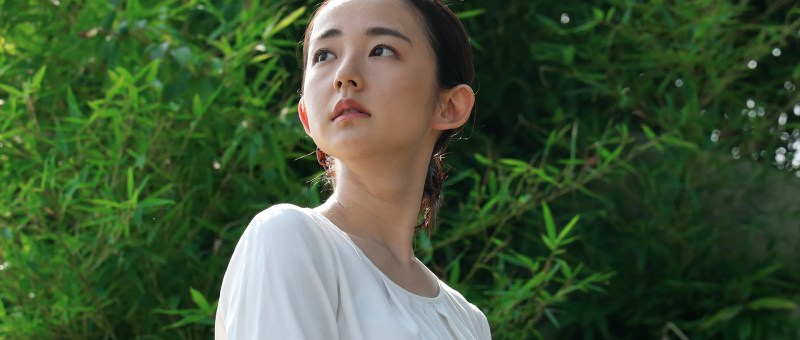
A thoroughly unpleasant young woman gradually begins to realise that other people have feelings too and she has no idea what she’s doing with her life in Keitaro Sakon’s indie drama Lonely Glory (わたしの見ている世界が全て, Watashi no Mite Iru Sekai ga Subete). Haruka currently runs a startup geared towards helping people maintain good mental health which is ironic in the extreme because she has no understanding of or regard for the feelings of others. Yet as she says during a role play with an employee, the basic principle of their business is helping people identify their problems which she ironically does on returning home to her estranged family if not entirely for altruistic reasons. 

Before that, however, we see her be unnecessarily harsh during a staff evaluation later justifying herself to the boss that they needed to clear out those who are of no use. To her, the staff member’s feelings were irrelevant, she just informed them of their subpar performance. Her boss isn’t buying it. He tells her that her management techniques are counterproductive and that with multiple accusations of bullying behaviour she herself says she is unwilling to work on (because she doesn’t understand she’s done anything wrong) he has no option other than to ask for her resignation. Unfazed, Haruka decides to start her own startup, but is soon confronted with another crisis on learning that her mother has passed away. 

On arrival at the hospital and despite being the youngest sibling Haruka immediately takes over, seemingly unmoved, and opts for the cheapest funeral plan available. She didn’t come to her father’s funeral and her siblings didn’t expect to see her for this one either, but now she has an ulterior motive in that she wants to sell the family home and business to finance her new business venture despite the fact all three siblings still live there and two of them are financially dependent on the cafe/greengrocers for their living. Haruka is incredibly judgemental about her small-town siblings’ life choices branding them as delusional and generally carrying on with an air of superiority but it’s also true enough that they are all to a degree trapped, unable to move on with their lives while afraid to leave the safety of their childhood home. 

As she says, sometimes people just need a little push which is something that she can give them but it’s never quite clear if she genuinely cares or is motivated solely by the desire to manipulate her siblings into agreeing to sell the house. Divorced sister Miwako is fairly unfussed either way but oldest son Keisuke is consumed with shame in the idea of giving up the family business while Takuji has self-esteem issues and thinks everyone looks down on him for never managing to get a job since he finished university four years previously. Challenged by Keisuke’s much younger farm girl girlfriend Asuka on the nature of success, Haruka replies that it’s having everyone around you admit you were right which lays bare her own insecurity and need to dominate every situation that she’s in. But then ironically enough she does help each of her siblings identify their problems and then gain the courage to begin moving forward. 

The dissolution of the family business and the erasure of the family home becomes in its way liberating, less the glue that bound them together than that trapped them in a perpetual adolescence. Haruka begins to realise she’s not much better than the life coach scammer who sold her vulnerable brother false promises of easy success, and that the way she treats others can have unintended consequences but in the end she’s the one left rootless and bereft of direction after closing the shop. Perhaps that’s her lonely glory, the knowledge that she helped each of her siblings do what she now can’t (or maybe just that she got what she wanted and doesn’t know what to do with it). Told with a down to earth naturalism, Sakon’s indie drama is also a lament for the changing nature of small-town life and a loss of community as the closure of the store robs the locals of another neighbourhood hub ironically leaving Haruka all alone in the now empty space of her family home with a newfound sense of loneliness still searching for the right words and a new direction. 


Original trailer (English subtitles)
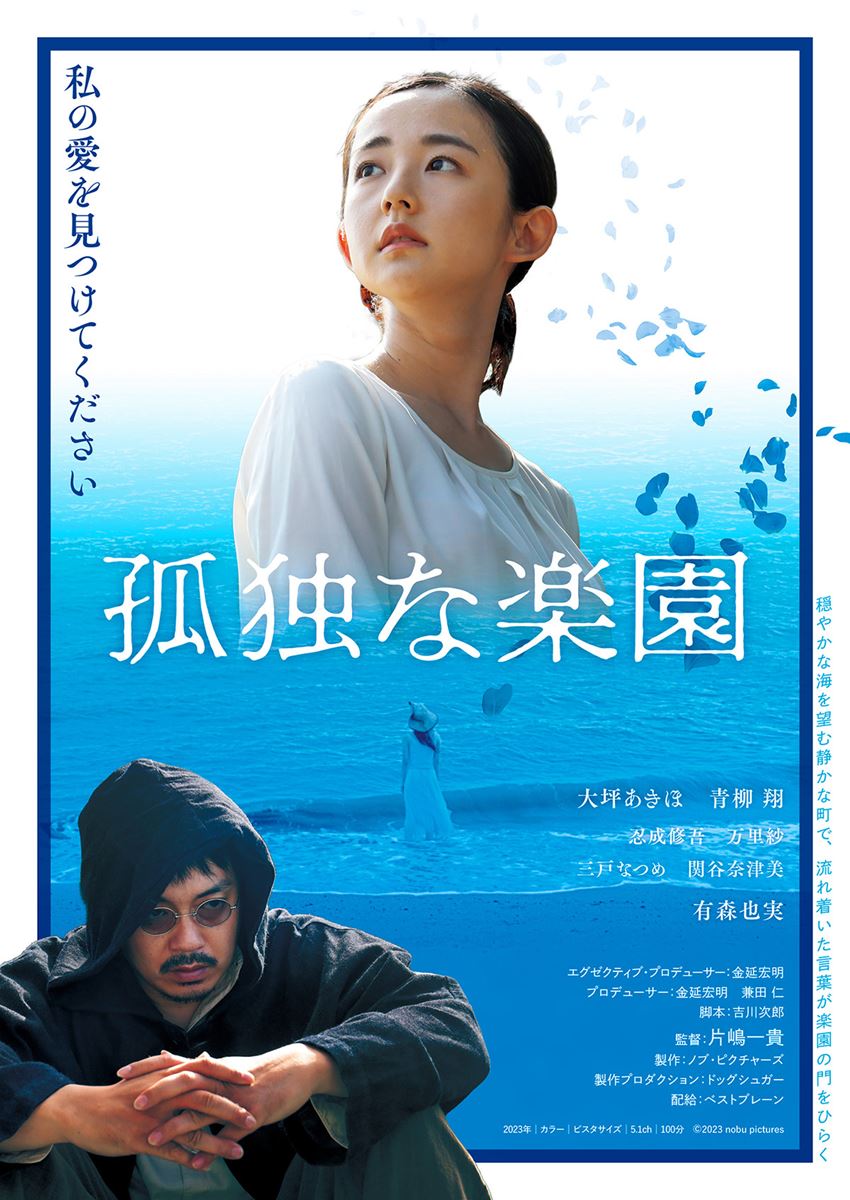
OMG! Oh My Girl (รักจังวะ..ผิดจังหวะ, Thitipong Kerdtongtawee, 2022)

The course of true love never did run smooth. For the lovelorn hero of Thitipong Kerdtongtawee’s OMG! Oh My Girl (รักจังวะ..ผิดจังหวะ), it’s a path filled with misunderstandings, bad timing, and diffidence on his part that all leave him out in the cold watching the object of his affection get swept off her feet by other guys while little realising she likes him too but thinks he’s only interested in friendship because of his cool and aloof demeanour. 

The hero has the amusingly generic name of “Guy” (Wongravee Nateetorn) making him an accidental everyman in this tale of romantic confusion. He first meets June (Plearnpichaya Komalarajun) in university where she is so popular with guys on campus that it’s impeded her ability to make friends with other women. After a serendipitous meet-cute and bumping into each other several times the pair become friends but, in a motif which will be repeated, Guy finds himself giving advice to his friend Phing (Michael Pugh) about how best to ask her out and ironically tells him to send a text message reading “I like you, June” while standing directly in front of her never thinking Phing would actually do it let alone that it would work. June and Phing have a rather tempestuous relationship and are always breaking up every five minutes only to get back together again leaving Guy nervous to make his move. 

In effect, this happens several times. Guy is too diffident to shoot his shot and ends up missing out, while everything he does to try and win June’s heart ends up backfiring as if fate were conspiring against him. Then again, perhaps there’s a danger in over romanticising romantic destiny. It’s true that the pair experienced a “meet-cute” but June also had a meet-cute with another guy, Pete (Pachara Chirathivat), whom she later ends up dating. Who’s to say Pete’s meet cute is any less meaningful than Guy’s? Often, we attach meaning to these minor events after the fact to solidify a grasp on the present, never really lending much thought to what might have been with someone we tipped coffee over or lent a few coins to at a parking metre. 

Then again, the real advice Guy had tried to give to Phing is that confessions of love don’t often go anywhere. People usually just hang out together a lot and then come to a mutual realisation that they’re already “dating”, only that never quite happens for Guy and June who seem to actively avoid progressing towards romance unlike Guy’s zany friend Tah (Siwat Sirichai) who is eventually able to enter a romantic relationship with June’s cool roommate Lex (Wasu Pluemsakulthai) through getting to know her socially. After his own attempt at a love confession backfires, it’s Guy whose romantic vision edges towards the toxic in his inability to let go of his obsession with June and accept that she is in a stable long-term relationship with Pete and that is now inappropriate for him to continue pursuing her romantically. 

The problem is that Pete is a nice guy who loves June and takes extremely good care of her leaving Guy little justification for his desire to implode their relationship even if it also seems June may have niggling doubts and unfinished business with her unresolved feelings for Guy. For most of its runtime, OMG! Oh My Girl is a sweet and gentle post-modern rom-com but makes a huge misstep in final moments allowing Guy to make a catastrophic mistake amounting to a huge breach of trust after which it becomes impossible to root for his romantic success given that after he does it neither June nor any of his friends should really want to have much more to do with him. Given that he’s just seen how destructive what he’s about to do could be in the implosion of his sister’s marriage, it’s really difficult to see how he could have thought doing such a thing himself would have a good outcome or make June any more likely to leave her stable relationship for a half-baked attraction to the uni best friend she hasn’t seen in five years.

Even so, the conclusion does have a neatly feminist subtext that undercuts Guy’s vision of June as something like a prize to be won as she fights for a sense of security in independence knowing that she can take care of herself and doesn’t necessarily need to be with anyone to be happy and fulfilled. Filled with the kind of deadpan zany humour familiar from similarly themed Thai comedies of recent years, OMG Oh My Girl would be a surefire classic were it not for its tacit condoning of the hero’s toxic behaviour and wilful indifference to the feelings of others ruining an otherwise charming tale of romantic misconnection. 


International trailer (English subtitles)
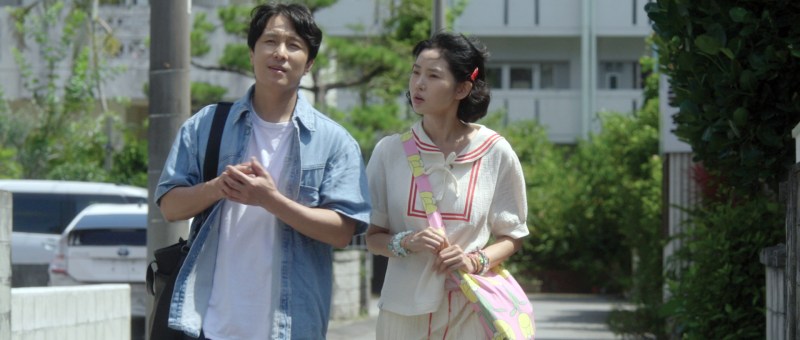
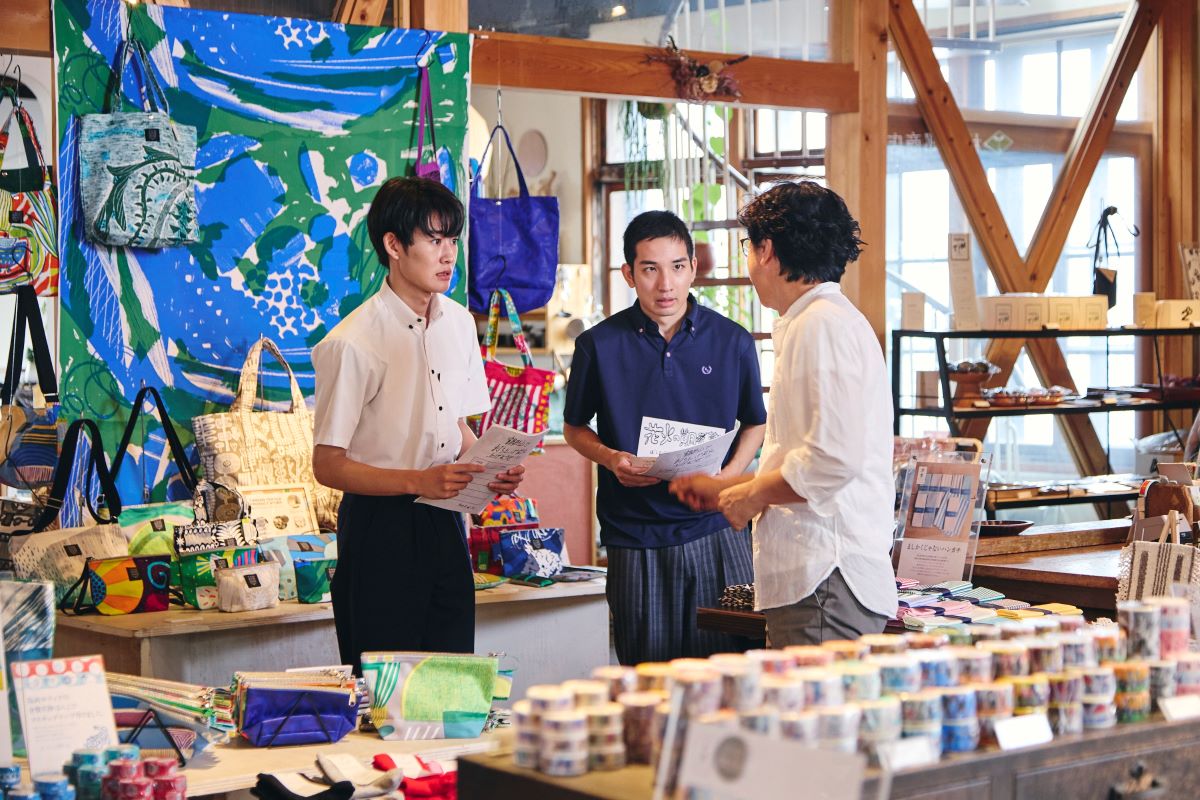
Asakusa Kid (浅草キッド, Gekidan Hitori, 2021)

To international audiences, Takeshi Kitano has a very specific profile associated most closely with arthouse drama and violent gangster movies yet in Japan he’s best known as a comedian and TV personality. Inspired by Kitano’s memoir, Asakusa Kid (浅草キッド) charts his earliest days from entertainment district elevator boy to manzai star while lionising his earnest mentor Sozaburo Fukami (Yo Oizumi). Yet it’s also a nostalgic look back to a late Showa pre-bubble Japan as Kitano’s idol finds himself falling foul of a changing entertainment industry. 

As the film opens in 1974, “Take” (Yuya Yagira) is one half of a struggling manzai comedy double act touring the country in various variety and cabaret establishments fearing his career may die out on the road before beginning to edge towards success and a high profile TV gig. Two years earlier, however, he’s an awkward college dropout working as an elevator boy at France-za comedy bar burlesque theatre. A local boy, Take has chosen France-za because of his admiration for “Fukami of Asakusa”, longing to make his way into the entertainment world while captivated by Fukami’s cool style, even copying his trademark tap dancing. Fukami soon sees talent in Take and tries to nurture it, but as the pair of them are repeatedly reminded, this kind of comedy is already old-fashioned. Audience numbers at France-za continue to decline while as one of the other girls later reminds him the men who come to these shows are there to see women take their clothes off, not random skits or singing. 

This is brought home to Take when he tries to encourage one of the strippers, Chiharu (Mugi Kadowaki ), to chase her dreams of becoming a singer by convincing Fukami to allow her to fill a 15-minute spot. As Fukami had attempted to warn him, the men appear to enjoy her song and offer rapturous applause but think it’s part of her act and soon resort to catcalls expecting her to take her clothes off. Take’s well-meaning gesture backfires, convincing Chiharu her dreams of singing are over, while Take is also poked into action by the other stripper’s retort that the comedy is only really “filler” between the burlesque acts which is what the customers have come to see. 

Even so, there’s less drama than one might expect in Take’s eventual decision to betray his mentor by choosing manzai and its opportunities for TV success over his by then old-fashioned sketch comedy. The father/son relationship somewhat falls by the wayside as even as a triumphant Take later returns “home” to present Fukami with the prize money for a TV award like a child with a report card full of As, while he gracefully accepts it but is privately filled both with a sense of pride and personal disappointment in being forced to accept that the heyday of Asakusa is over and there is no future in his vaudeville-style comedy acts. Nevertheless, Take appears to attribute much of his success to things he learnt from Fukami from his tap-dancing to his uncompromising attitude. “Don’t be laughed at, make them laugh,” he recalls Fukami telling him, “don’t suck up to the audience, tell them what’s funny,” later refusing to soften his inappropriate jokes about ugly girls and suicide for a more conservative TV audience and finding his edgy comedy an irreverent hit. 

Then again, not everyone is able to achieve their dreams from Fukami who lost the fingers on one hand in the war and finds himself forced off the stage, to Chiharu apparently a regular housewife with showbiz regrets, and Fukami’s wife Mari (Honami Suzuki) exhausting herself trying to help him save his dream of Asakusa. As much as Take might have admired Fukami, others too describing him as a father of contemporary entertainment, he can’t get away from the fact the press is only interested in his funeral if Take attends it. Filled with the nostalgia, the ethereal one shot closing sequence in which the older Take returns to Asakusa and to the past surrounded by the friends of his youth is genuinely poignant in the sudden juxtaposition of a lost world with the contemporary present but perhaps elegises nothing so much as nostalgia in its lament for late Showa breeziness. 


Original trailer (English subtitles)

Her Story (好东西, Shao Yihui, 2024)

Nine-year-old Molly (Zeng Mumei) says she doesn’t have any dreams anymore and is content to remain a member of the audience which is the role she’s been assigned as part of orchestra class. In truth, that might be something she’s picked up from her mother, Tiemei (Song Jia), who also says that she no longer has dreams because she’s seen the reality. Shao Yihui’s Her Story (好东西, is being hailed as something of a landmark film given that mainstream Chinese cinema does not often engage with feminist issues or at least not quite so directly as in this strangely joyful celebration of female solidarity and found family.

Indeed, the Chinese title of the film is “good things” which Tiemei and Molly begin to find after being forced to move to a cheaper apartment in an old-fashioned walk-up building because Tiemei is struggling to find work in a shrinking journalism industry. She later tells a colleague at her new job working for a friend’s online news outlet that she took a break from her career as an investigative reporter not because she had her daughter but because she realised she didn’t have the strength to go on fighting the system. 

Yet in a way she’s fighting the system solely in the way she lives as a divorced woman raising her daughter alone. It later transpires that it was her husband who wanted the divorce because he got fed up with living with as househusband even though that was his choice, though he seems to regret the decision and randomly tells Tiemei that he’s getting a vasectomy as some kind of strange proof of loyalty in insisting Molly will be his only child. Since they’ve split up, he’s apparently come to a feminist awakening and is cognisant of his male privilege thanks to actually reading Tiemei’s articles but ironically still feels the need to insert himself into conversation. 

In any case, after moving into the apartment, Tiemei and Molly become friends with the bohemian woman who lives upstairs and is the singer of a rock band. Ye (Zhong Chuxi) is a very chaotic presence and the total opposite of Tiemei’s defiant practicality, but despite herself Tiemei becomes a kind of maternal figure to her after scaring off a creepy guy who was following her late at night. But equally Ye becomes a kind of big sister or secondary maternal figure to Molly, offering her a more relaxed vision of womanhood along with a creative space to express herself. 

Perhaps surprisingly for a mainstream Chinese film in which LGBTQ+ themes, the two women effectively end up raising this child together almost as if they were a couple in a happy familial environment. They often share a bed and at one point are actually mistaken for lesbians by Ye’s sometime optometrist boyfriend Hu to whom she lied about having a child so that he wouldn’t see her as clingy, effectively adopting Tiemei’s persona. Tiemei even helps Ye sort of break up with him by posing as the scorned lesbian partner, hilariously laying it on thick to get Hu to trip himself up and admit to being a playboy womaniser. Though it’s obviously true that they are not in fact romantically involved, the film nevertheless does not only acknowledge the existence of lesbian women and even lesbian women raising children but tacitly approves and accepts them as part of its broader feminist themes. It even opens on a shot of what appears to be queer longing in lingering on a very striking Ye leaning out of her window drinking in the daytime as Molly looks up from below in wonder. 

It is in fact Molly who becomes the centre of the film as she regains the ability to have dreams again while discovering herself and gaining the courage to take risks in search of happiness in a society all too keen to slap women down. Tiemei writes an article about what it’s really like to be a working single mother but is quickly attacked by internet trolls causing Molly to retreat into herself, realising that if her mother hadn’t written the article she wouldn’t be getting trolled. But thanks to the supportive environment around her and the relationship between Teimei and Ye, Molly resolves not to let the world beat her into submission. The scenes of her rocking out on her drums while the drippy boy who keeps “denouncing” her at school flounders at the dull music club concert speaks volumes. She may realise that she prefers being in the audience anyway, but that’s alright. Writing is her outlet, something else she may have have picked up from her mother, and she’s less of a bystander than observer humorously recording the compromises and contradictions of the world around her while bolstered by her found family and a gentle sense of female solidarity.


Original trailer (English subtitles)
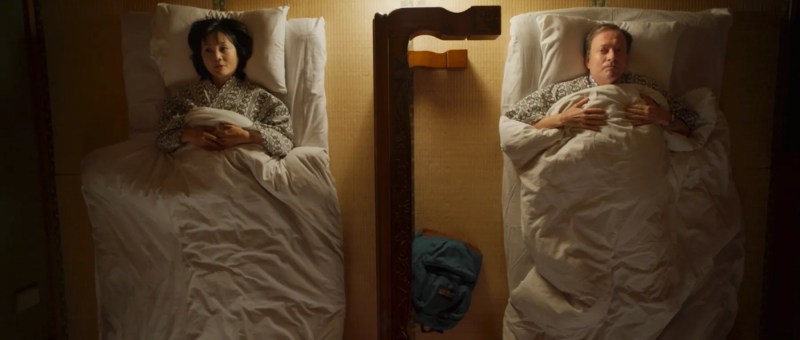
A Girl in My Room (左様なら今晩は, Natsuki Takahashi, 2022)

A young man reeling from a breakup is suddenly confronted by the literal ghost of lost love in Natsuki Takahashi’s supernaturally-inflected romantic drama A Girl in My Room (左様なら今晩は, Sayonara Konbanwa). Set in the peaceful town of Onomichi, the film finds its hero wasting away pining while wondering if falling in love with a ghost is all that bad only to later ask himself if any of it was real or just a fantasy of his lovelorn mind. 

As the film opens, Yohei’s (Riku Hagiwara) girlfriend of two years, Rena (Riko Nagase), moves out of their apartment apparently sick of his superficiality and inconsiderate nature. Soon after, Yohei becomes aware that a ghost has been living in their apartment with them the whole time only should she couldn’t manifest because Rena apparently had unusually strong spiritual energy. Though originally frightened by the new presence, Yohei soon warms to the woman he names “Aisuke” (Shiori Kubo) and becomes determined to find out who she was and how she died only no one will tell him. 

Of course, Aisuke could just be the symbolic ghost of Rena, a spectre of lost love confronting him with his romantic failure, but also seems to have an inner life of her own even if she can’t remember much about who she was when she was alive and how it was she came to die in the apartment. Fleeting memories seem to hint at a life of loneliness marked by romantic longing in which she wanted nothing more than a regular grown-up relationship though sadly it never happened for her. If she has unfinished business, then falling in love may be part of it but then it’s clear that any potential relationship between herself and Yohei is doomed to failure seeing as she is already dead. 

Aisuke chose Yohei because she thought he was a good boyfriend after seeing him with Rena, but even so agrees that though he seems nice on the surface he never really thinks about anything and responds to criticism by smoothing it over with an apology rather than reflecting on his actions or trying to better himself. Work colleague Kanan (Rina Ono), who also has a crush on him, conversely claims that Yohei shows his kindness too easily though also remarking that kindness in itself can also be problematic. In any case, as he bonds with Aisuke, Yohei does seem to engage more with his flaws and reflect on the mistakes he may have made in his relationship with Rena in order to become not just a better boyfriend but a better person. 

In these respects, Aisuke becomes a romantic mirror confronting him with the problematic aspects of his own personality but somehow gaining in corporeality as the relationship progresses as if love were bringing her back to life. But then Kanan also claims that that’s because Aisuke is unwittingly sucking the life out of him which is why he looks tired and gaunt. A picture she took of him on her phone has a dark aura over his face hinting at something malevolent at work that’s taking a toll on his health. But as much as he’s warned, Yohei determines to stay with Aisuke, slowly falling in love with her in the wake of his failed relationship.

Partly a fable about the dangers of remaining trapped by the ghost of lost love rather than resolving to move on, the film is also a poignant love story in which the pair must help each other overcome their mutual unfinished business while becoming aware that their liminal romance cannot continue forever. A side plot involving an estate agent and his endless calls from a confused older gentleman randomly asking him for legal and life advice hints at other kinds of living ghosts and urban loneliness but also at those willing to take care of them as perhaps the estate agent did with Yohei and Aisuke in a bit of supernatural matchmaking helping each of them to begin moving on with their lives on either side of the mortal divide. Charmingly quirky and comforting in its tranquil setting, Takahashi ends on a poignant, bittersweet note but also one of warmth in which the ghost of lost love doesn’t so much haunt as abide, a constant source of comfort in a lonely existence.


Original trailer (English subtitles)

Iwane: Sword of Serenity (居眠り磐音, Katsuhide Motoki, 2019)

The contradictions of the samurai code conspire against one noble-hearted young man in Katsuhide Motoki’s adaptation of the long running series of historical novels by Saeki Yasuhide, Iwane: Sword of Serenity (居眠り磐音, Inemuri Iwane). Yet this truly serene samurai is a stoical sort, learning to bear his pain with fortitude while standing up for justice in an increasingly corrupt Edo where money rules all while an ascendent merchant class continues to challenge the fiercely hierarchical social order. 

Beginning in 1772 which turned out to be a disastrous year, the tale opens as hero Iwane (Tori Matsuzaka) prepares to return home after completing his three year rotation in Edo in the company of childhood friends Kinpei (Tasuku Emoto) and Shinnosuke (Yosuke Sugino). Shinnosuke is in fact married to Kinpei’s sister Mai, while Iwane will himself be married to Kinpei’s other sister Nao immediately on his return so close are they. As Iwane’s father tells him, there are great hopes for these young men that they can “turn our outdated clan around”, but events will conspire against them. Spoiling the happy homecoming, Shinnosuke is accosted by a drunken uncle who convinces him Mai has been unfaithful in his absence with the consequence that he kills her immediately on his return home. Unable to understand this turn of events, Kinpei confronts his friend but eventually kills him, while Iwane is then forced to kill Kinpei after he goes on murderous rampage in revenge for the wrong done to his sister. 

In trying to mediate the case, the argument is put forward that Shinnosuke acted rashly and should have brought his suspicion to the authorities rather than opting for summary execution. The lord however disagrees, condoning Shinnosuke’s actions under the rationale that to do so would have been considered “weak minded” while as Shinnosuke himself had claimed he acted in accordance with the samurai code in which female adultery is illegal and punishable by death. By contrast, he finds Kinpei’s rashness offensive, insisting that he also should have recognised the legitimacy of his sister’s murder and simply left quietly with her body. Having learned the truth in which his childhood friends became victims of clan intrigue, romantic jealousy, and tragic misunderstandings in this Othello-like plot, Shinnosuke and childhood sweetheart Nao are also consumed by the rashness of samurai law each exiled from their clan and cast adrift in Edo-era society. 

Edo-era society is however also itself corrupt. Some months later, Iwane has returned to Edo as a lowly ronin lodging with a kindly old man, Kinbei, who helps him find a job firstly gutting eel then as a bodyguard at a money exchange which has been receiving anonymous threats they assume are from rival broker Awaya who has hatched a nefarious plan to manipulate the currency market to stop the current Shogun introducing a new unit which can be used in both Edo and Kyoto which would understandably cut into his already corrupt business model. Luckily, Imazuya is an honourable man who backs the new currency plan and wants to do the right thing which makes him a perfect fit for Iwane’s innate sense of justice. “You don’t know the way of the merchant” Awaya snaps at him, suggesting both that the samurai are already on their way down as the merchants rise and that his unwillingness to play dirty will be his downfall. Nevertheless, Iwane is the type to adapt quickly, instantly coming up with a way to play Awaya at his own game and kick his destructive amoral capitalism to the curb. 

Meanwhile, he continues to pine for Nao while drawing closer to Kinbei’s earnest daughter Okon (Fumino Kimura). As we discover Nao is also a victim of an intensely patriarchal social order but through the tragedy that befalls them also finds strength and agency making a life changing decision that allows her to become independent while looking after her family if in the knowledge that the childhood romance she shared with Iwane is a thing of the past. Iwane too agrees that he is trapped in a living hell of guilt and grief, yet choosing to go on living anyway as calm and cheerful as he’d ever been while standing up to Edo-era corruption though uncomfortably enough this time against the destabilising influence of the rising merchant class and therefore in contrast to most jidaigeki reinforcing the legitimacy of the samurai order which has paradoxically also ruined his life with its rigid and implacable social codes. In any case, Motoki’s classic chanbara melodrama has a serenity of its own as the cheerfully laidback hero resolves to live his life by a code of his own free of samurai constraint. 


Trailer (no subtitles)