The Escaping Man (绑架毛乎乎, Wang Yichun, 2023)

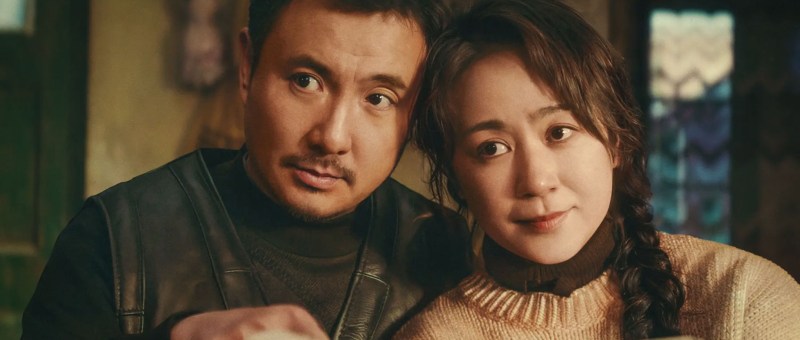
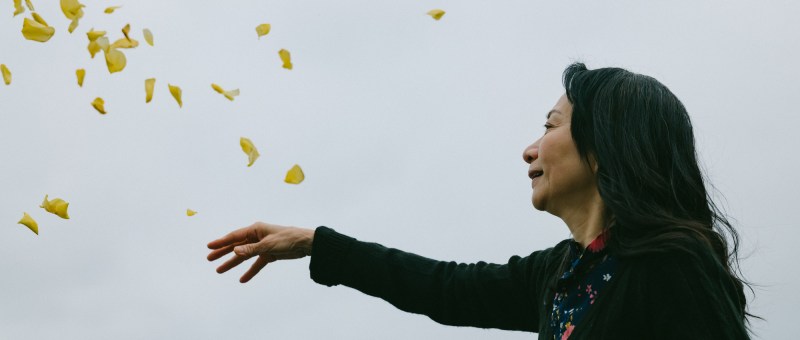
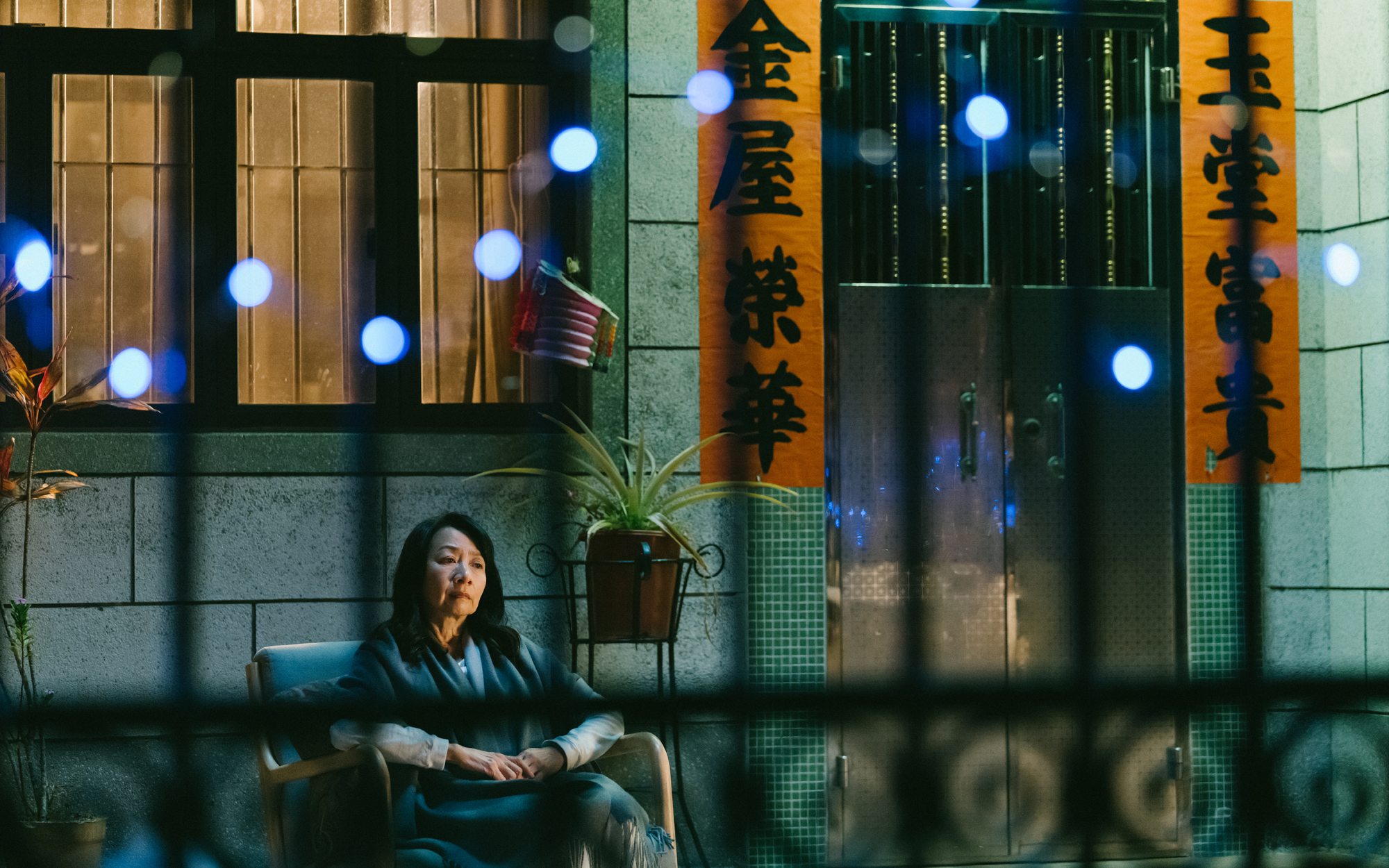
“Life isn’t much better on the outside,” according to Sia (Zeng Meihuizi), the heroine of Wang Yichun’s deliciously ironic dramedy, The Escaping Man (绑架毛乎乎). Escaping men is in part what she’s tried but otherwise failed to do while constrained by the socio-economic conditions and entrenched patriarchy of the modern China. All of the men in the film are, as many call them, “idiots”, but all things considered it might not necessarily be such a bad thing to be even if their guilelessness makes them vulnerable to the world around them albeit in much different ways to Sia.

At least its this boundless cheerfulness and inability to see the world’s darkness that caused Fluffy (Eric Zhang) to be rejected by his status-obsessed mother (Yan Ni) who seems to have got rich by becoming what in charitable terms might be called a motivational life coach though others might describe her as a cult leader. She’s determined to get Fluffy into an elite primary school so he can “win at the starting line,” a buzzword in the contemporary society which basically means engineering privilege for your child so they can elbow other kids out of the way before the race even starts. The irony is rammed home by the fact that Sia, who works as the family’s live-in nanny/housekeeper also has a daughter named “Fluffy” who is one of China’s left behind children living with her seemingly bedridden grandmother in the provinces while Sia is in the city earning money to support the family having apparently divorced her daughter’s father. 

20 years previously, Sia’s mother had accused her lover of rape and had him sent to prison where he’s remained ever since having apparently gone along with the legal process in the mistaken belief Sia would eventually clear up this misunderstanding. She later later says the police wouldn’t let her and that she was never actually interviewed, but also continues to insist that they live in a “law-based society,” and nothing can be done without evidence. On his release, Shengli (Jiang Wu) comes straight to find his former lover in order to confirm that he did not in fact rape her and their relationship was consensual which she agrees it was. This determination is symbolic of his romanticism in continuing to believe in his dream of love despite all he’s been through, convincing himself he can start again with Sia while she continues to manipulate him with the almost certainly false promise of a happy joint future.

But then you can’t really blame her. A little way into the film, Sia is dressed in a white outfit very similar to the one worn by her boss when she goes to see Fluffy in a school play in which, at his own request, he played a tree. Sia is every bit as a accomplished and she has a warm and loving relationship with Fluffy which seems to elude his haughty mother. Later in the film she reveals that she came third in the national university exams but was prevented from going because she was born in a small rural province rather than the big city like her employer Mrs Mao. The fates of the two women are easily interchangeable depending on the circumstances of their birth while Mrs Mao continues to wield her privilege to ensure Fluffy can win at the starting line despite her resentment towards him for his lack of academic acumen or the things that denote conventional success in the modern China. Though he is cheerful and kind, she sees these qualities as actively harmful to his future success rather than embracing the little ray of sunshine he actively is.

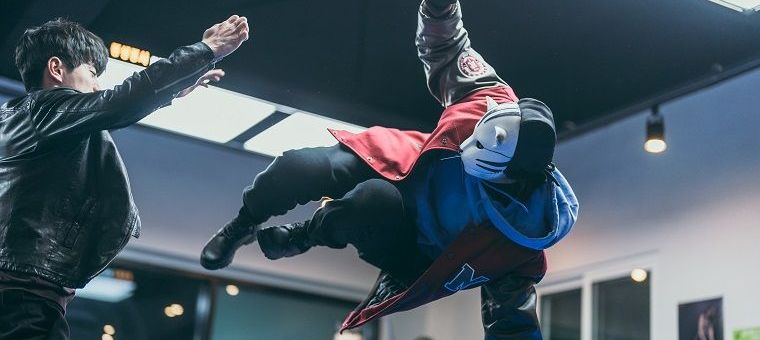
Then again, Fluffy’s guilelessness also leaves him vulnerable which is why he cheerfully walks off with Shengli when he agrees to Sia’s kidnap plot and even rejoices in the grave-like pit they’ve dug to keep him in rechristening it as his underground fortress. He’s so nice that he doesn’t even realise the other kids are bullying him for being “stupid” and thinks they’re his friends, just happy to be included in the game. In this way, he and Shengli are alike, a pair of hapless fools living in a world that’s nowhere near as good as they think it is. The irony is that though Shengli perhaps begins to wake up to the realities of his relationship with Sia, his last wish for Fluffy is that he get into the fancy primary school and win at the starting line so he won’t end up like him. Suddenly it seems ironic that Shengli was a breakdancer because in the end he cannot break free of the prison that is the modern China. Filled with a darkly comic humour, the film is a fierce critique of the inequalities of the contemporary society and gentle advocation for the right to just be nice in world in which kindness has become a character flaw.


The Escaping Man screens July 26 as part of this year’s New York Asian Film Festival.

Frankenstein Father (프랑켄슈타인 아버지, Choi Jea-young, 2024)

A teenage boy confronts his paternal legacy but finds it largely hollow in Choi Jae-young’s pointed familial drama, Frankenstein Father (프랑켄슈타인 아버지). Frustrated by his circumstances, the boy begins asking questions about his genetic history in search of an explanation of all his “faults”  but begins to realise that perhaps the faults were not his own in any case and what he really wants is freedom, the right and opportunity to be his own man rather than a reflection of her father’s desires.

Left largely alone after his mother’s death amid the absence of his truck driver father, Young-jae decamps at the home of doctor Chi-sung who illicitly sold his sperm as a medical student 17 years previously. Af first Chi-sung wants nothing to do with the boy but is worried by his attempt to blackmail him, insisting he’ll expose the illegal sperm donation and ruin Chi-sung’s medical career. He sets about trying to disprove hie’s the father, but is finally forced to accept it and there after determines to prove to Young-jae that his “faults” are not his fault and he doesn’t owe him anything as per the contracts he signed with his parents. 

Of course, Chi-sung is also keen to prove himself “faultless”, that his austere life is the correct path because it’s order, rules, and discipline that have allowed him to become what he is today. To that extent, it niggles at him that he could have had a son like Young-jae who is sullen and rebellious. Young-jae describes himself as “dumb,” and has a host of other qualities that dissatisfy him such as shellfish allergy but is perhaps looking for some kind answers about himself and his relationship with Dong-suk, the man who raised him but is also a disappointment in Young-jae’s eyes. A long distance truck driver, Dong-suk is unsophisticated and fond of a drink. He is also controlling, insisting that Young-jae continually check in with him via text and send photos to prove he’s where he should be, and crucially preventing him from doing what he most wants to do which is run.

Running is a symbol of Young-jae’s desire for freedom, but he remains constrained by each father figure. After warming to him, Chi-sung offers him what he wants in promising to get him experimental treatment for his heart condition so he can run again, but soon turns out to be much like Dong-suk insisting he follow his rules and stick rigidly to the plan that he has designed for his sophistication which is also an effort to turn him into a mini Chi-sung. Young-jae is to him an echo of himself for he also grew up with a father who drank and disappointed him. Like Young-jae he too learns for escape as symbolised by his dream of buying a yacht and going to sea that he seems to be continually putting off. 

Yet as Young-jae points out, it wasn’t him who broke when he found out Dong-suk wasn’t his biological father but Dong-suk himself. Chi-sung hints that his decision to use sperm from a A+ donor was informed by insecurity, that he wanted to raise a son who was better than himself though as Dong-suk told his patient human’s can go back to what they once were but can never exceed it. The battle of over paternity of Young-jae isn’t so much a contest of nature vs nurture but a vicarious tussle of masculinity between each of the men who each want to prove themselves through asserting paternal authority over Young-jae and determining the course of his further life.

But Young-jae is almost a man himself and is no longer content to be bound by such corrupted authority. As he later says, he’s no desire to become another of his fathers’ “faults”. Conversely Chi-sung is clearly still trapped by his own father’s legacy and and afraid of the freedom Young-jae chases realising that the fault also did lie with him. In attempting to father Young-jae, he’s also attempting to father himself, insisting Dong-suk raised the boy “wrong” and he must correct him, but perhaps realising he learned a few wrong lessons himself and must make peace with his own past to set himself free while allowing Young-jae to run in a direction of his of choosing no matter the risks to his heart.


Frankenstein Father screens July 25 as part of this year’s New York Asian Film Festival.

Cha-Cha (チャチャ, Mai Sakai, 2024)

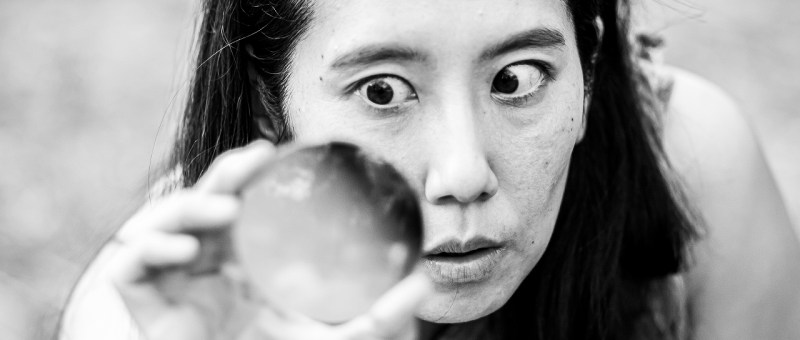
Love can make you do funny things. It can also blind you to the world’s realities and colour the way you interpret the actions of others. At least, that’s how it is for the protagonists of Mai Sakai’s Cha-cha (チャチャ) who are all suffering with unrequited love and unbeknownst to them quite mistaken in their assumptions about the loves of others while otherwise solipsistically trapped in a bubble of frustrated romance.

Sometime narrator Rin (Sawako Fujima) is resentful of colleague Cha-Cha (Marika Ito) who is, ironically, the the total opposite of herself in that she’s free spirited and eccentric each qualities she assumes attract the opposite sex which Rin fears she herself does not. Chiefly she resents her because she has an unrequited crush on the boss, Kato, who is married with children though the interoffice gossip incorrectly suggests Cha-cha only got her job because she’s sleeping with him. According to Cha-cha, she is quite popular with men though describes herself as not being conventionally attractive and thinks men’s interest in her is usually more to do with conquest than romance. She develops a small crush on a handsome chef, Raku (Taishi Nakagawa), who smokes on their rooftop but though she ends up moving into his ramshackle home he does not appear to be interested in her and may in fact be suffering unrequited love for someone else. 

Because of all of these emotions can be awkward or embarrassing, no one really talks about them openly which obviously gives rise to a series of misunderstandings about the feelings and actions of others. Jealous of Cha-Cha, Rin ends up stalking her to find out if she really is sleeping with the boss though as she herself is not willing to be an adulteress it seems like something of a moot point. Cha-Cha likes the chef precisely because they have nothing in common and are in fact total opposites, much as she’s also the total opposite of Rin. She likes the idea that they could lead complementary existences because while she hates melon but likes cucumber, he likes cucumber and hates melon. 

She is also possibly drawn to him because they share a certain kind of darkness, admitting that she has a desire to lick the blood of the person she’s dating while he has a secret stash of lenses saved from the animal heads they sometimes get at the restaurant. Ironically, this shared quality may signal doom for their romance or ultimately force them together in a mutual act of settling for second best when their ideal romantic plans are disrupted by an unexpectedly extreme series of events. The most ironic thing is that the only genuine romance where feelings seem to be mutually returned, if imperfectly and with hints of exploitation, is doubted by others and motivates its own series of misapprehensions and petty jealousies. 

The strange events are at times narrated by a utility pole and telephone box who alone stand sturdy amid the changing and emotionally confusing environment of the present society. They are amused by the bizarre goings on among humans who seem incapable of being clear or honest in their romantic desires and often entirely misread the body language and behaviour of those around them to suit their own narrative. Rin thinks Cha-Cha probably is sleeping with the boss because they ignore each other, while a co-worker who admires her thinks she dislikes the boss because she avoids looking at him and assumes she likes another colleague, Aoki, ironically because she looks at him without bashfulness. 

It’s all par for the course in cha cha cha of love, and despite the dark turn the narrative may eventually take Sakai maintains an air of absurdist normality aided by quirky production design and a sense of wonder for a world that remains remains strange and difficult to understand, the protagonists individually blinkered views not withstanding. In any case, Rin’s eventual acceptance of Cha-Cha leads her to a desire to live “a more impulsive life” that will probably never be fulfilled but in some ways perhaps love is better as an unrequited fantasy than compromised reality if only it did not become an all encompassing obsession. As an imperfect man cheerfully in love tells her, perhaps Cha-Cha should focus on how to make herself happy rather than chasing an illusionary dream of love though in the end perhaps it’s all the same anyway. 


Cha-Cha screened as part of this year’s JAPAN CUTS.

Trailer (English subtitles)

The Guest (301호 모텔 살인사건, Yeon Je-gwang, 2023)

We’re under surveillance all the time, so when we really need someone why is that no one seems to be watching? Yeon Je-gwang’s slasher drama The Guest (301호 모텔 살인사건) takes place in a world of high anxiety fuelled by the very real life plague of illicit photography predominantly targeting young women with hidden cameras in places such as public bathrooms and hotels. We’re told the CCTV networks are there for our safety, but they necessarily impinge on our privacy and cannot be relied upon when we most need them.

A case in point, two young men working in a love hotel and running a sideline in illicit photography at the behest of a gangster to pay off their debts are conflicted when they spot what looks like a violent attack and attempted murder going on in one of the rooms. One of them, Min-cheol, wants to intervene but the other is against it. If they call the police, their spy cam scam may get exposed and they need money to pay off their debts to the gangster and restart their lives. Min-cheol in particular has been resentful of their line of work and wanted to quit but also has an ageing mother and needs the money to pay for an operation for her.

The backstory goes someway to giving Min-cheol justification for his complicity while it’s clear he disapproves and is not directly violating these women for his own gratification or direct financial gain. He does not, however, do all that much to resist beyond telling gangster Deuk-cheol that he won’t participate any further. It’s clear that environment around him is extremely misogynistic, and the anxiety enveloping Eun-soo all too real as a previous spy cam victim now left paranoid, checking all around her for anything that looks out of place. A sign outside a bathroom at a petrol station states that it’s a “safe” space because they regularly sweep for cams which somehow doesn’t seem very reassuring. In any case, the attendant is busy watching videos of girls dancing on Tiktok while another guest at the love hotel badgers Min-cheol to call him a “coffee girl”. The killer himself is also an embodiment of this pervasive misogyny, silently stalking his prey and slashing anyone who gets in his way.

Yet masculinity is consistently weak. Neither of the boys is willing to help nor can they fight back effectively against the killer who is himself an ineffectual coward slashing around at random while failing to achieve his own goals of destroying the spy cam footage which of course also exposes his crime and and perversity. When the police eventually arrive, they can’t help much either and quickly fall victim to the killer’s plot somehow not suspecting him and taking his excuses at face value. 

Min-cheol tries to wield the technology for his own advantage, trying to blind the killer with camera flashes all of which hints at the double-edged nature of the technology itself. We’re told it exists for our safety but it also invades out privacy and is open to abuse. A later news report suggests there has been a spate of incidents in which hackers take over the intercom in various apartment buildings suggesting that not even the domestic space is safe. To Eun-soo, Min-cheol is therefore another disappointing nice guy otherwise complicit in spy photography and exploitation of women. Both the boys pay heavy prices for their moral failings, but you can’t really blame Eun-soo for being unwilling to help them given her victimisation at the hands of a misogynistic society. These men will not protect her, and so she has only the option of protecting herself. 

Remaining largely within the grim confines of the rundown love hotel, Yeon conjures an atmosphere of malice and anxiety in which a crazed killer wanders the corridors with an axe while relentlessly stalking his prey but it’s really just a manifestation of the fear and anxiety Eun-soo faces every day of her life as a young woman constantly threatened by oppressive patriarchy and fragile masculinity while eternally watched by those less concerned with her safety than their own gratification. 


The Guest screens July 22 as part of this year’s New York Asian Film Festival.

Original trailer (no subtitles)

The Cursed Land (แดนสาป, Panu Aree & Kong Rithdee, 2024)

The architecture professor teaching a young woman in Panu Aree and Kong Rithdee’s The Cursed Land (แดนสาป) says that a house is like a machine with a person inside, but what’s inside the house at the film’s centre is not quite human at all but a supernatural creature who like the house itself seems straddle a divide both cultural and spiritual while standing itself at the nexus of the many layered historical curses which have given it its dark legacy.

It’s in part a rejection of this difference and lack of respect for culture that creates a series of problems for Mit (Ananda Everingham), a middle-aged engineer moving into this rural backwater on the outskirts of Bangkok. Despite receiving a very serious warning to get rid of anything that’s in the house, he tears off a series of talismans thereby releasing some very dark energy and destabilising his new environment. Mit is also suspicious of those around him and does not really make much of an attempt to make friends with the local community who are largely Muslim. Though he may not think so, it is Mit who is the intruder here, an outsider walking into a traditional environment and finding himself isolated despite the ostensible friendliness of some of the locals to whom Mit takes offence after being told not to leave his dog outside because some of the Muslim community dislike them. 

But then again, Mit also seems to be a compromised figure apparently still suffering from shock and confusion some time after a car accident that killed his wife. He complains that his medication has been misplaced due to the move while seemingly increasingly paranoid and unreasonable. We also get hints that Mit’s previous life may not have been plain sailing either and part of his stress is down to a need to prove himself in his new job. He is in his way haunted by the car accident and struggling to overcome his guilt and regret. A shamaness later describes him as “weak-minded” and therefore a prime target for an evil spirit. 

This also seems to be implicitly reflected of an internal absence of the spiritual as Mit has renounced Buddhism and seems suspicious of Islam. His daughter May (Jennis Oprasert) eventually calls in a Brahmin to exorcise the house, installing Buddhist shrines and other talismans as if overwriting the those of the local muslim community though this only causes more problems. Later, May consults a Buddhist priest but is told that he can’t help because the problem is on a different system though she’s also told something similar by other members of the community. Running underneath the conflict between Buddhist and Muslim culture is echo of a much older spirituality in the references to “black magic” and shamans. 

What May learns is that this land has been cursed and counter cursed many times over, though they do perhaps manage to exorcise one particularly problematic spirit in literally digging up the past to learn the history of the house and that of the entities who seem to inhabit it but there are many other curses yet to be undone on this patch of scorched land that exists in a nexus between cultures, part of both and neither. What emerges is a kind of co-existence and a crossing of the streams as they must in the end marshal all of the spiritual powers to counter the  danger presented by this extremely disgruntled spirit. 

Panu Aree and Kong Rithdee conjure an atmosphere of intense eeriness rooted in a classic haunted house movie aided by the gothic environment of the Western-style home itself standing alone and isolated, not really part of a community yet not totally independent. What emerges is a kind of integration, the house as a machine with people inside it creating a home through diverse community and entrenched support systems that allow even the “weak-minded” Wit to shakes off some of his demons and begin to move forward with his life. Perhaps the key really is not to throw anything away, because everything belongs in the house and the house belongs to everything. Attempts at exclusion only invite fear and acrimony that cannot but eat away the foundations of a home built on cursed land.


The Cursed Land screened as part of this year’s New York Asian Film Festival.

Original trailer (English subtitles)

Ice Cream Fever (アイスクリームフィーバー, Tetsuya Chihara, 2023)

“Cold and sweet” is the way a customer to Million Ice Cream describes their produce, but it might also be an odd way to describe its comforts echoing the melancholy of the series of women who pass through its doors in Tetsuya Chihara’s adaptation of a short story by Mieko Kawakami, Ice Cream Fever (アイスクリームフィーバー). For each of the heroines it represents a kind of purgatorial space as they find themselves torn between past and future while seeking new directions.

For Natsumi (Riho Yoshioka), who took the job working part-time at the ice cream shop after experiencing burn out in her career as a designer, that new direction appears in the form of Saho (Serena Motola), an alluring yet sullen woman dressed all in black who turns out to be a formerly successful novelist plagued by writer’s block. A series of flirtatious encounters seem to rejuvenate the creative impulses of both women with Natsumi returning to doodling new signs for the shop and Saho beginning to write again, though there remains something distant and elusive between them. Saho later describes herself as like a summer storm destined to pass by in an instant and soon forgotten though in an ironic way her aloofness and enduring mystery may in fact be a way to ensure she is not forgotten while she at least seems unable to embrace her romantic desires instead sublimating them into her literature.

This inability to forget has also marred the life of Yu (Marika Matsumoto), a similarly lost woman approaching middle age who is suddenly approached by a niece she’s never met because she cut ties with her sister after she stole her boyfriend. Her mother having now passed away, Miwa (Kotona Minami) has come to Tokyo in search of her father and though seemingly aware of the circumstances of her familial estrangement enlists her aunt to help find him thereby forcing Yu to confront the past and reassess her life. Like Natsumi she is also becoming disillusioned with contemporary working culture and contemplating making a change. While she is a devotee of ice cream, it’s the local bathhouse, “an oasis for working women” as she describes it, that her been her refuge. When it suddenly closes due to the elderly owner’s (Hairi Katagiri) own decision to pursue a different kind of life, Yu wonders if she might be happier giving up her high powered corporate job to take it over. 

The dilemma both women face is reflective of a generational shift away from a desire for conventional success achieved by hitting each of life’s landmark events to that for immediate individual happiness derived from small comforts such as an ice cream cone or a soak in a large bath. The irony is that Miwa comes to Tokyo in search of an absent father and finds her aunt, while Yu is able to make peace with her past and accept the new gift life has given her in accepting a maternal role in her niece’s life. What both women choose are pleasant lives rooted in community and giving pleasure to others rather ones of consumerist desire or external validation.

Still, that doesn’t necessarily mean romantic resolution. While one woman’s decision may reflect a desire to move on, the other’s may not but rather an intention to wait if also to do so in a happier and more fulfilling environment that unlike the Mexican salamanders in Saho’s tank she has chosen for herself. Gradually we come to understand these events are unfolding at differing time intervals though weaving through around each other, pursuing a logic of memory rather a more literal reality while driven by the natural rhythms of a life which continues onward around them in continual oscillation. Gradually spinning outward it ropes in the unfulfilled romantic desires of Natsumi’s punkish co-worker choosing to move on in the realisation that her feelings have not been acknowledged and are unlikely to be returned, along with the cruel irony of the happy life seemingly being lived by Miwa’s long absent father. With its gentle framing and pastel colours, the film has an atmosphere of calm and serenity that belies its underlying melancholy in the frosty sweetness of a dormant love kept in the deep chill waiting for summer’s return.


Ice Cream Fever screens in New York July 20 as part of this year’s JAPAN CUTS.

Original trailer (English subtitles)

Fly Me to the Moon (但願人長久, Sasha Chuk Tsz-yin, 2023)

A pair of sisters find themselves exiles in their own home in Sasha Chuk Tsz-yin’s poignant familial drama, Fly Me to the Moon (但願人長久). Burdened by a sense of rootlessness, they have only each other to cling to while their family otherwise disintegrates amid the pressures of making a life in an unfamiliar place and an unavoidable paternal failure that has a lasting legacy on the lives of each of the girls as they struggle to emerge from the shadow their father cast over their lives.

It’s telling that the film opens in 1997, though Yuen’s father Kok-man (Wu Kang-ren) has apparently smuggled himself into Hong Kong from Hunan, later sending for his wife and older daughter, Yuen, while leaving the younger behind. The first image we see is of Yuen being taken to see her father in prison by her mother, a meeting in which no words are exchanged that seems to leave the young Yuen conflicted and confused. Not long after arriving in Hong Kong, she discovers him using drugs and learns of the addiction that has ruined his life, turning him into a petty thief in and out of prison for the children’s entire lives.

Yet in his later years, Kok-man told his relatives that his best and only achievement was raising two wonderful daughters though of course he didn’t actually raise them at all. Nevertheless, he had a profound effect on their lives, Yuen also tempted to steal on witnessing her father’s bad example even while remaining contemptuous and resentful of him. Though he eventually becomes violent, so desperate for money he threatens his teenage daughters, Kok-man appears to have wanted to take of his family but was not able to do so while their mother is forced to work long hours supporting the family and living the life of a single mother even while her husband is home. 

This leaves the girls with no one else to rely on while otherwise removed from mainstream society which is often is hostile towards those who’ve arrived from the Mainland and most particularly at this strained political moment. Their otherness is signalled by their home dialect of Hunnanese which later mingles comfortably with their Cantonese, much as Yuen’s Mandarin later does, which is as good as anyone else’s though some might not them as real Hongkongers. Kuet’s schoolfriends, little knowing she also was not born in Hong Kong, shun another girl after spotting that the number on her ID card begins with an “R” which means she came to Hong Kong from somewhere else. Kuet eventually decides to befriend the girl herself, though it remains unclear whether or not she discloses that she was also born outside of Hong Kong. Years later after becoming a tour guide, a customer remarks that Yuen’s Cantonese and Mandarin are both so good he wonders where she’s from which is quite an ironic comment. 

Yet in other ways, the girls can’t escape their roots. Despite her enmity towards him, Yuen’s first boyfriend is a carbon copy of her father. A brusque boy with blond hair who shoplifts to impress her, but then runs off and leaves her behind when he almost gets caught. Her romantic relationships seem fraught and difficult and the men largely no good, while her sister similarly has troubles with the law leading her mother to lament that there was little point in going to university if she was just going to end up like her father. When Yuen eventually returns to Hunan, she’s that girl from Hong Kong, even while in Hong Kong she’s that girl from the Mainland. For the girls, Hunan has a kind of mythical quality bound up with their memos of happier times for their family, but Yuen is quickly disillusioned. The lily fields her father mentioned are long since gone, destroyed in a fire, and her family home is empty as a result of her grandmother’s illness. All that remains are photographs that present a kind of evidence of the relationship Yuen once had with the father she struggled to accept in adulthood, reuniting her with her childhood self and perhaps restoring the roots she’s been looking for even she herself remains a floating presence guiding tourists around foreign countries while otherwise marooned in the family flat now shared only with the sister who equally is heading in another direction. 


Fly Me to the Moon screens July 21 as part of this year’s New York Asian Film Festival.

Original trailer (Traditional Chinese /.English subtitles)

For Alice (給愛麗絲, Chow Kam Wing, 2024)

“I don’t know if I’m really lucky or really unlucky,” a young woman wonders after a series of narrow escapes amid the otherwise dismal circumstances of her life in Chow Kam Wing’s debut feature, For Alice (給愛麗絲). A lament for failed fatherhood, Chow plays with noir tropes and the legacy of classic Hong Kong cinema in his neon vistas of despair but eventually discovers a kind of catharsis even as the absent patriarch can redeem himself only in his absence.

Shuang has spent his life in and out of prison and evidently chose to not to maintain contact with his wife and daughter during his latest stretch. The titular Alice is like her namesake lost in the wonderland of contemporary Hong Kong though she named herself for the song and is doing her best to overcome the many problems in her life many of which stem from her relationship with her often absent mother and her string of problematic boyfriends including the latest one, a tailor, who is sexually abusing her. When her mother disappears yet again on a gambling trip to Macau she decides to run away, intending to stay with a friend and sleeping rough when it doesn’t pan out. She meets Shuang, she thinks, by chance sensibly wary but also grateful for the kindness of a stranger. 

As it turns out, her mother may have had a reason for all those gambling trips and it isn’t all that different from Shuang’s for his life of crime in that they are both doing it for Alice while constantly frustrated by the socio-economic realities of contemporary Hong Kong. Now in his 60s, Shuang wants to make amends and live a more law-abiding kind of life while redeeming himself as a father but struggles to find a foothold while slowly but anonymously building a paternal relationship with Alice who is facing similar problems to those he faced as a young man. Longing to escape her circumstances she sets her sights on independence and is tempted by criminality, ironically suggesting she will become a smuggler or deal drugs to support herself even as Shuang counsels her against it, encouraging her to pursue her education so she doesn’t end up like him. He didn’t have a choice, he explains, but she does and could make a better life for herself. 

But she’s still constrained by an overly patriarchal social system as she finds herself scrambling when her teacher wants to talk to her parents to discuss her smoking on school premises. Who could she possibly ask with her mother absent and the man in the position of a step-father actively harmful and in no position to help? Unbeknownst to her, Shuang accepts his paternal role and offers a genuine apology for his failed fatherhood, his irresponsible absence and its effects on the life of his daughter who was then left unprotected, vulnerable to life’s vagaries and the impossibilities of a stratified society. Yet in the end the only way he can help her is to damn himself, accept his choices and his absence and do what he can for Alice from afar. 

Chow’s Hong Kong is place of constant danger and ever present futility filled with dank corridors, rundown buildings, and neon-lit streets. Yet there is something resonant about Alice’s resilience and desire for freedom while accepting the friendship, help and support of a friendly neighbour adopting a less oppressive paternal role that aims, like the bird in bottle, to set his daughter free both of his own destructive legacy and the constraints of the situation she finds herself in. A parallel is seen in the life of Shuang’s friend, Jiu, again fixing his sights on one last job to provide a better future for his family but at the same time risking it knowing that it may mean forfeiting it entirely. Nevertheless, Shuang redeems his paternity in its denial, an act both of self-sacrifice and revelation in which he restores to Alice a more positive paternal legacy along with a sense of love and support otherwise absent from her life as a young woman largely alone in an often hostile environment.


For Alice screened as part of this year’s New York Asian Film Festival.

Blue Period (ブルーピリオド, Kentaro Hagiwara, 2024)

An ennui-ridden teen finds the world opening up to him after he discovers the power of art yet fears he can’t live up to his new epiphany in Kentaro Hagiwara’s adaptation of the manga by Tsubasa Yamaguchi, Blue Period (ブルーピリオド). Less about art itself, the film presents its hero with the cowardice of conformity, challenging him above all to know himself and wield his selfhood like a weapon in a world that can at times be unforgiving.

Even so, Yatora (Gordon Maeda) is a model student who gets good grades and is known for being well-mannered but secretly he’s filled with emptiness and has largely been just going through the motions. In his opening voice over, he relates that he does what he has to do, but declares himself unfulfilled and directionless. Unexpectedly captivated by a fellow student’s painting, he’s confronted by the power of art and the freedom it offers vowing to get into prestigious art school Tokyo University of the Arts.

The constraints he feels are partly economic in that his parents can’t afford a private university so he has to do his best to get into a public arts school while his mother seems dead against the idea of him going into the arts because it doesn’t put food on the table. Yatora parrots back similar lines describing art school as a pointless waste of time but is quickly taken to task by fellow student Yuka (Fumiya Takahashi) who challenges his tendency towards conformity and needles him into independent thoughts and action.

Yuka is also contrained by conservative social codes in that she dresses in a female uniform though many still call her by her male name, Ryuji. Though the pair have a rather spiky relationship, it’s Yuka’s attempts to challenge him that bounce Yatora towards discovering his true self which as it happens is done through embracing his least palatable elements. As Yuki correctly observes, his good boy persona and tendency towards hard work are just masks for his inner insecurity.

Yet as he’s also told, art isn’t just about talent but requires passion and tenacity which in its way makes it a perfect fit for Yatora’s hard-working nature as he buckles down to become a promising artist in the run up to his high school exams. As he later reflects, others may be more talented than him but they can’t make the things that he makes because the point is they come from himself. His early pieces are criticied for their superficiality, that he only sees what’s directly in front him rather than learning to see the world in other, more unique ways and engage with it on an individual level but through his artistic journey he discovers new ways of seeing along with his true self in all its complexity. 

His newfound desire to follow his heart places him at odds with prevailing social codes which favour the sensible though it also spurs others on to do the same, one of his best friends deciding to become a pastry chef rather than get a regular salaryman job hinting at a greater desire for personal fulfilment among the young. Often poetic in his imagery such the sparks that fly from Yatora’s nascent artwork or the comforting blue of the Shibuya twilight that becomes his safe space, Hagiwara sometimes paints Yatora’s quest like a shonen manga with a series of bosses to beat in Yatora’s various rivals and challenges most which teach him something about himself that spurs him on to continue chasing his artistic dreams while the exams themselves are also mental exercises of strategy and thinking outside the box to unlock a particular kind of self-expression. There is something quite refreshing, however, in the fact that Yatora’s only real rival is himself in his ongoing quest for skills and self-knowledge, earnestly applying himself to master his craft eager only for the places his artistry will take him both mentally and physically and no longer so dissatisfied with the world around him but filled with a new curiosity and the confidence in himself to continue exploring it.


Blue Period screened in New York as part of this year’s JAPAN CUTS.

Original trailer (English subtitles)

Customs Frontline (海關戰線, Herman Yau, 2024)

Who knew life as a customs official could be so dangerous? Those at the centre of Herman Yau’s high octane drama certainly do put themselves on the front line, facing constant threats of violence as they attempt to protect Hong Kong from nefarious goods and shady businessmen. The crisis in this case is, however, more international in nature as a Hong Kong corporation appears to be supplying an African warlord with seriously high tech equipment in exchange for diamonds. 

A mild political point is made that the world largely ignores conflicts in Africa, the warlord explaining that he needs all these weapons to defend himself because no one else is going to and those that do come to him largely do so for reasons of exploitation, including Dr Raw who acts as their supplier. The customs guys get dragged into it when a boat sails into their waters illegally and thereafter become determined to recover the MacGuffin of a high tech navigation device apparently stolen from the Thai army who would quite like it back. The gang are aided in their quest by a couple of Thai Interpol officers including Ying (Cya Liu) who helpfully speaks fluent Mandarin. 

Meanwhile, Customs is divided by internal polices as two divisions vie for control over the project while plotting their ascension to the soon to be vacated post of deputy commissioner. Veteran officer Cheung (Jacky Cheung) is raked over the coals by brash supervisor Kwok (Francis Ng) and, unbenkownst to him in a romantic relationship with his rival, Athena (Karena Lam). His parter Lai (Nicholas Tse) is meanwhile nursing a degree of heartbreak having broken up with team member Katie (Michelle Yim) a year previously only to hear that she is now engaged to marry someone else. 

Perhaps surprisingly, these interpersonal dynamics largely fall by the wayside and are never dealt with again. However, the film does get into some depth with Cheung’s mental illness which it suggests is largely due to the stress of the job and has turned him into two quite different people. Somewhat insensitively, the film further stigmatises metal illness in its implications regarding Cheung’s career and emotional wellbeing with constant shots of his medication and the suggestion that he is not really up to the job. 

For the most part, however, the Customs division end up in a series of firefights and car chases eventually trying to protect the son of an industrialist (Carlos Chan) who died in suspicious circumstances after trying to sever ties with smugglers. They’re strafed in an African compound, and engage in daredevil stunts trying to outrun the bad guys with combat skills that seem incongruous with their role as customs officials. The earnest Lai runs around punching bad guys in the name of justice to heal his broken heart while otherwise failing to bond with plucky Interpol agent Ying who still ends up as a damsel in distress despite her obvious skills though her chief manoeuvre is a honeytrap, using poisoned lipstick to knock out the chief arms dealer.

The film may hint at a dissatisfaction with inequality and consumeristm along with a healthy mistrust for large, family-owned corporations but otherwise fails to follow through. Cheng dreams of a place in the sun, a house by the sea for Athena where they could leave the stressful world of customs and intelligence behind but also seems resentful of her ambition asking her if she’d choose a quiet life with him over a shot at becoming deputy commissioner and annoyed when she replies that she hopes she can do both, achieving her career goals and then enjoying the rest of her life in a peaceful retirement at Cheung’s side. It may be this sense of hopelessness that drives him, realising he can’t attain what he really wants in the elusive career success denied him because of his reluctance to play the game along with the lack of financial power it affords him leaving him unable to buy that house by the sea or give Athena what he thinks she wants (but probably doesn’t, at least in the way he wants to give it to her). Though falling flat in terms of its interpersonal drama, the action scenes are at least exciting and well-designed even if the whole is somewhat hollow in its continual lack of bite.


Customs Frontline screens in New York July 17 as part of this year’s New York Asian Film Festival.

Original trailer (Traditional Chinese / English subtitles)