Yaksha: Ruthless Operations (야차, Na Hyeon, 2022)

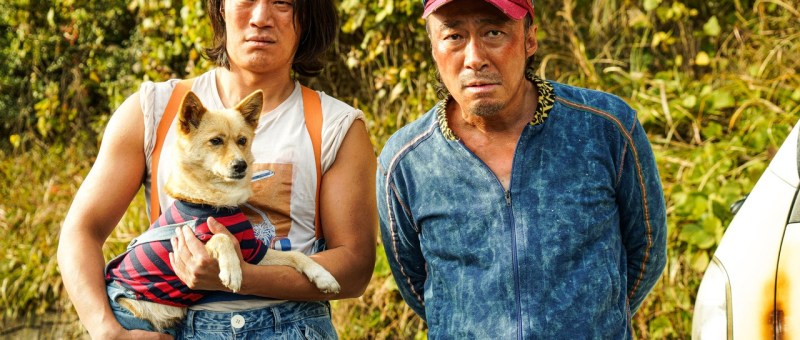
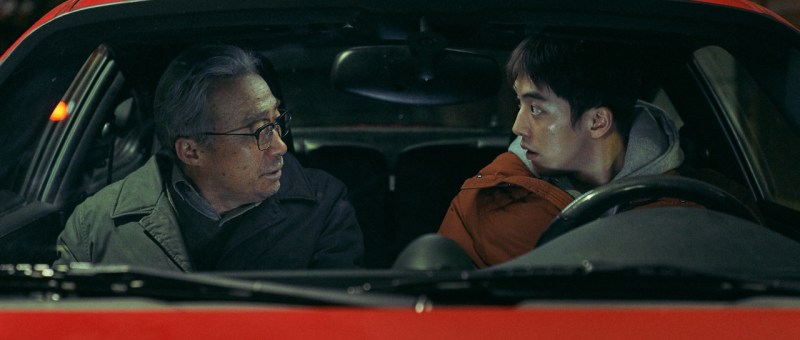
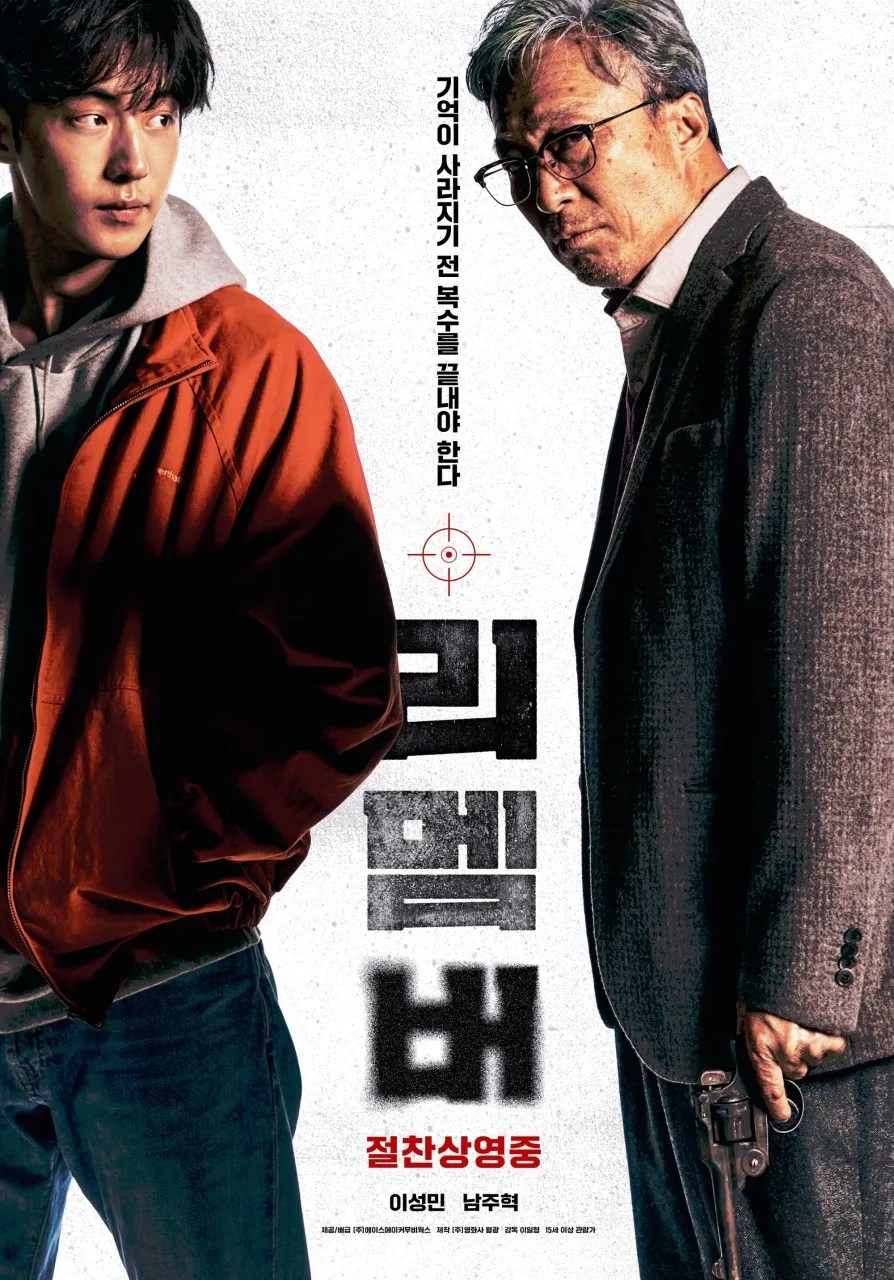
“Justice is preserved by being just” according to the idealistic hero at the centre of Na Hyeon’s Yaksha: Ruthless Operations (야차, Yacha) , though he’ll eventually come round to his sometime mentor’s belief that “Justice must be preserved by any means necessary”. Any means necessary is indeed the motto of the titular hero named for the unpredictable Buddhist deity and regarded by his superiors as a dangerous maverick though as it turns out he does indeed have justice in mind even if his idea of justice might not fully align with those whom he is intended to serve. 

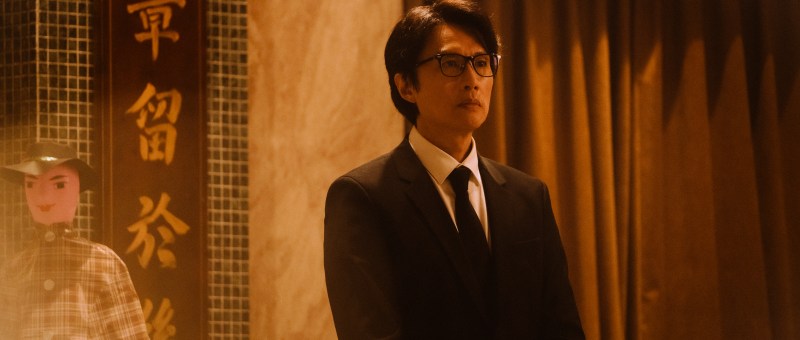
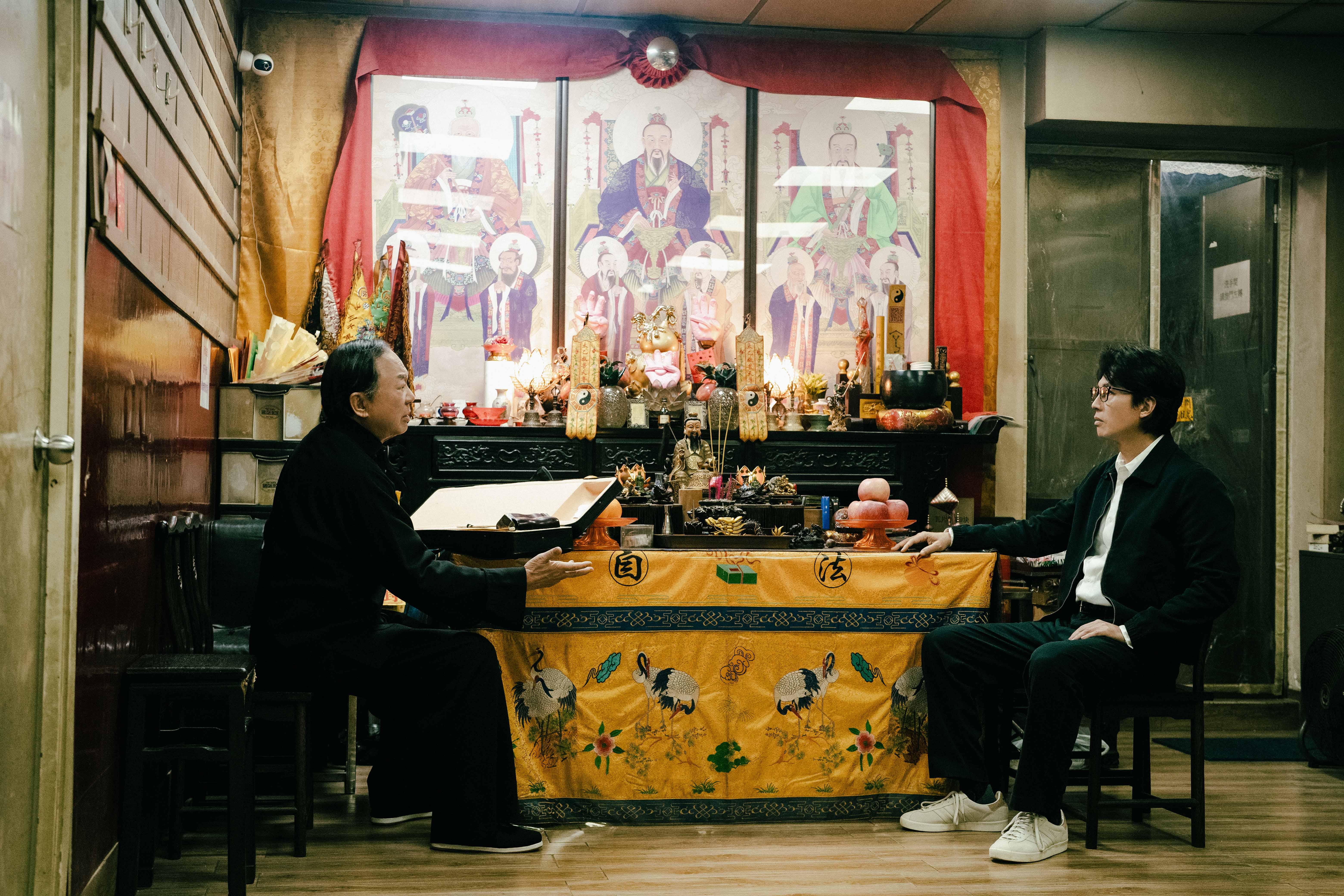
The failure of the regular justice system is signalled in the film’s opening as idealistic prosecutor Ji-hoon (Park Hae-soo) finds his case against a corrupt CEO falling apart because of procedural mistakes by his own rookie team. Humiliated on the courthouse steps, Ji-hoon is given a punitive transfer to the NIS where he is kept out of trouble, told to draw a salary but given very little work. He and his jaded colleague who was once known as the “bulldozer of justice” but has been ruined by this bizarre form of punishment and no longer has the will do to anything much at all mostly spend their time doing jigsaw puzzles stave off boredom. When his colleague admits there’s no more hope for him and turns down an offer of reinstatement, Ji-hoon agrees to travel to Shengyang, a hotbed of international spies in China, to find out what’s going on with a series of false reports from their agents on the ground led by maverick black ops officer Yakska. 

What he soon discovers is that he’s been dragged into some murky geopolitical shenanigans between North Korean spies, his target’s possibly corrupt team, and the Japanese who are once again up to no good trying to prevent a possible alliance between North and South believing such a union would present too much of a threat to their economic position in North East Asia. His problem is that Yaksha’s field craft does not measure up to what he regards as appropriate conduct. He engages in firefights and commits what seem to be summary executions while later threatening to torture a hostage to force her to reveal the location of their missing asset, a North Korean financial kingpin, Moon (Nam Kyung-eup), who had been acting as a double agent for the Japanese but had become disillusioned with their imperialist outlook and decided to defect to the South bringing valuable information with him. 

It has to be said that however uncountable it may be to see a Japanese spy who behaves like a gangster committing acts of torture in a well appointed lab on a Chinese woman in China, Yaksha cannot exactly claim the moral high ground having attempted to do something similar only in his filthy hideout in an abandoned mine. Ji-hoon’s dilemma is that he doesn’t know whose side, if any, Yaksha is on or if he’s after the North Korean trillions Moon had been managing rather than a hugely beneficial national asset. Exposed to this morally grey world, however, Ji-hoon’s idealist edges begin to soften as shifts towards Yaksa’s “by any means possible” philosophy while trying to stop evil Japanese spy turned lobbyist from recovering the valuable data Moon had to sell and going on to do even more nefarious deeds undermining the possibilities for reunification along with the Koreas’ economic potential. 

Somewhat uncomfortably, the film does then more or less condone torture, betrayal, and summary execution if conducted in the pursuit of “justice” even while simultaneously approving of Ji-hoon’s idealistic pursuit of the rich and powerful who continue to misuse their position and cause pain to ordinary people. It comes to something when the safest ally is a gang of human organ traffickers with whom Yaksha seems to be suspiciously familiar. Nevertheless, what Yaksha eventually asks Ji-hoon to do is to “clean things up” hinting at the duo’s complementary qualities as they pursue “justice” in both the legal and more immediate senses. Filled with some quite literally explosive action sequences along with some admittedly broad comic book antics as the guys face off against Hideki Ikeuchi’s Japanese arch villain Yaksha is certainly a good looking film if one with a dark heart beating at its centre. 


Original trailer (English subtitles)

Techno Brothers (テクノブラザーズ, Hirobumi Watanabe, 2023)

Hirobumi Watanabe has sometimes cast himself in his films as a misunderstood, struggling filmmaker at the mercy of his own thwarted ambitions and the vagaries of the Japanese indie movie scene. With Techno Brothers (テクノブラザーズ) he shifts his perspective a little in delivering an absurdist satire on the relationship between an artist and the oppressive managerial forces by which they are exploited but are otherwise largely unable to escape.

In his previous films, the characters that Watanabe plays have often stood out for their motormouth quality often going on lengthy rants to a largely silent straight man but the total powerlessness of the titular Techno Brothers is signalled by the fact that they are never permitted to speak except through their music. The film contains several scenes of them standing in identical red shirts with black ties and sun glasses, each with an identical impassive expression as they play their 80s style synth techno music inspired alternately by that of Yellow Magic Orchestra and Kraftwerk. They’ve been picked by manager Hiromu who also dresses in a red shirt and sunshades but wears a leopard-print jacket over the top as if to make clear that she is the one in control. 

Hiromu repeatedly makes clear that she believes Techno Brothers are musical geniuses destined to echo through time like Bach and Mozart but in the end she is only really interested in exploiting them financially rather than supporting the art she claims to have so much faith in. In a running gag, she takes them to several restaurants and orders enough food for four people but seemingly doesn’t let them eat any of it and tells the wait staff just to bring them tap water. Why the Techno Brothers allow themselves to be treated this way is a mystery with only the implication that they must really believe that Hiromu can get them career success and are too afraid of ruining their chances to stand up to her. 

Hiromu tries to get them a gig with a local fixer who for some reason is a little girl (played once again by Watanabe’s niece Riko Hisatsugu) who only speaks through her assistant, played by Watanabe in one of several sides roles he assumed throughout the film. She tells Hiromu that Techno Brothers stink and they aren’t marketable locally because their music is out of touch with the times and people won’t understand it (echoing a description of his filmmaking Watanabe has given in his previous films). Boss Riko advises them to seek their fortunes in Tokyo, but though they may briefly leave Otawara they never get out of Tochigi and stuck playing a series of low rent gigs like busking in parks or entering what turns out to be a competition mainly for local children and other unsuccessful adult musicians as in the wonderful folksinger parody once again performed by Watanabe. On one occasion they’re hired by an eccentric orchid grower who wants to see if the kind of music he plays has an effect on the way his flowers grow.

For all its absurdity the film skews surprisingly dark in Hiromu’s indifference the safety of the band, wilfully starving them which apart from anything else would seem to be counterproductive in preventing them from being able to perform not that their performances require much in the way of animation anyway. She books herself fancy hotel rooms and sends them out on the street, keeping the money for herself, while denying them any form of individuality or autonomy. Even if at one point they begin to rebel or make a run for it, they are unable to escape her grasp entirely and are once again rendered mute tools of her own success. 

Then again, it seems Hiromu has bosses of her own to placate and is also on the search for a missing sister though if she treated her like she treated the Techno Brothers maybe she requires no rescue. A brief post-credits coda hints at a wider world of dark corporate finagling the Techno Brothers may have no clue they’re a part of though a title screen assures us that they will return even if currently they seem to have landed right back where they started with little to show for their pains. In this perhaps Watanabe signals his position as an independent filmmaker locked onto a circular path of frustration and appeasement but also a determination to continue making art that people might not understand no matter what the cost.


Three Old Boys (三叉戟, Gao Qunshu, 2024)

In a surprising development of Chinese propaganda cinema, the once untouchable subject of police corruption has become a prominent feature albeit often in tales of righteous cops who stand up for real justice against the few bad apples who’ve allowed themselves to be corrupted by contemporary capitalism. Then again, its subject matter might explain why TV police procedural veteran Gao Qunshu’s Three Old Boys (三叉戟, sānchājǐ) has been languishing on the shelf since at least 2020 if it were not also for the inevitable effects of the pandemic. 

In any case, Gao’s film has a distinctly retro vibe with use of classic Chinese pop and very ‘70s soundtrack while its maverick cop heroes all dress in the fashions of 40 years previously. All born in the late 1960s, they are products of an even more authoritarian era and began their careers in the late 1980s. Like any other old cop movie, they bemoan the restrictions of the contemporary society and suggest modern notions of appropriate police behaviour prevent them from doing their jobs which has its degree of awkwardness on the one hand implying the modern police force is now not so hardline but also that it should be because that’s what gets the job done. 

As they contemplate retirement, the trio are offered positions as part of a new squad set up to tackle economic crimes and specifically international money laundering, the chief problem with being that the criminals had the effrontery to move the money out of China which is stealing from honest, hardworking, Chinese citizens aside from having already ripped them off with fraudulent investment schemes and good old-fashioned blackmail operations. Of course, as it turns out, the case has a connection to something that happened 20 years earlier and police officer Cui’s (Huang Zhizhong) desire for revenge on the gangster king pin, Huang Youfa (Jin Shijie), who caused the death of his younger brother murdered by gangster Donzgi who was then shot dead by fellow officer Big G (Jiang Wu). 

The convoluted narrative is heralded by a homeless man who takes the police chief hostage and mutters something about a sword of justice that sounds like something right out of a wuxia serial before being updated to the present day. The sword does actually make a reappearance and is wielded by Big G against a young whippersnapper out for revenge and to take care of what he sees as corruption in the earlier generation. When the trio are first put on the case, they are given a young rookie to help them because he’ll be able to do the tech stuff which the old guys probably can’t because their idea of policing was largely rooted in their fists and a capacity for intimidation. But this doesn’t really work with the youth of today who are for some reason fond of reminding them they aren’t their fathers so they don’t have to do what they say. This is particularly true of young thug Blondie who is caught between Ghost, the old gangster king, and Qing an upstart who is actually working for Huang but in pursuit of his own particular goals. 

Huang has his claws well and truly embedded in the modern society and has it seems manoeuvred favourable people into the police force ensuring that Cui and his team are neutered before they get the chance to do anything. Then again, Big G seems to have a very co-dependent relationship with Ghost who tells Blondie off for getting into a fight with him because cops are off limits. Nevertheless, the point is to dismantle Huang’s networks of influence to restore the integrity of the police force so they can enforce the law which exists for the protection of the people. It’s all rather confusing, but generally lightened by the intense action sequences designed by Yoo Sang-Seob which are also suitably retro but make good use of sword play along with a motorcycle chase. Perhaps ironically inspired by Hollywood hero cop dramas, the film ends with a regime change and a new photo being taken of the guys in their more modern uniforms receiving a commendation with the clear indication that something has been put to rest and the rebellion suggested by Qing’s attempt to steal power from the old quelled while the old boys seemingly decide that justice requires they put off their retirement just a little longer.


International trailer (English subtitles)

Hovering Blade (彷徨之刃, Chen Zhuo, 2024)

The funny thing about Hovering Blade (彷徨之刃, pánghuáng zhī rèn) is that it gets away with suggesting that the police won’t investigate properly and is quite unexpectedly sympathetic towards the hero’s desire for first hand retribution, albeit with the caveat that the police are seen to be investigating but possibly hamstrung by otherwise sensible legislation about the age of criminal responsibility. The Keigo Higashino novel on which the film is based had also been rooted in a moral panic that children were deliberately committing heinous crimes in the knowledge they couldn’t legally be punished for them.

The perpetrators in this case are a little older, though the argument is that if they had been properly charged for an offence committed in childhood they wouldn’t have gone on to commit further crimes in the belief that they are above the law. One of the men feels that in fact he is because it’s clear his wealthy and influential father often clears up his messes for him. A secondary issue hints at an anxiety about the nature of justice given that minors who commit serious crimes such as rape or murder receive much lighter sentences meaning they could be free to live a relatively normal life in just a few short years when their victims will obviously have no such opportunity.

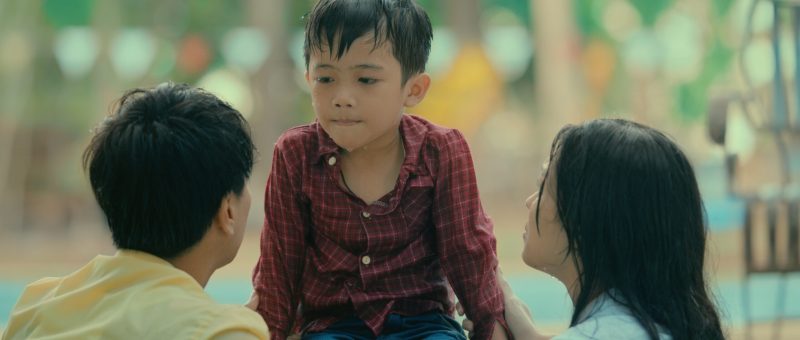
Of course, that’s the point. The implication is that these young people were not fully capable of understanding their actions and could still be rehabilitated to become upstanding members of society. But that might not seem right to the families of their victims such as Li Chanfeng (Wang Qianyuan), a doting single father whose only daughter was raped an murdered by a pair of young hooligans with the assistance of their bullied friend. With judicial progress slow, he receives a tip off from the instigators’ underling and pays a visit to one of the other men who assumes he’s a burglar and attacks him leading Chengfeng to beat him to death with a baseball bat while a video of his daughter’s rape plays on the computer screen. 

The film presumably gets away with its hints towards vigilanteism by the fact the police are right behind him despite having received no tip off. The lead officer is however himself conflicted in beginning to doubt he can provide real justice because of the way the law responds to children who commit crimes and appears to sympathise with Changfeng to the extend he appears reluctant to catch him. The TV news and the people watching it also seem to understand and approve of his quest and desire for vengeance with a woman even helping him hide from the police if also urging him to turn himself in.

But the kind of justice Changfeng wants is incredibly direct. He doesn’t want these men off the streets because he fears for other people’s daughters, but wants to ensure they can’t live the share of life his daughter has been denied. The fact that, if legal justice is served, they’d get out and still be young men pains him without end and only death will answer it. Chased by the police, he begs them to kill him too to release him from his torment. 

Chen Zhuo keeps the tension high with a series of exciting action sequences including one though a disused water park near a moribund hotel the bad guys have been using as hideout. The reasons for their crimes are never explained aside from the ringleader’s dependence on his father, though they are assumed to be mere devilment and rebellion, an attempt to circumvent the system knowing they can’t be held legally responsible for their actions.

The familiar series of title cards at the film’s conclusion explain that the police caught all the wrongdoers while they have also lowered the age of responsibility though it wouldn’t have made any difference in this case. A flashback to another trio of teens suggests that they are emboldened by the fact the law can’t touch them, but the bigger issue is likely to be the way the system is corrupted by money and unequal access to justice. Changfeng is after all a lowly construction worker and is largely left on his own with nothing left to live for but vengeance. His quest to kill the killer is also a quest to kill himself and end his suffering. Zhuo follows him through the grimness of this everyday life, the squalid rooms and his general sense of emptiness but finally returns to the world of state justice and apparently compassionate police only sorry that they couldn’t do more to protect their fellow citizens from the “bad kids” of a changing society.


Original trailer (English subtitles)

Don’t Call it Mystery (ミステリと言う勿れ, Hiroaki Matsuyama, 2023)

Totono once again finds himself at the centre of of conspiracy in the big screen edition of the popular drama based on the manga by Yumi Tamura, Don’t Call it Mystery (ミステリと言う勿れ). Embroiled in what first looks like a family succession drama as he points out recalling The Inugami Family, he soon discovers there’s more in play than might be expected but also that the wounds of the past are slow to heal and often cause people to act in unexpected ways.

In any case, he ends up getting involved care of Garo (Eita Nagayama) who is still on the run following the end of the TV series so unable to help a teenage girl, Shioji (Nanoka Hara), who is one of four grandchildren in line to inherit her grandfather’s legacy if only she can fulfil the bizarre quest he left for them in his will. Her worry is that, as family law dictates one person inherits everything, there will inevitably be deaths and violence involved as the cousins battle each other for the prize of a giant estate near Hiroshima where Totono also just happened to be on a day trip.

Once again, the running gag is that mystery just seems to find Totono who only wants to get on with living his peaceful life as a student eating curry and going to museums though there are some tantalising clues to his own backstory littered through the piece such as his unexpected familiarity with the city of Hiroshima. The case this time as also has a link to Totono’s famously curly hair which only adds to his Kindaichi-esque sense of eccentricity deepened by his reluctance to allow Shioji’s family to do his laundry or to a take a bath in another person’s home. But these foibles are, as he points out to those around him, reflective of a conflict in what is considered considerate behaviour. They think they’re being nice by offering to do his laundry, but he doesn’t want them to so it’s just additional inconvenience for him much in the same way as you if offer someone a lift to the station thinking that’s easier for them and they accept not to cause offence but are secretly disappointed because they were looking forward to the walk.

Totono’s defining characteristic as an accidental detective is indeed his emotional intelligence and ability to pick up on the slightest things that might be bothering those around him, often prone to lengthy monologues that advocate for a more compassionate world and better understanding between people. As the mystery becomes clear, he begins to realise that the parents of the grandchildren were trying to protect them from the toxic legacy of tradition and end the ridiculous family succession drama that apparently led to the deaths of some of their immediate relatives. He gives similar advice to Shoji’s cousin Yura (Ko Shibasaki) on hearing her father tell her that women are happiest as wives and mothers and she should drop what she’s doing to pay more attention to her husband and daughter. Totono takes him to task for his sexist thinking and tells him it’s unfair, advising Yura that she might not unwittingly want to pass these ideas on to her own daughter by suppressing herself to conform to her father’s outdated idea of conventional femininity.

As Totono says, children are like wet cement and the things dropped on them leave their mark for the rest of the child’s life. It seems that the family was in a sense haunted by a child they’d wronged and worried would someday come back to wreak their revenge as a phantasmagorical embodiment of their latent guilt and shame about how they usurped their fortune. What the grandchildren come to realise, is that their late parents did actually understand them and wanted them to be happy following their own paths rather than bound by tradition or outdated notions of properness regardless of whatever happens with the grandfather’s more literal legacy and the buried skeletons it contains. Filled with the same kind of gentle intrigue and mystery along with the compassionate spirit of the TV series and manga, the big screen edition features another difficult case for Totono that also begins to illuminate his own troubled past and the secrets behinds his empathetic soul.


Don’t Call it Mystery screened as part of this year’s Toronto Japanese Film Festival.

Original trailer (English subtitles)

Missing (ミッシング, Keisuke Yoshida, 2024)

Why is it that we rush to judgement rather than empathy? When a little girl disappears during a short walk from a local park to her home, less than helpful members of the public are quick to turn on the parents while news media, eager for ratings and clicks, is only too happy to give the people what they want casting aside ethical concerns in their exploitation of the parents’ pain all while the little girl remains missing.

In this society, it’s quite normal culturally for children of Miu’s age, six, to walk short distances alone and be left unsupervised at home at for short periods of time. Nevertheless, the public is quick to blame the mother, Saori (Satomi Ishihara), because she had gone to a concert that night and didn’t notice frantic calls from her husband worried because Miu was not at home when he got back from work at 7pm. Soari too blames herself, as is perhaps natural, but it’s unreasonable to expect anyone to never go out for an evening again after having children. Her husband comes in for less scrutiny, which might be surprising, though her brother, Keigo (Yusaku Mori), soon finds himself the prime suspect having been the last to see Miu and allowed her to walk home alone though he would previously have walked her back.

The family find themselves under scrutiny with their every move judged by an unforgiving society. When they dare to buy fancy pastries, online trolls suggest they can’t be all that bothered about Miu after all and are living the high life with the extra money they no longer need to spend on her. Given all that, it might be surprising that they turn to the media for help but in their desperation to find Miu they will leave no stone unturned. Idealistic reporter Sunada (Tomoya Nakamura) seems to want to help them, but is constantly undermined by his bosses who pressure him to take the story into more sensational territory. Though he wanted to write a human interest piece supporting the parents and raising awareness about Miu’s disappearance, he ends up placing them in the firing line for even more trolling and particularly of Saori’s brother Keigo who is an introverted, awkward man not suited to appearing on television. 

Sunada says he wants to help, but it’s undeniable that the media is exploiting the parents’ desperation raising serious ethical concerns as to how they safeguard sources and subjects while shaping the narrative around sensitive issues. Sunada takes a producer to task for placing images of a cement mixer and the sea into the ident for the piece as if it were hinting at what might have happened to Miu but really what the station is most interested in is digging up dirt on the family rather than drawing out new information on the case. A fellow journalist is having great success with a salacious story about the mayor’s son committing fraud, but his piece is less crusading investigative journalism than gossip inviting judgement. Disliking his flippant attitude, Sunada reminds him their job’s not to make people laugh, but his colleague gets a fancy promotion to head office while Sunada is stuck doing random feel good stories about seals.

Their treatment at the hands of the media also exposes a divide within the couple with Saori often frustrated by her husband’s attitude, feeling as if he isn’t invested enough. Yutaka (Munetaka Aoki) suggests simply not reading the online comments and ignoring the trolls while Saori feels compelled to defend herself. He is also warier of pranks and scammers, unwilling to simply jump on every lead out of desperation when so many people seem intent on causing them further pain. Perhaps it makes people feel more in control of their lives to blame the parents, as if something like this couldn’t happen to them because they make what they feel to be better choices, rather than accept that life is random and unfair and little girls can disappear into thin air mere steps from their own door. Unable to find her own daughter, Saori begins defending other people’s children getting a job as a crossing guard to ensure they reach home safely while simultaneously frantic and afraid, handing out fliers to a largely disinterested populace ever hungry for novelty and excitement and embarrassed by her pain even as they continue to feed on it.


Missing screened as part of this year’s Toronto Japanese Film Festival.

Original trailer (English subtitles)

(Ab)normal Desire (正欲, Yoshiyuki Kishi, 2023)

There’s a pun embedded in the Japanese title of Yoshiyuki Kishi’s heartfelt drama (Ab)normal Desire in that first character in the word for “sexual desire” (seiyoku, 性欲) has been replaced by one that can be read the same but has the meaning of “correct”, or “proper”. But “normal” is also relative construct that implies conformance with the majority even if that may not actually be the case. As one of the protagonists later remarks “everyone is pervy” though they themselves feel such a degree of shame and otherness that it’s largely prevented them from living any kind of life at all.

In that sense it may be hard to understand why a fetish for water would invite such severe self-loathing in that it causes no harm to others if admittedly resulting in ridicule if exposed. Then again, society can be a fierce watchdog. Department store shop assistant Natsuki (Yui Aragaki) is taken to task by her pregnant colleague who refuses to take her seriously when she says she’s not really interested in getting a boyfriend before giving her a lecture about her biological clock. Though Natsuki appears uninterested in her vacant prattling, the woman later becomes upset and harshly tells her that she was only trying to be “nice” because she felt “sorry” for her and that making people be nice to you in this way is actually a form of harassment which, whichever way you look at it, is some particularly twisted logic.

Her alienation seems to stem from the fact that she feels “abnormal” and that her fetish for water is a part of herself she must be careful to hide. Her parents watch a news report on Tokyo Rainbow Pride and marvel at the idea that there are now choices other than marriage and children but even among the young there remains confusion and shame amid an inability to reconcile the seemingly opposing concepts of “normality” and “diversity” as they struggle to define themselves. A plan to have a male dancer who usually dances in a masculine style dance in a more feminine way backfires when he points out that asking someone to dance in a way they don’t want to doesn’t really do much to advance “diversity”.

But diversity isn’t considered an ideal by all and parents of young children find themselves confused and conflicted when their kids begin to reject conventionality at an early age by asking to withdraw themselves from school and instead focus on other kinds of education that align with their interests. Challenged by his wife about why he never listens to their son’s concerns, prosecutor Hiroki (Goro Inagaki) replies that he should “just be normal” and later describes people who are “unable to live normal lives” as bugs in the system which must eradicated. A symbol of lingering authoritarianism, Hiroki is an intensely conservative man obsessed with properness who thinks it’s his job to decide which crimes everyone is guilty of rather than make any attempt to understand the world around him outside of binary terms like right and wrong or normal and abnormal. When his assistant passes him information on fetishes as a potential explanation for the case of a man who repeatedly steals taps, he simply rolls his eyes and dismisses it.

Yet he perhaps has his own fears and internalised shame as evidenced by his outrage on discovering that another man has been coming to the house to help his wife with tech setup for their son’s new outlet in livestreaming and not only that, he was able to blow up the balloons that Hiroki himself failed to inflate. It’s his rigid authoritarianism that eventually alienates his wife and son who come to see him only as an oppressive bully unable to accept anything that differs from his own definition of “normal”. Finally, he’s the one who is isolated, imprisoned by his own repression and lack of understanding or unwillingness to accept those around him.

Even so, despite its positive messages that no one should feel themselves alone or that society has no place for them the film muddies the waters by introducing fetishes that are necessarily problematic in that they cause harm to others who do not or cannot consent and could not and should not be accepted by mainstream society though oddly those that have them seem to feel less shame only fearing being caught because acting on their desires is against both moral and judicial laws. In any case, in discovering togetherness, that they are not alone, those who feel their desires to be “abnormal” can begin to ease their loneliness and find a place for themselves in an often judgemental world.


(Ab)normal Desire screened as part of this year’s Toronto Japanese Film Festival.

Original trailer (English subtitles)

Great Absence (大いなる不在, Kei Chikaura, 2023)

“She’s not here. That’s everything,” is what the hero of Kei Chikaura’s poetic drama A Great Absence (大いなる不在, Oinaru Fuzai) is told when enquiring about the whereabouts of his missing stepmother and in the end is forced to accept it. That’s all there is, she isn’t here. The ways that Naomi (Hideko Hara) is there and at the same time not become central to the narrative in which absence is also of course a deeply felt presence.

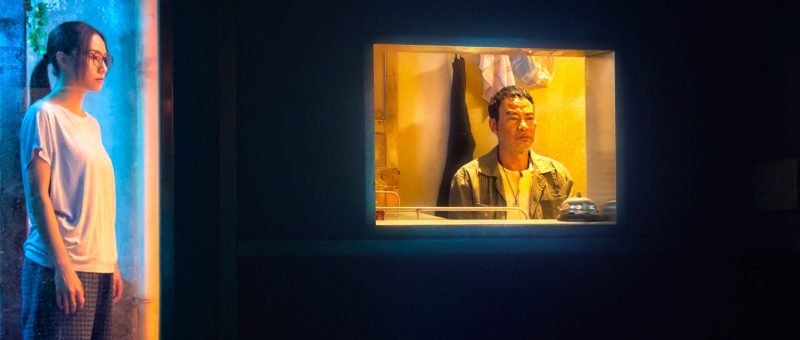
That might also describe Takashi’s (Mirai Moriyama) relationship with his estranged father whom he’s barely seen since his parents divorced when he was 12. Yohji (Tatsuya Fuji) was evidently a difficult man, fussy and superior. Every line that comes out of his mouth is delivered as a mini lecture and generally filled with barbed criticism even if that might not really be what he meant to say. That might be why Takashi has stayed out of contact with him, though he has little choice but to respond after being contacted by the police who tell him that Yohji called them claiming he and his wife were being held hostage. Apparently suffering with advanced dementia, Yohji has now been placed in an eldercare facility though no one seems to know what’s happened to Naomi with a vague idea that she had been hospitalised sometime after falling ill and that living alone exacerbated Yohji’s cognitive decline.

Someone later asks Takashi why he came given that with the long years of estrangement no one would have blamed him for saying it was no longer any of his business, but there does seem to be latent desire for some kind of connection albeit one frustrated by awkwardness and the unhealed wounds of the past. Yohji had been a ham radio enthusiast which suggests that he was trying to reach out to people though struggled with communication and only ever found the words in writing as evidenced by the unexpectedly poetic love letters Takashi finds stapled into the diary which once belonged to Naomi but now somehow rests with him. 

Takashi spends much of the rest of the film wanting to return the diary as if he would be abdicating responsibility for it, refusing this particular inheritance along with any curiosity about the man his father is both then and now. In the care home, Yohji believes he is being held prisoner by a foreign power and offers only bizarre and disturbing explanations for what might have happened to Naomi, while attempts to communicate with the sons from her previous marriage are frustrated by longstanding resentment. Takashi’s stepbrother informs them that Yohji refused to contribute to her medical fees claiming he didn’t see why he should though it seems that he is trying to enact some kind of revenge or is seeking compensation for what he feels Yohji took from him. He also blames Yohji for the decline of his mother’s health convinced that the strain of living someone so casually cruel even before the intensification of his dementia eventually caused her to become ill.

He might in a way have a point, though it seems it was absence that also ate away at Naomi as the man who wrote her all those long and profound letters began to slip away, becoming aggressive and irritable. He may not have forgotten her, but also did not quite recognise the woman she was. It may be that it became impossible for her go on living with someone who was no longer there just as Yohji feels the ache of her absence and is mired in the regret and longing of the young man he once was who first let her slip through his fingers. 

This sense of absence may also have crept into Takashi’s own marriage with his wife (Yoko Maki) complaining that he may not have told her what had happened with his father if he had not needed to cancel another family event, nor did he want her to accompany him though eventually she insisted and perhaps succeeds in closing a gap through their shared attempts to unravel the secrets of Yohji and mysteries of the past. The sequences from the play which Takashi is performing that bookend the film, he speaks of a broken king who may not even be a king at all and echoes the sense in which Yohji has finally become absent from himself. At times profound and elegiac, the crisp 35mm photography adds to the sense of ongoing melancholy and irresolvable loss if tempered by an elusive serenity.


Great Absence screened as part of this year’s Toronto Japanese Film Festival. It will also be making its New York Premiere as part of this year’s Japan Cuts on July 18 ahead of its theatrical opening in the US on July 19.

Stay Mum (かくしごと, Kosai Sekine, 2024)

Late into Kosai Sekine’s maternal mystery Stay Mum (かくしごと. Kakushigoto), a doctor describes the behaviour of an old man living with dementia as a “convenient delusion” and later remarks forgetting is a kind of salvation that liberates him from what was apparently a very stressful life of repression and properness. Yet to the heroine there’s something very unfair about someone who has hurt her so deeply being allowed to just forget all about it while she has to go on carrying the legacy of his unkindness along with her own grief and pain.

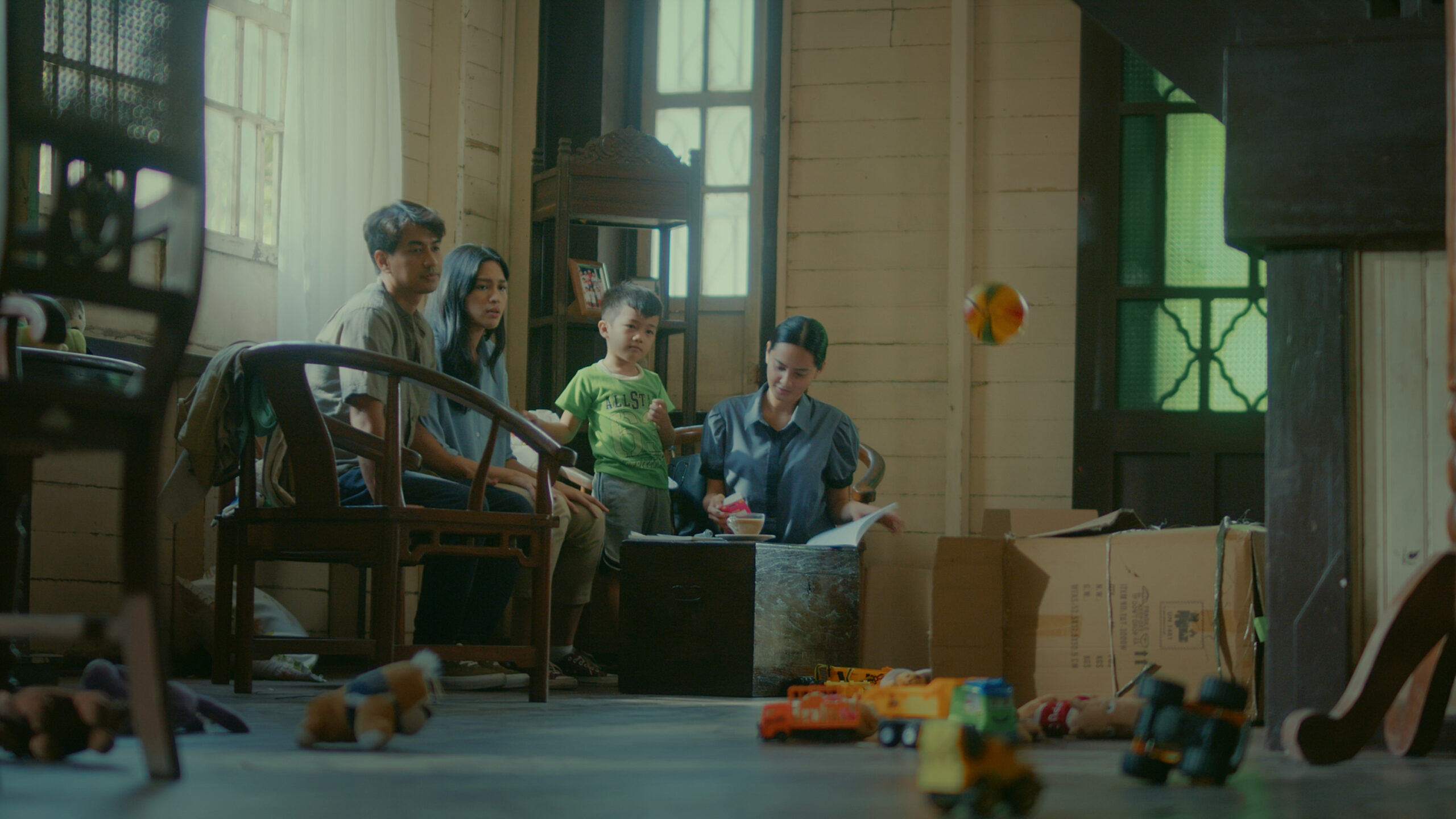
Ironically enough, she finds herself caught in the middle as a mother and a daughter after taking in a little boy her friend accidentally ran over who appears to have extensive scars and bruising that suggest he has been mistreated by his birth family for some time. The boy also claims to have lost his memory, leading Chisako (Anne Watanabe) to fill in the blanks for him. She gives him a name, Takumi, and tells him that he is her son intending to raise the boy covertly while temporarily staying in her rural hometown to care for her estranged father after he was found wandering around in a state of undress.

Even Takumi realises the irony of Chisako’s father Ko (Eiji Okada) falling further into a state of forgetting just as he is learning to “remember” thanks to the memories Chisako imparts to him in their fictional shared history. The film’s English title is a kind pun playing the fact that everyone involved must “stay mum” in order to maintain this delusion of family life while also hinting Chisako’s desire to reclaim her maternity having lost a child of her own. The Japanese title more literally translates as “that which is hidden” while the novel that it’s based on is titled the more direct “lie” though of course it leaves ambiguous to which lie it is referring. But as the doctor had said, it becomes a “convenient delusion” for everyone which grants them a kind of peace and serenity that allows them to reclaim exactly what they wanted out of life but perhaps could not get in any other way.

But of course, it can’t last and at the same time also delays a final confrontation with the reality that would truly allow them to move forward. Someone later accuses Chisako of brainwashing Takumi, essentially kidnapping him while forcing him to play the role of her son as if she were simply mentally disturbed and desperate to overcome her grief rather than genuinely concerned and morally outraged by the idea of allowing a boy who shows clear signs of abuse to return to a home in which he will continue to be mistreated. But at the same time, she struggles to relate to her father and behaves towards him in ways which to Takumi may seem abusive, shouting at and at one point slapping him after a particularly unkind remark. Her inability to control herself further compounds her sense of failure as both mother and daughter, still carrying an internalised sense of inadequacy because of her father’s toxic parenting while in the midst of forgetting he is perhaps still able to perceive the mistakes he made that cost him a functioning relationship with his daughter.

Ko spends his days crafting statues of the goddess of mercy as if begging for atonement all while unable to recall the face he wished to give her. The irony is that as the doctor said, forgetting allows him to drop his guard and to remember the costs of the way he lived his life. As Chisako counters there are also things which shouldn’t be forgotten no matter how painful they may be to remember, along with those which cannot really be forgiven, though the act of wilful forgetfulness does perhaps provide a salve for the wounds of the past. Though at times overly contrived and strikingly predictable, Sekine’s empathetic contemplation of the emotional truths behind the bonds of parents and their children ends in a violent confrontation with corrupted parenthood but equally in a gesture of mutual salvation which ironically depends entirely on the willingness to speak the truth both emotional and literal. 


Stay Mum screened as part of this year’s Toronto Japanese Film Festival

Original trailer (no subtitles)

All the Long Nights (夜明けのすべて, Sho Miyake, 2024)

The latest in a recent series of films critical of Japan’s contemporary employment culture, Sho Miyake’s All the Long Nights (夜明けのすべて, Yoake no Subete) presents a more compassionate working environment as key to a happy and fulling life brokered by small acts of attentive kindness in the knowledge that we are all carrying heavy burdens. Based on a novel by Maiko Seo, the film captures a sense of serenity that can be found in the wonder of life itself and the discovery of the “infinite vastness beyond the darkness” that a starry sky presents.

A lack of compassion in the generalised society is signalled early on in the fact that the heroine, Misa (Mone Kamishiraishi), struggles with a condition that is little understood and belittled by those around her. On bonding with workplace colleague Takatoshi (Hokuto Matsumura) who is experiencing panic disorder, he dismisses her issues as “that female thing” and suggests it doesn’t compare to the effects his condition is having on his life. She counters him that she didn’t know there was a ranking, but is obviously rankled by the refusal of the world around her to take her PMS seriously even though it causes her to lash out at others and often ruins employment opportunities because it’s impossible for her to regulate her emotions in the way that is generally expected in contemporary working culture. 

Each of them have ended up working at a small company that manufactures scientific instruments for children after originally working in larger corporate structures with very clear hierarchical systems and rigid modes of behaviour. Yet we can see right away that Misa’s colleagues are aware of her condition and seem to have accepted it. When she blows up at Takatoshi over his habit of drinking carbonated water the sound of which gets on her nerves, they gently steer her away while explaining to him not to pay it any mind. In any case, Misa is still embarrassed by her behaviour and regularly buys pastries at a nearby bakery in an act of continual atonement even though her boss tells her not to get into the habit of it.

Takatoshi’s rather rude refusal of her pastries, clumsily explaining that he dislikes raw cream, is another symptom of his aloofness and unwillingness to be a part of the office community. He is continually looking to get his old job back and looks down on this kind of work as being lower in status than a regular office job at a big company, something perhaps reinforced by his well-meaning girlfriend who seems to want him not only to get better but to reassume his former position despite the implication that it’s what made him ill in the first place. Tsujimoto (Kiyohiko Shibukawa), his former boss, however remains compassionate and supportive perhaps in part because his older sister took her own life due to workplace pressures which has made him more sensitive to the troubles of those around him. That’s also true of the boss of the science company, Kurita (Ken Mitsuishi), whose younger brother also took his own life for unclear reasons leaving him acutely aware of the importance of paying attention to the feelings of others.

It’s in this compassionate environment that Misa and Takatoshi each begin to rediscover a new sense of confidence in their mutual solidarity regarding their personal struggles along with a better idea of what kind of life suits them rather than focusing on how they’re seen by others or living up to a societal notion of what defines conventional success. As they’re tasked with creating a voiceover script for the company’s mobile planetarium, they come to an appreciation of the beauty found in darkness along with the light that shines within it in. As Misa reflects, there is nothing in life that does not change, not even the stars, but amid all that anxiety we can still help each other and live peaceful, quietly profound lives finding fulfilment in the mundane. Shot in a hazy, slightly detached naturalism the film eventually finds a joy in life’s simplicity and the warmth of human connection that exists outside of the corporate superstructures that have come to define most of our lives while otherwise robbing us of the ability to fully embrace it or ourselves.


All the Long Nights screened as part of this year’s Toronto Japanese Film Festival

Original trailer (English subtitles)