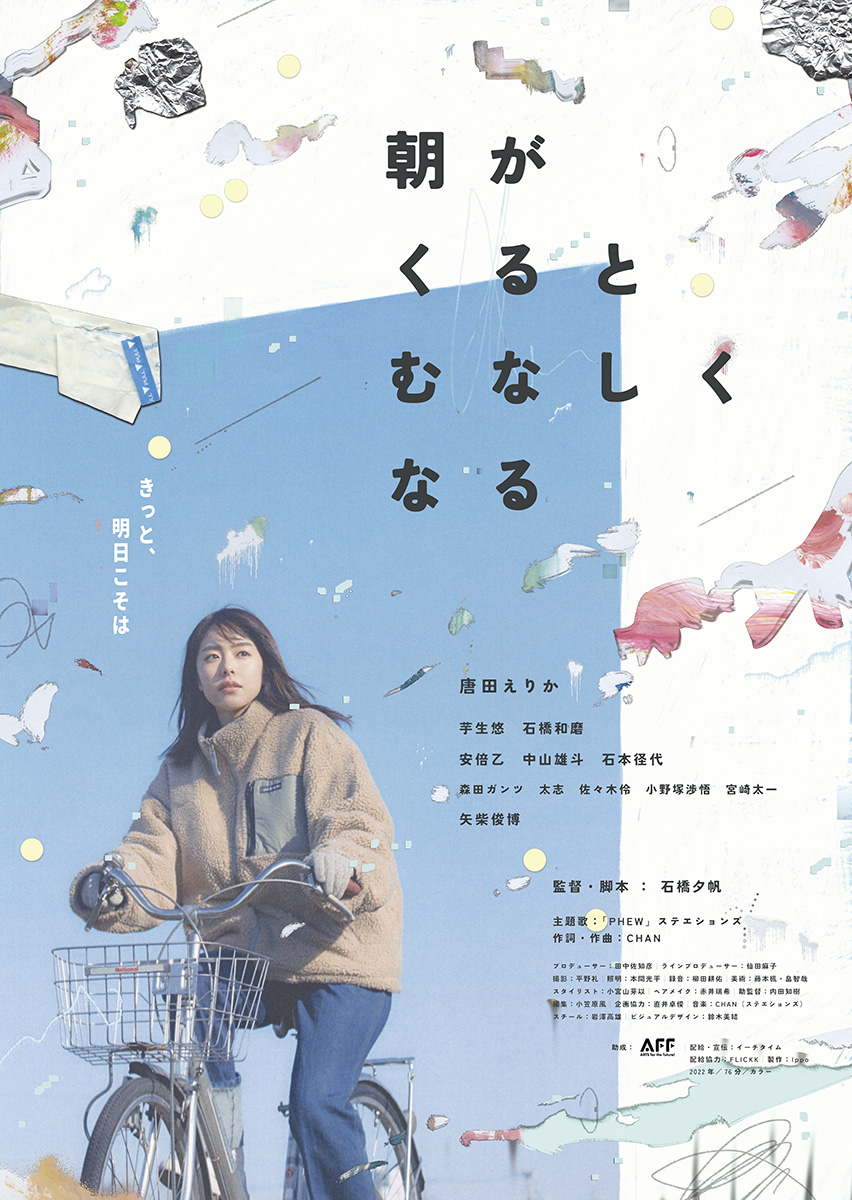
When Morning Comes, I Feel Empty (朝がくるとむなしくなる, Yuho Ishibashi, 2022)

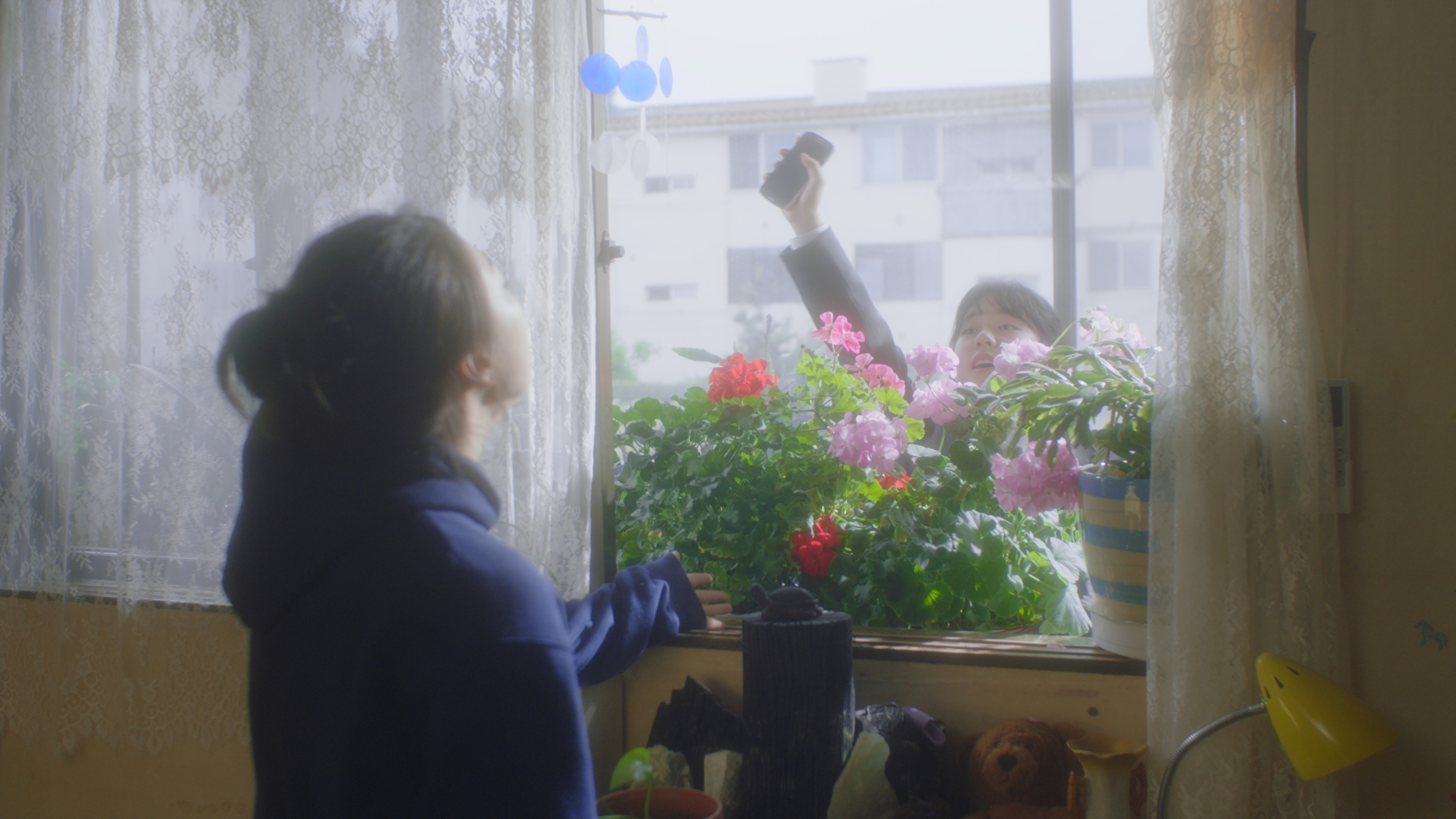
A young woman finds herself dealing with feelings of inadequacy and worthlessness after giving up on the corporate life in Yuho Ishibashi’s zeitgeisty indie drama When Morning Comes, I Feel Empty (朝がくるとむなしくなる, Asa ga Kuru to Munashiku Naru). Set against the backdrop of a society in which death from overwork is not uncommon and there have been countless reports of young people taking their own lives because of workplace exploitation, the film seems to ask if there isn’t another choice and if one can really be forgiven for rejecting the conventional path in an intensely conformist society. 

Nozomi (Erika Karata) quit her job at an ad agency six months previously and is currently working part-time in a convenience store not far from where she lives. So ashamed is she of her failure to live up to the demands of corporate life that she can’t bring herself to tell her parents that she no longer works in an office. Her co-workers at the store seem to know, but when they ask questions she tells them that she quit because of too much overtime which is ironic as her boss is forever asking her to work an additional late shift because of poor staffing levels and she always meekly agrees though never seems all too happy about it despite the extra money. 

Then again, she doesn’t seem too happy about anything. In a repeated motif, her mother sends her fresh vegetables from back home but she never has the energy to cook for herself and is usually seen eating bento from the store or slurping cup ramen. The fact her life is out of kilter is brought home to her when one side of the curtain rail in her room suddenly collapses in a bid for freedom from its imprisonment on the wall. Barely speaking and aloof from her colleagues, she seems to carry a deep-seated sense of shame that she “failed” to settle in to company life, later telling an old friend she’s unexpectedly reconnected with that she couldn’t cope with the intense overtime that often meant she’d miss the last train and have to overnight in a manga cafe or fork out for a taxi. Her boss always yelled at her, but she felt like everyone else seemed to be managing so the fault must be with her. She regards her decision to leave as a defeat and not a victory even as she recounts feelings of despair and hopelessness crossing the bridge every day to work with only a sense of emptiness in the hollowness of the salaryman dream. 

But then the film takes it title from a reflection something her younger colleague said about earnestly feeling that it was wonderful just to get up every day and come to work. Ayano doesn’t mean it as some kind of cultish devotion to the combini life or a toxic commitment to an unreasonable worth ethic, but more that she manages to find joy in the seemingly mundane even as she jokes about her nerdy college boyfriend who wears glasses, and sheepishly reveals that she’s been saving money with the intention of studying abroad. Nozomi’s only in her mid-20s, but perhaps it is a little different for these contemporary college kids who have bigger dreams and don’t feel the need to throw themselves into the corporate straightjacket just so they can feel like legitimate “members of society”. Their relative youth and sense of possibility may fuel Nozomi’s sense of failure, that she’s back doing a college kid’s part-time job at 24 and surrounded by students as if accidentally arrested in adolescence, but perhaps also shows her that there are other options and making a different choice doesn’t necessarily equate to failure. 

More than anything, it’s an accidentally encounter with a former middle school classmate (Haruka Imo) that finally allows her to make peace with herself and feel like a human being again, someone worthy of love and respect and with new hope for the future. Evoking a sense of disillusionment with the salaryman dream and the emptiness of corporate success that is devoid of human connection, Ishibashi shoots with a laidback ease that on one level reflects the heroine’s malaise but soon gives way to a comforting breeziness as Nozomi discovers a new home for herself in the wholesome pleasures of friendship and mutual acceptance as a bulwark against the vagaries of a capitalistic society. 


When Morning Comes, I Feel Empty screened as part of this year’s Osaka Asian Film Festival.

Images: (C)Ippo
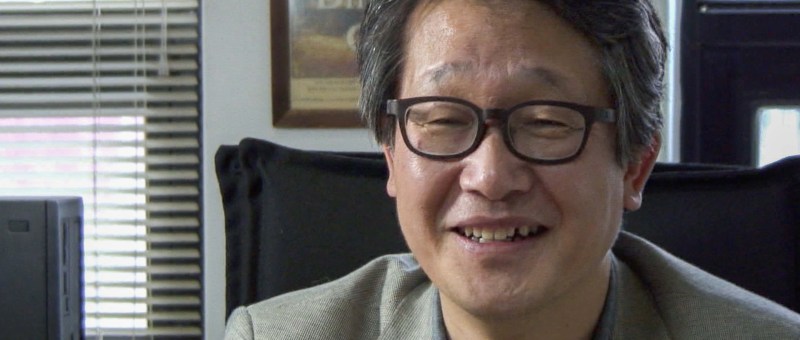
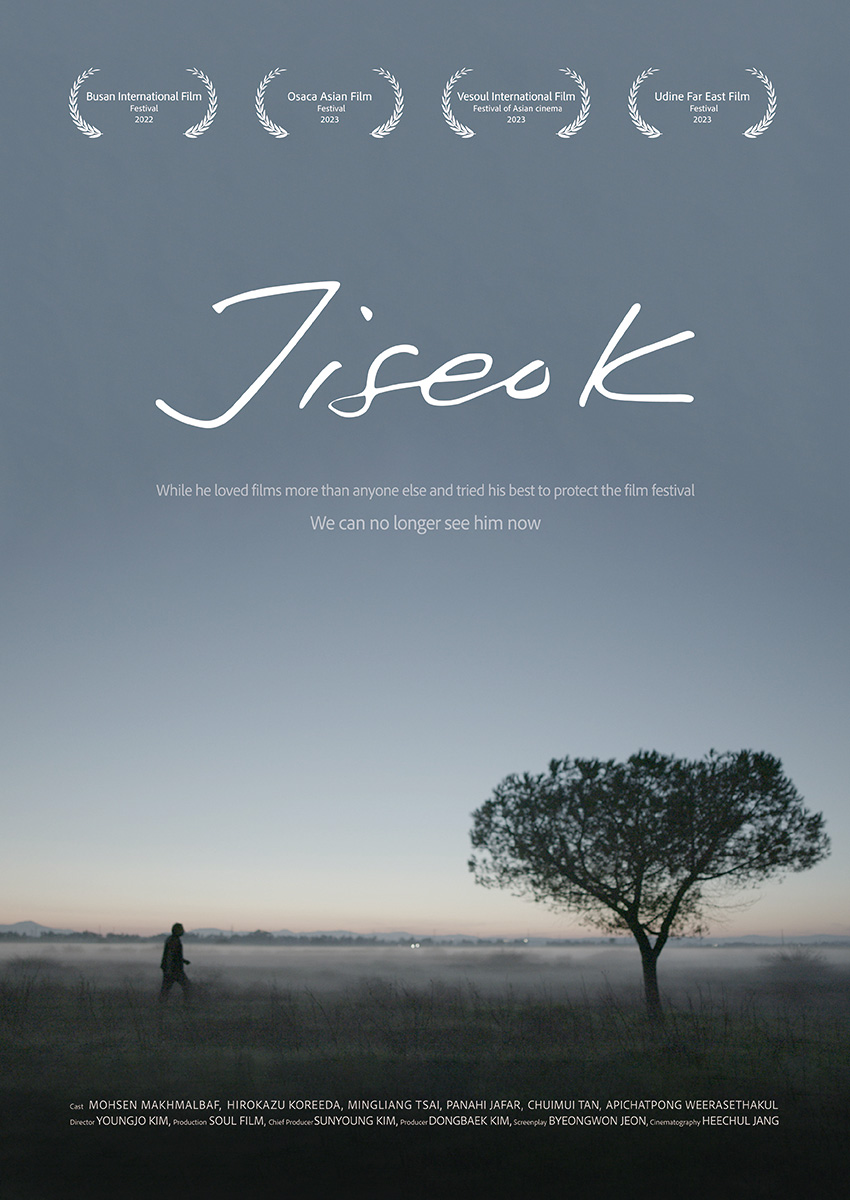
Jiseok (지석, Kim Young-jo, 2022)

When Kim Jiseok, co-founder and head programmer of the Busan International Film Festival, passed away suddenly at Cannes in 2017 of a heart attack at the young age of 57, it sent shockwaves through the cinema industry. Kim had been a key figure in the promotion of Asian cinema which he founded the festival to showcase, but had also become mired in controversy following the decision to go ahead with a screening of a documentary about the Sewol Ferry disaster that the municipal authorities had tried to pressure the festival to cancel because it reflected badly on the government. 

Kim Young-jo’s documentary Jiseok (지석) makes no secret of suggesting that the stress of dealing with the government’s attempts to overrule the festival’s autonomy was a direct cause of his death. In a poignant clip from a 2012 interview included close the documentary’s conclusion, Jiseok is asked why BIFF has managed to survive when so many other festivals have not and answers that there has always been such a tight bond between its team members which has not so far been strained by conflict or controversy and he doubts that it ever will be. 

But this is in fact thought what happened as the organisers split into factions with differing views as to how the festival should proceed after it was targeted by the government, some feeling they should cancel all together and others wanting to go ahead. Jiseok felt himself pressed into a corner caught between opposing forces and torn between loyalty to his old friends and the desire to preserve the film festival. Industry friends also privately recall that he was personally very affected by the Sewol Ferry Disaster in which a large number of school children were killed when the ferry they were travelling on as part of a school trip capsized due to mismanagement and lax safety procedures. 

Still, Jiseok was regarded by some as a traitor for continuing to work with the festival and taking over the duties of Lee Yong-kwan who had made the decision to go ahead with the screening but was forced to resign under government pressure and later accused of embezzlement after a government audit carried out in retaliation. In subsequent years, many Korean industry figures decided to boycott the festival entirely while a question mark hung over its autonomy and artistic freedom. Most of the interviewees are able to acknowledge that Jiseok found himself in a difficult position and do not necessarily hold his decision to continue working at BIFF against him but do suggest that it was the fragmentation of these relationships, some of which went back over 30 years, that caused him additional strain and damaged his health. 

What’s most clear is that Jiseok was very well loved and is much missed not only by his wife who also appears in the documentary but by the international industry at large. Some of the biggest names in East Asian cinema such as Hirokazu Koreeda, whom Jiseok had asked to become the dean of the Asian Film Academy, and Apichatpong Weerasethakul appear on camera offering their memories of Jiseok while it’s clear that he also enjoyed warm and close relationships with filmmakers at both ends of their career. Malaysian director and actress Tan Chui Mui (Barbarian Invasion) makes a particularly poignant statement recalling the bubbling frog bath toy Jiseok had gifted her infant son who will now only know his “Korean Uncle” only from photographs and her stories of him. Other South Eastern filmmakers also pay tribute to his warm support of underrepresented national cinemas and encouragement of new cinematic voices.

Kim’s documentary may in some ways find itself caught between competing visions on the one hand keen to examine the fallout from the tightening censorship regime of the Park Geun-hye era which eventually led to the blacklisting of artists who were critical of the regime including internationally renowned names such as Park Chan-wook and Bong Joon-ho, while on the other offering a simple memorial of the man himself in an act of catharsis for those who knew him with the consequence that little else of him is revealed aside from his warmth, cheerfulness, and affability along with his passionate love of film. In any case, many of the interviewees appear close to tears as they attempt to bid Jiseok goodbye, testament to good he left behind not just in terms of cinema but as a human being.


Jiseok screened as part of this year’s Osaka Asian Film Festival.

Original trailer (English subtitles)

The Dream Songs (너와 나, Cho Hyun-chul, 2022)

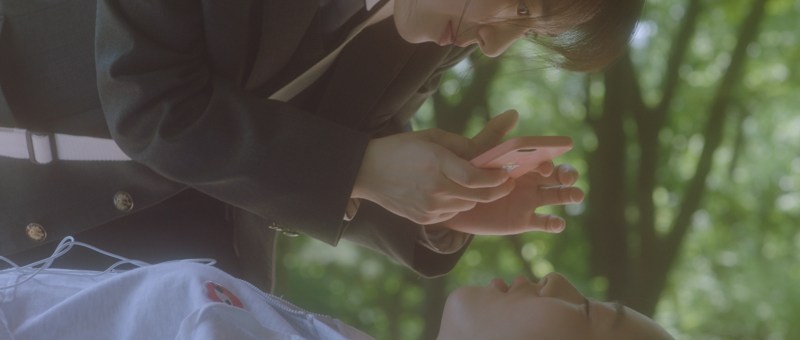
Teenage friends wrestle with a sense of mortality, frustrated longing, and future anxiety in the etherial feature debut from actor Cho Hyun-chul, The Dream Songs (너와 나, Neo wa Na). Set shortly before the 2014 Sewol ferry disaster and shot in a washed out soft focus with a hazy nostalgic quality, the oneiric drama finds its conflicted heroine coming to an appreciation of the solipsistic qualities of obsessive love while preparing to cross the line between adolescence and adulthood in fearing she may not return from her upcoming trip or that the her that returns will not be same and the world will have moved on without her. 

The trip is only four days, but for Sam (Park Hye-su) it represents the end of her adolescence and the beginning of adulthood. As the film opens, she wakes up in her classroom after having a disturbing dream that something bad is going to happen to her best friend Ha-eun (Kim Si-eun) who is currently in the hospital though only for broken leg after being hit by pedal bike on a zebra crossing. So upset is she, that Sam manages to convince her teacher to let her leave early to verify that Ha-eun is OK with her own eyes and try to convince her to come on the school trip to Jeju with her, broken leg and all, so that whatever happens happens to them together. 

In the repeated dream imagery, it’s being left on her own that Sam seems to fear. She doesn’t want to be the only one who survives or the only one who dies and leaves her friend behind though as she confesses there was something that felt peaceful in her dream on looking at a corpse that might have been her own. The school trip to Jeju is one that many teenagers take in a quite literal rite of passage, but it’s also tinged with additional anxiety in the painful reminders of the 2014 Sewol Ferry disaster, directly referenced via a radio broadcast, in which many school children taking the trip from the area where the film takes place lost their lives. Sam’s impending sense of foreboding causes her to reevaluate her relationships and especially that with her best friend Ha-eun for whom she has developed romantic feelings she is unsure can be returned. Afraid to leave without saying anything but also worried she may be rejected and end up imploding the friendship too, Sam’s internalised conflict ironically blinds to her Ha-eun’s individual suffering in having recently lost her pet dog as well as her disappointment on missing out on the trip while recovering from her accident. 

Cho frequently lands on the image of clocks, often stopped, which hint at time running out while there are frequent allusions to death and drowning from the bird Sam finds on the ground by the school to the girls’ final parting seemingly taking place in front of a stranger’s funeral with mourners talking outside while people carry funeral wreaths directly past them. While the lines between dream and reality continue to blur, Sam sees images of herself in the two little girls playing together in the park and another with her grandmother who “saves” a toy dinosaur from drowning in an environment in which it is unable to survive. She and Ha-eun chase a lost dog and eventually end up on opposite sides of a fence which is the outcome Sam most feared, but are eventually reunited and able to have a more emotionally honest conversation now that Sam has come to an understanding of the self-involved qualities of her romantic obsession. 

Even so, for the first part of the film it isn’t entirely clear if Sam’s feelings are indeed romantic or if it’s more a case of intense teenage friendship that causes her to be jealous of others that might be spending time with Ha-eun while preoccupied with the identity of the mysterious “Humbaba” whom Ha-eun apparently wanted to kiss in a diary entry Sam was presumably not intended to read. Sam’s feelings are made clear in a letter she doesn’t have the courage to send while she seems to fear that time may slip away from her and Ha-eun won’t be there when she returns from her trip. Yet what she ends up awakening to is more like self love, or at least no longer fearing “Joy” will fly away from her when she’s not looking. Cho’s hazy, poetic coming-of-age drama excels in capturing the joyful quality of teenage female friendship and diffidence of first love if tinged with a note of melancholy nostalgia in the wake of a devastating loss.


The Dream Songs screened as part of BFI Flare 2023

Original trailer (English subtitles)

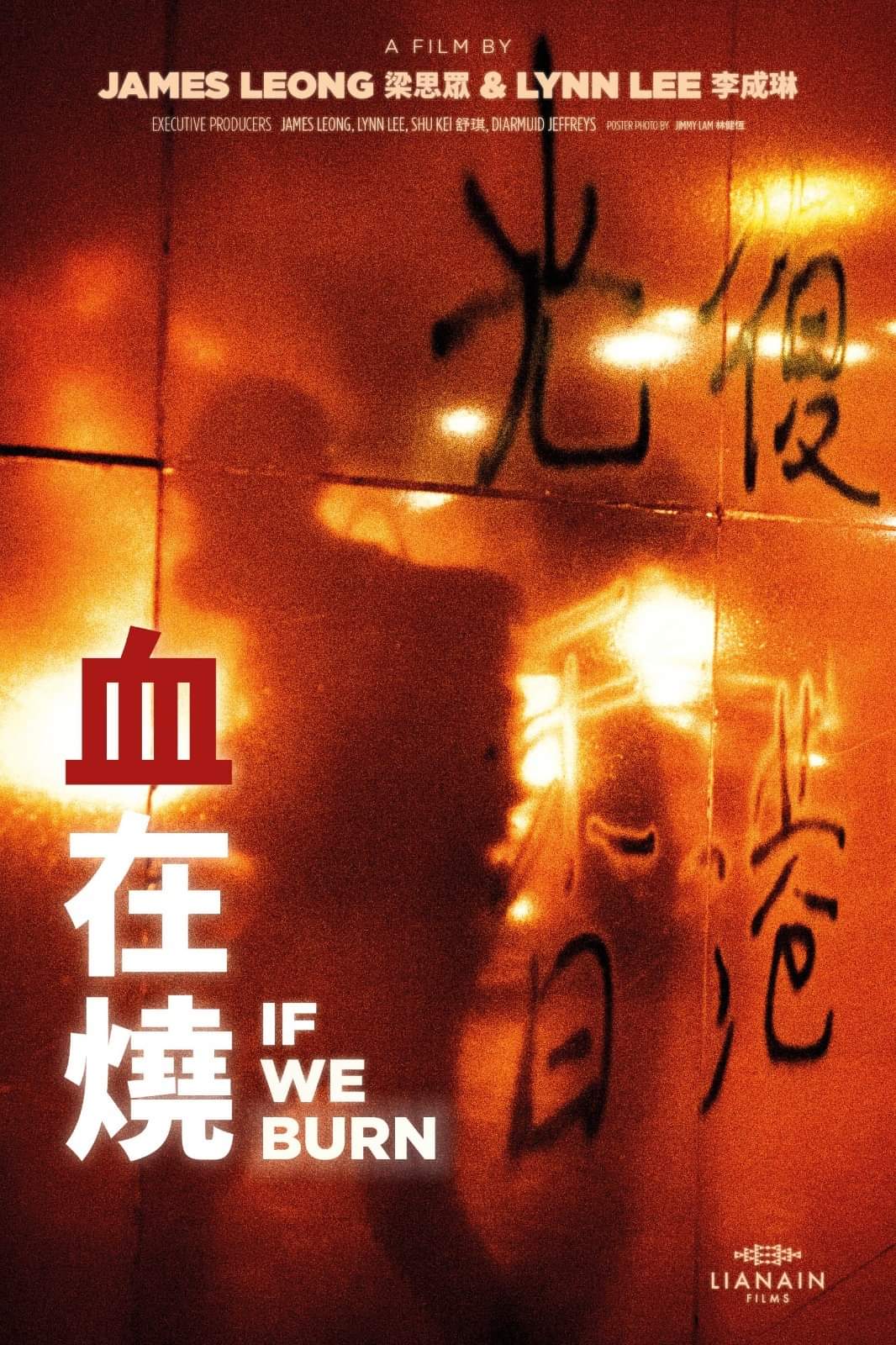
If We Burn (血在燒, James Leong & Lynn Lee, 2023)

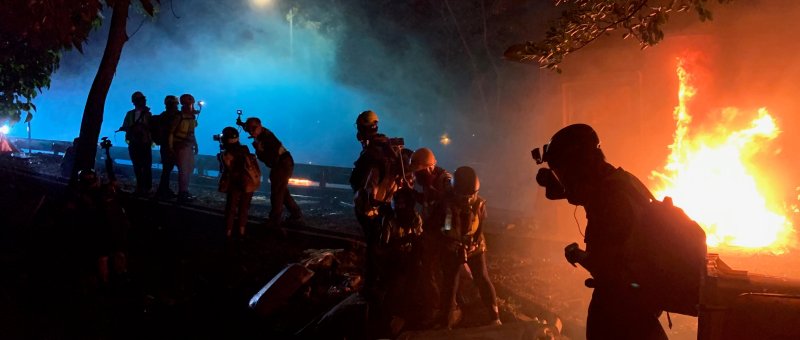
Clocking in at over four hours James Leong & Lynn Lee’s If We Burn (血在燒) provides the most comprehensive overview of the Anti-Extradition Law Amendment Bill Movement of any of the recent documentaries focussing on the events leading up to the passing of the Security Law in June 2020. Utilising professionally shot footage of the protests along with that captured by protestors via mobile phone, the film presents a tale of gradually escalating tensions provoked by increasing police violence and an expanding sense of hopeless desperation. 

Focussing largely on a series of climactic events such as the storming of the Legislature, the Yuen Long and Prince Edward Station attacks, and the sieges of the Chinese University and Hong Kong Polytechnic University, the film posits police brutality as a deliberate tactic that developed into state terrorism designed to intimidate society into submission. In the talking heads segments which occupy the first half of the film, the filmmakers interview a journalist who was present at the Yuen Long attack and was herself beaten by the mysterious vigilantes who raided the station. In this and the attack at the Prince Edward station which followed, it was clear that the target was not solely protestors but the people of Hong Kong who were simply attempting to catch a train in order to go about their ordinary business and became victims of, in the case of the Prince Edward MTR passengers, state violence in an unwarranted police intervention. As the journalist explains, given such a threat to their safety it is not surprising that many were radicalised and that some who had previously been committed to peaceful protest resolved to fight fire with fire. 

Some also regard the police action as a deliberate tactic, that in escalating violence the authorities attempt to provoke those protesting in order to justify even harder crackdowns. It’s also later revealed that police officers infiltrated the movement, dressing as protestors but suddenly attacking those around them giving rise to mistrust and paranoia. A lengthy sequence in which a mob at the airport protest catch a man they believe to be a Mainland police spy hints at the moral ambiguity of the protest movement as they argue with each other what to do with him while the man himself becomes a stand-in for the entirety of the violence inflicted so far. As tensions rise and duplicitous actions of the authorities increase, protestors begin to lose their sense of righteousness agreeing that there no longer is any line they will not cross to secure the freedom of Hong Kong. 

It’s clear that this period of instability has greatly affected the mental health particularly of younger protestors with many thrown into despondency and despair. During the university sieges, many state their intention to die and become martyrs while others talk of suicide and the toll the deaths of friends have already taken on them. During a rally in which older people offer thanks and support to the student protestors a young musician tearfully talks of how the the protest movement’s lack of success has exacerbated his depression and left him feeling hopeless with the only the solidarity of the people around him keeping him going. 

What had begun as a simple request to reject the Extradition Law Amendment Bill soon turns into a series of five demands and finally towards a desire for independence among the more hardline of the protestors who are now so mistrustful of Mainland authoritarianism that they can never consent to living under it. The documentary ends with alarm bells still ringing and a post-apocalyptic vision of battlefield destruction in the quad of the Polytechnic University peppered with small fires and piles of rubble while police drag protestors away from the scene. Talking heads who still appear in masks and goggles with disguised voices look back on the effects of the protests and the various ways they are changing Hong Kong while a piece of onscreen text coldly explains that the Security Law was passed and many have since been arrested or fled into exile. Still, as the alarm bells ring over the closing scene featuring the graffiti that gives the film its title, the documentary seems to suggest that all not yet lost while flame of resistance continues unextinguished.


If We Burn screens at London’s Genesis Cinema 18th March as the Opening Gala of this year’s Hong Kong Film Festival UK.

R 21 aka Restoring Solidarity (Mohanad Yaqubi, 2022)

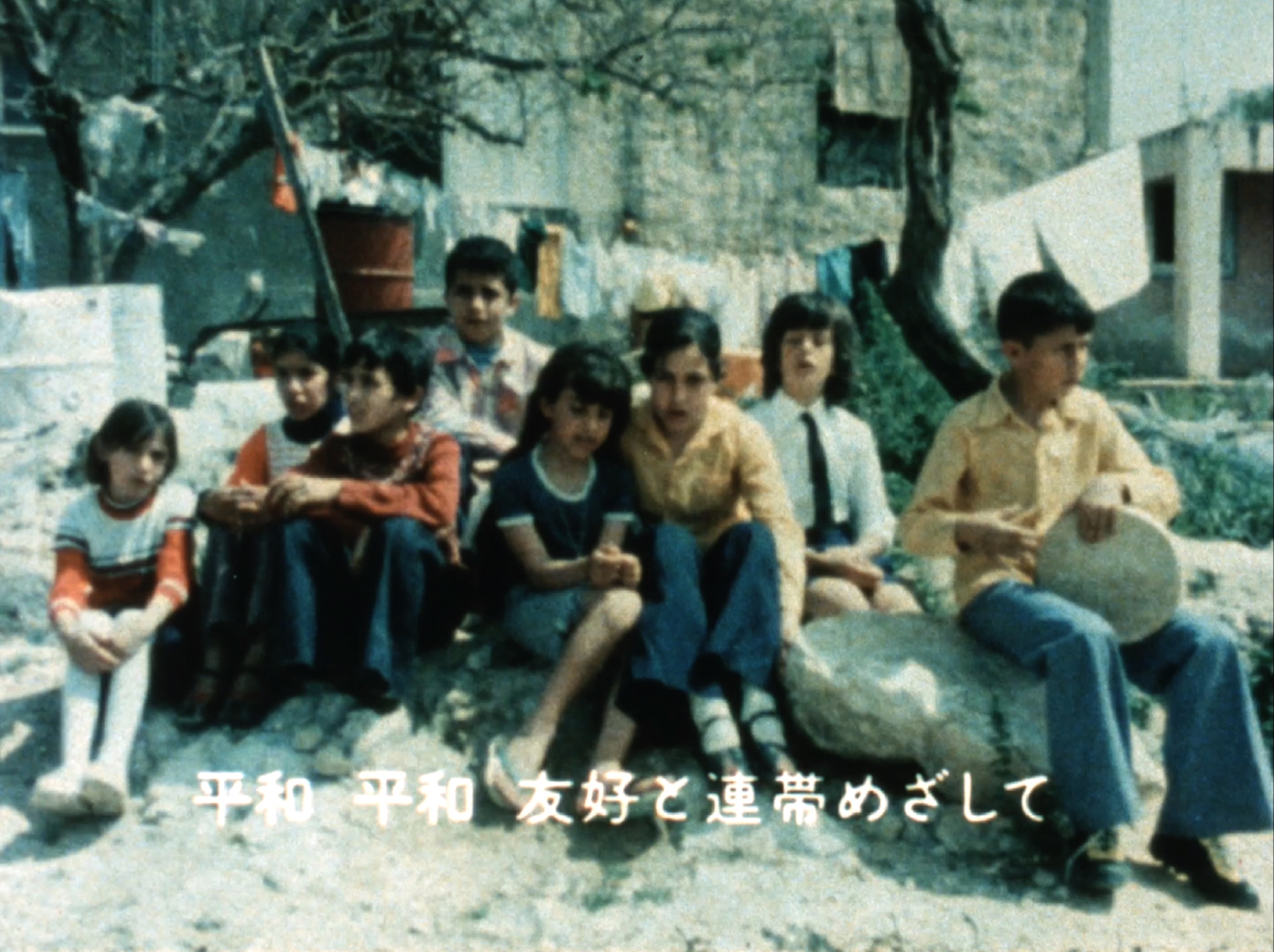
The occupation had ended in 1952, but America’s influence on Japanese society continued in other ways not least among them defence. 1960 saw the biggest protest movement Japan has ever experienced against the renewal of the security treaty with the Americans that underpinned the pacifist constitution, though the treaty was eventually signed anyway in defiance of public opinion. Student protestors and radicals came to feel oppressed by American imperialism and objected to the hypocrisies of Japan’s role in America’s foreign in policy in Asia. For these reasons, those on the political left came to feel a solidarity with the Palestinian struggle against colonialism and began to travel to Palestine in order to learn and share support often filming what they’d observed for those back home. 

R 21: Restoring Solidarity is a collection of 20 such films kept safe in Japan and later handed to the director, Mohanad Yaqubi, after a screening of his previous film, Off Frame. Film number 21 is the film itself intended as a message of solidarity in the overarching contemporary voice over narration in Japanese. The films themselves are in several languages, many of them subtitled or dubbed for audiences in Japan, some shot by Japanese activists in Palestine and others produced by news organisations or other observers. A few feature upsetting footage of bodies and rubble, tanks on the streets, and shoes without owners while others record children singing cheerfully about peace or displaced students talking about their hopes of one day restoring their country.  

A lengthy sequence contains an interview with an old woman recounting how her village was slowly erased to a British reporter, a more obvious parallel with Japan occurring with the direct allusion to the devastation of the atom bomb in ruined landscapes now devoid of all human life existing only as the symbol of societal collapse. The old woman tells the reporter that they should leave the town the way it is as a reminder of the evils which have gone before. Yet also included in the archive is footage from a programme with a British voice over which seems to be much more propagandistic in tone, raising questions of the purpose and objectivity of the videos and the role they were intended to play. 

Perhaps the most interesting segment features a short film starring a collection of children who come across an abandoned missile launcher and start playing with it only to be confronted with the realities of conflict on coming across the body of another child. The children then appear in military uniforms, radicalised to avenge their friend by fighting for their country. The reels also include direct to camera statements and interviews from prominent people that may also in their own way contain a degree of artifice. Yaqubi frequently cuts in with images of the reels themselves or restoration process reminding us that what we’re seeing is a constructed image that’s being reconstructed before our eyes and quite literally repurposed but also “restored” and repaired as an archive of struggle. 

The voice over reminds us of the struggles still ongoing, the indifferent self-interest of global powers that led to the early ‘70s oil crisis which threatened to derail the Japanese economic miracle and itself fostered a desire for closer relationships with Middle Eastern nations. A reporter for a Japanese newspaper, however, states that he thinks most people in Japan would be broadly in favour of the Palestinian cause if superficially knowing little of it while political support can be fickle and lacking in depth. As the voice over suggests, video is and was a powerful way of keeping memories alive but also of expressing solidarity with an otherwise distant cause in the shared struggle against colonial oppression.


R 21 aka Restoring Solidarity screens March 18 at New York’s Museum of the Moving Image as part of this year’s First Look.

People Who Talk to Plushies Are Kind (ぬいぐるみとしゃべる人はやさしい, Yurina Kaneko, 2023)

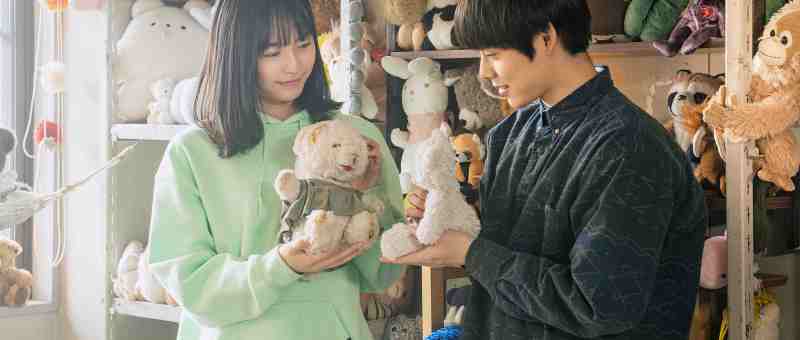
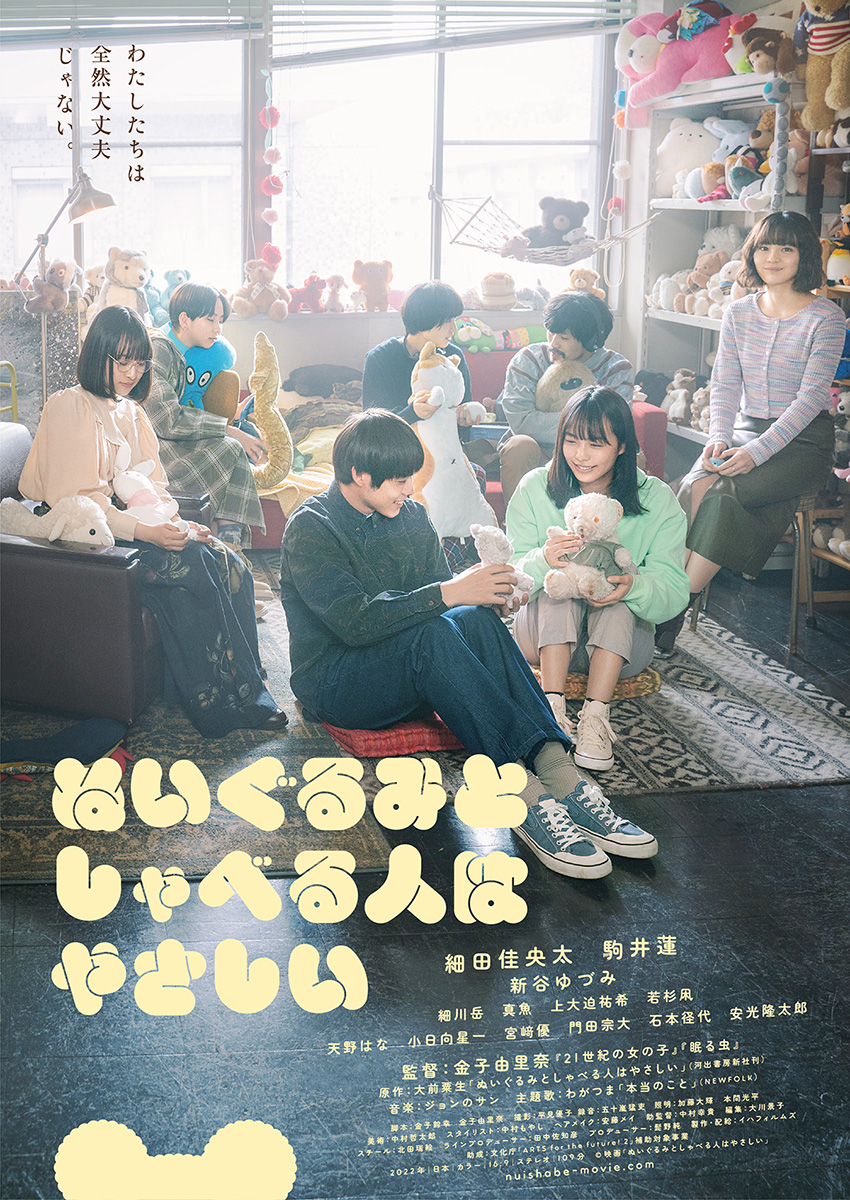
How is it possible to go on living in a society which is often unkind and at times hostile? A collection of sensitive university students find themselves struggling to accept the world around them in Yurina Kaneko’s charmingly empathetic adaptation of the novel by Ao Omae, People who Talk to Plushies are Kind (ぬいぐるみとしゃべる人はやさしい), but discover a kind of solidarity in softness after joining a club where they don headphones and unburden themselves to cuddly toys. 

As they point out, it’s good to talk. But talking to someone else about your worries can end up making them worried too and that’s the last thing any of the members of the Plushie Club want which is why they’ve decided to talk to plushies instead. Yet what’s worrying them isn’t just their worries, but a sense of their powerlessness and complicity in having behaved as if they believed the problems of others were nothing to do with them until they were shown otherwise. The hero, Nanamori (Kanata Hosoda) regrets that he “laughed things away with everyone else” rather than speaking up when he saw something that seemed wrong to him and should change while acknowledging that simply by existing as a man he may make someone feel afraid or uncomfortable without meaning to. 

Nanamori is careful not to hurt others by his own actions, trying to turn down a confession of love from a classmate in high school as kindly as he can but perhaps failing in his awkwardness even as he straightforwardly tells her that he doesn’t understand the concept of romantic desire. He simply doesn’t know what it means to “like” someone, and feels that there must be something wrong with him that he can’t grasp this simple facet of human behaviour. On a trip home uniting with some boys from school, he is immediately put off by their stereotypically masculine banter in which they ask him about girls and crushes and mock him for being a virgin until he finally leaves and tells them not to laugh at him just because he is different. 

Everyone at the Plushie Club is “different” in their own way, but has come to find a place to belong where they are simply allowed to be without needing to offer anything else. As another of the members, Nishimura (Mimori Wakasugi), puts it there’s something between kindness and indifference that is simply gentle, a quiet yet powerful quality of acceptance. When she casually revealed one day that she had a girlfriend, most of her friends were supportive but perhaps superficially. Her revelation had made them uncomfortable and regardless of how they felt about it, their perception of her had changed and she was no longer the person she had been to them before. They began to treat her differently, but at the Plushie Club there was no real difference and everyone carried on reacting to her the same way they always had. 

The Plushie Club is a place where it’s permitted to be soft in a hard world, where the members can allow themselves to feel drained by the process of living and find relief from their sense of powerlessness in acknowledging that they have made a choice to continue being kind rather than become what the world wants them to be. In an effort to understand romantic desire, Nanamori begins dating a fellow member, Shiraki (Yuzumi Shintani), but discovers that she has chosen the opposite path laughing at women who complain about societal misogyny and insisting that it’s pointless to resist because nothing will ever change. She joined the Plushie Club because she was sick of being sexually harassed at other uni gatherings but later decides to deliberately join another club filled with sexist guys because the real world isn’t so nice and the only way to survive it is to become hard yourself. 

Shiraki claims that she finds Nanamori’s “righteousness” “exhausting” and wishes she could free him and a similarly minded classmate, Mugito (Ren Komai), from their “tormenting kindness” which has in its way hurt her though unavoidably so even as she continues to be kind despite herself if rebelling by refusing to talk to plushies. Kaneko sometimes shifts to a blurry plushie vision with shimmering pastel-coloured edges and a kind of glitter snow effect that makes it seem as if the stuffed toys really are watching over their human friends as they silently, or not, agree to shoulder some of the burden of living. “They’re the ones talking to us,” Nanamori points out though in a way perhaps it’s more that the plushies reflect a part of themselves allowing them to exteriorise their internal dialogue and reach an accommodation with their fear and loneliness amid a world which consistently proves immovable and disappointing.


People Who Talk to Plushies Are Kind had its World Premiere as part of this year’s Osaka Asian Film Festival.

Original trailer (no subtitles)

Images: (C) 映画「ぬいぐるみとしゃべる人はやさしい」

A Man (ある男, Kei Ishikawa, 2022)

©2022 "A MAN" FILM PARTNERS

“Why was living so hard for him?” a brother remarks of man he assumed to have died in an accident after severing ties with his family, though with little sympathy in his voice and in truth should the brother be dead it would be all the better for him. Adapted from  a novel by Keiichiro Hirano, Kei Ishikawa’s A Man (ある男, Aru Otoko) asks questions not so much about the limits of identity and the existence of an authentic self, but the kinds of labels we place on others and the prejudice that often accompanies them that makes some want to run from themselves. 

Accidental detective Kido (Satoshi Tsumabuki), a lawyer who previously represented the recently widowed Rie (Sakura Ando) in her divorce from her first husband, is a case in point. He tries not to react while his wealthy and extremely conservative father-in-law runs down a case he’s just won representing the parents of a man who took his own life after being expected to work extreme overtime by an exploitative company solely to fulfil the image of the salaryman. The father-in-law sneers and complaints about the family receiving compensation before moving on to a rant about the welfare state scoffing that “real” Japanese don’t rely on such things which are only for “Koreans and people of that ilk”. 

Aside from its unpleasant xenophobia, the remark is insensitive as Kido is himself third generation Zainichi Korean, though a naturalised citizen of Japan. Throughout the film, he’s bombarded with social prejudice and racist abuse to which he chooses to say nothing, because there’s nothing he can really say, though leaving us to wonder if his decision to marry his wife (Yoko Maki), the daughter of a wealthy and conservative family, is an attempt to secure his own identity as a member of Japanese society even while bristling at her further demands, that they should invest in a more impressive, larger detached house as recommended by her father and also have another child. 

Kido’s quest to uncover the “true” identity of Rie’s husband Daisuke (Masataka Kubota) who is discovered to have been living an assumed identity when the brother of the man whose name he borrowed arrives at his memorial service, is also a quest to affirm his own identity which is in many ways as self-constructed as Daisuke’s is assumed to be. The interesting thing is that Daisuke, who said little of his past, used the other man’s backstory leaving no doubt that is not quite a case of mistaken identity that brings Kyoichi (Hidekazu Mashima) to Daisuke’s memorial service, though he is quick enough to disparage the life the deceased man shared with Rie in a rural “backwater” while making vague references to insurance policies and inheritances and simultaneously offering to pay for the funeral expenses as if reclaiming ownership over Daisuke’s legacy. 

Like Kido’s father-in-law, Kyoichi appears to be a cynical and self-interested man and it’s not difficult to see why the other Daisuke may have wished to escape his life with him. As an older man points out, everyone has things in their past and though they might not seem like much to others it’s natural enough to want run from yourself, to leave everything behind and start again somewhere else. In Japan, this is much easier to do than in some other countries and it’s true enough that changing one’s name is not that uncommon either. Rie’s young son Yuto, now old enough to question his own identity, took his mother’s maiden name after the divorce, then Daisuke’s surname Taniguchi when he married his mother. Now he wonders what his name should be if it is not Taniguchi and who he really is underneath it. 

In essence, we give people names as a kind of label to describe our relationship to them as a means of mapping out the world. These labels also come with prejudices such as that directed towards Kido as a Zainichi Korean and to another of the “disappeared” men who struggled to emerge from the shadow of his father’s crime as a death row felon. The projection of an identity can be harder to live with than the identity itself. When Kido’s wife tells him that he doesn’t seem himself and she wants him to go back to the way he was before, it’s a rejection of the new identity that has begun to surface through his quest to identify Daisuke and an instruction that he conform to the image of him she has constructed for herself as a typical Japanese salaryman not so different from her father in their affluent, middle-class existence.

Having satisfied himself that he understands the man Daisuke came to be, Kido’s self-image and sense of identity seem to be reaffirmed. He is happier with his wife and son, and has fewer doubts about his place in the world, but then he’s suddenly confronted with an unexpected revelation that undermines his new sense of security in causing him to doubt the veracity of the image he has of others, and consequently of their relationship with him which again leaves him unanchored unable to affirm his image of himself without its reflection. Rie’s final acceptance that in the end she never needed the “truth” (now that she has it) points to the same answer, that in the end Daisuke’s name was irrelevant because he was the man he was to her at the time that she knew him and this is all we can ever really know of each other in a continual act of faith in interpersonal connection. A man can be many people at once, or in quick succession, and none of them any less “real” than another. “It’s nobody’s life but your own,” Kido is reminded even as he struggles to reorient himself in a merging of identities self-constructed or otherwise but perhaps destined to remain forever a stranger to himself.


A Man screens in Chicago March 18 as part of the 16th season of Asian Pop-Up Cinema.

International trailer (English subtitles)

Huahua’s Dazzling World and its Myriad Temptations (花花世界, Daphne Xu, 2022)

“If there were no live streaming platforms, I don’t think I’d know anyone” a middle-aged grandmother turned unexpected online star admits, laying bare the sense of isolation and impossibility she feels in her life in rural China. Daphne Xu’s largely observational documentary Huahua’s Dazzling World and its Myriad Temptations (花花世界, huāhuāshìjiè) follows Huahua as she goes about her ordinary days, Xu’s camera filming her as she films herself so, she claims, that those like her “won’t lose hope” gaining their own kind of courage in witnessing her optimism and positivity. 

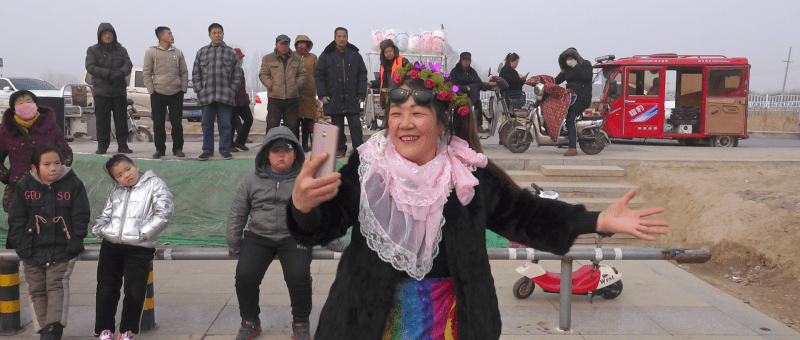
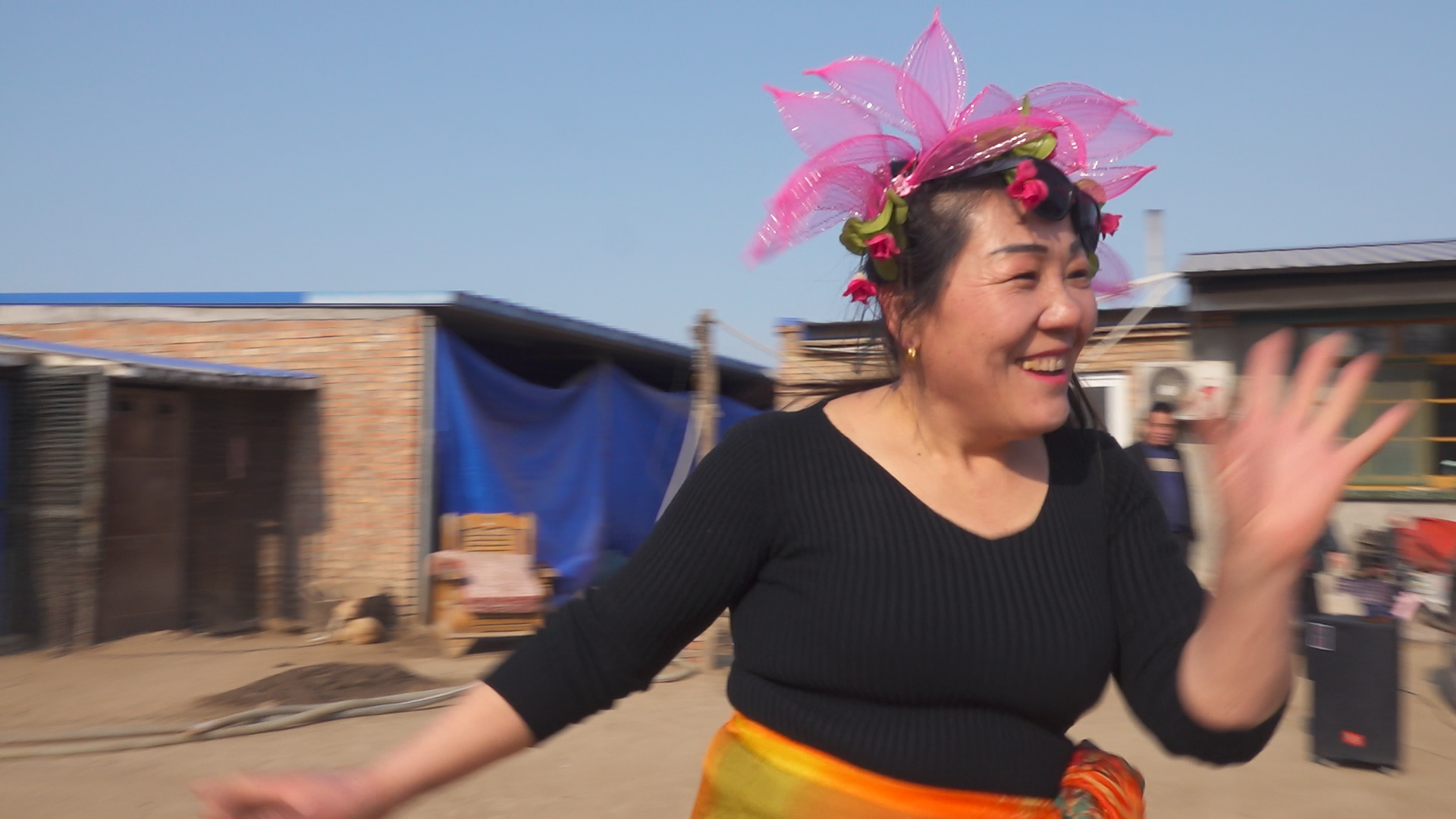
Huahua’s most popular activity is her furious dancing, often wearing a distinctive floral headband if adding a beauty filter to her videos as a means of altering her realities. Reality might not, however, be that far away. During one particular dancing video she suddenly stops and picks up a box of oranges currently on sale at her store and begins peddling them to her followers who often support her monetarily by sending hearts online. As Huahua admits, live streaming is a learning curve for a woman like her who is illiterate and was given little education. While driving home from a nearby commercial area, she emphasises the importance of early education for all children while suggesting that kids from the city learn faster not just because their schools are better resourced but simply because they interact with more people. Children in rural areas might go days without seeing anyone and only have regular contact with the same few family members and acquaintances limiting their ability to learn from each other which also in its way informs her appreciation for live streaming in the community it has given her access to which she might otherwise be denied. 

Meanwhile, she’s clear on the importance of education for women in particular explaining that she’s dedicated to supporting her daughter’s studies so that she will have a better future than she has had not least because she will be financially independent which means she will be at less risk of becoming trapped in an abusive relationship. Huahua’s relationship with her husband seems to that extent to be unhappy, Huahua complaining that she has to cook his meals after working all day while no one cooks for her. During a later live-streaming session, she characterises him as violent but says that she gives as good as she gets suggesting that this is the way she mediates the power differential in their relationship. Then again, she also uncomfortably remarks that women who are killed by violent partners or continue to suffer domestic abuse bring it on themselves by being too “weak” to fight back lending a darker shade to her messages of no-nonsense self-sufficiency in implying that her drive is largely fuelled by a desire to be free of male violence and subjugation. 

On her live streaming platform, she is very much in charge but also offers a fairly egalitarian sensibility in which each of her viewers is free to contribute as little or as much as they want whenever they choose without needing to think about hierarchy. China’s live streaming networks are also subject to a heavy degree of censorship, but Huahua declares herself unafraid to speak her mind and frequently uses profanity which might otherwise incur a ban given the prohibition against “vulgar” behaviour. Her followers seem to appreciate her frankness along with her willingness to offer advice and commentary on the things that might be bothering them.

It’s the idea of exchange which might in the end be the most valuable. Huahua’s videos are as much about sharing as they are showing off, allowing her to connect with others in the otherwise isolated environment of rural China. This sense of openness seems to have rubbed off on her daughter who dreams of studying languages and eventually becoming a diplomat channeling her mother’s “optimism” into an international career. She does though worry about the declining opportunities available in her community in which a new commercial development offers no promise of employment but in fact its reverse. “There won’t even be a place for you to buy jianbing” her teachers somewhat dismissively warn, speaking of an age when everything is automated. They even have robots to mix cocktails, what will the local people do to support themselves in the future? Like Huahua they may need to find alternative means not only to make money but to create new worlds in their own image free of geographical and social constraints.


Huahua’s Dazzling World and its Myriad Temptations screens March 18 at New York’s Museum of the Moving Image as part of this year’s First Look.

Like & Share (Gina S. Noer, 2022)

Two young women seeking escape from a repressive social culture find themselves betrayed by the hypocrisies and lawlessness of the online society in an infinitely empathetic drama from Two Blue Stripes’ Gina S. Noer, Like & Share. Like many young people, they see internet stardom as a path towards freedom and independence, but are too naive to understand its underlying darkness even when presented with evidence of its misuse in the alarming popularity of an illicit sex tape and its violent sequel. 

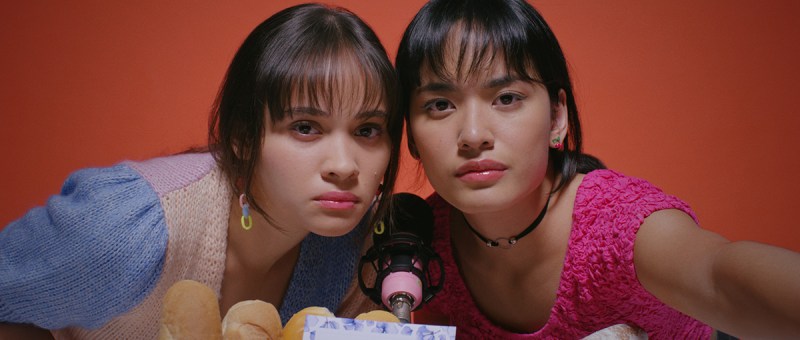
Lisa (Aurora Ribero) in particular is strangely fascinated by the video despite realising that in the sequel that followed the woman is crying and appears to have suffered sexualised violence at the hands of the man whose face is never seen. “No face, no case” the girls are fond of saying, naively thinking that they can safeguard themselves from potential harm simply by shooting from the neck down. When nude photos are leaked of another girl at school, she’s able to claim that it’s not her and encourage people to block the sender but still it seems like no one really believes her. Lisa and Sarah (Arawinda Kirana) seem to feel a sense of invincibility, that they’re in control of their online personas and the channel they’ve set up featuring beautifully produced ASMR videos accompanied by a deliberately “sexy” voice over. Though Lisa is unsure, Sarah brushes off some of the more unpleasant comments they get as simply par for the course while reminding her that they’ll get more likes and shares appealing to the sort of people that make them. 

But the girls are largely ill-equipped to understand the world they’re entering, not least because of the repressive atmosphere in which they’ve been raised. Lisa soon becomes fixated on the sex tape, addicted to pornography and masturbation which temporarily replaces ASMR as her preferred method of stress relief. The problem is compounded by the fact that her mother has married an older, quite conservative religious man and converted to Islam. She is very keen that Lisa not upset her new stepfather, who has agreed to pay for her education, mainly because it’s her own “second chance” to atone for the failure of her first marriage and prove herself a good wife and mother. “What sort of good woman are you that has no empathy for other women?” Lisa later asks her but gets little reply. Her mother advises her to read the Quran if she wants to calm herself down, though Lisa counters that she can’t read Arabic anyway.

As Lisa explains, she was merely curious and it’s not as if she could have asked her mother for knowledge or advice. Her addiction partly stems from the illicit nature of the activity, had she had a healthier outlet and better access to sex education she would probably not have reacted to the video in such an extreme way. Sarah later experiences something similar after meeting a boy, Devan (Jerome Kurnia), at a local recreation ground and agreeing to date him without necessarily seeing any red flags in the fact he’s 27 with a full-time job and wants to date a 17-year-old high school girl. Every time she expresses reluctance to take their relationship to the next level he calls her “childish”, later assaulting her and filming it to use as blackmail and potential online clout. “It’s always the girl’s life that’s ruined, never the man’s” he later sneers, certain that he’ll get away with it because it’s his word against hers and as her lawyer cautions her after Devan leaks the video going to the police is risky because there’s a chance she could end up being charged with obscenity under the country’s laws surrounding pornography. 

Misogyny is already deeply ingrained in the system. Ironically enough, the girls’ teacher tells them the school can’t afford to fund group activities so they need to go swimming on their own and film it for him so he can mark them. The videos are shown to the entire class with even the teacher appearing to salivate over the footage of teenage girls in wet swimsuits while their male classmates make inappropriate comments that go largely unchallenged. Sarah is unwilling to accept that what happened to her was rape, firstly brushing it off as a potential fetish for rough sex or suggesting that Devan did not hear her say no despite having previously told her about a too spicy dish at a restaurant that if she doesn’t like or want something she should say so. Lisa meanwhile is forced to accept her partial complicity after crossing paths with the woman from the sex tape and becoming somewhat fixated on her before reflecting on the harm that she had done in having watched it in the first place. It’s she that later helps Lisa come to an understanding of the best way to support her friend through her ordeal which may be simply to be there and to listen. 

Despite the judging eyes of the world around them, the two women have their friendship and the refreshingly progressive support of Sarah’s older brother who stands by his sister rather than blaming her. Even so, it’s other women who often fail her from the conservative judgement of Lisa’s mother to a lawyer at a court hearing who says that Sarah made her choice when she decided to enter the hotel room with Devan and has no right to call her “regret” “rape”. Yet Lisa and Sarah are finally able to repair their friendship and stand up in solidarity against a patriarchal social culture, refusing to let Devan off the hook while reassuming control of their channel by reading out some of the inappropriate messages they’ve been sent by men online. “Thank you for being brave” a message on the website of a woman’s legal organisation reads, once more reinforcing the power of female solidarity against systematised misogyny. 


Like & Share screens March 14/18 as part of this year’s Osaka Asian Film Festival.

Original trailer (English subtitles)

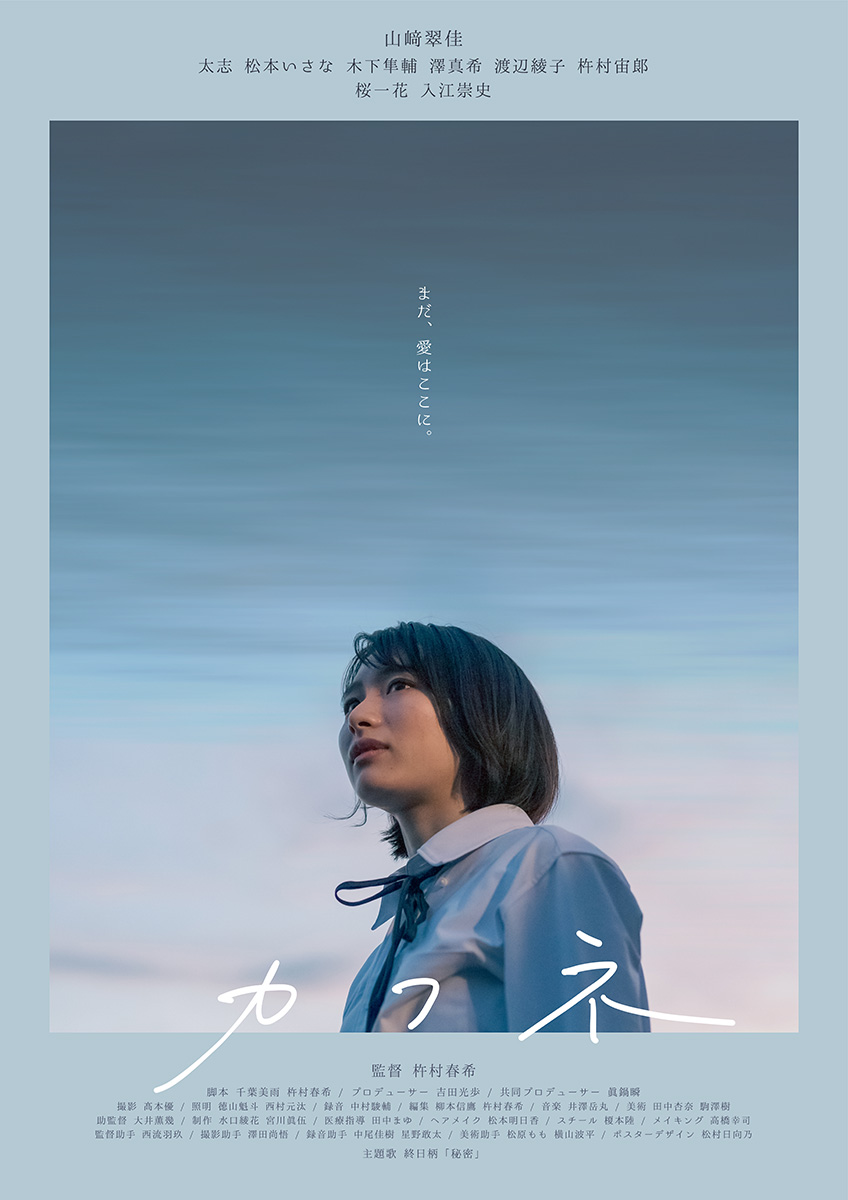
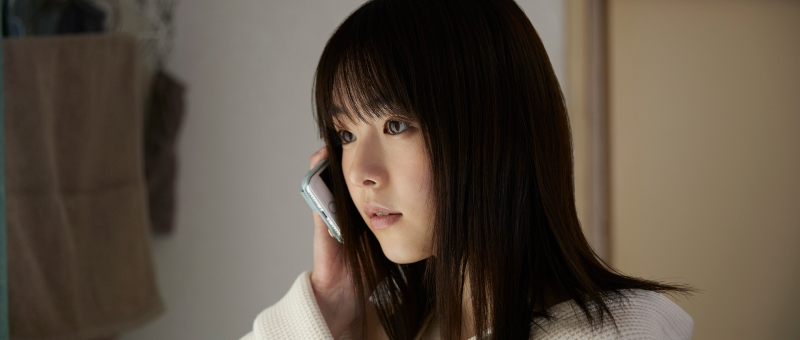
Cafune (カフネ, Haruki Kinemura, 2023)

A pair of teenagers with differing priorities struggle to deal with the discovery of an unplanned pregnancy in Haruki Kinemura’s evenhanded indie drama Cafune (カフネ). Refreshingly progressive, the film is careful never to characterise the pregnancy as a tragedy or in anyway shameful but centres more on the decisions it forces the teens to make about themselves and their futures rather than fixating on the transience or longevity of teenage love. 

Love is the answer Mio gives when her mother quizzes her over the pregnancy test she found shoved into a black plastic bag hidden at the back of a drawer. There’s no getting away from the fact her mother thinks she’s been foolish and is disappointed to have found out this way, but at the same time she’s not exactly scandalised and is clear that it’s Mio who has a decision to make both for herself and for her unborn child without trying to influence her either way. As for the baby’s father, Nagisa, he does not react anywhere near as well, suddenly trashing his room and flailing around in frustration even though his own mother has been almost as sympathetic as Mio’s despite a similar level of disappointment with him. Though part of that may be that she knows he’s also been carrying on with Mio’s friend Natsumi which would explain the dirty look she gives him on meeting Mio on the way out as she leaves in a hurry after failing her first attempt to tell him about the baby. 

Mio certainly has a point when she tells Nagisa that he’s immature and self-centred. He’s been bunking off school for weeks while supposedly studying at home for an important exam and seems to have a mild superiority complex. Just as she was going to tell him about the baby he announces that they should take a break so he can study harder, leaving her to handle all of this on her own while also beginning to suspect that he’s been cheating on her which makes her situation all the more difficult. “Am I the only one who’s been irresponsible?” she asks him when he reacts badly to the news about the baby, blaming Mio for this sudden crisis right before his exam as if he had no part in it at all. Mio already seems to suspect that whatever her decision she can’t rely on Nagisa to take responsibility even while making it clear that it’s not something she feels she can decide unilaterally. 

Then again as she later says, maybe happiness isn’t something you can just decide either. The conclusion that she comes to is that she should make herself happy rather than waiting around for someone else to do it for her and even if Nagisa promises to make her happy in the future it’s partly for selfish reasons, as much for himself as for her in proving a point of masculine pride. In any case, the solution which is found is in itself refreshingly mature requiring no particular sacrifice for either party as each is allowed to pursue their individual hopes for the future without resentment or recrimination.

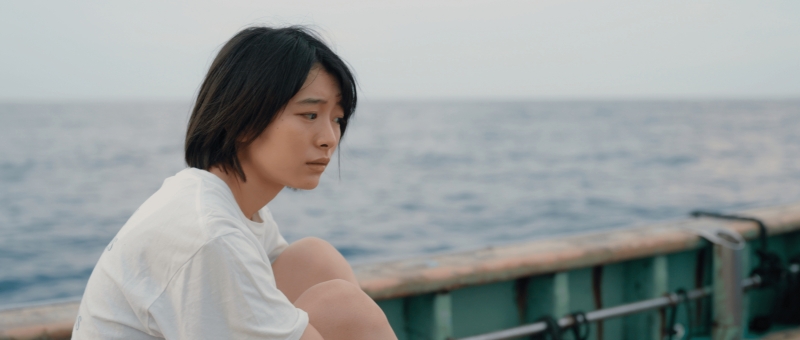
Mio is also able to repair her relationship with possibly treacherous best friend Natsumi who in the end was only jealous fearing that she would lose Mio as a friend now that she has a lover while failing to realise that there is someone else to whom she’s currently “number one”. Largely free of the sense of judgment that often colours teen pregnancy drama, Kinemura’s gentle coming-of-age tale instead discovers an unexpected well of support across the generations as the teens take centre stage in shaping their decisions not just for the present moment but for their mutual futures in figuring out who they are, what they want out of life, and what is best both for themselves and for the baby. Making the most of its tranquil fishing village setting, the film gradually makes its way towards a kind of serenity as the friends play together on the beach beset as it is by roaring waves but also a gentle kind of happiness.


Cafune had its World Premiere as part of this year’s Osaka Asian Film Festival.

Original trailer (no subtitles)