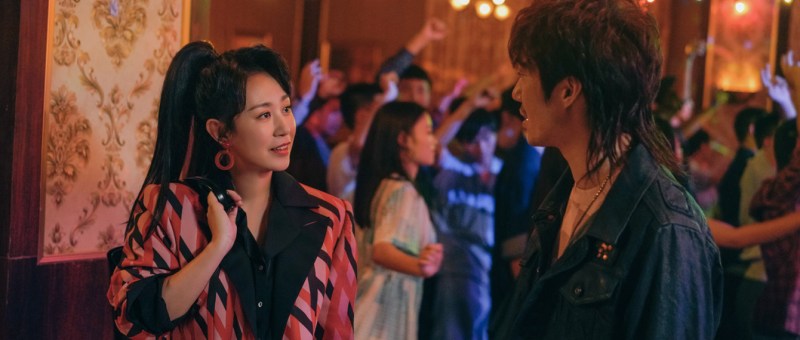
Give Me Five (哥,你好, Zhang Luan, 2022)

A struggling 30-year-old begins to repair his relationship with the difficult father he believed never liked him after being unexpectedly thrown back to the past and almost erasing himself from history in Zhang Luan’s sci-fi-inflected tale of filiality, Give Me Five (哥,你好, gē nǐhǎo). What begins as a Chinese riff on Back to the Future eventually skews closer to recent hit Hi, Mom which the Chinese title subtly echoes as the hero comes to appreciate the power of maternal love and sacrifice through bonding with the younger versions of his parents. 

Now 30 years old, Xiaowu (Chang Yuan) explains that he was long estranged from his grumpy father Wu Hongqi (Wei Xiang) and rarely visited him but has since become his main carer now that he is living with Alzheimer’s. Xiaowu makes his living as an e-sports entrepreneur which is not something former engineer Hongqi can well understand and in truth Xioawu doesn’t seem to be that successful as he’s been putting off proposing to longterm girlfriend Huahua because of an anxiety about his finances. When Hongqi suddenly jumps off a bridge for no apparent reason and ends up in a coma, Xiaowu is at first oddly pleased and immediately begins raiding his office looking for his bankbooks only to find a mysterious ring and an old diary penned by his mother who died when he was a baby. Putting the ring on sends him back to 1986 where he manages to mess up his parents’ meet cute, endangering his own existence. In order to put things right he has to go back in time Marty McFly-style to ensure his mum and dad fall in love just like they were supposed to. 

Back to the Future is a film from the 1980s expressing nostalgia for an idealised 1950s small-town America. Give Me Five to a degree romanticises the China of the mid-1980s but does so from an entirely different angle than the recent trend in 80s nostalgia which has taken hold in the West in that, other than a brief romantic moment featuring Teresa Teng’s Tian Mi Mi along with a few other retro hits, it is largely uninterested in pop culture or revisiting childhood memories but is attempting to draw a comparison between China before economic reform and the ultra-capitalist society of today. In what some might see as a simpler time, Xiaowu’s mother Daliu (Ma Li) is, as she’s fond of saying, a “model worker” in a factory which is in danger of closure while the “Biff” character, Qiang (Jia Bing), is a former employee who was dismissed for stealing coal. Having become wealthy after almost certainly doing something dodgy in Hong Kong he’s returned with a prominent Cantonese accent to buy the factory as part of a public-private partnership. A feisty young woman, Daliu sends him packing insisting she won’t let anyone disadvantage her fellow workers. 

The comparison is further borne out by the melancholy figure of Qin (Huang Yuntong) who dated Hongqi after getting the meet cute that was supposed to go to Daliu but thew him over for the promise of riches with Qiang only to be left lonely in her old age having unwisely betrayed love for material gain. Meanwhile, there’s an interestingly progressive element to the relationship between Daliu and Hongqi in which Hongqi is somewhat feminised as the domestic partner cooking and shopping for his wife while Daliu is the uncompromising model worker as she proves during a high impact welding competition while eight months pregnant. The couple first fall in love talking over industrial plans with Daliu offering advice from the shop floor to help improve educated engineer Hongqi’s designs. While interacting with his parents before he was born, Xiaowu gains the familial experience he always felt he lacked in being able to share a family meal while touched by the love that existed between his mother and father and the knowledge that his parents were at least blissfuly happy with each other even if it was only for a short time. 

Xiaowu had been resentful of his father that he never really told him how his mother died. He decides to try saving his mother’s life too and through his various experiences comes to an appreciation of maternal love not least through somehow being able to time travel into the womb to forge a more direct connection with her. In part an advocation for a more traditional filiality in which Xiaowu develops an understanding of the interplay between love and sacrifice between parent and child while coming to understand his relationship with his father after learning his family history, the film also offers a subtle rebuke against the consumerist society in idolising Daliu and her model worker attitude insisting that everything was better when people worked together for the good of all rather than for personal gain. It might be a slightly disingenuous message, Daliu’s factory life is indeed somewhat idealised, but there is something touching in Xiaowu’s eventual conversion and belated bonding with his heartbroken father. 


Give Me Five is in cinemas across the UK, Australia and New Zealand courtesy of CMC and Well Go USA in the US and Canada.

International trailer (Simplified Chinese / English subtitles)
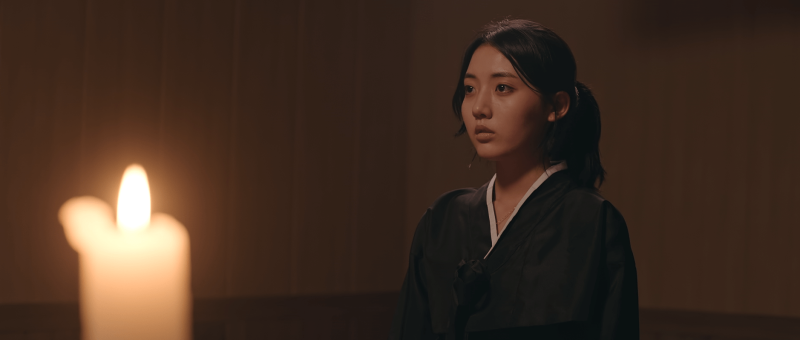
Mother’s Place (엄마의 자리, Ryu Hee-jung, 2022) 

Outdated patriarchal social codes conspire against the emotional bonds of family in Ryu Hee-jung’s touching family drama, Mother’s Place (엄마의 자리, eomma-ui jali). While adult siblings keep secrets from each other to avoid personal embarrassment and fail to resist the demands of otherwise estranged relatives, a teenage girl is forced to mourn the loss of her parents alone feeling as if her place in the family unit was never guaranteed and that she has been abandoned by those closest to her simply because her mother’s was a second marriage. 

High school girl Yuna is called to the hospital by her oldest sister, Jungsun, who is desperately trying to hold it together but receiving little support, to be told that her parents have been involved in a car accident and are in critical condition. Jungsun rings her other sister, Jungwon, to ask her to pick up her children while waiting for her husband to get off work but Jungwon is also busy with her job as a lawyer and ignores her first few calls. Meanwhile, the oldest brother, Junghan, rudely tells her he’s too busy to talk and makes no attempt to travel to the hospital which the other siblings partly understand because they believe him to be in Japan only as it turns out that is not quite the case. After the parents sadly pass away, Jungsun and her sister organise the funeral but are immediately overruled by a grumpy and extremely conservative uncle who happens to be a prominent politician and is outraged that they are holding a joint memorial considering it was a second marriage. Apparently from a somewhat prestigious family, the other relatives intend to bury the father in the family plot and think it would be improper to inter the mother alongside him because his first wife and the mother of the eldest three children already rests there. 

“Things won’t change even if you insist” Yuna is told by her siblings who are minded to simply go along with the uncle’s instructions even though they too were shocked and hurt by the suggestion that a joint funeral is improper, reminding the uncle that she may have been a stepmother but she was their mother too. Orphaned at such a young age, Yuna is then left to deal with her mother’s death all alone while simultaneously prevented from being able to attend her father’s funeral. Her outsider status is already signalled by her name, all of her siblings share the first syllable “Jung” while she obviously does not and while they always acted like a family now it’s like they’re disowning her while disrespecting her mother’s memory in suggesting there was something sordid about her relationship with her father that prevents her being buried next to him in her rightful place as his wife. 

She can’t understand why they would just go along with something so obviously wrong, totally unable to reject the uncle’s intrusion into what should be a matter for the immediate family. When he first arrives, the uncle immediately takes issue with the fact that Jungsun is acting as the chief mourner, insisting her husband (who might otherwise not be considered a member of her father’s family) take over until Junghan arrives because a woman occupying such a role is to him in his extremely conservative thinking inappropriate. A tearful Jungsun just lets it go if internally hurt and irritated given that she’s the one doing all the work of making these arrangements that have so casually been overturned. When Junghan finally shows up with a bruised face, the uncle immediately commandeers him and reveals that he’s invited some professors from a local university along with the intention of getting him a “proper” job though there can be few people who would otherwise think a funeral is an appropriate place for a job interview or professional networking. 

Junghan does however mimic his uncle’s conservative views in his constant digs at Jungwon for not yet being married at a comparatively late age. As will be discovered, Jungwon may have her reasons and they’re ones which she may not have felt comfortable sharing with her family members given the quality of the relationship that exists between them. They are all already holding secrets from each other because of the toxic performativity of their familial roles which leaves them embarrassed and fearful of failing to conform to a societal ideal as seen through the conservative eyes of their uncle and those like him. The older siblings only begin to realise their mistake on witnessing Yuna’s rebellion and fearing for her safety while reflecting on their own emotional bond with her mother and the various ways they are now being forced to deny their love and affection for her. 

Oddly, it’s the surprise appearance of the first wife’s ultra-glamorous sister that gives them permission to question the patriarchal norms expressed by the uncle and begin to re-establish the bonds they share as siblings brokered by an emotional connection and founded in shared memories rather than a simple blood relation. With truths aired and a little more emotional honesty in play, the family is free to remake itself along healthier lines of mutual support and compassion free of the constraints placed on them by outdated social codes. In searching for her mother’s place, Yuna begins to find her own outside of the cold and austere conservatism imposed by those like her uncle. 


Mother’s Place in Chicago on Sept. 24 as part of the 15th season of Asian Pop-Up Cinema.

Alivehoon (アライブフーン, Ten Shimoyama, 2022)

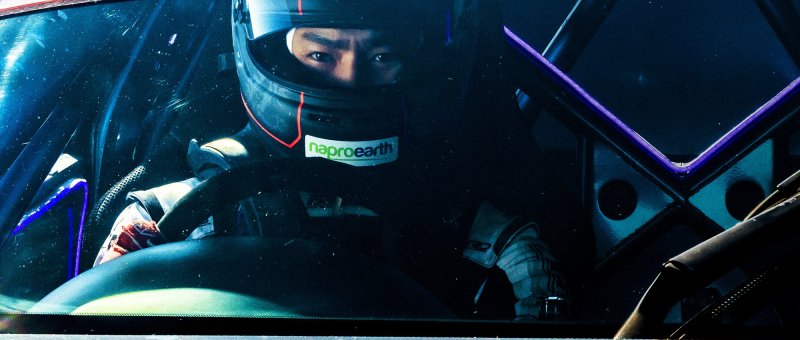
How far can skills learned in simulation be transferred to the “real” world? Ten Shimoyama’s Alivehoon (アライブフーン) sees a top gamer take to the track for real to compete for drift racing glory while battling both his own lack of confidence and that of those around him. What he discovers is that there may not be so much difference as might be assumed, but offline racing is not a solo sport and succeeding means learning to trust in others as well as oneself. 

Koichi’s (Shuhei Nomura) immediate problem is that he doesn’t fit in at his job as a mechanic and is resented by the other employees for failing to pull his weight. All he wants to do is play games and after a lifetime of practice he’s become a champion in the world of e-sports drift racing but secretly harbours the desire to become a “real” race driver. He finally gets the chance to prove himself when his exasperated boss gets him an opportunity to try out for a real team in need of a rookie driver to ensure its survival. Diffident as he is, Koichi agrees and after brief moment of confusion on the track, proves he has what it takes to take his virtual skills to the real world as an aspiring drift racer. 

The main opposition Koichi faces is from those who dismiss him on the grounds that in-game experience is useless in the real world, which in some cases it may be but luckily Koichi does at least know how to drive and after a moment to play things through knows how to translate his skills from the online world to a real life track which of course has much more proximity to mortal danger than he has ever experienced before. That might be one reason that veteran driver Muto (Takanori Jinnai) who retired after a catastrophic crash in the opening sequence does not take him very seriously on witnessing him being physically sick after being driven round the course by a champion racer while his daughter Natsumi (Ai Yoshikawa) is very invested in the idea that it might be possible to turn an e-sports champ into a top rank driver and save the team in the process. 

Team Alive is positioned as the nice guy underdog, trying to win through hard work and fairness in contrast to arrogant hotshot Shibasaki (Shodai Fukuyama) who turns down the chance to join Alive to go with a more lucrative offer from a haughty middle-aged woman (Anna Tsuchiya) who plays only to win. Shibasaki drives dirty with the racing equivalent of kicking dust in Koichi’s eyes but eventually pays a heavy price for his lack of sportsmanship only to be humbled and come to see the merit in the honest and down to earth approach of team Alive. Koichi meanwhile fights an internal battle trying to rediscover a sense of confidence while beginning to find it in the mutual support of his teammates acknowledging that he may be in the driving seat but he’s not alone and the victory does not belong entirely to him. 

The film’s race scenes are supervised by “drift king” Keiichi Tsuchiya and feature real life drivers such as Naoki Nakamura, Daigo Saito and Masato Kawabata driving real courses for added authenticity all shot in camera without the use of CGI or special effects. The neon blue/red lighting and synth score contribute to the retro aesthetic but it has to be said that Koichi seems to take to real life drift racing a little too easily and experiences surprisingly few setbacks before making a fairly perplexing decision in the film’s final moments despite having discovered the value of teamwork along with a new family in team Alive who each value him for who he is as he brings the best in virtual racing to the real world game. Natsumi too earns the respect of her father as he comes to trust and believe in Koichi but is never quite given the chance to prove herself in her own right. In any case there is something heartwarming in the film’s conviction that there are no pointless skills and that working hard to become good at something is its own reward whether you become a champion or not.


Alivehoon screens in Chicago on Sept. 17 as part of the 15th season of Asian Pop-Up Cinema.

Original trailer (English subtitles)

The Fifth Thoracic Vertebra (다섯 번째 흉추, Park Sye-young, 2022) [Fantasia 2022]

A strange fungus growing on an old mattress slowly takes human form while feeding on loneliness and misery in Park Sye-young’s melancholy experimental feature, The Fifth Thoracic Vertebrae (다섯 번째 흉추, daseos beonjjae hyungchu). The Fifth Thoracic Vertebrae is near enough the one closest to the heart, and the one the growing creature is prone to rip out of its unsuspecting victims as it travels towards its uncertain evolution. Yet there is a strange sort of wistfulness that accompanies the mattress’ journey as if a new world were being born, one birthed in pain and anguish but with a yearning for love and connection even in the depths of its loneliness. 

The mattress is to begin with one purchased by a young couple about to move in together but soon becomes a symbol of their doomed love. While the mattress leans against a pillar outside an apartment building, a rude removal man swears at the young woman on the phone apparently unable to gain access. The boyfriend was supposed to let them in, but as we discover he’s fallen asleep and the girl must now abandon her plans to carry the mattress up the stairs herself and position it around his sleeping body. The film had explained to us that we are still some days away from the creature’s birth but we can soon see spores collecting on the mattress as a symbol of the relationship’s demise. When the couple finally break up, the boyfriend notices the mould but simply flips the mattress over as if that will solve all of his problems. 

Slowly but surely, the mattress travels all around the contemporary society in which many are it seems remarkably unfussy about the condition of a mattress they do not intend to sleep on themselves. It first ends up in a love hotel where it witness another breakup, resentment between the lovers soon giving way to sorrow and finally neediness as they consent to part. Now grown enough in strength the mattress creature rips out their vertebrae though it’s unclear whether it does so to relive them of their pain or merely to consume it. 

Abandoned again by the irritated landlord cross with his customers for being too stuck up for a mattress which he thinks is perfectly fine if you just flip it over and forget about the admittedly “disgusting” growths on the underside, the creature finds a new home with a terminally ill woman who seems to have some kind of rare disease which requires her isolation though seemingly because of some kind of stigma rather than for any medical cause. It’s distressing to think that anyone would give such a soiled, unsanitary thing to a dangerously ill woman though she seems to have become aware of the creature and views it almost as a friend reaching out in her own loneliness and charging it with a letter for her daughter she fears the nurses will otherwise burn with her body. It seems they do not burn the mattress, but seek to get rid of it while recommending it be purified through exorcism but of course the removal people are far too cheap for that. 

In any case, the mattress creature soon finds an affinity with the van driver who is celebrating his 37th birthday alone on the road with a sad slice of cake and a single candle while listening to teach yourself English tapes in search of meaningful connections. Perhaps it makes sense that along with sweat, dead skin, and other things we unknowingly shed, we leak sadness and pain into a space of comfort and safety feeding a creature of loneliness and desire with the physical remnants of our emotional selves. What survives of us is less love than its unanswered call, an undeliverable letter becoming a sort of holy text for a new form of life that may long survive us. Filmed with a dreamy poeticism and sudden shocks of eeriness in its ominous lighting and sci-fi score, Park’s oneiric drama nevertheless beats with a melancholy pulse of frustrated desire in which all connection is fleeting and love births only loneliness in a world in which a mattress knows us best of all. 


The Fifth Thoracic Vertebra screened as part of this year’s Fantasia International Film Festival

Trailer (English subtitles)

Reclaim (一家之主, CJ Wang, 2022)

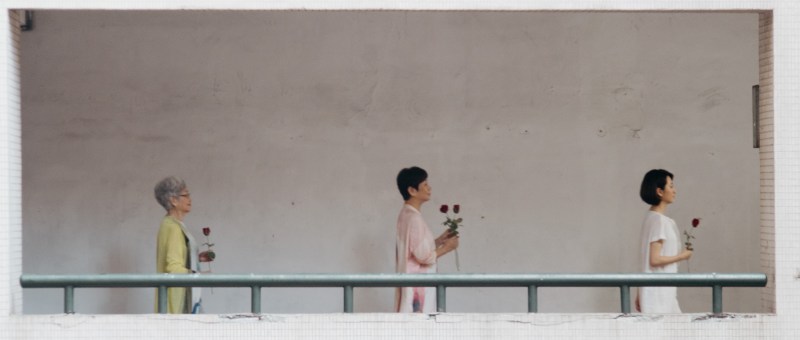
An ordinary middle-aged woman begins to wonder what it’s all been for when dealing with her insensitive, authoritarian husband, distant children, and the sacrifices she continually made to make others happy in CJ Wang’s touching family drama, Reclaim (一家之主, yījiāzhīzhǔ). The Chinese title, master of the house, is in its way ironic in the various ways in which Lan-xin (Nina Paw Hee-ching) is expected to shoulder all of the domestic responsibility with none of the control, though she is indeed attempting to reclaim something of herself as a woman and an individual as distinct from being someone’s, wife, mother, friend, or teacher. 

Lan-xin wanted to study art in Paris, but she got married young and started family and ever since then has led a conventional life doing what she thought to be right thing. Now, however, with her husband David (Kou Hsi-Shun) recently retired and both her children grown up she’s wondering a little what it’s all been for especially as David is a chauvinistic throwback who belittles her work as an art teacher while harping on about ways to make money patiently waiting for his collection of antique teapots to rise in value. Now that her mother’s dementia has intensified and she keeps escaping from her nursing home, Lan-xin wants to bring her to live with them but David is both dismissive and disinterested talking about it in the same way one would to a child who wants to get a dog asking if they really have the space and making it clear that looking after her will be Lan-xin’s responsibility. 

While David holds on to a substantial cheque with the intention of investing it in a series of harebrained schemes from luxury tombs to VR cafes, Lan-xin’s desire is essentially to try and repair her fracturing family by buying a larger apartment where they could all live together. David complains that no one tells him anything, but that’s largely because he’s continually dismissive of their dreams and aspirations blowing a hole in his daughter’s new project designing eco-friendly homes that prioritise individual comfort by telling her that she should just extend the living area into the balcony to trick people into thinking they’re getting more for their money. Jia-ning (Ko Chia-yen) in particular is feeling lost in her life unsure of what role it is she’s supposed to be playing while clearly disillusioned with the nature of the relationship between her parents in which her mother is expected to sacrifice her desires in service of her father’s. It’s clear that neither of the children want the kind of futures their parents envisaged for them, their professor son also preparing to return from the US to live a simple life in the Taiwanese countryside. 

Both of the children, however, take their mother for granted and often treat her poorly. The son orders her to book his plane tickets for him and abruptly hangs up after asking her to clean his room and make his favourite food, while Jia-ning also snaps at her expecting her to handle domestic tasks and locate missing items. Lan-xin forms a quasi-maternal relationship with a former student who has returned from America (Mason Lee) and now works in finance but is faced with the implosion of all her hopes firstly in her daughter’s more immediate needs to claim independence in her working life while avoiding the same compromises she was forced to make, and then by the illusionary nature of her home owning dream buying one home for fragmenting family rather than enduring her dissatisfying living arrangements while investing in separate homes for each of her children. 

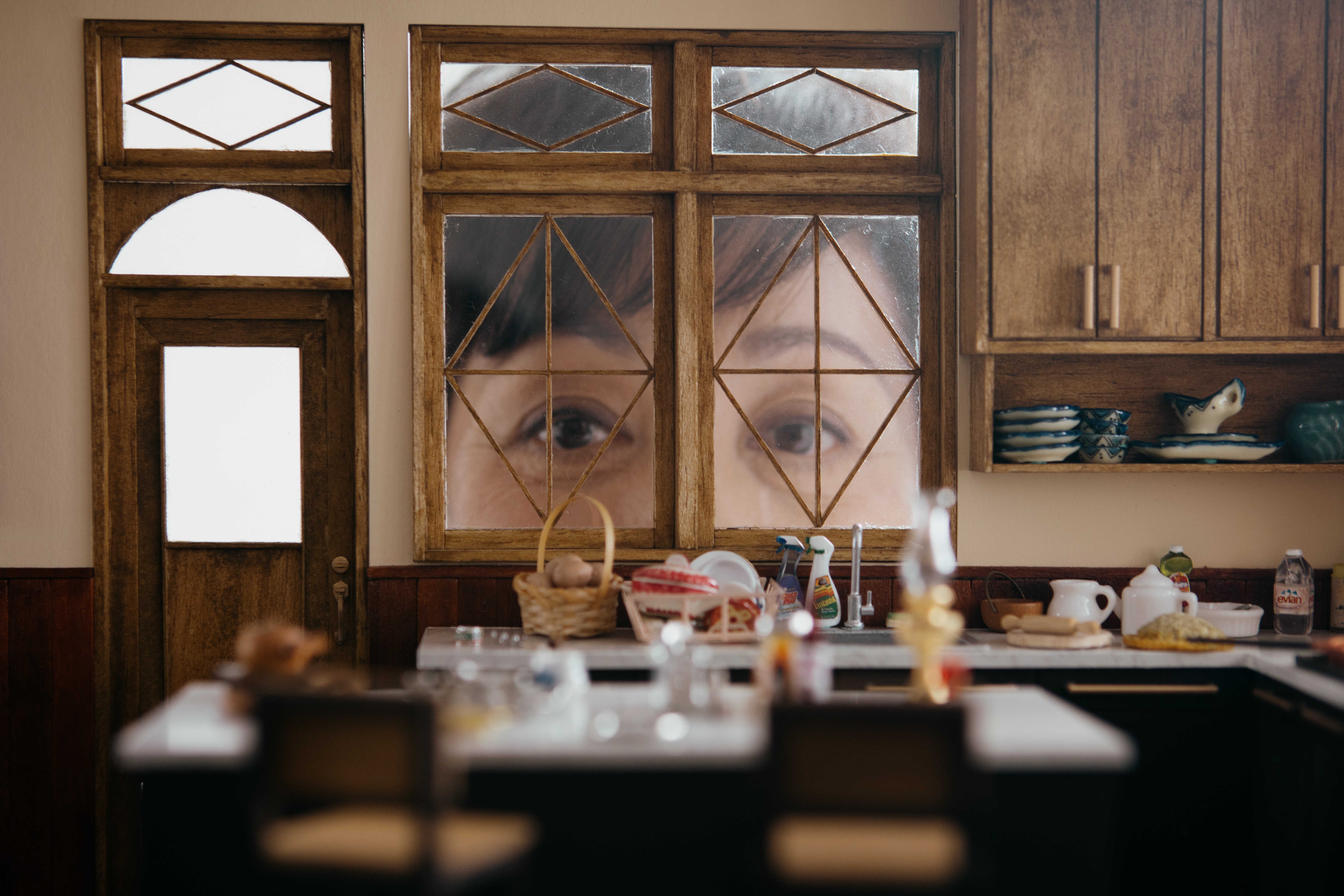
There may be a degree of personal myth making in her meditating on the lost opportunity of a Parisian education as implied in an imaginary conversation with her mother, though as her miniature-making hobby implies perhaps she played the role she wanted to play but lost sight of herself somewhere along the way. A voyage into her own memory reunites her with her essential self and allows her to reclaim her name no longer willing to be subservient to her husband’s desires but prioritising her own. As in her dream, all her sacrifices will eventually be repaid while Jia-ning too comes to a better understanding of her mother and grandmother along with her own place in a changing society. Lan-xin is finally a master of herself no longer afraid to take up space in her own home and in full control of her own aspirations and desires. 


Reclaim screened as part of this year’s New York Asian Film Festival. It is also available to stream in many territories via Netflix.

Netflix trailer (English subtitles)

Images: ©2022 Rong Gwan Productions ALL RIGHTS RESERVED

#LookAtMe (Ken Kwek, 2022)

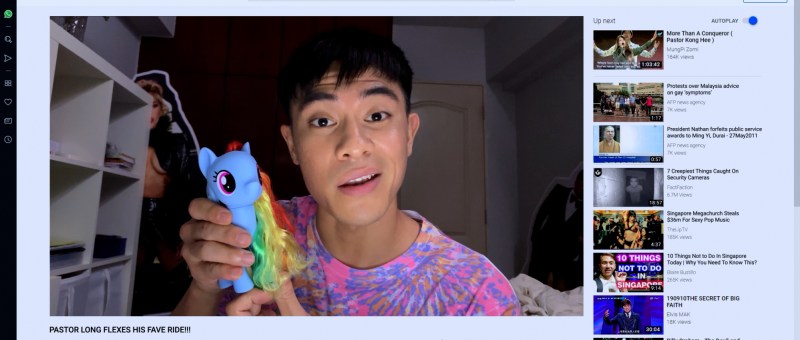
The unequal authoritarianism of contemporary Singapore conspires against an aspiring YouTuber in Ken Kwek’s surreal drama #LookatMe. Opening with a title card explaining that 2015 prominent activists have jailed for breaking arbitrary laws relating to obscenity and illegal assembly, the film throws its progressive hero into a kafkaesque quest for justice after he’s arrested for publishing a video mocking a homophobic religious figure simultaneously asking why it’s alright for a pastor to spout hate speech but illegal to challenge him and pitting the hero’s desire for fame against that for genuine social change. 

Sean (Yao) does indeed want fame, running an unsuccessful YouTube channel while alternating between mocking more successful stars and emulating them by playing cruel pranks on his understanding mother in the hope of going viral. His life changes when his girlfriend Mia (Shu Yi Ching), whose parents are religious, invites him, and his gay twin brother Ricky (also Yao), to attend an evening service at her church in an attempt to curry favour. The church turns out to be of the evangelical variety, opening with a Christian rock performance before showman pastor Josiah (Adrian Pang) arrives on stage and embarks on a homophobic rant insisting that he has no problem with gay people but is dead against them overturning Singapore’s colonial era law criminalising homosexual sex. Ricky is obviously upset, unsure why Mia whom he assumed to be progressive would have invited him to such an event, and leaves abruptly upsetting Mia’s father in the process. 

Sean is so outraged by the whole thing that after noticing that Josiah gets a lot more hits than he does with his hate speech, he makes a video mocking his messaging and satirically accusing him of bestiality which eventually goes viral but also gets him arrested after the church’s many followers ring the local police en masse. Sean can’t understand why he’s in trouble with the law for publicly insulting a religious leader while Pastor Josiah is seemingly free to spread dangerous and hateful ideas with no fear of challenge or dissent. Banned from social media, he’s picked up again for making an apology video and is then eventually sent to prison for 18 months while facing a defamation trial in his absence. 

Even his new cellmates can’t quite believe he’s been put away for something as ridiculous as a YouTube video yet his plight exemplifies the authoritarianism of the contemporary society in which there is no guarantee of free speech nor safe path to protesting injustice. Ricky is later arrested too for “illegal assembly” when he and three friends hold up a banner protesting the case because four people outside together is apparently prohibited by law. As he points out, how are you supposed to hold up a giant banner with only three people? Sean tried to stand up for Ricky, and Ricky does the same for Sean deciding to come completely out of the closet as an LGBTQ+ activist with the support of their mother Nancy (Pam Oei) as they fight for justice but then faces random violence on the streets from homophobic vigilantes while she is later fired from the primary school where she works after refusing to sign an apology or renounce her political views. 

The film takes aim at social hypocrisy as Sean is sexually abused by the prison warden while inside, and the pastor seeks to preserve his business interests calmly telling Nancy that he bears her no grudge but won’t drop his defamation suit because he has to protect the Church from similar forms of attack. He says this while lounging around on his yacht while servants bring him drinks, clearly incredibly wealthy from the proceeds of his religious life which whichever way you look at it is not a good look. In any case the film’s ironic conclusion which vindicates Sean and the place of video in social protest cannot but seem a little flippant in its implications which reduce the pastor to the position of hypocritical villain while Ricky’s conversion to Christianity feels like too much of a concession even if making clear that it is not religiosity that is being demonised only those like Josiah who would seek to profit from hate and repression. Nevertheless, Kwek presents an alternately heartwarming and harrowing vision of a close family torn apart by outdated and irrational laws and in the end left only with violence as a potential motivator for change. 


#LookAtMe screened as part of this year’s New York Asian Film Festival.

NYAFF trailer (English subtitles)

Fast & Feel Love (เร็วโหด..เหมือนโกรธเธอ, Nawapol Thamrongrattanarit, 2022) [Fantasia 2022]

A 30-something couple find themselves pulled in different directions by their conflicting desires in Nawapol Thamrongrattanarit’s post-modern comedy, Fast & Feel Love (เร็วโหด..เหมือนโกรธเธอ). As the title implies, the self-involved hero is eventually forced to accept that his success is founded on the support of those around him while belatedly stepping in to adulthood in undergoing a baptism of fire learning basic life skills along with the confidence to look after himself in a new world of grownup responsibilities. 

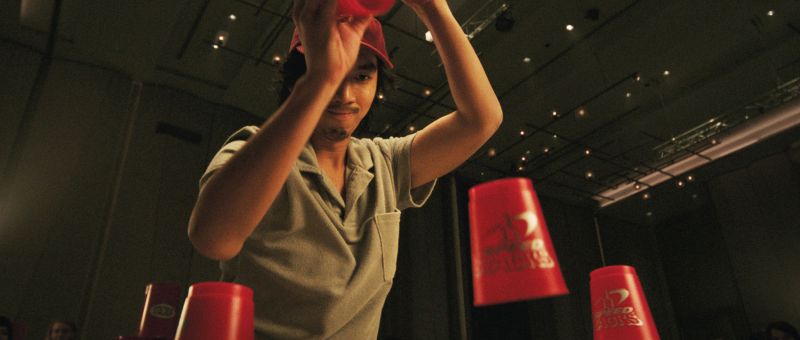
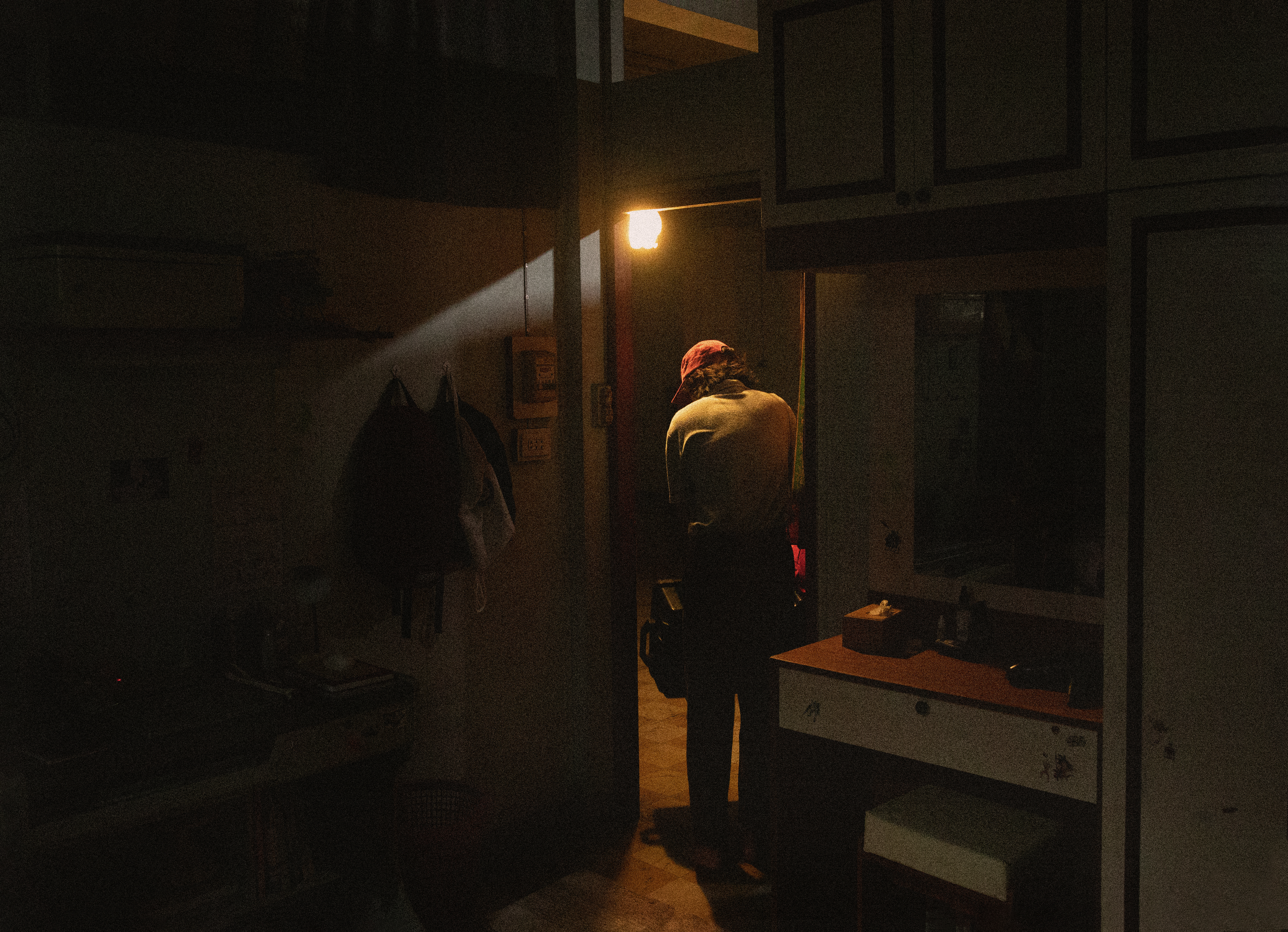
Jay (Urassaya Sperbund) and Kao (Nat Kitcharit) met as outsiders in high school, she excelling in English but not much else aside from her love of plants, and Kao obsessed with the art of sport stacking and dreaming of becoming a champion. 10 years later the pair are still a couple, kind of, living in a well-appointed home which they technically co-own though its clear Jay is shouldering the mortgage along with all the other domestic responsibilities. Kao is technically arrested in childhood, spending all of his time shut up in his room practicing sport stacking oblivious that others in his life have sacrificed themselves on his behalf. Jay used to think that it was all worth it as long as Kao achieved his sport stacking dreams but now she’s reached a crisis point realising that for everything she’s done for Kao she’s got very little back and if she waits much longer her own small dream of becoming a mother and having a conventional family life may pass her by. 

There is something of an irony in the fact that all of Kao’s major challengers are young children though as he points out sport stacking is an egalitarian sport in which things like age, gender, and nationality are irrelevant. Having successfully broken a record, Kao begins receiving creepy phone calls from a new rival, Edward, a little boy in Colombia who complains to his mother asking why people can’t go on stacking forever only for her to point out that adults have other things in their lives they have to attend to though Edward simply doesn’t understand. To begin with, Kao doesn’t either because he’s been lucky enough to be surrounded by people who supported his dream and went out of their way to make it easy for him by relieving him of basic tasks so that he could devote himself entirely to sport stacking. Because it had always been this way, it never really occurred to Kao that he needed to grow up and begin taking some responsibility for himself or at least acknowledge the sacrifices others were making on his behalf. 

When Jay eventually leaves him fearful that she’s wasted too much time and he’s never going to change, Kao is suddenly confronted by the frightening world of adulthood in which he must finally learn to look after himself while simultaneously accepting that it’s alright to ask for and receive help while helping others in return. What appealed to him about sport stacking was that it could be done alone, yet he failed to use the sport to block out everything else but was perpetually bothered by the intrusions of ordinary life his concentration ruined by the slightest noise. What he learns is that he cannot, and does not want to, win alone but only thanks to the support he receives from those around him while accepting that perhaps it’s time to move on from competitive sport stacking. 

Nawapol Thamrongrattanarit throws in plenty of meta references as Kao breaks the fourth wall or laments that he thought this was supposed to be an action movie but he’s hardly done any stacking at all and people might be disappointed. An extended running gag directly references Bong Joon-ho’s Parasite, while one of the kids Kao teaches at the sport stacking club talks like a gangster because she’s apparently watched too much John Wick. Even so, the relationship between Jay and Kao is drawn with a poignant naturalism rather than rom-com superficiality that allows Kao to accept that it’s time for them both to do what makes them happy even if that means they may not be able to stay together while little Edward seems to come to the same conclusion, ahead of the game in realising that a prize you don’t really want may not be worth winning. 


Fast & Feel Love screened as part of this year’s Fantasia International Film Festival.

International trailer (English subtitles)

Images: ©2022 GDH 559 Co., Ltd.

Alienoid (외계+인 1부, Choi Dong-hoon, 2022)

According to the strangely warmhearted AI robot at the centre of Choi Dong-hoon’s Alienoid (외계+인 1부), the universe is already finished, destined only to tear itself apart in destructive instability. According to him, his society evolved, became compassionate and forgiving, yet like many others sought to avoid a problem it did not want to deal with in exiling its most dangerous prisoners to the minds of oblivious Earthlings who apparently rarely realise they’re sharing body and soul with an alien killing machine until that is one decides to escape. 

Thunder (Kim Dae-myung), an AI unit accompanying the sullen Guard (Kim Woo-bin) who is also a kind of guardian, paints the aliens as dangerous mutants who live only for violence yet it might be worth considering that their rebellion may be justified as members of an oppressed minority apparently considered harmful to mainstream society were it not for the fact their plan involves poisoning the Earth’s atmosphere to free their brethren while suffocating humanity in the process. Guard is fond of saying that he cares nothing for humans and does not involve himself in human affairs, yet it’s obvious that as much as his duty is to ensure the aliens stay captive he feels a responsibility to protect humanity, coming to care for an infant child Thunder spirited away in compassion after its mother died when the alien hosted inside her tried to escape. 

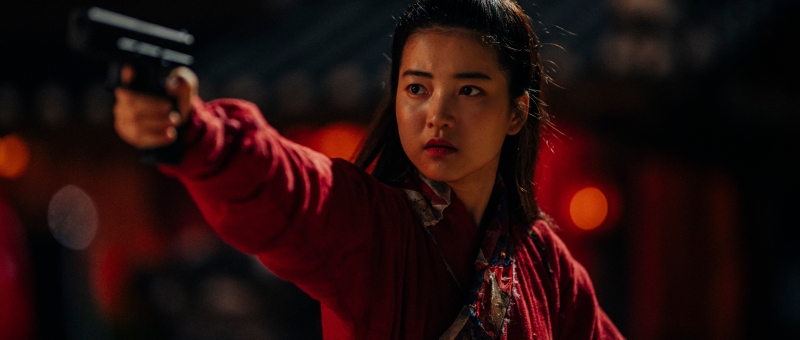
There is something a little curious in the fact these alien beings have chosen to live in what is our present day when according to them time is not linear but happening all at once and they appear to have the ability to travel through it at will, even stashing mutant criminals back in the 14th century where a Taoist dosa magician, “The Marvellous Muruk” (Ryu Jun-yeol) is on the hunt for the Divine Blade and a young woman who “shoots thunder” (Kim Tae-ri). Alien technology may seem like magic even if rooted in “science”, but feudal Korea is a place of majestic fantasy in which wizardry is apparently very real to the extent that a pair of powerful sorcerers tour the land hawking magical supplies such as random sutra stickers and mirrors that enlarge whatever passes through them to mysteriously masked warrior monks. Yet as we can see the girl who shoots thunder is merely welding a pistol, a kind of halfway house of technology which seems like strange magic to the people of Goryeo but nothing more than a child’s toy to the laser-wielding robotic aliens. 

In any case, Choi eventually connects these two worlds bridged by temporal conspiracy as if implying that the future’s salvation lies only in the past. Guard is forced to reflect that their strange act of colonial imperialism in secretly implanting alien prisoners in human minds may have been misguided when challenged by his plucky little girl (Choi Yu-ri) who has already realised there’s something a little different about her distant dad while the fact she’s effectively being raised by two men passes as incidental detail even as the Guard is stalked by her best friend’s apparently smitten aunt (Lee Honey). 

This being the first instalment in a two part film, there is a notable lack of resolution in its closing moments though Choi excels in world building running from hard sci-fi to feudalistic fantasy imbued with the strange magic of technology and underpinned by an interrogation humanity as the heroes battle through time looking for a way to repair an “unstable” world ruled by greed and violence and largely find it in each other. While the chief thrill may come from the incongruity of a young woman firing a pistol in the age of the crossbow (not to mention blasting her way out of a coffin), Choi packs in a series of innovative action sequences shot with a knowing irony as Muruk faces off against the masked monks in the past while the Guard and Thunder try their best to keep the aliens at bay with their high tech weaponry, shooting electric pulses from their palms and dodging lasers but still making a last ditch attempt by leaping at the enemy spaceship and trying to stab it in the heart. Whether this disordered world can be stabilised through a moment of cosmic connection will have to wait for part two, but this opening instalment at least is quite literally a charming affair.


Alienoid is in US cinemas from Aug. 26 courtesy of Well Go USA.

US trailer (English subtitles)

Imaginur (Nik Amir Mustapha, 2022)

“It’s a pickle, isn’t it? Trying to remember what you don’t know you’ve forgotten.” So says the father of the hero of Nik Amir Mustapha’s touching sci-fi romance, Imaginur. It is however his son who’s trying to piece things back together while seemingly stuck in a maddening time loop chasing the ghost of lost love and searching for his “happy place”, the safest place he can imagine that will reconnect him with who he really is. 

Zahul seems to be haunted by fleeting glimpses of a woman whose face is hidden. After being involved in a traffic accident, he fetches up at the hospital but is there with his elderly father who is living with dementia. An elderly lady gives him a card for a special service called Hypnotica run by a mad scientist named Ramil who claims he can use hypnosis to cure Zahul’s panic attacks the most recent of which caused him to abandon his father in a supermarket after an awkward interaction with his ex. Ramil tells him that they’re simply going to revisist old memories with a new perspective to solve the cause of his anxiety but we can’t be sure when or if Zahul has actually left the state of hypnosis. Unable to remember or get a firm grasp on his reality he becomes panicked and short tempered, eventually paranoid and rambling about people trying to steal his brain.

Even so as someone puts it, his quest for Nur, a woman he meets at a burger stand, is also a quest for light and the path back towards himself in reclaiming his past even if it comes with the pain of loss on waking up to the reality. “This is what becomes of our lives” the sympathetic elderly woman laments of Zahul’s father, only for Zahul to reply that there’s no point resisting, but resisting is in a sense what he’s been doing trying to push through to a more concrete reality unwilling to accept the first or even second iteration of a moment in time but looking for the essential truth of it. 

What his father tells him is that the answer is what we feel in out hearts, that there’s nothing so important as feeling except perhaps the memory of it. That is in a sense what Zahul is chasing, trying to reorient himself through emotional logic while simultaneously reluctant as if avoiding something he doesn’t know that he’s forgotten. Meanwhile, he becomes increasingly paranoid about the shadiness of Ramli’s operation which even he calls a “pseudoscience” wondering if he’s caught up in some kind of conspiracy while convinced they’re trying to steal his brain or at least mess with it to drive him out of his mind. 

Yet it all seems to come back to a choice he didn’t and didn’t make watching the mysterious woman head towards a station with a suitcase but getting hit by a car before reaching her. “Remember me” she plaintively asks in the shared space of his mindscape, perhaps a phantom of his imagination but also a real woman he didn’t know he’d forgotten who holds the key to everything he is. “You live inside your head a little too much” Nur tells him, and she’s absolutely right while ironically advising him to find his happy place little knowing that perhaps he has and they’re already in it. 

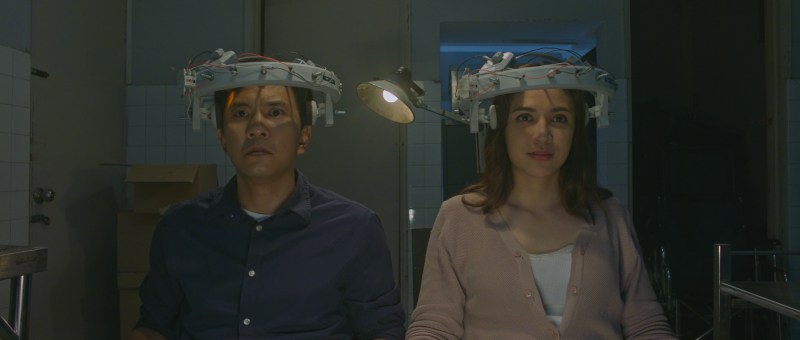
Oneiric and elliptical, the film’s fragmentary dream logic in which Zahul is forced to relive a series of moments from getting a parking ticket to being at the hospital eventually builds towards a moving moment of cohesion as Zahul manages to find himself again accepting both love and loss along with memory in all of its emotional intensity. Opening with a classic hypnotic spiral, there’s a kind of charm in Nik Amir Mustapha’s retro production design in the lo-fi hypnotism headsets Ramil alarmingly claims turn off part of the brain along with the softened colour palate that lends a note of nostalgia to what we assume to be the present day. In any case there is something genuinely touching in Zahul’s determination to reclaim himself through remembering lost love and discovering the eternal in transient moments of happiness.  


Imaginur screened as part of this year’s New York Asian Film Festival.

Teaser trailer (English subtitles)

Images: © 2022 Lumatic Films.

Next Sohee (다음 소희, July Jung, 2022) [Fantasia 2022]

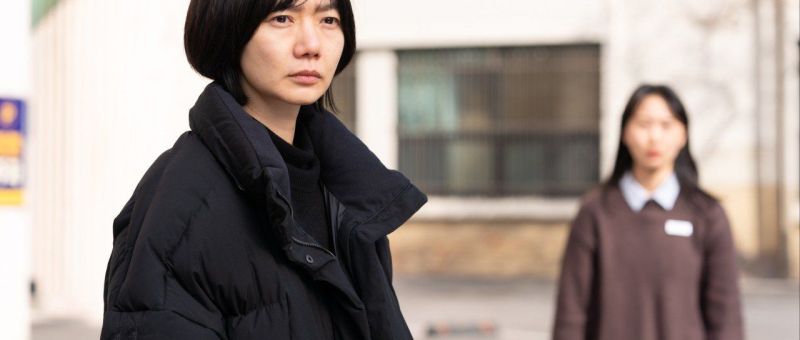
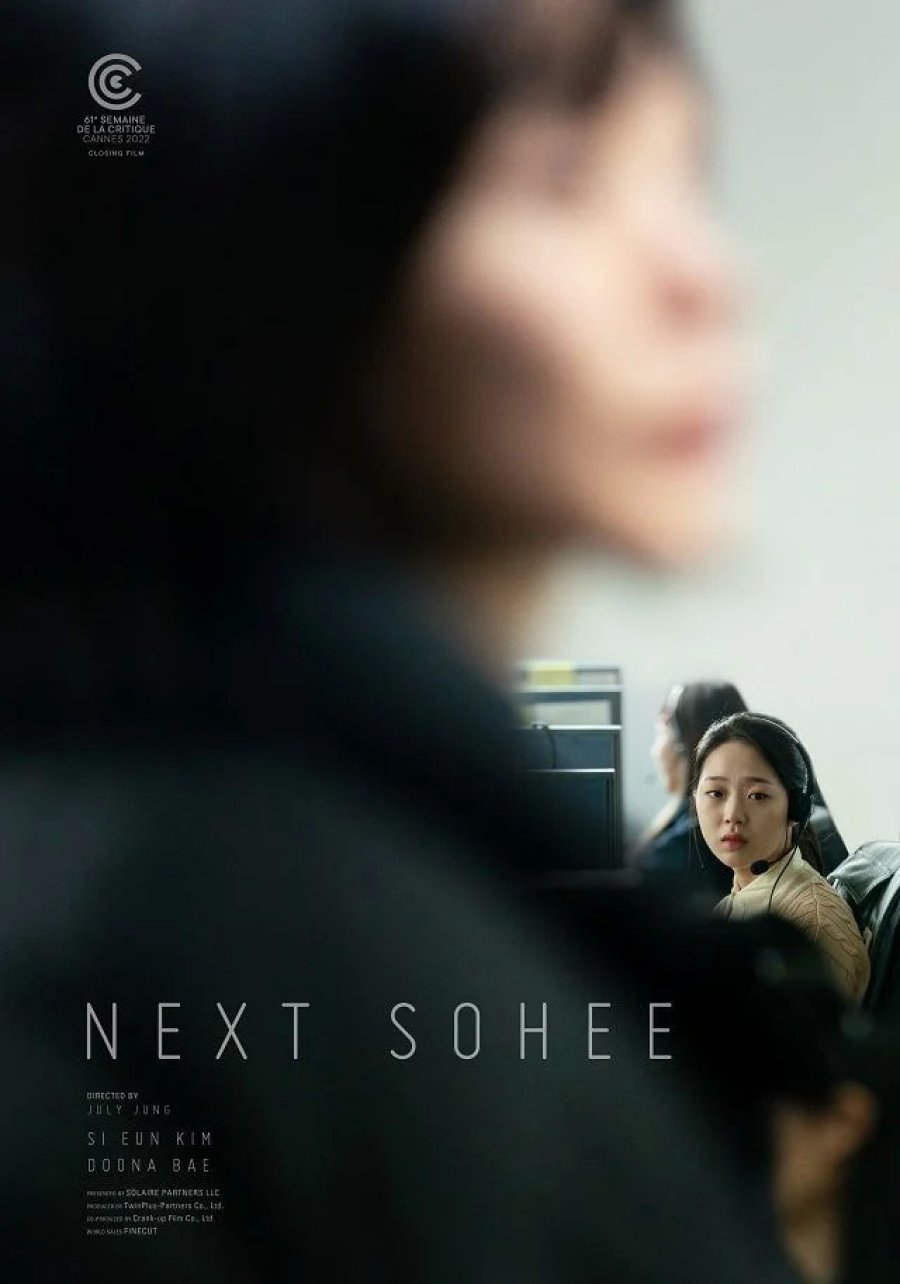
“She just went quietly” an older woman running a cafe explains to a police officer against all advice attempting to investigate the suicide of a young woman in July Jung’s long-awaited A Girl at My Door followup, Next Sohee (다음 소희, Daeum Sohee). In the end, Sohee (Kim Si-eun) did indeed go quietly, cowed into submission by the apparent hopelessness of her life amid the grinding crushingness of contemporary capitalism while even the policewoman who shares her fiery sense of outrage comes to a similar conclusion on uncovering the endemic abuses of the modern society. 

Jung devotes the entire first half of the film to Sohee’s slow burn disintegration as a high schooler selected as an “extern” for a call centre business while dreaming of becoming a dancer. These exploitative work experience programs are technically part of Sohee’s high school education and dropping out of them incurs the possibility of not graduating along with being “red tagged” by the school in a lesson in banishment room tactics which sees the kids forced to perform menial tasks such as cleaning the toilets while wearing clothing that marks them out as a failure who has brought shame on their institution. A proud young woman, Sohee is thought of as mentally strong and academically earnest originally excited by the extern opportunity which the teacher sells to her as being a cut above, she being the first of their students to land a position at a “major” company which is also feather in his own cap. 

Later Yoojin (Bae Doona), the policewoman who briefly met Sohee at a dance class, asks the teacher why he didn’t bother to investigate what was really going on at the call centre but he only tries to shift the blame explaining that he needs to find good jobs for other kids to maintain the school’s rankings which means keeping on the good side of employers. As Sohee sat vacantly and cried having attempted to take her own life, he dismissed her concerns and told her to work harder. Each time Yoojin interviews an authority figure they tell her it’s not their fault, it’s the system, while blaming Sohee for having “attitude problems” and pointing out that she should have just quit if she wasn’t up to the job. 

But Sohee couldn’t quit in part because of the shaming culture that surrounded her in which she’s constantly reminded that her actions have negative consequences for others. Firstly she’s told that her subpar performance brings down their team’s rankings, then shunned by her colleagues because her top scores are pushing up the targets for everyone else. She doesn’t want to let her teacher down by quitting, and even on trying to explain to her parents after her first suicide attempt is simply told to work harder under the fallacy that if you obey all the rules and work hard you’ll be alright. The call centre is almost entirely staffed by externs, in the main teenage girls, who are made to listen to irate customers verbally abuse or sexually harass them while instructed that they must do whatever possible to stop them cancelling their accounts. The call that breaks Sohee comes from a sobbing father who wants to cancel because his child has died so he doesn’t need the service anymore but she still has to try and sell him a new TV package while giving him the run around on the contract cancellation. 

Because the externs have a high turnover, the company defers payment of their bonuses to discourage them from leaving while continuously docking their wages reminding them of the clauses in the contract they signed which state that remuneration is subject to change. Sohee was in fact forced to sign two different contracts so the company could get away with paying her below minimum wage which is a violation of what little labour law actually exists while as these are essentially children who’ve signed contracts they don’t understand because their teachers and parents told them to they have no idea of their rights but are gradually realising they’re being exploited and there’s nothing they can do about it. Sohee was thought of as the type to fight back, and she was, she did, but in the end she went quietly because what else could she have done. 

She went quietly from the dance class where Yoojin first encountered her too, but does not pass so quietly from her mind. Yoojin asks why it was that she danced given there’s no gain to be had by it, she was too old to become a K-pop star and there’s no money in dancing but for her there was perhaps freedom and a small act of rebellion in the use of her physical body for something other than labour. An inspector who calls, Yoojin shares Sohee’s “attitude problems” and refuses to let the case rest realising that the poor kids at the below average schools are being forced into employment that is almost entirely unregulated while the companies that exploit them paint themselves as the victim, pressuring employees and bereaved family members into signing documents denying any wrongdoing. Betrayed by the company, Sohee first refuses to sign but in the end she does so, quietly, and at the cost of her integrity. Yoojin too is eventually forced to sign a form and put her name to something she believes is not quite true. Sohee’s death was as she puts it a workplace accident, or perhaps a slow motion murder, and “nobody gives a damn” because she was just a teenager with a “bad attitude” who went quietly because no one would have listened to her anyway. 


Next Sohee screened as part of this year’s Fantasia International Film Festival.

International trailer (English subtitles)