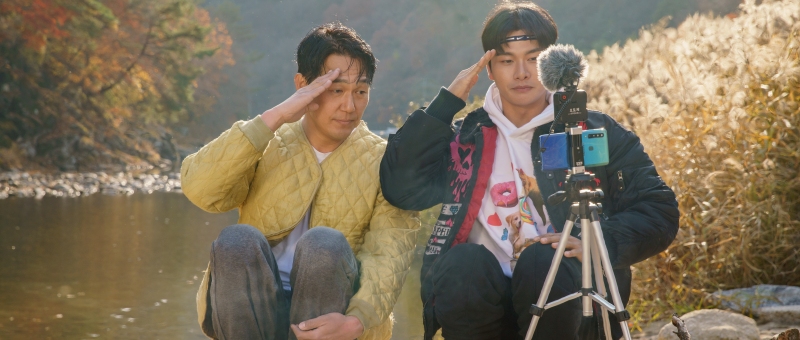
The Ex-Files 4: Marriage Plan (前任4:英年早婚, Tian Yusheng, 2023)

Why do people get married? In the fourth instalment of the popular Ex-Files rom-com franchise,The Ex-Files 4: Marriage Plan (前任4:英年早婚, qiánrèn 4: yīngnián zǎohūn) the guys are beginning to feel their age and settling down is now it seems on the cards but for Meng Yun (Han Geng) at least it’s not so simple despite receiving some unexpected medical news that undermines his sense of youth and masculinity. As a single urbanite, he’s become set in his ways and used to living alone while haunted by the spectres of old love and missed opportunities. 

Yu Fei (Zheng Kai) meanwhile has been somewhat bamboozled into proposing to his slightly younger girlfriend of three years Ding Dian (Zeng Mengxue) who is herself on the fence about the idea of marriage. The couple end up opting for what they describe as a “marriage cooling off period” but is really just a trial run while they figure out if they can actually live together. To begin with it’s more difficult than expected as both struggle to transition from “dating” to “settled”, each on their best behaviour at home and engaged in a constant game of oneupmanship over household chores trying to prove how considerate they are to each other which is as they begin to realise exhausting. But deciding to just be themselves doesn’t quite work either as they quickly descend into slobbishness with no one taking care of domestic tasks each assuming it’s the other’s responsibility.

To try and work out their differences they come up with a solution that’s both very mature and not in turning their family meetings into drinking games in which the person who recognises they’re in the wrong has to take a shot. The kinds of things they argue about are the usual points of tension like leaving the cap off the toothpaste or waiting too long to wash your smalls, though before long more serious cracks start to appear such as in their different approaches to money management with Ding Dian keen to set up a household joint account and Yu Wei resentful of what he sees as an intrusion into his financial freedom in order to force him to be more responsible about his spending. 

It’s this idea of “freedom” that seems to be keeping the guys from settling down, but as someone later says to Meng Yun it might be his desire for “freedom” that’s holding him back. An ageing Casanova, Meng Yun is hounded by his mother about getting married while otherwise lamenting his descent into solitude and acknowledging that he may now be so afraid of a return to loneliness following a breakup or else a change in his routine that he’s losing interest in starting new relationships which is one reason he’s badgered into blind dates with women looking to get married. He’s not sure if marriage really is the “tomb of love” as some describe it, but can’t see what the point is or why it’s any different to being in a longterm committed relationship without a certificate to prove it. 

In many ways his battle is with looming middle age as he begins to wonder if he’s too old to change his ways and if solitude is what he’s choosing for the rest of his life, while Yu Wei conversely wrestles with the demands of adult responsibility in learning to accept a little more give and take in his life. The film flirts with the idea that Meng Yun may get back together with one of his many exes, in particular Lin Jia (Kelly Yu Wenwen) who seems to be the one that got away, but refreshingly falls back on the idea that some things aren’t meant to last and it’s better to let them go. Meanwhile, Meng Yun is himself a little sexist and chauvinistic in his dealings with his many blind dates, failing to consider the woman he’s talking to may be a doctor rather than a patient rushing out to meet him after undergoing major surgery and hurt after being rejected out of hand for his educational background and financial profile despite doing more or less the same thing himself scrolling past women who don’t match his ideals. 

Both men are in many ways selfish and immature, but also becoming more aware of their flaws and on opposite sides of the fence when it comes to the possibility of change. Despite having met a potential soulmate in philosophical lawyer Liu Liu, Meng Yun can’t decide if it’s worth the risk of abandoning his solitude or if he’ll ever be able to give up the ghost of lost love and open himself to a greater emotional intimacy. A little more melancholy than previous instalments, the film ponders urban loneliness and the trade-offs involved in a life of “freedom” while leaving the door ajar for middle-aged love in the life of the increasingly lovelorn Meng Yun. 


The Ex-Files 4: Marriage Plan is currently previewing in UK cinemas ahead of a 6th October opening courtesy of CineAsia.

International trailer (English subtitles)

Natchan’s Little Secret (ひみつのなっちゃん。, Yasujiro Tanaka, 2023)

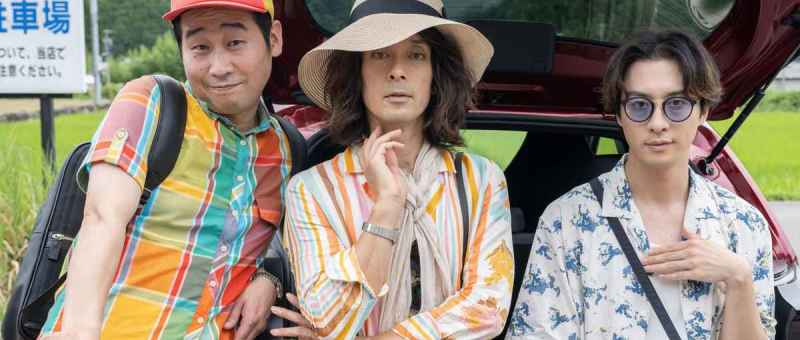
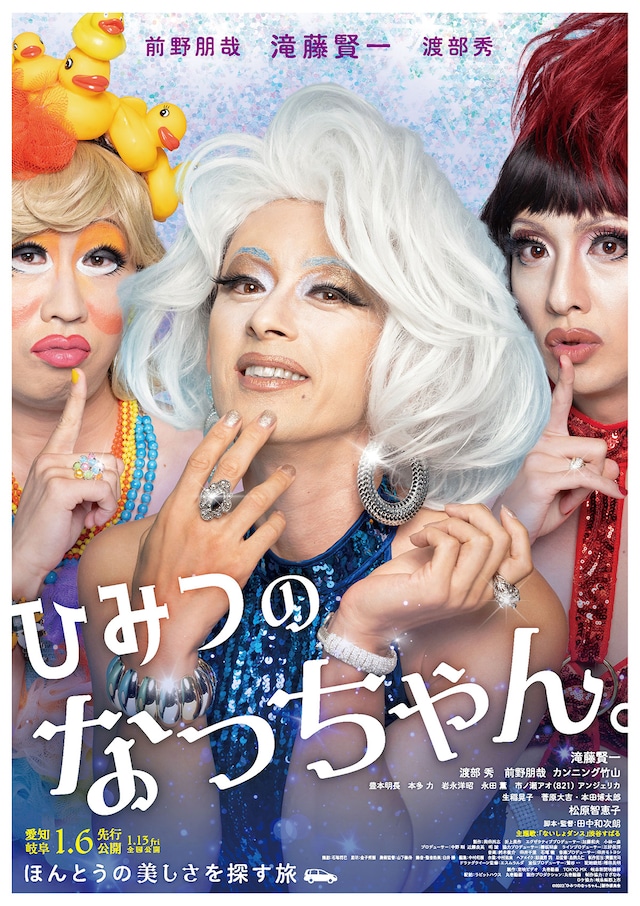
On learning that their friend and mentor has died, a trio of drag queens vows to do whatever it takes to fulfil her wishes and ensure her family never know about her sexuality in Yasujiro Tanaka’s road trip comedy Natchan’s Little Secret (ひみつのなっちゃん。, Himitsu no Natchan). In some ways it may seem old-fashioned, that rather than ensuring her family knew who she really was they decide to honour Natchan’s desire for secrecy but nevertheless meditate on the nature family while finally landing on a poignant sense of loss for all that secrecy entails.

Virgin (Kenichi Takito), an accountant by day and former drag queen who’s lost the taste for dancing, and Morilyn (Shu Watanabe) who works at the bar Natchan owned, are forced to confront the fact that in many ways they didn’t even know Natchan at all. They don’t know her address or hometown and have only the vague idea that she was estranged from her family. Virgin reflects that she was “secretive”, but in the end none of them really know what to do now that she’s gone. Another drag queen turned TV celebratory, Zubuko (Tomoya Maeno), laments that some take their secret to their grave realising that’s exactly what Natchan has done. That’s one reason why the trio become obsessed with the idea of cleaning out Natchan’s flat to make sure that her family don’t find anything they weren’t expecting. 

But then again, the trio frequently refer to the gay community as their family while claiming Natchan as their own. Without really thinking about it, Morilyn allowed hospital staff to assume he was family in a more legal sense and started making funeral arrangements. He also packs up some of Natchan’s property without realising he could be accused of theft while trying to tidy up her life. They may feel that the birth family are in a sense intruding, reasserting ownership over someone they never accepted in life and preventing those who truly loved them to honour their wishes. Yet Natchan’s mother (Chieko Matsubara) turns out to be sweet old lady who is in her way hurt that she and her son became estranged wishing that they could have been closer while he was alive.

It’s she who eventually invites them to Natchan’s rural hometown which is famous for a particular kind of festival dance. None of them are sure they want to go, partly because they fear accidentally blowing Natchan’s cover but also the social attitudes of what they imagine to be a more conservative, traditional area. Only it appears quite the reverse is true. Residents at the inn where they stay actually have a fierce curiosity about drag and enthusiastically enjoy a risqué routine performed by Morilyn and Zubuko while even a manly man later shrugs his shoulders and claims it’s not so different from Gujo Odori which also makes people sparkle. 

Maybe Natchan’s little secret is that she was a person who had learned to see the beautiful things in life and wanted others to see that they were beautiful too even if some told them that weren’t or they didn’t feel that they were. Virgin describes Morilyn’s straightforward living as a beautiful thing, especially as he recounts being made to do karate by conservative parents afraid of what the neighbours would think of their effeminate son, an experience he describes as emotionally destabilising and has led to a degree of repression as an adult. Virgin is out at work and well liked by a collection of female colleagues but now only dances alone at home and keeps it as her own kind of secret. Yet through their various adventures on the road the trio begin to come to new acceptances of themselves as they prepare to say goodbye to Natchan while comically affecting the tropes of conventional masculinity in an attempt not to give the game away. They wander through queer spaces in search of her and rediscover their own sense of family realising that they did know Natchan after all or at least all that was important to know as did others even if they pretended not to because that seemed to be how she wanted it. Finding liberation amid the Gujo Odori, the trio finally say goodbye but also discover a new sense of solidarity and self-acceptance joining the dance at which all truly are welcome. 


Natchan’s Little Secret screened as part of this year’s Camera Japan.

Original trailer (no subtitles)

Life of Mariko in Kabukicho (探偵マリコの生涯で一番悲惨な日, Eiji Uchida & Shinzo Katayama, 2022)

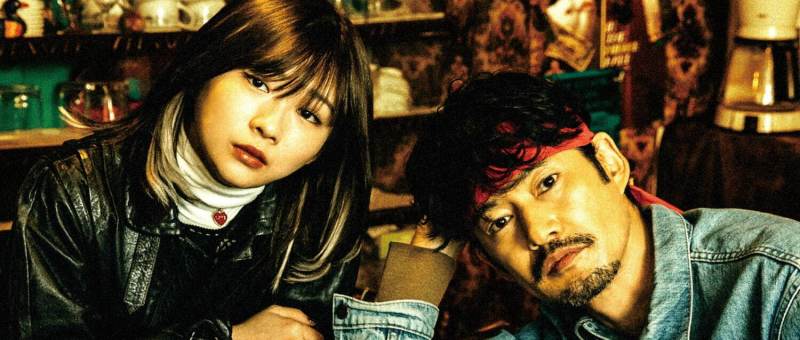
It’s all go in Kabukicho in Eiji Uchida and Shinzo Katayama’s zany tale of aliens, serial killers, and secret assassins. The film’s Japanese title (探偵マリコの生涯で一番悲惨な日, Tantei Mariko no Shogai de ichiban Hisanna Hi), the most tragic day in the life of detective Mariko, may hint at the melancholy at the centre of the story in putting the titular investigator front and centre even while her success is fuelled by her position on the periphery but this is also very much the story of an area and community in a shrinking part of the city. 

It’s true enough that Mariko’s (Sairi Ito) karaoke bar seems to have become a local community hub filled with a series of regulars each of whom have stories of their own. Born and raised in Kabukicho, Mariko knows every inch of the area and thanks to the confessional quality of her work has her finger truly on the pulse which is what makes her such a good detective. Her case this time around is though a little more difficult as she’s been hired by the FBI to track down an escaped space alien because all aliens apparently belong to the US. This one’s been liberated by a mad scientist, Amamoto (Shohei Uno), who they say wants to team up with the alien for ill intent.

In what seems to be a nod to cult 1983 horror movie Basket Case, Amamoto carries the alien around in a picnic basket from which it occasionally irradiates people when frightened. Meanwhile, a serial killer is also stalking the area. One of Mariko’s regulars, Ayaka (Shiori Kubo), is keen to catch him though not for justice but the reward because she’s become obsessed with a bar host who’s been spending a lot of time with another customer because she can pay more. Mariko turns her offer down on the grounds that she doesn’t want to enable her romantic folly and otherwise seems rather uninterested in the serial killer case perhaps because no one’s hired her to solve it, but she also refuses a job from another regular who wants to track down his estranged daughter after being forced on a suicide mission by his former yakuza associates possibly because she suspects he won’t like the answer when she finds her. 

Home to the red light district, Kabukicho has a rather seedy reputation but here has a kind of homeliness in which the veneer of sleaze is of course perfectly normal and unremarkable. A yakuza intimidates a love hotel worker while standing directly in front of a rotating electric dildo in an S&M-themed room later visited by one of Mariko’s regulars with her nerdy film director crush who is so sensitive he can barely walk after exiting the cinema so moved is he by the cinematic expression. Most of the regulars are in their own way lovelorn and lonely, perhaps no less Mariko herself who has an attachment to a middle-aged ex-chef (Yutaka Takenouchi) who now runs a moribund dojo teaching ninja skills to anyone willing to learn. Despite the warmth of the community, life in Kabukicho can be hard as the host later echoes looking around his tiny apartment and sighing that he’s tired. It took so much out of him just to get this little and he barely has it in him anymore. 

Mariko too has her sorrow and buried trauma, hiding out in her bar but secretly imprisoned within the borders of Kabukicho as a kind of self-imposed punishment linked to her tragic past. The intersecting stories paint a vivid picture of an absurd world in which the innocuous civil servant next to you might be a secret assassin or you could turn a corner and run into a serial killer, not to mention a mad scientist with an alien in a basket. But for all its craziness it has a kind of integrity in which the strange is also perfectly normal and Mariko becomes a kind of anchor restoring order to an unruly world. As she’s fond of saying thing’s will work out and it’s difficult not to believe her or the defiantly upbeat spirit even among those depressed and downtrodden otherwise unable to escape the confines of a purgatorial Kabukicho.


Life of Mariko in Kabukicho screened as part of this year’s Camera Japan.

Original trailer (English subtitles)

Creation of the Gods I: Kingdom of Storms (封神第一部:朝歌风云, Wuershan, 2023)

A bad ruler, like a bad father, has only bad lessons to teach his sons and will receive the same in kind in Wuershan’s beautifully produced fantasy epic, Creation of the Gods 1: Kingdom of Storms (封神第一部:朝歌风云, Fēng Shén Dìyī Bù: Zhāogē Fēngyún). Inspired by the classic work of 16th century literature also known as Investiture of the Gods which serves as a kind of foundation myth, the film is the first of three and a 10-year labour of love from the director that began shooting in 2018 and took nearly four years to complete post-production. 

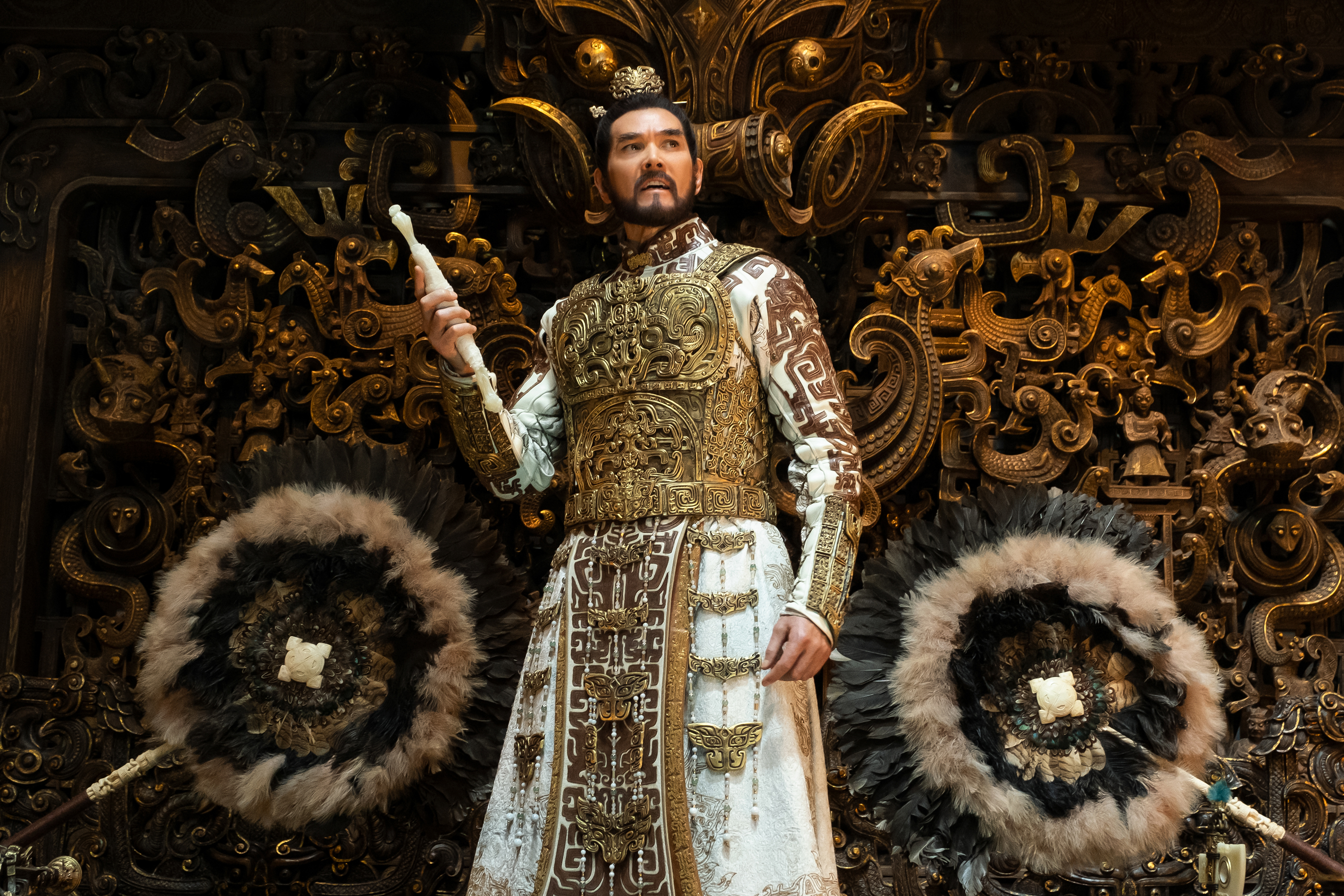
As the opening title card explains, the film focusses on the fall of the Shang dynasty at the hands of its last king and King of All the Realms Yin Shou (Fei Xiang), known posthumously as King Zhou. He is first introduced, however, through the eyes of the young man that is really the hero of the tale, Ji Fa (Yu Shi), who describes him as a hero of the kind he dreams of becoming. Yin Shou is charged with leading an attack on the compound of rebellious lord Su Hu who has refused to pay his taxes, taking with him the four hostage foster sons of the primary dukes along with that of Su Hu himself. The boy is sent to plead with him but gets no reply. In a show of what seems like kindness, Yin Shou asks him what sort of father his must be to give no reply and formally adopts the boy but only in the knowledge that honour dictates he now take his own life as proof of his loyalty to the Shang. 

These young men, Ji Fa included, are forced to ask themselves to whom they owe their loyalty, a man who gave them up and may long have forgotten them or Yin Shou who has in a sense raised them and demands their loyalty. Ji Fa is fiercely loyal to Yin Shou and thinks him everything a good father, a good commander and eventually king should be. Yet Yin Shou has extremely strong second son syndrome and resents his father and older brother for treating him as an also ran. Ji Fa meanwhile is still naive and egotistical, coming to the palace dreaming of becoming “a hero” with only a superficial understanding of what that would mean and easily swayed by Yin Shou’s majesty while Yin Shou in turn rejects his own son ironically fearful of him as a rival having watched the old king die at the hands of his brother while privately pleased that he will finally take his rightful place on the throne only to be told that the kingdom is in peril and the only way to save it is to commit public self-immolation. 

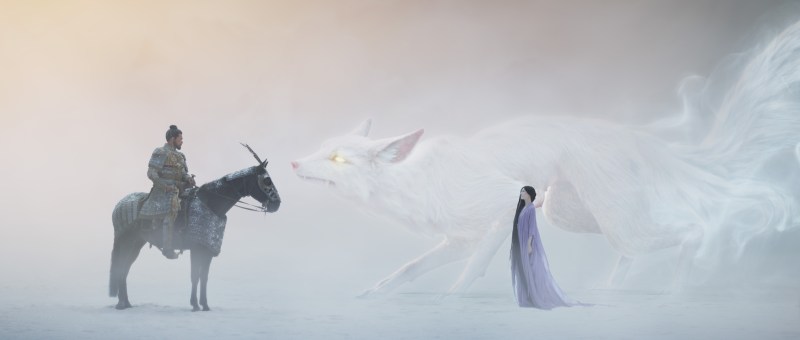
When the legendary heroes Jiang Ziya (Huang Bo), Nezha (Wu Yafan), and Yang Jian (Cisha) turn up with a magic scroll that can undo the Great Curse bearing down on the land, Yin Shou describes it as blessing on realising the talisman gains in power the more souls it receives. There may be something a little chilling the contemporary echoes of his paranoid authoritarianism as he actively begins to round up subversive elements even as he takes as a mistress the daughter of a man he beheaded who in reality took her own life and has been possessed by a fox spirit though it is also quite ironic that it is Su Daji (Narana Erdyneeva) who will bring down the Shang. 

In any case, Wuershan brings the classic tale to life with a sense of magic and wonder painstakingly recreating the fantasy world of feudal China with its beautiful landscapes marred by chaotic infighting and destabilised by dysfunctional filiality. In the end, Ji Fa will return to his true father and with him the path of righteousness which will overcome the Great Curse and begin to restore order laying the foundations for the Chinese society. Meanwhile, in this age of demons and strange creatures, interventions from the heavens and the mortal world in so much chaos that Nezha has been brought in to help, Wuershan discovers a kind of soulfulness embracing the timeless quality of this ancient mythological tale yet grounding it in a well honed sense of emotional reality.


Creation of the Gods I: Kingdom of Storms is in UK cinemas now courtesy of CineAsia.

Trailer (Simplified Chinese / English sutbtitles)

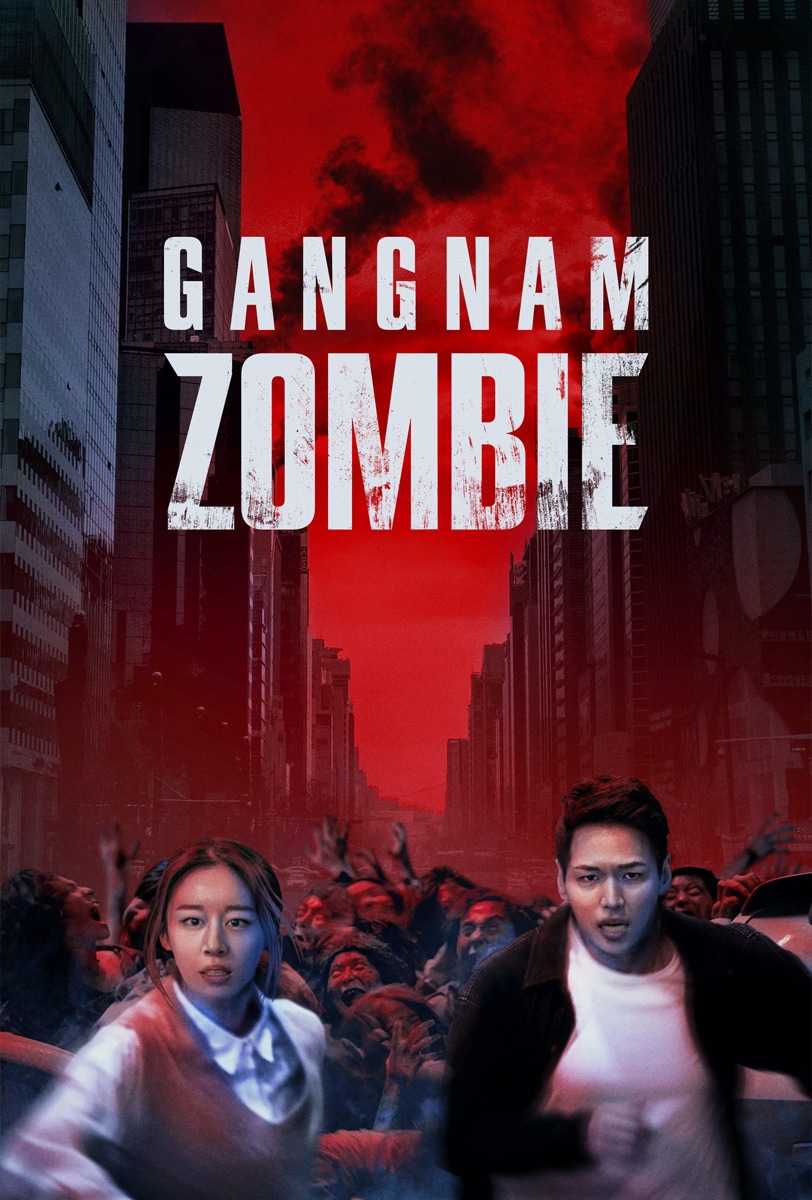
Gangnam Zombie (강남좀비, Lee Soo-sung, 2023)

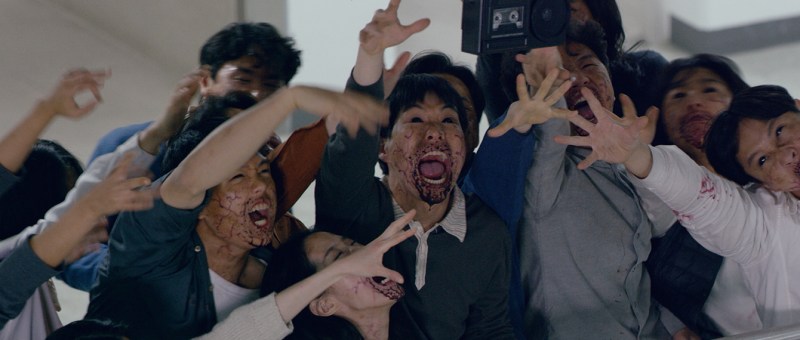
A struggling YouTuber takes on sexism, classism and the zombie apocalypse in Lee Soo-sung’s office-bound horror Gangnam Zombie (강남좀비). Lee apparently chose the title to appeal to international audiences hoping to cash in on the cachet of Gangnam Style and the film does have a made for export aesthetic, but even so it tackles some of the ills of contemporary Korea from work-based sexual harassment to the difficulties of getting a foot in the door in media and calls from your mother asking you to go home and farm melons with her rather than hang around failing to make it Seoul. 

For all that, however, Hyun-seok (Ji Il-joo) is a fairly cheerful man actually quite excited about asking his colleague Min-jeong (Park Ji-yeon ) out to a Christmas concert even if voices on the radio warn that we’re not so much living in a post-pandemic world as with a virus that could easily mutate again and there’s no telling when the next great pathogen may arise to kill us all off for good. This is essentially what the film suggests the zombie virus is, though the implication that it was shipped in from China may be in fairly poor taste along with the immediate allusion to the first cases of COVID-19 in Wuhan in 2019. In any case, patient zero acquires the virus from a zombie cat apparently trapped inside a container vessel he was in the middle of robbing and then goes on to kill his accomplice. 

Meanwhile the film devotes much of its time to the travails of Hyun-seok who is accosted by the landlady of the building where his office is because his boss is way behind on their rent while Hyun-seok counters he hasn’t been paid for three months either. The boss is also sexually harassing Min-jeong but she feels she can’t say anything because it was difficult for her to get this job and she’s worried about being blacklisted if people find out she reported her harassment. Hyun-seok had run into her outside work standing up for two women against to two chauvinistic men who’d apparently tried to use a date rape drug on one only her friend had noticed and saved her. Min-jeong feels confident standing up to them, citing the law to prove her point, but has mixed feelings when Hyun-seok intervenes pointing out that if they get lawyers it could be him going to jail not them. 

But then again, the law’s not much use in a zombie apocalypse. Hyun-seok is also a reserve member of the national Taekwondo team which is certainly a handy skill to have, but it’s also true that he sometimes ironically falls into a sexist hero mode in his desire to protect Min-jeong even if he does teach her a few moves she can use against both zombies and sleazy bosses allowing her to hold her own and in fact save him on more than one occasion. Meanwhile they are both saddled with the snooty landlady who is forever complaining that “the poor” have no manners, sense of responsibility, or inclination to save up for things while insisting no one call the police because it’ll lower the property prices and she’s trying to sell the building. It might be tempting to see her as an embodiment of a rabidly capitalist society consuming its workers and turning them into mindless, flesh-hungry drones if it weren’t perhaps also true that the film is not all that sympathetic about Hyun-seok’s failure to make it as a YouTuber. Perhaps he ought to listen to his mother and go home to farm melons after all. 

Lee does his best with a limited budget, as Hyun-seok and Min-jeong desperately try to escape the corporate prison of the office building to seek freedom and safety outside but largely saves the zombie action for the climactic final sequences in returning to the film’s opening while otherwise focussing on Hyun-seok’s romantic diffidence and the problematic atmosphere in his moribund live-streaming office. But then again it seems to say that just because you got away once doesn’t mean you’re safe or the aggressors of a dog eat dog society won’t necessarily wake back up when you least expect it to embody the city once again consuming those who cannot escape it with increasingly bloody violence. 


Gangnam Zombie is released in the US on Digital, DVD, and blu-ray on Sept. 26 courtesy of Well Go USA.

International trailer (English subtitles)

Bear Man (웅남이, Park Sung-kwang, 2023)

According to an ancient legend, bears who eat garlic and mugwort can become human though it’s not exactly clear why they’d want to. The debut film from Park Sung-kwang, Bear Man (웅남이, Woongnami) as its name suggests follows a pair of bear cubs who decide to give things a go in the human world but with wildly differing results as one is adopted by the researcher who allowed them to escape and the other by a vicious gangster who exploits him for his violent capabilities and shows him little love. 

Love is something Woongnam (Park Sung-woong) got a lot of thanks to his devoted mother and though not exactly the sharpest knife in the drawer had forged a promising career as a local policeman before he was let go after falling into a kind of funk on overhearing his father on the phone suggesting that the life expectancy for a regular bear is only 25 so he might not have much time left. Thanks to his nature as a bear man, Woongnam ages much faster than everyone else and already appears to be middle-aged though he is also blessed with immense strength and agility. After agreeing to bend the law by helping his feckless friend Malbong (Lee Yi-kyung) win in at illegal gambling Woognam comes to the attention of a group of police detectives investigating a shady gangster who notice a man looking just like Woongnam taking out a host of bad guys at the harbour. 

There is something quite poignant in the puppy-like existence of Woongbok (also Park Sung-woong) who keeps looking up to his boss as a father figure with a mixture of fear and longing. He gazes enviously at a family crossing the road in front of him and later visits Woognam’s home where Woongnam’s mother thinks that he’s Woognam and tries to feed him his favourite foods while he just looks on silently without expression. Where Woongnam is basically good, not too bright but heart in the right place, Woongbok has been raised as creature of violence by his intimidating father figure and carries a threatening aura with his slick haircut and tailored suit. 

The police want Woongnam to pose as Woongbok so they can take down the gangsters who have not only been trafficking drugs but also dabble in scientific research into viruses and their cures apparently about to unleash an epidemic in China to profit off the drug sales. It’s not all that clear what the scientists who released the bears were actually researching though there is a kind of parallel in the fact the other pair seemingly settled down, adjusted to their new environment and had a few cubs while Woongnam and Woongbok ended up becoming humans with bear-like abilities. Woongnam has to be prevented from entering hibernation and sleeps flat out like a bear but otherwise keeps his true nature secret even while covertly helping the townspeople out getting rid of beehives and freeing trucks stuck in the mud. 

That would be about the extent of “policing” in this kind of small-town where there’s nothing much to do but catch fish in the river and chat to wild boar. Park builds on the surreality of everyday rural life with mounting absurdities such as the parade of teenagers who troop through the convenience store where Woongnam’s live-streaming friend Malbong works each of whom he is largely able to unmask thanks to his keen sense of smell, and the polytunnel that doubles as a gambling den for down on their luck farmers. Woongnam’s biggest regret is losing his position as a police officer and it’s his desire to get it back to make things up to the people who raised him that encourages him to go along with the detectives’ crazy plan even if means he has to undergo weird martial arts training inspired by Drunken Master and take lessons from a strange movement coach in how to walk like a gangster. Yet in the end it’s Woongbok’s innocent desire for familial love that becomes a source of salvation, turning against his gangster brethren to protect the warmth of Woongnam’s family home. Quirky in the extreme and defiantly absurd, the film nevertheless has genuine heart in otherwise strange tale of wandering sons and bears of men.


Bear Man screened as part of this year’s New York Asian Film Festival

Images: © 2023 KIMCHI PICTURES PRODUCTION. ALL Rights Reserved.

Extreme Festival (익스트림 페스티벌, Kim Hong-ki, 2023)

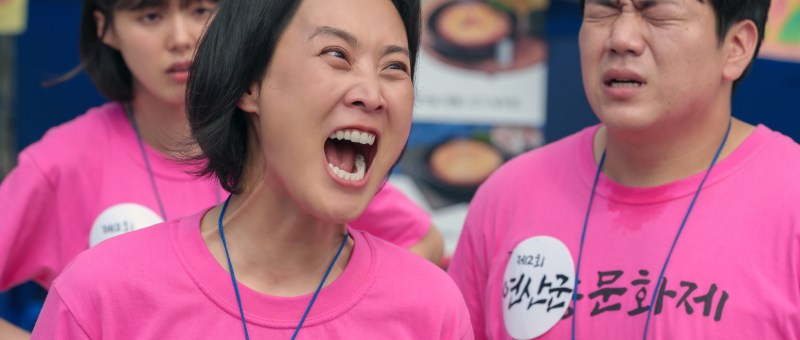
Just about everything that could go wrong does go wrong for an embattled CEO of an events planning startup organising a local cultural event on short notice in Kim Hong-ki’s provincial comedy Extreme Festival (익스트림 페스티벌). Then again, according to one unexpectedly happy customer it’s the mess that makes them fun and it’s the very fact that’s not everything has gone to plan that has accidentally led to a pair of festival enthusiasts apparently having the best day of their lives. 

The first problem Hye-soo (Kim Jae-hwa) has is one that will largely be lost on international audiences. One week before the festival’s opening, the mayor decided to change its name from Jeongjong festival to Yeonsan-gun festival on the grounds that Jeongjong, the second ruler of the Joseon dynasty, is so little known that not even Hye-soo can correctly recall his full name. Yeonsan-gun is a lot more famous but largely because he was a tyrant remembered by history for all the terrible things he did during his reign like having his own mother executed and forcing huge numbers of women from across the country to serve as palace entertainers. As he does not share the same local connections as Jeongjong, the festival has to create a series of diagrams giving exact travel distances in an attempt to claim that Yeonsan-gun is “local” after all. In any case, Hye-soo has only agreed to handle the event to curry favour with the mayor in the hope of landing the contract for the much more lucrative salted sardine festival, which might go some way to explaining just how “local” all of this really is. 

Another problem is that Hye-soo was hired in part because of her business partner/boyfriend’s fame as a literary figure which is fast fading anyway because he’s been repeatedly publishing the same book in different editions for years. The relationship is on the rocks and Sang-min (Jo Min-jae) barely shows up leaving her embarrassed in front of their clients while he later rehires screenwriter Leo (Park Kang-sup) who had previously been let go under circumstances he finds confusing. Sang-min also goes ahead and hires the festival’s only volunteer, Eunchae (Jang Se-rim), as an intern without clearing it with Hye-soo first despite knowing the company has no money to pay her because its survival is dependent on landing the salted sardine contract. 

Eunchae represents a certain kind of small-town youth longing for escape and not least from her oppressive family environment where her brother appears to be king. Willing to do just about anything to be able to move out even if it’s not to the capital, Eunchae is excited about the new job opportunity but tragically thinks that Hye-soo’s company must be an established and successful place rather than a one woman operation with an “office space” full of boxes and electrical equipment. 

Meanwhile, Hye-soo is also affected by the vagaries of local politics in being subject to the whims of the mayor who suddenly demands that her performance artist son be added to the bill and that a group of actors hired to perform a historical piece inspired by the Literati purges which occurred under Yeonsan-gun’s reign should instead incorporate a bit about the end of the pandemic and “execute” the omicron virus instead before the king declares that herd immunity has been achieved. As expected, this doesn’t go down well with the actors who later stage a protest boycotting the festival on learning that their application for a grant from the local council has been turned down. 

It is all, as Hye-soo admits, a mess and one not helped by an ongoing clash of personalities not to mention goals between the mayor’s office and Hye-soo’s staff. A sub-plot revolving around a washed up Japanese popstar apparently trying to escape his sense of failure by hiding out in a random Korean village only adds to the crushing sense of defeat that marks the festival. Even the “celebrity” MC admits the reason he’s not been on TV for ages is that he’s not getting hired which is why he’s here, slumming it in the provinces as a virtual has been ringing the death knell on his career. But in the end it’s personal relationships and people learning to get over themselves that save the day. Hyesoo gains some much needed clarity on the directions of her personal life and business, willing to make a fool of herself to get back on track while others too readjust their expectations. A kind of warmhearted take down of the absurdities of local government events, the film is really a celebration of perseverance and the spirit of never giving up even if nothing seems to be going your way.


Extreme Festival screened as part of this year’s New York Asian Film Festival

Original trailer (Korean subtitles only)

No More Bets (孤注一掷, Shen Ao, 2023)

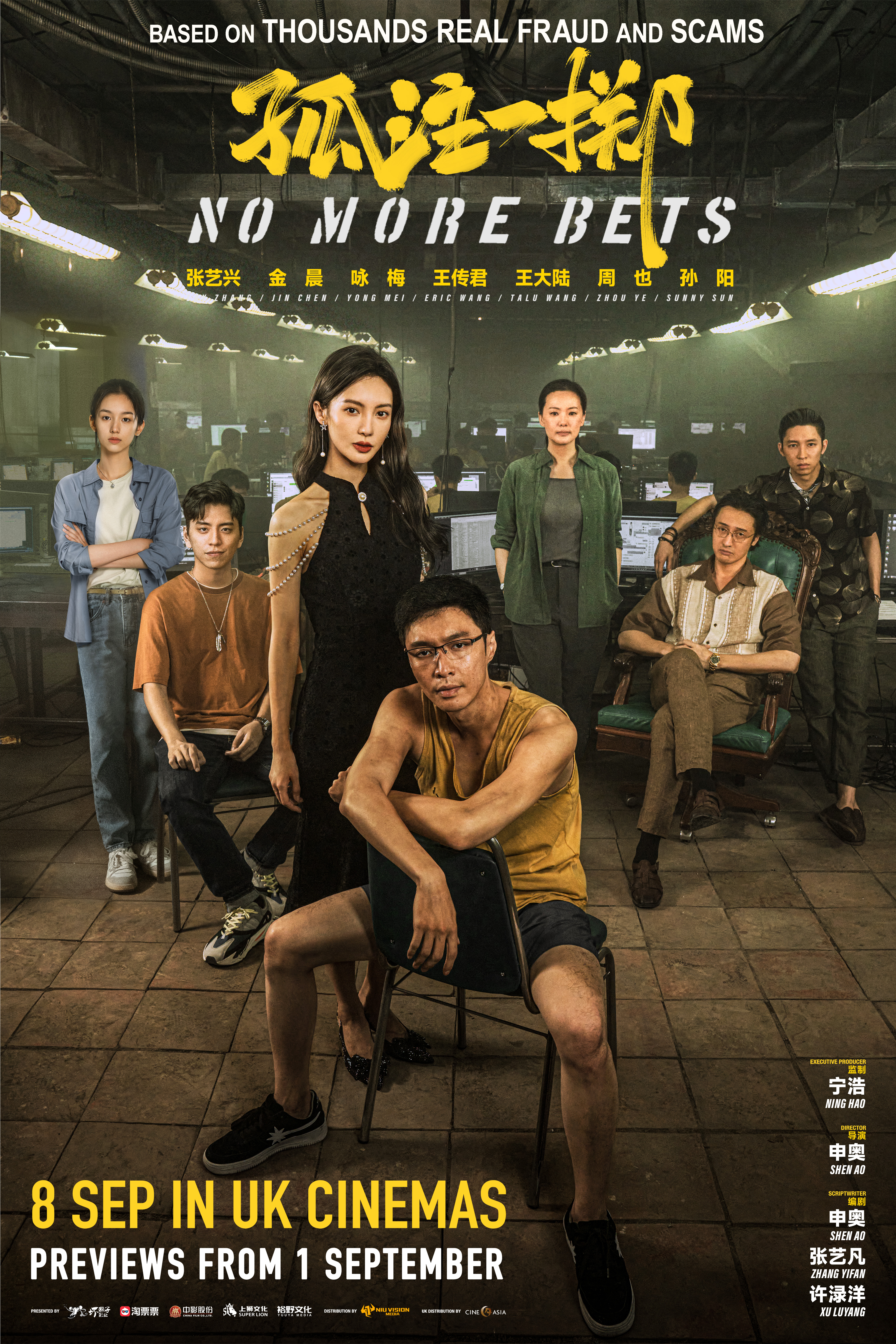
That the two biggest hits at the Chinese box office in summer 2023 both had a strong anti-gambling message perhaps hints at a contemporary anxiety, though No More Bets (孤注一掷, gūzhùyīzhì) is clearly the more direct of the two even if it also shares with Lost in the Stars its echoing of a theme in contemporary mainstream cinema that Chinese citizens are safe nowhere other than China. Then again, that particular message maybe somewhat disingenuous seeing as the villains here are all themselves Chinese if operating abroad to try and evade the law. 

This ambitious programmer Pan (Lay Zhang) learns to his cost when he abruptly quits his job after being passed over for a promotion in favour of someone with an influential father and accepts a too good to be true offer from what he’s been led to believe is a gaming company in Singapore. Soon enough, however, he realises their brief stopover is actually their destination and he’s been trafficked to another South East Asian nation where he is forced to participate in online gambling scams. Pan is however a righteous young man and immediately takes a stand, explicitly telling his captors he won’t do their bidding though they viciously beat him. Eventually he teams up with the slightly less conflicted model Anna (Gina Jin Chen) who vaguely understood the job when she agreed to it but not that they’d confiscate her passport and she’d be unable to leave. 

Like Pan, Anna accepted the job while frustrated by the vagaries of her industry after being unfairly let go by her agency after her photo was used on a flyer advertising sex work without her (or their) consent. Like those who play the games, she was suckered in by the promise of easy money that could be earned quickly and didn’t really think about the implications of what she was doing. That the film positions the victim, Tian (Darren Wang), as an incredibly wealthy young man who had access to vast generational wealth avoids the implication that some are drawn into scams for the same reasons that Pan and Anna were in they feel a sense of impossibility in their lives because of societal unfairness and economic hopeless but nevertheless paints his gradual descent into madness and addiction as a personal failing born of his insatiable greed rather than a misfortune that might befall anyone with a smartphone. Even so, if a highly educated young man can be tricked by such an obvious scam it suggests that it really can happen to anyone. 

At least, the film seems to say that in any case it’s bad to gamble but you should definitely think twice about promises that sound too good to be true, especially if they involve offers of work abroad. A series of talking heads interviews (with blurred faces) from victims of trafficking at the film’s conclusion all advise viewers not to travel to other countries to work, while several remark on how relieved they felt to see Chinese police when they were eventually rescued. Uniformed police also give a press conference during the film insisting that they are doubling down on combatting fraud and other kinds of cybercrimes while Inspector Zhao (Yong Mei), whose speech bookends the film, struggles to get anything done because the crimes are taking place overseas and therefore outside of her jurisdiction. Then again, the entire operation is run by Chinese businessmen who try to engender a sense of loyalty and rebellion among the men whom they’ve essentially enslaved by making them think that they’re merely rebelling against an unfair society by taking the money of the “greedy” people who play their games and redistributing it to their own, downtrodden families. 

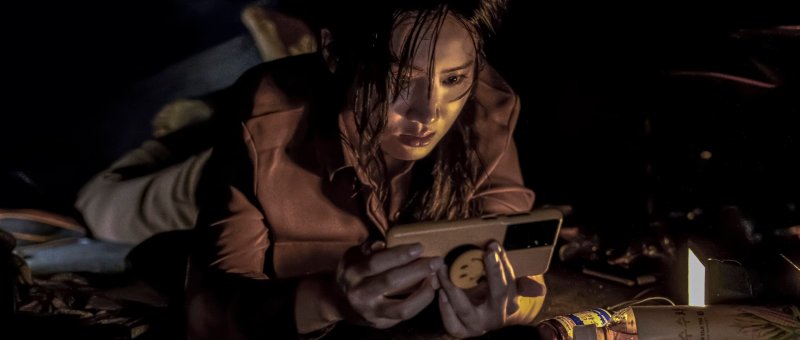
Pan is trying to do the right thing, but often does it in the wrong way actively putting others in danger while trying to find a way to blow the whistle on the whole operation in the hope of being rescued while even Inspector Zhao at times seems dismissive, failing to take the claims of Tian’s girlfriend that he’s being swindled out of his entire family fortune by online scammers seriously until it’s too late. Even so, Shen crafts an often tense tale of escape as Pan does his best to send out coded messages under the noses of his kidnappers while unwillingly participating in the fraud hoping that eventually someone will figure out what’s going on and put a stop the cruel cycle of misery once and for all. 


No More Bets opens in UK cinemas 8th September courtesy of CineAsia.

UK trailer (English subtitles)

Kitty the Killer (อีหนูอันตราย, Lee Thongkham, 2023)

“You might be the stupidest killer I ever met” an ice cool assassin says of the bumbling hero at the centre of Lee Thongkham’s comic book action comedy Kitty the Killer (อีหนูอันตราย). She might indeed have a point, though as Charlie (Denkhun Ngamnet) points out killing is not strictly part of his job description which is more akin to a baby sitter for the “high school girl from hell” under his care, Dina (Ploypailin Thangprapaporn). In part a story of self-transformation, the film ironically plays with a series of genre tropes while providing a point of origin for an ongoing universe. 

As the film opens, Charlie is a feckless young man who can’t seem to get it together and is struggling to make a mark in his job as an “accounts manager” where he is semi-aware that everyone thinks of him as a bit useless. He muses on the difficulties of changing the way that others see him, but never quite takes the first step towards realising that what he needs to change is himself. Nevertheless, his life is changed for him when he runs into top assassin Grey Wolf shortly after The Agency tried to off him when he told them he wanted out of the game. Fearing he’s not long to live, Grey Wolf hands Charlie his trademark ring and tells him that he’s taken out a contract on his mum so if he doesn’t manage to rescue his associate Dina his whole family will be killed. 

Dragged into a world of assassins and conspiracy, Charlie has little option than to rise to the occasion shaking off his boring office boy persona to become a stylish handler perfectly equipped to face off against vicious killers as the gang chase vengeance for Grey Wolf and battle another faction of their own organisation which has apparently cut a deal with the Japanese which is why they all wear masks and carry katana. Lee Thongkham plays with a kind of re-imported orientalism in clear references to Kill Bill, even echoing a famous line in the film when assassin Nina the Faceless says to Charlie, “silly boy like you likes to play with swords.”

The line also hints at the subversion of traditional roles in play as Charlie becomes a male intruder in what in an otherwise a female space. Known as “Kitties” all the assassins are female though aside from villainess Violent all the handlers are men who are otherwise placed in a paternal role yet sidelined as nannies to the super-powered killers over whom they have almost total control. As Violet says, The Agency also has its rules and they are nothing if they do not obey. Charlie is to a degree raised by the four assassins under boss Makin (Vithaya Pansringarm) who train him to become to a capable handler allowing him to transform himself as he said he wanted to do in his opening voiceover while his mother otherwise pampers him at home. 

Nevertheless, the film also sympathises with the constrained lives of the Kitties who are told to have no emotions and that they must eliminate anyone who gets too close to them or witnesses them going about their business. As one of Dina’s “sisters” Tina remarks, she’s “just tired” of her emotionless life and lack of freedom, while Nina who already turned to the dark side tries to seduce them with false promises of greater autonomy under female boss Violet if simultaneously telling them they’d have to kill their friends and “family” in order to win it. In any case, it’s the sense of solidarity between the Kitties and the deeper than expected bond with their handlers that becomes the best weapon against Violet’s hostile take over of The Agency. Well, that and a magic stone that has the power to grant immortality, anyway. Filled with a good deal of deliberately silly dialogue and zany humour, the film also features a number of innovatively choreographed action sequences along with elaborate production design and the occasional use of onscreen graphics and animation. The depth of the world building hints at the potential for an ongoing series with a post-credits epilogue teasing a sequel offering further intrigue for the Kitties and their distinctly goofy handler in an expanding comic universe of retro charm. 


Kitty the Killer screened as part of this year’s New York Asian Film Festival

Original trailer (English subtitles)
In Broad Daylight (白日之下, Lawrence Kan, 2023)

A jaded investigative reporter rediscovers a sense of purpose even as her industry flounders while exposing systematised abuse and neglect in privately run care homes in Lawrence Kan’s hard-hitting drama, In Broad Daylight (白日之下). The film’s title hints at its pervasive sense of despair, the problem isn’t so much that no one knew the state of affairs but that no one cared enough to do anything about it while the journalists too find themselves at the mercy of a hyper-capitalistic society. 

A whistleblower close to the end of the film reveals that they’d been anonymously sending photos from the care home where they work because they wanted “to feel human again” and “treat others as humans” only until now no one had taken any notice. They weren’t really expecting that anyone ever would. Top investigative reporter Kay (Jennifer Yu Heung-Ying) is one of only a handful of reporters left on her paper which is threatening to shut down the investigative department altogether if they can’t bring in a big scoop. Kay’s boss is similarly conflicted, not wanting to crush the idealism of rookie recruit Jess in insisting that their work has value in telling the stories that should be told while privately reminding Kay that the care home scandal might not be “explosive” enough to earn them a reprieve from their boss. 

For her own part, Kay is already jaded explaining to Jess that nothing really matters and nothing they write makes any difference when wrongdoers generally get off scot-free. Her desire to pursue the care home story is partly personal in that she’s dealing with a degree of guilt and grief over the death of her grandfather who took his own life in a privately run facility. To investigate one she’s been tipped off is particuarly bad, she poses as the granddaughter of a patient with dementia, Kin-tong, explaining that she’s not visited before because her family moved to Canada when she was a child, and thereafter making an offer to volunteer on seeing how bad things really are there witnessing not only a dead rat in Kin-tong’s room but physical abuse of the residents. 

It would be easy enough to assume that the faults are “isolated incidents” as the regulatory body likes to describe them and mostly down to the presence of the head nurse, Mrs Fong, who is clearly not someone who should be working in a care facillity, but the truth is that these are systemic problems largely born of governmental indifference. A government source tells her that the waiting list for a publicly funded homes stands at 15 years leaving many families little choice but to take what they can afford in the private sector. They are often unable to take care of elderly relatives themselves because they cannot take time off work to do so, or are simply not equipped to respond to their loved ones’ needs. 

But neither are the care homes. The manager, Chief Cheung who is blind himself, in part justifies the existence of his facility on the grounds that it is difficiult for people with disabilities to find homes to take them, painting the community as a happy family home doing its best rather than a callous attempt to exploit the vulnerable run by a dodgy businessman who admits that even if they’re exposed they’ll just change their name and start again somewhere else. Kay asks Kin-tong why he stays but he tells her that they’re all the same anyway. Even when she uncovers evidence of sexual abuse of a resident with learning difficulties she discovers that it’s almost impossible to prosecute because no one wants to put a vulnerable person on the stand opposite their abuser which allows them the confidence to think they can do whatever they want because they’ll never face dismissal let alone criminal proceedings. 

Kay begins to wonder what the point is if, as people are fond of telling her, no one really cares, but also is also forced to reflect on the moral difficulties of the situation. If the home is closed down, it will leave many of the residents with nowhere else to go. Mostly likely they will end up on the streets or in another equally bad private care home while she at least might earn herself a temporary reprieve in achieving the kind of scoop her money-minded editor was looking for. Her boss insists that she can’t change the world, the system won’t change overnight even if people are temporarily outraged. The truth is that these are people who’ve been abandoned by their society and often by their families especially with so many younger people emigrating leaving relatives behind with no one to watch over them. Though somewhat jaded, Kay comes to empathise with the people she meets at the care home and rediscovers a sense of purpose in her work that reminds her it’s worth the fight even if in the end nothing really changes. In many ways bleak, Kan’s empathetic drama is otherwise undespairing in its gentle advocation for mutual compassion and world in which we can truly take care of each other.


In Broad Daylight screened as part of this year’s New York Asian Film Festival. It will also be screening in Chicago on Sept. 16 as part of the 17th season of Asian Pop-Up Cinema.

Original trailer (English subtitles)