Baby Assassins 2 Babies (ベイビーわるきゅーれ2ベイビー, Yugo Sakamoto, 2023)

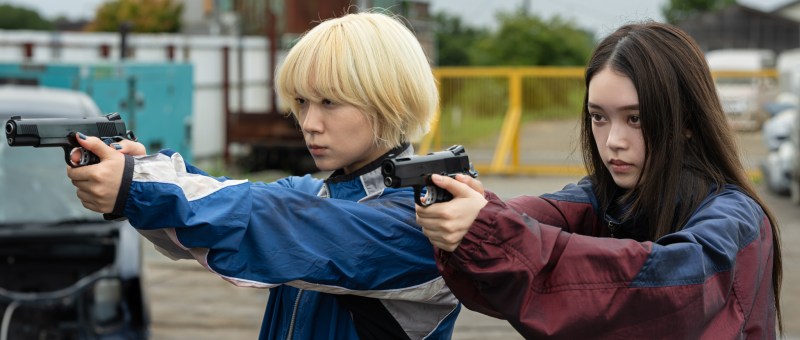
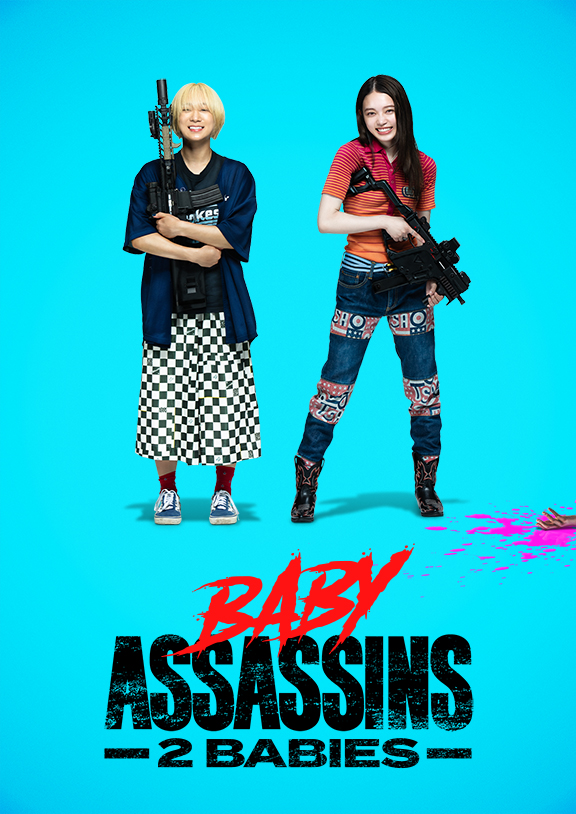
Chisato (Akari Takaishi) and Mahiro (Saori Izawa) continue to struggle with everyday life in Yugo Sakamoto’s sequel to the hugely popular slacker comedy action fest, Baby Assassins, Baby Assassins 2 Babies (ベイビーわるきゅーれ2ベイビー, Baby Valkyrie 2 Baby). A deadpan satire on institutional bureaucracy in the underground hitman society, the film sees the girls targeted by a pair of rivals that in any other film may be the heroes of the story only this time around they’re hapless challengers whose attempt game the system only results in more chaos and misery. 

Beginning to get their act together, the girls are still it seems completely hopeless at managing their money and are suddenly faced not only with a hugely expensive bill for a gym membership they took out five years previously and forgot to cancel, but also reminded that they were upgraded from the “Jolly” insurance scheme to the “Merry” insurance scheme when they graduated high school so their payment information has expired and needs updating. It’s this extreme set of circumstances that lead to them being in a bank at the moment it is robbed by a pair of fugitive thieves. The terms of their assassins contract forbid them from using their skills outside of the job, but they can’t afford to wait any longer and decide to tackle the robbers so they can send their transfer through before the deadline but end up getting suspended for their pains. While suspended they’re forbidden from killing anyone and get no salary so they’re back where they started looking for part-time jobs to help make ends meet. 

Their predicament is mirrored by antagonists Yuri (Joey Iwanaga) and Makoto (Tatsuomi Hamada) who as the film opens end up killing completely the wrong gangsters because of a logistical mixup. The problem is that Yuri and Makoto are subcontractors not yet admitted to the Assassins Guild which means they don’t get access to the best jobs and have no workplace protections. Essentially what they want is to join the union, but they aren’t qualified so their boss, Akagi (Junpei Hashino), comes up with the neat idea of knocking off Chisato and Mahiro to free up their spots in the Guild. 

Sakamoto has great fun satirising Assassin’s Guild bureaucracy as the girls are constantly forced to reference their contract through Mr Susano (Tsubasa Tobinaga) and his little blue book to figure out what is and isn’t allowed in their lives as top hit women. Meanwhile, they’re once again forced to try and live “normally” and find they aren’t very good it at it while having to take quite literally odd jobs as shopping arcade mascots managed by a weird old man (Tetsu Watanabe) obsessed with Masaki Suda and the film We Made a Beautiful Bouquet which becomes something of a running gag. Both Chisato and Mahiro and Yuki and Makoto reflect on the strange cafe hierarchy of being offered a selection of tiered menu sets at escalating prices all the way from basic chicken to barbecued meats as reflective of a wealth-based social system while the boys continue to vacillate over asking out the pretty waitress. 

It’s kill or be killed but the girls know on some level that the guys are just like them and even quite good hitmen for “amateurs” so it’s a shame they have to die for having attacked and nearly killed one of their friends. After sorting out who’s won through a high octane series of shootouts and one on one fights, the four sit down on the ground and share snacks while waiting for the inevitable like they’d just been having a violent picnic while hanging out in a disused warehouse. Even the losers seem to accept their fates, acknowledging that they’ve lost in a fair fight and making no further attempt to resist. 

In any case, adulting is hard even when you’re not a top assassin struggling with when it’s appropriate to put your training to use. As the girls point out, it’s hard to get by on part time work when it would take a hundred days dressed in a humiliating panda outfit to earn what they’d get for one kill while freelancing is strictly forbidden along with strike action and taking one’s grievances to Twitter. Turns out the assassin life is more complicated that you’d think and just as filled with annoying bureaucracy as any salaryman job. Thankfully the friendship between Chisato and Mahiro has only grown stronger as they face off against the twin threats of red tape and adulting in their lives as “contract” killers.


Baby Assassins 2 Babies screens in Frankfurt 10/11th June as part of this year’s Nippon Connection.

Original trailer (English subtitles)

Images: ©2023 “BABY ASSASSINS 2” Film Partners

Sakra (天龍八部之喬峰傳, Donnie Yen & Kam Ka-Wai, 2023)

Donnie Yen returns to the (co-)director’s chair in an adaptation of Jin Yong’s classic wuxia Demi-Gods and Semi-Devils, Sakra (天龍八部之喬峰傳, Tiānlóng Bā Bù zhī Qiáo Fēng Zhuàn). 59-year-old Yen also stars as the tragic wuxia hero Qiao Feng who is repeatedly stated to be around 30, though he also appears in a handful of scenes as Qiao’s father which might help to explain the casting choice. Even so, Yen mostly pulls it off while striking an authoritative figure fighting for justice in an unjust world. 

As the opening titles reveal, this was a fairly tragic age in which “those who had feelings were all caught in it”. The Northern Song Dynasty faces invasion by the Khitan-led Liao, while the Yan are also vying to restore their lost power. Discovered as a foundling and raised by a Song couple, Qiao Feng joins the notorious Beggar Gang and becomes a powerful martial artist often defending their territory against Khitan raiders. After rescuing a young man held captive by a monk who describes him as a human sacrifice, Qiao returns to be accused of treachery by the Beggars. His leader, Ma, has been murdered, and Ma’s wife Min (Grace Wong Kwan-hing) claims she saw Qiao do it. Ma had apparently told her that he feared Qiao would kill him because he had come into an incriminating letter which suggests that Qiao’s biological parents were in fact Khitans and he is some kind of treacherous sleeper agent. 

Qiao realises there’s nothing he can really do to counter their suspicion except leave and discover the truth about his origins for himself. Unfortunately, however, everyone he could have asked ends up dead with him framed as the killer. Meanwhile, he wrestles with questions of identity asking himself if he can be both a “good” person and a “Khitan” but later coming to doubt his allegiance to Song after witnessing some soldiers massacre a group a of Khitan peasants out on the road. While investigating he ends up saving the life of mysterious spy Azhu (Chen Yuqi) who like him is looking for her origins, having been told by Yan warlord Murong Fu (Wu Yue) for whom she is working that he would tell her if she stole a scroll from the Shaolin temple. Azhu is the only one continues to believe in him, reassuring Qiao that regardless of his identity he is still a “good person”, and the pair soon fall in love vowing to leave the martial arts world behind to raise cattle in the country once their respective quests are concluded successfully. 

Even so, he later claims not to fight only for his land but for a righteous world against the amoral machinations of the villainous Murong Fu and all those who conspired with him. The Beggar Gang is not entirely innocent either, subject to a struggle for succession that made Liao’s existence inconvenient to some while Qiao is later confronted by the realities of a situation he may have misunderstood. Qiao may learn the secret of his origins, but is also left with a new mission in the necessity of stopping Yan’s despotic bid to reclaim Song, riding straight into battle with only a loyal companion at his side. 

Though struggling under the sheer complexity of Jin Yong’s sprawling novel, Yen and Kam showcase the key incidents such as the opening rescue of Duan Zhengchun’s son, and Liao’s epic battle against the Beggars after wading straight into a meeting knowing he’d likely be killed but looking for a doctor for Azhu. The action scenes are visceral and impressive, making the most of the movie’s high production values with a mixture of CGI and practical effects as Qiao faces off against hundreds of men at once or makes daring wire-assisted leaps from under a dome of enemy shields. There is also a genuine poignancy in the tragic romance between Azhi and Qiao who just want to be free of their legacies and the machinations of the martial arts world to live quiet lives as innocent farmers but are reminded there is no real escape from the political reality. Having covered half of Liao’s arc in Jin Yong’s text, a door is left open for a sequel in which Qiao continues to pursue justice and clear his name while hinting at a battle still to come in world in which “those who have feelings are all caught”.


Sakra is released in the US on DVD & Blu-ray June 13 courtesy of Well Go USA.

Original trailer (English subtitles)

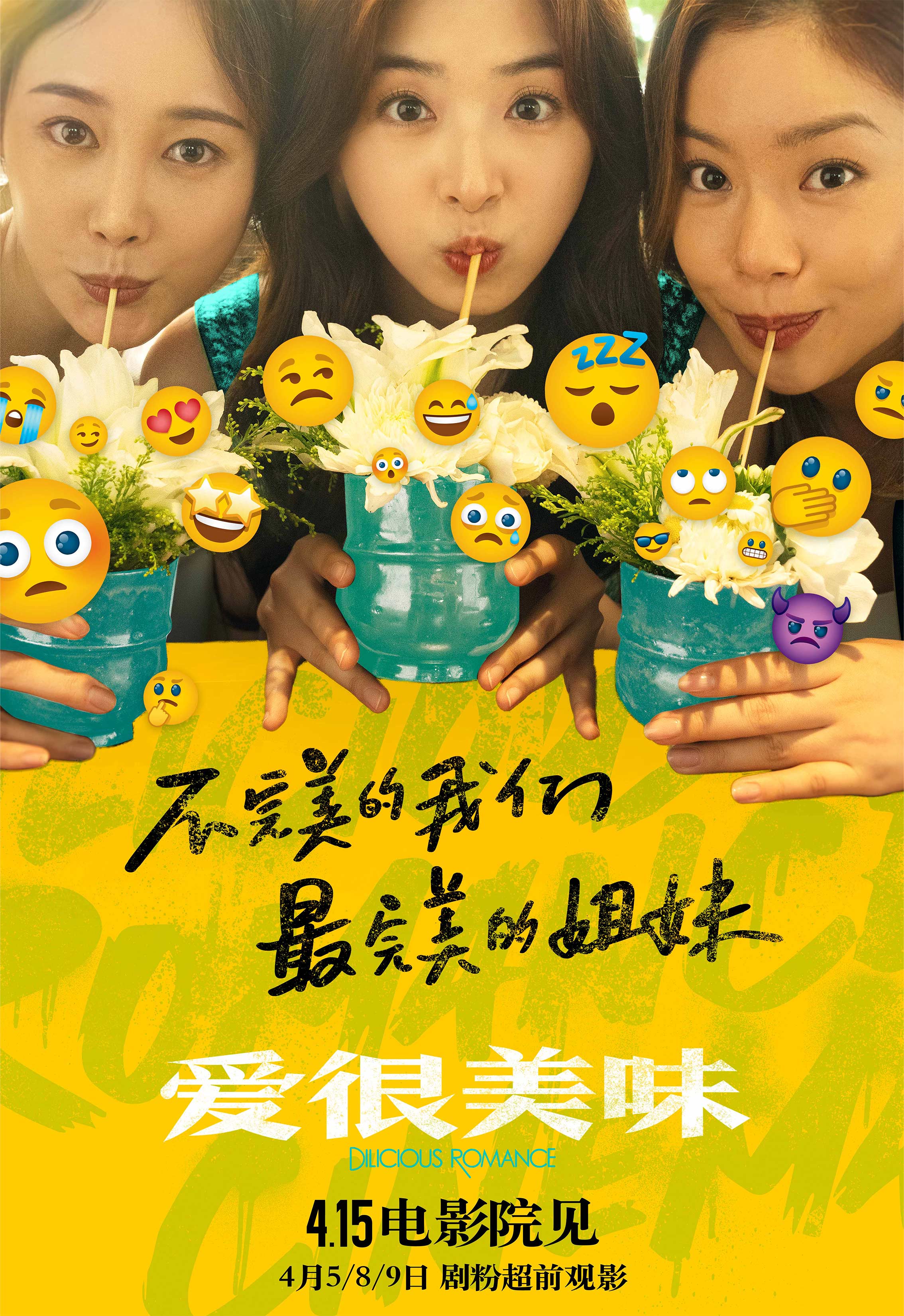
Delicious Romance (爱很美味, Leste Chen & Hsu Chao-Jen, 2023)

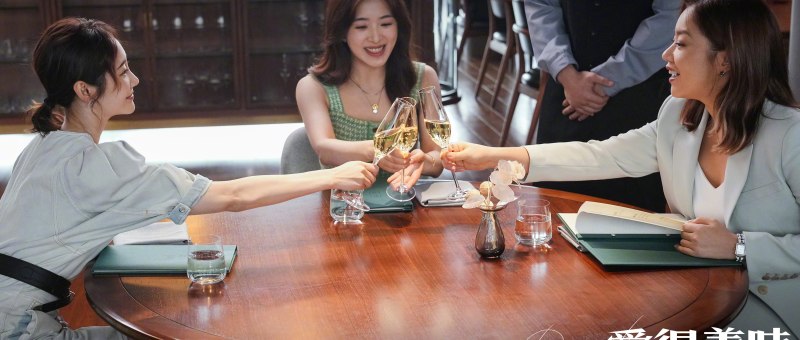
Three “best friends forever” find themselves struggling with happy ever after in the big screen sequel to the hit TV show Delicious Romance (爱很美味, ài hěn měiwèi). Exploring the lives of contemporary women, the often hilarious and infinitely relatable film is both a female friendship drama and a quiet advocation for the right to find one’s own balance in life even amid the series of social expectations each of the women quietly contends with that eventually threaten their friendship.

Meng (Wang Ju), Xin (Baby Zhang Hanyun), and Jing (Li Chun) have been friends since school where they vowed to always remain so. 20 years later, they have each attained a kind of success in both career and romance but are now beginning to flounder as the warm glow of temporary fulfilment starts to wear off. TV producer Meng is happily living with fitness enthusiast Lu Bin (Zhang Fan) but the difference in their social status continues to disrupt the relationship while she encounters workplace strife. Xin works in PR for a wedding company and is expecting a baby with boyfriend Zhang Ting (Ren Bin) but is having second thoughts about marrying him in part because of the failure of her first marriage but also because he’s become worryingly overprotective. Jing, meanwhile, quit her job in IT to open a restaurant but is experiencing difficulty keeping it afloat amid the coronavirus pandemic while she abruptly breaks up with her film exec boyfriend Shanmu (Zhao Chengao) after discovering that he still hasn’t deleted the dating apps on his phone. 

Many of the problems they face are the same given that they all live in a patriarchal society, but each of them faces them slightly differently. Xin, for example, explains that he’s joined a company which has a majority female staff and is run by a progressive female boss who assures her her pregnancy won’t be a problem as they run a flexible workplace geared towards supporting women in society. Yet she soon realises that her boss is run ragged and her image of “having it all” is largely a PR front as Xin discovers when she’s pulled off a campaign to do her boss’ son’s art homework. Feeling professionally sidelined especially as the controlling Ting doesn’t let her attend after work events, Xin starts to wonder if she’s made the right decision doubting that it’s really possible to have fully balanced and fulfilling personal and professional lives. 

Meng finds something similar when her boss gives her a warning and insists she land the TV rights for a popular sci-fi novel by a good-looking author or fire one of her team. Working for a station that specialises in TV drama aimed at a stereotypical female audience, she too looks down on her work but immediately faces sexism from author LuoKK (Patrick Nattawat Finkler) who dismisses her suggesting that a woman won’t be able to do his sci-fi novel justice. In a minor gag, neither he nor any of his obnoxious buddies understand the concept of entropy which is central to the novel though both Meng and LuoKK’s  female agent easily explain it. Having spent a long time abroad, LuoKK appears prefer speaking English and originally claims not to have a WeChat which would make his life near impossible in contemporary China. To land the contract, Meng has to pretend to be into mobile gaming getting her boyfriend Lu Bin to play on her behalf while squaring off against an unpleasant ex who has also befriended LuoKK. 

Jing also takes on alternate personalities while trying to trap Shanmu into exposing himself as a cheat. With her restaurant shut down for a fire system repair, she’s offered the opportunity to become an influencer trashing highly rated restaurants for clicks but is quickly disillusioned with the duplicity of online video culture. Like Xin she struggles with her decision to follow her dreams as she faces both personal loss and professional setbacks while battling parental expectation in her family’s continued disapproval of her desire for independence. 

The women are brought together by Meng’s quest to triumph at the office party with a dance routine just like they did at school, only instead of an inappropriate song about “meeting people for drinks and gossip”, she plans to Fosse it up with All That Jazz. When their respective troubles put their relationship under strain, the trio reevaluate their friendship and realise its greatest quality is the unconditional support they give each other as each of them comes to an accommodation with their various difficulties through coming to understand themselves better. Authenticity really is the key as rammed home both by the skewering of the gimmicky restaurant the girls visit in the opening scene and Meng’s realisation that they should perform their high school dance after all rather than making a bid for an affected sophistication. Charmingly heartfelt and amusingly quirky, Chen and Hsu’s zeitgeisty comedy captures the absurdity of life as a woman in the contemporary society while allowing each of the women to take charge of their own lives and destinies through the power of self-knowledge and female solidarity.


Delicious Romance screened in UK cinemas courtesy of CMC

International trailer (English subtitles)

Hachiko (忠犬八公, Xu Ang, 2023)

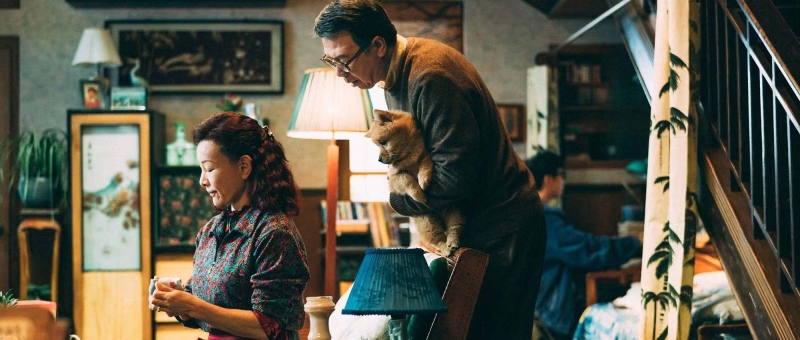
The heartrending tale of a faithful dog who continued to wait for his late owner at a cable car station becomes a poignant symbol for a left behind China in Xu’s Ang’s reimagining of the 1987 Japanese film scripted by Kaneto Shindo, Hachiko (忠犬八公, zhōng quǎn bā gōng). Xu keeps the original title which translates as “faithful dog Hachiko” (Hachiko comprising of the characters for “eight” and “public” which when used in names conveys a note of nobility), but changes the puppy’s name to “Batong” which means “eight dots” and is taken from a mahjong title he naughtily runs off with after being taken in by kindhearted professor Chen Jingxiu (played by film director Feng Xiaogang).

The film opens, however, in the present day with Jingxiu’s wife (Joan Chen) and son (Bai Jugang) returning to Chongqing after many years living in Beijing and remarking on how much the city has changed. These days the cable car system across the Yangtze is a nostalgic tourist attraction with crossing the river increasingly easy thanks to a widescale bridge project. Jingxiu was a professor of engineering working on infrastructure projects, but despite the allure of progress the opening scenes suggest a quiet note of melancholy that runs underneath with constant references to the Three Gorges Dam project which led to mass displacement throughout the region as traditional villages were sunk beneath the reservoir. 

It’s in one of these villages that Jingxiu finds Batong, an abandoned puppy left behind when the village was evacuated. He brings him home with him despite knowing that his wife has an aversion to dogs owing to having been bitten as a child, and attempts to hide him from the rest of the family later suggesting that he’s just waiting to find a suitable owner to rehome him but clearly having no intention of doing so. The callousness with which some people treat animals is fully brought home when Jingxiu’s wife gives Batong away to a man who clearly intends to sell him for dog meat with Jingxiu managing to rescue him in the nick of time. 

In some ways, the professor and dog bond precisely because they are outsiders neither of whom is actually from Chonqing. Jingxiu’s family members often tease him for still not understanding the local dialect despite having lived there for decades while he often seems as if he feels out of place in his own home. When he’s asked to give up the dog, Jingxiu refuses insisting that some of their habits such as his wife’s obsession with mahjong, his son’s newfangled internet career, and his daughter’s grungy boyfriend, annoy him but he respects their right to be happy and would never try to stop them from doing something they love so he’s putting his foot down and Batong stays. This sense of solidarity binds them tightly to each other which might be why Batong often escapes in the morning to chase Jingxiu to the cable car, later returning in the afternoon to welcome him home. 

There is something undeniably poignant in Batong’s waiting at the station for someone who’ll never return in part because the cable car itself has become somewhat obsolete despite having been completed only in the mid-1980s. Jingxiu dies of a heart attack on a boat on the Yangtze circling the site of the dam, disappearing amid its landscape as so many others also did. He left on the train but did not return by it, and so Batong is unable to understand his absence or grasp the concept of death. Displaced himself, the lost dog becomes a melancholy stray trapped in another China and longing for the return to something that no longer exists. 

Jingxiu’s house is soon pulled down too, exiling his wife to the modern metropolis of Beijing now a displaced person herself as these traditional spaces are gradually erased in the name of progress. Batong makes his home in the ruins, continuing to wait like a lonely ghost in the rapidly changing city. Undeniably moving in its unabashed sentimentality in which Batong is finally reunited with Jingxiu as they board the cable car together, the film is also a poignant tribute to man’s best friend and a plea to end animal cruelty, ending with a heartfelt message encouraging the adoption of stray dogs many of whom like Batong are simply looking for a place to belong. 


Hachiko screened in UK cinemas courtesy of CMC.

International trailer (English subtitles)

Art College 1994 (艺术学院, Liu Jian, 2023)

In the opening title sequence of Liu Jian’s animated dramedy Art College 1994 (艺术学院, yìshùxuéyuàn), a beetle tries to climb a decaying wall but repeatedly fails until it falls on its back and flails wildly trying to right itself. It might in a way stand in for Liu’s protagonists, each of whom are floundering in various ways amid the contradictions of the rapid social changes of mid-90s China. A potent sense of place lends weight to what is obviously an autobiographically inspired tale of youth’s end coloured by rueful nostalgia. 

The rebellious Xiaojun clashes with his tutors who think he’s overly influenced by Western art movements and lacks the maturity to understand that there is also truth in traditionalism, while his best friend Rabbit begins to worry about more practical matters and their future in a changing society. The boys eventually develop a friendship with music students Lili and Hong who find themselves similarly at odds. Brash and brimming with false confidence, Hong dreams of becoming a famous opera singer and resents the patriarchal social mores of a still conservative China. “Sooner or later we all have to marry someone.” Lili sighs as if feeling the walls closing in on her, only for Hong to ask why no one ever realises they’re “someone” too. 

They have grand conversations about the nature of art, beauty, tradition and modernity, conservatism and social change, belying their naivety but still filled with a sense of freedom and curiosity that is only beginning to be coloured by a concurrent anxiety. “I thought I knew everything. The truth is I know nothing.” Hong finally concedes after a failed romance, arguing with Lili with whom she may always have been on a different page. Shy and bespectacled, Lili is a realist amid a group of dreamers. She nurses a nascent crush on Xiaojun but is courted by a condescending bore who comes with her mother’s approval. Perhaps she’s merely afraid of the risks involved when real feeling is in play, but for all her talk of “freedom” makes her choices intellectually and leans towards the pragmatic. Xiaojun is a penniless painter, but her suitor is a wealthy man who can take her to Paris to study. Amid the contradictions of mid-90s China, who could really blame her for making a “sensible” choice even it means the sacrifice of her emotional fulfilment? 

Xiaojun lets his chance slip away from him, failing to say anything meaningful before revealing he’s going away on a study trip for an extended period of time. But like Lili he meditates on art and the soul while romanticising a poverty he may never really have experienced. The boys hang out with eccentric drifter Youcai who repeatedly failed the entrance exams but hangs around on campus anyway soaking up the atmosphere while prone to sudden attacks of performance art. After a stint living in the artist community in Beijing he returns in the company of crooks and conmen, working as a sign painter to get by while lamenting his own lack of talent. He says he makes money in order to make art, while Xiaojun disapproves of his moral duplicity insisting that it’s right for an artist to be starving because suffering fosters art.

Youcai asks him how you can make art if you can’t eat while insisting that art is one big business, just like everything else it too is suspect because it is dependent on money. Xiaojun disagrees, claiming that that art is the only escape from reality that can bring people spiritual satisfaction. Ironically enough, he says this while sitting directly underneath a billboard advertising Michael Jackson’s Bad, while we’ve already seen him ride his bicycle past a conspicuous piece of graffiti featuring the characters for CocaCola in Chinese. When Lili’s suitor says he’ll buy them dinner, Liu ironically cuts to the two girls sitting outside a McDonald’s eating ice cream. This does seem to be a very dubious sense of “modernity”, mediated through Western consumerism that in contrast to the values Xiaojun places in “art” is spiritually empty. 

Even so his disapproving teacher reminds him that great art is born of sincerity, hinting at a degree of affectation in his insistence that art should change with the times when not all truths need to be revolutionary. In any case, each of the students learns a few hard lessons about life and disappointment as they too succumb to unavoidable realities and accustom themselves to an uncertain society. Liu ends the film with a series of title cards that feel very much like those often added to placate the censors, usually detailing that wrongdoers were caught and punished for their crimes but this time conjuring more wholesome futures for the students that undercut the sense of the frosty melancholy in the closing scenes which leave Xiaojun all alone as he takes up brush and ink. Yet in Liu’s achingly potent sense of place, there is both a poignant nostalgia and an inescapable sense of loss and regret for the missed opportunities of youth. 


Art College 1994 screened as part of this year’s Red Lotus Asian Film Festival.

Trailer (English subtitles)

Say I Do to Me (1人婚禮, Kiwi Chow, 2023)

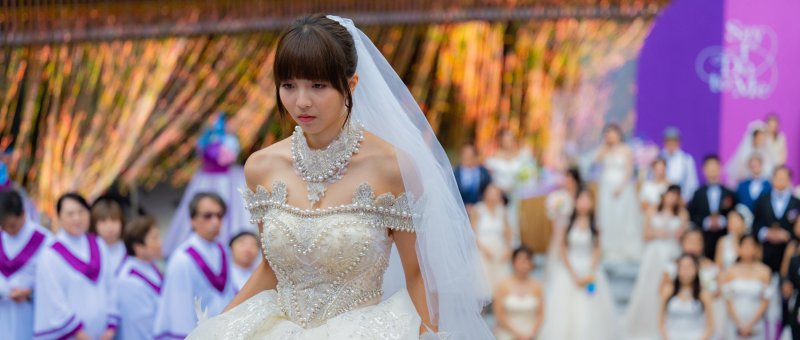
A struggling influencer’s bid for internet fame through marrying herself soon goes dangerously awry in Kiwi Chow’s anarchic take on contemporary social media mores and the need for authenticity, Say I Do to Me (人婚禮). Ping (real life YouTuber Sabrina Ng Ping) swears that she’s done with changing herself for others and is determined to enjoy life on her own terms, but the irony is she’s anything but honest with herself as she attempts to bury her abandonment issues and ambivalence towards marriage beneath her friendly clown persona. 

Despite telling all her followers that she sees no need to wait around for someone else to make her happy so she’s going to marry herself, Ping is in a longterm relationship with middle-school sweetheart Dickson (Hand Rolled Cigarette director Chan Kin-long) who handles the tech side of their YouTube channel. When their clown-themed videos failed to win an audience or pay the bills they started looking for something edgier, shifting their focus to their own relationship. When that too failed to set netizen’s hearts aflame, they started engineering fake romantic drama including a “real fake” wedding and Dickson cheating scandal. To get themselves out of the hole they’d dug, Ping comes up with the idea of “sologamy” in which she’ll get back at “cheating” Dickson with a solo wedding on the day they would have got married, while Dickson mounts a counter campaign wearing a giant monkey head to promote his “solo funeral” movement railing against fake affirmation of Ping’s embrace of “authenticity”.

Of course, authenticity is the one thing Ping isn’t selling. She’s telling everyone else they should be true to themselves, but has based the whole thing on a lie in still being in a relationship with Dickson while adopting a fake influencer persona of a woman who has herself together and is fully ready for commitment. The duplicity begins to eat away at her as she witnesses its effects on others including a middle-aged woman (Candy Lo Hau-Yam) she’d assumed to be in a perfect marriage who suddenly reveals she’s been unhappy for decades because she couldn’t accept her sexuality. Thanks to Ping, she’s decided to divorce her husband and live a more authentic life all of which leaves Ping with very mixed feelings. Meanwhile, she’s relentlessly pursued by a devoutly religious man who seems to be in love with her on spiritual level, and also comes to the attention of “Hong Kong’s last Prince Charming” who has hidden anxieties of his own. 

The film seems to ask if it really matters if Ping was “lying” when her example has made a “positive” difference in people’s lives in enabling to them to accept themselves and find true happiness even if in doing so they might necessarily hurt someone close to them. Dickson seems certain that the internet isn’t really real and you really don’t need to be “authentic” in your online persona, but is all too quickly addicted to the false affirmation of likes and shares and willing to compromise himself morally to get them, all while justifying his actions in insisting he’s only doing it to make Ping’s dreams come true. In the end, he is also playing a role for Ping but as she says coopting her dreams as his own just as her other suitors do. “No one here cares how I feel” she declares, realising her “fake” persona has become a kind of prop for others to hang their unfulfilled desires on. 

The problem is only compounded by the reckless actions of the solo funeral crew who quickly escape from Dickson’s control demonstrating the dark side of internet tribalism and accidental radicalisation. But Ping’s own worst enemy is herself, afraid to really look in the mirror and face her insecurity while simultaneously peddling the message that everyone’s lives will improve as long as they make a superficial gesture of self-love. What she discovers during a surprisingly violent cake fight, is that she’s not the only one battling internal insecurity to become her authentic self and there might be something in “sologamy” after all if it forces to you to confront the parts of yourself you don’t like and accept them too. Part absurdist treatise on the corrupting qualities of online validation and part surreal rom-com, Chow’s quirky comedy nevertheless comes around to its heartwarming message in allowing its heroine to make peace with herself and the world around her.


Say I Do to Me is in UK cinemas now courtesy of Haven Productions.

Original trailer (Traditional Chinese / English subtitles)

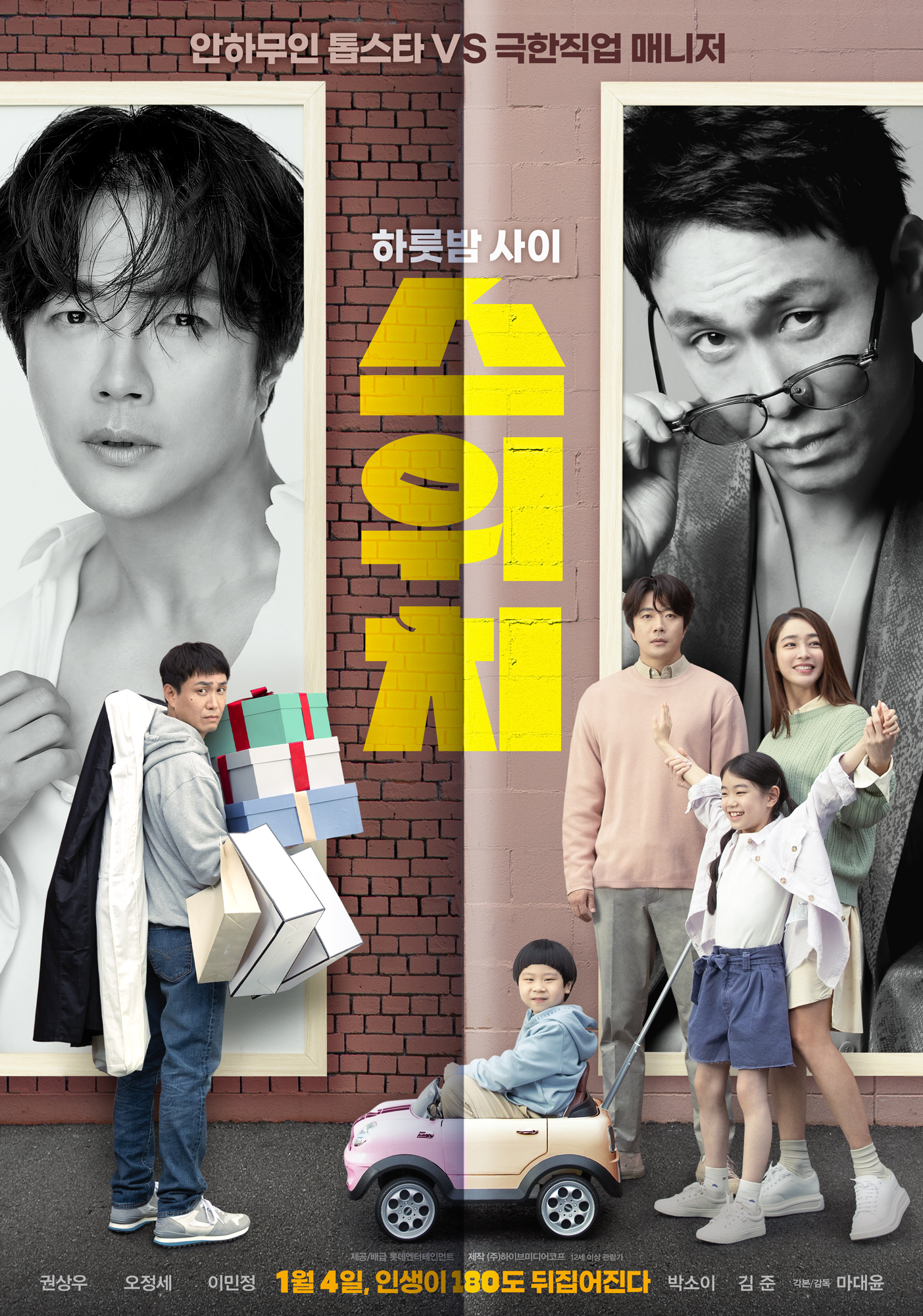
Switch (스위치, Ma Dae-yun, 2023)

An egotistical actor is given an unexpected lesson in what it is that makes life worth living when he’s suddenly transported to a parallel world in Ma Dae-yun’s charming Christmas dramedy, Switch (스위치). Rather than the body swap comedy the title might suggest, Ma’s warmhearted morality tale is a more a meditation on what might have been and may be again while contemplating the emptiness of a life of fame and riches when there’s no one to share it with. 

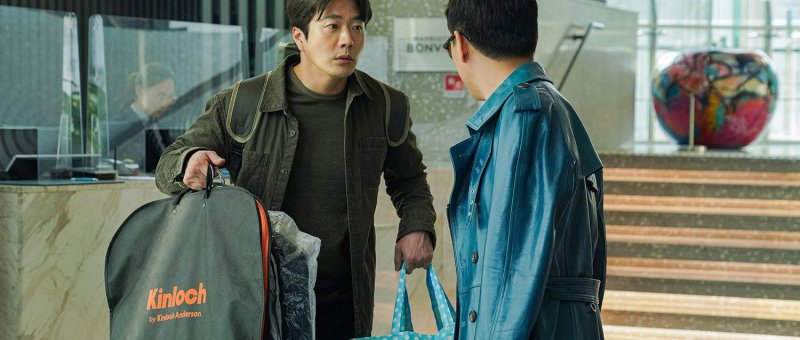
“What matters more than money?” top star Park Kang (Kwon Sang-Woo) chuckles after telling his manager he’ll accept a job he just described in quite insulting terms after being informed it comes with a hefty paycheque. Kang is currently riding high. He’s become enormously successful and even a recent sex scandal involving his co-star in a TV drama has only boosted his profile. Yet he tells his analyst that he can’t sleep and attributes it to “depression and anxiety”. He treats those around him poorly and most particularly his long suffering best friend from his fringe theatre days, Joe Yoon (Oh Jung-Se) who now works as his manager, while struggling to accept his loneliness and meditating on lost love in the memory of the woman he broke up with in order to chase stardom. 

After getting into a weird taxi one Christmas Eve, he’s suddenly granted the “wish” of getting to find out what would have happened if he’d made a different choice. After waking up in an unfamiliar house he discovers that he’s married with two children and slumming it fringe theatre while Joe Yoon is now the superstar having aced the audition Kang ran out on to chase Soo-hyun (Lee Min-Jung) to the airport and convince her not to leave. Of course, Kang is originally quite unhappy about all of this. He doesn’t understand why no one recognises him anymore and resents that he’s suddenly subject to the rules of “ordinary” people again after a decade as a pampered star. In his acceptance speech after winning an award, he’d stated his intention to “forget” his roots as a humble actor and embrace his new role as a member of the showbiz elite fully demonstrating his sense of alienation and insecurity along with his intense loneliness. As the taxi driver had said, Kang has “everything”. He’s achieved his dreams and lives the high life he’d always dreamed of, yet he’s deeply unhappy.

But his “new” life immediately challenges his sense of masculinity in realising that he has little power without money and is in fact financially dependent on Soo-hyun whom he may also have robbed of a bright future by preventing her from studying abroad and achieving success as an artist. Meanwhile he looks down on himself for continuing to follow his artistic dreams in fringe theatre when his plays attract few audiences members and make little money. Just as Joe Yoon had become his manager, so he ends up getting a taste of what it’s like trying to manage a “star” while coming to appreciate that Joe Yoon may be feeling just as lonely and unfulfilled as he once had. 

Yet even as Kang settles into his new life as a husband and father while slowly rebuilding his acting career though a combination of talent, supportive friendship, and good luck, he fails to learn the right lessons continuing to yearn for external validation through material success. He spends money on fancy dinners and tries to move the family into a swanky apartment in Seoul without realising that he’s already got a “home” in the quaint little provincial house he and Soo-hyun set up together filled with memories (that admittedly he doesn’t actually have) of the children when they were small. Slowly, he begins to look beyond himself while developing a new sense of security that means he doesn’t need to chase status-based affirmation in empty materialism but now has a new sense of what’s really important. A charming season morality tale with a little more than a hint of A Christmas Carol, Ma’s gentle drama never suggests that success itself is wrong or that Kang must give up his movie star persona to become a happy everyman but only insists that true happiness is brokered by treating others well and being treated well in return much more than it is by consumerist success.


Switch screens at UltraStar Cinemas Mission Valley April 22/24 as part of this year’s San Diego Asian Film Festival Spring Showcase.

International trailer (English subtitles)

#Manhole (#マンホール, Kazuyoshi Kumakiri, 2023)

“Who are you? Why are you here?” both questions that might occur to anyone at any point in their lives, but don’t seem to bother the hero of Kazuyoshi Kumakiri’s off the wall B-movie thriller #Manhole (#マンホール) until he’s been trapped underground long enough to realise that his literal fall from grace might not be an accident after all. An existential journey deep into the soul of a seemingly blessed salaryman, Kumakiri’s defiantly absurdist drama is part social satire revolving around fluctuating identity in the social media age and meditation on the inevitability of karmic retribution. 

Shunsuke (Yuto Nakajima) does indeed seem to have it all. A successful estate agent, he’s about to get married and even has a baby on the way, only on his way home from a “surprise” party hosted by his work colleagues the night before his wedding he somehow manages to fall down an open manhole in the middle of Shibuya and becomes trapped there. His attempts to simply climb out are frustrated by a nasty gash on his thigh and a broken ladder while no one seems to be able to hear his cries for help. Though his phone still works, the only person who picks up when he calls is a former girlfriend, Mai (Nao), whom he threw over to court the boss’ daughter five years previously which makes it somewhat awkward to ask for help. 

As we can gradually gather, Shunsuke is not really a great guy and is in part in a hole of his own making. Even so, you can’t really confine someone to a hole just for being one. To begin with he busies himself with trying to solve various hole-related problems such as a leaking gas pipe with the salaryman tools at his disposal like the tiny of roll of sellotape in his pencil case or the cigarette lighter he was gifted by suspiciously aloof colleague Kase (Kento Nagayama) as a wedding present though there’s not much he can do about the weird foam or various animal corpses that surround him. 

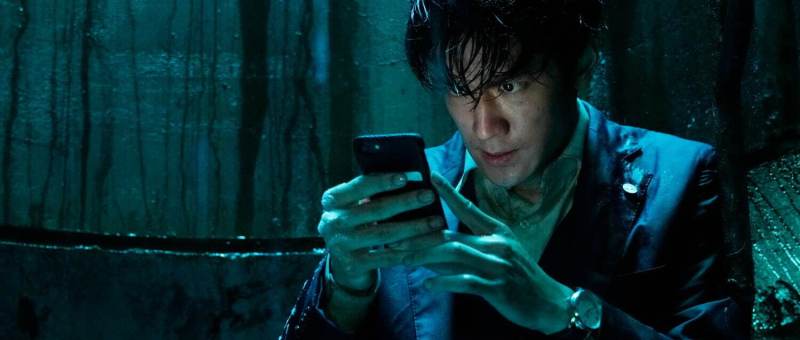
It’s at this point he decides to enlist the help of the internet in setting up a profile on Twitter-like social media app Pecker where he identifies himself as “Manhole Girl” under the rationale that people are more likely to rush to the rescue of a pretty young woman than a 30-year-old salaryman who had too much to drink and fell in a hole. His readiness to do this hints at his internal duplicity and a confident sense of entitlement. It doesn’t seem to occur to him that whoever comes to his rescue might decide not to bother on discovering the truth. In any case, he soon becomes Pecker’s main character with engaged netizens keen to help him figure out where he is and, once it becomes clear it might not be an accident, who put him there. But claiming to be his own sister he’s also confronted with sordid speculation about his personal life and character that reveal there might be quite a few people who privately hoped he’d someday disappear down a hole in the ground and never come back up again.

Even before his ordeal, Kumakiri often frames Shunsuke looking at his own reflection hinting at a lack of self-recognition in the images that he sees of himself. Of course, he doesn’t know who any of the helpful netizens are either because most of them don’t use their “real” names or profile pictures that are actually of “themselves” just as he pulled a picture of a cute girl off the internet to create the Manhole Girl persona. He can’t even be sure of the identity of the people he speaks to on the phone, and wonders if Mai really did come to look for him when she says she’s been all over Shibuya and couldn’t find any open manholes. 

For a while it really does seem like he’s in “a completely different place”, some alternate dimension of existential purgatory. The sense of eeriness is only deepened by the strong blue-green lighting and ominous clouds above the hole that obscure the image of the full moon which, in the urban absence of stars and the disruption of his GPS seemingly caused by an unknown force, are all he has to go on in trying to figure out where exactly he is. Few will be prepared for the answer, though as some may expect Shunsuke knew all along for as much as it’s a “real” place it’s also a part of himself he sought to deny. Kumakiri excels in capturing the claustrophobic otherworldliness of Shunsuke’s near literal hell hole while mining a deep seam of cynical dark humour and anarchic absurdity culminating in an incredibly ironic and deliciously wry use of cheerful 1960s hit Sukiyaki. 


#Manhole screens at UltraStar Cinemas Mission Valley April 20/21 as part of this year’s San Diego Asian Film Festival Spring Showcase.

International trailer (English subtitles)

Over My Dead Body (死屍死時四十四, Ho Cheuk-Tin, 2023)

As the opening voiceover of Ho Cheuk-Tin’s darkly comic farce Over My Dead Body (死屍死時四十四) points out, the world is already quite an absurd place. A lot of us know that it’s absurd, but somehow we just roll with it without really asking why. If you stop to think about it, it really is absurd to spend every waking minute scrabbling for money to pay a mortgage on a flat you barely occupy because you’re always at work, but at least it’s less absurd than living with the constant uncertainly of arbitrary rent rises and sudden eviction. 

At least that’s the way it’s always seemed to the residents of 14A Seaside Heights, a swanky apartment block with all the mod cons and a touch of European sophistication. Technically the flat is owned by Ms. So (Teresa Mo Sun-Kwan), though home to daughter and son-in-law Yana (Jennifer Yu Heung-Ying) and Ming (Wong Yau-Nam) plus their small daughter Yoyo and Yana’s paranoid brother Kingston (Alan Yeung Wai-Leun) who is in the process of launching a “brand” selling a special “stealth suit” that can make you invisible to surveillance cameras. The obvious fact is, the flat is far too small for all these people and Ming and Yana want to move out not least so they stop having to sneak around like teenagers to get a little personal time. 

They have each, however, suffered amid the precarities of the post-pandemic economy with Yana losing her job as an air hostess when the airline she worked for went bust, while Ming’s removals business has taken a serious hit and is unlikely to recover as Mrs So points out with so many people leaving Hong Kong due to the ongoing political uncertainty. The young couple propose mortgaging Mrs. So’s flat for the downpayment on their own which they’d be paying a second mortgage on, which is why it’s incredibly bad news when they discover the naked corpse of a random man propped up against their door. 

The film plays with a minor pun in which the word for male corpse sounds like that for “Blue Ribbon”, a name for pro-government supporters during in the protests, the implication being you wouldn’t want one of those turning up on your doorstep either. In any case, any idea of calling the police or an ambulance is quickly abandoned on realising the flat would become known as a “murder house” and dramatically drop in value. The only thing to do is drag the unfortunate man to a neighbour’s door instead and let them deal with it. This goes about as well as could be expected with the whole floor eventually involved in the plan to move the body until they eventually hit on the idea of dumping it on a rundown social housing estate where people often go to commit suicide because no one’s going to notice one more corpse and no one owns those flats anyway so it doesn’t really matter if they ruin their property value. 

It is an incredibly dark and cynical sense of humour, but in its own cheerfully absurd in all the farcical shenanigans trying to remove the body from the building with no one really stopping to ask how it got there in the first place beyond connecting it with the mad streaker the security guard has been desperately trying to catch. Ho’s previous film, stylish true crime drama The Sparring Partner, had similarly had an absurdist vein of dark comedy running underneath it but Over My Dead Body does eventually rediscover a sense of hope if only in irony as it leans in to a New Year comedy-style celebration of family and community as the neighbours find themselves having to work together to protect their property investments. Even the materialistic Mrs So is forced to reflect that actually she’s lucky to be able to feel tired and frustrated, giving her blessing to her daughter and son-in-law to move out, while they in turn reflect that maybe it’s not that bad if they have to stay a little longer. It might seem like an overly saccharine conclusion for a biting satire about the rabid capitalism of a status obsessed, consumerist society but then again as an equally cynical ironic twist reveals maybe the residents are the ones who haven’t quite woken up despite their newfound solidarity. 


Over My Dead Body opens in UK cinemas on April 21 courtesy of CineAsia.

UK trailer (Traditional Chinese / English subtitles)

Ride On (龙马精神, Larry Yang, 2023)

“Jumping down is easy, stepping down is hard” an ageing stuntman reflects in Larry Yang’s meta Jackie Chan vehicle Ride On (龙马精神, lóngmǎjīngshén). The Chinese title, like the English, may hint at late career resurgence but the film at times feels more like a swan song for Chan himself as it lovingly looks back at some of his greatest action hits while gently suggesting that his era may have passed in this new age of CGI and greater awareness of health and safety regulations. 

That does certainly seem to be the case for his stand-in, Luo, who has fallen on hard times following serious injury and financial ruin. These days he mainly works as an extra and supplements his income posing for photographs with his beloved horse Red Hare whom he saved from being euthanised at birth and has raised since he was a foal. When the twin forces of vicious loansharks and a weird, wealthy businessman who collects horses come calling for Red Hare it’s like they want to take the last dregs of Luo’s legacy away from him all of which forces Luo to reconnect with his estranged daughter Bao (Liu Haocun), a law student engaged to a rookie lawyer. 

The familial themes play into those of celebrating the brotherhood of stuntmen (and one woman) as one large family who must necessarily take care of each other given that their line of work is incredibly high risk. Yet it’s also true that Luo’s reconciliation with Bao seems to come too easily given her original animosity towards him for being unable to play the role of father to her seeing as her parents separated when she was an infant and she’s met him only a handful of times in her life. Nevertheless, she’s quickly won over by Red Hare even if perhaps identifying a little with him as Luo refers to the horse as his “son” only to belatedly realise that he may have been mistreating him by forcing him to perform dangerous stunts pretty much against his will despite his obvious affection for him. 

Likewise, Bao comes to a new appreciation of her father after watching videos of his old stunts many of which show him incurring serious injuries. The clips are all famous scenes from Chan’s movies such as the shopping mall jump from Police Story or the bus and umbrella stunt which are posited as the glory days of action cinema, yet from a modern perspective we might ask ourselves if all this risk is worth it for simple entertainment even if as Luo later suggests it’s the risk that makes the action entertaining. After getting back on the horse, literally, Luo is offered a series of new stunt jobs one of which requires him to perform a dangerous jump on a badly designed set, while on another he’s told he doesn’t need to perform the dangerous part because they’ll fill in the rest with CGI. Luo is outraged and insists on performing the stunt in camera only to think better of it when considering that he’s making a decision on Red Hare’s behalf that he might not have the right to make. 

The film laments the passing of the age of daredevil stuntmen, but there is a minor irony in the fact that Ride On makes fair use of CGI itself as it fully admits in the closing outtakes which feature several stagehands dressed in green to be erased later. It’s also less a celebration of stunt people than it is of Chan himself and his legendary career as an action star which may be nearing its end which would be fair enough seeing as Chan is now 69 years and clearly making (occasional) use of stunt doubles. Nevertheless, there’s an undeniable sweetness in the relationship between Bao and her fiancé Mickey (Guo Qilin) as they commit themselves to saving Red Hare and forge new familial bonds with the rough and ready Luo that echo the themes of familial reconciliation even if letting Luo off the hook a little too easily for his absence from his daughter’s life. “Stepping down” might be hard, but it doesn’t necessarily mean walking away completely only entering a new phase of compassion and solidarity and not least for a wily horse in search of a loving home.


Ride On is in UK cinemas now courtesy of CineAsia.

UK trailer (English subtitles)