The Sin (씬, Han Dong-seok, 2023)

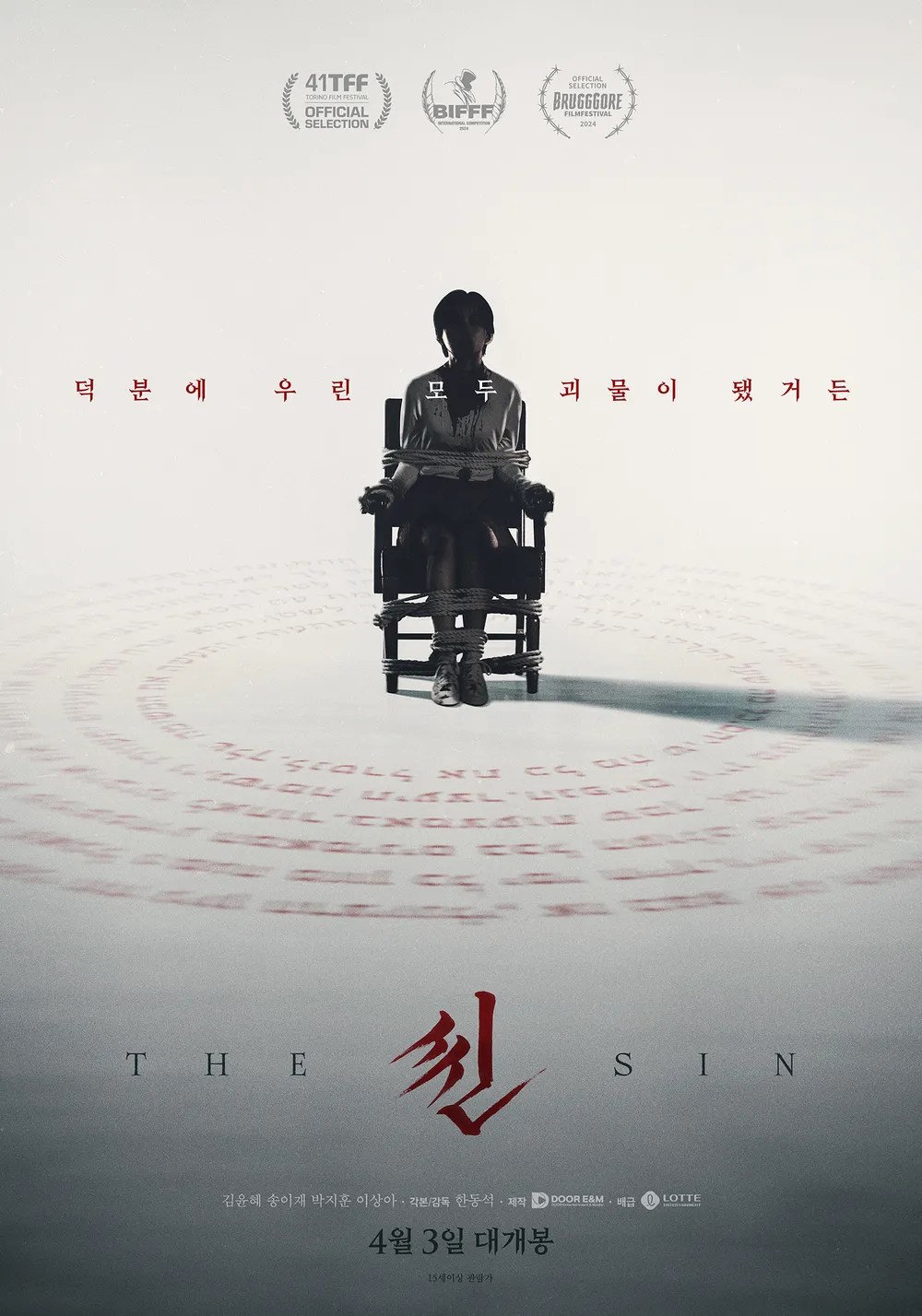
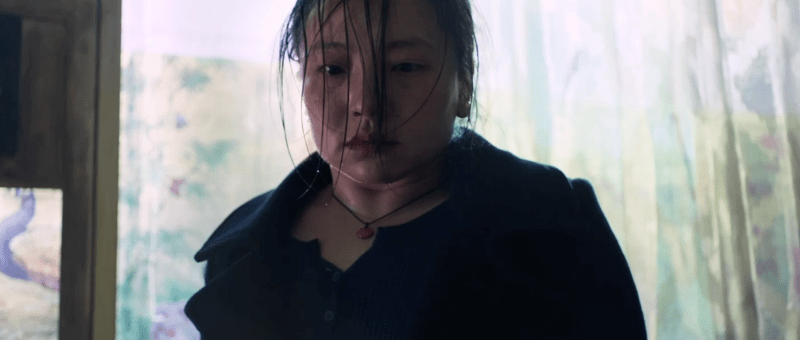
According to the opening title card of Han Dong-seok’s genre-hopping horror, sin is like a lost child that will one day come looking for its parents. The film’s ostensible heroine at times hears voices suggesting that someone or something will eventually come looking her, and later says that she is ready for their arrival, but before that we have to wonder what it is she means and what if anything that is happening is actually real or at least in keeping with our assumptions.

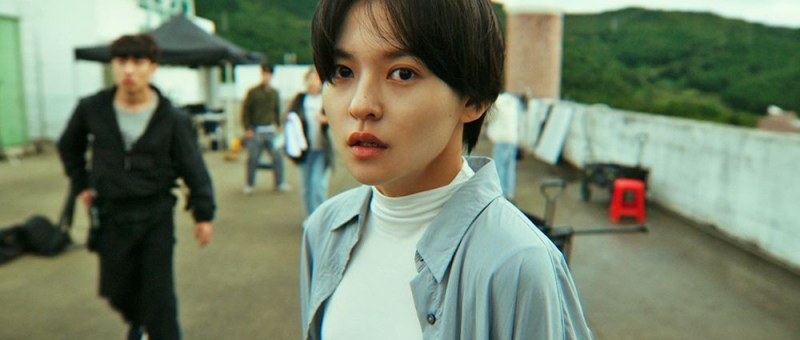
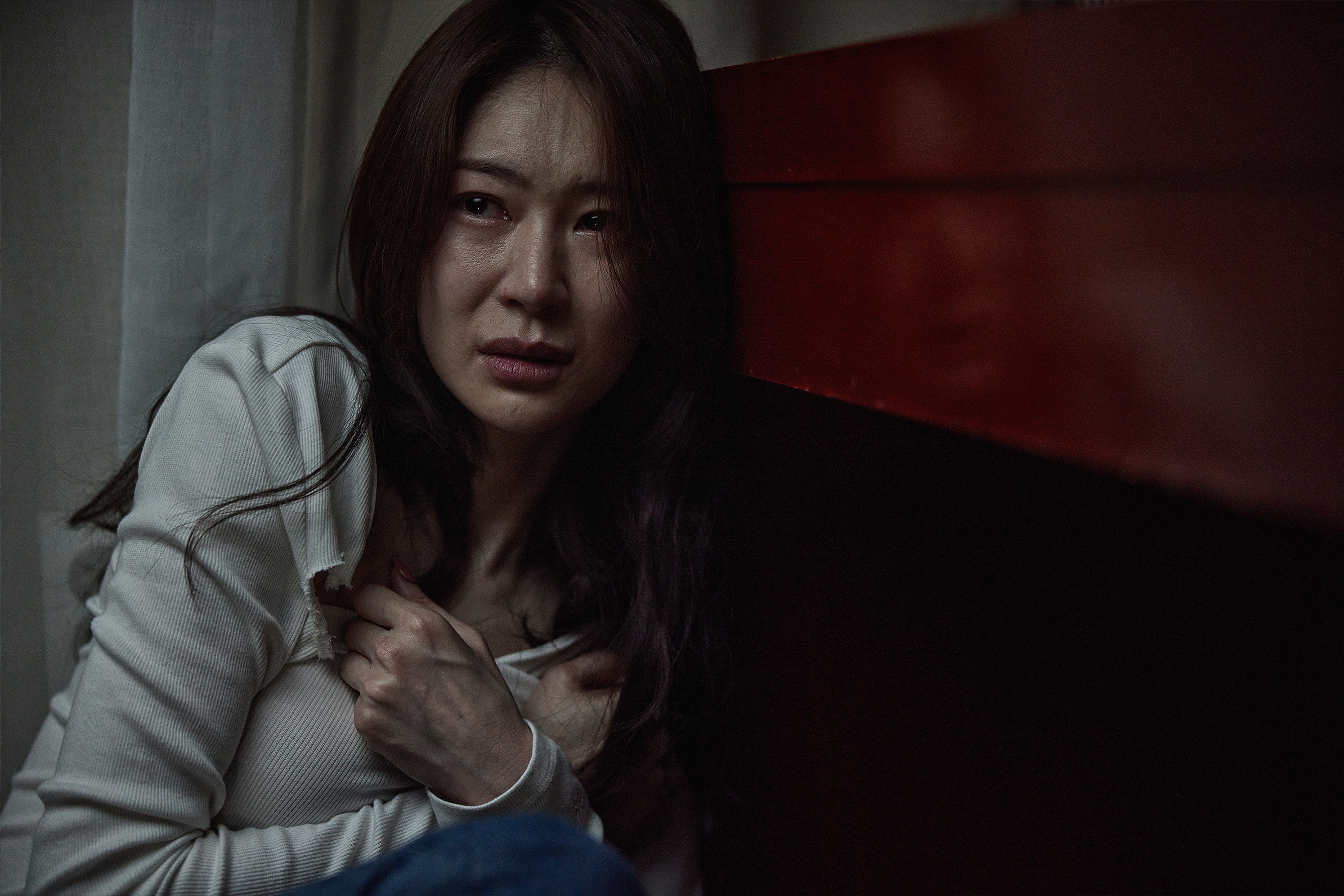
There are many reasons why we begin to feels we can’t trust Si-yeong’s (Kim Yoon-Hye) perspective. Not only is she already somewhat distant and preoccupied on her arrival at a disused university in the mountains but we also later learn that she’s taking a large amount of medication apparently for migraines and PTSD stemming from a barely remembered accident. She also seems less than pleased to encounter former colleague Chae-yoon (Song Yi-Jae) who brings up memories that seem unpleasant to her while there’s a kind of frostiness between them that’s only exacerbated by the fact Si-yeong was not even aware she’d have a co-star in this experimental dance movie directed by a man known for being “unkind” to actors. 

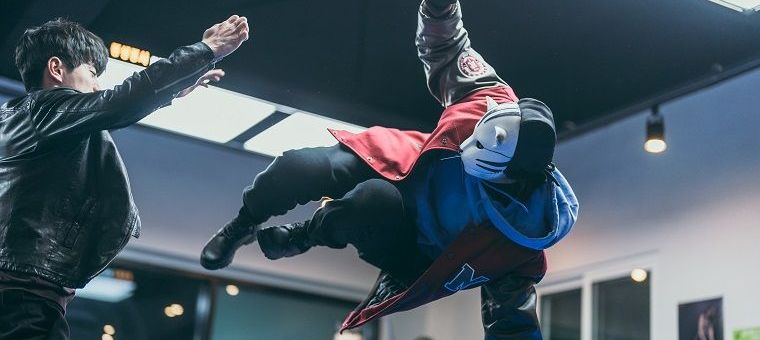
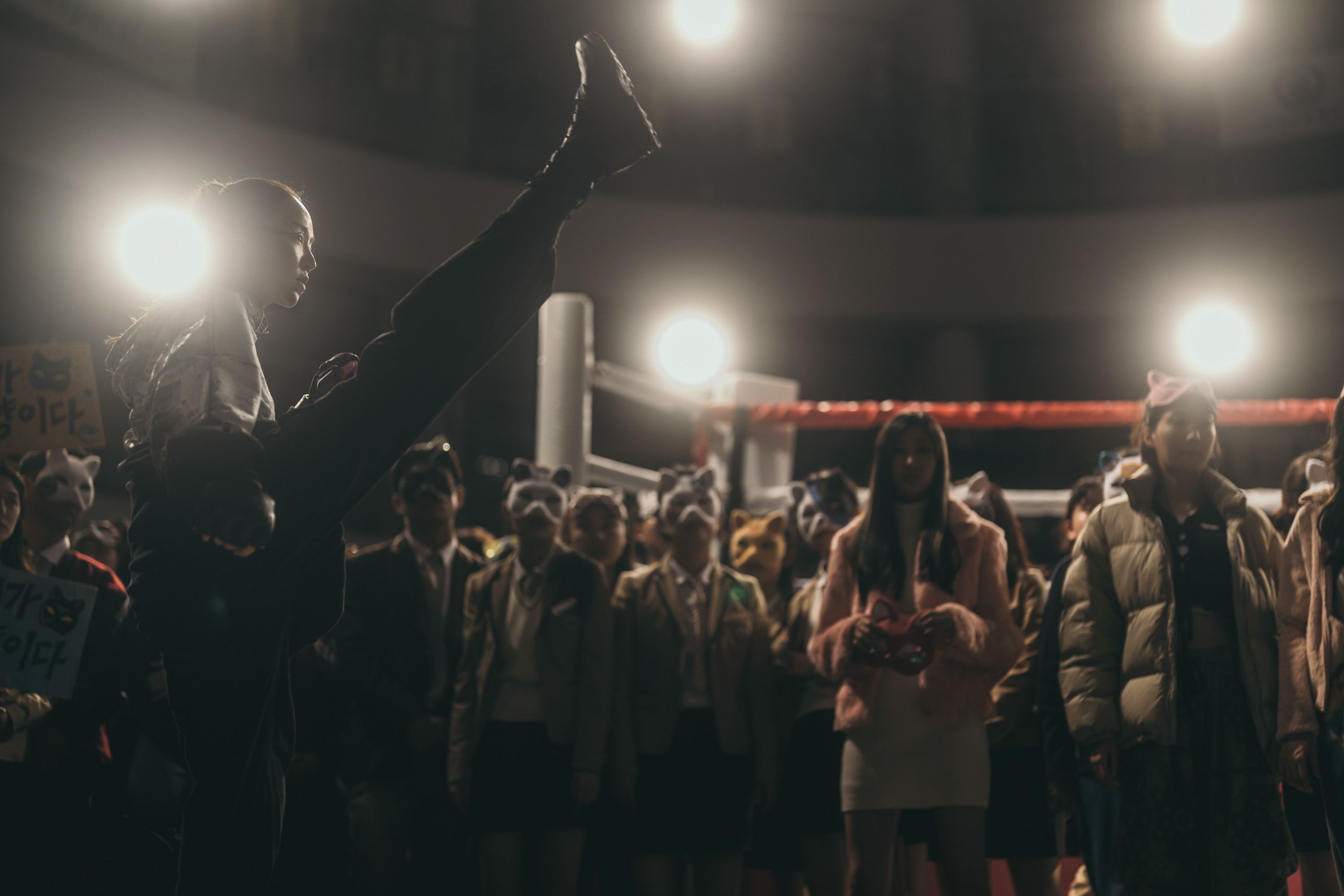
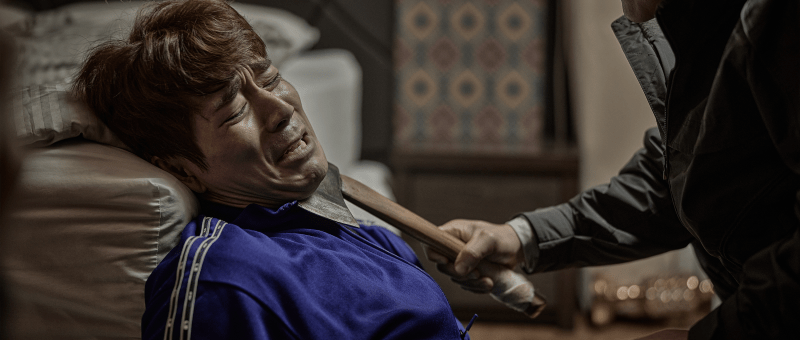
In any case, strange things do indeed begin befalling her from a body dropping right in front of her feet before she enters the building to the eventual murder and suicide of her colleagues who then return as zombie-like creatures. The film cycles rapidly through a series of genres beginning as a slasher with a Suspiria-like sense of eeriness as dancer Si-yeong’s mental state starts to unravel before drifting into the undead, cults, and shamanistic folk horror with the weird symbols dotted around the campus. 

Because things are very wrong on the outside too, Si-yeong even ends up running into a gang of murderous corrupt cops paranoid she’s found their stash of stolen drugs while otherwise pursued by riflemen apparently employed by a vengeful CEO. It’s true enough that we don’t know what’s going on for most of the film, and part of that may be that Si-yeong doesn’t know either because her mental state is unstable. We’re not even really sure if Chae-yoon is real or merely Si-yeong’s projection of her internal conflict, dressed as she is in the same outfit and with the same haircut to the point the two women are often barely distinguishable. Perhaps it’s this unpleasant memory that Si-yeong is trying to avoid, though it’s clear in very general terms that she’s running from something as much as she’s being chased and that her flight may be orchestrated to bring her to a specific location whether physical or spiritual.

What’s chasing her is the apparent “sin” of the title, though everyone might not see it as such or maybe believe their own sins were either justified or will be paid for later. For the purely evil, sin as a concept may not even exist if there’s no prospect of remorse though it’s hard to reconcile the docile, sweet and somewhat etherial Si-yeong with the fragmented memories of a past that may or may not be her own. “Thanks to you, we all became monsters,” she’s later told by someone about to something pretty monstrous but maybe they too were monstrous to begin with, or nobody was, and a well-meaning attempt to exorcise evil from the world has only produced more of it. 

Just when you think you have it all figured out, Han throws in a post-credits sequence pouring more fuel on the fire and hinting at even greater back story in a world ruled by dark and unseen supernatural forces. It doesn’t make sense, but wilfully so and frustrates in a positive way in our desperation to understand something that cannot be understood much as Si-yeong attempts to understand the rapidly disintegrating world around her. The concrete fact does seem to be that one must pay for ones sins, though those who do may not be the ones we’d expect. Gory and incredibly creepy, the film plays with our senses as much as Si-yeong’s, undermines our sense of reality, and finally leaves with the unsettling vision of a pervasive evil lurking in the mirror or the depths or the dark corners of a mind already shrouded in delusion. 


The Sin screened as part of this year’s New York Asian Film Festival.

International trailer (English subtitles)

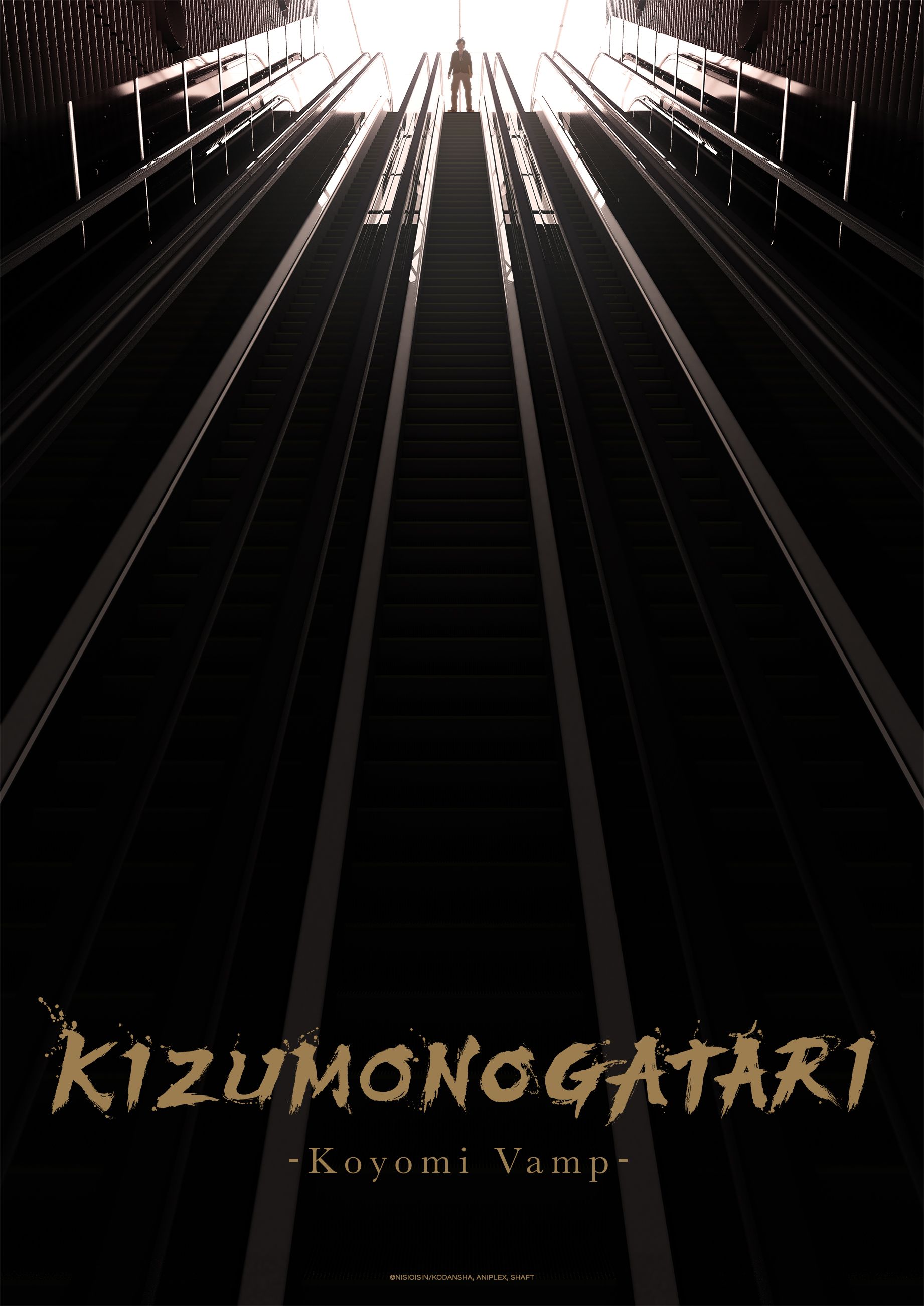
Kizumonogatari -Koyomi Vamp- (傷物語 -こよみヴァンプ-, Tatsuya Oishi, 2023) [Fantasia 2024]

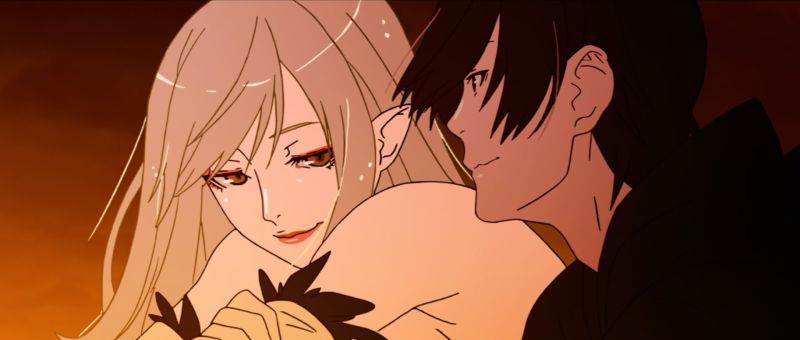
A young man walks into an empty subway station already ominously strewn with blood and finds there the corpse of a woman shorn of her limbs. The corpse rises and begs him to have her life by sacrificing his own in allowing her to suck his blood and surprisingly the young man agrees. He does not, however, die but is brought back as something else, not quite human and definitely subservient to the creature he has saved. 

Running 2.5 hours, Tatsuya Oishi’s Kizumonogatari -Koyomi Vamp- (傷物語 -こよみヴァンプ-) is in fact a compilation of three films released in 2016 and a part of the long running Kizumonogatari series which originated with Nisio Isin’s light novels and has gone to spawn an expansive universe of interconnecting spin-offs. This is technically a prequel, and in that sense begins with a black slate but also deliberately drops us into confusion with breakneck pace through the hero’s quest to recover himself and his place in the world after this rude awakening to the supernatural. 

Rude is in many ways a defining characteristic of Kiss-shot, the 500-year old vampire Araragi finds bleeding in the subway station at that point a blonde and alluring figure of forbidden desire. Araragi is drawn to her in an unconscious death wish linked with the sexual desire he struggles to understand, running into the subway minutes after buying a pornographic magazine from a convenience store after striking up a friendship with fellow student Hanekawa. But once he saves her life, Kiss-shot is transformed into a cheeky little girl who now tells him that he is her minion and he must recover her severed limbs from a trio of vampire in order to be restored to humanity even as the power dynamic between them becomes confused and distorted.

In his vampire state, Araragi becomes immortal, powerful and free of mortal jeopardy yet he remains uncertain and insecure while reliant on the support of Hanekawa who encourages him to reject his desire for death and remain alive. But this also presents a problem to Araragi who sees himself as self-sacrificing and is unwilling to accept the what he sees as a self-sacrifice from Hanekawa for whom he feels unworthy and inadequate. In some senses it’s a typically self-centred, adolescent male perspective that rejects any idea of her own agency and assumes Hanekawa performs these actions for him rather than considering that she performs them for herself and is simply doing what she wants to do which in the end is not really about him at all. He declares it a burden he’s too weak to carry, which might in some senses be fair but also again a mischaracterisation that is further evidence of his lack of self-worth.

It’s this sense of inadequacy that lies behind his desire to reclaim his humanity along with the concurrent disgust he feels in the degradations of vampirism. It genuinely comes as a surprise to him that Kiss-shot feeds on human beings and lost her own humanity so long ago that she no longer gives it a second thought. She is after all only being what she is, but like Araragi is drawn to death partly out of frustrated longing and lingering boredom with a relentless yet apparently uneventful 500 years behind her in which the only other highlight was her previous minion who rejected this life much more quickly than she ever expected.

Even so, Oishi lends their mutual dilemma a degree of absurdity in the expectedly comic sight of severed heads littering a sports filed or launching themselves in toothy attacks. Heavily inspired by the French New Wave, he breaks the action with sometimes barely legible title cards often reading a single world while his composition has a kind of jauntiness that is also bleak and melancholy. The world surrounding Araragi veers between the pristine entrance to the high school, and post apocalyptic devastation littered with crows emblematised by the depilated cram school in which Kiss-shot keeps him. Backgrounds often have a photo realistic quality that further sets the world at a kilter when matched with the more conventional character designs of the central players. The conclusion that Araragi is presented with amounts a sharing of the misery which is also akin the burden he didn’t want to carry but also perhaps symbolic of his path towards adulthood in acceptance of compromise and selflessness in being willing to carry a small part of others’ pain and despair and allowing them to carry a part of his own.


Kizumonogatari -Koyomi Vamp- screened as part of this year’s Fantasia International Film Festival.

Original trailer (English subtitles)

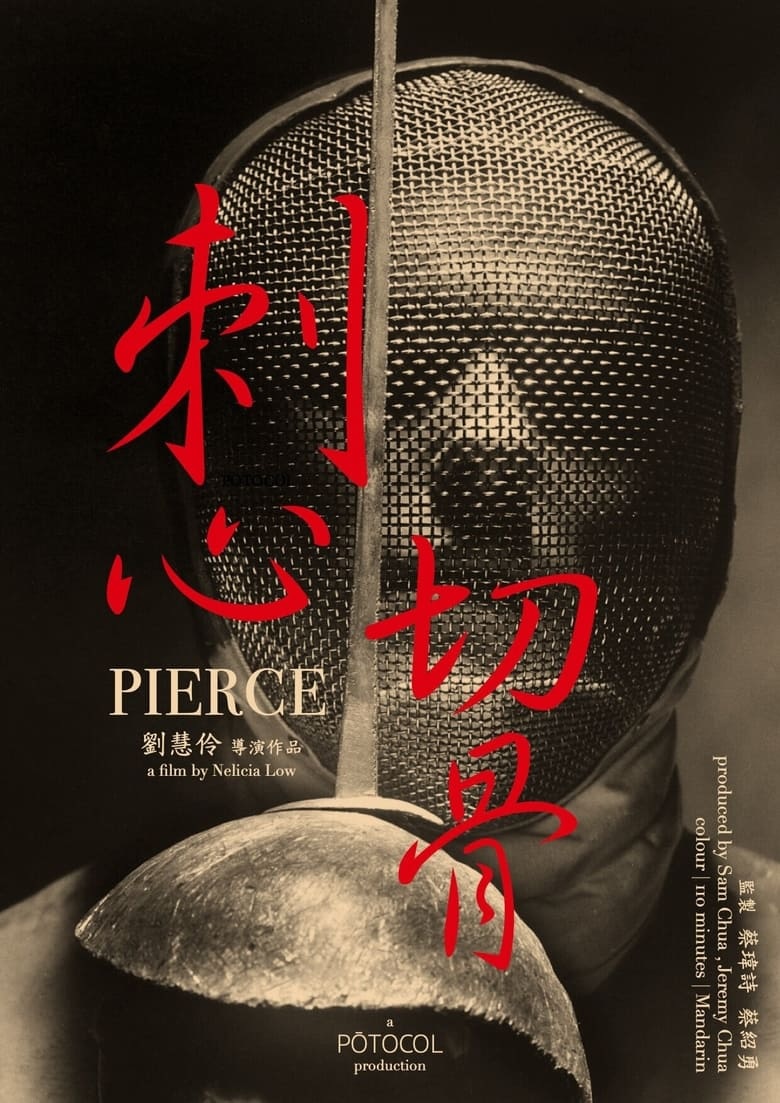
Pierce (刺心切骨, Nelicia Low, 2023)

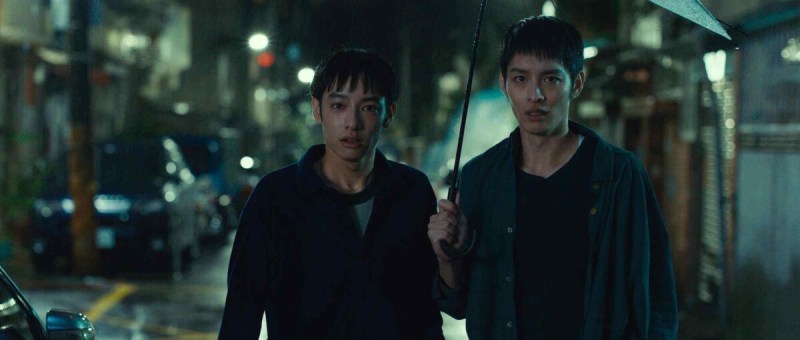
What are the limits of unconditional love and is it always a good thing? The hero of Nelica Low’s intense fraternal drama Pierce (刺心切骨, cì xīnqiè gǔ) is desperate to believe that his older brother is innocent of a crime he’s been imprisoned for for the last seven years, but in another sense it seems like the fact itself doesn’t matter to him. What he wants is the emotional intimacy of authenticity which is something he doesn’t seem to get from his steely mother intent on crafting a protective bubble of fantasy that may be as much for herself as her son.

In any case, Ai Ling (Ding Ning) is convinced that Zihan (Tsao Yu-ning) was born bad. She needs no convincing that when he stabbed his opponent with a broken blade during a fencing competition he did so knowingly and it was an act of murder rather than an accident as he claims. Zijie (Liu Hsui-fu), her sensitive younger son, is not so sure and feels that his mother’s total rejection of his brother is unfair. He needs to believe in part that Zihan is innocent because he once saved him from drowning though according to his mother if she had not arrived when she did Zihan would happily have watched him die. Ai Ling also says that she suspected Zihan had harmed Zijie during their childhood, but if this is true then Zijie appears not to remember it or perhaps willingly suppresses his memories of cruelty because it would be too difficult for him to accept that his own brother tried to kill him. 

But objectively speaking, there is something not quite right about Zihan who seems to be a charmer with manipulative tendencies. He was once a three time national fencing champion, and as he says fencing is all about figuring out your opponent’s intentions without letting them see your own. Of course, the way he behaves could equally be because of the way his mother behaves towards him. In some senses he too is a broken blade, apparently craving his mother’s approval and affection and perhaps becoming what she believed him to be out of frustration and resentment. He lies all too easily, crashing a dinner party with Ai Ling’s wealthy suitor Zhuang and his family and leaning into her cover story that he had been away studying medicine in the US while adding a touch of his own in a tearful story of wanting to specialise in radiology having watched his father painfully pass away of cancer. 

Of course, even if he is a raging sociopath, that doesn’t necessarily mean he committed an apparently motiveless murder or that he has no feelings at all for his brother who dotes on and idolises him with almost incestuous intensity. Zihan instantly picks up on the fact his brother is gay and that a boy in the fencing club has a crush on him, offering nothing other than support and reassurance of the kind he’d never get from Ai Ling. When Zhuang tries to set Zijie up with a girl and he declines, he broaches the idea he might not be straight but Ai Ling immediately changes the subject implying that probably she already knows but it’s another thing she’s papered over perhaps afraid that it might damage her relationship with Zhuang who appears to come from a wealthy family though they may not be as conservative as she fears them to be. 

In contract to the intimacy Zijie craves, beginning to confess himself, Ai Ling protects and distances herself from others through deliberate misrepresentation. Zhuang seems at least that he would be more upset about the deceit than that Ai Ling has a son who involved in a high profile, violent crime and also appears not to care that Zijie maybe gay while otherwise attempting to bond with him and be a sincere father figure. His love may in fact be unconditional in a way Ai Ling’s clearly is not whereas Zijie finds himself wavering, confronted by contradictory evidence that suggests his brother may not be so innocent after all. Deciding into a Grand Guignol fantasy in its final stretches, Low fills the screen with an ominous red, the billowing curtains creating an artificial dreamscape of ambiguous reality in which the brothers, each of them, discover at least their own truth and the answers they were seeking which may in its way be all they really needed.


Pierce screened as part of this year’s New York Asian Film Festival

Original trailer (English subtitles)

The Tenants (세입자, Yoon Eun-Kyung, 2023)

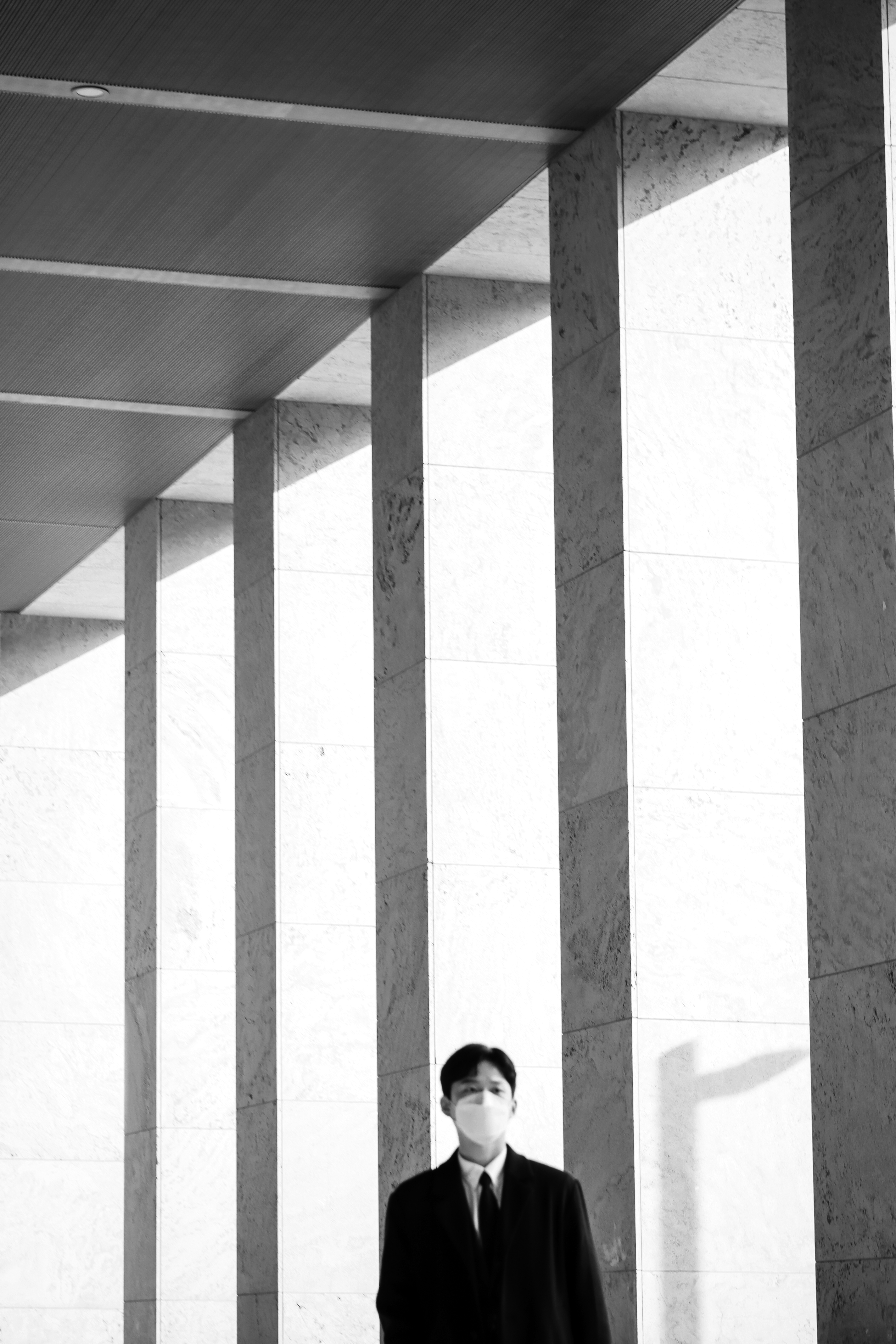
“Think carefully. Think about why you can’t leave here, and what keeps you from leaving,” runs the opening and closing dialogue of Yoon Eun-gyeong’s elegantly lensed monochromatic dystopian drama The Tenants (세입자, Seibja) in which the citizens appear to be trapped in an abusive relationship with a toxic city that offers what it claims are attempts to help the struggling get back on their feet but which are really constraints to prevent them from leaving. 

At least that’s what Shin-dong (Kim Dae-gun), a hard-working if apparently average officer worker, discovers when his landlord, who appears to be a child who has taken over this role from his still living mother, informs him that he wants to remodel the building to attract higher quality tenants and effectively bamboozles him into the idea of moving. Only, in this near future society, moving isn’t an easy thing to do and Shin-dong is struggling to pay his rent already for an apartment he barely occupies considering all the unpaid overtime he does just to show willing in the hope of career advancement. His friend in a similar position informs him of a loophole, that ironically enough as other kinds of tenants have rights, if he sublets part of his apartment his landlord won’t be able to kick him out.

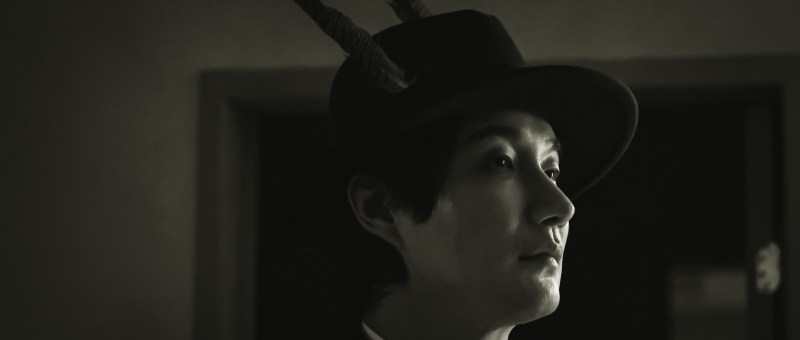
Only the pair of lodgers he acquires are strange in the extreme. A very tall man in an alpine hat with two feathers that looks like bunny ears arrives with a decidedly childlike wife who appears not to speak much Korean and just smiles creepily while standing behind him. To make matters stranger they insist on living in the bathroom, because the wife has bowel issues, which also means Shin-dong has to start using communal facilities which turn out to be much busier than expected with similarly troubled office workers. Meanwhile, he starts to feel like someone is watching him and wakes to find one of the pair staring at him in his sleep.

Understandably, he regrets the arrangement but ironically he’s now in place of a landlord himself and feels awkward about asking the couple to leave while forced to acknowledge that they also have rights as tenants which include those to sublet the part of Shin-dong’s apartment he sublet to them. In this way, his space is literally shrinking but it’s also as if the city is further encroaching on his life. He explains that he’s a solitary person and much prefers to live alone but is prevented from doing so by the socio-economic conditions which surround him. His colleague calls him a hardworking loser who just makes trouble for everyone else with his constant overtime while he has invested in making closer ties with the boss in the hope of getting a promotion that way. 

But it appears the only way out of this toxic city which is literally choking Shin-dong with its low quality air is to get a transfer to the new utopia of Sphere 2, an idyllic future settlement with a purified air system advertised in both Korean and Chinese on his morning commute. The fact that Shin-dong works for a friendly corporate entity titled “Happy Meat” which apparently manufacturers ethical, cultivated meat products adds to the sense of unreality in which everything is somehow fake or a little less than you might have been expecting while things are that marketed as positive attempts at kindness are also in themselves a little bit toxic as Shin-dong works himself harder than the most earnest donkey and gets nothing back in return save the ability to think of himself as someone with the status of “officer worker” which at least confers a degree of respect. 

That might be one reason he’s disgusted by the idea of the attic dweller underclass who are, he’s warned, a little bit dangerous having been driven out of their minds by their dismal circumstances and prone to sometimes violent delusions. A less than helpful medical professional advises him to “reduce his thoughts”, which doesn’t seem like a very good long term solution even in this “zombie-like” city though even when he’s been given a chance to escape Shin-dong is told he’ll have to cancel his lease first, which means getting his tenants to stamp a form agreeing to end their tenancy and also get a form from the the person they’ve sublet to to do the same. It’s tenants all the way down. Shin-dong finds himself staring into the photo of a beach in the eventual hope of escaping to some kind of paradise, but otherwise seems to be trapped inside this hellish yet grey, lifeless dystopia in which it seems the only salvation may lie in madness. 


The Tenants screened as part of this year’s New York Asian Film Festival.

Original trailer (English subtitles)

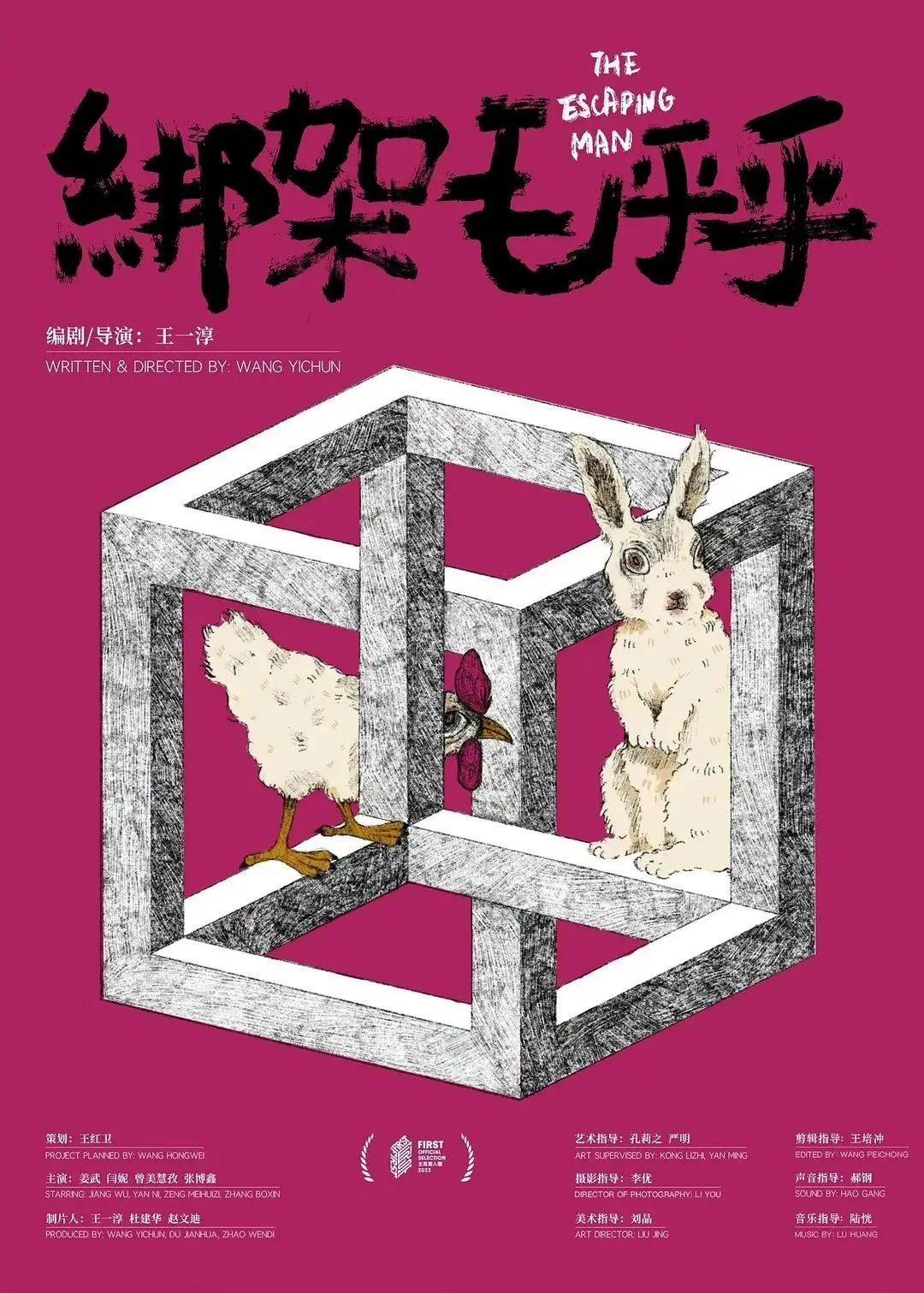
The Escaping Man (绑架毛乎乎, Wang Yichun, 2023)

“Life isn’t much better on the outside,” according to Sia (Zeng Meihuizi), the heroine of Wang Yichun’s deliciously ironic dramedy, The Escaping Man (绑架毛乎乎). Escaping men is in part what she’s tried but otherwise failed to do while constrained by the socio-economic conditions and entrenched patriarchy of the modern China. All of the men in the film are, as many call them, “idiots”, but all things considered it might not necessarily be such a bad thing to be even if their guilelessness makes them vulnerable to the world around them albeit in much different ways to Sia.

At least its this boundless cheerfulness and inability to see the world’s darkness that caused Fluffy (Eric Zhang) to be rejected by his status-obsessed mother (Yan Ni) who seems to have got rich by becoming what in charitable terms might be called a motivational life coach though others might describe her as a cult leader. She’s determined to get Fluffy into an elite primary school so he can “win at the starting line,” a buzzword in the contemporary society which basically means engineering privilege for your child so they can elbow other kids out of the way before the race even starts. The irony is rammed home by the fact that Sia, who works as the family’s live-in nanny/housekeeper also has a daughter named “Fluffy” who is one of China’s left behind children living with her seemingly bedridden grandmother in the provinces while Sia is in the city earning money to support the family having apparently divorced her daughter’s father. 

20 years previously, Sia’s mother had accused her lover of rape and had him sent to prison where he’s remained ever since having apparently gone along with the legal process in the mistaken belief Sia would eventually clear up this misunderstanding. She later later says the police wouldn’t let her and that she was never actually interviewed, but also continues to insist that they live in a “law-based society,” and nothing can be done without evidence. On his release, Shengli (Jiang Wu) comes straight to find his former lover in order to confirm that he did not in fact rape her and their relationship was consensual which she agrees it was. This determination is symbolic of his romanticism in continuing to believe in his dream of love despite all he’s been through, convincing himself he can start again with Sia while she continues to manipulate him with the almost certainly false promise of a happy joint future.

But then you can’t really blame her. A little way into the film, Sia is dressed in a white outfit very similar to the one worn by her boss when she goes to see Fluffy in a school play in which, at his own request, he played a tree. Sia is every bit as a accomplished and she has a warm and loving relationship with Fluffy which seems to elude his haughty mother. Later in the film she reveals that she came third in the national university exams but was prevented from going because she was born in a small rural province rather than the big city like her employer Mrs Mao. The fates of the two women are easily interchangeable depending on the circumstances of their birth while Mrs Mao continues to wield her privilege to ensure Fluffy can win at the starting line despite her resentment towards him for his lack of academic acumen or the things that denote conventional success in the modern China. Though he is cheerful and kind, she sees these qualities as actively harmful to his future success rather than embracing the little ray of sunshine he actively is.

Then again, Fluffy’s guilelessness also leaves him vulnerable which is why he cheerfully walks off with Shengli when he agrees to Sia’s kidnap plot and even rejoices in the grave-like pit they’ve dug to keep him in rechristening it as his underground fortress. He’s so nice that he doesn’t even realise the other kids are bullying him for being “stupid” and thinks they’re his friends, just happy to be included in the game. In this way, he and Shengli are alike, a pair of hapless fools living in a world that’s nowhere near as good as they think it is. The irony is that though Shengli perhaps begins to wake up to the realities of his relationship with Sia, his last wish for Fluffy is that he get into the fancy primary school and win at the starting line so he won’t end up like him. Suddenly it seems ironic that Shengli was a breakdancer because in the end he cannot break free of the prison that is the modern China. Filled with a darkly comic humour, the film is a fierce critique of the inequalities of the contemporary society and gentle advocation for the right to just be nice in world in which kindness has become a character flaw.


The Escaping Man screens July 26 as part of this year’s New York Asian Film Festival.

The Guest (301호 모텔 살인사건, Yeon Je-gwang, 2023)

We’re under surveillance all the time, so when we really need someone why is that no one seems to be watching? Yeon Je-gwang’s slasher drama The Guest (301호 모텔 살인사건) takes place in a world of high anxiety fuelled by the very real life plague of illicit photography predominantly targeting young women with hidden cameras in places such as public bathrooms and hotels. We’re told the CCTV networks are there for our safety, but they necessarily impinge on our privacy and cannot be relied upon when we most need them.

A case in point, two young men working in a love hotel and running a sideline in illicit photography at the behest of a gangster to pay off their debts are conflicted when they spot what looks like a violent attack and attempted murder going on in one of the rooms. One of them, Min-cheol, wants to intervene but the other is against it. If they call the police, their spy cam scam may get exposed and they need money to pay off their debts to the gangster and restart their lives. Min-cheol in particular has been resentful of their line of work and wanted to quit but also has an ageing mother and needs the money to pay for an operation for her.

The backstory goes someway to giving Min-cheol justification for his complicity while it’s clear he disapproves and is not directly violating these women for his own gratification or direct financial gain. He does not, however, do all that much to resist beyond telling gangster Deuk-cheol that he won’t participate any further. It’s clear that environment around him is extremely misogynistic, and the anxiety enveloping Eun-soo all too real as a previous spy cam victim now left paranoid, checking all around her for anything that looks out of place. A sign outside a bathroom at a petrol station states that it’s a “safe” space because they regularly sweep for cams which somehow doesn’t seem very reassuring. In any case, the attendant is busy watching videos of girls dancing on Tiktok while another guest at the love hotel badgers Min-cheol to call him a “coffee girl”. The killer himself is also an embodiment of this pervasive misogyny, silently stalking his prey and slashing anyone who gets in his way.

Yet masculinity is consistently weak. Neither of the boys is willing to help nor can they fight back effectively against the killer who is himself an ineffectual coward slashing around at random while failing to achieve his own goals of destroying the spy cam footage which of course also exposes his crime and and perversity. When the police eventually arrive, they can’t help much either and quickly fall victim to the killer’s plot somehow not suspecting him and taking his excuses at face value. 

Min-cheol tries to wield the technology for his own advantage, trying to blind the killer with camera flashes all of which hints at the double-edged nature of the technology itself. We’re told it exists for our safety but it also invades out privacy and is open to abuse. A later news report suggests there has been a spate of incidents in which hackers take over the intercom in various apartment buildings suggesting that not even the domestic space is safe. To Eun-soo, Min-cheol is therefore another disappointing nice guy otherwise complicit in spy photography and exploitation of women. Both the boys pay heavy prices for their moral failings, but you can’t really blame Eun-soo for being unwilling to help them given her victimisation at the hands of a misogynistic society. These men will not protect her, and so she has only the option of protecting herself. 

Remaining largely within the grim confines of the rundown love hotel, Yeon conjures an atmosphere of malice and anxiety in which a crazed killer wanders the corridors with an axe while relentlessly stalking his prey but it’s really just a manifestation of the fear and anxiety Eun-soo faces every day of her life as a young woman constantly threatened by oppressive patriarchy and fragile masculinity while eternally watched by those less concerned with her safety than their own gratification. 


The Guest screens July 22 as part of this year’s New York Asian Film Festival.

Original trailer (no subtitles)

Ice Cream Fever (アイスクリームフィーバー, Tetsuya Chihara, 2023)

“Cold and sweet” is the way a customer to Million Ice Cream describes their produce, but it might also be an odd way to describe its comforts echoing the melancholy of the series of women who pass through its doors in Tetsuya Chihara’s adaptation of a short story by Mieko Kawakami, Ice Cream Fever (アイスクリームフィーバー). For each of the heroines it represents a kind of purgatorial space as they find themselves torn between past and future while seeking new directions.

For Natsumi (Riho Yoshioka), who took the job working part-time at the ice cream shop after experiencing burn out in her career as a designer, that new direction appears in the form of Saho (Serena Motola), an alluring yet sullen woman dressed all in black who turns out to be a formerly successful novelist plagued by writer’s block. A series of flirtatious encounters seem to rejuvenate the creative impulses of both women with Natsumi returning to doodling new signs for the shop and Saho beginning to write again, though there remains something distant and elusive between them. Saho later describes herself as like a summer storm destined to pass by in an instant and soon forgotten though in an ironic way her aloofness and enduring mystery may in fact be a way to ensure she is not forgotten while she at least seems unable to embrace her romantic desires instead sublimating them into her literature.

This inability to forget has also marred the life of Yu (Marika Matsumoto), a similarly lost woman approaching middle age who is suddenly approached by a niece she’s never met because she cut ties with her sister after she stole her boyfriend. Her mother having now passed away, Miwa (Kotona Minami) has come to Tokyo in search of her father and though seemingly aware of the circumstances of her familial estrangement enlists her aunt to help find him thereby forcing Yu to confront the past and reassess her life. Like Natsumi she is also becoming disillusioned with contemporary working culture and contemplating making a change. While she is a devotee of ice cream, it’s the local bathhouse, “an oasis for working women” as she describes it, that her been her refuge. When it suddenly closes due to the elderly owner’s (Hairi Katagiri) own decision to pursue a different kind of life, Yu wonders if she might be happier giving up her high powered corporate job to take it over. 

The dilemma both women face is reflective of a generational shift away from a desire for conventional success achieved by hitting each of life’s landmark events to that for immediate individual happiness derived from small comforts such as an ice cream cone or a soak in a large bath. The irony is that Miwa comes to Tokyo in search of an absent father and finds her aunt, while Yu is able to make peace with her past and accept the new gift life has given her in accepting a maternal role in her niece’s life. What both women choose are pleasant lives rooted in community and giving pleasure to others rather ones of consumerist desire or external validation.

Still, that doesn’t necessarily mean romantic resolution. While one woman’s decision may reflect a desire to move on, the other’s may not but rather an intention to wait if also to do so in a happier and more fulfilling environment that unlike the Mexican salamanders in Saho’s tank she has chosen for herself. Gradually we come to understand these events are unfolding at differing time intervals though weaving through around each other, pursuing a logic of memory rather a more literal reality while driven by the natural rhythms of a life which continues onward around them in continual oscillation. Gradually spinning outward it ropes in the unfulfilled romantic desires of Natsumi’s punkish co-worker choosing to move on in the realisation that her feelings have not been acknowledged and are unlikely to be returned, along with the cruel irony of the happy life seemingly being lived by Miwa’s long absent father. With its gentle framing and pastel colours, the film has an atmosphere of calm and serenity that belies its underlying melancholy in the frosty sweetness of a dormant love kept in the deep chill waiting for summer’s return.


Ice Cream Fever screens in New York July 20 as part of this year’s JAPAN CUTS.

Original trailer (English subtitles)

Fly Me to the Moon (但願人長久, Sasha Chuk Tsz-yin, 2023)

A pair of sisters find themselves exiles in their own home in Sasha Chuk Tsz-yin’s poignant familial drama, Fly Me to the Moon (但願人長久). Burdened by a sense of rootlessness, they have only each other to cling to while their family otherwise disintegrates amid the pressures of making a life in an unfamiliar place and an unavoidable paternal failure that has a lasting legacy on the lives of each of the girls as they struggle to emerge from the shadow their father cast over their lives.

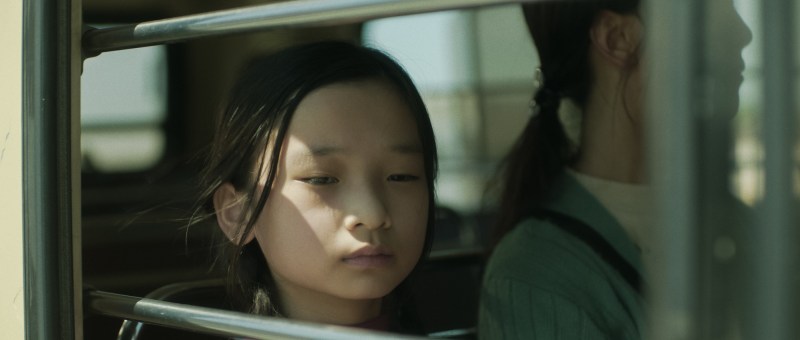
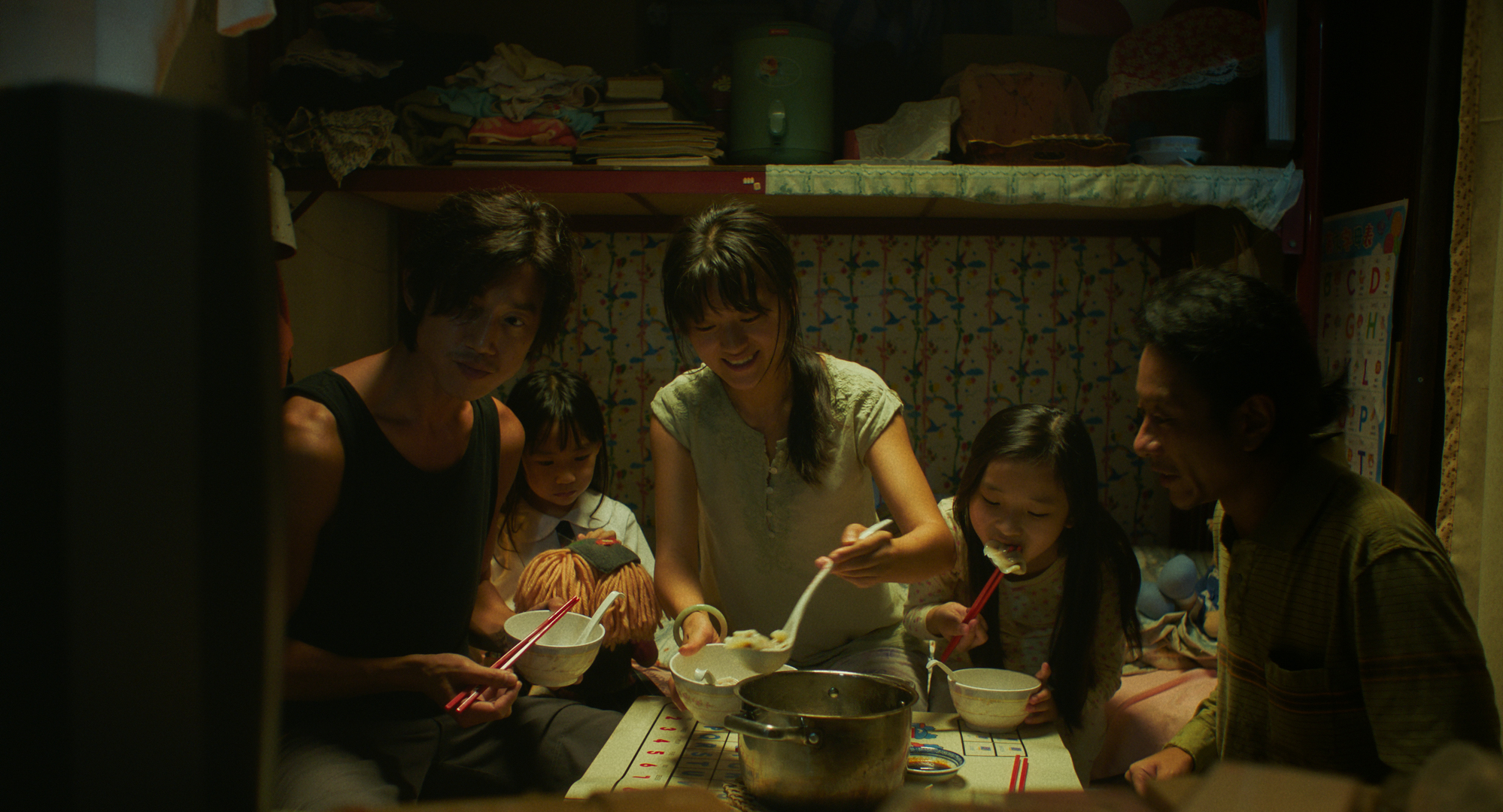
It’s telling that the film opens in 1997, though Yuen’s father Kok-man (Wu Kang-ren) has apparently smuggled himself into Hong Kong from Hunan, later sending for his wife and older daughter, Yuen, while leaving the younger behind. The first image we see is of Yuen being taken to see her father in prison by her mother, a meeting in which no words are exchanged that seems to leave the young Yuen conflicted and confused. Not long after arriving in Hong Kong, she discovers him using drugs and learns of the addiction that has ruined his life, turning him into a petty thief in and out of prison for the children’s entire lives.

Yet in his later years, Kok-man told his relatives that his best and only achievement was raising two wonderful daughters though of course he didn’t actually raise them at all. Nevertheless, he had a profound effect on their lives, Yuen also tempted to steal on witnessing her father’s bad example even while remaining contemptuous and resentful of him. Though he eventually becomes violent, so desperate for money he threatens his teenage daughters, Kok-man appears to have wanted to take of his family but was not able to do so while their mother is forced to work long hours supporting the family and living the life of a single mother even while her husband is home. 

This leaves the girls with no one else to rely on while otherwise removed from mainstream society which is often is hostile towards those who’ve arrived from the Mainland and most particularly at this strained political moment. Their otherness is signalled by their home dialect of Hunnanese which later mingles comfortably with their Cantonese, much as Yuen’s Mandarin later does, which is as good as anyone else’s though some might not them as real Hongkongers. Kuet’s schoolfriends, little knowing she also was not born in Hong Kong, shun another girl after spotting that the number on her ID card begins with an “R” which means she came to Hong Kong from somewhere else. Kuet eventually decides to befriend the girl herself, though it remains unclear whether or not she discloses that she was also born outside of Hong Kong. Years later after becoming a tour guide, a customer remarks that Yuen’s Cantonese and Mandarin are both so good he wonders where she’s from which is quite an ironic comment. 

Yet in other ways, the girls can’t escape their roots. Despite her enmity towards him, Yuen’s first boyfriend is a carbon copy of her father. A brusque boy with blond hair who shoplifts to impress her, but then runs off and leaves her behind when he almost gets caught. Her romantic relationships seem fraught and difficult and the men largely no good, while her sister similarly has troubles with the law leading her mother to lament that there was little point in going to university if she was just going to end up like her father. When Yuen eventually returns to Hunan, she’s that girl from Hong Kong, even while in Hong Kong she’s that girl from the Mainland. For the girls, Hunan has a kind of mythical quality bound up with their memos of happier times for their family, but Yuen is quickly disillusioned. The lily fields her father mentioned are long since gone, destroyed in a fire, and her family home is empty as a result of her grandmother’s illness. All that remains are photographs that present a kind of evidence of the relationship Yuen once had with the father she struggled to accept in adulthood, reuniting her with her childhood self and perhaps restoring the roots she’s been looking for even she herself remains a floating presence guiding tourists around foreign countries while otherwise marooned in the family flat now shared only with the sister who equally is heading in another direction. 


Fly Me to the Moon screens July 21 as part of this year’s New York Asian Film Festival.

Original trailer (Traditional Chinese /.English subtitles)

Kubi (首, Takeshi Kitano, 2023)

Apparently in gestation for a couple of decades, it’s unsurprising that Takeshi Kitano gave himself the role of Hideyoshi in a long-awaited historical drama adapted from his own novel, Kubi (首). Played as an irascible but wily old man, Hideyoshi is the second of Japan’s great unifiers and, unlike his predecessor, died as a result of an illness rather than intrigue. He was also a peasant who rose through the ranks and is perhaps witness to the tumultuous class conflict and social divisions of a hierarchal society.

Even so, in this version of events, Oda Nobunaga (Ryo Kase) too speaks in a thick rural dialect that sets him apart from his retainers and seems to hint at his uncouthness. This Nobugana is an unhinged despot who threatens and humiliates his subordinates, not to mention sexually assaulting them. In short, there’s no real mystery why his men have begun to turn against him and there is intrigue in the court. The film opens with Murashige’s (Kenichi Endo) quickly quelled rebellion which floundered when his reinforcements failed to arrive. Murashige is on the run and Nobunaga has heavily suggested whoever brings in his head will be first in line for the succession, but Murashige is also in a relationship with Mitsuhide (Hidetoshi Nishijima) another courtier vying for favour in more ways than one from the capricious Nobunaga. 

The striking thing about the staging is how like a yakuza drama this intrigue really is with each of the main factions manoeuvring for control, forming temporary or duplicitous alliances forged in the mutual desire of ousting a ruler whose increasing instability presents only the likelihood of a return to chaos. Nobunaga’s flamboyant speech and threatening manner are reminiscent of a yakuza boss on his way out, as is his obvious tactic of setting his rivals against each other while secretly planning to hand the reins to his son anyway. The film takes place in a largely homosocial world, the only women on screen are sex workers and peasants about to be murdered, only this time defined by romantic intrigue in which the various relationships between the men are inescapably linked with power and duplicity.

Mitsuhide’s relationship with Murashige is originally framed as a giri/ninjo conflict, Mitsuhide torn between the exercise of his duty as a samurai and his love for Murashige, only to later be set wondering if Murashige isn’t also playing him in urging him too towards rebellion, while Murashige accuses him of harbouring desires for Nobunaga which would also necessarily be desire for advancement. Advancement is something sought by all and in particular Mosuke (Shido Nakamura), a peasant who is taken on as a foot soldier after looting a battlefield for amour and killing his friend to get his hands on the prize only to realise just at the critical moment how pointless the constant desire for heads really is. The absurdity is rammed home in the closing scene in which Hideyoshi declares himself uninterested in the severed head he asked for, rendering the quest entirely pointless.

This absurdity extends to introducing the character of a comedian who is later killed for talking too much, while Kitano wise cracks his way along as the affable Hideyoshi. Kitano is in his way in dialogue with other samurai epics, using Akira Kurosawa’s horizontal wipes and introducing a pair of bumbling comic relief peasants only to suddenly kill one of them off because at the end of the day this world isn’t very funny. It’s cruel, and mean, and meaningless, so you might as well laugh like Hideyoshi. Residents of a ninja village conduct a festival in which they pray for death and to be released from this earthly torment as soon as possible, while farmers still dream of becoming samurai little knowing the reality of samurai life.

It’s this cycle of futility that is echoed in the opening image of a severed neck into which crabs in a river are crawling. Kitano stages lavish battle scenes, but ones that are often horrifying and absurd, a visceral struggle in mud and blood fought for no real reason. These samurai live their lives on the point of a sword, but they move and behave like yakuza fighting pointless turf wars and games of petty intrigue until someone finally comes for their heads. In the end, the victor is the one who doesn’t play the game at all, but sits and laughs at the absurd cruelty all around them in which the only stable force is ambition accompanied by a nihilistic lust for blood in an already bloody world.


Kubi  screens in New York July 16 as part of this year’s JAPAN CUTS.

Trailer (English subtitles)

Whale Bones (鯨の骨, Takamasa Oe, 2023)

The augmented reality scavenger app at the centre of Takamasa Oe’s Whale Bones (鯨の骨, Kujira no hone) is littered with a series of digital ghosts endlessly re-enacting the past. Its selling point is that the content can only be accessed in a specific location, what its users call “holes” into which they “bury” their unpleasant thoughts, the irony being that they don’t so much rid themselves of them as ensure their survival on some other plane.

The hero, Ken, intended to bury something in a more literal sense after hooking up with a high school girl on dating app who apparently takes her own life in his apartment. Ken drives into the mountains and digs a hole, but the girl, Aska, disappears from the boot of his car leaving him wondering what exactly happened while experiencing a kind of breakdown that leads him to the Mimi app and Aska’s buried videos. In a way, he’s chasing a ghost. Trying to find out who Aska was and what might have happened her while trying to absolve himself of guilt and responsibility over her apparent death and his reaction to it. 

In a video he finds she talks about her late father and remarks that believing he’s out there somewhere gives her hope, much as her spectral existence in the Mimi app becomes a kind of beacon for the other users and bears out the way she both exists and doesn’t as a ghostly avatar of a constructed online identity. Rin, one of her followers, explains that Mimi started as a venting app where people threw away all of their unkind thoughts but quickly gave rise to a small, cult-like community of mutually supportive digital archaeologists intent on digging up all Aska’s holes as if attempting to excavate her identity. 

Of course, Ken has a different reason for wanting to dig up Aska and his quest is also an act of self-preservation. Before hooking up with Aska, he’d been jilted by his fiancée and was perhaps wounded and resentful, though his decision to take a high schooler back to his apartment in the first place doesn’t cast him in a very good light nor does his subsequently shady behaviour though it’s true enough that he begins to wonder if Aska was ever really “real” in the first place or some kind of digital ghost. People around him seem to just disappear, there one minute and then not, but then in a later moment of irony he realises the person he’s chasing is merely hiding rather than having blinked out of existence.

Ken’s work friend also fears that he will “disappear” from the office, becoming yet another soulless drone even as his obsession with Aska grows and his metal heath declines. It may be that he too is a ghost, trapped in the past and unable to move forward while feeling sorry for himself about his broken engagement. An attempt to explain his situation only raises the suggestion that perhaps he himself is an author of this mystery rather than its victim, which as his ex Yukari points out is his preferred way of seeing himself. In any case, what he’s confronted with is the dualities of the “real” and “digital” worlds in the way we become different people, burying parts of ourselves in hastily dug holes in an attempt to paper over the cracks in our lives.

These tiny fragments are themselves like the whalebones of the title, feasted over by tiny creatures who scuttle away as the soon the glittering stops and a new day begins. Oe lends his constructed reality a note of noirish eeriness in Ken’s ghostly quest for the “real” aska while hinting at the contradictory nature of social media which can at times be cruel and hateful, a place to spill bile forgetting that there are real people on either side, and also spark genuine connections among lost and lonely people looking for comfort and community otherwise unavailable to them. As Aska had said, thinking that her father was out there somewhere gave her hope, echoing the way that our digital ghosts may survive us but also provide a comforting sense of permanence in a transient and lonely world.


Whale Bones screens in New York July 14 as part of this year’s JAPAN CUTS.