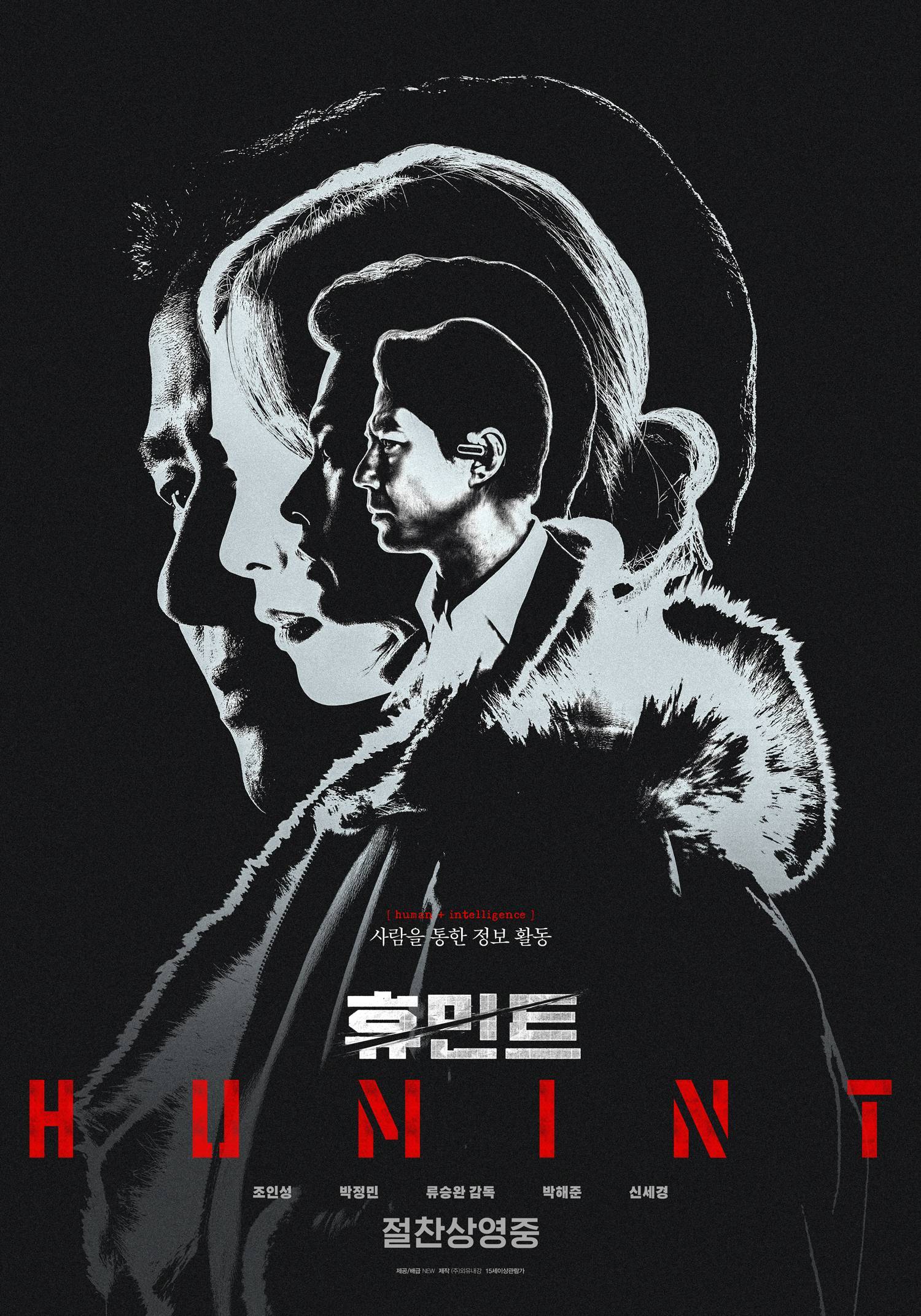
Humint (휴민트, Ryoo Seung-wan, 2026)

There’s something ironically dehumanising about the term “human intelligence”. Even the security services who court them seem to look down on their informants, viewing them more as traitors to their own side than those who’ve come over theirs. We have to ask ourselves if either side is really any better than the other. As Zo’s boss tells him, everyone’s just using each other to survive. There doesn’t seem to be a lot more to this world than that, just desperate struggle and cynicism.

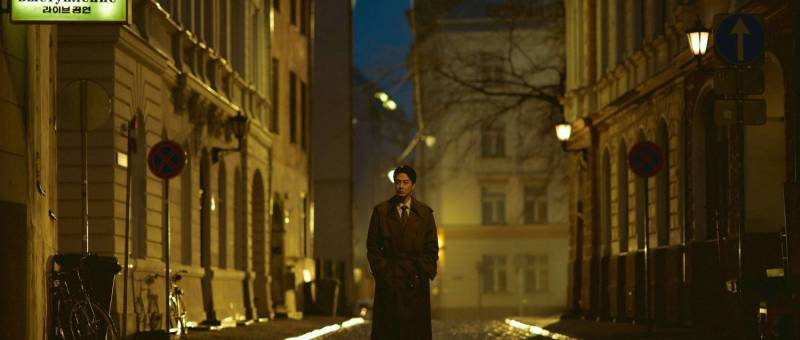
Ryoo Seung-wan’s Humint (휴민트) is, like many similar films, at least as equally critical of the South as it is the North as the idealistic NIS officer finds himself an outlier among his comparatively coldhearted colleagues. In the course of his mission trying to find out who’s selling drugs to teenagers in Korea, Zo (Zo In-sung) uncovers a human trafficking network operated by the Russian mafia targeting North Korean women possibly with the complicity of their government. But his bosses don’t care about that, they just want the drugs, and it’s a bonus that they come from the North. Zo dangles the possibility of salvation in front of a woman trapped in a South East Asian brothel, but when it comes down to it, his boss won’t approve her rescue. They’ve effectively killed her, but all his boss tells him is that you have to get used to this sort of thing and you can’t afford to get hung up on each and every informant.

Still, what they’re asking them to do is necessarily dangerous and any promise they may make about protecting their informants is a lie. On the other side, the North sends young women to Vladivostok as “foreign currency earners” ostensibly working in a restaurant, but actually used as honeytraps drugging their clients and sleeping with them to get them hooked. Seon Hwa (Shin Se-kyung) is, ironically, in this position because the North does not seem to have kept its promises either. Her mother has advanced cancer, but her treatment needs money and so her father started smuggling to get it. When he got caught, her whole family was disgraced. She had to drop out of university and begin working as a foreign currency earner, breaking her engagement with top torturer Geon (Park Jeong-min). Geon is in town because he suspects the locale consular official is complicit with a series of mysterious disappearances of North Koreans near the Russian border, and he’s right. 

Hwang (Park Hae-joon) is certainly a slippery individual, apparently making Vladivostok his own personal fiefdom and, in the end, over playing his hand in trying to use Seon Hwa to take out Geon when he could probably just have let her go to make Geon leave him alone. “Do what you have to do to survive”, most people seem to say and it’s clear that personal relationships cannot reallysurive in this world in which human life is cheap. Seon Hwa and Geon’s romance was broken by the brutality of the North Korean regime, but it seems that the South is unwilling to save them. When Zo realises that Seon Hwa’s cover has been blown, he breaks protocol to try and save her, not wanting another woman’s death on his conscience. But though he unmasks the human trafficking ring, he’s reprimanded by his superiors who still complain that they’ve not made enough progress on the drugs case because Zo got sidetracked by the trafficked women. 

The women are, obviously, the ones who suffer because of these too regimes and perhaps by extension the division of Korea. Seon Hwa does her best to fight back, saving the other women so they can escape together, but is finally left with nothing. She has no country, and only asks to be sent somewhere where nobody knows her to start again. Expressing a new cold war anxiety born of geopolitical fluctuations as the South contends with the uncertainties of the North’s interplay with Russia and China, Ryoo’s espionage thriller has a retro quality, but also hints at contemporary unease, suggesting finally that there are really no good guys left and even idealists like Zo are compromised by their allegiance to an inhuman regime. Zo and Geon may become temporary allies in their quest to save Seon Hwa, but just as often point their guns a each other in Ryoo’s impressively staged action scenes amid a constant atmosphere of mistrust and betrayal.


Trailer (English subtitles)

Brave Citizen (용감한 시민, Park Jin-pyo, 2023) [Fantasia 2024]

There’s an intentional irony in the mantra teacher Si-min (Shin Hae-Sun) is fond of repeating that “If you do nothing, nothing will happen,” in that on the one hand it means that until people decide to act a dissatisfying status quo will continue, but on the other it may also seem threatening implying that if only you keep quiet nothing will happen to you. The main thrust of Park Jin-pyo’s webtoon adaptation Brave Citizen (용감한 시민) does seem to be that abuses of power take place because so few people are willing to challenge them or indeed to stand up for those who cannot stand up for themselves.

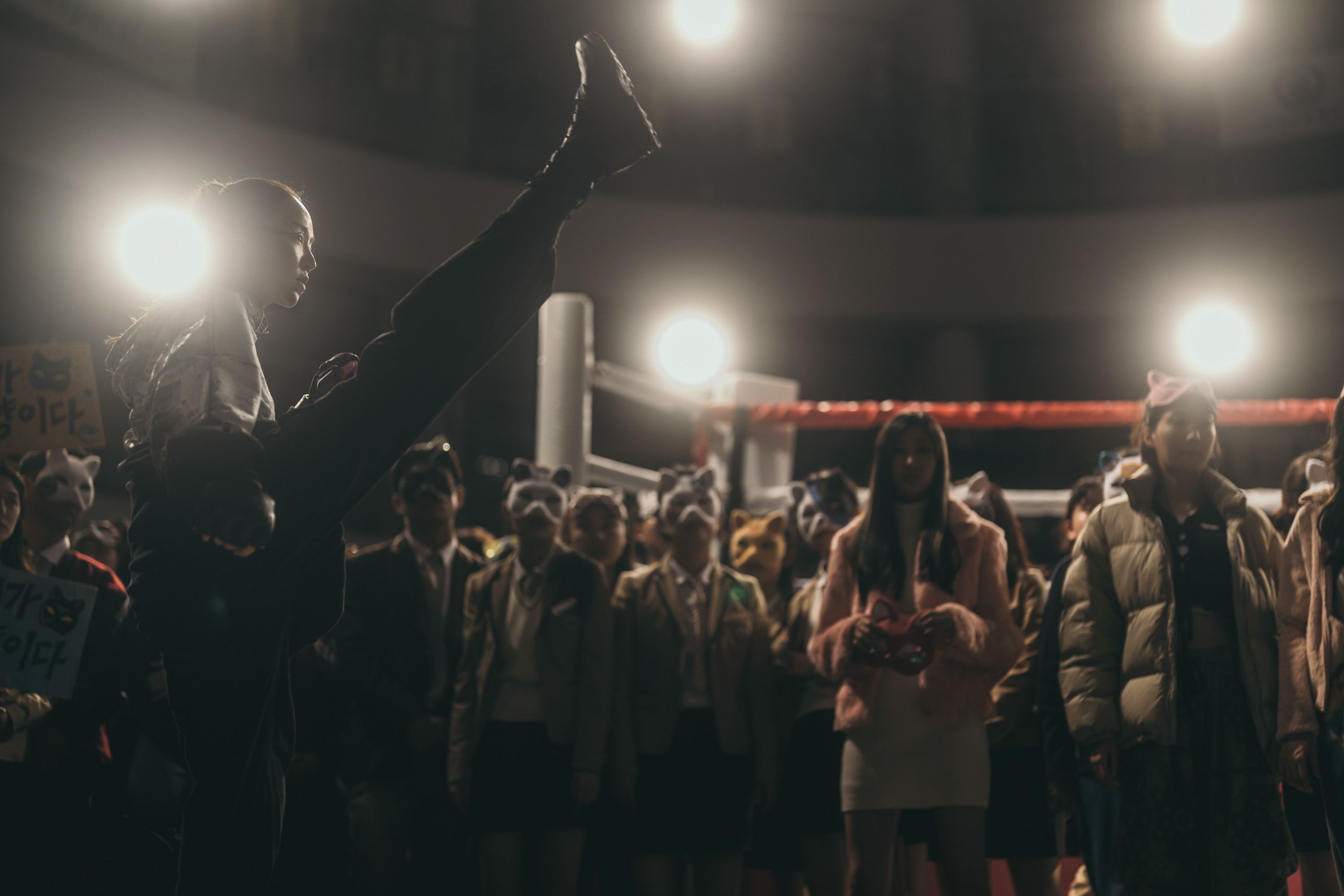
That’s something Si-min discovers when a student comes to her and says he’s being harassed by notorious bully Su-kang (Lee Jun-Young). A former boxer/martial artist, Si-min is on a temp contract and evidently waited quite some time to be offered a position so takes it to heart when her boss, Mrs Lee (Cha Chung-Hwa), warns her not make waves and jeopardise her hopes of being hired full-time. Somewhat cynical she tries to talk herself out of standing up for him, talking herself into turning a blind eye to injustice as nothing to do with her but at the end of the day she isn’t someone who can just sit by and take it nor watch as others are harmed while Su-kang goes unchallenged. 

He’s unchallenged largely due to the socio-economic conditions of contemporary Korea in which the wealthy and well-connected are able to live above the law. When one of Su-kang’s victims tries to report him to the police, they are the ones who end up accused of making a false report while Su-kang gets off scot free because he counts judges and prosecutors among his relatives while his mother is a prominent lawyer. His family apparently also donate large amounts of money to the school, which has won a series of “anti-bullying awards,” which is why he can’t be expelled. Si-min’s predecessor took her own life because of Su-kang’s bullying while pretty much everyone is scared stiff of him.

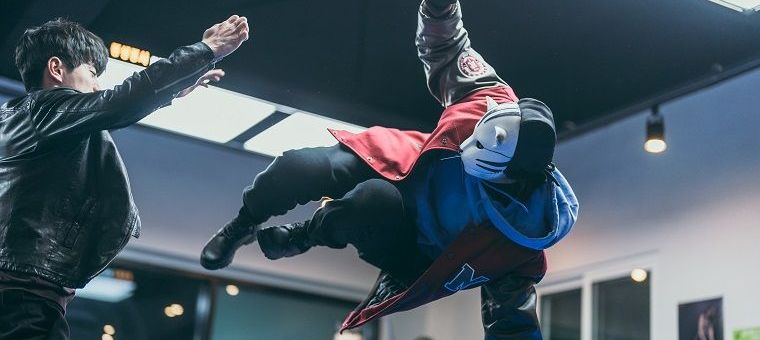
It’s for these reasons that Si-min turns to violence in the hope of giving Su-kan a little “off-site education” and perhaps you can’t blame her when faced with such intransigence from compromised authority. Yet standing up for the students is also a way of learning to stand up for herself, not to succumb to turning a blind eye to injustice simply because it’s more convenient. It’s this wilful suppression of one’s rage towards the persistent injustices of society that ends up spreading them, a continuous chain of abuse in which people take out their frustrations on those unable to defend themselves like the drunk man who yells at Si-min in the street and comes to realise he’s picked on the wrong person. 

Then again, when questioned why he behaves this way Su-kang only answers that “it’s fun”. It’s difficult to believe he would be insecure in his status, yet he persistently mocks those he sees as socially inferior, “nobodies” and ”hobos”, as opposed to elites like himself. The suggestion is that he and his friends have become this way because of a lack of boundaries and a sense of invincibility, which is partly what annoys him so much about an intervention from an authoritarian figure such as Si-min over whom he has no authority because she has decided not to grant it to him. 

This might be what makes her a “brave citizen,” the name of an award granted to ordinary people working in favour of justice that her father had once won after otherwise ruining his life through unwisely guaranteeing a loan and being left on the hook for paying it back. Embracing the absurdity of the webtoon, Park goes big and bold painting the inequalities of the contemporary society in stark relief while injecting a sense of catharsis into Si-min’s attempts to smack some sense into the bullies while rediscovering her own desire to challenge injustice rather than remain complicit with it even if it is personally inconvenient. Her rebellion encourages others to do the same while robbing the bullies of their privileged position and exposing them to the consequences of their actions. Of course, fighting violence with violence may not be the best solution but does at least allow Si-min to make the most of what she has and to recover the self that had been beaten down and defeated but is now capable of fighting back both for herself and others.


Brave Citizen screened as part of this year’s Fantasia International Film Festival.

International trailer (English subtitles)