The Beetle Project (숙제, Jin Kwang-kyo, 2025)

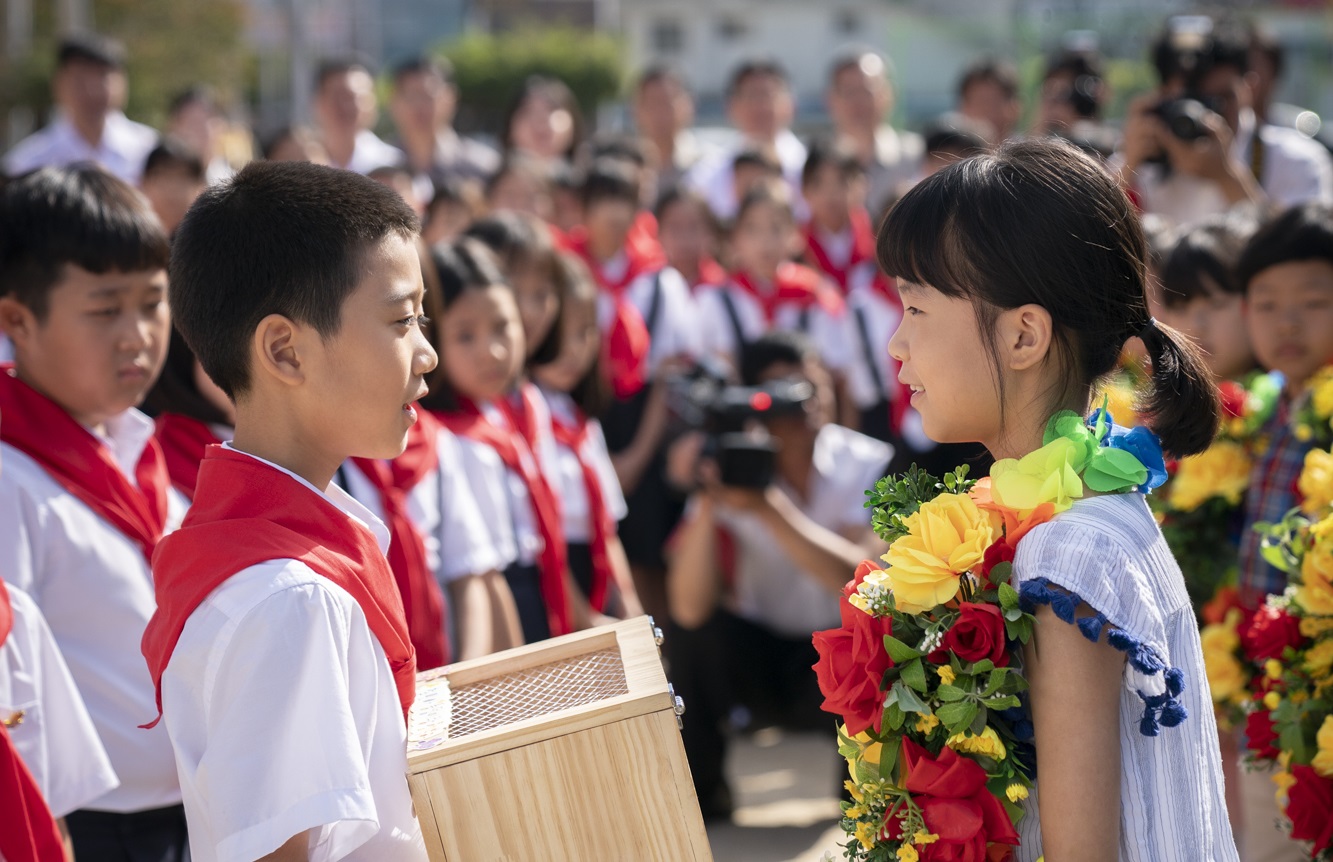
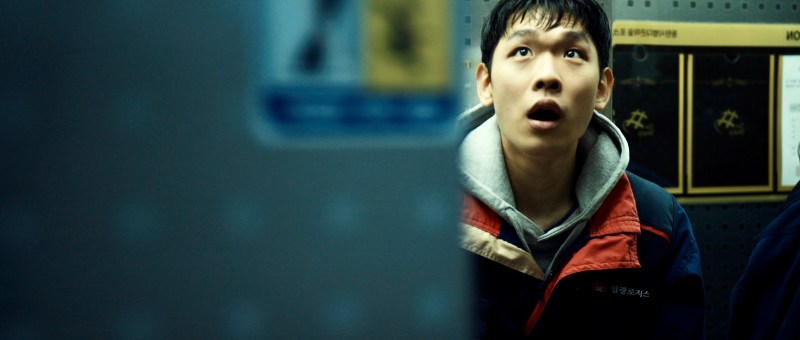
“Cousins should get along,” according to a North Korean soldier who’s just found out his son has been bullying his nephew, ironically by drawing a red line down the middle of their bedroom to make it clear that this interloper isn’t wanted in his territory. Red lines become a theme in Jim Kwang-kyo’s charming childhood drama The Beetle Project (숙제, Sugje) in which the pure-hearted goodness of a series of children knows no borders and sees only common ground between themselves and a North Korean boy who’s lost his pet beetle that he was keeping as a homework project.

Luckily, the beetle is discovered by best friends Ah-ram and Jae-hoon who decide to finish the boy’s homework for him in the hope that they will somehow be able to get the beetle back to him. Of course, that’s easier said than done given that Lee Chul-min lives in the North so it’s not like they can they just pay him a visit to give it back. The irony is that the beetle only came to them because of a flood that was partly caused by the North’s sudden opening of its floodgates prompting calls for greater co-operation across borders to prevent potential tragedies such as these. 

Meanwhile, we discover that Lee Chul-min is experiencing a degree of familial discord as his younger brother Chul-kyu is resentful of the fact he’s been sent to the city to study in a better school while he’s been kept at home and is forced to work in the fields with his mother. The film’s depiction of North Korea is largely utopian in which the repressiveness of the regime is barely felt aside from the occasional presence of soldiers and a degree of foreboding in the threat that the growing feud between the boys poses to a carefully balanced order. Chul-min’s cousin Chul-ju is also resentful that he now has to share everything including his room and has been bullying Chul-min because of it, though Chul-min is a stereotypically good boy who puts up with everything without making a fuss and makes sure to tell his mother what a good time he’s been having in the city where they get to eat ice cream every day when it’s hot.

Both sets of children deeply care about the fate of the beetle and what’s best for it, only to become a political football that’s picked up by a shady conglomerate Ah-ram’s journalist father Jin-kyu tried to expose for a food contamination scandal only to have to make a humiliating retraction on air when the station is ordered to back off. Hooked on the PR potential, they try to use the beetle, and Ah-ram, for their own ends, while the family simultaneously becomes the target of scammers promising they can help return the beetle for a small fee, and rightwing trolls who harass them for being North Korean collaborators. When one of the other kids damages the beetle’s enclosure. Ah-ram and Jae-hoon find themselves drawing another red line to keep them out only to later think better of it.

Disappointed by the adults around them, including Jin-kyu who is still struggling to deal with the death of his wife and his changed relationship with Ah-ram whom he sent to live with her grandmother in the country, the kids decide they want to send the beetle back by themselves and hand it straight to Chul-min. Jin-kyu ends up getting involved with an online insect enthusiast group who unbeknownst to him are all children and strangely led by a little girl who for some reason talks like a middle-aged farmer’s wife. In any case, it’s very much children doing it for themselves and realising that they have a lot in common despite the border between them. Ah-ram is worried that Chul-min will get into trouble for losing his homework and probably misses his beetle while she herself is also still processing her mother’s death for which she blames herself and adjusting to her new life in the country where she’s supported by her forthright schoolteacher who can’t resist resorting to colourful language whenever she encounters “injustice”. In its way, the beetle becomes a kind of symbol for Korea itself with the children promising to meet again as adults so they can find out what happened to it while wishing the best for “Beety” and vowing to look after it together. Charming and wholesome, the film is a gentle advocation for a spiritual, if not necessarily literal, reunification and a sense of solidarity among the younger generation dedicated to doing the right thing in a world in which adults call lies “flexibility” and think one beetle is no better than another.


The Beetle Project screened in Chicago as part of the 19th edition of Asian Pop-Up Cinema.

Brush of the God (カミノフデ ~怪獣たちのいる島~, Keizo Murase, 2024)

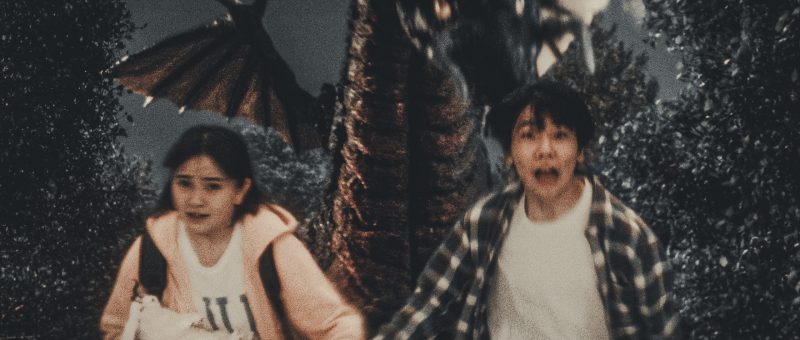
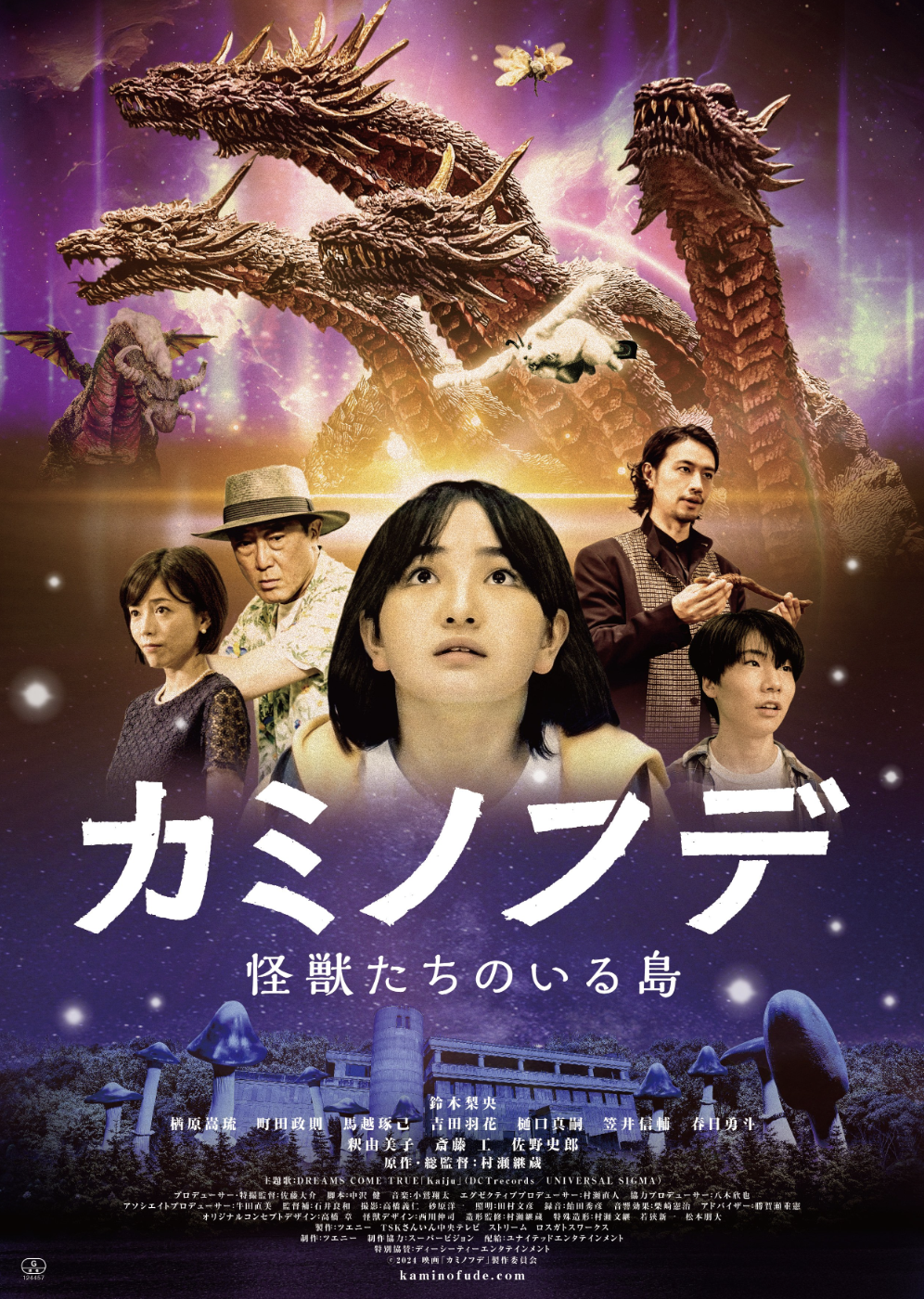
High schooler Akari (Rio Suzuki) couldn’t care less about something as “uncool” as tokusatsu movies and the fact her recently deceased grandfather once made them makes it even worse. Though they had once been close, Akari harbours a degree of resentment towards her grandfather, Kenzo (Shiro Sano), whose behaviour even in earlier years could be somewhat intimidating. Holding Kenzo responsible for the scar on her mother’s arm, Akari wonders out loud why a public memorial event is even necessary when they’ve already had a funeral, and why her mother isn’t just throwing all this useless rubbish out rather than hold an exhibition honouring a man she believes harmed her.

“Useless rubbish” is largely what Akari thinks of Kenzo’s legacy, embarrassed by his connection to otaku culture which has a social stigma attached to it that a teenage girl in particular would find embarrassing. Sullen and grumpy, she looks on with sadness mixed with irritation when some of her classmates charge off without her to go look at make-up and is rude to a young man from her class who’s come to attend her grandfather’s memorial event because she wouldn’t be caught dead talking to a nerd. In a way, it’s some of these social attitudes that Keizo Murase’s Brush of the God (カミノフデ ~怪獣たちのいる島~, Kami no Fude ~Kaijutachi no iru Shima) wants to deconstruct, recovering a memory of the classics of the genre as a world of boundless creativity and goodness that was as much about overcoming obstacles as it was creating visions of marauding dragons wreaking havoc on the modern world. 

This is Murase’s first, and sadly only film as he passed away at the age of 89 in 2024 and was already in his late 80s when the film was made. Prior to that, he’d been a legendary figure in the tokusatsu industry working as a suit sculptor, prop maker, and stunt man. His self-cameo laying flowers at his own stand-in’s memorial service echoes the meta-quality of the film which he’d first come up with while working on Mighty Peking Man (in the movie Revenge of the Might Primate) in Hong Kong and subsequently reworked to take place in Japan just as Kenzo does in the film. At heart, it’s a tribute to classic kids special effects adventure movies in which Akari must reclaim the fond memories of her grandfather in order to save his interior universe and legacy which is now in danger of being forgotten while even she herself wanted to junk the whole thing. 

She does so in the company of Takuya (Takeru Narahara), the classmate she’d hardly even noticed because of his nerdiness but is also primed to be another kind of inheritor of Kenzo’s mantle as represented by the Brush of the God, a magical paintbrush that allows the wielder to create in reality anything that they can imagine much as Kenzo and Murase had done when they created their monsters and the means to beat them. Reminiscent of that of Nobuhiko Obayashi, Keizo’s world has a retro aesthetic that is at once both artificial and fantastical making it clear that the children have been sucked into a world of imagination on the invitation of the mysterious Mr Hozumi (Takumi Saito) who offers them a copy of Keizo’s unproduced script and asks them to save his universe from destruction at the jaws of a mystical dragon. 

There is real love and affection for this era which has now all but passed that valued practical effects and rejoiced in finding unexpected solutions to practical problems and creating a world which was often simpler than expected in which there were monsters who were bad but could be beaten or otherwise were good and could never be vanquished. Along with recovering more positive memories of her grandfather whom she realises to have misunderstood, a tortured artist who loved them in his own way, she regains a sense joy and creativity that had otherwise been lost to her with Takuya remarking that she seems much more lively in the midst of their adventure than she ever had at school. He meanwhile is very much in his element, but though he’d dreamed of becoming a tokusatu hero is effectively reduced to a damsel in distress whom Akari must then save by reawakening her imagination. Warmhearted and wholesome, the film is an advocation for this world of lost charm and childhood adventures powered by egg boxes, garden hoses, and the boundless potential of creativity. 


Brush of the God screens in Chicago 13th April as part of the 19th edition of Asian Pop-Up Cinema.

Trailer (English subtitles)
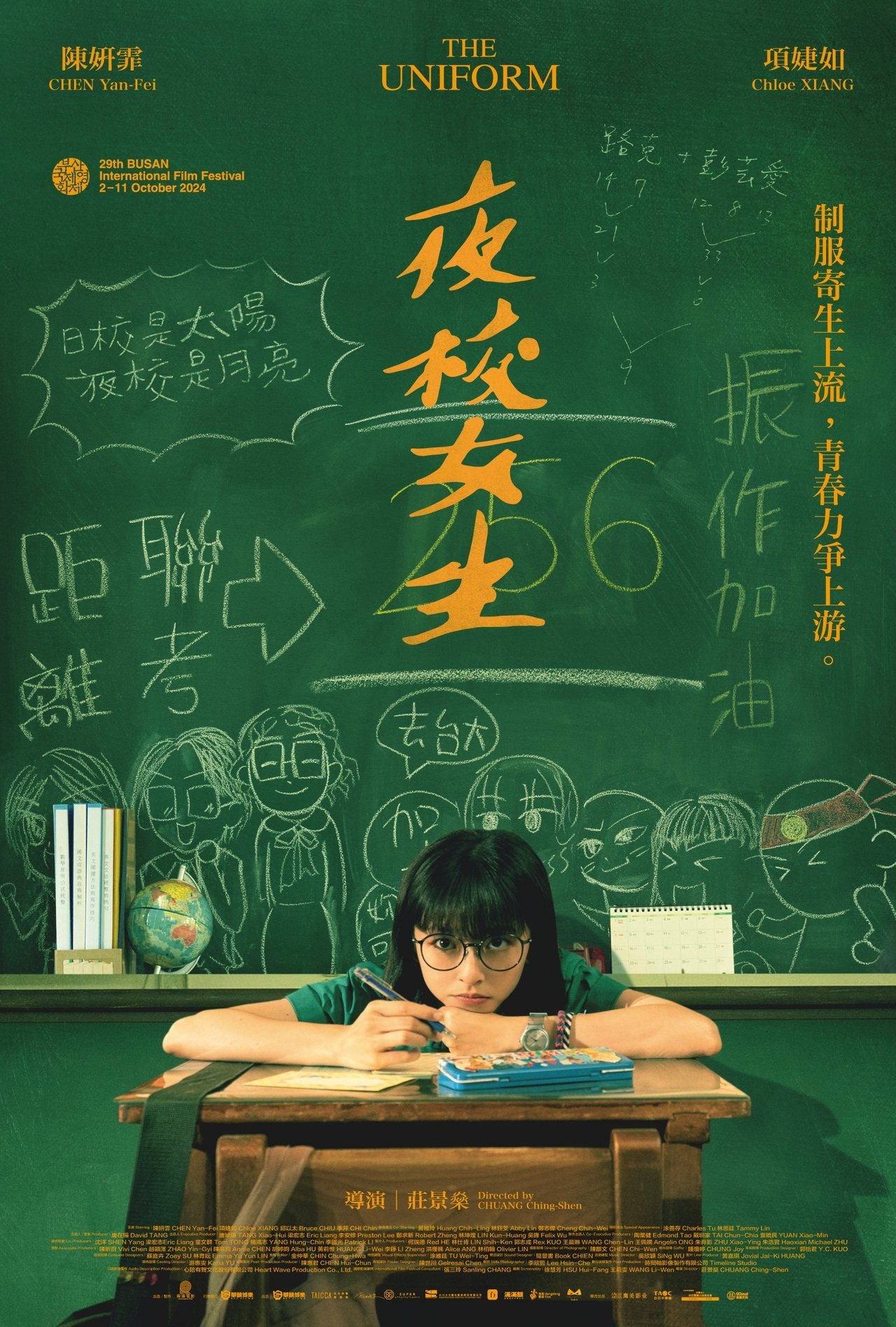
The Uniform (夜校女生, Chuang Ching-Shen, 2024)

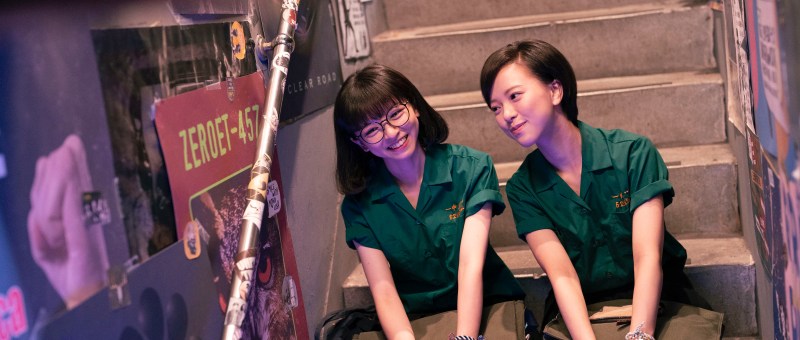
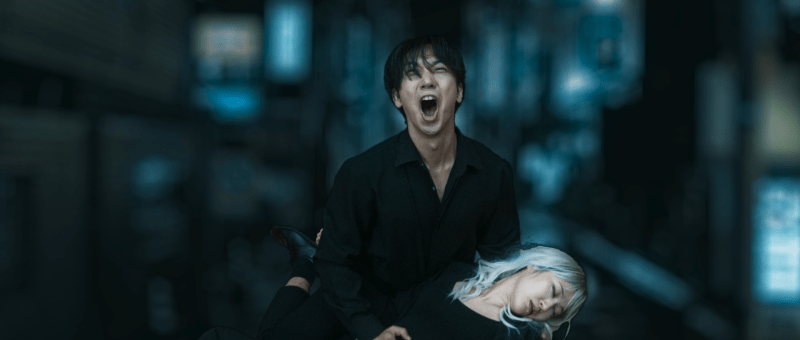
The problem for Ai (Buffy Chen Yan-fei) is that a minor difference in her uniform causes her to be treated differently. Set in the late ‘90s, Chuang Ching-Shen’s The Uniform (夜校女生, yèxiào nǚshēng) uses the school to examine the stratified nature of the contemporary Taiwanese society and the elitism that governs it. Having failed the main exam, Ai has won a place at a prestigious girls academy but been relegated to the “night school”. To maximise its efficiency, the school operates on a shift system with day pupils attending classes until 4.30pm and the night students taking over until 9. Though there isn’t supposed to be any difference between the two, the night students are treated as a kind of overflow intake and looked down on by the day pupils while some complain that they’re unfairly using up resources which should be theirs by right. 

Despite the differences between them, Ai strikes up an unexpected friendship with a day student with whom she shares a desk, Min (Chloe Xiang Jie-ru). Shy and somewhat timid, Ai is taken by Min’s free spiritedness and often skips out on her classes to do fun things with her like going to a club to see Mayday before they were famous. Min, obviously, never misses out on her education and though she later reveals her own sense of insecurity in not feeling that she fits in at the school nor really deserves to be there, does not really understand Ai’s situation nor her own feelings of frustration and futility. Ai, meanwhile, is attracted by the upper-middle class atmosphere of the day pupils and increasingly embarrassed by her own more humble home life.

Ai’s father died in an accident and her mother runs a cram school out of their home. Ai’s mother (Chi Chin) is always trying to save money and picking up mismatched furniture for free, much to Ai’s annoyance, while Ai also does a series of part-time jobs including working at a ping pong club at the weekend though her mother doesn’t really want her doing sports because they’re unladylike and not all that useful for landing a place at a top university. The reason she sent her to the academy was to give her a leg up into what she sees as a conventionally successful life by getting a degree and finding a man with a professional job to marry. Ai’s resentment is partly provoked by this sense of being railroaded towards a future she might not want while at the same time facing tremendous pressure and afraid that in the end she won’t be able to measure up to her mother’s expectations. 

It’s at the ping pong club that she first meets Luke (Chiu Yi-tai), a handsome student from the elite boys’ school, and begins to strike up a relationship with him before Min tells her she likes him too. This ordinary teenage love triangle is coloured be class conflict in which Ai doubts she has the right to go after Luke because he is from a wealthy family, lying to him to cover up the fact that she and Min skip school by swapping their shirts which are embroidered in different colours for day and night students by claiming to be a pupil in the elite advanced class while hiding from him that she’s actually a night pupil. After beginning to suspect that Luke might actually like Ai, Min too begins to look down on her as if she thought that Ai were forgetting her place and has no right to date him because, unlike her, she is not his social equal. 

As for Luke himself, he’s actually rather bland and in part because his own life seems so easy because of his family’s wealth though he too later lets slip that he feels embarrassed by his parent’s apparently secret divorce and has only just begun to let go of the idea of them getting back together. For much of the film, it seems like he’s merely in the way of the relationship between the two girls which more successfully overcomes the barrier of class. After vicariously enjoying living Min’s lifestyle, Ai eventually comes to realisation that she and Luke are “not the same” and come from different worlds. He doesn’t really care about that, and seems to have become aware of his privilege abandoning a plan to get into university by competing in the maths olympiad and take the exam instead in the interests of “equality,” which is a well-meaning gesture but not really the bold act of egalitarianism he thinks it is even if also emphases his commitment to Ai in his willingness to break down class barriers that might otherwise work to his advantage.

As a means of denying her reality, Ai escapes through writing letters to Nicole Kidman with the help of a young man who speaks English and works in her aunt’s video store but is eventually jolted into adulthood by a more literal earthquake that reminds her how precious each of her relationships is and fragile the world around her. Through her various friendships, Ai comes to understand that almost everyone she knows also suffers with feelings of inferiority or a lack of confidence, weighed down by the pressure to achieve social success which might not be what they want anyway, but that they can overcome them together through understanding and mutual support that crosses class boundaries. Charmingly nostalgic, the film has a sense of hope for the future that it is indeed possible to achieve success on your own terms while prioritising your friendships and taking care of those around you.


The Uniform screens in Chicago 12th April as part of the 19th edition of Asian Pop-Up Cinema.

Trailer (English subtitles)
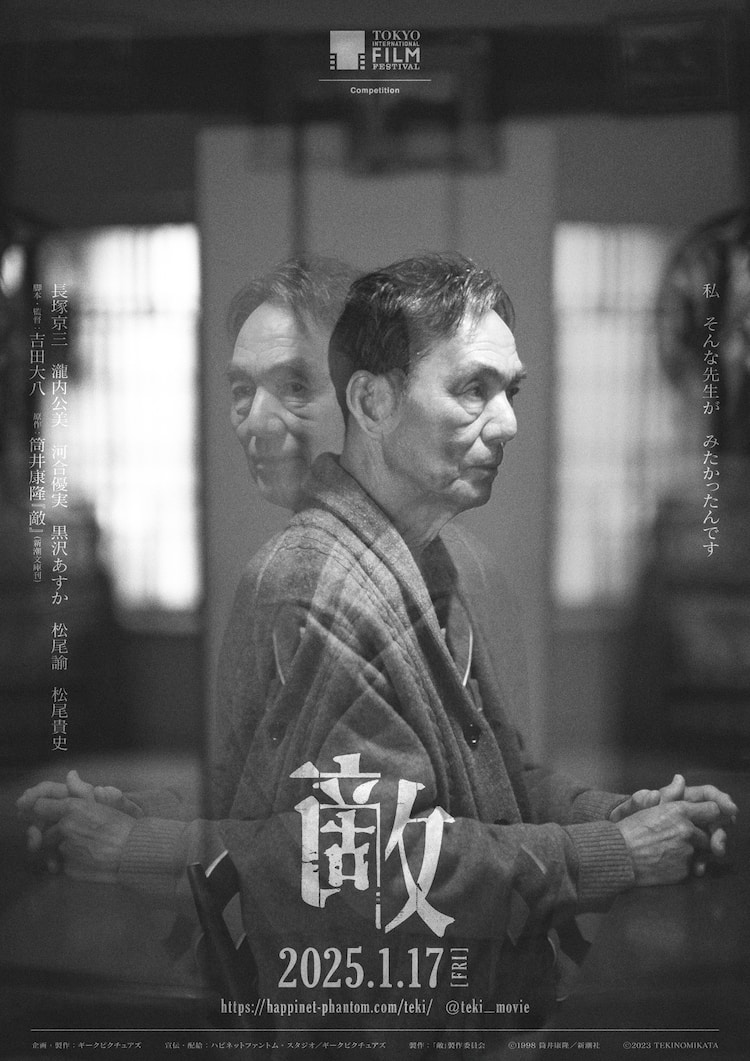
Teki Cometh (敵, Daihachi Yoshida, 2024)

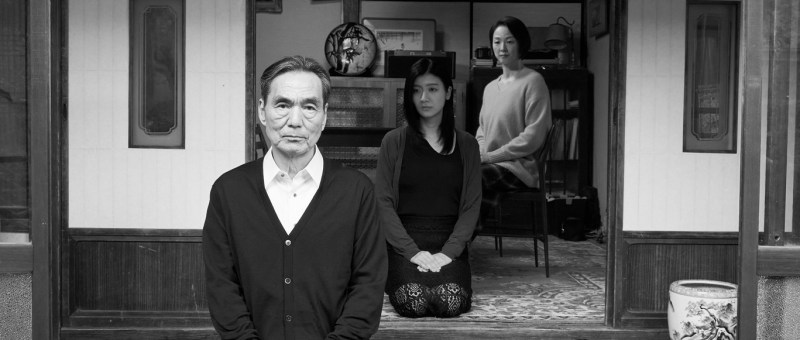
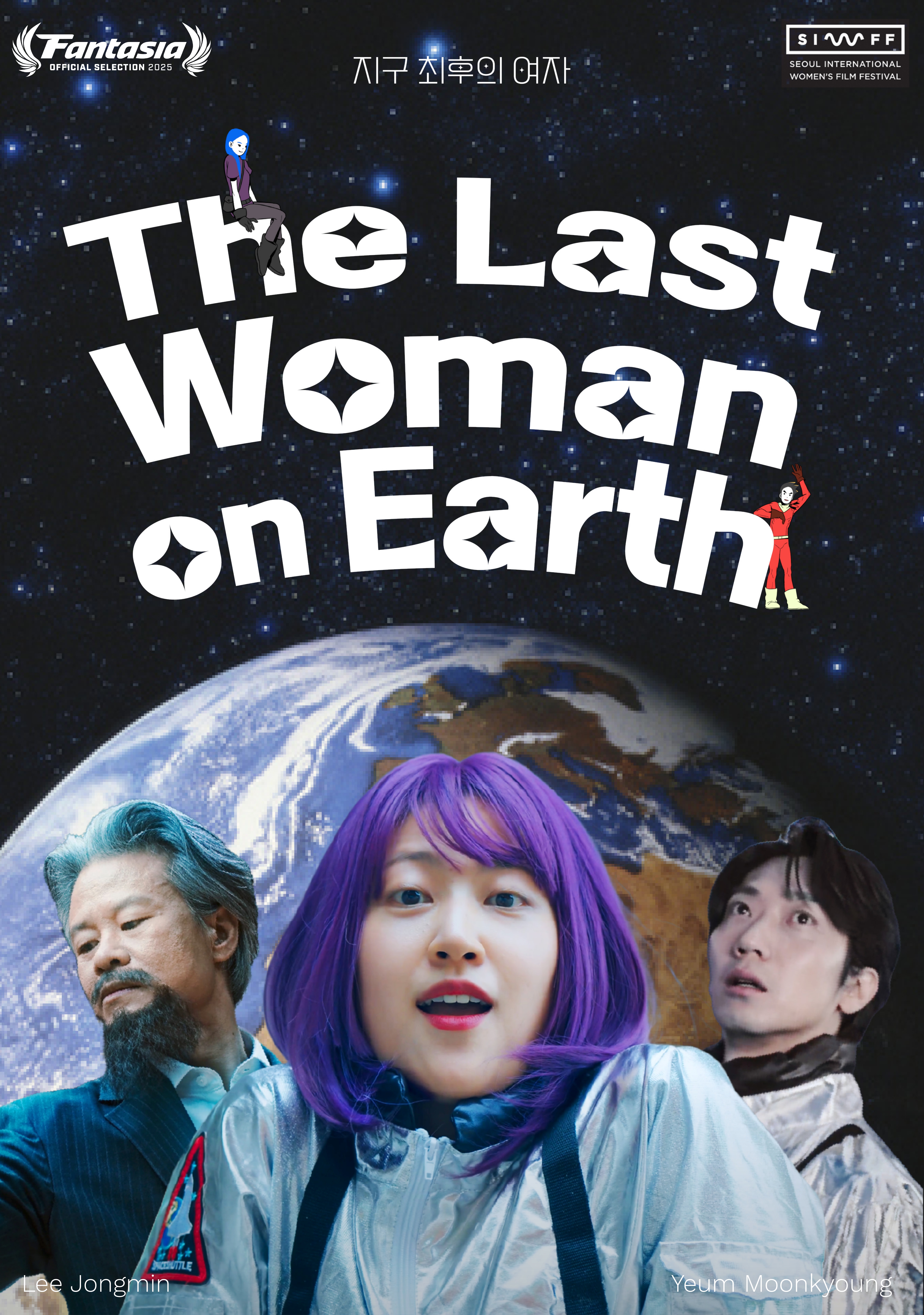
“So, reality or literature, which is more important?” an unexpected guest asks a retired professor in Daihachi Yoshida’s Teki Cometh (敵, Teki). Adapted from the novel by Yasutaka Tsutsui, the film is not exactly about encroaching dementia but rather the gradual embrace of fantasy as the hero finds himself inhabiting the shifting realities of age in which his carefully curated persona of the refined professor begins to crack under the weight of its impending end.

Then again, objective “reality” is clearly a strain for Gisuke Watanabe (Kyozo Nagatsuka). It’s probably not a coincidence that Gisuke shares his surname with the hero of Kurosawa’s Ikiru as he too begins to ponder the meaning of his life along with the apparently meaninglessness of his twilight years. He reveals to his friend that he’s well aware his pension won’t cover his expenses for the rest of his projected lifespan and that he’s already calculated what he calls “X-Day” which will be the day the money (and implicitly his life) will simply run out. This day is continually postponed as Gisuke acquires extra money through giving lectures on French literature or writing articles for magazines, but the early part of the film at least is all about money and its relative values. Gisuke says that he does not really contemplate the price of the newspaper because the newspaper is something he wants so he simply buys it while taking out half the amount he’d usually charge for a lecture from an ATM machine. His friend advises him to drop his fees and get more work, but Gisuke explains that his 100,000 yen boundary is carefully maintained as a kind of bulwark against a sense of obsolescence as in he thinks they’ll keep haggling him down until he’s grateful just to get anything at all.

But obsolescence is clearly something he already feels given that interest in his chosen field has already declined and perhaps there no longer is much of an audience for his views on Racine and the development of the French language. Like the professor at the centre of Kurosawa’s Madadayo, Gisuke is surrounded by former students most of whom do not work in fields related to their studies but continue to hold him up as great scholar and influential figure in their lives. Yet as the film goes on and realities begin to blur, we might begin to wonder if any of these visitors are actually real or merely spectres leaking out from Gisuke’s fracturing memory to express his own anxieties about past and present. Former student Yasuko (Kumi Takiuchi) appears to be flirting with him, but on the other perhaps she’s merely reflecting the buried desires for which he continues to feel guilt and shame. He recalls times in which they attended the theatre together and then went for meals and drinks as if they were quasi-paternal or at least platonic, but Yasuko asks him if it wasn’t sexual harassment while at the same time directly stating that the desire is mutual (and there’s 15 minutes left before her train leaves). 

From this point on, Gisuke begins having strange dreams perhaps inspired by weird messages he’s receiving about an “enemy” that’s “coming from the north”. The “north” in a Japanese context would most likely be Russia and the messages reflecting a fear of invasion but also perhaps implying that in Gisuke’s case, the enemy lies within and it’s his own brain that is attacking itself. The illicit desires that he hints at to another former student while discussing his brief foray into and eventual boredom with voyeurism begin to come to the fore in his surreal dreams including one where he is subjected to a colonoscopy that is heavily influenced by BDSM imagery. His surprise visitor asks him if he remembers the war and Gisuke says that he’s told he experienced it in the womb, implying that he carries a degree of trauma from a time before he was even born. The ghost of the grandfather he never met haunts his well-appointed Japanese-style home that speaks of his traditionalism, while Gisuke himself tenderly takes out his late wife’s old coat and deeply breathes in her scent before hanging the coat up in his office so that it too floats like a ghost.

Yoshida structures the film through a series of vignettes ordered by season, yet there’s nothing necessarily to say that the seasons are consecutive or occur within the same year. Time is becoming abstract to Gisuke, even as he’s pursued by his invisible “enemy” that attacks his respectable facade and the very image of himself as he too embraces fantasy as a means of liberation from an otherwise monotonous if also serene life of awaiting the inevitable. The monochrome photography and static composition add to the air of deadpan humour in Gisuke’s increasingly surreal world. Teki cometh for us all, but in the end teki is us and we are teki. Our own fears, regrets, and insecurities will indeed return to torment us and show us who we are. Likely as not will not like what we see.


Teki Cometh screens in Chicago 11th April as part of the 19th edition of Asian Pop-Up Cinema.

Original trailer (English subtitles)

Silent City Driver (Чимээгүй хотын жолооч, Sengedorj Janchivdorj, 2024)

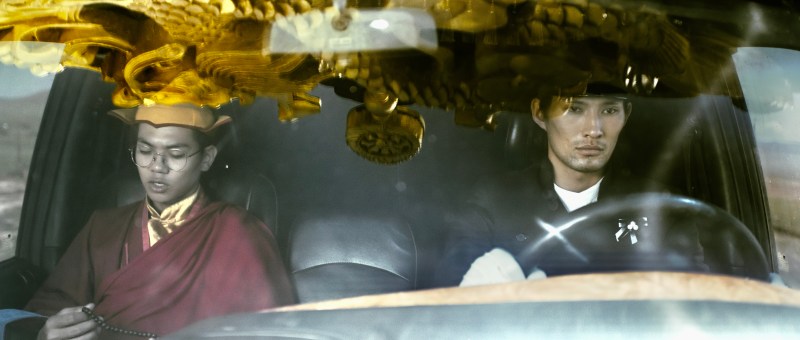
Myagmar (Tuvshinbayar Amartuvshin) asks a teenage monk if he thinks atonement is possible. The monk, Sodoo, tells him that he thinks it is, but that it’s difficult and not many people can achieve it. The irony of Myagmar’s life is that he becomes a kind of ferryman, delivering the deceased to a kind of liberation he will never find while trapped in the eternal hell of Ulaanbaatar. Much less upbeat than his previous film, The Sales Girl, Sengedorj Janchivdorj’s melancholy character study finds its solitary hero consumed alternately by guilt and rage while trapped within a world of constant unfairness and inequality.

As Myagmar tries to explain, he’s not disabled, merely nervous though his stammer turns out to stem from extensive beatings during the 14 years he spent in “Dad’s house”, or prison, that have left him with brain damage and the melancholy stillness of one already dead. As he tells the friendly coffin maker at the funeral home where he is eventually employed as a hearse driver, he applied for countless other jobs but no one would give him one because of his criminal record and outsider status. Having lost his only living relative in his mother who died while he was inside, Myagmar lives alone with a pack of stray dogs that he’s taken in and cares for. He explains to the coffin maker’s daughter Saruul (Narantsetseg Ganbaatar) that some of them probably had families, but were abandoned because they got old or they were sick and it costs too much to care for a sick dog. Mostly though, they’re strays, like him, with no home or place to belong.

Myagmar extends this same kindness to Saruul having become captivated by her on seeing her come to collect her father from work. Coffin maker Sodnom thinks she’s a medical student, but Myagmar soon discovers that she works in the seedy underbelly of Ulaanbataar’s sex industry and is also at the centre of a political scandal involving a leaked tape of a politician said to have been uploaded by the woman herself as a last resort and means of revenge with a personal rather than political motivation. Myagmar follows Saruul around in a way which might seem creepy, but is emblematic of his shyness and lack of confidence in himself. Though Saruul eventually responds to his kindness and begins to return some of his affection, it’s largely because they recognise each other as two people who are trapped in this unending hell, he in his sense of futility and the trauma of his incarceration, and she within sex work and abuse. 

At a particularly low point, Saruul tells Myagmar that she wants to go to “that place”, the hell that haunts him though he no longer dreams. He tells her that it is not somewhere she wants to go, that there is no light there, no day and no night. It is a living death in which even his name was taken from him and replaced by a number, as Suruul’s will also be in a moment of grim irony. But all it seems to do is reinforce the fact that this is not so different from the life Saruul lives now. They already live in hell and there is only one means of escape. The monk, Sodoo, tells Myagmar that the best revenge is forgiveness and seeking vengeance won’t change anything, but he cannot overcome his sense of rage towards an unjust society. Still, Sodoo tells him that he did the right thing even if offers little sense of comfort to the melancholy hearse driver charged with transporting souls from this world to the next.

Sengedorj Janchivdorj lends the contemporary city a melancholy quality, a dark and lonely place peopled by the abandoned and downtrodden. Even Sodoo doesn’t quite know how old he is and marks his years by the day in which he was found. The more Myagmar begins to rebuild his life, the more he has to lose and the less it looks like he will be allowed to find happiness or the atonement he seeks for his crime. A gentle soul consumed by rage, he nevertheless has “capable hands” to which to entrust this justice and is capable of creating great beauty such as the stone lions he begins carving for the funeral home, but otherwise maintains a purgatorial existence unable to make a home for himself in a world of such constant cruelties.


Silent City Driver screens in Chicago 6th April as part of the 19th edition of Asian Pop-Up Cinema.

Trailer (English subtitles)

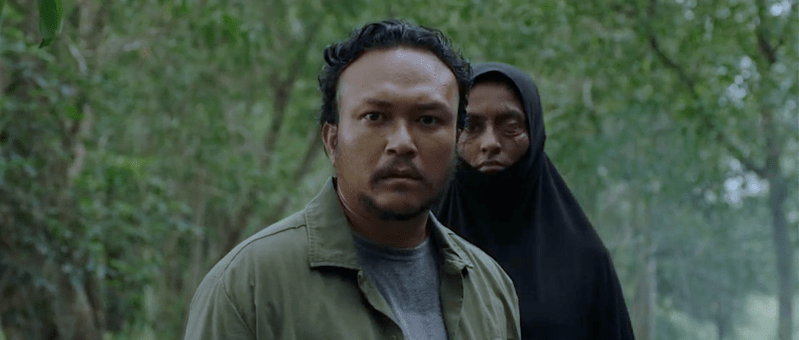
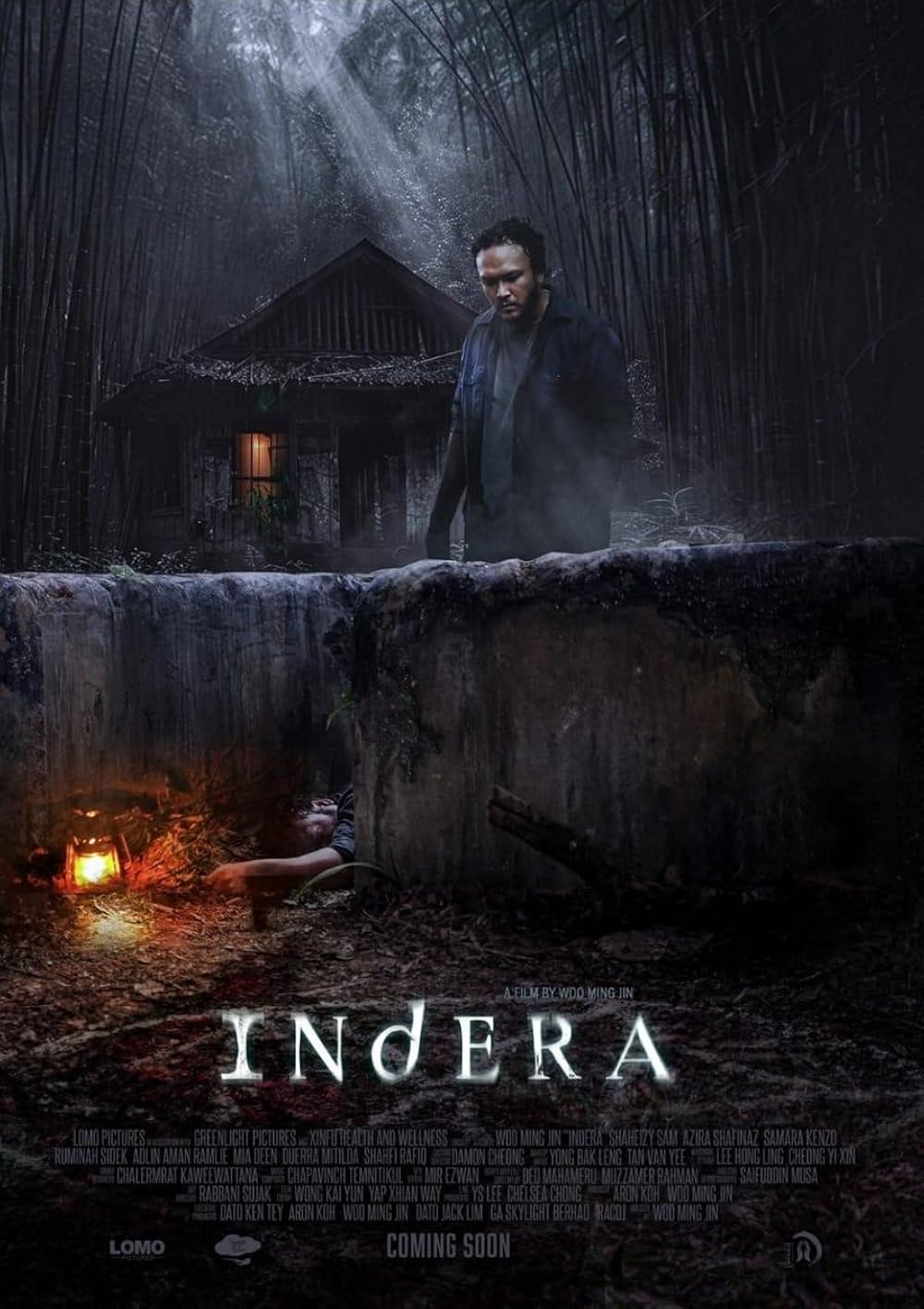
Indera (Woo Ming Jin, 2024)

“Let’s leave this place,” a father tearfully tells his daughter, “we’ll find a better home,” but it seems the girl has found her home already and no longer wishes to leave in Woo Ming Jin’s eerie folk horror, Indera. In many ways about coming to terms with loss and grief, the film also explores tensions within the contemporary society through allusions to the 1985 Memali Incident in which political tensions in the country culminated in the siege of a village resulting the deaths of 14 villagers and four policemen.

The film begins however nine years earlier with Joe driving his pregnant wife Anisa down a country road only for the engine to overheat. Joe gets out to find some water leaving his wife alone, but his stabbing of a beetle for his collection on the way back seems to provoke some strange event. On returning to the car he finds Anisa gone, and flashing forward to the present day we can see that he is now a single father to Sofia who has been mute since birth but is able to hear.

Ironically, present day action opens with her refusing to open a door though she will later be told not to listen when a mysterious force calls her name only to ignore the warning. This time she avoids answering because she suspects it’s debt collectors. Lost in his grief, Joe appears to be living in financial difficulty and is far behind with his rent. They’ve run out of food, which is why Sofia has eaten only sweets, which she seems to be rationing, for breakfast. Joe tells her that they have to protect their castle like in the fairytale Sofia is fond of reading, but in fact the pair are soon kicked out with otherwise sympathetic landlord Haji giving them a tip off about another job as a live-in handyman for a Javanese shamaness living way out in the country. On their arrival however, it’s clear that there is something very odd going on that neither of them really understand.

Nevertheless, the old woman’s home is a kind of liminal space that comes to represent Joe’s unresolved grief. The old woman, who asks to be addressed as “Mother,” asks him if he’s heard about what’s going on in Memali, and he admits he has but that it’s none of his business. Mother agrees that there’s no need to become involved in the affairs of others, but also ominously points to her birds and asks if a blind bird knows that it is caged. The same could be asked of Joe as his fate and that of the King in Sofia’s fairytale become intertwined while she progresses towards a destiny that is out of his control. Encountering a spirit that seems to be that of his late wife, Joe is forced to face his paternal anxiety and the fact that on some level he may have been responsible for what happened to Anisa while also resentful towards Sofia as a child he may not have wanted whom he also blames for her loss.

Perhaps Mother knows all this already, telling Joe that everyone has their sickness and she’s worked out what his is already though he cannot seem to see hers nor what the ominous hole she seems to be worshipping may represent. She claims that the children she has with her in the former orphanage that is her home were all “unwanted,” as Sofia may also have been and Anisa too, but has a dark purpose for them that Joe is ill equipped to understand. The hole comes to represent the bottomless pit of his grief and regret, but the spirits are also echoes of the forces of authoritarianism haunting Memali in which the children are told not to look back or answer if something calls their name and on no account ever to venture near the hole.

Still, Sofia can’t help being curious and the hole may come to represent something else to her while Joe struggles to understand his relationship with his daughter, seeing her perhaps as a manifestation of his own transgression and ultimately an embodiment of evil that it is his duty to destroy. Eerie in its palpable sense of dread, Woo Ming Jin’s oblique folk horror is pregnant with political allegory and locates its most chilling moment in Sofia’s insistence that “this is our home” in the suggestion that in the end there is no “better home” to go to but only this inescapable hell. 


Indera screens in Chicago 28th March as part of the 19th edition of Asian Pop-Up Cinema.

Trailer

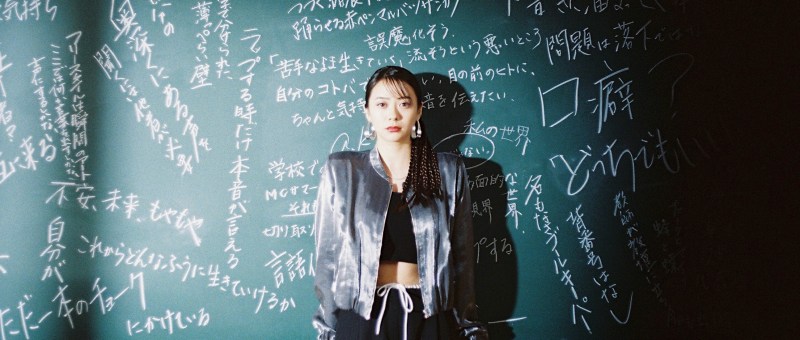
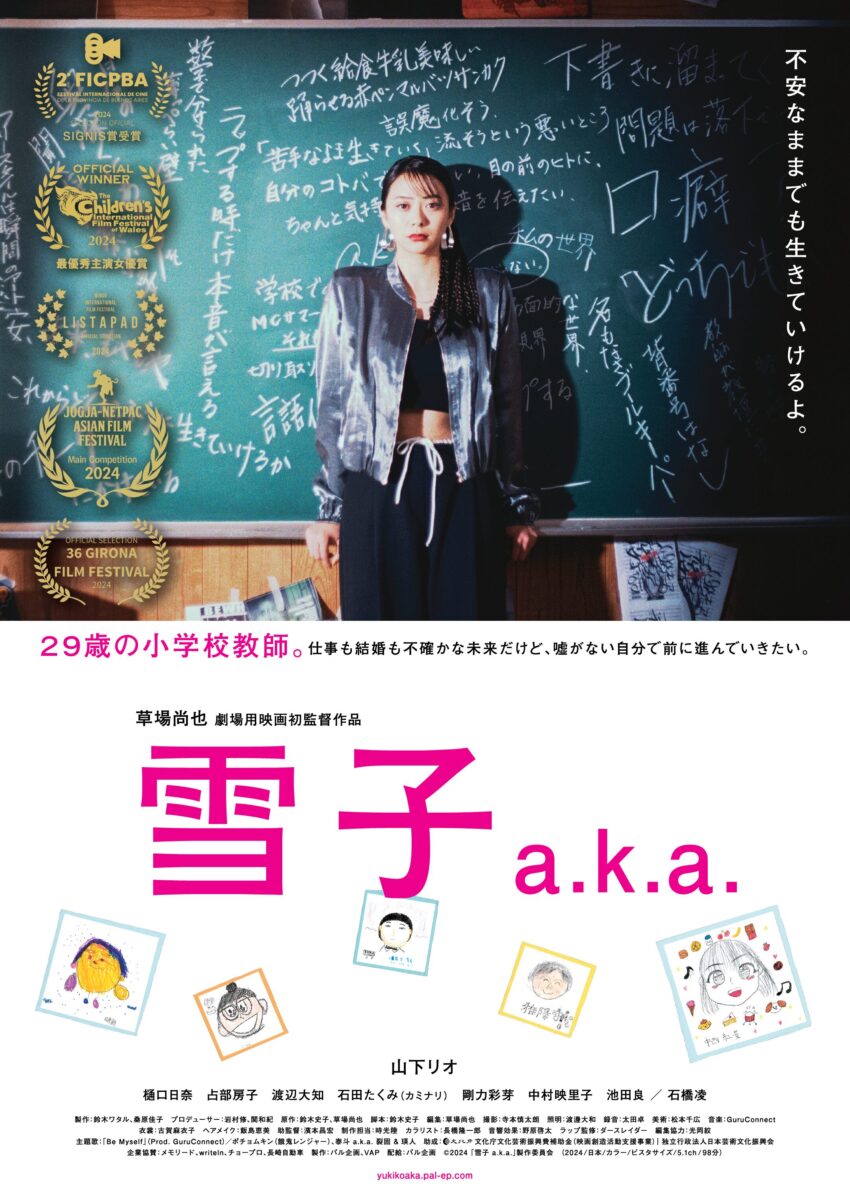
Yukiko a.k.a (雪子 a.k.a., Naoya Kusaba, 2024)

“Leave no one behind,” is the theory underpinning the SDGs that primary school teacher Yukiko (Rio Yamashita) is teaching to her students, but it’s also a practice that she unconsciously puts into practice only largely tends to forget to include herself. Timid and insecure, she makes little mark on the world around her and is afraid to express herself which she fears also interferes with her ability to interact with the children worrying that her reticence to speak up because she’s too worried they’ll say it’s all her fault prevents her from asking them if they’re alright or they need any help or guidance. 

It’s only through the possibly surprising hobby of rap music that she finds an outlet where she can be herself and say everything that’s on her mind, only most of her raps are all about her anxiousness and inability to communicate. She has however found a supportive community in a local park where there are a group of rappers who seem to have her back and encourage her to get more into the hobby by participating in rap battles so she can express herself more. It seems though that part of her anxiety stems from a sense that she’s approaching a crossroads in life and is in many ways dissatisfied. She’s been in a long-term relationship with another teacher, Kodai (Daichi Watanabe), she met when they were both students but as he’s been assigned to another school a long way away, they only meet up at weekends.

All around her, her friends are getting married and it seems Kodai may also be ready to pop what seems to most an inevitable question, but there’s something that seems to be holding her back. Kodai later tells her that he doesn’t like the her that does rap, which suggests in a way that he doesn’t really want the version of her that can express herself or is confident in saying what she does and doesn’t want. He’s much more interested in the timid Yukiko who meekly goes along with what he wants and is too afraid to rock the boat. A fellow teacher, Riho (Hina Higuchi), has an ambition to be married with a child before 30, which is surprising to Yukiko and often criticised for being old fashioned. Yet what the film seems to insist is that neither perspective is wrong, merely different, and largely a matter of what suits each individual. Riho is cool in her own way for living her life the way she chooses even if it conflicts with the prevailing attitude of the contemporary society and it’s this sense of empowerment that Yukiko is really seeking as an older teacher, Ohsako (Fusako Urabe), explains. With her short hair and serious demeanour it might be assumed that the kids wouldn’t like Ohsako, but she’s actually their favourite and perhaps precisely because of her self-assuredness. In contrast to the ultramodern Riho she likes to hand write and draw her teaching materials as a means of transmitting sincerity and integrity to the children while acting as a voice of authority between the teachers. 

Indeed, it’s Ohsako who largely teaches the film’s lessons and Yukiko how to embrace herself so that she can communicate better with the students explaining that her ability to pick up on the same anxieties in them is much more valuable than anything else. Locking eyes with a distressed young girl during a PE lesson, she quickly figures out that she’s experiencing menstrual cramps and is able to take her to the nurse’s office for some positive help and support. Meanwhile, she struggles with two boys in her class one of whom has become a school refuser and hikikomori. She visits Rui at his home every week with handouts but fails to make a breakthrough until she too is brave enough to expose her own fears and doubts. His deskmate Kotaro is now forced to join in with the girls either in front or behind when they’re asked to do pair work because of the painfully empty seat next to him.

But then unbeknownst to Yukiko, times have changed. Rui is not completely isolated but has been communicating with his friends, including Kotaro, through video games which as Kotaro’s father says is just as real to the children as talking in person. He’s also got really into educational apps and might have actually learned more by himself at home, which isn’t great for Yukiko’s self-esteem but at least he’s doing alright even if she might be becoming obsolete. Meanwhile the school still insists on making the kids read out loud to their parents who are then supposed to fill in a comment sheet but Kotaro writes those himself because his mum’s too busy. Nervously challenged by Yukiko, Kotaro’s mother asks what the educational point of the exercise is. She says she has her own way of communicating with her son and doesn’t have time for this meaningless bit of form filling. Yukiko’s insistence that it’s only 10 minutes belies a lack of understanding that Kotaro’s mother, who seems to be a working lone parent, simply doesn’t have another 10 minutes in her day. Still, the point is that Yukiko doesn’t really know the educational point of the exercise but has only been doing it because it’s what you do without giving it any real thought. 

But as Ohsako had said, maybe neither way is wrong, it’s just a matter of personal taste. Through her rap music hobby,  Yukiko begins to accept another side of herself while gaining the courage to be more confident and express herself more freely. She realises that it doesn’t really matter if she wins a rap battle or not because even putting herself out there was a minor victory that convinces her she has the power to do things with her life and live it in a way that best suits her while teaching similar lessons to the children and finally listening to her own advice.


Yukiko a.k.a screens in Chicago 22nd March as part of the 19th edition of Asian Pop-Up Cinema.

Trailer (English subtitles)
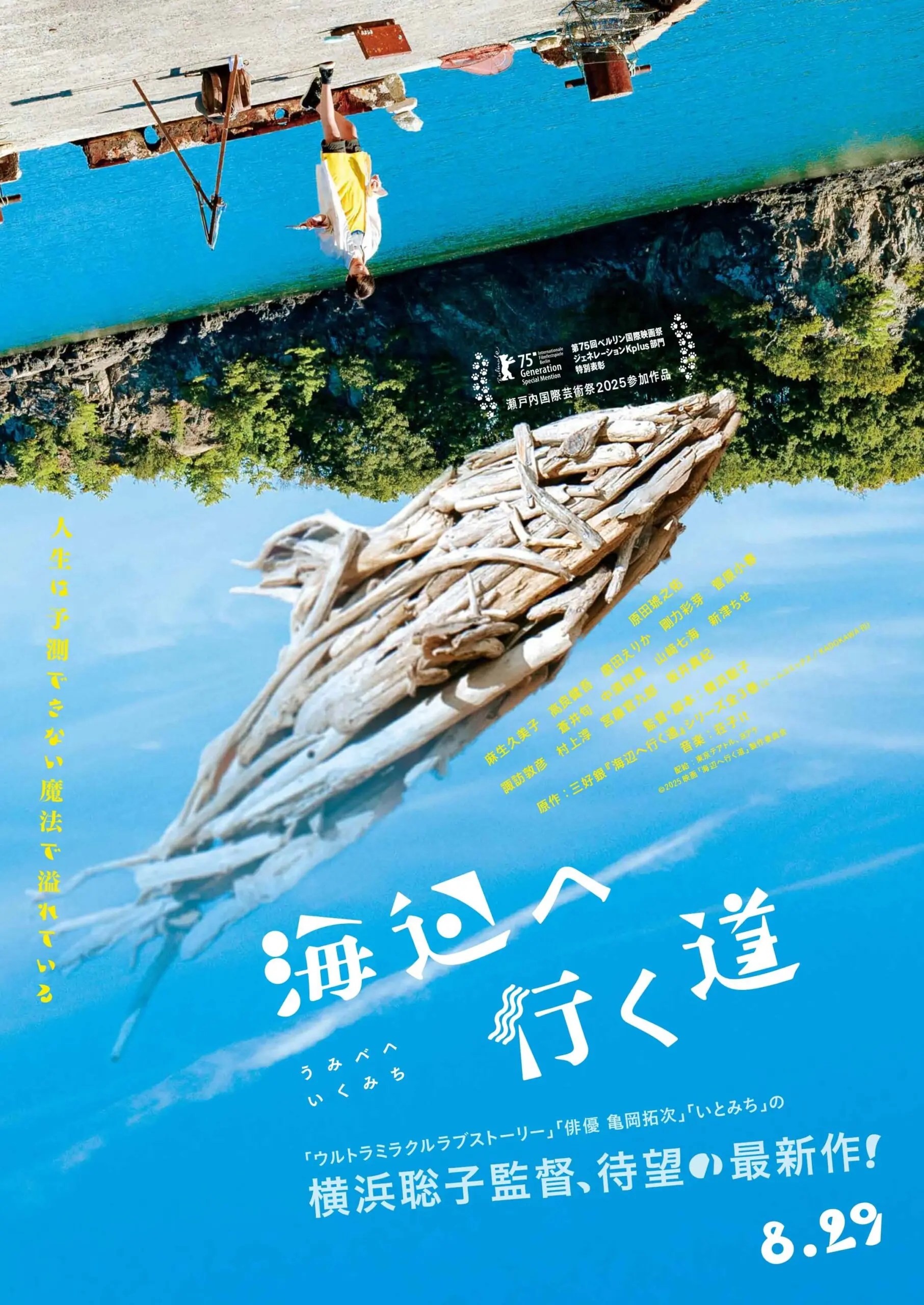
Sunset Sunrise (サンセット・サンライズ, Yoshiyuki Kishi, 2024)

In a way, the 2020 coronavirus pandemic presented a kind of turning point in which it became possible to envision a different kind of future brokered by technological advance in which society was no longer ruled by the dominance of the cities. If people could work remotely from anywhere, then they could easily improve their standard of living by moving to more rural areas for cheaper rents and healthier environments. Assuming the infrastructure was in place to allow them to do so, they could also support and reinvigorate communities struggling with depopulation in which the young have all left for the cities leaving the elderly behind to fend for themselves.

It’s an elegant solution that solves many of the problems of the contemporary society, but change isn’t always as straightforward as it seems as the hero of Yoshiyuki Kishi’s Sunset Sunrise (サンセット・サンライズ) finds out after he jumps at the chance to move into an abandoned house in Tohoku for a fraction of the rent he’d have to pay for a flat in Tokyo if he didn’t still live with his parents. The catch is, however, that houses have souls too and are more than just places to live for those that own or inherit them. Momoka (Mao Inoue), who decides to put her own empty house on the market, has her reasons for not wanting to live there herself nor for selling it completely but renting it out is also emotionally difficult. In the end, she only really does it after being put in charge of the town’s empty house problem at her job working for the council and thinking she should probably start with her own. Not knowing what to charge, it hadn’t really occurred to her someone would be as interested as Shinsaku (Masaki Suda), a fishing enthusiast longing to escape his salaryman life in the city for something a little more traditional in a peaceful rural area. 

Then again, that’s not to say that Shinsaku is a traditionalist and his decision quickly sparks controversy but also attracts the attention of his boss who senses a promising business opportunity. Momoka’s is a slightly special case, but Japan is filled with these so-called “akiya” which might, amid the work from home revolution of the pandemic, now be attractive to young professionals looking for a better environment to start a family. Houses generally start to deteriorate quite quickly when no one lives in them, and it’s true a lot of them need some work doing but it’s an idea that could work out well for everyone. Younger people who can’t find decent living space in the cities would be able to afford larger homes in the country where they would also then be contributing and integrating into the local community to provide support for its elderly residents.

Shinsaku becomes a part of the local community quite quickly and strikes up a friendship with an elderly woman whose children have all moved to Tokyo and rarely visit now that their own children are getting older. They’ve asked her to move to Tokyo with them, but as she points out, it would be the same as them moving back. There’s nothing for her to do there, and she’d have no friends. She’d only feel in the way and that she was getting under her daughter-in-law’s feet. Nevertheless, they fear for her especially as the area is still dealing with the scars of the 2011 earthquake which have left many clinging to a now bygone past. Once Momoka and Shinsaku start working with his boss on the akiya project, they find it hard to convince the inheritors of the houses to agree. Though they won’t live there, they might want to pop back a few times a year just for the memories and somehow can’t bear to part with their childhood or relative’s homes. But Shinsaku points out, it doesn’t necessarily have to be a case of either or and the renovation projects they undertake modernise the houses in a sympathetic way that brings them up to date with modern living yet honours the past even sometimes incorporating some of the previous resident’s furniture and belongings while issuing a caveat that the owners are welcome to visit should they wish to.

Essentially, the idea is a kind of co-existence with the past but also with unresolved trauma such as that presented by the earthquake and the ongoing pandemic. Momoka too is struggling to move on and while a gradual romance seems to arise between herself and Shinsaku, she isn’t sure she can ever let the past go though he makes it clear it’s okay to bring it with her. For his part, despite the initial fears of the early pandemic period and the suspicion of him as an outsider, Shinsaku’s quickly taken in by the community and adapts to a more rural way of life with relative ease though his boss’ big plan is rather undermined by his later insistence that he come back to Tokyo to run the project from the office like a many a contemporary CEO rolling back promises of flexible working environments that make this kind of utopian ideal much harder to materialise. In any case, there’s something quite refreshening in the eventual resolution just to do their own thing, not particularly paying attention to labels or what other people might think, but just doing what makes them happy right now. As an old fisherman’s song says, the sun sets but then it rises again. Scripted by Kankuro Kudo and adapted from a novel by Shuhei Nire, the film has kind of wholesome optimism that is rooted in a sense of continuity but also the potential to start again and make a new life inside the old that is less bound by outdated social norms than brokered by the gentle solidarity between people and a generosity of spirit that allows all to seek happiness in whatever way they choose.


Sunset Sunrise screens in Chicago 22nd March as part of the 19th edition of Asian Pop-Up Cinema.

Trailer (English subtitles)
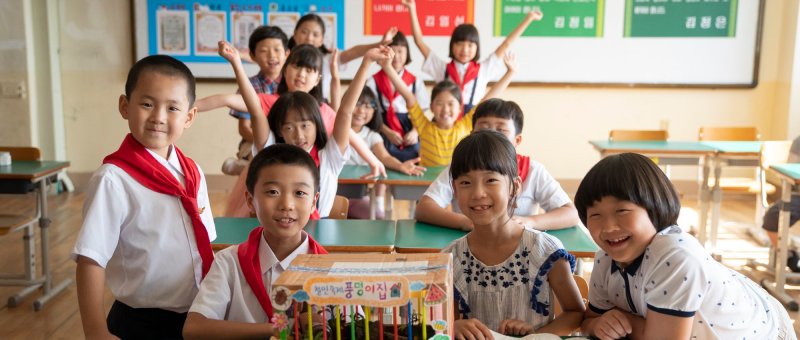
The Fallen Bridge (断.桥, Li Yu, 2022)

Li Yu’s mystery thriller The Fallen Bridge (断.桥. duàn.qiáo) finds itself at a series of contradictions in the modern China and its film industry. The film was an unexpected box office success, though largely because it falls into a new category of boy band film in starring TFBoys’ Karry Wang locking in an audience of ardent fans much as Jackson Yee’s presence in Better Days had though it also plays into ongoing anti-corruption theme in recent cinema while simultaneously adopting a mildly positive stance towards whistleblowers if specifically within the field of construction.

It is of course an unescapable fact that hypercapitalistic working practices and ingrained corruption have led to numerous public safety failures with bridge collapses unfortunately a fairly common occurrence. This one is particularly problematic as a skeleton is discovered encased in the concrete during the cleanup effort. From the way it’s posed, it appears the man may have been buried alive. A preserved piece of paper found in a bag accompanying the skeleton states his intention to take his concerns to the head of the construction project that the structure is unsafe and should be entirely rebuilt. Of course, that would be incredibly expensive, embarrassing, and disadvantageous to others who have used the bridge as a way of forging connections with important people.

The bridge’s collapse is therefore also symbolic in pointing to the fracturing instability of these relationships along with that between college friends Zhu Fengzheng (Fan Wei), the project manager, and Wen Liang (Mo Chunlin), the would-be-whistleblower. Fengzheng has also been raising Liang’s daughter Xiaoyu (Ma Sichun) who was 12 at the time her father disappeared after seemingly being disowned by her mother who was under the impression he had runaway with his mistress. Now in her 20s and an architecture student, Xiaoyu becomes determined to learn the truth even as she begins to suspect Fengzheng who has otherwise become a second father to her and does at least seem to care for her as a daughter while his own son is apparently living in Australia. Teaming up with a fugitive, Meng Chao (Karry Wang), on the run for killing the man who raped his sister, she begins plotting her revenge while a police investigation into the bridge collapse and an additional suspicious death otherwise seems to flounder.

Though it may not mean to (as it seems unlikely to please the censors) the film gives tacit approval to vigilante violence in subtly suggesting that “official” justice is rendered impossible because of the complex networks of corruption that exist within the soceity. Meng Chao says the man who raped his sister was a judge which is why he had to kill him, while Xiaoyu seems to desire individual vengeance believing the police aren’t investigating properly but refusing to go to them with key evidence because she wants to kill her father’s killer herself. While carrying out their investigation, the pair end up adopting the wily daughter of another casualty of the villain’s greed and form an unlikely family unit marking them all out as good people who have been betrayed by the system which is itself corrupted by the nation’s headlong slide into irresponsible capitalism. 

Even so, revealing the villain so early weakens the suspense while their own motivations are left unexplored, assumed to be merely greed if perhaps also a wish to remain connected to influential people and be thought of as important at the cost of the lives of the general public (along with those of often exploited labourers) endangered by shoddy construction practices. It isn’t entirely clear how they intended to deal with the fallout of their machinations to cover up their past misdeeds, especially as the sub-standard work on the bridge has already been exposed though obviously could be blamed on others no longer around to defend themselves, but perhaps it all amounts to crazed self-preservation pitched against the righteousness of Xiaoyu and Meng Chao who are after all wronged parties in China’s deeply entrenched judicial inequality. Nevertheless, we get the inevitable title card (left untranslated in the overseas release) explaining that justice was served and a censor-pleasing ending that still in its way suggests the police are incapable of solving these crimes and that the petty corruptions of small-town life are otherwise impossible to prosecute. 


The Fallen Bridge streamed as part of the 18th Season of Asian Pop-Up Cinema.

Original trailer (English subtitles)
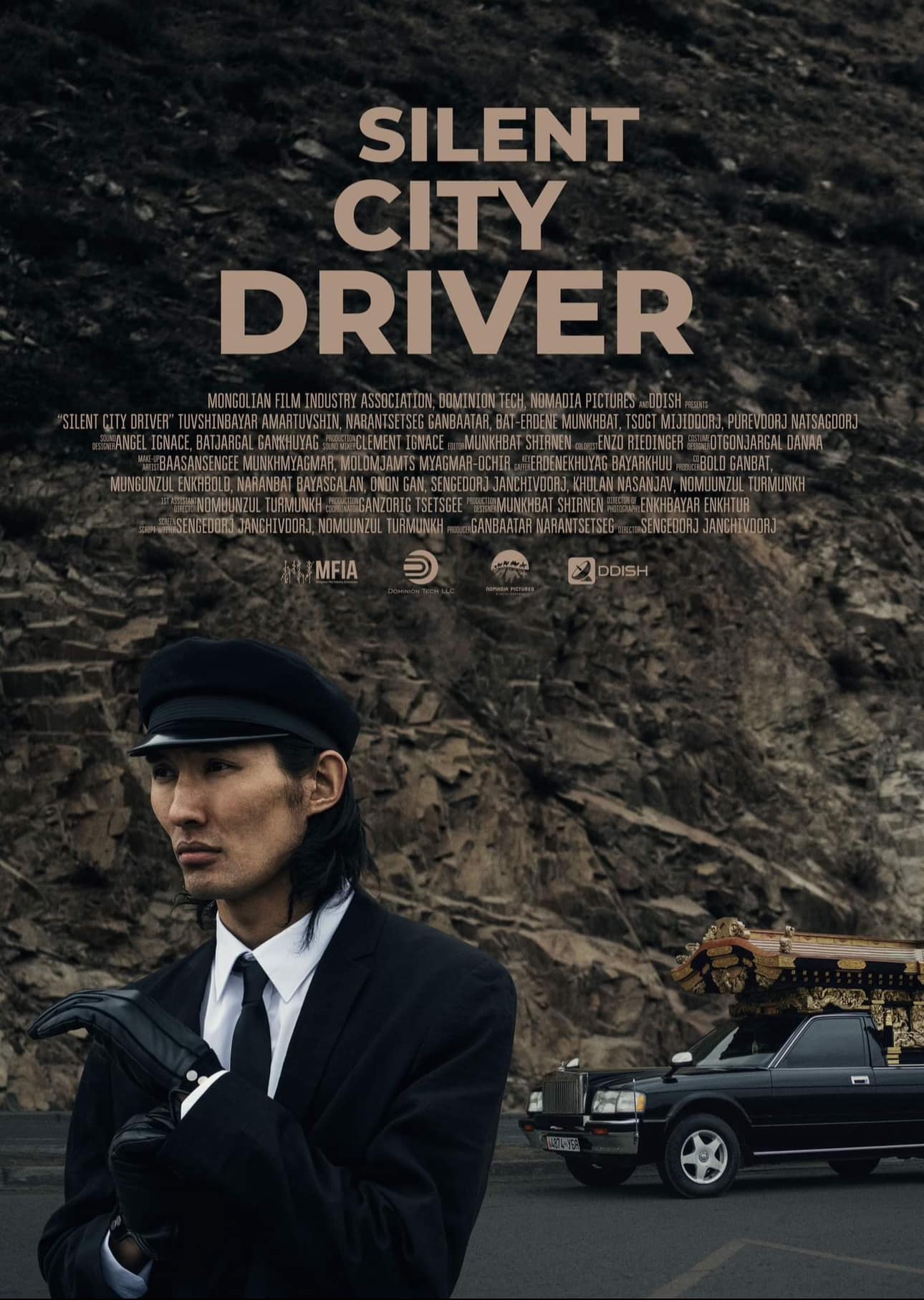
A Boy and a Girl (少男少女, Hsu Li-Da, 2023)

A young man on the cusp of adolescence longs to escape his miserable circumstances but gradually finds himself succumbing to the corruption all around him in Hsu Li-Da’s bleak coming of age drama, A Boy and a Girl (少男少女, shàonánshàonǚ). Though the title may sound like a cheerful rom-com, Hsu’s film is closer to anti-romance as the ill-defined relationship between the two provokes unforeseen changes and eventually dangerous situations. 

In any case, all the Boy’s trouble’s start when his phone gets broken in the middle of a deal to sell in game points signalling an abrupt end to his escapist dreams. He’s desperate to get another one, but his mother can’t afford it and has problems of her own in that the hostess bar she runs is in financial trouble and she’s had to enter a sexual relationship with a local thug just to keep it running. The Boy catches them at it, and looks on voyeuristically laying bare his oedipal desires coupled with a moralistic objection to the act and resentment towards the gangster.

For these reasons he becomes determined to escape his moribund small town along with the hostess bar where his mother works by fighting back against adult duplicity. After meeting the Girl and gaining access to her phone, he discovers that she had been involved in a sexual relationship with their PE teacher which had resulted in a pregnancy. The pair of them attempt to blackmail the teacher with screen caps of his incriminating messages to her, but the plan backfires. The teacher doesn’t feel under threat and gets two of his underlings to beat the Boy up rather than pay. The Boy is morally outraged by the teacher’s behaviour and thinks someone ought to do something, but doesn’t know what to do so lands on blackmail as a form of punishment though as it turns out the Girl was less interested in vengeance or money than whether the teacher really loved her. Like the Boy, the Girl is mostly alone. She claims not to know who her mother is, while her father is suffering with an illness.

As expected they plot their escape together, but events soon overtake them. With the blackmail scheme ruined, the girl settles on sex work and the Boy becomes a kind of pimp if a conflicted one frustrated by the Girl’s whimsical businesses sense which sees her tell a potential client to forget about the money because he’s not quite as hideous as all the others. Meanwhile, she starts giving the boy a drug called Little Devil which causes those who take it to laugh manically and commit acts of extreme violence. Left without a moral arbiter the boy has nowhere to turn. Not only can he not talk to his mother’s boyfriend, but eventually encounters a corrupt cop whose immediate reaction is to tout for a bribe or, as he would have it, protection money. 

In this very messed up environment, all relationships have become transactional. Gradually the Boy begins to behave like those around him and takes on the codes of the masculinity with which he is presented, posturing and squaring up to his mother’s boyfriend in contest over ownership of her. His mother wants escape too, but is afraid and constrained by the persistent misogyny of the present society even if, ironically, her work her also leans into it in running a karaoke bar where the some of the hostesses are encouraged to undress. The more they try to escape, the tighter the noose seems to grow refusing to let any of them leave and denying them even the hope of better life.

Already cynical, the Girl is resigned to her fate and in fact no longer really resisting it save for interactions with the Boy. Told that her father is much sicker than they thought and needs an expensive operation, the Girl suggests that she doesn’t intend to pay while the Boy tries his best to get cash to pay off the ganger, free his mother, and keep the bar only to be confronted with his naivety. The picture Hsu paints of contemporary Taiwan is bleak and unforgiving, refusing either of the pair the prospect of a happier future and guaranteeing only misery for all in a land of cheats and gangsters in which a good heart is weakness few can afford.


A Boy and a Girl screened as part of the 18th Season of Asian Pop-Up Cinema.

Original trailer (English subtitles)