A Land Imagined (幻土, Yeo Siew Hua, 2018)

A Land Imagined posterAs the world gets bigger and smaller at the same time, it’s as well to be asking on whose labour these new lands are being forged. Yeo Siew Hua’s Locarno Golden Leopard winner A Land Imagined (幻土, Huàn Tǔ) attempts to do just that in digging deep into the reclaimed land that has made the island of Singapore, an economic powerhouse with a poor record in human rights, 22% bigger than it was in 1965. A migrant worker goes missing and no one really cares except for an insomniac policeman who dreams himself into a kind of alternate reality which is both existential nightmare and melancholy meditation on the rampant amorality of modern day capitalism.

Lok (Peter Yu), a hangdog middle-aged detective, is charged with looking for Wang Bi Cheng (Liu Xiaoyi), a missing migrant worker from China. Just who it was that noticed Wang’s absence is only latterly explained and in suitably ambiguous fashion, but the fact remains that there is an empty space where a man named Wang used to be and Lok is the man charged with resolving that space no matter who might or might not be interested. We discover that Wang was injured on the job, almost sacked and then reprieved to drive the workers’ bus where he befriended a worker from Bangladesh, Ajit (Ishtiaque Zico), who later disappeared sending Wang on his own mirrored missing persons case in which he begins to suspect something very bad may have happened to his friend.

Despite his presumably long years on the force and world weary bearing, Lok is refreshingly uncynical for a police detective but apparently extremely naive about the city in which he lives. Stepping into the world of Wang Bi Cheng, he is shocked to discover that people live “like this” – several men crammed into in tiny bed bug infested rooms so brightly lit from outside that it’s difficult to believe that anyone gets any sleep at all. Wang, in any case, like Lok did not sleep and gradually migrated over to the 24hr internet cafe across the way where he developed a fondness for the spiky proprietress, Mindy (Luna Kwok), while repeatedly dying in videogames and being trolled by a mysterious messenger who may or may not have information about his missing friend.

Like Lok, Wang Bi Cheng cannot sleep but lives in a waking dream – one in which he envisages his own absence and the two police detectives who will search for him, not because they care but because it’s their job and they’re good at it. Men like Wang are the invisible, ghostly presence that makes this kind of relentless progress possible yet they are also disposable, fodder for an unscrupulous and uncaring machine. Asked if it’s possible that Wang and his friend Ajit simply left, the foreman’s son Jason (Jack Tan ) answers that it’s not because the company keeps the men’s passports, adding a sheepish “for their own protection, in case they lose them” on realising the various ways he has just incriminated himself.

Yeo opens with a brief and largely unrelated sequence of a young Chinese migrant worker climbing a tower in his bright orange overalls. Later Lok reads a newspaper report about this same man who tried to launch a protest in having been denied his pay and forced to endure dangerous and unethical working conditions. Meanwhile, Mindy the internet cafe girl, is forced to resort to taking money for sex acts in order to make ends meet. Like Wang, she dreams of escape, of the right to simply go somewhere else without the hassle of visas and passports. Wang jokes that the sand that built the reclaimed beach they are sitting on came from Malaysia, and that in a sense they have already crossed borders, offering to take Mindy away from all this (for a moment at least) in his (borrowed) truck but knowing that their escape is only a mental exercise in transcending the futility of their precarious existences.

Indeed, Yeo seems to be saying that Singapore itself is a “land imagined” – constantly creating and recreating itself with repeated images of modernity. One could even read its artificial territorial expansion as reshaping of its mental landscape while all this progress is dependent on the exploitation of wayfarers like Wang and Ajit wooed by the promises of wages higher than in their home countries but left with little protection and entirely at the mercy of their unscrupulous employers. Yet a strange kind of affinity arises between the lost souls of Lok and Wang, united in a common dreamscape born of sleeplessness and lit by the anxious neon of rain-drenched noir as they pursue their parallel quests, looking for each other and themselves but finding only elusive shadows of half-remembered men dreaming themselves out of existential misery.


A Land Imagined screens as part of the eighth season of Chicago’s Asian Pop-Up Cinema on March 20, 7pm at AMC River East 21 where director Yeo Siew Hua will be present for an introduction and Q&A.

Original trailer (English subtitles)
Out of Paradise (Batbayar Chogsom, 2018)

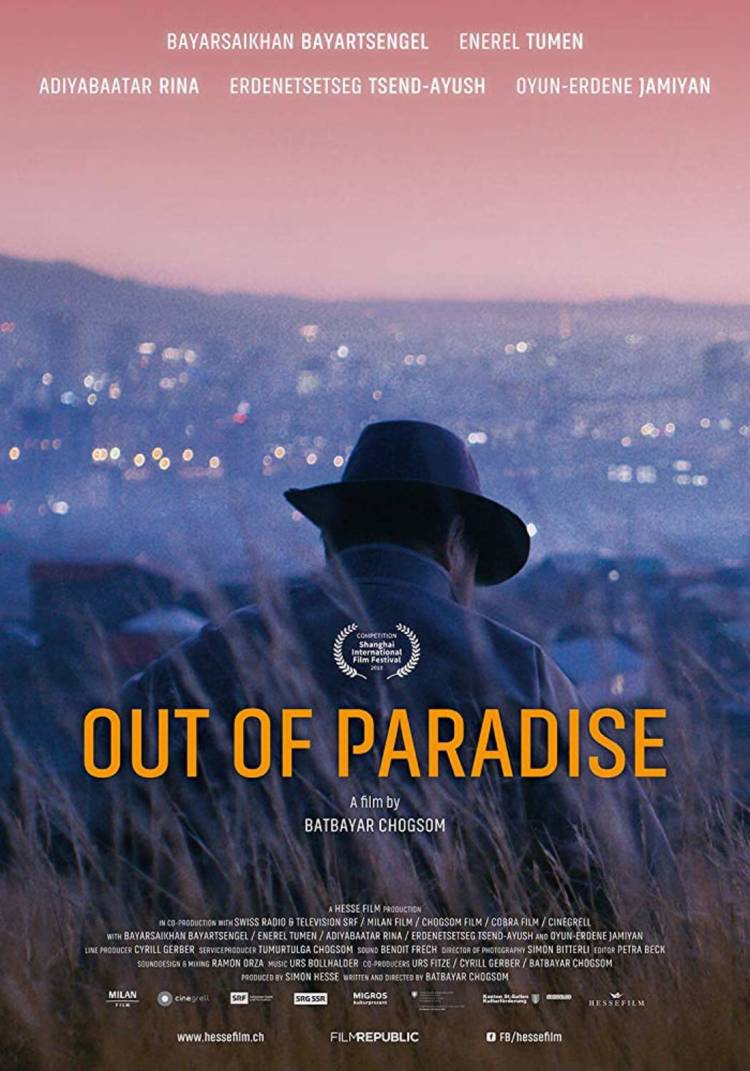
Out of Paradise posterThe world moves very differently from one place to another. While cities across the world may be basically the same everywhere, a more ancient way of life may still be very much in existence the further you travel from them. For a young couple at the centre of Mongolian drama Out of Paradise, their otherwise happy nomadic existence is overshadowed by the difficultly they face in accessing modern medical care. Finding they have little choice other than to travel to the city, they discover that modernity brings with it costs as well as gains.

Dorj (Bayarsaikhan Bayartsengel) and Suren (Enerel Tumen) have been married for some time and live nomadically farming sheep. Though they are blissfully happy in each other’s company, they share a private sadness in that they have already lost two pregnancies to miscarriage and have been unable to start a family. Suren is currently heavily pregnant and the couple are understandably anxious, especially as a local doctor expresses concern over Suren’s continuing high blood pressure. They decide that this time they have no other option than to travel to the city and have the baby under expert medical care, but travelling costs money which is something they do not have. A bartered sheep buys them passage, but on arrival at the hospital they discover that they’re missing vital paperwork and will need to pay for treatment upfront.

Well suited and generally happy, the strain of coping with their shared anxiety over the baby has inevitably paced a strain on the couple’s relationship. Irritated by Dorj’s attitude, the man who’s agreed to drive them to the city takes Suren aside to ask if he’s always like this to which Suren sadly replies that he wasn’t until after they lost the baby. Angry and afraid, resentful of feeling so helpless, Dorj lashes out without thinking, eventually fighting with their driver and smashing his phone when Suren expresses concern that he is being overfamiliar and may have been spying on her in private moments – all of which maybe understandable but not particularly prudent seeing as they are otherwise marooned in the middle of the desert if he should decide to leave them or the car run into trouble.

Nevertheless, the trouble with the driver is only the first of many incidents which will occur on their journey to the city which prove that modern is living is not like that on the Steppe. Pulled off the road along the way, the couple find themselves welcomed into a wedding party but having to give up their sheep as a wedding gift (as is the custom), yet they also receive hospitality from the other nomads who share their celebratory food and drink without a second thought. When they arrive in the city there is not so much fellow feeling and money is the only thing that matters. The couple become separated as Suren stays in the hospital while Dorj heads out to pawn her gold earrings – a precious wedding gift, in the hope of raising enough money for the treatment.

“Some people have bad luck and others good”, a cynical taxi driver (Adiyabaatar Rina) whom we later discover to be a violent pimp tells a confused Dorj when he asks him where he might be able to report the loss of his wallet. Dorj’s city odyssey begins with losing one of the precious earrings and being rebuffed by a hard-nosed pawnbroker before decamping to a bar where he attempts to drown his sorrows but is comforted by a melancholy sex worker who takes pity on him after hearing his story. Managing to win his money through the ultramodern medium of a karaoke contest where he turns off the machine and sings a mournful folksong, Dorj then finds himself once again at the mercy of the city and discovering that is it hostile and unwelcoming.

Yet the world Dorj finds himself in is one filled with people much like himself, struggling against their powerlessness and fighting back against an unforgiving environment. He is tempted away from his goodness through desperation but manages to hold on to himself while worrying about his wife and family. Dorj’s resilience eventually reawakens something within the melancholy sex worker who finds herself misused by her oppressive pimp (himself fighting back against the futility of his existence by pointlessly threatening a landlord over a malfunctioning lift), unable to prevent him from targeting Dorj but wanting to anyway and vowing to free herself from his control.

The problems which Dorj and Suren face are universal – poverty, inequality, and the pettiness which accompanies them in an increasingly depersonalised society. Dorj may feel inferior in not quite understanding how to use a mobile phone, growing still more resentful towards his friend’s seemingly stable and middle-class city life and his own relative lack of sophistication but the pair are happy with their nomadic existence and have no particular desire to jump into the modern world. Nevertheless, there are aspects of modernity which are useful such as learning to drive which mark a concession towards the encroachment of something new. Tested to an extreme by the demands of a changing world, Dorj and Suren are able to save their love and repair their family both in spite of and thanks to urban civilisation but ultimately choose to return to the simple paradise of their traditional way of life.


Out of Paradise screens as part of the eighth season of Chicago’s Asian Pop-Up Cinema at AMC River East 21 on March 19, 7pm.

Original trailer (English subtitles)
Fly Me to the Saitama (翔んで埼玉, Hideki Takeuchi, 2019)

Fly Me to the Saitama posterThe suburbia vs metropolis divide can be a difficult one to parse though there’s rarely a culture that hasn’t indulged in it. In England, for example, suburbia is to some a byword for quiet respectability, an aspirational sort of village green utopianism built on middle-class success as opposed to frivolous urban sophistication. Then again, city dwellers often look down on those from the surrounding towns as “provincial” or even dare we say it “common”. Saitama, a suburban area close enough to Tokyo to operate as a part of the commuter belt, has long been the butt of many a joke thanks to a quip from an ‘80s comedian which labeled it “Dasaitama” in an amusing bit of wordplay which forever linked it with the word “dasai” which means “naff”.

“Dasaitama” is a label which seems to haunt the protagonists of Hideki Takeuchi’s adaptation of the popular ’80s manga by Mineo Maya. Fly Me to the Saitama (翔んで埼玉, Tonde Saitama) opens in the present day with an ordinary family who are accompanying social climber daughter Aimi (Haruka Shimazaki) to Tokyo for her engagement party. While dad is quietly seething over this perceived slight to his beloved homeland, someone turns on the local radio station which is currently running an item on an “urban legend” about a long ago (well, in the ‘80s) period of oppression in which residents of Saitama (and other neighbouring “uncool” towns) had to get a visa to travel to Tokyo where they were treated as second-class citizens fit only for the jobs regular Tokyoites didn’t want to do and forced to live in hovels (which the snobbish city dwellers somehow thought made them feel more at home). The legend recounts the tale of a brave revolutionary who convinced the Saitamans to rise up, shake off their internalised feelings of inferiority, and reclaim their Saitama pride!

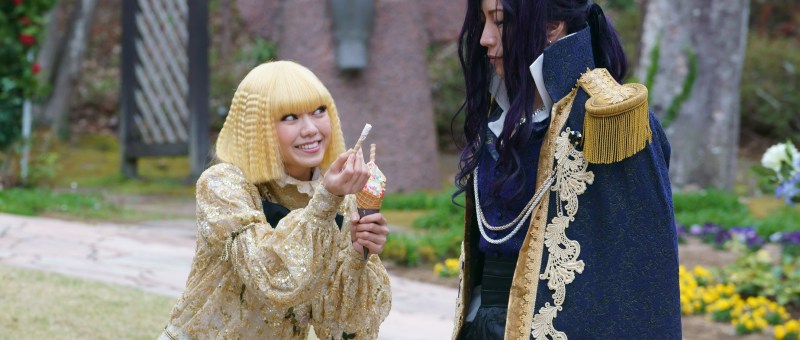
Shifting into an imagined fantasy of 20th century Japan which is in part inspired by warring states factionalism, Fly Me to the Saitama is, in the words of Aimi, a kind of “boys love” pastiche which riffs off everything from The Rose of Versailles to Star Wars while indulging in the (happily) never really forbidden love of mayor’s son Momomi (Fumi Nikaido) who has a girl’s name and feminine appearance but is actually a guy, and the dashing would-be-revolutionary Rei (Gackt) who has just returned from studying abroad in America and inevitably brought back some original ideas about individual freedom and a classless society. Having been born and raised in Tokyo, Momomi has a fully integrated superiority complex which encourages him to look down on Saitamans as lesser humans, almost untouchables, whose very existence is somewhat embarrassing. Only after being humbled, and then kissed, by Rei are his eyes opened to the evils of inequality and the ongoing corruption within his own household.

It goes without saying that much of Fly Me to the Saitama’s humour is extremely local and likely to prove mystifying to those with only rudimentary knowledge of daily life in Japan at least as far as it extends to regional stereotypes and ambivalent feelings towards hometown pride in a nation in which many still find themselves taking care not to let their accent slip after having moved to the capital lest they out themselves as an unsophisticated bumpkin. Yet there is perhaps something universal in its fierce opposition towards ingrained snobberies and petty class hierarchies which pokes fun both at the social climbing small-towners like Aimi desperate to escape the “dasai” countryside for the bright lights of Tokyo, and her proudly “dasai” dad, while asking the hoity-toity Tokyoites to get over themselves, and making a quiet plea for a little peace, love, and understanding along the way.

Then again, the Saitamans may have had a little more than freedom on their minds. If the “Saitamafication” of the world resulted in an expansion of mid-range shopping malls and chain restaurants filled with peaceful, happy people would that really be such a bad thing? Saitama might not be as “exciting” or as “cool” as Tokyo but it’s a nice enough place to live when all’s said and done. Perhaps that’s a frightening thought, but if the Saitama revolution ushers in a brave new world of freedom and equality then who really could argue with that?


Fly Me to the Saitama is screening as the opening night movie of the eighth season of Chicago’s Asian Pop-Up Cinema on March 12 at AMC River East 21, 7pm where director Hideki Takeuchi will be present in person for an introduction and Q&A.

Original trailer (English subtitles)
Nazeka Saitama – a novelty record released in 1981 and somewhat appropriately recorded in a style popular 15 years earlier.

Asian Pop-Up Cinema Returns for Season Eight

High Flash still 2Chicago’s Asian Pop-Up Cinema returns for its eighth season from March 12 to April 24 with 16 films screening at AMC River East 21 and various venues around the city.

March 12, 7pm: Fly Me To The Saitama

Introduction and Q&A with director Hideki Takeuchi

Fly Me to Saitama bannerFumi Nikaido stars as the cosseted son of a corrupt Tokyo Governor alongside pop star Gackt as a “mysterious transfer student” in Hideki Takeuchi’s adaptation of the popular ’80s manga.

March 13, 7pm: Ten Years Japan

Introduction and Q&A with segment director Akiyo Fujimura

10 Years Japan still 1Five young directors provide their visions of a near future Japan in an omnibus movie inspired by the Hong Kong original and produced by Hirokazu Koreeda. Review.

March 16, 2pm: The Ito Sisters

Introduction and Q&A with director Antonia Grace Glenn and lead scholar Evelyn Nakano Glenn 

ito sistersDocumentary exploring the experiences of early Japanese migrants along with their American-born children.

March 19, 7pm: Out Of Paradise

Introduction and Q&A with director Batbayar Chogsom

Out of Paradise still 1A man and his heavily pregnant wife make a perilous journey to the Mongolian capital in order to get a caesarian section but once there discover they are unable to cover the medical fees.

March 20, 7pm: A Land Imagined

Introduction and Q&A with director Yeo Siew-hua.

land imagined still 1Singaporean police officer Lok investigates the disappearance of migrant worker Wang in Yeo Siew-hua’s Locarno prize winning crime drama.

March 21, 6.30pm: Funan

Funan still 1French/Cambodian animated co-production set during the Khmer Rouge revolution of 1975 in which a young mother searches for her four-year-old son who was taken away by the regime.

March 26, 7pm: Show Me Your Love

Introduction and Q&A with actress Nina Paw Hee-ching

Show me Your Love still 1A young man making a rare visit home to Malaysia on the death of an aunt is forced to reconnect with his estranged mother whom he left behind when he went to university in Hong Kong. Actress Nina Paw Hee-Ching will be present at the screening for an introduction and Q&A as well as to collect the Career Achievement Award.

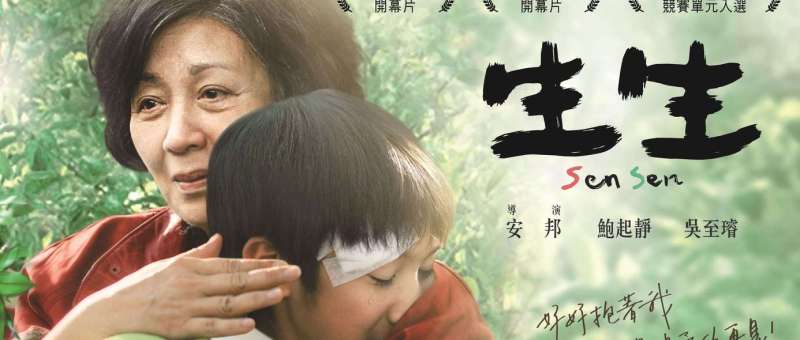
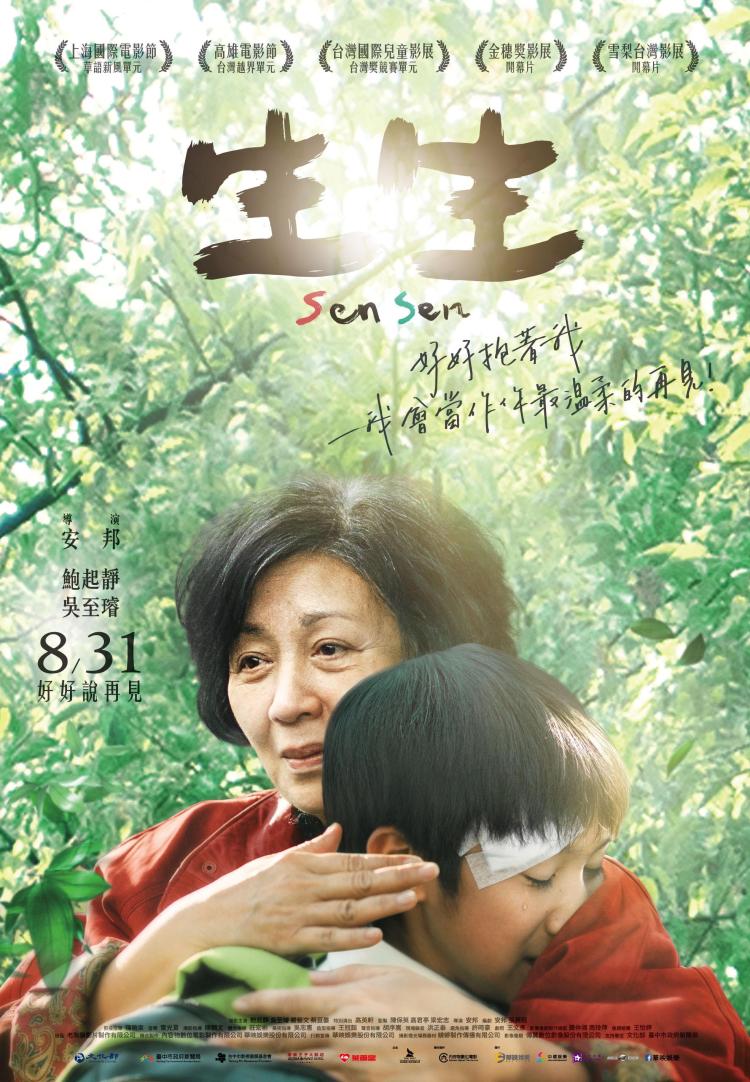
March 27, 7pm: Sen Sen

Introduction and Q&A with director An Bon & actress Nina Paw Hee-ching

Sen Sen still 1A young man whose brother has recently passed away makes a surprising discovery on the cell phone he left behind – the live streams of an elderly cab driver known as Granny.

March 28, 7pm: High Flash

Introduction and Q&A with director Chuang Ching-shen & Actor Chen Chia-kuei

High Flash still 1A medical examiner investigating the death of a fisherman who self immolated to protest corporate giant TL Petrochemical uncovers a major conspiracy in Chuang Ching-shen’s crime thriller.

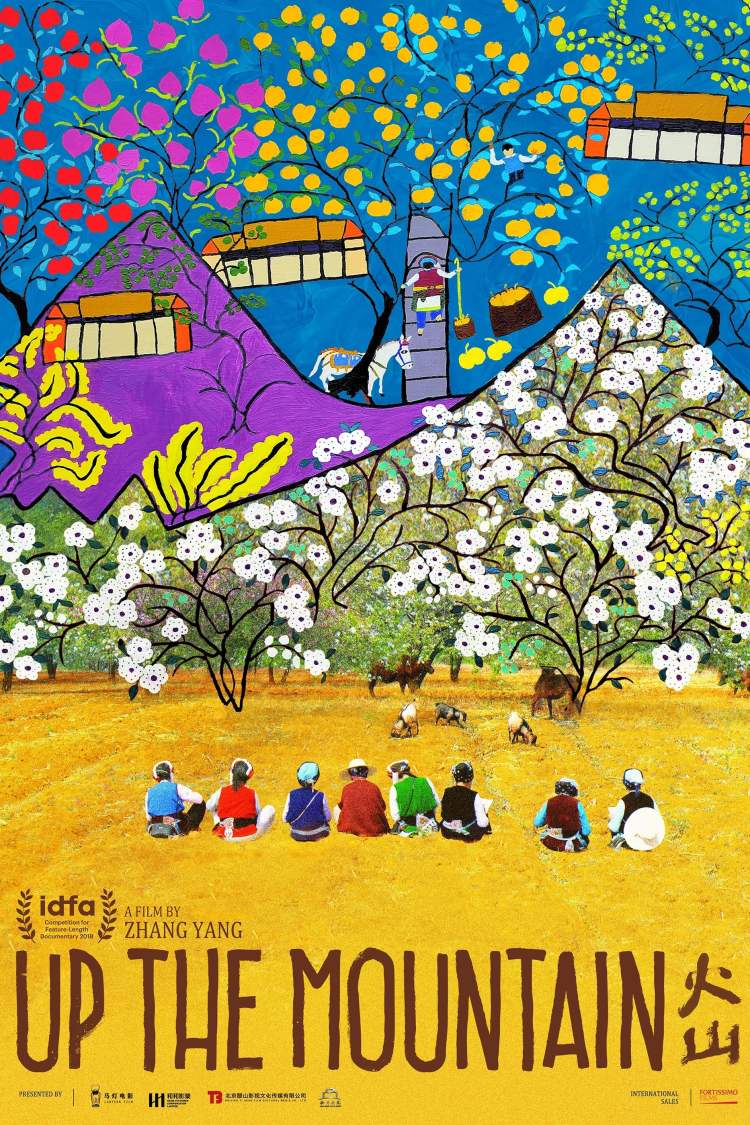
April 6, 2pm: Up the Mountain

up the mountain still 1Documentary by Zhang Yang focussing on the studio of artist Shen Jian-hua in a remote village in Yunnan Province.

April 7, 2pm: Four Springs

Introduction and Q&A with director Lu Qingyi moderated by Shelly Kraicer

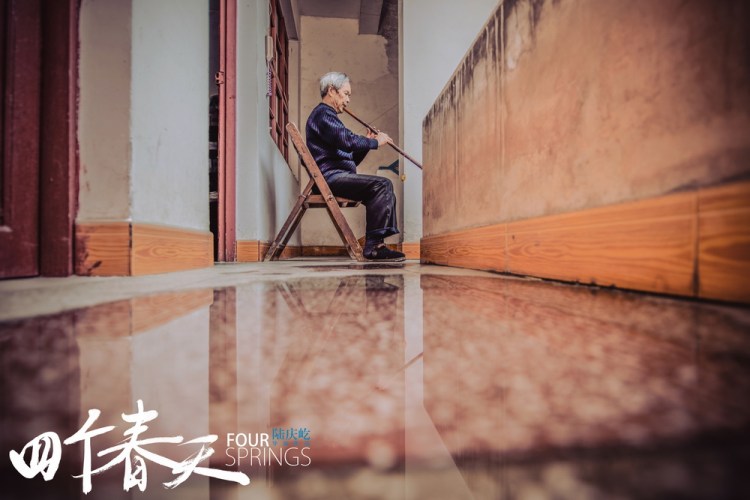
four springgs still 1Director Lu Qingyi follows the everyday lives of his parents over four years in the remote town of Dushan in southwest China.

April 12, 6.30pm: Circle of Steel

Introduction and Q&A with director/producer Gillian McKercher and main cast Chantelle Han.

Circle of SteelCanadian chemical engineer Wendy Fong ponders her future in the face of industry layoffs in this special presentation in collaboration with the Consulate General of Canada in Chicago.

April 16, 7pm: The Pension

Introduction and Q&A with segment director Junghuh Deok-jae 

The Pension still 1Omnibus film set in a small hotel which becomes home to parents attempting to come to terms with the loss of their child, a couple trying to rekindle their marriage, a woman who insists on staying in her preferred room, and the substitute manager who invites his girlfriend over for the evening.

April 17, 7pm: Memories of a Dead End

Introduction and Q&A with director Choi Hyun-young

memories of a dead end still 1A young woman in a long distance relationship with a man from Nagoya decides to visit him when he drops out of contact only to discover he is engaged to someone else.

April 23, 7pm: Memories of My Body

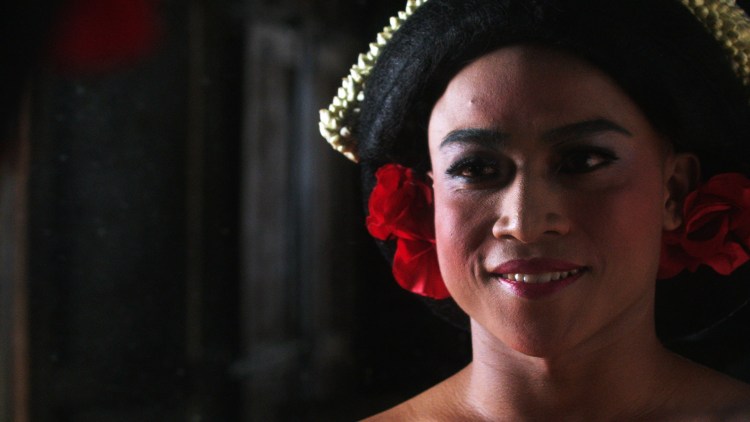
Memories of my body still 1A Lengger dancer looks back on his life as a tale of growing acceptance of sensuality lived against a turbulent political backdrop.

April 24, 7pm – Tracey

Tracey still 1A 51-year-old married father begins to reconsider his life choices after the death of a friend, eventually coming to an acceptance of a transgender identity.

Asian Pop-up Cinema Season 8 runs March 12 to April 24. Full details for all the films are available via the festival’s official website. You can also keep up with all the latest news by following Asian Pop-up Cinema on FacebookTwitter, and Instagram.

Walking Past the Future (路過未來, Li Ruijun, 2017)

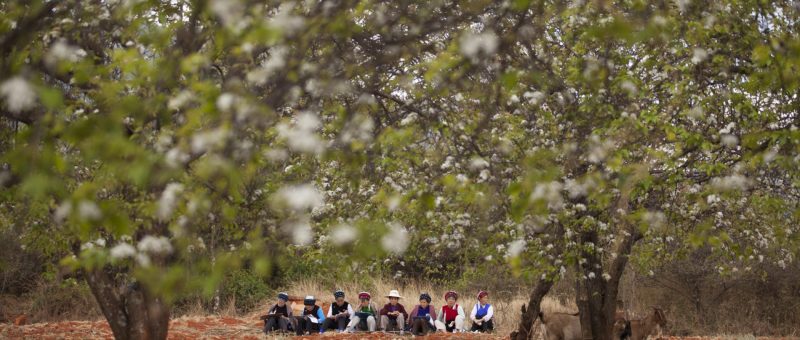
Walking Past the Future poster 1Communism is a labour movement. It’s supposed to look after the workers, ensure fairness and equality through prosperity born of common endeavour. “Socialism with Chinese characteristics” was how the ruling powers tried to justify their headlong slide into globalised capitalism but thirty years on the modern China has left many behind while the rich get richer off the backs of the poor. The poetically titled Walking Past the Future (路過未來, Lùguò Wèilái) follows two such unlucky youngsters from Gansu who find themselves out of options in China’s shrinking industrial heartlands.

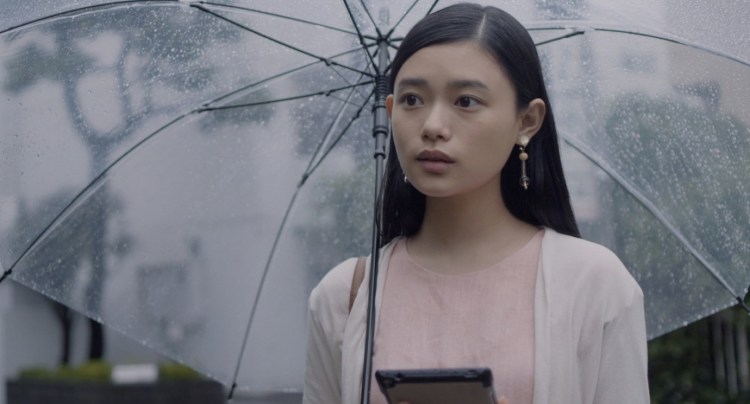
Our heroine Yaoting (Yang Zishan) has a job in an electronics factory assembling circuit boards. She lives with her parents – peasants from rural Gansu who came to Shenzhen 25 years previously in search of a better life, and a younger sister who is the family’s bright hope. Trouble is on horizon when Yaoting’s dad is taken ill and needs hospital treatment only to be unceremoniously “made redundant” when he tries to go back to work. On the very same day, Yaoting’s mother also announces she has been let go from her factory job leaving Yaoting as the family’s only earner. The day after Yaoting’s dad gets fired, his factory literally collapses and many workers are killed. You could say he’s had a lucky escape, but there are still few options for a man in his 60s with poor health and the family needs money. He decides they have no other option than to move back to Gansu and go back to farming, but when they get there, he discovers someone else has taken over his land (legally) and won’t give it back.

Meanwhile, Yingtao desperately wants to buy an apartment but with sending money back to her struggling parents her factory job is barely enough to live on. Her best friend Li Qian (Wang Ting), unburdened by a family, is addicted to plastic surgery and is saving to go to Korea for the best there is. On a hospital visit during which she is temporarily blinded, Li Qian runs into the roguish Xinmin (Yin Fang) who has a sideline recruiting desperate people to take part in potentially dangerous medical trials. Unbeknownst to either of them, Xinmin is also the “Desert Ship” to Yingtao’s “Misty Landscape”. They’ve become online best friends but have never met. Increasingly desperate to get the money for her dream apartment, Yingtao agrees to participate in a series of drug trials even though she has previously had a liver transplant and has a history of poor health.

Despite the supposed benefits of a movement led by workers, Yingtao and her family are victims of the modern era in which jobs are no longer for life, there is no community or fellow feeling between “boss” and “employee”, and those at the bottom of the ladder enjoy few rights. Yingtao’s father gets laid off when they find out he’s been ill with only a goodwill gesture of severance pay (which presumably goes up in smoke with the factory), while the same thing later happens to Yingtao when her liver condition resurfaces. When the electronics factory hits a rough patch, Yingtao is laid off for an entire week with no pay – so much for solidarity and a full belly for all.

Yingtao’s only pleasures are her constant conversations with “Desert Ship” who keeps needling her to officially accept his friendship request, but she won’t because moving their friendship to a more official level would prevent her from talking to him quite so freely. Neither Xinmin nor Yingtao is aware of the other’s identity, or that they are in fact texting each other while quietly miserable in the same room. A young orphan just trying to survive, Xinmin has a cynical and exploitative streak perfectly symptomatic of the world in which he lives but he is not completely heartless even if he is somewhat hypocritical in advising his online friend against the medical trials he has unwittingly persuaded her to undertake back in the real world. 

Pushed lower and lower, forced to undertake difficult and physically dangerous work with little protection and only the warning that their decisions are on their own heads, Yingtao and Xinmin find little to be hopeful about despite the eventual warmth of the connection between them and the innocent desire to see the snow back in the simpler world of rural Gansu. The future has indeed passed them by, marooning them in a miserable present yet, like the song the pair keep singing, they continue to dream of finding a “welcoming window” no matter how far off it seems to be.


Walking Past the Future screens in Chicago on Oct. 24 as part of the Seventh Season of Asian Pop-Up Cinema where director Lee Ruijun and producer Zhang Min will be present for an introduction and Q&A.

Original trailer (English subtitles)
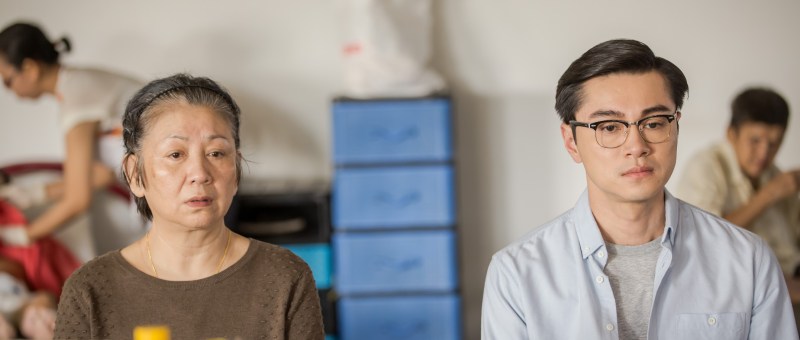
Concerto of the Bully (大樂師.為愛配樂, Fung Chih-chiang, 2018)

Concerto of the Bully posterRemember the heady heydays of the Hong Kong rom-com in which a series of zany, often entirely random adventures eventually led to true love? Director Fung Chih-chiang evidently does judging by the innocent charms of Concerto of the Bully (大樂師.為愛配樂) – a beautifully pitched soulmates thrown together romance with a kidnapping at its centre. For many things to work, they need to be in sync, as an unexpected utterance from the vacuous pop star boyfriend of the female lead points out, but sometimes you have to turn the volume down in order to hear the harmony.

Yung (Ronald Cheng Chung-kei) is a petty thug with a difference. Unable to cope with the noisiness of modern life which often pushes him into fits of erratic violence when overwhelmed, he lives out on a remote fishing raft and carries around with him a soothing track he discovered on the internet by an artist known as “Hit Girl”. His life becomes a lot more complicated when he returns home one evening to find a mysterious sack lying in the middle of the floor with a note reading “please feed” right above it. Yung’s no good gangster friend has kidnapped a young woman, Jamie (Cherry Ngan Cheuk-ling), after recognising her as the girlfriend of a famous pop star from whom he hopes to arrange a ransom. Yung is not very keen on this plan for several reasons but finds himself going along with it. Meanwhile Jamie, who is secretly “Hit Girl”, attempts to plan her escape by ingratiating herself with the guys while thinking about her unfinished composition to keep her mind off the potential danger of her predicament.

The central irony is that Jamie is a girl who loves noise – all the sounds of the world, natural and manmade, are music to her ears and part of the great song of the universe. Yung, however, prefers things quiet save for Hit Girl’s calming song. Forced to babysit Jamie, Yung begins to fall under her spell which is partly weaved solely to lower his guard so that she can escape, but soon enough both begin to get a glimpse of what it is that might be missing in each of their lives.

All the standard romantic comedy tropes are out in force – the boyfriend is a no good heel who isn’t keen on paying the ransom and already has someone else, while Yung is a noble and good man who has been brought low by his no good buddies who have once again gotten him into a lot of trouble. Yung’s inability to process sound turns out to be a life limiting condition which has forced him into a career of violence but Jamie’s musical philosophy eventually allows him to see “another world” – literally, as he re-imagines a crowd of street thugs performing an epic dance routine to Mozart’s Seranade No. 13 in G Major. Unmasked as “Little Fairy”, Hit Girl’s only fan, the shy and under confident Yung gets a new lease on life thanks to Jamie’s less than patient tutelage as she tries to convince him to help her complete her masterwork in time for the big concert finale.

Like her boyfriend said, sometimes it’s no good if it’s not in sync. Many things in the relationship of Yung and Jamie are fake – Jamie has been kidnapped and is taking care to be “nice” and “useful” to her captors, while the pair begin with playacting music through a series of homemade mock up instruments until the arrival of a beaten up tinny piano which might be just the sound Jamie has been looking for. Gradually, the melody begins to come together, working towards a graceful harmony even while the distant drums of trouble in the city continue to threaten their quietly growing romance just as it begins to hit a more authentic key. A strangely sweet love story with a kernel of darkness at its centre, Concerto of the Bully is a hopelessly innocent fairy tale about an unwitting musical genius who never learned to hear his own voice, and a melancholy songstress who finally finds the key to her musical dreams in an unexpected place, as they meet on a floating musical stage which is both silent and somehow alive with all the quiet joys of a melodious life.


Concerto of the Bully is screening in Chicago as part of the seventh season of Asian Pop-up Cinema on 2nd October, 7pm, at AMC River East 21 where Director Fung Chih-chiang and Art Director Chet Chan will be present for an intro and Q&A. Tickets on sale now!

Original trailer (English subtitles)

Sad Beauty (เพื่อนฉัน…ฝันสลาย, Bongkod Bencharongkul, 2018)

Sad Beauty posterToxic friendship poisons the lives of two young women each somewhat adrift in the modern Thai society in Bongkod Bencharongkul’s noir-infused tale of betrayals and frustrated futures, Sad Beauty (เพื่อนฉัน…ฝันสลาย). A former actress, Bencharongkul’s post-credit’s dedication may imply a degree of autobiographical inspiration, but the film’s uneasy mix of the upscale world of the showbiz elite and the relatively humble lives of the ordinary people on its fringes can be no accident as the two women at its centre struggle to maintain their lifelong friendship in the face of intransigent social pressures.

Yo (Florence Faivre), a famous actress and model, and Pim (Pakkawadee Pengsuwan), an ordinary young woman, have been friends ever since they were little. The friendship is close and intense, but Yo often over relies on Pim’s unwavering kindness, all take and no give, while Pim remains in awe of her beautiful and talented friend, unwittingly fulfilling the role of an unofficial assistant. Yo’s career has hit a rough patch thanks to an unwise public rant and subsequent refusal to apologise while her personal life is also threatening to implode thanks to an increasing drug and party habit. Pim maybe the only one able to prevent Yo’s self-destructive habits from going nuclear, but Pim has problems of her own – she has recently been diagnosed with cancer and, for a change, is now the one in need of care and support. Already strained, things go from bad to worse when the girls return home to Pim’s one night and discover her mother badly beaten by Pim’s drunken and abusive step-father who then turns on them. During the struggle, the step-father is killed and the two friends find themselves on the run with a dead body they don’t know how to get rid of.

A friend will help you move, a real friend will help you move a body – so the old adage goes, but the sudden introduction of crime on top of cancer and persistent narcissism injects another layer of complication into the friendship of the two women. Whether they like it or not they are now bound by something more than natural affection or loyalty and the increasing claustrophobia of their guilt forged connection cannot but paradoxically push them apart. Though Pim, who is perhaps in a way glad to have ended her mother’s suffering, seems to put the trauma of the crime and its aftermath behind her while consumed with mortal fear and the pain of her illness, Yo is haunted and even if her chastened attitude helps to put her career back on track, her self-destructive pursuit of sex and drugs and continues unabated.

When Pim tearfully revealed her cancer diagnosis to Yo, Yo promised she would be there for her no matter what. She promised the same thing again when Pim was trying to decide between chemo and “natural” treatments, but Yo is selfish and afraid – she fails her friend by refusing to accept the seriousness of the situation and offering only superficial reassurances that everything will be alright. Somehow or other, Yo manages to make even Pim’s suffering all about her, finally ready to be “supportive” only in time for the tragic finale in which she realises what she had only in losing it.

Strangely, the murder and its grisly coverup recede into the background – the real “crime” here is in the failure of friendship and the betrayal of a sacred trust. Yo took Pim for granted, relying on her for unconditional emotional support but refusing to offer much of anything in return. She basked in Pim’s admiration but also in her essential ordinariness as way of making herself feel superior, irritated when handsome men show an interest in Pim and not in her. Meanwhile Pim pines for her friend, longing for the reciprocity which is so defiantly absent yet also grateful for the sentiment of friendship and understanding (if also resentful) of Yo’s various reasons for retreating into solipsistic oblivion. This is perhaps the “sad beauty” of the title as the two women attempt to cling on to their friendship even while knowing that it must someday end, allowing the spectre of that final disappointment to poison what it is they have in the present.


Sad Beauty + introduction and Q&A with Director Bongkod Bencharongkul screens as part of the seventh season of Chicago’s Asian Pop-Up Cinema at AMC River East 21 on 26th September, 6.30pm. Tickets on sale now!

Original trailer (English subtitles)
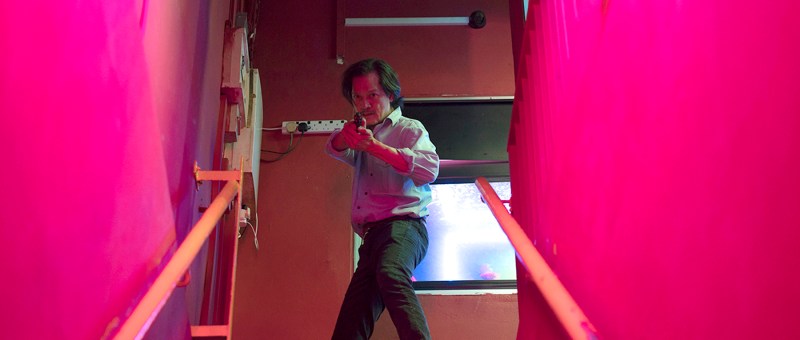
Smaller and Smaller Circles (Raya Martin, 2017)

Smaller and Smaller circles poster“Time and forgetfulness are the allies of abusers” – a Catholic priest reminds his students as part of a history lesson regarding the supposedly bloodless revolution that led to the end of the Marcos regime. Festival favourite Raya Martin dials things back a little in adapting the award winning novel by F.H. Batacan, Smaller and Smaller Circles. Batacan’s novel is often described as the first real Philippine crime novel – something echoed in the ridiculous views of a lazy and self serving police officer who believes there are no serial killers in the Philippines, yet the Smaller and Smaller Circles of the title lay the blame for the heinous acts its centre not at the feet of an evil madman but at those of the society which so progressively damaged his soul as to render it irreparable.

Our hero is himself a priest. Father Gus Saenz (Nonie Buencamino) is a man of faith and compassion who, despite all the failings he can see in it, still believes the Church is the best way to help those in need. He is sickened and appalled by the institution’s intransigence when it comes to bad priests and is preoccupied by one in particular – Father Ramirez, whose inappropriate conduct with children he has doggedly reported for more than a decade only for him to continually escape punishment. In addition to the priesthood, Father Gus is also a teacher of philosophy and a forensic scientist who works as an occasional consultant to the local police. It is in this capacity that he comes to discover a series of murders involving young boys whose bodies were discarded on a local rubbish dump deprived of their hearts, genitals, and faces. With the assistance of his junior priest, Father Jerome (Sid Lucero), and a reporter (Carla Humphries) who was once his student, Gus attempts to solve the mystery behind this horrific series of murders before the killer strikes again.

Martin breaks with genre norms by giving us an immediate insight into the killer’s psychology as we witness the prelude to the killings while listening to his own explanations of why they must occur. The picture he paints of his childhood quickly frames his crimes as a murder of the self as the killer indulges in a compulsion to kill the weak, targeting teenage boys and stealing from them not only the breath of life but the spirit of it too. The first of our circles is the Church – the bad priests whose abuses are sanctioned by their organisation and mitigated by the “good” they leave behind. Father Ramirez was shuffled on and now works for a children’s charity but Father Gus’ attempts to warn the charity’s director fall on deaf ears and then cost him his funding. Only when Father Ramirez’ financial improprieties are discovered is his position finally questioned.

The second ring is poverty. All of these boys were poor and many of them were not identified right away because aside from their parents (if they had them) nobody was going to miss them. The film opens with a scene of children running over a rubbish dump and as the father of the first victim explains, his son was one of many who supported their struggling families by combing over the left overs of the better off looking for anything which might still be useful. Our third ring is bureaucracy – when Fathers Gus and Jerome meet the local councillor, they are surprised to find that she is efficient and committed, keen to do whatever it takes to look after her constituents even if it means going up against the Church or the wider government. However, she knew nothing of the murders and though she is quick to grant Father Gus all the access he needs, it is partly her own efforts to provide essential services to the poor which have enabled the crimes as those who claim to want to help others are really only helping themselves and wilfully turning those same mechanisms back on the people who need them most.

As a man of faith Father Gus does his best, refusing to give up on the killer, trying to ease his burden whilst in grave physical danger. Set in the Philippines of the late 90s, Smaller and Smaller Circles is filled with those still trying to come to terms with the traumatic past but finding its unpleasantness echoing in unexpected places. As such it finds unexpected resonance in the world of 2017 in which life is once again cheap and compassion thin on the ground.


Smaller and Smaller Circles is screening as part of the seventh season of Chicago’s Asian Pop-Up Cinema on 19th September at 7pm, AMC River East 21, plus introduction and Q&A with director Raya Martin.

Original trailer (English subtitles)
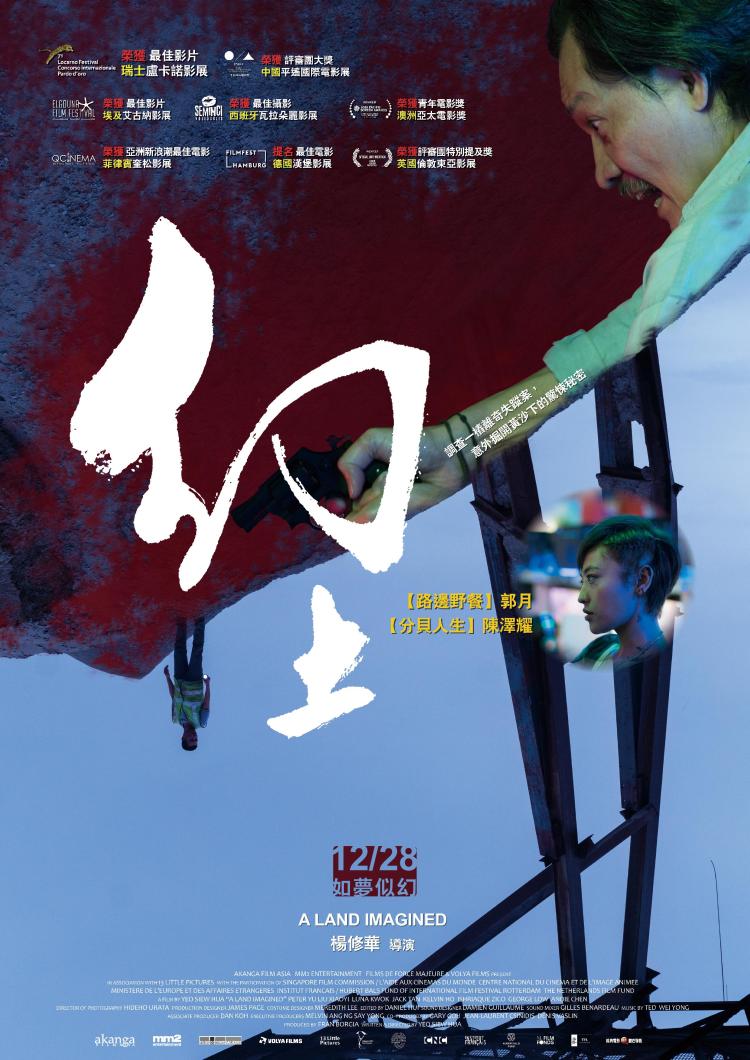
Adulthood (어른도감, Kim In-seon, 2018)

Adulthood poster 2Growing up is a funny thing, most of us are content to let it run as a background task while we get on with our daily lives but some of us are forced to contemplate the nature of “adulthood” from a transitionary perspective when confronted with independence delivered at an unexpected juncture. The debut feature from Kim In-seon, Adulthood (어른도감, Eoreundogam) is a coming of age tale but it’s also one about family, responsibility, integrity, and the social fabric as a teenage girl’s attempts to adjust to life alone are frustrated by the arrival of an irresponsible uncle with issues of his own.

14-year-old Kyung-un’s (Lee Jae-in) father (Choi Duk-moon) has just passed away following a lengthy illness. Her mother left when she was small, and now Kyung-un is all alone. The funeral is lonely, and Kyung-un is otherwise unaccompanied, without friends or relatives to assist in the business of mourning. That is, until a good-looking young man suddenly jumps on the bus to the crematorium and bursts into tears. Jae-min (Um Tae-Goo) claims to be the younger brother of Kyung-un’s father whom she has never met. Sceptical, Kyung-un has no other option than to allow Jae-min to invade her life even though she felt as if she was managing fine on her own.

However, Jae-min’s intentions turn out to be less than honourable. He’s a conman and a gigalo who’s forever failing in various scams and deceptions, and despite Kyung-un’s prudent caution towards him, he manages to trick her out of her dad’s life insurance money thanks to making himself her legal guardian on a pretext of saving her from a foster home. Being the clever little girl she is, Kyung-un manages to track her errant uncle down to a shady part of town, but the only way she’s getting her money back is if she consents to become Jae-min’s accomplice and pose as his daughter in order to win over his latest mark, lonely pharmacist Jum-hee (Seo Jung-yeon).

Forced to care for herself from an early age thanks to her father’s illness, Kyung-un is a mature little girl who can manage perfectly fine on her own, even dealing with complicated formalities like submitting death certificates and dealing with insurance companies. At 14 she probably shouldn’t have to do any of this alone but doesn’t want to lose her independence or have her life further disrupted by being forced out of her home and into foster care. Despite her natural caution there is perhaps a part of her that wants to believe Jae-min’s story, even if the other part of her is cloning his mobile phone and going through his bag to try and figure out what it is he’s after.

Jae-min, however, is a selfish man child perpetually chasing quick fixes and conveniently deciding to ignore whoever might end up getting hurt in the process, though it’s also true that he’s not completely unaffected by the pain he causes to others. His moral scruples do not extend to cheating his niece out of her father’s money which is all she has to live on and probably means she will also become homeless seeing as her landlord (who hasn’t even noticed her dad has died) is pushing the rent up. Eyes always on the prize, Jae-min’s dream of opening a Japanese restaurant is real enough and he doesn’t much care what he has to do to make it a reality.

However, when Jae-min and Kyung-un are forced to start playacting family for the lonely Jum-hee, a genuine connection is set in motion. As it turns out, there’s a reason for Jum-hee’s continued aloofness and fear to engage and her interactions with the “widowed” father and daughter do indeed begin to shift something inside her too. Despite all the lying and the natural mistrust, something true bubbles to the surface even if the continued deceptions threaten to push it all back down again.

In the end perhaps that’s what adulthood means, understanding that sometimes people tell the truth when they lie. Kyung-un and Jae-min, both orphans, both lonely, both doing “fine” on their own, nevertheless come to realise that perhaps it’s not so bad to be doing fine on your own with someone else. It’s not perfect, and perhaps it’s not what you wanted, but then that’s “adulthood” for you. A promising debut from Kim In-seon, Adulthood is a warm and empathetic look at different paths to maturity as a little girl and a hollow man bond in their shared sense of aloneness and come to realise that independence does not necessarily require solitude.


Adulthood gets its North American premiere as the opening night gala of the seventh season of Asian Pop-up Cinema which takes place in Chicago from 12th September to 14th November 2018. Director Kim In-seon and actress Lee Jae-in will be in attendance for the opening night screening at AMC River East 21 on 12th September for an introduction and Q&A. Tickets are already on sale via the official website.

Original trailer (no subtitles)

Asian Pop-Up Cinema Returns for Season Seven

DearEx

Chicago’s Asian Pop-Up Cinema returns for its seventh season from 12th September to 14th November with eight film screenings to take place at AMC River East 21 plus an additional nine films screening for free at various venues around the city.

Sept. 12, 7pm: Adulthood

Introduction and Q&A with Director Kim In-seon and Actress Lee Jae-in.

Adulthood

14-year-old Kyung-un meets her uncle Jae-min for the first time at her father’s funeral. Jae-min is, as it turns out, a conman and even cons his bereaved niece out of her inheritance. To get her money back, Kyung-un agrees to pose as Jae-min’s daughter so he can woo his next mark lonely pharmacist Jum-hee, but not everything goes to plan…

Sept. 19, 7pm: Smaller and Smaller Circles

Introduction and Q&A with Director Raya Martin

SmallerAndSmallerCirclesRaya Martin adapts the novel by F.H. Batacan in which two priests investigate a series of killings targeting young boys in the slums of Manila.

Sept. 25, 6.30pm: Namiya

Free screening at Claudia Cassidy Theater at the Chicago Cultural Center

Namiya banner

Three orphans hole up in a disused shop which used to belong to an agony uncle (played by Jacki Chan!) in Han Jie’s adaptation of the Keigo Higashino novel. Review.

Sept. 26, 7pm: Sad Beauty

Introduction and Q&A with Director Bongkod Bencharongkul

Sad Beauty

Actress Bongkod Bencharongkul steps behind the camera for her second directorial outing in which the friendship of two women is tested by the need to dispose of a body.

Sept.28: Singing with Angry Bird

Free screening at Illinois Institute of Technology. Time TBC.

SingingWithAngryBird

Korean Kim Jae-chang runs a children’s choir in Pune, India and has earned the nickname “Angry Bird” thanks to his fiery temper. Though the choir has had a positive effect on the children’s lives, some of the parents have yet to see the value and so Angry Bird has decided to train the parents alongside the children for a joint concert.

Oct. 2, 7pm: Concerto of the Bully

Introduction and Q&A with Director Fung Chih-chiang and Art Director Chet Chan 

ConcertoOfTheBully

Chow, a singersongwriter popular on the internet, has been captured and is being held against her will on a raft while waiting for her pop-star boyfriend to pay the ransom. Gifted with extremely good aural memory, she decides to offer “musical therapy” to the kidnapper in order to facilitate her escape…

Oct. 3, 7pm: When the Sun Meets the Moon

WhenSunMeetsMoon

Astrology fans Sun and Moon meet during a power cut following a freak rainstorm in 1992. They fall in love but Sun is sent away to boarding school and eventually leaves the country. Their love, however, endures…

Oct. 6: Any Way the Wind Blows

Free screening. Time/location TBC

AnyWayTheWindBlows

A civil servant accidentally invites the Tokyo Wind Orchestra to Yakushima by mistake having intended to invite a more prestigious organisation. Realising they weren’t wanted, the musicians attempt to leave the island but find themselves trapped by the civil servant who is desperate to cover up her error…

Oct. 24, 7pm: Walking Past the Future

Introduction and Q&A with director Lee Rui-jin and producer Zhang Min

Walking past the future still 1

Yang Yao-ting’s parents have been forced to return to their home village in Gansu after losing their jobs in Shenzhen but after 25 years pretty much everything has changed. Hoping to get her family a home in the city, Yang Yao-ting finds herself returning to Gansu as a volunteer in a series of high risk medical tests…

Oct. 26, 2pm: Ritoma

Free screening at Flashpoint Chicago

Ritoma

Ruby Yang’s documentary focuses on the unlikely popularity of basketball among nomadic tribes in Tibet.

Oct. 27, 2pm: Made in Vietnam

Free Screening at Chinese-American Museum of Chicago

MadeInVietnam

Thi Vo left Vietnam for Hong Kong as a child after the war, later emigrating to Canada when he was four years old. Thirty years later he attempts to find his father and discover the secrets of his past.

Nov. 8, 7pm: Dear Ex

Introduction and Q&A with Director Hsu Chih-yen.

Dear Ex still 1Chengxi’s dad has just died. He’d left the family sometime before and despite the best efforts of Chengxi’s mum, Chengxi knew perfectly well that it was to be with another man. The problem now is Chengxi’s dad has left everything to his new partner Jay and Chengxi’s mum is not at all happy about it…  Review.

Nov. 3: Asian Three-Fold Mirror 2016: Reflections

Free Screening at Illinois Institute of Technology. Time TBC.

A co-production between the Tokyo International Film Festival and Japan Foundation Asia Center, Asian Three Fold Mirror: Reflections features three short films – one from Japan, one from the Philippines and another from Cambodia.

Shiniuma – Filipino director Brillante Ma Mendoza tells the story of Marcial who is forced to return to the Philippines after years living in Japan.

SHINIUMA-AsianThreeFold

Pigeon – Isao Yukisada follows a Japanese man living in Penang who raises pigeons on his roof.

PIGEON-AsianThreeFold

Beyond the Bridge – a Japanese man building a bridge in Phnom Penh falls in love with a local girl and vows to marry her, but…

Beyond The Bridge

Nov. 11, 1pm: Happy Hour

Free Screening at The Screening Room at the Ambassador Hotel

HappyHour

Ryusuke Hamaguchi’s five hour exploration of the everyday lives of a group of middle-aged women living in Kobe.

Nov. 14, 7pm: One Cut of the Dead

Introduction and Q&A with Actor Takayuki Hamatsu

One Cut of the Dead still 1

A horror shoot is invaded by real zombies in Shinichiro Ueda’s anarchic comedy! Review.

Full details for all the films are available via Asian Pop-Up Cinema’s official website. You can also keep up with all the latest news by following Asian Pop-up Cinema on Facebook, Twitter, and Instagram.