Dying to Survive (我不是药神, Wen Muye, 2018)

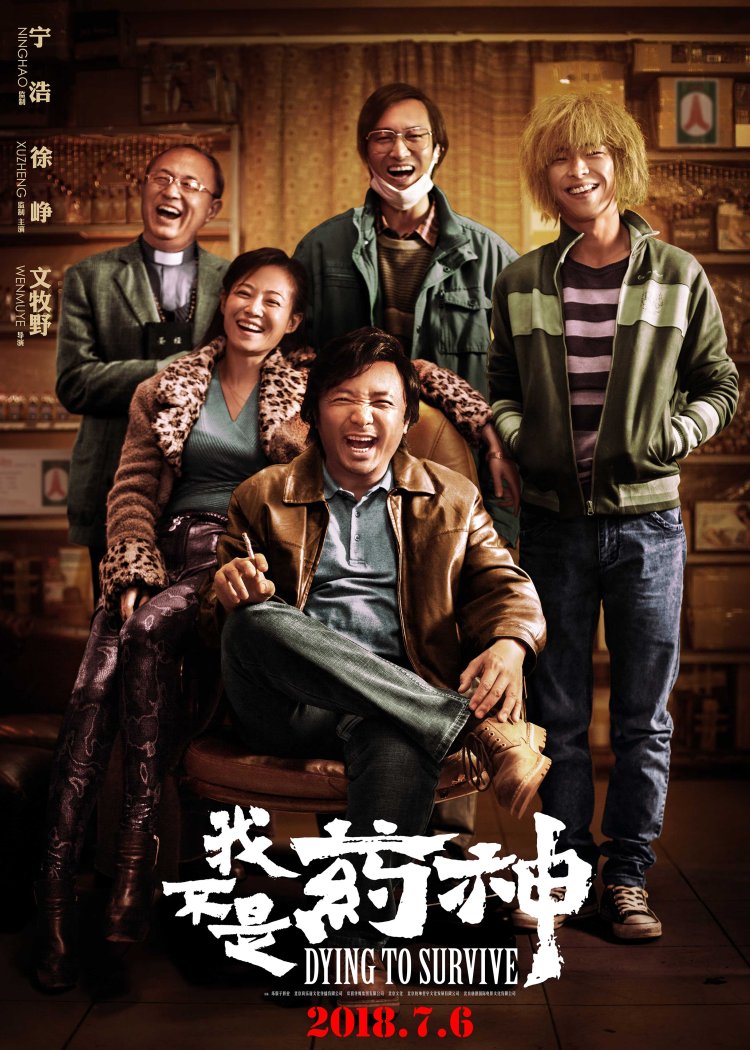
dying to survive poster 1Big box office Chinese comedy continues to run rings round the censors in Wen Muye’s Dying to Survive (我不是药神, Wǒ Bú Shì Yào Shén). Not only does the film display on screen protest movements and tacitly imply that sometimes it’s OK to break the law when you think the law is wrong, but it also dares to criticise the state both for its slowness to introduce socialised healthcare provisions and for its failure to moderate increasing wealth inequality in the rapidly expanding modern economy.

In Shanghai in 2003, our hero Cheng Yong (Xu Zheng) is the proprietor of a shop selling “Indian God Oil”. A divorced father, he is involved in a volatile custody dispute with his ex-wife who has remarried and wants to take their son abroad. Meanwhile, he’s behind on his rent and the god oil business is not exactly booming. That is, until he receives an unusual business proposition. Lv (Wang Chuanjun), a young man suffering from chronic myelogenous leukemia, asks him to begin importing a knock off Indian cancer drug which is a clone copy of the big brand variety at a fraction of the cost. The Indian drug is banned in China, but, Lv argues, not because it’s unsafe – only because Big Pharma is determined to protect its profits at the cost of people’s lives. Yong is not convinced. He knows there are heavy penalties for trafficking “fake” medications, but he needs money for his father’s medical care and to fight for custody of his son and so he decides to give it a go, if for mercenary rather than humanitarian reasons.

Yong’s transformation from schlubby snake oil peddler to (medical) drug dealer extraordinaire is a swift one and perhaps a satirical example of amoral capitalistic excess in his series of moral justifications which allow him to think he’s better than Big Pharma because the price he’s charging is lower even while knowing there are many people who still can’t afford it. Nevertheless, he quickly discovers he has competition. The even more dubious Professor Zhang (Wang Yanhui) claims to have a wonder drug that does the same thing, only it’s really paracetamol cut with flour. Zhang’s duplicity annoys Yong, not just from a competitive angle, but from a humanitarian one as he finds himself sympathising with the poor men and women who are unable to afford the extortionate fees imposed by the mainstream drug companies.

Afraid of the consequences, Yong gives up the drug trade and goes legit, becoming a successful textile merchant rich beyond his wildest dreams. Conveniently, it’s at this point his humanitarianism begins to reawaken as he’s brought back into contact with a sickly Lv who tells him that the smuggling ring has since dissolved. Zhang, irritated by Yong’s moralising, tells him that no real good will come of the “fake” drug trade because the “disease of poverty” can never be cured. Zhang does indeed have a point. These people are dying because they’re poor and have been deemed expendable. Yong’s change of heart may be all for the good, but it’s also fuelled largely by the fact he can now afford not to care very much about money which means he is free to care about other people’s welfare.

Then again, the police chief remonstrates with a conflicted underling that the law trumps sympathy. By this point, they have realised that the drug smuggling ring is close to a public service and people will die if they arrest the ringleaders, but their hands are also tied by the need to preserve order through enforcing the law. The law, however, is also corrupt as we see by the direct presence of Big Pharma sitting right in the incident room and asking the police to act on its behalf. Big Pharma would argue that it invested heavily in the research which led to the medical breakthrough and is entitled to reclaim its costs while those selling knockoffs are nothing more than pirates guilty of intellectual property theft, but the police has a duty to protect its people and a significant conflict when the “victim” is wilfully misusing its economic and political power to coerce it to do their dirty work.

This being a Mainland film, crime cannot pay but Yong manages to emerge from his straitened circumstances in heroic style as he stands both remorseful for having broken the law and angry that he even had to. A series of closing intertitles is quick to remind us that following the real life events which inspired Dying to Survive, the Chinese state began to reconsider its health polices, relaxed the law on “fake” drug trafficking, and took measures to make care more affordable to all. A subversive treat, Dying to Survive is the rare Chinese film which seems to suggest that civil disobedience is an effective weapon against an unfair society, making a hero of its lawbreaking humanitarian as he, ironically, learns to put the collective interest before the individual.


Dying to Survive was screened as part of the 2019 Udine Far East Film Festival.

International trailer (English subtitles)

The Land of Peach Blossoms (世外桃源, Zhou Mingying, 2018)

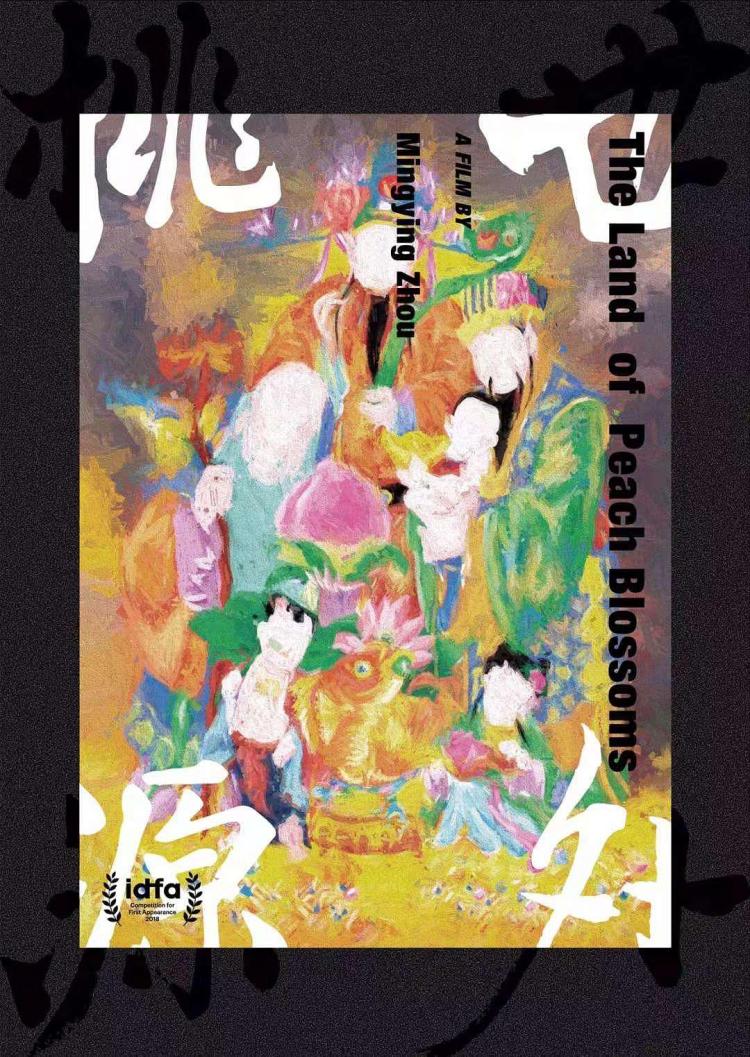
Land of Peach Blossoms posterIn Tao Yuanming’s 5th century fable, The Land of Peach Blossoms (世外桃源, Shìwàitáoyuán) is a mythical utopia where people live in peace and harmony knowing nothing of the outside world. Zhang Derong, the founder of the Feast of Flowers restaurant, saw himself as creating something similar – a place beyond the outside world founded on collectivist principles where they make healthy people healthier through “emotional catering”. If it were not immediately obvious, the founder of Feast of Flowers is not entirely on the level but has promised great things to the young men who work in his restaurant and look up to him as if he were some kind of more ethical, caring Jack Ma.

His most devoted pupil, Tang Guangbin used to work in a nuclear power plant and had a sea view from his company dorm but he likes it here better because he feels “free” in his heart and soul. Like Guangbin, Zeng Qi also feels that as long as they follow The President’s teachings they will make the Feast of Flowers bloom all around the world spreading health and happiness as they go. The Feast of Flowers is indeed a cheerful place filled with dancing and a faux ancient fantasy Chinese village atmosphere. There is also, however, a dark side which will become apparent to the young hopefuls the longer they stay in the garden.

The truth becomes apparent first to the practically minded Wang Peiyuan who turned down more lucrative jobs to work at the Feast of Flowers because he bought into Zhang’s ambitious business plan and assumed there would be more opportunities down the line. Not only is his pay cheque lower than promised because of all the “training” he has to pay for, but it’s so far below market rate that he’s worrying about paying his mortgage and being able to feed his wife and child. Meanwhile, Zhang waxes lyrical about work ethics and insists that “training” his workforce until 5am and then starting again at 8 is all part of his grand plan to turn them into top entrepreneurs.

Guangbin excuses himself to a friend on the phone in case he sounds as if he’s been “brainwashed” as he fiercely sells Zhang’s philosophy as not only a way to become rich and successful but to make the world a better, more caring place – the kind of place he perhaps assumes China was before the ‘80s reforms which opened it up to Capitalism. Of course, Guangbin is too young to remember what it was like back in the ‘70s, but hears people tell him about solidarity and job security and he’s understandably envious. He’s made a big investment in Feast of Flowers and so it takes a long time before he’s prepared to accept that he is being exploited by an unscrupulous charlatan. Once he and some of the other guys figure out there won’t be any expansion of Feast of Flowers, prime jobs, or bonuses, they want to quit but they can’t because they’re in hock for all this “training” and will lose their unpaid salary because, ironically, they don’t have effective work place protections. 

Zhang runs the place as if it were a work cadre and himself the Chairman. He commands absolute loyalty and requires employees to self criticise, running regular hunts to find the most “self centred” of the workers with many keen to jump at the bait and even to accuse others on cue. Those who disagree and want to leave are dismissed as having “too many personal thoughts and opinions” when they should be concentrating on understanding The President’s philosophy. Guangbin once felt free inside the Feast of Flowers, but later came to feel that outside was “a world of freedom” and inside “a prison full of darkness” from which there is “no escape”.

As if to ram his point home, Zhang makes the workers listen to Red Detachment of Women and has a bizarre obsession with “retaking” the Diaoyu Islands (also known Senkaku islands) from the Japanese, even staging a surreal play in which the Feast of Flowers soldiers personally defeat the Japanese army and capture Japanese prime minister Shinzo Abe while Moon Over Ruined Castle plays mournfully in the background. Disillusioned by modern China’s lurch towards soulless consumerism and yearning for a simpler time in which people supported each other in common endeavour (but secretly still wanting to get ahead), the youngsters at Feast of Flowers bought into Zhang’s duplicitous nonsense and allowed themselves to be brainwashed into serving his ideals rather than their own. The parallels are obvious, but Guangbin may sadly be right in believing that there is no escape from the soul crushing exploitation of the modern economy which promises so much and yet delivers so little.


The Land of Peach Blossoms screens as part of the 2019 Chinese Visual Festival at King’s College London on 5th May, 7.15pm.

Original trailer (English subtitles)
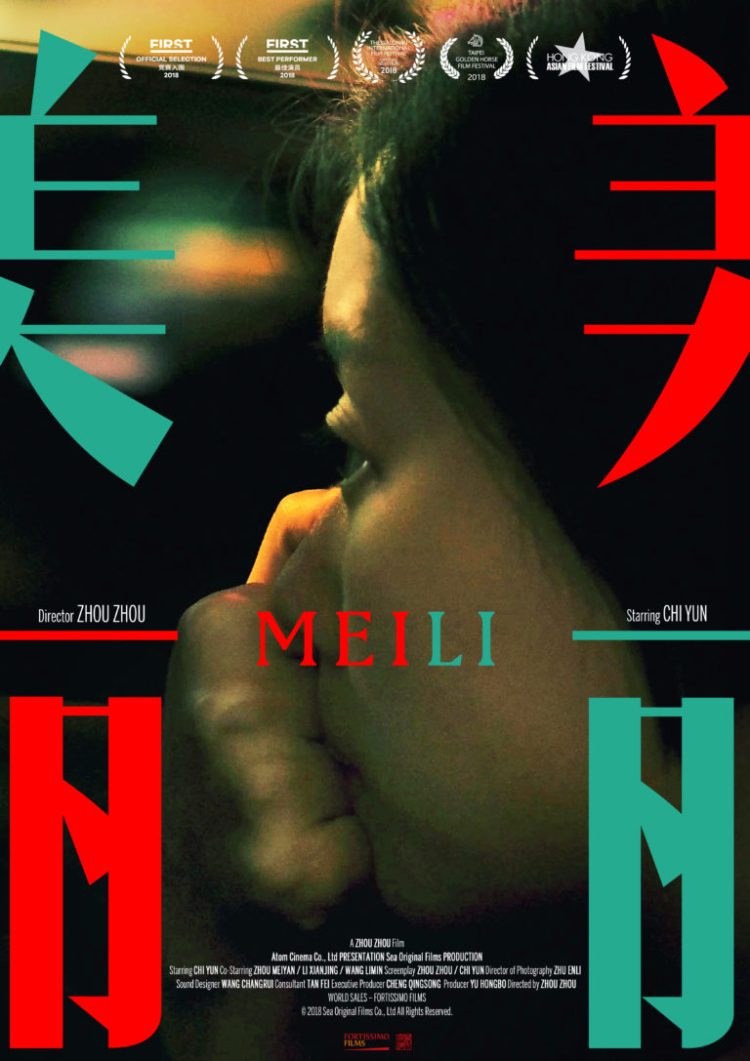
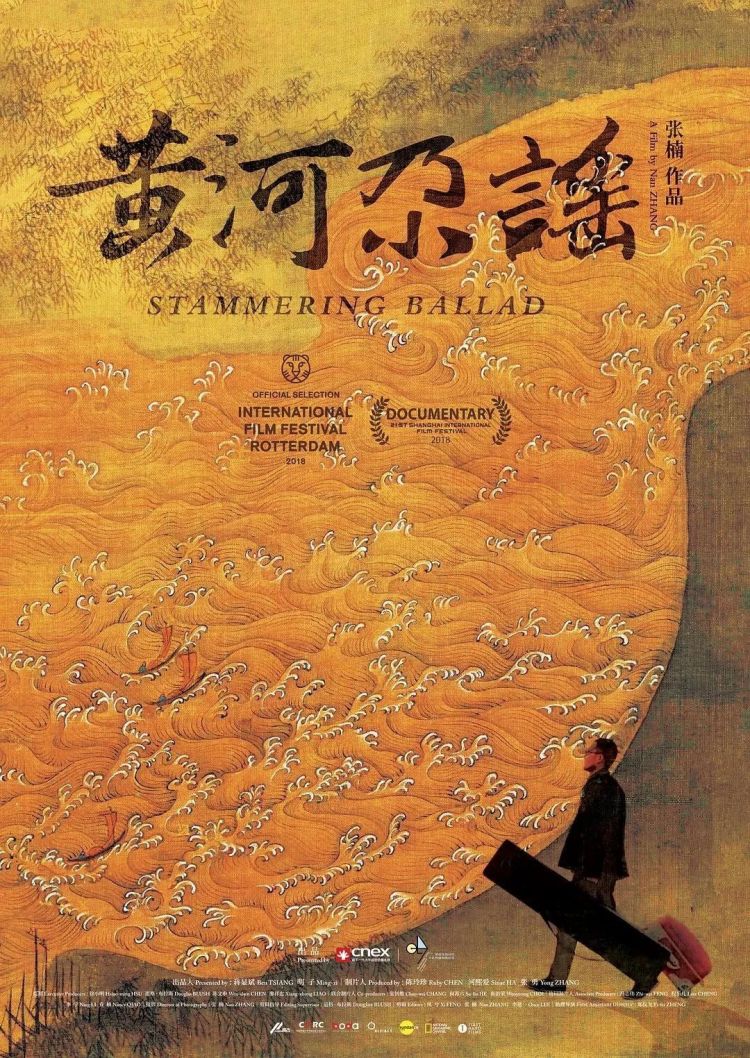
Stammering Ballad (黃河尕謠, Zhang Nan, 2018)

Stammering ballad poster“We all live our lives in silence” according to the subject of Zhang Nan’s Stammering Ballad (黃河尕謠, Huáng  Gǎ Yáo). A love song to a disappearing rural landscape, Zhang’s beautifully composed documentary follows an aspiring folksinger whose dreams of fame have taken him away from the land he loves so much as he tries to ensure the survival of traditional village culture by singing in the cities.

A college dropout, Zhang Gasong embraced his love of folk music while too embarrassed to return home. Honing his craft as he goes, he’s been travelling around the country for the last seven years going wherever someone wants to hear him play – though occasionally they might have to front him the train money to help him get there. Gasong is, it has to be said, an eccentric young man. A former bandmate laments Gasong’s “poor social skills” which led to the band’s breakup, while also remaining exasperated that Gasong just up and left, disappearing for years on end without a word, with little regard for their friendship. Still, he seems to have forgiven him enough to agree to play for Gasong’s big shot on China’s Got Talent.

China’s Got Talent might seem like a left field move for a traditional folk musician, but Gasong has his eyes on the prize. He wants to be the kind of star where everything gets done for him and all he has to do is play, but for the moment he’s busy touring small music venues and festivals singing for his supper and hoping the youth of China who have, like himself, abandoned their village homes for the convenience of city life, will eventually re-embrace the song of the earth.

That aside, Gasong has a conflicted attachment to the pastoral past. He always hated farming and ironically claims to loathe the familiar smell of wheat germ and freshly tilled soil, not to mention the physical toll of of the work. Nevertheless he maintains an attachment to the landscape and views it almost as an inheritance of which he has been robbed by the modern China. The place where he grew up is now largely in ruins after having been relocated to avoid a drought, and though he bitterly misses the familiar black donkey that once lived in the village he has to remember that it’s long been sold. A traveller now himself, Gasong is losing connection with his land and with his family, but desperately clinging to his ancestral legacy through the medium of song.

In the end, China’s Got Talent didn’t really get Gasong, but perhaps that’s for the best. Cameramen expecting disappointment found only relief when they came to interview the band afterwards. Though it’s a shame that the performance will never be aired, and the beautiful rural folksong will not be heard by the millions of Chinese viewers almost certainly tuning in for more energetic fare, Gasong remains undaunted. Wandering off once again he loses touch with his band members and resumes his nomadic travels as an itinerant musician. The grand irony is that these songs, so intrinsically linked with place, are themselves travelling and echoing in new locations looking for new pastures in which to take root as the modern China flattens mountains to build factories and moves families on from their lands while sending its young into the cities all alone.

Gasong, who has stammered since childhood, has found his voice through music though often struggles to make that voice heard in boisterous modern society. Like many of his generation he too has realised he cannot stay in his pastoral paradise, but has also discovered that the city doesn’t suit him. Most at home in the wide open spaces of his native Gansu, Gasong roams the land singing the song of the soil as he goes in the hope that it will one day echo and send the sound of home all around the world.


Stammering Ballad screens as part of the 2019 Chinese Visual Festival at King’s College London on 5th May, 1pm.

Original trailer (English subtitles)

Four Springs (四个春天, Lu Qingyi, 2018)

Four Springs poster“Time flies. Life is so short, isn’t it?” a cheerful relative remarks lamenting that the family only comes back together once a year during the first of Lu Qingyi’s Four Springs (四个春天, Sì gè Chūntiān). Rather than follow his family through four seasons for one year, Lu Qingyi observes his ageing parents at yearly intervals as time both moves on and doesn’t delivering joy and sadness in equal measure.

Beginning in the spring of 2013, Lu Qingyi returns home to the remote small town of Dushan where his parents have lived for decades. The family comes together again, if only briefly, to ring in the New Year much as they always have. During the second New Year, Qingyi is joined by his sister Qingwei but there is sadness on the horizon as we discover she is coping with serious illness though the family once again celebrate joyously recalling the past more than dwelling on the future. Subsequent reunions are born both of joy and sorrow as family illnesses take hold, bringing people back together again if only to unite them in sadness and anxiety. Yet life, as always, rolls on just the same.

Briefly including shots of himself, Qingwei focusses on the figures of his parents – retired teacher Yunkun and mother Guixian. Though they must have lived through some turbulent times, the couple are blissfully happy in each other’s company and used to taking pleasure in the simple things such as the swallows which occasionally nest in their roof, or making a new hive for some migratory bees come to visit. The natural world is very much a part of their existence as they make time for hiking out in the mountains, tending graves and enjoying the scenery singing always as they go.

Music, indeed, seems to be an important part of life in Dushan and song is never far away from the lips of of Qingwei’s parents who find themselves humming folk tunes or stretches of traditional opera. Yunkun makes use of his computer to listen to and edit tracks while the rattling of his wife’s manual sewing machine echoes from the next room. Though many things here are “traditional”, the couple are not so much trapped in the past as happy with what they have. Yunkun has embraced his computer, but a later attempt to introduce the couple to smartphones and teach them to use the WeChat app ends in hilarity as they attempt to process the extreme modernity of instant communication.

Technology is both a privilege and a curse, as the family discover one New Year in being deprived of watching the spring gala thanks to an ill timed power cut which also leaves them inside in the cold but perhaps makes the fireworks a little brighter. As the New Year becomes marked by its absences – the empty chairs and increasing silences, technology also provides a path back to happier times through the home videos filmed in previous years by Qingyi and his father which provide a record of ordinary family life both happy and sad in recalling past springs never to come again.

Time itself becomes a theme as it marches on invisibly. Qingyi’s cheerful parents are thankfully in good health, though his mother wishes they could dance again like they did in the old days and worries what will become of the one left behind when the inevitable happens. Nevertheless, the New Year arrives as it always does, preparations are made, too much food is cooked, the family eats, and sings, and remembers. Lu Qingyi’s Four Springs is a touching evocation of the joys and sorrows of being alive in his loving tribute to his goodhearted parents who have learned to find the tiny happinesses in the every day even in the midst of unbearable sadness.


Four Springs screens as part of the eighth season of Chicago’s Asian Pop-Up Cinema on April 7, 2pm & 5pm, at Heritage Museum of Asian Art, 218 West 26th Street.

Original trailer (English subtitles)
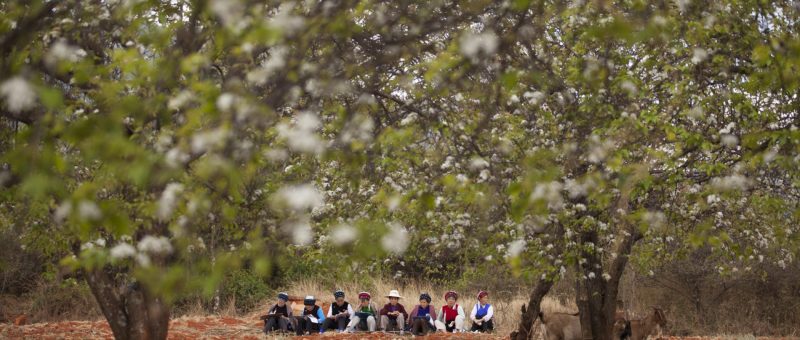
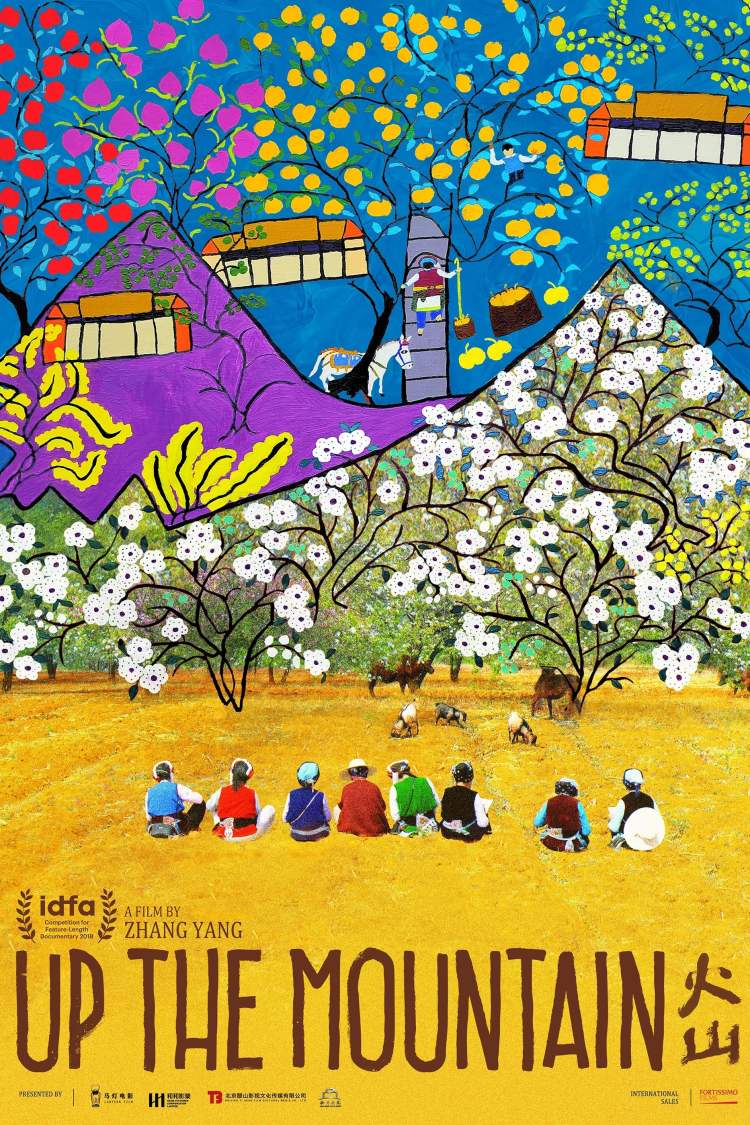
Up the Mountain (火山, Zhang Yang, 2018)

Up the Mountain posterThe story of modern China has often been one of migration as the young find themselves pulled towards the cities, sending their children back to the countryside to be raised by relatives while they earn what they can away from home. As the economic situation improves, however, there may be motion the other way. Successful artist Shen Jianhua moved from the bustling metropolis of Shanghai to a remote mountain village where he practices his art and opens his home to all who have an interest in learning from him.

Shen’s mountain home is an interesting exemplification of a blend of old and new. Though he seems to prefer the simple life, the renovated property is decorated in a modern, though fairly minimalist, style and the family do not appear to want for anything. Their living is not austere and Shen does not object to the idea of modernity, as the toys bought for his baby son seem to testify while his apprentice chats on an iPhone and his teenage daughter listens to music while she runs.

Nevertheless, life in the mountains is lived slowly and there are things which must be done which is why we see apprentice Dinglong continually chopping firewood while the gaggle of old ladies who make up the majority of Shen’s pupils come back and forth with vegetables preparing tasty food to be shared communally by the small family that has grown up around Shen’s art practice. It does not appear that the ladies pay anything for Shen’s instruction or that he draws much of an income for it, but all seem to benefit from a shared sense of creative community. One old lady describes her life before art as “stagnant, like old water”, but now she feels reenergised and happily gives away her finished paintings to her bemused children as something to remember her by when she’s not around.

Not everyone is as happy for the old women as they seem to be for each other, however, as we notice in the persistent discord between one older bickering couple. Dinglong too remains conflicted. Still young, his parents are beginning to pressure him to give up painting and the mountains to settle down. Dinglong, like many young men, doesn’t really want to and so is surprised and dismayed when Shen’s advice is more conservative than he might have expected, encouraging him to obey his parents’ wishes and reminding him that good art is founded on a wealth of life experience. Truth be told, Dinglong has a girlfriend already and is perhaps edging towards marriage but the snag is that her parents are from a nearby city. They’d rather their daughter marry nearby and would worry about her living in a remote village they perhaps assume is much more rustic than it really is. The other problem is that artists don’t earn much and Dinglong admits he only paints one picture a year with no guarantee it will sell. As a son-in-law, he’s not a particularly good catch.

Dinglong’s dilemma is perhaps unusual, most of the other youngsters are desperate to leave the country for a better life in the cities no matter how illusionary it might turn out to be. Then again, his resistance is perhaps more understandable as he complains to Shen that he is being given almost no choice in his future as everything is being sorted out by his fiancée and the parents with him the only one in favour of his staying in the mountains. His future wife has a point, however, when she objects to raising children in the village without access to a good school. Shen and his wife are educated people and they’ve been able to teach their teenage daughter at home but Dinglong is a rural boy and they won’t have the resources to give their children the best start in life unless they travel to a place those resources might be found.

Reluctantly, Dinglong is forced away from the simple, traditional life which seems to suit him best while his wife remains unsympathetic to his attachment to the village and its guardian god. Meanwhile, Shen’s life carries on much as before even after the birth of his baby son who put in an appearance a month early to be born in the middle of New Year. Zhang captures the ancient rhythms of the traditional village through its rowdy, colourful festivals filled with joy and excitement but also sees the ways in which it is changing. One older lady enlists Shen’s help to build a bathroom on her property because her daughter was too embarrassed to bring a prospective husband home to a house without one (and a daughter getting married is after all the most important thing), creating a beautiful space dedicated to modern ideas of relaxation and serenity rather than the efficient austerity usually associated with rural life. The young might not be able to stay, but given time they may return and the mountain will be waiting for them with patient warmth.


Up the Mountain (火山, Hshān) screens as part of the eighth season of Chicago’s Asian Pop-Up Cinema on April 6, 2pm, at Heritage Museum of Asian Art, 218 West 26th Street.

Original trailer (dialogue free)

The Crossing (过春天, Bai Xue, 2018)

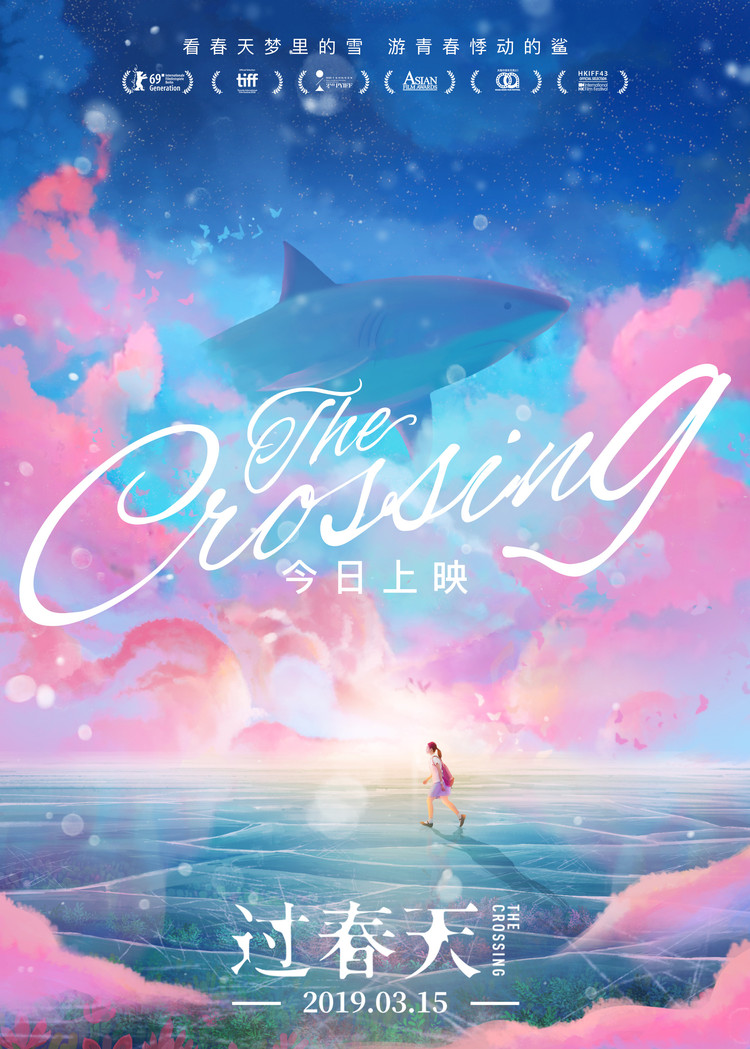
The Crossing posterReally, when it comes right down to it, a border is not much more than an imaginary line drawn across a piece of paper intended to bring order to a formless world. People have fought and died over the positioning of such lines for centuries, but then when all is said and done the boundaries which matter most are the internal ones and everybody has their lines they will not cross. An internal war over the nature of that line is very much at the centre of Bai Xue’s melancholy coming of age drama The Crossing (过春天, Guò Chūntiānin which a young girl living a life on top of borders geographical, emotional, and legal, begins to discover herself only through transgression.

It’s Peipei’s (Huang Yao) 16th birthday, but the most important fact about that for her is that she is now of legal working age and can get a part-time job. Peipei’s parents split up some time ago and now she lives with her flighty mother (Ni Hongjie) in Shenzhen while attending a posh high school in Hong Kong where she doesn’t quite fit in considering her comparatively humble background. This is brought home to her by her insensitive best friend Jo (Carmen Soup) who wants the pair to go on holiday together to Japan at Christmas while full-well knowing that there is no way Peipei can get the money together in time. Desperate to go, Peipei has been selling cellphone cases at school and now has her part-time job but it’s all very slow going. When Jo convinces her to bunk off and party with a bunch of ne’er-do-wells she ends up getting herself involved in a cellphone smuggling operation thanks to Jo’s no good boyfriend Hao (Sunny Sun). 

Peipei’s problem is the time old one of falling in with the wrong crowd, but then we most often catch her alone and it’s a lonely figure she cuts through the busy streets of her bifurcated world. Young but tough and angry, Peipei thinks she knows what she’s doing but is caught on the difficult dividing line between adolescence and adulthood and her attempts to claim her independence are filled with determined naivety. Resentful of her mother’s seeming indifference and parade of useless boyfriends, she wants to grow up as soon as possible but it’s not so much the daring and adventure that draws her into the orbit of Sister Hua’s (Elena Kong may-yee) gang of thieves as the camaraderie. Peipei likes being part of a “family”, she likes the maternal attentions of the spiky Sister Hua, and she likes being valuable even if on some level she realises that her usefulness will fade and that her growing loyalty to the gang is largely one sided.

“The big fish eat the little fish. Never trust men” Sister Hua later advises her, and it is indeed good advice if offered a little too late. Peipei knows she’s a little a fish, which is perhaps why she sympathises so strongly with the miniature shark trapped in a tank at the palatial mansion owned by Jo’s absentee aunt. Nevertheless, she tries to swim free only to find herself sinking ever deeper into a murky underworld she is ill-equipped to understand. Her first anxious crossing with a handful of iPhones in her backpack is a fraught affair, but carrying it off without a hitch an oddly empowering experience. Even so, when Sister Hua considers swapping the phones for a gun Peipei hesitates. In essence it’s the same – perhaps it doesn’t really matter what the cargo is, and Sister Hua’s “love” is indeed dependent on a job well done, but the stakes here are sky high. It’s not such a fun game anymore, as Peipei realises spotting a badly wounded gang member hovering outside having apparently received punishment for some kind of transgression.

Meanwhile she finds herself in another kind of interstitial space altogether when caught between best friend Jo and bad boy Hao. Jo, spoilt and self-centred, assumes her family will send her abroad to study and is later shocked by the realisation that her sexist dad thinks she’s not worth it, expects her to marry young in Hong Kong, and intends to invest all the money in her brother instead. Jo didn’t care much for Hao before and even jokingly offered to bequeath him to Peipei when she left, but now all her dreams are crumbling and she suspects he’s losing interest it’s a different story. Playing with fire, Peipei finds herself drawn to Hao who becomes something between white knight and big brother figure in the confusing world of crime until his protective instincts begin to bubble into something else. The pair bicker flirtatiously but also shift into a shared space born of their mutual dissatisfaction and desire to gain access to the Hong Kong inhabited by the likes of Jo whose vast wealth has left her blind to her own privilege.

Peipei crosses lines with giddy excitement, but only through burning her bridges does she begin to discover her own identity caught as she is between Hong Kong and China, between rich and poor, between the going somewheres and not, and between innocence and experience as her exciting adventure in the world of crime eventually blows up in her face. A rather strange title card informing us that efforts to limit smuggling at the border have been redoubled (seemingly ripped right out of the Mainland censor’s notebook) finally gives way to something calmer and more meditative as Peipei awakens to a new understanding of herself and the world in which she lives, looking out instead of up and ahead rather than behind as she resolves to keep moving forward as if there were no more lines to be crossed.


Currently on limited release in UK cinemas.

International trailer (English subtitles)

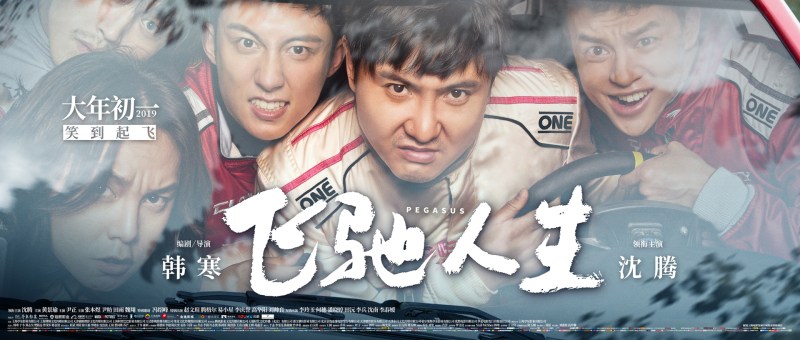
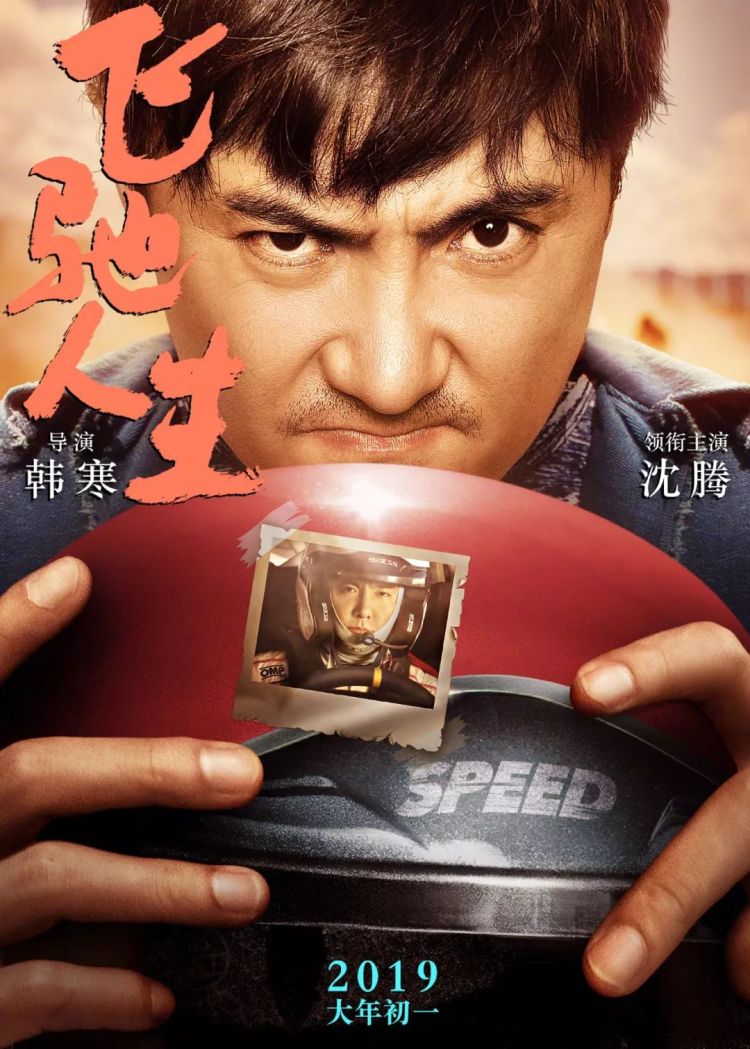
Pegasus (飞驰人生, Han Han, 2019)

Pegasus poster 1Traditionally speaking, New Year has often been a time for reconsidering one’s life choices, but can it ever really be too late to make up for past mistakes and charge ahead into a better future? The hero of Han Han’s New Year racing drama Pegasus (飞驰人生, Fēichí Rénshēng) is determined to find out as he tries to bounce back from disgrace and failure to prove to his young son that he was once a great man and not quite the hangdog loser he might at first seem. His battle, however, will be a tough one even with his best guys by his side.

Zheng Chi (Shen Teng) dreamed of racing glory and won it. He was a champion, the face on billboards across China, but a minor scandal put paid to his success and his driving and racing licenses have been suspended for the last five years during which time he’s been humbled and lived a workaday life as a fried rice stall vendor raising a young son alone. Now that his suspension is up for reconsideration, he’s beginning to wonder if he might be able to return to his rightful place at the centre of the podium but he’ll have to eat a considerable amount of humble pie if he’s to convince anyone that he’s a person worthy of respect now that he has nothing.

Director Han Han is, among other things, also a rally driver himself though his positioning of the sport within his tale of middle-aged loserdom is a slightly awkward fit. Racing is an expensive hobby, it quite literally relies on the involvement of those who have vast resources of disposable cash they can use to sponsor drivers so they can improve their equipment. Though a driver’s skill, and their relationship with a co-driver, are not insignificant parts of the equation, it is nevertheless true that money rules all when it comes to buying advantage (perhaps much like life).

Chi’s problem isn’t just his age, but that he’s up against extremely rich young guys with inherited wealth like his rival Zhengdong (Huang Jingyu) – a pretty boy with celebrity following and seemingly infinite resources. Han sets Chi’s struggle up as one of the chastened everyman – someone who came from nothing and made it only to crash and burn but still has the desire to get up and try again. He struggles on through various obstacles including bribing a driving instructor to get his licence back and charming a suspension board into letting him back in the game but discovers that friendships formed when successful might not survive a fall from grace. He can’t get the same kind of access as he could when he was riding high and no amount of chutzpah will make up for the disadvantage incurred through not having the kind of wealth that enables Zhengdong’s ongoing rise to glory.

Nevertheless, perhaps Zhengdong is simply a realist when he advises those looking for absolute fairness not to bother getting involved with racing. He’s not a bad guy, if somewhat insecure in feeling as if his own success has been enabled only by Chi’s fall from grace and perhaps he wouldn’t be top of the podium if the best driver hadn’t been hounded off the track. What we’re left with is an awkward admission that what makes the difference is men like Zhengdong deciding to feel philanthropic, though in this case he does so out of a sense of sportsmanship and a not entirely altruistic desire to prove himself by ensuring the participation of a worthy rival. Given this boost, Chi’s quest necessarily leaves the realm of the everyday loser and returns to the rarefied one of success enabled by privilege.

The final messages are also somewhat ambivalent in their death or glory, live full throttle intensity as Chi’s lectures on driving become lectures about life, affirming that those who win are the ones who drive fastest while making the fewest mistakes. Chi is not unencumbered, he has his son and therefore a responsibility to another which is sometimes forgotten in his own quest for glory which, we are reminded, carries risk and danger. Perhaps what we’re asked is if the gentle pleasures of a simple life selling fried rice for decades are worth giving up the hyper acceleration of a life measured in seconds following a dream. Chi might have found his answer, but it comes at a cost and he’s not the only one who’ll be paying it. As New Year messages go, it’s a decidedly mixed one which might not offer much positivity for the average middle-aged loser longing to relive their glory days in service of a dream which might long have flickered out in an increasingly unequal society.


Currently on limited release in UK cinemas.

Original trailer (English subtitles)
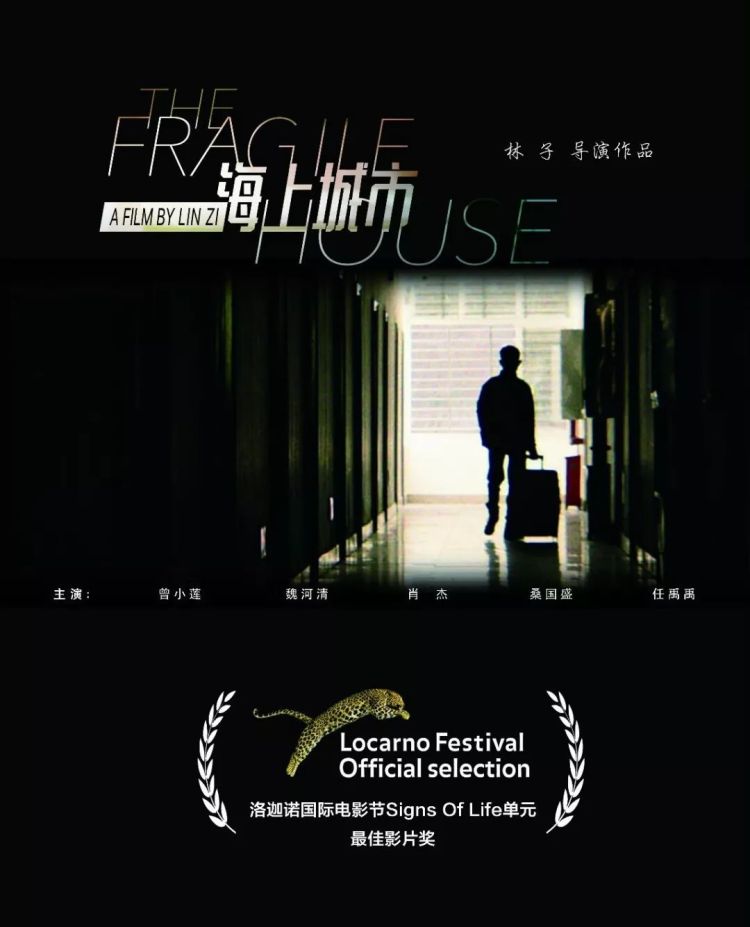
The Fragile House (海上城市, Lin Zi, 2018)

thefragilehouseposterAmong the many concerns of recent Chinese cinema, economic inequality and the fate of the family loom large. Lin Zi’s debut, The Fragile House (海上城市, Hǎishàng Chéngshì), neatly brings the two together in the tale of one ordinary family who’ve managed to carve out a degree of comfort for themselves but at great cost. Economic strain threatens the very idea of family, or at least of “family” as has traditionally been defined. The Huangs pay their respects to their elders and enact the rituals expected of them, but remain mere individuals drifting endlessly without direction in pursuit of an inflated ideal of middle-class respectability.

Lin opens on the most important family occasion of all – New Year’s Eve. The Huangs have gathered together as expected with even oldest son and heavily pregnant daughter-in-law in attendance, but there is an unexpected visitor. Cui Ying’s sister Cui Na has come calling but not to join the festivities – she’s come to claim a debt and is refusing to leave the Huang’s sofa until she gets her money. In an extreme power move, the Huangs have called the police to have her removed – an act of intense pettiness which results in little more than ruining everyone’s New Year by getting half the family detained at the local police station.

Originally from the country, Cui Ying and her husband work for a construction firm but there’s trouble on the horizon because Cui Ying, who seems to be in charge of payroll, hasn’t been given the construction funding by the developers who keep fobbing her off meaning she can’t pay her workers. The workers are understandably upset and angry, some resorting to thieving materials in lieu of their wages while quietly seething with resentment towards Cui Ying who swans around in her fancy car while they can’t pay their bills or feed their families.

Likewise, Cui Na finds it difficult to accept her sister’s excuses when she takes in her lovely middle-class family home. If she really has no money why doesn’t she sell the house or her car? Cui Na thinks it’s adding insult to injury when the Huangs throw a party to celebrate the birth of their first grandchild rather than paying her back, but then holding a celebration on the one month anniversary of a child’s birth is one of the many things which a “family” must do to be a family.

Yet this family is one already divided. Lin splits the screen in three, imprisoning the Huang’s in their own individual bubbles on a night devoted to the idea of togetherness. While Cui Ying and her sons pointedly do not eat their New Year dinner at a table in the back, her husband Jian perches on the edge of the sofa, while her sister remains petulantly all the way over to the side. The Huang’s have worked hard for this house, but this evening is one of the few times they will all occupy it at the same time. Jian will soon depart to play nightwatchman at the yard – they’ve no money to pay someone else to watch the place, while youngest son Chaochao has developed the habit of going to the local internet cafe to play games online rather than come home to an empty house, neglecting his studies in the process.

Though his father is more sympathetic and encourages him to find something else to do if he finds school does not interest him, Cui Ying eventually decides to send her son away, absenting him from the family altogether. She does this in the hope of training him to become a model citizen – something the school’s prominently displayed signs declaring “one lifestyle” seem to promise, but does not stop to consider the weakening bond between herself and her children with her oldest son already in the city and, like she with her own family, only coming home for the obligatory family occasions.

Chaochao seems to have picked up on his parents’ plight, that their constant search for success has left them with little more than constant anxiety and exhaustion. You couldn’t blame him for a desire to drop out, declining to fight a battle it’s impossible win. Lin’s constantly shifting aspect ratios, letterboxing, and colour variations highlight the claustrophobic quality of the Huangs’ existences as they go about their individually boxed lives while clinging fast to the idea of familial connection to provide some kind of framework in an increasingly chaotic world but even this is not immune from the corruption of money and the fragility of the house rests on the very forces which constructed it.


Screened as part of the BFI’s 2019 Chinese New Year programme.

Original trailer (English subtitles)
A Way Out (出路, Zheng Qiong, 2016)

a way out posterThe duplicitous dichotomies of the modern China have become a permanent fixture in the nation’s cinema though mostly as a symbol of conflicted ideologies as some yearn for a return to an imagined past egalitarianism and others merely for a brake on the runaway train of capitalist materialism. Zheng Qiong’s documentary A Way Out (出路, Chūlù) follows the lives of three youngsters chasing the “Chinese Dream” albeit in their own particular ways only to discover that, in the end, despite the best intentions of those who might seek to lessen the advantages of privilege, birth may be the biggest factor in deciding one’s destiny.

Zheng opens with a little girl, Ma Baijuan, in rural Gansu. Her sing-song voice playing over her cheerful stride to school through the narrow mountain paths hints at a natural curiosity, a desire to know the “why” of everything, but Baijuan is only reciting by rote what it is says in her school book. Her education, which is received at a village school segregated by sex where she is one of only two little girls learning simple facts about the world around her while the boys next-door get a crash course in elementary maths, is largely a matter of questions and answers rather than thought or enquiry. Nevertheless, she excitedly tells us that she will soon be going on to the middle school in the nearest town and then hopefully to a college in Beijing after which she will make a lot of money and buy a new house for her family with a proper well so they can get water.

Meanwhile, 19-year-old Xu Jia has already repeated the final year of high school twice in the hope of bettering his exam grades to get into a good university. Like many of his contemporaries, Xu sees a degree from a reputable institution as the only “way out” of small town poverty. He is willing to sacrifice almost anything to make it happen and thinks of little else than achieving his dream of a getting a steady job at a stable company and then getting married in order to reduce the burden on his ageing single mother.

Xu may think that a white-collar job is the only path to success but others do not quite see things the same way. Yuan Hanhan is introduced to us as a 17-year-old “high school drop out” but is in fact a talented artist and bona fide free spirit. After brief stint in a hippy cafe, she eventually achieves her dream of studying abroad at art school in Germany where she struggles to adapt to the relatively laidback quality of European society, affirming that in a developed nation like Germany no one sees the need to go on developing. She complains that Germans only need to do their routine jobs like little stones arranged in a line by the country – perhaps an ironic statement given the restrictive nature of Chinese society but also one with its own sense of logic which places the insistent work ethic clung to by Xu on parallel with an economic model which may already be out of date.

Xu gets his start as a telephonist making cold call insurance sales where the staff are drilled like a military cadre to regard their pencils as machine guns as their mics as grenades, their jobs not means of survival but an enterprise for the common good which drives tax receipts to benefit the entire nation. In a sense he has found his “way out” though his life will be one of soulless corporate drudgery, a fact brought home by his mother’s casual appraisal of his wedding album which features her son in a series of intensely romantic photographs in which he has “absolutely no expression”. Meanwhile, Hanhan remains a free spirit. Even if she never quite felt at home in Germany, she maintains a healthy interest in the wider world and is determined to forge her own path rather than become simply one of many identical “little stones”. For Baijuan, however, the future is much less rosy. Her grandfather, commiserating that perhaps she didn’t have the kind of aptitude for schooling that she might have liked, regards a woman’s education as unimportant, as Baijuan’s only “way out” is a “reliable” man whom they would like to find for her as soon as possible.

As Hanhan puts it in her philosophical closing speech, when it comes down to it birth is the most important factor of all. Simply by being born wealthy in Beijing she had advantages that others do not have. Baijuan’s fate is sealed in being born to a poor farming family in a remote rural region, while Xu constantly refers to his “family situation” as the reason he feels he has to become a success as soon as possible, hitting all the social landmarks at all the expected junctures. Each of our protagonists is looking for a “way out” of their unsatisfactory circumstances, and each of them finds it, but perhaps not quite in a way everyone would view as ”satisfactory”. Zheng’s vision of the new China is one in which the old ideology has failed, leaving behind it only an entrenched social hierarchy from which there may be no “way out” save a willing refusal to comply.


A Way Out was screened as part of the Chinese Visual Festival’s New Year programme at the BFI Southbank and is also available to rent online via Vimeo.

Trailer (English subtitles)
The Island (一出好戏, Huang Bo, 2018)

the island poster 1Comedy seems to have regained its bite of late. Filmmakers seeking to deliver pointed barbs at the modern China are pulling away from the traditionally safe areas of the period drama for a natural home in satire which for the time being at least is running rings around the censors’ board, albeit in a subdued fashion. The directorial debut from comedic actor Huang Bo, The Island (一出好戏, Yìchū Hăoxì) offers a mini lesson on the perils of untapped capitalism, tyranny, propaganda and “fake news” agendas in the form of a genial romcom in which a nice guy loser makes himself the king and wins the heart of his fair princess only for his empire to crumble under the weight of his own conflicted moralities.

On the day a meteor may or may not be on course to fall to Earth, dejected middle-aged office worker Ma Jin (Huang Bo) is off on a “team building” trip with his colleagues which involves a lengthy journey on an aquatic bus. Ma seems to owe money to just about everyone but swears he will soon pay them back, meanwhile he’s also hoping to get close to office beauty Shanshan (Shu Qi ) on whom he has a longstanding crush. At long last, it seems like Ma’s ship has finally come in – on checking his lottery numbers, Ma realises he’s the jackpot winner and can probably quit his boring job as soon as they dock, possibly even sweeping Shanshan off her feet as he does so. Alas it is not to be as seconds later the meteorite strikes engulfing the duck boat in a tsunami and eventually marooning the entire party on a deserted rocky island somewhere in the middle of the sea.

Huang wastes no time mocking modern consumerism. Ma Jin is now a millionaire but it couldn’t matter less. Likewise, slick boss Zhang (Yu Hewei) is at a similar impasse. He’s supposed to be in charge, an innovator and entrepreneur with all the ideas and a clear path to success but he is stunned and can only scream into the ocean while vowing to use his vast wealth to buy a new ship. The passengers look for leaders, some sticking with their social superior Zhang while others start to flock to the energetic bus driver Wang (Wang Baoqiang) who offers more practical solutions having discovered an abundant crop of fruit trees during an early exploration of the terrain. Wang used to be a monkey keeper and quickly assumes control with an authority born of strength and dominance as well as the withholding of the means to survive from those who do not submit to him.

It’s not long before some of the passengers long to be free of his oppressive yoke and the ideal opportunity arises when capitalist boss Zhang chances on a ready supply of capital in the form of a shipwrecked, upside-down boat which is laden with supplies. Ma Jin and his cousin Xing (Lay Zhang) follow Zhang who later institutes a market economy using playing cards for currency which offers the illusion of freedom but traps the employees in a system of capitalistic wage slavery while Zhang gets “rich” at the top of the pile. Ma Jin and Xing eventually grow disillusioned with their increased status at Zhang’s side when they realise he doesn’t have a plan for getting off the island and has given up on the idea of returning to civilisation.

Pitting two sides against the other, Ma Jin manages to create unity under a system of communism with capitalist characteristics (you see where he going with this?) in which he reigns as something like first among equals. Ma Jin’s “communist” utopia filled with laughter, song, and impromptu dance sequences is only born when he realises he’s missed the date to claim his lottery ticket and that there’s nothing worth going back for whether civilisation still exists or not. With his new found status, he’s finally able to get close the emotionally wounded Shanshan but becomes increasingly conflicted as the “fakery’ required to keep his regime in place begins to weigh on his mind, especially when a boat is spotted on the horizon and the entire system seems primed to crumble. Ma Jin gives in to his worst instincts at the instigation of his even more corrupted cousin who brands the boat visionary a false prophet, a madman who can’t accept the wonders of the new regime.

Only when confronted with Shanshan’s genuine emotion for the man he was pretending to be does Ma Jin wake up from his embittered fever dream to realise the dangers of the world he has created out of his own sense of inferiority, and particularly the harm done to his cousin who perhaps always felt a little oppressed just by him. The message is however compromised by Ma Jin’s otherwise positive realisation that lack of money was not as big a barrier to his success as lack of self confidence and avoidance of truthful emotional connections which of course undermines the central criticism of the increasing inequalities of modern Chinese society just as the ironic coda undoes the anti-consumerist message. Nevertheless, though overlong The Island successfully marries its romantic comedy core with its satirical aspirations thanks to the committed performances of the always radiant Shu Qi who invests the underwritten Shanshan with the necessary levels of wavering earnest while Huang Bo brings his usual hangdog charm to the role of the corrupted everyman.


International trailer (English subtitles)