 Raymond Yip Wai-man’s Cook up a Storm (决战食神, Juézhàn Shíshén) was scheduled to open at Chinese New Year but eventually found itself delayed and awkwardly repositioned as a Valentine’s Day date movie. Something of a rarity, there is no real romance in Cook up a Storm though it may inspire a post-movie visit to the nearest Chinese restaurant with its deeply felt tribute to classic Chinese cuisine and the raucous social gathering that often goes with it. Yip does his best to throw in as many themes as possible from the familiar tradition vs modernity to fathers and sons and the undue influence to China’s new ruling class who possess extreme wealth but (apparently) no taste. Most of these get somewhat lost in the meandering script which eventually falls into a conventional tournament narrative as two very different chefs face off in the kitchen before realising they have more in common than not.
Laidback young man Sky (Nicholas Tse) has inherited the traditional and extremely popular Seven restaurant in a tiny alleyway as yet untouched by the rest of the city’s lurch towards modernisation but all that is set to change when a Michelin starred Korean/Chinese chef, Paul Ahn (Jung Yong-hwa), is given the opportunity to open a high class restaurant right across the street. Sky is not particularly worried as he knows they aren’t chasing the same clientele but Ahn continues to muscle in on his business from outbidding him at the fish market to blocking the entrance to Seven’s restaurant with fancy customer cars.
Seven and Ahn’s restaurant Stella eventually find themselves rivals in a TV cooking competition where Ahn’s modern take prizing innovation and elaborate presentation is directly contrasted with Sky’s traditional skills but there are other conflicts lurking in the background as Ahn’s corporate backers fuss about the marketing and Sky obsesses over proving himself to his estranged father who is currently the “god of cooking” and a world champion celebrity chef.
Half Korean Ahn honed his skills abroad cooking for European royalty and has never quite “got” Chinese cuisine which he finds stagnant, turned off by its fierce traditionalism. Street cook Sky does not care for Ahn’s “tricks” which distract from the simple purity of the food. Yip is pulled between the two extremes, painting the tiny alleyway as unrealistic for trying to stave off the march of time yet seing something to respect in their fierce defence of their community and way of life which is constantly under threat. Ahn, though originally cold and driven, is not quite the villain he seems as he quite clearly recognises a fellow craftsman in Sky and is willing to extend at least a professional courtesy to him even if he doesn’t immediately leap to his defence. After a number of setbacks and reversals, the two men patch up their differences by coming together to fight a common enemy which represents both future and past in the twin pronged assault of the heartless developers and Sky’s soulless father.
Corporate greed is the film’s central villain as these super rich businessmen continue to ride roughshod over the little guy from refusing to queue for a table to threatening to burn the whole place to the ground if they don’t get their way. Ahn, having accepted their offer to run “his own” restaurant quickly discovers that he is just another short order talent fit to be cast aside when another hotshot rears their head. Caring only for money and status, the restaurant owners have no love for food which, in the film’s terms, is the ultimate betrayal.
Betrayed is the way Sky feels towards his long absent father who skipped town after telling him he had no feeling for cookery leaving him with lingering feelings of resentment and inadequacy. Sky is determined to prove his father’s life philosophy wrong by demonstrating that it is possible to be both successful and a good person. Sadly, only one of these is destined to work out for him (Yip’s vision of the new China is not altogether charitable) but then Sky’s idea of “success” is very different to his father’s and to that of the development wave currently washing over his neighbourhood.
In keeping with the New Year theme food is the main focus and Yip does his best to give the simple art of cooking all of the shine it truly deserves piling visual tricks on top of well choreographed action sequences more akin to a martial arts film than your usual food fiesta. The narrative may be a familiar one, two cooks enter everyone leaves full, but then that’s more or less what is expected from a New Year movie. Inconsequential and somewhat throwaway, Cook up a Storm still manages to pack in enough gentle comedy and tributes to the power of community as found family to make up for its otherwise insubstantial nature.
HK trailer (Cantonese with English subtitles)
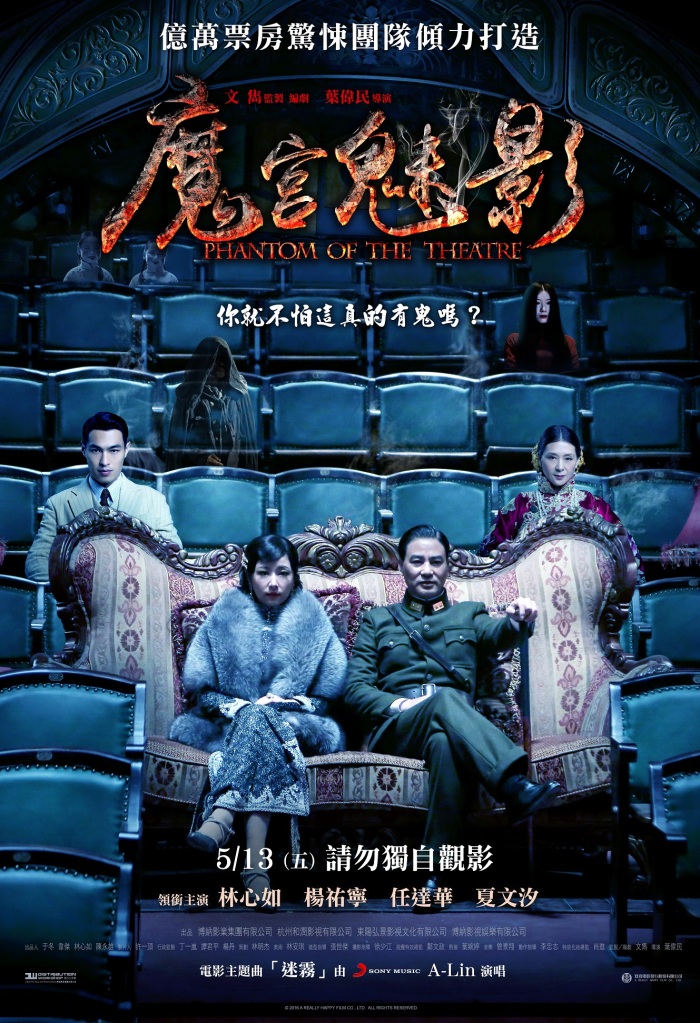 No ghosts! That’s one of the big rules when it comes to the Chinese censors, but then these “ghosts” are not quite what they seem and belong to the pre-communist era when the people were far less enlightened than they are now. One of the few directors brave enough to tackle horror in China, Raymond Yip Wai-man goes for the gothic in this Phantom of the Opera inspired tale of love and the supernatural set in bohemian ‘30s Shanghai, Phantom of the Theatre (魔宫魅影, Mó Gōng Mèi Yǐng). As expected, the thrills and chills remain mild as the ghostly threat edges closer to its true role as metaphor in a revenge tale that is in perfect keeping with the melodrama inherent in the genre, but the full force of its tragic inevitability gets lost in the miasma of awkward CGI and theatrical artifice.
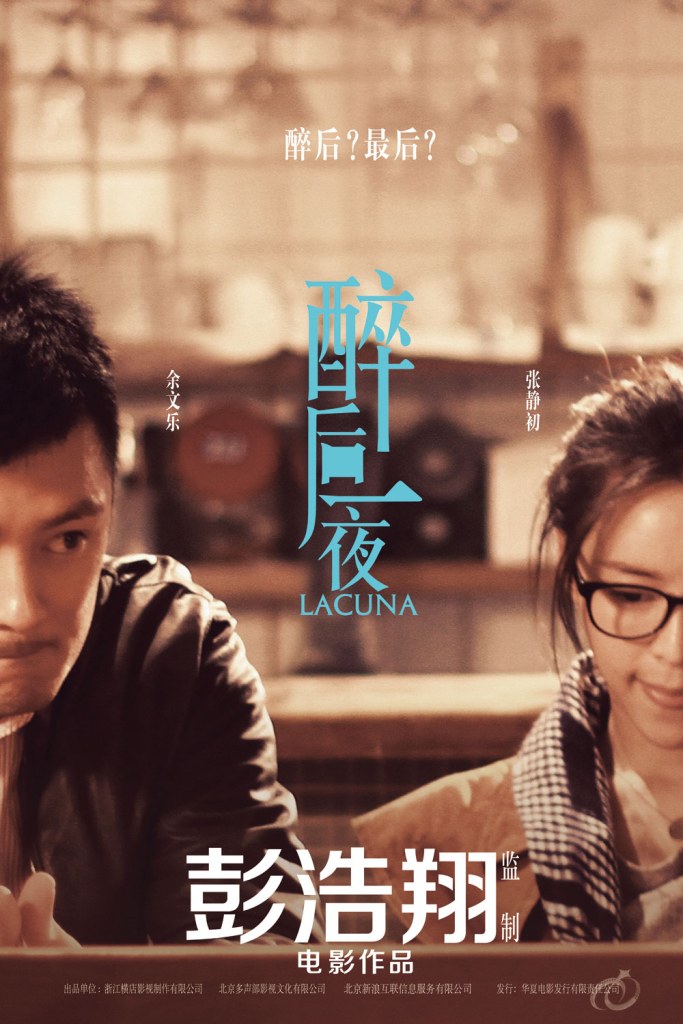 Waking up in a strange place with absolutely no recollection of how you got there is bad enough. Waking up next to a total stranger is another degree of awkward. Waking up not in someone else’s apartment but in a department store furniture showroom is another kind of problem entirely (let’s hope the CCTV cameras were on the blink, eh?). This improbable situation is exactly what has befallen two lonely Beijinger’s in Derek Tsang and Jimmy Wan’s elegantly constructed romantic comedy meets procedural, Lacuna (醉后一夜, Zuì Hòu Yīyè). An extreme number of unexpected events is required to bring these two perfectly matched souls together, but the love gods were smiling on this particular night and, once the booze has worn off, romance looks set to bloom .
 Tharlo producer Wang Xuebo looks north in this rare cinematic showcase for China’s Hui people, a largely Muslim ethnic group concentrated in the rural North West. Using a cast of non-professional actors, Knife in the Clear Water (清水里的刀子, Qingshui Li De Daozi) marries a neorealist aesthetic with a Tarkovskian poetry as a widowed man faces the coming end of his own life largely through his self identification with his faithful bull, about to be sacrificed in the name of dead for the pleasure of the living. Setting religion to one side, this tale of rural poverty and people eclipsed by a landscape that’s as unforgiving as it is beautiful has an infinitely timeless quality even if this traditional way of life is just as moribund as the bull which drives it.
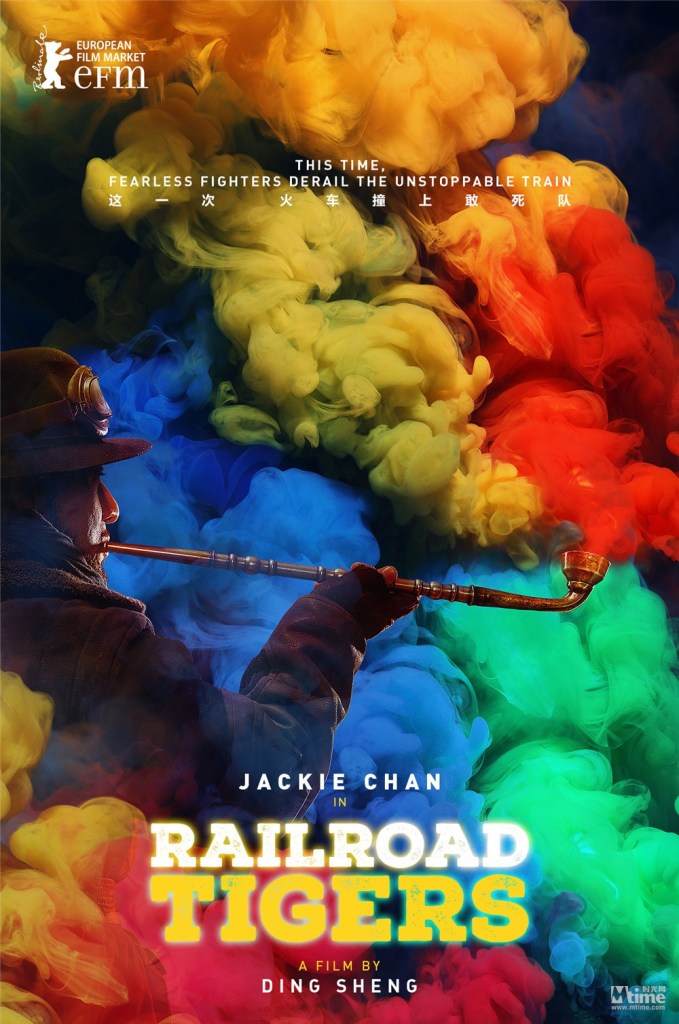 Trains! They seem to be the latest big thing in Chinese cinema, but at least Railroad Tigers (铁道飞虎, Tiědào Fēi Hǔ) has more rolling stock on offer than the disappointingly CGI enhanced effort which formed the finale of
 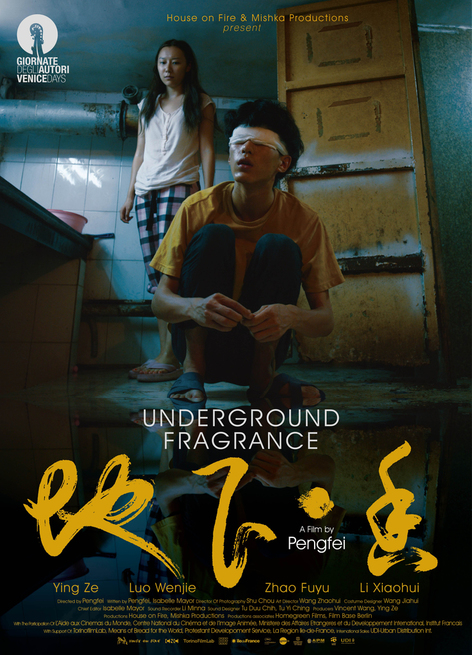 The original Chinese title of recent Tsai Ming-liang collaborator (Song) Pengfei’s debut feature 地下・香 (dìxìa・xiāng) has an intriguing full stop in the middle which the English version loses, but nevertheless these two concepts “underground” and “fragance” become inextricably linked as the four similarly trapped protagonists desperately try to fight their way to better kind of life. Recalling Tsai’s dreamy symbolism, Hou Hsiao-Hsien’s romantic melancholy, and Jia Zhangke’s lament for the working man lost in China’s rapidly changing landscape, Pengfei’s film is nevertheless resolutely his own as it chases the ever elusive Chinese dream all the way from dank basements and ruined villages to the shiny high rise cities which promise a tomorrow they may never be able to deliver.
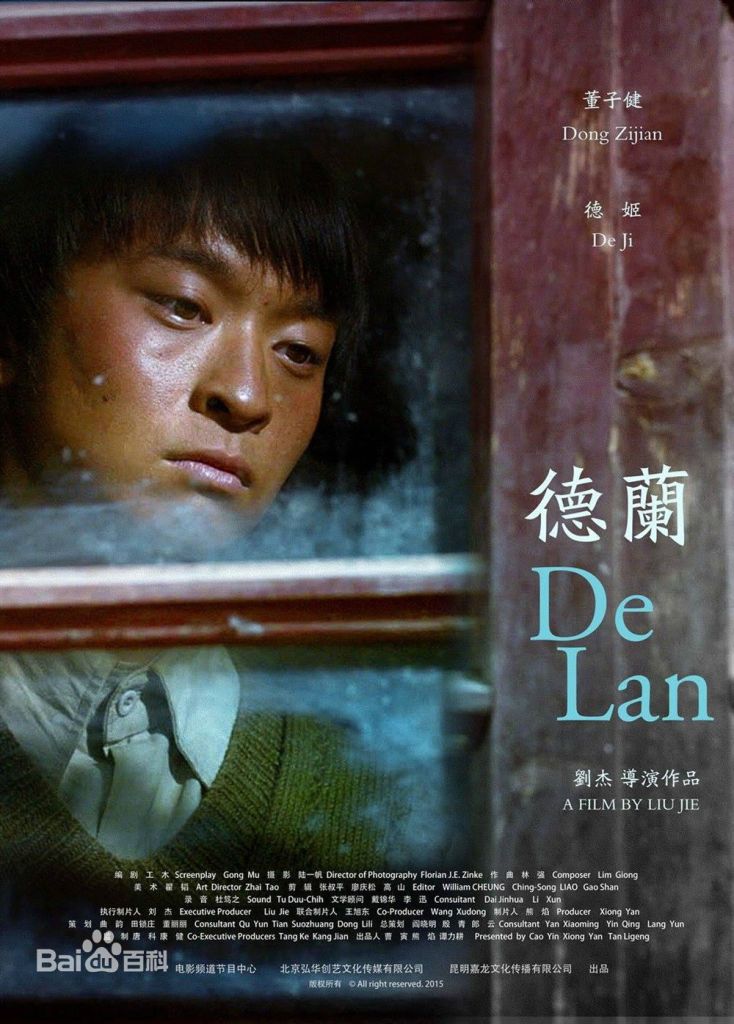 Set in 1984 in a rural Chinese backwater, De Lan (德蘭) is named not for its central character, but for his first love – a mountain woman far from home in search of a missing relative. Tasked with following De Lan (De Ji), Wang (Dong Zijian) finds himself entering a strange new world which he is incapable of fully understanding, not least because he doesn’t speak the language. A wordless love story between the tragic De Lan and the adolescent Wang is destined to end unhappily, but will affect both of them in quite profound ways.
 Despite its title, Mission Milano (王牌逗王牌, Wángpái Dòu Wángpái) spends relatively little time in the Northern Italian city and otherwise bounces back and forth over several worldwide locations as bumbling Interpol agent Sampan Hung (Andy Lau) chases down a gang of international crooks trying to harness a new, potentially world changing technology. Inspired by the classic spy parodies of old, Wong Jing’s latest effort proves another tiresome attempt at the comedy caper as its nonsensical plot and overplayed broad humour resolutely fail to capture attention.
 First time writer/director Wang Yichun draws on her own experiences for What’s in the Darkness (黑处有什么, Hei chu you shenme), a beautifully shot coming of age piece with serial killer intrigue running in the background. Seen through the eyes of its protagonist, What’s in the Darkness neatly matches the heroine’s journey into adolescence with the changing nature of Chinese society.
 When
When 
