The Starting Point (원점, Lee Man-hee, 1967)

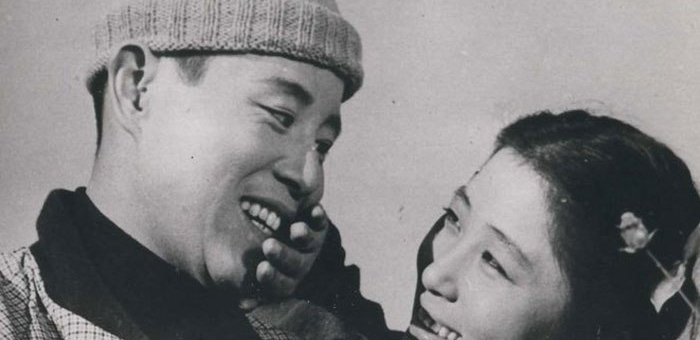
A hired thug and a sex worker dreaming of a new life are set on a collision course at mountain retreat in Lee Man-hee’s noirish thriller, Starting Point (원점, Wonjeom). A melancholy existential drama, the film nevertheless has a darkly comic absurdity and becomes for a time almost a satire of changing sexual mores and the anxiety surrounding the post-war population explosion while simultaneously hinting at corporate corruption in economically straitened times. 

Played in near total silence, the opening pre-credits scenes find the otherwise unnamed (the name given in the promotional material is never spoken) lackey (Shin Seong-il) raiding an office building with the intention of retrieving some mysterious documents the people who hire him later claim threaten to expose their “seven-year-secret”. The Lackey takes time to smoke a cigarette and read through some of the papers before putting them into a briefcase to make his escape but is soon met by a man with a rifle who challenges him. A fight ensues on the staircase from which the Lackey is able to escape, activating a rolling gate to get out of the building. But the other man keeps coming after him, managing to cling on the briefcase while his neck is crushed by the unstoppable motion of the shutter. 

Mirroring him, the unnamed Sex Worker (Moon Hee) is also intruded in a wordless sequence shot with the kind of realism seen in American independent and European arthouse cinema as she stares forlornly at the pretty dresses behind the glass in a small boutique before sadly making her way towards a streetlight near the Choseon Hotel where she wordlessly picks up a customer through suggestive looks and gestures. 

The Lackey knows too much, which is why his bosses want to take him out but for unclear reasons Mr Choi comes up with a bizarre and convoluted scheme which involves hiring the Sex Worker to pose as the Lackey’s wife during a honeymoon getaway to Mt. Seorak. What the Lackey thinks is going on or why the mountain is important is never really explained just like the nature of the seven-year-secret, but once there the film changes tack becoming a kind of ensemble mystery as the various guests each become suspicious of one another while the Lackey and the Sex Worker slowly fall in love for real perhaps bonding their mutual sense of existential peril and outsider status. 

In the liminal space of the mountain, both fear rejection by those around them who come to represent mainstream society, the Lackey because he has killed and Sex Worker because of her profession. Ironically, one of the other guests is a dodgy gynaecologist who makes a point of saying that most of his clients are sex workers from around the Choseon Hotel at least implying that he regularly performs abortions. He recognises the Sex Worker as a previous patient and tries to take advantage of her sexually but commits a breach of medical ethics by leaking her profession to the rest of the group who then shun her. When the planned camping trip encounters a snag seeing as only two tents have been provided and the obvious solution is for men to take one and the women the other, the women all immediately leave on the Sex Worker’s arrival refusing a share a space with a “fallen woman” in case they are somehow tainted by her shame. 

But then, the goings on at the mountain inn are strange in themselves. A middle-aged man who inexplicably doesn’t seem to have encountered a transistor radio before accidentally tunes into a news broadcast discussing the effectiveness of the contraceptive pill while the young people dance with wild abandon to music they don’t really understand. Meanwhile, the gynaecologist wades in when another of the women experiences terrible stomach pains insisting that he is “familiar with women’s issues” and informs the husband that his wife is pregnant which is confuses him because they only married the day before and he’s been a good boy so the news is perplexing. He spends the rest of the film counting dates on his fingers and at one point attempts to hang himself certain that his wife must have slept with another man before their wedding instead of maybe considering that the dodgy gynaecologist may be mistaken.  

When the couples are divided into separate tents, one guest quips that it’ll be good for keeping the birth rate down hinting at an anxiety about a new sexual freedom among the young coupled with the impact of the ongoing baby boom and its economic implications. The gynaecologist’s wife is the first to join in with the youngsters, but she’s also a rabid penny pincher making sure the newlywed husband pays for her husband’s treatment of his wife while intensely jealous constantly trying to keep the randy doctor’s attention off the other women. The sense of economic anxiety is echoed in the Sex Worker’s melancholy longing onto looking into the shop window while dreaming of opening her own hair salon though sex work is the only way she can support herself and leaves her with intense shame that like the Lackey exiles her from mainstream society. 

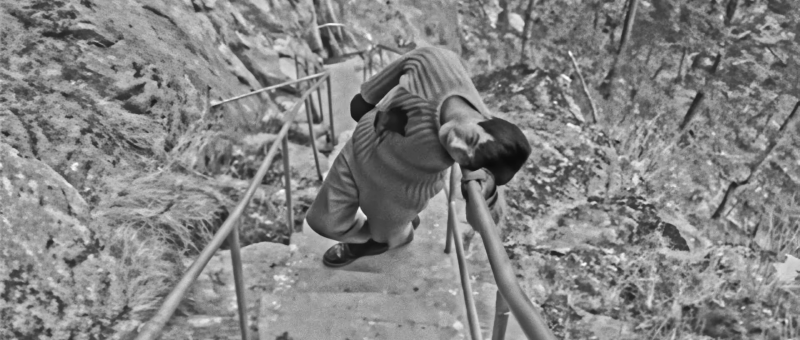
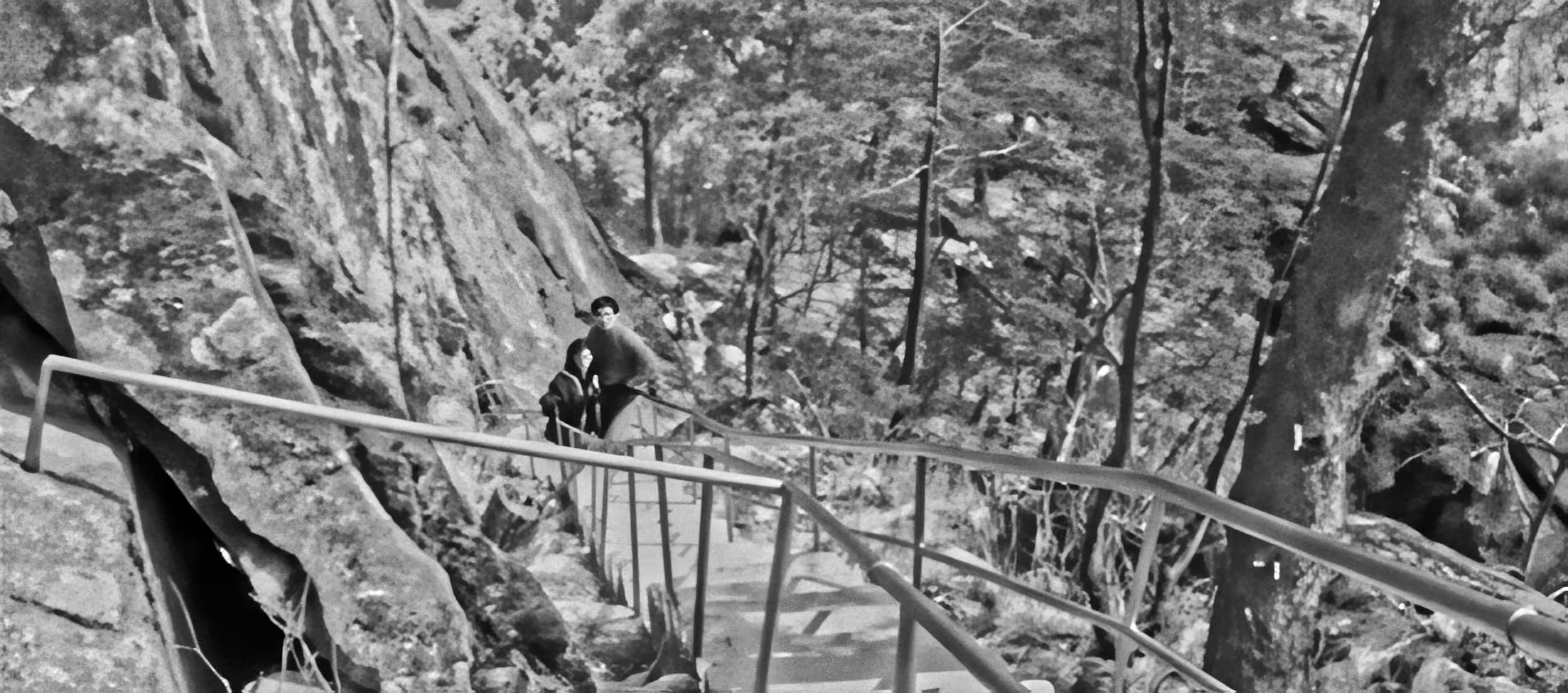
As she says while embracing her covert identity as a cheerful newlywed, she’s been looking up all her life and would like to look down for once which she ironically does atop the stairway on which the Lackey fights his existential battle with Choi and his minions. They each want to find a way to get off the mountain and return to the world, but are prevented from doing so by the forces that pursue them and will not let them go. Finally questioned, the Sex Worker is forced to admit that she knows nothing about the Lackey, not his name or where he lived or what he did for a living, only that he did not hate her which is as close to a declaration of love as it might be possible to get in this cold and dark world of exploitation and violence. Lee films with a noirish intensity and melancholy fatalism as the pair attempt to fight back against the forces which constrain them with the pureness of their love but later discover that, as they feared, all that is left to them are painful memories of momentary happiness. 

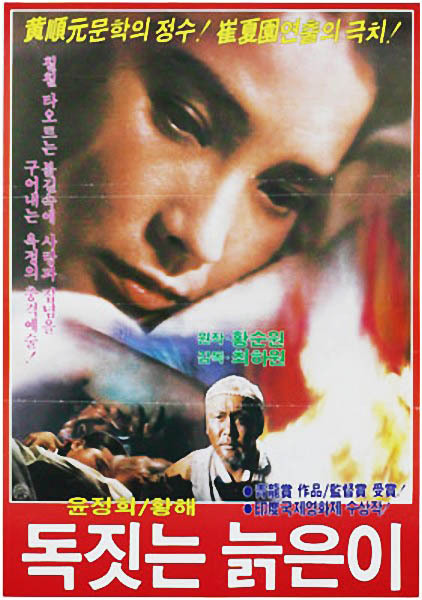
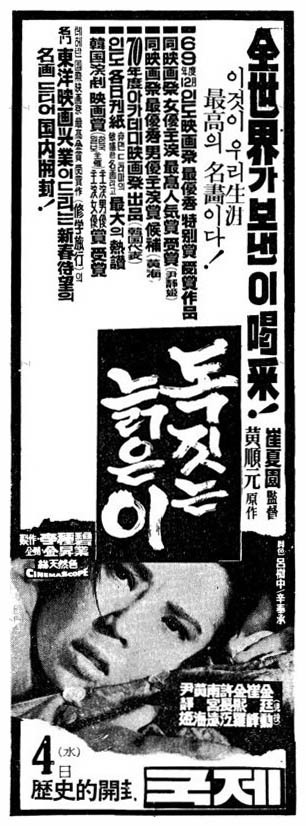
The Old Potter (독짓는 늙은이, Choi Ha-won, 1969)

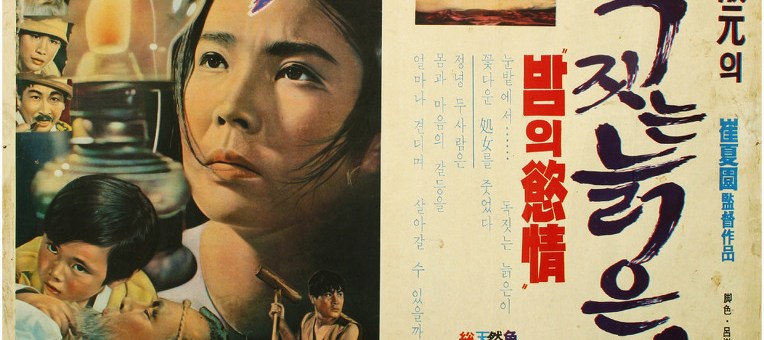
“The man of the house shouldn’t covet and touch what belongs to others even if he is starving to death” laments an old potter admonishing his well-meaning son but also commenting on the folly of his life. A melancholy tale of illusionary futures, Choi Ha-won’s The Old Potter (독짓는 늙은이, Dokjitneun Neulgeuni) is a deeply felt meditation on loneliness and regret as a wandering son finally comes “home” to look for himself in the ruins of his family which seems to have existed as briefly as a dream. 

The young man (Kim Hee-ra), apparently from a nearby village, is a wandering soul struck by the familiar sight of traditional pots which he has not seen in some years seeing as he has just returned from the war. Stepping into a house he finds it not quite as empty as he thought and strikes up a conversation with an elderly gentleman (Heo Jang-gang) who invites him to stay the night among a small community of beggars congregating around a disused kiln. The old man tells him that he comes here every 15th day to spend time with a late friend of his, Song (Hwang Hae), to whom he seems to feel some sort of debt. 

Back in the 1920s, Song, the old potter, joked that he was married to his pots, living a lonely life devoted to his craft. One winter he happened upon a young woman collapsed in the snow, rescuing her and nursing her back to health in his shack. The young woman, Ok-soo (Yoon Jeong-hee), does not exactly fall in love with him but is grateful and, it turns out, has nowhere else to go and so the pair marry. The potter becomes a father to a son, Dang-son, at the age of 61. For seven years, the family is perfectly happy. Old Song truly loves the young Ok-soo and takes good care of her. He is a kind man and patient father keen to pass on his skills to his young son. 

And then, a strong and handsome young man arrives. He is is Sok-hyun (Nam Gung-won), Ok-soo’s first love for whom she left her family, heading off to look for him but fainting in the snow where she was rescued by Song. When Song’s friend made fun of him for washing Ok-soo’s clothes in a nearby stream and prompted him to ask her to stay, he said he’d let her go if that was what she chose, and to that extent he’s true to his word. Having overheard the couple talking and realised their past relationship, he says nothing but silently hopes that Ok-soo will choose to stay with them. 

Ok-soo meanwhile is torn. Her old lover has returned, the man she’d been searching for, but he’s come at an inconvenient time when she is now a wife and a mother with a settled home. She is not unhappy with the potter who, though elderly, is kind and has always taken care of her and their son, but she’s drawn back towards passion and romance with Sok-hyun who is young and strong, able to split logs with a single blow. Song hears the sound of the axe echoing in his mind as a grim reminder that Sok-hyun is everything he is not – young and handsome and full of life. He can offer only the warmth of their home and the feeling of duty towards family as reasons for Ok-soo to stay, but knows in his heart that she will choose the love of her youth over the security they have built together. 

Song’s late life happiness is shattered like one of his imperfect pots. He cautions his son that one should not covet things which belong to others as if blaming himself for daring to “borrow” Ok-soo all these years when she “belonged” to someone else. He gives Dang-son another pottery lesson which is really life philosophy, explaining that it’s fire that makes the pot, not the man. A man is made by the fires he endures, and perhaps, Song starts to think, he should give in and allow Dang-son to be adopted by a noble family so that he might live an easier life as a gentleman rather than struggle here with him with no real hope for the future seeing as all his pots are cracked. 

Of course, as we already know, the sad young man who returned from the war is Dang-son, so perhaps Song’s choice did not buy him the easy life that he hoped it would. Meanwhile, the old man explains that Ok-soo later returned and bitterly regretted her choice, begging to be told where Dang-son had been taken, but the old man turned her away which is why he feels so guilty. “I deserve the severest punishment as a woman who deserted her husband and son” Ok-soo laments, having spent the last 20 years trying to atone for her decision to choose passion over her maternal responsibility. Song’s brief moment of happiness left him unable to return to his cold and lonely life as the master potter, his hopes shattered by life’s imperfections. Fire has shaped them all, but after it’s cooled all that remains is bitter regret for the frustrated desires of youth and a painful longing for forgiveness. 


The Old Potter is available on English subtitled DVD courtesy of the Korean Film Archive in a set which also includes a bilingual booklet featuring an essay by director Choi Ha-won on the making of the film as well as writing by film critic Kim Jong-won. It is also available to stream online via the Korean Film Archive’s YouTube Channel.

The Age of Success (성공시대, Jang Sun-woo, 1988)

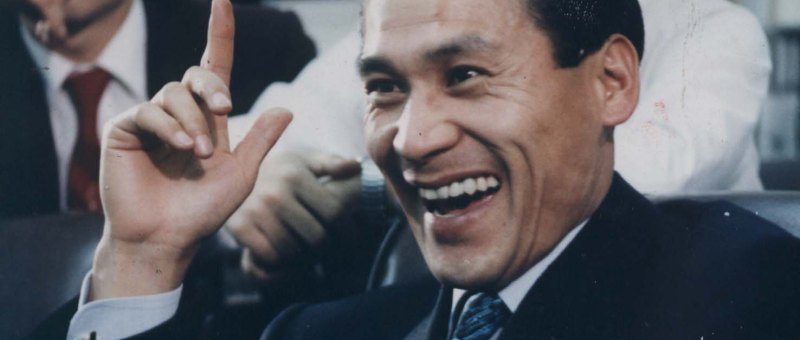
Age of Success still 3“Love only matters when you can sell it” in the nihilistic world of Jang Sun-woo’s The Age of Success (성공시대, Seonggong shidae). The Korea of 1988 was one of increasingly prosperity in which the recently democratised nation looked forward to a new era of freedom, hosting the Olympic Games as a calling card to the world stage. Like everywhere else in the ‘80s however it was also a time in which greed was good, time was money, and compassion was for suckers. Jang’s narcissistic hero worships Hitler and offers a nazi salute to a mockup of a high value note with his own face on it as he leaves for work every morning, but his relentless pursuit of “success” is destined to leave him empty handed when he realises the only commodity he can’t sell is sincerity.

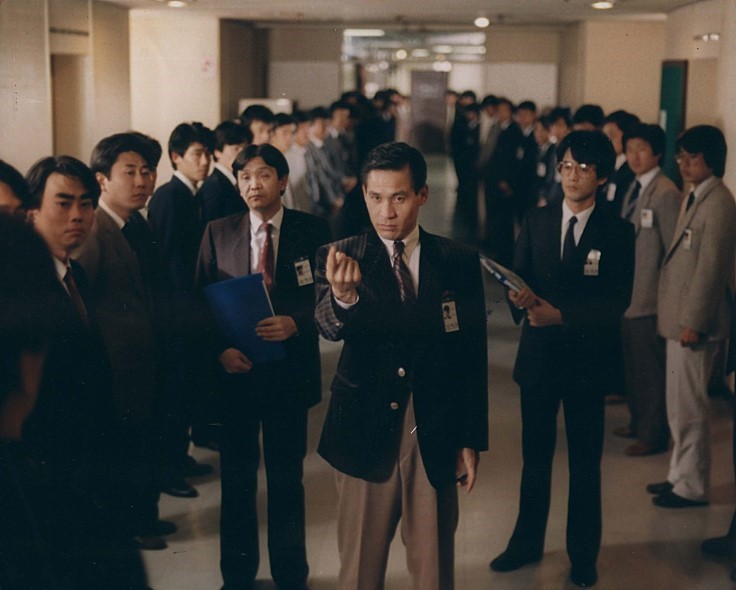
The executives of Yumi Foods, a subsidiary of Mack Gang (Mighty) corporation, are looking for a bright new face through a series of individual interviews. The panel asks each of the prospective new hires to prove their sales ability by convincing them to buy something inconsequential they happen to have in their pockets. Each of the young men fails, until the sharply suited Kim Pan-chok (Ahn Sung-ki), whose name literally means “sales promotion”, dazzles them with a show of intense charisma. He simply offers to sell them whatever is inside his clenched fist. Such is his conviction, the CEO finds himself emptying his wallet, pouring out his credit cards, and eventually borrowing from his friends until Pan-chok is satisfied he’s getting all he could possibly get at point which he opens his fingers and reveals his empty palm. The bosses are annoyed, but quickly convinced by Pan-chok’s explanation that what he’s sold them is “sales spirit” which is, after all, the most valuable thing of all (not to mention exactly what they were looking for). Pan-chok is hired.

Later, we find out that Pan-chok’s routine is an ironic inversion of his childhood trauma. A poor boy abandoned by a mother who became fed up with his father’s fecklessness, he waited alone every day for his dad to come home with something to eat. But his dad was an irresponsible drunkard who could never hold down a job. Like Pan-chok, he held out his fist and told the boy to open his fingers but he was always empty-handed. Hating his father’s incompetence, laziness, alcoholism, and violence, Pan-chok decided that he had to be strong. “Poverty makes you low and pathetic”, he insists. Love, pity, and mercy are for people with no power. “The important thing is to be strong, to win, succeed, possess, and to dominate. Only then will I be happy”.

Pan-chok is a corporate fascist wedded to ultra capitalist ideology in which the only thing that matters is strength and the ability to dominate. He lies, and cheats, and misrepresents himself to pull every underhanded trick in the book to try and get ahead. He goes to war, quite literally, with industry rival Gammi, intent on completely destroying them in order to dominate the market by whatever means possible. Coming up with signature product Agma, he irritably tells his development team that none of their work really matters because the quality of the product is largely irrelevant. Just as in his interview, all Pan-chok is selling is false promise wrapped up in marketing spin. His rival goes on TV to talk the value of tradition to defend himself against a smear campaign Pan-chok has engineered to suggest his products are a health risk, but eventually gets the better of him by playing him at his own game and making a late swing towards ultra modernity.

Pan-chok’s main gambit is seducing a local bar hostess, Song Sobi (Lee Hye-young), lit. “sexual consumption”, and using her as a spy to get info on Gammi’s latest products, but Sobi falls in love with him only to have her heart broken when she realises Pan-chok will discard her when he decides she is no longer useful. He tells her that love is only worth something when you can sell it, but is confounded when she later turns the same logic back on him after selling her charm to seduce the son and heir of the Gammi corporation as a kind of revenge.

Proving that he never learns, Pan-chok’s last big idea is that the only way to beat Gammi’s technological solution is to commodify nature, to repackage and sell back to the people the very things he previously rejected in human sensation. By this point, however, he is so thoroughly discredited that few will listen. His new boss has an MBA from an American university and no time for Pan-chok’s scrappy post-war snake oil salesman tactics. “Only success can set you free”, Pan-chok was fond of saying, but it belied a desperation to escape post-war penury. What he wanted was freedom from hunger, anxiety, and subjugation. He wanted to be a big man, not a small one like his father who always came home empty-handed, so that no one could push him around. What he became was a man without a soul, empty-hearted, consuming himself in pursuit of the consumerist dream. Korea, Jang seems to say, should take note of his lesson.


The Age of Success was screened as part of the 2019 London Korean Film Festival.

Forever With You (그대와 영원히 / 그대와永遠히, Yu Hyun-mok,1958)

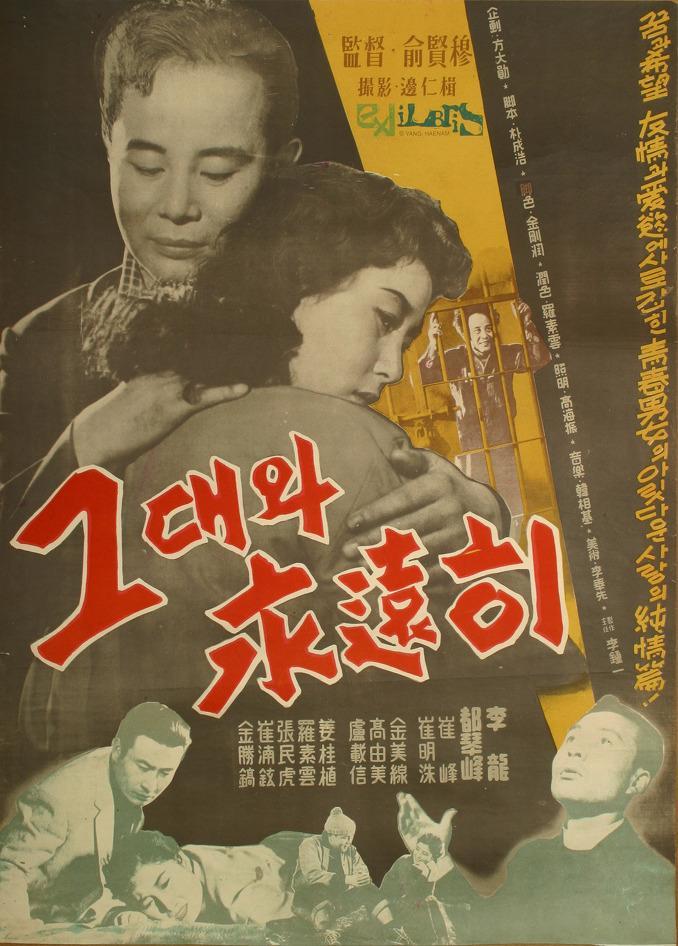
Forever with you posterBest remembered for his 1961 feat of neorealist social drama Aimless Bullet, Yu Hyun-mok was one of the early masters of Korea’s golden age who sought to bring a degree of intellectual rigour and formal experimentation to a medium which often favoured the populist or propagandist. He did, however, have to start somewhere and the earliest surviving film in Yu’s filmography is indeed a melodrama though one perhaps a little to the side of the norm and with an axe to grind as regarding economic equalities and the demands of spiritual morality, even if he is forced to retreat to entrenched social codes in the closing moments.

The camera pans over a city filled with rooftops and eventually lingers on a group of children playing quietly by a wall. Panning over the wall which is exceedingly high, Yu reveals the children to have been playing on the other side of a prison where Gwang-pil (Lee Ryong), an inmate, is about to be released after 10 years inside. All things considered, Gwang-pil does not seem to be a hardened criminal and is optimistic for the future, intending to go straight and hoping to reconnect with the childhood sweetheart he believes is still waiting for him in the outside world though they have not seen each other since Gwang-pil made an ill-advised escape attempt and got his sentence increased a number of years. He recounts all of this to another inmate who is happy for him, broadly, but not quite convinced Gwang-pil is going to make it in the regular world.

Switching to a lengthily flashback, Yu allows Gwang-pil to recount the circumstances which landed him in jail, which also gives the director a chance to engage with his socio-political concerns. 10 years previously, Gwang-pil was a happy young man from an exceptionally poor village who was best friends with Ae-ran (Do Kum-bong). Ae-ran works in a bakery to help support her family, and often walks home with Gwang-pil which is one of the few times they have to be together. A happy day at the beach sees them building sandcastles and dreaming of the life they will one day live with a house and children of their own, only to see all their dreams washed away by a sudden outbreak of rain. In desperate need of money both to support himself and his bedridden mother and to impress Ae-ran, Gwang-pil starts hanging round with delinquents and picking pockets. Though Gwang-pil wants to give back some of the money they stole fearing the woman they took it from is also poor and cannot spare it, he goes along with the delinquents’ plan to rob a nearby US army depot. The others get away but Gwang-pil is arrested and sent to prison.

The first and foremost motivator for Gwang-pil’s descent into criminality is poverty and familial breakdown. His father was a gambler who left his mother flat, while she has become bedridden and is dependent on her teenage son for financial support. With no real jobs available in the town and no prospect of a way out through education, Gwang-pil is seduced by crime despite having no real aptitude for it. The other motivator, if indirectly is Ae-ran or, more specifically, jealous insecurity related to the harmonica playing delinquent Dal-soo (Choi Nam-hyun). Too poor to afford a harmonica of his own, Gwang-pil fears losing Ae-ran to a flashier guy and so he picks pockets to buy her fancy treats little realising all she wants is his time – something he will rob her of by getting himself sent to prison.

The war between Gwang-pil and Dal-soo over possession of Ae-ran will occupy the rest of the film though Ae-ran, like many women in the golden age of Korean cinema, is left with little choice of her own other than to continue suffering. When Gwang-pil gets out of jail it’s one of the other delinquents who meets him – Sang-moon (Choi Myung-soo) has become a priest, in part out of remorse for what happened to Gwang-pil and regret over his criminal past. Sang-moon is determined to help Gwang-pil repair his life but knows finding out what happened to Ae-ran is going to break his heart and send him spiralling into a nihilistic whirlpool of despair. Ae-ran has married Dal-soo who chose the path of crime and still operates a dodgy hostess bar as a front for his gangster activities.

Gwang-pil is just as upset and angry as Sang-moon feared. So much so that he completely misses how miserable Ae-ran is in her marriage and that her daughter, Eun-joo, is nine years old meaning she was conceived before he went to prison. Obsessed with his own pain, anger, and self loathing he fails to see anything other than his ruined hopes and commits himself only to further ruination through drink and the attentions of the manager at Dal-soo’s bar which are not altogether as one might assume them to be.  Only too late does he begin to grasp the real situation but is still too wounded to process it fully. Dal-soo, knowing Ae-ran has never loved him and wondering if her decision to become his wife has been a long form act of revenge, sets a plan in motion to remove his rival from the scene while Gwang-pil also longs for revenge against the man who has stolen everything from him.

Dal-soo and Gwang-pil square off, leaving Ae-ran whose health is so poor and nerves so fragile that she has virtually lived in hospital for the last few years, to suffer alone with only the austere comfort of Sang-moon’s priestly ministrations. Wanting to be “a good wife” she stands by Dal-soo but fears for Gwang-pil, not only for his life but also for his soul lest he fall back into criminality in the shock and hopelessness of her betrayal. Her situation is impossible and the strain of it difficult to bear. She hates her husband and blames herself for the fate of her one true love but has no recourse other than to continue suffering or die. In keeping with the story’s melodrama origins, Ae-ran pays a heavy price for her “weakness”, as does Dal-soo, leaving only the priest and the wronged man behind, strengthened by the need to care for the daughter he never knew he had.

Far from the rigour and furious intent of Aimless Bullet, Forever with You (그대와 영원히 / 그대와永遠히, Geudaewa yeongwonhi) is a much more modest effort even among studio pictures from 1950s. Largely filmed on set with low production values, Forever With You does allow Yu a degree of formal experimentation as he makes frequent use of pans and zooms more commonly seen in the films of 20 years later and occasionally gives in to ostentation as in his expressionist spinning shot of Gwang-pil and a bar girl dancing as he attempts to lose himself in abandon, or an overhead view of a gangster meeting. In the end Gwang-pil comes to himself too late, only realising his foolishness just as he loses everything that mattered to him but Yu changes track, gives him hope again in the prospect of a new beginning, learning to live for others in purehearted sincerity whilst walking away proudly into the harshness of the post-war world.


Available on DVD as part of the Korean Film Archive’s Yu Hyun-mok boxset. Also available to stream via the Korean Film Archive’s official YouTube Channel.

Assassin (암살자, Lee Man-hee, 1969)

Lee Man-hee Assassin vertical

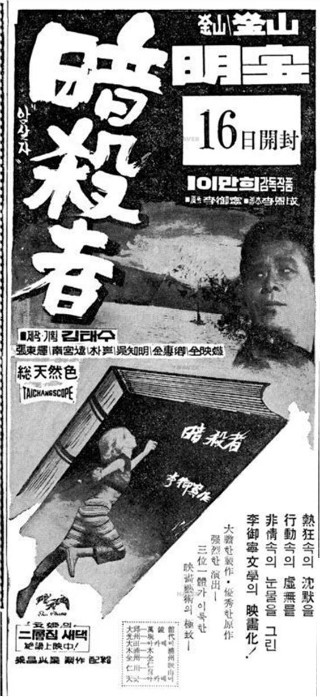
Lee Man-hee thought he’d made an “anti-communist” film in 1965, but apparently he was wrong. The Seven Female POWs was severely edited and retitled Returned Female Soldiers when eventually released, meanwhile Lee did some jail time for supposedly breaking the law in his sympathetic depiction of leftist soldiers. In 1969’s Assassin (암살자, Amsalija) he takes no chances. Set directly after the liberation, Assassin makes no attempt to deny that this was a cruel and chaotic time in which loyalties were to be questioned and honour mourned.

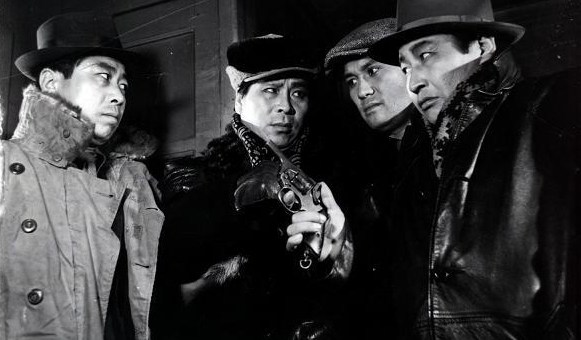
The hardline communists have a problem. One of their top generals, Nam (Park Am), is about to defect and ally with the ruling regime. They need to get rid of him in a hurry. Their plan is to hire an assassin and frame “the Right” before Nam can defect. The Assassin (Jang Dong-hui) they call on is the number one pro but some worry he’s too softhearted for what they have planned. Despite his cold hearted profession, the Assassin has been raising the daughter of a man he killed nine years ago as his own and will not take being dragged away from her at short notice kindly,

Though the communist agents turn up somewhat ominously – one hiding out and lending an umbrella to the Assassin’s little girl and the other inviting himself into the house, they do not directly threaten the Assassin or even offer him money when he tries to turn them down. He eventually decides to take the assignment only on hearing the target’s name and realising he would make a perfect addition to his hit list firstly because they have an old score to settle and secondly because the Assassin has long wanted to see the face of a man meeting his death bravely as he pulls the trigger.

Shooting in colour and with a more experimental mindset, Lee’s use of time is strange and bewildering. The entire enterprise takes place over one night yet much of the outdoor scenes are in daylight. He stages two monologues as a conversation by cutting between two different couples on boats – the Assassin recounting his childhood to a communist foot soldier, and Nam having a heart to heart with his lady love. Meanwhile, Lee also cuts back to the Assassin’s home where the innocent little girl is chatting playfully with another of the communist goons who has been sent to keep an eye on (and then perhaps eliminate) her while her father is out on the job.

Lee begins with a voice over stating that the film will expose the truth about communist violence, instantly locating its own political intentions. The communists are a bad bunch who have no honour, no loyalty, no compassion, and no interest in anything other than their own cause. The cause itself is thereby rendered irrelevant through their own hypocrisy. In order to get the job done, the communists have recruited a local boy to drive the boat and carry messages. They’ve promised him a place in a good school in Seoul. Needless to say they will not be honouring that promise. No one can know of this job – it’s supposed to be a rightest plot, and so all loose ends must be eliminated, including those currently members of the communist faction. 

The Assassin does not approve of this. His ideas are old fashioned and he believes in a kind of code even within the darkness of his own profession. The Assassin’s only joy is in his little girl – really the daughter of a man he murdered. This is both proof of his adherence to his code of honour and to his generally compassionate nature. Nam is much the same. He has his code too, though it has recently been ruptured by the intrusion of love. Before, he could have said anything but now he’s found love he’s happy to go and will bear his sentence with dignity. Strangely, neither Nam nor the Assassin pause to consider what will happen to the women in their lives when they are gone, even if it is these women and their relations with them that have humanised their otherwise calculating hearts.

The Assassin’s little girl remains completely unaware of her adopted father’s profession or of the danger posed by a man she doesn’t know sitting at her bedside fondling a gun. Her one request of her father is that he bring her back an apple with the leaves still on it – a symbol of her own innocence and naivety, but the apples he picks for her are later smashed to smithereens under a communist’s boot. The communist gets his own comeuppance (these communists do seem to be quite a dim bunch, gleefully felling their fellow officers yet never guessing they may be next), but Lee’s rather unsubtle message is clear as “the left” stomps all over any and all signs of love, compassion, innocence or beauty.

Unlike Lee’s other films this one ends with a heavy handed voice over but no “The End” – presumably the story of the struggle against communism is not yet finished. The story is an old one, men who live by the sword die by the sword – they know this and accept it almost as a religious rite. Both Nam and the Assassin know their place within this cycle and so they submit to it with bravery and stoicism whereas the strangely manic villain attempts to run from his fate but fails miserably. Lee experiments with time and form, perhaps attempting to move past the obvious propaganda element of the project but never manages to escape it. Still, The Assassin is oddly moving in its final moments even if tinged with cynicism and a sense of the world’s cruelty untempered by Lee’s generally forgiving melancholy.


Assassin is the fourth and final film in The Korean Film Archive’s Lee Man-hee box set which comes with English subtitles on all four films as well as a bilingual booklet. Also available to stream online via the Korean Film Archive’s YouTube Channel.