
The Way We Talk (看我今天怎麼說, Adam Wong Sau-Ping, 2024)

In the opening scenes of Adam Wong’s The Way We Talk (看我今天怎麼說), deaf children are being taught in a specialist school but are prohibited from using sign language to communicate with each other. The teacher, who does not sign, reprimands them severely insisting that they must speak to her. Her harsh and authoritarian approach is akin to that taken by colonialising authorities insisting that children must speak their language in an attempt to wipe out that which is spoken in their homes and among their families in a concerted attempt to weaken the bonds of their communities. The teacher claims she’s doing this for their own good, as do some of the children’s parents, because they believe that they will not be able to live “normal” lives if they cannot speak and that signing weakens their ability to do so. 

Of course, this is also motivated by internalised ableism and the stigma surrounding disability. Bella lost her hearing following a childhood illness and received a cochlear implant at an early age. Her mother did not want her to learn sign language because she believed doing so would set her back but instead forced her to listen to lines from television dramas multiple times, beating her with a coat hanger when she failed to repeat them with perfect pronunciation. Her prejudice is later exposed when she discovers that Bella has begun learning to sign as an adult, asking her if she wants to be like “one of those deaf people”. 

Bella had internalised a degree of this stigma herself, receiving financial aid as a kind of poster girl for an organisation promoting cochlear implants for whom she gives what is an incredibly insensitive speech in which she remarks that she believes that thanks to technology like this there will one day be no more deaf people in the world. Later she tries to use the sign language she’s learned in one of their videos but is quickly told off. The way the videos are framed presents the use of cochlear implants as a path towards a “normal” life, the point being that wearers could communicate in a way they describe as “normal”. If they were also signing it would imply that implants didn’t work and people wouldn’t buy them. In a later and even more insensitive ad, Bella is pictured with a caption that says the implants restore “joy and colour” to the wearer’s world as if the lives of deaf people were somehow colourless or devoid of joy.

It’s being called out for these unexamined views that gives Bella pause for thought on encountering Wolf, a tempestuous young man who refused a cochlear implant and is determined to preserve the existence of sign language which is after all his mother tongue. Wolf is frustrated by the march of technology. At Bella’s conference, he’s annoyed by the organisers who tell him they’ve cancelled the sign language interpreter because the captioning machine is good enough while appearing indifferent to his objection that they’ve removed the ability for a deaf person to ask a question. He isn’t against the use of cochlear implants for those who want them, like his friend Alan, but is also determined to preserve deaf culture through the preservation of sign language. 

Alan, meanwhile, has swung in the opposite direction and agrees that speech is essential for integration into mainstream society without really considering that it’s the society that should change to become more inclusive rather than forcing everyone to conform with it. Having been repeatedly turned down for employment, ironically in one case at least because she didn’t know sign language, Bella begins to feel that her dream of becoming an actuary is eternally out of reach. Though she’s secured a job at a high profile company, she feels as if she’s a diversity hire, essentially exploited while the company uses her to improve their image as a caring employer but only ever has her doing busy work as if they don’t trust her with anything important. Her mother had always pushed her to be “normal”, as if her deafness were something shameful to be concealed but it becomes clear that living this way places her under a lot of pressure while she may be more comfortable with communicating through sign language which affords her the freedom to express herself without constraint.

Crucially, the point is that Bella should have the choice to use whichever communication style she likes or all of them together rather than being pushed towards that which best suits a hearing society. Those in charge of decision making often claim they’re acting in the interests of inclusivity, but more often than not their decisions are influenced by a desire to cut costs such as relying on AI captions rather than paying an interpreter. Wolf’s dream of becoming a diving instructor is dealt a blow when the Hong Kong diving agency refuses to allow him to take the exam without a qualified deaf diver to interpret, only there obviously aren’t any because they’d all have been in the same position. With a gentle empathy, Wong exposes the petty prejudices of the hearing society but equally reveals the path towards the claiming of an identity among a strong and vibrant community.


The Way We Talk screened as part of this year’s BFI London Film Festival.

Original trailer (English subtitles)
The Lyricist Wannabe (填詞L, Norris Wong, 2023)

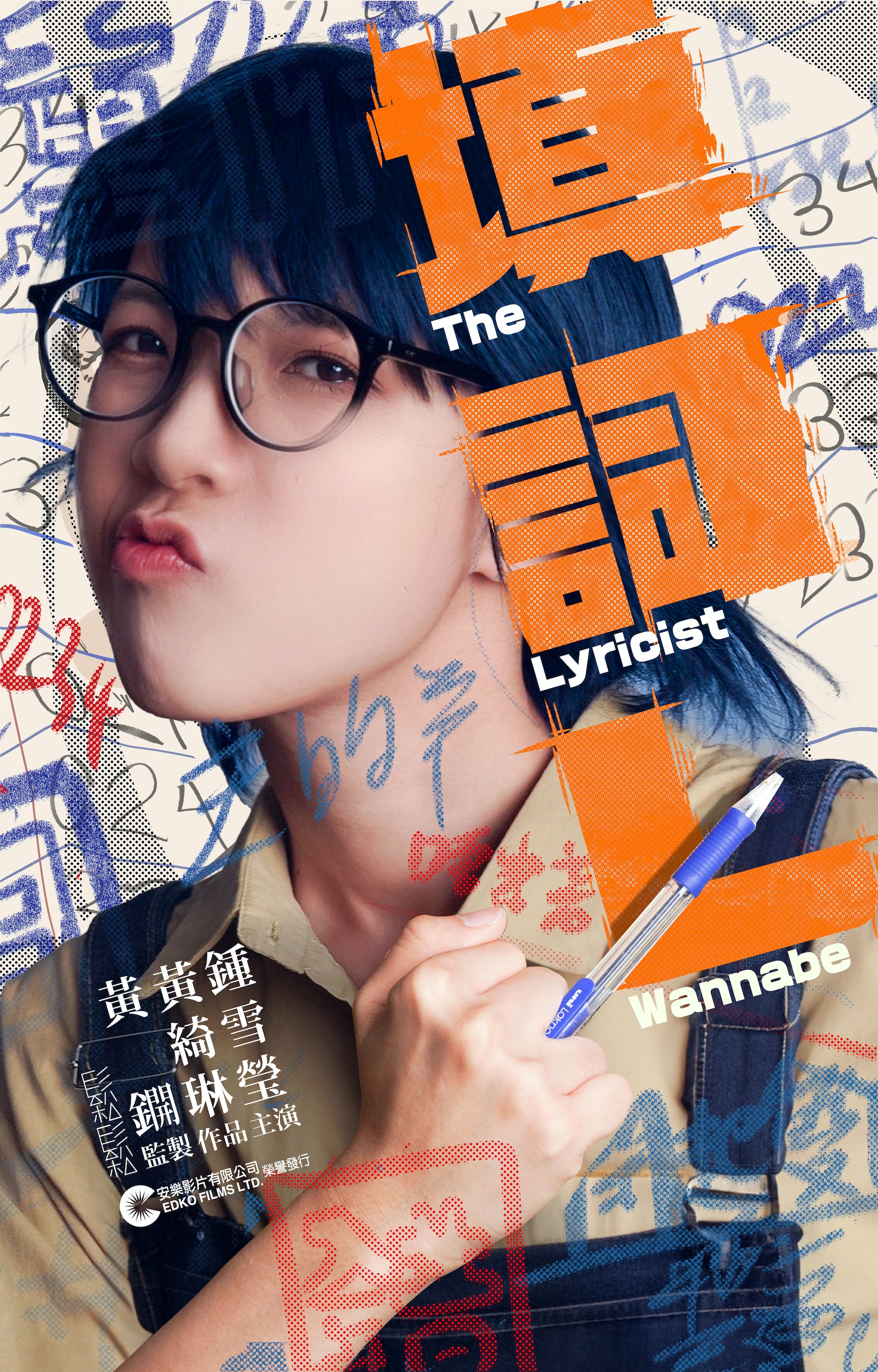
Sometimes a dream might have come true only we never really noticed. In Norris Wong’s autobiographically inspired drama The Wannabe Lyricist (填詞L), a young woman battles her way towards becoming a Cantopop songwriter yet perhaps she already is one by virtue of her constant act of lyric writing. What she craves is the validation of having a song published, yet experiences setbacks at every step of the way that encourage her to doubt her talent or the right to continue chasing her dreams.

At a particularly low point after being taken on by a music producer to work with a spoilt influencer who’s getting studio time as some kind of favour, Sze (Chung Suet Ying) is told that her lyrics are no good and that after struggling so hard for six years perhaps she ought to take the hint and accept she isn’t suited to this line of work. It’s an act of intense cruelty, though one in part motivated by a well-meaning faux pas. In her excitement, she told the influencer she’d write lyrics for her album for free just to be published, but the palpable sense of desperation seems to have put the influencer off unable to have confidence in the work that Sze herself has devalued.

She encounters something similar during a partnership with an aspiring pop star who says he likes her lyrics but then drops the bombshell that he plans to sing in Mandarin because it’s a bigger audience. Ironically, on a trip to Taipei to sell his album she’s told that his accent is no good for the local market and while they like the song she worked on she later realises that they hired another lyricist for “real” release without even telling her. What’s more, tones don’t matter while singing in Mandarin whereas lyric writing in Cantonese is a painstaking process of trying to ensure that the tone of the word fits the melody. Aside from its political implications, not only does the pop star’s arbitrary decision to just sing it Mandarin ruin the lyrical flow she spent so long perfecting but entirely disrespects her work.

After deciding to take a break from trying to make it in music, Sze gets a job working at a ridesharing app startup where she’s roped in to create a jingle but once again her hopes are dashed when the business strays into a legal grey area and several of the drivers are arrested. While the app’s creator silently cries in his office, his female colleague ponders going somewhere else, “anywhere that doesn’t punish dreamers” which seems like a nod not only towards an oppressive capitalism that values only marketability but equally the increasingly oppressive atmosphere of the nation’s political realities. In a way this is what Sze ends up doing too, putting geographical distance between herself and the failure of her dreams by returning to the land which as the farmer says never lies to you, you reap what sow.

Yet for all her drive and perseverance there are others who view Sze’s obsession with her dreams as selfish and self-involved complaining that she rarely considers the feelings of others and neither notices nor cares if she may have hurt or inconvenienced them. She’s told that her lyrics are hollow because she lacks life experience but also is incapable of empathising and cannot see anything outside of her quest to become a lyricist. She watches other people move on, her brother getting married, friends enjoying career success etc while she’s still stuck looking for her big break only for something to go wrong just as everything was about to go right.

Wong signals the playful qualities of her fantasies though use of onscreen illustrations and even a karaoke-style video along with the nostalgic quality of the early 2000s setting of Sze’s schooldays with its MSN messenger and ICQ. Sze may be “dragged along by the melody” in more ways than one as she tries to make peace with her dreams and her future and find some way of living in harmony with the rhythms of the world around her but eventually comes to realise that she was a lyricist all along no matter what anyone else might have tried to convince her she was.


The Lyricist Wannabe screened as part of this year’s Osaka Asian Film Festival and opens in UK cinemas 15th March courtesy of Cine Asia.

Original trailer (Traditional Chinese / English subtitles)

One More Chance (別叫我”賭神, Anthony Pun Yiu-Ming, 2023)

A feckless gambler gets a final shot at redemption when he’s suddenly asked to take care of an autistic son he never knew he had in Anthony Pun Yiu-Ming’s nostalgic drama, One More Chance (別叫我”賭神). Previously titled “Be Water, My Friend”, the film has had a troubled production history only reaching cinema screen four years after filming concluded in March 2019 and has been retitled in the Chinese “Don’t Call Me the God of Gamblers” which seems to be a blatant attempt to cash in the audience’s fond memories of similarly pitched Chow Yun-fat vehicles from the ’80s and ’90s such as All About Ah Long.

In truth, Chow is probably a little old for the role he’s cast to play as the middle-aged barber Water who’s long since fled to Macao in an attempt to escape problems with loansharks caused by his gambling addition. Of course, Macao is one of the worst places someone with a gambling problem could go and so Water is already up to his neck in debt and a familiar face at the local casino. That’s one reason he ends up going along with the proposal of old flame Lee Xi (Anita Yuen Wing-Yee) to look after her grownup son, Yeung (Will Or Wai-Lam), who is autistic, for a month in return for 50,000 HK dollars up front and another 50,000 at the end assuming all goes well. She claims that Water is Yeung’s father and even provides forms for him to send off for a DNA test if he doesn’t believe her, but at this point all Water is interested in is the cash. 

To begin with, he pretty much thinks of Yeung as cash cow, descending on a Rain Man-esque path of using him to up his gambling game but otherwise frustrated by his needs and ill-equipped to care for an autistic person whom he makes little attempt to understand. For his part, Yeung adapts well enough and tries to make the best of his new circumstances but obviously misses his mother and struggles when Water selfishly disrupts his routines. For all that, however, it’s largely Yeung who is looking after Water, tidying the apartment and bringing a kind of order into his life while forcing him to reckon with the self-destructive way he’s been living. 

Picking up a casino chip in the opening sequence, Water describes it as a “chance” in an echo of the way he’s been gambling his life just as he decides to gamble on taking in Yeung. At one point, he wins big on the horses but takes his winnings straight to the casino where he’s wiped out after staking everything on a single bet only to realise he’s been played by another grifter at the table. It seems that Xi left him because of his gambling problem and the resultant change in his lifestyle that had made it impossible for her to stay or raise a child with him, causing Water to become even more embittered and cynical. Where once he provided a refuge for wayward young men trying to get back on the straight and narrow, now he’s hassled by petty gangsters over his massive debts.

Nevertheless, it’s re-embracing his paternity that begins to turn his life around as he bonds with Yeung and begins to have genuine feelings for him rather than just fixating on the money while simultaneously recognising that Yeung is already a man and able to care for himself in many more ways than others may assume. One could say that he gambles on the boy, staking his life on him rather than endless rolls of the dice to fill an emotional void but also rediscovering a sense of himself and who he might have been if he had not developed a gambling problem and left it up to chance to solve all his problems. Unabashedly sentimental, the film flirts with nostalgia in the presence of Chow and Anita Yuen and largely looks back the Hong Kong classics of the 80s and 90s if with half an eye on the Mainland censors board, Bruce Lee shrine not withstanding, but nevertheless presents a heartwarming tale of father and son bonding and paternal redemption as Water crosses the desert and finally reclaims himself from his life of dissipation. 


Original trailer (English subtitles)

Let It Ghost (猛鬼3寶, Wong Hoi, 2022)

A collection of conflicted souls find themselves haunted by the ills of their society in the directorial debut from Wong Hoi, Let it Ghost (猛鬼3寶). Very much in the tradition of Hong Kong horror comedy, the three-part anthology takes pot shots at everything from hypocritical, narcissistic TV stars, and chauvinistic, homophobic men, to familial displacement caused by rampant gentrification while asking questions about who is haunting who in a society which seems to be constantly eroding around the edges.

The hero of the first chapter, Lark, is a self-centred actor currently playing the lead in the hit TV show Incarcerated Detective in which he has the nonsensical catchphrase “Justice will always stand on the side of Justice”. Though playing a figure of moral authority onscreen, Lark is privately anything but and is becoming fed up with the show because it’s getting in the way of his burgeoning movie career. Wong makes some subtle digs at how the entertainment industry works with Lark kept out at a drinking party with useful people he clearly doesn’t like but has to get along with while needing to get back for night shoots. When he gets pulled over by a cop, he panics because he’s been drinking but it turns out the guy was just a fan who wants an autograph. The policeman’s failure to investigate him turns deadly when a sleepy Lark ends up running over a young woman and then pushing her body down a mountain to conceal the crime. 

Lark finds himself quite literally haunted by the spectre of his guilt when he realises that the young woman he killed was the guest actress for the episode in which she was supposed to be playing a ghost. Taking method acting to extremes, she turns up anyway prompting some ironic comments from the director about representation and the Hong Kong spirit before he makes full use of her now unkillable body to get exactly the effect he wants for the scene. A late twist hints at Lark’s self-obsession and insecurity if also perhaps the mutability of stardom in which no one is ever really irreplaceable. 

Like Lark, the hero of the second chapter, Kwan, is also somewhat insecure but mostly in his lowly status as a taxi driver while his materialistic girlfriend appears resentful that he can’t give her a standard of life to match that of her snotty rich girl friends. In a recurrent motif, Kwan keeps making a point that he isn’t “homophobic” but several times makes homophobic remarks and later tells a young woman that the boys love manga she’s reading “defies the Chinese values of man and wife”, while titles of books in his cab include “cute wife, obey me tonight” and “Domineering Driver and the Dainty Wife”. An attempt to impress his girlfriend with a cheap “staycation” backfires when she is possessed by a “horny ghost” whose insatiable appetites eventually become more than he can handle. The film walks a fine line between satirising Kwan’s toxic masculinity and patriarchal views and accidentally endorsing them, potentially spilling over into homophobia in the punchline of its possession gag. 

In part three meanwhile, the venue is a moribund shopping mall where a young woman runs a bridal shop inherited from her mother. The half-shuttered mall already has a ghostly quality, as Fong points out no one goes to malls anymore, and it could in a sense be she and her friends that are haunting it though there is a more literal ghost of an abandoned child as a kind of symbol of the “orphans” of gentrification displaced from their homes and left with nowhere to go. Fong and her friend Edward decide to look for a nice couple to look after the ghost, Kat, who would then be reincarnated as their child but struggle with unexpected interference from a kung fu exorcist working for security who want to get rid of Kat so the building can be sold. 

There is quite a lot of haunting going on, be it the grim spectres of celebrity culture, sexism, or the gradual erasure of the old society which brings about its own ghosts in the eerie sense of emptiness with which abandoned buildings are imbued. Cynical humour and a thick slice of irony lend each of these ghostly tales a satirical quality hinting at the unreality of the everyday marked by a sense of displacement and emptiness in a disappearing Hong Kong. 


Let It Ghost screens at the BFI Southbank on 14th July as part of Focus Hong Kong.

Original trailer (English subtitles)

The Sparring Partner (正義迴廊, Ho Cheuk-tin, 2022)

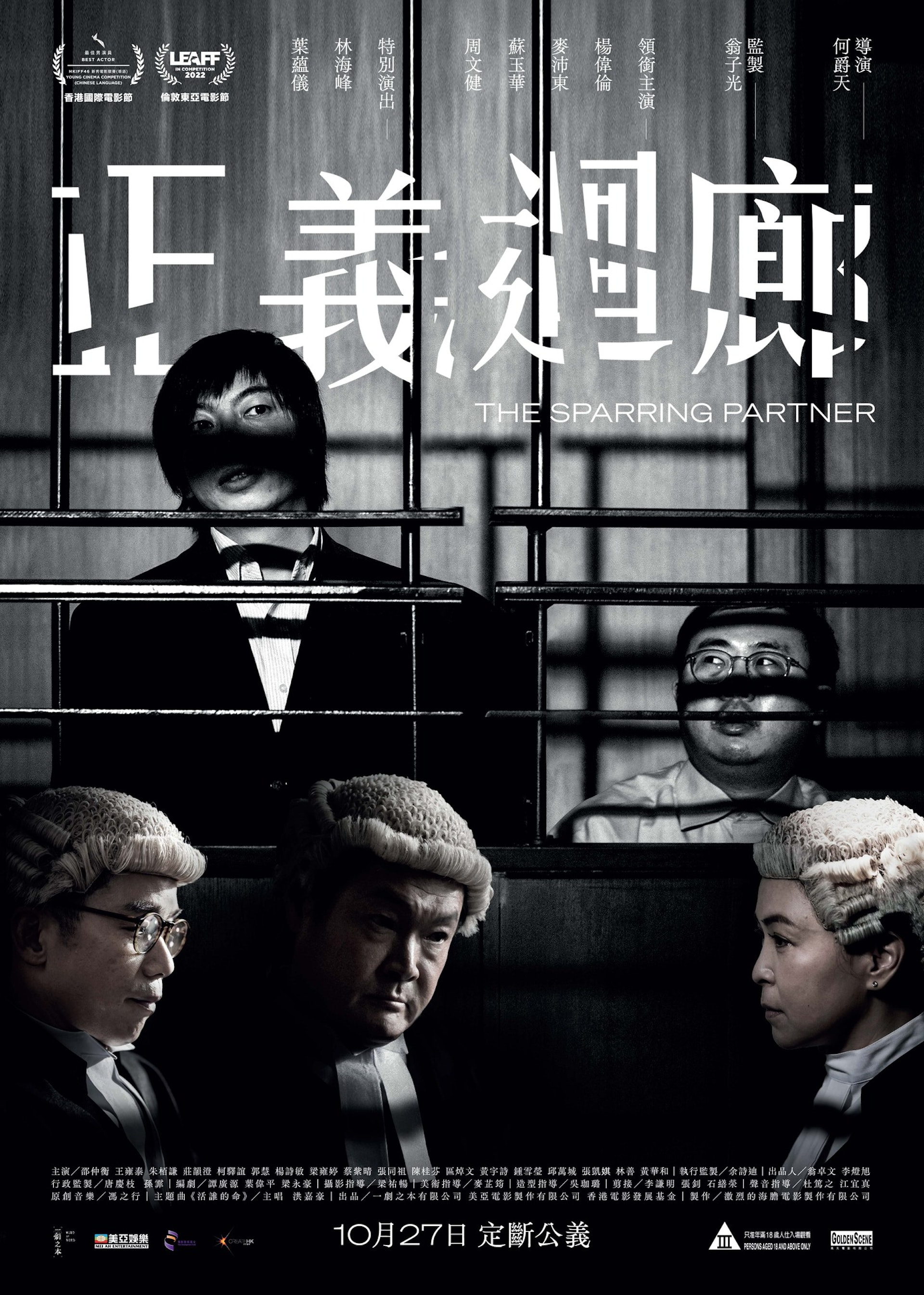
Loosely based on a real life case in which a man murdered his parents then reported them missing and even went to the media for help looking for them, Ho Cheuk-tin’s The Sparring Partner (正義迴廊) distances itself from the sensationalism of the crime to ask a series of questions about human nature and the operation of the criminal justice system. The first of those questions is obviously why, but not just why did he murder the people who raised him but why did he go to the media and why did he eventually decide to confess. 

One reason Henry (Yeung Wai-lun) gives for killing his parents is that his upbringing was abusive, a fact later confirmed by his sympathetic cousin herself a devout Christian. It seems fairly clear that Henry has an inferiority complex for which he blames his mother and father, resentful that they made him play piano and wouldn’t let him play basketball to which he attributes the small stature that led to merciless bullying in school and fractured masculinity in adulthood. Ho often places the camera slightly behind Henry’s shoulder, emphasising his smallness and neatly reflecting the way in which he literally feels as if everyone is looking down on him. He has so far had a life full of failure, studying abroad but failing to make the grade and resentful towards his more successful older brother Ho Jin to whom his parents force him to sign over his share of a flat they bought as an investment after Henry’s gambling debts and inability to find a job left him unable to pay the mortgage. Losing a flat in Hong Kong is worse than losing a life Henry’s lawyer points out at trial, attempting to justify the resentment that led to Henry’s decision to not only murder but brutally dismember his parents. 

Another question mark, however, hangs over Henry’s accomplice and why exactly he chose to take him down with him. Angus (Mak Pui-tung), a man he met at a job interview, seems to have learning difficulties and may not quite understand what is going on. His sister describes him as naive and explains that he has a tendency to make friends with those who only hope to exploit him and may have been manipulated by Henry in fear for the safety of himself and his family or else simply not to lose the friendship. The extent of his involvement with the crimes remains unclear, Henry claiming that he was present and participated in the killing of his mother, while Angus insists that he only took part in the disposal of the bodies. Perhaps uncomfortably the film asks how much we can really trust Angus, suggesting that he may simply be manipulating the sympathy of others and is not really quite as naive as he makes out. 

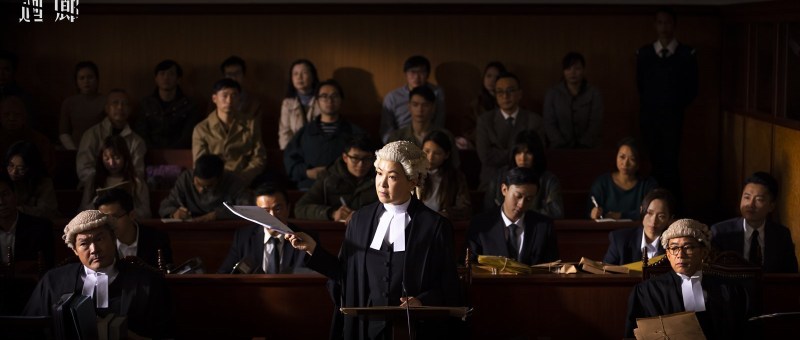
In any case, his treatment at the hands of the police is as unjust as it comes, intimidated into offering a confession simply to make the interrogation stop so that he sleep and get something to eat. In court the truth hardly matters, a trial is about constructing a credible narrative. The lawyers for joint defendants Angus and Henry attempt to undercut each other, Henry’s arguing he is not responsible on the grounds of mental illness while implicating Angus as the instigator, and Angus’ intent on emphasising his disability suggesting was merely manipulated by Henry. The jurors in the jury room struggle to make sense of the case but also of their own role, tasked not with assessing guilt or innocence but the strength of the argument based on the evidence they’ve been given only for some of them to base their convictions on gut instinct anyway. 

They are perhaps aware that Henry is a master manipulator, he lied to his own brother and fooled all of Hong Kong with his video appealing for support before dramatically confessing online. He has obvious delusions of grandeur and idolises Hitler, claiming that had he been born at the right time he could have done what Hitler did. Ho often dramatises his moments of introspection as fantasy in which Henry poses as Hitler and speaks German to those around him before snapping back to reality and finding him experiencing a moment of clarity that makes him step back. Yet there are moments of heartbreaking authenticity in the “friendship” between the two men such as in their meeting at the job interview as they bond in a shared sense of rejection, the subtext of their crimes inviting the reading that they are intended as acts of vengeance against the society into which neither of them was able integrate. 

In the closing scenes, a policeman remembers evidence left behind during the initial sweep of the crime scene by his incompetent boss and returns to Angus’ apartment to find a migrant family living there who tell him they know there was a murder but they don’t care about things like that and are just grateful to have a home. Henry too continues his dark jokes about permanently devaluing his family’s apartments, but seems genuinely distressed on realising that his brother really may abandon him for his total lack of remorse while Angus finds himself exploited by the tabloid press only too eager for all the gory details. Ho’s closing images which find Angus enveloped in the webs of the spiders which plague his dreams perhaps hints at his place in a complex network of forces which contribute to his exclusion from prejudice towards the disabled to fatphobia along with the manipulation of men like Henry who promise friendship but only take advantage of his inability to resist. Then again, the fact of the matter is that you’ll never really know the truth, whether Henry did it all for the attention and ended up alone anyway or if it really was Angus who planned everything and fooled all of Hong Kong, like the jury all you can do is weigh up the evidence and draw your own conclusions.  


The Sparring Partner screened as part of this year’s London East Asia Film Festival and will open in UK cinemas on Nov. 18 courtesy of CineAsia.

Time (殺出個黃昏, Ricky Ko, 2021)

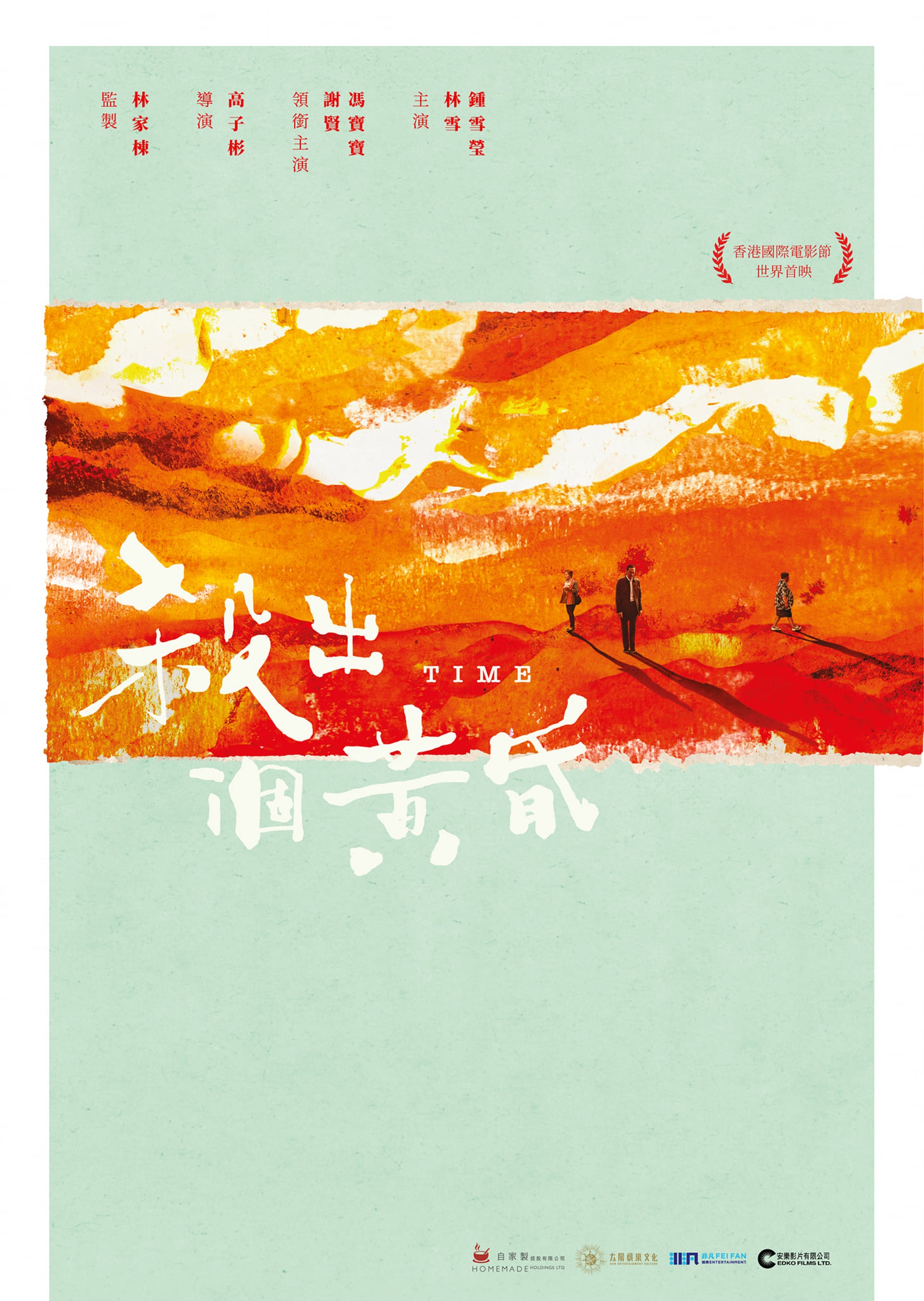
Youth is wasted on the young in Ricky Ko’s wistfully nostalgic ode to a bygone Hong Kong, Time (殺出個黃昏). Highlighting a series of very real social problems from the government’s failure to properly care for its old, to incurable loneliness, and the changing family dynamics of the modern society, Ko’s sometimes melancholy drama begins as a story about death but then finally becomes one about life granting its defeated heroes a second chance at a forgotten love in the formation of a new family. 

Ko opens, however, with a kitsch retro sequence filmed in the manner of ‘70s action movies in which a trio of assassins cooly eliminate their targets. Flashing forward to the present day, hitman Chau (Patrick Tse Yin) is unceremoniously let go from his job as a noodle chef. Unable to keep up with the breakneck pace of contemporary Hong Kong, he’s being replaced by a machine. A message on a radio show brings him back into contact with his old gang, fixer Fung (Petrina Fung Bo-Bo) now a nightclub singer and owner of at the Golden Phoenix cabaret bar catering for elderly romantics, and getaway driver Chung (Lam Suet) who has formed an unwise emotional attachment to a sex worker he dreams of marrying. Fung has found them a new job, but Chau immediately senses something different on his arrival. His target is a bedridden old lady who’s called the hit on herself because she can’t afford the bills for her medical treatment and has no real quality of life. 

Chau is so shocked he can’t go through with it, later seeing in a news report that the woman’s husband has been arrested in connection with her death. Her plight seems to have provoked a minor debate concerning lack of appropriate care for Hong Kong’s elderly. “Death is better than debt” is the way the woman’s husband characterised her choice, essentially affirming that there was no way for her to go on living in a society which has abandoned its elderly and infirm. Nevertheless, after that first case Chau takes on more requests for “euthanasia” from similarly afflicted people yet one of his most poignant is for a very wealthy man in good physical health who is simply lonely following the death of his wife. Though he had a large family, his children are far away with lives of their own and rarely visit. He chooses death in the hope of reuniting with his wife and escaping from the crushing loneliness of his existence. 

One particular assignment, however, brings Chau into contact with vulnerable teenager Tsz-Ying (Chung Suet-Ying) who has been abandoned by her parents following their divorce and is currently living alone. Despite himself, Chau ends up taking the girl in and acting as her “grandpa” while she insists on learning his knife technique and how to make noodles the old fashioned way. For his part, Chau finds himself at odds with the modern world, confused beyond belief about how to pay for a bus ticket and embarrassed when a younger woman does it for him by waving her phone at a box by the driver. He stands rather than sit in one of the priority seats reserved for elderly passengers unwilling to accept that he has become old. Yet living with Tsz-Ying he begins to emerge into the modern society, learning how to use a smartphone and regaining something of his youth even as he bests a few young whippersnappers who made the mistake of underestimating an old guy. 

While Chung, plagued by medical issues, quips that prison is “all inclusive” and you can get an appointment with your doctor any time you want, Fung has family issues of her own including a tense relationship with her snobbish daughter-in-law who’s determined to force her to sell her apartment and give up the club to get her grandson into an elite school. Despite their dark history as killers for hire, the trio are subject to the same problems faced by ordinary elderly people, witnessing lonely deaths and incurable pain coupled with a sense of futility which encourages them to think their lives are already over. Yet thanks to their involvement with Tsz-Ying they get a kind of second chance, building a new kind of family in intergenerational solidarity. Quirky and nostalgic, Ko’s aptly belated directorial debut feature may begin as a story about death and the inexorable march of time but finally makes the case for sidestepping the alienation of the modern society for a more wholesome sense of community and the eternal ability to start again no matter how old you are.


Time streams in the US Aug. 10 to 15 as part of this year’s New York Asian Film Festival.

Original trailer (English subtitles)