
Ya Boy Kongming! The Movie (パリピ孔明 THE MOVIE, Shuhei Shibue, 2025) [Fantasia 2025]

Why in this world does war never cease? Reincarnated in modern-day Shibuya, third-century military strategist Zhuge Liang, known by his courtesy name Kongming, finds himself fighting a different battle in becoming the manager of an aspiring singer whose music he feels could unite the world in peace. Adapted from the manga by Yuto Yotsuba and illustrated by Ryo Ogawa, Ya Boy Kongming! (パリピ孔明 THE MOVIE, Paripi Koumei the Movie) is both a surreal advocation for the power of music and satirical take on the cutthroat entertainment industry.

Having decided to become Eiko’s (Moka Kamishiraishi) strategist, Kongming (Osamu Mukai) has already advanced her career with an appearance at a major festival. He’s also turned himself into a mini celebrity appearing on TV to offer his strategic opinions and starring in a number of adverts. Now he wants Eiko to enter a joint competition between the three leading music labels which ironically echoes his own Three Kingdoms era and requires him to make use of his classic strategies. But he’s also facing his greatest challenge yet in the form of Shin, a street singer whose music calls out to him in a similar way to Eiko’s yet not, he fears, in a good way. He’s plagued by strange visions of his past life and his old lord Liu Bei before being told that his dreams are of something called the “Yumi door” that leads to the afterlife and that he will want to step through it the next time he hears Eiko’s music. 

As some point out to him, perhaps he just shouldn’t listen, then, but to Kongming that would be the same as death and if it helps realise his dream of bringing about universal peace through Eiko’s music then he’ll gladly give up this strange second life he’s been given. Of course, this produces a conflict in Eiko who, on realising that Kongming is actually serious, isn’t sure if she should just not sing ever again to avoid accidentally killing him even though he tells her that her music has the power to save people. Meanwhile, she loses confidence in herself, thinking that he’s gone off her and is about to jump ship to Shin who is currently being managed by a descendent of Kongming’s old enemy Sima Yi, Sima Jun. 

Jun’s mission is then one both of familial revenge and a quest to make his sister a star. But whereas Kongming’s strategies are clever, Jun’s are underhanded and it’s clear he’s gone to the dark side in trying to advance Shin’s career. At the end of the day, Shin might not want to “cheat” either, but even so the teased battle of wits comes to pass as the two men attempt to outflank each other and win the coveted championship which is Kongming’s way of ensuring Eiko will be able to continue after he’s gone. Though her songs are all becoming independent and able to go on alone after someone important is no longer around, Eiko still values Kongming’s support and friendship and obviously doesn’t want him to go anywhere.

Yet what Jun ends up rediscovering is the joy of music and that it really can change people’s lives, a realisation that all the label bosses came to some time ago. Despite the cutthroat nature of their business, they do it because they believe in music too, whether it’s a girl with a guitar in the street or a Chinese boy band making a surprise appearance during their world tour. Jun and Kongming want the same thing, and Shin and Eiko aren’t really rivals but allies fighting for universal peace through music. Boasting excellent production values, the film lends a sense of melancholy nostalgia to the Three Kingdoms era and Kongming’s vaguely homoerotic relationship with the famed Liu Bei whose voice he once thought could unite the world in peace before he lost his life on the Wuzhang Plains and woke up in Shibuya clubland on Halloween thousands of years later. Endlessly surreal, there’s a childlike quality to the warring strategies of Kongming and Jun as they attempt to outflank each other with elaborate schemes, but also a genuine sense of warmth and joy in the love of music, which just might, after all, bring peace throughout the land.


Ya Boy Kongming! The Movie screened as part of this year’s Fantasia International Film Festival.

Original trailer (no subtitles)

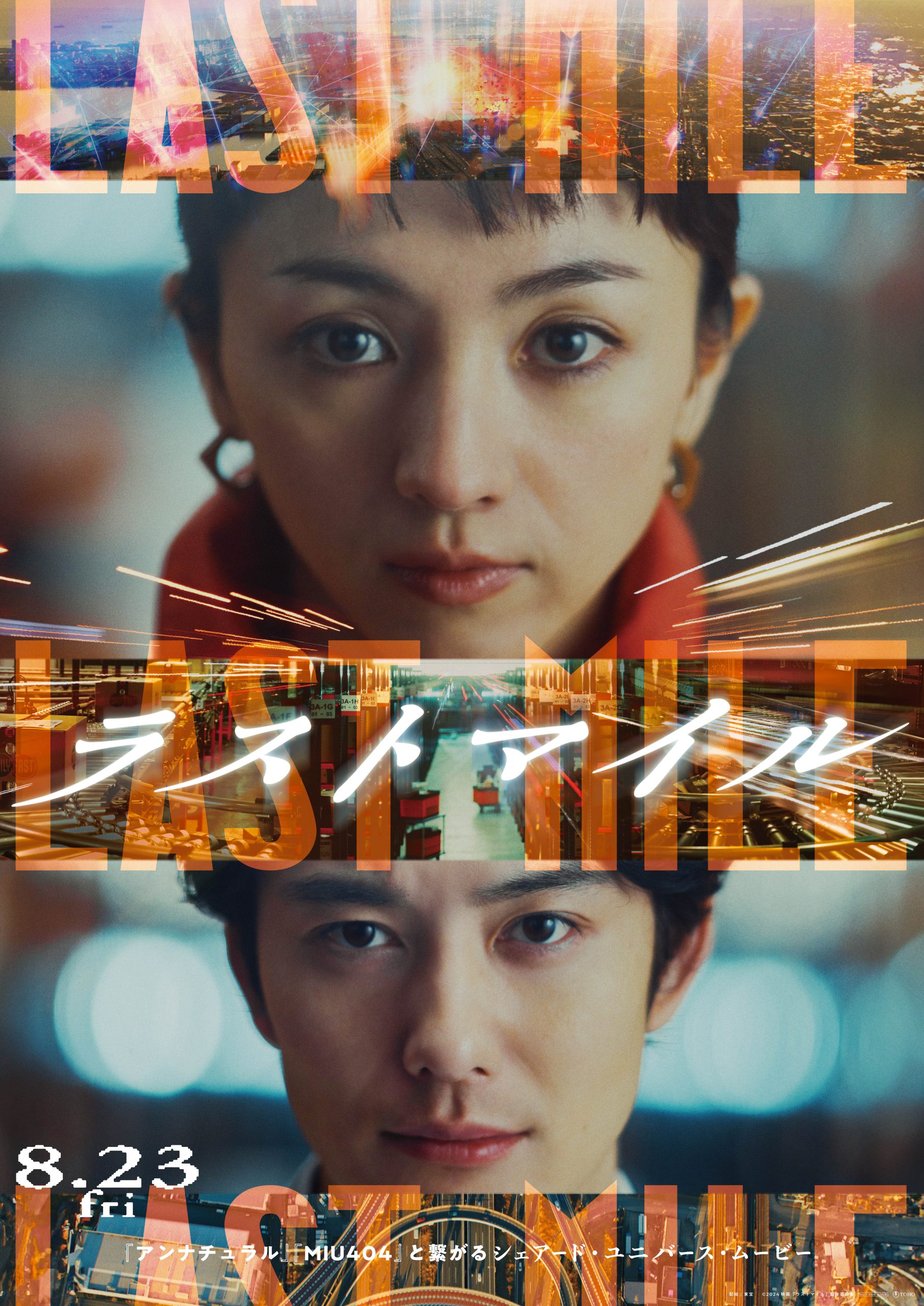
Last Mile (ラストマイル, Ayuko Tsukahara, 2024)

“Customer-centric”, what does that actually mean? The Amazon-like US-based conglomerate at the centre of Ayako Tsukahara’s Last Mile (ラストマイル) prides itself on its customer-centric philosophy, but at the end of the day, what that really means is that they give us what we tell them we want through our purchasing patterns and browsing history. That would be that we want everything as cheap and fast as it’s possible to be and don’t really think about the wider implications or what a world of infinite convenience might be doing to the society around us.

At least from the perspective of corporate lackey Elena (Hikari Mitsushima), recently returned from the US, the reason Daily Fast pressures its delivery staff to lower costs isn’t to maximise their profits, it’s so they can go on providing lower prices to customers which to her is all part of their customer-centric approach. This doesn’t really gel with her off-the-cuff remark about the warehouse not having a safety net to protect the workers from accidental falls or, she ominously adds, prevent people from jumping. That she brought it up at all might signal that she knows something’s not quite with the way this company treats its employees, though as it turns out she may have something else on her mind. In any case, when she arrives on her very first day the entrance to the complex is little better than a cattle market with a man on loud speaker barking instructions about were to go to the 800 members of staff some of whom have only been brought in to bulk up for the upcoming Black Friday sale. 

Which is all to say, it wouldn’t be all that surprising if the fact that some of their parcels have been exploding on delivery were a concerted attack against their ultra-capitalist philosophy, though actively delivering bombs to people who didn’t order them is not very “customer-centric” in any case. Obviously, Elena isn’t keen on this either but is also convinced that it can’t really be their fault because they have strict and dehumanising security measures in place preventing the workers from bringing in anything inessential. Even after she works out that the bomber has actually warned them that there are 12 bombs out there, she wilfully withholds the evidence from law enforcement to avoid damaging their share prices while trying to minimise business interruption rather than do anything sensible like stop delivering people parcels until they’ve figured out what’s going on with the bombs, though the real mystery is why the police don’t really seem to have the power to do that and, in fact, end up working with the warehouse to check each parcel individually to keep the conveyor belts going.

From the aerial view, the city itself resembles the warehouse with the roads taking the place of the belts as delivery vans shuttle along them. Seventy-something delivery driver subcontractor Sano (Shohei Hino) once had a friend who used to say that they were the ones who kept the country running. Yacchan became the number one driver largely because he took 10 minutes to eat his lunch and worked every hour god sent for dwindling pay with the implication that his gruelling schedule contributed to his early death. Sano’s son Wataru (Shôhei Uno) has just started working with him on the van after being laid off from an electronics job. They made quality washing machines that were designed to be efficient and to last, but of course they couldn’t compete with cheaper brands so they went bust.

Elena berates herself for being “too Japanese” for the American company which is to say that she takes pride in her work. That’s not to say that everything about the American business culture is bad as she encourages her assistant, Ko (Hikari Mitsushima), to call her Elena and to feel free to speak his mind rather than equivocate to avoid causing offence. But despite their “customer-centric” approach, it’s clear that the company puts profits above all else and treats its workers, who are not actually employees, poorly, without concern for their wellbeing. Yagi (Sadao Abe), the boss of logistics first Sheep Express which is the prime courier for Daily Fast, laments that he’d love to hire more drivers to help them through this crisis but he can’t because they’re always squeezing his budget and no one will work for their terrible rates except for those who, like Sheep Express itself, have no other options and will have put up with it because they’re dependent on Daily Fast. And because they’re dependent on Daily Fast, it means we all have to keep buying stuff we don’t really want or need just keep the belts going because we’re terrified about what will happen if they stop.

There is a direct comparison between Wataru’s well-made washing machines and the cheap and fast consumerist model that’s gradually taken over that suggests things like craftsmanship and integrity have gone out the window in a world where no one really bothers to go the last mile anymore, though it’s his steadfast engineering that eventually saves the day while even Elena comes to rethink her career trajectory and advises the drivers to strike and end this culture of exploitation because it turns out Daily Fast needs them more than they need Daily Fast. But maybe we don’t really need Daily Fast either, and we’re as much to blame for letting them give us what we think we want without really considering what that actually means. Perhaps a “customer-centric” society’s not all it’s cracked up to be, especially when workers and consumers are often the same people stuck on conveyor belts knowing there’s only one way to stop them.


Last Mile screens 19th June as part of this year’s Toronto Japanese Film Festival.

Trailer (no subtitles)

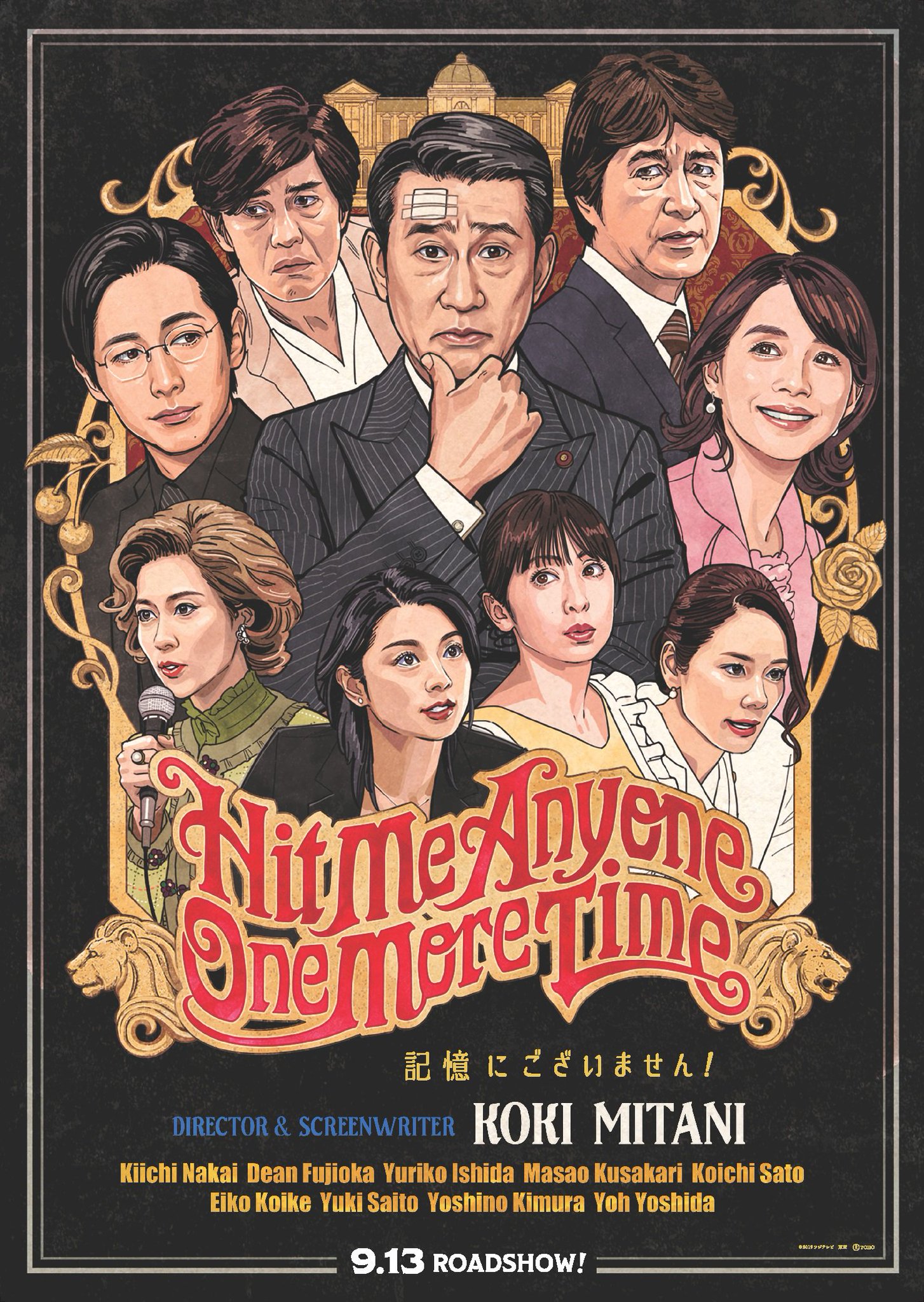
Hit Me Anyone One More Time (記憶にございません!, Koki Mitani, 2019)

Imagine if you woke up one day and found out you’re actually the national leader of your country and not only that absolutely everyone, including your wife and son, hates you with furious intensity. The hapless protagonist of Koki Mitani’s lowkey political satire Hit Me Anyone One More Time (記憶にございません!, Kioku ni Gozaimasen!) finds himself in just this stressful situation having lost all of his memories since he made the fateful decision to enter politics, rendered infinitely naive as he tries to keep up appearances while internally conflicted by the direction both his life and his country under his stewardship seem to have taken. 

Regarded as the “all-time worst prime minister” in Japanese history, Keisuke Kuroda (Kiichi Nakai) is known as a venal bore, a ghastly misogynist and all-round arsehole. To put it bluntly the very fact that a man like Kuroda could ever have become prime minster in the first place hints at a deep-seated rot in the political order. Aside from his gaffe-prone personality, the chief complaints against his administration are a sales tax hike and welfare cuts both of which target those with the least means, not that Kuroda cares very much about them. His big legacy idea is to build a second Diet building right next to the first Diet building only with spa facilities, illicitly teaming up with a childhood friend turned construction magnate who has been supplying him with hefty “donations”. 

After insulting the electorate during an outdoor balcony speech, Kuroda is hit on the head by a rock thrown by a disgruntled voter. Having lost his memory he regresses to a state of innocence from before he was corrupted by the cutthroat world of Japanese politics, now a nice, polite, slightly mild-mannered man who stuns his staff with his newfound consideration for others including a widely televised moment in which he stops to help up a female reporter who trips while chasing him in the lobby. Few believe he’s really changed, assuming this is some sort of bit intended to help rehabilitate his reputation. His new attitude, however, eventually fosters a new sense of hope for political change among his previously jaded, cynical staff who had long since given up hope of building a better Japan. 

Unsurprisingly, Mitani mostly avoids direct allusions to real world politics but adopts a mildly progressive stance as he sends a virtual innocent into the lion’s den of contemporary politics. It’s not long before Kuroda’s asking sensible questions about policy that wouldn’t go down so well with his (presumably) centre-right party including lowering the sales tax and raising the corporate, taking the time to greet constituents including a contingent of cherry farmers which contributes to his later decision to turn down a tariff-free trade deal for American cherries endangering diplomatic relations with the Japanese-American US President. No longer a ruthless political animal but a rueful middle-aged man who actually cares about ordinary people, Kuroda attempts to change the course Japanese politics largely by taking on the king maker, Tsurumaru (Masao Kusakari), his Chief Cabinet Secretary and the true holder of power in this infinitely corrupt political system. 

All sorts of sordid politics is on display from Kuroda’s womanising and a potential blackmail plot involving his wife’s affair to Tsurumaru’s yakuza ties and an even worse secret he would find personally ruinous should it get out. The ironic Japanese title of the film takes its name from that most universal of political get out of jail free cards, “I do not recall”, Kuroda’s standard response when questioned in the Diet about any of his extremely dodgy dealings. Instructing Kuroda that he should drop this “shallow humanism”, Tsurumaru can offer only the motivation that he wants to “remain in politics for as long as possible” while discovering that his old-school methods of political manipulation may no longer work when those around him find the courage to shed their cynicism and embrace a cleaner, kinder politics. 

Throwing in random gags such as a foreign minister who can’t speak English and has large ears with a pot belly that give him the appearance of Buddha while taking minor potshots as the usually toothless TV media through his series of acerbic anchors only too keen to criticise the PM live on air, Mitani’s comedy is characteristically inoffensive with its mix of slapstick and goodnatured farce but nevertheless makes a subtle plea for decent, compassionate politics which puts the interests of the people first rather than those of the governing elite. 


Hit Me Anyone One More Time streamed as part of this year’s Nippon Connection.

Original trailer (English subtitles)

Go! Crazy Gangster (風雲高手, Chang Ching-feng, 2016)

Nothing is impossible, according to the surreal logic of zany sports comedy Go! Crazy Gangster (風雲高手, Fēngyún Gāoshǒu). The only crazy gangsters here are two old men, childhood friends both obsessed with basketball, who work out their gang rivalry through the much more healthy medium of high school tournaments. The hero is not a gangster, but he does admittedly dress like one. In any case, the point is that given the right motivation, even the most hopeless of slackers, and the most rebellious of delinquents, can be reformed by the mutual solidarity of team sports. 

Lai-Fong (Alien Huang) is a reservist on a professional basketball team, a last resort player known chiefly for his laziness. Variously nicknamed “idler”, “benchwarmer”, or “waterboy”, he is not exactly keen to get on the court. Nevertheless, after getting hit by random meteorite the unthinkable happens. He not only gets to play, he becomes his team’s MVP and guides them to an unprecedented victory. Shortly after that, however, he’s seduced and blackmailed by pretty high school teacher Hsaio-Yun (Cyndi Wang) whose gangster father Liao (Liao Jun) then forces him to take a job coaching a losing girls’ high school team. Unbeknownst to Lai-Fong, Hsiao-Yun has become the subject of a bet between Liao and his friend Tseng (Ma Ju-lung) to the effect that her hand in marriage has been promised to his thuggish son Shuai-Nan (Dean Fujioka) if the team loses. 

The problem is that the high school basketball team is made up of delinquent girls because the school have been using it in lieu of detention. Predicatably, they don’t want to actually have to participate in sports and so they do everything they can to get rid of Lai-Fong before having a change of heart in realising the extent to which he actually does care for them in an admittedly fast turnaround from his “idler” persona. Thanks to his newfound sense of compassion and desire to assume his responsibility as a coach, he begins figuring out the girls’ problems from the ringleader’s difficult home life with her mother’s struggling business, to the demands of a showbiz dream. Meanwhile he’s apparently always been kind, Hsiao-Yun recalling that they have a childhood connection which has long given her strength seeing as she was herself lonely in her youth, the other kids unwilling to befriend the daughter of a scary gangster. 

Chang neatly subverts a number of conventional stereotypes, recasting his scary gangsters as childish old men who play video games and exercise their rivalry on the basketball courts rather than in the streets, the hint of violence lingering somewhere off screen. The women are tenacious and mature, the men feckless and ineffectual, but then there is the mild unpleasantness that Hsiao-Yun has been wagered by her father as part of the friendly rivalry he has with Tseng who also resents that he’s already “lost” in the child stakes because Hsaio-Yun is just much “better” than his son Shuai-Nan who despite studying abroad at Harvard seems none too bright and is little more than a vain thug. 

Nevetheless, what everyone learns is that it’s not really about winning or losing but gaining confidence in being yourself while drawing strength from mutual solidarity. Hsiao-Yun begins to stand up to her gangster dad, perhaps realising that he had no right to bet her in the first place so she doesn’t necessarily have to go along with it even if the team loses while Lai-Fong declares himself proud of the team whatever happens knowing how hard they’ve worked to come this far. His attitude may be defeatist, resigned to an inevitable loss, but he’s willing to chalk this up to experience, a valuable lesson for the road ahead. Hsiao-Yun, however, reminds him that they’ve come this far precisely because they were together and they’re still together now so as long as they stay that way there’s always a chance. 

To put it bluntly, Go! Crazy Gangster makes very little sense, a Taiwanese take on Hong Kong mo lei tau nonsense comedy it rattles absurdly from one unexpected plot development to the next. Nevertheless it hardly matters as the gang get their game on through sorting out their personal problems thanks to the love and support of their teammates, gaining the confidence to fight for their dreams on the court and off.


Go! Crazy Gangster streams in the US Nov. 27 – 29 as part of Asian Pop-Up Cinema & TACCGC’s @Home with Taiwan Cinema: Love & Hope

Original trailer (English subtitles)

Fullmetal Alchemist (鋼の錬金術師, Fumihiko Sori, 2017)

Fullmetal Alchemist posterEvery so often a film comes along which makes you question everything you thought you knew. Fullmetal Alchemist (鋼の錬金術師, Hagane no Renkinjutsushi) is just such as film but less for the philosophical questions fans of the source manga may have been expecting, than for the frankly incomprehensible fact that it exists at all. Produced not by a major studio but by Square Enix – best known as a video game studio but also the publisher of manga magazine Monthly Shonen Gangan in which the series was originally serialised, and effects studio Oxybot Inc., Fullmetal Alchemist is not the big budget extravaganza a franchise of this size might be expected to generate but a cut price blockbuster attempting to pack a much loved, long running saga into just over two hours.

For the uninitiated, the movie begins with the little Elric Brothers – Ed and Al, who live in the countryside with their doting mother while their father is away. When their mother is struck down by a sudden illness and dies, the boys raid their dad’s Alchemy library for clues as to how to bring her back. There is, however, a taboo surrounding human transmutation and when the brothers cast their spell they pay a heavy price – Al loses his entire body though Ed manages to save his soul and bind it to a suit of armour by sacrificing his own right arm.

Many years later, Ed (Ryosuke Yamada) and Al (Atomu Mizuishi) are still looking for the mythical “Philosopher’s Stone” which they believe will allow them to cast another spell and get their fleshy bodies fully restored. This takes them to a small town where they encounter a dodgy priest and their old commander, Captain Roy Mustang (Dean Fujioka), who wants to bring them back into the State Alchemist fold. The priest’s stone turns out to be a fake though his connections to the film’s shady antagonists are all too real, and the brothers are soon faced with another dilemma in their quest to restore all they’ve lost.

Sori shifts away from the frozen Northern European atmosphere of the manga for something sunnier and less austere, shooting in Italy’s Volterra with its narrow medieval streets and iconic Tuscan red roofs. He is, however, working on a budget and it shows as his cast are costumed at cosplay level with awkward blond wigs attempting to recreate the manga’s European aesthetics. Al, rendered entirely (and expensively) in CGI, is deliberately kept off screen while the quality of the effects often leaves much to be desired.

Al’s frequent absence is a major problem seeing as the series’ major theme is brotherhood and Ed’s tremendous sense of guilt over his brother’s condition coupled with his recklessness in his need to put things right is only explained in a piece of bald exposition following a fight between the pair after Al’s mind has been corrupted by a mad scientist who implied that he may not really be “real” after all. While Al’s false memory paranoia may be among the more interesting issues the film attempts to raise, it’s quickly pushed into the background, eclipsed by the ongoing conspiracy narrative which places the Elric Brothers in a difficult position regarding their need to get their body parts back. 

A symptom of the attempt to condense such a much loved and well known manga into a two hour movie, there is rather a lot of plot going on and numerous side characters on hand to enact it. Though fans of the original manga may be pleased to see their favourite characters have made it into the movie, they maybe less pleased about how one note they often are or the various ways their personalities have needed to shift in order to fit into the new narrative arcs the film employs. Aside from the young and pretty cast, Fullmetal Alchemist also finds room for a host of veteran talent from the ubiquitous Jun Kunimura in a small role to Yo Oizumi turning villainous and Fumiyo Kohinata at his most Machiavellian.

Extremely silly, poorly put together and burdened with some very unfortunate wigs, the Fullmetal Alchemist live action adaptation is as much of a misfire as it’s possible to be but viewers hoping for a continuation to the tale would do well to stay tuned for a post-credits sting strongly hinting at a part two.


Streaming worldwide on Netflix.

Original trailer (English subtitles)