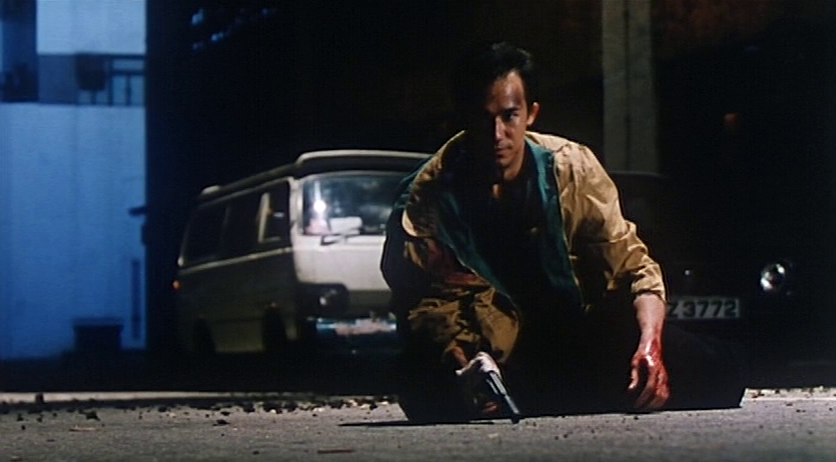
The Big Heat (城巿特警, Andrew Kam & Johnnie To, 1988)

A Hong Kong cop struggles with his sense of responsibility when faced with the fatalistic existential threat of the imminent Handover in Johnnie To’s first foray into the genre with which he would later become most closely associated outside of Hong Kong, the action crime drama. After a handful of Cinema City comedies, To is credited as a co-director along with Andrew Kam Yeung Wah though the production of The Big Heat (城巿特警), loosely inspired by the Fritz Lang film of the same name, was notoriously complicated passing through several hands over its unusually long gestation of almost two years, according to an interview with screenwriter Gordon Chan Kar-Seung, with producer Tsui Hark also heavily involved in the shooting. 

Tsui’s involvement is apparently responsible for the unusual level of explicit violence more usually found in horror exploitation rather than gangster noir, though there is perhaps something in the constant bodily destruction that aligns with the pre-Handover setting in which the “big heat” hanging over the city is an increasing existential panic which has created the maddening environment in which this surreal violence can occur as revealed in the opening dream sequence which features a drill piercing a man’s hand with small pieces of flesh speeding off it. The dream will turn out to be a prophecy foreshadowing the final shootout in which Inspector Wong (Waise Lee Chi-Hung) is shot thought the hand though at this point it signals both a psychological and physical fracturing. Owing to a neurological condition, Wong has lost full control over his right hand which leads him to question his ability to protect his city if he is unable to pull the trigger when needed which might also explain why he is frequently seen practicing his marksmanship at the firing range. 

Because of this anxiety, Wong had planned to resign but changes his mind on learning that his former partner who sustained an injury that Wong felt himself responsible for has been brutally murdered by Hong Kong gangsters in Malaysia after coming across a secret folder “by chance” containing photos used to blackmail a shipping magnate over his his homosexuality and an incriminating invoice. To do the right thing, Wong also temporarily breaks up with his forensic scientist girlfriend Maggie (Betty Mak Chui-Han) whom he was due to marry in a fortnight’s time suggesting that they not see each other until he’s solved his friend’s murder and then presumably plans to retire from law enforcement. 

Essentially, he deprioritises his personal, romantic relationships in favour of the homosocial brotherhood of the police both avenging his friend and dedicating himself to protecting Hong Kong from an oncoming threat represented by gangster Han (Paul Chu Kong) who is later revealed to be in cahoots with Russian mafia who ironically have a large portrait of Lenin on their boat and hammer and sickle flags everywhere while vowing to continue “selling drugs and capitalism” in the seemingly lawless environment of pre-Handover Hong Kong where everyone apparently wants to make enough money to be able to leave if the situation declines, “communist” Russians perhaps standing in for looming Mainland authoritarianism. Han even offers to sell “everything including Hong Kong” passing a list of names of “important people in the government” he apparently has access to in vast network of corruption. “Cheers to 1997” they ironically toast for their burgeoning business opportunity. 

It’s this corruption that is the source of Wong’s anxiety, fearing he doesn’t have the strength to stop it while his compromised hand is a symbol of both fate and an impotence that is later exorcised when he receives the corresponding physical injury yet is saved by a crucifix necklace that previously belonged to his girlfriend while in another instance of foreshadowing the corrupt policeman is eventually taken out by his own malfunctioning gun backfiring just like that which ruined an assailant’s hand in the drug bust in which Wong’s partner was injured. Having regained mastery over his hand, Wong is therefore more assured in his ability to protect Hong Kong from whatever it is that’s coming remaining within the police force while those who pay the heaviest price are an idealistic young rookie unable to adapt to the morally compromised world of pre-Handover Hong Kong, and Wong’s fiancée who becomes a symbol of that which he could not protect having prioritised his role as a police officer. Though somewhat disjointed having passed through so many hands, there are some typically To flourishes in the fluidity of the camerawork in the early stretches along with a gloomy romanticism in the fatalistic noir of the pre-Handover society even as he continues to find his feet as a purveyor of moody policier. 


Trailer (no subtitles)

Dream Home (維多利亞壹號, Pang Ho-cheung, 2010)

“In a crazy city, if one is to survive, he’s got to be more crazy.” according to the opening titles of Pang Ho-cheung’s surprisingly poignant slasher satire Dream Home (維多利亞壹號). In the 10 years since the handover, the average wage has increased by a measly 1% while house prices have risen by 15% in 2007 alone. Sheung’s (Josie Ho) one overriding mission in life is to buy a flat for her family to live in, but it’s clear that her struggles to become a homeowner aren’t the only pressure points in her life in an increasingly capitalistic society. 

As we later discover, Sheung is set on one particular flat because the building it’s in stands on the spot where she once lived as a child before her family was pushed out by rampant gentrification. In essence, she’s just trying to take back what’s hers and restore her family’s sense of dignity and security. A flashback to her childhood reveals her father’s own insecurity in having been unable to secure a larger living space in which she and her brother could have their own rooms while her grandfather, a sailor, longed for a sea view and the sense of an expanding horizon otherwise denied to the family in a cramped Hong Kong council flat. In a touch of irony, Sheung’s father himself worked in construction building apartment blocks he couldn’t afford to live in and in the end it killed it him through exposure to asbestos and other dangerous fibres. 

Sheung works at a bank but is conflicted about her job cold calling account holders to try to get them to buy into dodgy loans neatly echoing the film’s closing moments which hint at a coming economic crash precipitated by the subprime mortgage crisis which will threaten Sheung’s homeowning dream. Her friends think she’s crazy to buy a flat at all, but she’s completely fixated on repairing her broken childhood by taking back her family home and ending her displacement. Meanwhile, she’s in a dissatisfying dead end relationship with a married man which largely takes place in love hotels he sticks her with the bill for and turns up late to only to immediately fall asleep. When Sheung asks him for a loan to help pay for her father’s medical care after the insurance she got for him is voided because he never told her he’d been diagnosed with a lung complaint before she took it out, he tells her to use her deposit fund instead and give up on homeownership because only fools like her would buy in such a volatile market. 

Disappointment in both her personal and professional lives continues to place a strain on Sheung’s fragile mental state that eventually tips her over the edge. Hoping to bring the apartment’s price down, she goes on a murder spree in the building killing it seems partly out of resentment and otherwise pure practicality. There is irony here too, in that she kills her victims with the weapons of their privilege. A cheating husband who comes home unexpectedly after lying to his wife that he’s gone golfing but was actually with his mistress is whacked on the head with a golf club while an obnoxious stoner kid is stabbed in the neck with his bong. Sheung murders a Filipina helper, but also the snooty middle-class woman who employed her by using the vacuum pack machine the helper had been using on her behalf. One might ask if she really needed to kill the helper or the pair of Mainland sex workers in the next apartment, but when it comes to devaluing property prices “massacre” sounds much better than “killing” and so it’s the more the merrier. 

In the end, it’s this city that’s driven her out of her mind with its status-obsessed consumerism and constant sense of impossibility. After her killing spree, she doesn’t even seem very conflicted about selling dodgy loans to vulnerable people not so different from herself while she was so desperately trying to get approval on a mortgage there was no way she could afford despite working a series of other part-time jobs including one selling designer handbags to the kind of wealthy women she resents. Her dream apartment has a view quite literally to kill for, though there’s a sense that Sheung’s dream will always be futile with the same motivations that brought her here leading to the mortgage crisis and economic shock that could eventually take it from her. Bloody, gory, and at times sickeningly violent Pang’s satirical horror show paints contemporary capitalism as the real villain and even in its dark humour reserves its sympathies for the wounded Sheung pushed to breaking point by a pressure cooker society. 


Dream Home available to stream in the UK until 30th June as part of this year’s Odyssey: A Chinese Cinema Season.

International trailer (English subtitles)

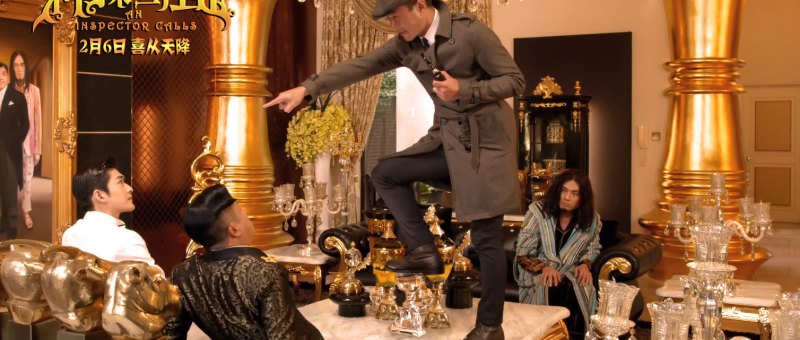
An Inspector Calls (浮華宴, Raymond Wong & Herman Yau, 2015)

Inspector Calls poster 1J.B. Priestley’s An Inspector Calls found itself out of favour until a phenomenally successful stage production brought it back into the national consciousness in the early ‘90s, but even if some decry its inherent melodrama as a relic of another era the play’s comments on the entrenched classism of British society sadly still ring true. An Inspector Calls is many things, but one thing it defiantly is not is funny – a series of concentric tales of betrayals and oppressions, Priestley’s drama lays bare the callousness with which the privileged bolster their position through the story of one faceless factory girl standing in for an entire social class whose lives are often at the mercy of those “above” them.

In adapting Priestley’s play as a Chinese New Year movie (a strange concept in itself), Herman Yau and Raymond Wong relocate to contemporary Hong Kong, re-conceiving it as a broad comedy of the kind one might expect for the festive period. The setup is however still the same. The Kau family will be receiving a visitation – this time from Inspector Karl (Louis Koo Tin-lok) who has some difficult news for each of them. Three hours previously, a young woman committed suicide in her apartment by drinking bleach, taking the child she was carrying with her. Inspector Karl views this as a double murder and, based on the diary they found at the crime scene, has brought the reckoning over to the Kaus’.

The Kaus, at the present time, are preparing an engagement party for daughter Sherry (Karena Ng) who will be marrying the handsome younger brother of a factory owner, Johnnie (Hans Zhang Han). What no one can know is that the family business is going under, the Kaus are broke, mum and dad don’t get on, and all of this finery is merely rented affectation. The only member of the family who still seems to have something like a social conscience – Tim (Gordon Lam Ka-tung), the 27-year-old younger son, is viewed by all as a feckless and naive hippy, hiding out in his childhood bedroom, still all fluffy cushions and toy soldiers.

As the Inspector explains, he holds Mr Kau (Eric Tsang Chi-wai) responsible because the woman once worked in his factory and he fired her for participating in a strike for better pay and conditions. Sherry got her fired too when she worked in an upscale fashion store. Johnnie knew her during an unfortunate period as a bar hostess, and Tim as a masseuse. Mrs Kau (Teresa Mo Shun-kwan), who heads up a woman’s charity and publicly espouses tolerance while privately judgmental, once turned her down for familial support seeing as the father of her child was still living. She advises holding him to account and if he won’t pay, forcing his family to take responsibility on his behalf. The irony being that the father is likely her own son and that if this poor woman had rocked up at the Kaus’ with a sad story and an infant in her arms, she would have been met with nothing more than contempt save perhaps some hush money to send her on her way.

The Kaus are merely a series of examples of the various ways the wealthy mistreat the poor, wielding their sense of entitlement like a weapon. Yau and Wong adopt an oddly Brechtian approach in their expressionist production design with the faceless masses identified only through titles – the word “labour” on the workers’ caps, “manager” in the fashion store, “secretary” at the foundation. None of these people are really worthy of names because they will always be “less” while the Kaus are “more” in more ways than one. Actions, however, have consequences. The family console themselves that this is all far too coincidental, that they couldn’t all have known the “same” woman in different guises, but that in many ways is the point – she isn’t one woman but all women, used, abused, and discarded not only by heartless men but by jealous and judgemental members of her own sex too. Better than her than me, they might say, but that’s no way to run a healthy society as the sensitive, slightly damaged Tim seems to see.

Like the Birlings, the Kaus attempt to brush the Inspector’s warning off, thinking it’s all been some elaborate prank that can they laugh about and then forget, but there will be a reckoning even if they attempt to gloss over the various revelations regarding their moral failings. Wong and Yau’s vague gesturing towards the outlandish greed of the hypocritical super wealthy is undercut by the ridiculous New Year slapstick of it all despite the Metropolis-like production design and expressionist trappings, giving in to an excess of its own in an extremely unexpected musical cameo from a martial arts star and the decision to end on a social realist photo of an innocent, pigtailed proletarian woman dressed in red. Nevertheless, strange as it all is the bizarre adaptation of Priestley’s play has its own peculiar charm even if it’s outrageousness rather than moral outrage which takes centre stage.


Currently available to stream online via Netflix in the UK and possibly other territories.

Original trailer (English / Traditional Chinese subtitles)

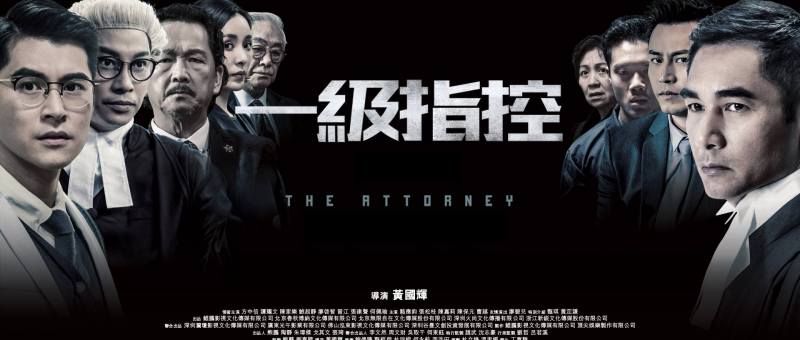
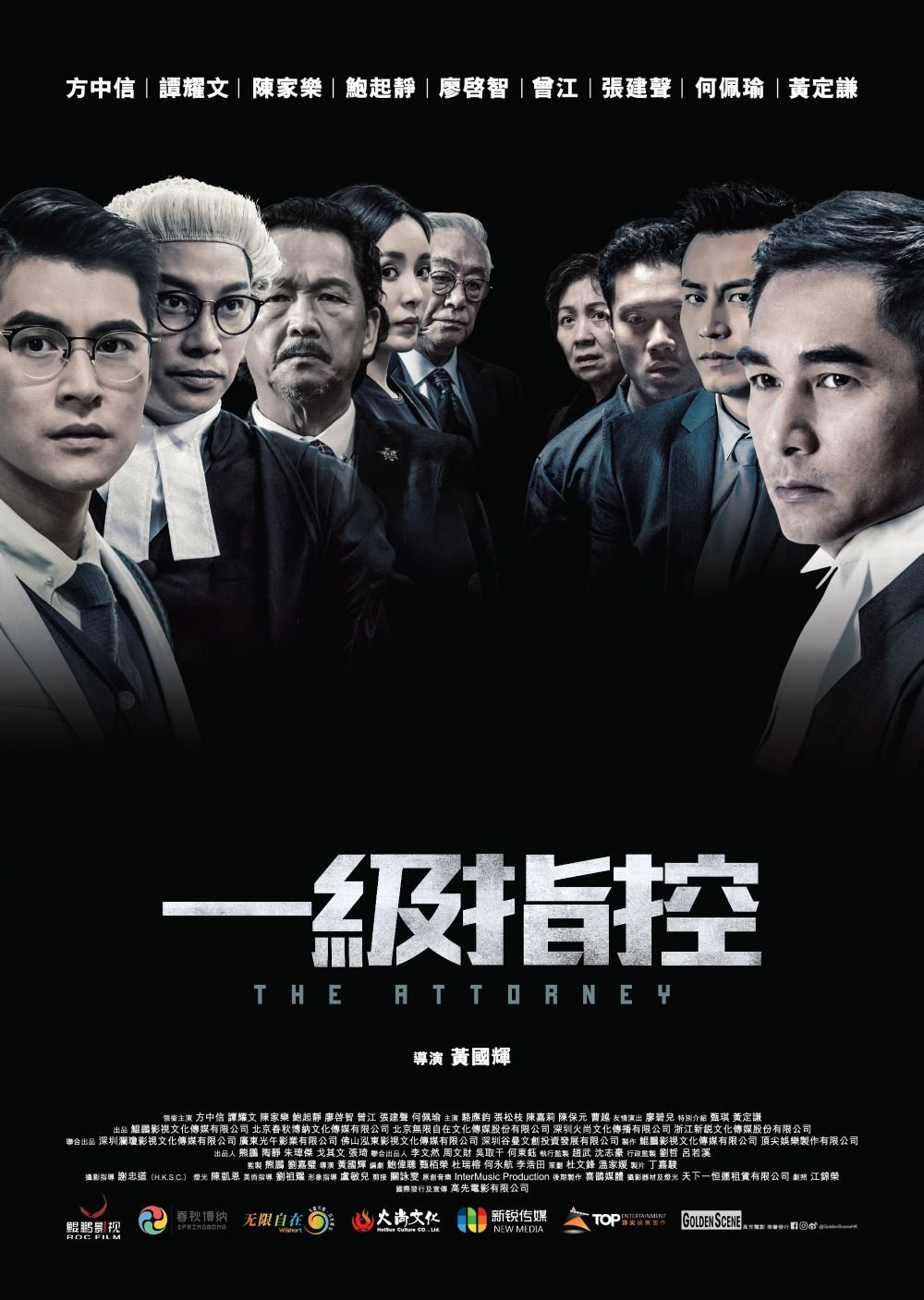
The Attorney (一级指控, Wong Kwok-fai, 2019)

The Attorney poster 1What price justice? Wong Kwok-fai’s legal thriller The Attorney (一级指控) puts an unequal society on trial but discovers that to beat shadiness you might need to get a little shady and a healthy bit of deviousness may serve you well if it’s offered in service of a noble ideal. Then again, it’s a slippery slope towards the abyss if even the proponents of law aren’t above a little judicial finagling to ensure that “justice” gets done in a society which continues to defer to those with the biggest pockets rather than protecting those of meagre means.

We meet our two attorney heroes in the middle of their respective cases. Jaded hot shot Lei You Hui (Alex Fong Chung-sun) is defending a journalist who broke an important story about corruption in the competition for places at prestigious schools from a defamation charge, while the idealist rookie Kelvin (Carlos Chan) is defending a frail old woman held up on a charge of operating without a proper business licence. Lei wins his case, and Kelvin loses. Lei mocks Kelvin’s lack of success, and Kelvin has only contempt for Lei’s cavalier attitude towards the upholding of justice.

The action begins when a 25-year-old man, Lee, is found lying in a pool of blood next to the dead body of a young woman, Ka-yee, who is later discovered to be the daughter of a billionaire businessman, Kwok (Liu Kai-chi). The case seems open and shut. Lee claims he passed out and found the body when he woke up but the circumstantial evidence against him is overwhelming. His grandmother, Chu (Nina Paw Hee-ching), of course believes that he is innocent and enlists the best lawyers she can get access to, leading her to a solicitor who introduces her to Kelvin who is determined to see that the young man gets a fair trial. Lei, meanwhile, has a personal interest in the case in that his late wife was killed in a shopping mall collapse 10 years previously which also took the lives of Lee’s parents. Lei prosecuted a class action law suit, but lost. The shopping mall was constructed by Kwok’s company, which gives him an additional reason to want to help aside from trying to make things up to Lee and Chu whom he feels he failed all those years ago. 

Wong wastes no time in demonstrating that “justice” is a nebulous concept when society is necessarily set up to benefit the rich. Ka-yee’s body was discovered in a building belonging to a property magnate, Tsai Chi-wai (Patrick Tam), who is currently running for political office on a platform of equality for all. Chi-wai is, however, a member of the super rich elite who believes he can do as he pleases because he is protected by his wealth and privilege. Lee, by contrast, is a poor boy delinquent who ordinarily wouldn’t have access to a fancy lawyer to clear his name and most likely would have been torn apart by the elite prosecutor those with vested interests have ensured is attached to the case even though it’s a simple enough affair. 

Yet, as Lei discovers, the roots of corruption lie in the understandable desire to protect one’s children even when they’ve made terrible mistakes. Meeting with Chi-wai’s smarmy father, he discovers a man who talks up his youthful high ideals of union activities and working for the workers but later emphasises his hard won cynicism in insisting that no one with a brain seriously believes in things like truth and justice, only self interest. Tsai wants to protect his son at all costs, if only to protect himself by getting his boy into high office. Meanwhile, Kwok is left with questions about his own responsibility for his daughter’s death. If having literally billions in the bank can’t keep your little girl alive, then what use are they?

Then again, having billions in the bank is pretty useful leverage for getting your own way even if you eventually have a change of heart about enabling societal corruption. Chi-wai snarls that you need to be smart to survive, but according to Kelvin saving lives is more important than winning. Lei, who had given up his lofty ideals after being unable to get “justice” for his wife’s death begins to regain his faith in the law thanks to Kelvin’s influence and the accidental coincidence of getting a kind of revenge on Kwok by showing him the error of his ways in illuminating the truth behind his daughter’s death. To do that, however, he’ll have to bend the law a little which leaves him a compromised figure if for the best of reasons as he wilfully demonstrates the flaws in a legal system which is in itself inherently corrupt in its avowal that everyone is equal before the law while ignoring the fact that not everyone has access to the same level of “justice”. Wong’s conclusion may be a little rosy as even the most jaded of legal minds finds himself minded to rebel against the system, but there’s no denying his purpose as Lei decides to protect his daughter by protecting his society from the forces which threaten to blacken her future.


The Attorney screens in Chicago on Oct. 10 as the closing night gala of the ninth season of Asian Pop-Up Cinema. Actor Kenneth Tsang Kong, scriptwriter Frances To, and xxecutive producer Cherrie Lau will be in attendance for an introduction and Q&A.

Original trailer (English subtitles)

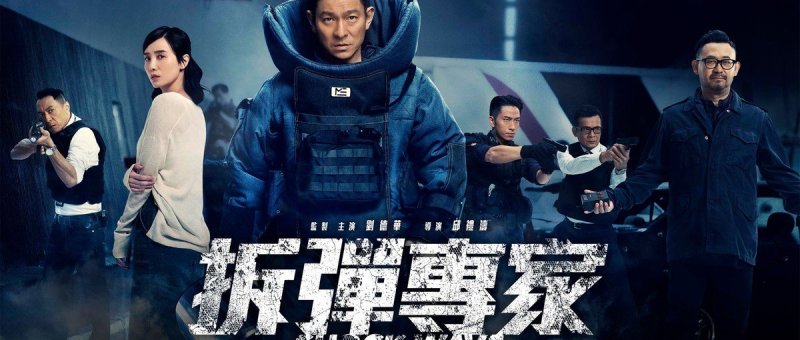
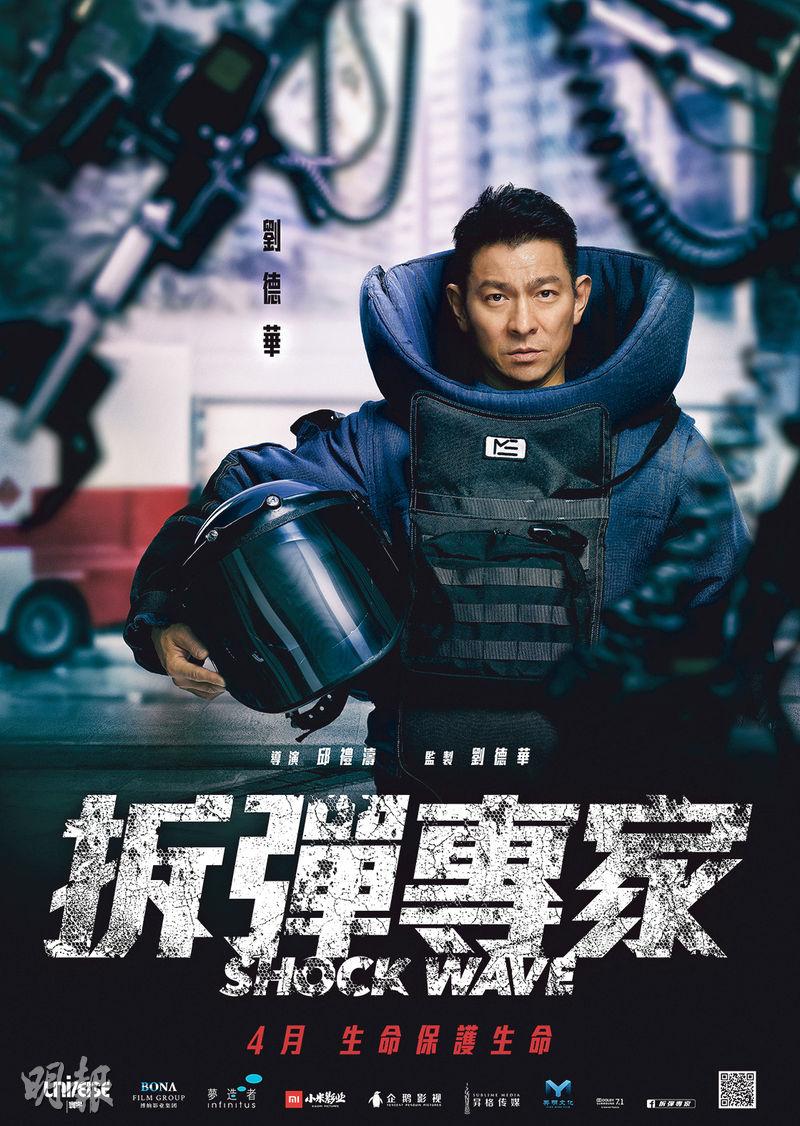
Shock Wave (拆彈專家, Herman Yau, 2017)

shock wave posterRecent Hong Kong action cinema has not exactly been known for its hero cops. Most often, one brave and valiant officer stands up for justice when all around him are corrupt or acting in self interest rather than for the good of the people. Shock Wave (拆彈專家) sees Herman Yau reteam with veteran actor Andy Lau turning in another fine action performance at 55 years of age as a dedicated, highly skilled and righteous bomb disposal officer who becomes the target of a mad bomber after blowing his cover in an undercover operation. These are universally good cops fighting an insane terrorist whose intense desire for revenge and familial reunion is primed to reduce Hong Kong’s central infrastructure to a smoking mess.

Some years prior to the main action, J S Cheung (Andy Lau) is undercover with a gang of bomb loving bank robbers. When they decide to load up a few taxis with explosives, Cheung just can’t let innocent people and fellow officers get caught in the crossfire and so he blows his cover and tips the cops off to the weaponised motor vehicles. Head honcho of the gang, Blast (Jiang Wu), is not best pleased especially as his younger brother Biao (Wang Ziyi) gets himself arrested. Flash forward to the present day and Blast has come up with his plot for revenge – placing large amounts of explosives in the Cross Harbour Tunnel and taking everyone in the general area hostage until the authorities agree to release his brother and he’s satisfied himself in outwitting Cheung.

In this at least Shock Wave fits neatly into the mad bomber genre as Blast goes to great lengths to terrorise the public for irrational and entirely selfish reasons. Blast’s original twin motives centre on a need to get his brother out of prison and the need to destroy Cheung but Biao has decided one of the reasons he quite liked being in prison was that Blast wasn’t there and Cheung isn’t really interested in playing Blast’s game. Blast, as his brother points out, is someone who rarely considers the thoughts or emotions of other people, acting selfishly and assuming his own desires are the only ones which matter. This essential selfishness is echoed in a fairly subtle point about the financial impact of the tunnel crisis and how others stand to profit from it while hundreds people remain terrified and captive inside a giant tube surrounded by water which may soon collapse if Blast loses his temper.

Th mad bomber may be a cinematic staple but Shock Wave relies too heavily on familiar genre elements to make much on an impact of its own. Characterisation is often shallow in the hero cop vs insane criminal set up with supporting characters reduced to a single prominent emotion. The inevitable romantic subplot gives Cheung an emotionally fragile, recently divorced school teacher as an angelic girlfriend only to have her experience sudden qualms about getting involved with someone who does such a dangerous job.

Even if the narrative fails to impress, Yau produces an exciting visual spectacle reportedly spending vast sums of money building an exact replica of the Cross Harbour Tunnel. Filled with explosions, gunfights, and high octane action Yau keeps the tension high by turning the dial right down as Cheung and his gang do their thing with cool, calm military precision disarming everything from C4 to unexploded World War II bombs.  At two hours, Shock Wave is pushing the ideal for an action thriller but largely makes its lengthy running time count despite a number of underdeveloped subplots.

A vehicle for Lau who also takes a producer credit, Shock Wave is defined by his performance as the dashing and heroic member of the bomb disposal squad. Jiang Wu’s mad bomber provides hearty support but is never given much to do other than emphasise his villainy with sneering taunts and occasional acts of cruelty. Cheung’s schoolteacher girlfriend Carmen, played by Song Li, is about as generic as they come seeming only to exist for the classic girlfriend in peril plot device but Song and Lau have good chemistry and the relationship does at least help to up the otherwise absent emotional content. Simply put, Shock Wave is an excuse for the ageing Lau to play the action hero once again and he plays it to the hilt. At times frustratingly formulaic, Shock Wave does manage to maintain the tension until the grippingly explosive finale whilst also paying tribute to those who run towards the crisis rather than away from it in full knowledge of the price they may pay in coming to the defence of ordinary people.


Shock Wave was the closing film of the 19th Udine Far East Film Festival and will also be released in UK cinemas from 5th May.

Original trailer (English subtitles)

https://www.youtube.com/watch?v=7YZctVaaNEw