Once a Thief (縱橫四海, John Woo, 1991)

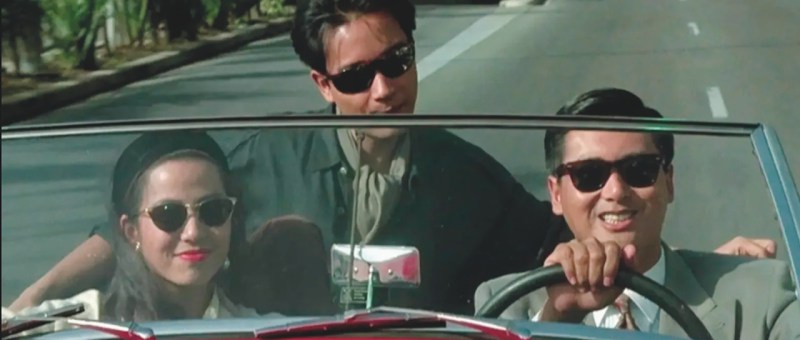
A trio of orphans raised to be international art thieves rebel against their mentor when a job goes wrong in John Woo’s throwback to his early comedies, Once a Thief (縱橫四海). A breezy, Lupin III-esque adventure, the film on one level seems to be satirising the vacuity of extreme wealth as the rich spend huge amounts of money to buy stolen paintings they can’t show to anyone while painting our heroes as anti-capitalist rebels for whom the money is but a secondary concern.

They are, after all, having quite a lot of fun with their complicated heists. Though the robberies are finely tuned affairs, we also see that the team are not infallible and often riding on bravado such as Rice Pudding (Chow Yun-fat) failing to land smoothly in the getaway car and being left trailing behind alone. The trio take it in good humour and have a real sense of camaraderie in which they’re forever playing tricks on each other. Not even the intrusion of romantic rivalry can disrupt their friendship as it becomes clear that both Jim (Leslie Cheung) and Rice Pudding are in love with Red Bean (Cherie Chung), with Rice Pudding originally having the upper hand.

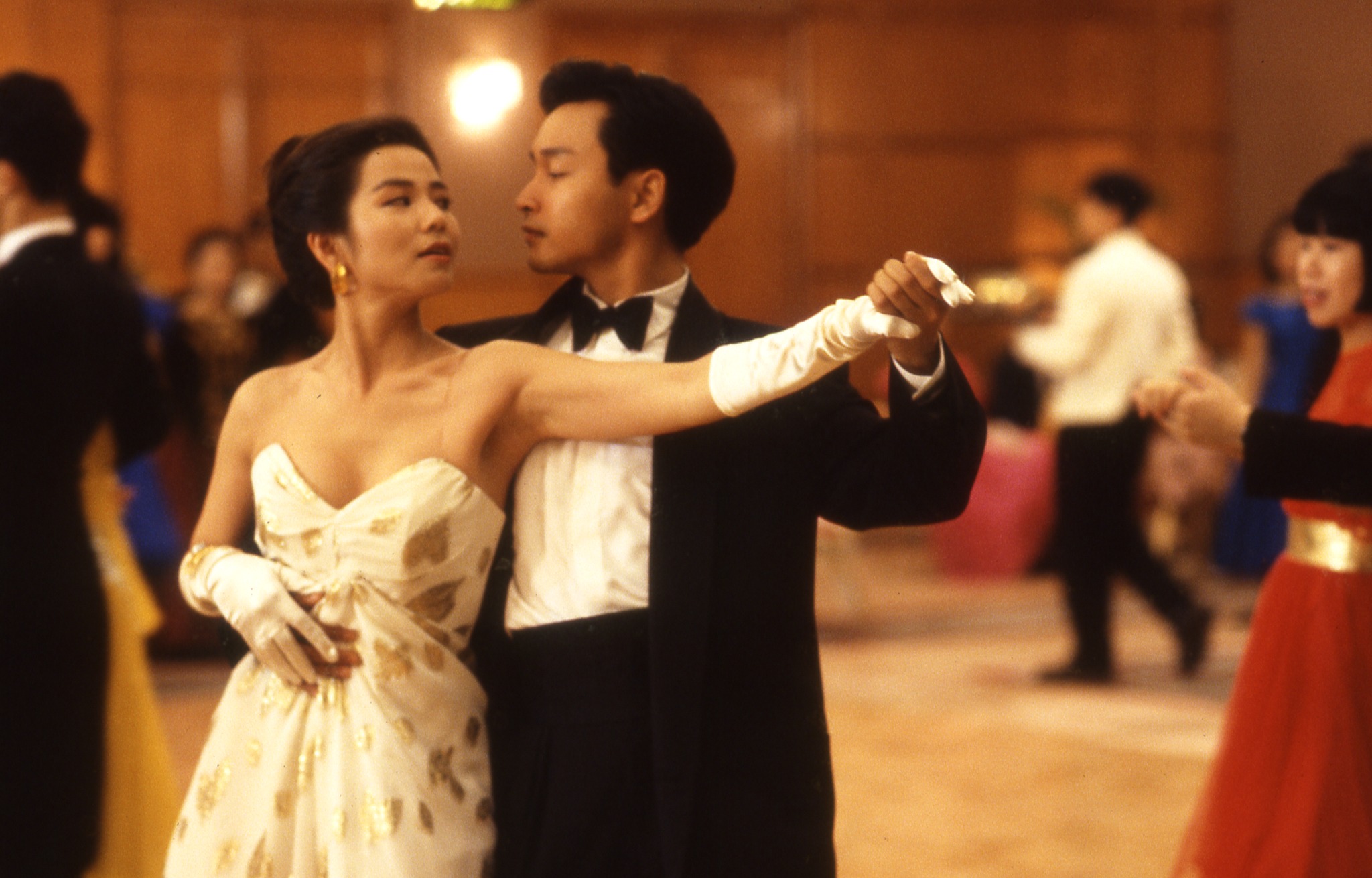
There is something quite funny about the fact that the other two are called “Rice Pudding” and “Red Bean” but “Jim” is just “Jim”. Despite the romantic rivalry, there’s also a sense of homoerotic tension that exists between the two men, with Jim cheekily flirting with a portrait artist while boasting of the gang’s success. The European setting adds a sense of sophistication and international glamour that recalls classic Hollywood cinema, while hinting a new globalised society. The gang are wanted by “Interpol”, and the Zenigata-like figure of a Hong Kong policeman (Paul Chu) who acts as a kind of alternate father figure watching over the trio since they were children and trying to get them to give up their life crime.

The man who raised them, Boss Chow (Kenneth Tsang), meanwhile, was cruel and mainly sees them as tools to be used to enrich himself. When Rice Pudding loses the use of his legs and uses a wheelchair to get around, he is more or less disowned as no longer useful, only to be rescued by their Godfather. Rice Pudding, however, is surprisingly adept and able to perform some killer dance moves in his chair not to mention fighting bad guys in much the same way he did before. But despite the cartoonish fun, there is an unexpectedly violent aspect to the gang’s final heist as Jim strangles guards and Rice Pudding throws plastic explosives at their heads which he then detonates remotely. 

Read Bean, meanwhile, is largely relegated to making travel arrangements and hanging around at airports to waiting to find out if her friends have survived or not. She also acts as a kind of interpreter, speaking French to facilitate their deals which suggests Chow trained them in specific ways, though she does not always translate accurately, trying to put the guys off accepting a risky job from a wealthy Frenchman because she wants to get out of their life of crime and settle down even while Rice Pudding and Jim still seem to be addicted to the thrill of the chase. Their mission sees them sneak into a chateau and steal a painting from a hidden cellar they can only access through a secret door while avoiding booby traps like electrified floors and laser fields they cheekily dance the limbo through. 

For them, it was never really about the artwork nor the money, but the sense of achievement in stealing without being caught while running rings around law enforcement. This sense of rebellion which extends in a way towards the capitalist system in which the super wealthy squabble over trinkets while elderly women starve, is eventually turned back on Chow whom they end up defying in order to break free of his control. Chow got greedy, double-crossing just about everyone in order to make his stolen painting more valuable when he sells it and then steals it back again. Filled with zany humour and expertly crafted action sequences, the film never takes itself all that seriously while revealing in the roguish antics of the three gentlemen thieves living their best lives rebelling against a world ruled by wealth and privilege through ingenious crime.


Trailer (English subtitles)

The Big Heat (城巿特警, Andrew Kam & Johnnie To, 1988)

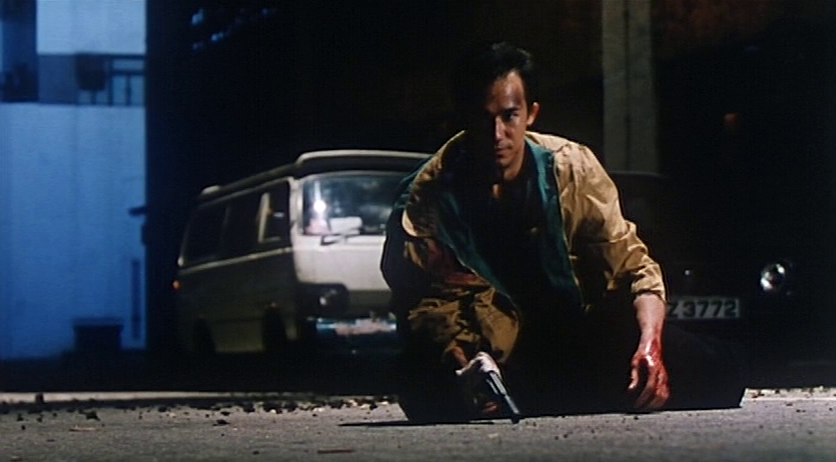
A Hong Kong cop struggles with his sense of responsibility when faced with the fatalistic existential threat of the imminent Handover in Johnnie To’s first foray into the genre with which he would later become most closely associated outside of Hong Kong, the action crime drama. After a handful of Cinema City comedies, To is credited as a co-director along with Andrew Kam Yeung Wah though the production of The Big Heat (城巿特警), loosely inspired by the Fritz Lang film of the same name, was notoriously complicated passing through several hands over its unusually long gestation of almost two years, according to an interview with screenwriter Gordon Chan Kar-Seung, with producer Tsui Hark also heavily involved in the shooting. 

Tsui’s involvement is apparently responsible for the unusual level of explicit violence more usually found in horror exploitation rather than gangster noir, though there is perhaps something in the constant bodily destruction that aligns with the pre-Handover setting in which the “big heat” hanging over the city is an increasing existential panic which has created the maddening environment in which this surreal violence can occur as revealed in the opening dream sequence which features a drill piercing a man’s hand with small pieces of flesh speeding off it. The dream will turn out to be a prophecy foreshadowing the final shootout in which Inspector Wong (Waise Lee Chi-Hung) is shot thought the hand though at this point it signals both a psychological and physical fracturing. Owing to a neurological condition, Wong has lost full control over his right hand which leads him to question his ability to protect his city if he is unable to pull the trigger when needed which might also explain why he is frequently seen practicing his marksmanship at the firing range. 

Because of this anxiety, Wong had planned to resign but changes his mind on learning that his former partner who sustained an injury that Wong felt himself responsible for has been brutally murdered by Hong Kong gangsters in Malaysia after coming across a secret folder “by chance” containing photos used to blackmail a shipping magnate over his his homosexuality and an incriminating invoice. To do the right thing, Wong also temporarily breaks up with his forensic scientist girlfriend Maggie (Betty Mak Chui-Han) whom he was due to marry in a fortnight’s time suggesting that they not see each other until he’s solved his friend’s murder and then presumably plans to retire from law enforcement. 

Essentially, he deprioritises his personal, romantic relationships in favour of the homosocial brotherhood of the police both avenging his friend and dedicating himself to protecting Hong Kong from an oncoming threat represented by gangster Han (Paul Chu Kong) who is later revealed to be in cahoots with Russian mafia who ironically have a large portrait of Lenin on their boat and hammer and sickle flags everywhere while vowing to continue “selling drugs and capitalism” in the seemingly lawless environment of pre-Handover Hong Kong where everyone apparently wants to make enough money to be able to leave if the situation declines, “communist” Russians perhaps standing in for looming Mainland authoritarianism. Han even offers to sell “everything including Hong Kong” passing a list of names of “important people in the government” he apparently has access to in vast network of corruption. “Cheers to 1997” they ironically toast for their burgeoning business opportunity. 

It’s this corruption that is the source of Wong’s anxiety, fearing he doesn’t have the strength to stop it while his compromised hand is a symbol of both fate and an impotence that is later exorcised when he receives the corresponding physical injury yet is saved by a crucifix necklace that previously belonged to his girlfriend while in another instance of foreshadowing the corrupt policeman is eventually taken out by his own malfunctioning gun backfiring just like that which ruined an assailant’s hand in the drug bust in which Wong’s partner was injured. Having regained mastery over his hand, Wong is therefore more assured in his ability to protect Hong Kong from whatever it is that’s coming remaining within the police force while those who pay the heaviest price are an idealistic young rookie unable to adapt to the morally compromised world of pre-Handover Hong Kong, and Wong’s fiancée who becomes a symbol of that which he could not protect having prioritised his role as a police officer. Though somewhat disjointed having passed through so many hands, there are some typically To flourishes in the fluidity of the camerawork in the early stretches along with a gloomy romanticism in the fatalistic noir of the pre-Handover society even as he continues to find his feet as a purveyor of moody policier. 


Trailer (no subtitles)