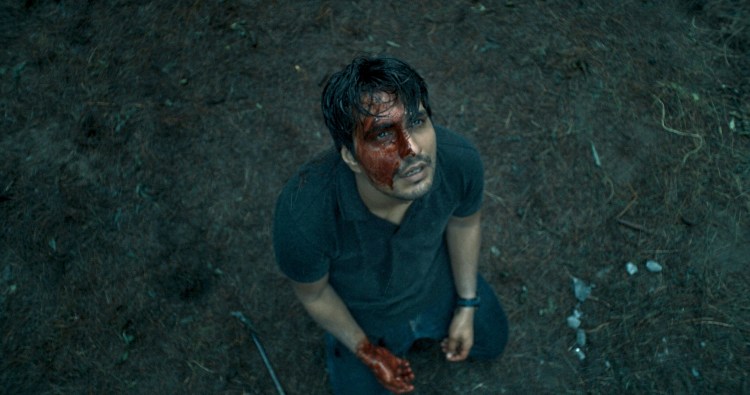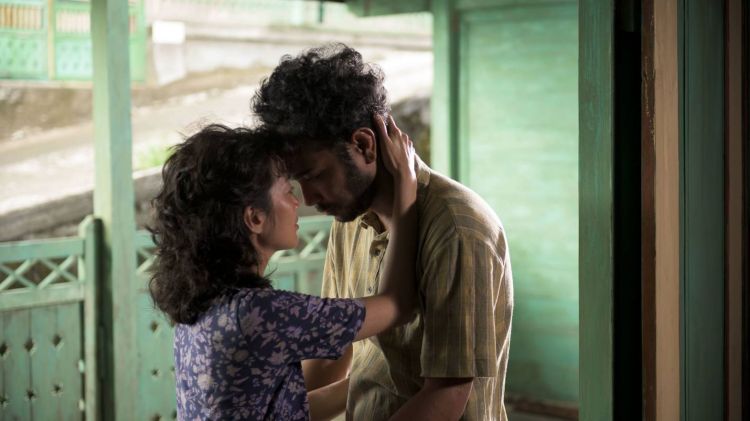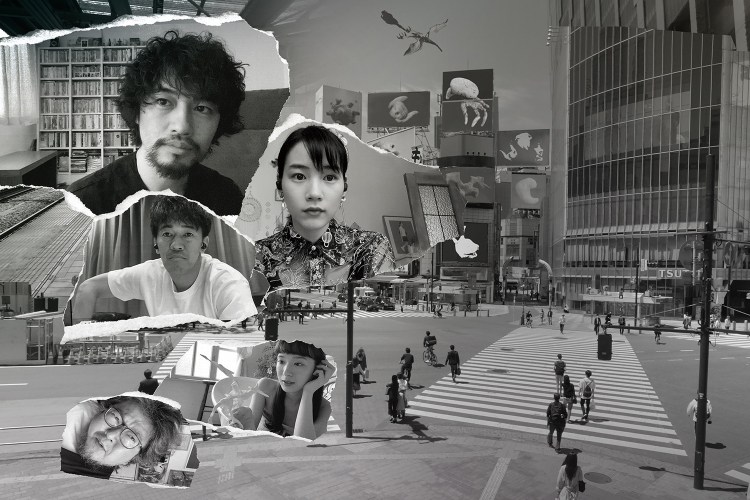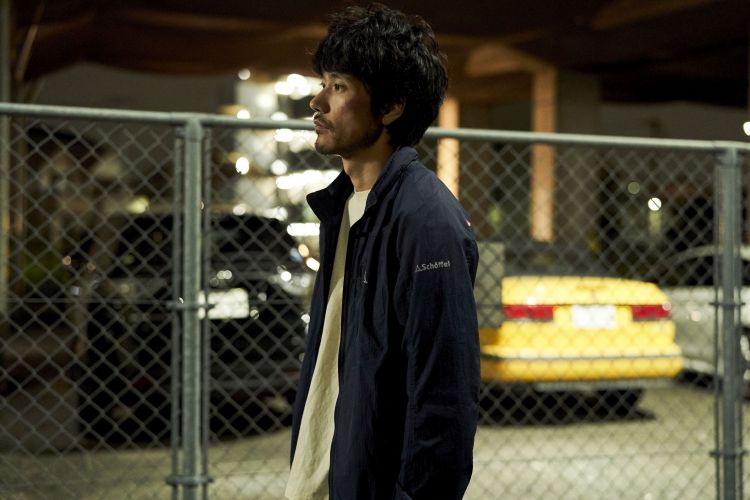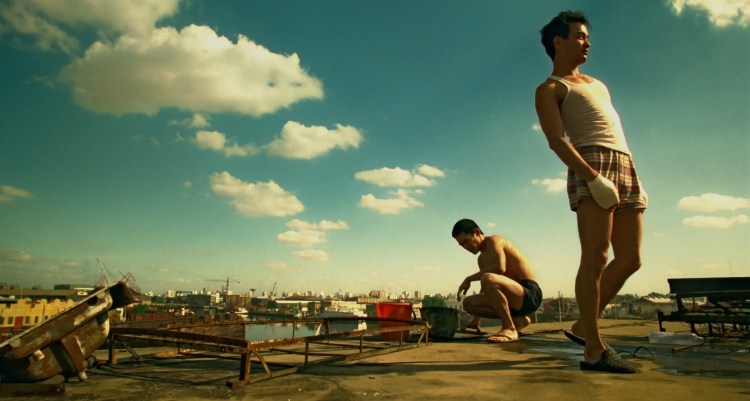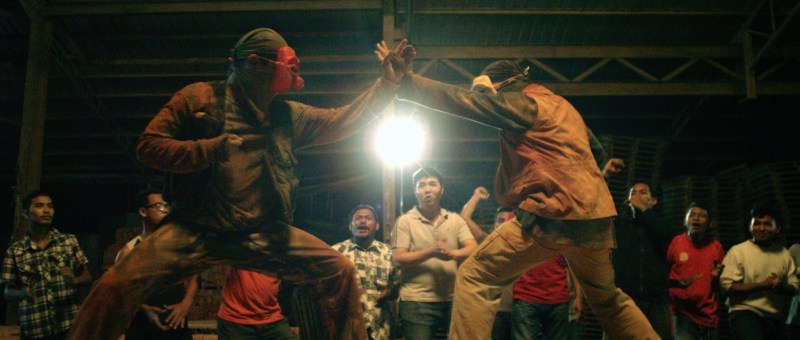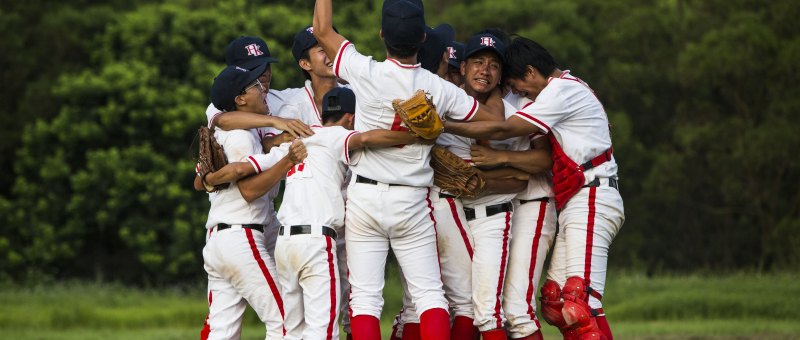

Weeds on Fire (點五步, Steve Chan Chi-Fat, 2016)

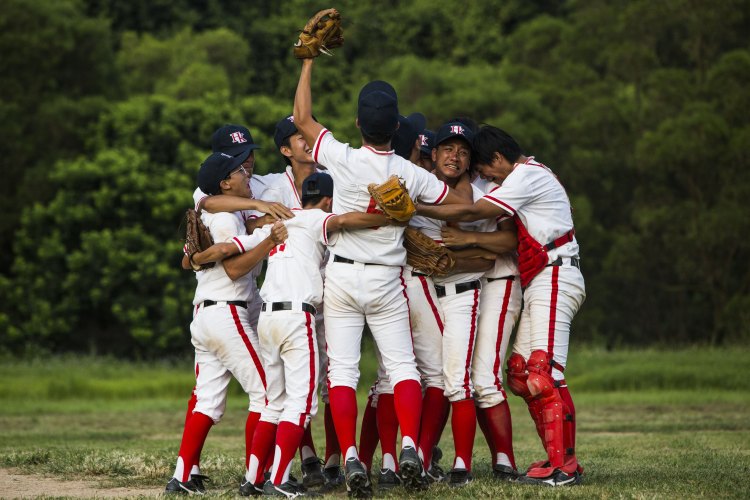
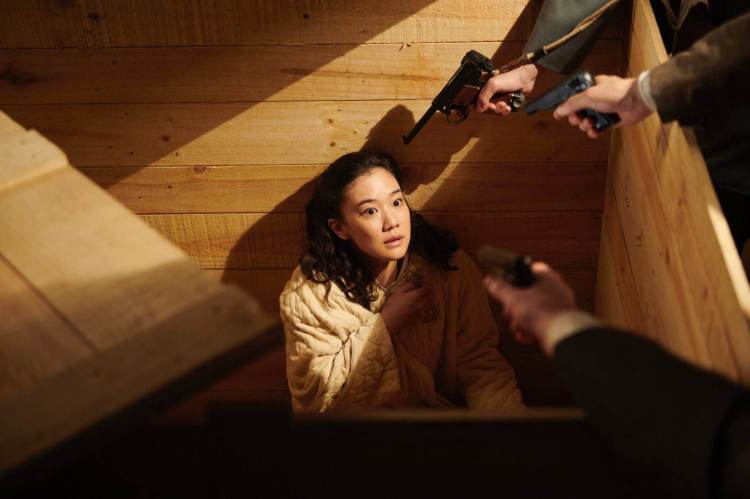
“Even though disappointed, do not lose hope” reads a piece of graffiti in the closing moments of Steve Chan Chi-fat’s nostalgic coming-of-age drama Weeds on Fire (點五步). Though touted as a baseball movie, as incongruous as that may sound given that the sport is a niche interest in contemporary Hong Kong, Chan’s strangely hopeful if quietly melancholy tale of ‘80s Sha Tin is bookended by scenes of the present day city in the midst of the Umbrella Movement protests the story the hero wants to offer seemingly intended for an audience of dejected youngsters as confused and disappointed as he once was in order to encourage them that what’s important isn’t winning or losing but staying the course and gaining the confidence to take the first step. 

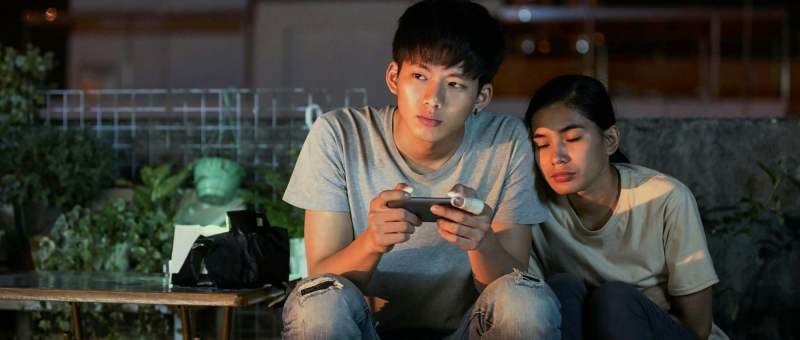
Now in his mid-40s, Lung (Lam Yiu-sing) casts his mind back to the Hong Kong of 1984 when he lived on a rundown council estate in Sha Tin and attended a high school with a less than stellar academic record. A shy and nerdy boy, he was often bullied but always had childhood friend Wai (Tony Wu Tsz-tung), physically imposing and with a confident swagger, at his back. When the city comes up with additional funding for schools to use in the promotion of sport their enterprising headmaster Lu Kwong-fai (Liu Kai-chi) hatches on the idea of starting the region’s very first local high school baseball team, recruiting both Wai and Lung in the hope of teaching them teamwork and discipline. Nevertheless, being teammates begins to place a strain on their friendship and it becomes clear that the boys are destined for different paths. Wai quits the team in a huff and leaves school, mooching round in pool bars and hanging out with triads while Lung steps up to the plate but is troubled by the loss of his friendship and the fracturing relationship between his unhappily married parents. 

Chan somewhat unsubtly ties Lung’s personal development to that of Hong Kong as he finds himself coming of age in era of anxiety. The world is literally changing around him, 1984 being as says the year that the redevelopment of Sha Tin began in earnest while it also marked the signing of the Sino-British Declaration paving the way for the transfer of power in the 1997 Handover. A young man, Lung wants to “change” himself in that he longs for the confidence to ask out a young woman he’s developed a crush on but is too shy and disappointed in himself for doing nothing when witnessing her being harassed by a drunken creep in the lift of the apartment block where they both live. Yet in other ways change frightens him and really he wants everything to stay the same believing that saying nothing will maintain the status quo only to realise that there are situations over which he has no real control. 

His headmaster and coach of the baseball team Lu admits that he set Wai and Lung against each other in order to encourage him to come out from his friend’s shadow embracing his own identity and discovering a sense of self-confidence. Yet Lung continues to struggle, a little lost unable to find clear direction in his life while everything changes around him occasionally consumed by a sense of despair as perhaps are the young protestors in believing their movement has failed. In baseball what he realises that it isn’t about winning or losing but having the confidence to step up to the plate, subtly telling the protestors to hang in there because there’s still time to turn this around. “I never said we had to win”, inspirational coach Lu reminds the boys, “but I did say never give up!”.

Loosely based on the real life story of the Shatin Martins though as the closing credit reel reveals the original team were primary school children rather than high schoolers, Chan shifts away from sporting drama towards the more familiar youth movie metaphor of two former friends heading in different directions, the good boy knuckling down while the “bad” becomes a victim of his own hotheaded arrogance even if managing to repair his fractured friendship with Lung before tragedy strikes. Filled with memories of Handover anxiety and a healthy dose of ‘80s nostalgia, the film’s incongruous jauntiness is perhaps at odds with the gravity of the tale though that is perhaps itself part of the message the older Lung has for the young. “This is the city where I grew up. It’s become increasingly unfamiliar” he laments striding through streets filled with tents occupied by student protestors, sympathising with their cause while offering them a note of melancholy hope in his own, sometimes painful, tale of finding his feet in a changing Hong Kong. 


Weeds on Fire streams in Poland until Nov. 29 as part of the 15th Five Flavours Film Festival.

Original trailer (English subtitles)
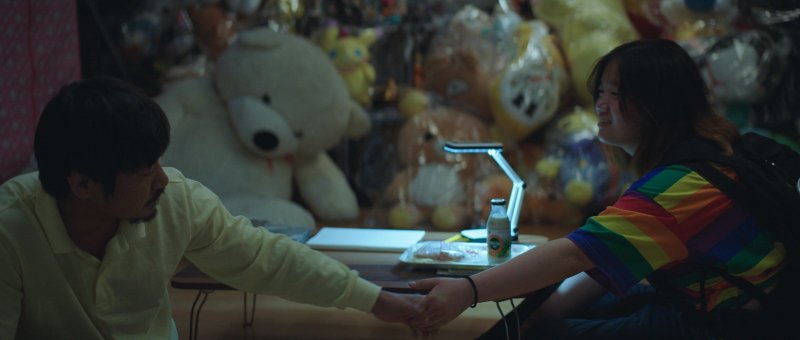
Not in This World (이 세상에 없는, Park Jung-bum, 2019)

“What is love? Have you seen it?” a dejected young man asks, wondering how if he can’t even afford a ticket to the movies he’s supposed to find the energy to feel love. Love may be the substance the title of Park Jung-bum’s nearly three hour epic of human misery Not in this World (이 세상에 없는, I Sesange Oebsneun) refers to, each of its wandering youngsters deprived of a sense of hope or of emotional fulfilment by the cruelties of contemporary capitalism. Unable to feel their own pain, they inflict it on others, their despair leading to nothing other than violence and cruelty in a mistaken effort to exert control over their lives. 

Despair colours the lyrics that aspiring rapper Ji-su (Moon Ye-ji) performs in a courtyard by day detailing her insecurity and longing for “a warm spring to melt my frozen heart”. Seemingly no one is very interested in listening to her, least of all her father in whose tiny workshop she also toils. With his business strained, Ji-su’s father is an exploitative employer berating his daughter for not working hard enough while otherwise telling her that she is free to do something else with her life but only if it makes money. After smashing her microphone in a mistaken attempt to make her come around, he later burns her sheet music and recklessly tells her to find somewhere else to live while she in turn points out that he unfairly projects his resentment onto her knowing that his dream of owning a family home will never become a reality seeing as the business barely makes enough money to pay the interest on the mortgage he will never be able to pay off. 

This sense of despair born of failure passing from one generation to the next leaves Ji-su and her similarly troubled friends with an even greater sense of futility. She discovers a temporary source of hope after accidentally bonding with a strange middle-aged man, a kind of holy fool living all alone in the forest in a house he calls a “spaceship” seeing as it’s surrounded by complete darkness with only he aboard as if existing in an entirely different dimension. Jeong-cheol (Park Jung-bum) is Ji-su’s only “fan”, encouraging her with her music but also infinitely naive advising her to share it with her friends and family in the conviction that they would then begin to understand her but the result is quite the reverse. Ji-su’s few friends, all of whom have become sex workers, simply laugh at her while apparently offended by what they perceive as “hypocrisy”, an attempt to exploit their pain for her gain. 

Forced at knife point to witness the reality of sex work, Ji-su’s illusions are shattered while her only other source of hope in her relationship with intense childhood friend Won-ho (Park Young-Duk) also begins to crumble. Won-ho too had a dream, working as a delivery driver while saving up to buy a taxi license he hopes will enable him to earn a steady living leading to a traditional middle-class sense of stability with a wife and family home. Yet he too is eventually forced to acknowledge his dream won’t come true, again projecting his sense of resentment onto Ji-su in unfairly blaming her for a bike accident that brought them both into contact with a source of infinite corruption that is a remote sex work campsite hidden in the woods where a gang of obnoxious rich kid students get their kicks humiliating those they perceive as their social inferiors. 

Pushed to breaking point, Ji-su commits a transgression of her own and embarks on a path of self-destruction aiming to become what she hates and burn her world to the ground. Becoming the campsite’s bookkeeper she terrorises the former friends who laughed at her song and left her with lasting trauma while taking an indirect revenge against Won-ho for his indifference towards her. While she decides to become an oppressor in order not to be oppressed, Jeong-cheol wrestles with himself believing that he cannot abandon Ji-su because to do so would mean she had been abandoned by the world, while also realising that the world has many Ji-sus and he can’t help them all. Jeong-cheol believes himself alone, conversing only with the ghost of his late father who seems to represent his inner goodness something which he alternately feels he should bury along with his father’s ashes yet is unwilling to part with. 

Unlike Park’s previous films of similar length and bleakness, Not in This World swaps crushing naturalism for a touch of magical realist imagery as Park’s holy fool tries to repair the world around him armed only with his own inner goodness which simultaneously makes him an exile of contemporary society. Even as Ji-su continues to destroy herself, Jeong-cheol continues to believe she can be saved, his conviction perhaps borne out as the traumatic events of the film’s conclusion appear to break the spell she’s cast over herself though whether she will ever be able to accept everything that led her there is far less easy to discern. Once again an attack on an inhuman, ultra capitalist society defined by class conflict and petty humiliation, Park’s latest epic of human misery is also in its closing minutes at least quietly hopeful in the innocent power of a newborn baby’s cries. 


Not in This World streams in Poland until Nov. 29 as part of the 15th Five Flavours Film Festival.

Trailer (English subtitles)

The Story of Southern Islet (南巫, Chong Keat Aun, 2020)

A wife finds herself thrown into a complicated world of spiritual confusion when her husband is struck down by a mysterious illness he himself attributes either to black magic or divine wrath. Set in 1987 (a year which saw a series of authoritarian crackdowns), Chong Keat Aun’s autobiographically inspired tale A Story of the Southern Islet (南巫) is partly a treatise on the absurdity of national borders but also one of cosmological ambiguity in which the acceptance of that which cannot be explained provides the only hope of cure for those burdened by the sin of transgressing against the gods. 

The gods are a constant source of tension in the marriage between Yan (Jojo Goh), a Westernised educated woman from another village, and her husband Cheong (Season Chee), a superstitious Chinese-Malaysian who makes a living selling seafood at the local market. Yan wants to have the statue of local deity Datuk Gong moved, finding it inconvenient in front of their house while Cheong chastises her for potentially offending the god by disrespectfully hanging her washing out to dry right next next to him. All the trouble starts however when Cheong chases a poisonous snake away from the statue and accidentally damages the fence of the man opposite, Nam (Kuan Kok Hin). Cheong already feels conflicted, worrying that the snake was a manifestation of Datuk Gong and he may have made a grave mistake in being so unwelcoming when a an extremely upset Nam comes over late at night and bangs on their door insisting on compensation. Nam is then killed on his way into town to get repair supplies leaving Cheong feeling extremely guilty and later collapsing with a mysterious illness that among other things causes him to vomit rusty nails. 

To Cheong, that sounds like black magic, a mild degree of suspicion falling on devastated widow Keaw (Pearlly Chua). Yan first takes him to a regular hospital where he’s diagnosed with “food poisoning” and sent home with a few pills, Yan’s attempt to convince a nurse by showing her the nails backfiring as the young woman backs away in horror insisting that she have some respect, they are doctors not shamans. An attempt to ask a local hardware store to help her identify the nails ends in a similar fashion, the salesman offended by the implication that the nails he sells are rusty. Out of her depth, Yan finds herself progressing through each of the spiritual systems in place in the local area, turning then to a shaman who is offended that she hadn’t come to him earlier her local friend Loy (Ling Tang) explaining that she’s from another village and didn’t know shamans did healing only for the shaman to express incredulity not only that there are places where no one worships Datuk Gong but that Yan is a Malaysian woman who cannot speak Malay and needs Loy to interpret for her. 

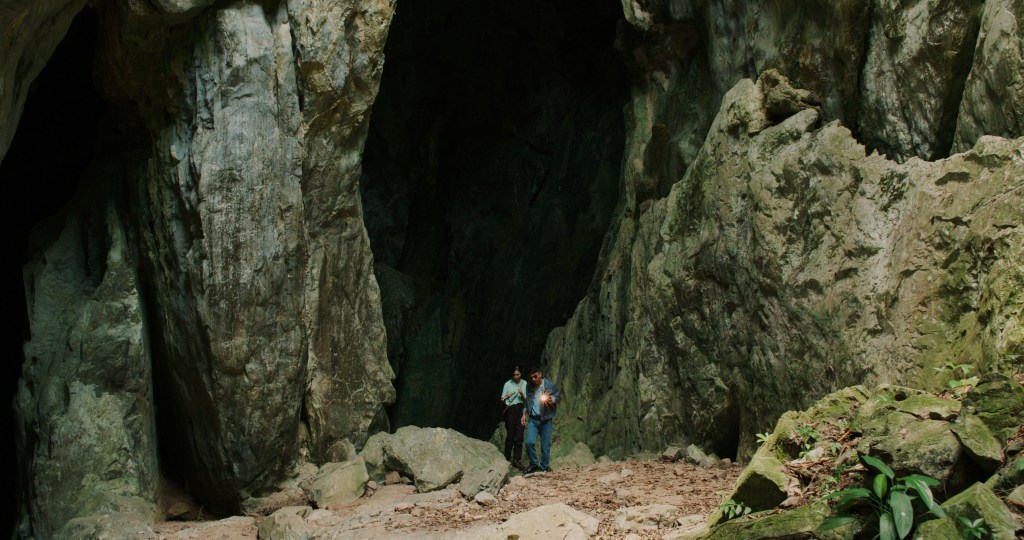
Yet this village is on the border between Thailand and Malaysia, many of the local people speak Thai while the boys are prone to knock the TV onto a (not really suitable) Thai broadcast in an attempt to avoid the endless speeches about national unity and patriotism. Then again the boys attend a Chinese school where pupils are discouraged from speaking their home dialect and one girl’s mother has even changed her name in the hope of giving her an easier future (as part of Operation Lalang teachers not educated in Chinese were parachuted into Chinese-medium schools giving rise to fears of an attempt to undermine the language). No one at the market seems to want the local seafood, everyone wants the “better” quality, if apparently more expensive, catch from Thailand leaving Cheong with a minor business problem. The shaman tells Yan that Cheong’s condition was caused by accidentally urinating on sacred land but when she ventures into a cave in the hope of praying directly to the mountain deity a disembodied voice tells her that Nenkan Keriang is not so petty, and not only that neither is she Malay meaning the gifts Yan has been told to bring of betel nut and a sarong are also inappropriate. 

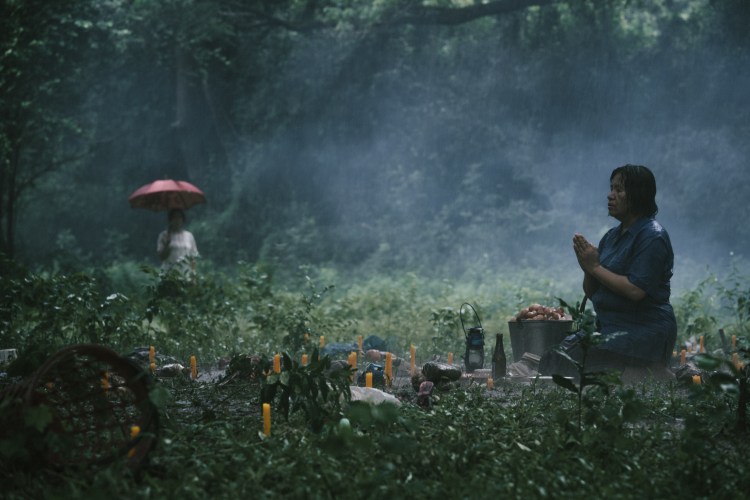
Nenkan Keriang’s sad story is in one sense a historical echo of female subjugation, Keriang apparently a Chinese princess who became the victim of an evil shaman after turning down his romantic overtures. If anyone would be motivated to help Yan, it is most likely Nenkan Keriang (and it may well be to her she eventually owes her salvation). Nevertheless, after Malay shamanism fails, Chong courts (further) controversy by sending Yan to ask a Muslim spiritual leader instead who first insists he no longer dabbles in Shamanism before agreeing to help giving Yan instructions and the equipment she needs to rid herself of an unwanted demonic presence squatting on her land. 

It remains unclear if Cheong’s affliction is self-delusion, that in his guilt over Nam and also a series of other minor transgressions including “stealing” fish from a paddy field that belongs to another deity he’s made himself ill and can only be cured psychologically through the reassurance of ritual, or if Yan, who may or may not believe herself, actively cures him by exorcising their demons with the assistance of a transplanted animist deity. Beautifully shot with a lingering ethereality, Chong’s mystical tale places gods and demons amid the everyday while demonstrating the ebb and flow of deeply held cultural beliefs in a border community where harmonious coexistence has long been the norm. 


The Story of Southern Islet streams in Poland until Nov. 29 as part of the 15th Five Flavours Film Festival.

Trailer (English subtitles)

Five Flavours Confirms Complete Programme for 2021 Hybrid Edition

Five Flavours Film Festival returns for its 15th edition in a hybrid format streaming across Poland Nov. 17 – 29 with cinema screenings taking place in Warsaw Nov. 17 – 24. This year’s festival will include the recent Wong Kar-Wai touring retrospective as well as specialist strands themed around The Olympics and Taiwanese queer cinema.

China

  • Cliff Walkers – taut 30s spy movie from Zhang Yimou following Communist Party agents as they attempt to extract a former prisoner who can blow the whistle on Japanese war crimes committed by Unit 731.
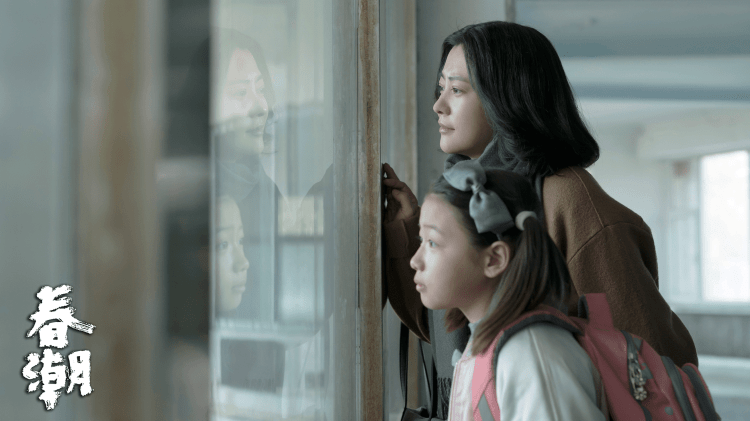
  • Spring Tide – an alienated investigative journalist struggles to free herself and her 9-year old daughter from the legacy of toxic parenting both personal and national in Yang Lina’s powerful family drama. Review.

Hong Kong

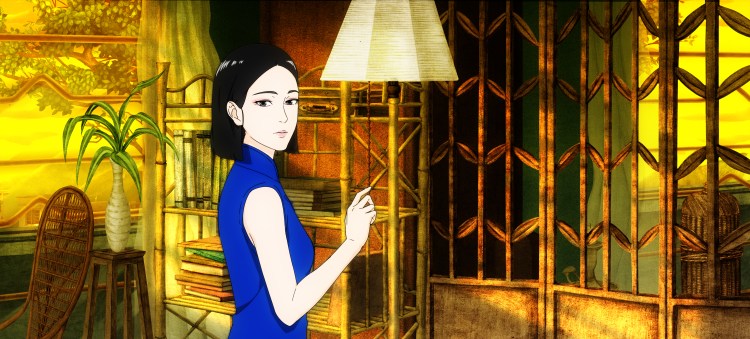
  • No.7 Cherry Lane – animation from Yonfan set in the Hong Kong of the 1960s.
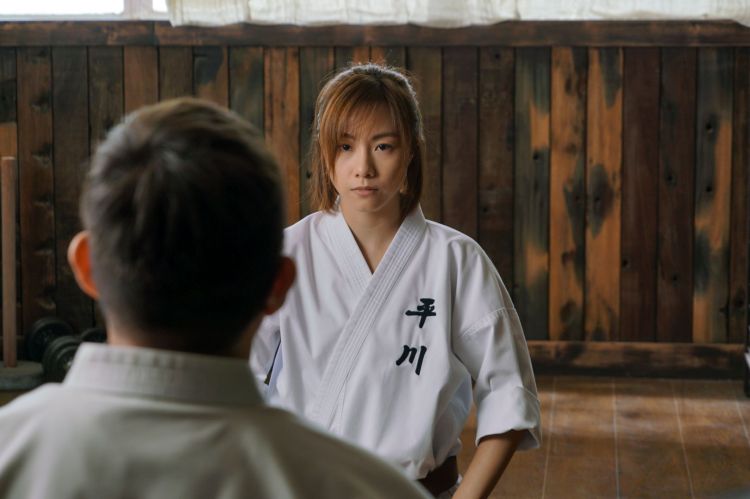
  • The Empty Hands – a jaded young woman rediscovers a sense confidence through reconnecting with karate in Chapman To’s soulful character piece. Review.
  • The Way We Keep Dancing – a collective of artists finds itself torn between complicity and resistance in the face of rising gentrification in Adam Wong’s musical dance drama. Review.
  • Weeds on Fire – true life sporting drama following baseball team Shatin Martins.

Indonesia

  • Death Knot – Siblings enter a dark world of supernatural dread when unwisely returning for their estranged mother’s funeral in Cornelio Sunny’s eerie folk horror. Review.
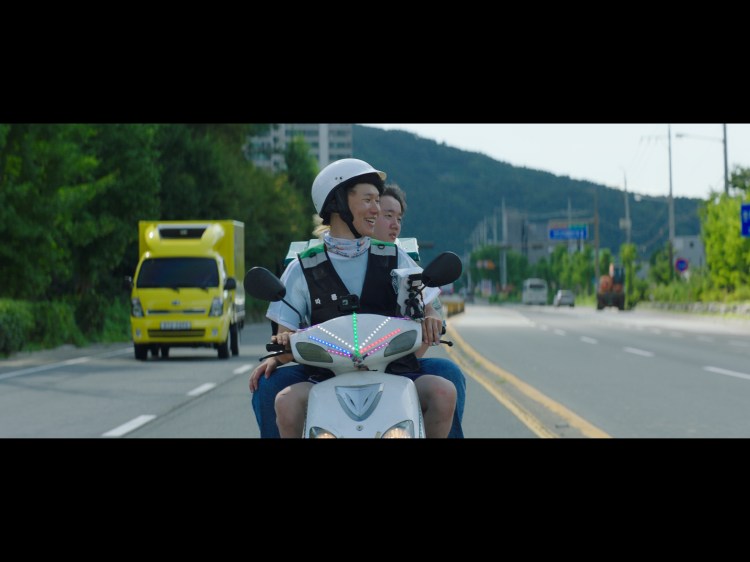
  • We Are Moluccans – a motorbike taxi driver attempts to tackle religious division through an integrated children’s football team.
  • Vengeance is Mine, All Others Pay Cash – an impotent hitman living for nothing but violence falls for a female bodyguard after she effortlessly defeats him in Edwin’s genre hopping adventure romance.

Japan

  • The 12 Day Tale of the Monster That Died in 8 – Takumi Saitoh plays a version of himself raising “capsule kaiju” as means of combatting Covid helplessness in Shunji Iwai’s whimsical pandemic drama. Review.
  • A Balance – an idealistic documentarian’s journalistic ethics are strained when she uncovers scandal close to home in Yujiro Harumoto’s probing social drama. Review.
  • Blue – a trio of dejected boxers contemplate their place inside and outside of the ring in Keisuke Yoshida’s unconventional boxing drama. Review.
  • Last of the Wolves – sequel to Kazuya Shiraishi’s Blood of Wolves set in 1991 in which a rogue cop attempts to keep the peace between yakuza gangs.
  • Red Post on Escher Street – the extras reclaim the frame in Sion Sono’s anarchic advocation for the jishu life. Review.
  • The Wife of a Spy – an upperclass housewife finds herself pulled into a deadly game of espionage in Kiyoshi Kurosawa’s dark exploration of the consequences of love. Review.

Korea

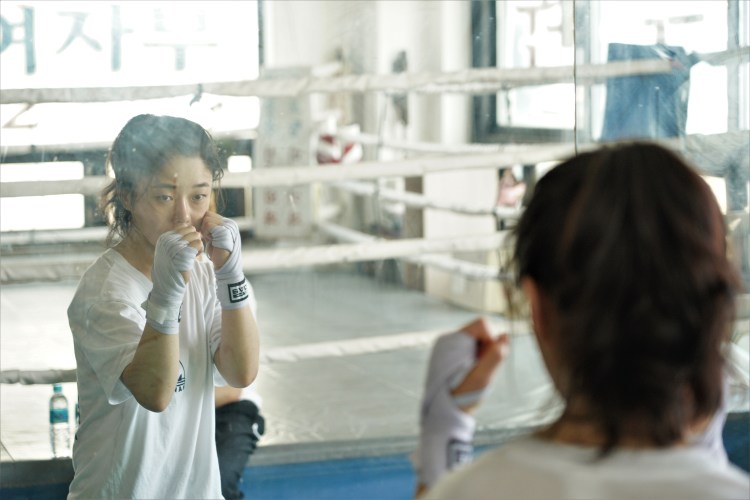
  • Fighter – a young woman from North Korea finds both purpose and a new sense of security in found family in the boxing ring in Jéro Yun’s gritty drama. Review.
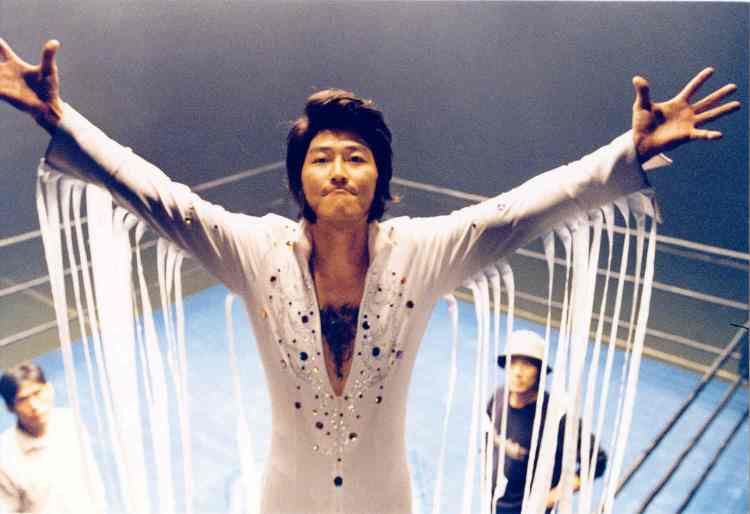
  • The Foul King – dramedy by Kim Jee-woon starring Song Kang-ho as banker entering the wrestling ring.
  • Not in This World – gritty drama from Park Jung-bum in which a mountain recluse attempts to save a drop out teen.

Malaysia

Myanmar

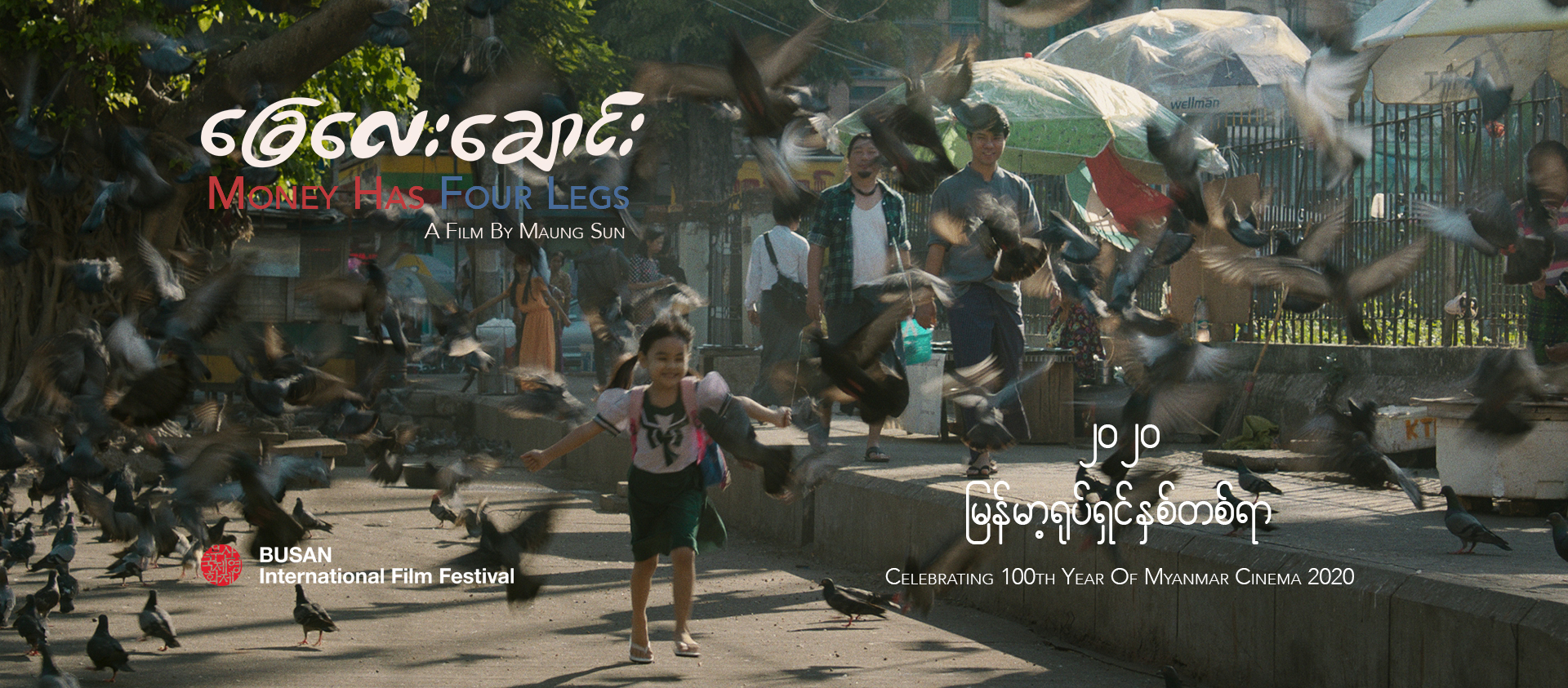
  • Money Has Four Legs – an ambitious filmmaker turns to crime in order to escape his desperate circumstances in Maung Sun’s meta satire. Review.

Singapore

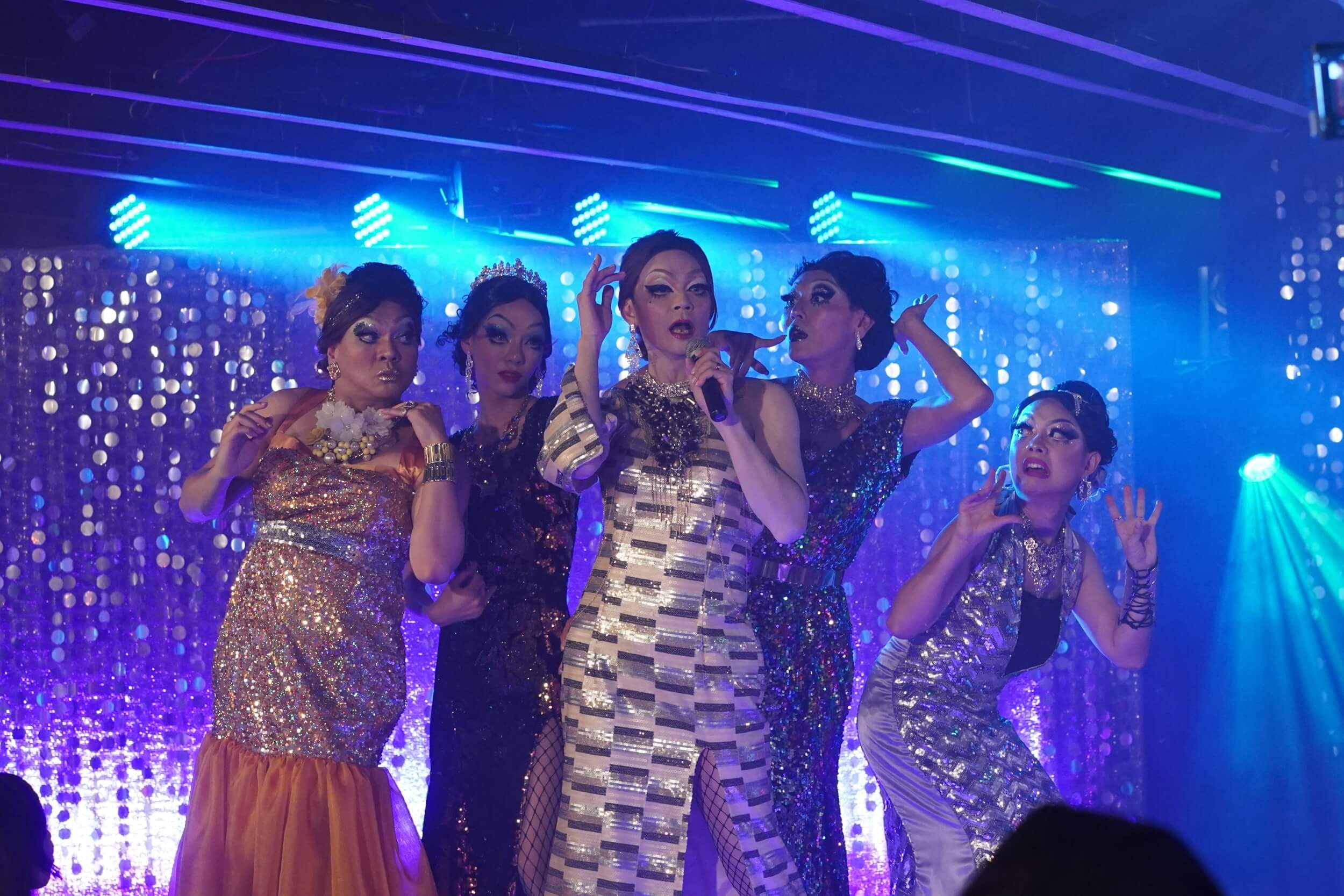
  • Number 1 – a straight-laced executive discovers a new sense of freedom after losing his job and taking up drag in Ong Kuo Sin’s cheerful Singaporean dramedy. Review.

Taiwan

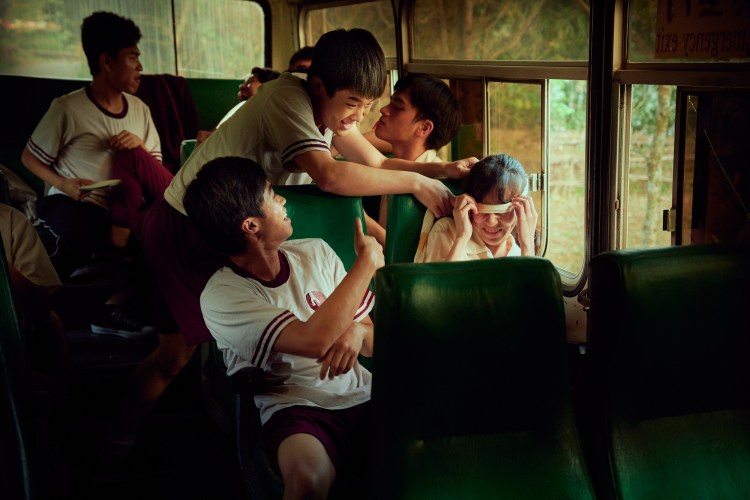
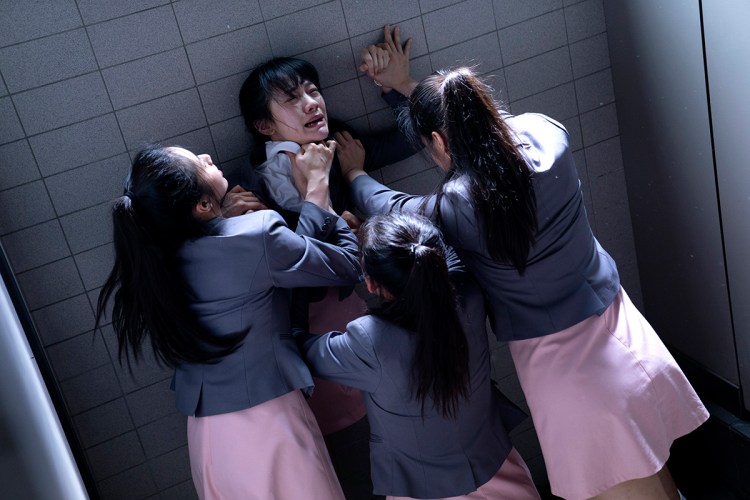
  • The Silent Forest – an idealistic student is caught between justice and complicity when he uncovers a culture of bullying and abuse at a school for deaf children in Ko Chen-Nien’s hard-hitting drama. Review.
  • We are Champions – two brothers find themselves on opposite sides of an ideological divide as they chase their dreams of basketball glory in Chang Jung-Chi’s family-themed sports drama. Review.

Taiwanese Queer Cinema

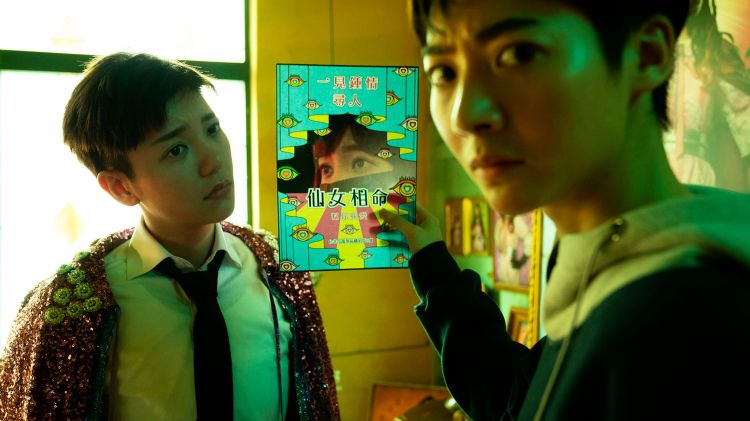
  • Alifu, the prince/ss – empathetic drama in which a transgender woman from an indigenous community finds herself caught between conflicting cultural mores. Review.
  • As We Like It – a romantic exile meanders through an internet free corner of Taipei in Chen Hung-i & Muni Wei’s all-female adaptation of the Shakespeare play. Review.
  • Born to Be Human – a teenager’s life is upended when they discover they are intersex but have almost no rights over their bodily autonomy in Lily Ni’s elegantly designed social drama. Review.
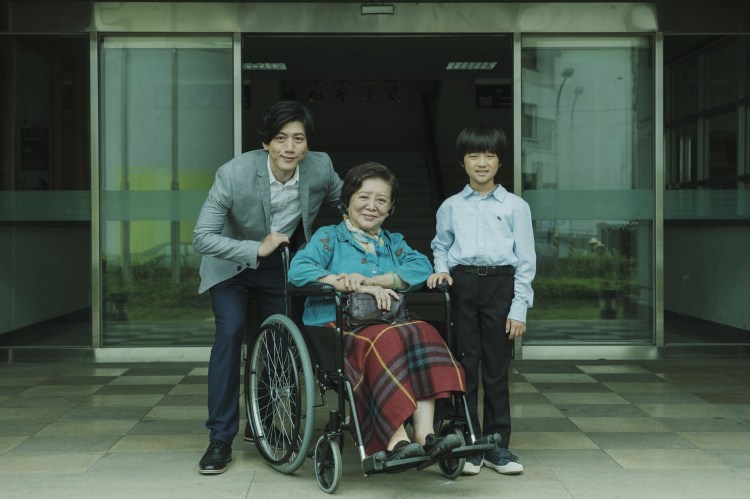
  • Dear Tenant – a grief-stricken man lovingly takes care of his late partner’s family but finds himself continually othered in Cheng Yu-Chieh’s melancholy familial drama. Review.
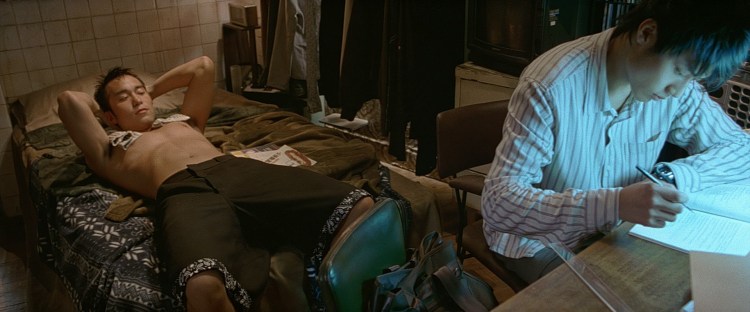
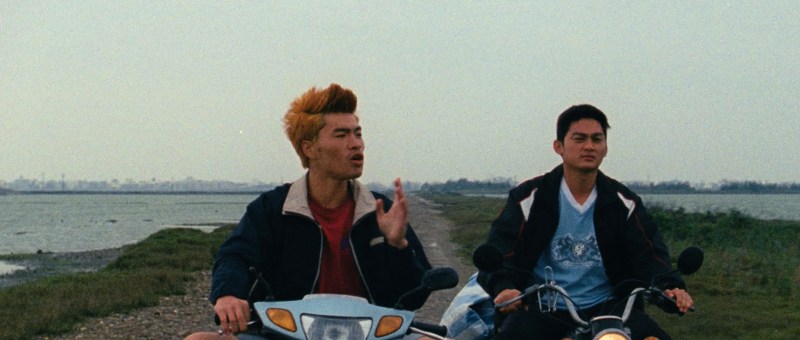
  • Eternal Summer – 2006 classic in which the intense friendship between two boys is disrupted by a transfer student from Hong Kong.
  • Spider Lilies – two women connected by childhood tragedy struggle to overcome their respective anxieties in Zero Chou’s ethereal reflection on love and the legacy of trauma. Review.
  • The Teacher – a politically engaged teacher’s worldview is challenged when he starts dating a man who is HIV+ in Chen Ming-Lang’s sensitive drama set in the run-up to marriage equality. Review.

Thailand

  • Anatomy of Time – drama set in a rural village in the 1960s and present day Bangkok as a young woman finds herself torn between a calculating soldier and kindhearted local man.
  • The Medium – a shamaness suspects her niece’s shamanistic consciousness is awakening but soon discovers something far more sinister in play in this atmospheric Thai folk horror. Review.

Wong Kai-Wai Retrospective

  • As Tears Go By – Wong Kar-Wai’s moody triad debut stars a young Andy Lau as a lovelorn petty gangster who is forced to host a distant cousin (Maggie Cheung) when she comes to the city to seek medical treatment for a respiratory illness. Review.
  • Days of Being Wild – a rootless playboy breaks hearts all over Hong Kong in Wong’s ’60s tale of irresolvable longing and existential displacement. Review.
  • Chungking Express – lovelorn policemen seek new directions in Wong Kar-Wai’s frenetic journey through pre-Handover Hong Kong. Review.
  • Fallen Angels – lovelorn denizens of a purgatorial Hong Kong fail to connect in a world of alienation in Wong Kar-Wai’s chronicle of pre-Millennial loneliness. Review.
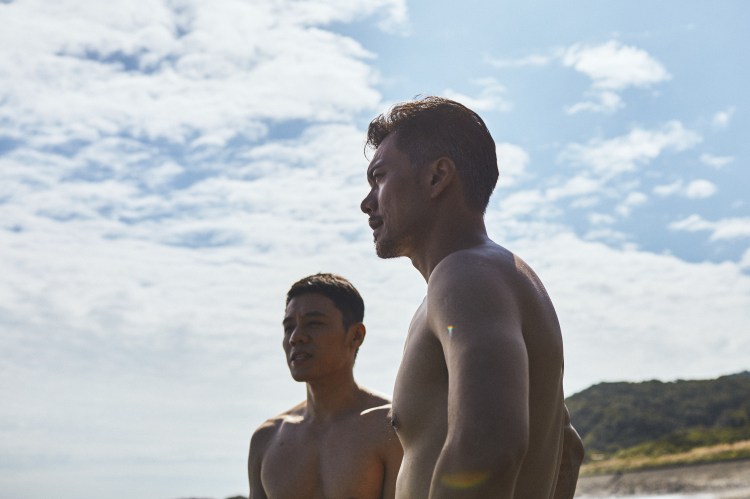
  • Happy Together – lovers on the run flee pre-Handover Hong Kong for Argentina to “start over” but discover only more loneliness and heartache in Wong’s melancholy romance. Review.
  • In the Mood for Love – betrayed spouses accidentally fall in love but are unable to act on their desires in an atmosphere of social repression in Wong Kar-Wai’s heady ’60s romance. Review.
  • 2046 – a quasi-sequel to In the Mood for Love and Days of Being of Wild, 2046 follows Tony Leung Chiu Wai’s Chow Mo-wan as he struggles to overcome his longing for Maggie Cheung.

Five Flavours takes place in Warsaw Nov. 17 – 24 and online throughout Poland Nov. 17 – 29. More information on all the films as well as screening times and ticketing links can be found on the official website, and you can keep up to date with all the latest news via the festival’s Facebook PageTwitter Account, Instagram, and YouTube Channels.

Ohong Village (蚵豐村, Lim Lung-yin, 2019)

Familial legacy and frustrated dreams conspire against father and son in Lim Lung-yin’s striking 16mm debut, Ohong Village (蚵豐村) . Set in a small oyster farming community on the southern shore of Taiwan, Lim’s anti-urban panorama is an ambivalent contemplation of small-town existence as its trio of frustrated male protagonists find themselves caught in an existential riptide torn between a nostalgia for a simpler life and the lure of the new and the modern far away in the cities. 

30-year-old Sheng (Lin Yui-Hsu) left the village seven years previously and has rarely visited during his time away but has now come home for his sister’s wedding where he boasts of his vast success, his claims of earning millions daily ringing somewhat hollow. As it seems, things have not gone entirely well in Taipei and Sheng most likely is not intending to return. His old friend Kun (Chen Hsin-Tai) who stayed in the village, similarly boasting of the vast sums he too earns as a top oyster shucker, has a business proposition for him, hoping to capitalise on the recent tourism craze by renovating the raft his father left him and turning it into a tourist boat selling the oyster farmer experience to people from the cities. Meanwhile, the oyster business seems to be on its last legs, Sheng’s embittered father Ming (King Jie-wen) unceremoniously dumped by a business contact who flatly tells him that his oysters are no longer plump enough and he’ll be going across town to source his catch in future. 

Ming’s sense of hopeless disappointment is additionally acute because, as we’re told, his father was a big man on the island whose catch extended far and wide. Grandma (Wu Mei-he) laments that in the old days the community were happy working together on the salt flats but now the fields are flooded and those who were wealthy left the village never to return. Angry with himself for his perceived failure to live up to his father’s legacy, Ming is also resentful of his son whom he sent to the city to make a better life for himself only to see him return with nothing other than disappointment and a sense of internalised inadequacy. Frustrated by his hollow self aggrandising he snaps at Sheng to cut the “bullshit”, but otherwise pushes him away, discouraging his friendship with Kun who he sees as everything he wanted Sheng not to be, and pouring scorn on the boys’ newfound dream of tourist boat entrepreneurship. 

For his part, Sheng begins to reconnect with his grandfather’s legacy perhaps literally given direction by the old compass he finds among his possessions which leads him to a distant shore on which sits a giant and mysterious statue. Wearing a T-shirt emblazoned with the word “faith”, Sheng had been otherwise sceptical of traditional thinking, snapping at Ming for talking to a tree in communicating with his late father and unconvinced by Kun’s divinatory claims asking who it is who’s making his decisions him or God. Nevertheless, a drunken voyage through the neon-lit streets provokes in him visions of the upcoming festival, while he too later finds himself taking refuge in ritual and risking all to protect a lonely tree from an oncoming storm. 

Kun asks his friend why he didn’t ask him to come when he left, and Sheng gives him the unconvincing excuse that Kun is a man who loves his freedom and wouldn’t have taken well to the city where there are rules which must be followed. Kun agrees that there’s freedom in the village, but he doesn’t know what to do with it. While Sheng begins to find his direction, accepting his legacy and his place, Kun travels in the other direction doing something stupid and chasing the dreams Sheng has now abandoned though there’s no real way to know if his own claims of vast riches are yet more “bullshit” or an ironic boon that mirrors Sheng’s progress towards inner peace. 

Shot on grainy 16mm and scored with a mix of traditional folk instrumentation, synths, and retro pop, Ohong Village is imbued with a sense of melancholy nostalgia for a way of life that has in a sense already disappeared but also with frustration and youthful ennui as the two young men search for hope and possibility while Ming is left only with lonely middle-aged disappointment and an ambivalent desire for his son both to go and to stay. Reimagining the village as a space of both purgatorial ruination and possible salvation, Lim’s etherial drama finds little other than despair and emptiness in its flooded vistas but offers perhaps also a strange sense of melancholy warmth if only in the intensity of its longing. 


Ohong Village streamed as part of the 14th Five Flavours Film Festival.

Original trailer (English subtitles)

Boluomi (菠蘿蜜, Lau Kek Huat & Vera Chen, 2019)

Legacies of trauma and displacement frustrate the connection between two floating youngsters in Lau Kek Huat & Vera Chen’s poetic drama, Boluomi (菠蘿蜜, Bōluómì). Making a direct connection between the Malayan Emergency and a sense of rootlessness in the contemporary generation, Lau & Chen send their conflicted hero overseas in an attempt to plant himself anew but even there he discovers himself merely another kind of other even as he forms a tentative bond with a similarly displaced woman rendered still more marginalised by her undocumented status and inability to speak the language. 

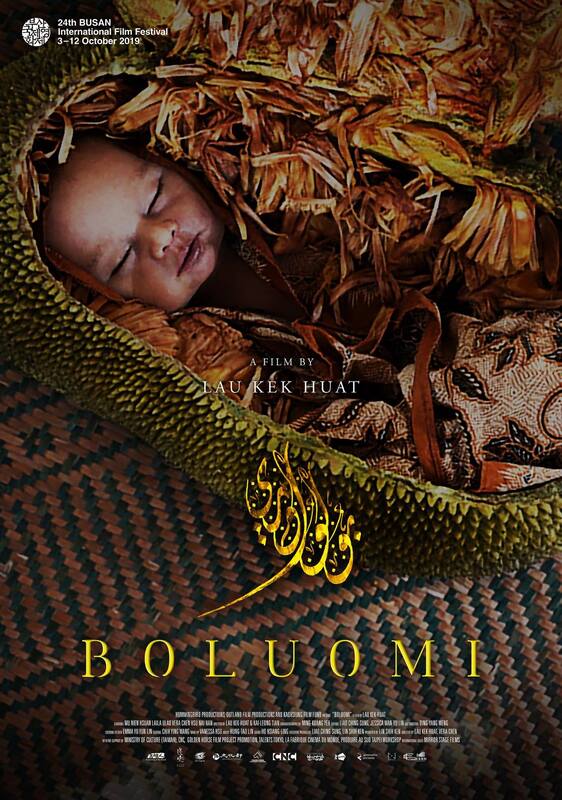
The film opens with the central trauma which is itself one of many as a child is born to a communist guerrilla fighter, Gyun (Vera Chen), and is then abandoned in the forest hidden inside the shell of a jackfruit or “boluomi” as is the custom apparently intended to ensure the child’s survival. In this case the child does indeed survive and like the opening of a fairytale is rescued by an older muslim Malay couple who have no children of their own and decide to adopt him, giving him the name “Mi” inspired by the unusual circumstances of his birth. Segueing to the present day we’re introduced to the hero, Yi-fan (Wu Nien-hsuan), just as he’s been humiliatingly stopped at customs on his return to Taiwan where he is studying agriculture because the homemade sambal his mother gave him is apparently too fragrant for the authorities’ taste. They won’t meet until later, but it’s at the airport that he first crosses paths with Laila (Laila Ulao), a young woman from the Philippines escorted out as one of many “carers from South East Asia” though as we later discover her true destination is a local massage parlour where she works as a cleaner in order to send money home to her family. 

Connecting the two timelines through a fragmentary dream we can assume that the abandoned child is Yi-fan’s father and that his double abandonment, later taken away from the loving older couple he believed to be his parents when his birth mother resurfaces, is responsible for his rage and fecklessness which has in turn left Yi-fan angry and resentful. The legacy of the Malayan Emergency is also perhaps connected to his feelings of alienation as a member of the Chinese minority, denied a place at university he feels solely on the basis of his ethnicity. Yet when he gets to Taiwan he’s suddenly not “Chinese” enough and incongruously finds himself speaking Malay even if there’s a double irony in being told that he should speak Chinese while in Taiwan. His professor with whom he seems to be on slightly awkward terms, perhaps another manifestation of his suspicion of male authority figures, pours cold water on his suggestions of finding a way to stay in Taiwan by opening a business instructing him that diaspora students have a duty to go home to stimulate social change. 

In a rather pregnant metaphor, the teacher’s opening lecture concerns foreign fruits successfully transplanted to Taiwan but also uncomfortably references viruses lurking in the soil, while Yi-fan’s attempts to grow a hybrid boluomi tree by grafting the Malaysian plant onto the Taiwanese eventually fail in parallel with his frustrated relationship with Laila who finds herself equally rootless while attempting to care for a fragile friend trafficked from Vietnam as a mail-order bride and now suffering ill heath but afraid to get treatment because of her status as an undocumented sex worker. Yi-fan befriends Laila by becoming an interpreter, helping her at the post office by translating into their shared language, English, and thereafter deepening their connection through the similarities found in Malay and Tagalog. Yet Yi-fan’s simple dreams of romance are frustrated by the world in which they live even as the pair bond through a shared sense of continual displacement. 

Try as he might, Yi-fan can’t make the boluomi grow, though it seems Laila could, putting down firmer roots while Yi-fan remains perpetually on the margins unable to escape the legacy of loss and alienation even in wilful migration. Struggling to survive in the precarious, largely hidden migrant worker underclass, Yi-fan and Laila’s romantic fantasy can never be more than just that though eventually comes full circle with another boy abandoned in the forest and a tree finally taking root.


Boluomi streams in Poland until 6th December as part of the 14th Five Flavours Film Festival.

Original trailer (English subtitles)
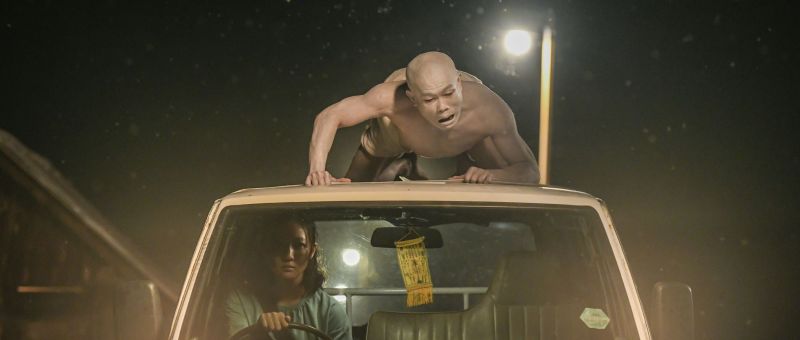
Not My Mother’s Baking (不是我妈妈的烘焙, Remi M. Sali, 2020)

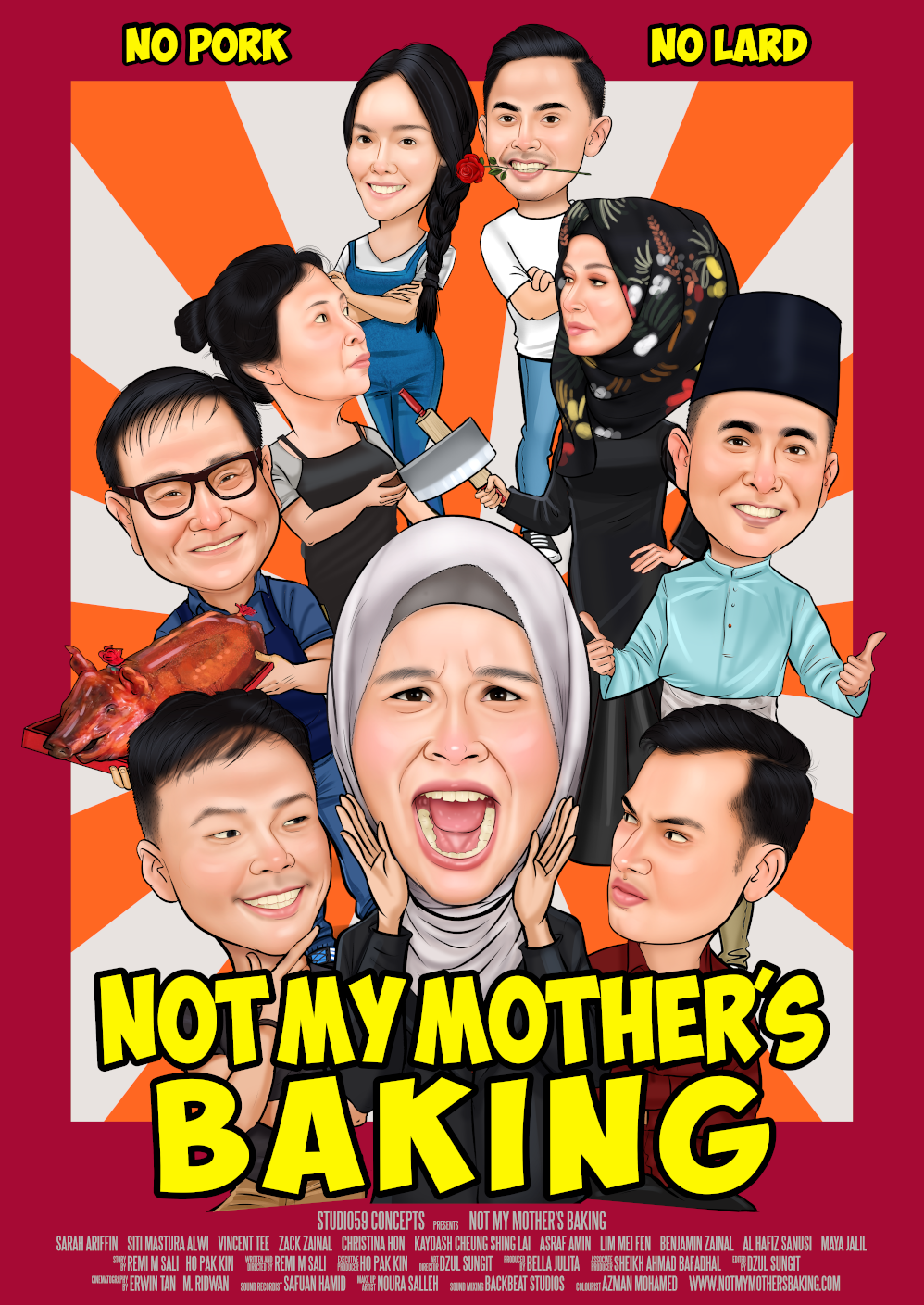
True love conquers all in Remi M Sali’s warmhearted Singaporean rom-com Not My Mother’s Baking (不是我妈妈的烘焙, Búshi Wǒ Māma de Hōngbèi). Spinning a Romeo and Juliet romance between an aspiring Malay Muslim cook and the heir to a roast pork hawker stall, Not My Mother’s Baking is as much about cross-cultural connection as it is about two young people finding their own directions and the strength to pursue them free of parental expectation as they figure out what it is that will really make them happy.

Daughter of celebrity chef Siti (Siti Mastura Alwi), Sarah (Sarah Ariffin) has always lived in her mother’s shadow, harbouring a mild sense of resentment towards her for neglecting her family in favour of her career. The little brother of her best friend Tini (Maya Jalil), Imran (Asraf Amin), who has long been carrying a torch for her suggests starting her own online cookery series to establish her brand as distinct from her mother’s setting her up with Edwin (Kaydash Cheung Shing Lai), an aspiring Chinese video producer. The two do not exactly hit it off thanks to some cultural misunderstandings, but begin to grow closer after they each reluctantly agree to work together in order to avoid having to spend more time with their families, Sarah potentially roped in as a temporary/free assistant to her mum and Edwin needed to help out at his parents’ hawker stand selling roast pork. 

Cheerfully narrated by Edwin’s upbeat dad Mr. Tan (Vincent Tee), this is a story which begins with a wedding and so we know right away that it all works out and Sarah and Edwin will get their happy ending, yet there are a lot of obstacles standing in the way of their burgeoning love story not least a lack of understanding that begins with Edwin somewhat insensitively advising Sarah to remove her headscarf to make a better impression in the videos. Ill-advised by Imran, Edwin is wary of telling Sarah about his family’s occupation firstly in case it causes offence and then later uncertain what level of interaction is permitted between them considering he’s been handling pork. Sarah’s cheeky brother Yusri (Benjamin Zainal) jokes that her potential love interest is not “halal”, but then her parents aren’t quite as against the idea as she might have assumed them to be while she finds herself somewhat conflicted, not least in her ambiguous relationship with the superficially “perfect” Imran whose cheesy pick up lines and tendency to try far too hard perhaps convince her that he might in fact be too perfect or at least the wrong kind of perfect for her. 

Meanwhile, she’s also trying to find her way out of her mother’s shadow as a cook, scoring a hit online when she retitles her show “Not my Mother’s Baking” and affectionately mocks Chef Siti’s signature TV star style claiming to be a little more real and authentic in contrast to her mother’s seeming affectation. In a meta twist, Sarah and her mother are played by real life mother and daughter celebrity chefs Sarah Ariffin and Siti Mastura Alwi, though their onscreen relationship is one defined by rivalry and frustrated connection. Chef Siti is understandably hurt by Sarah’s direct attack on her brand, but it does at least enable an overdue heart to heart which brings the two women closer as they work through their complicated relationship while bonding through their shared love of cooking. 

Edwin, meanwhile, has no real desire to take over the pork stand as his parents expect while no one seems to take his video career very seriously. In a slight twist, the Tans have decided Edwin rather than his sister Joyce (Lim Mei Fen) should take over not because she’s a girl but because she went to university and so they think it’s beneath her, stubbornly refusing to see that Joyce actually loves the business and has a few ideas how to bring it into the 21st century making full use of her skills and education. Unlike Sarah’s family, Edwin’s parents are less keen on a cross-cultural romance because they fear losing their son knowing that to marry a Malay muslim woman means not only leaving the pork shop behind but fully converting to her religion. 

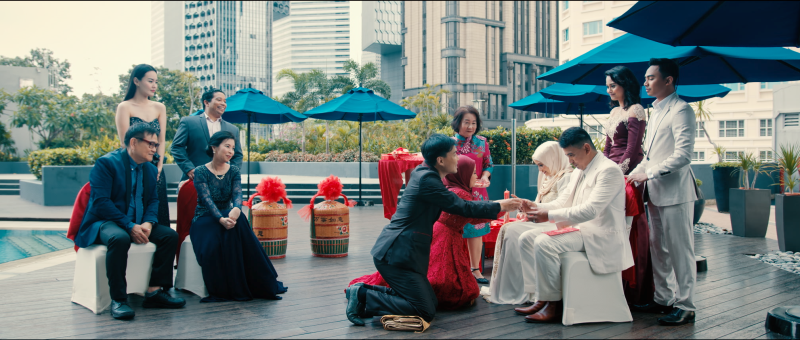
Yet as the female religious leader who accepts his conversion points out (Singapore is apparently the first country to allow women to approve a man’s conversion to Islam), there is no issue with Edwin keeping his Chinese name and it’s not as if he has to cut off contact with his family even considering the problematic nature of their occupation as demonstrated in the couple’s beautifully colourful fusion wedding at which a roast pig is served for the Chinese guests alongside halal Malay cuisine, while Edwin is followed into the ceremony by two large pink dancing lions and the nuptials are concluded with a traditional tea ceremony. A very millennial romance, Not My Mother’s Baking allows its young heroes to forge their own paths outside of those their parents might have chosen for them, proving that love really does conquer all while bringing together two very different cultures each united by the desire to see their children happy. 


Not My Mother’s Baking streams in Poland until 6th December as part of the 14th Five Flavours Film Festival.

International trailer (English subtitles)

Geran (Areel Abu Bakar, 2019)

“Our family is not merely living for the love of wealth, but for love of a family” according to the late matriarch of the family at the centre of Areel Abu Bakar’s spiritually imbued martial arts film, Geran. Showcasing the Malaysian art of silat, Geran finds the family at the mercy of an increasingly corrupt and selfish society, stoically maintaining their “heritage and dignity” in the face of constant encroachment by the destabilising forces of evil in the form of violent and greedy gangsters.

All the trouble starts early one morning when sister Fatimah (Feiyna Tajudin) discovers that the deed to the family home is missing and concludes that her delinquent younger brother Mat Arip (Fad Anuar) who has not yet returned has most likely taken it as collateral for his gambling debts. Patriarch Pak Nayan (Namron) is not too worried, after all there’s nothing they can do with a deed that’s in his name and would need his permission to transfer, but soon enough the goons turn up only to get a rude awakening, quite literally kicked out by Fatimah who is more than capable of defending herself. They won’t stay away for long, however, because Mat Arip has played right into the hands of arch gangster Haji Daud who has unfinished business with Pak Nayan and an insatiable need to acquire all the land in town. 

The family’s prowess with silat is in many ways presented as an extension of their Islamic faith, a deeply spiritual act which connects them to their land and their culture. There’s not a little irony involved in the juxtaposition of older brother Ali (Khoharullah Majid) training with his mentor and Mat Arip gurning frantically on the fringes of a street fight, a sordid bastardisation of their noble art further sullied by the fact Mat Arip has placed a bet on the match’s outcome (which as we later discover is also rigged). Ali meanwhile remains pure hearted, sure that justice will triumph in the end while determined to defend himself and his family from the corrupting forces which surround them. 

As we discover, Haji Daud’s venality is a direct mirror of Pak Nayan’s goodness, a revenge quest born of his own dark heart and insecurity. Yet he remains a shadowy figure, hiding in back rooms while sending his minions to fight on his behalf. Mat Arip is reminded that debts must be paid, something his spiritually minded family probably agree with even as they continue to forgive him while hoping he’ll be able to free himself of his appetite for self-destruction though it does not appear there is much else out there for him other than his life of vicarious thrills. Unfortunately for him, he’s mired in a macho posing contest with Haji Daud’s equally bored, though presumably better resourced, nephew following a drag racing altercation that eventually gives him pause for thought in robbing him of his car. 

“God’s law is inescapable” Ali echoes, assured that Haji Daud’s crimes cannot go unpunished in a cosmic if not an earthly sense and he will someday pay for his deliberate exploitation of the miseries of the poor. Targeted by goons, the siblings get ample opportunity to show off their silat skills, Fatimah chased through a marketplace, eventually assisted by friendly stall owners shocked at her near lapse in taking a cleaver to one of the gangsters, while Ali goes on-on-one with Daud’s chief minion before going on all out assault to rescue Mat Arip realising that he too has probably fallen victim to attack.

The voice of Ali’s mother eventually reminds him that his successes come not only through his own action but through the prayers of those who love him, reinforcing the importance of familial solidarity as the siblings commit themselves to rescuing Mat Arip while forcing the gangsters into retreat. A worthy showcase for the art of silat with its high impact, innovatively choreographed action scenes, Geran is also a potent spiritual drama in which the family does its best to save itself as a means of saving others, holding the line against the Haji Daud’s of the world with little more than bare fists and incorruptible integrity. 


Geran streams in Poland until 6th December as part of the 14th Five Flavours Film Festival.

Original trailer (English subtitles)

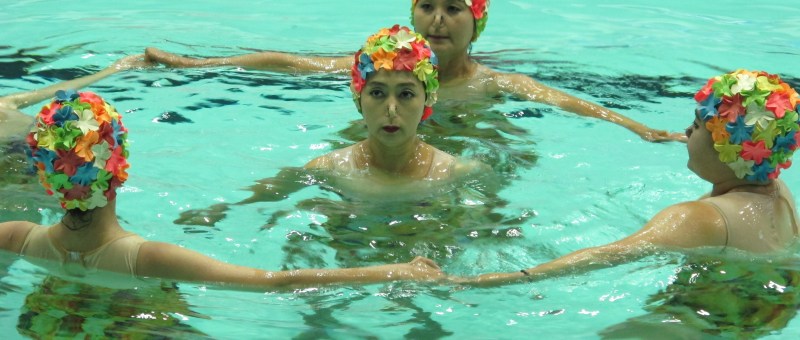
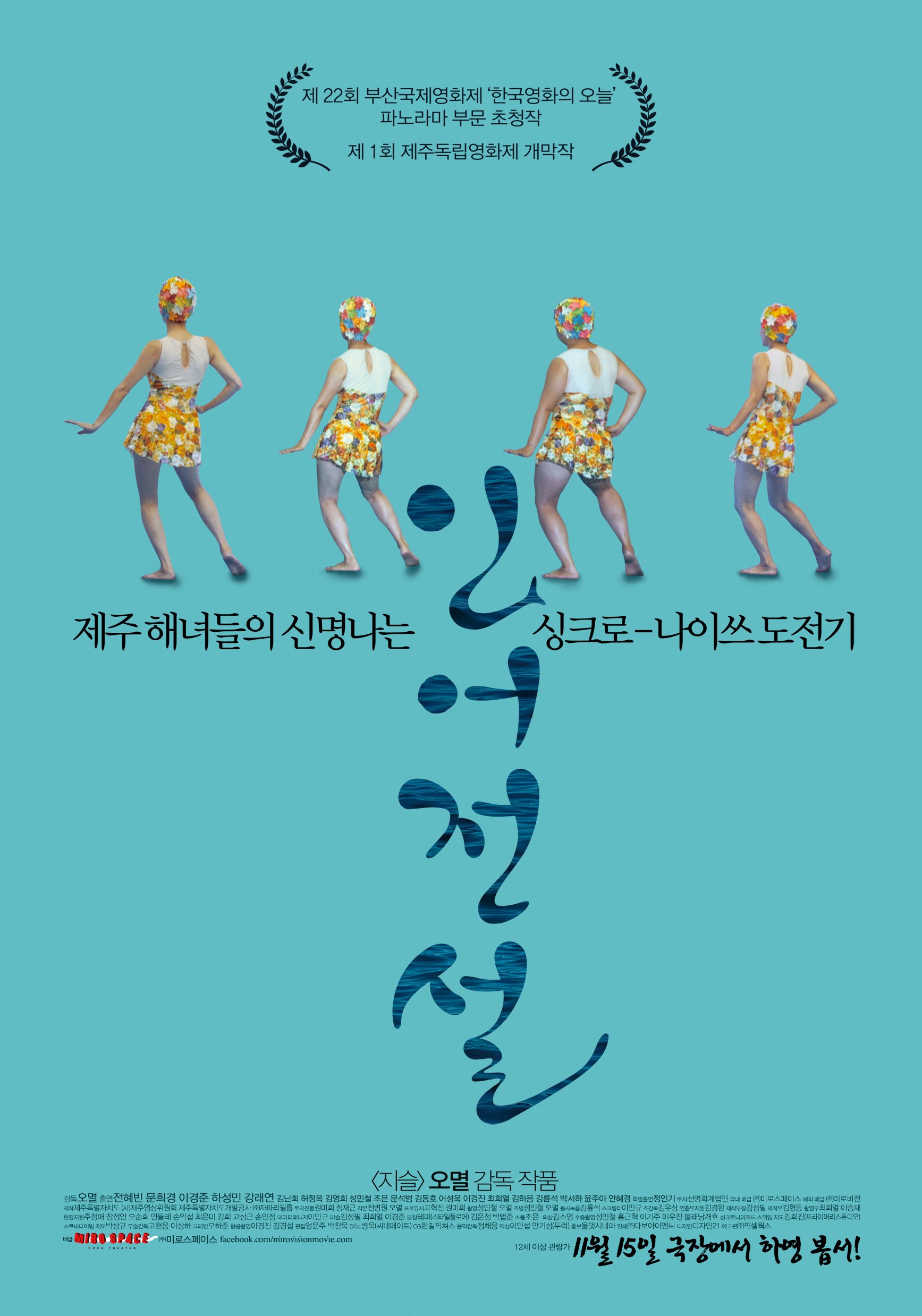
Mermaid Unlimited (인어전설, O Muel, 2017)

Venal city corporatism meets traditional Jeju culture in O Muel’s quirky comedy Mermaid Unlimited (인어전설, Ineojeonseol). An island movie showcasing the laidback charms of a disappearing way of life through those of the haenyo divers, Mermaid Unlimited is also an early example of cinema’s recent fascination with the art of synchronised swimming in which this most organised of sports helps a troubled young woman get a much needed reset in her life thanks to the down-home wisdom of the island aunties and the healing waters of Jeju.

A well-meaning government body has come up with a plan to promote synchronised swimming by getting a team of traditional haenyo divers as a warm up act before a national competition to be held in Jeju in the hope of making the sport “more accessible”. Former national team member Ga-yeon (Kang Rae-yeon) is under a lot of pressure to get a medal, not least to dispel the doubts of a hostile suit upset at having been passed over for project lead. In any case, she recommends an old colleague, Yeong-ju (Jeon Hye-Bin), who was the leading light of their old squad to coach the island ladies so they can perform a routine as requested by the PR people. However, there are several issues with this plan. The first being that village chief Bongseok (Lee Kyung-joon) has been a little over enthusiastic in agreeing to the idea seeing as there are very few remaining haenyo in the local area and many of them are understandably getting on in years. Meanwhile, Yeong-ju is in the middle of an extended personal crisis and is in fact a functioning alcoholic. 

Nevertheless, her appearance on the island immediately causes a commotion not least with Bongseok who is instantly smitten. She is herself, however, not perhaps convinced, instantly earning the ire of the defacto leader of the haenyo, the feisty and foulmouthed Okja (Moon Hee-kyung), after thoughtlessly describing the women as a load of old grannies, doubtful if they are really worthy of her precious “water ballet”. What ensues is a less than genial face off as the two women try to prove themselves queen of the seas through a petty competition which ends inconclusively and with a degree of drama but does eventually broker a kind of solidarity if only as they slag off their useless menfolk. In any case, the island ladies begin training in earnest while attempting to deal with their own quirky island problems. 

The island is certainly home to a fair few characters from Bongseok, smitten and overexcited while slightly clueless as to what the project entails (selling his empty swimming pool as bound to fill up next time it rains), to Okja’s wayward son Mansoo (Eo Sung-wook) and his bad romance, the pregnant haenyo who wants to give birth the old-fashioned way, a strange shanmaness and her son who has learning difficulties, and the young woman who desperately wants to become a haenyo despite her mother’s objections. Yeong-ju had a point when she suggested there weren’t many younger women around, most of the haenyo are indeed middle aged or older, and it’s fair to say this is a way of life fast disappearing. Okja laments that they haven’t been able to catch much lately, and later we hear of the building of a sea wall which may be having a detrimental affect on sea life so much so that there are reports of an elderly diver from a few villages over going missing at sea while protesting. Even so, the old women remain fiercely proud of their island culture and determined to protect it, seeing in the synchronised swimming exercise a way to show off their existence, something which perhaps mildly backfires bringing an influx of foreign tourists to the island hoping get the haenyo experience much to the confusion of the underprepared though very excited Bongseok. 

Through her friendship with Okja and the gentle support of the other island ladies who’ve seen enough of life to be unjudgemental, Yeong-ju begins to work through her unresolved trauma and alcohol issues while falling in love with island life and the traditional haenyo culture. A gentle ode to the wholesome charms of Jeju with its beautiful ocean vistas and hard spun rural wisdom, Mermaid Unlimited makes the case not only for the power of female solidarity but of bodies in unison as a means of existential healing through shared endeavour. 


Mermaid Unlimited streams in Poland until 6th December as part of the 14th Five Flavours Film Festival.

Original trailer (no subtitles)

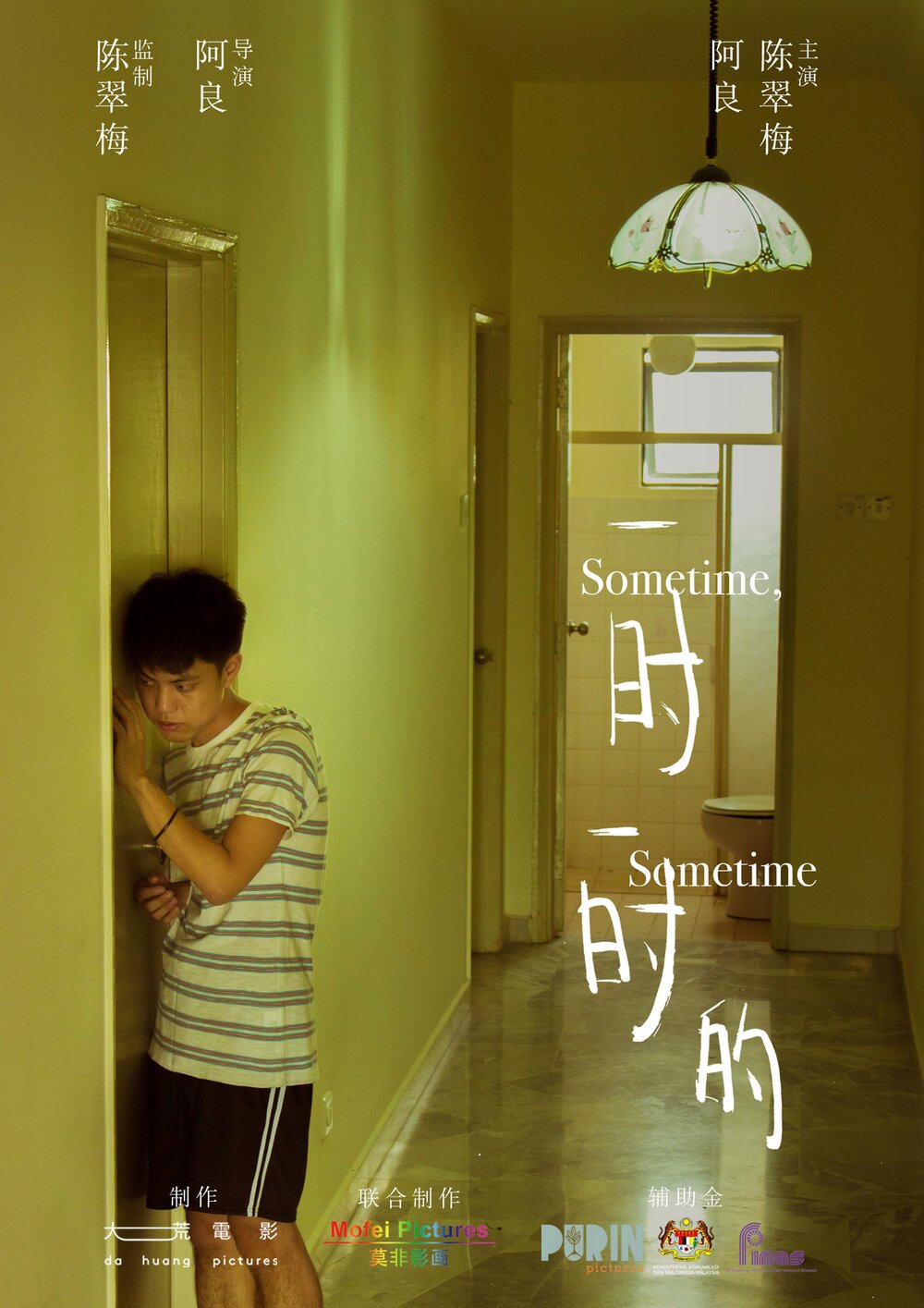
Sometime, Sometime (一时一时的, Jacky Yeap Swee Leong, 2020)
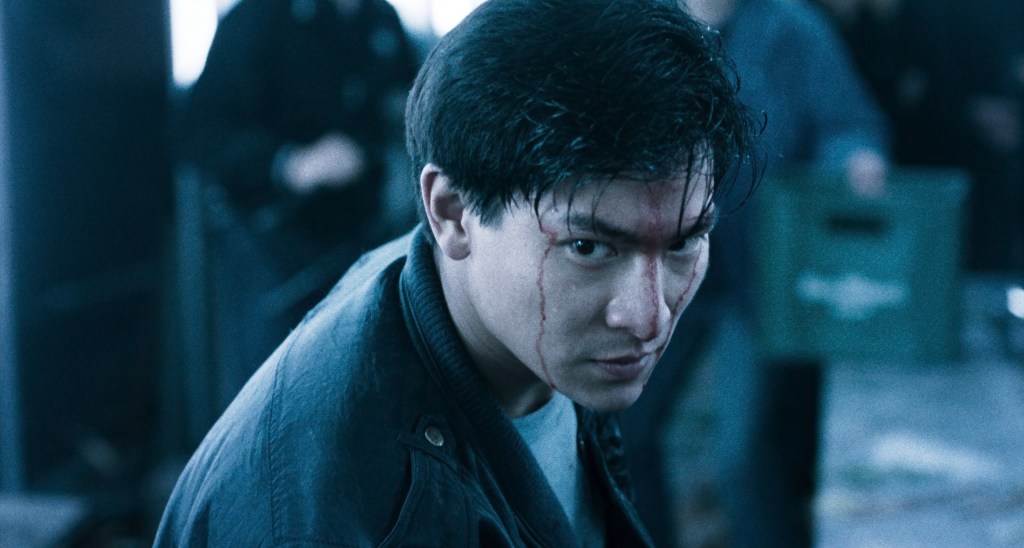
The relationship between mother and son necessarily changes over time, though both find themselves caught in a moment of flux in Jacky Yeap Swee Long’s Sometime, Sometime (一时一时的, Yīshí Yīshí de) in which educational crossroads, employment woes, and unexpected romantic pathways seem set to divide parent and child as they awkwardly swap roles but eventually discover a new equilibrium that will allow them to move forward into individual if perhaps co-dependent futures. 

At 16, Zi Kien (Jacky Yeap Swee Leong) is trapped in an educational limbo while he waits for exam results which will help him decide on the further course of his life. Meanwhile, he resents the helicopter parenting of his devoted single mother Elaine (Tan Chui Mui), arousing her suspicion locking his bedroom door when all he was doing was trying on a shirt he bought himself that she later complains is a little on the big side. When he figures out, however, that his mum has got a new boyfriend, Mr. Lee (Loh Kok Man), the situation is reversed. He doesn’t like it that she’s not quite so overly invested anymore and resents for the moment not being the centre of her attention. Insisting on coming along on a dinner date, he is deliberately difficult, suddenly claiming that he’s gone vegetarian despite having been seen eating pork ribs for breakfast solely to mess with Mr. Lee’s proposed order. For his part, Mr. Lee seems not to be particularly bothered, simply adding an egg dish while getting some sweet and sour pork for himself should Zi Kien abruptly change his mind. 

This flip flopping seems to be typical of Zi Kien’s character at least according to his mother who complains he’s sometimes one thing and sometimes another. Today he’s “vegetarian” but then again he might have forgotten all about it by dinnertime tomorrow. A young man at a crossroads, he flounders for direction, perhaps looking for guidance from the older generation but mildly mocked by some of his peers who regard him as a mother’s boy too afraid of upsetting Elaine to think about applying for the lucrative residential jobs at a casino resort as some of his friends are doing. Zi Kien lies that he bought the shirt for potential interviews, only to be railroaded into taking a short term placement at the supermarket where the worryingly domineering Mr. Lee works. “No need to think about it” he insists on hearing Zi Kien’s lukewarm response, acting as if it’s all arranged and leaving the boy with virtually no chance to refuse.

Yet there’s perhaps a part of Zi Kien that responds to the kind of authority that relieves him of the burden of choice. He finds himself parroting back words from Mr. Lee as if they were profound nuggets of wisdom rather than the banal logic of a slightly conservative middle-aged man. His friend Xue-Ting (Yap Jia Ern) even tells him that he sounds like one of her irritating uncles, once again remarking that his shirt looks too big for him and recommending he might be better to try the women’s section (adding that she herself often finds the kids’ selection a better fit). Only later does he start to wonder if there’s not something slightly arrogant in all Mr. Lee’s “guidance”, immediately making suggestions on how the video he showed him might be “improved” if he added some mournful music and interviewed a few more of his friends from the “lost and confused” generation. His birth father later viewing the same video advances something similar only seeing not anxiety but comedy, advising him that adding music might make it “funnier”. Only Xue-Ting thinks the video’s fine as it is, though Zi Kien later tries the same mansplaining logic on her in railroading the longterm vegetarian into trying “real” meat seemingly unaware that it has the potential to make her quite ill.  

Elaine at least seems better placed to resist Mr. Lee when he also tries to railroad her into taking a job at his company on hearing that the mall where she was working in a department store will soon be closing. Curiously, their relationship seems to breakdown afterwards, though he keeps hanging around hoping to catch the “psychopath” who damages cars parked in a particular space without authorisation. Elaine’s decision to get a haircut (one perhaps so disappointing that she ends up wearing an ugly wig) might be as much a reaction to her son’s possibly inappropriate clinginess as to her boyfriend’s domineering nature, but also speaks of her new desire to take control of herself and her life, buying a used car from a friend so they can be truly independent but then teaching Zi Kien how to drive it, not to mention even teaching him how to smoke a cigarette. Zi Kien is anxious enough to spend some of his part-time money on a long wig (an equally awful, retro 80s contraption) to put her back the way she was before, Elaine agreeing to wear it from time to time to show she appreciates the sentiment but later getting herself tidied up with a slightly more fashionable bob. 

Through their respective parallel dramas, mother and son eventually learn to reconfigure themselves for a new future, more comfortable in their roles and perhaps each with new direction. Elliptical and rich with doublings, symmetry, and repetition, Yeap’s gentle summer story is quietly humorous while undoubtedly well observed and filled with a loving empathy for this most essential, if sometimes frustrating, of connections.  


Sometime, Sometime streams in Poland until 6th December as part of the 14th Five Flavours Film Festival.

Festival trailer (English subtitles)