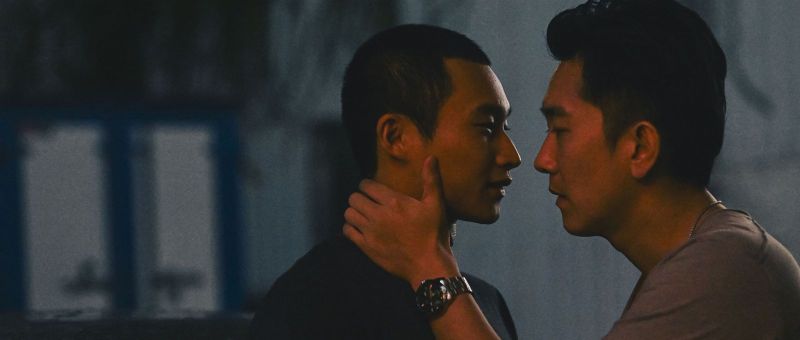
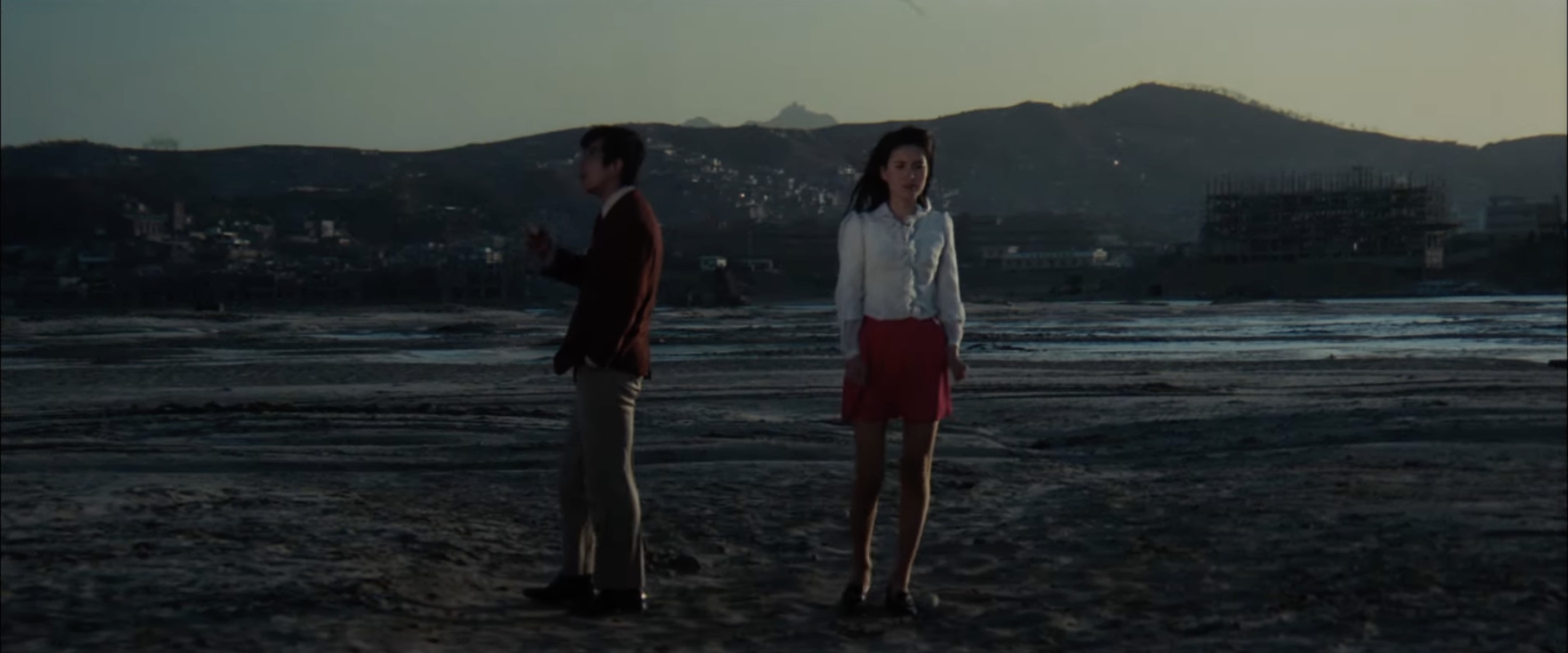
3670 (Park Joon-ho, 2025)

In recent years, indie films about North Koreans in the South have focused on the discrimination they face and how difficult it can be for them to integrate into South Korean society, not because of how different it is from everything they’ve known, but because the South doesn’t quite accept them. The problems of the hero of 3670 are, however, two-fold in that he is also gay and finding it difficult to straddle both communities while looking for companionship.

The opening scene finds him having sex with a guy from a dating app in a darkened room, but as soon as they’re finished, his partner gets up to shower and insists on leaving, refusing Cheol-jun’s (Cho You-hyun) invitations to get dinner and clearly uninterested either in friendship or romance. He asks him where he’s from, and on figuring out he’s from the North, rolls his eyes a little asking if he doesn’t have any gay friends yet. Cheol-jun doesn’t have any South Korean friends at all, let alone gay ones, and has never met any other gay people who left North Korea. He’s never disclosed the fact that he is gay to his North Korean friends or aunt living in the South who is his only familial link, which leads to moments of accidental insensitivity when his friends push him to date a North Korean girl they mistakenly think is interested in him, and his aunt tells him to settle down and get married in the South as his parents would have wanted him to.

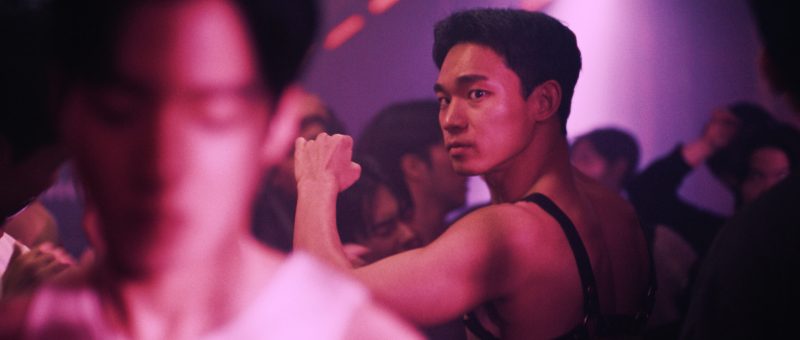
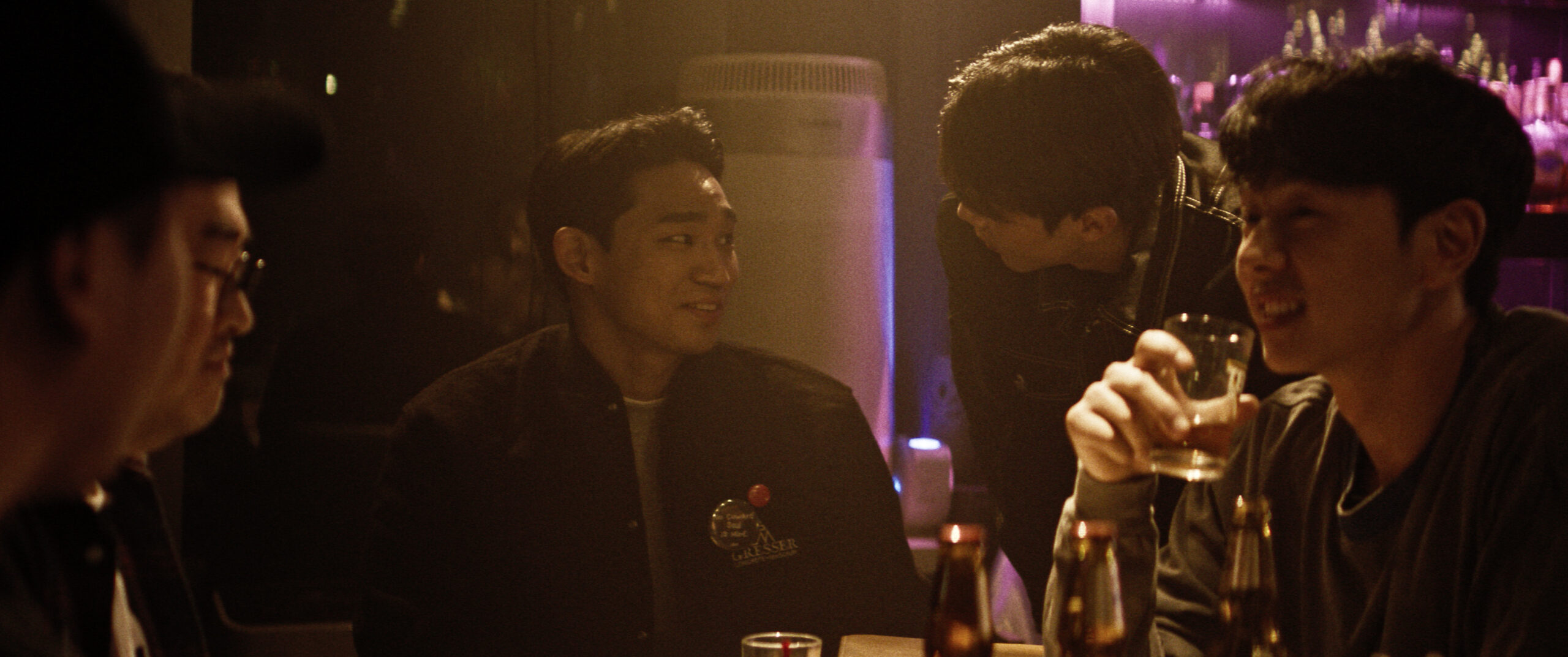
The film seems a little ambivalent about Cheol-jun’s third community which is the Church. While it might be as Cheol-jun says helpful in a lot of ways in giving him something to belong to and helping with things like scholarship applications, it’s somewhat exploitative in that their help is obviously conditional on Cheol-jun accepting their religious beliefs which are otherwise in conflict with desire to find freedom as a gay man. Cheol-jun sometimes picks up extra money speaking at Church events in which he outlines how grateful he is to have been “saved” by the grace of God which brought him to the South away from the Godless North. Unlike other similarly themed films, 3670 doesn’t tread any further into how those from the North can be almost fetishised and exploited for their stories, but it is clear that that the Church is also using him to further their own aims. On the advice of his hookup date, Cheol-jun ends up attending a mixer for gay men which he keeps secret from his North Korean friends where he meets Yeong-jun (Kim Hyeon-mok), a gay man of the same age who lives in his area and shops at the convenience store where he has a part-time job, and later gets him a paying gig speaking about his salvation at his church.

Yeong-jun’s mother is a deaconess, and it seems that, in some ways, Yeong-jun is even less free that Cheol-jun who is beginning to discover a new kind of freedom as he introduces him to the gay scenes in Jogno and Itaewon. He views himself as inferior because he doesn’t believe himself to be conventionally attractive and has been having trouble passing the interview process to get a job (possibly those two things are somewhat connected in his mind). Yeong-jun also hasn’t said anything to his mother about being gay and sometimes goes to church to placate her even though he thinks there’s no place for him there as a gay man with the rather repressive religion that his mother practices. When he gets a job and is fully independent, he plans to stop attending church, making clear that for him, as a gay man in a capitalistic society, his freedom rests in financial security and achieving socially defined success by joining the workforce.

The fact that’s capitalism to which Cheol-jun must adjust himself is echoed in his advisor’s advice that he needs to market himself and give the university he’s trying to apply to a reason to choose him over another candidate. When he becomes a member of Yeong-jun’s friendship group, they also tell him that he needs a “selling point”, which they think should be his North Koreanness. But in an odd way, these ironic words of advice do lead to him becoming more at home with himself even if he’s also still caught between these two communities. With his North Korean friends, he dresses in a dowdier style, but puts on fashionable clothes and a university baseball cap to hang out in queer spaces with Yeong-jun. He tells his North Korean friends that he’s going to visit his aunt while occasionally blowing them off to see his gay friends, making it clear that he cannot exist simultaneously in both spaces as a North Korean and as a gay man.

But as much as Cheol-jun begins to find himself, Yeong-jun founders. Cheol-jun overhears some of his gay friends making fun of him for his North Koreanness and suggesting they only hung out with him out of pity, robbing him of this new community through spite and bitchiness rooted in a series of misunderstandings along with the social dynamics within the gay community and the friendship group itself. Nevertheless, when he does actually meet another North Korean man through the hook-up app, he helps him accept himself too by introducing him to these queer spaces in much the same way Yeong-jun did and showing him that it’s alright and it’s not as difficult or frightening to inhabit these spaces as he might have assumed it to be. 

Cheol-jun finds freedom here, at least much more freedom than he would have in the North. He’s not in the same kind of danger. But even many of the men in Yeong-jun’s friendship group are closeted and live as “straight” men, keeping quite about their private lives and restricting their authentic selves to Itaewon and Jogno, much as Cheol-jun keeps his North Korean and gay selves separate until he eventually decides to confide in some of his friends and finds them unexpectedly supportive because like him they too are here in search of happiness. The title of the film comes from a code Yeong-jun’s friends use to organise meetups hinting at their clandestine nature and desire to avoid inviting outsiders into their secure community. Cheol-jun, by contrast, is now free to wear his trendy clothes with his North Korean friends and to be open and unguarded in either community, effectively eliding the division between the two. Though his relationship with Yeong-jun who evidently meant a lot to him and changed his life in many ways may have been disrupted by the societal realities of the South from lookism not just in the gay community but the wider society to conventional definitions of success and entrenched homophobia along with the way they impact on a man like Yeong-jun, Cheol-jun has perhaps discovered a home for himself and a kind of freedom in his life as a gay North Korean man in the South.


3670 screens as part of this year’s San Diego Asian Film Festival.

Trailer (no subtitles)

A Useful Ghost (ผีใช้ได้ค่ะ, Ratchapoom Boonbunchachoke, 2025)

Right at the beginning of Ratchapoom Boonbunchachoke’s A Useful Ghost (ผีใช้ได้ค่ะ, Phi Chaidai Kha), we see a man creating a classical-style relief that’s positioned in a tranquil spot surrounded by nature. It features people from all walks of life, a mother and her child, a monk, a scholar, a soldier, a labourer and so on, as well as a goat, and is later revealed to have the title “democracy monument”. But as soon as it’s put up, it’s brought violently down as developers move in to replace this oasis of peace with a modern shopping mall. 

The construction gives rise to more “dust” which is what’s polluting the country, directly linking rampant capitalism with the erosion of democracy. Even the home lived by the self-proclaimed “Academic Ladyboy” (Wisarut Homhuan) may one day be consumed as the traditional streets are replaced by yet more upscale shopping opportunities. In an effort to get rid of the dust that’s plaguing him, he buys a vacuum cleaner, but it turns out to be haunted and coughs in the middle of the night, spitting out all the dust he made it swallow. 

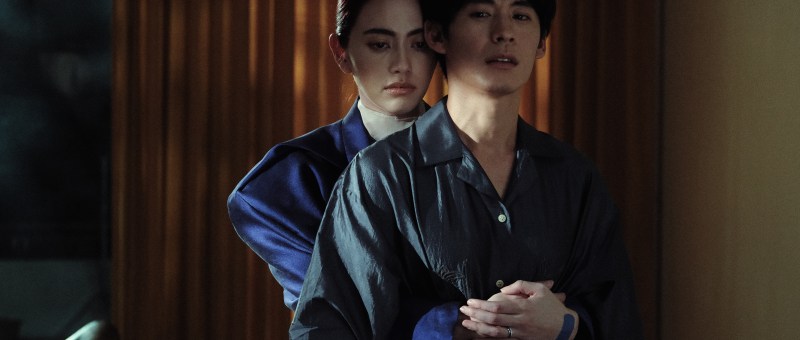
“Dust” is also a term that’s come to stand in for those exploited by this increasingly capitalistic society whose lives are afforded little value, such as factory worker Tok who died after being exposed to too much dust while working at a factory producing vacuum cleaners. Meanwhile, the factory owner’s son has just lost his pregnant wife, Nat (Davika Hoorne), to a respiratory illness caused by dust. Nat has also possessed a vacuum cleaner and reunites with her broken-hearted husband, March (Witsarut Himmarat), but finds herself increasingly compromised after sucking some of the dust out of a government minister’s eyes.

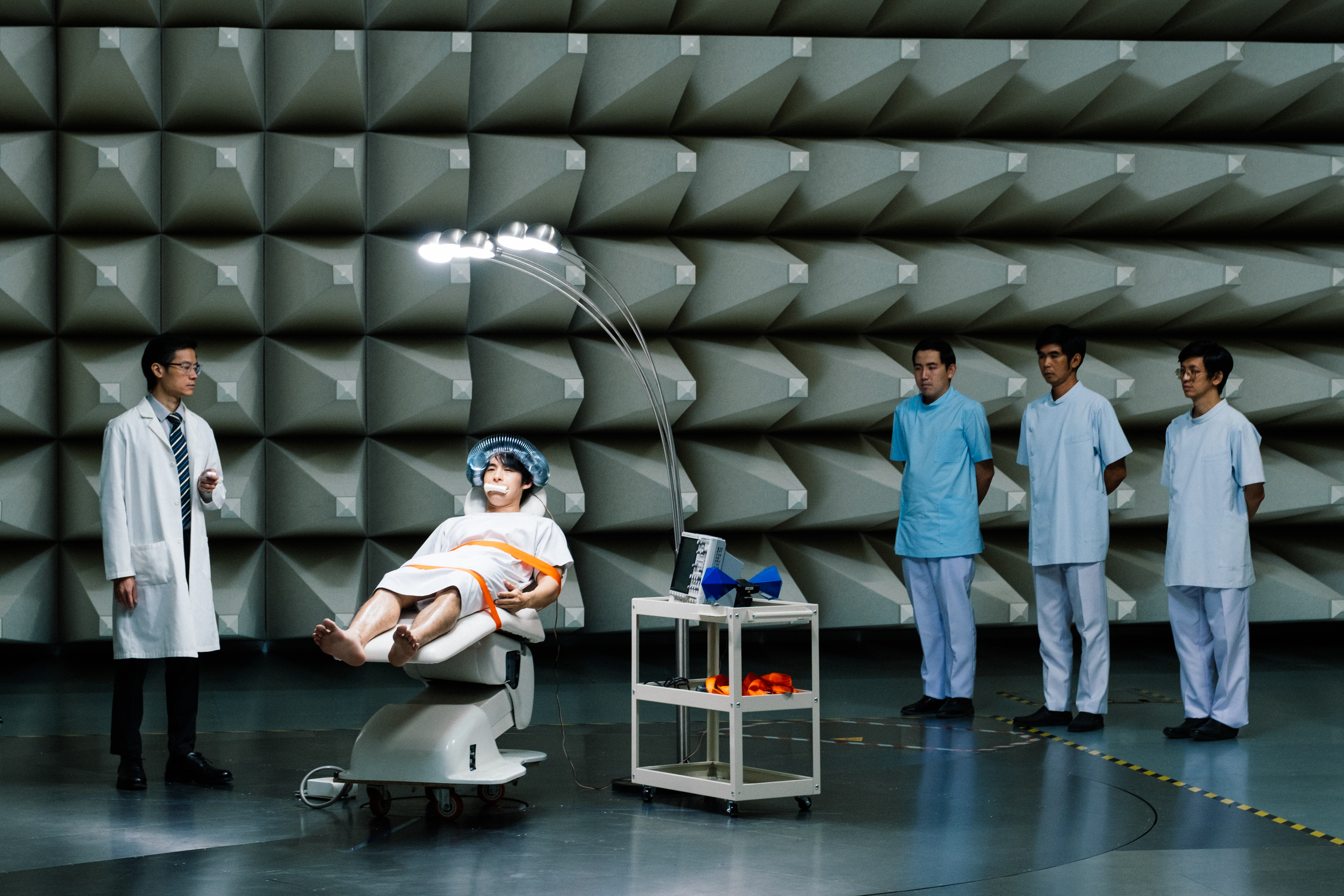
Nat’s desire to stay in the mortal realm longer than is proper is reminiscent of the classic ghost Nang Nak, but what she also becomes is a kind of class traitor increasingly involved with the oppressive regime and betraying her own people to ensure her personal survival. Government minister Dr Paul gets her in on his programme chasing ghosts through dreams and banishing them from people’s memories in order to erase their existence and history. When people refuse to give up their ghosts, he has them given electroshock therapy so that they forget them, as he once tried to do to March before Nat made herself useful to him. And so “dust” and “ghosts” have now become metaphors for those who resist as the souls killed not only during the 2010 massacre but Thammasat University massacre in 1976 rise again to make their presence felt. 

According to the Academic Ladyboy, that these ghosts came back at all is itself an act of resistance, as if these memories themselves could become reminders that resistance is possible and things weren’t always this way. He loathes Nat for the choices that she made in turning on her own, but she was also facing other kinds of oppression in never being accepted by her husband’s upperclass family who in themselves become a symbol of autocratic elitism. Her mother-in-law, Suman (Apasiri Nitibhon), who owns the factory and is unsympathetic towards Tok insisting his death was nothing to do with the working environment, submits herself to them too because like Nat she didn’t belong either and felt she had no other choice. Her eldest child Moss was taken away from her because she spoke a Northern dialect and they feared the child wouldn’t learn standard Thai. Now she tries to talk to her son’s Australian husband in Teochew, only for Moss to roll his eyes and say no one knows how to speak that outside Thailand. Just as they rejected Nat for being an outsider, they rejected Moss for being gay until he became useful to them.

The longer Nat stays beyond her allotted time, the more it corrupts her so on restoring her corporality she would betray even March, who has come to sympathise with the ghosts, in order to be allowed to stay and maintain her position. She’s the “useful ghost”, from a certain point a view, but from another, all the others are “useful” too in keeping the spirit of resistance alive. Quirky and surreal with its tales of haunted hoovers, obsessive bureaucracy, and factories where singing is randomly banned, not to mention truly awesome shoulder pads, Ratchapoom Boonbunchachoke’s deadpan absurdist drama is deadly serious where it counts right until its intensely cathartic conclusion.


A Useful Ghost screens as part of this year’s BFI London Film Festival.

Trailer (English subtitles)

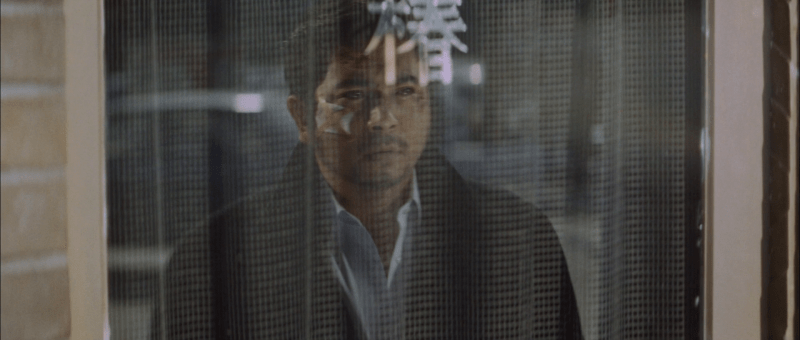
The Man Without a Map (燃えつきた地図, Hiroshi Teshigahara, 1968)

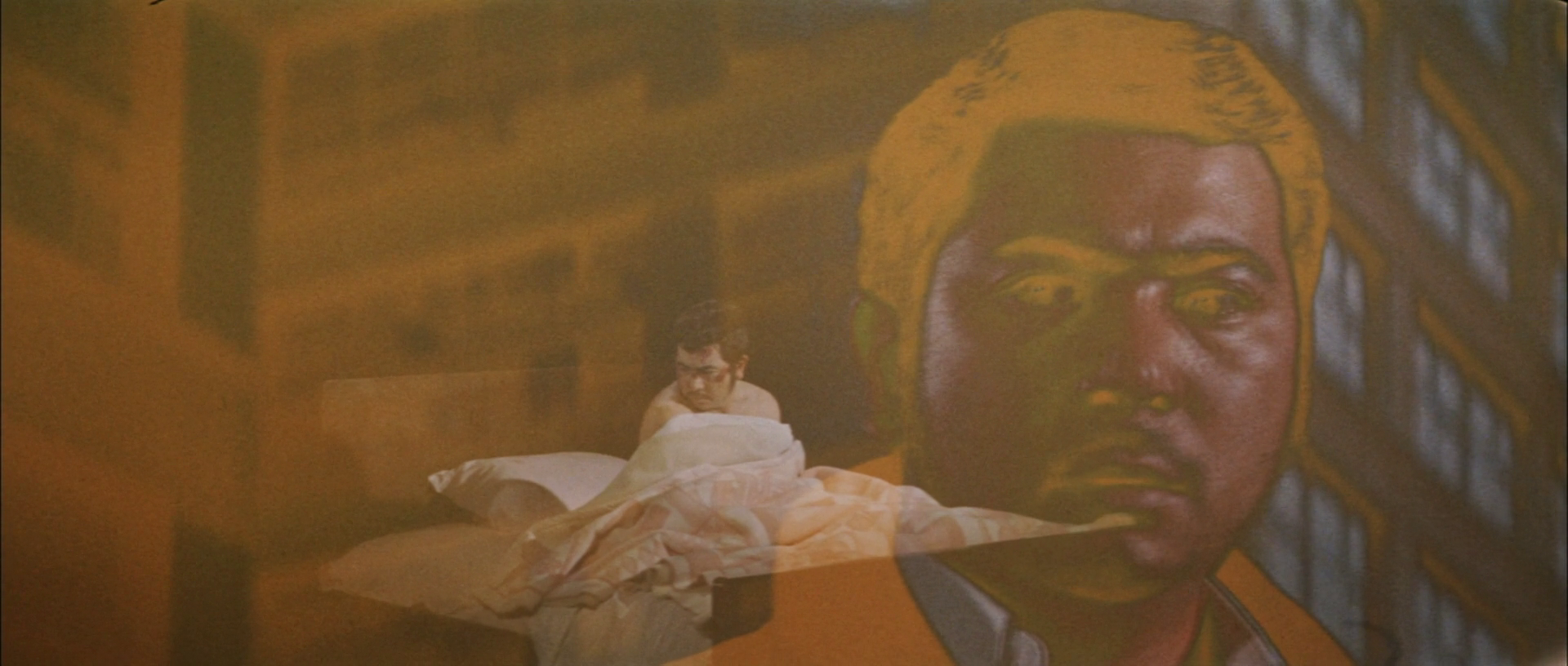
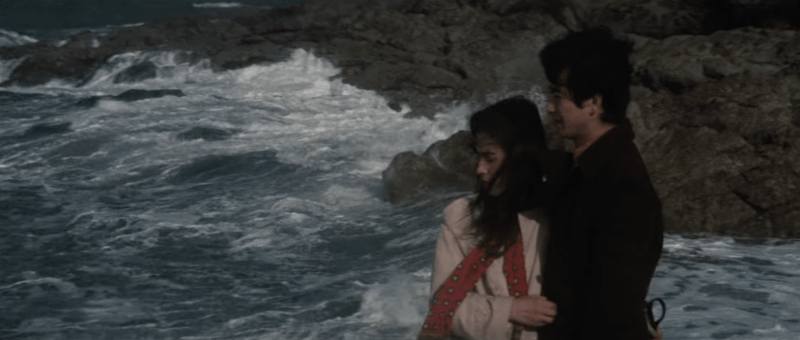
Hired to find a missing person no one really wants found, a detective begins to chase his own tail amid the impersonal vistas of the contemporary city in Hiroshi Teshigahara’s The Man Without a Map (燃えつきた地図, Moetsukita chizu). The fourth and final in his series of Kobo Abe adaptations and the only one in colour, the film’s Japanese title “burned-up map” may also, in its way, refer to the city of Tokyo which appears blurred out and indistinct in the sepia-tinted opening and is thereafter frequently shot from above as a depersonalised space where anonymous cars shuttle along highways like so many ants moving in rhythm with the momentum of the metropolis.

We follow a nameless detective (Shintaro Katsu) as he’s charged with investigating the disappearance of a 43-year-old salaryman, Hiroshi Nemuro, who turns out to have myriad other personalities and hasn’t been seen for six months. The man’s wife, Mrs Nemuro (Etsuko Ichihara), is not terribly helpful and the detective comes to wonder if the investigation itself is intended to further disguise the man’s whereabouts and prove that he really is a “missing person”. Yet this Tokyo is full of “missing people” including the detective who, we later learn, is a kind of fugitive himself. He apparently walked out on his wife (Tamao Nakamura), the owner of a successful boutique, because he couldn’t find his place there any more. He was once a salaryman too, and became a detective because it was the furthest thing he could think of from a regular job. 

It confuses him that no one really seems to be interested in where Nemuro is or if he’s alright, only in the reason behind his disappearance. The more he chases him, the more he begins to take on Nemuro’s characteristics as if he were intended to slide into the space Nemuro has vacated. Toru Takemitsu’s eerie harpsichord score only seems to add to the hauntingly gothic quality of this quest. The question is whether such a thing as identity even exists any more. The detective puts on Nemuro’’s jacket, though it’s too small, and is mistaken for him, while a colleague of Nemuro’s insists that he’s seen him in the street and is sure it was Nemuro simply because of the unusual colour of his suit without ever seeing his face. Tashiro (Kiyoshi Atsumi) tells the detective that Nemuro had a secret hobby taking nude photos at a specialist club that caters to such things. The two of them are confident they’ve identified the woman in the picture based on her haircut, but the girl they speaks laughs and takes off her wig explaining that she was merely asked to wear it, so the woman in the photo could be anyone, including Nemuro’s own wife.

Nemuro apparently had a series of hobbies for which he’d obtained certificates because he said that having them helped him to feel anchored in his life, though he’s apparently unmoored now. Like the detective, he may have been trying on different personalities from car mechanic to school teacher looking for the right fit and a place he felt he belonged in rebellion against the depersonalisation of the salaryman society in which one man in a suit is as good as another. The detective finds an opposite number in the missing man’s brother-in-law (Osamu Okawa), a very modern, apparently gay gangster connected with a network of male sex workers sold on to influential elites, and a commune of similarly displaced people working as casual labourers that is overcome with corporate thugs and eventually trashed.

The trashing of the commune may have something to do with a man named Maeda who is a councillor in a town no one’s heard of, but was possibly involved in some shady business over which Nemuro may have been intending to blackmail him or blow a whistle with the assistance of his brother-in-law who helped him land a big contract at work. The more the detective investigates, the more confused he becomes. It’s impossible to follow the case as we might expect in a conventional noir thriller, but we’re not supposed to be looking at Nemuro’s disappearance so much as the detective’s gradually fracturing sense of self as he becomes lost in the anonymous city. He sees himself bury Mrs Nemuro in leaves only for her body somehow reduce itself to its component parts and sink into the street. Later her face is superimposed on the buildings as if she were looking down on him while he is lost and alone. Nemuro’s face also appears on buildings, though more as a metaphor as if the salaryman and the office building were one and the same and the reason the detective can’t find him is because he doesn’t really exist as a concrete identity. The detective spots a dead cat in the road and laments that he never thought to ask its name, but will try to think up a good one later. He might as well be talking about himself, now displaced, unmoored, and pursued among the city streets, a man without a map lost amid the simulacrum of an imaginary city.


Babanbabanban Vampire (ババンババンバンバンパイア, Shinji Hamasaki, 2025)

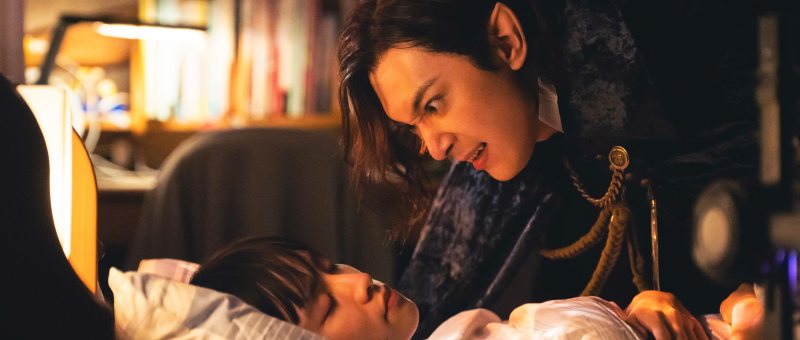
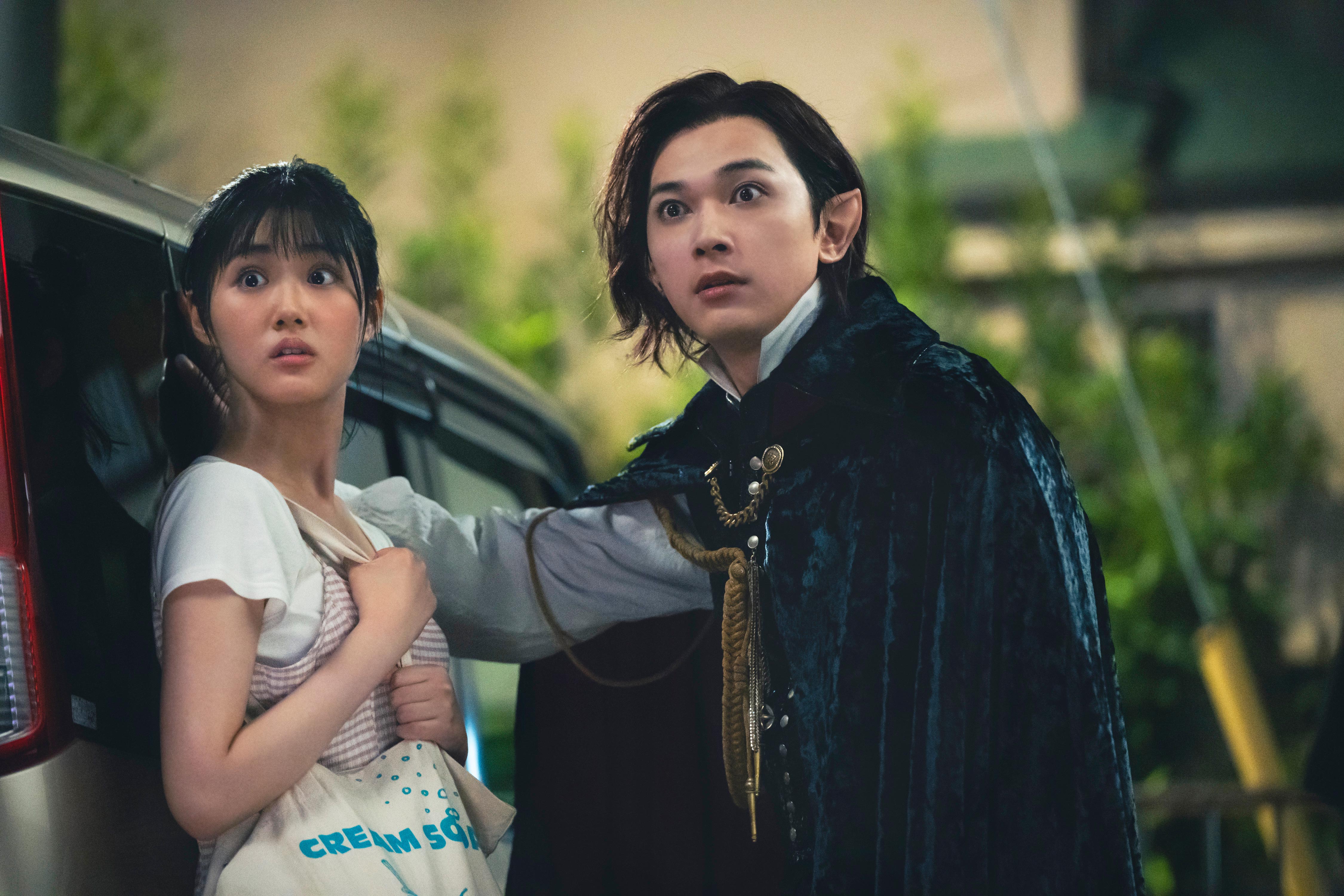
It turns out immortality’s not all it’s cracked up to be in Shinji Hamasaki’s adaptation of the manga by Hiromasa Okujima, Baban Baban Ban Vampire (ババンババンバンバンパイア). At 450 years old, Mori Ranmaru (Ryo Yoshizawa), one-time lover of Oda Nobunaga (Shinichi Tsutsumi), is working as an attendant in a bathhouse in an attempt to, as he says, “live an ordinary life earnestly,” while staving off the darkness of an existence free of the spectre of death. 

Yet, there is an uncomfortable darkness at the centre of this otherwise humorous and ironic tale in that what Mori Ran is actually doing is grooming a child so that he can enjoy him when he judges that he is “ready.” There’s an obviously unpalatable reading of the film that renders it as an allegory for paedophilia, while there’s also an undeniable poignancy in likening the figure of the vampire of that of a gay man in an oppressive society. Mori Ran accosts his victims in dark alleyways and his assignations with other men are necessarily short and secretive. They also result in death, while Mori Ran describes most of his victims as tainted and disgusting as if echoing an internalised sense of self-loathing. He continues to hold up Rihito (Rihito Itagaki) as a figure of innocence and purity because he once saved his life when he was baking in the heat of an usually hot spring when the boy was only five years old. 

Mori Ran’s internalised homophobia is somewhat mirrored in that of the teacher Sakamoto (Shinnosuke Mitsushima) who is also a vampire hunter but bewitched by Mori Ran and longing to be initiated by him, though Mori Ran declines to give him what he sees as a curse. Imbued with a gothic sensibility, Mori Ran believes that humans are beautiful because they die, while vampirism is debased and ugly. He refuses to condemn someone he admires to his own fate which he describes as a kind of inescapable hell in which he is unable to die. He no longer believes in love, though is haunted by his loss of Nobunaga, and sees humans merely as food. 

Nevertheless, it seems he has found purpose in his present life of living with Rihito’s family and working in their bathhouse despite convincing himself that he’s only biding his time until Rihito is ripe for the picking. According to Mori Ran, the sweetest blood belongs to that of 18-year-old male virgins which is why his goal of ensuring that Rihito remains virginal and pure is becoming more difficult now that he has entered adolescence. Much of the comedy derives from Mori Ran’s emotional cluelessness and paranoia on discovering that Rihito has fallen for a girl, Aoi (Nanoka Hara), with whom he had a stereotypical meet cute on his way to his high school entrance ceremony. Knowing that he has to nip this in the bud as soon as possible, he pays a visit to Aoi to warn her off but fails to realise that not only did she barely notice Rihito let alone fall in love with him, but that she is actually obsessed with vampires and is keener on him. 

But then again, there’s something additionally troubling about Rihito’s immediate classification of Mori Ran as a “love rival” in the mistaken belief he’s after Aoi too rather than as someone who should probably be reported to some kind of authority. After all, even if he were not 450 years old but the 25 he claims to be, hanging around exclusively with high schoolers is odd and bordering on inappropriate in itself. Having misunderstood his intentions, Aoi also believes that Mori Ran is waiting for her to be “ready,” in a partial recognition that this is wrong because she’s a child but also prepared to wait for the mysterious vampire without considering the implications of his being interested in a 15-year-old girl if that actually were the case. 

Nevertheless, what Mori Ran discovers is really a different kind of love in his gradual integration into the human world and the the friendships he forms not only with Rihito, but Aoi, her muscular brother Franken (Mandy Sekiguchi) who also has a crush on Mori Ran, and the lovelorn teacher Sakamoto, even if he’s still focused on his mission of keeping Rihito pure so he can drink his blood on his 18th birthday. His attempts to prevent a relationship forming between Rihito and Aoi are all countrerprodcuteive and would like end up bringing them together if it were not for the fact of Aoi’s crush on him of which he remains oblivious. The inherently zany humour of the situation with its series of concentric love triangles along with the warmheartedness of Rihito’s homelife when contrasted with the “mysterious” serial killings on the news cannot completely overcome the unpalatable undercurrent of Mori Ran’s pederastic quest, if glossing over it with admittedly delicious irony and absurdism.


Babanbabanban Vampire screens 27th July as part of this year’s New York Asian Film Festival.

My Sunshine (ぼくのお日さま, Hiroshi Okuyama, 2024)

A golden light seems to pour into the life of Takuya (Keitatsu Koshiyama), a nervous young man with a stammer, as he stands transfixed by the elegant movements of a figure skater. As the world around him literally brightens, he begins to discover another side of himself, though it’s never quite clear if it’s Sakura (Kiara Takanashi), a moody teenage girl whose attitude to figure skating seems ambivalent at best, with whom he’s fallen in love or the simple act of figure skating itself. 

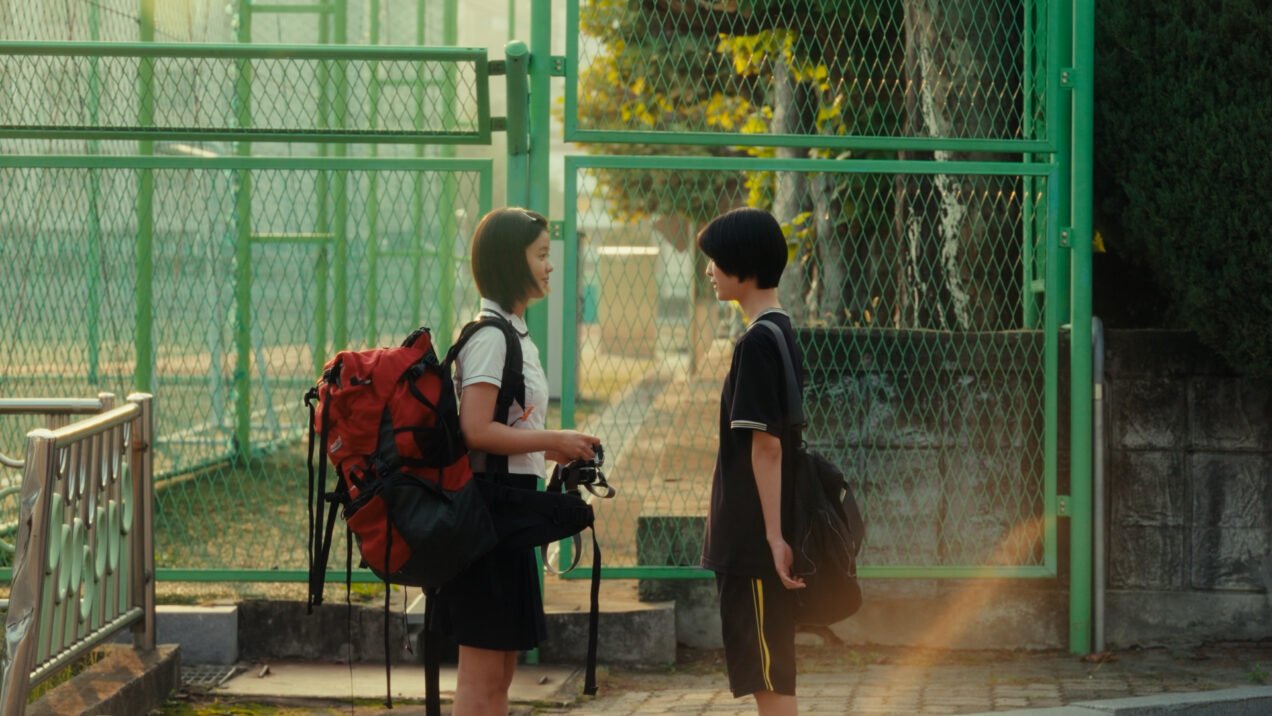
Drawing on autobiographical experience, Okuyama studied figure skating himself while his older sister trained to be a champion, My Sunshine (ぼくのお日さま, Boku no Ohisama) otherwise roots itself in the small-town Japan of the late ‘90s and 2000s in which being different was not exactly welcomed. But in fact, most people seem accepting of Takuya, if in a sometimes patronising way, viewing him as a boy with his head in the clouds and cutting him off when he attempts to speak rather than give him the time to finish. When the teacher is going around the class asking the children to read out a stanza of a poem each, he picks on Takuya and tells him to take his time, though the boy’s anxiety is palpable. The teacher may be caught between two options and struggling to decide which is better, not asking him to read at all to spare him from his classmates’ mocking which would also be to exclude him and reinforce a sense of inferiority in his otherness, or to ask him deliberately and try to encourage patience to teach him and the other children that there’s nothing wrong with the way he speaks. 

But in any case, Takuya is already something of an outsider in that he has no aptitude for sports and it’s never clear if he actually enjoys them or just participates because it’s what you do in this town to be man. When a recent arrival to the town and former international pro-figure skater Hiroshi (Sosuke Ikematsu) catches sight of him clumsily trying to teach himself how to dance like Sakura, it enlivens something in him that reminds him of the passion he once felt for skating. He finds himself wanting to help the boy, gifting him his old figure skating skates and teaching him for free before hitting on the idea of training him alongside Sakura as a pair.

Sakura isn’t all that keen to begin with, though at times, it seems as though she may not even like figure skating and is only doing it because her mother makes her. She tells Hiroshi that she isn’t aiming to become the best ice dancer and is a little resentful of being forced to go back to basics to meet Takuya’s skill level but goes along with it because the coach says so. What she thinks of Takuya isn’t exactly clear, though she seems to look down on him a little like the other kids who also mock him giving up ice hockey to do a “girl’s” sport. For her part she seems to have a crush on the handsome and mysterious Hiroshi that, like Takuya, she is unable to articulate. For this reason, along with an insecurity in her talent, she resents the special attention Takuya seems to be getting when it’s her mother who’s paying for the lessons and comes to the conclusion that he’s just more interested in him than her.

She may not altogether be incorrect. In his early coaching sessions with Sakura, Hiroshi doesn’t seem all that invested and is distracted by Takuya in the same way Takuya is distracted by the sunlight or the snow. In trying to help Takuya, he’s trying to help himself and for a time succeeds as the three of them generate a joyful familial relationship, culminating in a day skating on a frozen lake. But he too is unable to be honest about the fact that he came to this rural town to be with his partner who decided to take over the family business when his father passed away. Kai (Ryuya Wakaba) laughs off questions about whether he’s married yet, and the two men seem to live together quietly otherwise isolated from the community around them. When Sakura catches sight of them together, she realises something she may not really be equipped to fully understand, only further deepening her sense of resentment in an unreasonable feeling of betrayal. It isn’t really homophobia that motivates her as much jealousy when she suddenly brands Hiroshi as “‘disgusting” and accuses him of getting a kick out of making a boy do a girl’s sport, excusing her conviction that he prefers Takuya over her and potentially giving herself an out to quit skating (though it seems her mother’s not taking the hint).

But like Sakura, Hiroshi is also uncertain if this is the right place for him or if he and his partner can really live together in this small town permanently. Though he answers “of course” when Kai asks if he’s glad he came, Hiroshi pointedly gives no answer when he’s asked if he really wants to be here. Kai says that he hasn’t talked about skating like this for ages nor seemed so happy, suggesting that there may have been something missing in his life that the relationship didn’t compensate for and may not survive without. How his professional career ended is never explained, though his telling Sakura that he only got to compete internationally because of the lack of male dancers speaks to a degree of insecurity that contributes to a lack of ambition in his personal and professional lives. All three of them are, for varying reasons, unable to say what they really want or how they really feel. Though they find temporary solace in their fragile bond, it is only, as Takuya’s brother cruelly puts it, meant to last until the snow melts. Nevertheless, now dressed in a new school uniform clearly far too big for him that suggests he has some more growing to do, Takuya may have found a means of self-expression in dance that might give him the courage to speak his mind.


My Sunshine screened as part of this year’s Queer East.

Trailer (English subtitles)

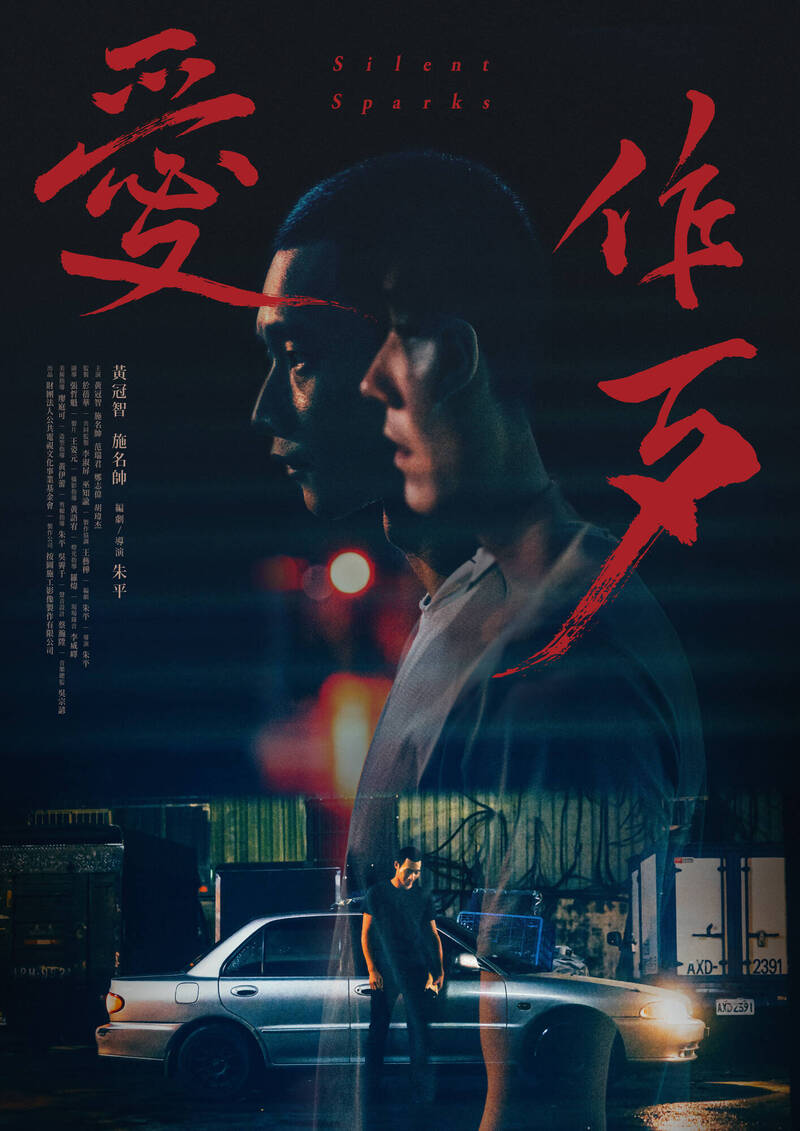
Silent Sparks (愛作歹, Chu Ping, 2024)

Recently released from prison, a young man discovers that it might be easier to be free behind bars than amid the incredibly homosocial world of urban gangsterdom in Chu Ping’s poignant LGBTQ+ drama, Silent Sparks (愛作歹, ài zuò dǎi). Pua (Akira Huang Guang-Zhi) is a kind of silent spark himself. As the gang boss describes him, he’s too rowdy and can’t keep his cool, which makes him a liability, but he’s also reticent and lonely, not to mention hurt by the seeming rejection when the man he fell in love with in prison ignores him on his release.

There is indeed a latent violence in Pua that hints at his frustration and inability to express himself. When we see him enter prison, he appears as a small boy lost in his own thoughts and silently crying, though he was sent there for breaking a man’s leg in a fight. Though he’s served his time, Pua is still paying off the monetary compensation he owes to the man whose leg he broke and otherwise struggles to get by, which leaves him almost dependent on the gang boss who agrees to take him under his wing as a favour to his mother. It seems that he once knew Pua’s long-absent father, presumably also a gangster, and plays a quasi-paternal role but only half-heartedly in seeing Pua more as a resource to be employed or otherwise an irritating burden he can’t quite seem to shake.

It was the gang boss who asked Mi-ji (Shih Ming-Shuai), his right-hand man, to “look after” Pua in prison. The boss sneers a little, and claims responsibility for saving him, adding that things could have ended up “real nasty” for him inside, by which he means “getting it up your ass”. The irony is that Mi-ji was Pua’s prison lover and Pua is excited about the idea of his release fully expecting to pick up where they left off. But the reunion between them is awkward. Mi-ji is not happy to see him. He speaks tersely and makes it clear he’s not exactly keen for a catch up while keeping one eye on the room in case anyone is getting the right idea. Though Pua continues to pursue him, Mi-ji is avoidant. Perhaps for him, it really was a prison thing that he’s embarrassed about on the outside, whereas Pua is more secure in his sexuality and less afraid of its exposure, only longing to resume the intimacy they once shared.

Mi-ji’s ambivalence hints at the toxic masculinity and entrenched homophobia of the world around them in which homosexuality is not really accepted and “getting it up your ass” is synonymous with defeat and humiliation. The irony is that Pua and Mi-ji were freer in prison where they could embrace their love without shame. Pua is imprisoned within the outside side world by virtue of being unable to be his authentic self, but is also trapped by his socio-economic prospects, which leave him dependent on the underworld and the dubious paternity of the gang boss. Expressing his frustration through violence damns him further in leaving him with mounting debts he can only hope to satisfy through acts of criminality. It is really on this side of the bars that the “real” prison lies, and it’s from this world that Pua longs to be released to return to the prison utopia of his love with Mi-ji.

Still, he cannot really escape his destiny, as his mother keeps reminding having read his tragic gangster fortune and trying to get him to eat rice noodles for 100 days to change his fate only to get her heart broken realising salvation for her son might mean something quite different than she had imagined and also take him away from her. Gritty in its gangland setting and hinting at the connections between political corruption and organised crime Chu’s slow-burn drama makes a hell of the contemporary society in which men like Pua find themselves trapped by toxic masculinities and hierarchal violence under an intensely patriarchal social order that permits them little sense of possibility or the ability to be their authentic selves and true freedom is to be found only within the homosocial world of a more literal “prison”.


Silent Sparks screens at Rio Cinema 5th May as part of this year’s Queer East.

Trailer (Traditional Chinese / English subtitles)

Come Dance With Me (来来, Liu Yunyi & Wei Bozhi, 2019)

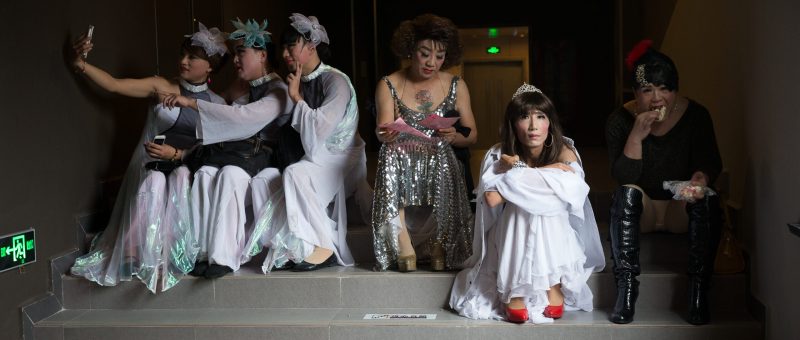
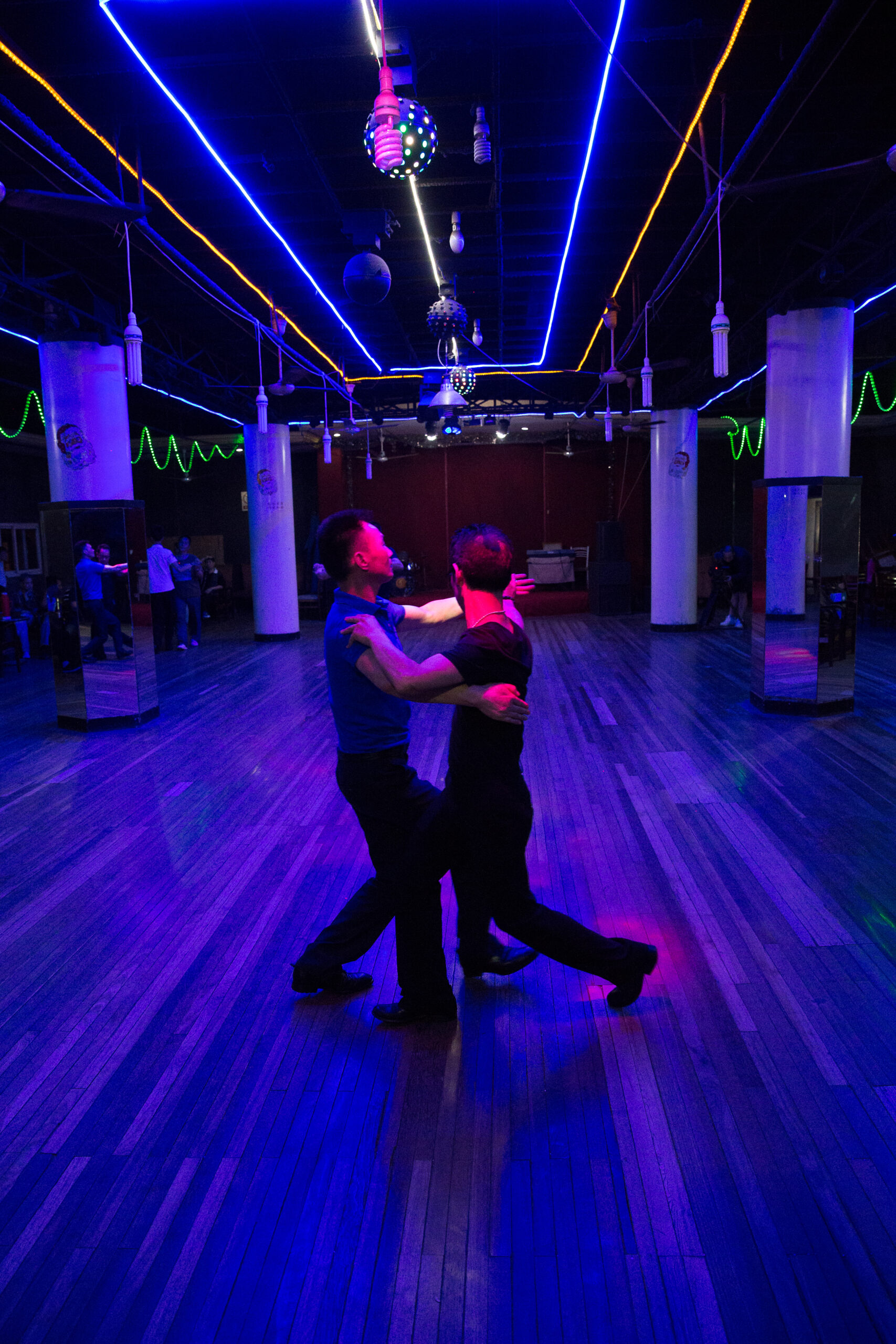
“You need to fight for your place in society,” according to Jiaojiao, one of several regulars at the Lai Lai Ballroom interviewed as part of Liu Yunyi & Wei Bozhi’s documentary, Come Dance With Me (来来, lái lái). As several of them mention, the ballroom had been a refuge for the LGBTQ+ community, though times have now changed. These days, younger people prefer clubs and bars, while many of those who used to come are now elderly and don’t get out as much meaning that the ballrooms are mainly meeting places for the now middle-aged men who first frequented them 20 years earlier.

That they exist at all and this documentary could be made might be surprising given prevalent anti-LGBTQ+ attitudes from the censors’ board and wider community. It’s true enough that Lai Lai became a community hub and its partial closure for the 2016 G20 conference leaves them with no place to go. The various people that Liu & Wei interview come from various walks of life as they demonstrate in the opening sequence in which an old man visits a temple, a younger one visits a park, and Lai Lai’s manager Min walks through the neighbourhood and gets something to eat at a small cafe. 

The old man from the temple best expresses the inherent contradictions both of his religion and the wider society in which he relates that Buddhist monks are supposed to overcome their desires. Young monks are forbidden from taking wives and also from touching women, but technically speaking, the same prohibitions do not exist between men and homosexual acts are not unusual in the temple. Conversely, the young man who went to the park reveals that he has been living with HIV for the last seven years and that he lost his job because of it. In despair, he tried to take his own life only for his godmother to explain to him that people with high blood pressure also need to take medication for the rest of their life so it’s no different from that.

Still, he’s convinced himself of the impossibility of having a relationship sure that no one would stay with him after finding out. He says that he once told a close friend that he had AIDS and the friend quickly distanced himself from him and effectively disappeared from his life. The film later follows him on another day out with a young man, Li Yapeng, but an ill-fated decision to take a five-hour bus trip to go see him backfires when Yapeng not only fails to come and meet him but seems less than enthusiastic about his impromptu visit before abruptly breaking up with him. Another older man relates that he once had a lover who was diagnosed with HIV but told that he could not receive treatment in Shanghai and should return to his hometown. A Shanghai native, the older man resolved that, as he was already old and it would take several years for symptoms to emerge at which point he may be dead anyway, he would deliberately contract HIV and get medicine to give to him. What he didn’t realise is that the treatment isn’t the same for anyone and the medication he was prescribed was no good for his boyfriend, who then went back to his hometown and got treated there. Unfortunately, the treatment didn’t agree with him and he elected to stop taking it, passing away not long after.

Jiaojiao, meanwhile, has been with their partner Fei Er for 26 years, though Fei Er is now having health issues. Fei Er describes their relationship as rock solid and the same as that of any heterosexual couple in that now they’ve been together so long, 26 years is effectively forever and neither of them is ever going to abandon the other no matter what may come. Nevertheless, Jiaojiao also describes an additional layer of stigmatisation in that they have breasts, a fact which it seems they still hide from extended relatives having made the original decision to get them without telling anyone first. Done in a private clinic, the procedure also left them with ongoing medical issues caused by the failure to drain the wound properly. In a later conversation, they suggest that the primary motivation for getting breast surgery was financial. They now work as a dominatrix, but do not like doing it describing some of the men as “disgusting”. Their marginalised status prevents them from gaining more mainstream employment in a still conservative society. They have all found a place for themselves at Lai Lai, but as the press notes reveal, it abruptly closed its doors in 2018 with no one sure when or if it will reopen. Nevertheless, its legacy lives on as a space of warmth and acceptance that gave each of them a place to belong and be joyful no matter the difficulties of the world outside.


Come Dance With Me screens at Centre 151 3rd May as part of this year’s Queer East.

Summer’s Camera (여름의 카메라, Divine Sung, 2025)

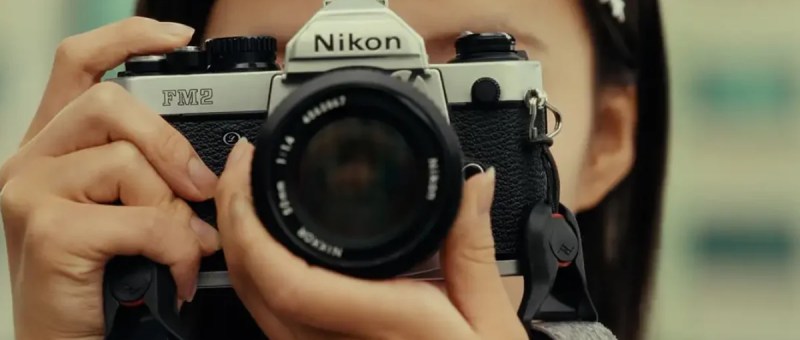
Summer can’t bring herself to press the shutter button on the last four exposures left on the unfinished roll of film her father left behind. Her unwillingness to do so and seeming abandonment of their shared passion for photography hints at her difficulty to come to terms with his passing along with her own sense of adolescent confusion. But just as her father had told her she would, she learned to hear the shutter for herself and took three of her four remaining photos without thinking, all of Yeonwoo, the star of the school’s football team by whom she is unexpectedly captivated.

Well, perhaps not all that unexpectedly. Summer appears to already be aware of her queerness even if she hasn’t explored it yet and quickly finds that her interest is returned by Yeonwoo who immediately responds to her roundabout confession of love by asking her out. Which is all to say, this world is quite different from that Summer’s father Jihoon inhabited in his youth even if it’s rosier than the still conservative reality of contemporary South Korea. Summer’s direct announcement to her best friend that she likes girls is met with a simple “I know,” having noticed that she never took photos of guys and only a little hurt that she never said anything before and hasn’t let her in on her recent dating news.

But what Summer discovers after taking one very deliberate photo of Yeonwoo and having the film developed is that her father also took pictures of someone he liked and that someone was a boy, Maru. Of course, this revelation is quite destabilising for her. She can’t get her head around her father’s relationship with herself and her mother if he was gay though as her friend points out, he may have been bisexual which actually didn’t occur to her. In a quest for answers, Summer approaches the now middle-aged Maru and eventually like her friends did of her simply accepts this unknown fact about Jihoon while finding in Maru someone who’s gone through the same things she’s experiencing and with whom she can discuss the things she can’t yet talk about with her mother or friends. 

In her recollections, we never see the face of the adult Jihoon. He always appears with her back to her or just out of frame reflecting the ways in which she no longer feels as if she knew her father and has lost sight of her relationship with him in the wake of her loss. Though told it was a traffic accident, Summer wonders if in reality he might have taken his own life and chosen to leave her behind. Through re-embracing photography, she begins to rediscover him and come into herself gaining not only the confidence to be who she is but to believe that loss is something she can bear while like Yeonwoo’s running hobby which apparently can alter the flow of time, photography is also a means of trapping a memory which means that nothing’s ever really gone.

With the universal love and acceptance that seems to surround Summer, the film implies that the world has moved on and if her father chose conventionality over love that’s a choice that she may not need to make. Even so, in Maru she finds a strong queer role model who even in his own sadness and grief in his lost love for Jihoon is able to help her move forward in showing her a different side of her father which she had never known. He helps her navigate young love and offers a safe space for her to be herself until she’s ready to confront the unresolved past and make peace with it. Though perhaps tinged with melancholy and longing, Summer’s world is otherwise bright and sunny. Filled both with the giddiness of first love and the deep sadness of a catastrophic loss, it is nevertheless warm and beautiful as Summer sees it through the camera lens. With the shutter button as her guiding light, Summer learns to see in new ways peering both back into the past and ahead into her future now less fearful and more certain of herself having reclaimed both something of the father she lost and the one she never knew.


Summer’s Camera screened as part of this year’s BFI Flare.

Trailer (English subtitles)

Okinawa Blue Note (오키나와 블루노트, Cho Sung-kyu, 2024)

If you run into someone who has the same name, same birthday, and was on the same flight as you to a random destination wouldn’t you call that fate? The protagonists of Cho Sung-kyu’s Okinawa Blue Note (오키나와 블루노트) prefer to think of it as mere coincidence, at least to begin with. They each have different reasons for coming to Okinawa, but then again perhaps fate sent them here to get a new lease on their lives if not to fall in love.

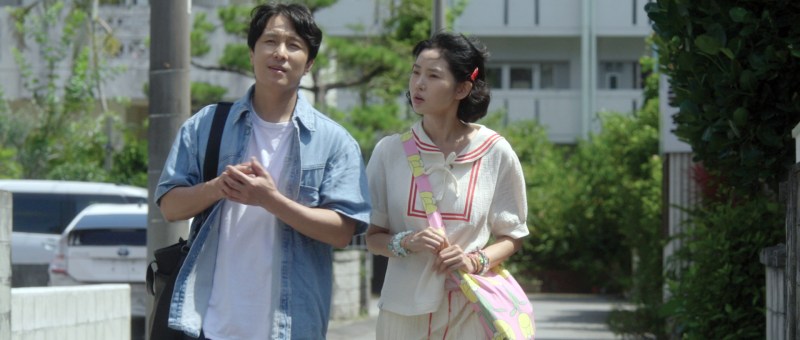
Love does however seem a little unlikely for the mismatched pair each named Kim Jungmin who are about as different from each other as it’s possible to be. Yet the male Jungmin’s (Kim Dong-wan) animosity is somewhat understandable given that his arrival in Okinawa has become chaotic thanks to the female Jungmin’s (Hwang Seung-eon) presence given that she mistakenly ended up with both his pre-booked car and room reservation because the staff members only checked the name and not the booking number. Jungmin isn’t the sort of person who copes well with complications, nor does he cope well with noisy, more extroverted people like the female Jungmin who is also annoyed by the whole thing but on the other hand doesn’t think it’s really her problem having merely assumed she’d been lucky enough to receive a free upgrade rather than actively nabbing someone’s more expensive package. Nevertheless, he’s forced to get along with her because he needs to borrow her rental car to get around which also means accompanying her on her touristic adventures and getting swept up in her enthusiastic exploration of the island.

The female Jungmin has a tendency to drink too much, say things she shouldn’t, and forget about them by the next morning. The male Jungmin, by contrast doesn’t drink because he is living with rheumatoid arthritis though he says he intends to drink again if his condition improves. He writes romance novels and doesn’t use the internet all that much. She writes webtoons and posts stories to instagram. They really have very little in common aside with a sense of dissatisfaction about their lives, their names, birthdays, and travel itinerary but you can’t deny that their meeting is like one of the male Jungmin’s novels as even he finds himself musing on a new story about someone who comes to Okinawa to patch things up with an old lover only to fall in love with a whale shark they met along the way.

Gradually it becomes apparent that the female Jung-min is here to confess her feelings to a boy from Korea who, it turns out, may have come to Okinawa in search of greater freedom rather than needing to be liberated from his tank which ironically may be more the case for the male Jungmin. Though it’s obvious from their second meeting with Taemin’s colleague Hiro that the two men are a couple, the female Jungmin can’t seem to see or accept it nor does he actually tell her outright that he’s gay only that all he wants from her is friendship as he’s explained several times before only she was too drunk at the time to remember she’s already declared her feelings and been rejected. What the female Jungmin saw as “fate” really was just coincidence and personal myth making as Taemin too had his own fate to follow that led him to Okinawa where he was freer to pursue his romantic desires, if only slightly, than in the still conservative Korea. When the male Jungmin floats an idea for a book inspired by his time in Okinawa the two men give their consent to be included but also ask their relationship remain a same sex one rather than the heterosexual casting Jungmin had given it possibly out of an attempt to disguise their identity but also an underlying squeamishness towards the inclusion of LGBTQ+ issues.

Nevertheless, the male Jungmin is able to re-envision the situation by turning his life into fiction and exploring a relationship between himself and the female Jungmin with the roles somewhat reversed in which he is a stereotypically hard drinking, chain-smoking writer and the female Jungmin a put upon woman with rheumatoid arthritis helping someone else achieve their romantic desires. Is this life imitating art, or art imitating life? Whatever it is, it seems the trip to Okinawa with its tranquil streets, picturesque environment, friendly and laid-back people has offered each of them opportunities both romantic and creative in a moment of unexpected serendipity, or perhaps this time it really was fate after all.


Okinawa Blue Note had its World Premiere as part of this year’s Cinema at Sea.

Manila by Night (Ishmael Bernal, 1980)

Contemporary youth is swallowed by the darkness of the Marcos-era capital in Ishmael Bernal’s meandering nocturnal epic, Manila by Night. So bleak was its vision that it was blocked from release by first lady Imelda Marcos who objected to the film’s characterisation of her beloved city and insisted that all references to Manila be removed which is why the film was retitled City After Dark in an attempt to distance itself from the realities of urban life under the authoritarian regime. 

Bernal opens however with a scene of aspirational suburban living at the home of a wealthy family as they prepare for an evening out attending a live gig by eldest son Alex (William Martinez), an aspiring folk singer. In a quiet city bar he performs a wholesome cover of the ’69 Crosby, Stills & Nash classic “Teach Your Children”, but the otherwise serene atmosphere is abruptly shattered by gunshots ending the performance and scattering the spectators. The choice of song is in itself instructive in hinting at the generational divide between the apathetic Alex and his respectable middle-class suburban mother Virgie (Charito Solis) who we later discover is carrying a degree of shame over her past as a sex worker and has perhaps overcompensated in her desire to ensure her children become successful members of a conservative society. 

As the song says, Alex too is incapable of understanding his parents’ youthful suffering and finds himself lost in the nighttime city. On the one hand he’s dating a young woman of a similar social class who may be joking when she talks about their marriage but is evidently more serious about the relationship than he is while they retreat to a hotel room experimenting with sex and drugs. On the other hand he’s also experimenting with a gay man, Manay (Bernardo Bernardo), who is also in an awkward relationship with bisexual taxi driver Pebrero (Orestes Ojeda) who has two children and a wife while simultaneously dating naive and innocent country girl Baby (Lorna Tolentino ) currently working as a waitress at a diner where a sleazy pimp keeps hassling her to become a sex worker promising megabucks from wealthy Japanese clients. 

The presence of the Japanese as external economic force is in its own way a reflection of the desire many of the young people have to leave the Philippines, such as that of blind sex worker Bea (Rio Locsin) who is also involved with Alex but hoping to move to Saudi Arabia with her boyfriend Greg (Jojo Santiago) who has been offered employment there but later discovers that he’s been scammed, temporarily stranded in Bangkok until managing to arrange his passage home. Mass unemployment is a constant spectre, Baby’s father also out of work but lamenting the only job prospect he’s found pays so little and is so far away as to be economically pointless. Lack of other options later causes Greg to attempt to manipulate Bea into participating in live sex shows without her full consent while many of the women are forced into sex work in order to support their families. When Baby falls pregnant, realises Pebrero won’t marry her, and is sacked from the diner she too is pushed into accepting the sleazy customer’s offer but ultimately cannot go through with it. Meanwhile, Pebrero’s wife Adelina (Alma Moreno) is also exposed as a sex worker catering to wealthy Japanese clients rather than the nurse she had claimed to be leaving every day in a crisp white uniform for the hospital and later paying a heavy price for her duplicity. 

The crowded tenements inhabited by Baby and Adelina where several members of a large family share a single room stand in stark contrast to Alex’s well-appointed suburban home complete with servants his mother makes a point of talking down to, but what may start for him as a reckless curiosity rebelling against his comfortable life becomes a self-destructive odyssey through midnight Manila in which he eventually becomes addicted to drugs. In a climactic scene, Virgie and her husband batter him with nearby objects while the camera cuts ironically to a series of religious icons and a large statue of Jesus looking down on the scene of chaos before Alex abandons his family to reunite with Manoy. The capture of his friend Kano (Cherie Gil), a tomboyish lesbian in love with an unreceptive Bea, by the police is framed as a kind of crucifixion, the torturing of youth by an implacable authority which restricts its freedom and presents it only with despair. 

Adelina had tried to warn Baby that in order to survive Manila she would need to become “wiser than the men”, but the city is itself full of duplicities and secrets and Baby perhaps ironically the only one finally able to escape its false promises. The perhaps more hopeful coda in which a less curious Alex appears to awaken from his slumber lying peacefully in the light of a new dawn was apparently a concession to the censors but still leaves him lost in a kind of limbo neither in one place nor another but perpetually wandering. At once a portrait of a city lively and free with its series of gay discos and drag nights, weird cults in parks, and nighttime callisthenics classes, and of a place marred by exploitation and hopelessness, Bernal’s odyssey through through Manila by night finds only an elusive hedonism born of internal despair in the intense repressions of authoritarianism.


Trailer (dialogue free)