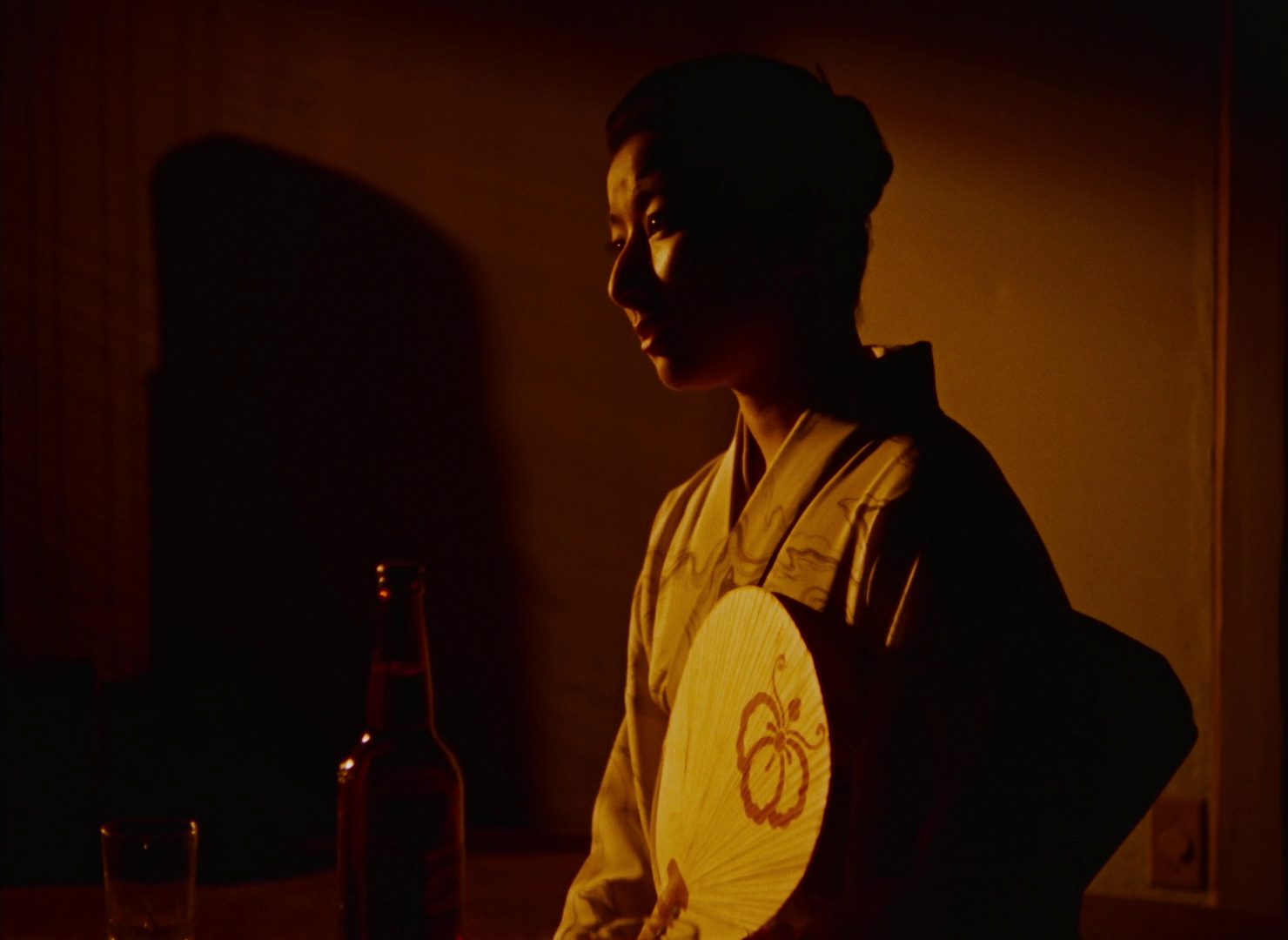
Undercurrent (夜の河, Kozaburo Yoshimura, 1956)

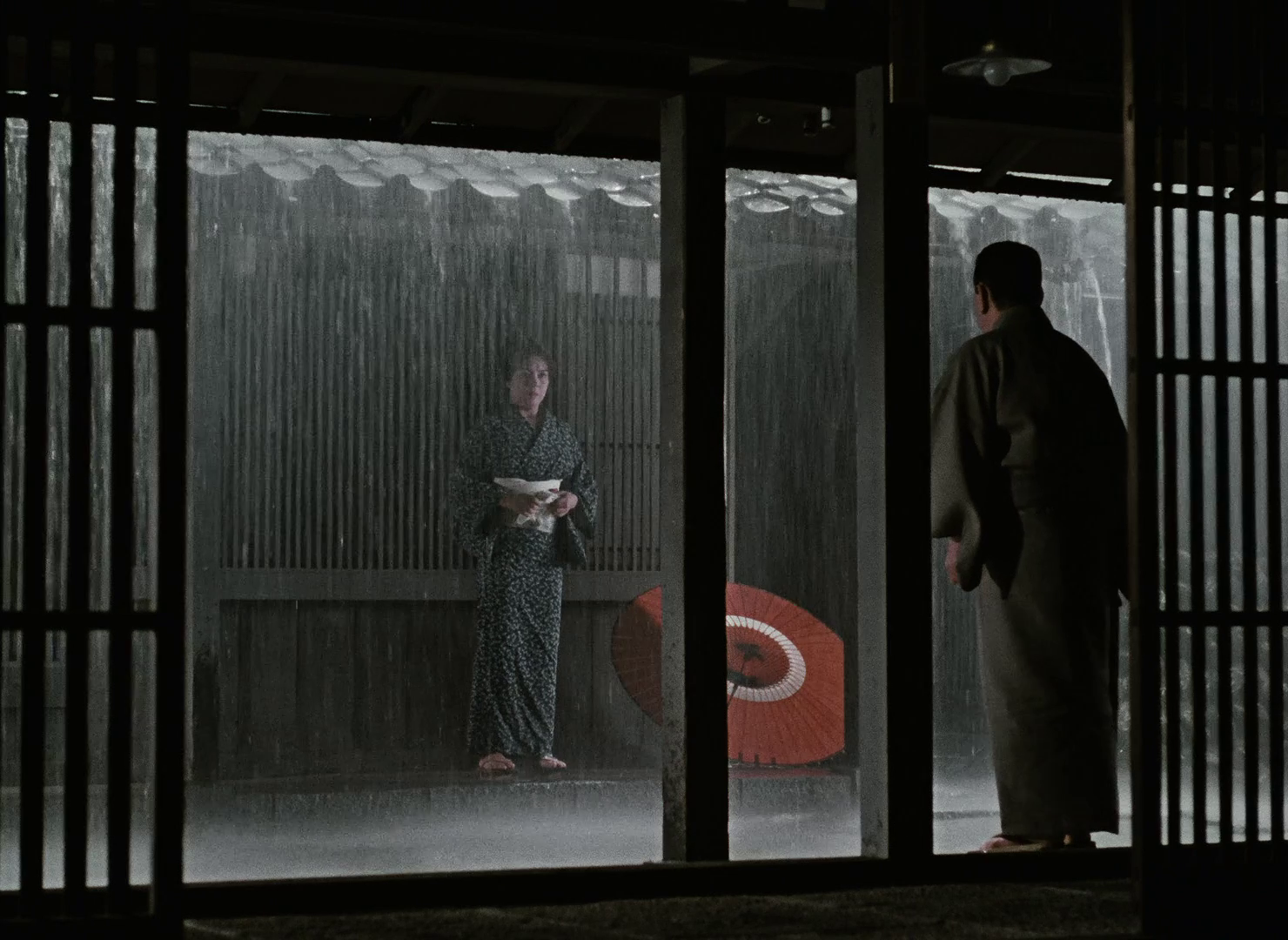
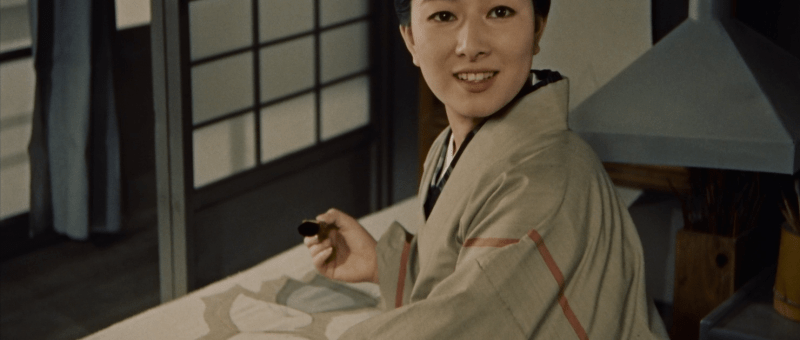
Is it possible to be both married and personally and artistically fulfilled? Marriage hangs over Kiwa (Fujiko Yamamoto) like a looming cage in Kozaburo Yoshimura’s sensuous melodrama Undercurrent (夜の河, Yoru no Kawa, AKA Night River). Scripted not by his regular writer Kaneto Shindo but frequent Mikio Naruse collaborator Sumie Tanaka adapting a novel by Hisao Sawano, the film finds its heroine caught between tradition and modernity while struggling to maintain her position as an independent woman and rightful heir to her father’s kimono dyeing business.

Everyone also keeps telling her that kimono itself is dying out, a relic of a bygone past now that everyone wears Western dress. Even Kiwa’s younger sister Miyoko (Michiko Ono) dresses exclusively in Western fashions and moves to Tokyo on her marriage. An ancient capital, Kyoto is the centre of historical elegance and the last bastion of these “outdated ideals”, yet several shops in their area have closed recently and people do things differently now. A wealthy woman comes to the shop with some fabric directly, cutting out the middlemen and haggling for a discount while cheerfully asking for her cab fare to be covered when Kiwa refuses the job. The young man they’ve taken in as an apprentice, Toshio, leaves to work in an electric factory complaining that “master” and “apprentice” are outdated concepts and that it’s against the Labour Law to force him to work overtime. Kiwa’s father Yujiro (Eijiro Tono), meanwhile, thinks this is just an expression of Toshio’s lack of commitment and that it’s only right that an apprentice should be applying himself to learning his craft every waking moment of the day. 

He was after all once an apprentice himself, but is both proud that his daughter has surpassed him in skill and guilty, fearful that Kiwa has sacrificed her own life and happiness to devote herself to kimono dyeing which is why she has never married. On one level, he’s happy if she’s happy and willing to leave marriage up to her, but also wary of the social censure of the neighbours including his kimono dyeing mentor who gives him a telling-off for his failure as a father to find a match for his daughter. When rumours arise that Kiwa has entered an affair with a married professor, the lady who helped Yujiro get started in business more or less tells him he should get her married to keep her in line. If hadn’t been for the war, she says, Kiwa would have been safely married off long ago and would probably have a gaggle of children to look after which would obviously prevent her from pursuing her art as a kimono dyer though the lady herself has obviously gone on working. 

Kiwa is drawn Takemura (Ken Uehara ) firstly because he’s wearing a tie that features one of her signature dyes which implies some kind of affinity between them. That the fact that he was touring a Nara temple alone with his daughter may have suggested he was a widower, though in truth Kiwa always knew he was married and that may have been a key part of what attracted her to him. She is after all, as Yujiro’s mentor said, a woman and experiences romantic desire even if the mentor is wrong to say that Kiwa sublimates her loneliness through art when in reality the reverse is true. After meeting Takemura even Yujiro remarks that she seems more like a woman, implying that her industry and forthrightness lend her a masculine quality as does her determination to get on in business. She first strikes up a business relationship with the sleazy Omiya (Eitaro Ozawa) whose wife is always watching him like a hawk though she manages to rebuff his attentions while establishing herself as business woman and in demand kimono designer. In pursuit of Takemura she is the one bringing him gifts and inviting him out for walks while Takemura remains somewhat conflicted and pulled along her wake.

Yet for all that, none of her family members really question the fact that she’s been carrying on with a married man and rather seem slightly relieved that she’s discovered an interest in romance or perhaps just anything outside of kimono dyeing. Even Takemura’s daughter suspects they’re romantically involved and doesn’t seem to mind. Yujiro remarks on Kiwa suddenly using the colour red which she never previously liked and it does seem to echo her reawakening passion. Takemura is also researching red fruit flies, which is less romantic, but also hints his barely suppressed longing. The film seems to align him with yellow flowers and Kiwa with pink. When they’re caught in a rainstorm and refuge in an inn owned by Kiwa’s childhood friend, the entire room in bathed in the glow of the Daimonji fire festival as their passions finally, and perhaps unwisely, overtake them as Takemura announces he’s thinking of moving far away perhaps to avoid this forbidden romance or otherwise for the health of his ailing wife who has been a Kyoto hospital for the last two years.

It’s finding out about Mrs Takemura’s likely terminal illness that seems to implode Kiwa’s romantic fantasy. After they’d made love for the first time, she had told Takemura that if she became pregnant she’d raise the child alone without intruding on his family life, which is to say she wasn’t really envisaging one with him. Her horror is on one level framed as guilt, that she now sees she’s committed an act of betrayal and resents Takemura when he tells her “it won’t be much longer” as if he were counting down the days until his wife passed away. Or worse, that he or others suspected that Kiwa willed her dead. But in reality the reverse is true. Mrs Takemura’s death is an existential threat to Kiwa’s independence. She doesn’t want to get married, even if loves Takemura, because if she did she wouldn’t be able to maintain her independence or career as a kimono dyer. She really does mean it when she says that likes it best when it’s just she and her father in their “cramped” old-fashioned dyeing shop without even an apprentice. 

A tortured art student who seems to pine for her tells her as much, disappointed in her for her relationship with Takemura not out of moral censure but because he fears she’s betraying her art. Okamoto is much younger than her and she’s not interested in him romantically even if he’s painting slightly lewd interpretations of his mental image of her. At one point he appears with a bandage around his neck that implies he may have tried to take his own life and eventually announces he’s leaving Kyoto because he can’t secure his identity there. Ironically he’s happy that Kiwa and Takemura are now free to love each other when the opposite is now true. Now that he’s no longer a married man, Kiwa can no longer love him and is denied the possibility of having both romantic and artistic fulfilment. She is perhaps free in another way, backed by a deep red cloth hanging up to dry as she watches the May Day parade pass by with all of its waving red flags having embarked on a life that is defiantly of her choosing and fulfilled by the passion of art.


Trailer (no subtitles)
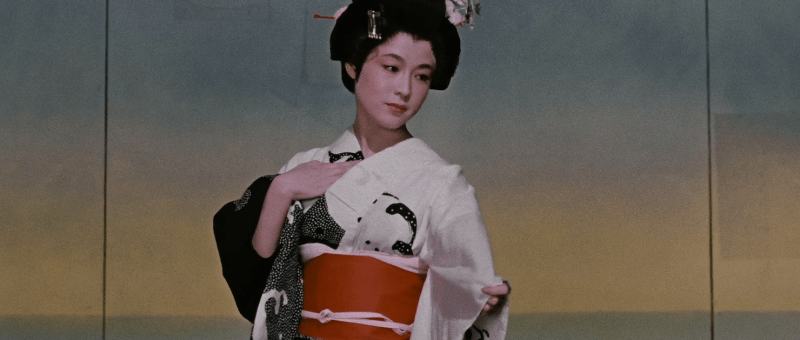
Floating Weeds (浮草, Yasujiro Ozu, 1959)

An oft-repeated criticism of the work of Yasujiro Ozu is that it is all the same. The similarity of the English-language titles with their ubiquitous seasonality doesn’t help, but you have to admit there is some truth in it. On closer inspection, however, it becomes clear that Ozu was not so interested in uniformity or repetition as he was in dialogue with himself. Thus Late Spring becomes Late Autumn and the abandoned father a conflicted mother, the two boys of I Was Born But… who rejected their father’s descent into corporate lackydom become arch consumerists seceding from society until their parents give them a TV set in Good Morning. Ozu refrained from remarking on the repurposing of old plots for new dramas, but did expressly regard his 1959 Floating Weeds as a “remake” of the 1934 A Story of Floating Weeds updated to the present day and filmed in the, by then, classic Ozu style. 

As in the 1934 version, the action centres on the arrival of a theatrical troupe to a small town which they have not visited in some years, in this case 12. This time around, the troupe is a little more exulted, performing kabuki-style narrative theatre rather than rustic entertainment, but is subject to many of the same problems. Kihachi is now Komajuro (Ganjiro Nakamura), a much older man though cheerful and energetic. He has chosen this town because it is home to an old flame, Oyoshi (Haruko Sugimura), who is the mother of his adolescent son, Kiyoshi (Hiroshi Kawaguchi). Kiyoshi thinks that Komajuro is his mother’s brother and that his father is long dead. He recognises Komajuro right away and is pleased to see him, though they evidently have not met in many years. 

The 1934 version had revolved around Kihachi’s corrupted paternity in his shame regarding the stigma of being a travelling player. By 1959 that is simply no longer so much of an issue, but whereas the financial difficulties Kihachi’s troupe faced were partly a symptom of the depression and partly of their misfortunes, those of Komajuro take on a more melancholy quality because it is obvious that this is a way of life which is coming to an end. When Kihachi says he’s going to start over, it seems futile but he is still young enough to have a credible chance. Komajuro is already “old” and it’s clear that he will struggle to support himself as a travelling actor simply because it is no longer a viable occupation. 

Thus Komajuro’s story is less one of frustrated fatherhood than of melancholy resignation to the vagaries of a lifetime. “Life is an unknown course”, he tells Oyoshi, “the only constant is change”. Like Kihachi he doesn’t want his son to see the show, though perhaps more out of embarrassment. Kiyoshi complains that the character in his play is “unrealistic” because he doesn’t relate to the modern world. Komajuro objects but explains that he is “a character from another era”, making it plain that he is talking as much about himself. Komajuro is a man left behind by time and incapable of understanding the world in which he now lives which may be one reason he seems to hang on to an intense desire to save Kiyoshi from being affected by the stigma of being the son of a travelling actor even though that is no longer something he would need saving from. 

This slight disconnect, along with Gajiro Nakamura’s cheekily comical performance, adds to the genial comedy which characterised the majority of Ozu’s colour films though this one is admittedly slightly less colourful owing to being produced by Daiei as one of a handful of films made outside Ozu’s home studio of Shochiku. Komajuro becomes a tragicomic rather than purely tragic figure, a man suddenly realising he has become old and facing the decline of his patriarchal authority. Like Kihachi he turns violence on both his mistress, Sumiko (Machiko Kyo), and the young actress Kayo (Ayako Wakao) who has fallen for his son, but it’s futile and born of desperation. A more sympathetic figure than 1934’s Otaka, Sumiko seems to genuinely like Komajuro and is hurt as well as jealous and threatened by the existence of his “secret” family. Her petty revenge is taken in response to Komajuro’s bitter claim that his son “belongs to a higher race” moments after bringing up her past as a sex worker. Rather than a simple desire for chaos and upset, she intends to pull Kiyoshi down to her level through getting him to sleep with Kayo, but Kayo falls for him for real only to worry she is perhaps ruining his bright future. 

“One can’t suddenly show up out of nowhere and assert one’s parental authority,” Komajuro eventually realises. His hopes are dashed by Kiyoshi’s relationship with Kayo not because of her proximity to the world of the travelling actor, but because he fears it means that Kiyoshi is just like him, an irresponsible womaniser. He wanted to save Kiyoshi as a means of saving himself, pushing his son into a more respectable world he had been unable to enter. Kiyoshi, however, rejects his sacrifice, describing his parents as “selfish” for keeping the secret all this time only to drop a bombshell now. He complains he’s been fine these 20 years and does not want or need a father beyond the one he already thought to be dead. Rather than the nobility Komajuro’s of paternal sacrifice, the focus is pulled back towards the son and his filial responsibility to live up to it by becoming a fine and upstanding young man while Komajuro is once again exiled back to the moribund world of the travelling actor. 

Of course, the world of 1959 was very different to that of 1934. The economy was at last improving and consumerist pleasures were very much on the horizon, meaning that for many life was comfortable at last. Japan was at peace if not completely free of political strife which removes the constant anxiety felt by those trying to survive the mid-1930s. But Ozu himself was also 25 years older and had perhaps reached that sense of resignation with the world that allowed him to sigh and laugh where before he may have trembled with fear or rage. Komajuro is as he always was, a floating weed, a man without a home, but now perhaps one of many rootless wanderers off the post-war landscape.


Five Scouts (五人の斥候兵, Tomotaka Tasaka, 1938)

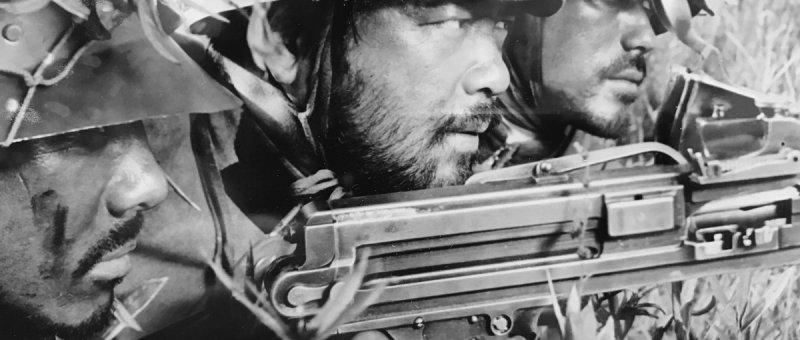
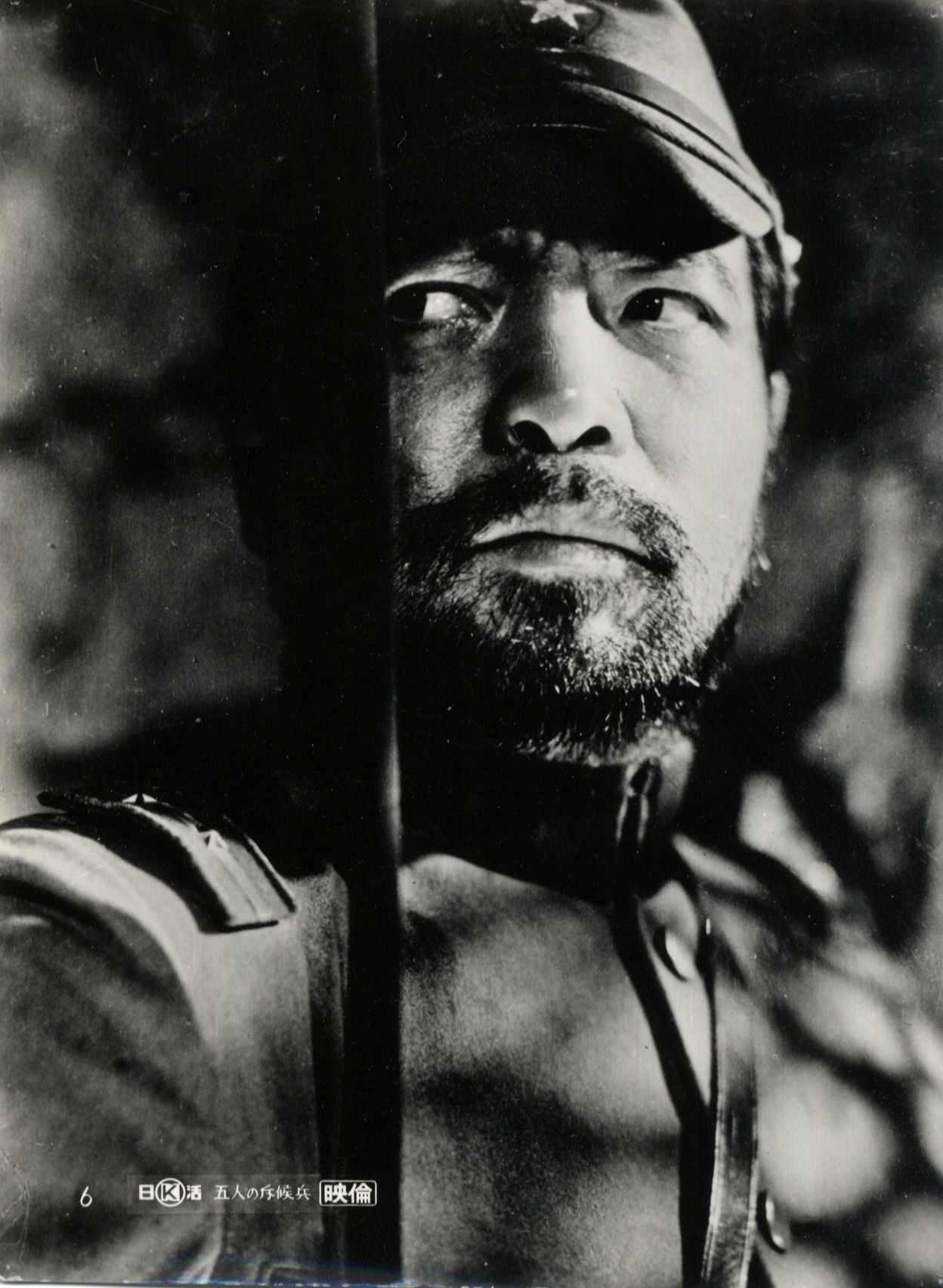
five scouts still 3War, in Japanese cinema, had been largely relegated to the samurai era until militarism took hold and the nation embarked on wide scale warfare mixed with European-style empire building in the mid-1930s. Tomotaka Tasaka’s Five Scouts (五人の斥候兵, Gonin no Sekkohei) is often thought to be the first true Japanese war film, shot on location in Manchuria and trying to put a patriotic spin on its not entirely inspiring central narrative. Like many directors of the era, Tasaka is effectively directing a propaganda film but he neatly sidesteps bold declarations of the glory of war for a less controversial praise of the nobility of the Japanese soldier who longs to die bravely for the Emperor and lives only to defend his friends.
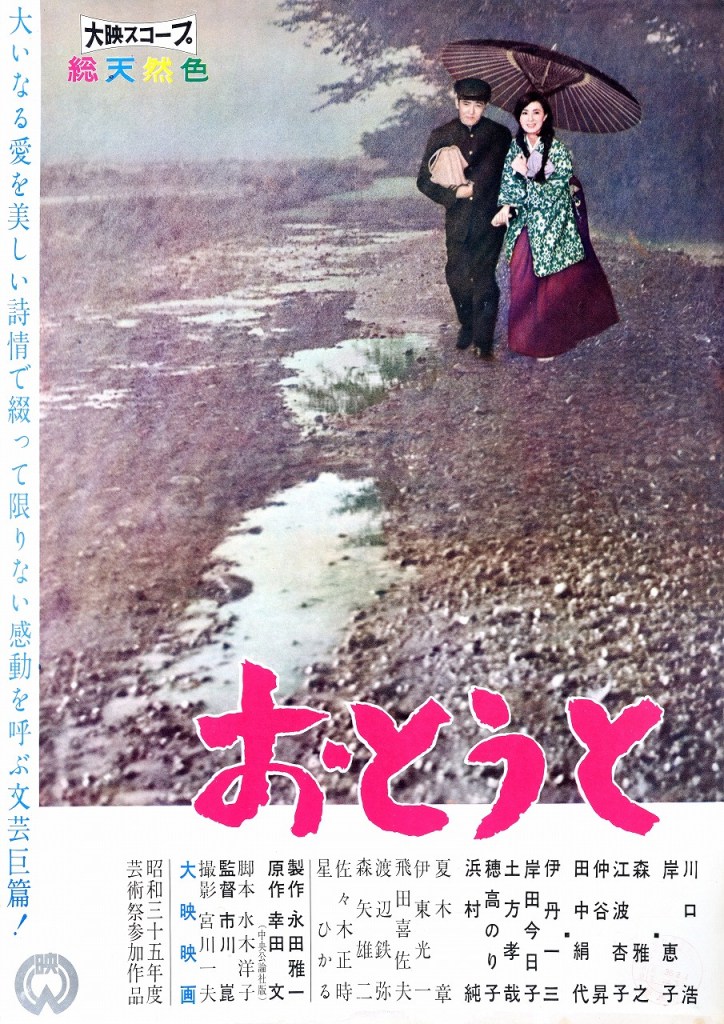
The film opens with an exciting action sequence playing behind the titles featuring impressive scenes of battle with mortar shells exploding while soldiers run over trenches before entrenching themselves with a light machine gun. Eventually the day is won – after a fashion. Having lost 120 men, the 80 surviving of the 200 strong company settle-in to a fortified position awaiting further orders.

The excitement of the battlefield soon gives way to behind the lines boredom. Danger lurks around every corner, but there is work to be done. The men dig trenches, clean their weapons, draw water, cook and eat but they also try to live, chatting or enjoying the “spoils of war” which in this case amount to stolen watermelons and captured ducks. In quiet moments they dream of sukiyaki and of home, but are content in each other’s company and as cheerful as it’s possible to be given the seriousness of their circumstances.

When two enemy soldiers are detected on the perimeter, a squad of five scouts is sent out to investigate but find themselves lost in the confusing Chinese terrain and eventually come under heavy fire. Worryingly enough, only one of the soldiers makes it back in good time with the others remaining unaccounted for until they eventually arrive save one who no one can remember seeing since the beginning of the attack and whose helmet has been found in an abandoned trench.

Tasaka refuses to glorify the business of war. What the men experience is rain and mud and sorrow, not an exultation in male virility and the politics of strength. He does however fulfil his propaganda requirements in demonstrating the army’s dedication to the Emperor. The commanding officer’s final rousing speech reminds his troops that now is the time they are expected to “repay the benevolence of the Emperor” whilst also emphasising that the hopes and dreams of the Japanese people are invested in them and, even if their families at home are worried for their safety, they are also proud of their sons fighting proudly for their homeland so far away from home.

The men too display the appropriate level of patriotic fervour, breaking off to wave at a Japanese plane before dragging out a giant banner to show their support and each remaining committed to serving even when physically compromised. One soldier with a bullet lodged in his arm, violently rejects the idea of going to a field hospital even though there is a strong chance that his arm will need to be amputated if they do not remove the bullet in due time. The soldier pleads to be allowed to stay on the front line, claiming that he does not mind losing an arm if it means he gets to stay and help his comrades. His comrades, touched by his dedication, nevertheless urge him to get his arm seen to by subtly suggesting that his desire to remain on the frontline is a kind of vanity when his effectiveness is compromised. His arm, technically speaking, does belong to the army and the Emperor after all. Another soldier, not so lucky, exclaims he can see Japan as he lays dying, singing the first verse of the national anthem before finally giving up the ghost.

As the men march off towards the final battle following the rousing speech from their commander who warns that many will die, they do so melancholically rather than with eagerness to sacrifice themselves on an imperial altar. Tasaka stages the battle scenes with impressive realism, drawing inspiration from news reel footage to capture the immediacy and energy of the live battlefield, filming on location behind the lines in Manchuria for added effect. The behind the lines sequences are intentionally less dynamic and conventionally captured, allowing the tedium and the anxiety of a soldier’s life of waiting to take centre-stage. Tasaka’s film may seem naive and perhaps lacks the initial impact of the shock of seeing such visceral action scenes portrayed on screen for the first time, but it is also mildly subversive in its subtle rejection of the militarist lust for glory even whilst heaping praise on the ideal soldier’s love of Emperor, comradeship, and strong sense of duty and honour.


Her Brother (おとうと, Kon Ichikawa, 1960)

ototoPerhaps oddly for a director of his generation, Kon Ichikawa is not particularly known for family drama yet his 1960 effort, Her Brother (おとうと, Ototo), draws strongly on this genre albeit with Ichikawa’s trademark irony. A Taisho era tale based on an autobiographically inspired novel by Aya Koda, Her Brother is the story of a sister’s unconditional love but also of a woman who is, in some ways, forced to sacrifice herself for her family precisely because of their ongoing emotional neglect.
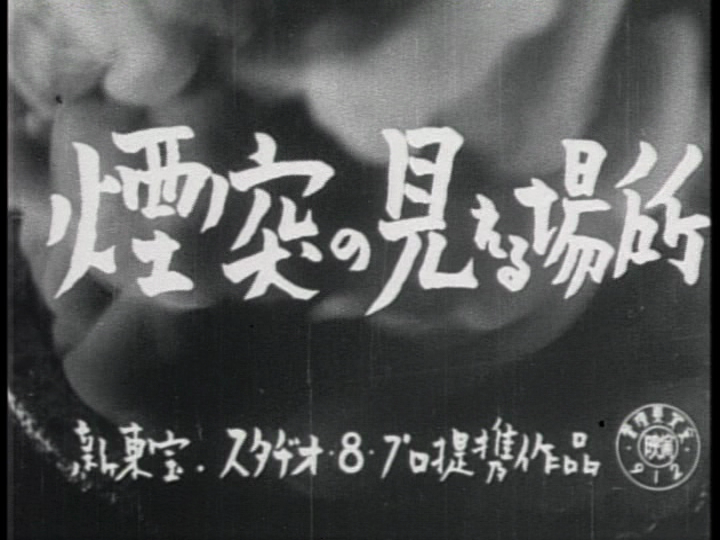
Oldest daughter Gen (Keiko Kishi) is still in school though she’s more or less running the household seeing as her invalid step-mother (Kinuyo Tanaka) spends most of her time bedridden with rheumatism and the rest of it pontificating about religion and listening to her poisonous friend (Kyoko Kishida) who likes to stir up trouble in this already difficult family environment. Gen’s father (Masayuki Mori) is a well known writer who needs a lot of quiet time for his work. As fathers go he’s very laid back and content to think his kids will be OK because they’re his kids, which isn’t to say he doesn’t care but he’s not exactly present most of the time. It’s no surprise then that care of the family’s youngest, Hekiro (Hiroshi Kawaguchi), has largely fallen to his sister. Where Gen is naturally responsible and practically minded, Hekiro is reckless and always in search of adventure. Eventually this lands him in trouble when he gets involved with a bad crowd but whatever his family might have been feeling towards him, everything changes once they discover that he’s facing a serious illness.

Because of the family’s odd arrangement, Gen has become almost a maternal figure towards Hekiro despite only being a couple of years older than he is. In fact, the pair have an almost comically childish physical fight at one point which is quite undignified considering their ages, especially when it involves staining their tatami mat floor with a puddle of bright red ink. Gen does her best but like her father she more often than not lets Hekiro off the hook by bailing him out, much of the time with her own rather than her father’s money. Not having the kind of authority a parent, uncle, or aunt might have all she can really do is ask him to think about behaving better, but Hekiro constantly pushes the boundaries to get a more concrete form of attention than his sister’s well meaning attempts to help are able to provide.

Hekiro’s stunts  eventually threaten to pull his sister into his darkening world, especially when a man claiming to be a detective starts more or less stalking Gen before pulling her into a shrine on the pretext of talking about her brother’s case before trying to have his wicked way with her. Luckily Gen is saved by a flock of geese cunningly released by some of her brother’s friends which gives her enough time to escape and finally get rid of the odious little man.

Similarly, Hekiro deliberately introduces his sister to the local pool hall. Though Gen seems to enjoy the game and is even good at it, she quickly realises she’s been brought as a sort of guarantor for her brother’s mounting debts. Add in other expensive and dangerous hobbies like his boat habit (he can’t swim) and it’s not surprising everyone’s had enough of Hekiro before he’s even left school. When he has an accident which results in the death of a horse (again, very expensive), it does at least lead him to reflect on the negative effect his actions can have on those around him, even if all he wanted and continues to want is an escape from his boring and miserable family life.

Even Hekiro’s illness fails to arouse very much in the way of concern from his well meaning father and grumpy step-mother who is hellbent on marrying Gen off against her wishes. Gen is, again, the only one to nurse Hekiro in hospital, managing the household as well as looking after her brother on his sickbed. When the illness becomes more serious it provides a last opportunity for the family members to bond and make amends for the various ways they’ve failed each other. The step-mother’s visit is not as altruistic as it seems when it transpires she’s only really come to “convert” Hekiro to her religion, but she begins to feel something more for him on believing that Jesus has already saved him thanks to his outwardly calm and polite manner. The final irony is that the idealised family is only born as it is destroyed, Gen puts her pinny back on and takes the reins from her stepmother who is presumably headed straight back to bed.

Gen’s devotion can’t save her brother either from himself or his fate and it may even be the end of her too. Vowing never to marry and rising from her own sickbed stopping only to instruct her stepmother to rest, she’s very clearly chosen her path even if Ichikawa’s camera and musical cues seem to find the ironic comedy of the situation rather than the sadness of her possibly tragic plight. Ichikawa and his cinematographer invented a whole new technique for this picture – the bleach bypass, which appropriately robs the environment of its vibrancy, dulling even bright colours with a sort of heavy leaded effect perfectly reflecting Hekiro’s increasingly depressed mindset as he reflects on being someone who has no firm anchor or place to feel at home. A strange, comically melancholic piece, Her Brother is a characteristically sideways swipe at the family drama from the master of irony though one which does not altogether escape his taste for the sentimental.


Original trailer (not subtitles)

Where Chimneys are Seen (煙突の見える場所, Heinosuke Gosho, 1953)

vlcsnap-2016-07-07-01h01m06s792Where Chimneys are Seen (煙突の見える場所, Entotsu no Mieru Basho) is widely regarded as on of the most important films of the immediate post-war era, yet it remains little seen outside of Japan and very little of the work of its director, Heinosuke Gosho, has ever been released in English speaking territories. Like much of Gosho’s filmography, Where Chimneys are Seen devotes itself to exploring the everyday lives of ordinary people, in this case a married couple and their two upstairs lodgers each trying to survive in precarious economic circumstances whilst also coming to terms with the traumatic recent past.
Ryukichi Ogata (Ken Uehara) is our primary narrator, introducing us to his humble circumstances and, for the moment, happy home. He’s married to a cheerful and kindly woman, Hiroko (Kinuyo Tanaka), who was widowed during the war, and the couple rent out their upstairs to a man, Kenzo (Hiroshi Akutagawa), and a woman, Senko (Hideko Takamine) , who aren’t a couple but each rent a room separately. They’re desperately poor, so much so that they have complicated measures in place to try and avoid having any children – a luxury which they can in no way contemplate. However, unbeknownst to Ryukichi, Hiroko has taken on a part-time job outside the home by working at the bicycle races. He’s upset by this because he resents feeling as if his wife has been hiding things from him, though his pride is wounded too. The worry planted in his mind by the idea of not knowing everything there is to know about his wife’s past is brought to the fore when a baby is suddenly abandoned on their doorstep with a note claiming to be from Hiroko’s first husband which states this is “her” child and she ought to look after it from now on.

The titular “magic” chimneys belong to a large scale factory and, in truth, there are four of them, but depending on where you stand they blend into each other, increasing or decreasing in number. This rundown, backwater town is a three chimney sort of place – not quite rock bottom, but almost. All anyone can think about is trying to keep their head above the water and food on the table. Upstairs lodger Senko works as a public announcer in the shopping district along with another woman who has a rather different approach to life and is in some kind of compensatory relationship with a businessman whom she’s apparently going to marry. Senko is a little upset about this, possibly envious, but at any rate is going to lose a friend at work and in a way she doesn’t entirely approve of. At one point she declares that she envies the baby in one sense – children are allowed to cry whenever they want and make as much noise as they please, but adults are expected to grin and bear it no matter how painful it might be.

Kenzo, by contrast, is a government official in that he’s a kind of bailiff trying to enforce taxation fines and threatening to seize the property of those that can’t pay. This kind of work contrasts strongly with his sense of social justice as he can see that most of the people he visits just don’t have the means to pay but do have plenty of other problems of their own, what good will it serve turning them out onto the streets? Predictably he’s developed a bit of a crush on Senko though given both of their dire financial circumstances, he’s afraid to pursue it. His need for “justice” sends him out on a quest to track down Hiroko’s former husband and find out what’s really going on though his investigation takes far longer than expected and soon begins to depress him. When eventually uncovered, the facts of the matter shock and upset, leaving Kenzo wishing that he’d never bothered in the first place.

Having gone to so much trouble to avoid having children (they have a very prominently marked calendar hanging on the wall), that Ryukichi and Hiroko should be saddled with an abandoned child is especially ironic though the baby serves as more than a physical burden, becoming a manifestation of a hitherto buried past. Both of the women in the film have suffered heavily in the war. Hiroko lost her entire family and was reduced to stealing scraps of discarded food behind the evacuation centre. After losing everything she came to resent the whole of humanity for becoming involved in this senseless war and just wanted to live alone, but came to feel a life of mere subsistence was not worth living. She got herself a new family register and started again planning not to look back. She didn’t tell Ryukichi much about her former life because she wanted to forget it, it was painful to her.

Senko had similar experiences, losing family members in extremely cruel ways leaving her with a degree of resistance to forming new bonds. The baby, perhaps a temporary visitor, perhaps not, forces them to reconsider their choices, reawakening an emotional connection that had been severed due to the war’s hardships. The past is quite literally visited upon them, but how they decide to deal with it is very much a matter for the present. In the end, this extreme stress test on the various relationships of the central characters proves effective as their bonds eventually strengthen rather than break.

Using the four chimneys as an effective, if occasionally overworked, metaphor, Gosho remains resolutely non-judgemental, reminding us that things often look very different depending on where you stand. Everybody here is struggling, but everyone is trying to survive. If the film has a central message, it’s that you have to let the past go. The “right time” may never come, so you just have to make the best of things now. Happiness is fragile, but possible, if only you can learn to accept the various compromises which necessarily accompany it.


Giants & Toys (巨人と玩具, Yasuzo Masumura, 1958)

91C6JzGDYTL._SL1500_

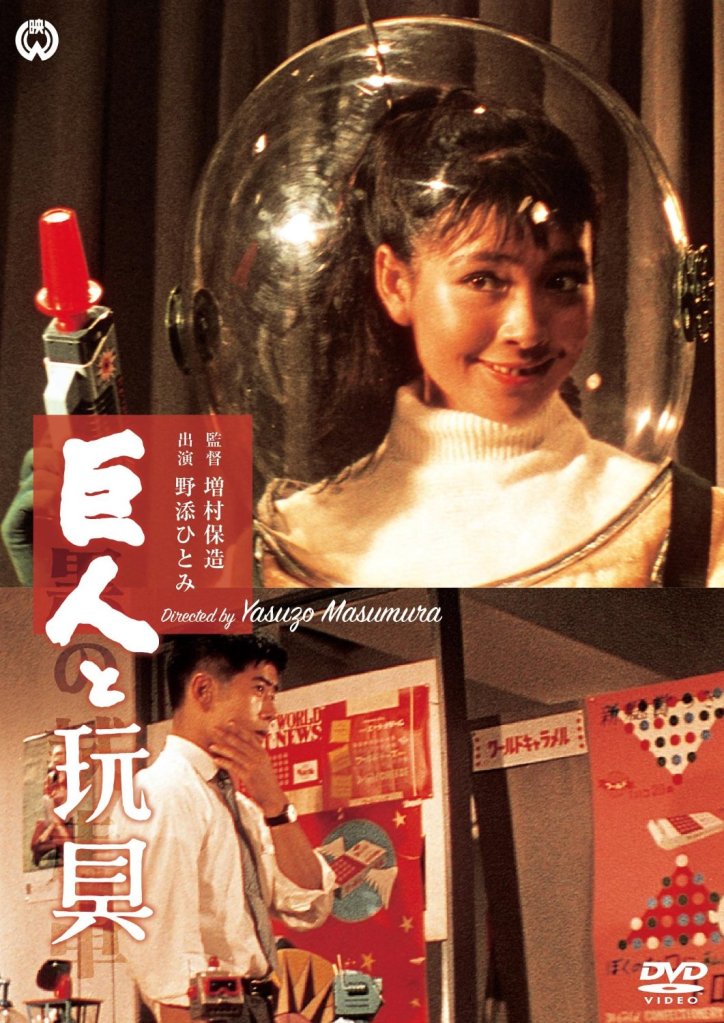
Less acerbic than Masumura’s later Black Test Car, Giants & Toys (巨人と玩具, Kyojin to gangu) is an altogether more humorous, if no less piercing look at post-war consumerism. This time the battle ground is confectionary as the Japanese sweets industry laments the all powerful American candies taking over the Japanese landscape. Three sweet companies are duking it out for the hearts of Japanese consumers and the hard working salarymen in the PR & marketing departments are becoming ever more desperate to find the key to becoming Japan’s top selling sweet maker.

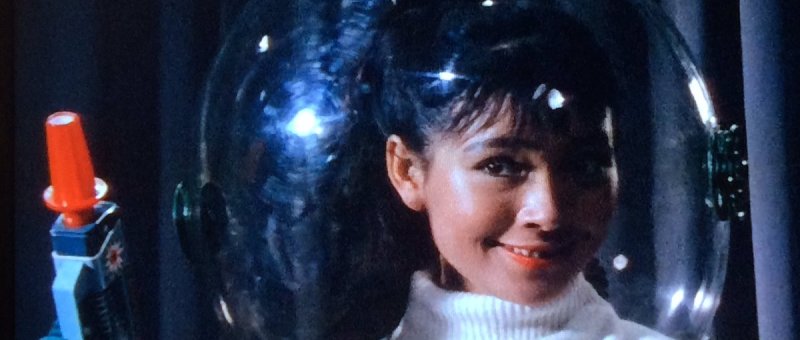
The three companies are Giant, Apollo and World, each of which is currently trying to come up with an advertising campaign which has a competition element that will really hook in the populace. Our main focus is with World whose top PR man, Goda, is currently stumped when he spots quirky hillbilly Kyoko in a bar and hatches on an idea to make her the central poster girl of his ad campaign. Kyoko is 18 with gap teeth and a childlike innocence that makes her a great fit for selling their confectionary products to the adult market. At the same time, Goda’s assistant Nishi meets an older female executive from Apollo who’s trying to shift a set of spacesuits. This fits in neatly with another of Goda’s space themed ideas and a suitably bizarre campaign is launched with the gangly Kyoko dressed up in a kitsch spacesuit and pointing a ray gun which is somehow supposed to encourage people to buy sweets. Kyoko is a hit! However, the more popular Kyoko becomes the more her innocent charms begin to dissipate. What will become of her, and of the campaign, as the competition mounts?

For an area that’s supposed to be so totally frivolous and cheerful, confectionary sales are serious business. Goda is working himself into an early grave just to sell sweets to grownups and old people. It’s advertising and marketing but like everything else in life it’s just so much spin. What they’re really trying to sell is frivolous fun and a return to childhood’s freedom all packed into a momentary suck on a salted caramel. In the Japan where “everyone works all the time” this may be quite an attractive idea, especially to the put upon members of the confectionary marketing board.

However, trivial as sweets are, they represent the fleeting unimportance of pop culture memes. During one of Kyoko’s recording sessions we meet one of the solitary female producers (labelled a “machine” by two of the other women waiting to be seen) who laments that a has been star keeps hassling her for work though her time has passed and no one’s interested. This is most likely how things will wind up for Kyoko, five minutes of being everywhere followed by a lifetime of being nowhere at all. After signing with World for their TV and radio advertising she becomes a break out personality attending events as a celebrity in her own right and later even becoming a pop star complete with a totally strange, South Pacific themed musical number referencing some kind of cannibalistic genocide where they’ll sell back the remains of the men they’ve killed to the native wives. Pointed satire in more ways than one.

Goda wants to build a kind of mass media dictatorship, cleverly controlling the public mood through all pervasive advertising (a prescient thought, if ever there was one). Having taken things too far, he’s taken to task by his underling, Nishi, who’s had a bit of a rethink following a series of heartbreaks involving friends and lovers. “I won’t sacrifice my dignity” he says, only to be shown doing just that a couple of minutes later as he himself dons the ridiculously camp space suit, takes the ray gun in hand and wanders out into the streets to be met by a series of bemused stares from the passersby. Eventually, the woman from Apollo with whom he’d been having an affair spots him and with an equally amused expression instructs him to “smile warmly”, at which point he grimaces before managing to turn it into a robotic grin.

Still oddly current, Giants & Toys is an absurdist’s guide to corporate politics where personal integrity is sacrificed on the altar of commerce. Everyone runs round in circles working hard to sell things no one really wants or needs to other hardworking people just to keep the wheel spinning. “Kanban Musume” come and go, one ridiculous meme follows another and we all just fall over ourselves to chase whichever unattainable ideal they pitch us. It would be nice to think the world has moved on since 1958, however…


Giants & Toys is available on R1 DVD with English subtitles courtesy of Fantoma.

Trailer