Anita (梅艷芳, Longman Leung Lok-man, 2021)

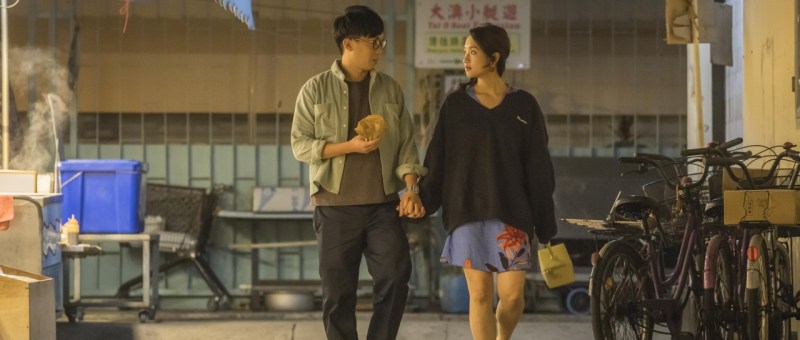
“I have the spirit of Hong Kong in me, I won’t resign to fate so easily” insists Anita Mui in a television interview following a year-long career break after a slap in a karaoke bar earned by standing up to a drunken gangster sparked a turf war and sent her into a temporary exile in Thailand. Running away wasn’t something Anita Mui was used to, though she had been it seems humbled by the experience and in Longman Leung Lok-man’s perhaps at times overly reverential biopic of the star who passed away of cancer at 40 in 2003, primed to rise stronger than before with greater focus and determination to serve the people of her home nation. 

Leung does indeed paint Anita (Louise Wong) as a daughter of Hong Kong, opening with her childhood as a vaudeville double act with self-sacrificing sister Ann (Fish Lew) in 1969. Jumping forward to 1982, the pair enter a TV talent competition but only Anita makes through to the final and then eventually wins launching herself into superstardom and path to success that later seems to her to have been too easy. Indeed, Leung frequently cuts to montage sequences featuring stock footage of the real Anita Mui receiving a series of awards and eventually moving into a successful film career with her appearance in Stanley Kwan’s Rouge bringing her best friend Leslie Cheung (Terrance Lau Chun-him) with her as she goes. 

If there’s a defining quality beyond her defiance that Leung is keen to capture, it’s Anita’s generosity and kindheartness. In the opening sequence, the 6-year-old Anita goes to great pains to rescue a balloon trapped in a tree for a little boy who then runs off happily forgetting to say thank you. Ann tells her off for going to trouble for someone who couldn’t even be bothered to say thanks but as she said it makes no difference she’d just just have told him it was no bother and the whole thing would be a waste of time. Her path to fame is not one of ruthless, she is keen to pay it forward and to help others where she can. She is obviously pained when her sister is cut from the competition and mindful of her feelings while bonding with life-long friend Leslie Cheung after his performance at a nightclub bombs while hers is a hit thanks in part to her ability to charm her audience in three different languages switching from Cantonese to Mandarin for a contingent of Taiwanese guests and Japanese for a gaggle of businessmen sitting at the back during a rendition of classic unifier Teresa Teng’s Tsugunai. 

Then again, though we see much of Anita Mui’s post-comeback charity work including that to raise money for flood victims in Taiwan, we obviously do not see any of her pro-democracy political activism or role in assisting those fleeing the Mainland after Tiananmen Square. Such controversial aspects of her life may be taboo for the contemporary Hong Kong or indeed Mainland censor, as perhaps are any overt references to Leslie Cheung’s sexuality even if Anita’s other key relationship, her stylist Eddie, is played with a degree of camp by a fatherly Louis Koo. For similar reasons, despite the emphasis on supporting other artists her major protege Denise Ho, who was recently arrested for her support of Hong Kong independence, is also absent. 

Meanwhile, the film is otherwise preoccupied with a more literal kind of maternity in directly contrasting the course of Anita’s life with that of her sister Ann who married and had children but later passed away of the same disease that would claim Anita just a few years later. The film presents her life as one of romantic sacrifice, that she was forced to choose between love and career and never found true romantic fulfilment. The love of her life, according to the film, was Japanese idol Yuki Godo (Ayumu Nakajima) who was more or less ordered to break up with her because the Japanese idol industry is much more controlling of its stars than that of Hong Kong, only his real life counterpart Masahiko Kondo was actually involved in a fair amount of scandal a short time later having become engaged to a Japanese idol who broke into his apartment and attempted to take her own life after he broke up with her and began dating another pop star. Anita is often described as the Hong Kong Momoe Yamaguchi with whom she shares her low and husky voice as well as rebellious energy, though Momoe Yamaguchi in fact retired quite abruptly after marrying her on-screen co-star and devoted herself to becoming the perfect housewife and mother in an echo of the romantic destiny the film implies continually eluded Anita culminating in her decision to marry the stage during her final concert. 

At the end, however, the film returns to her as a daughter of Hong Kong embodying a spirit of rebellion it subversively hints is now in danger of being lost. Yet Anita refused to resign herself to fate, ignoring her doctor’s advice to stop singing after developing polyps in her vocal chords and again when told to stop working during her treatment for cancer. Her defiance and resilience along with the conviction that anything is possible if you want it enough echo the spirit of Hong Kong in 2003 though later wounded by her loss and that of Leslie Cheung who tragically took his own life a few months before Anita too passed away. Featuring a star-making turn from model Louise Wong in her first acting role, Leung’s brassy drama capturing the fervent energy of Hong Kong in its pre-Handover heyday is a fitting tribute to the enduring spirit of its defiant heroine. 


Anita screens at the Soho Hotel, London on 8th July as part of Focus Hong Kong’s Making Waves – Navigators of Hong Kong Cinema.

International trailer (English subtitles)

Teresa Teng’s Tsugunai

Momoe Yamaguchi – 曼珠沙華 (Manjushaka)

Anita Mui – 曼珠沙華

Life Without Principle (奪命金, Johnnie To, 2011)

A financial earthquake destabilises the ordinary lives of a series of Hong Kongers in Johnnie To’s circular thriller, Life Without Principle (奪命金). As one character puts it, greed is human and everyone always seems to want more but even a little is out of the reach of many and so perhaps their desire is understandable in a world in which a loan shark can lord it over the bank who are in essence little better than he is in exploiting their customers by charging them extortionate fees yet failing to protect their investments. 

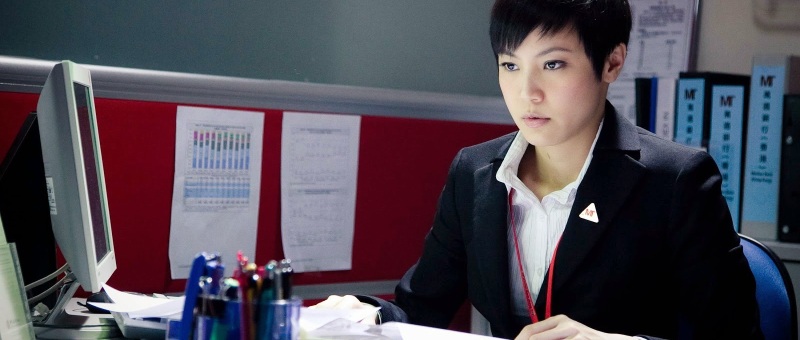
Just before the financial crisis of 2008, bank clerk Teresa (Denise Ho Wan-see) is beginning to fear for her job because she’s stuck at the bottom of the staff sales leader board and her boss doesn’t even bother to tell her off anymore. Under pressure she finds herself misselling a high risk BRIC loan to an older woman seemingly fearful of her declining economic power and hoping to make her savings pay a little more rather than just sitting in the bank doing nothing. Meanwhile Teresa is at the constant beck and call of boorish loanshark Yuen (Lo Hoi-pang) who won’t take out a loan with her because banks just rip you off. “Business is about profit but you have to play fair” he unironically explains handing over a card in case Teresa ever needs a “fair” loan pointing out you’ll pay 35% interest on a credit card but he’ll give you 15% even with bad credit. In any case, he leaves with only half of the 10 million he took out, asking Teresa to deposit the rest and sort the forms out later because he’s in a hurry, only he ends up getting offed in the car park meaning that second five million is in paper limbo. 

Teresa can’t really argue that the bank is morally any better than the loanshark, only that what they’re doing is legally regulated even if she has just broken a series of regulations in talking the old woman into the risky loan because she herself fears a financial crisis in losing her job. Meanwhile in another part of the city, one old man ends up killing another in a property dispute amid the city’s notoriously difficult housing market. The policeman investigating, Cheung (Richie Jen), is ironically called away because his wife, Connie (Myolie Wu Hang-yee), is nagging him about buying a new apartment requiring a one million deposit on a 30-year mortgage. She complains that he’s stubborn and overcautious, but he is at least pretty much the only person showing any kind of prudence in the cutthroat investment world even as he hesitates on learning that his estranged father is at death’s door leaving behind an illegitimate little girl it falls on he and his wife to adopt. 

If Cheung’s caution seems cold, it’s ironically mirrored in the film’s only pure hearted hero, ironic triad parody Panther (Sean Lau Ching-wan) who only cares about old-fashioned ideals like gangster loyalty even if those ideals are often expressed through money. Complimented by a boss for not trying to steal from a wedding collection he nevertheless games the restauranteur but only desires money in order to bail out his gangster friend Wah (Cheung Siu-fai) who is immediately deserted by all his minions who obviously don’t have the same ideas of loyalty as old school Panther. “Loyalty matters most” he insists to an old friend who left the triads to work as a junk collector because you can make more money recycling cardboard than in the contemporary underworld. Even his former sworn brother Lung (Philip Keung Ho-man) has managed to do very well for himself as a legitimate businessman hosting online gambling platforms and playing the stock market. 

Yet as Panther pores over data it becomes obvious that they are all betting on the market remaining the same, blindsided by the advent of the Greek Debt crisis and its devastating destabilisation. They thought they had control, that the decisions they made based on the data they received would remain correct only to realise that they are almost entirely powerless. Teresa fiddles with the jammed lock on her cabinet as she vacillates over whether or not to cash out of the corporate life with the “invisible” money, while Connie reckons with potentially losing her deposit when the already risky mortgage application is turned down, and the old lady is left to face potential financial ruin all alone in the twilight of her life. Then again, fate is fickle. The crisis passes as quickly as it arrived allowing a kind of normality to return but finding the desperate protagonists largely unchanged if perhaps emboldened by the feeling of relief resulting from their accidental lucky escapes from certain ruin. A slick and intricately plotted elliptical thriller, Life Without Principle revels in cosmic ironies but nevertheless holds only scorn for the dubious promises of spiralling consumerism in an increasingly jaded society.


Life Without Principle screens at London’s Prince Charles Cinema on 7th July as part of The Heroic Mission: Johnnie To Retrospective.

Original trailer (English subtitles)

Making Waves – Navigators of Hong Kong Cinema Comes to London 8th to 10th July

Focus Hong Kong is back this July with Making Waves – Navigators of Hong Kong Cinema, a touring film programme marking the 25th anniversary of the Handover presented in partnership with Create Hong Kong. Opening with the highly anticipated Anita Mui biopic Anita, the festival will close with the legendary actress’ final screen appearance in the landmark 2004 Ann Hui drama, July Rhapsody.

Friday 8 July, 7pm: Opening Gala Anita (Soho Hotel)

Longman Leung’s highly anticipated biopic of iconic Cantopop superstar and revered Hong Kong actress Anita Mui who sadly passed away after battling cervical cancer at the young age 40 in 2003.

Saturday 9 July

12:00: Comrades, Almost a Love Story + Peter Chan holo-presence (Soho Hotel)

Maggie Cheung and Leon Lai star as a pair of star-crossed Mainlanders seeking new futures in Hong Kong. While he, naive and earnest, hopes to make enough money to marry his hometown girlfriend, she, more cynical, seeks security in consumerism but the pair are finally brought together by the music of Teresa Teng.

16:30: The First Girl I Loved (Garden Cinema)

A young woman begins to re-evaluate her teenage romance when her first love asks her to be maid of honour at her wedding in Yeung Chiu-hoi & Candy Ng Wing-shan’s youth nostalgia romance. Review.


19:00: Tales From the Occult (Garden Cinema)

Three-part horror anthology featuring contributions from Fruit Chan, Fung Chih Chiang, and Wesley Hoi Ip Sang exploring the hidden horrors of the contemporary Hong Kong society.

Sunday 10 July

12:30: Hand Rolled Cigarette (Garden Cinema)

Gordon Lam stars as a former British soldier unable to adjust to the post-handover society and trapped in a triad-adjacent existence while bonding with a South Asian migrant on the run from gangsters from whom his cousin stole a large amount of drugs. Review.

15:30 : Breakout Brothers (Garden Cinema)

A cheerful triad who wants to give his mother a kidney transplant, a falsely convicted architect, and a veteran inmate who wants to see his daughter get married decide to break out of prison but discover that it’s friendship that sets them free in Mak Ho-Pong’s cartoonish crime caper. Review.


18:00: Closing Gala July Rhapsody (Garden Cinema)

Landmark 2004 drama from Ann Hui featuring Anita Mui in her final screen role as the wife of a schoolteacher (Jackie Cheung) whose marriage is destabilised when an old lover returns from abroad and her husband is tempted by the attentions of a precocious student.

Making Waves – Navigators of Hong Kong Cinema runs in London 8 to 10 July at Soho Hotel and the Garden Cinema. The programme will also be touring to cities around the world including: Udine, Shanghai, Bali, Bangkok, Singapore, Sydney, Copenhagen, Stockholm, Tokyo, Warsaw, Prague, Dubai, and Hong Kong later in the year with full details to be available via the Making Waves website in due course. Tickets are already on sale via Focus Hong Kong and you can keep up to date with all the latest news via Focus Hong Kong’s official websiteFacebook PageTwitter account, and Instagram channel.

The Heroic Mission: Johnnie To Retrospective Comes to PCC July 7 – 14

UK-China Film Collab and Trinity CineAsia will present a three film Johnnie To Retrospective at London’s Prince Charles Cinema from 7th to 14th July.

7th July, 6pm: Life Without Principle

Spiralling financial crisis drama in which the lives of a conflicted bank employee (Denise Ho) forced to sell high risk loans or lose her job, a petty thug (Sean Lau Ching-Wan) trying his luck on the futures market, and a policeman (Richie Jen) who needs money right away to put a deposit on a flat in Hong Kong’s ultra-competitive housing market, are intertwined by a cosmic twist of fate.

12th July, 6.30pm: Running on Karma

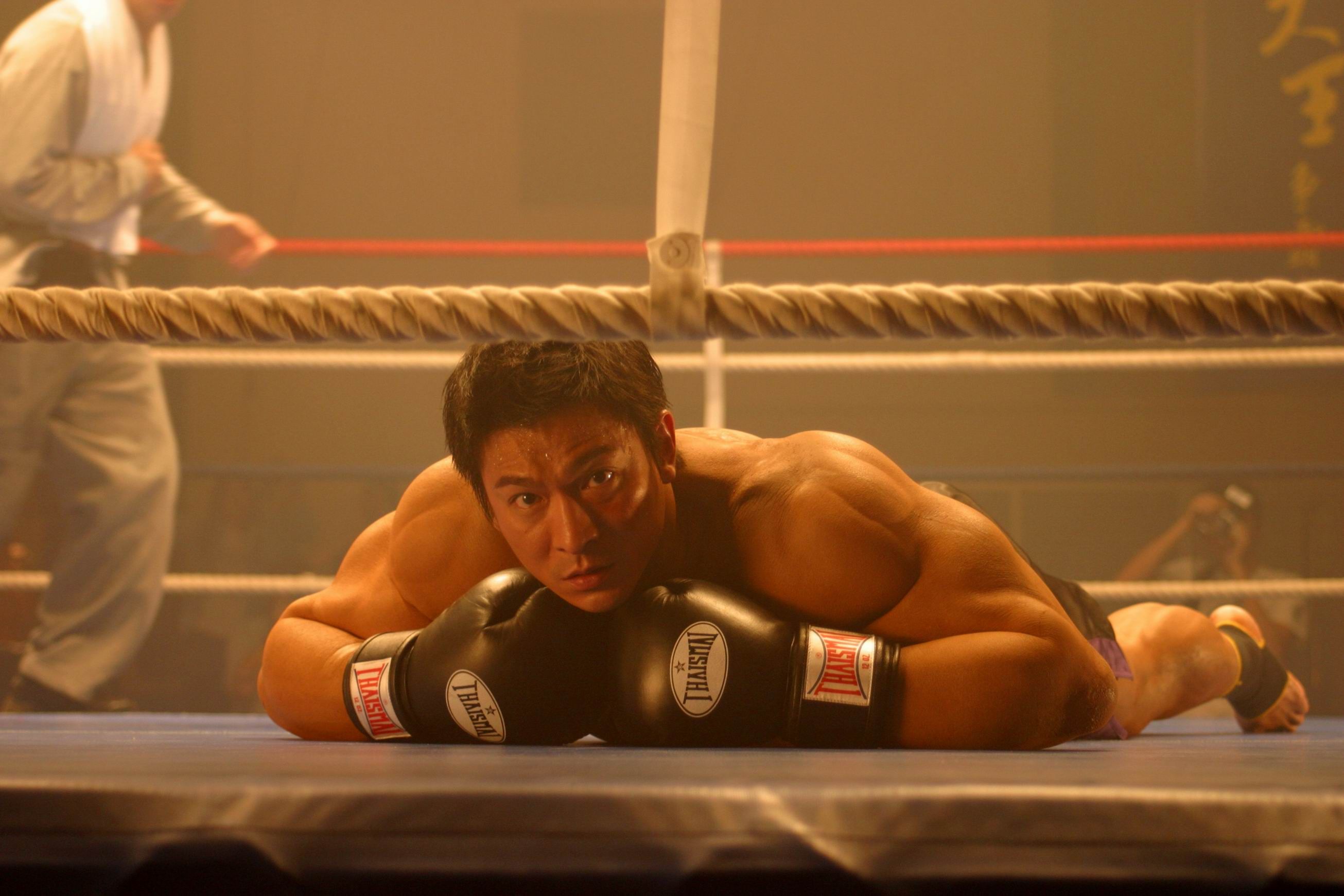
Andy Lau stars as a former monk turned bodybuilder and exotic dancer who is gifted with the ability to see other people’s karma. Encountering a policewoman (Cecilia Cheung) whose karma is particularly bad, he decides to help her.

14th July, 8.30pm: Breaking News

Prophetic examination of creeping authoritarianism and media manipulation in which a mainland gang goes to war with a cynical police chief after a street cop’s desperate act of surrender is accidentally captured by a roving news crew on the scene to cover a traffic accident.

Tickets on sale now via the Prince Charles Cinema.

My Indian Boyfriend (我的印度男友, Sri Kishore, 2021)

An awkward young man from India begins to see new possibilities in life after falling for his beautiful neighbour in Sri Kishore’s comic melodrama My Indian Boyfriend (我的印度男友). Billed as the first ever Indian-style film made in Hong Kong, Kishore’s musical romance has already come in for a degree of criticism with some objecting to what they see as a pun on a racial slur in the film’s original Cantonese title (which has since been changed) though the cross-cultural love at the film’s centre does perhaps attempt to overcome a sense of division even if cultural differences are not in the end what keeps the couple apart so much as their individual circumstances. 

The hero, Krishna (Karan Cholia), is the youngest of three siblings and moved to Hong Kong with his family as a child but has been unable to settle, finding it difficult to get a job and repeatedly stating a desire to return to India. Jasmine (Shirley Chan Yan-Yin), meanwhile, is a model and dance instructor technically engaged to sleazy businessman Richard (Justin Cheung Kin Sing) to whom she feels indebted because he took care of her family when her father died but otherwise appears not to like very much possibly because of his worryingly controlling, possessive personality. In fact, the pair’s first meeting is brokered by Richard’s unsolicited racist provocation on spotting Krishna and his Chinese friend Kong (Kaki Sham) outside the building into which Jasmine is about to move generating a sense of animosity that proves difficult to dissipate until Krishna discovers that Jasmine is actually a friend of his sister’s and thereafter falls in love with her. 

It has to be said that Krishna’s obsessive courtship crosses the line of what is considered appropriate, quite clearly making Jasmine uncomfortable and leaving her in a difficult position because of her friendship with the rest of the family. We can see that Richard is definitely bad for her (and every other woman on the planet), but to begin with it’s not clear Krishna is much better save for the fairly low bar that when he realises his behaviour is problematic he does agree to back off if occasionally trying to badger Jasmine into a platonic friendship while warning her against marrying Richard whom she already agrees is likely to make her extremely unhappy. 

Richard meanwhile is continually spitting chips, both incredibly jealous and intensely racist throwing racial slurs around at random and later sending in some of his hired thugs to have Krishna beaten up though it’s unclear why he thought doing either of these things would help to endear him to Jasmine even as he continues to leverage the financial assistance he’s given her family to imply she has no other choice but to become his wife in recompense. In fact neither of the men really give much thought to what Jasmine might want, nor does her mother (Griselda Yeung) take her feelings into consideration coming from an earlier time in which financial stability was the only concern either oblivious to Richard’s many red flags or thinking they’re worth putting up with so long he continues to provide a comfortable life. Even so Richard’s obvious racism does not seem to be so far out of line with society around him, Krishna finding himself constantly facing xenophobic microaggressions with even a prospective employer taking one look at him and openly remarking that they don’t hire South Asians followed by a justification based on a series of offensive racial stereotypes. 

The constant xenophobia along with his father’s incessant criticism fuels Krishna’s sense of futility along with his half-hearted desire to return to India where he perhaps feels he might do better free from the twin pressures of unfair parental expectation and societal prejudice. Nevertheless, his love for Jasmine forces him to confront himself and turn his life around now given a reason to start making a concrete life for himself in Hong Kong while her love for him strays a little into the uncomfortable as she’s won over by the force of his feelings and thereafter turns him into a kind of project, a fixer upper boyfriend, restoring his sense of confidence by embracing his talent for dancing so that he can begin to make something of himself while she continues to struggle with her mother’s disapproval not only because of her prejudice towards Krishna on the grounds of his ethnicity but her insistence on the debt they owe to Richard. But then as Krishna says love is love whether it’s in India or Hong Kong, and will eventually conquer all. Featuring several Bollywood-style musical sequences and some fairly questionable twists typical of romantic melodrama, Kishore’s light hearted love story does at least embody a sense of cross-cultural flow as the lovers (and their families) overcome their various prejudices to embrace the love they have for each other. 


My Indian Boyfriend screened as part of Osaka Asian Film Festival 2022

Original trailer (Traditional Chinese/English subtitles)

Bamboo Theatre (戲棚, Cheuk Cheung, 2019)

Cheuk Cheung’s otherwise observational documentary Bamboo Theatre often interrupts the action with a series of title cards beginning “this is a space”, a space for ritual, for culture, for the traditional and for its evolution both manmade and somehow spiritual. Bamboo Theatre (戲棚) is in fact Cheuk’s third documentary on the subject of Chinese opera having apparently developed an interest through a chance encounter that left him surprisingly moved, but the focus this time is as much on the building as it is on the art emphasising the ironic endurance of these transient structures forever dismantled and rebuilt in a constant process of change and renewal. 

As the closing titles reveal, the number of bamboo theatres operating across Hong Kong has dropped by 30% though the traditional practice continues to endure with communities across the islands conducting ritual to honour the birth of Tin Hau, goddess of the sea. Built entirely from bamboo without the use of a single nail, the structures are a marvel of engineering yet intended to stand for less than two months, performances taking place for only three to seven days before the entire theatre is dismantled and transported to its next location to be resurrected anew. Cheuk elegises the disappearing art form through long sequences of painstaking construction scored with classical music as if to lament the dying nature of the craft while bearing testament to its survival as the company crafts its own space with its own hands not only a stage and makeshift covering but a warren of backstage corridors where costumes are steamed and pressed while actors rehearse or put on their makeup. A scenic boat is even is whipped up mid-performance seconds before being tracked on stage. 

Meanwhile, the theatre creates its own kind of spectacle outside its doors a mini festival taking place in the open air with stalls selling nicknacks and street food. The audience appears diverse, a mixture of small children accompanied by parents or grandparents along with elderly spectators attending alone, the kids well behaved and engaged with this very traditional art form. As another of the title cards reminds us, this is a space for entertaining both people and the gods, ritual and enjoyment presented with equal importance which explains perhaps how this incredibly laborious practice has managed to endure in an age which largely values convenience. 

Then again as one performer complains in one of the few scenes featuring dialogue, why don’t they put up a mobile toilet for the performers along with the rest of the structure, their personal convenience it seems valued comparatively little. A mess of hanging cloths, the backstage areas appear more spacious than one might expect, but are also subject to their own arcane rules a sign reminding women not to sit on crates for the gods though it seems unlikely anyone is doing very much sitting at all given the general business of backstage of life. Even once the audience has gone home, an old man commandeers the darkened stage to practice his art singing to an empty auditorium in an otherwise silent night. 

Having begun the film with a theatre’s construction Cheuk closes with its dismantling, foil sheeting from the roof clashing to the floor with apocalyptic intent yet also suggesting that this is how something survives, taken down in one place to be rebuilt in another the same but different, transient and eternal. In this way, xiqu opera survives its ritualised nature taking on an almost mystical dimension in its constant acts of appearance and disappearance though perhaps it’s ironic to think of something so obviously built by human hands as “intangible” culture. Even so, the enduring power of the bamboo theatre captured with an ethereal distance through Cheuk’s sensitive lensing is perhaps a sign of hope for the future in the face of persistent anxiety that such iconic local traditions are always at the risk of erasure. 


Bamboo Theatre screens in Chicago on April 2 as part of the 14th season of Asian Pop-Up Cinema.

Far Far Away (緣路山旮旯, Amos Why, 2021)

An introverted IT specialist gets a crash course in romance when he accidentally ends up dating a series of women from the far flung corners of the land in Amos Why’s charming romantic comedy, Far Far Away (緣路山旮旯). An occasionally subversive love letter to a disappearing Hong Kong, Why’s elegantly scripted romance also presents a snapshot of the contemporary society in exploring the various reasons each of the women has rejected the high status, consumerist lifestyle of the cities in favour of a more bespoke happiness elsewhere. 

At 28, Hau (Kaki Shum) has had only one relationship and is still unsure why his previous girlfriend, a former co-worker, broke up with him. His sympathetic hometown friends are forever trying to set him up while he nurses a gentle crush on another woman from the office, A Lee, but is too shy to say anything and worried that her reluctance when colleagues suggest he drive her home after a night out implies that she finds his company uncomfortable. That is not as it turns out quite the case, the reason she didn’t want him to drive her home is that she’d moved from an upscale, prestigious area to a small rural town far out of the city because she broke up with her boyfriend and couldn’t afford the rent but didn’t want anyone to know. 

The constant obsession with men driving women home becomes a minor plot point with several of the women actively questioning why it’s necessary and occasionally even offended while forcing Hau to admit that in most cases he’s offering because he wants to spend more time with them rather than out of a general concern for their safety or simple convenience. Having abandoned the dating app he was working on at work to concentrate on a delivery/map service, he ends up bouncing all around Hong Kong visiting various women even venturing to places so far out he needs to apply for a separate permit to enter while beginning to rethink his life choices realising that the reason he’s so set on stubbornly occupying his family’s flat in the city is rooted in his childhood trauma of having lost his mother to illness and his father to the Mainland in a symbolic orphanhood that hints at the anxieties of contemporary Hong Kong. Hau’s recently married friends discuss the possibility of having children but admit that they don’t really want to do it unless they can move abroad, Hau later speculating they will go to Taiwan while his friend who goes by the ironic name “Jude Law” has a British National (Overseas) Passport. Hau himself admits that he’d never really given it much thought until recently when a prospective partner asks him if he’d ever considered moving abroad mostly to confirm he won’t suddenly announce he’s leaving once they start dating seriously because almost no one can see a future for themselves in a changing Hong Kong.

Meanwhile, each of the women has made a decision to prioritise something else rather than join the city rat race from a youthful young woman living in an idyllic coastal town while determined to marry at 29 to Hau’s college friend Melanie (Jennifer Yu Heung-Ying) who chose to work for an NGO because of the better work/life balance that meant she wouldn’t be pressured into endless overtime. Then again another of Hau’s suitors appears to be just as ambitious as any other city dweller while viewing herself superior because her family bought a flat in a provincial area 25 years previously at a preferential rate and then sold it to her at below market value but more than they paid originally which strikes Hau as an odd arrangement between parent and child but speaks to the penny pinching mean spiritedness that leads her to blow up at him because he left a nice tip at a restaurant where service was included in the bill. An artist friend is willing to put up with primitive conditions in a remote mountain village because she’d rather have the stars than city lights, while each of the women also worry that any attempt at romance is always doomed to failure because no matter how keen they are or claim to be sooner or later the guys all ask them to move back to the city prioritising their own convenience while ignoring all of the reasons they chose to live in these very specific places. 

Eventually Hau becomes the exception, realising that the where isn’t the most important question acknowledging that perhaps he’s the one who ought to move in deciding to let go of the childhood trauma in his family home in order to make a new one of his own having figured out what he wants out of life and who he wants to spend it with which in the end dictates the where. Sometimes, love is just around the corner if you’re willing to go and have a look. A gentle celebration of a disappearing Hong Kong both literally and metaphorically, Why’s charming rom-com sends its hero on a roundtrip to love figuring out his place in the world in finding that home really is where the heart is. 


Far Far Away screened as part of Osaka Asian Film Festival 2022

Original trailer (English subtitles)
Images: (C)2021 DOT 2 DOT CREATION LIMITED

The First Girl I Loved (喜歡妳是妳, Yeung Chiu-Hoi & Candy Ng Wing-Shan, 2021)

“I wonder how many people are like us, dare to like yet too frightened to love?” the heroine of Yeung Chiu-Hoi & Candy Ng Wing-Shan’s youth nostalgia romance The First Girl I Loved (喜歡妳是妳) reflects having made peace with youthful romantic disappointment. As the title implies, Yeung & Ng’s melancholy love story finds a young woman looking back on her first love while beginning to wonder if she may have misunderstood or overly mythologised her high school romance. 

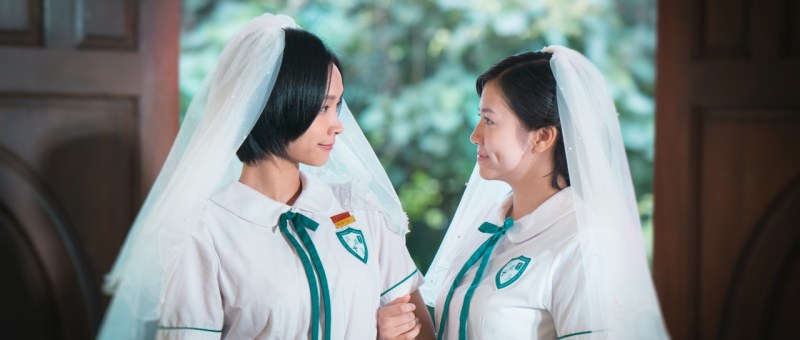
Now in her late 20s, Wing (Hedwig Tam Sin-Yin) is called back to the past by a phone call from her high school best friend Sylvia (Renci Yeung) who unexpectedly asks her to be the Maid of Honour at her wedding. Wing explains that she doesn’t like wearing dresses and would usually turn the invitation down but on this occasion she can’t because Sylvia was the first girl she ever loved. Long years of friendship eventually blossomed into teenage romance but while same sex relationships might have been more acceptable than they once were, they are not condoned by the private catholic girl’s high school the pair attend which calls their parents in after they’re spotted kissing on a bus by a passing teacher. 

Though Wing’s mother is a little taken aback, neither of the girls’ fathers thinks it’s a particularly big deal if for less than progressive reasons in that as Sylvia’s father puts it nothing “bad” can happen between two girls and he’d be much less relaxed if she’d been hanging around with a boy while Wing’s agrees that it’s probably just a phase and they “won’t look back” once they’ve met the right guy. The girls meanwhile seem to flit between despair and youthful romantic idealism, Sylvia who’d earlier been the more proactive in pursuing a relationship later conceding that perhaps it is a phase after all when her otherwise sympathetic father advises her to keep a low profile in order to avoid losing her scholarship because their family is poor. More secure in her middle-class comfort, Wing is minded to fight for love, saving up to buy a ring Sylvia had admired on a shopping trip and insisting that if growing up means denying their feelings for each other she’d rather remain a child. But then for unclear reasons Wing is the one who later betrays their love in agreeing to perform a public apology admitting that her relationship with Sylvia is “shameful and unacceptable” while Sylvia tears hers up and simply leaves having planned to take full responsibility while refusing to apologise for her feelings. 

The relationship between the two women continues to ebb and flow, leaving the older Wing wondering if they were ever really in the same story or if they simply remember their high school relationship differently. Perhaps to Sylvia they really were just admittedly intense “good friends” as she was fond of saying rather than the doomed lovers Wing has branded them as in her mind. Then again could it just be that Sylvia has chosen conventionality out of a lack of courage to fight for love, Wing wondering if Sylvia has decided to marry now in order to escape a pact they’d made to reunite if neither of them had married by 30 implying that Sylvia had never been able to let of the idea that anything other than a heteronormative marriage is necessarily a failure. 

Time does indeed seem to be a factor, the girls recreating the one minute scene from Days of Being Wild with a clock which has no second hand symbolising the timelessness of their youthful love while forever afterwards they seem to be haunted by ticking clocks implying that their romance has a shelf life. Even so, Yeung & Ng try to have their cake and eat it too, the climactic wedding taking place on a symbolic level between Sylvia and Wing echoing their mock high school wedding as they walk down the aisle together with Sylvia pained and conflicted in her choice while Wing reflects that they will always be “best friends” no matter what happens in the future having reclaimed her happy memories of her high school love reassured by Sylvia’s coded reactions that love is really what it was that existed between them. Replete with early 2000s nostalgia, Yeung & Ng’s tragic romance nevertheless ends on a hopeful note in managing to salvage the friendship from a faded love even if lacking the courage to fight for authenticity in an often conservative society.


The First Girl I Loved screens 13th/16th March as part of Osaka Asian Film Festival 2022

Original trailer (Traditional Chinese / English subtitles)

Elisa’s Day (遺愛, Alan Fung Chi-hang, 2021)

The legacy of abandonment visits itself on a trio of displaced Hong Kongers in Alan Fung Chi-hang’s melancholy crime drama, Elisa’s Day (遺愛). Set over 20 years from the Handover to the contemporary era, Fung draws inspiration from a real life crime while casting his ambivalent policeman, himself an orphan, as an ironic hero whose single act of compassion ends in a tragedy for which he feels he may not even have the right to atone. 

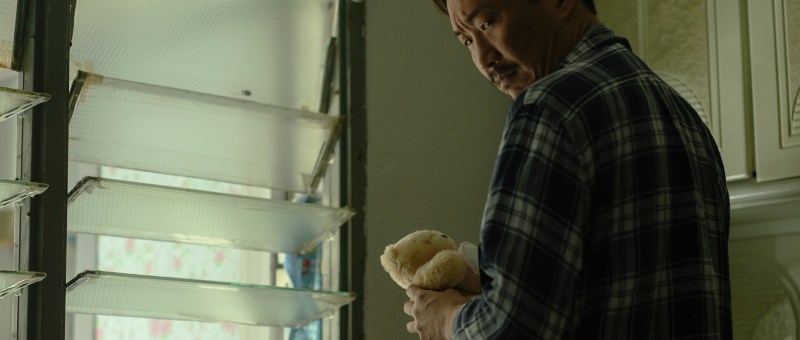
Fung begins, however, in the present day as Inspector Fai (Ronald Cheng Chung-Kei) prepares to collect his daughter who is shortly to be released from prison. Flashing back, we’re introduced to Daisy (Carol To Hei-Ling), a pale and distant young woman picked up for suspected drug trafficking while momentarily captivated by a familiar song and carrying a bunch of roses. From there we head further back, all the way to 1996 when 15-year-old Elisa (Hanna Chan Hon-Na) discovers she is pregnant by her bad boy boyfriend Man-Wai (Tony Wu Tsz-Tung). Each abandoned by their parents, the pair decide to run away together and find solace in a family of three, but as expected economic impossibility disrupts their search for happiness. Man-Wai joins the triads and eventually agrees to become a hitman, temporarily separated from Elisa and their daughter while lying low in Thailand. A then Sergeant Fai remains hot on his trail, keeping tabs on Elisa who unwittingly brings her young baby to the cinema where his adoptive mother Auntie Bo (Anna Ng Yuen-Yee) runs the box office, the pair of them becoming surrogate parents to the lonely little girl while Elisa is forced to turn to sex work when Man-Wai’s triad bosses fail to uphold their end of the bargain. 

“Everyone’s gone leaving only me behind” Elisa laments, learning that her estranged mother plans to move to the UK with her second family abandoning her once again in another, more complete sense. Trapped behind in a rundown area of the city, she finds herself caught between conflicting realities. Man-Wai pledges to stay with her forever but is soon gone eventually returning with promises of taking her to Thailand their dream of a better life symbolised by the red roses he brings with him that he claims reminded him of her. Man-Wai meanwhile is constantly told by his triad bosses that the future lies in Mainland China, a place he is originally so reluctant to travel that that he thinks killing is a better option only to later submit himself once again leaving Elisa alone in Hong Kong with no money and only a dwindling hope of ever achieving the familial bliss she longed for when she decided to run away with Man-Wai. 

For his part, Fai is also an orphan though his fate his was different in that he was found by Auntie Bo who gave him a loving home. Even so he has his share of guilt, feeling responsible for Auntie Bo’s spinsterhood fearing that she never married or had children of her own because taking him in made it impossible in the more conservative Hong Kong of 70s and 80s. Ironically enough they become a surrogate family for the infant Daisy, but it’s Fai’s sense of empathy that eventually provokes tragedy in his decision not to arrest Man-Wai on his return seeing how much he loves his family and wanting to give him a chance to put things right rather than take a little girl’s father away from her. Unable to forgive himself, he abandons his responsibilities only to be reminded of them later finally ending the cycle by being willing to accept the responsibility which has been left for him. 

Transitioning through the Hong Kong Handover, Fung evokes a sense of continual displacement, Elisa’s life destroyed firstly through abandonment and then through conflicted desires torn between a potential Thailand paradise and Mainland reality while longing only for a stable home(land). Daisy is offered something similar, her drug trafficker boyfriend to promising to take her to Thailand on their next run, the drugs ironically concealed in a bouquet of red roses just like those her father once brought for her mother. Her only salvation lies in the arms of Fai, a literal authority figure, reassuming his paternal responsibility and thereby restoring a sense of familial and political stability. Told in fragmentary, non-linear fashion, Fung’s melancholy tale of the legacies of abandonment and an innocent love eroded by economic and social realities eventually finds hope in familial repair and the remaking of a home in self-defined family.


Original trailer (English / Traditional Chinese subtitles)

Just 1 Day (給我1天, Erica Li, 2021)

“Who has time for nostalgia with all the novelties out there?” asks the heroine of screenwriter Erica Li’s directorial debut Just 1 Day (給我1天), an adaptation of her own novel. She does, as it turns out, in fact that’s all she may eventually have time for in this tale of romantic transience as she, in a sense, learns to seize her future by living in the past through reconnecting with a childhood friend. 

Now in her early 30s, bank clerk Angelfish (Charlene Choi Cheuk-Yin) is an unfulfilled career woman who enjoys her job chiefly for the ability to be of service to others. Meanwhile, she’s trapped in a potentially dead end relationship with a man who she’s recently discovered has a longterm girlfriend in Canada he never gets round to breaking up with. Attending a primary school reunion marking the institution’s imminent relocation, Angelfish runs into a long lost childhood friend, Mosaic (Wong Cho-lam), now a sketch artist with a sizeable online following. Unbeknownst to her, Mosaic has long been carrying a torch but never had the courage to say anything partly because of a hangup about his short stature. As we later discover, however, he’s running out of time. Paying a visit to the bank where Angelfish works to enquire about insurance he reveals he’s suffering from the same condition that killed his father, ALS, and potentially has only a few more years to live. Shooting his shot, he asks Angelfish to spend just one day with him as his “girlfriend” to cross it off his list. Provided there’s no funny stuff, she agrees but of course discovers something far more profound than a fleeting connection. 

This being Angelfish’s story, Mosaic’s illness is more or less treated as a plot device intended to confront her with her own sense of mortality so that she reassesses her life choices in order seek true happiness. Mosaic in fact teaches her this when explaining the concept of a vanishing line so that she might learn to fix her eyes on the horizon and see the rest of the world in relation to it. Meanwhile, the fact that ALS is a degenerative condition is also aligned with the idea of a world slowly disappearing, the eventual message paradoxically amounting to the notion that nothing ever really disappears because it continues to exist in the hearts and minds of everyone that remembers it. In order to preserve this sense of “nostalgia”, Mosaic meticulously sketches the old Hong Kong before its inevitable destruction while Angelfish finds her vocation in recreating it through miniature diorama. 

The conflict is brought home to her in the opposing natures of her two men, boyfriend Ken chuckling at her distress over the destruction of a local landmark by claiming that the old has to go to make way for the new, but later finding himself unable to break up with his longterm girlfriend out of a sense of expectation and obligation. One might say he is similarly trapped by “nostalgia”, or at least an emotional coward either too afraid to take a risk on new love or unwilling to abandon the security of the familiar. Her female friends, meanwhile, present two opposing paths, one a free spirited flight attendant and the other a conventional housewife whose dreams of the perfect family are eventually dashed on discovering her husband’s infidelity. To that extent, what Angelfish chooses is a kind of independence in wedding herself to a memory while paradoxically living in the moment in the knowledge that her love has its own vanishing point. 

Though boasting cinematography by Christopher Doyle, Just 1 Day is fairly conventional in shooting style akin to many other contemporary Hong Kong dramas save its brief segues into the past and eventual transition into an artificial world of nostalgic memory. Nevertheless as much a love letter to a disappearing Hong Kong as a tearjerking romantic dramedy or inspirational tale of a soon to be middle-aged woman finding fulfilment in following her heart, Just 1 Day effortlessly sells its central messages of living life to the full while making and preserving memories that will, it assures, sustain you when all else is gone. 


Teaser trailer (English subtitles)