Full Alert (高度戒備, Ringo Lam Ling-Tung, 1997)

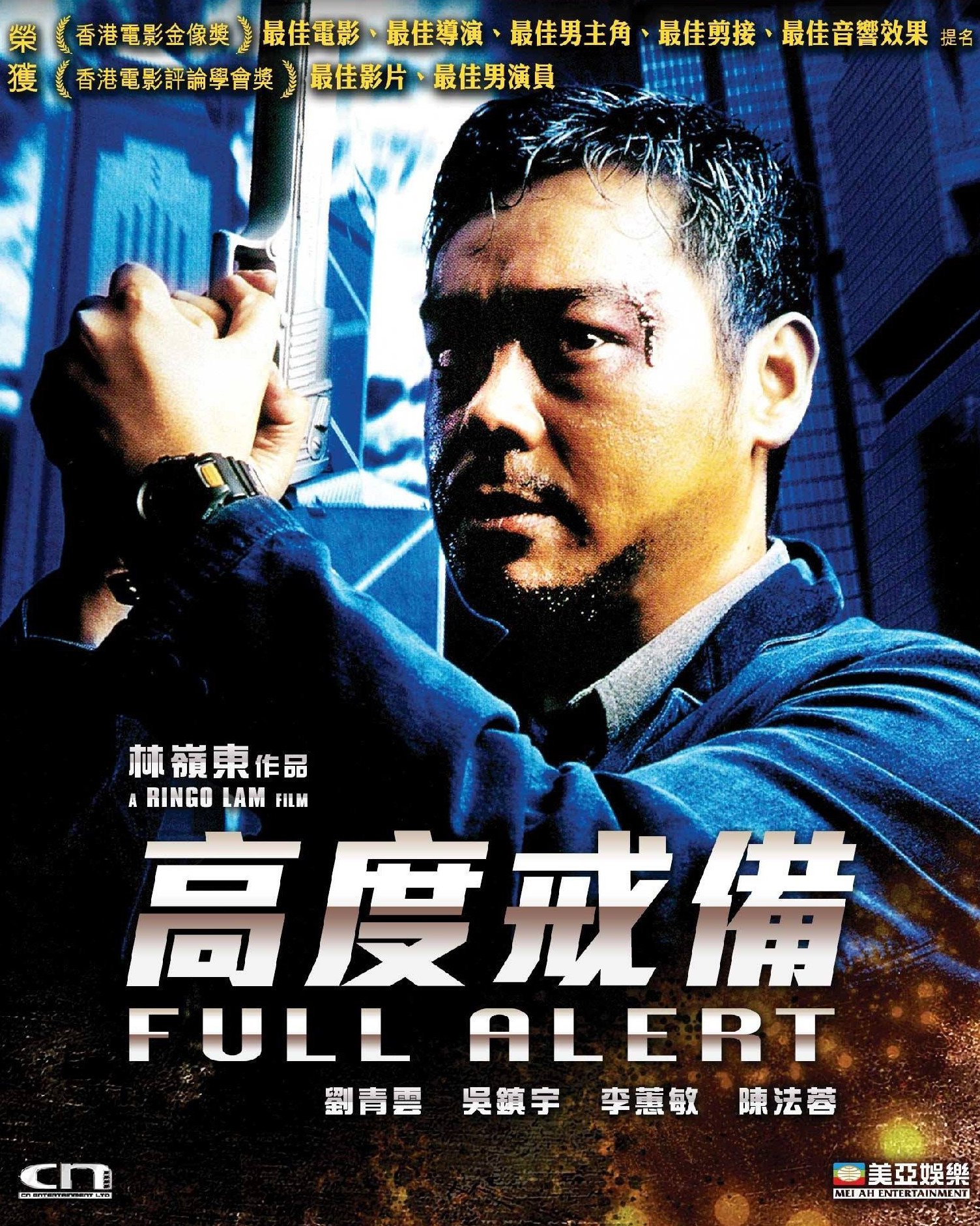
“Neither of us are normal people,” the antagonist of Ringo Lam’s Full Alert (高度戒備) points out to his opposite number, an increasingly compromised cop not so different from the man he is pursuing. Something is poisoning the waters of contemporary Hong Kong, and as it turns out there’s no real cure for this sickness. Neither man can escape the ghosts of his past, nor can he accommodate himself with this new reality of the coming post-Handover society defined by nothing other than nihilistic despair.

When residents of an apartment block begin falling ill, policeman Pao (Sean Lau Ching-wan) is called in only to discover the body of a man in the rooftop water tank. The image of his face floating in the water has a haunting, nightmarish quality that is only deepend by the anxiety of his killer who can’t be sure if he was really dead when they put him there, or ended up drowning all alone in the dark. His fate is ironically echoed in Kwan’s (Francis Ng Chun-yu) use of the sewer network to plot a heist on the Jockey Club on the busiest day of the year, emerging into a rain-drenched city only to be faced by despair and futility in the form of Pao.

Yet at times, Kwan is an oddly sympathetic villain. He comes across as a kind of everyman pushed to the brink by a society he feels is unjust and has treated him poorly. “I’ve come here to get back what I lost,” he explains as if he too were trying to find a way back to the pre-Handover society. He targets the Jockey Club in revenge for having his life ruined by gambling and hopes to make ironic use of his engineering background as an explosives expert fired for abusing his position to illegally sell explosive devices.

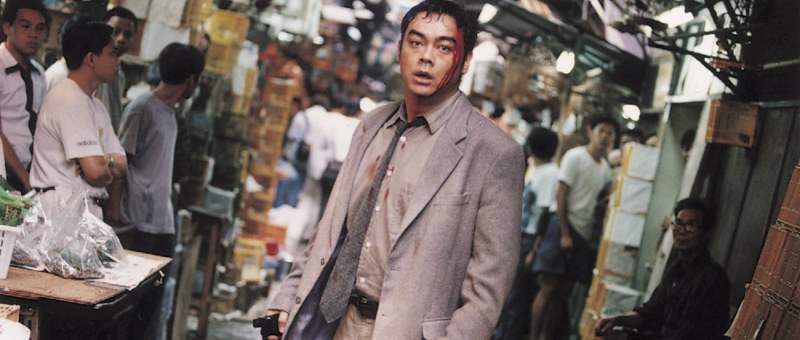
Pao, by contrast, is also a haunted man and not least by Kwan who comes to represent his other self. Just as Kwan is plagued by visions of the architect from the water tank, so Pao cannot escape the memory of having killed a man as a serving police officer. “It’s not easy to kill someone,” Kwan laments, reflecting that his transgression has changed him in untold ways that give him an odd kind of affinity for Pao. While chasing Kwan in a crowded marketplace, Pao loses his cool and fires his gun despite the risk to the general public, causing a motorcyclist to crash. When Kwan rings him, it’s less like taunting than a genuine sense of commiseration in which he likens Pao to a boy he knew at school who cried in the toilets after losing out on the number one spot that he had been fixated on taking. “That made me sad too,” he admits bearing out the inherent bond between rivals and the loneliness that exists outside it. Each man is, to an extent, motivated by fear and the desire to free themselves by destroying their other self.

“It’s just that we’re standing on different sides,” Kwan reflects, remarking that Pao is a good cop and he doesn’t mean to go against him, but believes he has no other choice. The Taiwanese gangsters may believe they have no other choice either, plotting either to rescue Kwan or neutralise him before he can expose their plans. Nevertheless, the loss of one of their men is directly contrasted with Pao’s loss of his fellow officer, arguably through his own recklessness and obsession with catching Kwan at all costs. Kwan, meanwhile, is conflicted too, apologising for involving Pao’s family and on some level self-aware that he’s destroying himself. He may not actually expect to survive but does his best to shield those he loves from the consequences of his actions, just as Pao wonders if he should quit the force to be there for his wife and son.

Shooting guerrilla style in the streets of Hong Kong, Lam captures a very real sense of panic and anxiety hanging over the city as the Handover draws closer. With the “reunification” coming, all that matters is peace, according to Pao’s superior officer, though peace is something Pao will never find, just as Kwan will never really find escape, not from himself or from a Hong Kong which seems to be in a state of total collapse. To that extent, they are each ghosts of a rapidly disappearing city fighting to take back what they’ve lost, but in the end finding only despair and loneliness. 


Life Without Principle (奪命金, Johnnie To, 2011)

A financial earthquake destabilises the ordinary lives of a series of Hong Kongers in Johnnie To’s circular thriller, Life Without Principle (奪命金). As one character puts it, greed is human and everyone always seems to want more but even a little is out of the reach of many and so perhaps their desire is understandable in a world in which a loan shark can lord it over the bank who are in essence little better than he is in exploiting their customers by charging them extortionate fees yet failing to protect their investments. 

Just before the financial crisis of 2008, bank clerk Teresa (Denise Ho Wan-see) is beginning to fear for her job because she’s stuck at the bottom of the staff sales leader board and her boss doesn’t even bother to tell her off anymore. Under pressure she finds herself misselling a high risk BRIC loan to an older woman seemingly fearful of her declining economic power and hoping to make her savings pay a little more rather than just sitting in the bank doing nothing. Meanwhile Teresa is at the constant beck and call of boorish loanshark Yuen (Lo Hoi-pang) who won’t take out a loan with her because banks just rip you off. “Business is about profit but you have to play fair” he unironically explains handing over a card in case Teresa ever needs a “fair” loan pointing out you’ll pay 35% interest on a credit card but he’ll give you 15% even with bad credit. In any case, he leaves with only half of the 10 million he took out, asking Teresa to deposit the rest and sort the forms out later because he’s in a hurry, only he ends up getting offed in the car park meaning that second five million is in paper limbo. 

Teresa can’t really argue that the bank is morally any better than the loanshark, only that what they’re doing is legally regulated even if she has just broken a series of regulations in talking the old woman into the risky loan because she herself fears a financial crisis in losing her job. Meanwhile in another part of the city, one old man ends up killing another in a property dispute amid the city’s notoriously difficult housing market. The policeman investigating, Cheung (Richie Jen), is ironically called away because his wife, Connie (Myolie Wu Hang-yee), is nagging him about buying a new apartment requiring a one million deposit on a 30-year mortgage. She complains that he’s stubborn and overcautious, but he is at least pretty much the only person showing any kind of prudence in the cutthroat investment world even as he hesitates on learning that his estranged father is at death’s door leaving behind an illegitimate little girl it falls on he and his wife to adopt. 

If Cheung’s caution seems cold, it’s ironically mirrored in the film’s only pure hearted hero, ironic triad parody Panther (Sean Lau Ching-wan) who only cares about old-fashioned ideals like gangster loyalty even if those ideals are often expressed through money. Complimented by a boss for not trying to steal from a wedding collection he nevertheless games the restauranteur but only desires money in order to bail out his gangster friend Wah (Cheung Siu-fai) who is immediately deserted by all his minions who obviously don’t have the same ideas of loyalty as old school Panther. “Loyalty matters most” he insists to an old friend who left the triads to work as a junk collector because you can make more money recycling cardboard than in the contemporary underworld. Even his former sworn brother Lung (Philip Keung Ho-man) has managed to do very well for himself as a legitimate businessman hosting online gambling platforms and playing the stock market. 

Yet as Panther pores over data it becomes obvious that they are all betting on the market remaining the same, blindsided by the advent of the Greek Debt crisis and its devastating destabilisation. They thought they had control, that the decisions they made based on the data they received would remain correct only to realise that they are almost entirely powerless. Teresa fiddles with the jammed lock on her cabinet as she vacillates over whether or not to cash out of the corporate life with the “invisible” money, while Connie reckons with potentially losing her deposit when the already risky mortgage application is turned down, and the old lady is left to face potential financial ruin all alone in the twilight of her life. Then again, fate is fickle. The crisis passes as quickly as it arrived allowing a kind of normality to return but finding the desperate protagonists largely unchanged if perhaps emboldened by the feeling of relief resulting from their accidental lucky escapes from certain ruin. A slick and intricately plotted elliptical thriller, Life Without Principle revels in cosmic ironies but nevertheless holds only scorn for the dubious promises of spiralling consumerism in an increasingly jaded society.


Life Without Principle screens at London’s Prince Charles Cinema on 7th July as part of The Heroic Mission: Johnnie To Retrospective.

Original trailer (English subtitles)

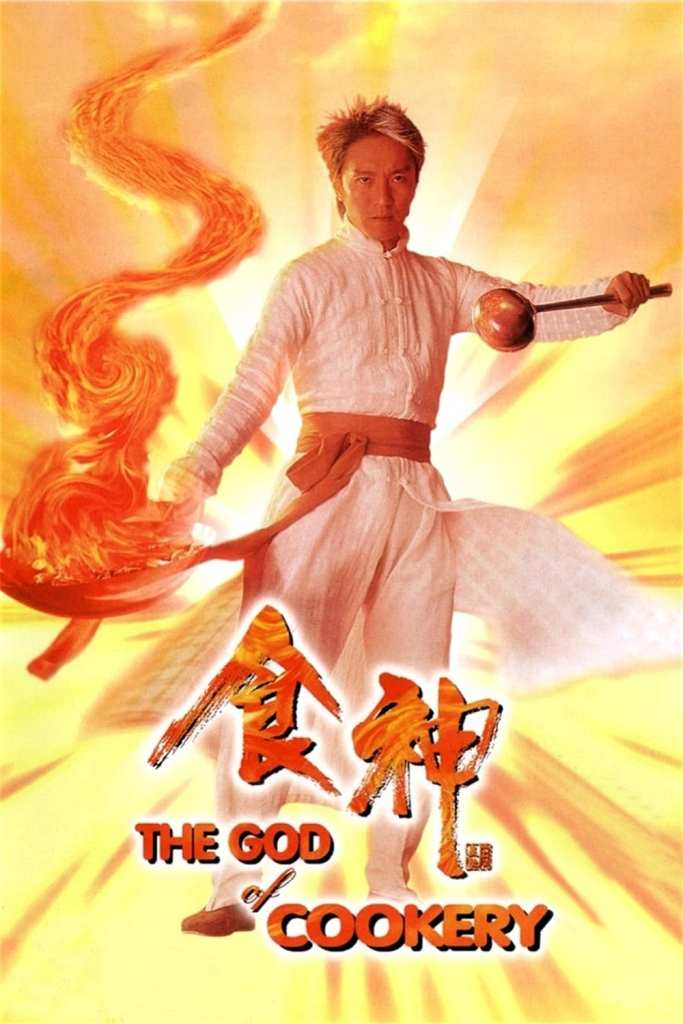
The God of Cookery (食神, Stephen Chow, 1996)

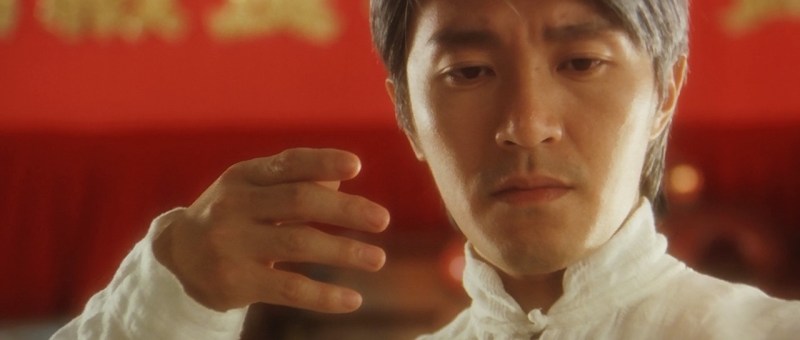
Thing about cooking is, you gotta have heart. At least, that’s the main takeaway from Stephen Chow’s 1996 culinary comedy God of Cookery (食神) in which he once again stars as a man who’s become rich and successful exploiting the talents of others but gets a major humbling when his duplicity is exposed by an even more duplicitous, though apparently talented, rival. Only by living among the people and rediscovering the simple joy of ordinary food cooked with love can he regain his true identity as the “God of Cooking”. 

Stephen Chow (Stephen Chow playing a character of the same name but written with different characters) has built up a successful food empire built around himself as a celebrity chef known as the “God of Cooking”. As a popular TV judge on a cooking competition, he makes a point of giving each of the contestants zero points, starting off with words of praise but eventually finding fault with “basic” techniques and even at one point complaining that it doesn’t matter how tasty the dish is because the chef is so ugly it’s made him lose his appetite. Chow treats his employees with total disdain, going so far as making a prospective hire defecate in public in front of a lift in return for a job, while schmoozing with Triads to expand his empire. The Triads, however, are getting fed up with him and have installed a mole in his organisation. Bull Tong (Vincent Kok Tak-chiu) is a talented chef who claims to have trained at the Chinese Culinary School on the mainland. He makes a point of causing public embarrassment to Chow by tearing apart one of his signature dishes at the press launch for the 50th branch of his branded restaurant chain. Chow is exposed as a talentless fraud and thanks to his haughty attitude, his friends abandon him. 

Penniless and destitute, he rocks up at a noodle stall run by Sister “Twin Daggers” Turkey (Karen Mok), critiquing her noodles in the same way Bull had torn apart his. Turkey takes pity on him after he’s beaten up by thugs and accepts him into her mini street gang. It’s Chow who finds an innovate solution to to her turf war with a rival stall holder in inventing the not entirely appetising “Pissing Beef Balls” which prove an instant hit with all who try them, even helping to cure those suffering with anorexia (apparently a widespread problem of the time, at least according to onscreen newspapers). Chow has not, however, lost his cynical streak and wants to get back to the top by opening a nationwide chain of Pissing Beef Ball restaurants, while Bull and the Triads begin to panic about his seemingly unstoppable success. 

Parodying both Tsui Hark’s Chinese Feast from the previous year, and Wong Jing hit God of Gamblers, Chow brings even more of his now familiar slapstick style, turning cookery into a kind of martial art, and even including a brief sequence in which he gets trapped inside the Shaolin Temple and ends up learning some of their patented culinary techniques. As the cynical top chef, Chow stands in for the evils of the age, puffed up on empty capitalism, openly telling his staff to pull dirty restaurant tricks like making the seats small and uncomfortable to increase turnover and filling the drinks with giant ice cubes to keep costs down and encourage guests to order more. Bull Tong, however, goes even further, beating the staff and suggesting they serve greasy, salt-laden dishes like French fries so kids order more soda, ignoring complaints from the chefs that it’s unethical to serve such obviously unhealthy food to children. 

Sister Turkey’s cuisine, by contrast, might not exactly be top table stuff but it makes no pretence of being anything other than it is. Her rival prides himself on using high quality ingredients, even making sure his oil is changed daily, making it plain that your average market hawker (whether he’s telling the truth or not) at least appears to have more concern for his customers than giant restaurant chains do. Turkey’s ordinary barbecue pork and rice dish with a side of egg is the best Chow’s ever tasted because it was made with kindness. He may have been fond of saying that you have to have heart to cook, but it was just one of his soulless catchphrases until he realised it was true. Good food, companionship, love, and a Christmas miracle slowly work their magic until the “God of Cookery” is finally restored thanks to a little celestial intervention, showing the Bull Tongs of the world exactly what they’re missing.


The God of Cookery screens in New York on Feb. 15 as part of this year’s New York Asian Film Festival Winter Showcase.