Pressure of Guilt (白と黒, Hiromichi Horikawa, 1963)

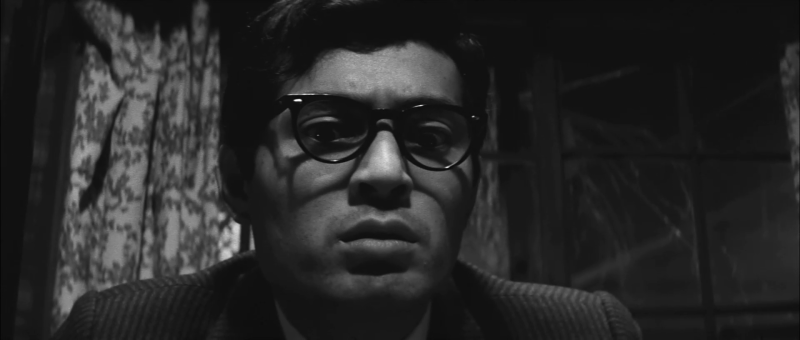
When a lawyer’s wife is found strangled at home, the police immediately arrest a “suspicious person” who is found to be carrying jewellery stolen from her room. Open and shut case, some might say, and prosecutor Ochiai (Keiju Kobayashi) agrees. But in reality nothing is really so black and white in the contemporary society of Hiromichi Horikawa’s crime drama, Pressure of Guilt (白と黒,, Shiro to Kuro). Perhaps ironically, the film opens in the same way as Tai Kato’s later I, the Executioner, with a man’s hands stretching around a piece of rope, and also features a law enforcement officer who is distracted from his duties by a bad case of piles he refuses to get treated.

Ochiai says his haemorrhoids are born of sitting down thinking too much, but the problem might be that he doesn’t think enough or that he suppresses thoughts which might prove inconvenient. There’s something that bothers him about the idea of Wakida (Hisashi Igawa) being the killer, but he shoves his doubts out of his mind and continues questioning him until he confesses. Some of this is born of prejudice. Wakida has a long criminal record mainly for burglary, and has been in and out of prison the whole of his adult life. Currently suffering from TB, he appears to be one of the young men who came to the city in search of work but found only exploitation and eventually had no option but to turn to crime. That he stole the jewellery is not in dispute, but Wakida continues to insist he didn’t kill Mrs Munakata (Koreya Senda). His lack of cooperation puzzles Ochiai, but it confuses him still more that Wakida keeps changing his story. He is, it seems, trying to tell him what he wants to hear, but finally becomes fed up with the whole thing after receiving a letter from his mother telling him to confess. She evidently thinks he did it too. Falling into hopelessness, Wakida declares that he no longer cares who did it and might as well be him because his life is essentially already over. In his condition he won’t last long in prison. There’s no prospect of turning his life around, either. So a death sentence won’t make any difference.

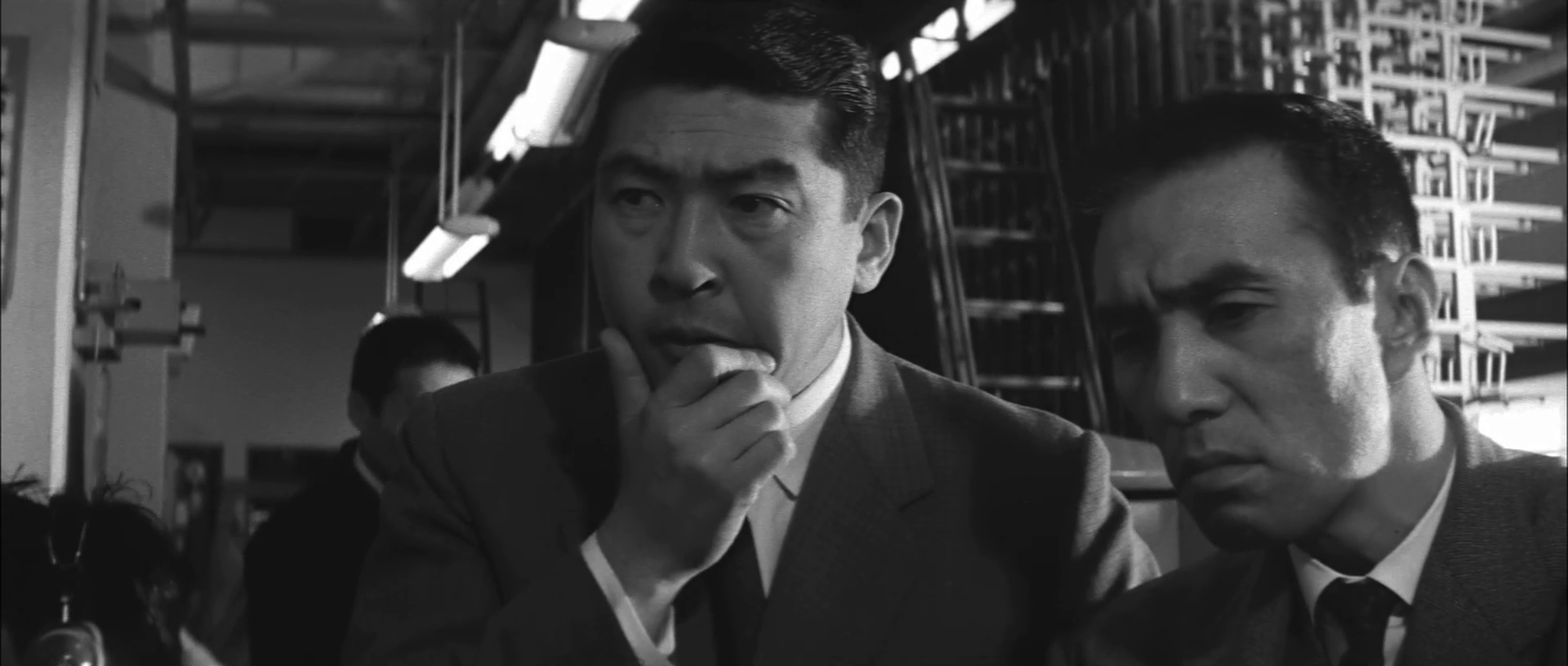
The funny thing is that it’s realising his fiancée must have figured out he did because she’s covering up for him that forces Hamano (Tatsuya Nakadai) into a confession. He’s plagued by guilt that Wakida might die for his crime, but not enough to exonerate him by coming forward. Nevertheless, he tries to talk Wakida round, asking why he confessed and if he was pressured by the prosecutors. The Japanese legal system places confessions above all else, but the issue is that Wakida’s confession is the only evidence that links him to the murder. Just because he stole the jewellery doesn’t mean he killed Mrs Munakata. Ironically enough, he’s defended by the victim’s husband (Koreya Senda), an anti-death penalty activist lawyer who agrees to represent him in part to vindicate his principles. Wakida only agrees to cooperate with Munakata and Hamano who is acting as his assistant when he confirms they’re not trying to help out of pity but only for their own self-interest. 

Yet Ochiai might have a point asking why Hamano is certain that Wakida didn’t do it, or why, on beginning to suspect him, he’s trying so hard to exonerate a man who was going to pay for his crime. It’s Hamano’s own suspiciousness that leads him to question his judgement about Wakida and ask himself if his thinking wasn’t too black and white and he should have investigated more thoroughly rather than pressuring Wakida into a confession and charging him. On realising he may have made a mistake, Ochiai puts the prosecution in a difficult position as his boss warns him of the potential reputational damage to the police and prosecutors if they’re shown to have made a mistake with the mild implication that, as he had assumed someone in Hamano’s position would want to, he should just keep quiet and let Wakida hang. 

Surprisingly, however, it only seems to improve the public’s view of the prosecution to be able to see them admit that they made a mistake and try to fix it rather than refuse to change their position. Mystery writer Seicho Matsumoto makes a cameo appearance as a TV pundit who says he admires Ochiai, while the film also uses a real TV show host to interview Ochiai boosting the sense of realism. As it turns out, there was more to the story than even Ochiai or Hamano thought, but still he declares that it’s better to be a fool than a hopeless idiot and that he was right to look for the truth even if it ended up biting him in the behind. The pressure of Hamano’s guilt, however, never really dissipates even as he struggles with himself, trying to find a way to save Wakida and avoid becoming a murderer twice over, without giving himself away. Nothing’s really that black and white after all, and this case wasn’t exactly open and shut, but the conviction that it had to be based on prejudice and circumstantial evidence might be the biggest crime at all no matter how it actually turned out.

The Long Darkness (忍ぶ川, Kei Kumai, 1972)

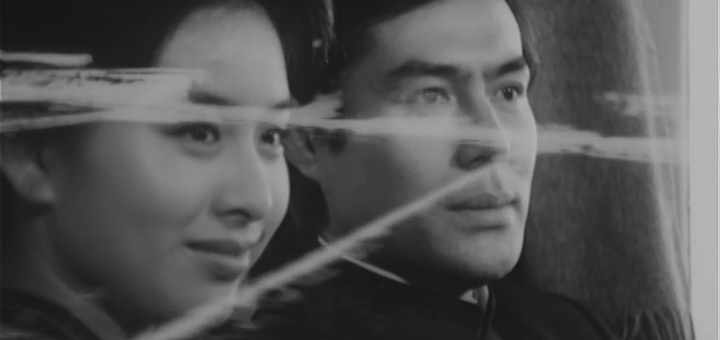
Golden age Japanese cinema is generally resistant to the idea of romance as salvation. There may be a romantic happy ending, lovers uniting despite the mounting odds, but their happiness is often overshadowed by the anxieties of the world in which they live. Adapted from the novel by Tetsuo Miura, Kei Kumai’s post-war romance The Long Darkness (忍ぶ川, Shinobugawa) meanwhile insists that it’s love that will save you in the end as its dejected, insecure heroes find the courage to go on living precisely because of the strength and validation they discover in loving and being loved.

The hero, Tetsuro (Go Kato), feels himself to be cursed, overcome with a sense of shame and anxiety because of the dark shadow that hangs over his once prosperous family. His oldest sister committed suicide for love on his sixth birthday, while another sister then took her own life some time later out of guilt for having contributed to her death. His oldest brother whom he describes as sensitive and eccentric disappeared in grief, while the next oldest took a job at a Tokyo lumber yard and supported him as a student but later disgraced the family by running off with money he’d fraudulently accumulated in the name of opening his own company. Tetsuro is convinced that there is something genetically wrong with the family line and is intensely anxious that it will one day consume him too. 

That might be why he’s unexpectedly bashful for a man of 27 in courting the pretty waitress of a local bar, Shino (Komaki Kurihara), whom he first met while celebrating the graduation of some other students after making a belated return to university. Shino too is carrying her own burdens which lead her to feel unworthy of happiness in that she was raised in the red light district and her family, evacuated to rural Tochigi during the war, is now impoverished and living in a shrine. The proprietress at her restaurant has pressured her into an engagement with a prosperous car salesman whom she doesn’t like but feels unable to refuse on the grounds that he will take care of her sick father. The car salesman tries to rape her so she’ll have to marry him which, as her father points out, does not speak well for his character or the prospect of a happy marriage. Her father is clear, he wants his daughter to be happy and in this age a woman’s happiness does largely depend on the man she marries. He tells her to find a man she loves more than life itself and marry him without a moment’s thought. 

The forces which divide them aren’t so much to do with class, politics, money, or custom but with internalised shame and the deeply held belief that they are “bad” people who do not deserve to be happy. “Can I go on living?” Tetsuro’s only remaining sister tearfully asks him, burdened both by her traumatic family history and by a visual impairment that further convinces her she cannot expect to be a part of regular society and has no prospect of a happy future. He almost turns away after noticing her crying but realises that’s what his absent siblings might have done and resolves to behave differently, reforging his his familial bonds with love and compassion in place of the gloominess and futility that had long overshadowed his family home. Just as Shino’s father had anointed Tetsuro a “good person” he could entrust his daughter to, Tetsuro’s sister and mother affirm that Shino too is “good” and her presence brings light and laughter back into their lives after years of lonely suffering. 

“We’ve spent our whole lives worrying about appearances” Tetsuro declares, “it’s time we stop”. Affirming that her new in-laws are also “all good people”, Shino too admits that she realises the “uselessness” of her old life “never saying what I want or don’t want, going along with everything”, liberated by the transcendent power of love that allows her to overcome her fear and insecurity to claim her own agency, the jingling bells of a farmer’s horse cart echoing from below as if in celebration. Shooting in a classic 4:3 monochrome with occasional intertitles and voiceover, Kumai emphasises the literary quality of the tale spanning the rundown lumberyards of post-war Tokyo to the frozen north of Tetsuro’s frosty home but finally argues for the freedom and possibility to be found in the contemporary era by making an active choice for happiness rather than submitting oneself to a fated misery out of misguided obedience to austere and oppressive social codes. “Everyone’s jealous of you” an old woman cackles catching sight of the newly-wed couple on the train to their new life, and you can well understand why. 


Original trailer (no subtitles)

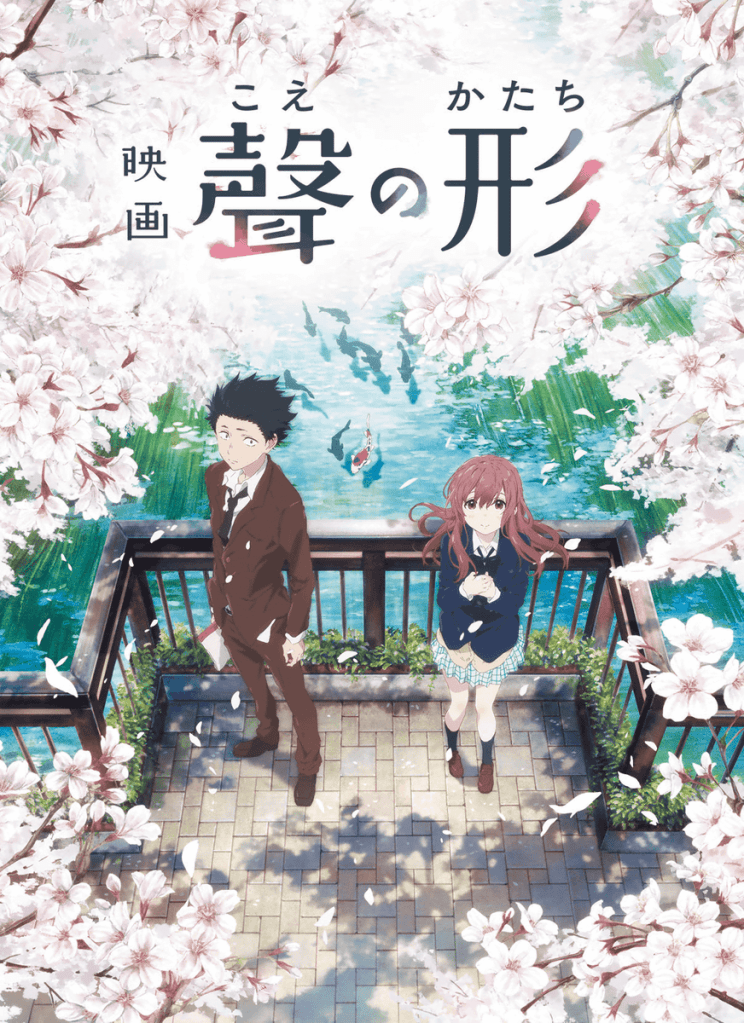
A Silent Voice (聲の形, Naoko Yamada, 2016)

silent-voiceChildren – not always the most tolerant bunch. For every kind and innocent film in which youngsters band together to overcome their differences and head off on a grand world saving mission, there are a fair few in which all of the other kids gang up on the one who doesn’t quite fit in. Given Japan’s generally conformist outlook, this phenomenon is all the more pronounced and you only have to look back to the filmography of famously child friendly director Hiroshi Shimizu to discover a dozen tales of broken hearted children suddenly finding that their friends just won’t play with them anymore. Where A Silent Voice (聲の形, Koe no Katachi) differs is in its gentle acceptance that the bully is also a victim, capable of redemption but requiring both external and internal forgiveness.

Classmates Shoko (Saori Hayami) and Shoya (Miyu Irino/Mayu Matsuoka) are almost mirror images of each other, sharing the first syllable of their names (at least phonetically) but representing two entirely opposite poles. Before Shoko transferred into his school, Shoya was the class clown, behaving disruptively and acting as the leader of a group of mean kids who, if not exactly bullies, certainly exert a degree of superiority over their meeker classmates. Shoko, hard of hearing, remains necessarily quiet, communicating through messages written on a notepad. Though some of the other pupils are fascinated by the novelty of someone like Shoko suddenly appearing, delighting in writing messages back and for and eagerly embracing the opportunity to learn sign language in order to communicate with her more easily, the mean kids, with Shoya as the ringleader, delight in making her life a misery just because they can.

Though some of the other children object to the way Shoya and the others are behaving, they do little to defend their new friend. Some of the more impressionable kids even halfheartedly join in, perhaps feeling bad about it but also enjoying being part of the angsty pre-teen group of nasty kids, but when it all gets too much and Shoko decides to move on everyone is suddenly struck with remorse and a need to blame someone else for the harm they’ve caused. Hence, Shoya gets a taste of his own medicine, ostracised by his peers as the lowlife who hounded a deaf girl out of school. Who’d want to hang around with someone like that?

Humbled, the stigma follows Shoya on into his next school as feelings of guilt and self loathing intensify until he reaches a point at which he can’t go on. Intending to finally end it all, Shoya unexpectedly runs into Shoko again and eventually manages to make a kind of motion towards an apology, attempting to make friends after all this time and making use of the sign language he’s taught himself to show his sincerity.

Isolated both by the continuing rumours of his primary school days and an intense personal feeling of unworthiness, Shoya finds it impossible to interact with his fellow students whose faces are each covered by a large blue cross. Bonding first with another lonely outcast, Shoya’s world begins to open up again but the spectre of his past continues to haunt him. Reconnecting with some of the other kids from primary school he finds that not everyone remembers things the same way they’ve become engraved in his mind. Though a few are anxious to atone, one of his former friends, Naoka (Yuki Kaneko), takes a different approach to the problem in continuing to blame Shoko – for the “attention” her condition attracts, the “requirement” for others to modify their behaviour to suit her, for simply existing in the first place enabling the behaviour which took place (about which Naoka remains unrepentant), and being the root cause that her merry band of friends fell apart.

If it seems like the tale disproportionately focuses on Shoya’s guilt and and redemption rather than Shoko’s suffering the balance shifts back towards the end as the pair truly mirror each other with another suicide attempt forming the climax of the second act. Shoko responds to her often cruel treatment with nothing other than friendliness, smiling with hands outstretched even whilst continuing to receive nothing but rejection. Though she may seem all smiles and sweetness, her overly genial persona is itself an act as she tries to overcompensate for the “burden” she feels herself to be causing through her need for “special treatment”. Eventually, Shoko snaps – firstly in primary school as her well meaning attempts to bring Shoya over to her side fail once again, and then later in a much more final way as she decides that there is nothing left for her in a world which fails to accommodate for difference.

The story of a girl who struggles to be heard, and a boy who refuses to listen, A Silent Voice is a quiet plea for the power of mutual understanding and reconciliation. Director Naoko Yamada and screenwriter Reiko Yoshida bring the same kind of quirky slice of life humour which made K-On and Tamako Market so enjoyable along with the raw visual beauty which has come to define Kyoto Animation to this often dark tale, perfectly integrating the more dramatic elements into the otherwise warm and forgiving world in a believable and natural way. Nuanced, complicated and defiantly refusing total resolution, A Silent Voice is one of the more interesting animated projects to come out of Japan in recent times and further marks out Yamada as one of its most important animation auteurs.


Screened as part of the Japan Foundation Touring Film Programme 2017.

Original trailer (English subtitles)