The Lost Alibi (黒い画集 あるサラリーマンの証言, Hiromichi Horikawa, 1960)

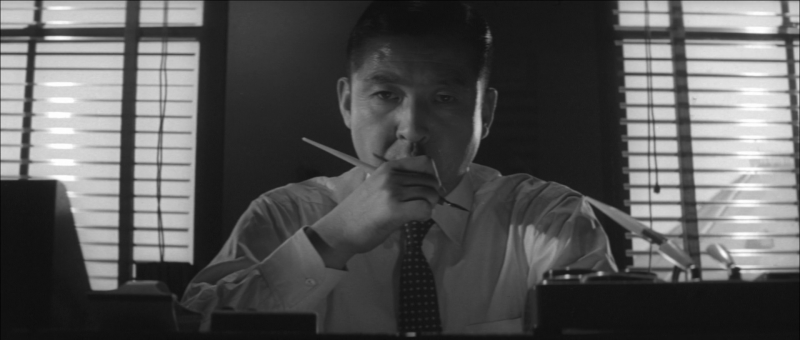
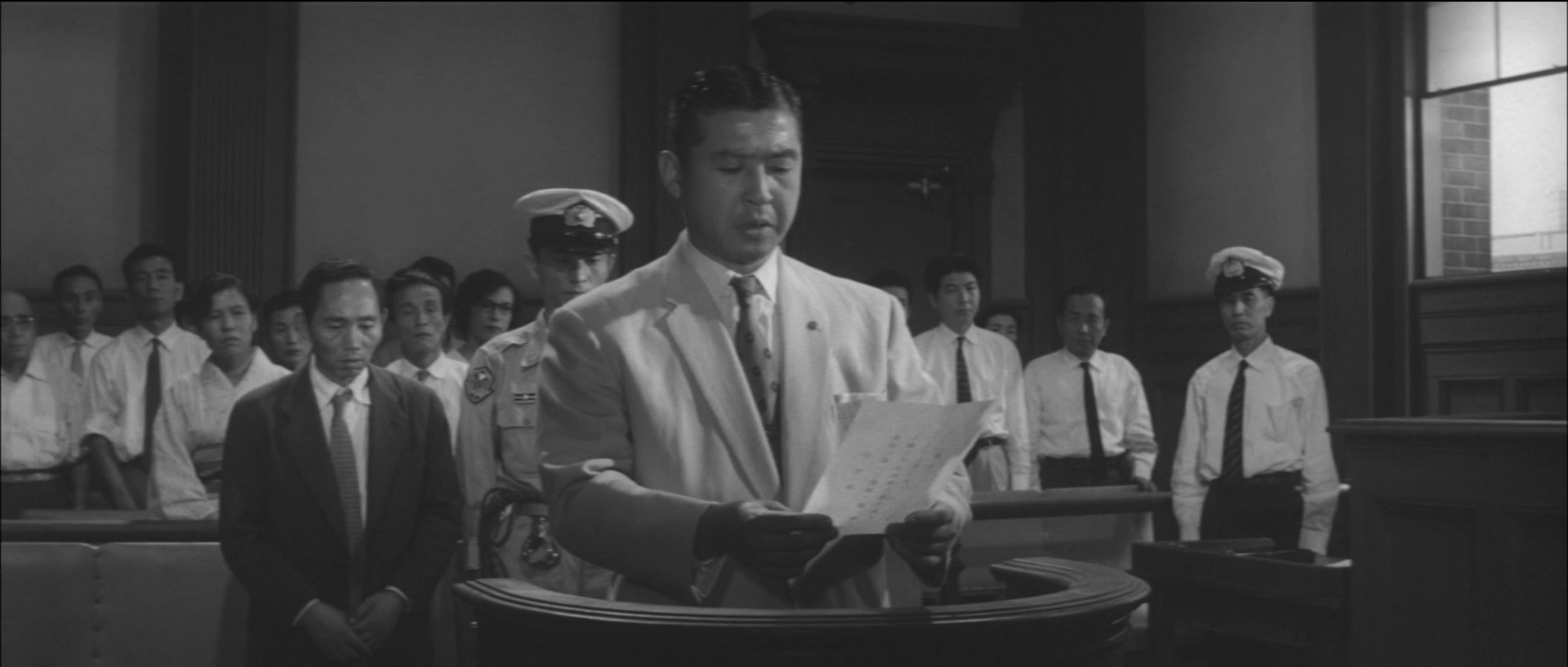
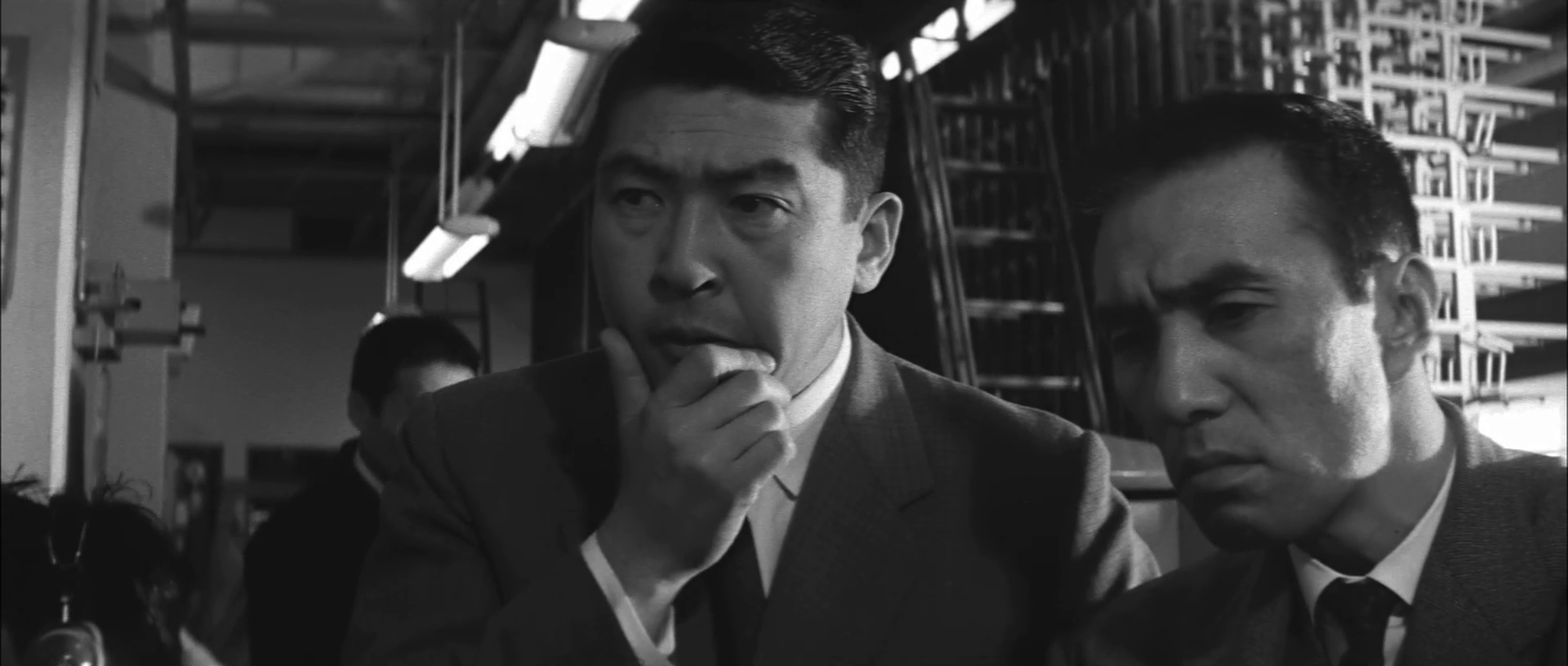
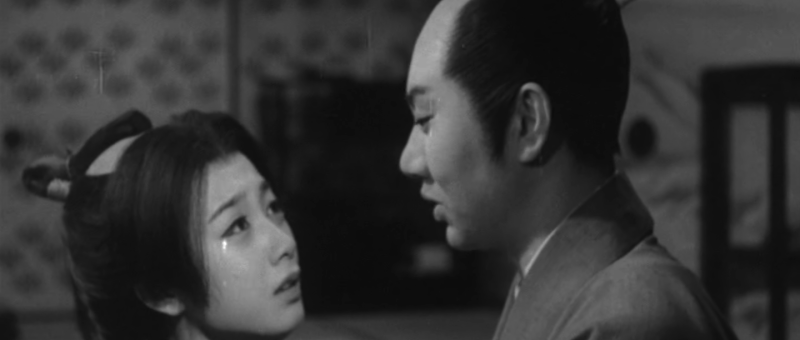
“What did I do to deserve this?” the hero of Hiromichi Horikawa’s The Lost Alibi (黒い画集 あるサラリーマンの証言, Kuroi Gashu: Aru Sarariman no Shogen) ironically asks himself, as if he assumed the answer to be “nothing at all”. Adapted from one of Seicho Matsumoto’s “Black Album” novellas, as in much noir fiction even small transgressions can have drastic consequences and even a step out of line can seriously derail an otherwise ordinary life. Ishino’s (Keiju Kobayashi) dilemma is that he knows if he speaks the truth he may damn himself and ruin the “boring, routine” life he’d built, but if he says nothing another man may pay with his life for a crime he didn’t commit. 

The film’s Japanese title is “testimony of a salaryman,” and that’s really want Ishino is giving in his opening voice over. He explains that he’s a high-ranking executive on a good salary living a fairly successful life working not at the top company in his field but the second best, which he’s fine with. He gets on with his boss precisely because he’s not interested in his job and is even hopeful he could stay on past retirement if he wanted to for that exact reason. But on the other hand, he’s 42 and has 13 years until he’s able to retire. He has no more ambition and his life is essentially on autopilot. All he has to do is stay the course for the next decade or so and everything will be fine.

But when he leaves the office, Ishino doesn’t go straight home as he tells his colleague he will when refusing an invitation, but hangs out in the city drinking and playing pachinko before going to see his mistress, Chieko (Chisako Hara), one of the secretaries working in his office. The affair may be a way of rebelling against his ordinary life or of playing with fire knowing that he could lose everything if his sexual transgression were exposed. Then again, he tells his wife he’s been to the cinema on his own, which in some ways isn’t all that different from having an affair seeing as he’s still skipped out on his domestic responsibilities and left her home alone to look after the children.

The film is mildly critical of this modern salaryman tendency in drawing a direct link between a series of murders of women who were home alone, as if their men had left them vulnerable by vacating the domestic space. Ishino’s wife Kuniko (Chieko Nakakita) even says that she feels a little afraid seeing as she’s home on her own all day while the children are at school and Ishino at work. Ishino suggests they get a dog and in the back of his mind wonders if he should get one for Chieko too. It’s not immediately clear what she is getting out of this affair, though it seems fairly likely that Ishino is paying for her upkeep which is why it’s so easy for him to force her move after they’re unwittingly dragged into the spotlight when the accused man, Sugiyama (Masao Oda), tries to use Ishino as an alibi after bumping into him in the street leaving Chieko’s apartment.

Sugiyama is his neighbour and Ishino only knows him on nodding terms, but he’s immediately worried that he may expose him. After all, he regards this as a low-class area he had no real reason to visit and does not want to have to explain what he was doing there. It doesn’t occur to him that his neighbour may not have wanted to either, if he not been accused of murder. The situation looks quite bad for Sugiyama given that the police have a lot of circumstantial evidence against him, though Ishino alone knows that Sugiyama didn’t do it because he really did see him at a time that makes it difficult to place him at the scene of the crime. But Ishino denies that he was ever there. Those around Ishino seem to condone the idea that he should just keep quiet. He’s under no obligation to help Sugiyama and it’s really nothing to do with him, anyway.

But the irony is that as things spiral out of control even Ishino seems to believe in the absolute power of a confirmatory witness. When he imagines himself talking to the police, the policeman doesn’t believe him because he lied the first time and the information is inconvenient to his case. He tells Ishino that his confession isn’t worth anything without a secondary witness to back it up, meaning he’d have to produce Chieko. It doesn’t really occur to Ishino that if he had told the truth to begin with the police might have been discreet about it. After all, admitting you were with another person whose reputation you do not wish to compromise seems to work well in crime novels. When he finds himself blackmailed by a student living in Chieko’s building, he too tries to get the student’s friend to come as a witness, bizarrely thinking that having someone else there ought to provide security seeing as he could also go to the police and accuse him of extortion if something went wrong never quite thinking that the friend might simply lie just as he did. 

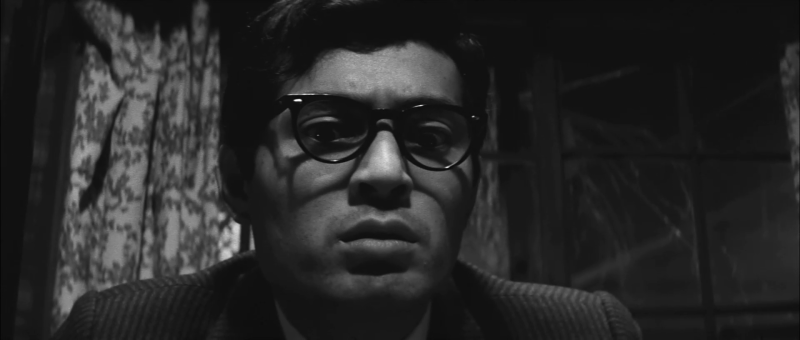
A kind of comparison is indeed being drawn between Ishino and Matsuzaki (Tatsuyoshi Ehara), the student, who is painted as someone with a bad character who has got himself into debt not solely because of his economic circumstances but greed and an irresponsibility with money. Matsuzaki also behaves in an inappropriate way with Chieko in making passive-aggressive romantic overtures and becoming angry when she brushes them off, later basically forcing himself on her having just threatened blackmail. They are each in their way symptoms of post-war moral decline in their intense selfishness. Ishino has achieved the salaryman dream, but now he feels hemmed in by it and empty inside. Matsuzaki, meanwhile, is greedy and amoral, desperate enough to resort to loan sharks and blackmail while chasing the dream that Ishino has already achieved all too easily. 

But the truth is that Ishino had done a lot to deserve this, and got off fairly lightly in the end. A single moral transgression can snowball, and it’s true enough that none of this would have happened if he hadn’t had the affair in the first place. If he’d only told the truth about it, Sugiyama may not have had to go to trial and it would never have come out. If Sugiyama had been executed for this crime, Ishino would be a murderer, and maybe twice over as the person who killed the woman, and maybe several others, may have gone on to kill again until someone finally caught them, if ever. He’s endangered his wife and family, quite literally in physical terms, but also their future and wellbeing given the possibility of his reputation being ruined leading to losing his job while his children would suffer the stigma of his disgrace. He felt conflicted, chased to the brink and even considering suicide knowing his cowardice could condemn Sugiyama to death, but still chose the path of extreme selfishness which seems to be that which defines the post-war era. Even when all’s said and done, he can’t help thinking it’s all a little unfair. All he did was cheat on his wife and lie about it, why is he the one losing everything? But in the end, that’s exactly why. He cheated the salaryman dream, and the retribution was swift. Only too late did he realise the value of his “boring, routine” life of easy comfort in the increasingly compromised post-war society.


Trailer (no subtitles)

Pressure of Guilt (白と黒, Hiromichi Horikawa, 1963)

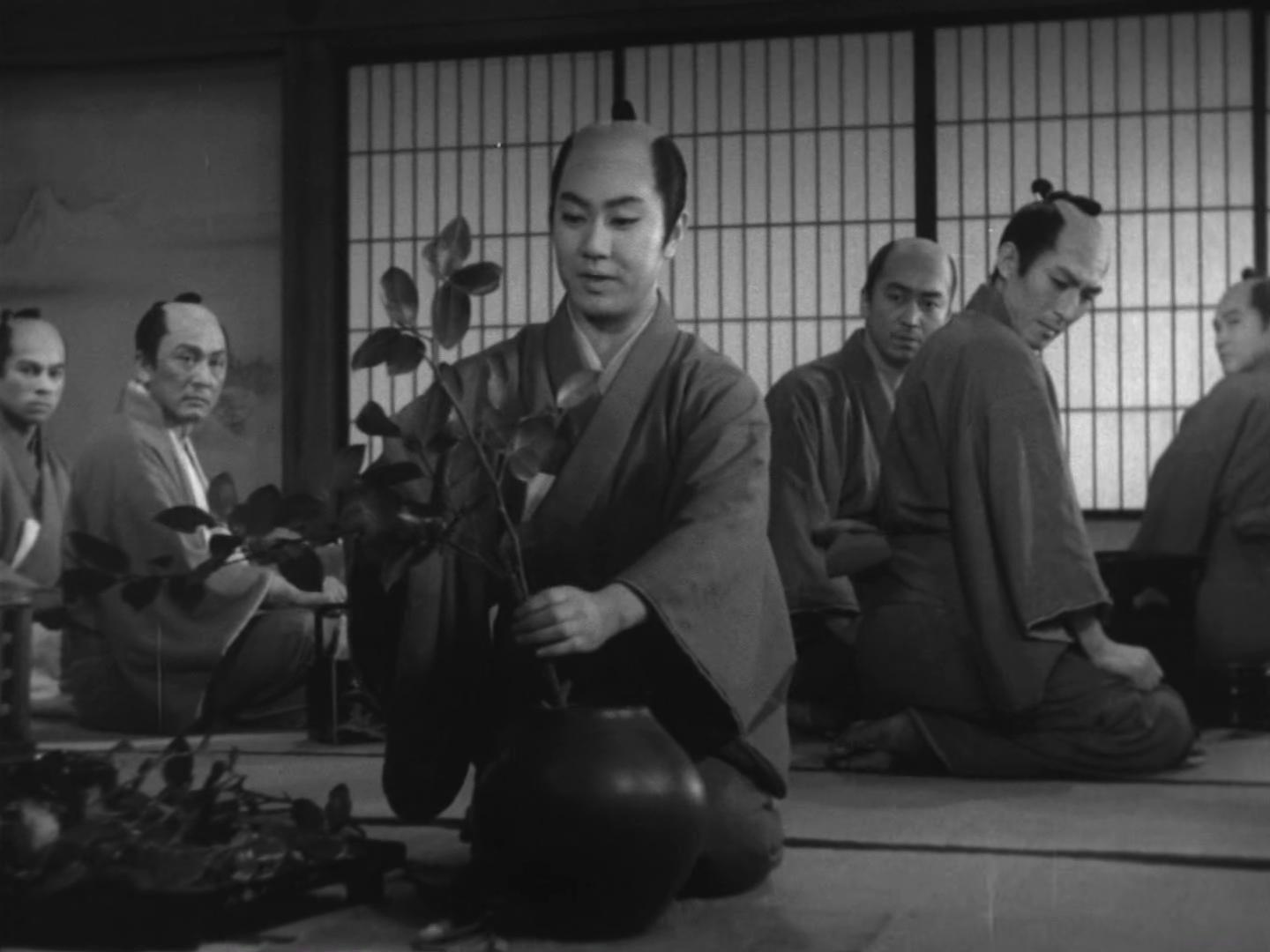
When a lawyer’s wife is found strangled at home, the police immediately arrest a “suspicious person” who is found to be carrying jewellery stolen from her room. Open and shut case, some might say, and prosecutor Ochiai (Keiju Kobayashi) agrees. But in reality nothing is really so black and white in the contemporary society of Hiromichi Horikawa’s crime drama, Pressure of Guilt (白と黒,, Shiro to Kuro). Perhaps ironically, the film opens in the same way as Tai Kato’s later I, the Executioner, with a man’s hands stretching around a piece of rope, and also features a law enforcement officer who is distracted from his duties by a bad case of piles he refuses to get treated.

Ochiai says his haemorrhoids are born of sitting down thinking too much, but the problem might be that he doesn’t think enough or that he suppresses thoughts which might prove inconvenient. There’s something that bothers him about the idea of Wakida (Hisashi Igawa) being the killer, but he shoves his doubts out of his mind and continues questioning him until he confesses. Some of this is born of prejudice. Wakida has a long criminal record mainly for burglary, and has been in and out of prison the whole of his adult life. Currently suffering from TB, he appears to be one of the young men who came to the city in search of work but found only exploitation and eventually had no option but to turn to crime. That he stole the jewellery is not in dispute, but Wakida continues to insist he didn’t kill Mrs Munakata (Koreya Senda). His lack of cooperation puzzles Ochiai, but it confuses him still more that Wakida keeps changing his story. He is, it seems, trying to tell him what he wants to hear, but finally becomes fed up with the whole thing after receiving a letter from his mother telling him to confess. She evidently thinks he did it too. Falling into hopelessness, Wakida declares that he no longer cares who did it and might as well be him because his life is essentially already over. In his condition he won’t last long in prison. There’s no prospect of turning his life around, either. So a death sentence won’t make any difference.

The funny thing is that it’s realising his fiancée must have figured out he did because she’s covering up for him that forces Hamano (Tatsuya Nakadai) into a confession. He’s plagued by guilt that Wakida might die for his crime, but not enough to exonerate him by coming forward. Nevertheless, he tries to talk Wakida round, asking why he confessed and if he was pressured by the prosecutors. The Japanese legal system places confessions above all else, but the issue is that Wakida’s confession is the only evidence that links him to the murder. Just because he stole the jewellery doesn’t mean he killed Mrs Munakata. Ironically enough, he’s defended by the victim’s husband (Koreya Senda), an anti-death penalty activist lawyer who agrees to represent him in part to vindicate his principles. Wakida only agrees to cooperate with Munakata and Hamano who is acting as his assistant when he confirms they’re not trying to help out of pity but only for their own self-interest. 

Yet Ochiai might have a point asking why Hamano is certain that Wakida didn’t do it, or why, on beginning to suspect him, he’s trying so hard to exonerate a man who was going to pay for his crime. It’s Hamano’s own suspiciousness that leads him to question his judgement about Wakida and ask himself if his thinking wasn’t too black and white and he should have investigated more thoroughly rather than pressuring Wakida into a confession and charging him. On realising he may have made a mistake, Ochiai puts the prosecution in a difficult position as his boss warns him of the potential reputational damage to the police and prosecutors if they’re shown to have made a mistake with the mild implication that, as he had assumed someone in Hamano’s position would want to, he should just keep quiet and let Wakida hang. 

Surprisingly, however, it only seems to improve the public’s view of the prosecution to be able to see them admit that they made a mistake and try to fix it rather than refuse to change their position. Mystery writer Seicho Matsumoto makes a cameo appearance as a TV pundit who says he admires Ochiai, while the film also uses a real TV show host to interview Ochiai boosting the sense of realism. As it turns out, there was more to the story than even Ochiai or Hamano thought, but still he declares that it’s better to be a fool than a hopeless idiot and that he was right to look for the truth even if it ended up biting him in the behind. The pressure of Hamano’s guilt, however, never really dissipates even as he struggles with himself, trying to find a way to save Wakida and avoid becoming a murderer twice over, without giving himself away. Nothing’s really that black and white after all, and this case wasn’t exactly open and shut, but the conviction that it had to be based on prejudice and circumstantial evidence might be the biggest crime at all no matter how it actually turned out.


Sun Above, Death Below (狙撃, Hiromichi Horikawa, 1968)

“Fighting is the only way I have to live my life” according to a hitman battling existential ennui in Hiromichi Horikawa’s Toho action B-movie, Sun Above, Death Below (狙撃, Sogeki). A starrier affair than the studio’s other forays into moody crime, Horikawa’s psychedelic exploration of a killer drawn to death nevertheless situates itself very much in the world of 1968 in which the hero’s attempt to escape his sense of emptiness through killing is directly linked to an increasing economic prosperity and its concurrent costs in the nation’s current geopolitical positioning. 

As if to signal this sense of societal anxiety, the first target Matsushita (Yuzo Kayama) knocks off is sitting in the back row of the last carriage on the Shinkansen out of Tokyo. His next job, however, will apparently be more complicated. A criminal gang want him to take out “five or six” targets at a specific location in order to intercept a fortune in gold smuggled by, as later becomes clear, an international Chinese gangster, though the men at the waterside greet each other in Arabic. The hit does not go entirely to plan but Matsushita is later able to bring the situation under control allowing the gang to get their hands on the gold. The smugglers, meanwhile, are obviously unhappy with this turn of events and send in their best hitman (Masayuki Mori), who permanently travels with a blonde companion, to take back what’s theirs. 

Matsushita is a killer for hire so he doesn’t really care very much about the gold and is even annoyed when the gang try to pay him with it, correctly surmising they didn’t really expect him to succeed so haven’t bothered bringing any cash. As he explains to love interest Shoko (Ruriko Asaoka), he doesn’t really care about anything. He simply shoots at the best target, man, with his favourite gun. He kills to feel alive, explaining that the intense concentration in which he becomes one with the gun as if it were an extension of his own body allows him to overcome his sense of existential dread which is why he’s so ice cool all the time. 

A fashion model obsessed with rare butterflies and the paradise to be found New Guinea Shoko dreams of a time in which they can become one under the sun, envisioning a future in which Matsushita has become friends with all the creatures of the forest. Yet as Matsushita tells an old friend, Fukazawa (Shin Kishida), running a secondhand gun shop near a US army base as a front for his revolutionary activities, he has no dream or ideal and knows nothing other than killing. Whereas as his friend is apparently working for some kind of never quite explained but seemingly left-wing/anarchist cause, Matsushita simply lives out his days of emptiness on some level knowing he’ll probably never make it to Shoko’s New Guinean utopia. 

Fukazawa nevertheless hints at the political instability all around them, firstly agreeing to pawn a gun for a pair of Americans after beer money, and then by handing Matsushita an AK47 apparently smuggled back from Vietnam via the American base. Matsushita’s sense of ennui is born of this growing unease with empty capitalistic consumerism and a concurrent sense of powerless in Japan’s ongoing complicity with American foreign policy in Asia. Displaying a sense of Sinophobia familiar from many similar films of this era, the big boss turns out to be Chinese while many that surround him are also from outside of Japan even if Matsushita’s rival is just a slightly older, crueller version of himself. 

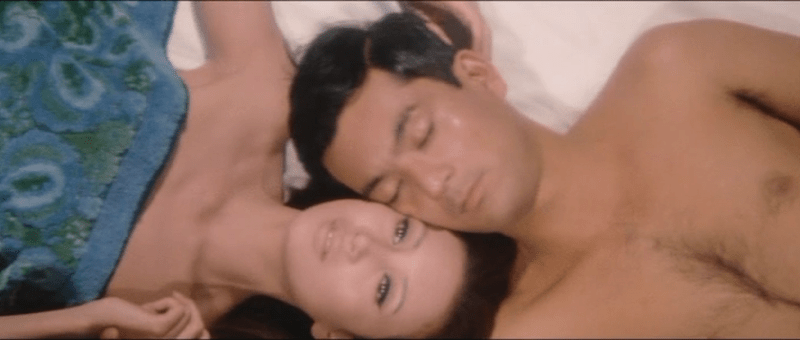
One of Toho’s more serious crime dramas, Horikawa often veers into experimental territory with his psychedelic butterfly imagery Matsushita apparently having some kind of vision while experiencing carnal ecstasy that equates climax with literal gunshot, while his usage of stock footage featuring the New Guinean indigenous community along with an out of place blackface tribal dance performed in a hotel room clearly display some outdated attitudes otherwise unacceptable and potentially offensive in the present day. Nevertheless, Sun Above, Death Below largely lives up to its hardboiled title, the Japanese “Sniping” perhaps also hinting at the various ways Matsushita eventually strays into the crosshairs of his own inevitable destiny. 


Original trailer (no subtitles)