
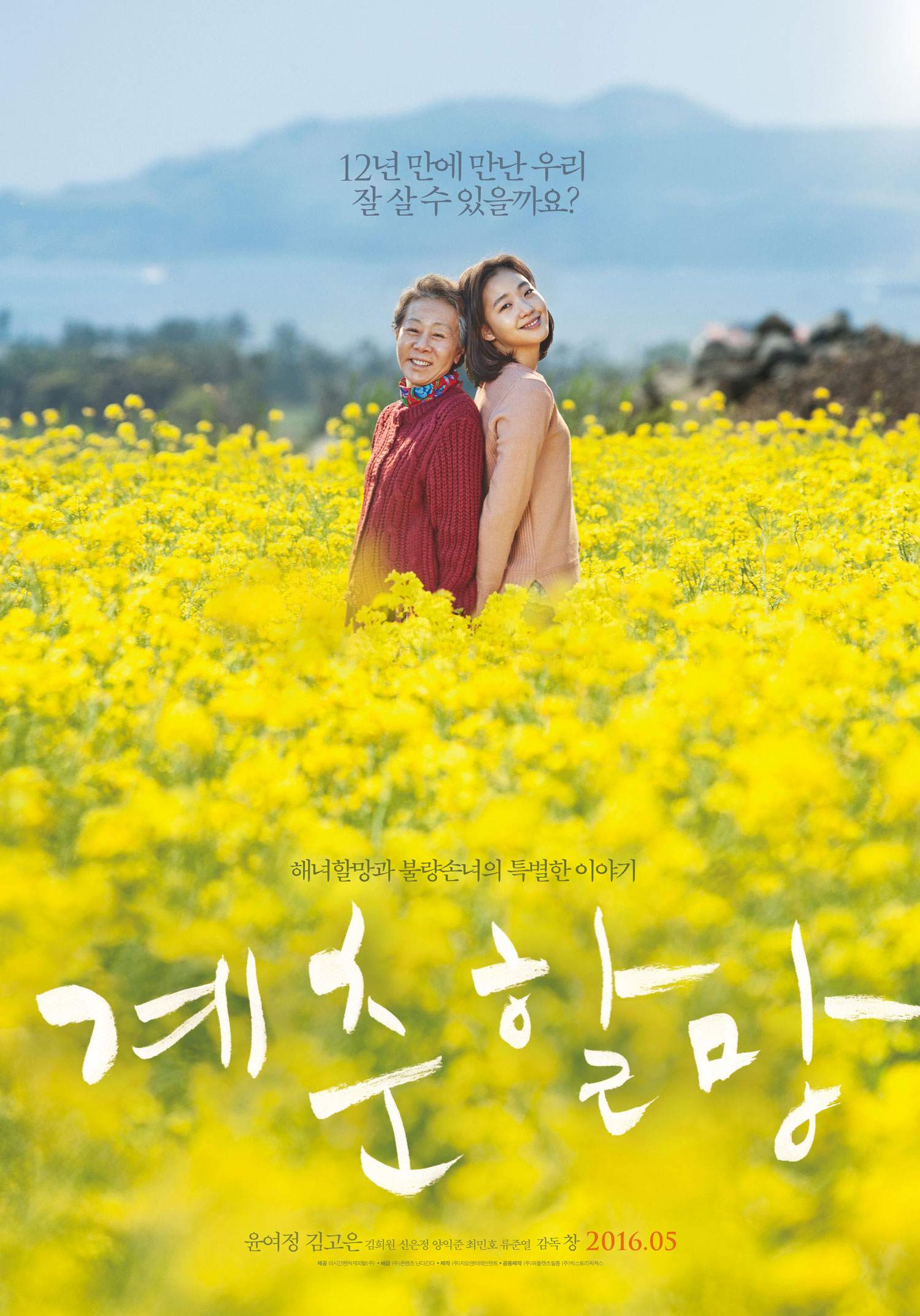
“Even when life is hard…if someone’s on your side, it’s possible to go on” the selfless grandmother at the centre of Chang’s heartrending familial melodrama Canola (계춘할망, Gyechun Halmang) imparts, just something she learnt naturally in the course of her life. Partly a tale of familial disruption, dislocation, and the corrupting influences of modernity, Chang’s eventually uplifting tale is also one of interpersonal salvation in which gentle support from a welcoming community can overcome personal trauma and allow those who feared they’d never recover to become a more authentic version of themselves.
Granny Gye-chun (Youn Yuh-jung) is an ageing Haenyo diver on picturesque Jeju island currently raising her young granddaughter Hey-ji following the death of her son, his wife having left sometime previously. Clearly devoted to each other, tragedy strikes when the pair leave for the city to attend a wedding only to become separated in a crowded marketplace. Gye-chun frantically searches for Hye-ji, but is unable to find her. 12 years later, she’s still pasting missing child flyers all over town while refusing offers to sell her traditional home, which has no indoor plumbing, because she is afraid that Hye-ji may some day return and find her gone. And then a miracle occurs, a young woman (Kim Go-eun) telephones the missing hotline after seeing a picture on a milk carton and claims to be Gye-chun’s missing granddaughter, explaining that her birth mother abducted her from the marketplace and had her adopted by her step-father so she had a different name. Her mother later died and the step-father then callously placed her in an orphanage after which she ended up on the streets.
Gye-chun is so happy to have her granddaughter back that she perhaps does not fully process the full implications of the situation, taking each of Hye-ji’s claims at face value while struggling to separate the idea of the child she lost with the young woman who has returned. On a shopping trip she buys her a colourful ribbon bow hair clip not entirely appropriate for someone of Hye-ji’s age while confused that she no longer needs her help to go to the outhouse in the dark and locks the door while having a bath. Nevertheless she also seems to worry about what her life might have been like during the time they spent apart, irritated by the other villagers’ disapproval in reminding them that they all reassured her Hye-ji was probably “fine’ when the evidence suggests that fine is something she hasn’t been for a long time.
The fishing village is indeed a little more conservative than the city, many scandalised by Hye-ji’s short skirts and by the fact that she smokes, instantly labelling her a “delinquent” and possible troublemaker. There is then something uncomfortable in their insistence that she lead a “good life” needing to be guided back towards a more socially conservative path as if her fashion sense and minor rebelliousness make her a “bad person”, while only Gye-chun seems to appreciate that Hye-ji may have come back with trauma from which she will need love and support to recover while short skirts and smoking aren’t really much to worry about in the grand scheme of things. Letting Hye-ji know that she is always on her side, she tries to give her the gentle love and encouragement she needs to become her best self while Hye-ji both begins to feel a genuine connection to the older woman and consequently intense guilt for having kept something from her and perhaps unfairly taking advantage of her kindness.
Nevertheless, in this more positive environment Hye-ji begins to blossom while Gye-chun begins to put the past to rest, the two of them finding in each other the means for salvation in which it ultimately no longer matters if they share a blood relation or not. Contrasting the beautiful Jeju landscape with its brilliant fields of yellow canola flowers, with the darkness of Hye-ji’s city life, Canola is keen to suggest the difference an environment can make to a quality of life while quietly stressing that in the end it’s people and the bonds between them that matter, just something you learn naturally as you grow.
Canola screens 6th November as part of this year’s London Korean Film Festival.
Original trailer (English / Korean subtitles)
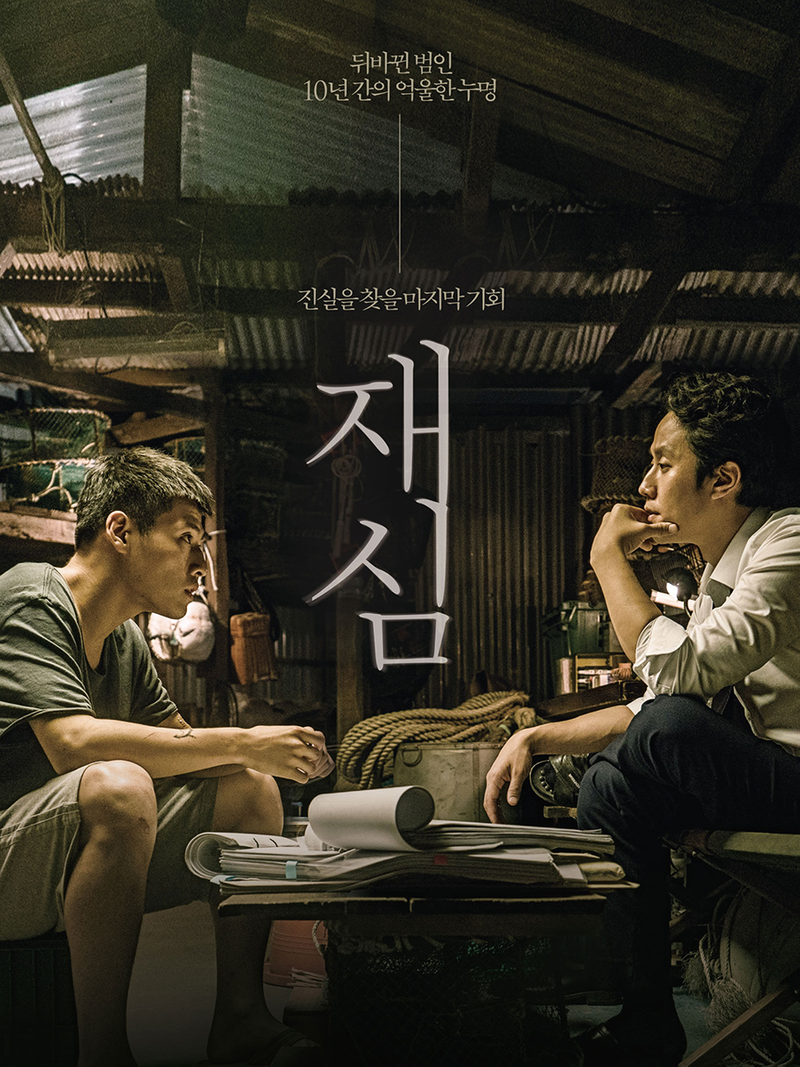 It’s a strange paradox that in a land defined by corruption of the legal system, your only hope my lie in a new trial. So it is for the hero of Kim Tae-yun’s latest film. Inspired by a real life miscarriage of justice (a case which was in fact still continuing at the time of filming), New Trial (재심, Jaesim) takes aim at everything from social inequality to unscrupulous lawyers and abuse of police power. A teenager pays dearly for being in the wrong place at the wrong time, not only losing 10 years of his life but the entire possibility of his future now that he’s forever branded a criminal. That’s aside from leaving his ageing (now blind mother) alone with no means of support and the additional burden of trying to clear her son’s name.
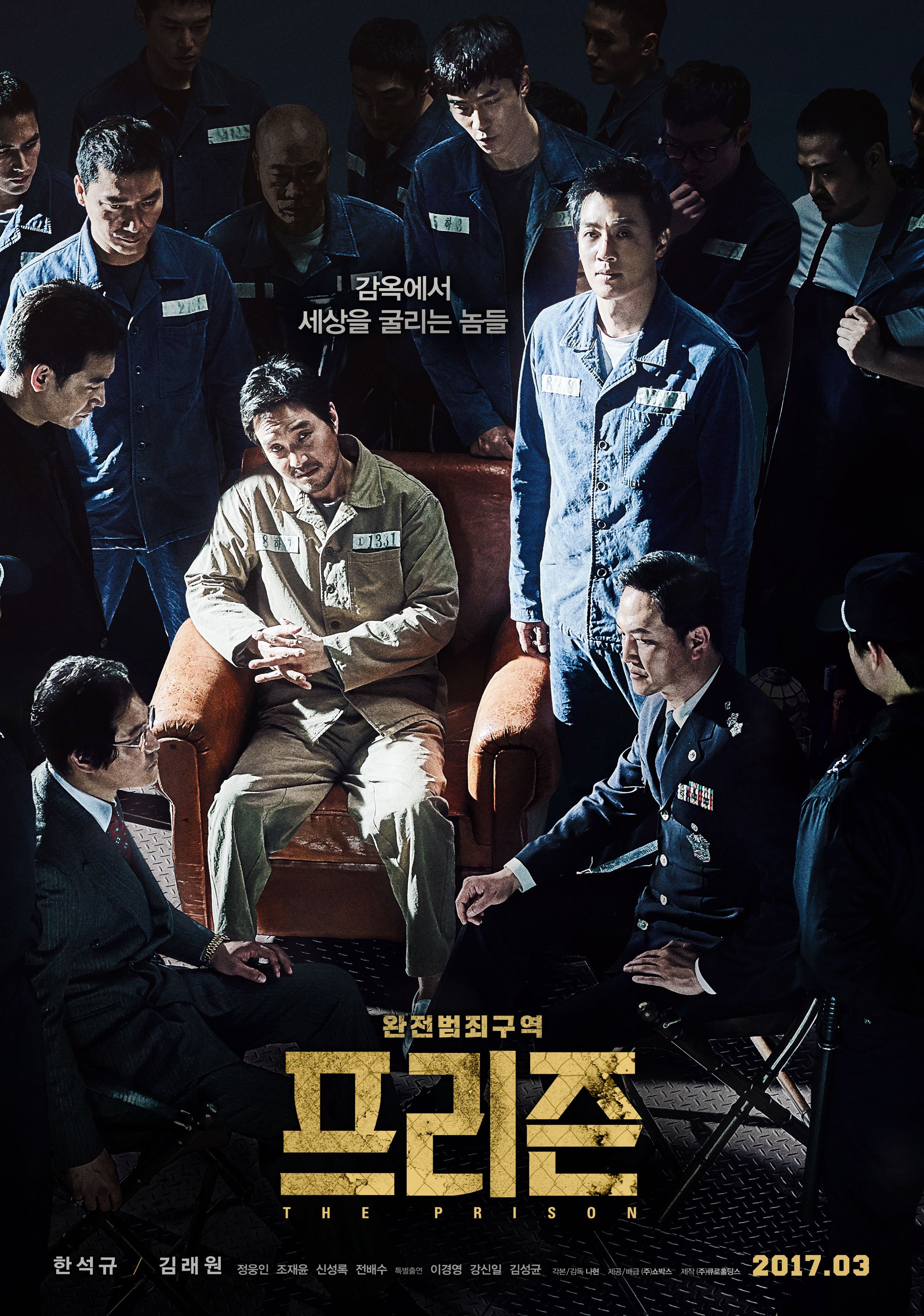 Prison can be a paradise if you’re doing it right, at least if you’re a top gangster in the movies. Na Hyun’s The Prison (프리즌) paints an interesting picture of incarceration and the way it links into his nation’s infinitely corrupt power structures. When investigators wonder why a crime spree suddenly came to an end, one of the frequently offered explanations is that the perpetrator was most likely arrested for another crime but what if you could turn this obviously solid alibi to your advantage and get those already behind bars to do your dirty work for you?
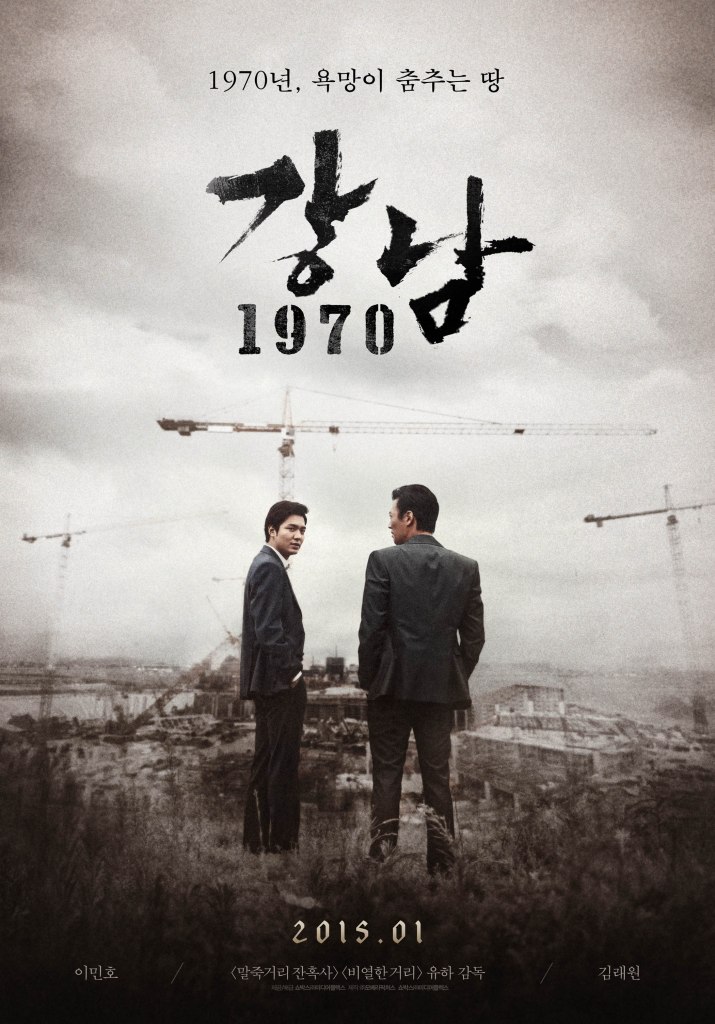 Yoo ha takes us back to the 1970s for some Gangnam Blues (강남 1970, Gangnam 1970) in a sorry tale of fatherless men caught up in dangerous times of ambition and avarice, very much at the bottom of the heap and about to be eclipsed by the “new world” currently under construction. Back then, Gangnam really was all just fields, owned by farmers soon to be cheated out of their ancestral lands by enterprising gangsters engaged in a complicated series of land grab manoeuvres, anticipating the eventual expansion of the bursting at the seams capital. Far from the shining city of today, Gangnam was a wasteland frontier town, the sort of place where a man can make a name for himself trading on his wits and his fists alone.
 Many people all over the world find themselves on the zombie express each day, ready for arrival at drone central, but at least their fellow passengers are of the slack jawed and sleep deprived kind, soon be revived at their chosen destination with the magic elixir known as coffee. The unfortunate passengers on an early morning train to Busan have something much more serious to deal with. The live action debut from one of the leading lights of Korean animation Yeon Sang-ho, Train to Busan (부산행, Busanhaeng) pays homage to the best of the zombie genre providing both high octane action from its fast zombie monsters and subtle political commentary as a humanity’s best and worst qualities battle it out for survival in the most extreme of situations.
 Windows on Worlds