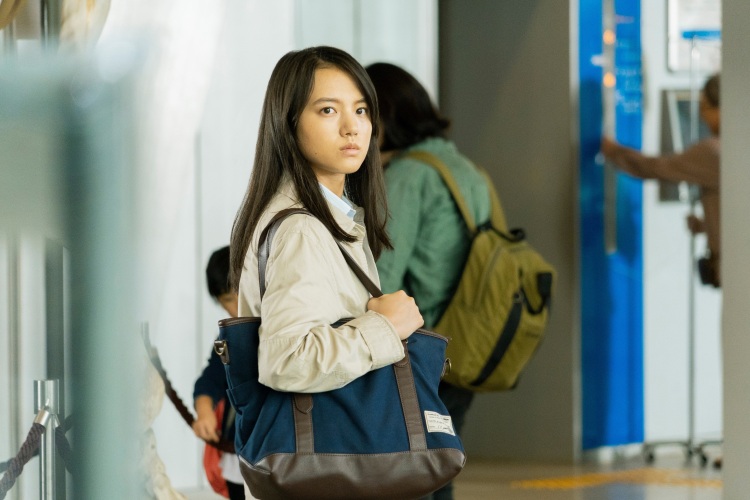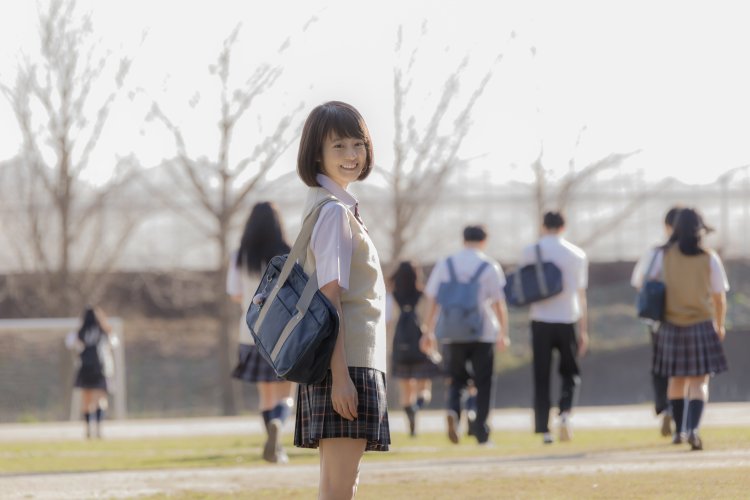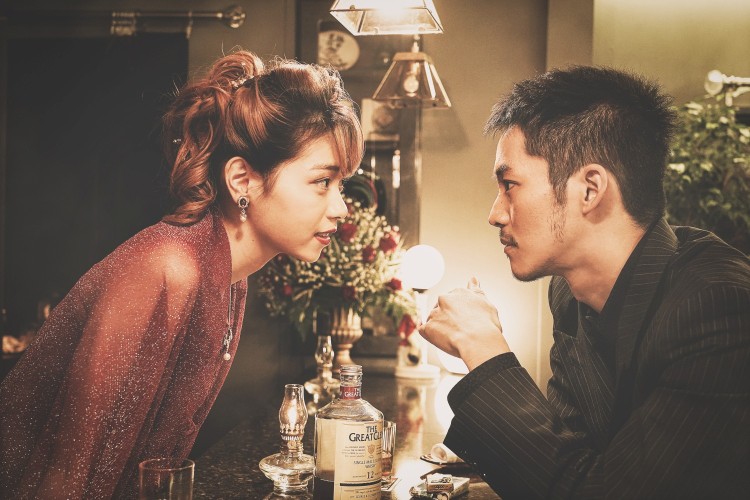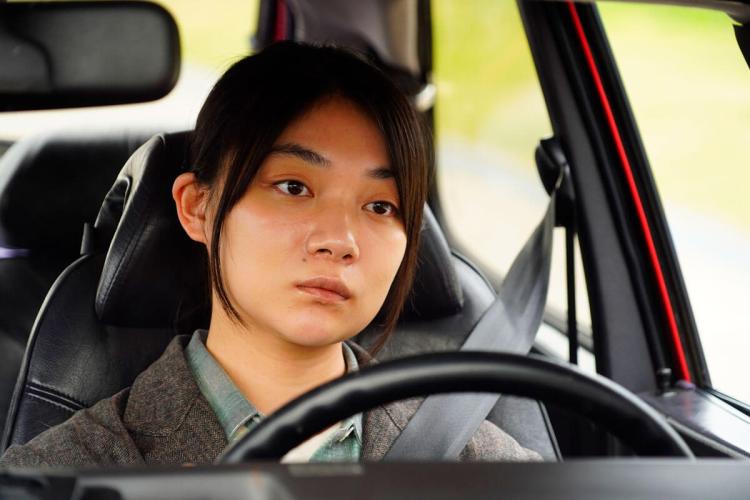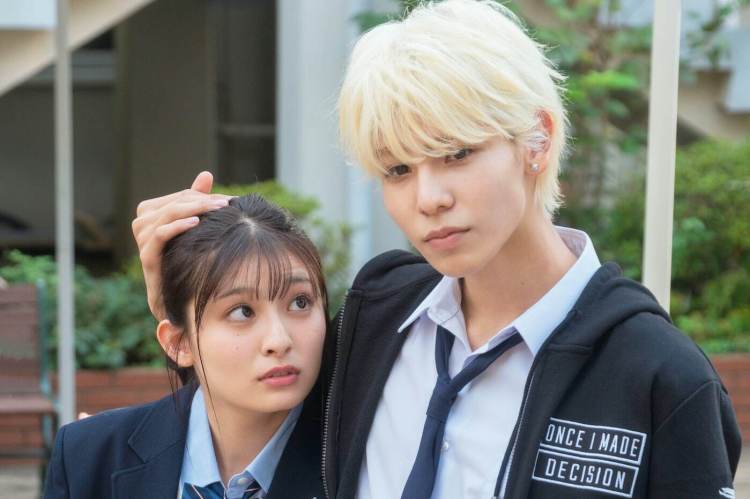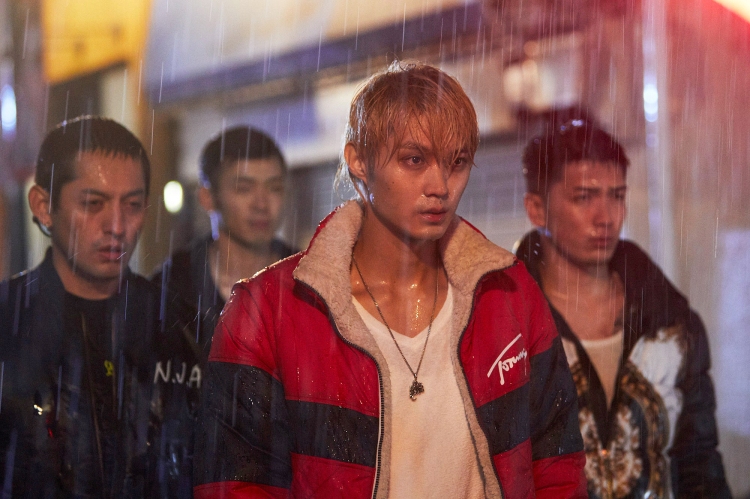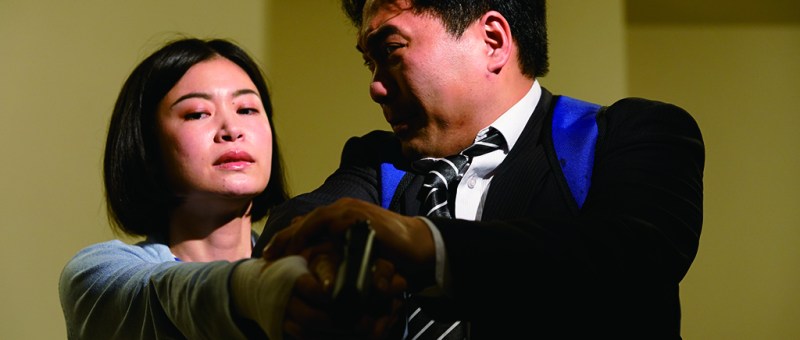
Howling (遠吠え, M Haris Sheikh, 2022)

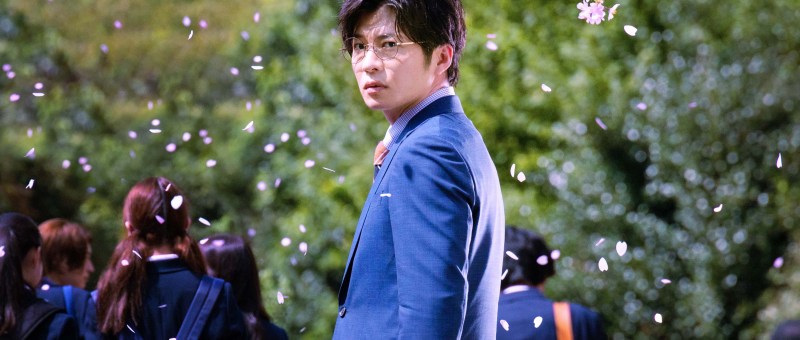
“What do you want from the world?” the sad sack hero of M Harris Sheikh’s noirish drama Howling (遠吠え, Tooboe) is asked on three separate occasions giving first a non-answer, then the answer he’d like to give, then the real one which is far less heroic or edifying but at least honest. Like everyone else, he too is howling into a void putting a brave face on his inner insecurity while longing to play the hero in his own life only to discover that no matter how many chances he’s given he may not be up to the mark. 

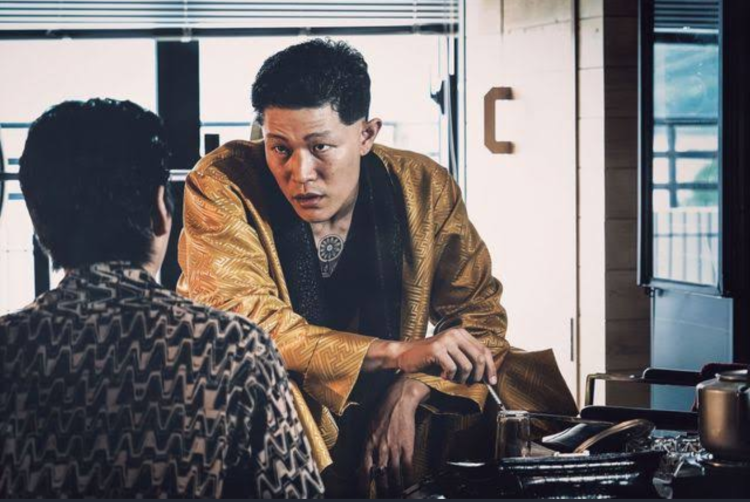
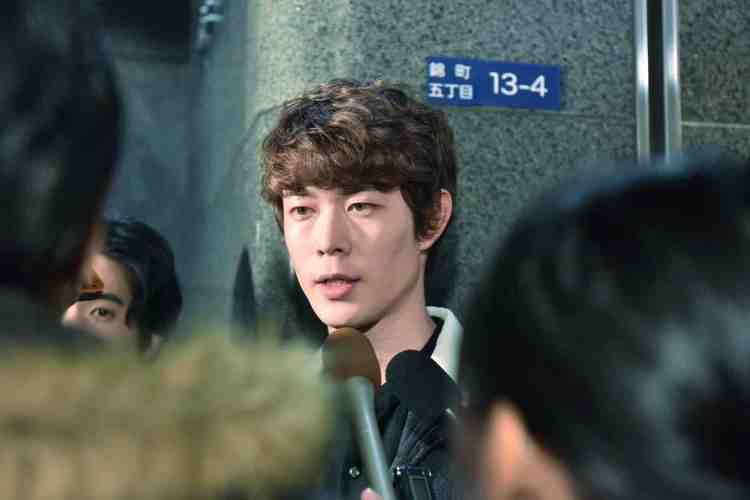
A self-professed nice guy, we first meet Ryuji (Ichiro Hashimoto) trying to help a young woman at the karaoke bar where he works escape sexual harassment in the workplace promising that he can protect her while pledging to kick the other guy’s ass, only as it turns out the other guy is her boyfriend and it’s Ryuji who’s been harassing her. Quite clearly uncomfortable, the young woman informs Ryuji she’s already reported him to HR and he’ll probably be fired today which is exactly what happens but rather than take this as an opportunity to learn Ryuji goes around telling everyone it was all a misunderstanding and he’s fallen victim to a needlessly judgmental society. “The world is tough for middle-aged men” he adds, lamenting that even having a “friendly discussion” with a younger woman has somehow become inappropriate. 

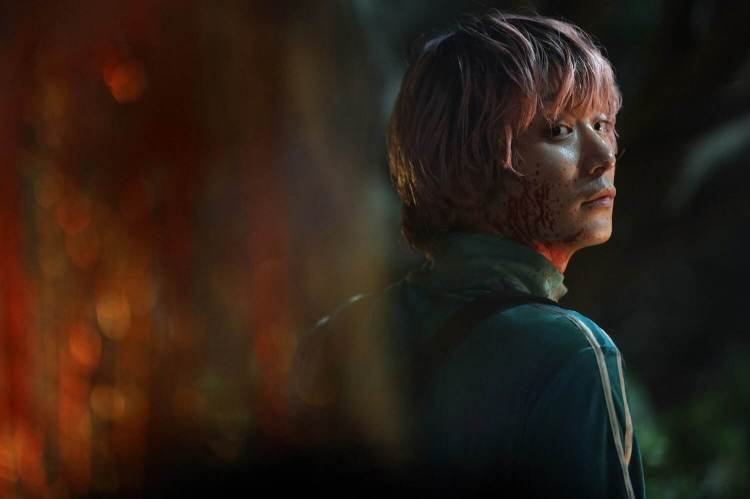
It’s these twin facets of his personality that go on to precipitate his downfall in his intense desire to conform to the masculine ideal as a protector when coming into contact with two women who are each in need of his help. Apparently never having had a girlfriend, Ryuji is overexcited when a 20-year-old college student, Akane (Yukino Takahashi), contacts him, a 40-year-old man, on a dating app never really considering that there might be something untoward going on right until the moment she explains that she’s trying to hire a randomer to kill her abusive father who happens to be the chief of police which is why she can’t hire a professional. Meanwhile, a school reunion grants him the opportunity of reuniting with middle-school crush Chisato (Sonae Kotani) only to discover that she has since married the bully, Tsuchida, who made their lives miserable and is trapped in an abusive relationship. Ryuji had been unable to protect her when they were children but claims to be different now. Then again Tsuchida said the same the thing and clearly hasn’t changed at all. Hoping to solve all his problems by getting a sudden windfall and proving that he can be the hero, Ryuji agrees to Akane’s plan but of course eventually disappoints himself realising that his fantasy of being a saviour is just that. 

Meanwhile the two women, who happen to be neighbours in a swanky high rise apartment block, begin by believing that they cannot escape their situations alone but need a male saviour each placing their hopes in the overeager Ryuji but finally freeing themselves perhaps spurred on by Ryuji’s male failure but otherwise rendering him an irrelevance. By the final confrontation each of the trio has sustained a wound to the hand to which Akane and Chisato jokingly refer as an eye of truth just like the hero from a manga yet with its own degree of truthfulness in that the women begin to see that their freedom is theirs for the taking while Ryuji is finally forced to accept that his presence is unnecessary proving his mettle only with a gesture of nihilistic futility. 

On the other hand we can also see the hand of a highly pressurised society on his fragile masculinity as he accidentally bonds with a pair of weird street preachers crying out for revolution but with an ironic bent. The first is a former Todai graduate who lost a good job in advertising because of all his unhealthy coping mechanisms. He preaches about a creating a truly fair society free of inequality brought about through a deadly virus claiming that his guru, the Master, is the origin not only of the coronavirus pandemic but every other dangerous pathogen known to man. Somewhat contradictorily, the Master reveals that he once lived in a swanky high rise apartment and would like to do so again which sounds somewhat incompatible with the goals of his revolution assuming he’s not planning to build so many that everyone who wants one can have one. The contradiction is further borne out in Ryuji’s answers about what it is he wants from the world, firstly stating ordinary requests such as a decent job, home, wife, children etc before admitting he’d actually prefer a really big house, lots of women, and respect from other people the last emphasising his internalised sense of belittlement and failure. 

The world that Ryuji inhabits does indeed seem to be oppressive and ominous, the strange overgrown alleyway below an overpass where he first encounters the revolutionaries reflecting the dark path of his soul while in the film’s complex production design the sterile space of the upscale tower block becomes a kind of trauma room where truths are aired leading to the final confrontation whimsically scored with circus music in which the women literally take matters into their own hands, and even the diner where Ryuji meets Akane takes on a Lynchian sense of the uncanny. Darkly humorous with its deadpan gags of giant spaghetti and the completely random entrance of an unrelated older woman also with a glove on her right hand ranting about her daughter’s hairdresser boyfriend and his koala neck tattoo, Sheikh’s absurdist drama quietly builds to its theatrical conclusion bringing down the curtain on a bloody tableaux the world as prophesied turned upside-down.  


Howling screened as part of Osaka Asian Film Festival 2022

International trailer (English subtitles)

Skeleton Flowers (かそけきサンカヨウ, Rikiya Imaizumi, 2021)

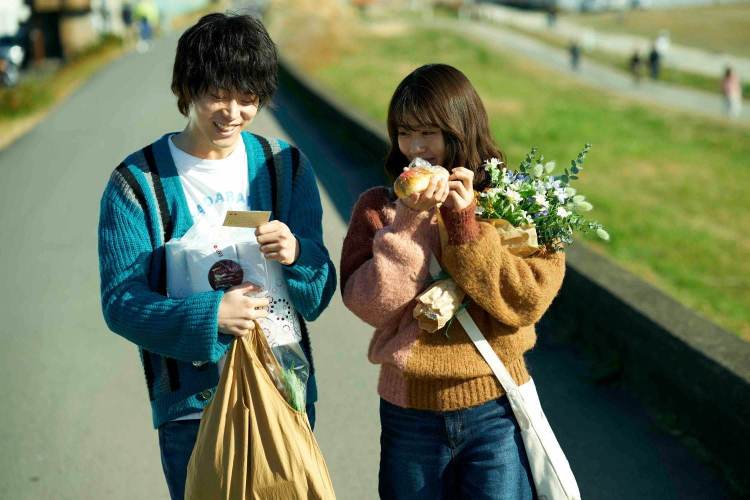
The increasingly prolific Rikiya Imaizumi has become most closely associated with zeitgeisty youth romance accurately capturing the fears and anxieties of 20-somethings in contemporary Japan but brings his characteristically mellow touch to the classic coming-of-age tale in adapting Misumi Kubo’s short story Skeleton Flowers (かそけきサンカヨウ, Kasokeki Sankayo). In contrast to the gloominess of the title, teenage angst is never where you’d expect it to be as the variously pre-occupied pair at the film’s centre strive to deal with their problems with maturity and mutual compassion. 

You might for instance expect Yo (Sara Shida) who has been raised by her father, Nao (Arata Iura), since her mother left the family when she was three to feel jealousy or resentment when he sits her down and tells her that he’s fallen in love and wants to get married, especially as the woman he’s fallen in love with, Yoshiko (Akiko Kikuchi), has a small daughter of her own, Hinako. Attempting to be sensitive, Nao frames the new arrangement in a positive light in that Yo will be have more free time to be a regular teen and hang out with her friends rather than skipping out on after school clubs to take care of the household chores, a spin which could backfire in that Yo has obviously been used to being the lady of the house and might feel as if a responsibility she was proud of carrying is being taken away from her or that she’s being displaced by the new maternal presence of Yoshiko. She may in fact feel a little of this, but rather than lashing out or rebelling against the change in her familial circumstances she does her best to accept it with good grace while simultaneously prompted into a reconsideration of the relationships between parent and child meditating on the absence of her birth mother and wondering how and why she could have come to leave her behind. 

Riku (Oji Suzuka), her sometime love interest, had started a discussion in their friendship group about their earliest memories Yo unable to come up with anything on the spot but later remembering her mother carrying her into the forest and showing her the skeleton flowers of the title which appear bright white when dry but gradually become transparent as they absorb water. Later she remembers something else unsure if it’s a memory or a dream, a feeling of being suspended in mid-air as her parents argued as if everyone had forgotten she existed. Riku too frequently states that he’s “nothing at all”, feeling himself lost and directionless after being diagnosed with a heart condition later forced to accept that his life will never be the same as it was and his choices are now limited in ways they might not have been before. His health anxiety ironically leaves him emotionally numb, unable to identify let alone express his feelings as he becomes close not only to Yo but another, much more direct, girl in his class Saki (Tomo Nakai) who later does him the favour of explaining exactly what his problems are hoping to jolt him out of his emotional inertia while taking him to task for having been unintentionally condescending in his innate kindness. 

It’s this innate kindness that eventually sees both the teens through, each approaching their various worries with a mature compassion. Riku had felt uncomfortable in his familial home and jealous of Yo’s “real family” as she comes to accept her new relationships with Yoshiko and Hinako, but himself comes to understand the complicated relationship between his overbearing grandmother and lonely mother as one of mutual support getting another tip from Yoshiko that even if he feels has no particular talents, also jealous of Yo’s artistic prowess, his ability to support those around him is a talent in itself and an important part of the whole. A robust emotional honesty and the willingness to think things through calmly eventually lead stronger bonds between all concerned, Yo forgiving her birth mother while also embracing a new maternal relationship with Yoshiko, while Riku gains a new perspective of his own and even if he still hasn’t quite learned to identify his feelings is more comfortable with expressing them directly. A gentle, empathetic coming-of-age tale Imaizumi’s teenage drama roots itself in a world of fairness and compassion that allows each of the teens the space to figure themselves out while helping others to do the same no longer transparent in the rain but whole and fully visible not least to themselves. 


Skeleton Flowers streams in the US until March 27 as part of the 14th season of Asian Pop-up Cinema

Original trailer (English subtitles)

My Brother, the Android and Me (弟とアンドロイドと僕, Junji Sakamoto, 2022)

“You’re a real weirdo, aren’t you?” the lonely hero of Junji Sakamoto’s existential psychodrama My Brother, the Android and Me (弟とアンドロイドと僕, Ototo to Android to Boku) is constantly told not least by his exasperated and unsympathetic boss but on another level may be the most human of them all longing for a sense of connection in a world which seems to have rejected him to the point that he is no longer sure whether or not he actually exists. Quite clearly drawing inspiration from Mary Shelly’s Frankenstein, the Modern Prometheus as well as its many film adaptations though most obviously the 1931 Universal Horror classic, Sakamoto’s oblique chronicle of crippling loneliness presents a man estranged from himself but looking for comfort in his reflected image. 

Sakamoto opens the film in true gothic fashion, his hero Kaoru (Etsushi Toyokawa) a dark and mysterious figure obscured by an oilskin coat amid the ever falling rain illuminated only by the light of an ominous moon. As we discover he works as a university professor but says nothing to his students other than making an apology for his poor handwriting, sometimes writing with both hands at once as he recreates complex algorithms on an old-fashioned chalkboard. The students all mock him, not least because of a curious neurological condition which prevents him from fully controlling his right leg with the consequence that he is often compelled into strange, jerking movements or else to hop on one foot from place to place. In truth, his errant right leg is a symptom of Kaoru’s sense of displacement in that he does not quite feel it to be his own and experiences only pain when his right heel is in contact with the floor. 

It’s this problem with his leg that seems to most irk his boss who later invasively barges in to the gothic western-style mansion/disused hospital where he lives in the company of his nephew, a psychiatrist, who probably means well but offers little more than platitudes in insisting that Kaoru’s leg has simply been left off his internal schematics so all they need to do is mentally reconnect it. His boss meanwhile bizarrely states that Kaoru needs to get well “so that cracked roads can be fixed”, ironically treating his body like a machine that needs to be repaired so that it is optimised for work rather than out of care for another human being who may be in pain. Having barged into Kaoru’s office, he’d discovered his secret project in a highly complex, lifelike robotic arm which was a problem for him because he was supposed to be working on a robot that fixes potholes which seems almost ironic in its banality. In any case, Kaoru also has the rather unfortunate habit of entirely ignoring the person talking to him as if they weren’t even there which is in itself an ironic inversion of the way others see, or more to the point don’t see, him. Kaoru’s boss describes him as creepy because he has no presence, you’re never sure if he’s there or not, but can immediately sense the “giant” presence of his other self, the lifelike android he’s building in his spare time. 

The android is in its way his Frankenstein’s monster, an ironic attempt to rebirth himself constructed in the ruins of his family’s abandoned obstetrics hospital. By chance, he meets a young woman (Yuki Katayama) who closely resembles himself and carries her into his laboratory like the Bride of Frankenstein but treats her only with tenderness and sympathy while attempting to fend off his estranged half-brother (Masanobu Ando) constantly hassling him for money to pay for medical care for the father who abandoned him. His mother had instructed him to find his other self which is perhaps what he’s been doing if caught between the Id and Superego of his brother and father. Constant fire imagery including the repeated motif of a burning body in a conventional fireplace keys us in to Kaoru’s positioning as a “modern Prometheus” whose duty it is to keep the fire in while giving birth to himself as manifested in a perfect manmade creation that others may find frightening or uncanny though the android itself has done nothing wrong because it is in essence the embodiment of Kaoru’s frustrated humanity. Featuring sumptuous gothic production design with sci-fi sheen, Sakamoto’s steely, fragmentary drama finds a man in search of himself while also a perpetual exile but discovering a sense of warmth in the uncanniness of a reflected image. 


My Brother, the Android and Me streams in the US until March 27 as part of the 14th season of Asian Pop-up Cinema

International trailer (English subtitles)

To Be Killed by a High School Girl (女子高生に殺されたい, Hideo Jojo, 2022)

Are there some desires so taboo that they can never be spoken of even if they cause no harm to others? Adapted from the manga by Usamaru Furuya, Hideo Jojo’s To Be Killed by a High School Girl (女子高生に殺されたい, Joshikosei ni Korosaretai) is indeed about a man fixated with the idea of being strangled by a teenage girl but one who also embodies the inspirational teacher stereotype planning to leave behind him a kind of manifesto instructing his pupils to live their lives to the full while remaining true to their authentic selves in the knowledge that their lives will be defined by the manner of their deaths. 

Subverting a trope from shojo manga, Higashiyama (Kei Tanaka) is the hot new teacher at school proving an instant hit with most of the girls in his class but he’s come with an ulterior motive in that his ultimate fetish is being murdered by a high school girl. Even so, he claims to feel no attraction to his teenage pupils and is sickened by teachers who abuse their position later revealing he orchestrated his predecessor’s downfall by accelerating a complaint that had already been registered against him for inappropriate contact with students. His fetish lies solely in being overpowered by someone he would ordinarily perceive as being weaker than himself after fighting for his life with all his strength. 

Then again, as Satsuki (Yuko Oshima), a councillor brought into the school following a traumatic incident who also happens to be Higashiyama’s uni ex, points out his techniques for manipulating the girls are little different than those of a predatory sex offender grooming their prey. He figures out their weaknesses and goes out of his way to make each of them feel special while simultaneously provoking a sense of jealousy so he can bend them to his will in enacting a plan that will eventually lead to his murder in the middle of the school cultural festival. On the other hand, he crafts his plan in such a way as to protect his killer, his fetish won’t be fulfilled unless it’s a perfect crime, and because of the nature of the girl he’s selected he’s confident she won’t even remember having killed him and therefore will remain largely unaffected. 

Higashiyama doesn’t give much an explanation for his fetish save an allusion to having been born with the cord around his neck, a sensation he claims to remember only later admitting that he “recovered” a memory of it after his mother described the event to him. He later says something similar to Satsuki after suffering with amnesia, claiming to remember how he ended up in the hospital but then confessing that Satsuki had explained it to him on a previous occasion. He claims that he’s not suicidal but continues to fixate on death as force which gives life meaning, paradoxically insisting on living with all his might while otherwise drawn towards mortal extremity and fearing a “bad” ending such as being pushed off a cliff or poisoned with carbon monoxide neither of which would satisfy his fetish in their distinct lack of romance.  

Even so as another pupil suggests is he just a regular “pervert” after all despite his rather high minded-view of his proclivities? Despite all his manipulations, the various girls which he targets all seem to begin making progress in their lives, an angry judo enthusiast kicking back against a boy who’d long been bullying her, a shy theatre kid turning popular girl, and a young woman beginning to overcome her trauma thanks to the power of unconditional friendship. His replacement, a middle-aged man with a bad wig, is completely ignored by his pupils hinting perhaps that Higashiyama’s teaching practice was effective no matter now uncomfortable if not quite inappropriate some of his conduct may have turned out to be. After all he argues, he’s not a “pervert” just someone who wanted to be murdered by a teenage girl insisting that his fetish is essentially harmless because he has no sexual interest in the girl herself yet as we later see it does indeed involve inflicting violence on her. 

Playing with a series of B-movie tropes aside from Higashiyama’s taboo fetish from multiple personality disorder to premonition, traumatic memory, and fatalistic obsession, Jojo’s approach is arch in the extreme fully embracing the outlandishness of the material while both lending the troubled Higashiyama a degree of sympathy and hinting at the buried darkness beneath his handsome facade even as that darkness is essentially directed within, his death dictated by the circumstances of his birth as he “remembers” them. Occasionally shifting into the realms of giallo with creepy spiders and ominous red lighting, To Be Killed by a High School Girl never takes itself too seriously but revels in the inherent absurdity of its premise while remaining strangely respectful not only of the hero’s unique dilemma but of the ordinary problems among the otherwise besotted teens. 


To Be Killed by a High School Girl screened as part of Osaka Asian Film Festival 2022

Original trailer (no subtitles)

The Warped Forest (あさっての森, Shunichiro Miki, 2011)

“Life is about making the most of what you get” according to a former blackmailer seeing the error of his ways when his attempt to use his ill-gotten gains to woo a lover abruptly fails, but you can always dream in the wild and wacky world of Shunichiro Miki’s The Warped Forest (あさっての森, Asatte no Mori). A quasi-sequel to Funky Forest: The First Contact which Miki also co-directed, Warped Forest is in someways more conventional lending a loose overarching narrative to its otherwise disconnected scenes set in a bizarre village where the residents can spend acorns and pinecones to tinker with their dreams assuming they don’t mind the possibility of emerging with a curse. 

Like Funky Forest, the film revolves around three trios in the black and white sequence which opens the film two staying at the same inn but adopting vastly different personas in the full colour alternate universe to which we are soon transported. The older male trio are informed they’ve been “missing” for two days though they don’t remember going anywhere and are very confused by the apparent forward motion of time. One does remember, however, that some of his students with whom he’d been on a camping trip turned up at his door and explained they’d been mysteriously beamed to a forest and had to hike their way back. 

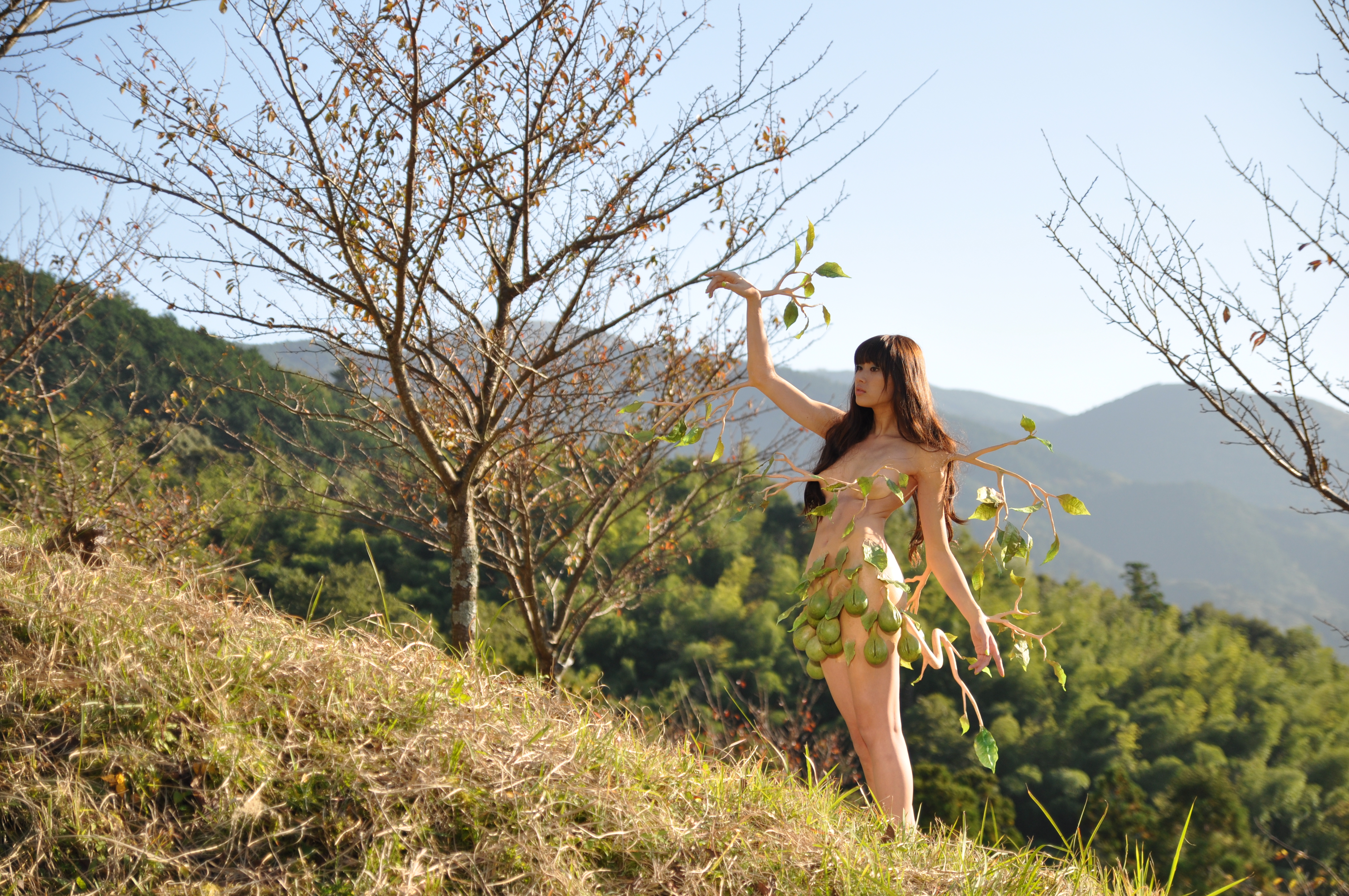
The Japanese title simply means the forest of two days from now, but warped might be a good way to describe it if it weren’t for its judgemental implications seeing as it is indeed somehow out of shape seemingly inhabited by giants and tiny people who co-exist in the same space with tinys prioritised, the giants squashing themselves into tiny chairs and drinking tiny coffees while appearing to also occupy spaces of their own (in which tiny people are not really seen). In any case, this is also a place where everyone is obsessed with the very suggestive Kattka fruit which pulses and gyrates, oozing a sweet liquid and growing from trees in the form of human women which Miss Au Lait, one of the sisters from the inn but here in kimono and walking with a cane, waters by drinking from her flask and passing liquid via her mouth. 

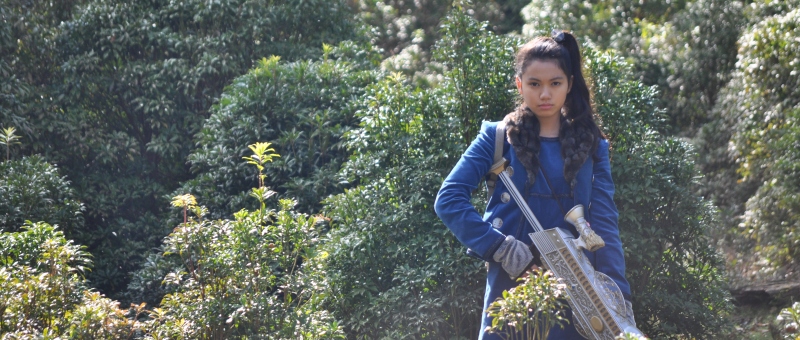
Even here, everyone is lovelorn and unhappy. “If only we could have fun in our dreams” one young man laments after trying out a positive thinking training hall where they’re told to repeat the phrase “I am happy” only to discover their instructor is far from happy himself. They know they can’t have real happiness, so all they can do is dream of it which is why some of them are intent on “dream-tinkering” despite the rumours of negative consequences and vast costs required. Each of the inn trio, all romantically frustrated store owners in this reality, eventually decide to give it a go after one of them gets hold of a special guide that apparently allows them to bypass the curse by promising to sacrifice two days. Appli (Fumi Nikaido) meanwhile is wracked with guilt after having asked to see her whole family happy in her dreams only for her sister to encounter an accident which is why she roams the forest with a gun which shoots white liquid from its penis-shaped tip to trap a “pinky panky” monster and get hold of a weird bug to get the worms out of Miss Au Lait’s leg. 

As for Miss Au Lait, “dreams are just dreams. I have to accept reality” she sadly remarks on turning down a invitation, “I’ll leave my beautiful dream untouched” too fearful and insecure to chase happiness while her suitor later echoes her words unwilling to run away in flights of fancy. Even so we might wonder which is the dream world and which the real, the hotel guests later finding each other and experiencing a kind of true happiness in togetherness unknown in the forest where everything seems to be not quite right. Continuing the slightly vulgar aesthetic of Funky Forest with his fleshy fruits and frequent innuendo, Miki conjures a bizarre world which nevertheless possesses an internal normality in which people are distanced from one another, not least by their respective size differentials, but each longing for something more which they fear cannot be found not even in dreams. 


The Warped Forest is released on blu-ray in the UK on 21st March courtesy of Third Window Films alongside Funky Forest: The First Contact in a set which also includes a feature length commentary, director interview, and introduction.

Original trailer (English subtitles)

.

Funky Forest: The First Contact (ナイスの森 The First Contact, Katsuhito Ishii & Hajime Ishimine & Shunichiro Miki, 2005)

“Is that normal?” someone asks watching a previously mild-mannered doctor having a right old go at a tiny man baby currently attached to a high school girl’s armpit after being pulled free of its aquatic carapace, “don’t be rude” his companion shushes him. Katsuhito Ishii, Hajime Ishimine, and Shunichiro Miki’s Funky Forest: The First Contact (ナイスの森 The First Contact, Nice Mori: The First Contact) became the best known example of the short-lived trend in surreal comedy which came to dominate a certain kind of Japanese cinema from the late ’90s to early 2000s while perhaps surviving into the present day in a more arthouse friendly form in the deadpan absurdist cinema of filmmakers such as Akira Ikeda (Ambitious Places, The Blue Danube) or Isamu Hirabayashi (Shell and Joint).  

Even so, Funky Forest is wilfully anarchic skipping between a series of interconnected skits that eventually coalesce as something like a unique universe loosely revolving around three “unpopular with women” brothers and a “delusional” high school teacher in a non-relationship with a former student who thinks he’s seen a UFO and is engaged in a battle to save the aliens from the planet Piko-Riko. Two and a half hours long, which is admittedly pushing it for a non-linear sketch comedy, the film is split into two parts, Side A and Side B, joined by a short intermission after which the surrealism intensifies, the design of the title cards changes, and the action shifts in focus from a quiet onsen to an ordinary high school where the teacher and the two adult brothers each work. 

The action begins however with a pair of manzai comedians seemingly performing on some kind of space ship and to an audience consisting of identical military personnel each like the comedians dressed in white and silver while the show is broadcast to a man sitting in a tiny pod-like dream ship. The “Mole Brothers” recur throughout, their set routinely dividing one skit from another while one, Kazushi, also turns up on his own in a couple of other sketches as part of the great connected universe, and though their act being kind of a dud is part of the joke their variety-style humour is an otherwise key indicator of the kind of comedy which is being employed and subverted even as the action becomes ever more surreal. As it happens, each of the major plot strands seems to lead us towards a dance sequence such as that which closes the first half in Takefumi’s (Ryo Kase) strange fever dream which culminates in a Mandarin-language group routine and the first appearance of the weird, shrimp-like creatures which dominate Side B. 

Side B is indeed somewhat through the looking glass as we find the high school kids literally playing these alien creatures like musical instruments some of which need to be plugged in to the human body in one way or another such as the strangely cute rat/shrimplike beings which attach directly to the tongue. Sitting right in front of the high school class which is taught by lovelorn brother Katsuichi (Susumu Terajima) is none other than the film director and Neon Genesis Evangelion creator Hideaki Anno who later turns up again to discuss contemporary anime with guitar bother Masaru (Tadanobu Asano) in one of his many part-time jobs, though the class also includes the young primary school student who featured in the first skit in which she lamented having so much homework and escaped to the dreamscape in order to fight giant orbs with her mind. 

In an odd way perhaps that’s what our three directors are doing too, away on flights of fancy which make little literal sense but seem to have their own internal logic even though the directorial force the film presents is an adorable little scottie dog whose thoughts are translated by someone wearing a giant papier-mâché head. “Thinking is too scary, so I’ll forget about it”, someone explains which may be good advice in deciding to just accept the crazy randomness and play along. Often interrupting the action by cutting to black to mimic old-fashioned channel hopping the directors also throw in a random 20s intermission in the middle of a scene, animation of various styles, and surreal body-horror-adjacent practical effects, before winding up at the funky forest itself, a weird dreamscape somewhere in Hokkaido ruled by a dream-hopping girlband.  “What a strange dream” one character exclaims though in the great scheme of things perhaps it’s easier to make sense of a dream than a defiantly surreal reality.  


Funky Forest: The First Contact is released on blu-ray in the UK on 21st March courtesy of Third Window Films alongside quasi-sequel Warped Forest in a set which includes a feature length commentary from all three directors and a series of deleted scenes.

Original trailer (English subtitles)

Angry Son (世界は僕らに気づかない, Kasho Iizuka, 2022)

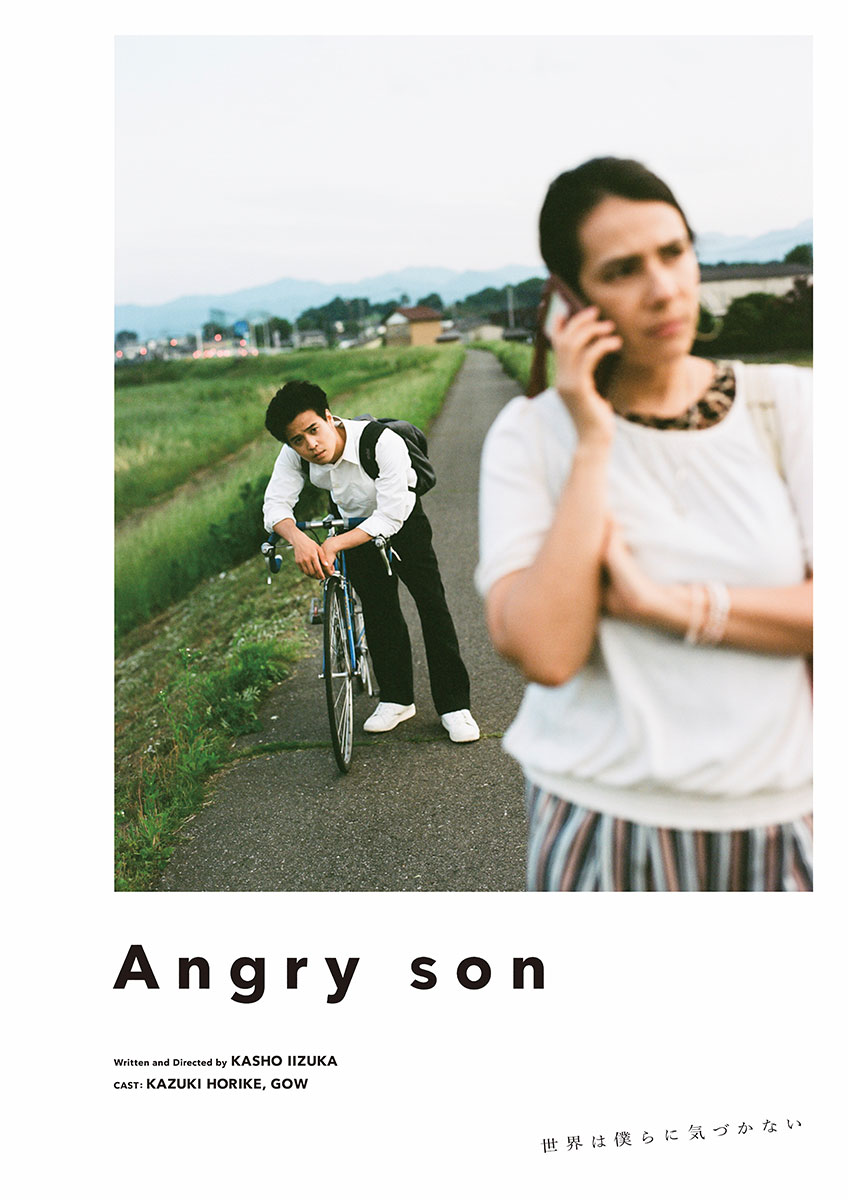
A resentful young man struggles to orient himself amid constant xenophobia and social prejudice in Kasho Iizuka’s sympathetic coming-of-drama Angry Son (世界は僕らに気づかない, Sekai wa Bokura ni Kizukanai). At a difficult age, he flails around lashing out at all around him without fully comprehending the consequences of his actions, but eventually comes to understand a little more about his mother’s past, his place in Japan, his relationships with his extended family, and his possibilities for the future while searching for the father he has never really known save for a name on his maintenance payments. 

Jun’s (Kazuki Horike) main source of resentment is towards his mother, Reina (GOW), a Filipina bar hostess by whom he feels emotionally neglected while unfairly blaming her for the discrimination he faces for being mixed ethnicity. The pair live incredibly modestly as Reina sends all her money back to her family in the Philippines even telling Jun to use his child support payments to get the electric turned back on if it bothers him that much, leaving Jun feeling as if he isn’t really included her definition of “family” or that perhaps she resents him as a burden that causes her to hold back even more of her pay. That’s one reason that he becomes so irate on coming home one day and unexpectedly finding an unfamiliar man in his pants in their living room only to be told he’s his mum’s new boyfriend, Mr. Morishita, who will be moving in the week after next because they’re getting married. Granted, this is not an ideal way to find out about such a drastic change in his living circumstances but Jun just can’t accept it, fearing firstly that Reina is after his money only to discover to his further bemusement that Morishita is also unemployed.  

News of his mother’s impending wedding has Jun feeling even more pushed out than before, especially when Reina confirms that if he’s forcing her to choose she’s going to choose Morishita and he’ll have to fend for himself. Meanwhile, his high school boyfriend Yosuke is already talking up the possibilities of marriage seeing as their prefecture has recently brought in a same sex partnership scheme. Though Yosuke excitedly talks it over with his supportive parents, Jun is noticeably sullen replying honestly that he really isn’t sure if it’s a such a good idea mostly because he doesn’t want Yosuke to get “dragged” into his ever increasing financial responsibilities to his extended Filipino family. Like many of the other kids, Jun has left his careers survey blank and it’s his refusal to think seriously about his future that eventually disrupts his relationship with Yosuke. 

In response to all of these crises, he decides to try tracking down his birth father whom he has never met a quest which takes him through a series of Filipino hostess bars across their largely rural area and eventually to a man, Watanabe, who was once married to “Loopy Lisa” as she was then but is not actually his dad. Even so, Watanabe begins to open his eyes and change his perspective on his mother’s occupation for which he had previously looked down her beginning to understand the sacrifices she is making not only for her family back home but for him too and that while her love may be difficult for him to understand it is not absent. Meanwhile, she too faces prejudice and discrimination on more than one level, a co-worker at a part-time job at a bowling alley she took while laid off from a bar struggling in the post-corona economy expressing openly racist sentiment even in front of their boss, and from the local council when she tries to apply for rent relief which she is denied on the grounds that those working in the “adult entertainment” industry are not eligible for benefits. 

Reina gives as good as she gets and refuses to let discrimination slide, but Jun finds it all quite embarrassing and is carrying a degree of internalised shame which later leads her challenge him on his fragile sense of identity that he too looks down on her as an inherently dishonest foreigner just like any other prejudiced Japanese person no different from her unpleasant colleague or the kids at school who’d bullied him for being half-Filipino, gay, and the son of a bar hostess. Confronted with his own bad behaviour and gaining a new perspective thanks both to Mr Watanabe and Morishita whom he realises is sensitive, kind, and genuinely cares for his mother he begins to envisage a future for himself only to have his horizons broadened once again when Yosuke introduces him to a young woman at the school, Mina, who is asexual but wants to raise a family and is looking for another kind of partnership that hints at a new evolution of the family unit. 

A willingness to embrace the idea of family and of being a part of one himself marks Jun’s passage into adulthood, coming to an understanding of his mother and her relationship with her family in the Philippines and willing to take on the responsibilities of a committed relationship in mutual solidarity and support. A highly empathetic coming-of-age tale, Angry Son never shies away from societal issues such as widespread xenophobia, homophobia, bullying, prejudice, and discrimination but eventually allows its enraged hero to discover a new sense of confidence in his identity in order to forge his own future in a sometimes hostile environment. 


Angry Son screened as part of Osaka Asian Film Festival 2022

International trailer (dialogue free)

Images: ©2022「世界は僕らに気づかない」製作委員会

Baby Assassins (ベイビーわるきゅーれ, Yugo Sakamoto, 2021)

“Drugs and pimping are outdated. We’re in the age of “moe”” according to a surprisingly progressive gang boss who takes his son to task for his sexism and insists that even the yakuza has a duty to create a comfortable working environment for women. Yugo Sakamoto’s anarchic deadpan action comedy Baby Assassins (ベイビーわるきゅーれ, Baby Valkyrie) is at heart a slice of life slacker drama about two young women reluctantly trying to make their way towards adulthood only the two young women are also elite assassins recently graduated from high school having been raised as coldblooded killers. 

For whatever reason it’s decided that the shy and socially awkward Mahiro (Saori Izawa) and the manic extrovert Chisato (Akari Takaishi) should become roommates occupying a furnished apartment paid for by their handler while they cover their other expenses through part-time jobs that will help them figure out how to live as “members of society”. The problems they face are perhaps those faced by many in the contemporary era just trying to make it through an unfulfilling side gig without killing anyone only for them the stakes are higher as Chisato discovers on braining a customer and strangling a moody coworker without realising she’s not just fantasising. Mahiro meanwhile finds herself entering a daydream in which she offs the combini manger interviewing her after his boring rant about kids today who think they can earn a living playing video games only to realise the store is staffed by yakuza-esque minions determined to avenge their boss. 

Already very efficient in their killing game, the girls never need to worry about cleaning up after themselves even if Chisato does get a lengthy lecture from the long suffering Mr. Tasaka who as it turns out has a lot of unsolicited advice about how she’s doing her job wrong or at least in ways which are inconvenient to him. Nevertheless while trying to live their normal lives they wind up sucked into gangland intrigue having accidentally offed a major supplier and thereafter engaged in a vendetta with equally crazed yakuza daughter Himari (Mone Akitani) who in a recurring motif proves much more in tune with contemporary gangsterdom than her “sexist” bother Kazuaki (Satoshi Uekiya). 

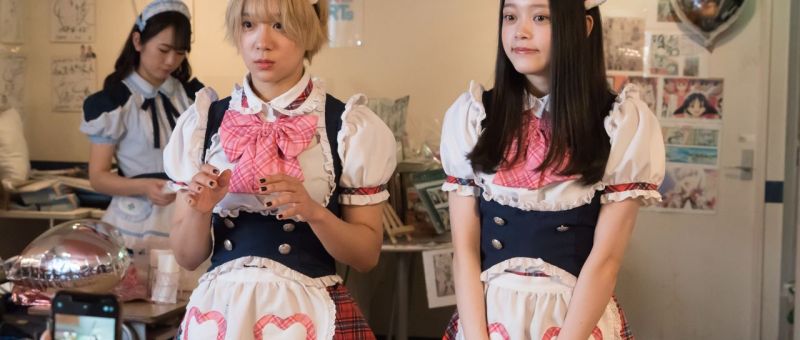
Gangsterdom has indeed changed, the boss declaring that they need to find a more “female-centric” business which is what brings them to a maid cafe as they declare themselves mystified by “moe”, rapidly becoming extremely irritated by the sickly sweet aesthetic of the cafe which requires them to order food through a series of annoyingly cutesy codewords while young women in ridiculous outfits call them “master” and satisfy their every whim. In some ways the Baby Assassins are a subversion of the kawaii ideal while also to some extent embodying its essential traits in their mix of infinite competence and adorable cluelessness, Chisato forever forgetting what’s she’s done with her weapons while Mahiro constantly mutters to herself under her breath. 

For them, killing is just another job which they mostly enjoy but can also be annoying, just like each other’s company. A mismatched pair, their dynamic strangely recalls Saint Young Men only they’re highly trained assassins trying to perfect a cover identity rather than peaced-out deities engaged in an ethnological study of life on Earth. They have a brief falling out over the same thing most roommates fight about, one feeling the other is not pulling their weight, Chisato irritated by Mahiro’s inability to find a job and Mahiro frustrated that Chisato devotes too much time to her side gig and not enough to their main job as killers for hire. Meanwhile, they’re suddenly plunged into a very adult world of bills and taxes and insurance, their handler promising to handle some of that for them because ironically enough they’re much more afraid of the taxman than they’ve ever been of the police. 

Surreal and filled with deadpan humour not to mention expertly choreographed fight sequences by Hydra’s Kensuke Sonomura, Baby Assassins is a perfectly pitched coming-of-age tale in which two young women attempt to find a place for themselves while contending with a still patriarchal society, eventually discovering a complementary sense of solidarity in their opposing natures as they come together to clean up their own mess while defiantly striking out for their futures as “members of society” whatever that may mean. 


Baby Assassins screened as part of this year’s Glasgow Film Festival.

Original trailer (English subtitles)
Japan Academy Film Prize Announces Winners for 45th Edition

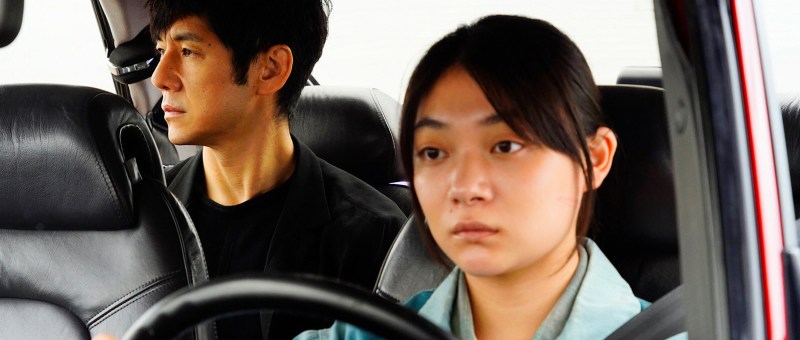
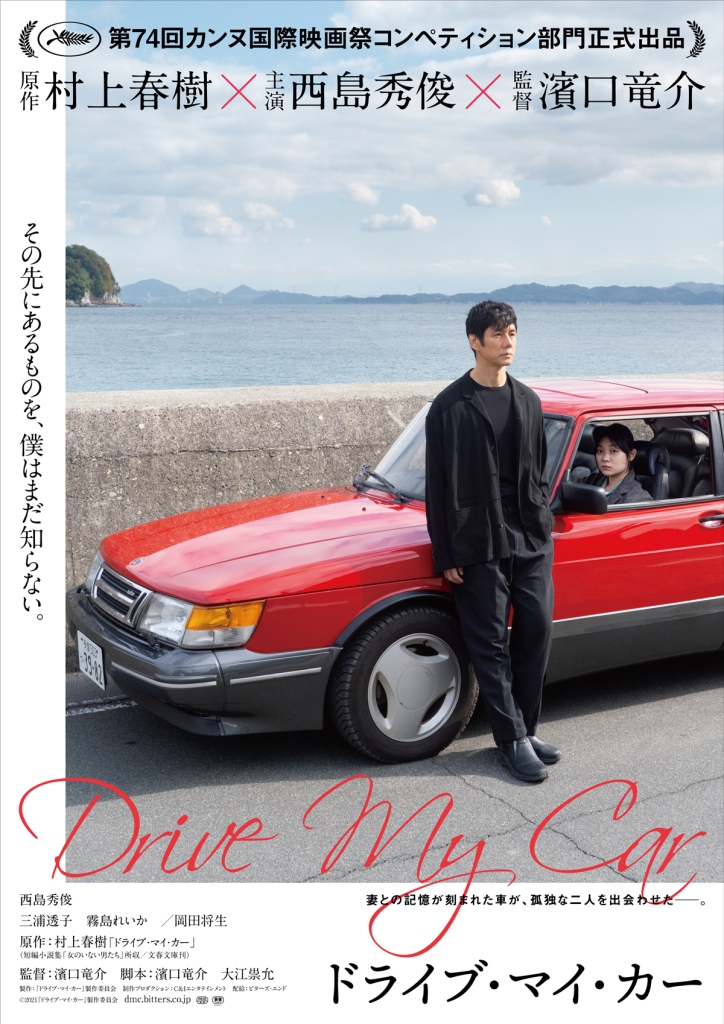
The Japan Academy Film Prize, Japan’s equivalent of the Oscars awarded by the Nippon Academy-sho Association of industry professionals, has announced the winners for its 45th edition which honours films released Jan. 1 – Dec. 31, 2021 that played in a Tokyo cinema at least three times a day for more than two weeks. International festival hit Drive My Car achieves a clean sweep winning in all eight categories for which it was nominated while Kasumi Arimura takes Best Actress for We Made a Beautiful Bouquet.

Picture of the Year

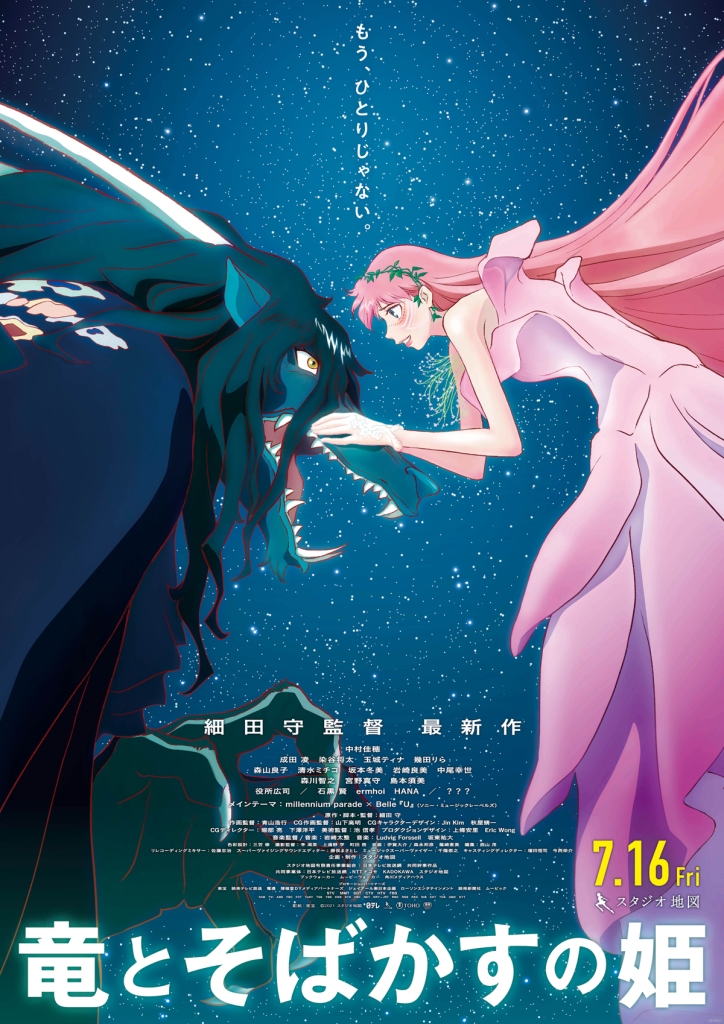
Animation of the Year

Director of the Year

Screenplay of the Year

Outstanding Performance by an Actor in a Leading Role

Outstanding Performance by an Actress in a Leading Role

  • Yuki Amami (What Happened to Our Nest Egg!?)
  • Kasumi Arimura (We Made a Beautiful Bouquet)
  • Mei Nagano (And, the Baton Was Passed)
  • Mayu Matsuoka (Kiba: The Fangs of Fiction)
  • Sayuri Yoshinaga (A Morning of Farewell)

Outstanding Performance by an Actor in a Supporting Role

Outstanding Performance by an Actress in a Supporting Role

  • Satomi Ishihara (And, the Baton Was Passed)
  • Kaya Kiyohara (In the Wake)
  • Mitsuko Kusabue (What Happened to Our Nest Egg!?)
  • Nanase Nishino (Last of the Wolves)
  • Suzu Hirose (A Morning of Farewell)

Outstanding Achievement in Cinematography

Outstanding Achievement in Lighting Direction

Outstanding Achievement in Music

  • Taisei Iwasaki & Ludvig Forssell & Yuta Bandoh (Belle)
  • Taro Iwashiro (It’s a Flickering Life)
  • Otomo Yoshihide (We Made a Beautiful Bouquet)
  • Takatsugu Muramatsu (In the Wake)
  • Goro Yasukawa (A Morning of Farewell)
  • Goro Yasukawa (Last of the Wolves)

Outstanding Achievement in Art Direction

  • Tsutomu Imamura (Last of the Wolves)
  • Takashi Nishimura (It’s a Flickering Life)
  • Tetsuo Harada (Baragaki: Unbroken Samurai)
  • Katsuhiro Fukuzawa (A Morning of Farewell)
  • Fumiko Matsuo (In the Wake)

Outstanding Achievement in Sound Recording

  • Kadoaki Izuta (recordist) & Miki Nomura (re-recording mixer) (Drive My Car)
  • Tomoharu Urata (Last of the Wolves)
  • Shinya Takada (In the Wake)
  • Shota Nagamura (It’s a Flickering Life)
  • Kenichi Fujimoto (A Morning of Farewell)

Outstanding Achievement in Film Editing

  • Kazuhide Ishijima (It’s a Flickering Life)
  • Hideaki Ohata (A Morning of Farewell)
  • Hitomi Kato (Last of the Wolves)
  • Ryo Hayano (In the Wake)
  • Azusa Yamazaki (Drive My Car)

Outstanding Foreign Language Film

  • Tailor
  • Nomadland
  • Minari
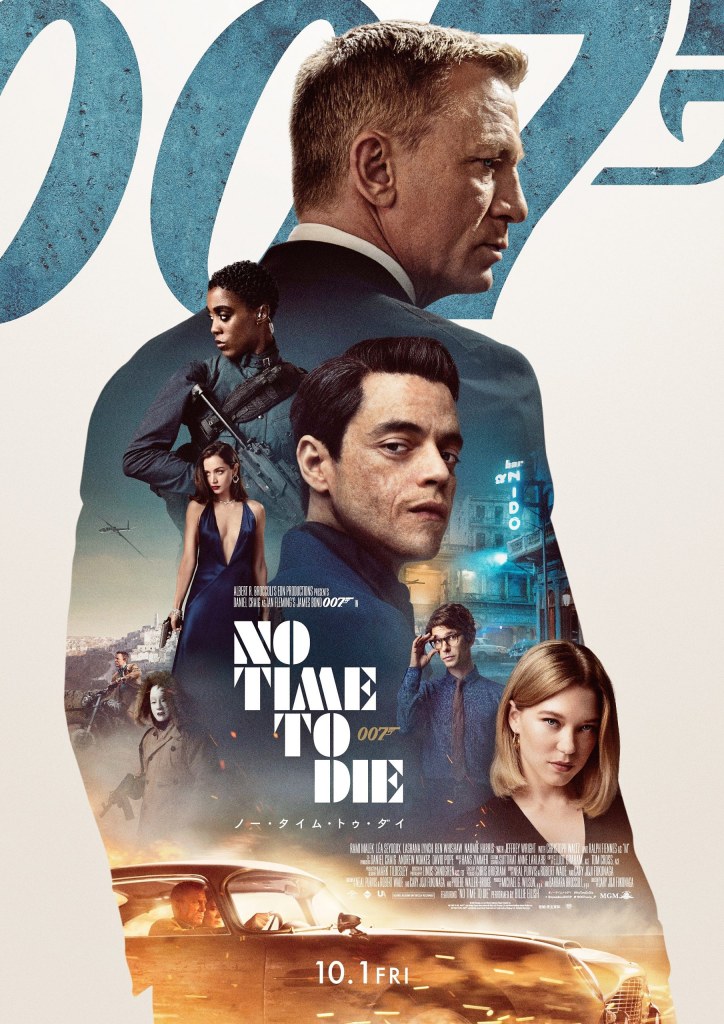
  • No Time to Die
  • Dune

Newcomer of the Year 

(Presented to all nominees equally)

Special Award from the Association

(Lifetime achievement awards)

  • Kyoko Obayashi (producer)
  • Toshiyuki Sasatake (artwork type designer)
  • Sadao Tsukioka (animator)

Award for Distinguished Service from the Chairman

(Lifetime achievement awards for contribution to the film industry)

  • Mitsuko Kusabue (actress)
  • Natsuko Toda (subtitler)
  • Teruyo Nogami (production manager for Akira Kurosawa)
  • Masako Nozawa (voice actress)
  • Hanae Mori (costume design)
  • Tsutomu Yamazaki (actor)

Special Award from the Chairman

(Lifetime achievement award presented to members of the film industry who passed away during 2021)

  • Yasuo Otsuka (animator)
  • Masato Hara (producer)
  • Kunie Tanaka (actor)
  • Sonny Chiba (actor)
  • Shinichiro Sawai (director & screenwriter)
  • Tan Takaiwa (producer, former president of Toei Animation)
  • Emi Wada (costume design)

Shigeru Okada Prize

  • Kyoto Animation
  • Toei Animation

Popularity Awards

(Decided via public vote)

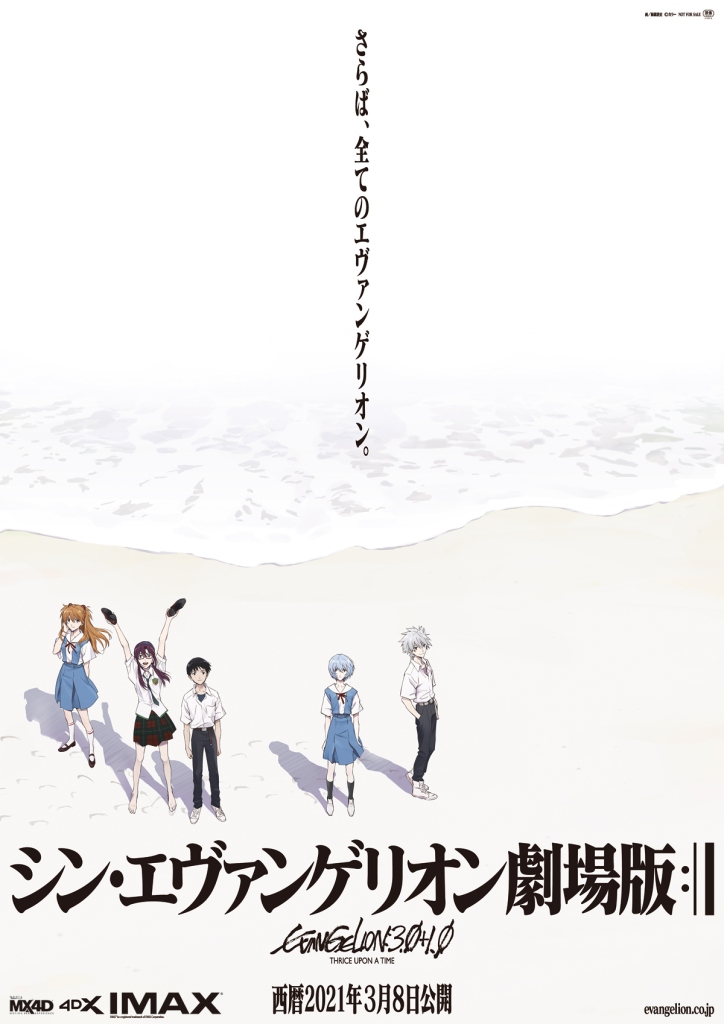
  • Movie: Evangelion: 3.0+1.0 Thrice Upon a Time
  • Actor: Masaki Suda (We Made a Beautiful Bouquet)

Japan Academy Film Prize official websiteEiga Natalie

Inu-Oh (犬王, Masaaki Yuasa, 2021)

“Unity demands order” according to an ambitious politician near the end of Masaaki Yuasa’s stunning anime prog rock opera, Inu-Oh (犬王). Inspired by Hideo Furukawa’s novel Heike Monogatari Inu-Oh no Maki, Yuasa’s spirited drama is as much about the liberating power of artistic expression as it is about the danger it presents to those in power, while reclaiming the stories wilfully hidden in history or as the narrator puts it “stolen and forgotten” in order to exorcise a degree of historical trauma lingering in the cultural aura.

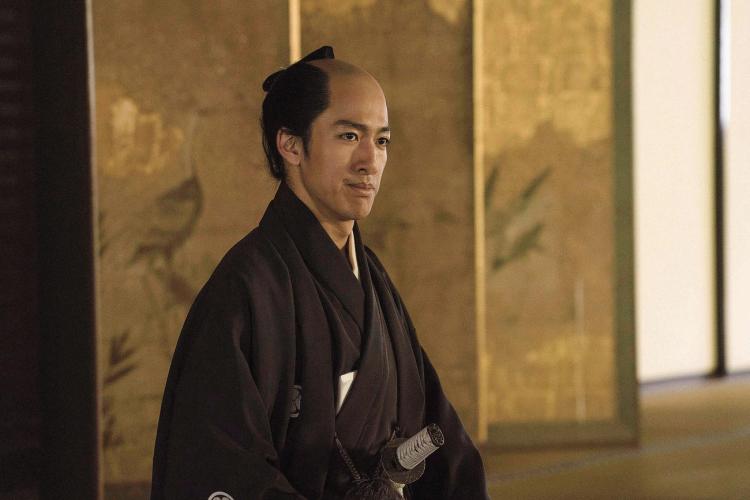
Set in the Muromachi period in which two imperial courts contested hegemony, the tale opens with the retrieval of a set of cursed remnants buried at the bottom of the sea after the battle of Dan-no-ura in which the Heike clan were famously defeated. Ashikaga Yoshimitsu (Tasuku Emoto) is convinced that possessing imperial treasures would lend credence to his claim, but their resurfacing creates nothing but misery leaving the boy who discovered them, Tomona (Mirai Moriyama), blind and his father dead. Setting off for Kyoto in search of revenge, Tomona is taken in by an elderly Biwa player and eventually runs into a strange creature wearing a gourd mask and behaving like a dog, striking up a friendship that later leads to the realisation that the boy is also cursed, haunted by the spirits of fallen Heike warriors desperate for their stories to be told. 

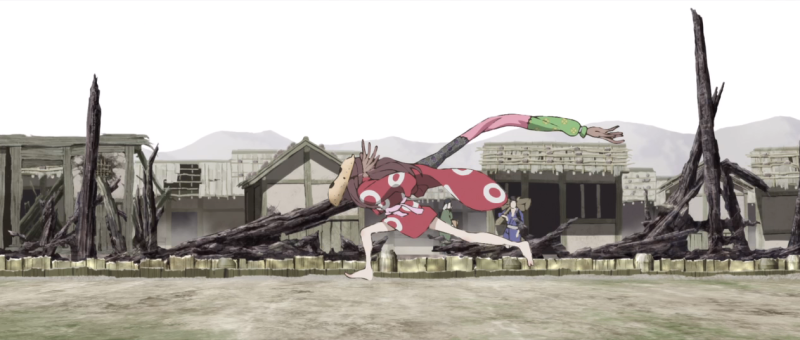
In true fairytale fashion, curse later begins to dissipate as the pair exorcise the ghosts by telling their stories never singing the same song twice but always in search of new songs to be sung. Tomona changes his name several times, adopting that of “Tomoichi” in keeping with the requirements of his Biwa school and later choosing for himself that of “Tomoari” in his partnership with Inu-Oh in emphasis of the fact that “we are here”. Yet as the ghost of his father reminds him, changing his name makes him difficult to find literally losing touch with his roots in becoming invisible to friendly spirits. He and the cursed boy Inu-Oh are interested in a new kind of Biwa that is opposed by the Biwa priests for its transgressive modernity some feeling that Tomona’s transformation with his long hair and makeup brings the profession into disrepute though the act proves undeniably popular with Inu-Oh the biggest star of the age. 

Having begun in the classical register with images resembling ink painting and a score inspired by traditional noh, Yuasa introduces electric guitar as the film shifts into rock opera, the pair’s stagecraft incredibly modern as they adopt all kinds of elaborate staging to add atmosphere to their tales including at one point a large lantern silhouette mimicking the big screen graphics of the present day. Yet Inu-Oh’s fame comes with a price. His popularity threatens both the pride of a jealous rival and the ambitions of the Ashikaga clan who fear his tales of the Heike are simply too bold and radical, later condemning them as an affront to the glory of the shogun and insisting that their official version must be the only record of the Heika warriors. 

The sense of freedom the pair had felt in their ability to express themselves through music and dance is quickly crushed by cultural authoritarianism, Inu-Oh reduced to a kind of court jester performing only for the lord while as the closing credits tell us becoming the biggest popular star of his age though now too forgotten along with his songs while his more elegant counterpart, Fujiwaka, is remembered for shaping the art of contemporary noh though there is perhaps something in Tomona’s defiant reclaimation of his name along with the essential right to choose it for himself that grants him a greater liberty in simply refusing to allow himself to be subjugated by feudal power. A psychedelic rock opera set in 14th century Japan that remembers even noh was once new and malleable, Inu-Oh insists on art’s danger in its capacity to challenge the status quo not only directly but through a series of internal revolutions born of the masks we choose to wear and those we choose to remove in the radical act of self-expression which is in its own way the truest form of liberty. 


Inu-Oh screened as part of this year’s Glasgow Film Festival 

International trailer (English subtitles)