Sunset Sunrise (サンセット・サンライズ, Yoshiyuki Kishi, 2024)

In a way, the 2020 coronavirus pandemic presented a kind of turning point in which it became possible to envision a different kind of future brokered by technological advance in which society was no longer ruled by the dominance of the cities. If people could work remotely from anywhere, then they could easily improve their standard of living by moving to more rural areas for cheaper rents and healthier environments. Assuming the infrastructure was in place to allow them to do so, they could also support and reinvigorate communities struggling with depopulation in which the young have all left for the cities leaving the elderly behind to fend for themselves.

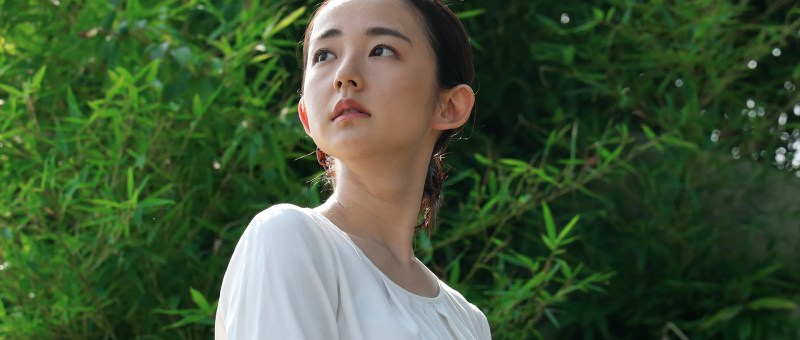
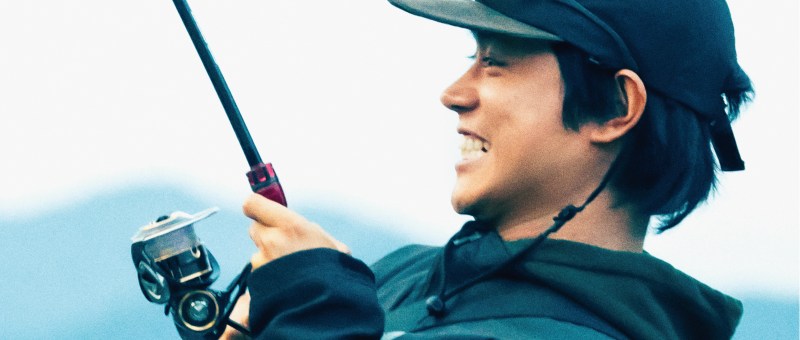
It’s an elegant solution that solves many of the problems of the contemporary society, but change isn’t always as straightforward as it seems as the hero of Yoshiyuki Kishi’s Sunset Sunrise (サンセット・サンライズ) finds out after he jumps at the chance to move into an abandoned house in Tohoku for a fraction of the rent he’d have to pay for a flat in Tokyo if he didn’t still live with his parents. The catch is, however, that houses have souls too and are more than just places to live for those that own or inherit them. Momoka (Mao Inoue), who decides to put her own empty house on the market, has her reasons for not wanting to live there herself nor for selling it completely but renting it out is also emotionally difficult. In the end, she only really does it after being put in charge of the town’s empty house problem at her job working for the council and thinking she should probably start with her own. Not knowing what to charge, it hadn’t really occurred to her someone would be as interested as Shinsaku (Masaki Suda), a fishing enthusiast longing to escape his salaryman life in the city for something a little more traditional in a peaceful rural area. 

Then again, that’s not to say that Shinsaku is a traditionalist and his decision quickly sparks controversy but also attracts the attention of his boss who senses a promising business opportunity. Momoka’s is a slightly special case, but Japan is filled with these so-called “akiya” which might, amid the work from home revolution of the pandemic, now be attractive to young professionals looking for a better environment to start a family. Houses generally start to deteriorate quite quickly when no one lives in them, and it’s true a lot of them need some work doing but it’s an idea that could work out well for everyone. Younger people who can’t find decent living space in the cities would be able to afford larger homes in the country where they would also then be contributing and integrating into the local community to provide support for its elderly residents.

Shinsaku becomes a part of the local community quite quickly and strikes up a friendship with an elderly woman whose children have all moved to Tokyo and rarely visit now that their own children are getting older. They’ve asked her to move to Tokyo with them, but as she points out, it would be the same as them moving back. There’s nothing for her to do there, and she’d have no friends. She’d only feel in the way and that she was getting under her daughter-in-law’s feet. Nevertheless, they fear for her especially as the area is still dealing with the scars of the 2011 earthquake which have left many clinging to a now bygone past. Once Momoka and Shinsaku start working with his boss on the akiya project, they find it hard to convince the inheritors of the houses to agree. Though they won’t live there, they might want to pop back a few times a year just for the memories and somehow can’t bear to part with their childhood or relative’s homes. But Shinsaku points out, it doesn’t necessarily have to be a case of either or and the renovation projects they undertake modernise the houses in a sympathetic way that brings them up to date with modern living yet honours the past even sometimes incorporating some of the previous resident’s furniture and belongings while issuing a caveat that the owners are welcome to visit should they wish to.

Essentially, the idea is a kind of co-existence with the past but also with unresolved trauma such as that presented by the earthquake and the ongoing pandemic. Momoka too is struggling to move on and while a gradual romance seems to arise between herself and Shinsaku, she isn’t sure she can ever let the past go though he makes it clear it’s okay to bring it with her. For his part, despite the initial fears of the early pandemic period and the suspicion of him as an outsider, Shinsaku’s quickly taken in by the community and adapts to a more rural way of life with relative ease though his boss’ big plan is rather undermined by his later insistence that he come back to Tokyo to run the project from the office like a many a contemporary CEO rolling back promises of flexible working environments that make this kind of utopian ideal much harder to materialise. In any case, there’s something quite refreshening in the eventual resolution just to do their own thing, not particularly paying attention to labels or what other people might think, but just doing what makes them happy right now. As an old fisherman’s song says, the sun sets but then it rises again. Scripted by Kankuro Kudo and adapted from a novel by Shuhei Nire, the film has kind of wholesome optimism that is rooted in a sense of continuity but also the potential to start again and make a new life inside the old that is less bound by outdated social norms than brokered by the gentle solidarity between people and a generosity of spirit that allows all to seek happiness in whatever way they choose.


Sunset Sunrise screens in Chicago 22nd March as part of the 19th edition of Asian Pop-Up Cinema.

Trailer (English subtitles)
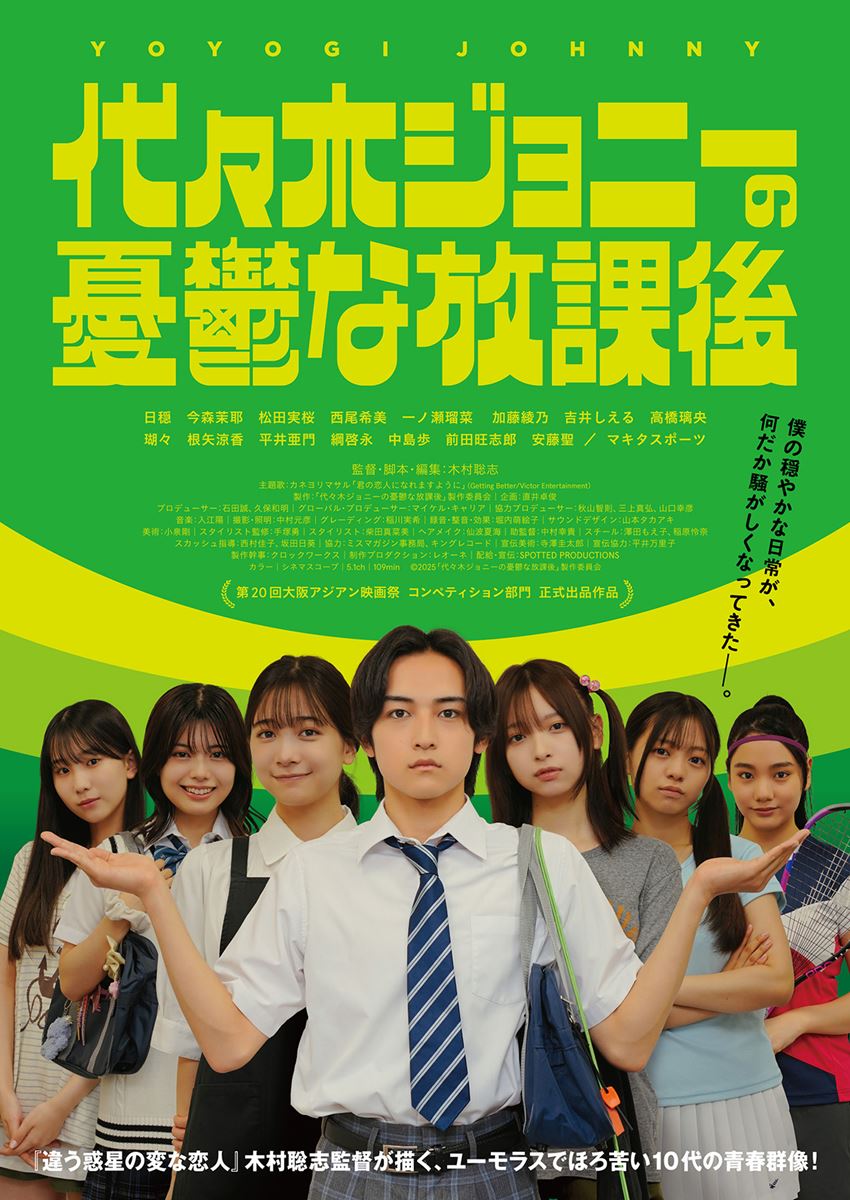
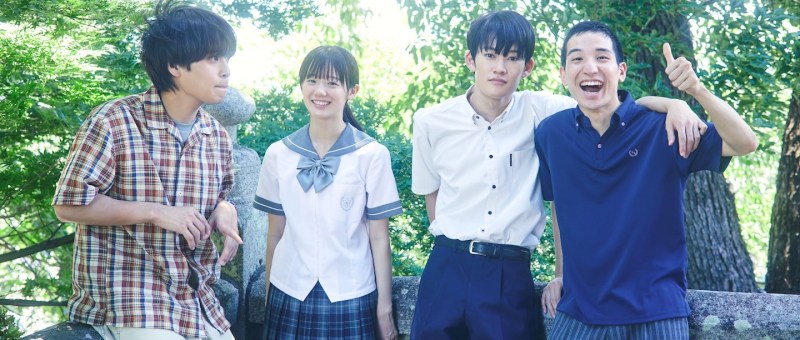
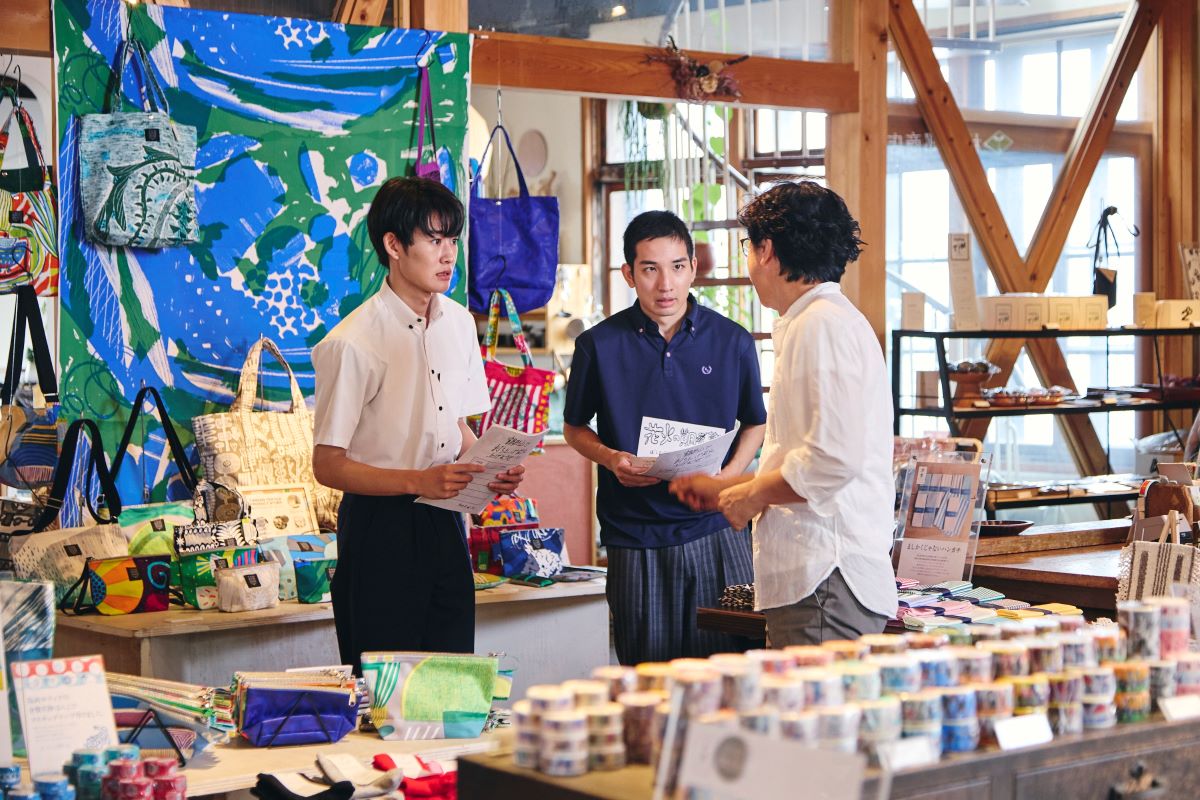
Yoyogi Johnny (代々木ジョニーの憂鬱な放課後, Satoshi Kimura, 2025)

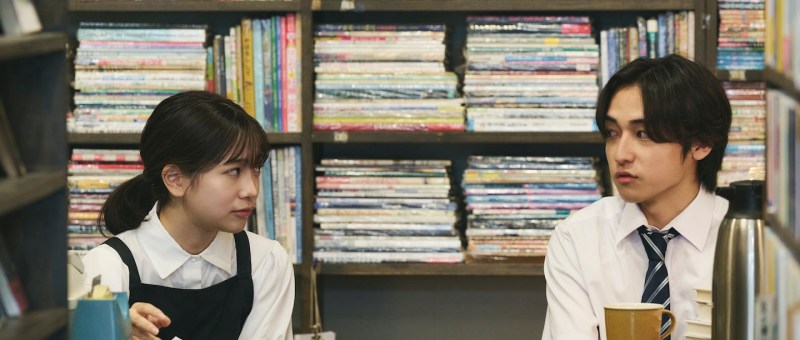
Not much makes a lot of sense in the world of the titular Yoyogi Johnny. Nothing’s quite as it first seems and life is full of contradictions, but that’s alright, for the most part. Johnny just floats on through life going with the flow, but then he meets a series of girls who each for some reason want to practice things with him though for very different reasons while he tries to make sense of it all and gain the courage to push for what he really wants.

Then again, he breaks up with Asako (Mio Matsuda) because he realises he likes her in the same way he likes “history” which is to say, when someone asks him what his favourite subject is he just says that but doesn’t actually know if he even likes history or not. Having never been in love, he doesn’t know what it’s like and therefore wants to end the relationship. Mostly he just spends his time hanging out in the “squash club” where they don’t actually play any squash but just use the clubroom to hideout from the less satisfying aspects of their lives or otherwise avoid other people. In fact, they’re only in the squash club to make up the numbers and were all looking to start clubs of their own but for various reasons were prevented from doing so. But when a mysterious young woman they christen Deko (Shieru Yoshii) for her prominent forehead arrives at the club looking for the founder, Ondera, whom they call “Button”, it wrecks their peaceful lives because of her insistence that they actually play some squash.

Deko wants to practice squash with him, but his childhood friend Kagura (Runa Ichinose) wants him to role play real world interactions while she has otherwise become a virtual recluse who no longer attends school. Meanwhile, he’s also drawn to a colleague at his part-time job at a bookshop/bar, Izumo (Maya Imamori), who is also the boss’ daughter. Somewhat salaciously, she wants him to practice “physical contact,” as that’s one of the areas she has difficulty in having herself also been a recluse who dropped out of school and has come to Tokyo for a fresh start. Johnny immediately picks up on this irony of Izumo salmoning her way to the capital while, in general, most people are travelling away from the city to a less populated area for a quieter life rather than the other way around though like many of these conversations it’s lost on Izumo to whom it is of course just normal. Johnny has several of these conversations in which he attempts to point out that something doesn’t make sense but just finds himself trapped in an infinite loop of back and fore as the other person struggles to understand his logic or he theirs. He is however a kind person who tries to help everyone who asks him though perhaps without really thinking about it. 

Yet most of the young women eventually oscillate out of his life depriving him of these very important friendships and ironically rebounding to the squash club even though they now actually have to play squash. Nevertheless, through his various relationships Johnny begins to gain a new perspective on himself and even finds out what it’s like to fall in love. A strange young woman who seems to be part of what very much looks like a cult, reminds him that “self-sufficiency” is a lie even though it’s supposedly what their cult is founded on. It is after all an organisation that promotes “independent living” while sending its members who all live in the dorm to farm the fields, though this yet another thing that doesn’t really make sense but Johnny just has to accept. Nevertheless, it seems she’s right when she says people can’t live by themselves alone and by and large need each other to survive. She tells Johnny that he should stop visiting Kagura because it’s “meaningless” and wouldn’t help her, but at the same time seems to appreciate his good-naturedness and the gentle positivity he puts out into the world in his ability to just be nice and be there for that want or need him while never expecting anything in return. As he’s fond of saying, if you regard a person as a friend then it doesn’t really matter whether they agree or not they’re still your friend and Johnny has more than many might awesome he would. Warm-hearted and filled zany humour, the retro aesthetic of its opening titles only adds to film’s charm as a little gem of indie comedy.


Yoyogi Johnny screened as part of this year’s Osaka Asian Film Festival.

Trailer (no subtitles)

The Tales of Kurashiki (蔵のある街, Emiko Hiramatsu, 2025)

Beniko’s high school art project involves recreating a picture her mother left behind that immortalised a memory of a happy family moment during the rare sight of fireworks. But Beniko can’t seem to make progress with her artwork and she’s thinking of giving up art altogether along with her ambition of attending an art school because for her painting is intrinsically linked with her familial trauma and fears for the future. It is also, however, the force that keeps her family together though not perhaps in the way she intended.

The attempt to recreate her mother’s drawing is that to reclaim her family as it was though as she later realises attempting to recreate the past exactly is a futile effort. Resentful towards her mother for leaving and perhaps also towards her father for his emotional abandonment and the absurd jealousy that left her mother with no choice but to leave, she reinvents herself as a caretaker as a way of rooting herself in the domestic space by taking care of her autistic older brother Kyosuke, affectionately known around the neighbourhood as Kyon-kun. Looking after Kyon-kun is one reason she gives for not going to art school, but as her friend points out much to Beniko’s shame, perhaps that’s not really fair to him either if she’s exploiting his need as an excuse for her cowardice while denying him the right to his own life too. He is after all a little more capable than she might give him credit for, travelling to the correct station on his own and waiting for her patiently at the other end when she misses her regular train. 

Beniko’s childhood friend Aoi later realises that he did something similar. When Kyon-kun wandered off while Beniko was distracted and climbed a tree at the shrine to watch imaginary fireworks, Aoi and his friend Kiichi, who is the son of the shrine owner, promised to set off some real fireworks for him without really thinking it through or having much intention to actually do it. But as Beniko points out, Kyon-kun never forgets a promise so now he’s asking every day when the fireworks are and is continually disappointed. Chastened by Beniko, Aoi’s half-hearted attempt to keep his promise backfires and he realises that he too thought that it didn’t really matter because it was Kyon-kun and he wouldn’t know the difference. 

Aoi’s desire to make good on his word is partly a sense of guilt and shame in his realisation of the way he’d thought of Kyon-kun, partly due to his feelings for Beniko, and partly adolescent insecurity in the acceptance that his unnecessarily harsh father has a point when he says he never follows anything through. Kiichi too is experiencing similar anxieties as his father threatens to leave the shrine to his more studious younger brother and is exasperated by his goodhearted goofiness. The trio are all really looking for new paths towards adulthood by trying to make peace with their younger selves and gain the confidence to follow their dreams even if it takes them away from the picturesque settings of provincial Kurashiki.

Beniko’s mother was fond of saying that there was a deity of waiting in the town, and there is a white-clad figure perhaps visible only to Kyon-kun who follows the youngsters around and looks on cheerfully as if embodying the sense of fun and warmth that lingers in the city. Kurashiki does indeed look like a nice place to live with its continual sunniness and traditional architecture though as someone points out that’s largely because the bombers flew past here and hit somewhere else instead. Fireworks are as apparent disruptor but eventual healer Kojo says a way of bringing people together, a source of joy happiness even amid difficult times just as they were during the pandemic. There’s something quite wholesome and comforting about the way the whole community comes together to make Kyon-kun’s dream come true, overcoming the obvious objections of the powers that be that it’s not a good idea to have a fireworks festival in a town that’s almost entirely constructed in wood to create a small marvel of human kindness and solidarity. It’s this that finally allows Beniko to remake her family, giving it her own light and colour while keeping a place for her mother having come to an acceptance of why she couldn’t stay and a conviction that she will one day return when she too has begun to heal her heart.


The Tales of Kurashiki screened as part of this year’s Osaka Asian Film Festival.

Trailer (no subtitles)

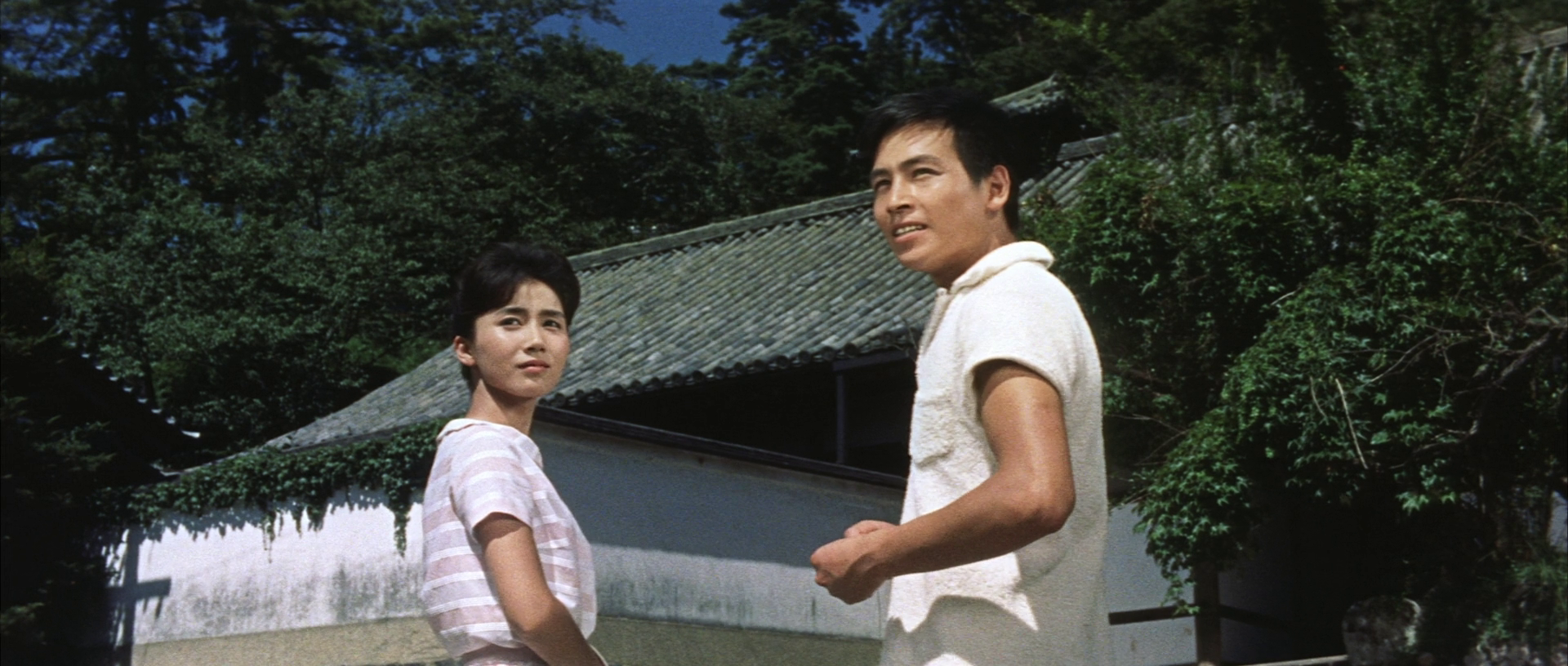
A Good Man, A Good Day (好人好日, Minoru Shibuya, 1961)

It’s funny, in a way, that life can hold so much goodness in it even with an underlying, barely visible melancholy. Goodness does indeed breed goodness for the sometimes misunderstood heroes of A Good Man, a Good Day (好人好日, Kojin Kojitsu) who struggle to adjust themselves to changing times but at the end of the day just want each other to be happy and for life to be blissfully dull and free of complication.

The obvious point of friction is that 20-something daughter Tokiko (Shima Iwashita) has had a proposal. She behaves as if it’s an arranged marriage, but in reality Ryuji (Yusuke Kawazu) is actually her boyfriend and the two of them have mutually decided to formalise their union but are doing things the “proper” way perhaps in part because Ryuji’s family run a 200-year-old ink shop and are intensely conservative. Though it’s Tokiko’s fuddy-duddy professor father Hitoshi (Chishu Ryu) who is often regarded as the sticking point, it’s equally Ryuji’s family and particularly his traditionalist grandmother (Tanie Kitabayashi) who isn’t sure that Tokiko is really good enough. She is however the only member of the family who thinks it’s not a big deal after discovering that Tokiko is adopted while others regard her with an increased suspicion and the prejudice often held towards orphans that they don’t want to let someone into their family whose familial lineage they don’t know.

It’s most likely for their benefit that Tokiko and Ryuji are intent on compromising by doing everything the “proper” way rather than as her mother Setsuko (Chikage Awashima) tells her just get married on their own without worrying about what anyone thinks. But in this awkward mix of tradition and modernity we can see that times have changed and Ryuji and Tokiko have decided their future for themselves. They firmly believe it will work out so they’re remaining patient, but should that patience run out they will decide to prioritise their own happiness. 

For his part, Hitoshi later says that he never actually objected to the marriage but just hates the idea of big weddings which he regards, not without reason, as stupid and pointless. In any case he warms to Ryuji when he loses his temper and calls him an “old fart,” realising that he’s a young man with a backbone and possibly worthy of Tokiko. A professor of mathematics, Hitoshi is an awkward man who doesn’t quite fit into polite society but has a good heart even if he has a funny way of showing it. When he wins an important medal from the government for his contribution to scholarship and it gets stolen, he won’t let the hotel owner report it because of his embarrassment but when the chastened thief brings it back he sends Tokiko after him with money for his train fare and a little more as a thank you. 

Still, he was probably not an easy man to live with and Setsuko’s not so secret sake habit is likely a result of the strain of dealing with him and his constant faux pas in the boredom of a rural life in which she says all she does is make pickles. But despite that, she still tells Tokiko that marriage is essential to a woman’s happiness if also encouraging her to fight for what she really wants. Tokiko is already doing just that, but has lingering doubts over her parentage and wants to know who her birth parents may have been partly out of curiosity but also a mild fear of the implications it may have. But what Hitoshi eventually tells her is that she is a war orphan which makes her a kind of everywoman and a symbol of the young, post-war generation which is making a break with the past. 

The film in fact includes a small satirical, anti-war sequence in which Hitoshi is accosted by a snooty nationalist who shouts out that he lacks “patriotism” for allowing the medal the emperor so generously gave him to be stolen. The man tells him he should face the direction of the Imperial Palace and apologise all which makes him look quite mad and paints Hitoshi as the figure of exasperated sanity. He also rejects contemporary consumerist culture in continuing to live like a student counting every last yen and rejecting the TV set Ryuji buys him because it would deprive him of going to the coffee shop to watch baseball games instead (though he does regret it later). In any case, Hitoshi’s guileless goodness does seem to ameliorate the world around him in making others, like the thief, want to live up to it as he, like Tokiko, defiantly does what he wants and though at times perhaps insensitive generally has his heart in the right place.


My Wonderful Yellow Car (吹けよ春風, Senkichi Taniguchi, 1953)

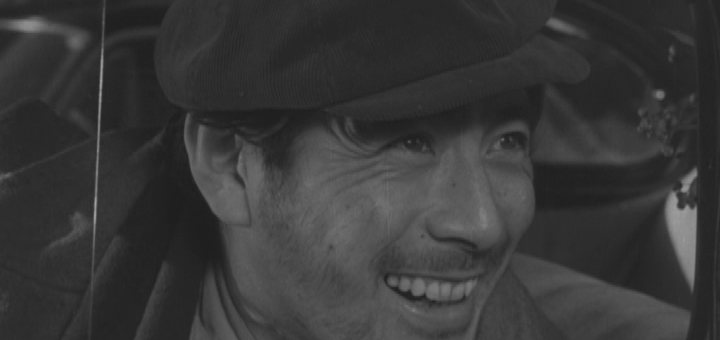
A kind-hearted taxi driver becomes our guide to the post-war society in a cheerful omnibus movie co-scripted by Akira Kurosawa and directed by Senkichi Taniguchi, My Wonderful Yellow Car (吹けよ春風, Fukeyo, Haru Kaze). Inspired by a Reader’s Digest column titled “human nature as seen in the rearview mirror”, the film follows cheerful cabbie Matsumura (Toshiro Mifune) as he drives around Tokyo in 1953 picking up various fares and sometimes adding commentary or trying to help with whatever kind of problem seems to be bothering them.

Then again, he stays well out of the first fare’s business as a young couple have obviously had some kind of falling out. Bursting into tears, the girl (Mariko Okada) announces that she wants to postpone the wedding and maybe even rethink this whole thing, while the boy reiterates with slight irritation that he’s said he’s sorry with the implication that that should be the end of it though we have no idea what (if anything) he’s actually done. In any case, they eventually patch things up over some canoodling in the back seat and ask to be dropped off so they can get something to eat. In some ways, the young couple represent a more hopeful vision of post-war youth who have no apparent worries besides their tiff and are financially comfortably enough not only to be getting married but can afford to travel by taxi and pay for a meal on the same occasion. 

Their situation is later contrasted with that of an older couple who’ve moved from Osaka to Tokyo in their old age and have bought a box of live lobsters to celebrate their silver wedding anniversary but as Matsumura notes though they appear to be quite well off they also seem somehow sad. That turns out to be because they lost their only son the previous summer and have moved into his old apartment. The old lady also cries in the back seat, but for a completely different reason. As they’ve only just moved here, they don’t have friends or anything to do and are completely lost in the wake of their son’s death. Matsumura’s kindness is demonstrated when he borrows three flowers from a bouquet delivered to a girl at the petrol station and presents them as an anniversary gift. The couple are so touched they invite him to enjoy their anniversary dinner with them and by the end of it have made the decision that they should go back to Osaka and restart their lives by re-opening their old business.

Throughout all this, Matsumura is very conscious of the meter. Every second he spent in the old couple’s apartment cost him money, but as he’s fond of saying you can’t always think of things like that. Even so, he reminds himself he has a wife and child so should be mindful of the clock but still turns down a fare to go back to the station and check on a young girl he’s pretty sure is trying to run away from home. A weird guy was sniffing around her and was in fact just about to lead her off when Matsumura gets back and announces he’s come to pick her up. Matsumura spends the rest of the ride trying to convince her to go home, repeatedly reminding her that most of the “panpans”, or streetwalking sex workers catering to US servicemen, were also once runaway girls. To more modern eyes we might wonder if sending her home is what’s best without knowing the reasons she wanted to leave. He goes so far as to buy her ramen which costs him more money on top of the lost fare which doesn’t collect from her either when he, a little less responsibly, abandons her when she refuses to tell him where she lives. Thankfully, it all seems to work out. The girl made a sensible decision to go home after all and is later seen happily doing her Christmas shopping with her mother who also thanks him for looking out for her.

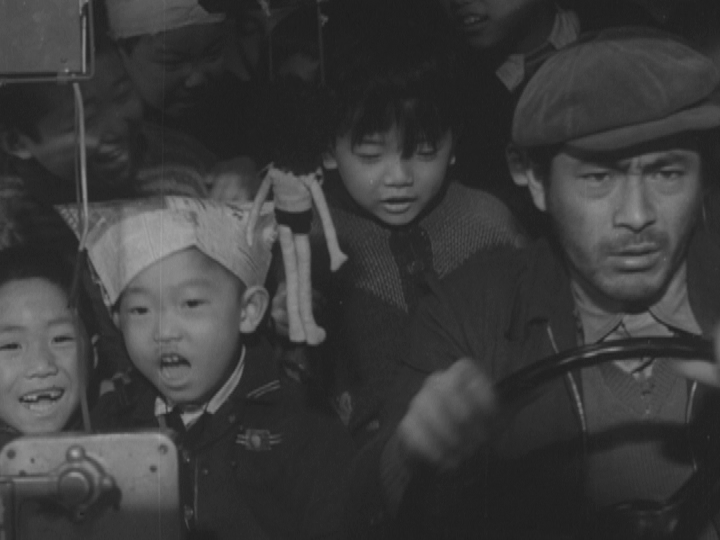
Perhaps these kinds of altruistic acts of kindness explain why Matsumura’s own clothes are quite ragged with a hole in his jumper and a tear to the shoulder of his jacket. He’s driving the cab in straw sandals which apart from anything else is probably quite cold in the winter. He spends another afternoon giving a free ride to some children, about 15 of them, who’ve crowdfunded 100 yen because they’ve never been in a car before and want to go as far it’ll take them having no idea that 100 yen is actually the initial charge so you can’t go anywhere on it all. Of course, Matsumura ends up taking them a bit further, and then realises he’ll have to take them back to where they were because they won’t have any other way of getting there or of knowing where they are now.

On the other hand, sometimes he ends up with nuisance fares such as two drunk guys who keep singing their university song. One of them even climbs out of the window and up onto the roof, causing Matsumura to assume he’s fallen off somewhere and he’ll have to go back and look for him to make sure he’s not hurt only to find him burbling in the footwell. He also ends up getting hijacked by a crook with a gun on his way back from Yokohama but getting a telling off from the police rather than a thank you for catching him after unwisely taking hold of the gun himself and messing up all the fingerprints. 

One might think the time he had a famous actress in the back of his cab who even sang along with the jingle he’d written for the cheerful yellow vehicle might make up for all that, but he says the story that best exemplifies why he loves driving a taxi is that of a middle-aged couple he picked up at the harbour shortly after a boat had docked repatriating people from China. Even in 1953, some had not yet returned after becoming trapped by the Chinese Civil War and eventual Communist victory. The man is dressed in military uniform and says he’s just been demobbed when Matsumura asks him, trying to lighten the mood while there’s obviously some degree of tension between the man and his wife. But as we gradually come to understand, it’s all just a ruse and he has in fact been in prison in Japan for the last seven years for an unspecified crime.

His wife asks Matsumura to drive around the city and attempts to show him how much things have recovered, suggesting that they can now put the past behind them and start over. But the man remains sullen and grumpy. He’s afraid to go home, afraid to face the neighbours worrying if they know what he did and that he’s been in prison. But most of all he’s afraid to face his children, the youngest of which he’s never met. The kids have been teaching themselves to say “Welcome home, Daddy,” in Mandarin believing he’s been in China all this time which the wife has to explain before they get there. The man tells his wife he understands if she doesn’t want him back, but she assures him that the children are excited as is she to start their new life together. Nevertheless, though they’ve been eagerly practicing, the older two children simply freeze when confronted by this anxious stranger who turns around to leave again feeling as if he doesn’t have the right to come back here after all only for the youngest one to suddenly pipe up with the phrase note perfect. It’s this kind of scene, getting people to where they need to be physically and emotionally, that seems to make Matsumura’s job worthwhile. In essence, he’s ferrying people towards the cheerful post-war future his cute yellow cab represents while driving round the rapidly changing city wondering who it is that’s going to end up in the rearview mirror today.


Title song (no subtitles)

Ninja’s Mark (忍びの卍, Norifumi Suzuki, 1968)

Many have tried to end the Tokugawa line. Few have done so by covering a courtesan’s legs in fish scales to put the Shogun off his stride. Based on a book by Futaro Yamada, Norifumi Suzuki’s Ninja’s Mark (忍びの卍, Shinobi no Manji) is at heart a romantic tale in which love is “part of the game” but also apparently the one trick a ninja can’t escape. Perhaps that’s why Shogun Iemitsu at the comparatively late age of 30 has failed to produce an heir with any of the beautiful yet emotionally distant courtesans of the inner palace many of whom also seem to be ninjas, therefore provoking a constitutional crisis.

Aside from that, it seems the ninja plot is a kind of revenge against the Tokugawa carried out by the last remnants of a house that was dissolved by the Toyotomi. There are in fact three ninja clans all clustering around the palace, Iga, Koga, and Negoro, each of whom have different kinds of skills. Technically, some of them are in the employ of the Shogun’s disinherited younger brother Tadanaga (Shingo Yamashiro), but others of them are working strictly for themselves and their revenge. In any case, their plan is to prevent Iemitsu from fathering an heir by putting him off sex essentially by making it freaky (in a bad way). Thus one of the ninjas uses his ability to transform objects so that the courtesan’s legs are covered in fish scales. Another plan sees a ninja body swap with one of the women so that Iemitsu’s sperm ends up inside him where it obviously has nowhere to go. Meanwhile others hatch a plan to steal some of Tadanaga’s seed to use on the women in the inner palace to cover up Iemitsu’s potential infertility seeing as it is after just as good being of the Tokugawa line. 

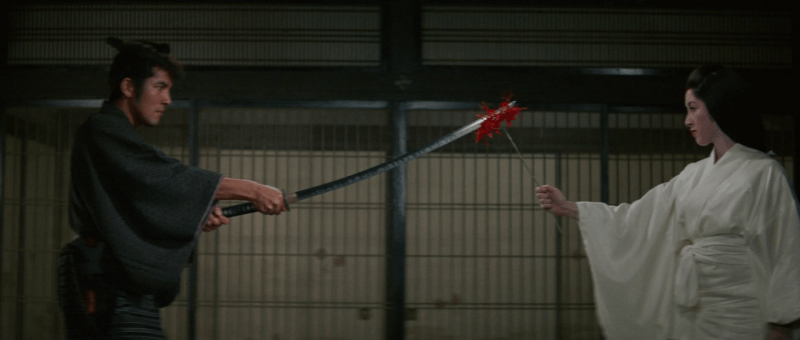
This particular ruse is suggested by Toma (Isao Natsuyagi), the disenfranchised former member of the Yagyu school turned ninja ronin they bring in to solve the problem. He quickly homes in on Kageroi (Hiroko Sakuramachi), a female ninja, as the villainess whose special power is poisoning men with love and desire by means of the spider lily plant. But as Toma points out to her, she is also a prisoner of her skill in that if she were to fall in love she would inevitably kill her lover. Of course, he survives her first attempt to kill him, leading her to fall in love with Toma and become conflicted in her mission while he plays on her emotions to escape but eventually realises they may be more genuine than he first realised. 

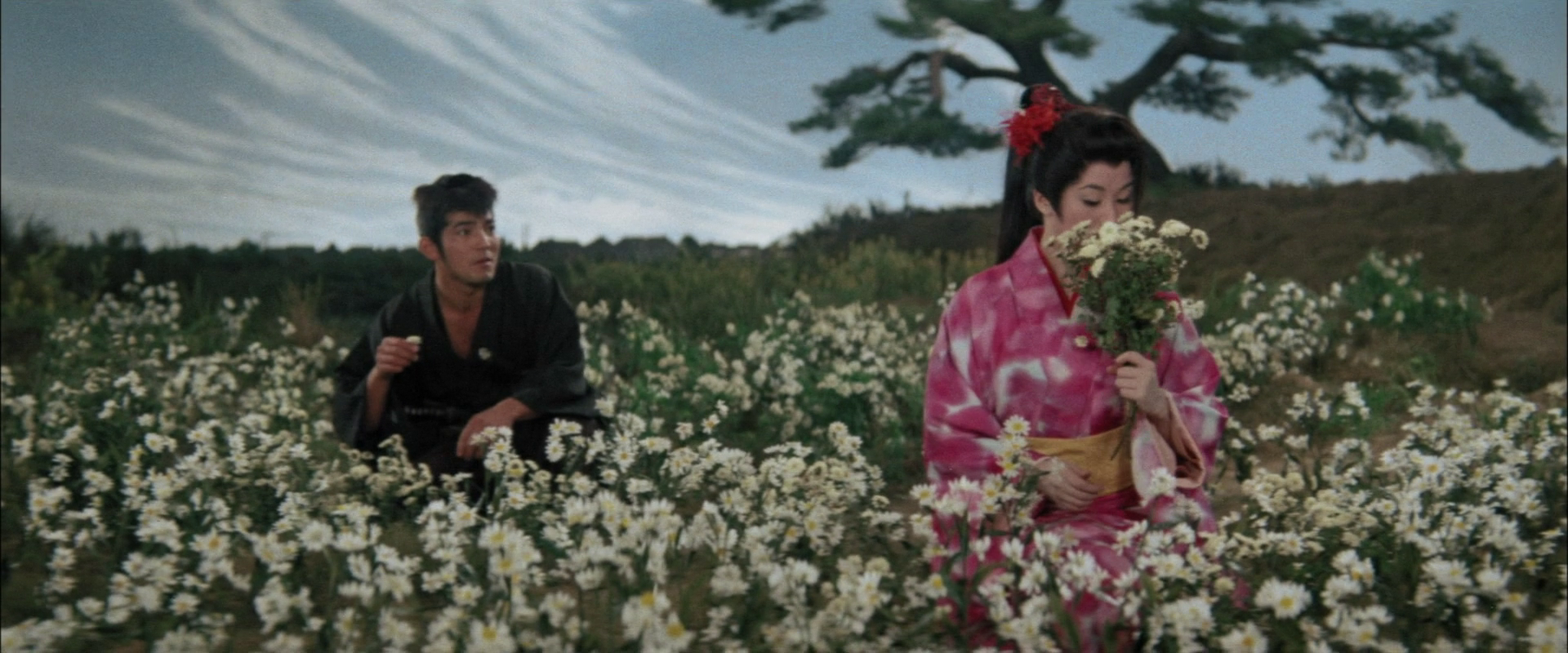
In this, Suzuki brings some of his trademark romanticism particularly in the colourful art nouveau aesthetics and frequent use of rose imagery. Though the film is clearly designed to lean into the erotic with frequent use of nudity and salacious scenes including a brief moment of lesbian seduction, it eventually heads towards romantic tragedy in which the debauched and nihilistic Toma and the wronged Kageroi discover a love made impossible by their ninja code and the times in which they live. Having been ordered to kill her, Toma declares that he will marry Kageroi in the next life and returns to her the Buddhist Manji that is the “ninja mark” of the title. 

Nevertheless, the dialogue is often suggestive as in Kageroi’s curse that Toma’s “sword” will rot, while it’s also Toma’s “sword” that alerts him to the danger she presents. Toma too claims to derive his ninja powers from his “sword” having apparently concentrated them by repressing his sexual desire and swearing off women. He says that he seals all his “distracting” thoughts into a virgin, closing off all her senses and placing her into a coma until he breaks the spell. Even so, he admits that without his “sword” he is just a man, and as a man claims to love Kageroi, but as long as he has his “sword”, and she her “lily”, their love is impossible. 

But this repressed love seems to pose less threat to the social order than the lack of it in Iemitsu who is bored with his courtesans and cannot conceive an heir. Constitutional crisis is averted only through a little ninja trickery and a convenient ruse to overcome Iemitsu’s infertility so that in time he produces five sons and a daughter, which honestly seems like it might just present another set of problems in about 30 years’ time. Like similarly themed ninja pictures, Suzuki makes good use of surrealist imagery and colour play alongside the kind of onscreen text later used in jitsuroku yakuza films to name each of the ninja’s key skills and which clan they belong to. What he always returns to, however, is the sense of romantic tragedy in a world seemingly poisoned by ambition in which love itself is rendered an impossibility. 


*Norifumi Suzuki’s name is actually “Noribumi” but he has become known as “Norifumi” to English-speaking audiences.

A Bullet Hole Underground (地下街の弾痕, Kazuo Mori, 1949)

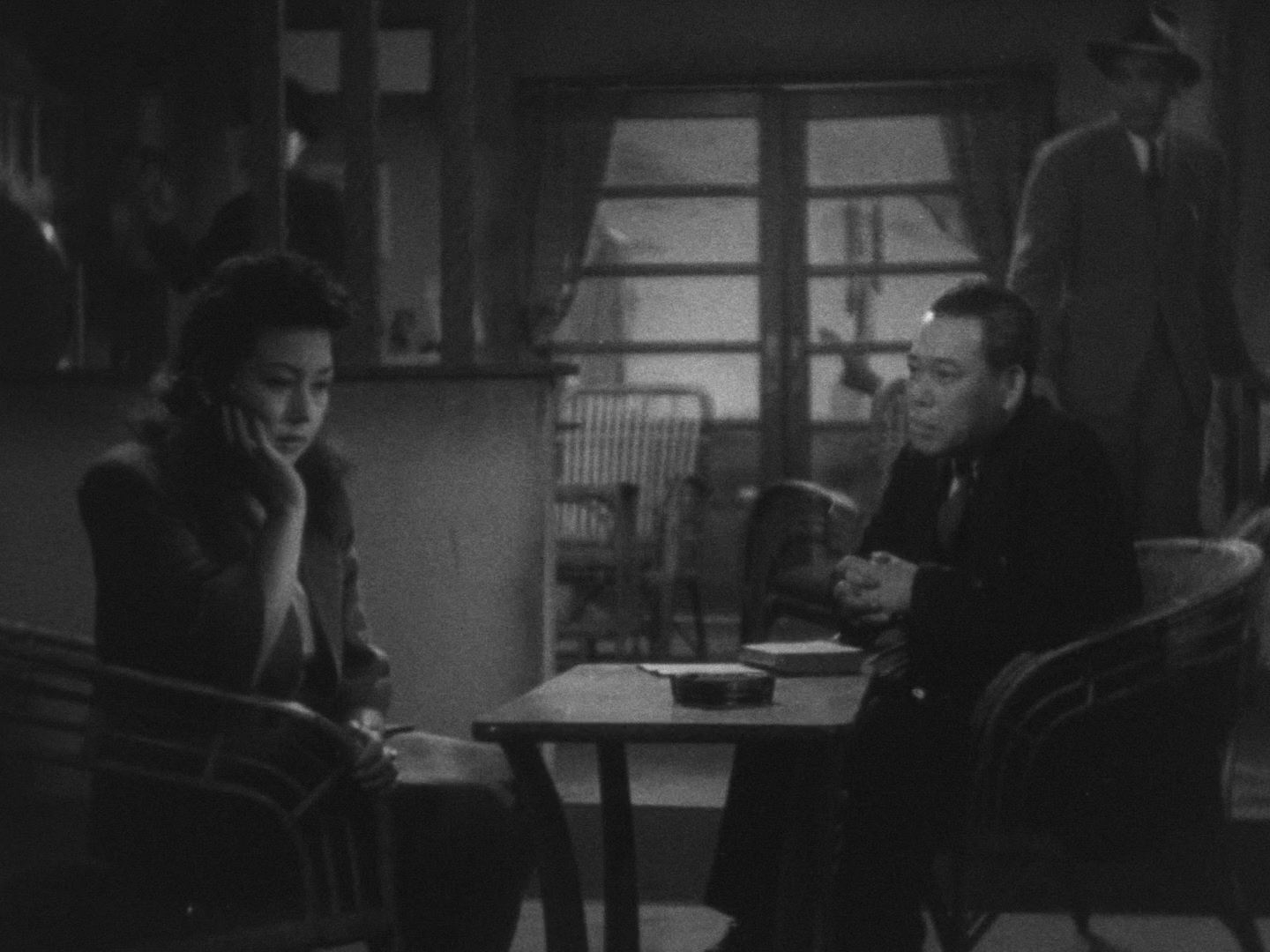
Produced by Daiei Kyoto under the guidance of the Osaka Police, Bullet Hole Underground (地下街の弾痕, Chikagai no Dankon) is keen on selling a vision of order in a new Japan in which the police force employs all the latest technology to solve crimes calmly and methodically. We see them approach the crime scene forensically and conduct a series of scientific tests with microscopes and gadgets such as lie detector machines and code breaking equipment as they proceed towards the truth while earnest policeman Minagawa (Hiroshi Nihonyanagi) battles the ghosts of his past on realising that the dead man’s wife is his own lost love.

In any case, the film opens with a noirish scene at Umeda Station, Osaka, which then turns strangely comic. A man stumbles toward the exit and we assume that he is probably drunk but another man soon comes up behind him and pushes a pistol into his back. The second man pulls the trigger, then again to make sure, before calmly walking up the steps and leaving the station. A little while later, another drunk man arrives and has a little banter with the body before covering it with a signboard which is one reason it isn’t spotted until the shoeshine boys turn up in the morning. 

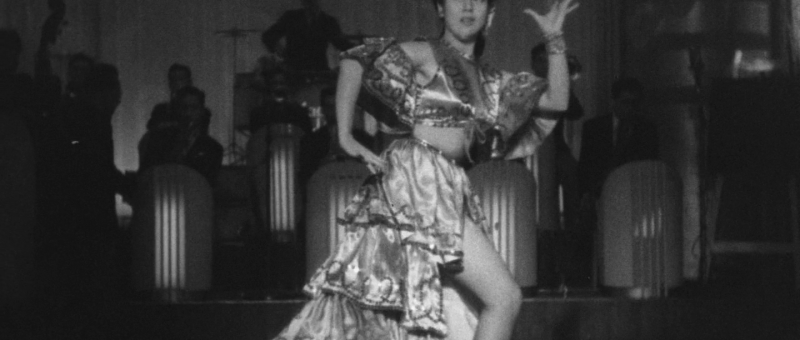
This sudden influx of children at rush hour is another symbol of the destabilisation of the post-war society in which the war orphans try to support themselves amid the still difficult economic environment. The lack of economic opportunities is also posited as a reason that the deceased, later identified as Kaneko, may have turned to crime by getting involved with a criminal gang smuggling drugs and money to destabilise the society even further. Yet the rot may have set in a little earlier than that. Before the war, Minagawa had wanted to marry Michiko (Machiko Kyo), the sister of his friend Sekiguchi (Toshiaki Konoe), but she later threw him over to marry the wealthy son of a family running a pharmacy. She admits she married him for the money, but after the war he lost everything. Unable to find work, Kaneko became a wastrel while Michiko gained employment at a cabaret bar as a dancer. He told her that he’d found a job at a company, but this turned out to be a lie and chief investigator Fujimoto (Takashi Shimura) assumes he must have been working for the gang. 

Still, to begin with it seems like it may have been a case of mistaken identity. Kaneko’s clothes turned out to belong to other people, a fact easily explained by Michiko that they were second hand, but also suggesting that someone may have set him up to take their fall. The gang needed the skills he learned in the navy but maybe they didn’t need him anymore. The root of the evil is located, ironically enough, in a jewellery store presenting a front of affluence and elegance but in reality founded on crime and misery when so many are still struggling to rebuild their lives. Michiko too seems to have turned cynical. She snarls and pushes Minagawa away, but privately cries and appears to regret her youthful decision to reject love for material comfort.

Perhaps because of its genesis as a film designed to promote the local police force, it has a much more upbeat conclusion and particularly for Michiko who is, unusually, allowed to redeem herself and gain a second chance to make a better decision by reuniting with Minagawa who does not and never has held her past against her. The pair of them look out over the fracturing city and remark at how it just carries on as if nothing had happened which feels like advice intended for the post-war society that it should do the same and try to leave the past behind to start a new life in this new era. Meanwhile, huge numbers of policemen swarm the harbour to crack down on the smuggling gang sending the not altogether comforting message that this city is well protected against all kinds of crime and the police force is a well-trained, modern institution that has the latest technology at its disposal along with astute and compassionate officers. There may be sleazy clubs, duplicitous men and heartless gangsters, black markets and smuggled dangers, but there are, the closing scenes with their wide-open vistas in which scorched trees stand behind the burgeoning city imply, better days to come.


Whirlpool of Flesh (おんなの渦と淵と流れ, Ko Nakahira, 1964)

A intellectual professor and his wounded wife find themselves trapped in a toxic marriage after returning from Manchuria in Ko Nakahira’s fatalistic drama, Whirlpool of Flesh (おんなの渦と淵と流れ, Onna no Uzu to Fuchi to Nagare). Set in the late ‘40s, the film does indeed position Manchuria as a point of corruption while otherwise suggesting that Japan itself has been emasculated by the Occupation, but otherwise demonstrates how the couple drag each other into a cycling whirlpool of jealousy and obsession that it seems neither of them are really equipped to understand let alone escape.

Claiming to have been struck by her bright and smiling face in her omiai photo, Keikichi (Noboru Nakaya) married Sugako (Kazuko Ineno) in Manchuria without actually meeting her before the wedding. Apparently uninterested in sex, Keikichi was a virgin on their wedding night but harbours doubts Sugako may not have been. In any case, he seems put out that Sugako is not in his opinion his intellectual equal. He chances on her diary in which she details how bored she is by his constant lectures about English literature and that she feels him to be more schoolteacher than husband, but he merely scoffs that it’s not particularly well written. He begins to suspect that she’s sleeping with customers who come into the speakeasy she opens in their home during the days between the Russian invasion and repatriation and succumbs to a generalised sense of impotence hiding out in his room upstairs reading while she takes care of business below. 

In the present day, convinced that she’s having an ongoing affair with a merchant, Otani (Kazuo Kitamura), Keikichi pretends to go to a hot springs resort and then sneaks back to spy on her from an adjacent room. Though he feels no desire for her as his wife, through the eyes of these other men he rediscovers a sense of Sugako as the woman from the photograph for whom he does feel some attraction and satisfies his latent sexual desires through watching her sleep with Otani. As an escape from the war, he’d been working on a translation of Shakespeare’s Troilus and Cressida the heroine of which he seems to superimpose on Sugako in wondering if she is a faithless woman or true, angel or devil. 

Yet from Sugako’s point of view, she begs him for physical intimacy which he refuses to grant despite his jealousy over her relations with other men. Traumatised by her sexual abuse at the hands of her uncle, Sugako believes that she has a body designed to satisfy men’s desires and is drawn into meaningless, and often transactional, sexual relationships. When Keikichi later questions her, it seems she doesn’t remember any of them in detail for to her they were simply “men” and nothing more. The situation is somewhat complicated by the fact that her uncle was a scholar of Chinese literature, which in part aligns him with Keikichi, but also points back to Manchuria as a source of corruption though coming uncomfortably from the opposite direction. 

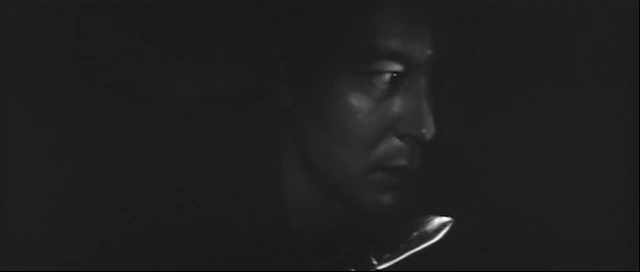
Sugako equates this corrupted sexuality with the great emptiness inside her that frequently leads to thoughts of suicide. Nakahira constantly shows us shots of Keikichi’s knife as if implying some kind of violence is inevitably going to take place, though in the end it signals nothing so much as Keikichi’s impotence. Then again, the emptiness is also linked to a sense of despair in Japan’s defeat that is manifested most obviously in the house next-door where the widowed mother may have been having an affair with Sugako’s uncle and unsubtly tries to blackmail her by threatening to expose the secret of her sexual abuse about which she had tried to tell Keikichi but he had refused to listen. The daughter has become a sex worker catering to American servicemen to support the family while her brother, Kenichi (Tamio Kawachi), allows her to sacrifice herself for him justifying himself that it’s for the greater good as he’ll eventually become a doctor and save countless other lives. He’s also masquerading as a Christian to get a scholarship to an American university through the church which is all very contradictory not to mention selfish and cynical. The sister, meanwhile, appears to have lost her mind and frequently rants and raves, blaming her mother by claiming that walking in on her with Sugako’s uncle permanently corrupted her sense of self and sexuality. Like Sugako, she exorcises her trauma through abusing her body, in her case through sex work with “nasty GIs who don’t always pay.”

Keikichi refers to this as “post-war nihilism” like the frequent strikes and workers parades that take place around him, but partially repairs his sense of masculinity after moving to Tokyo and getting a job. At work he meets another young woman who is a mirror of the young lady from next-door in that she was also repatriated from Manchuria where her father was a member of the government. With her mother dead and father unable to work, Shimura (Kaori Taniguchi) also supports her family with her secretarial job and often goes without lunch herself to make ends meet. Keikichi notices this and offers her his bento claiming to be feeling unwell, but fails to notice how his pity wounds her dignity even if he meant in kindness while acknowledging that he’s never known hunger. Unlike the mismatched Sugako, Keikichi and Shimura are an ideal match. She also wanted to study English literature and can meet him on his level discussing politics and culture though he does not seem to be aware that he is attracted to her and acts almost paternally in offering to pay her university fees to help her escape her life of poverty, echoing Sugako’s claims that he had become her “little boy” rather than her husband. 

The irony is that Sugako insists Keikichi, who does little but look down on her and alternately complain that she’s either impure or unattractive, is the only man she’s ever loved and blames his lack of sexual interest in her on the unresolved trauma of her childhood abuse. Having asked Kenichi to help her get her hands on some cyanide, she is shocked and disgusted when despite his need he rejects her money and asks for her body instead. He insists that it’s “only the friction of mucus membranes” and that she might as well sleep with him first if she’s going to die, though her refusal is in part a desire to die “pure” and finally overcome the emptiness and despair inside her. This inability to reconcile herself is also aligned with Keikichi’s vision of “post-war nihilism” and suggests that in the end this trauma can’t be healed and must necessarily lead to destruction. Meanwhile, Keikichi seems to have discovered a path towards his rebirth in his friendship with Shimura only to potentially have the rug pulled from under him. His new future too, may end up poisoned by Sugako’s unilateral decision to facilitate it. Dark and twisted in true Nakahira fashion, the film paints the post-war society itself as a deepening whirlpool from which there is no escape or at least not for those like Keikichi and Sugako forever locked in a deathly embrace and drawn ever deeper into the waves.


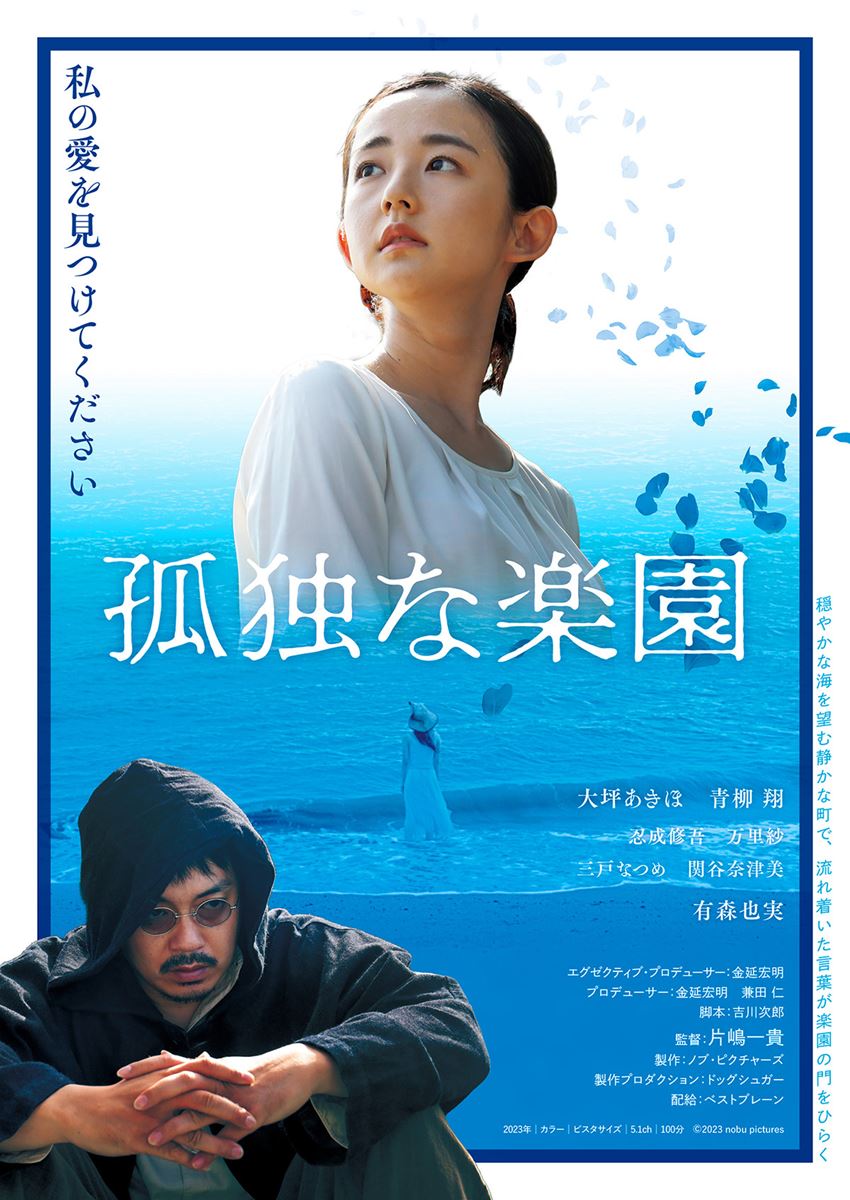
Paradise of Solitude (孤独な楽園, Ikki Katashima, 2024)

A blocked writer and a introverted young woman discover unexpected connection through accidental epistolary communication in Ikki Katashima’s poetic drama, Paradise of Solitude (孤独な楽園, Kodokuna Rakuen). Each wondering what exactly “paradise” means, the pair of them eventually find new ways to face the past and move on with their lives all while undergoing a vicarious romance with yearning at its centre that may or may not develop into something more “real” or else achieve its power solely through its lack of resolution. 

Yu Tsushima (Sho Aoyagi) is a writer struggling to meet his deadlines on a new serialised novel. Suffering with an illness, he’s retreated to his hometown and is now unable to leave because he experiences seizures on boats which understandably leaves him preferring not to get on them. One day, he receives an incredibly poetic love letter from an anonymous address only to notice a link to a porn site at the end of the email like a cruel punch line. Meanwhile, Ayame (Akiho Otsubo) is a nervous and introverted young woman working at a factory on the next island over. To begin with, it seems like she has suffered under the authoritarian rule of her aunt Tsukiko (Narimi Arimori), though as we later discover she may have meant well. 

Showing a talent for writing which sees her exploited by the factory boss, Ayame is tasked with writing a love letter on behalf of her friend Elena to a man she’s apparently only seen once yet has fallen hopelessly in love with. There’s something a little strange about this proposition, and not least because it seems like Elena may actually want this letter for herself and has unspoken (in Japanese, at least) feelings for Ayame. Elena is not the only non-Japanese person working at the factory at which it seems there may be some racist attitudes and behaviour among the employees, though there may be other reasons she feels isolated and otherwise drawn to Ayame.

But somehow, the letters find their way to Yu who is then “inspired” to write a new serial basically ripping off the anonymous correspondence but rewriting it in his own way while Ayame, having read his stories in a literary magazine, is not exactly angry yet confused and continues writing in order to complete this literary back and fore in crafting a new story together. Though the letters spin a tale of a lovelorn soul, it’s really the past that Ayame longs to revisit in the resultant trauma of her mother’s unexplained abandonment.

On top of the weird island drama, Katashima builds on the sense of uncanniness with a subplot about a cult-like local church and its own desire to reclaim Ayame thereby preventing her from fully confronting her past. Just as Yu is suffering from a medical condition, Ayame too experiences panic attacks when in contact with the church. Though it’s not always clear what is objectively true and what part of the story Yu is constructing from Ayame’s prose, parallel stories develop in which Ayame’s father hoped to liberate her mother’s soul though she eventually decided to chase paradise somewhere else. 

Because of her experiences, Ayame comes to believe that love within her has died, but perhaps begins to regain something of it thanks to her correspondence with Yu who becomes remorseful in learning that his actions may have been additionally unethical in encouraging Ayame to engage with her past trauma and risk dragging it all up again. He, meanwhile, begins to discover his creativity and overcomes the psychological dimensions of his condition by leaving his island and breaking out of his self-imposed isolation. The correspondence is like the message in a bottle discovered by Ayame’s mother which claimed to be from “paradise”, a hand across the ocean promising a better world over the horizon. Whether or not they find each other eventually in a more direct sense may not really matter, for simply having this invisible presence has enabled each of them to move past their internalised inertia and restart their lives. They may be trapped in a paradise of solitude, but on the other hand not quite alone and now a little more open to life’s possibilities rather than bound by its hurts and disappointments too frightened to leave the safety of their isolation in search of a more perfect paradise.


Paradise of Solitude screened as part of this year’s Cinema at Sea.

Trailer (no subtitles)

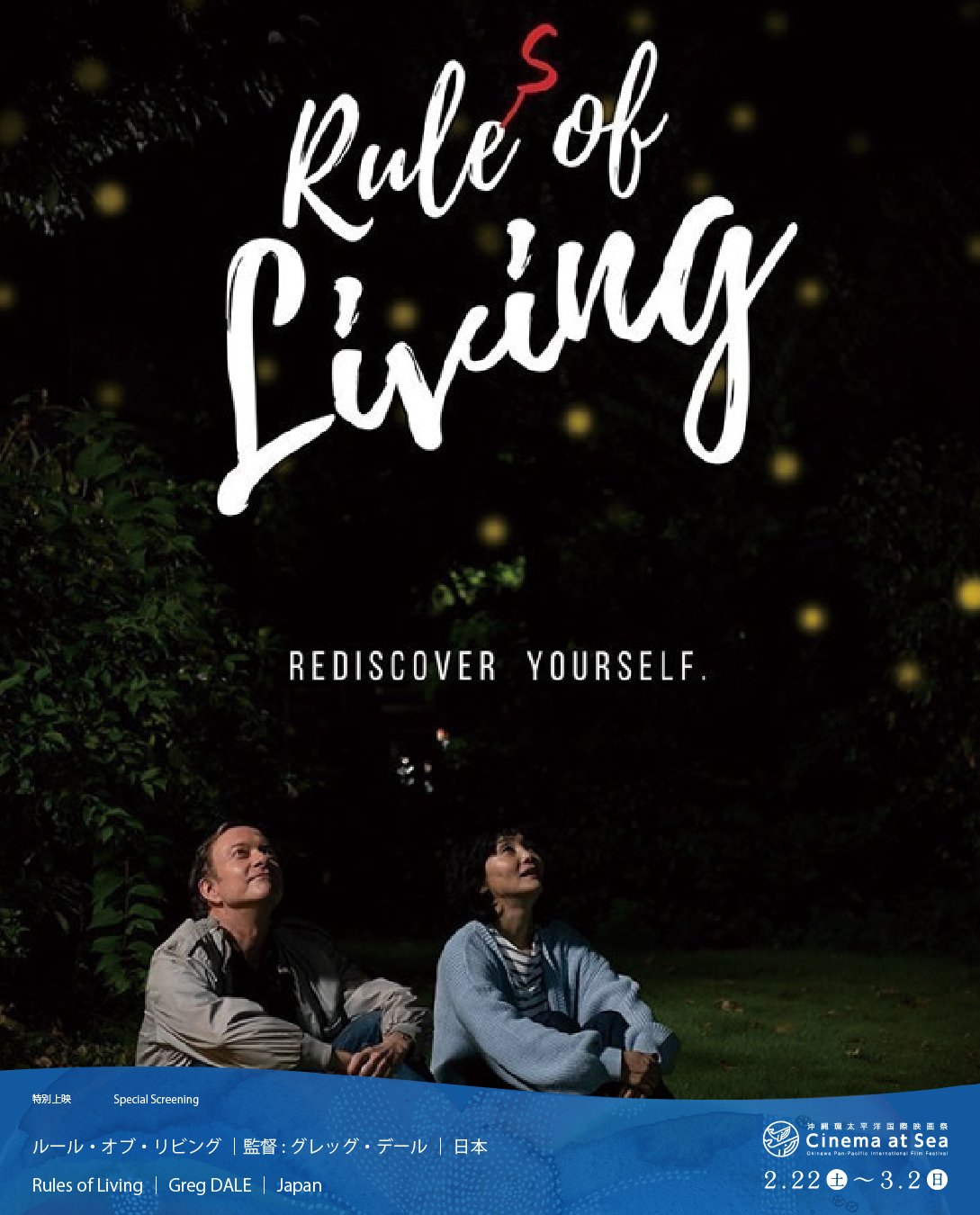
Rules of Living (ルール・オブ・リビング, Greg Dale, 2023)

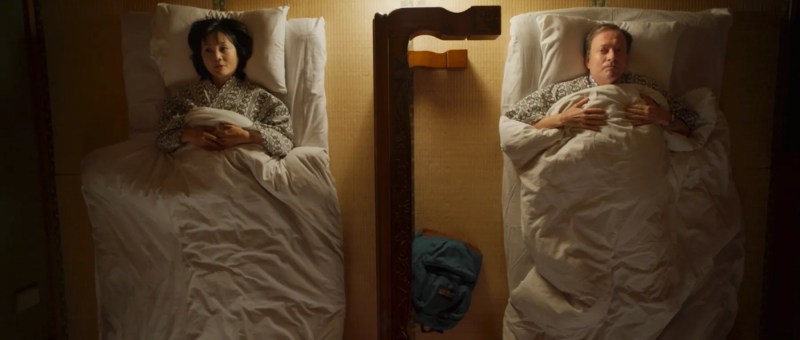
A lost tourist finds a begrudging sanctuary in the home of a reluctant middle-aged woman in Greg Dale’s cross-cultural comedy, Rules of Living (ルール・オブ・リビング). Well intentioned as it may be, the film has some outdated humour and suffers from an unbalanced perspective that prioritises that of the American hero and at times uncomfortably pushes a message of Western individualism as he somehow “liberates” there heroine, Mikako (Kaho Minami), from her sense of obligation to her family and wider community. 

In a case in point, Mikako doesn’t want a roommate because her well-appointed home is a private sanctuary from the outside world and its constant judgement but is more or less forced to let Vincent (Greg Dale) in out of guilt and politeness. For his part fleeing a messy divorce and his own dissatisfaction with life under capitalism, Vincent arrives in Japan only to be somehow surprised that everything’s in Japanese and he can’t communicate with anyone because they are all too embarrassed about their English ability to respond to his questions. This results in a little well-worn humour in which his asking a portly middle-aged lady about a cheap place to stay is misunderstood and leads to an awkward situation as the apparently sexually insatiable older woman drags the naive and wholesome Vincent to a love hotel. Yet Vincent, an aficionado of Lafcadio Hearn, continues to wander round with wide-eyed wonder before rocking up Mikako’s office for more language-barrier banter and subsequently at her house despite not having made any attempt to contact her to make arrangements having befriended her daughter Chieko in Bali.

The film seems to directly contrast Mikako with her daughter who has given up a prestigious job and corporate career to go travelling leaving Mikako overstretched trying to care for her own mother alone as her health declines. Chieko’s decision is to a degree selfish in that she doesn’t answer her mother’s calls and does not even return home for her grandmother’s funeral while ironically looking down on Mikako for being a doormat who always puts the needs of others above her own as, the films argues, is expected by Japanese society. That’s not entirely wrong, though there must be a middle ground between total abandonment and selfless sacrifice in which not everything would simply be left for Mikako alone to deal with and she would have more freedom to fulfil herself outside of the expectations of others including those of Vincent. It’s notable that Mikako also seems to be dissatisfied in her career because of persistent sexism and office mores in which, at 49, she’s been more or less demoted to the ranks of office ladies after spending the rest of her working life in accounts and likely won’t be offered any further promotions, therefore justifying Chieko’s decision to quit. At the office, Mikako is treated as a maternal figure unfairly over relied upon by the boss because of her advanced skills while the younger women make too many mistakes and are slapdash in their work because they aren’t planning to stay in these jobs long term.

Meanwhile, Mikako is also under pressure to remarry especially as many seem to remark on the fact her family home is too large for her as a single woman. She’s been in a semi-serious relationship with a divorced childhood friend for some time but neither of them seem keen to give marriage another go until he too is pressured by his father to find another wife in order to take over the family business. Koichi (Kippei Shiina) is apparently the perfect man, nice, polite, well turned out and professionally successful yet there’s no real spark and Mikako feels guilty that she can’t learn to love Koichi in the way everyone else seems to love him for her. If she marries him, it will be for convenience and companionship along with the expectations of others much more than for herself. 

Her romance with Vincent is not all that convincing but born of frustration with these same social expectations and desire to put herself and her feelings first as manifested in her sudden desire to learn English. Vincent teaches English around the neighbourhood and spreads these individualist ideas around while enlivening the community through the simple act of communication as if no one had ever thought to speak to anyone else before. Yet he meets a more cynical force in the head of the language school he eventually gets a job at who is from India and offers yoga classes on the side despite never having practiced it before coming to Japan in another example of the pernicious qualities of these “expectations”. Vincent partially falls victim to them too in assuming a young woman in the staffroom is a lost student rather than a teacher simply because she looks Japanese. Nana complains no one takes her seriously because of her appearance despite her native level English and American accent. Before arriving at Mikako’s Vincent had tried to rent an apartment only to be told they don’t rent to foreigners and those that do either offer inappropriate accommodation or ask for a series of spurious additional fees. A man in the street also yells at him to go out with his own kind when seeing him with Mikako.

Essentially, Mikako’s choice is between two men, Vincent who apparently represents “freedom”, and Koichi who represents conventionality. This rather undermines the central thesis of Mikako rediscovering herself and taking agency over her life rather than as her daughter had said devoting herself entirely to the service of others. The film’s title is taken from a series of rules Mikako pastes up as condition for Vincent staying with her which included not using the bathroom or disturbing her while she’s in the living room, symbolising her desire for privacy and reluctance to let the relentlessly friendly Vincent into her life (even though being reluctant to let a total stranger and especially a man you’ve never met before stay in your house with you is completely understandable), but also hints at the “rules” that govern her own life in a conformist and patriarchal society. Some of these at least she may escape in deciding to follow her heart even if the place it leads her to has rules of its own that may not in the end be all that better.


Rules of Living screened as part of this year’s Cinema at Sea.

Trailer (English subtitles)