 “More specific, less poetic” the distressed author hero of Lee Myung-se’s M (엠) repeatedly types after a difficult conversation with his editor. Almost a meta comment on Lee’s process, it’s just as well that it’s advice he didn’t take – M is a noir poem, a metaphor for an artist’s torture, and a living ghost story in which a man shifts between worlds of memory, haunted and hunted by unidentifiable pain. Reality, dream, and madness mingle and merge as a single kernel of confusion causes widespread panic in a desperate writer’s already strained mind.
A young woman haunts the screen, pleading with us to remember her and be sad. She is a dream, a visitation into the mind of blocked writer Han Min-woo (Gang Dong-Won) whose publishers are eagerly awaiting the completion of his next manuscript. Back in the real world, the same young woman appears around Min-woo but seems to be in an entirely different plane of existence, completely invisible to the man she claims to love. Eventually Min-woo enters a mysterious back alley bar and finally engages with the girl, Mimi (Lee Yeon-Hee), before blacking out and forgetting all about the whole thing.
Reality resets once again and we realise Min-woo is about to be married to Eun-hye (Kong Hyo-Jin) – the daughter of a wealthy man who seems to approve of the marriage if not, exactly, Min-woo’s literary career. Min-woo should be happy – he’s getting married to a woman he appears to care for, has been successful in his career, and has everything pretty much set for life at only 29. Min-woo is not happy. Persistent writer’s block means he’s written almost nothing with a deadline approaching, he’s worrying about money, and somehow or other he can’t quite commit to Eun-hye – there is something nagging at his mind, but try as he might he cannot say what.
Min-woo is worried enough to visit a psychiatrist but the doctor offers little more than a bottle of prozac and an instruction to call back in the morning. His mental state is clearly fracturing but even objectively his manner is strange, suddenly shouting or issuing orders in a shocking break from his generally mild mannered exterior. As if the mounting pressure of his overdue manuscript weren’t enough, Min-woo is extremely insecure in his literary talents. He views himself as a successful hack, berating those who dare to praise his work as fans of cheap trash.
Yet his internal world seems to be defined by potboiler hardboiled with its rain drenched streets, foggy avenues, and smokey bars peopled by miserable whiskey drinking men and omniscient bartenders. Describing the process of piecing his fractured mind back together as re-editing a film in which several frames are missing, Min-woo quickly becomes lost inside his own internal landscape, trying to locate the wound to stem the bleed but finding it ever elusive. Mimi is more than a spectral figment of his imagination. A living personification of the living past, her presence haunts him with the power of mystery, like something unforgettable which has long been forgotten.
In the end, Min-woo’s creative madness is a salve for an internal scar but its final resolution may be its own undoing. A love story and a ghost story, Min-woo’s crisis is every man’s obsession with lost love. Guilt mingles with pain and regret but also with existential confusion and unresolvable loss. As he later puts it, you lose things, often the things which are most important to you – it is a part (and a privilege, in someone else’s words) of being alive. You try to bury your pain in oblivion but eventually the things you’ve lost will be returned in unclear or unexpected ways. Min-woo may have made peace with himself (or this aspect of himself), allowed a ghost to bid him goodbye, but then again, perhaps he only dreamed himself free and is forever condemned to remember and be sad.
Original trailer (no subtitles)
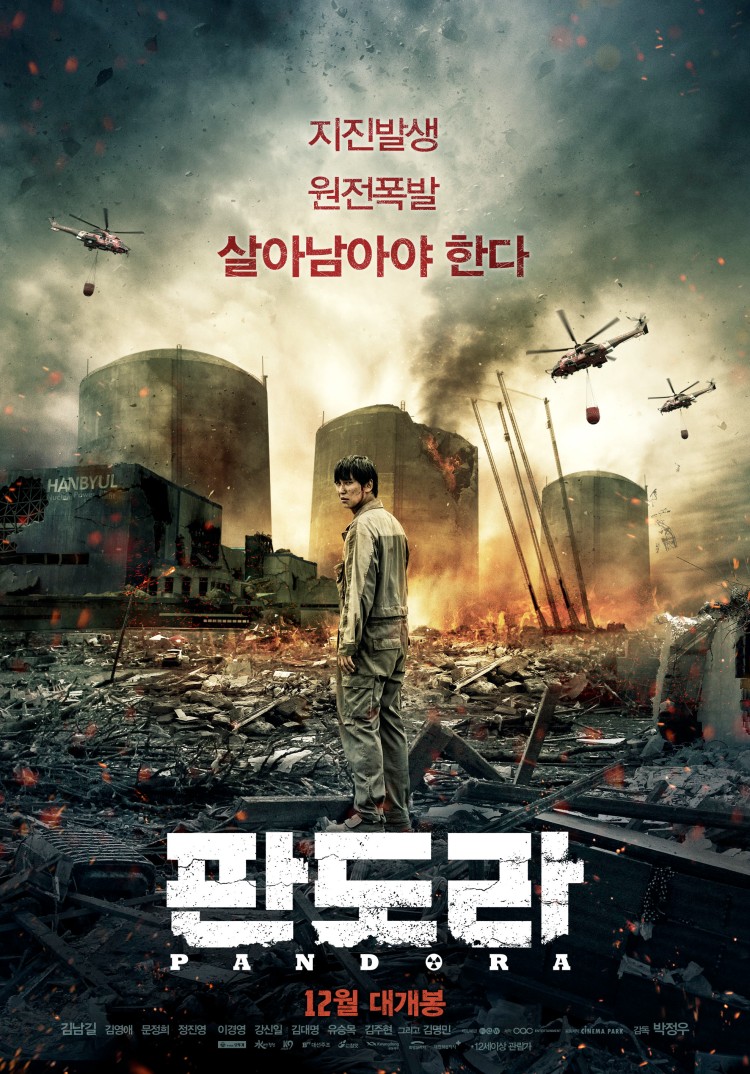 In a time of crisis, the populace looks to the government to take action and save the innocent from danger. A government, however, is often forced to consider the problem from a different angle – not simply saving lives but how their success or failure, decision-making process, and ability to handle the situation will be viewed by the electorate the next time they are asked who best deserves their faith and respect. Pandora (판도라) arrives at a time of particularly strained relations between the state and its people during which faith in the ruling elite is at an all time low following a tragic disaster badly mishandled and seemingly aided by the government’s failure to ensure public safety. Faced with an encroaching nuclear disaster to which their own failure to heed the warnings has played no small part, Pandora’s officials are left in a difficult position tasked with the dilemma of sacrificing a small town to save a nation or accepting their responsibility to their citizens as named individuals. Unsurprisingly, they are far from united in their final decision.
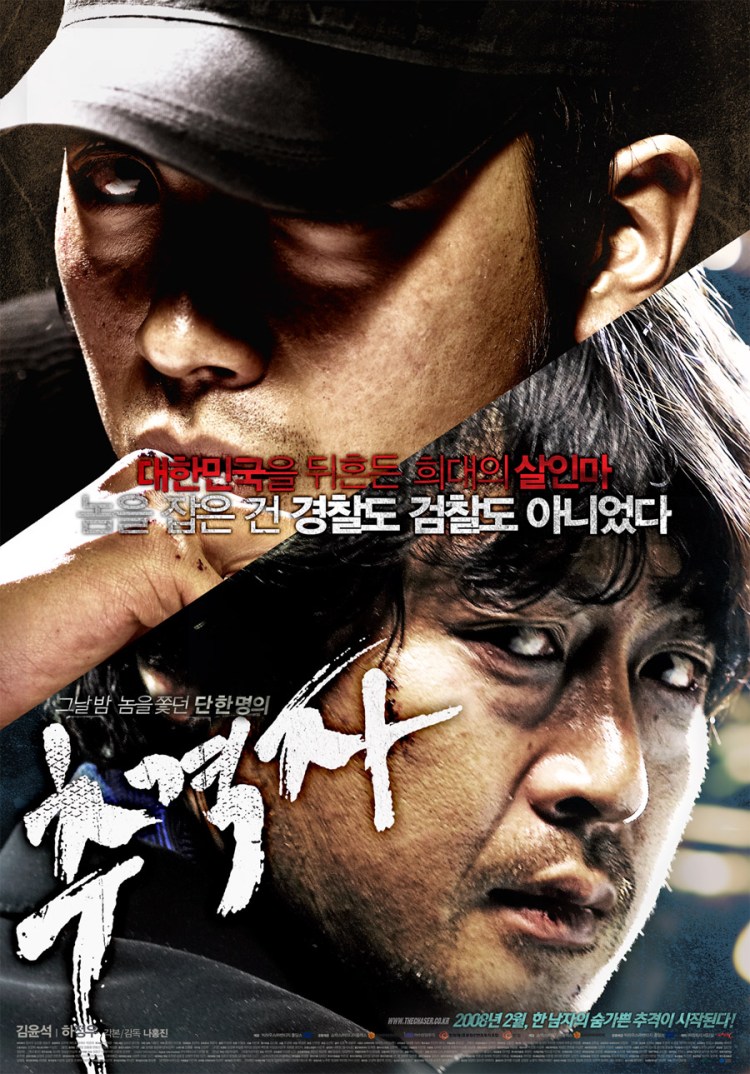 When it comes to law enforcement in Korea (at least in the movies), your best bet may actually be other criminals or “concerned citizens” as the police are mostly to be found napping or busy trying to cover up for a previous mistake. The Chaser (추격자, Chugyeogja) continues this grand tradition in taking inspiration from the real life serial murder crime spree of Yoo Young-chul , eventually brought to justice in 2005 after pimps came together and got suspicious enough to make contact with a friendly police officer.
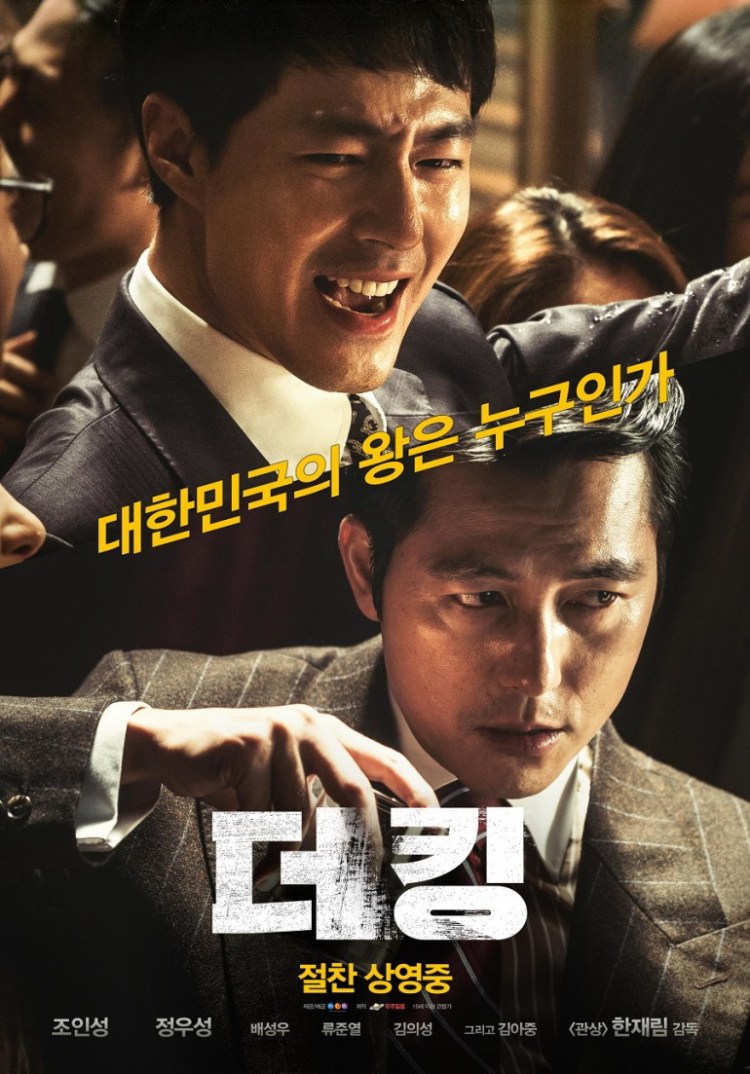 Absolute power corrupts absolutely, but such power is often a matter more of faith than actuality. Coming at an interesting point in time, Han Jae-rim’s The King (더 킹) charts twenty years of Korean history, stopping just short of its present in which a president was deposed by peaceful, democratic means following accusations of corruption. The legal system, as depicted in Korean cinema, is rarely fair or just but The King seems to hint at a broader root cause which transcends personal greed or ambition in an essential brotherhood of dishonour between men, bound by shared treacheries but forever divided by looming betrayal.
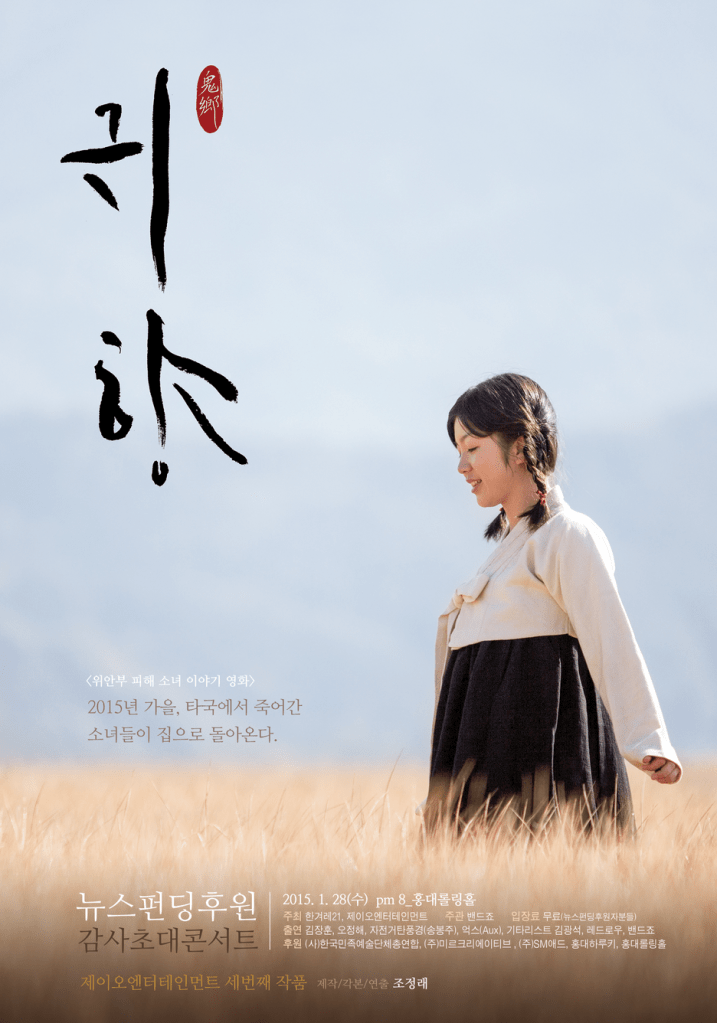 Of all the awful things that happened in the middle part of the 20th century, the trafficking, incarceration, enslavement and forced prostitution of women and girls from across Asia (including at least 65 Dutch women in what is now known as Indonesia) who were abducted for use as “comfort women” by the Japanese military remains one of the least discussed and most controversial. The issue (arguably) runs most deeply in Korea which had been experiencing a prolonged and often brutal era of colonial rule even prior to the intensification of hostilities in the early 1940s. The torment these women faced did not end with the ceasefire as entrenched social attitudes left them not only with a lifetime of physical and psychological trauma but also internalised shame which made it difficult for them to talk about their experiences even to those closest to them. Now more than ever, it is important that this story be told and the long suffering of these women, many of whom are no longer with us, is finally acknowledged.
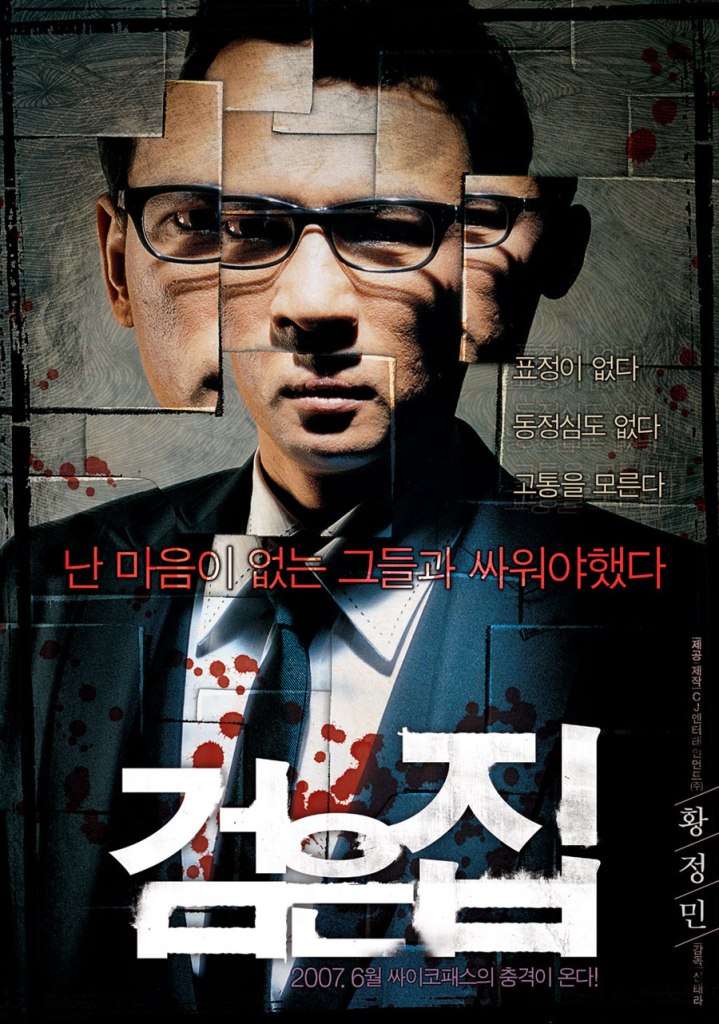 Yusuke Kishi’s Black House source novel was

 Windows on Worlds