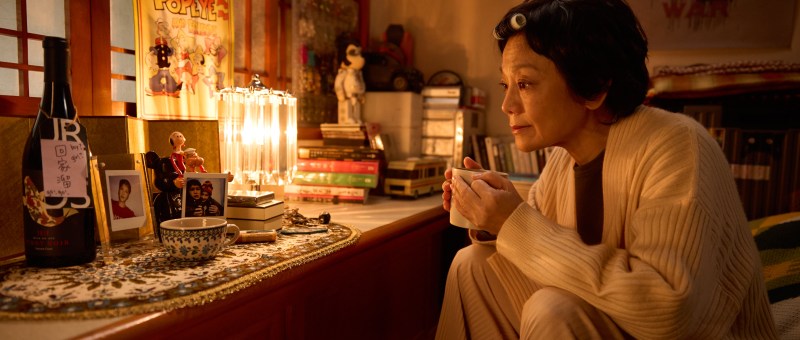
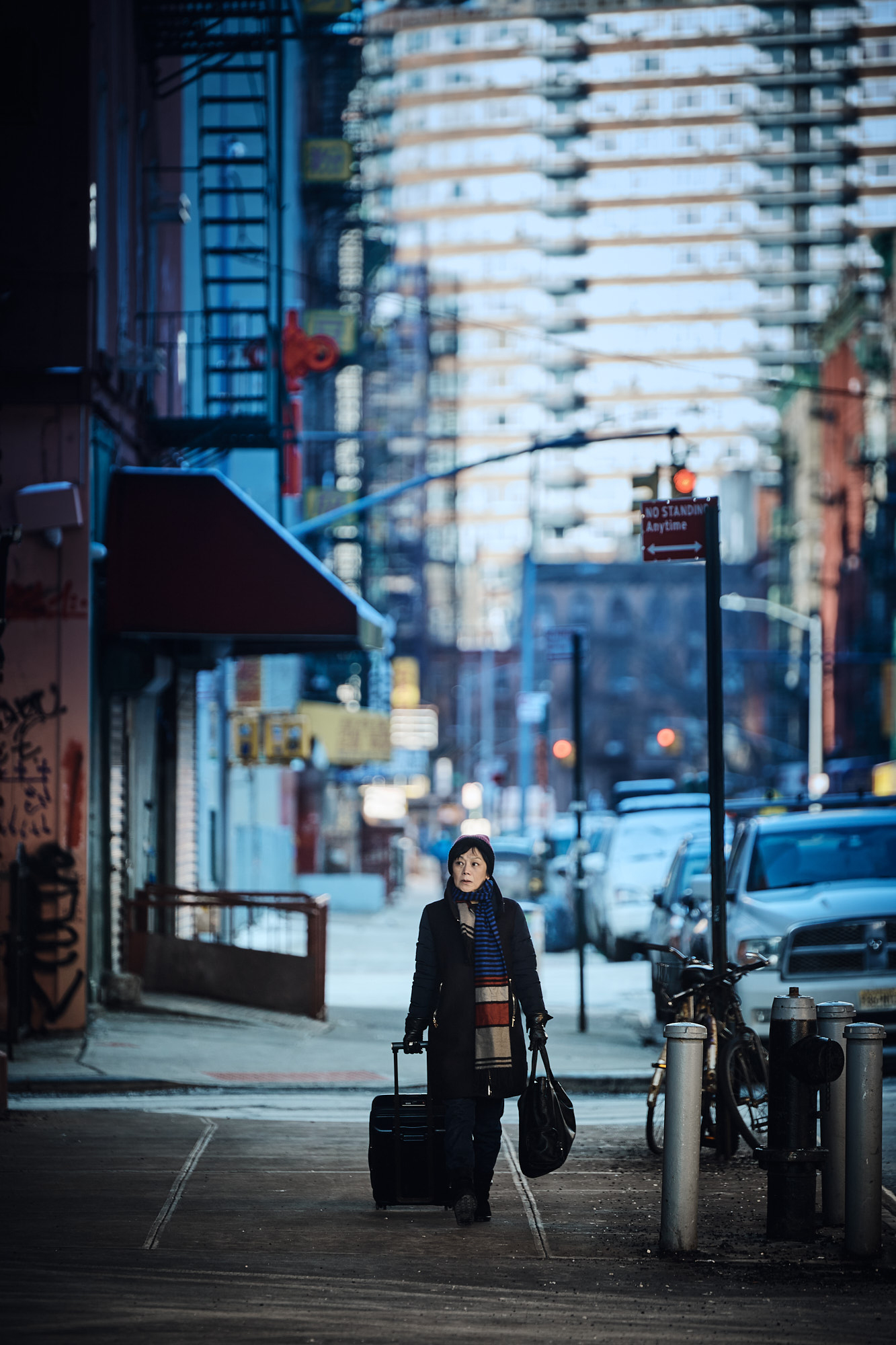
Never having fully dealt with the trauma of her teenage pregnancy and decision to give her child up to be raised by a family friend, 64-year-old divorcee Jin Ai-xia (Sylvia Chang Ai-chia) finds herself in an eerily similar position on on learning that the daughter she raised in Taiwan has been killed in a car accident in New York where she was receiving fertility treatment. The process resulted in a healthy embryo of which Ai-xia now finds herself the “guardian”. She is given four options, keep the embryo in storage and pay to renew the contract when it runs out, find a surrogate to carry to it term, donate it to another couple, or have it destroyed.
The fact that there are eight months left on the contract that her daughter Zuer (Eugenie Liu Yi-er) signed makes this almost another pregnancy which Ai-xia must decide whether or not to continue. Keeping the embryo in storage only defers the decision and traps it in the same mental space in which Ai-xia thinks of Emma (Karena Lam), the daughter she did not raise and tried to put out of her mind. In its consideration of motherhood, the film does shy away from suggesting that it is a kind of burden and requires sacrifice whether willing or not. Later confronted, if gently, by Emma who has unbeknownst to her become a single mother who chose to keep her child, Ai-xia justifies herself that she was 16 and afraid. Most of all, she was afraid the baby would trap her in New York’s Chinatown and that her life would never change after that. She wanted more, so she went along with her mother’s proposed solution of giving her daughter to a childless couple to raise while she returned to Taiwan and never looked back.
Yet it’s Emma who seems to haunt her while she’s in New York trying to sort out Zuer’s affairs while mired in her grief. It’s clear that she feels that she failed both her daughters as her unresolved trauma over separating from Emma left her unable to fully bond with Zuer whom she raised at arms’ length. When Zuer and her same-sex partner Jia-yi (Tracy Chou Tsai-shih) decide to have a child, Ai-xia is against it. It seems there may be some lingering prejudice in her about their relationship as she tells Zuer that the baby won’t be able to explain their family situation, but it’s also partly that she doesn’t want her to be trapped by motherhood as she felt herself to be. She asks her why she and Jia-yi don’t just enjoy their life together rather than complicate with a child. Ai-xia tells Emma that she wanted to live her own life, while expressing the same desire now that she has become a second mother to her own mother, Yan-hua (Ma Ting-Ni), who is living with dementia. Once her mother passes away, she’s looking forward to enjoying her freedom for once.
Ai-xia rails that no one ever really considered her feelings and that she’s been given this burden without ever really being given an opportunity to ask herself if she wanted it. There’s a minor irony in Yun-hua’s segueing back into the past to tell the 64-year-old Ai-xia that she can’t raise a child at this age as if she were still a pregnant 16-year-old. As an older woman, she reflects that Yun-hua probably didn’t make that decision solely because she was embarrassed by the stigma of teenage pregnancy but genuinely thought it was best for both her daughter and her granddaughter. But now Ai-xia is facing the same choice at the other end of her life knowing that if she chooses to raise Zuer’s baby she may not live long enough to see it to adulthood, nor may she have the energy to look after a small child even if she has the time.
But Ai-xia carries Zuer’s ashes around with her holding them in front of her belly as if they were the embryo and she were already carrying it. Placing the square black container on the airport scanner and watching it travel through the tunnel is oddly like an act of rebirth. Attempting to come to terms with her own complicated maternity, she thrashes out the past with Emma but also really with herself in trying to decide whether or not to continue this maternal legacy despite the sacrifices and compromises it entails. For her, motherhood becomes an act of self-forgiveness in which she learns to understand both her own mother and her daughters along with their shared connection in this ever-increasing line.
Daughter’s Daughter screens 18th July as part of this year’s New York Asian Film Festival.
Trailer (English subtitles)
 Windows on Worlds