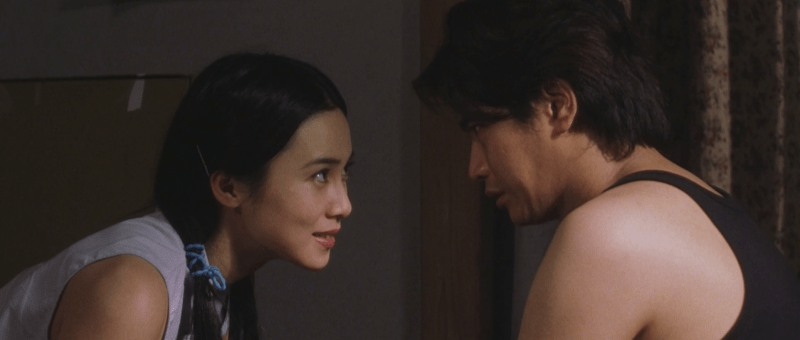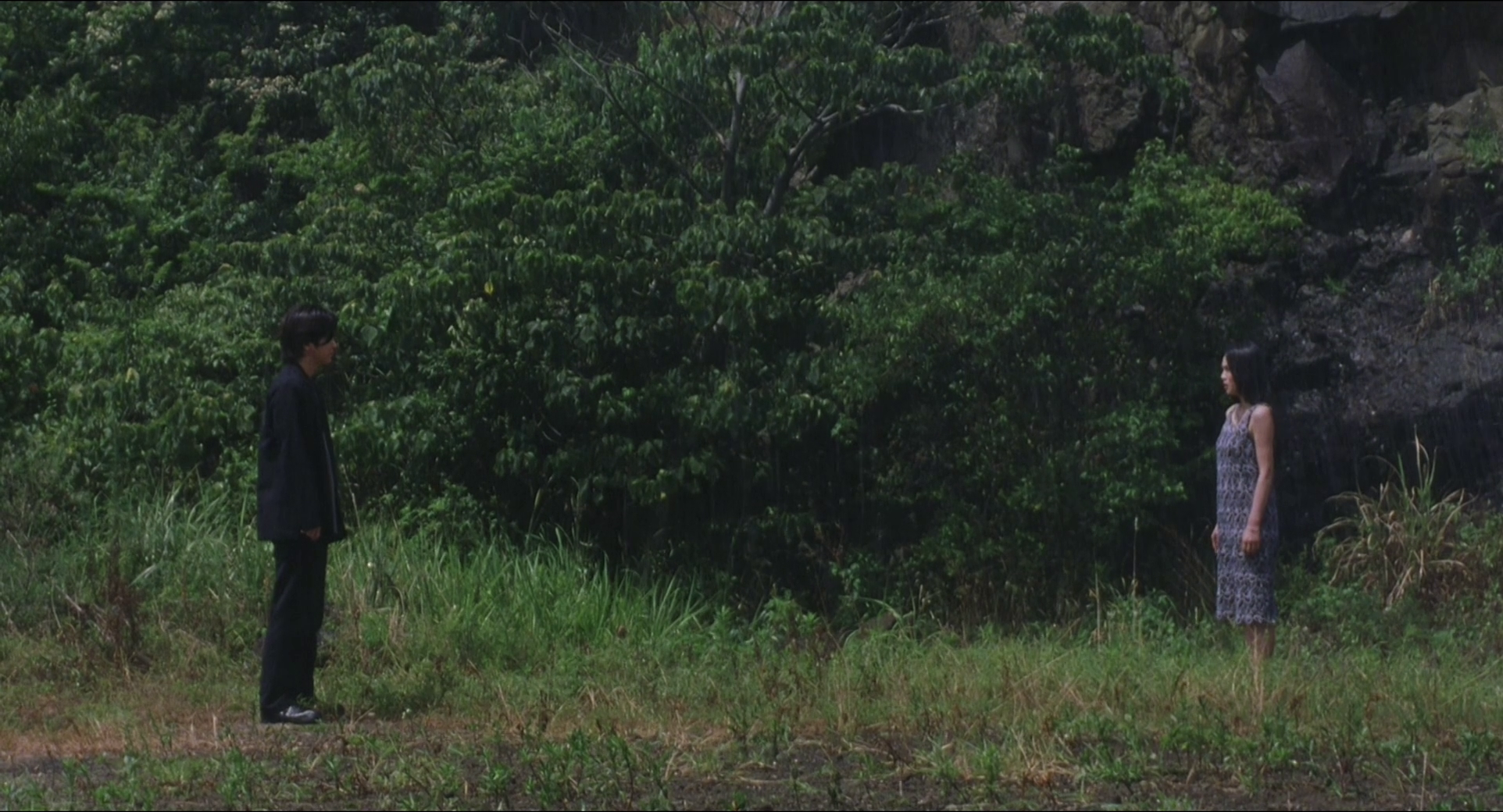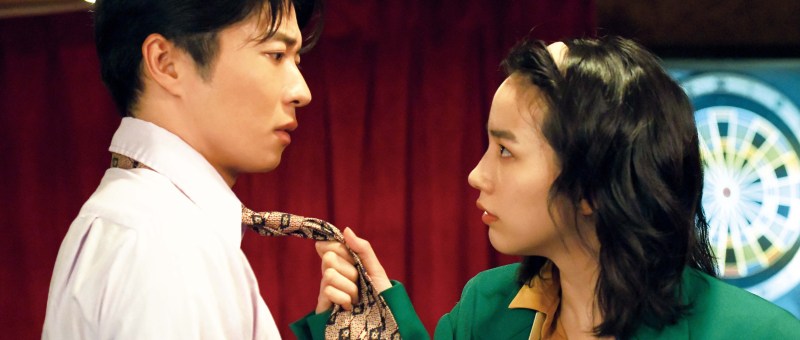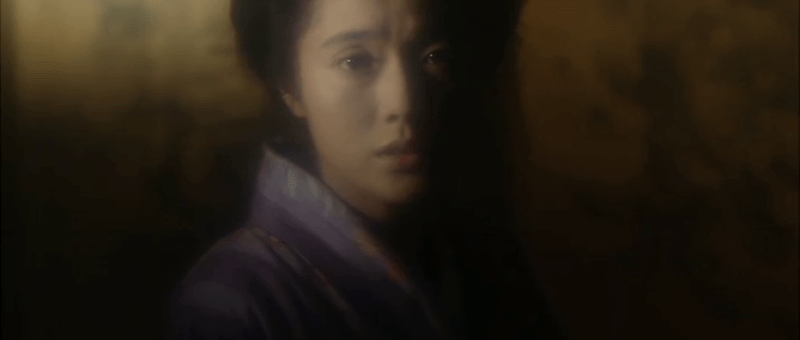
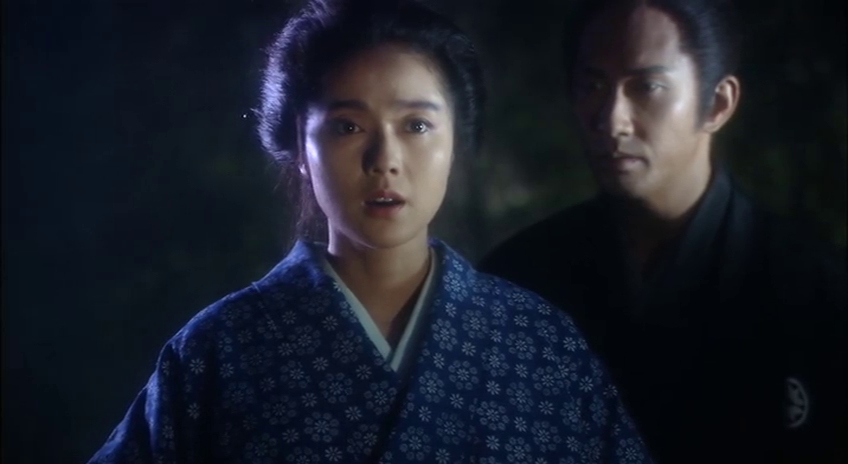
Sweet Rain: Accuracy of Death (Sweet Rain: 死神の精度, Masaya Kakehi, 2008)

“What do you think about death?” a charming grim reaper awkwardly asks, seemingly taking into account the answers given when deciding whether his “subject” should survive or if the untimely death they’re about to meet should be final. Adapted from the novel by Kotaro Isaka, Masaya Kakehi’s Sweet Rain: Accuracy of Death (Sweet Rain: 死神の精度, Sweet Rain: Shinigami no Seido) contemplates what it means to live well, how to go on living in the midst of pain and suffering, and finally how to know when it’s time to accept the finality of death. 

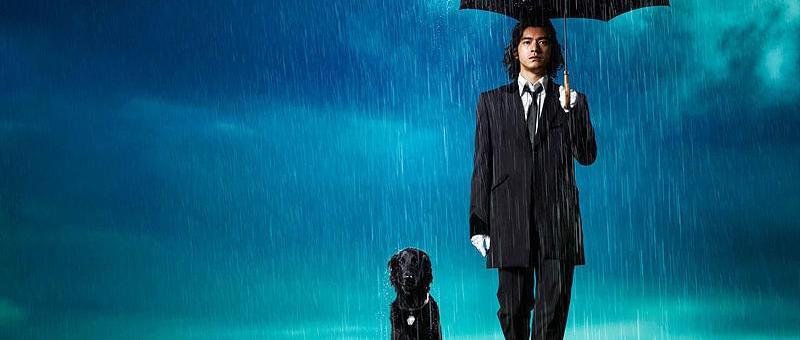
Chiba (Takeshi Kaneshiro) is a grim reaper and it’s his job to decide whether those involved in unexpected deaths, those not due to old age, illness, or suicide, should be allowed to live. According to his partner, who appears alternately as a black dog or raven, Chiba always chooses to “proceed” but something is obviously a little different with his latest job monitoring customer services representative Kazue (Manami Konishi) in the seven days leading up to her demise. Kazue is currently being harassed by a repeat caller who keeps calling the helpline asking for her personally and has recently graduated to pestering her about meeting up in person. It’s easy to see which way this could go, though luckily for her she ends up meeting Chiba who acts as a kind of protector when she’s hassled yet again by a different set of creeps in a park. As he gets to know her, Chiba learns of Kazue’s loneliness and sense of despair having endured more than her fair share of loss which has convinced her that everyone around her dies and she’s destined to be alone. But whether down to Chiba’s interference or otherwise, a surprising twist sees her offered a gig as a top idol star, leading Chiba to conclude that she has not yet fulfilled her purpose and should be granted more time. 

The expected romance does not quite take place, though Chiba is indeed becoming more interested in human life along with death while fascinated by music which he describes as humanity’s greatest invention. As we gradually gather, Chiba’s three jobs occur at lengthy temporal intervals, though the music store he frequents appears to be a constant and almost unchanged. Bar a hyper-realistic humanoid robot appearing in the final section in which Chiba is sent to assess an elderly hairdresser (Sumiko Fuji), these different temporal spaces are in another sense an extension of the present in which technology does not otherwise change substantially. Chiba picks up an iPod belonging to a petty yakuza on job two but continues to listen to CDs while the hairdresser seems to be doing her job the old-fashioned way and the kids that come to her store all collect Pokémon/Top Trumps-style paper cards. 

Yet Chiba is also a fish out of water, constantly confused by contemporary slang and with a strong tendency towards taking things literally. His discombobulation with language and custom is perhaps enhanced by the casting of Takeshi Kaneshiro who is half-Taiwanese and grew up in Taiwan speaking Mandarin as his first language, later working predominantly in Chinese-language cinema. In the audience perception he carries with him a quality of otherness that adds to the ethereality of his existence as a grim reaper. His appearance changes with each of his subjects, firstly appearing as a handsome young man, then as a grizzled yakuza complete with sunshades, and finally as a slacker student with each of his portals mirroring his destination from telephone booths to emergency exits and shopfront doors. As a grim reaper he has long unruly hair and wears a suit a loosened tie, but perhaps has little identity of his own and laments that he has never seen a blue sky because it is always raining whenever he is in the mortal world.  

The rain might well symbolise the pain and suffering around him as he lives among those who are about to die, but he himself feels that death is nothing special. As the old lady points out, that might be because it’s all he sees, he never visits people while they’re alive and knows nothing of life nor what it is to leave it. The old lady too experienced a lot of loss in her life and came to the conclusion that she was in some way cursed, severing her connection with those she truly loved believing she could only bring them harm and choosing to live all alone. “The sun in the sky’s nothing unusual but it’s important that it be there,” she adds, “death’s like that, maybe”. In any case she seems to have lived a long life that was happy enough even if it was “nothing special” and she can die with no regrets while Chiba too begins to learn something of the world’s ordinary beauty in his first glimpse of a sunny sky even if one overshadowed by the spectre of death. 


Trailer (no subtitles)

Sham (でっちあげ ~殺人教師と呼ばれた男, Takashi Miike, 2025) [Fantasia 2025]

After a couple of hundred years of corporatising culture, sham apologies have become an unfortunate phenomenon all over the world. Corporations in particular will often offer a fairly meaningless apology that acknowledges a minimal level of responsibility but does not bind them to recompense those they’ve wronged nor put right anything that their conduct has made wrong. The problem is that an apology has become a kind of sticking plaster that allows us all to move on but doesn’t really solve anything and may even prevent us from doing so because it turns us all into accidental liars who are primed to say “sorry” to make the situation go away even it wasn’t actually our fault.

That’s essentially what happens to Seiichi (Go Ayano), previously an unremarkable primary school teacher with a teenage son of his own and an apparently happy home. Inspired by a real life case, Takashi Miike’s courtroom drama Sham (でっちあげ ~殺人教師と呼ばれた男, Detchiage: Satsujin Kyoshi to Yobareta Otoko) flirts with ambiguities but in keeping with its themes eventually descends into a defence of the well-meaning man as its hero becomes so embroiled in the injustice being done to him that he doesn’t see that he is not entirely blameless. Though we’re first introduced to him as the “homicidal teacher” the papers describe him as, the film’s title leaves us in no doubt that his account is the truer. But it remains a fact that during his conversation with Ritsuko (Ko Shibasaki), the mother of the boy Seiichi is accused of racially bullying, he did remark that Takuto’s American grandfather may explain his unique characteristics which is perhaps within the realms of thoughtless things well-meaning people say in awkward conversations but hints at a level of latent societal prejudice. In any case, that the fact his conversation with Ritsuko ended up drifting towards subjects like bloodlines and the Pacific War is not ideal, while Seiichi should probably have been more mindful of his politically neutral position as an educator. 

Likewise, he doesn’t dispute that he tapped Takuto lightly on the cheek to “educate” him that it hurt when he slapped another boy, Junya, who, according to Seiichi, he was bullying. He probably shouldn’t have done this either, even if some may see it merely as common sense in teaching the children that violence is wrong, as ironic as that may be. In any case, the film is on Seiichi’s side and insistent that he did not treat Takuto any differently on account of his non-Japanese ancestor nor spout off any of the racist nonsense that Ritsuko attributes to him. But the major problem is that Seiichi is mild-mannered and also a product of this society. He tries to protest his innocence, but is pressured by his headmaster to apologise anyway which is, of course, a form of lying, something they discourage the children from doing. In the end he goes along with it, because it’s easier to just say “sorry” and hope it goes away rather than address the real issues. 

It’s this sham society that the film seems to be critiquing, even if its message gets lost among its intertwining plot threads as Seiichi effectively finds himself bullied by an empowered tabloid media formenting mob justice against what it brands a far-right fascist teacher as a means of selling papers through generating outrage. While he is scrutinised and scorned, no one bothers to look into Ritsuko’s story which is already full of holes such as why, if she’s so protective as a mother, she waited for her son to be a victim of “corporal punishment” 18 times before complaining to the school. Little motivation is given for Ritusko’s actions, though Miike films her and her husband with an an almost vampiric sense of unease as they appear eerily in black on their way to the school. Unhinged herself, the answers may lie in Ritsuko’s own childhood and her yearning for a protective mother figure, not to mention the sophistication of being a child returning from abroad with good education and prospects for the future.

Seiichi refocuses his closing statement on Takuto, insisting that he doesn’t blame him for “lying”, but it’s perhaps also try that he is a kind of victim too whose own actions can only be explained by a closer look at his relationship with his mother and familial environment. But it turns out that it really is easier to just say “sorry” and move on. Even the psychiatrists seem more interested in treating Ritsuko like a customer whose wishes must be obeyed than earnestly trying to help Takuto even if his issues don’t seem to be as serious as his mother might have it. But according to Seiichi, telling a child off is the purest expression of love. If everyone carries on with sham apologies, nothing really changes and kids like Takuto get forgotten about as everyone falls over themselves to make the situation go away. No one really cares about the truth, and so it becomes an inconvenience to social cohesion in which those who insist on speaking it are hounded down until they agree with the majority and meekly say “sorry” while those in the wrong nod their heads and continue with their lives free of blame or consequence.


 Sham screened as part of this year’s Fantasia International Film Festival.

Trailer (English subtitles)

BAUS: The Ship’s Voyage Continues (BAUS 映画から船出した映画館, Hokimoto Sora, 2025)

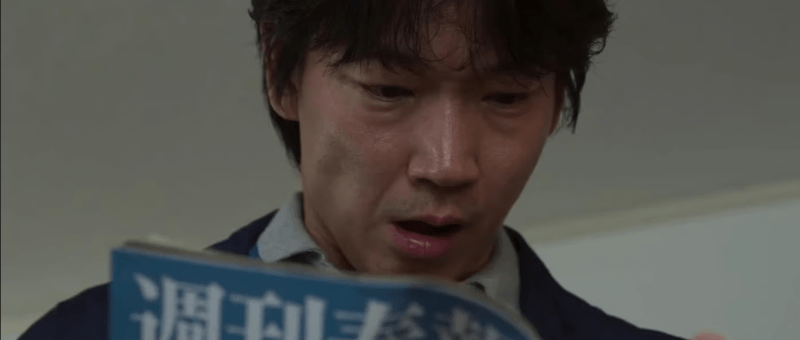
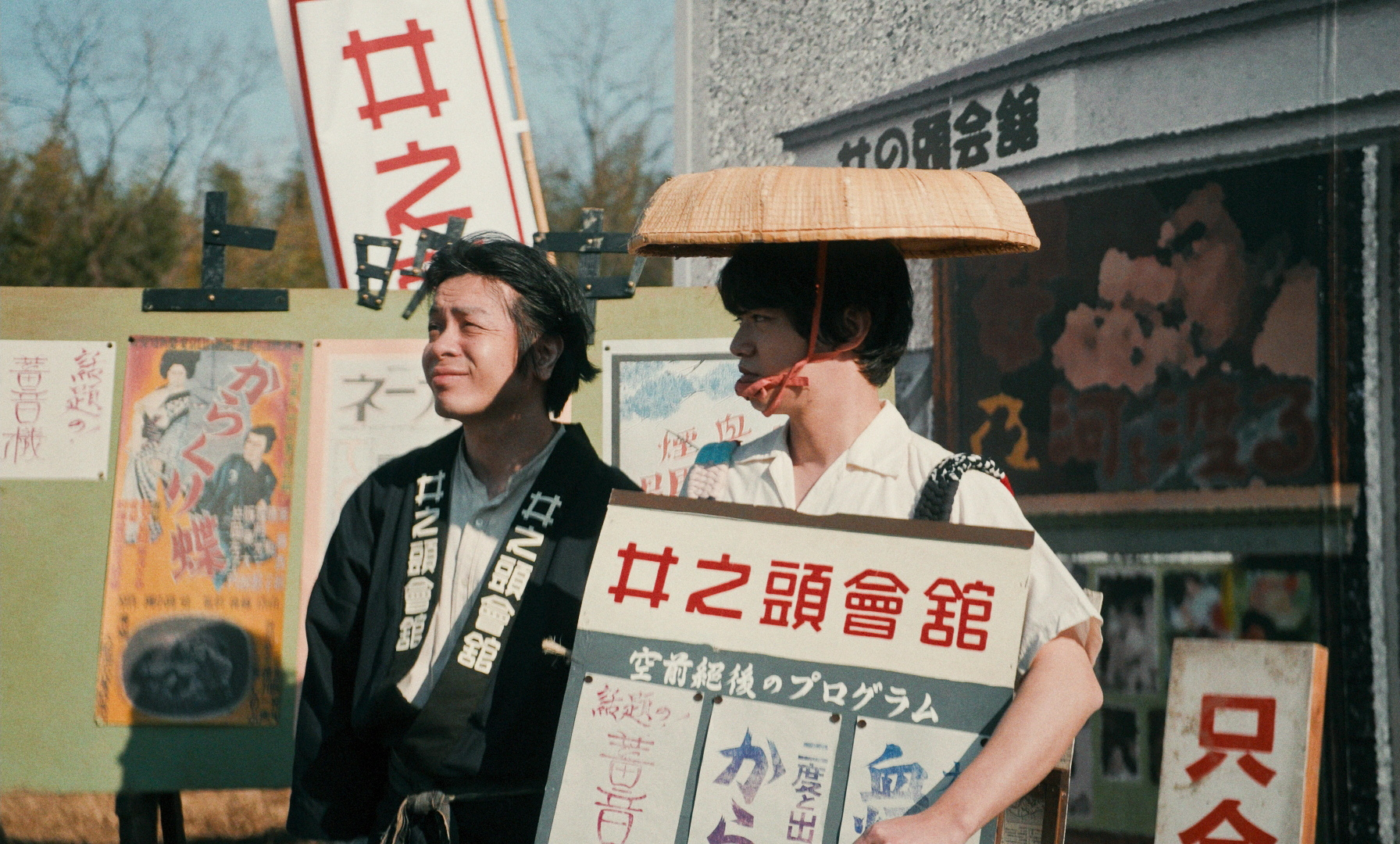
According to the hero of Sora Hokimoto’s BAUS: The Ship’s Voyage Continues (BAUS 映画から船出した映画館, Eiga kara Funadeshita Eigakan), films are born of man’s battle against time and the desire to extend one moment into eternity. Yet his father was always looking for a new “tomorrow” and a path towards the future that ironically kept him from being fully in the  present. Inspired by the memoirs of Takuo Honda, the film is effectively a people’s history of cinema culminating in 2014 with the closure of the Baus Town cinema amid a climate in which film itself seems to have entered a terminal decline.

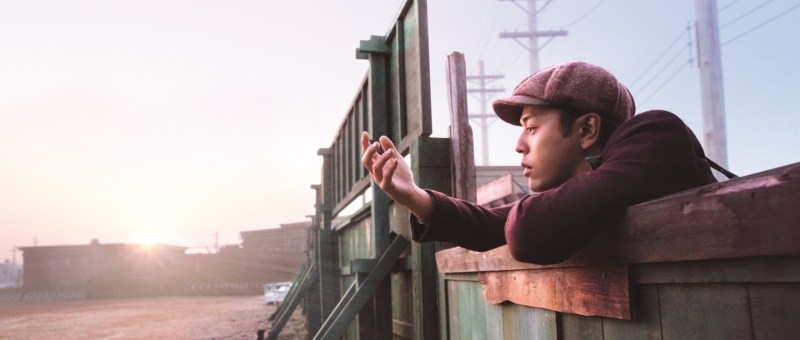
Indeed, Takuo’s father Shigeo (Shota Sometani) becomes almost a ghost himself. Having come to Tokyo insisting that movies were his “tomorrow,” the war leaves him a shadow of his former self and a spectral presence in the auditorium. Though Takuo’s mother (Kaho) and others at the cinema have discovered a new community eating together every night after the final screening, Shigeo is often out drinking with the chamber of commerce and rarely returns home. Still looking for “tomorrow,” he appears lost for direction despite opening a new, more modern cinema fit for the post-war era. 

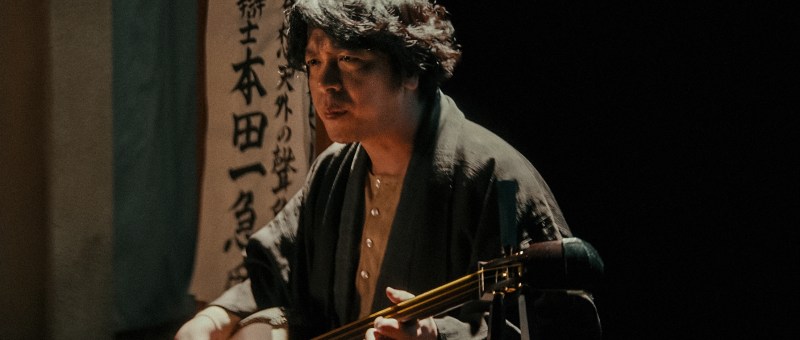
As the mother of Shigeo’s wife Hama says, men are focused on past and future while it’s women who are forced to face the present leaving most of the more practical problems for Hama to deal with. Shigeo’s brother Hajime (Kazunobu Mineta) had perhaps been overly obsessed with the past and ultimately unable to move forward. After coming to Tokyo with Shigeo, he became an unsuccessful benshi only to be rendered obsolete by the arrival of talkies. Despite being drawn to the anti-capitalist rhetoric of the migrant workers, he later falls hard for militarism and becomes a casualty of the war both literally and spiritually. Shigeo laments the increasing censorship of the late 1930s complaining that it has become impossible to make or show films, but it’s little better afterwards as the Occupation forces push Hollywood movies at the expense of the European or Japanese.

Hajime had snapped back that entertainment wouldn’t change anything and that war purified the world, but Shigeo insists that films are a window from which the local population can learn about other lives and other places, a means of “building the heart” that might a save a soul. The older Takuo envisages a world in which watching a film normally or loving someone normally might become political acts in themselves. He weaves his personal history of film, which is also that of his family, with the political realities of the mid-20th century in which beautiful forests are cut down to make coffins for the endless dead and unexploded incendiaries lurk like ticking time bombs both literally and psychologically as, as one old man puts it, the nation’s struggles to reckon with its role in the war or its traumatic consequences. 

Nevertheless, even if Takuo is closing Baus Town for reasons stemming from his own traumatic loss, he continues to look for tomorrow despite his old age. Asked what his dream was, he replies only that he wanted his children to have better lives than he did, though he worries he may have failed. In any case, he remains lost within the labyrinths of cinema. The building itself, originally surrounded by fields in a much smaller Kichijoji, becomes a haunted space in his memory, half dream and longed-for place of warmth and salvation in which he remains a small child searching for his father in the empty auditorium.

The name for Baus Town is taken from the bow and stern of a ship, echoing Takuo’s own search for other horizons and a constant process of moving through the world. He too is trying battle time and make a moment last an eternity while admitting that there’s nothing so beautiful as smoke in the projector beam. He asks his daughter if smoke, like movies, isn’t connected to the afterlife and there are ways in which Takuo has also become a ghost, both haunted and haunting while films are themselves a kind of other world of the living past and a way of communing with those no longer here. Taking over production after Shinji Aoyama passed away, Sora gives the film an elegiac, poetic quality while asking if cinemas too might be resurrected in the same way as film even as Takuo ponders new directions while continuing to sail ahead in search of tomorrow.


BAUS: The Ship’s Voyage Continues screened as part of this year’s Nippon Connection.

Original trailer (no subtitles)

Images: ©Honda Promotion BAUS/boid 

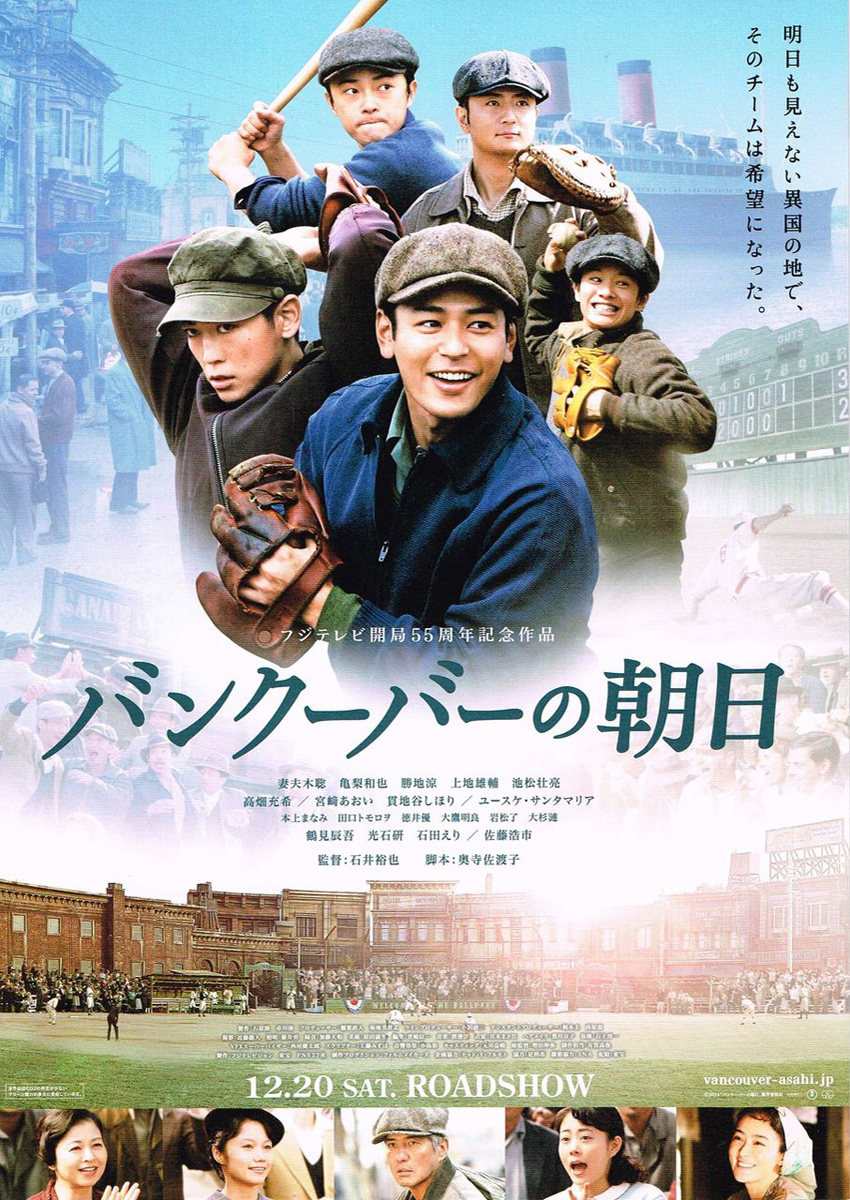
The Vancouver Asahi (バンクーバーの朝日, Yuya Ishii, 2014)

Second generation Japanese-Canadians stake their hopes on baseball in Yuya Ishii’s historical drama The Vancouver Asahi (バンクーバーの朝日, Vancouver no Asahi), inspired by the story of the Vancouver Asahi baseball team which was belatedly granted a place in the Canadian Baseball Hall of Fame in 2003. In many ways a conventional sporting movie in which the underdogs eventually triumph, Ishii does not shy away from the dark shadows of the 1930s even while framing the Asahi’s path to glory as a symbolic punch back against discrimination and oppression. 

As the hero, Reggie (Satoshi Tsumabuki), relates, many like his parents came to Canada at the beginning of the 20th century planning to work for three years and then return to a more comfortable life in Japan only to find themselves trapped in low-paid and exploitative work. Reggie’s main concern is that his drunken and dejected father Seiji (Koichi Sato) still sends the majority of his pay back relatives in Japan meaning their family live like paupers while as he never meant to stay he hasn’t bothered to learn the language or attempt to integrate into the local community. In fact, Reggie is their major breadwinner with his job at the sawmill but the only thing that makes his life worth living is playing baseball with the Vancouver Asahi baseball team even though they are regarded as something of a joke, always at the bottom of the league tables and never actually winning a game. 

The plight of Asahi is closely aligned with that of the immigrant community, divided as it is in its approach to integration with some feeling they should abandon their Japaneseness in order to better get along with Canadians and others fiercely determined to hang on to their traditions. When Reggie admits that they can’t win against the power of the Canadians it feels as if he’s talking about more than just baseball though his solutions are perhaps apt for both in realising that to beat strength you need to be smart. What he comes up with is essentially a bunt and run strategy that plays to their advantages of speed and lightness but also at times feels to him like a trick or a gimmick, an admission that they can’t compete in the normal way. “Why are you always apologising?” Reggie is repeatedly asked, his shyness and mumbling speech always seeking to keep the peace while his desire to offer justification is less as one Japanese old lady puts it “a bad habit of their culture” but a defence mechanism in an environment of potentially violent oppression. 

As Japanese migrants the family faces constant xenophobic micro aggressions, a woman at the hotel refusing to let Reggie’s bellboy friend Frank (Sosuke Ikematsu) carry her bags while they are also suspected as thieves or harassed by the local Canadians. Reggie’s hothead friend Kei (Ryo Katsuji) finds it increasingly difficult to keep his cool, not least as it turns out because his father was killed fighting for the Canadians in the last war and yet he is still treated as a dangerous outsider. Meanwhile, they are paid only half the wages of the Canadian workers, expected to work unreasonable hours, and can be fired without warning. Now an ageing man, Seiji is still a casual labourer fighting for a place on a truck to work at a quarry or construction site often in other towns away from his family in order to get more money. The team is constantly losing players because men lose their jobs and focus on finding new ones or moving away. As one old man laments, there’s no job security and even if you go to a Canadian university it won’t make any difference to your job prospects. Reggie’s sister Emi (Mitsuki Takahata) was on track for a scholarship only to have it pulled at the last minute when parents of the other kids complained it wasn’t right it was going to a Japanese girl. 

After the hotel fires all of its Japanese staff, Frank decides to go “back” to Japan where relatives will help him find work but pointing out to Reggie that he’ll still be seen as an outsider even there and there’s no guarantee anything will be any better in Japan. Poignantly the guys later catch sight of him in a newsreel as a soldier having been sent to the Machurian front. Once war breaks out they are discriminated against again, forced out of their homes and interned leaving all their property behind and destroying their small community, the Asahi included. The team’s unexpected success had forged a bridge between the Japanese and Canadian communities but it was not strong enough to survive the war. Stepping away from the sports movie, Ishii concentrates more on the ways they were betrayed, the team’s success later buried and forgotten while they find the advances they’d made washed away on the shore as if to suggest their strike back against an oppressive society could never be more than superficial while their position remains so precarious. 


Trailer (no subtitles)

Cottontail (コットンテール, Patrick Dickinson, 2023)

A recently bereaved widower travelling to Lake Windermere to scatter his wife’s ashes begins to reclaim an image of family in Patrick Dickinson’s melancholy character study, Cottontail (コットンテール). Having travelled to the Lake District in her childhood to visit her father who was working in the UK at the time, Akiko (Tae Kimura) recalled fondly a sense of familial connection symbolised by a photo she believes to have been taken on the lake’s shores and continued to wear a Peter Rabbit necklace right to her dying day.

In a poignant note to her husband Kenzaburo Lily Franky) written before her dementia worsened and left with a Buddhist priest until the time of her death, Akiko expresses regret that they were never able to go there again as a family while she was alive but would like him to scatter her ashes on Lake Windermere in the company of their Son, Toshi (Ryo Nishikido), who now has a wife and daughter of his own.

As we can see from the opening scenes, Kenzaburo is a man living at odds with the world around him. Emotionally distant, he finds it difficult to relate to his son and often quite literally shuts him out leaving Toshi hurt and resentful. To begin with, Kenzaburo insists he will go to Lake Windermere on his own and only later agrees to allow Toshi and his family to accompany him, making all the travel arrangements. Once there, however, he becomes impatient and after a minor argument over the itinerary takes off alone only to get on the wrong train and end up on the opposite side of the country as he’s kindly informed by a raucous hen party on their way to York. Forced to rely on the kindness of strangers, he’s taken in by a farmer (Ciarán Hinds) and his daughter (Aoife Hinds) who have suffered a bereavement themselves and attempt to help him process his loss while encouraging him to reconcile with his son. Presenting a kind of mirror he may bounce off while mediating these complex emotions in a second language allows Kenzaburo the opportunity to confront himself and his grief along with his feelings of inadequacy as a husband and father.

We can sense his own regret in a flashback to a meeting in a cafe shortly after Akiko was diagnosed with dementia in which she looks to Kenzaburo for reassurance but he remains in denial. She tells him that she’s afraid and can’t bear the idea of losing her family or becoming a burden to them but he simply tells her that it won’t come to that as if he were closing himself off to the reality but also from her in leaving Akiko alone to deal with her fear and loneliness in refusal to confront anything that is emotionally difficult or unpleasant. Yet Kenzaburo refuses to relinquish her memory, stubbornly carrying her ashes in a tea tin and at times holding it up as if he were showing her around and attempting to share this trip with her in a more literal way.

What threatens to devolve into a more conventional road trip drama in which Kenzaburo is helped on his way by a series of improbably kind and sagacious strangers develops into something deeper as he trudges his way through the English countryside which as it turns out is not all that aesthetically different from that of Japan and largely free of the often claustrophobic hedgerows that literally separate us from the surrounding scenery. The landscape further recalls scenes from Kenzaburo’s life as he begins to reflect on his time with Akiko and confront the reality of her loss along with his new life without her.

In effect, he’s journeying towards a recreation of Akiko’s photograph and its capture of a brief moment of familial unity in a gradual process of reconciling with Toshi and his own position as a father. Quiet and unassuming, Dickinson’s film is less a slow voyage through grief and learning to let go as it is one of gaining courage to open a door that had long been closed, Kenzaburo no longer the melancholy octopus hiding deep in the ocean but a bobbing rabbit eager to experience more of the world around him before it’s too late.


Cottontail opens in UK cinemas 14th February courtesy of Day for Night.

UK trailer (English subtitles)

Helpless (ヘルプレス, Shinji Aoyama, 1996)

A title card close to the beginning of Shinji Aoyama’s debut film Helpless (ヘルプレス) lets us know that this drama which spans a single day takes place on Sept. 10, 1989. It is indeed late summer for most of the protagonists, refugees from the Showa era living on borrowed time in Heisei and intensely resentful towards the contemporary society which appears to have no place for them while the glamour of the Bubble economy does not appear to have trickled down to their peaceful provincial existence. 

Yakuza, for example, are very much associated with the post-war past and one-armed foot soldier Yasuo (Ken Mitsuishi) is an old-school street thug who can’t accept that his former boss literally is as dead as the institution itself. He’s met at a train station by two former associates, but it’s clear the older at least is awkward around him finally telling Yasuo not to call “too often”. “It’s nice to be normal,” Yasuo sneers, realising his former comrade has gone straight and lives an ordinary life as a regular businessman which is why he really wants nothing to do with his yakuza past. Yasuo takes his as more than just a personal betrayal and shoots him dead with his own gun.

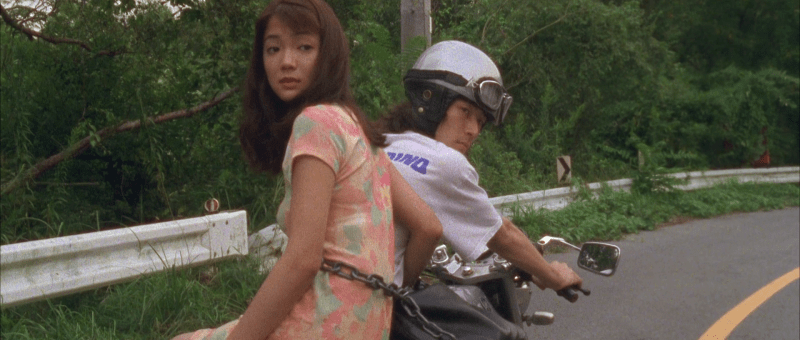
He is quite literally helpless, there’s no place for him in the contemporary society and his only hope is killing his old boss, who is already dead, so he can go back to prison. The only sticking point his younger sister Yuri (Kaori Tsuji) who has learning difficulties and had been living in residential care. Another of Yasuo’s former associates now longer a yakuza, Kenji (Tadanobu Asano), is similarly caring for his father who is in hospital for serious medical treatment. Kenji’s father hums the Internationale to himself and seems to have been consumed by the failure of his personal revolution muttering about blast furnaces while at home Kenji looks out on the now rusty aspirations of another “new era” in a moribund steel plant. He lies to his father that he has a received a job offer from there. 

The two men seem destined to collide, Kenji’s numbed resignation and Yasuo’s irrational rage, though it’s Kenji who later snaps after learning that his father has hanged himself while he was busy taking care of Yasuo’s sister. Even an old classmate he runs into is filled with resentment, talking about taking his “revenge” at the class reunion by poisoning the punch. He says he “forgives” Kenji because he once helped him find his PE kit, though Kenji claims he did it mostly for selfish reasons.The chef at the roadside diner where they wait for Yasuo also seems to be henpecked by his wife who calls him “weaker than a woman.” Kenji later says that he killed them because they ridiculed him, tipped over the edge by his own insecurity and sense of futility. 

Yasuo discovers something similar after being stopped at a roadblock, a policeman expressing sympathy that “they forgot about a punk like you.” Yasuo points the gun at his own head, discovering one last bullet, but it’s not quite clear what happens after that. Yasuo was a wandering ghost anyway, a man of the Showa era haunting the streets of Heisei with a mission to kill a man like himself already dead. On the severed arm Kenji later discovers in his bag, there’s a tattoo of a skull and the motto “help me” which might speak for them all desperately looking for some kind of way out but finding little support. 

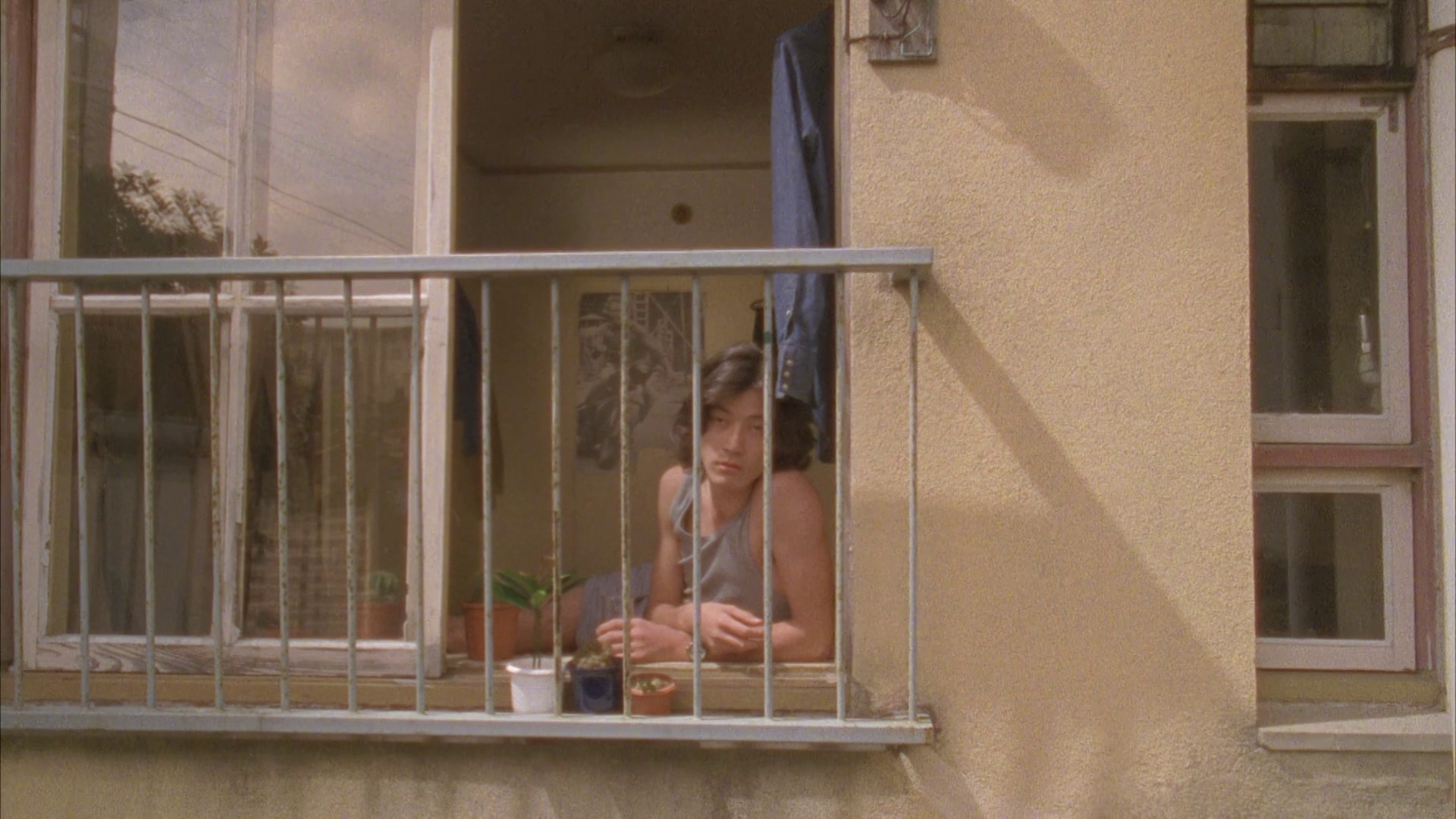
But then again, Kenji proves unexpectedly kind caring for Yuri even while Yasuo selfishly considers a double suicide. Dressed in white though also in a T-shirt featuring the cover for Nirvana’s Nevermind which was released in 1991, Kenji is the light and Yasuo the dark despite their mutual violence one bound by nihilism and the other a strange positivity blithely searching for an escaped rabbit just as helpless as he himself may be. Filled with ironic whimsy the film takes place in a purgatorial space inhabited by those displaced by the Bubble who no longer have anything to pin their hopes on while living on borrowed time in a late summer rapidly drawing to a close. 


All the Long Nights (夜明けのすべて, Sho Miyake, 2024)

The latest in a recent series of films critical of Japan’s contemporary employment culture, Sho Miyake’s All the Long Nights (夜明けのすべて, Yoake no Subete) presents a more compassionate working environment as key to a happy and fulling life brokered by small acts of attentive kindness in the knowledge that we are all carrying heavy burdens. Based on a novel by Maiko Seo, the film captures a sense of serenity that can be found in the wonder of life itself and the discovery of the “infinite vastness beyond the darkness” that a starry sky presents.

A lack of compassion in the generalised society is signalled early on in the fact that the heroine, Misa (Mone Kamishiraishi), struggles with a condition that is little understood and belittled by those around her. On bonding with workplace colleague Takatoshi (Hokuto Matsumura) who is experiencing panic disorder, he dismisses her issues as “that female thing” and suggests it doesn’t compare to the effects his condition is having on his life. She counters him that she didn’t know there was a ranking, but is obviously rankled by the refusal of the world around her to take her PMS seriously even though it causes her to lash out at others and often ruins employment opportunities because it’s impossible for her to regulate her emotions in the way that is generally expected in contemporary working culture. 

Each of them have ended up working at a small company that manufactures scientific instruments for children after originally working in larger corporate structures with very clear hierarchical systems and rigid modes of behaviour. Yet we can see right away that Misa’s colleagues are aware of her condition and seem to have accepted it. When she blows up at Takatoshi over his habit of drinking carbonated water the sound of which gets on her nerves, they gently steer her away while explaining to him not to pay it any mind. In any case, Misa is still embarrassed by her behaviour and regularly buys pastries at a nearby bakery in an act of continual atonement even though her boss tells her not to get into the habit of it.

Takatoshi’s rather rude refusal of her pastries, clumsily explaining that he dislikes raw cream, is another symptom of his aloofness and unwillingness to be a part of the office community. He is continually looking to get his old job back and looks down on this kind of work as being lower in status than a regular office job at a big company, something perhaps reinforced by his well-meaning girlfriend who seems to want him not only to get better but to reassume his former position despite the implication that it’s what made him ill in the first place. Tsujimoto (Kiyohiko Shibukawa), his former boss, however remains compassionate and supportive perhaps in part because his older sister took her own life due to workplace pressures which has made him more sensitive to the troubles of those around him. That’s also true of the boss of the science company, Kurita (Ken Mitsuishi), whose younger brother also took his own life for unclear reasons leaving him acutely aware of the importance of paying attention to the feelings of others.

It’s in this compassionate environment that Misa and Takatoshi each begin to rediscover a new sense of confidence in their mutual solidarity regarding their personal struggles along with a better idea of what kind of life suits them rather than focusing on how they’re seen by others or living up to a societal notion of what defines conventional success. As they’re tasked with creating a voiceover script for the company’s mobile planetarium, they come to an appreciation of the beauty found in darkness along with the light that shines within it in. As Misa reflects, there is nothing in life that does not change, not even the stars, but amid all that anxiety we can still help each other and live peaceful, quietly profound lives finding fulfilment in the mundane. Shot in a hazy, slightly detached naturalism the film eventually finds a joy in life’s simplicity and the warmth of human connection that exists outside of the corporate superstructures that have come to define most of our lives while otherwise robbing us of the ability to fully embrace it or ourselves.


All the Long Nights screened as part of this year’s Toronto Japanese Film Festival

Original trailer (English subtitles)

Dreaming in Between (逃げきれた夢, Ryutaro Ninomiya, 2023)

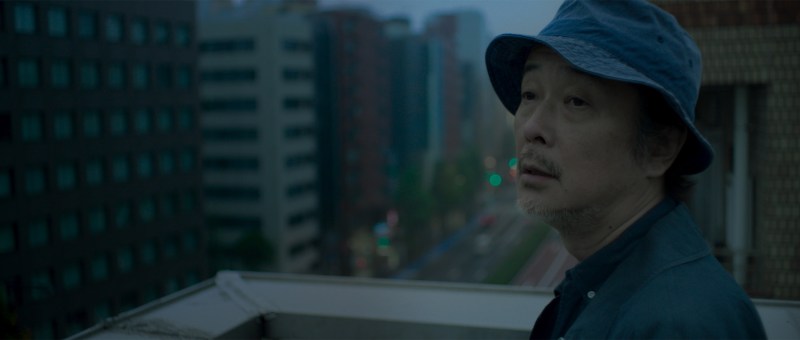
Everyone keeps asking Suenaga (Ken Mitsuishi) is if he’s okay. He has these tiny moments in which it looks like he’s on pause, sudden instances of stillness in which he stares vacantly into space. We start to wonder if he’s experiencing some kind of mental distress, having a stroke or developing dementia as those around him seem perplexed about his his behaviour which to us seems cheerful and pleasant. In fact, it seems confusing and unfair that he’s held in such contempt by his wife and daughter not to mention the pupils at his school and sullen young woman at the cafe he often frequents. 

A man of a certain age with a once overbearing father now mute and living with dementia in a retirement home, Suenaga is indeed undergoing a crisis of life. A year away from retirement, he begins to wonder what it was all for and how his relationship with his family became what it is today. He asks his wife Akiko (Maki Sakai) if they somehow gradually became estranged from each other in an impassioned speech in which he begs for love that neither she or his daughter are very minded to give him. Perhaps we can infer from the surprised reactions to his cheerfulness and attempt to take an interest in his daughter’s life that he hasn’t always been this way, though he too seems confused and perhaps not so much trying to make a mends but only to be his real self at what he fears may be the close of his life. 

When he surprises the waitress at a local cafe he goes to frequently by sitting in a different seat and then neglecting to pay the bill, it’s not really clear whether he actually forgot or did so deliberately as an attempt to assert himself. Likewise when he makes a clumsy attempt to embrace his now emotionally estranged wife or calls in sick to work it seems like more examples of his strange behaviour, yet Suenaga claims he’s becoming more of himself and on looking back over his life so far feels dejected and unfilled.

This  sense of mid life crisis is exposed in his conversation with Minami (Miyu Yoshimoto), the waitress at the cafe and an former pupil. He reveals that he wanted to become a head master but didn’t make it, and thinks he was only appointed deputy head because of picking up so many cigarette butts dropped by his rebellious charges, Minami is in many ways his opposite number, young and grumpy yet also grateful to him in another way restoring meaning to his life when she tells him that his words once saved her when he told her that she was fine the way she was. Even so she goads him a little, joking and maybe not really that he should give her his retirement money so she can have a better life. Echoing the opening conversation with his father, Minami hints she may soon quit the cafe to become a bar hostess or sex worker to save up before eventually emigrating Greece.

For all his teacherlyness, Suenaga seems to be a man who wants to be more understanding. He takes an interest in his pupils though they assume he doesn’t and again tells Minami that people should live the way they choose. In the rawness of their final parting, he tells her not to do anything she’ll regret but then adds that maybe she should, as if a life with no regrets is not really lived or perhaps reflecting that despite his own unhappy circumstances he does not really regret the life he’s lived. 

Filming in 4:3, Ninomiya makes great use of closeups, not least of Mitsuishl’s cheerful expression which somehow carries with it a great sorrow amid his own disappointments and yearnings. False or otherwise, there is something touching the connection of these dejected souls, the ageing teacher and the former pupil looking for permission to move on with her life but also teaching something to Suenaga in her sullen defiance and the eventual drive to keep going. Quiet and gentle if suffused with melancholy, Ninomiya’s poignant drama does indeed seem to argue that people in general are alright as they are but false acts jollity are as likely to confuse as console.


Dreaming in Between screens 1st June as part of this year’s Nippon Connection

Original trailer (English subtitles)

Heaven’s Story (ヘヴンズ ストーリー, Takahisa Zeze, 2010)

“When your family’s murdered, aren’t you entitled to happiness?” remarks a bereaved husband trying to move on from tragedy to a similarly bereaved little girl who is determined not to. “I don’t think so”, she coldly replies, dragging him back into a dark world of hate and vengeance. At that time perhaps best known for his career in pink film, Takahisa Zeze’s 4.5-hour epic Heaven’s Story (ヘヴンズ ストーリー) weaves a tale of interconnected hurts born of violence and its legacy, parental betrayals, and irreconcilable loss. The only victory is survival, but it’s a prize none of us will win. The best we can hope for is continuity, and perhaps leaving something more behind us than fear or rage. 

Our heroine, Sato (Moeki Tsuruoka), is orphaned when her parents and older sister are brutally murdered by a disgruntled employee exacting some kind of petty revenge on her father. The killer is later found dead in a hotel room, presumed to have taken his own life. The tragedy is however just one of many. Passing by a TV screen, Sato catches a report detailing the death of her family members and their murderer which is immediately followed by a press conference with a very angry young man whose wife and infant daughter were killed in random attack by a passing drifter who has been given an indeterminate sentence on account of the fact that he was underage and suffered greatly during his childhood. Tomoki (Tomoharu Hasegawa), the bereaved husband and father, vows revenge angrily insisting he won’t ask for the death penalty because he wants the killer, Mitsuo Aikawa (Shugo Oshinari), released as soon as possible so he can kill him with his own hands. Only eight years old, Sato identifies with his rage. The man she wants to kill is already dead and she’s been robbed of the chance of closure through vengeance so vicariously latches on to Tomoki’s quest for retribution, making him something of a personal hero. 

Tomoki’s words were offered in the raw pain of his loss. His reaction is understandable, but as he later says, people started to lose sympathy for him once he called for the killer’s death. As time moves on, he perhaps starts heal, marrying again and having another little girl, starting a new life in a new place which of course does not overwrite his past loss but is a new start. That’s something Sato can’t allow or understand. She feels irrationally betrayed by Tomoki’s decision to leave his loss in the past and move on to a new life. Rocking up at his tranquil island home, she accuses him of forgetting the dead, guilting him into thinking he’s betrayed the memories of his wife and child by not knowing that Mitsuo has been released from prison let alone not having taken his revenge. 

Mitsuo, however, has also attempted to move on. It can’t be denied that he committed a heinous, unforgivable crime, but he is also, in a sense, a victim himself. His mother took her own life when he was 13 because his father was abusive and he carries that abuse with him, which of course does not excuse his crime but might help to explain it. Kyoko (’70s folk singer Hako Yamasaki), a lonely doll maker, is taken by his enigmatic statement that he wants to be remembered by the unborn and begins writing to him in prison, eventually agreeing to adopt him as her son though she is already suffering with the early stages Alzheimer’s. Later in a tense conversation with Tomoki, Mitsuo describes Kyoko as a woman of great warmth and if it were not for her he might perhaps have killed again. Her positive maternal presence gives Mitsuo the sense of anchoring through parental love that he had never had, restoring him towards a more normal kind of existence as he diligently cares for her while her condition continues to deteriorate. 

Time swindles them all. Kyoko desperately tries to remember something she’s forgotten, while Sato is locked into a pleasant childhood memory of walking with her parents to see a newly completed housing estate which seems to be the very embodiment of a post-war utopia, a large green space surrounded by neatly arranged, identical blocks with well appointed family homes piled one on top of the other. The conclusion takes us somewhere similar, only inverted, in the empty shell of a disused danchi, once a home to a bustling mining community now abandoned by the modern era. In the monologue which opens the film, Sato recounts a folktale about a monster who lived in the hills and attacked people, but did so only accidentally in his loneliness and longing to be a part of the world around him, but the people were afraid and so they rejected him and his monstrousness intensified. Tomoki destroys his second family in an internecine need to avenge the first driven by Sato’s demonic need for vicarious retribution, while Mitsuo’s attempt to move into the light is frustrated by an inability to escape his past. All the fear, and hate, and suffering, breeds only more of the same. “Heaven’s Story” may be in many ways the story of violence, but violence is not its resolution. Sato makes a kind of peace with the past, but will also carry that legacy of pain back into the complicated urban world as far from the heavenly vistas of tranquility which exist now only in her memory as it’s possible to be. 


Original trailer (no subtitles)

Ripples (波紋, Naoko Ogigami, 2023)

Sometimes it’s useful to feel like a rock in the stream and let it all flow past us, but our actions affect others in ways we barely understand reverberating and rebounding until ripples become waves and in their time small tsunamis. In Naoko Ogigami’s Ripples (波紋, Hamon), the effects of the 2011 earthquake and the Fukushima Daiichi nuclear disaster continue to radiate while some find themselves reeling unable to reorient themselves in a world which has become somehow threatening. 

Middle-aged salaryman Osamu (Ken Mitsuishi) suddenly disappears on his wife and teenage son after becoming intensely afraid of radiation only to return years later claiming that he has cancer. In his absence his wife, Yoriko (Mariko Tsutsui), has become a devotee of a strange cult, Green New Life, which peddles special purifying water and preaches otherwise wholesome virtues of solidarity and sacrifice. But even if Yoriko superficially agrees that it’s better to affect tolerance and put others before herself she’s secretly seething with frustration and resentment. She clearly does not want to take Osamu back, remembering how he left her to care for his bedridden father who knowingly or not made inappropriate sexual advances towards her. 

The cult’s anthem preaches that there is no fear if you have faith which might explain Yoriko’s devotion along with that of many others who similarly find themselves attracted to new religions in the wake of unsettling events such as natural disaster or global pandemic. But then can we really say that what the cult promises is any different to that of other organisations which at least portray themselves as scientific authorities. It transpires that the real reason Osamu has returned is that his doctor has recommended an experimental new treatment that is not covered by medical insurance and costs a significant amount of money but all Osamu has to go on is desperation and his faith in the medical establishment that the supposed cure is any more effective than Yoriko’s holy water (it turns out not to be). There is after all a lot of money in fear and people’s desire to be free of it. 

But Yoriko is afraid of many things. Her petty prejudices are exposed when her now grownup son returns home on a business trip with a hitherto undisclosed fiancée in tow who happens to be deaf. Yoriko probably would not have liked it anyway whoever Takuya (Hayato Isomura) had brought but resolutely fails to hide her disgust that he chosen a woman with a disability. She remarks that people at the church find inspiration in seeing disabled people “suffer and endure”, which is a fairly offensive thing to say in any case even if she later confesses his prejudice outright to a colleague at the supermarket where she works claiming that it’s different because it’s her son and she doesn’t see why he had to choose a woman “like that”. While the cult leader pushes her towards what are superficially at least more wholesome values of love and acceptance, Mizuki (Hana Kino) pulls her back towards her darker impulses but also a kind of liberation in her desire not to be bound by the old-fashioned conservative values that encourage her to fulfil the stereotype of the perfect wife over and above her own happiness or fulfilment. 

The dryness of her life is echoed in the zen sand garden she meticulously rakes into the shape of waves each morning while the water many feared contaminated after the earthquake is really a symbol of the life and vitality she continues to deny herself. Yet in an odd way, it’s human connection that perhaps begins to awaken her in her devotion to Mizuki who reveals that she was so overwhelmed with despair that she became unable to fix the damage in her apartment after the quake struck and has been living amid the ruins ever since. Ogigami turns her quirky gaze to life’s absurdities, the ridiculous things we cling to in order not to be afraid, but eventually allows Yoriko to find the courage to dance in the rain rather than fear its arrival having blown straight through her various “faiths” to become something that is at least more resolutely herself. 


Ripples screened as part of this year’s Camera Japan.

Original trailer (no subtitles)