No Parking (주차금지, Son Hyeon-woo, 2025)

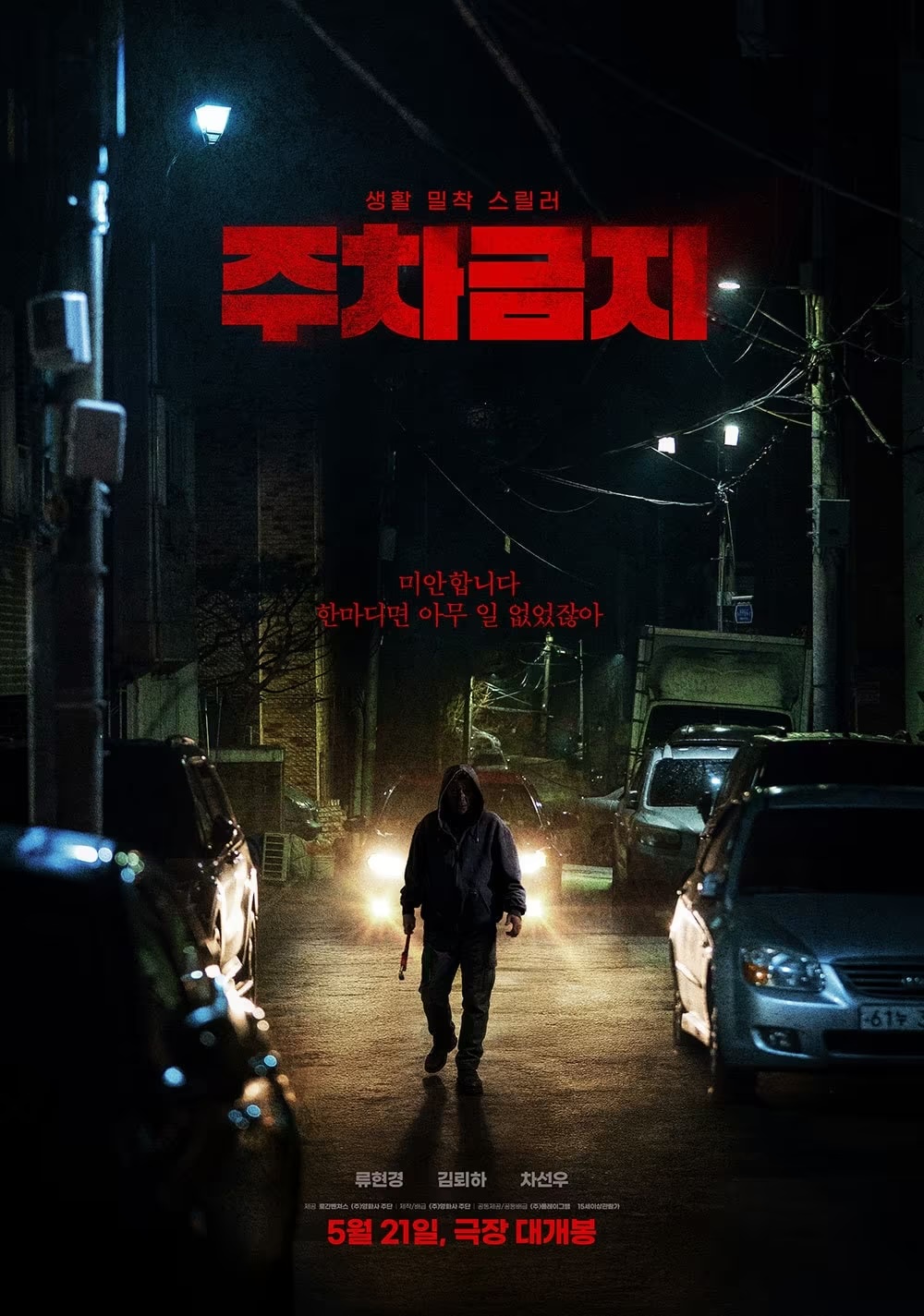
A small negligence can come back to bite you, according to the violent stalker at the centre of Son Hyeon-woo’s No Parking (주차금지, Juchageumji). Ho-jun (Kim Roi-ha) likes to punish the “rude”, though some might like to argue that whacking people with wrenches is also at the very least impolite, while his overall manner is distinctly unfriendly. It is, however, inconsiderate parking practices that eventually do for him when he becomes fixated on a neighbour of his wife’s who asks him to move her car while he’s in the process of murdering her. 

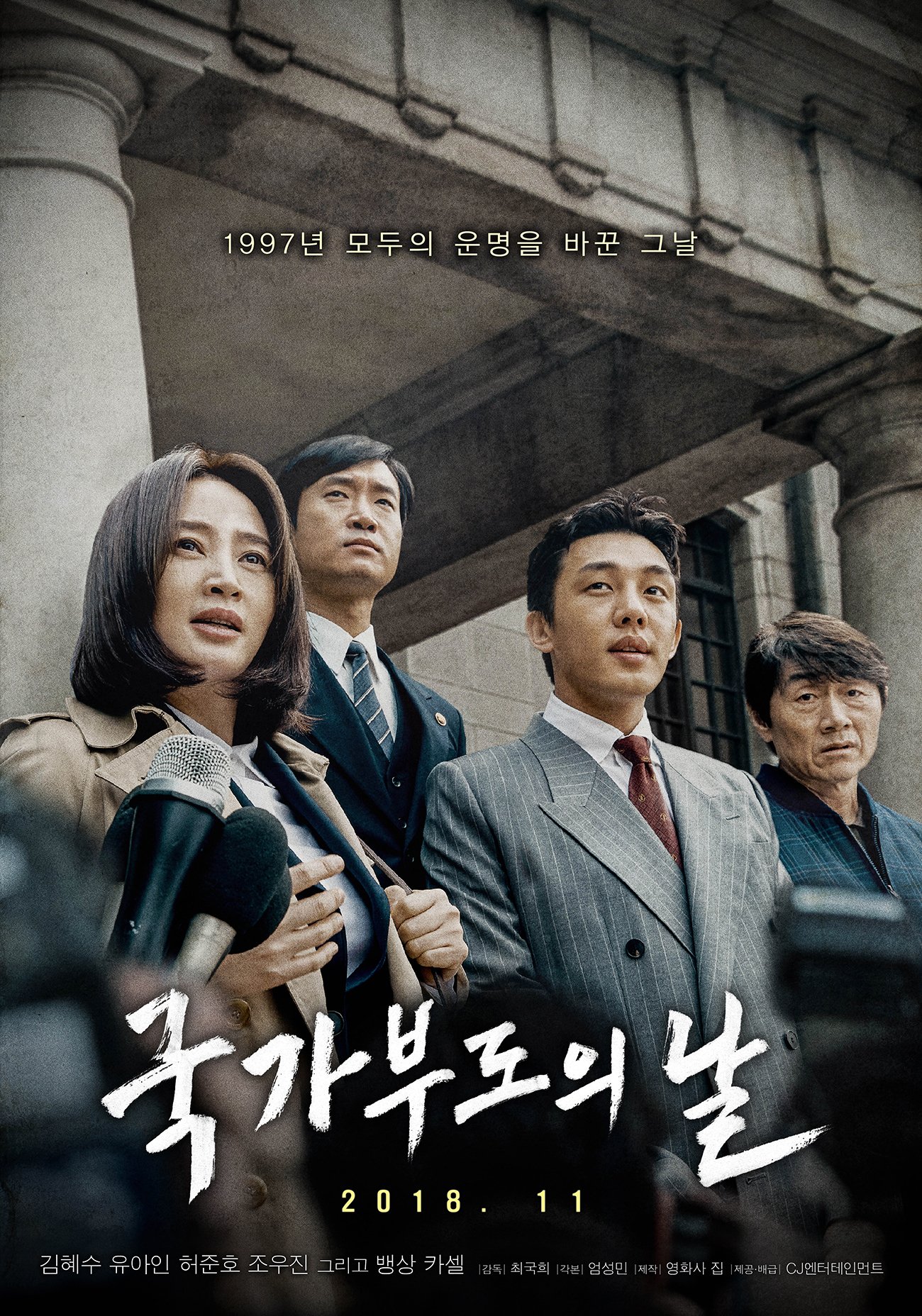
Yeon-hee (Ryu Hyun-kyung) was already fed up with the parking situation and has been trying to move though is struggling to do so for a variety of reasons. There’s a lot going on in her life, including a recent divorce and starting again after returning to Korea and the workforce after a 10-year absence. That’s perhaps why she’s stuck in a contract worker position which means she won’t be approved for the loan she needs for a lease on another property until she’s made a full-time employee. But, as someone suggests to her, her boss may have had an ulterior motive for offering her the job and, sure enough, begins sexually harassing her immediately after her welcome party. 

Hae-cheol (Kim Jang-won) and Ho-jun are both, in their ways, representatives of the patriarchal society. They both berate Yeon-hee for being “rude” to them, and react angrily when they feel disrespected. Hae-cheol is in fact already married with children, and repeatedly stresses his secure financial position and assets he insists would be Yeon-hee’s if she came over to him. He later describes his wife as a “fat pig” and moans that she let herself go after the marriage and children. “Yeon-hee needs to meet a guy like me,” he says, while refusing to take her refusal seriously. She asks him why he’s doing this to her and says that she’s going to quit her job, but that doesn’t stop him wandering around outside her home and declaring he’ll stay there until she comes out. 

Ho-jun hangs around outside her house too, though unfortunately, you can’t report someone to the police for loitering. He gets her name from a business card she’s left in the window of her car, which seems ill-advised, but he obviously knows where she lives anyway. He insists on having an apology for her having been “rude” to him when she asked him to move the car, though as she points out, it was “rude” not to park it properly and in any case she’s at the end of her tether with the traffic, her work situation, and precarious living conditions. Nevertheless, Ho-jun’s attitude is reflective of a wider misogyny in which he expects subservience from women and becomes violent when he doesn’t get it. He’s evidently been stalking his ex-wife and murders her on realising that she’s found another man. 

Yet Ho-jun also resents Hae-cheol, insisting that it’s because of men like him that women have become “arrogant”. Hae-cheol too expects Yeon-hee’s deference and repeatedly stresses that he’s a nice guy and can’t understand why she’s treating him this way. He doesn’t leave her any room to refuse and rejects her right to choose. Like Ho-jun, he fixates on her “rudeness” in not stopping to say goodbye to him when she was trying to leave work after realising he lured her there on false pretences at the weekend when no one else’s around so he could pressure her into going to dinner. He describes her as a “gift” from the universe to cure his loneliness, complaining that his family don’t care about him because he prioritised work and now has no emotional outlets. He repeatedly drops hints about making Yeon-hee full-time, while misusing his power and suggesting that doing so is contingent on her agreeing to the affair with him. Nevertheless, when rumours spread around the office it’s Yeon-hee who gets suspended even though none of it is true and it was Hae-cheol who was harassing her.

The film seems to suggest it’s this general level of frustration and anger with the contemporary society that leads to acts of violence over things which might be thought “trivial” such as parking provision, but then again inconsiderate parking is also a sign of selfishness or at least that everyone is so consumed by their own problems that they don’t have time to consider the effects of their actions on others. Or, maybe some people are just rude or like Ho-jun trying to assert their dominance by flouting the rules. In any case, small acts of negligence may indeed come back to strike you from unelected directions and the only real cure is to try to treat other people as people who are also tired and frustrated but whose lives would be made infinitely easier if people didn’t keep parking in front of their driveways.


Trailer (Korean subtitles only)
Rainbow Trout (송어, Park Chong-won, 1999)

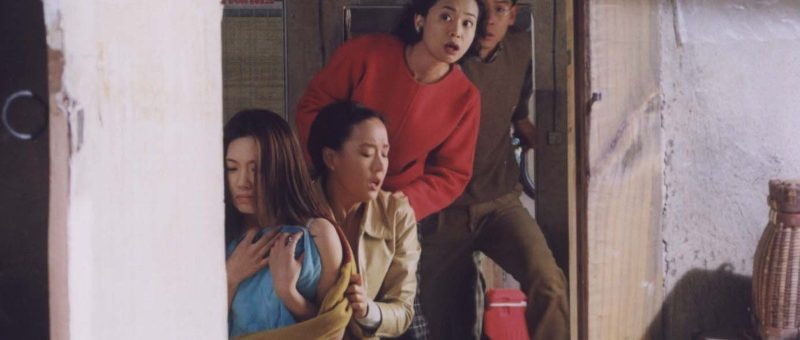
The hypocrisies of contemporary civility pass under the microscope in Park Chong-won’s creepingly intense drama, Rainbow Trout (송어, Song-o). As a collection of urbanites pile into a car and journey far into the mountains to rescue an old friend who’s dropped out and returned to the land as a fish farmer, they find themselves stepping into a world entirely contrary to their understanding but eventually expose themselves as petty, jealous, resentful and shockingly violent even in their disdain towards the “backwards” woodsmen they feel are harassing them.

The film both begins and ends with a tollbooth as the car carrying the urbanites first leaves and then returns to the “safety” of Seoul. Ominous signs pepper their journey, one of the men wondering if the pits on a mirror at a dangerous curve are bullet holes while his friend insists they’re more like pockmarks from small rocks swept up in a storm. Swept up in a storm might be one way to describe what later happens to the city dwellers, but it’s fair enough to say that they are fairly puffed up on the superiority of their urban civility over the earthy lives of the rural hunters. None of them can understand why their friend has made the choice to leave Seoul behind and live a primitive existence in a cabin in the woods. 

Chang (Hwang In-sung) even remarks that his fish sometimes commit suicide, Min (Yu In-chon) suggesting that being cooped up in a small space makes them feel anxious. The urbanites are not in a small space, they’re in the wide open countryside, but to them it is claustrophobic in its unfamiliarity. Though the trip starts off well enough as they reminisce with Chang and enjoy a night round the camp fire, the two men, bank clerk Min and his bbq restaurant owner friend Byung (Kim Se-dong), soon fall foul of a local hunter who doesn’t like where they’ve parked their car or possibly that they’ve parked it at all. Byung is forever performing his masculinity, making a show of chopping wood and lifting weights outside the cabin, but like Min otherwise unable to challenge the hunters and entering a mini vendetta of pettiness with them that is destined to end badly. Min meanwhile is preoccupied in knowing that his wife, Jun-hwa (Kang Soo-yeon), is still in love with Chang while Chang’s decision to leave the city seems in part to have been provoked by their marriage. Byung’s wife, on the other hand, ironically submits to her carnal desires after being caught stealing a rabbit from a trap by a lecherous hunter who later shows up with a gift of yet more meat which seems somehow like even more of a betrayal given that her husband runs a barbecue meat restaurant but is obviously not quite red-blooded enough for her. 

It’s the presence of Jun-hwa’s younger sister Se-hwa (Lee Eun-ju), however, that provokes further tensions in the group not least as she develops a fondness for Chang while local dog breeder Tae-joo (Kim In-kwon) develops a fascination for her. Tae-joo peeps on Se-hwa in the outhouse and creepily lurks around the cabin though he is perhaps just awkward if a little strange more than actively dangerous. Nevertheless he becomes the target for the husbands’ frustrated masculinity as they decide to exorcise some of their frustration on a mountain boy who is ill-equipped to resist them, unleashing uncivilised violence and barbarity that would bring them to the point of homicide. They assume Chang is like them, that he will side with the city, but Chang is now a mountain man and has shades of barbarity the husbands’ little suspect. As the crisis intensifies, the urbanites shift the blame and turn on each other, uncomfortably blaming Se-hwa as if it were her fault that the boy took a liking to her or that the men took it in the direction that they did. Se-hwa also finds herself a victim of male violence from an unexpected source but is again blamed for it less for her naivety than the simple fact of her existence as a young woman in this incredibly primal environment. 

The urbanites thought the hunters to be savage, but in reality were savage themselves only to convince themselves that they had done nothing wrong pleading with Chang to cover up their violence because Tae-joo is only a mountain boy while they are civilised people from the cities who could not have acted in anything other than a civilised way. They are in a sense like the rainbow trout, raised within a narrow frame and little understanding how to live outside of it, driven out of their minds by the removal of the guardrails of civility. On returning to the city they may convince themselves that the dark shadows within have disappeared but the fragility of their sophistication has already been exposed rendering them at least less honest than the huntsmen who made no pretence of their carnality. 


Rainbow Trout screened as part of this year’s London Korean Film Festival.

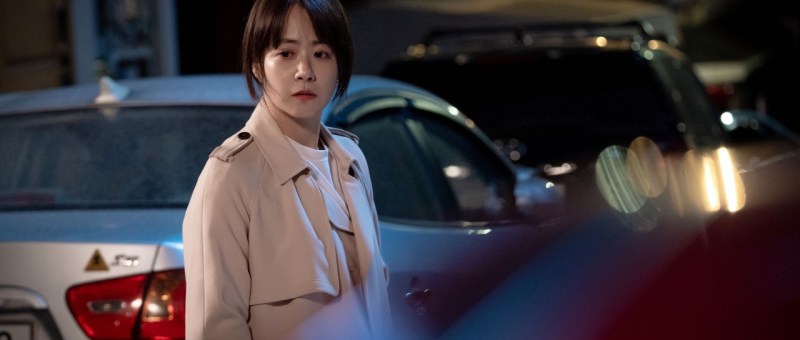
Default (국가부도의 날, Choi Kook-hee, 2018)

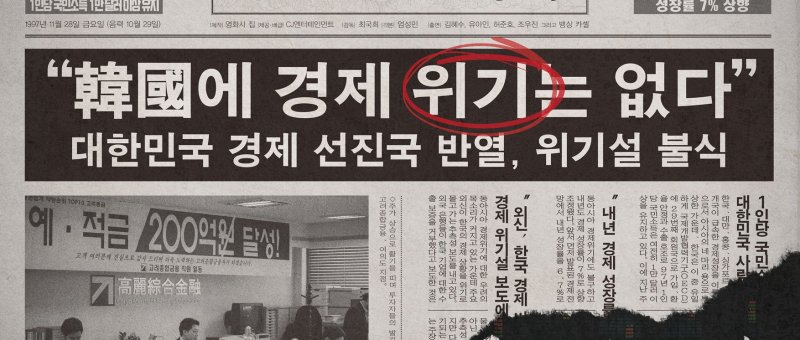
Default poster 1The Korean economic miracle came to an abrupt halt in 1997. In an event the media labelled “the day of national humiliation”, the Korean government went to the IMF for a bailout in order to avoid bankruptcy. So, what went wrong? Choi Kook-hee’s Default (국가부도의 날, Gukga-budo-eui Nal) looks back at the fateful seven days before the country would go bust, asking serious questions about why it found itself in this position and why it chose to opt for external assistance rather than fix its own problems. The answer is, as always, a mix of disaster capitalism, incompetency, and a healthy disinterest in the lives of the less well off.

As if to signal its hubris, the Korea of 1997 is busy celebrating its accession to the OECD and emergence on the world stage as a major player, escaping post-war austerity once and for all. Young Koreans have embraced consumerism with gusto. Luxury goods and foreign travel are becoming increasingly popular with the government insisting everything is on the up and up. However, listeners to Son Sook’s Woman’s Era are telling a different story – cafes not getting customers, businesses going under, people not getting paid. With the Asian Financial Crisis mounting, the Korean Won is being hit hard and the government does not have the reserves to cover its debts. A high ranking Bank of Korea official, Si-hyun (Kim Hye-soo), has concluded that the nation has one week to find a solution before everything comes to a grinding halt.

Meanwhile, self-interested merchant banker Yoon (Yoo Ah-in) has come to the same conclusion on his own but his aims are very different. Where Shi-hyun sees crisis, Yoon sees opportunity. He quits his job and starts calling up wealthy clients with an innovative pitch. Explaining to them that the country is about to go bust, he outlines a plan to short the government which will make them a lot of money though at the expense of those without who will be hung out to dry when it all goes to hell.

As Yoon tells his investors, the trouble is that the entirety of the modern Korean Economy is built on lies. An underling is tasked with explaining the crisis to the president in simple terms, only for Si-hyun to grimly suggest he tell him “we spent borrowed money like it was water hoping to get an extension and here we are”. Factory owner Gap-soo (Heo Joon-ho) is excited to receive a large order from a major department store, but put off when he realises that they intend to pay him with a promissory note. The department store CEO belittles his concerns, implying that he can’t be much of a player if he doesn’t know that’s how business is done these days. Gap-soo’s partner is all for it and so they sign, but when banks go bust promissory notes become worthless and they need ready cash to pay their staff and suppliers.

Si-hyun tries to make the case for saving the economy to protect the working classes but her advice falls on deaf ears. Often the only woman in the room, Si-hyun is dismissed as a “secretary” while the all male officials make a point of talking to her male assistant and accusing her of being “sentimental” when she points out that people will starve if they put their plan into action. The conclusion that she gradually comes to is that the crisis is an elaborate game being played by elites for their own gain at the expense of ordinary men and women all across the country. Odious finance ministers prioritise saving the Chaebols, warning their friends and cronies, while deliberately running down the clock so the country will have no other option than running to the IMF full in the knowledge that an IMF bailout comes with considerable strings which will vastly constrain their sovereignty and economic freedom – effectively handing control over to the Americans who will use it as an excuse to extend their own business interests by insisting on destructive labour reforms which will devastate the working classes.

Si-hyun’s exasperation leaves her making a last ditch effort to get the government to see sense only for the IMF negotiator (Vincent Cassel) to make her removal another of his red lines, her plain speaking instantly deemed “inappropriate”. Meanwhile, Yoon’s headlong descent into amoral profiteering begins to prick at his conscience even as he tries to justify his actions to himself. 20 years later, it might seem as if the crisis is over but its effects are very much still felt. Gap-soo’s factory may have survived, but it’s running on exploited foreign labour while the Chaebols continue to run rampant over the increasingly unequal Korean economy. None of the problems have been solved and another crisis is always on the horizon. Tense and infuriating, Default is a story of moral as well as financial bankruptcy which places the blame firmly on systemic corruption and the undue influence of self-interested elites while acknowledging that little has changed in the last 20 years leaving the little guy very much at the mercy of capricious Chaebol politics.


Default was screened as part of the 2019 Udine Far East Film Festival. It will also be screened as the next teaser for the upcoming London Korean Film Festival on 20th May at Regent Street Cinema, 7pm.

International trailer (English subtitles)