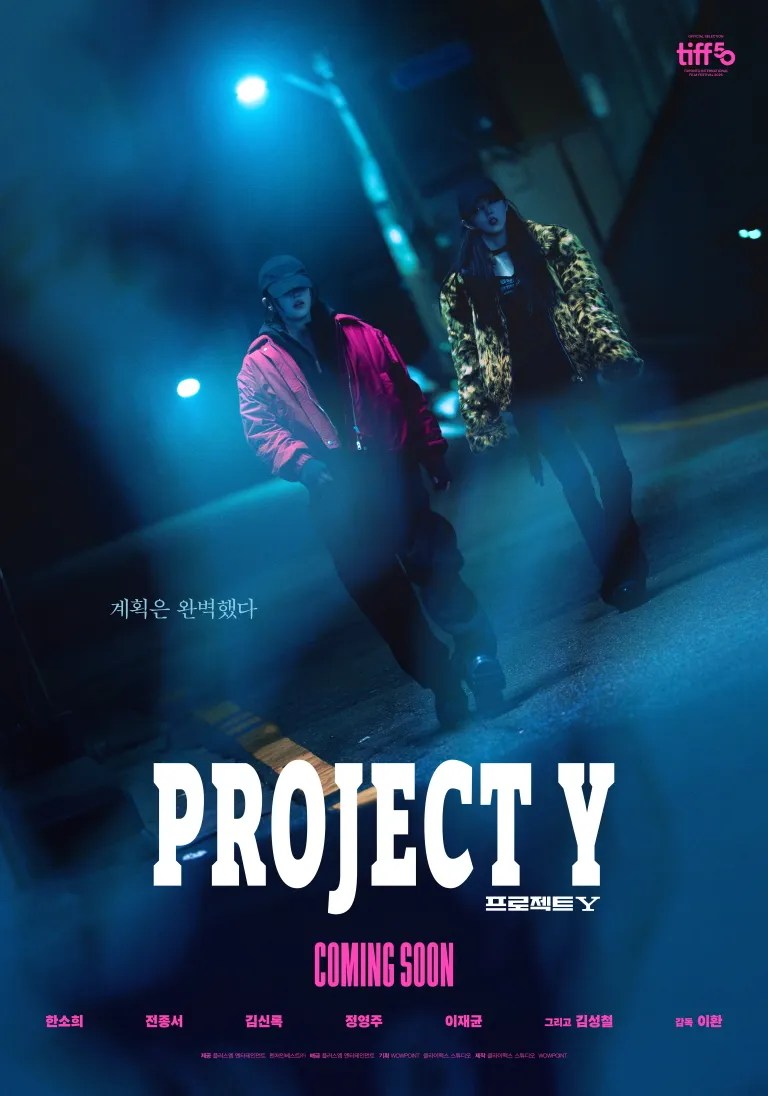
Project Y (프로젝트 Y, Lee Hwan, 2025)

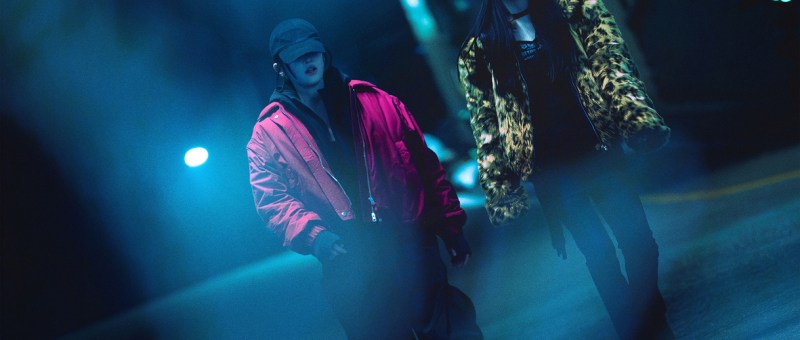
The opening sequence of Lee Hwan’s Project Y (프로젝트 Y) seems to echo the iconic intro of Millennium Mambo as two women look back over their shoulders as they traverse a seemingly endless tunnel. Later we realise that the tunnel is their passage out of the underworld of the red light district towards escape and liberation, not only from patriarchal control and their impossible lives, but from a generational legacy of abuse and entrapment.

Indeed, Ga-young (Kim Shin-rok) the adoptive mother of Mi-sun (Han So-hee) and birth mother of Do-kyung (Jeon Jong-seo), is fond of asking who is saving who when we’re all the same, and insisting that your life is yours to save. It’s a message the girls have taken to heart, yet they remain devoted to each other in a relationship that also appears to be romantic or perhaps has already transcended romance in the depth of their connection. Mi-sun has been working as a karaoke bar hostess for a number of years while Do-kyung works as her driver and occasional courier for various shady types. They plan to leave the red light district now Mi-sun has saved enough money to buy a florist’s from its retiring owner along with a downpayment on a apartment, but it turns out half the girls in the red light district have been scammed by a dodgy estate agent at the behest of local kingpin Blackjack (Kim Sung-cheol).

It seems that Blackjack may have done this deliberately in a nefarious plot to increase the girls’ debts and prevent them from leaving. Blackjack’s callousness is signalled early on when he tells the girls’ manager to get rid of a drooping plant if she can’t manage it and space the others out to disguise the gap. But on the flip side, Blackjack has a young and very silly wife who has got into host clubs and has been spending all his money on a young man who is openly exploiting her. Though the men are ostensibly in the same position as the women, they still have a greater power in preying on female loneliness while the women, by contrast, may be indulging in this behaviour precisely because it gives them an illusion of control they ordinarily don’t have a patriarchal society. Blackjack’s wife throws expensive gifts at her favourite host in an attempt to persuade him to enter a deeper relationship while blabbing her husband’s secrets. The host doesn’t seem to have realised it might be a bad idea to be messing around with Blackjack’s wife, while stealing his secret stash is going to annoy him even more and Blackjack’s not the sort of man you want to be annoyed with you.

Blackjack watches a video of a dog drowning in a tarpit while he works out, and this particular tarpit acts as a kind of vortex drawing all the greed in the red-light district towards it. Hearing about the plot to rob Blackjack, the girls decide to rob him first and blame it on a local hoodlum. But after retrieving a bag with the exact amount they lost, discover a stash of gold bars. It’s taking them too that damages the integrity of their quest and sets them on a course towards a direct confrontation with Blackjack as they try their hardest to escape the red light district for good.

The implication seems to be that if they take the money, they’ll never really be free because it stemmed from the source of their exploitation. This might in a way be what Ga-young is trying to teach the girls in her otherwise hard to read behaviour, sacrificing herself to save them from their poor decision to cross Blackjack while trying to catapult them free of the red-light district though she knows she herself can never leave. Slick and stylish, Lee’s noir stays just on the right side of realism despite its recurrent grimness and larger than life characters such as the Blackjack’s icy female enforcer Bull and captures both girls’ desire for a “normal life” of working in the day and sleeping at night, along with the cheerful solidarity of the hostesses as they band together to take revenge on Blackjack and finally free themselves from this world of constant betrayal and exploitation.


Project Y screened as part of this year’s LEAFF.

International trailer (English subtitles)
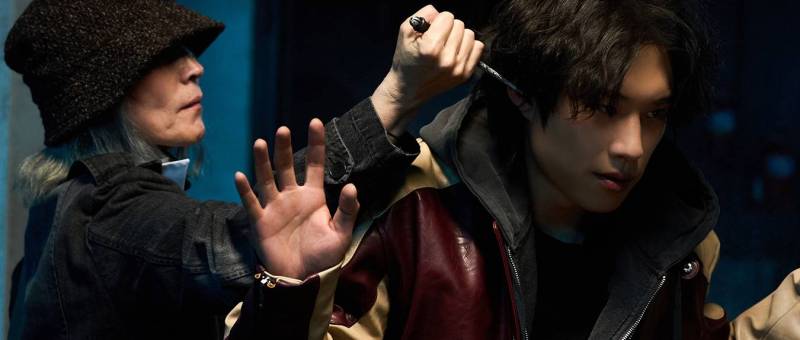
The Old Woman with the Knife (파과, Min Kyu-dong, 2025)

There’s an acute vulnerability that comes with ageing. It’s not vanity or mortality so much as your body betraying you as even once simple tasks become increasingly more difficult. When you’re an assassin, a loss of speed or dexterity is cause for concern and Hornclaw (Lee Hye-young) is beginning to feel her age. Her hands have begun to shake uncontrollably and as she admits to a stray dog she finds herself taking in, you forget things when you’re old. There are those in the office who have begun to notice that Hornclaw is not quite as she was and view her as a thorn in their side, a relic of an earlier era preventing them from moving on into a hyper-capitalistic future.

The original Korean title of Min Kyu-dong’s The Old Woman with the Knife (파과 Pagwa) is “bruised fruit”. An old woman working at a greengrocers throws in an extra peach for free because it’s damaged and people won’t buy them, which is silly, in her view, because they’re the best ones and always taste the sweetest. On that level, the film is about ageism and the ways older people are often written off as past their prime, but on another also about Hornclaw’s bruised but not quite buried heart and the hidden empathy that defines her life even as a contract killer. It may also in its way refer to her opposite number, Bullfight (Kim Sung-cheol), a hotshot young assassin recruited by her less ethically minded boss Sohn (Kim Kang-woo) who despite his sadistic cruelty is really just a hurt little boy looking for a maternal figure in the legend that surrounds Hornclaw. 

She was a stray dog herself until someone took her in and gave her a home, much as Bullfight is now looking for a place to belong. Hornclaw comes to identify with the dog she rescues, Braveheart, because as the vet says it’s awful to be abandoned when you’re old and sick, but perhaps also when you’re young and lonely. As her mentor taught her, having something to protect also makes you vulnerable while as you age the people you’ve lost return. Like her underling Gadget who sees visions of his late daughter, Hornclaw too is drawn back towards the past in seeing echoes of Ryu (Kim Mu-yeol), the man who saved her, in altruistic vet Dr Kang (Yeon Woo-jin).

There may be something disingenuous in the insistence that each of us must save the world coming from a band of supposedly ethical hitmen who only knock off “bugs” that are actively harmful for society. After all, who is making those decisions as to what constitutes “harmfulness”? Everyone Hornclaw takes out is indeed morally indefensible, but as she cautions Bullfight, when you start seeing people as insects you become an insect yourself. Sohn wants to reform the agency to take on more lucrative contract killing jobs such as taking out a wealthy man whose only crime appears to be being a cheating louse, while Hornclaw insists on sticking to their principles and only carrying out missions of justice which are the cases Sohn keeps turning down like that of a religious leader who has been abusing his followers. 

The vision of Hornclaw as a resentful avenger echoes that of Meiko Kaji in the Female Prisoner Scorpion series. Often caught in silhouette, she too wears a wide-brimmed hat that hides her eyes and aids anonymity, while she at one point gives her real name as “Seol-hwa” which means “snow flower” and hints at Lady Snowblood but also to her own moment of rebirth after being discovered half-dead in the snow and rescued by Ryu who gave her a purpose and sense of self-worth, not to mention a home. The irony is that Hornclaw ends up creating a monster because of her own repressed emotionality and is then unable to understand why this figure from the past has returned to her because her way of seeing the world only allows her to interpret it in terms of vengeance.

But what her new mission tells her is that having something to protect is in many ways the point and the very thing that gives her an edge over those who have nothing left to lose. Wresting back control over the agency, she vows to continue their mission as it’s always been rather than allow Sohn’s amoral capitalism to win out over justice and righteousness. Truth be told, the superhuman quality of Hornclaw’s movements is slightly at odds with the otherwise realistic tone of the rest of the film in which, as the secretary puts it, the weight of all the years is beginning to take its toll. But ironically it’s in closing her escape route that she finds true liberation in putting her ideas into practice in a more direct way while opening herself up to the world around her. There’s still life in the woman with the knife yet, and there are still plenty of bad guys out there along with a stack of files in need of attention, which is all to say retirement is going to have to wait.


International trailer (English subtitles)
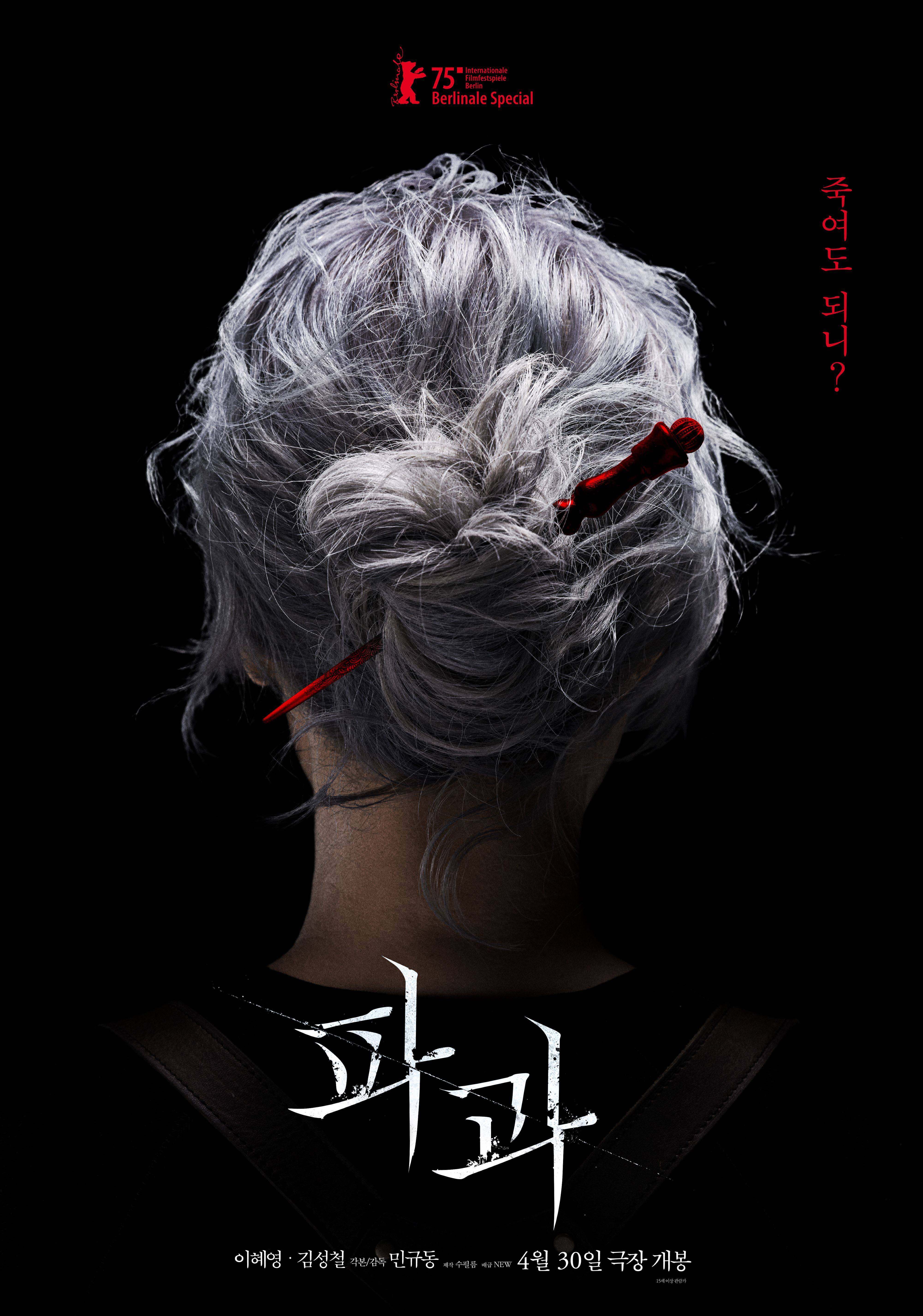
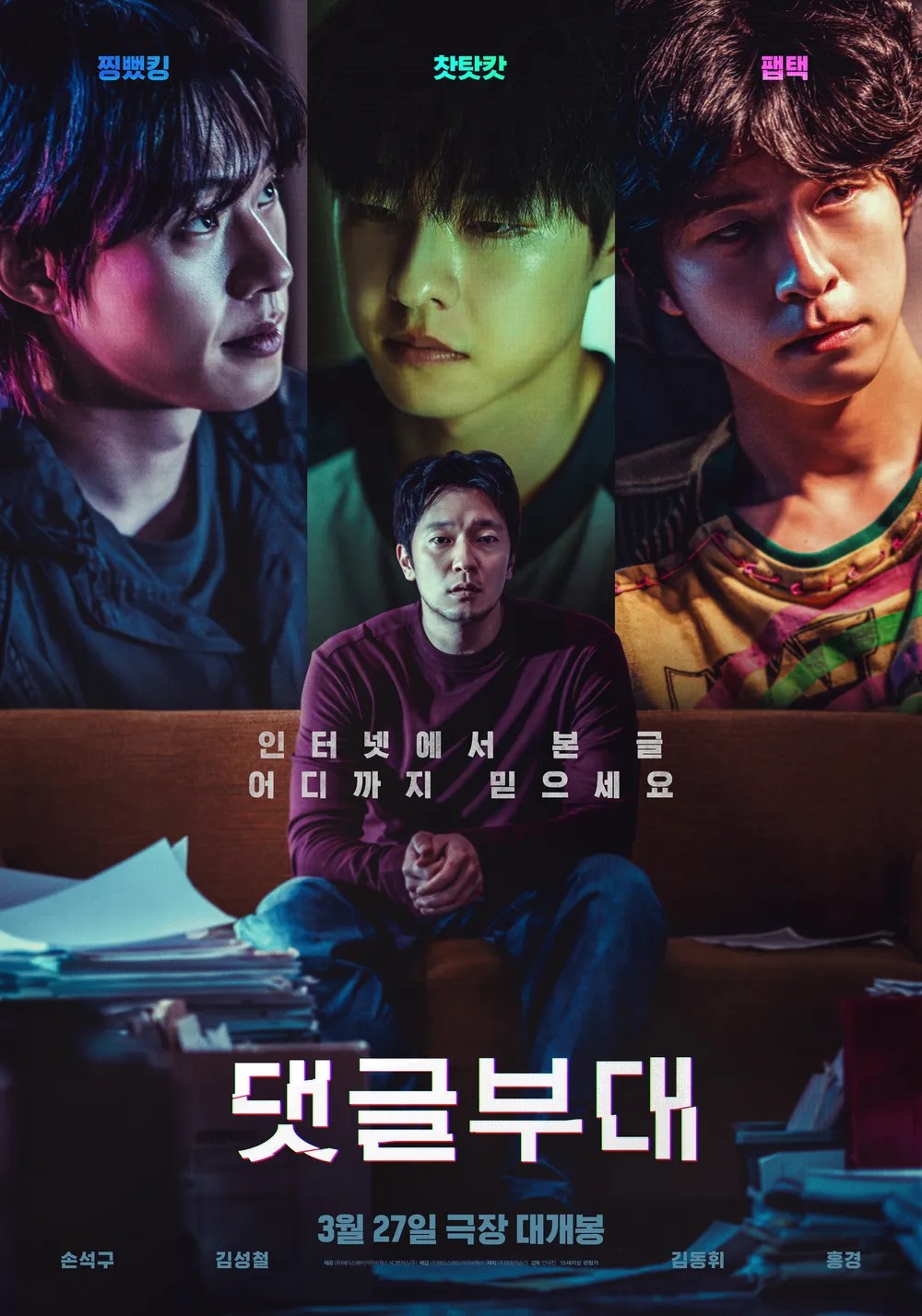
Troll Factory (댓글부대, Ahn Gooc-jin, 2024)

The modern world is so confusing that it’s become almost impossible to discern what is objectively “real” from what is merely currently held public opinion. Sometimes what is actually true sounds like a conspiracy theory, or maybe that’s just what they want you to think. In any case, most of us are already aware of the danger lurking behind cynically employed terms such as “fake news,” and that our perspectives are increasingly manipulated by dubious sources with their own agendas we are continually unaware of. 

Yet is Sang-jin (Son Suk-ku) the journalistic hero of Ahn Gooc-jin’s Troll Factory (댓글부대, Daetguelbudae) already too far down the rabbit hole to be able to see the light? He’s fond of saying that “the path of a journalist is dark and lonely, but his courage changes the world,” while simultaneously admitting the “thrill” of leaking a secret that no one else knows. It’s possible he’s over romanticised his role in events and is reading more into things than is really there because at the end of the day he wants to believe which obviously leaves him dangerously open to manipulation.

In some ways, he starts his story with a more positive framing explaining that the first candlelight protests took place in the early days of the internet so they weren’t able to get the information out there fast enough to attract large enough crowds to make a difference while approximately a third of the entire population turned out in 2017 and got President Park Geun-hye impeached. Of course, that’s only good news if you’re on the same side as the protestors, and Sang-jin increasingly hints that the internet has been bought up by big business which obviously wouldn’t be. Sang-jin has a particular bugbear with a company named Manjun that was forced to offer a public apology for its corrupt business practices which were exposed thanks to the protests against the government scandal. He’s suckered into writing an article exposing them to help a small IT company that says Manjun scuppered its attempts to win a government contract then poached its employees and stole its technology.

Though Sang-jin is able to publish the piece, Manjun refute it and cast doubt on the CEO’s evidence. Sang-jin is relentlessly trolled online and the CEO takes his own life with many blaming Sang-jin for allowing him to face this kind of harassment because of his own petty vendetta against Manjun and desire for journalistic glory. Yet the young man who comes to him with another story that he was employed by Manjun to run extreme PR and harassing campaigns online may not be so different in that one of their targets also took her own life after being humiliated on the internet. They were hired to get her father to stop his one man protest against the defamation laws by pushing her into suing the people trolling her. Sadly she made a much more final decision, but her father did stop protesting so technically they still achieved their goal. 

As he later says, truth mixed with lies feels more real than the actual truth. It doesn’t seem implausible that a large corporation would be doing this sort of thing. It’s not unheard of that people are paid to write product reviews for products they’ve never used or to write negative reviews of a rival business to cause them reputational damage. It stands to reason that they’d be briefing against their enemies online and trying to mitigate any negative energy by manipulating public opinion. We’ve seen this done demonstrably with bots during elections. But Sang-jin still can’t seem to critically inspect his sources and never really stops to wonder if the young man opposite him in an otherwise empty coffee shop is making all this up just to troll him personally, or in fact from the conspiracy theorist’s perspective, to permanently discredit him so that his criticisms of Manjun will never be given any credence. 

In the end, it’s him that seems like a crank resorting to posting lengthy rants on the internet because the respectable papers won’t trust him anymore now that all his scoops have been discredited. Is he right that Manjun and possibly others are running large scale “Public Opinion Task Forces” or Troll Factories online, or did he just get trolled himself and can’t let it go? In the opinion of some, he is now the troll peddling his conspiracy theories online and craving the attention of going viral with another sensationalist story. But even if not all of it’s true, that doesn’t mean it’s all lies and Sang-jin maybe onto something even if it’s just that the internet make trolls of us all as we become lost in the infinitely confusing labyrinth of what is objectively “true” and what merely a convenient lie to serve those who are in “reality” already in power or simply would wish to be. 


Trailer (Korean subtitles only)

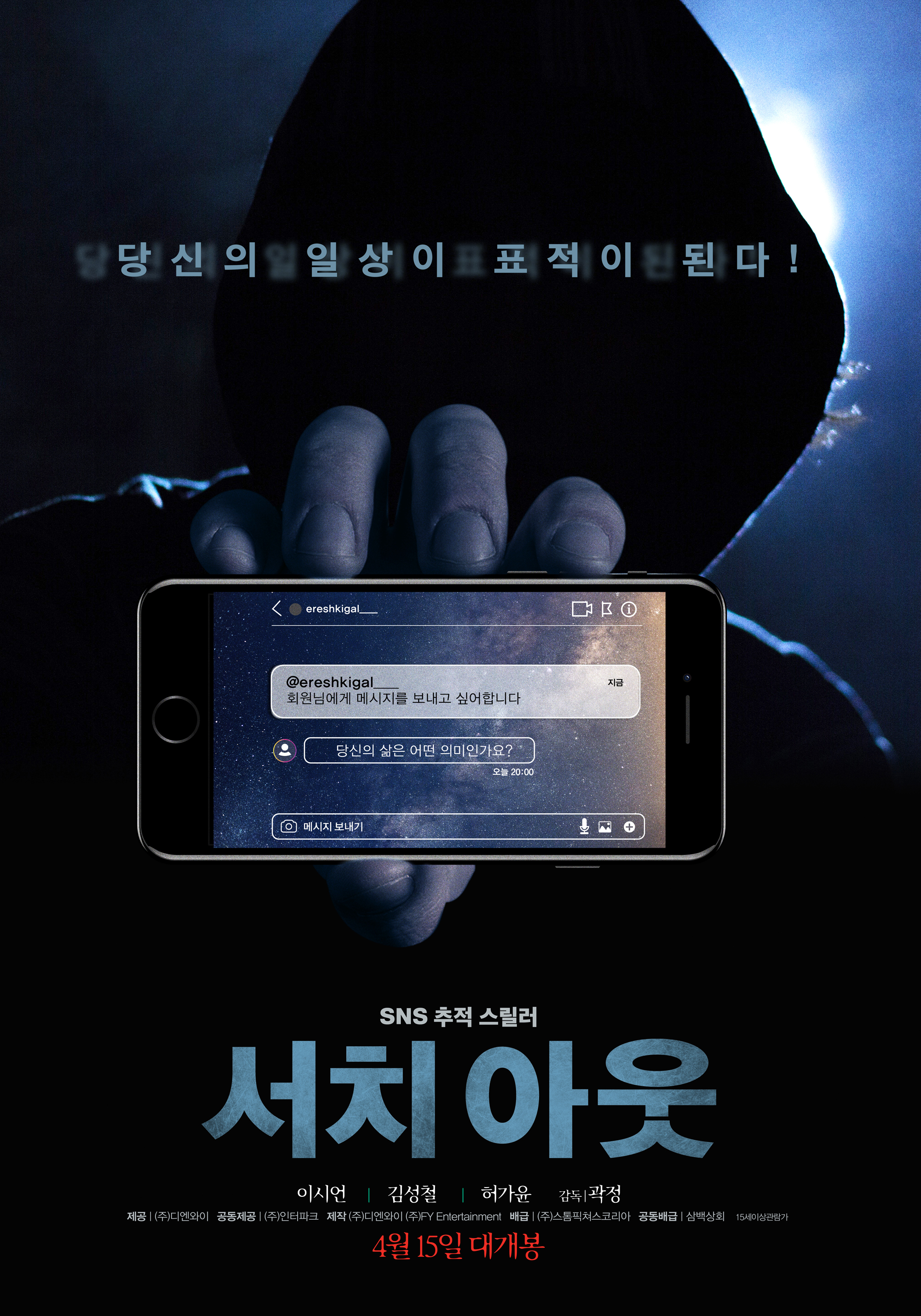
Search Out (서치 아웃, Kwak Jung, 2020)

A trio of disillusioned youngsters kick back against Hell Joseon by chasing down an internet serial killer in Kwak Jung’s dark cyber thriller, Search Out (서치 아웃). As the title implies, the three are each looking for something to tell them that they still have time, their dreams are still achievable, and their lives are worth living, yet as they discover there are those keen to convince them otherwise including a mysterious online presence who seemingly takes advantage of those already in despair and pushes them towards a dark and irreversible decision. 

The hero, Jun-hyeok (Kim Sung-cheol), is currently job hunting while working part-time in a convenience store. His best friend, Seong-min (Lee Si-eon) is desperate to join the police force but having trouble passing the civil service exams. To pass the time, Jun-hyeok also does odd jobs for people who need help under the pseudonym “Genie” via his social media accounts, but when he’s unexpectedly approached by a woman in the same boarding house who tells him that she’s in a dark place and needs someone to talk to, he turns her down out of embarrassment afraid that his “real” identity might be exposed and ashamed to admit that “Genie” is just regular guy who can’t get a job. Unfortunately, however, the young woman is later found dead in an apparent suicide. 

Consumed with guilt, Jun-hyeok tries to ease his conscience but accidentally stumbles across a weird account the young woman had been interacting with shortly before she died. “Ereshkigal” asks all the wrong questions of those already in a dark place, probing them about the meaning of life and whether their lives are really worth living before, as Jun-hyeok later realises, blackmailing them into completing various “missions”. Paradoxically, Jun-hyeok’s quest to stop the mysterious online threat is partly a way of absolving himself of guilt while simultaneously fighting back against those same feelings of despair that he too feels as a young man who can’t seem to get his foot on the ladder, rudely insulted by a cocky high school kid for being an “adult” still doing a student’s job. 

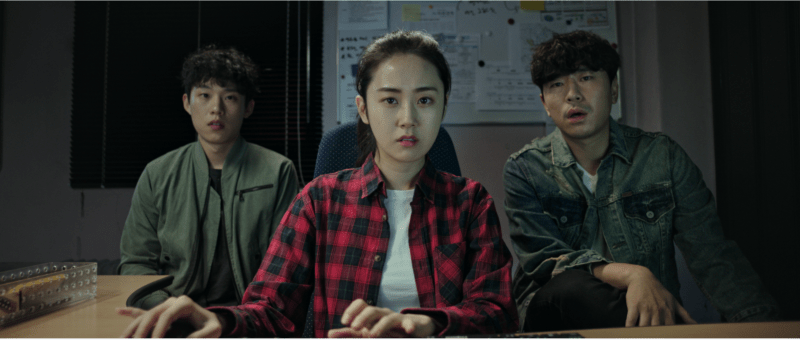
Seong-min feels much the same, indulging his love of justice as a man who just wants to protect and serve and feels it’s unfair he’s being prevented from doing so because he struggles with paperwork when his true strengths lie in the field. Turning to a private detective when the police won’t listen to them, the guys team up with frustrated hacker Noo-rie (Heo Ga-yoon) who like them also feels as if she’s stagnating, slumming it with a shady job at the detective agency when she obviously has major IT skills. A psychiatrist Jun-hyeok meets through his Genie job warns them that the killer may be leveraging his victims’ feelings of despair to convince them that the only way to escape suffering is through death. Despite himself, it’s a sentiment that Jun-hyeok can well understand. 

Like other young people his age, he attempts to mask his sense of loneliness through social media, another weakness the killer sees fit to exploit. Yet as a potential suspect later points out, “it’s fun to peek at others’ private lives” exposing himself as a banal voyeur while simultaneously revealing the unexpected vulnerability of those who live online. In any case, the final revelations are perhaps expected, and not, in the way they bare out the inequalities of the contemporary Korean society. Jun-hyeok starts to wonder if it really was all his fault from the very beginning as his own not quite innocent but largely accidental moment of social media notoriety may have had unintended, unforeseen consequences even as he sought a kind of justice in exposing wrongdoing by the rich and powerful. 

Nevertheless, as Seong-min is fond of saying, “you must do what’s right. You must bring justice”. Others might argue that it’s “natural to kill others to survive”, but the trio at least prefer mutual solidarity as they work together to take down the killer while fighting their own demons along with the continued indifference of the authorities which are supposed to protect them. Partly a treatise on why you should be more careful about what you post online and how you interact with others in general, Kwak’s steely thriller is also a story of three young people searching out a reason to live and finding it largely in each other as they come to an acceptance of life’s ambiguities but also of their right to define them for themselves. 


Search Out streams in the US March 24 – 28 as part of the 12th season of Asian Pop-Up Cinema.

International trailer (English subtitles)
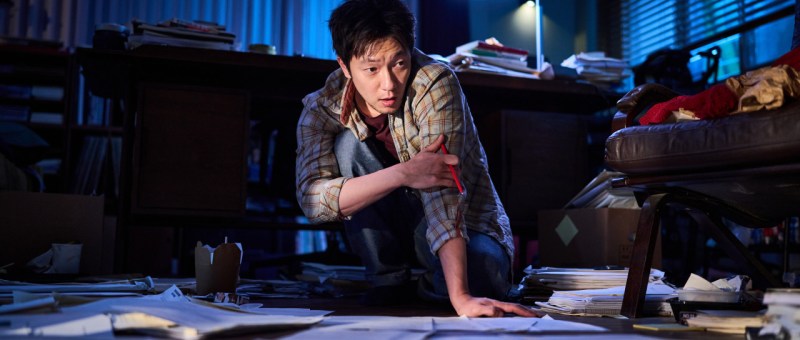
Kim Ji-young, Born 1982 (82년생 김지영, Kim Do-young, 2019)

In authoritarian regimes, dissidence is merely reframed as “mental illness”. Those who speak out are simply dismissed as “mad”, to be pitied for their inability to feel the love the state has for them or to understand that their policies are good, and right, and just. They must be healed, made to see the truth. When Cho Nam-joo’s Kim Ji-young, Born 1982 (82년생 김지영, 82 Nyeonsaeng Kim Ji-young) was published in South Korea it created a cultural schism in a still fiercely patriarchal society, provoking a sustained backlash from conservative commentators while resonating strongly with female readers. The film adaptation directed by Kim Do-young necessarily diverges from the structure of the novel, but once again sees its heroine driven quietly out of her mind by an oppressive society while encouraged to doubt herself for her desire to seek personal fulfilment, as if those who believe in sexual equality are somehow “mad”, treacherous, and ultimately dangerous to the social order. 

When we first meet everywoman Kim Ji-Young (Jung Yu-mi) she’s in her mid-30s, a housewife with a young daughter. She seems harried, a little frantic and tired but perhaps that’s only to be expected caring for a small child. Her husband, Dae-hyeon (Gong Yoo), however is beginning to worry there’s something seriously wrong. Ji-young has been having dissociative episodes in which she speaks about herself in the third person as if possessed by someone else. Matters come to a head when the condition manifests itself at the home of Dae-hyeon’s parents during the New Year celebrations where Ji-young talks back to her mother-in-law, upset that she’s treated like a servant as soon as Dae-hyeon’s sister and her family arrive, snapping that she both is and has a daughter too and that her mother-in-law should have let her leave before her own daughter turned up so she could visit her mother. Dae-hyeon makes his excuses, later calling to apologise and explain that Ji-young is “ill” and so it would be better if they could give her some space, and drives to Ji-young’s parents where she falls deeply asleep and is thereafter unable to remember what happened at her in-laws’ or understand why Dae-hyeon’s mother didn’t pack them off with a boot full of food as she usually would. 

Dae-hyeon’s mother Mrs. Jeong is an embodiment of the various ways women oppress other women in that she is extremely conservative and overbearing, giving Ji-young an unironic floral apron (free from a bank) as a New Year present, and continually resenting her for being her precious son’s wife. When Dae-hyeon tries to help out with the washing up, Mrs. Jeong is scandalised and Ji-young tries to swat him away out of embarrassment while her mother-in-law mutters about modern men, subtly suggesting that Ji-young must be a bad wife if her husband has to pitch in with housework. She does something similar later when she finds out that Dae-hyeon has offered to take paternity leave so that Ji-young can go back to work in the hope that it will help alleviate some of her malaise, destructively yelling at Ji-young over the phone that she’s ruining her son’s precious career, that what she’s doing is selfish and “mad” in rejecting her proper roles as wife and mother. Chastened, even Ji-young then finds herself telling others that Mrs. Jeong has a point, there’s nothing wrong with her housewife life and she wouldn’t earn as much as Dae-hyeon so perhaps it’s not practical for her to go back to work, but also admitting that she sometimes feels trapped. 

Her own mother, Mi-sook (Kim Mi-kyung), points out that Ji-young studied hard too and had a good job before she gave it up to become a mother so it’s not unreasonable to suggest that they look for some kind of balance in the relationship, but is left feeling responsible in that she unwittingly brought her daughter up with the cognitive dissonance of living in a patriarchal society. Mi-sook wanted to be a teacher, but had to give up her education to pay her brothers’ school fees. Ji-young’s sister Eun-young (Gong Min-jung) had to give up her dreams too becoming a teacher for the steady paycheque, while their affable brother Ji-seok (Kim Sung-cheol) was indulged to infinity and allowed to do whatever he pleased. Only Eun-young has been able to some extent to escape the pattern by remaining unmarried, otherwise we can see a long line of thwarted female ambition, women like Mi-sook forced to sacrifice their hopes and dreams but hoping that their daughters wouldn’t have to. 

Meanwhile, Ji-young can’t win. She takes her daughter to the park and is gossiped about by sleazy businessmen who think women like her have it too easy, living off their husband’s salaries failing to appreciate that work done at home is still work. Dae-hyeon does indeed seem to be a “modern” man, good and kind and genuinely concerned for his wife while also guilty that he has contributed to her “madness” through their married life, but he’s also a product of a patriarchal society and largely unaware of his privilege or its effects no matter how much he struggles against his programming. At work, he’s surrounded by sleazy guys who crack sexist jokes and bitch about their wives while attending sexual harassment workshops which are almost offensive in their superficiality. 

Chief Kim (Park Sung-yeon), Ji-young’s boss and mentor, finds herself in a similar position, derided as a coldhearted ballbuster by the male members of staff who criticise her for allowing someone else to raise her child while she works, while her boss openly insults her during a meeting and is pissed off when she tricks him into admitting he’s been inappropriate. She however laments that she’s trapped in the middle, feeling that she’s “failing” at being a mother while knowing that she’s approaching the glass ceiling, and Ji-young’s colleague complains that it’s taken her much longer to get a promotion than the men who joined alongside her. If all that weren’t enough, they also have to contend with the knowledge that the male office workers have been swapping footage from illegal spy cams placed in the ladies’ loos by a rogue security guard. 

Ji-young flashes back to the various instances of sexism and harassment she’s experienced in her life from being saved as a schoolgirl from an attacker on a bus by an older woman (Yeom Hye-ran) coming to her rescue when all her dad could do was blame her, insisting that it’s her responsibility to keep herself safe not men’s responsibility to behave appropriately, to being questioned why her wrist hurt when women have rice cookers now by a male doctor, and her grandmother telling her girls must be quiet and calm. She internalises a sense of misogyny that forces her to question herself, that perhaps she is at fault in feeling trapped because others found an exit she fears she lacked the ability to find. After a lifetime of patriarchal gaslighting, Ji-young is being driven quietly out of her mind by the cognitive dissonance of feeling so unhappy in having achieved so much “success”. Kim Do-young engineers for her a more positive future than Cho Nam-joo had done in her novel, but makes it all too plain that in escaping the madness of the modern patriarchy you might just have to go “crazy”.


Kim Ji-young, Born 1982 streams in the US via the Smart Cinema app until Sept. 12 as part of this year’s New York Asian Film Festival. It will also be screened in London on 10th September at Genesis Cinema as a teaser for the upcoming London Korean Film Festival.

International trailer (English subtitles)