Green Rain (草雨 / 초우, Chung Jin-woo, 1966)

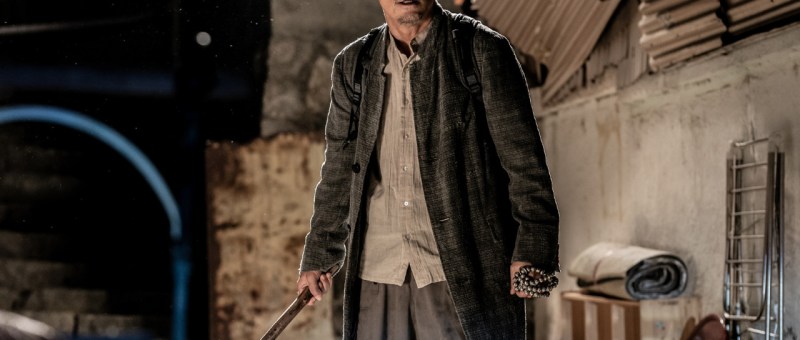
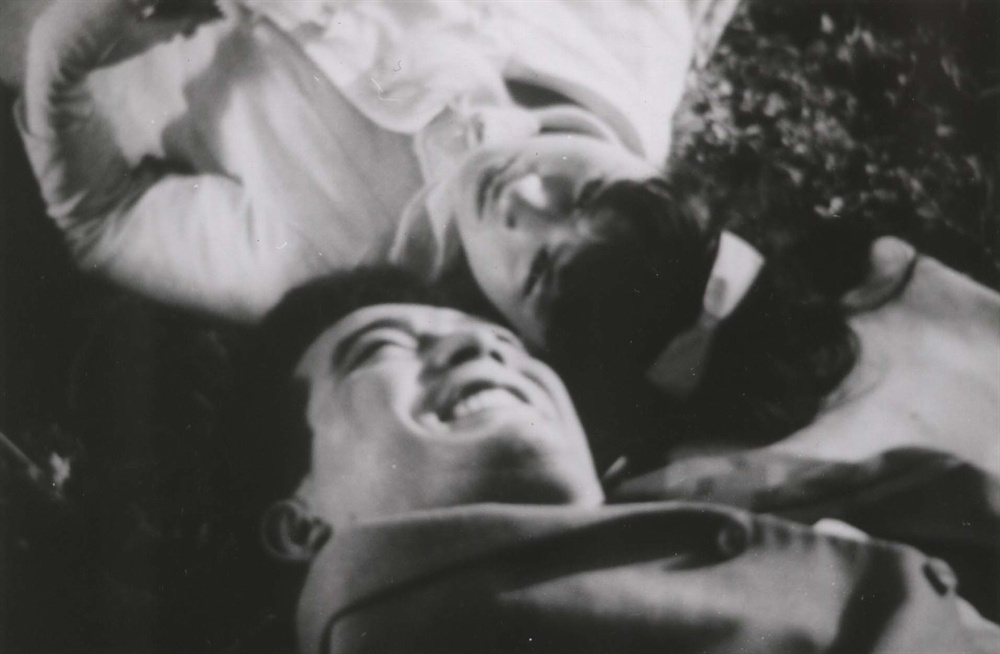
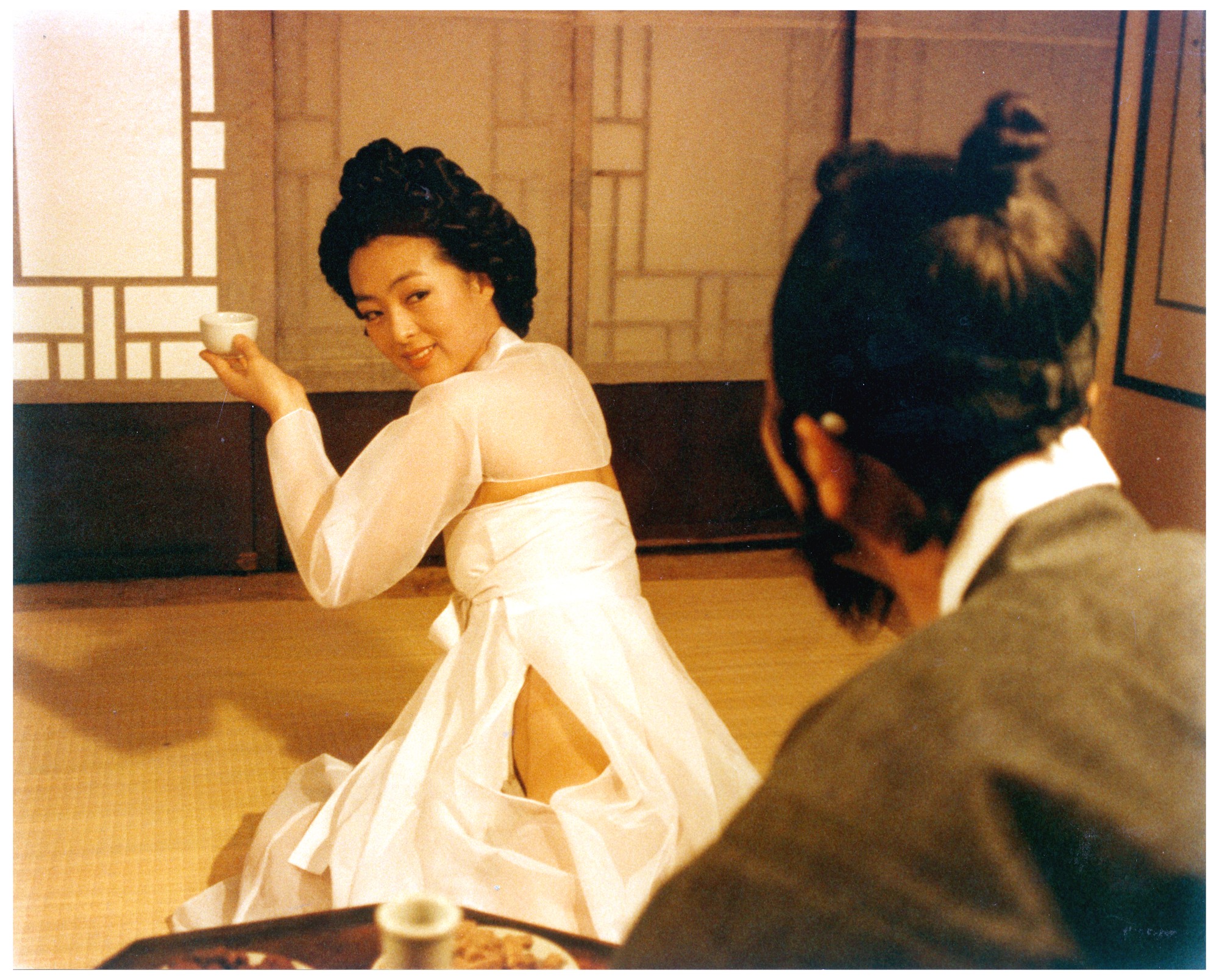
The false promises of the post-war era are brought home to two romantic youths dreaming of an illusionary future in Chung Jin-woo’s Green Rain (草雨 / 초우, Chou). At that time the youngest director to debut at just 25 years old with 1963’s The Only Son, Chung was a proponent of the “Cine Poem” movement which, in direct contrast to the literature film, sought to communicate through image alone minimising dialogue as much as possible. Heavily influenced by the French New Wave, particularly Godard’s Breathless and Louis Malle’s Elevator to the Gallows, Green Rain is essentially an anti-romantic melodrama in which each of the lovers deceives and is deceived only to be awakened to the final truth that romantic salvation is nothing more than a childish fantasy. 

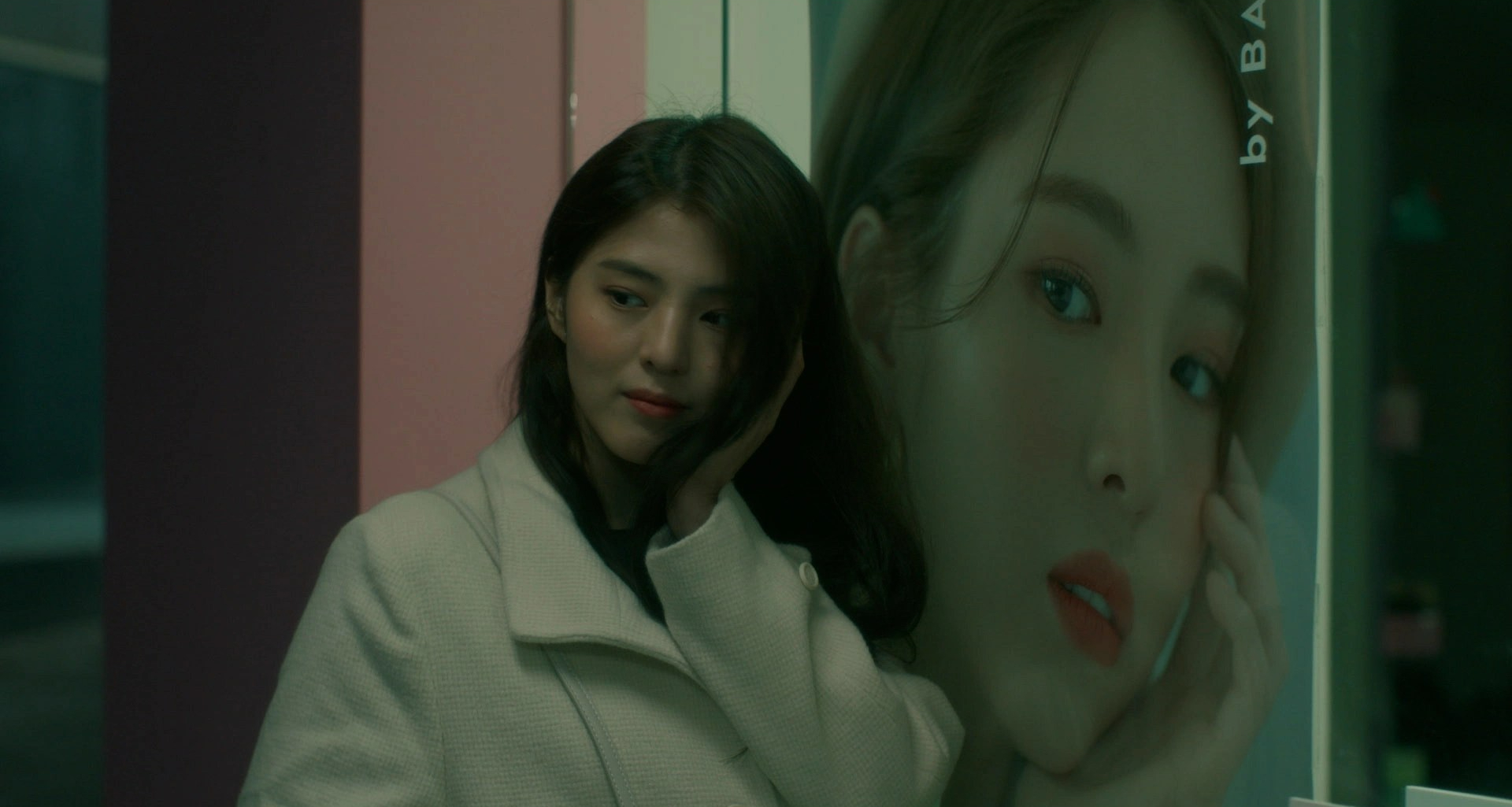
Chung opens with an excitable sequence in which the heroine, Yeong-hui (Moon Hee), introduces us to her “home”, which is in actuality that of a diplomat who has just been appointed Ambassador to France and so is currently living in Paris. Yeong-hui had hoped that the family would take her with them, but Mrs Kim and her daughter who is suffering from an otherwise unexplained illness and uses a wheelchair, have been left behind alone and she with them. Yet Yeong-hui loves everything about the idea of Parisian sophistication, overexcited when a package arrives from abroad that turns out to contain the latest French fashions for the two Kim ladies. Yeong-hui looks on wide-eyed, but the daughter is petulant and resentful. She doesn’t want her father’s presents and views them as insensitive because it’s not like she has anywhere to show off nice clothes when she’s stuck at home ill. The two women debate giving the clothes away but can’t decide who best to give them to before Mrs. Kim casually offers Yeong-hui the stylish raincoat which is in its own way about to change her life. 

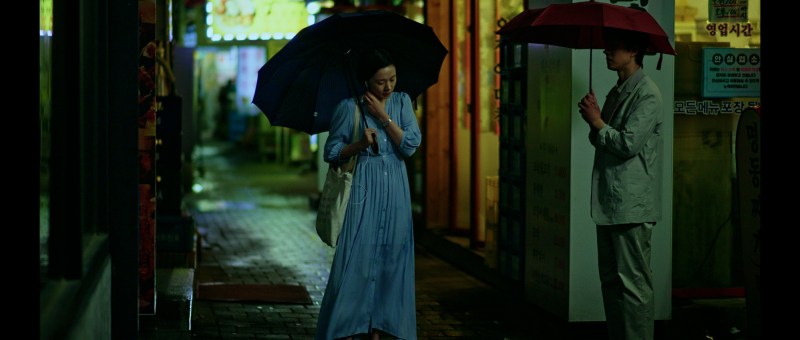
As she later puts it, putting on the raincoat turns her into someone else. She waits eagerly for a rainy day and steps into a hip jazz club, somewhere she wouldn’t usually go, where she attracts instant attention precisely because of the coat. The women look on with scorn, noting the mismatch between the coat and the rest of her appearance, while the men swarm on her unpleasantly. Luckily, Cheol-su (Shin Seong-il) comes to her rescue and offers to drive her home believing that Yeong-hui is the ambassador’s daughter while she fails to disabuse him. He meanwhile tells her he’s a chaebol son, but really he’s a mechanic and sometime university student currently in a compensated relationship with a stylish older woman who we later learn to be some kind of gang leader. 

They fool themselves into thinking they’re falling in love, deceiving themselves as well as each other in playing at innocent romance. They meet every time it rains and go on charmingly innocent dates to parks and boating lakes shot with a dreamy romanticism, but also, in contrast to Barefooted Youth, indulge in stereotypically “low” forms of entertainment such as boxing and horse races without ever managing to blow their covers as they simultaneously both pretend to like Tchaikovsky because they’re trying to live up to an image of upperclass sophistication. 

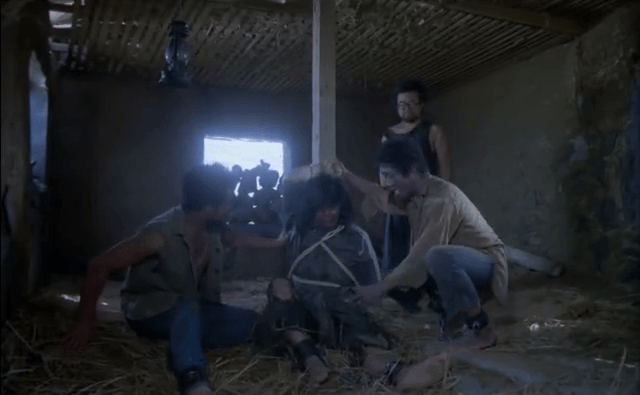
Yet, there are cracks in their connection. They talk idly of the kind of future they’ll have with Cheol-su wanting an “enormous concrete home” while Yeong-hui claims she’s fine with somewhere small so long as there’s sunlight because she wants her life to be “real, not for show”. It’s an ironic statement under the circumstances, one which is perhaps brought home to her by the otherwise kindly old washerwoman across the way who is forever complaining about her “fake” coal that won’t light and moans about “fakes passing themselves off as the real thing”. Yet she continues to believe in her fairytale romance with Cheol-su, even while declaring it to seem “like a dream”, terrified that he’ll find out she’s just a maid and leave her. He, meanwhile, is less invested in the idea of romantic love, describing her first as a “business opportunity”. On their first meeting he finishes with the older woman, drops out of the “third class uni” he thinks is more trouble than it’s worth, and continues to push his luck with his boss by repeatedly “borrowing” customers’ cars because he thinks he’s on to a sure thing with the ambassador’s daughter and no longer needs to worry about keeping the job. He presses his friends for money, pawns everything he can get his hands on, buys a fancy suit and tries to convince Yeong-hui he’s upperclass only to be pushed into a corner when she declares she wants fancy crockery in her simple home. To get his dream life, Cheol-su commits a robbery only to be surrounded by an angry mob a la Bicycle Theives and receives the first of many beatings. 

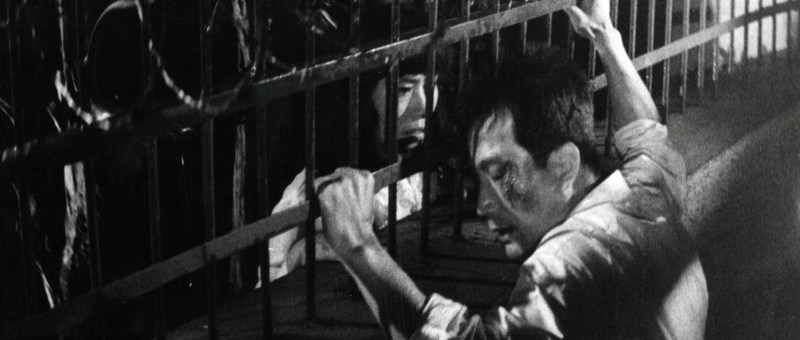
This sense of frustrated humiliation might explain the unexpectedly traumatic closing scenes which contrast so strongly with gentle romanticism with which the film opened. Cheol-su risked everything for a mistaken ideal and he’s failed. He realises Yeong-hui has been deceiving him too, but rather than a cute romantic resolution that returns them both to the grounding of their original social class, he reacts with hypocritical rage and anger. Yeong-hui reemphasises that she loves him anyway, clinging fast to her dream of love, but he ruins her, consumed by toxic masculinity in his sense of hopelessness and inferiority as a working class man with no prospect of improvement now that his dream of marrying up has dissolved. In another film he might be the hero, reinforcing duplicitous ideals of societal misogyny, but in this one he is the fool and the villain. “Without an ounce of sorrow I understood what it was to be a woman” Yeong-hui adds bitterly, finally understanding her romantic fallacy for what it was, learning a painful lesson in naivety and self-deception and striding boldly back to her old life, wiser if perhaps less hopeful whereas Cheol-su runs away still chasing an easy fix to a more prosperous future. At once a criticism of the increasingly consumerist society, its deeply entrenched social inequalities, and its patriarchal social codes, Green Rain is most of all an anti-romantic melodrama in which love is nothing more than childish fantasy incapable of offering salvation in a world of constant impossibility. 


The Moon (더 문, Kim Yong-hwa, 2023)

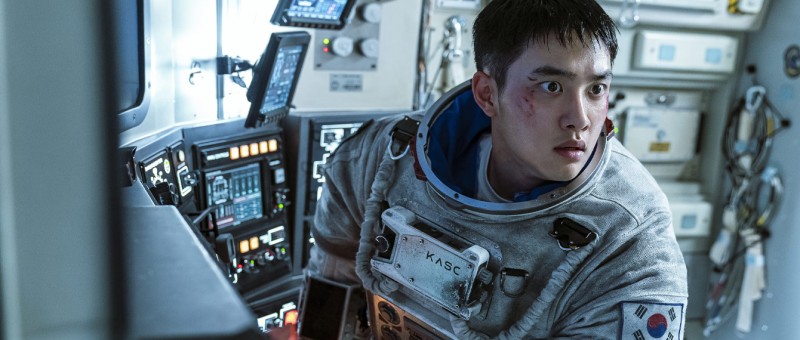
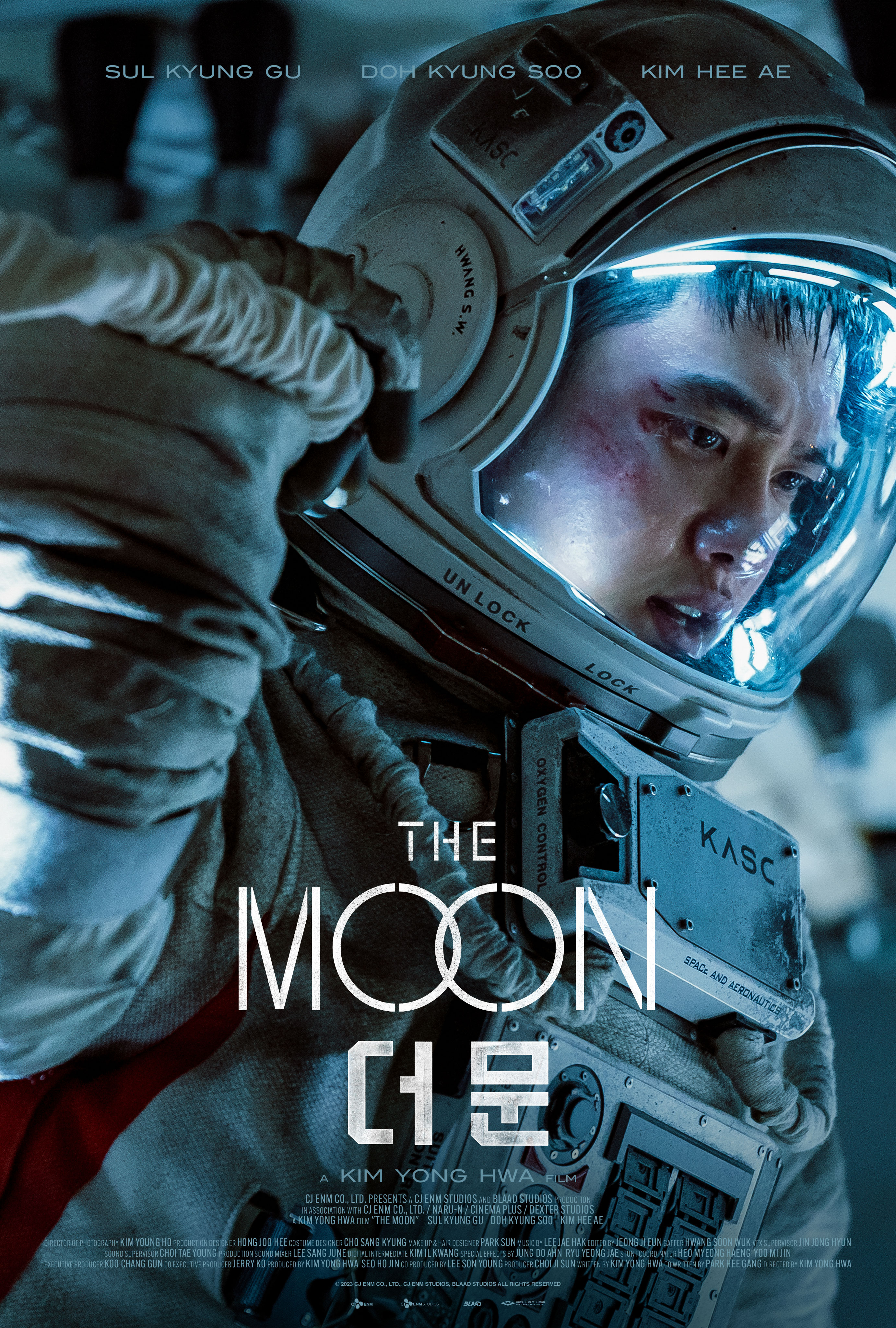
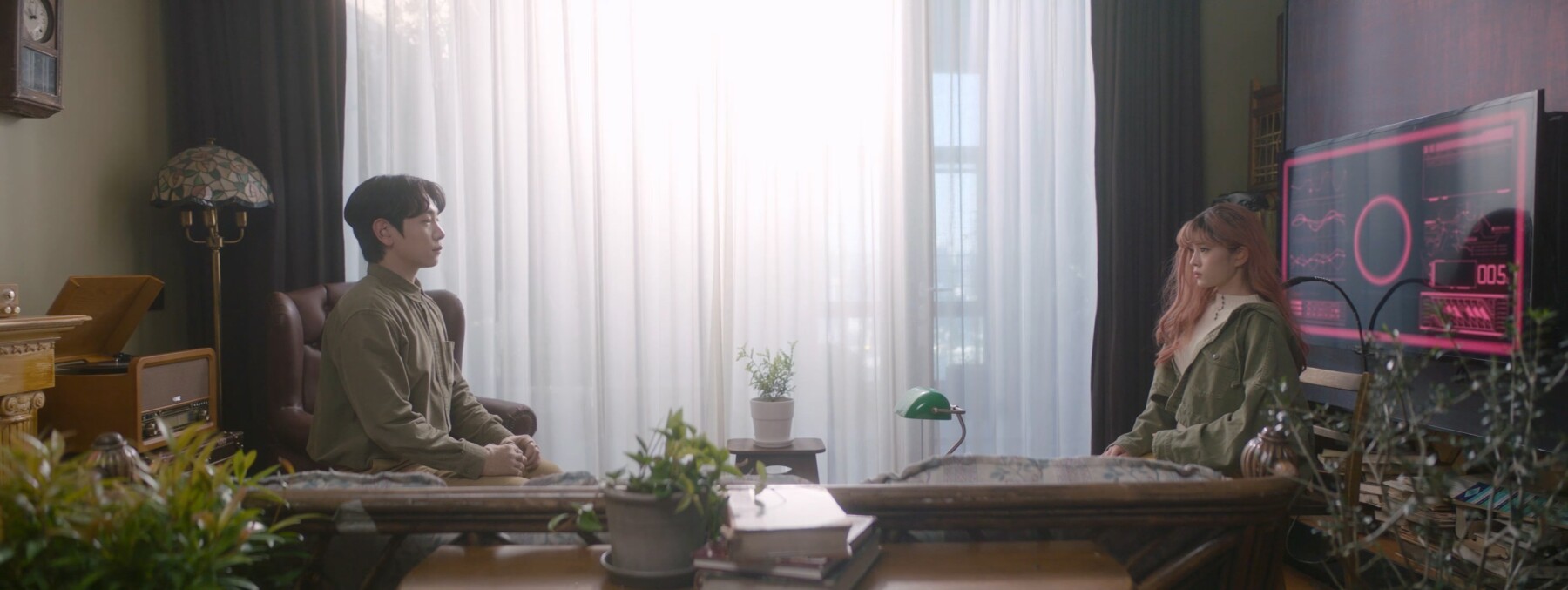
Feeling slighted by the international community, Korea attempts to dominate in space by becoming the second nation to send a man to the moon but does so apparently with egalitarian principles in Kim Yong-hwa’s futuristic science drama, The Moon (더 문). The conceit is that that pretty much everyone, having learnt nothing, is intent on colonising the moon because it is a rich source of a particular mineral that could become a valuable means of sustainable energy for Earth. Of course, Korea wants in but crucially wants to share what it finds with the world unlike the Americans who just want to keep everything for themselves.

A running current of Anti-Americanism is deeply felt early on as NASA and the US initially refuse to help when a Korean spaceship gets into trouble in a solar flare, while the International Space Committee from which Korea is expelled because of “conflicts between nations” also seems to be led by Americans. Moon-Young (Kim Hee-ae), the ex-wife of former flight director Jae-gook (Sol Kyung-gu), also works at NASA and has taken an American name after marrying an American, yet is treated with chauvinistic contempt by her bosses who question her loyalty and qualifications. The implication is that America wants to conquer the moon to secure its bounty for themselves in an ironic act of futuristic colonialism, but that the Koreans are going to the moon in the interests of science hoping to discover something that will benefit all mankind. 

Having been expelled by the committee seems to fuel an exceptionalist drive among the Korean scientists who feel that they aren’t being afforded the respect they deserve internationally. This sense of internalised shame stems from the failure of their first rocket, the Norae-ho, which exploded shortly after taking off killing the three astronauts on board. Introduced to the three members of the Woori-ho, we can immediately sense that their chances of survival can’t be good seeing as the two older members mostly talk about their children, one of them planning to decide on a name for his as yet unborn daughter on the way. The third, Sun-woo (Doh Kyung-soo), has some complicated baggage with the mission and former flight director Jae-gook who was on duty at the time the Norae-ho exploded.

Sun-woo isn’t the only one with baggage as the scientists strive to overcome the traumatic failure of their first attempt. The Science and Technology Minster (Jo Han-chul) has his eyes mostly on his own reputation not wanting to oversee another catastrophic failure in Korea’s space programme. One of the two men in charge of the Norae-ho mission took his own life in atonement, while Jae-gook split up with his wife and retreated to the mountains working in a rural observatory. Perhaps precisely because of this, the quest to save Sun-woo, a former Navy Seal hired for his agility and athleticism who lacks experience and is unable to pilot the spacecraft alone, quickly goes viral pushing the Americans, who had been reluctant to help, to finally pitch in on a joint operation.

It’s this kind of panglobalism that the film eventually advocates as Moon-young sheds her American name of Jennifer and is fired from NASA for trying to help Sun-woo leading her to make a direct appeal to the international crew of the space station who hail from Canada, Australia, and the UK to save him out of astronaut solidarity. A voiceover reminds us that the Moon belongs to everyone, not any one entity, while praising those who were able to transcend nationality and ideology to work for a better world for all. It’s obviously an anti-colonialist sentiment though one that is eagerly pointed at American imperialism and its continuing effects in Korea even if it’s also true that the nation is smarting from being kicked out of the International Space Committee and desperately wants to be readmitted to secure its status on the world stage. Kim throws just about everything he can at Sun-woo and his little lander from solar storms to meteor showers and increasing despair shifting from one set piece to another as Sun-woo tries to overcome yet another disaster and fulfil his mission of returning home with ice samples in an act of redemption not only for the space programme but for himself as its orphaned son. 


The Moon is released in the US on DVD, blu-ray, and Digital on 27th February courtesy of Well Go USA.

US trailer (English subtitles)

Er Woo Dong: The Entertainer (어우동, Lee Jang-ho, 1985)

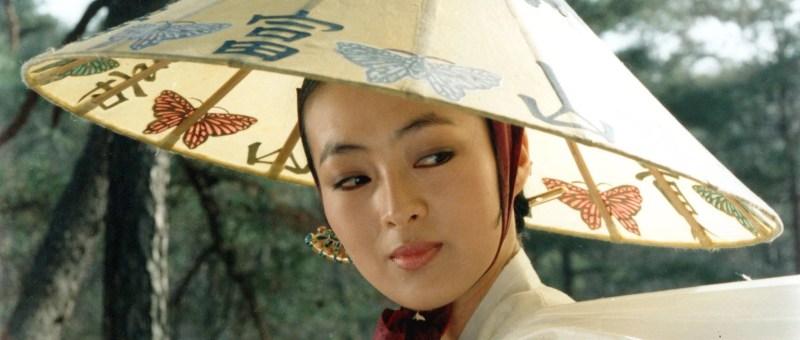
“The commoners get to have all the fun” a lady in waiting laments to her mistress in Lee Jang-ho’s historical drama set in the reign of good king Sejeong, Er Woo Dong: The Entertainer (어우동, Eo Udong). It is however the titular heroine Eoudong’s (Lee Bo-hee) determination to enjoy herself that becomes a threat to the social order, not only in her ability to subvert the Confucianist philosophies of the era by making men her playthings but doing so with those not of noble birth. 

Legends seem to surround Euodong, a little more of her history revealed with each step in the investigation into the murder of a man she had slept with at a festival. The man had attempted to rape her, but Eoudong was soon able to gain the upper hand in the situation, realising that he is a servant boy who often visited her home. She sleeps with him willingly, dominating him by getting on top and making it about her pleasure and agency rather than his. Soon after she leaves, however, the boy is killed by an assassin apparently hired by her cruel and perverse husband, who is technically the king’s uncle, to tidy up after her. 

Set in 1479, the film is clear in its criticism of the feudal order while insisting that it is the nobles who are the most constrained because they must act by these arcane codes to which the commoners are not subject. The commoners revel at their festival, something more or less forbidden in the revered word of the court and most particularly for a woman like Euodong who craves freedom and excitement, longing to fly like a bird. People of often say of her that should have been born a commoner where her behaviour would not be regarded as so deeply problematic to the social order in its direct attack on notions of class and gender. Though she herself is niece to the prime minister, an assassin (Ahn Sung-ki) is later hired to neuter the threat she poses though there is a kind of care in the unusual request, instructing that death should come suddenly and without pain. Afterwards, the assassin should be sure to bury her in her beautiful place. 

The assassin, however also has a painful past in which in which he was quite literally castrated for a similar kind of transgression of class boundaries having become friends with a young noblewoman. While he lost his penis, his friend lost his tongue so that he would never speak of what happened rendering them both outcasts left with no option but to serve the system that had harmed them by becoming spies and assassins. Eoudong’s rebellion is towards this same system, a system in which women are regarded as worthless if they do not serve their proper function. Married at an early age, some recount that Eoudong was once cheerful but less so after her marriage. Her husband rarely visited her and in fact took a concubine but she was still blamed for the “failure” to conceive a child and threatened with the shame of being sent back to her birth family. In this era, a woman was forbidden from remarrying even in widowhood while it was relatively easy for a man to divorce his wife. Simply “talking back” was enough grounds to send a woman packing. 

The opening and closing text reminds us that the feudal era was “the hardest time for Korean women” if also perhaps inviting us to consider what our times are like too, insisting that Eoudong lives on in the hearts of oppressed women as one who fiercely resisted the constraints of her era. Lee roots the corruption firmly in the king, who is indeed the patriarch of a nation and presider over an oppressive social order founded on shame and misogyny as a means of maintaining male power. Coloured with the softcore excesses of ‘80s Korean cinema, Lee nevertheless signals the crushing austerity of noble life which slowly erodes the soul in robbing it of emotional fulfilment or individuality saving the artiest of his sex scenes for that between the liberated woman and an emasculated man each betrayed by the society in which they live and seeking the only escape that it presents itself to them. 

Night in Paradise (낙원의 밤, Park Hoon-jung, 2020)

Sometimes being too good at your job can be a definite liability. So it is for the hero of Park Hoon-jung’s melancholy gangster noir, Night in Paradise (낙원의 밤, Nagwonui bam). Park’s worldview is often nihilistic and sometimes downright unpleasant, though it’s a sense of fatalistic sadness that dominates this otherwise over familiar tale of a noble gangster cruelly misused by those who choose not to obey their shared code and thereafter finding himself on a dark path towards if not exactly redemption then at least an inevitable ending. 

Rising foot soldier Tae-gu (Uhm Tae-goo) has found himself in the middle of an old-fashioned gang war, serving an ambitious boss, Yang (Park Ho-san), who has unwisely decided to press into territory operated by the well established Bukseong gang. Getting some of his guys back after being kidnapped by Bukseong and held in an apartment block where the community is currently protesting the take over and demolition by gangster redevelopers, Tae-gu is told by his opposing number that Yang is a crazy upstart who would be a nobody without him and that he made a mistake turning down a job offer from Bukseong boss Doh. Tae-gu is however an old school mobster loyal to his gang which is why he doesn’t stop to think things through when someone close to him is killed in a car accident in which he assumes he was the intended target, believing Doh is striking a low blow. Encouraged by Yang, he meets with Doh in person and daringly knocks him off at a swimming pool sauna escaping through a window in the nude. Yang arranges to send him to Jeju Island to lay low before moving on possibly to Russia, but Yang has also been engaging in a failed pincer movement which left them all in hot water after failing to take out Doh’s no. 2, Ma. 

As the title might hint, even the island “paradise” of Jeju is not free of death and crime as Tae-gu discovers after bonding with their contact, Kuto (Lee Ki-young), a fixer smuggling guns from Russian mobsters hidden inside consignments of fish. Like Tae-gu’s sister, Kuto’s niece Jae-yeon (Jeon Yeo-been) is suffering from an undisclosed terminal illness that seems to have few obvious symptoms but has left her with suicidal tendencies. Kuto’s decision to take Tae-gu in is motivated by his desire for money to take Jae-yeon to America for treatment though she and Tae-gu are also much the same both having lost people close to them because of their proximity to the gangster world while he and Kuto search for ways to make up for the harm their lives of violence has caused. 

Jae-yeon is quick to remind Tae-gu that she will soon be dead and that therefore nothing really matters and her life has no meaning while he perhaps as a gangster feels something similar that his life ended the day he first picked up a gun yet there are also ways in which he must act in satisfaction of his code. His tragedy is that he’s operating under a misapprehension, blindly trusting in the wrong people when the truth is painfully obvious to all but him.

Park inserts a series of ironic pillow shots of the idyllic Jeju night scene with comforting lights swinging from tropical trees and gentle waves rolling on the horizon, before closing with a series of eerie daytime shots of familiar locations now devoid of people as if this were a hell our heroes had recently been haunting, ghosts of a violent landscape. His fight scenes are visceral yet also occasionally cartoonish, several taking place in the confined space of a car expertly framed by Park as the heroes fight desperately for life while constrained by their environment. A high octane chase through an airport with its ubiquitous escalators soon gives way to an impressive motorway-bound set piece with an unexpected resolution, the gangsters later scattering on hearing far off police sirens though as we also realise police collusion is an inescapable factor in the fragile equilibrium of the underworld even if it might not stretch all the way to idyllic Jeju. “Don’t waste your tears” Tae-gu unironically offers in weary resignation to his fate, a noble gangster to the last too good to survive in a world of nihilistic futility. 


International trailer (English subtitles)

The Call (콜, Lee Chung-hyun, 2020)

The call is coming from inside the house. It’s a final revelation intended to chill, the idea that the source of threat is located in the very place where you ought to feel safe, protected, invulnerable. Of course, there are many reasons someone might not feel completely safe at home, those who perhaps live with hidden threat every day, a hidden darkness that lies at the centre of twisty Korean thriller The Call (콜). Another in a small series of time travelling communication, The Call makes connection through outdated technology, an almost literal ghosting in a voice from the past that, like an inverted Strangers on a Train, offers the tantalising promise of mutual salvation only to prove extremely unreliable. 

28-year-old Seo-yeon (Park Shin-hye) has just returned to her rundown country home because her mother, whom she intensely resents blaming her for the death of her father in a fire, is suffering with a brain tumour. Though her strawberry farmer uncle Sung-ho (Oh Jung-se) describes the place as the most desirable property in town, the home in which Seo-yeon finds herself is cold and austere, a creepy old mansion decorated in an outdated style and filled with gothic furniture. To make matters worse, Seo-yeon has left her phone on the train but unexpectedly assures Sung-ho that she’ll be fine with the landline, later calling herself and getting through to a woman who claims to have found it but asks for a reward and then hangs up presumably to assess her options. Then, the landline starts ringing with calls from a young woman trying to reach a friend and claiming that her mother is planning to set fire to her. Though obviously disturbing, Seo-yeon assumes the calls are a simple wrong number until she discovers a hidden room with what looks to be some sort of tiled experimentation area along with a box of memorabilia which lead her to think the phone is somehow connecting her to the girl who lived in her room at the turn of the millennium. 

Also 28 only born 20 years earlier, Young-sook (Jeon Jong-seo) claims to be at the mercy of a wicked shamaness step-mother convinced that she has a dark destiny. The two women engage in a strange act of intergenerational bonding between two people who are the same age, Seo-yeon mystified by the meaning of the word “Walkman” while Seo-yeon struggles with the concept of the multifunctional smartphone. The force which unites them is parental dissatisfaction as Seo-yeon claims a hatred for her mother she does not perhaps really feel and cannot in any case compare with that of Young-sook for the religiously abusive stepmother who fully believes she is possessed by the devil. In in this the time difference proves useful, Seo-yeon realising that Young-sook has the power to prevent her father’s death, but only latterly that she also even from the future has the ability to change her new friend’s fate. 

Essentilally a Strangers on a Train scenario, the two women agree to save each other, Young-sook dutifully restoring Seo-yeon’s imagined fairytale future, the creepy mansion transformed into an elegant modern dwelling, her mother and father now both healthy and happy. Seo-yeon, however, begins to neglect her promise, too busy enjoying her repaired family life to remember that Young-sook is imprisoned in the house suffering horrifying abuse. Young-sook is, in a sense, the embodiment of Seo-yeon’s familial trauma, the violent resurfacing of a long buried memory that threatens to tear to her life apart but also has the ability to repair it in revealing the truth that allows her to reconnect with her mother who, we learn, has repeatedly sacrificed herself for her daughter’s sake. Nevertheless, you begin to wonder if the shamaness had a point and the lid was best left on Young-sook as her hurt and resentment in being neglected by her new friend eventually take a turn for the dark. 

In essence, Seo-yeon’s decision to interfere with the past engineers a chain of disastrous events robbing her of her illusionary happiness while eventually landing her right back where she started if perhaps with a little more insight and having healed her relationship with her mother. Part tale of millennial anxiety, part gothic nightmare, The Call may not always be internally consistent but charts a dark tale of trauma and response as a haunted young woman finds herself stalked by the psychopathic embodiment of her buried guilt only to discover that a call from the past is always hard to ignore. 


Original trailer (English subtitles)

In Our Prime (이상한 나라의 수학자, Park Dong-hun, 2022)

Education is supposed to be the great leveller, a true meritocracy in which a combination of hard work and innate ability can enable anyone to follow their chosen path as far as it will go. The reality is however far less idealistic. Park Dong-hun’s In Our Prime (이상한 나라의 수학자, Isanghan Naraeui Suhakja) is the latest in a series of Korean films taking aim at corruption within the educational system along with a persistent classism that ensures only the “right” kind of people are allowed to prosper. 

Han Ji-woo (Kim Dong-hwi) knows he’s not the “right” kind of person and feels out of place at the elite boarding school where he is bullied by teachers and students alike for being a scholarship boy amid the children of mostly wealthy families. Though he won the place though being a top student at his previous school, now his grades are merely average and he’s bottom of the class in maths. Ji-woo’s odious, elitist teacher coldly tells him that his case is hopeless and he’ll never get into a top league university with these kinds of grades at this kind of school. He pressures Ji-woo into applying to transfer out which he is reluctant to do because he knows how much his attending such a prestigious school means to his widowed single mother. In any case as we later discover, the teacher merely has it in for him openly complaining with other members of staff about having to fuss with paperwork for kids on scholarships and bursaries who in his opinion don’t really belong in a place like this which is clearly geared towards perpetuating the privilege of the children of the elite at the expense of those like Ji-woo. 

When Ji-woo is caught smuggling in pork and soju at the behest of his exploitative roommates he refuses to dob them in, making the unlikely claim that he intended to consume all four meals himself. The teacher first praises his idealistic stance but then calls him an idiot because the other boys wouldn’t do the same for him nor are they coming forward themselves to take responsibility. Perfectly happy to let the scholarship boy take the blame one of them even crassly slips Ji-woo some money afterwards, genuinely confused when Ji-woo tries to turn it down claiming such things are unnecessary between friends. Nevertheless, the incident brings him the attention of the “commie officer”, a North Korean defector (Choi Min-sik) working as the nightwatchman who easily solves Ji-woo’s impossible maths problems. The officer eventually agrees to teach him maths but only on the premise that he doesn’t care about tests or grades but solely on the art of learning. 

What he teaches Ji-woo is a valuable lesson that cuts straight to the quick of the issues within the educational system in which children are being taught to blindly answer standardised questions without developing critical thinking skills. The first problem he shows him has a deliberate error in it, but Ji-woo is so focussed on giving the correct answer he doesn’t stop to consider the question itself may be wrong and as the officer is fond of saying there can be no correct answer to an incorrect question. Yet this new philosophy of maths in particular being a purely rational science in which there is only one true answer brings Ji-woo back into conflict with his teacher who complacently teaches to test and humiliates him when he points out one of the test questions is badly formulated. The teacher tells them the correctness of their answer is irrelevant for they must answer in accordance with the textbook and willingly say that black is white if the textbook says it’s so. Meanwhile it also becomes apparent that he has been taking kickbacks from parents getting wealthy students into an elite tutoring group where he leaks the questions on upcoming exams.

This discovery prompts a minor rebellion by rich kid Bo-ram (Jo Yun-seo) who becomes disgusted with her elitist mother after being unwittingly enrolled in the cheating cabal while already resenting her for having made her give up playing the piano. For the officer, music is a mathematical language and merely an expression of the beauty of numbers which can used to explain everything there is in the world, yet as we discover he left North Korea after finding out that his research was used in weapons production only to become disillusioned with the South on realising that here people merely use it as a tool for advancement towards dull and conventional lives in the service of capitalism. When Ji-woo admits that he supposes he wants good grades to get into a good uni and then get a good job to be set for life, the officer decides to broaden his horizons encouraging the better instincts the elites at the school had rejected and showing him how to think for himself rather than blindly follow what he’s being taught. 

All that might seem quite ironic for a man from North Korea pointing out the unhelpful brainwashing of a rote learning system along with the unpleasant complacency of Ji-woo’s teacher not to mention his unethical hypocrisy. Nevertheless, the officer has his own tragic past which suddenly rears its head just as the two begin to form a paternal bond and Ji-woo finds himself at a moment of crisis once again pushed towards a transfer. Though the system is stacked against them, Ji-woo and Bo-ram eventually find their way through it in their shared resistance bolstered by the officer’s teaching as they gain the strength to fight back with honesty and integrity. It may be a slightly rosy conclusion implying the system has been corrected as if Ji-woo’s teacher were the only problem rather than the product of its corruption but does at least make the case that integrity is the one thing that pays but can’t be bought.


International trailer (English subtitles)

The Starting Point (원점, Lee Man-hee, 1967)

A hired thug and a sex worker dreaming of a new life are set on a collision course at mountain retreat in Lee Man-hee’s noirish thriller, Starting Point (원점, Wonjeom). A melancholy existential drama, the film nevertheless has a darkly comic absurdity and becomes for a time almost a satire of changing sexual mores and the anxiety surrounding the post-war population explosion while simultaneously hinting at corporate corruption in economically straitened times. 

Played in near total silence, the opening pre-credits scenes find the otherwise unnamed (the name given in the promotional material is never spoken) lackey (Shin Seong-il) raiding an office building with the intention of retrieving some mysterious documents the people who hire him later claim threaten to expose their “seven-year-secret”. The Lackey takes time to smoke a cigarette and read through some of the papers before putting them into a briefcase to make his escape but is soon met by a man with a rifle who challenges him. A fight ensues on the staircase from which the Lackey is able to escape, activating a rolling gate to get out of the building. But the other man keeps coming after him, managing to cling on the briefcase while his neck is crushed by the unstoppable motion of the shutter. 

Mirroring him, the unnamed Sex Worker (Moon Hee) is also intruded in a wordless sequence shot with the kind of realism seen in American independent and European arthouse cinema as she stares forlornly at the pretty dresses behind the glass in a small boutique before sadly making her way towards a streetlight near the Choseon Hotel where she wordlessly picks up a customer through suggestive looks and gestures. 

The Lackey knows too much, which is why his bosses want to take him out but for unclear reasons Mr Choi comes up with a bizarre and convoluted scheme which involves hiring the Sex Worker to pose as the Lackey’s wife during a honeymoon getaway to Mt. Seorak. What the Lackey thinks is going on or why the mountain is important is never really explained just like the nature of the seven-year-secret, but once there the film changes tack becoming a kind of ensemble mystery as the various guests each become suspicious of one another while the Lackey and the Sex Worker slowly fall in love for real perhaps bonding their mutual sense of existential peril and outsider status. 

In the liminal space of the mountain, both fear rejection by those around them who come to represent mainstream society, the Lackey because he has killed and Sex Worker because of her profession. Ironically, one of the other guests is a dodgy gynaecologist who makes a point of saying that most of his clients are sex workers from around the Choseon Hotel at least implying that he regularly performs abortions. He recognises the Sex Worker as a previous patient and tries to take advantage of her sexually but commits a breach of medical ethics by leaking her profession to the rest of the group who then shun her. When the planned camping trip encounters a snag seeing as only two tents have been provided and the obvious solution is for men to take one and the women the other, the women all immediately leave on the Sex Worker’s arrival refusing a share a space with a “fallen woman” in case they are somehow tainted by her shame. 

But then, the goings on at the mountain inn are strange in themselves. A middle-aged man who inexplicably doesn’t seem to have encountered a transistor radio before accidentally tunes into a news broadcast discussing the effectiveness of the contraceptive pill while the young people dance with wild abandon to music they don’t really understand. Meanwhile, the gynaecologist wades in when another of the women experiences terrible stomach pains insisting that he is “familiar with women’s issues” and informs the husband that his wife is pregnant which is confuses him because they only married the day before and he’s been a good boy so the news is perplexing. He spends the rest of the film counting dates on his fingers and at one point attempts to hang himself certain that his wife must have slept with another man before their wedding instead of maybe considering that the dodgy gynaecologist may be mistaken.  

When the couples are divided into separate tents, one guest quips that it’ll be good for keeping the birth rate down hinting at an anxiety about a new sexual freedom among the young coupled with the impact of the ongoing baby boom and its economic implications. The gynaecologist’s wife is the first to join in with the youngsters, but she’s also a rabid penny pincher making sure the newlywed husband pays for her husband’s treatment of his wife while intensely jealous constantly trying to keep the randy doctor’s attention off the other women. The sense of economic anxiety is echoed in the Sex Worker’s melancholy longing onto looking into the shop window while dreaming of opening her own hair salon though sex work is the only way she can support herself and leaves her with intense shame that like the Lackey exiles her from mainstream society. 

As she says while embracing her covert identity as a cheerful newlywed, she’s been looking up all her life and would like to look down for once which she ironically does atop the stairway on which the Lackey fights his existential battle with Choi and his minions. They each want to find a way to get off the mountain and return to the world, but are prevented from doing so by the forces that pursue them and will not let them go. Finally questioned, the Sex Worker is forced to admit that she knows nothing about the Lackey, not his name or where he lived or what he did for a living, only that he did not hate her which is as close to a declaration of love as it might be possible to get in this cold and dark world of exploitation and violence. Lee films with a noirish intensity and melancholy fatalism as the pair attempt to fight back against the forces which constrain them with the pureness of their love but later discover that, as they feared, all that is left to them are painful memories of momentary happiness. 


The Apartment with Two Women (같은 속옷을 입는 두 여자, Kim Se-in, 2021)

A mother and daughter remain locked in a toxic cycle of resentment and dependency in the debut feature from Kim Se-in, The Apartment with Two Women (같은 속옷을 입는 두 여자, gateun sogoseul ibneun du yeoja). While the English title may have an unfortunate sexist connotation implying that such a dysfunctional relationship is inevitable when two women live together, the Korean “two women wearing the same underwear” more closely suggests the awkward intimacy between them as they each seem to seek escape from the other but in the end are left with no option than to return or choose independent loneliness.

The awkwardness is obvious from the opening scenes as middle-aged, pink-haired mother So-kyung (Yang Mal-bok) chats to a friend on the phone while using the toilet even as her 20-something daughter Yi-jung (Lym Ji-ho) washes her undies in the bathroom sink. Once done, So-kyung slips off her underwear and simply throws them in with the others for Yi-jung to scrub, taking one of the newly washed but not yet dried pairs as a replacement before breezily leaving for work. So-kyung often becomes angry with her grown-up daughter for no ostensible reason, hitting and slapping her while a defeated Yi-jung can do nothing but cry no longer seeing much point in even asking what it is she’s done wrong. Matters come to a head when the pair argue in the car at supermarket car park. Yi-jung gets out and begins to walk away, but her mother suddenly jumps on the accelerator and hits her. So-kyung tries to claim the car malfunctioned but Yi-jung has long believed her mother would prefer it if she were no longer alive. 

During a blackout towards the film’s conclusion, So-kyung again insists the accident wasn’t deliberate reminding that Yi-jung that it wasn’t the first time she swore she’d kill her and forcing her to admit that she remained so calm because it wasn’t the first time she’d heard it. Later someone asks why she didn’t leave seeing as she is a grown woman with a salaried job capable of supporting herself and she answers that she thought she needed to save more money before making her escape but it’s also true that years of So-kyung’s emotional abuse have eroded her confidence in her ability to survive alone and that finally she is just so lonely that even her mother’s continual resentment is preferable to being on her own with no other friends or family to turn to. 

Yi-jung begins to bond with a woman at work who is in a similarly abusive situation with their employer, disliked by her co-workers and exploited by the boss who often hands her additional tasks to be completed for the next morning when everyone else is about to go home. But So-hee (Jung Bo-ram) evidently has troubles of her own, and in any case Yi-jung simply ends up in another apartment with two women while beginning to realise that So-hee is not interested in a close friendship with her for she too longs for “independence” and is turned off by her obvious neediness. So-kyung meanwhile is in a relationship with a genial man of around her own age, Yong-yeol, who has a teenage daughter, So-ra, to whom So-kyung more well disposed than to own but eventually cannot stand. So-ra is in many ways much like herself and So-kyung’s narcissistic tendencies prevent her from sharing Yong-yeol with another woman. When it comes to picking an apartment for them to live in after they marry, it comes as a surprise to her than Yong-yeol intended to bring So-ra to live with them roundly telling him that the “spare” room is for storage not a daughter. Given this ultimatum Yong-yeol choses So-kyung, agreeing that So-ra will live with her grandmother in a decision that shocks Yi-jung on discovering his letter prompting the realisation that her mother will happily abandon her too. 

Su-kyung is in many ways a narcissistic nightmare, refusing to apologise for who she is and always insisting other people are to blame for the way she treats them. All Yi-jung wants is an apology but what she gets is justification as her mother explains to her that her clients at her massage parlour dump all their negativity on her though she is also living a stressful life and so she dumps all of her negativity on Yi-jung whom she resents for trapping her poverty and loneliness as a reluctant single mother. Yi-jung asks her what she’s supposed to do with that, but her mother simply tells her she should have a daughter too. In any case it appears as if Yi-jung may finally be finding the strength to extricate herself from her toxic familial environment, finally being measured to figure out her correct bra size having presumably been forced to wear whatever her mother wore throughout all of her adult life in a moment which brings us back to underwear once again. At times darkly comic, Kim Se-in’s intense family drama circles around toxic dependency and an inescapable cycle of cruelty and resentment but does at least allow its heroines the glimmer of new beginnings in a more independent future.


International trailer (English subtitles)
Spring Bears Love (봄날의 곰을 좋아하세요?, Yong Yi, 2003)

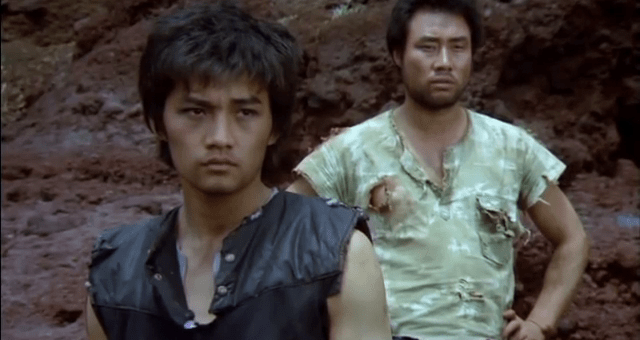
Sometimes it’s nice to think there’s more to life, that that there’s some kind of greater plan or grand adventure in the works but there’s always the danger of falling into the wrong story on a desperate quest for meaning in the mundane. This is in a sense what happens to Hyun-chae (Bae Doona), the quirky heroine of Yong Yi’s charming rom-com Spring Bears Love (봄날의 곰을 좋아하세요?, Bomnalui Gomeul Johahaseyo?) as she comes to believe that someone is leaving her secret messages in a series of art books she’s been borrowing for her hospitalised father from the local library. 

The notes in the books are poetic if a little absurd which Hyun-chae attributes to their nature as a code which she’s come to believe is exclusively for her. She has no real reason for thinking this yet is determined to find the author whom she’s privately called “Vincent”. Meanwhile, she abruptly runs into an old high school friend, Dong-ha (Kim Nam-jin), who has since become a train driver and is currently working as an operator on the Seoul underground (according to Hyun-chae he’s only there as a ringer crossing a picket line). It’s quite clear that Dong-ha has designs on her, in fact he says she’s the whole reason he came to Seoul in the first place. Yet Hyun-chae isn’t really interested, partly because she’s hung up on her illusionary romance with Vincent and partly because it seems she just looks down on him, idly catching sight of his oil-stained fingers as they sit down at a greasy burger bar. 

It has to be said, Dong-ha is his own kind of strange as obsessed with trains as Hyun-chae is with Vincent yet his interest is at least practical and down to earth. As he says, thousands of people travel on the subway every day. It’s a good steady job with a nice salary and drivers’ families can ride for free. By contrast, Hyun-chae’s high school dream was to become an air hostess travelling the world literally with her head in the clouds. Now she’s working a dead end job at supermarket and lamenting that nothing, not even her love life, seems to go her way. Her dilemma is in a sense between fantasy and reality dismissing the wholesome practically of a man like Dong-ha for the ethereal romanticism of Vincent whom she has after all almost entirely constructed in her mind without really even knowing if the messages were actually intended for her in the first place. 

Her taste for fantasy can be seen in her tendency take off on flights of fancy imagining herself in theatre scenes inspired by the paintings in the books and starring her current Vincent suspect. Her more worldly friend, Mi-ran (Yoon Ji-hye), tries to explain to her where she’s going wrong with dating leading to a flashback in which she’s basically Dong-ha on a date with a sophisticated guy who is clearly exasperated with her constant slurping of a soft drink and chattering through the movie (One Fine Spring Day), describing song at a restaurant they go to as reminding him of Bagdad Cafe while she sings loudly and publicly. 

During her search for Vincent, she ends up on a date with the librarian (who later claims to be married) to a zoo where he mainly gives her lectures about bears which had featured in the first note and she tries her best to play the straight woman to his absurdist banter. Uncharitably her journey could be read as one of learning to settle, that she should give up on her dreams and submit to the practicality of Dong-ha, yet for her it is perhaps shaking off her fear of the real letting the idealised vision of Vincent go while coming to accept Dong-ha’s earthiness. Then again, he does hide a few truths from her in order to manipulate her feelings, so perhaps not all that wholesome after all even if he does put it right in the end and can always be counted on for midnight ramen. Replete with zeitgeisty detail and and absurdist humour, Yong Yi’s quirky comedy may not have all the answers in its convoluted mystery but does at least allow its heroine to find her feet finally getting the message and running fast towards her certain destiny.


The Beast (비스트, Lee Jung-ho, 2019)

Internal police politics frustrate the hunt for a potential serial killer in Lee Jung-ho’s dark social thriller, The Beast (비스트) inspired by Oliver Marchal’s 36 Quai des Orfèvres. As a pathologist suggests, we all may have a hidden beast and it’s certainly true of the film’s conflicted protagonist, thuggish policeman Inspector Jung (Lee Sung-Min) who finds himself dragged ever deeper into a mire of corruption as a natural result of a series of bad decisions that started long ago, while his rival, Captain Han (Yoo Jae-Myung), presents the facade of efficient modern policing but inevitably turns out to be little better. 

As the film opens, Jung and his subordinate Yang are each wearing balaclavas while driving a heavily tattooed man out into the middle of nowhere though only for the purposes of frightening him so that he’ll back off their informant, local bar owner Madame Oh (Kim Ho-jung). Jung’s inner conflict is palpable as stares at his bloodied, shaking hands asking himself how it is it’s come to this while Yang later reminds him not to become too attached to his sources because once they’ve exceeded their usefulness they’ll simply be arrested. While all of this is going on, the police force is under immense pressure and receiving a lot of negative press over their handling of the case of a missing teenage girl, Mi-jin. Unfortunately, the girl later turns up dead with the murder enquiry split between two teams, those of Jung and Han each of whom are in the running to take over from the superintendent who before all of this happened was about to be promoted which is why he is desperate to solve the case as soon as possible. 

It might at first be tempting to read Jung and Han as representatives of different kinds of policing with their rivalry representing a battle for the soul of the police force only as it turns out each is merely corrupt in their own way. Jung is very much of the jaded veteran cop school, wanting to shift the case off his books as soon as possible by pushing the most likely suspect to confess. In this case that’s a shady pastor at a church Mi-jin used to frequent who was found in possession of her underwear and a series of photos of very young girls. Jung pushes the pastor to “confess” by selling him a story that a woman he was accused of assaulting in university took her own life as did her mother while her father later developed cancer as a result of all the stress and tragedy. Of course the pastor breaks down insisting that he killed her and it’s all his fault, only he’s talking about the other girl not that Jung cares too much about that. Han meanwhile quickly exonerates him by doing actual investigating, but only really so that he’ll still be in the running to solve the case and get the big promotion thereby besting his former partner turned rival. Jung had been the first to mention the possibility of an active serial killer only to be shut down because that would mean they’d lose the case to Major Crimes and therefore the personal opportunities for career advancement solving it would present. 

Both men eventually end up at the showdown by each of their respective routes implying there’s little practical difference between them. Han jeers that he can’t tell anymore if Jung is a bad guy or a cop but all he can answer is that it might be a matter of perspective, while he is also aware of Han’s backdoor deals and willingness to compromise himself in order to win advancement. In the midst of all this jockeying for power, it gets forgotten that a young woman lost her life in the most heinous of ways while whoever really did it may still be out there looking for the next girl to torture and kill. Everyone may indeed have a beast inside them, Jung already acquainted with his in his morally compromised soul while Han battles his internal ambition but the real beast may be the contemporary city and the infinitely corrupt hierarchies of the modern Korea along with the toxic masculinity that forces these men to betray their ideals simply not to be accounted a failure trapped at the bottom of the pyramid by their own problematic righteousness. When they’ve served their usefulness, the system chews them up and spits them out but until then it’s only hanging on as long as they can in the utter futility of a morally bankrupt existence. 


International trailer (English subtitles)