Güle-Güle (귤레귤레, Ko Bong-soo, 2024)

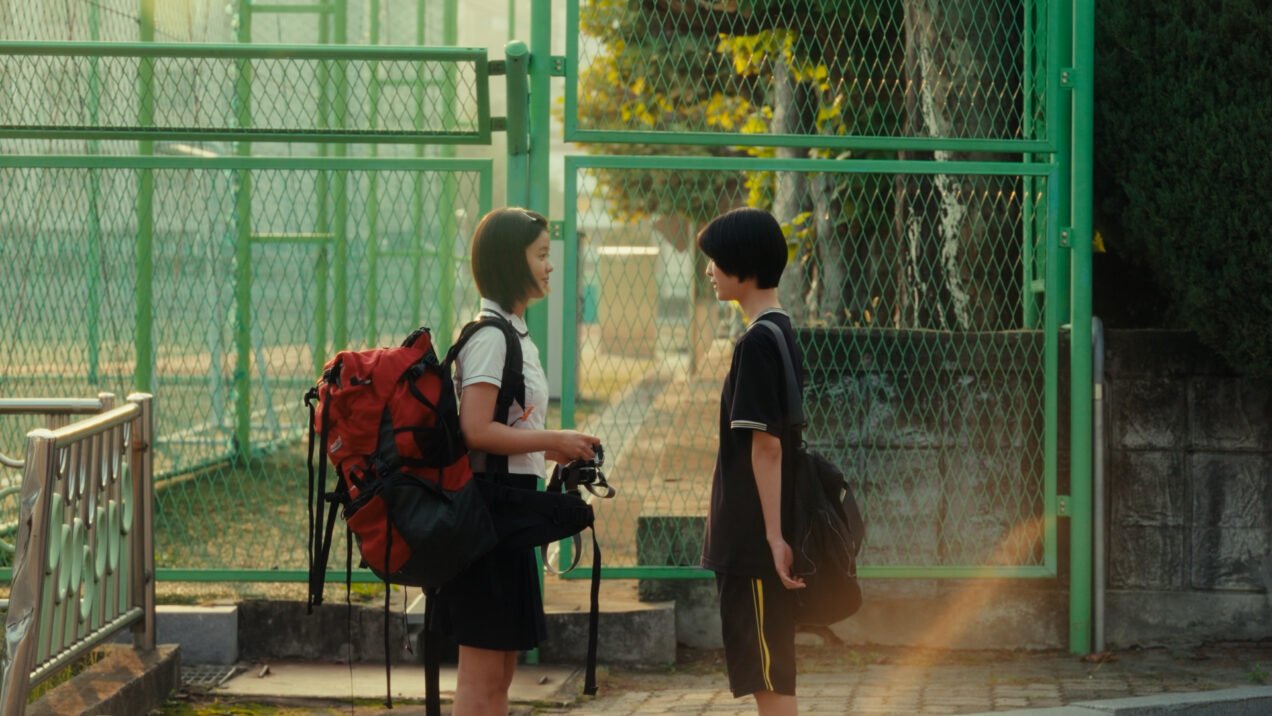
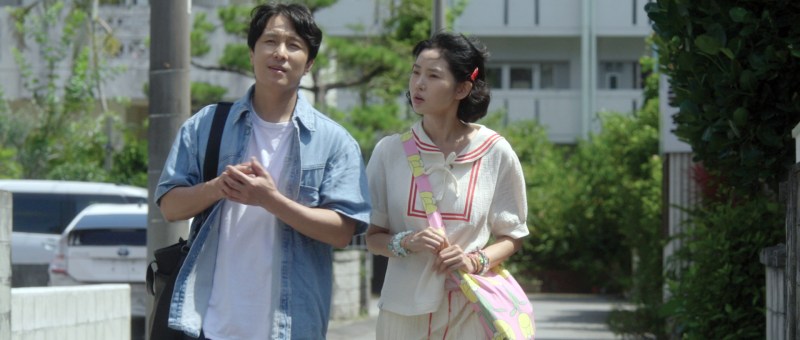
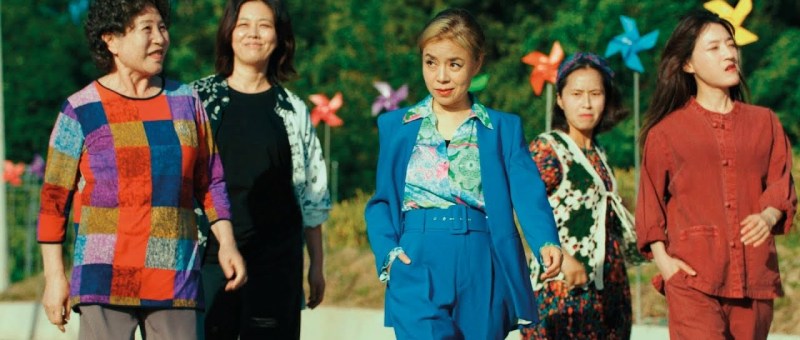
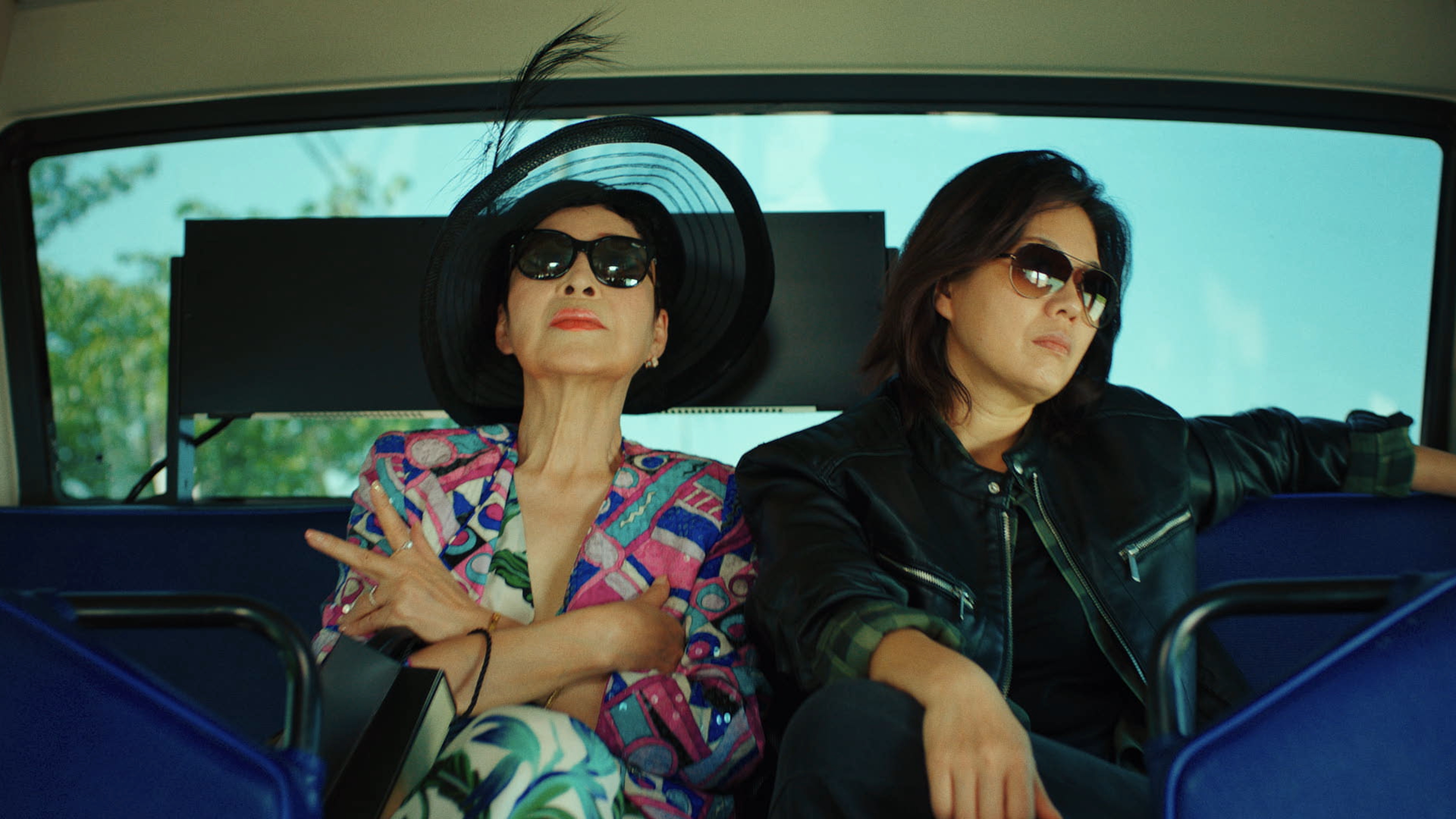
A man and woman saddled with problematic companions find themselves pushed into a space of introspection while on an inescapable Turkish holiday in Ko Bong-soo’s sophisticated comedy, Güle-Güle (귤레귤레). Each of them is perhaps burdened with regrets and wistful for what might have been but for opposing reasons, he facing the realisation that he often runs away from his problems and she that despite her sharp tongue and haughty attitude she lacks the courage to break with a situation that obviously isn’t working and become fully independent.

Dae-sik is there with his bumbling middle-manger boss Won-chang, a nepotism hire who repeatedly calls him a moron and blames him for his mistakes. Jung-hwa, meanwhile, is with her (ex?) husband Byung-sun who continually embarrasses her with his crass attempts to haggle the price down for anything and everything as means of asserting his masculinity through winning a price war. Byung-sun’s drinking and the problematic behaviour that arises from it had evidently strained their relationship with Byung-sun pledging to abstain from alcohol only to immediately break that promise claiming that he assumed drinking with Jung-hwa wouldn’t count. The issues Dae-sik and Jung-hwa face are in some ways the same in dealing with partners that attempt to dominate and overrule them without ever considering what they might actually want. Dae-sik hadn’t even planned on taking a holiday but assumed they’d be heading back to Korea right after closing the deal only to be browbeaten by Won-chang into extending their stay.

Jung-hwa isn’t sure why they’re in Turkey either, while the middle-aged woman and her daughters who are also on their tour drink in all the drama alternately fascinated and irritated that Byung-sun in particular is messing up their holiday. From the way he skirts around her, it seems that Dae-sik and Jung-hwa may have met before or have some unspoken history with each other. They are each dealing with past regrets and the frustrated dreams of the youth even if in differing ways. Dae-sik once had a promising future as a champion snowboarder but gave it up because he needed a paying job to contribute to his father’s medical fees. After a heart-to-heart with Jung-hwa he’s forced to ask himself if in reality he gave up in fear of it not working out and his father’s illness was just a convenient excuse not to have to risk failure. 

Jung-hwa, meanwhile, is irritated to learn that in college her fellow students nicknamed her “the viper” because of her sharp tongue and poisonous looks. She admits that she often says things thoughtlessly and hurts people by accident, pushing them away when she doesn’t mean to though this doesn’t seem to be the case with Byung-sun who she otherwise seems incapable of shaking off despite his treatment of her and repeated broken promises. Unlike Dae-sik who admits that he suppresses everything and approaches life with a fear of failure, Jung-hwa charged ahead doing what she thought she wanted and ended up divorced though with a husband that won’t leave her alone.

The holiday with its myriad challenges both interpersonal and physical, along with their impromptu meeting, affords each of them a new perspective and the clarity they each may be looking for to move on from their dissatisfying circumstances in search of greater personal happiness. Meanwhile, the other guests seem to carry on obliviously, Won-chang otherwise continuing to railroad Dae-sik into dangerous situations he feels unable to resist though perhaps he too is only reacting against his own sense of inadequacy as a nepotism hire promoted well beyond his abilities. Byung-sun’s problems seem less easy to solve and his selfish obnoxiousness is annoying not only to Jung-hwa who may finally be losing patience with him, but the entire group.

Like many similarly themed films from Korea, Ko structures the drama around a series of conversations many of which take place on a rooftop bar or walking through the streets of the city which as Dae-sik remarks become brighter and less intimidating thanks to his interactions with Jung-hwa as if his horizons were literally expanding. Yet what each of them is here to do is in a sense to say “gule gule” or goodbye to their old selves and old lives by gaining the courage to risk failure in breaking with the dissatisfying present for a hopefully more fulfilling future.


Güle-Güle screened as part of this year’s San Diego Asian Film Festival.

Trailer (English subtitles)
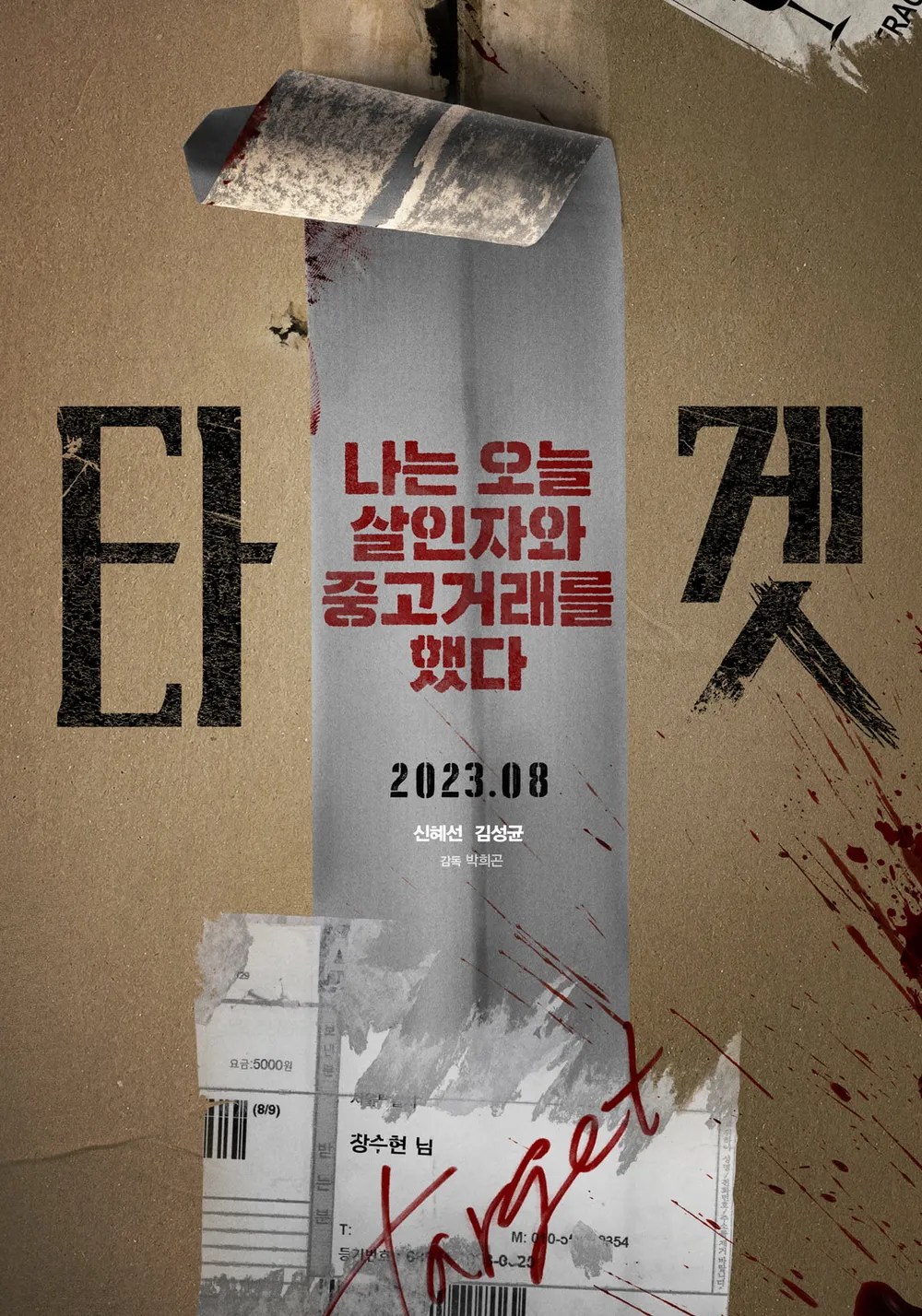
Following (그녀가 죽었다, Kim Se-hwi, 2024)

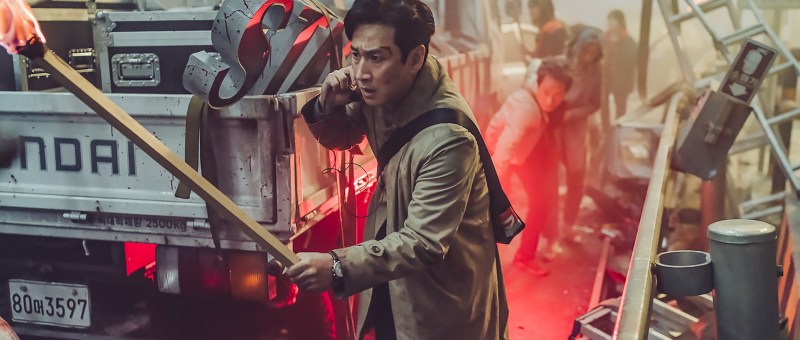
“None of this would have happened if you didn’t follow me,” the hero of Following (그녀가 죽었다, Geunyeoga jug-eossda) is told by his opposite number though he himself doesn’t see anything untoward about his voyeuristic hobby and justifies his habit of “peeping” into the lives of others on the grounds that it does no harm. Of course, he’s not very well placed to make that decision and too narcissistic to consider that while he watches someone may be watching him. 

In any case, what Jung-tae (Byun Yo-han) claims to want to see is “the real you” rather than the persona created for public consumption which is why he’s drawn to duplicitous influencer Sora (Shin Hye-sun) whom he spots simultaneously munching on a sausage and posting about eating a vegan salad. Of course, as an influencer “followers” are what most she most craves though not of the kind Jung-tae becomes nor does she want this particular kind of attention not least because it threatens the facade she’s created for herself as a “good person” posting about her altruistic deeds such as rescuing dogs and cats for which her followers send her monetary gifts and donations for various funds and charities. 

As for himself, Jung-tae thinks he remains a fairly anonymous person. As an estate agent, he projects an image of himself as being kind and trustworthy, while he runs a popular online blog under a pseudonym. He gives little of himself away and later acknowledges that part of the thrill of his voyeurism is a sense of superiority, that he is privy to privileged information about strangers that others do not have. Misusing his position, he sneaks into people’s houses and takes something insignificant as a trophy while also performing small household tasks in recompense. Perhaps it should have seemed like a red flag to him that Sora suddenly wanted to sell her apartment (on her landlord’s behalf), let alone that she didn’t make any attempt to tidy up before giving him a key, but he is so assured of himself that the possibility he has been discovered doesn’t really occur to him until he sneaks into Sora’s place and finds her dead, covered in blood on her living room sofa. Predictably, he does not call the police because he’d have to admit he let himself into her apartment when he shouldn’t have. 

Receiving a threatening letter, Jung-tae then becomes a classic wrong man in the firing line for Sora’s murder and in his mind unfairly persecuted for his “harmless” hobby. The irony is that the person who’s targeting him is doing so because they had something they did not wish others to see and fear Jung-tae may have done so which would give him power over them, while what Jung-tae wants to keep hidden is his own voyeurism. “It’s all about reputation,” he explains and his would be ruined if his clients knew he’d been misusing the keys they entrusted to him for professional purposes let alone the embarrassment of being exposed as a peeping tom even if in this case his peeping isn’t sexual but intimate on another level. 

The power dynamics between the seer and the seen are always shifting, not least because Jung-tae believed himself invisible and in fact continues to think that he is the victim as does the person targeting him. He later comes to realise that what he did was wrong and that he invaded these people’s privacy, but continues to centre himself and despite the glasses he now wears at the film’s conclusion he may not see anything any more clearly than before. What unites him with his own stalker is a sense of frustrated loneliness and longing for connection if also a kind of acceptance even if mediated through a “fake” persona to paper over the cracks in their identity. Yet ironically, even the killer’s words that none of this would have happened if he hadn’t been following them further bolsters his narcissistic sense of importance as much as it reflects the words of an abuser deflecting responsibility for their own actions. Jung-tae has met his mirror image and may not like what he sees (or perhaps does not see at all) while they equally struggle to understand why others cannot see that they are the victim. Told with a touch of humour and a degree of B-movie silliness, Kim Se-hwi’s taut psychological thriller nevertheless suggests that even as we obsess over the image we project to others and that they project to us, we remain largely blind to ourselves and all too keen to justify our actions to maintain a carefully constructed self-hood that is otherwise unlikely to stand up to scrutiny.


Following screened as part of this year’s London Korean Film Festival.

Original trailer (no subtitles)

Victory (빅토리, Park Beom-su, 2024)

At the end of Park Beom-su’s millennial coming-of-age drama Victory (빅토리) there’s a title card quoting scientific data that people perform better with encouragement. In order to get the headmaster to agree to their starting a cheerleading squad so they can use the clubroom for dance practice, the heroine comes up with a ruse that the moribund football team will play 50% better with the cheerleaders encouraging the crowd to shout their support. But of course it’s really the girls who prosper through a process of mutual encouragement and solidarity.

Set in a small town in 1999, the film’s heroines dream of becoming K-pop dancers in glamorous Seoul. Feisty Pin-sun (Lee Hye-ri) doesn’t see much of a future for herself in Geoje much to her father’s consternation and is forever asking to transfer to a high school in the capital though in truth all she wants to do is dance. The deputy-head seems to have it in for her, taking the clubroom away from them and belittling their dancing while Pil-sun and her best friend Mi-na (Park Se-wan) are older than the other kids having been forced to repeat a year after getting into a fight with a rival school at a disco. Cheerleading’s not something they had much interest in until meeting snooty new student Se-hyun (Jo Ah-ram) who’s moved to their rural backwater with her brother who has been lured their as a top scorer for the school’s football team by the football-crazy headmaster. 

The fortunes of the makeshift team are directly contrasted with the protestors at the shipyard where Pil-sun’s father works. Pil-sun’s father seems to be a man beaten down by life. He’s taken a managerial position but finds himself conflicted in the midst of a labour dispute with his bosses pressuring him to name the ringleaders of the strike so they can shut the protests down. Faced with unfair and exploitative conditions, the men are protesting for basic rights such as not being forced to work overtime  and weekends and having a right to time off. Pil-sun’s father may agree with them, but doesn’t want to risk his job and tries to placate both sides with a spinelessness that later appears cowardly to his daughter Pil-sun. Perhaps as a single-father, he’s mindful of the necessity of keeping his job but otherwise appears obsequious and willing to debase himself in the service of a quiet life. When Pil-sun is once again in trouble in school, her father drops to his knees and apologises much to Pil-sun’s embarrassment.

Yet like the shipyard workers, the girls fight in unity if in this case for cheerleading success. This is after all a synchronised sport that requires the team to act as one. Though they may not universally get on initially, interactions with the team help each to realise their special talents and give them additional confidence to dance their way into a future of their choosing. Meanwhile, they’re each faced with a millennial dread that now seems nostalgic in its references to Y2K and the end of the world. There may not be very much for them in this small town, but there is at least each other along with their burning desire to succeed. 

It’s this  infectious sense of determination that really does seem to improve the atmosphere in this gloomy environment, the protestors also joining in their routine while Pil-sun’s father eventually gains the courage to reassess his loyalties. They are each sustained by the community around them, supported and encouraged by their friends and comrades. The point is rammed home by the fact that Se-hyun’s striker brother Dong-hyun (Lee Chan-hyeong) turns out to be something of a disappointment, while goofy goalie Chi-hyung (Lee Jung-ha) proves unexpectedly reliable telling Pil-sun that he prefers to be the last line of defence rather than the pre-emptive strike as he proves by defending her when the gang is hassled by older kids from another school. With a series of knowing meta jokes (“Girls’ Generation.” “That sounds so dumb.”), Park piles on the sense of nostalgia for a perhaps more innocent turn-of-the century world but equally for the gentle days of youth as the teens dance their way through hardship and heartbreak bolstered by their unbreakable bonds and sense of hopeful determination for brighter futures that are theirs for the taking.


Victory screens Nov. 12 as part of this year’s San Diego Asian Film Festival.

Original trailer (English subtitles)

Concerning My Daughter (딸에 대하여, Lee Mi-rang, 2023)

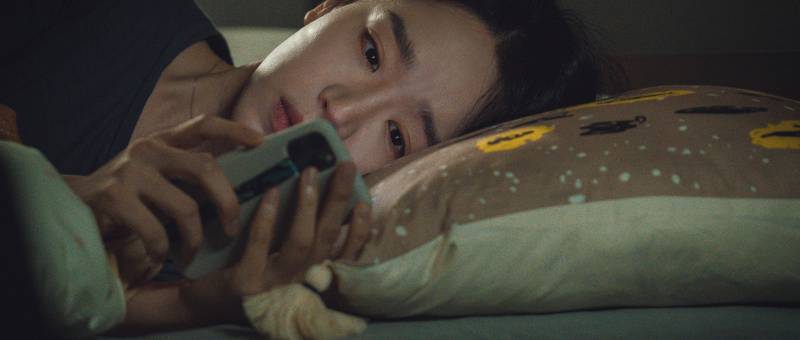
The unnamed mother (Oh Min-ae) at the centre of Lee Mi-rang’s Concerning My Daughter (딸에 대하여) has only one wish, that her daughter will find a nice man to marry and have a few grandchildren. But Green (Im Se-mi) is gay and has been in a relationship with her partner Rain (Ha Yoon-kyung) for the last seven years though her mother doesn’t seem to accept that what they have together is “real” believing it to be some kind of delusion that’s holding Green back from her happy maternal future. 

When she suggests Green move back in with her after her attempt to secure a loan to help her out with the rising cost of housing is denied, it doesn’t seem to have occurred to her that Rain would be coming too while it perhaps seemed so natural to Green that it didn’t occur to spell it out. Green can at times be obtuse and insensitive, unfair both to her mother and to Rain who bears the unpleasant atmosphere with grace and tries her best to get along with her new mother-in-law who is openly hostile towards her and makes no secret of the fact she would prefer her to leave. Of course, some of these issues may be the same were it a heterosexual relationship as the mother-in-law struggles to accept the presence of the new spouse in the family home and the changing dynamics that involves, but Green’s mother’s resentment is so acute precisely because her daughter’s partner is a woman. She cannot understand the nature of their relationship because it will produce no children and to her therefore seems pointless. 

While her attitude is in part determined by prejudice and a sense of embarrassment that her daughter is different, it’s the question of children which seems to be foremost in her mind. Another woman of a similar age at her job at a care home remarks on her maternal success having raised her daughter to become a professor, but she also says that only by leaving children and grandchildren behind you can die with honour. Green’s mother is the primary carer for an elderly lady, Mrs Lee (Heo Jin), who had no children of her own though sponsored several orphans none of whom appear to have remained in touch with her. Now ironically orphaned herself in her old age, Green’s mother is the only one who cares for her while the manager berates her for using too many resources and eventually degrades Mrs Lee’s access to care Green’s mother suspects precisely because she has no family and therefore no one to advocate for her. 

It’s this fate that she fears for her daughter, that without biological children she will become a kind of non-person whose existence is rendered meaningless. Of course, it’s also a fear that she has for herself and her tenderness towards Mrs Lee is also a salve for her own loneliness and increasing awareness of mortality. Green is her only child, and she may also fear that she will not want to look after her as she might traditionally be expected to because her life is so much more modern as exemplified by the bread and pasta the girls bring into her otherwise fairly traditional Korean-style home. On some level she is probably aware that if she continues to pressure Green to accept a traditional marriage they may end up becoming estranged and she will be in the same position as Mrs Lee, wilfully misused by a cost-cutting care industry because they know there’s no one to kick up a fuss about her standard of care.

Even so, it doesn’t seem to occur to her that Rain could care for her daughter into their old age. Resentfully asking her why they “have to” to live together, Rain patiently explains that in a society which rejects their existence, in which they are unable to marry or adopt children, togetherness is all that they have. Green is currently engaged in a battle with her institution which has fired her colleague on spurious grounds but really because of her sexuality with claims that some students are “uncomfortable” with her classes. The violence with which the women are attacked is emblematic of that they endure from their society while even colleagues interviewing her invalidate Green’s concerns because she too is “one of them,” in their prejudicial way of speaking. 

Green’s mother had also, rather oddly, said that her daughter wasn’t like that when Rain reluctantly explained her difficulties at work and again resents that she’s making waves rather than keeping her head down and getting on with her career. Her decision to jump in a car with boxes of biscuits intending to smooth things over with Green’s boss by apologising on her behalf bares out her old-fashioned attitudes, though she too is shocked by the violence directed at Green and her colleague. When her lodgers ask about Rain, she tells them she’s her daughter’s friend, while she avoids the question when her colleagues ask, still embarrassed that her daughter has not followed the conventional path as if it reflected badly on her parenting. 

Yet through her experiences with Mrs Lee and Rain’s constant, caring patience she perhaps comes to understand that her daughter won’t be alone when she’s old and that she too does not need to be so lonely now. There’s something a little a sad in the various ways Green’s mother is told that her attachment to Mrs Lee is somehow inappropriate as if taking an interest in the lives of those not related to us by blood were taboo even if it’s also sadly true that it’s also in Mrs Lee’s best interests to ask those questions to protect her from those who might not have her best interests at heart. What the film seems to say in the end is that we should all take better care of each other, something which Green’s mother too may come to realise in coming to a gradual, belated acceptance of her daughter-in-law if in part through recognising that they aren’t alone and that it’s a blessing that her daughter is loved and will be cared for until the end of her days.


Concerning My Daughter screened as part of this year’s London Korean Film Festival.

Trailer (English subtitles)

Handsome Guys (핸섬가이즈, Nam Dong-hyub, 2024)

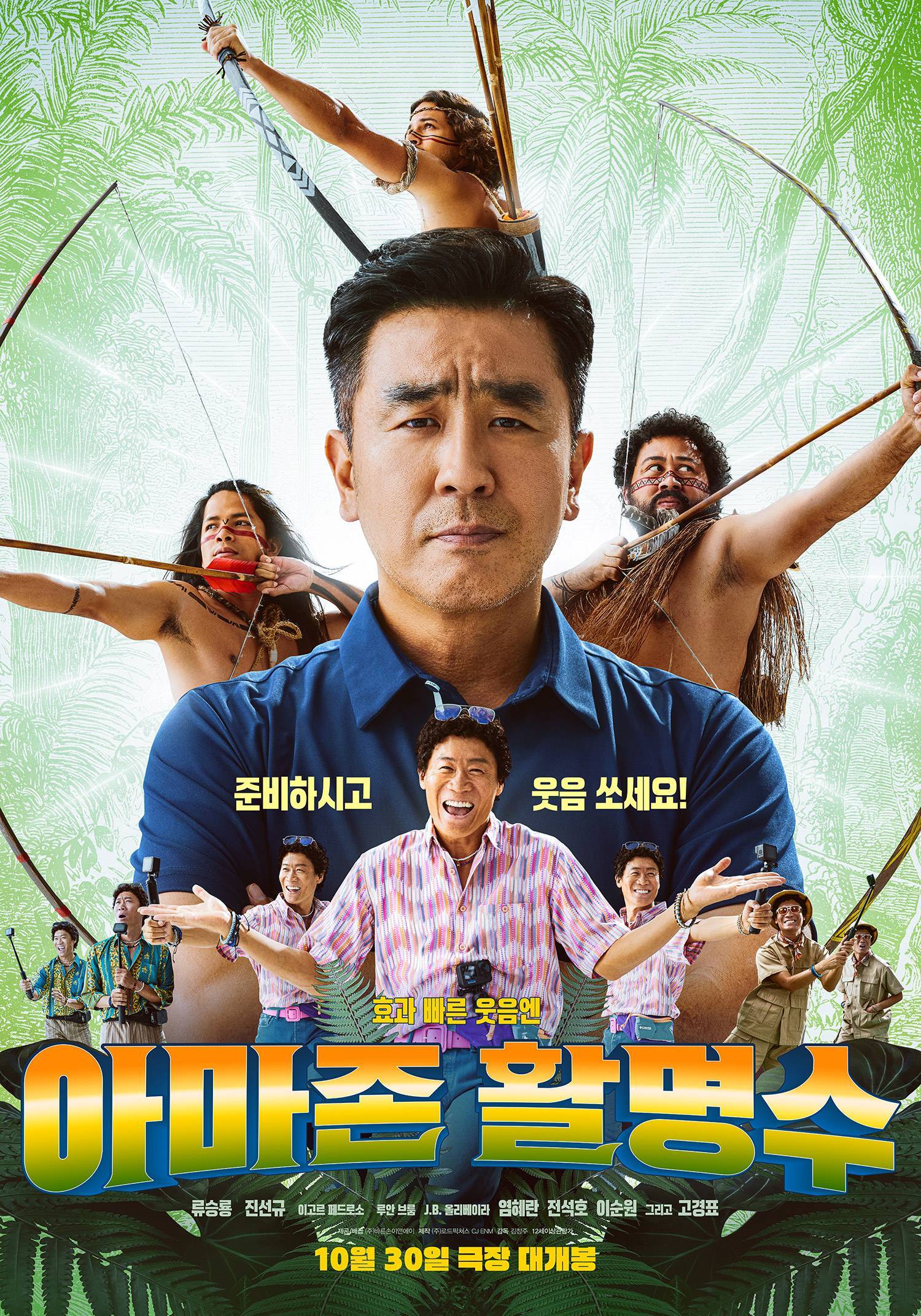
The malicious inequalities of the contemporary society are manifested in an angry goat demon who wants to burn the world in Nam Dong-Hyub’s zany horror comedy, Handsome Guys (핸섬가이즈). Adapted from the American film Tucker & Dale vs. Evil, the film plays with prejudice and superficiality along with the pernicious snobbishness of a society founded on status in which, as a would-be-exorcist later says, some have lost the ability to distinguish good from evil.

Step-brothers Sanggu (Lee Hee-joon) and Jaepil (Lee Sung-min) often suffer precisely because of this inability. They are actually nice, sweet guys who are always trying to do the right thing but somehow their behaviour always comes off as creepy giving rise to a series of misunderstandings. That might be why they’ve decided to buy a cottage in the woods in order to live a rustic life, only the house they’ve purchased is a little more rundown than the estate agent implied and was previously home to a Catholic priest which doesn’t altogether explain the goat-themed pentagram in the basement. 

Like the brothers, Mina (Gong Seung-yeon) is also a nice person as we can tell because she’s the only one of her friends who wanted to give the goat they hit with their car a proper burial while the others decide to just leave it in the road and drive off. She too thought the brothers were creepy, but is also awakening to the fact that Sungbin (Jang Dong-joo), a rising star of the golf world, is a bit of a twit who wields his privilege like a weapon and has essentially invited her on this country weekend as entertainment. He also bullies his friend/minion Byung-jo (Kang Ki-doong) whom they regard as a loser and is evidently willing to bear humiliation merely to be in the same orbit as a man like Sungbin who with his good looks, refined manners and modern manliness projects an idealised image of contemporary masculinity that is the exact opposite of the brothers. 

In many ways, he is the demonic presence of privileged youth damaging the hopes and prospects of ordinary youngsters like Mina. Believing that she has been kidnapped by the brothers, the three guys set out to “rescue” her but Sungbin doesn’t care about Mina at all and in fact only wants to retrieve his phone which contains evidence of his sordid lifestyle which would destroy his prospects of becoming a celebrity through achieving success in his golfing career. Nevertheless, they decide to attack the brothers with mostly disastrous results believing them to be nothing other than idiotic hillbillies if also depraved backwoods serial killers living an animalistic, uncivilised existence that is far too close to the land for city slickers like Sungbin. 

Once again, the brothers are plagued by a series of bizarre misunderstandings based on the perception of their “ugliness” which aligns them with “evil” and demands they be exiled from a society that equates physical “beauty” with moral goodness. To that extent, having been rescued from falling in a pond, Mina becomes a kind of Snow White ensconced in the home of the brothers and coming to understand that they are actually nice, if a bit strange, and merely have difficulty expressing themselves while their down-to-earth homeliness only seems suspicious to those who are a little less honest with emotions.

Their niceness, however, seems to be perfectly primed to face off against the Goat Demon as they become determined to protect their homestead from the likes of Sungbin who has only contempt for them and thinks they’re merely fodder for his heroic fantasy of retrieving his phone and proving his manliness at the same time. In essence, it’s Sungbin who embodies the ugliness of the contemporary society with its hypocrisy and superficiality, its casual misogyny and petty prejudice, while the brothers later vindicated as angelic presences of altruistic goodness. Slapstick humour mingles with a sense of malevolence and an inescapable cosmic irony that plagues the brother’s with misunderstandings and has kept them isolated, “handsome guys” too beautiful for a profane world and attempting to find refuge in their remote homestead and homoerotic relationship but eventually discovering unexpected solidarity with the equally exiled Mina as she delivers a silver bullet to privilege and patriarchy, sending ancient evil back to whence it came.


Handsome Guys screened as part of this year’s London Korean Film Festival.

International trailer (English subtitles)
Remember (리멤버, Lee Il-hyung, 2022)

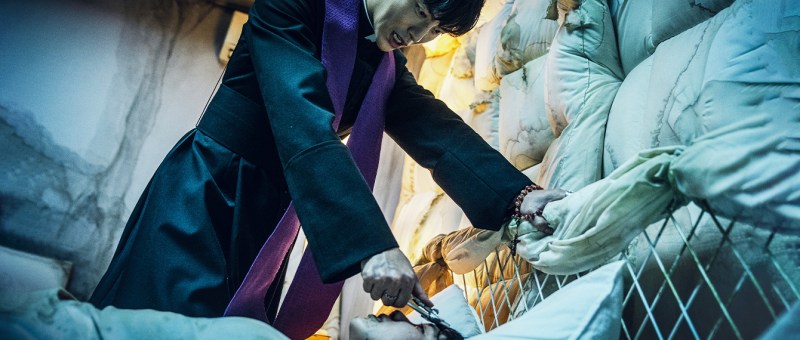
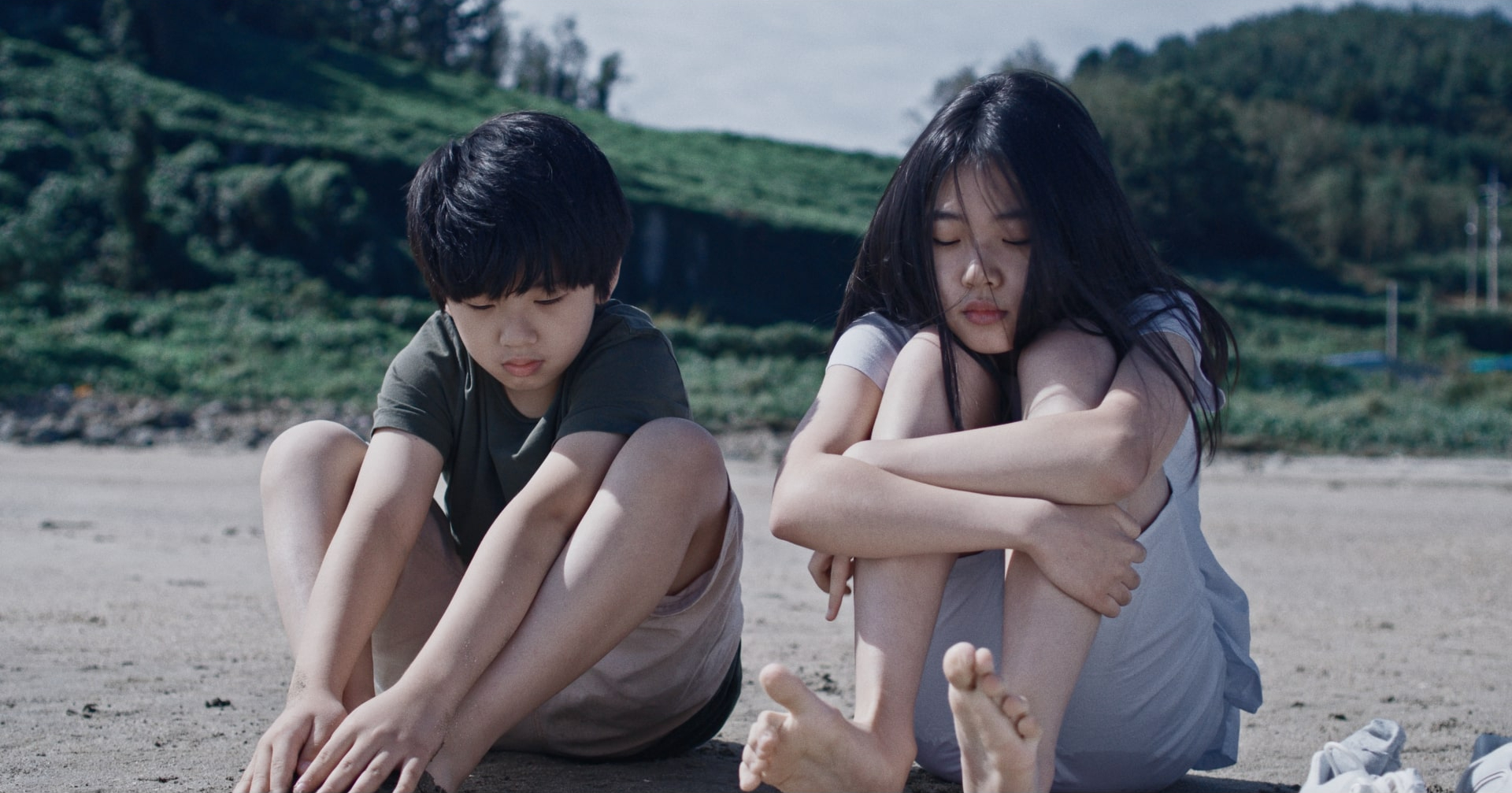
An elderly man suffering with a brain tumour and advanced dementia is determined to expose the abuses of the colonial past all too easily forgotten by the contemporary society in Lee Il-hyung’s remake of the 2015 Atom Egoyan film of the same name, Remember (리멤버). The film’s title works on multiple levels, firstly in the mind of the hero who both wants to remember and doesn’t as he feels his mind slipping away, and then in the minds of the men he seeks asking them both to remember the man who’s come calling with vengeance on his mind and who it is they really are. 

As in many other similarly themed films of recent times, Pli-ju’s (Lee Sung-min) main problem is that those who chose to collaborate with the Japanese during the colonial era and directly contributed to the deaths of all his family members have largely gone on to extremely successful careers at the heart of the establishment. Ironically enough, right-wing Korean nationalist ideology is largely pro-Japan and the legacy of Japanese militarism was a key component in the post-war military dictatorships of Park Chung-hee and Chun Doo-Hwan. To that extent, Pil-ju is the inspector that calls visiting each of the men who caused the deaths of his father, brother, and sister in turn while exposing a series of colonial abuses. One of the men he visits is a working professor who teaches that Japanese colonial rule was actually beneficial in that it helped “modernise” the society though building infrastructure such as roads and railways without really considering that they were largely built with forced labour. 

This casual disregard for human life has continued into the present day with the general Pil-ju targets, Chi-deok (Park Geun-hyung), also the head of the company, in which the Japanese effectively have a controlling share, responsible for a workplace accident that injured the father of Pil-ju’s getaway driver In-gyu (Nam Joo-hyuk) and refused to compensate him. Chi-deok, a hero of the Korean War, even makes a rousing speech instructing the audience that they must remember those who fell in defence of democracy which is a little rich seeing as his values are anything but democratic. Chi-deok also tries to justify himself to the police officer investigating the murder of the first man Pil-ju knocked off that those days were just about survival and that “Korea” no longer existed so all he could do to save it was to become Japanese. But like many of the other men, such as the professor who tricked Pil-ju’s brother into forced labour in a mine where he eventually died, he did so for personal advancement wilfully selling out his fellow countrymen throwing those who refused to change their names or continued to speak Korean in jail while sending off their sisters to become comfort women for the Japanese army. 

The first man that Pil-ju killed tortured his father to death on a trumped up charge so he could steal his land. It’s not even ideology, it’s just greed and oppression. Everyone keeps telling him that no one cares about this kind of thing anymore, but conservative politicians nevertheless continue to weaponise it suggesting that anything is permissible in the battle against communism while imperialism is therefore a lesser evil. Pil-ju’s dementia is a metaphor for the literal erasure of history and the simple act of forgetting, the process by which many of these men have been able to rewrite their pasts to justify their actions. Yet it’s also true that there are things Pil-ju too does not want to remember and actively denies until finally forced to reckon with himself, with his complicity, guilt, and regret that he was as Chi-deok puts it not all that different as a man who survived those times when so many did not. Shot through with a gentle humour, Lee’s admittedly unsubtle drama (a Japanese soldier named Tojo literally says he’s going end the pacifist constitution so Japan can start wars whenever it feels like it) is also a gentle tale of intergenerational bonding as Pil-ju comes to develop a paternal affection for his workplace buddy In-gyu that suggests the past is only exorcised when spoken and passed down to new generations free of justifications or omissions and most importantly remembered as it was by those who really lived it.


Original trailer (no subtitles)

The Hut (피막, Lee Doo-yong, 1981)

We’re told that the titular hut in Lee Doo-yong’s 1981 shamanism drama (피막, Pimak) is a like a stopping place between this world and the other. Babies are born there, but more usually it’s a place where the dying are sent to expire. Located in a more literal liminal space on the outskirts of the village, it presents a borderline that keeps the villagers safe from the taboo of death. They say the souls of those who die there cannot return to haunt the village, which is to say the village is a place free of death and also of the grudges of the past.

That is, however, not quite true. During the colonial era, the heir to noble house, Seongmin, has fallen ill and is likely to die but is being cared for at home by his desperate family who have invited shamans from all over the county in an attempt to cure him. This has obviously annoyed the village’s resident shamaness who is forever telling them they’ve made things much worse for themselves by sidelining her and shunning the local goddess, but the cause of the boy’s illness is quickly rooted out by Okhwa (Yu Ji-in), a powerful shamaness who leads the family to a buried vase in the woods which has been broken allowing the trapped should of Samdol (Nam Koong-won), the former keeper of the hut, to escape.

The Old Madam (Hwang Jung-seun) immediately admits that she was the one who put him in there, though she did not know where the vase was buried. The Gang family has a curse on it which results in many of their sons dying young before they could father sons of their own and leaving behind young widows which are perennial problem in the rigidly Confucianist, patriarchal society that some may argue continues into the present day but is certainly in the ascendent in the 1920s and 30s. As in many films of this kind, managing the sexual desires of young women, which are acknowledged as normal and natural, under such an oppressive system presents a key challenge to the social order. Given the taboo against second marriages, the family’s large collection of widowed daughters are seen resort to acts of self-harm in order to quell their desires in the absence of men. When the second daughter-in-law falls ill after stabbing herself in the thigh with a silver dagger, the Old Madam is sympathetic but believing she cannot be saved sends her to the hut to die. But before she does, the Old Madam also orders Samdol to sleep with her on pain of death so that she won’t pass into the afterlife with her needs unmet. The Old Madam is after all a widow herself, if an older one, and understands the frustration and desperation the younger woman feels. 

But the decision she makes breaks another taboo for as he points out himself, Samdol is the lowest of the low, a commoner who deals with the dead. Not only is the sex itself non-consensual, but threatens the social order in its transgressive qualities, crossing a class divide while also occurring outside of a marriage. Of course, it takes place in the liminal space of the hut where such borders meet. Described as quiet, honest, and reliable, Samdol is a kind man who also patiently nurtures the daughter-in-law back to health with medical herbs from his garden and eventually reveals to her what he was forced to do by the Old Madam but the two later fall in love and conceive a child which of course means they must both die in order to preserve the social order. 

Okhwa arrives as a kind of inspector exposing the poisonous past of Gang family which after all probably did do something untoward in order to become prosperous which is why there’s a curse on it. We get the impression that she may have ulterior motives and almost certainly knows more than she’s letting on while otherwise looking for information. She is not in fact a shaman, though her mother was and a fairly legendary figure at that, but later becomes one and with it a kind of avenger mainly for women who suffer under this system but also for men like Samdol abused by the feudal class order and forever at its mercy. The shamaness is also of course a liminal figure who lives outside of conventional society which views her with suspicion as a woman with both power and independence.

But even Okwha is subject to the unwanted attentions of men who despite their insistence on a woman’s chastity believe themselves entitled to her body, not only the head of the Gang family (who is actually elderly and presumably survived the curse), but men in Western dress who snatch and rape her. Thus the hut also exists at the nexus of tradition and a seemingly destructive modernity ushered in by Japanese imperialism. After recovering from his illness following Okhwa’s guk exorcism, Seongmin insists he just got better on his own and there’s no such thing as ghosts. We’re told he studied abroad in Tokyo and in fact dresses in a Japanese-style student’s uniform complete with cape. He tells his mother that they’re making scientific advances in Japan and that it’s ridiculous to think a ghost could have killed the Old Madam and the head of the family who died in odd circumstances during the guk along with his uncle in Western dress who had raped Okhwa. He proves to her scientifically that someone could have merely set traps for each of them and points the finger at Okhwa as a likely murderess rather than a gifted spirit medium.

Perhaps we more “rational”, modern people might agree with him but the film seems certain that there are indeed vengeful spirits haunting the landscape, those who fell victim to the hut mentality and were deliberately cast out and left to die by their society who effectively exiled them in their death. Okhwa can’t exorcise the evil ghosts of patriarchy, classism, feudalism, or sexual repression but she can perhaps in part symbolically end their tyranny by dissolving the border and burning the whole thing down. 


Escape (탈주, Lee Jong-pil, 2024)

Lee Jong-pil’s existential action drama Escape (탈주, Talju) opens with scenes of a man running. He runs his way through the rest of the film, continually on the move and chasing a dream of freedom outside of the oppressive society in which he is otherwise trapped. The man who chases him, meanwhile, is himself running away. His movements are slow, calculated, and cold but also somehow tender and almost it seems an act of self harm. 

The fact that the oppressive regime is North Korea is almost irrelevant and the film is less about Communism than it is lack of autonomy that may be found in any other democratic or developed nation in which people are driven to erase a part of themselves in order to fit in or to prosper amid rigidly defined social codes. Nevertheless, there is a direct criticism of the Democratic People’s Republic in the ironic signage, a car ploughing straight through a sign that reads “for freedom and happiness of people”. But then, even if deserter Kyu-nam (Lee Je-hoon) finds happiness in the South we can’t be sure it’s really any better. The welcome message blasted through loudspeakers over the wall that marks the border doesn’t sound all that different from the propaganda messages on Kyu-nam’s radio, while the deserter’s phone positioned to appeal to men like him appears to be out of order. 

But to Kyu-nam, “the South” is only really an idea and it’s clear he intends to transcend those borders too, venturing on to the wider world and wherever it pleases him to go. What he rails against is fate, that his life is dictated by forces outside of his control or more accurately by Field Officer Hyun-sang (Koo Kyo-hwan) from State Security who takes him under his wing and tries to make something of him as a loyal soldier of the North. What becomes clear is that Hyun-sang is a man who fears freedom and that the presence of a man like Kyu-nam is a threat to him because he awakens his own deeply buried desire for liberation. 

From the longing looks he directs at a man with whom he studied abroad in Russia we infer that Hyun-sang is gay and the suppression of his authentic self in order to keep himself safe in a repressive culture has made him cruel and vindictive. Unfortunately, this presumably unintentionally plays into a homophobic trope which aligns queerness with sadistic villainy, but does nevertheless lend a kind of poignancy to Hyun-sang’s otherwise vindictive quest to prevent Kyu-nam’s escape precisely because he himself desires to be free but is too afraid to free himself. From a wealthy and prominent family and with an important position within the regime, this system otherwise works out well for Hyun-sang but he is also imprisoned by it and will forever be prevented from becoming his authentic self or gaining what he truly wants so long as he remains within North Korea. 

A homoerotic charge exists between the two men though what Hyun-sang may really be chasing is himself and half-hoping he’ll be caught. Kyu-nam meanwhile has a single-minded desire for autonomy and individuality, to live and die on his own terms rather than live with no right or power to decide his future. There are those who’ve found other ways to reject the system, a group of mostly female nomads seeking a new place to belong after being kicked out of their village but seemingly with no intention of leaving the country, but for Kyu-nam there is no freedom inside the walls and his determination to find it is what makes him so dangerous to Hyun-sang for whom the very idea of freedom is so painful he’s sublimated himself entirely into an oppressive regime.

With pulsing synth scores, Lee keeps the tension high as Kyu-nam runs and runs through minefields and bullets while pursued by the full force of the North Korean army and the steely Hyun-sang who always seems to be one step ahead. His passage takes on an existential quality, risking death rather than continue to live a “meaningless life” in which he has no power to decide his own fate. His escape is finally self-liberation, taking the decision to free himself because no one else is going to, while Hyun-sang remains a prisoner too afraid of freedom to actively pursue it though perhaps tempted by his encounter with Kyun-nam, a man free in his mind if nowhere else.


Escape screened as part of this year’s London East Asia Film Festival.

US trailer (English subtitles)
A Water Mill (물레방아, Lee Man-hee, 1966)

It’s not every day you wander into your own funeral. Or to be more precise, the death rite that Bong-won (Shin Young-kyun) unwittingly intrudes on in Lee Man-Hee’s feudal era fable A Water Mill (물레방아, Mullebanga) is for someone who died in a time no can remember. The old lady who explains it to him says that it happened long before she was born, implying at least the villagers have been enacting this ritual since time immemorial yet it’s almost as if Bong-won were walking towards a point of origin, drawn inexorably by forces beyond his control to play his part in this immortal ritual dance.

To that extent, Bong-won becomes a kind of “everyman” in this cautionary tale by virtue of the fact that he is nameless. Asked for his surname, he says he isn’t sure. It might be Kim or Park, later someone else says Lee which fills out the triumvirate of Korea’s most common family names. He says at one point that he doesn’t remember his mother, but thinks that she may have been a sex worker and his father a man who didn’t pay. But the fact he has no last name places him firmly at the bottom of the feudal hierarchy and most at the mercy of its hypocrisies and contradictions. He was on his way somewhere else when he fatefully found a sock floating the river that seems to flow towards him from his own future but that he will later gift perhaps to its original owner, the mysterious Geum-boon (Ko Eun-ah) with whom he falls in a deep, obsessive love that takes over the whole of his life.

Others in the village tell him that there is no such woman. An old man assures him she must have been some kind of ghost or supernatural creature come to trick him and Geum-boon does indeed take on a kind of eeriness. After deciding to stay in the village and look for her, Bong-won catches sight of Geum-boon in a forest glade bathing naked in a pool as the bright summer sun beats down on her but when he eventually makes his way down the mountain she has already disappeared. In chasing Geum-boon, he chases death but most evidently in the ways his obsession with her causes him to contravene the feudal order. He rebels against the landlord he was working for in refusing to collect her debt, then contracts himself to another in order to pay it so that he might marry her.

But ghost or not, Geum-boon is herself constrained by feudalism’s aggressive patriarchy. Force married to an invalid, she cared for him for three years until his death and then is pressed for his debts by the local landlord who wields them against her in order to claim her body. Married to Bong-won who has become an indentured servant, she is once again pursued by a landlord insistent on his droit du seigneur who exiles Bong-won to the pottery fields to get him out of the way. Geum-boon’s ambivalence does seem to give her a sometimes demonic quality as she laughs in the face of the landlord like something possessed and though she at first seems to like Bong-won and fear the attentions of the landlord she is also intrigued by the frankness of his current mistress who sees in her relationship with him the possibilities of transgressing class boundaries not to mention escaping a dull husband who will never be anything other than a servant. 

The film seems to suggest that Bong-won is powerless, while Geum-boon does at least have some power to wield. Even the landlord tells her that he has nothing to offer other than his money and power and even if becoming lady of the manor is a little far-fetched it seems unreasonable to criticise her if she did decide to become the landlord’s mistress as the path towards overcoming her circumstances lies in trading her body for influence. One could argue Bong-won does the same in leveraging his strength and his labour, but all it buys him is further exploitation and the eventual humiliation of knowing the landlord has been sleeping with his wife. 

Feudalism therefore destroys natural human emotions such as love when all life is transactional in a constant, and largely futile, struggle for survival. Bong-won turns to the spiritual realm for help, asking a shaman how he can win back his wife but she gives him the rather bizarre instructions to steal three sets of underwear and throw them in the river on 3rd August while bowing to the west. Needless to say, that doesn’t work out very well for him. The fates truly do seem to be against Bong-won. Lee adds a touch of supernatural dread as Bong-won finds himself surrounded by howling winds as he fatefully makes his way towards the water mill and his destiny. The ritual dance is perfectly recreated as Bong-won and Geum-boon retake their roles in the play, their actions matching those of the masked players as Bong-won collapses on the bridge just as the demon had though there is no positive resolution in what is now both reality and fable. What we’re left with is the tragedy of feudalism, but also the maddening futility of obsessive desire for that which is and has always been ever so slightly out of reach.


General’s Son 3 (將軍의 아들 3 / 장군의 아들 3, Im Kwon-taek, 1992)

The third and final instalment in the General’s Son trilogy picks up some time after the events of the previous film, not with Doo-han (Park Sang-min) being released from prison but emerging from hiding. After his showdown with Kunimoto, he’d been lying low in a temple but is now on the run, heroically jumping off a train to avoid the police and thereafter making his way to Wonsan and seeking asylum with an affiliated gang. By this time, Doo-han’s role as the son of a legendary general who was murdered by communist traitors while fighting bravely for independence seems to have been forgotten as he wanders around trying to evade the colonial net. 

In Wonsan, he immediately starts causing trouble by objecting to gang leader Shirai’s treatment of an aspiring singer, Eun-sil (Oh Yeon-soo), whom he has more or less imprisoned until she agrees to sleep with him. Doo-han helps her to escape and encourages her to continue pursuing her dreams of stardom, but motions toward romance create an ongoing instability which indirectly echoes throughout the rest of the film as he tries to balance his desire for Eun-sil with the ongoing battle for Jongno and resistance against the Japanese. 

For her part, Eun-sil falls for Doo-han as the man who saved her from Shirai and restored her freedom but still finds herself at the mercy of the Japanese as otherwise sympathetic lieutenant Gondo (Dokgo Young-jae) takes a liking to her after being struck by her singing talent which he apparently did not expect seeing as she is a mere Korean. Later Gondo and Doo-han become accidental rivals when Eun-sil is arrested because of her associations with Doo-han and they have to work together to get her out. Gondo is fiercely critical of their relationship, not only out of romantic jealously but because he finds the Korean approach to romance vulgar. Despite her later agency which sees her primed to reject both men in order to pursue her career, Eun-sil is also a mere device to emphasise Doo-han’s virility as the entire neighbourhood is kept awake by her moans of ecstasy even after Doo-han has been badly injured in a fight, is covered in bandages, and has been told he will need to stay in bed for the next month to recover. 

Gondo meanwhile, in a slightly symbolic gesture, tries to force Eun-sil to marry him by laying his sword on the table and making it plain that if she refuses he will kill her and then himself. Perhaps in a more romantic tale, he might have threatened Doo-han and asked her to make a sacrifice, but in any case Doo-han tries something much the same on hearing the news, having a kitchen knife brought to him and thrusting it into the table. Eun-sil merely seems amused, or perhaps worryingly pleased at open show of romantic jealousy as proof of love, knowing that it is quite unlikely Doo-han is actually going to hurt her (the same cannot be said for Gondo). He still however tries to command her to stay and marry him, refusing to let her leave because she is “his”, but in the end of course it’s bluster and if she chooses to leave he cannot stop her because he is not a man like Shirai or Gondo who would willingly restrict another’s freedom. He is still “fighting for our liberty” after all. 

Meanwhile, he undergoes a parallel “romance” with Dong-hae (Lee Il-jae) who left alone for Manchuria after renouncing the gangster life but has apparently left the Independence Movement because it was too socialist when what he seems to want is individual capitalist prosperity which is why he’s got mixed up in the opium trade. Still on the run, Doo-han seeks out Double Blade, the street thug mentor who brought him into the gang all those years ago. Unfortunately he makes a lot of trouble for Double Blade in annoying one of his underlings who runs a local Chinese gang and then starting a turf war after getting himself into trouble with the bandits who run the drugs trade. He and Dong-hae are eventually separated in the escape from the bandits but reunite when Hayashi (Shin Hyun-joon), who is still nominally running the yakuza but has delegated Jongno to his sadistic brother-in-law Uda, tries to use him in a plot to take out Doo-han once and for all. 

Throughout the series, Doo-han has been a mythic, comic book-style hero who is respected for the integrity of his fists, refusing to use weapons and leaving his opponents beaten but breathing so that they can verbally concede the victory. The previous film had seen him enact a more serious kind of violence, but even so his rival apparently survived only permanently changed. His final confrontation with Hayashi, by contrast, sees him kill for the first time by picking up a blade and then a gun. Nevertheless, he is perhaps the General’s Son after all. According to his gang members, scattered after he left, he is the only force with can keep Jongno free, without him they fell apart and let the Japanese take their streets from them. The final instalment in Doo-han’s story ends on a moment of tempered victory which avenges his gangster honour but places him firmly in the arms of his brother Dong-hae as they temporarily retreat from the battlefield towards an increasingly unstable future.