Ransomed (비공식작전, Kim Seong-hun, 2023)

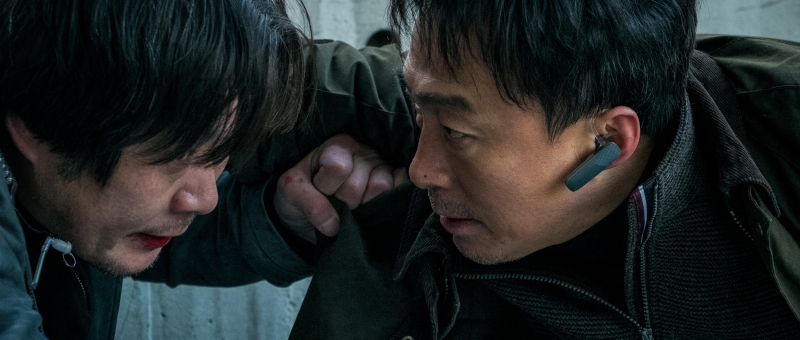
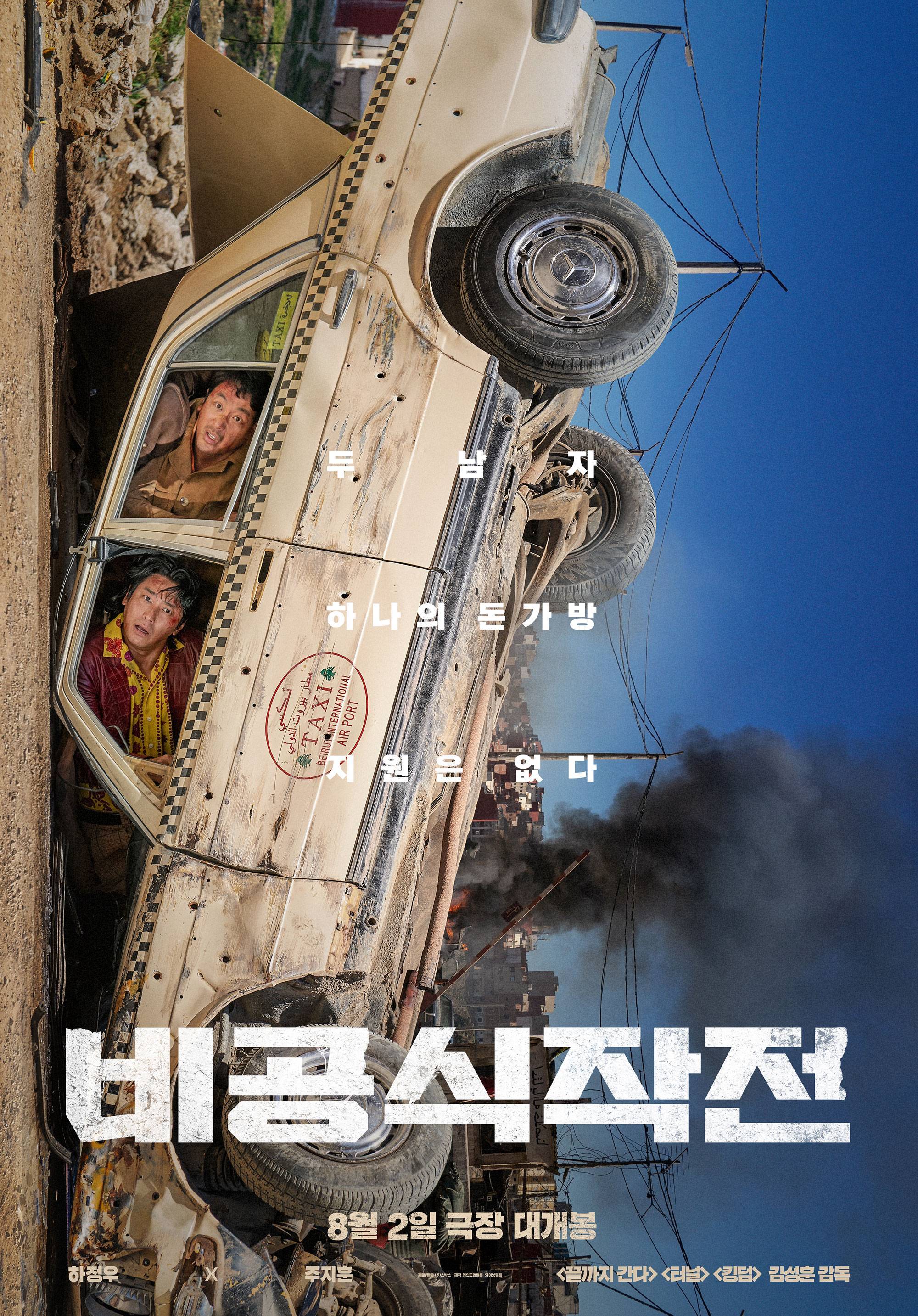
A jaded diplomat finds himself caught between competing factions both at home and abroad while trying to rescue a kidnapped colleague in Kim Seong-hun’s action dramedy, Ransomed (비공식작전, Bigongsigjagjeon). Inspired by true events, the film ironically echoes the recent Chinese hit Home Coming which was itself at least incredibly indebted to Escape from Mogadishu in praising the efforts of a civil servant who braved a war zone to rescue a stranded colleague but received little support from his conflicted government.

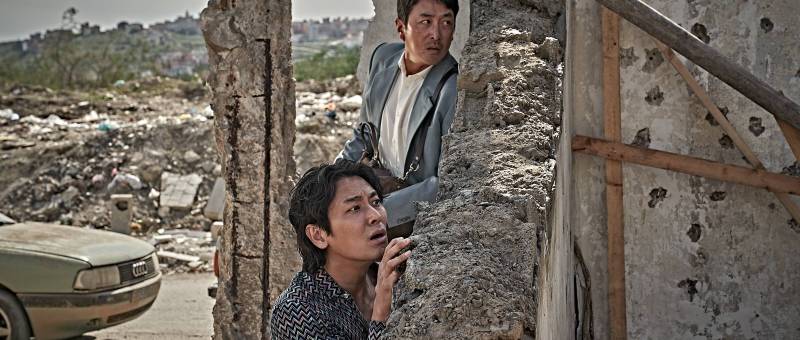
During the time the film takes place, Korea is caught in a moment of transition technically still under the military dictatorship of Chun Doo-hwan but with the first democratic elections already scheduled and the 1988 Olympics in the offing. Diplomat Oh Jae-seok (Lim Hyung-guk) is kidnapped in during the civil war in Beirut in 1986 and believed dead after efforts to retrieve him fail. Nearly two years later, jaded Foreign Office Middle East specialist Lee Min-jun (Ha Jung-woo) picks up a call and hears a message in morse code including a special diplomatic password and the claim the that it comes from Jae-seok who is alive and requesting rescue. The problem is that both the Foreign Office and the KCIA are on the fence about taking action, each wanting the glory of bringing Jae-seok home but fearful of being professionally embarrassed if it turns out that the call is a hoax and they pay a ransom for a man who’s already dead. 

Min-jun finds himself caught between the two while essentially forced to set up a secret covert operation through former US CIA officer Carter (Burn Gorman) and a wealthy Swiss businessman with connections in Lebanon. The irony is that both he and Pan-su (Ju Ji-hoon), a Korean taxi driver he inexplicably runs into in Beirut, only want to go to the US, Min-jun desperate for a more prestigious positing to advance his diplomatic career while Pan-su, technically undocumented, seeks a better life in a more stable environment. As such, Min-jun’s motivations for rescuing Jae-seok are only partly a sense of responsibility as a fellow diplomat and the man who took the call that Jae-sook was alive, hoping to prove himself to his superiors only agreeing to the job on the promise of a transfer to a major US city resentful of having been passed over for a position in London in favour of an elite graduate of Seoul University. 

The irony is that once in Beirut he’s faced with a further series of kidnap threats, another random militia hot on Min-jun’s trail hoping to capture at least one Korean in the hope of a major payout though Min-jun’s problem is that the government only agrees to send more money after each step has been completed endangering the efficacy of the rescue mission while leaving him at the mercy of the militia leader the government has secretly and perhaps questionably agreed to pay to broker the negotiations to secure Jae-seok’s release and passage out of the country. Caught between competing militias in Beirut, Min-jun is also a victim of the push and pull between the waning influence of the KCIA and the Foreign Office with his fate decided largely by political infighting while in the end it’s his colleagues who eventually take a stand each chipping in three months’ salary to fund his rescue out of a sense of solidarity in the reflection that their job is only really possible given their government’s assurance of protection when they undertake dangerous work overseas for the national good. 

As expected, Min-jun soon rediscovers his sense of duty as does shady taxi driver Pan-su though more thanks to the shaming of his Lebanese girlfriend who points out that it’s not a good look to run off with millions of dollars intended to save to save a man’s life. Despite the constant precarity of the situation, what arises is an awkward brotherhood between the two men brokered by an uneasy trust and genuine fellow feeling as they try to rescue Jae-seok while evading the militia trying to kidnap them along with the wider civil war. Undercutting the seriousness of the situation with a healthy dose of irony and black humour, Kim lends his otherwise grim tale of citizenry held hostage by a bureaucracy in flux a degree of positivity if only in proving the power of the individual over a dysfunctional system. 


International trailer (English subtitles)
Iron Mask (만분의 일초, Kim Sung-hwan, 2023)

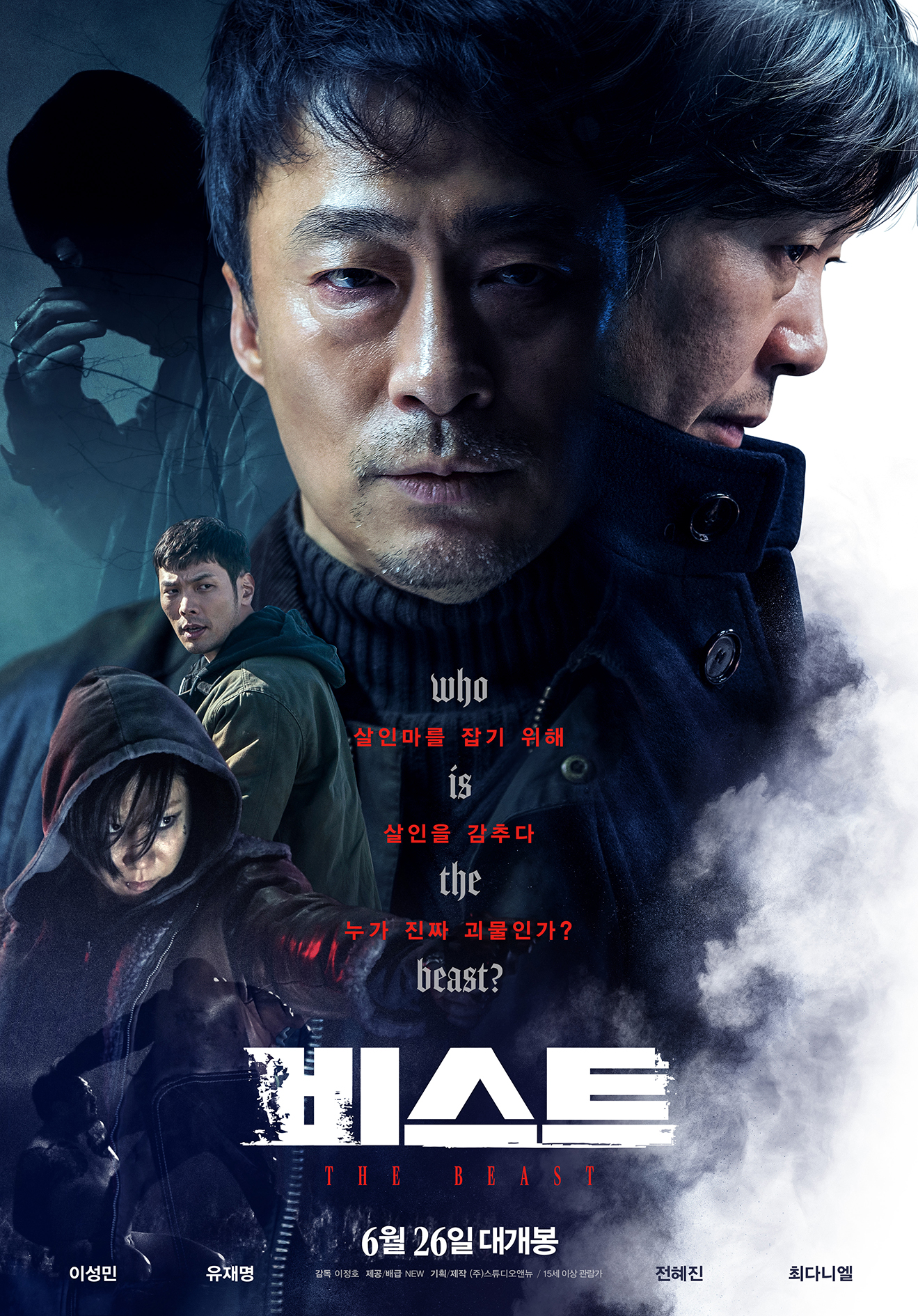
A young man seeking revenge sets his eyes on kendo glory in Kim Sung-hwan’s sporting drama Iron Mask (만분의 일초, Manbun-ui Ilcho). As his coach reminds him, a swordsman’s only opponent is himself though he continues to fixate on the man he blames for the destruction of his family still as an adult seeking reparation for the paternal influence he feels was stolen from him and the right to a legacy he feels to be rightfully his.

That might be one reason Jae-woo (Joo Jong-hyuk) is sometimes taken to task for his “entitlement” while some of the other students attending this training camp in the hope of making it onto the national team think he shouldn’t even be here seeing as he only came second in a regional competition when the others are veteran champions. But then as it turns out, Jae-woo has an ulterior motive for his participation. He is obsessed with number one challenger Tae-su (Moon Jin-seung) but for reasons outside of the sport, apparently hellbent on taking his revenge through kendo though it isn’t particularly clear what he hopes to achieve by it save personal vindication.

Kim pays particular attention to the peculiar rituals of the sport, a sense of rigorous order in the folding of the bandannas and tightening of the strings that fix the mask to the swordsman’s face while it’s clear that Jae-woo’s weakness is his emotional volatility. Though he manages to strike an impressive blow against Tae-su on the first day, his game then declines largely thanks to a hand tremor partly caused by a blow from Tae-su but also a manifestation of his jangling nerves.

He resents Tae-su on a personal level, irritated when he hears him talking on the phone to his wife about parenting their young daughter outraged that this man who he holds responsible for the implosion of his family has a family of his own while Jae-woo appears to have nothing other than his rage and resentment. He cannot forgive his estrangement from his kendo master father or that he chose to train another boy and not him, though perhaps that was simply his father’s way of coping with an impossible situation in the hope of making something good out of a personal tragedy. As another kendo master later tells him, as his father once did Jae-woo will have to find his own answers if he is to find success in kendo and indeed in life.

Still he struggles with fatherly relationships, first bonding with an older man who has two sons of his own and tries to impart paternal wisdom and comfort to the volatile Jae-woo but later accidentally injuring him during a sparring match when his temper gets the better of him. The only way he can free himself, is by moving past his image of his father to become his own man and also claim his own kendo rather than being resentful of that which was not bequeathed to him but to Tae-su for whom kendo is also a means of atonement and honouring of a paternal legacy.

Kim lends the battle a quasi-mythical quality, shooting a realm of eye-shaped mist as Jae-woo confronts Tae-su in his mind seeing only clashing swords and shadows while still unable to recognise that the man he is in competition with is only himself, his resentment and hurt in his abandonment, still a lonely little boy failing to become a man while Tae-su at least seemingly has been able to move on and make something of himself. Only by calming his nerves can he begin to perfect his art, taking the advice given to him by the team’s video replay expert seriously and apologising for his petulant behaviour. 

In essence, he has to escape from the “iron mask” of his repressed emotion and deal seriously with the traumatic past in order to progress to adulthood and also assume his rightful place on the kendo board. A psychological sports thriller, Kim lends a noirish touch to Jae-woo’s dark obsession even as it continues to consume him but finally implies the implosion of his rage through a dissolve transitioning to the falling snow as he now in white allows his resentment to melt away in favour of a more balanced hope for a peaceful future.


Iron Mask screened as part of this year’s London East Asia Film Festival.

Original trailer (Korean subtitles only)

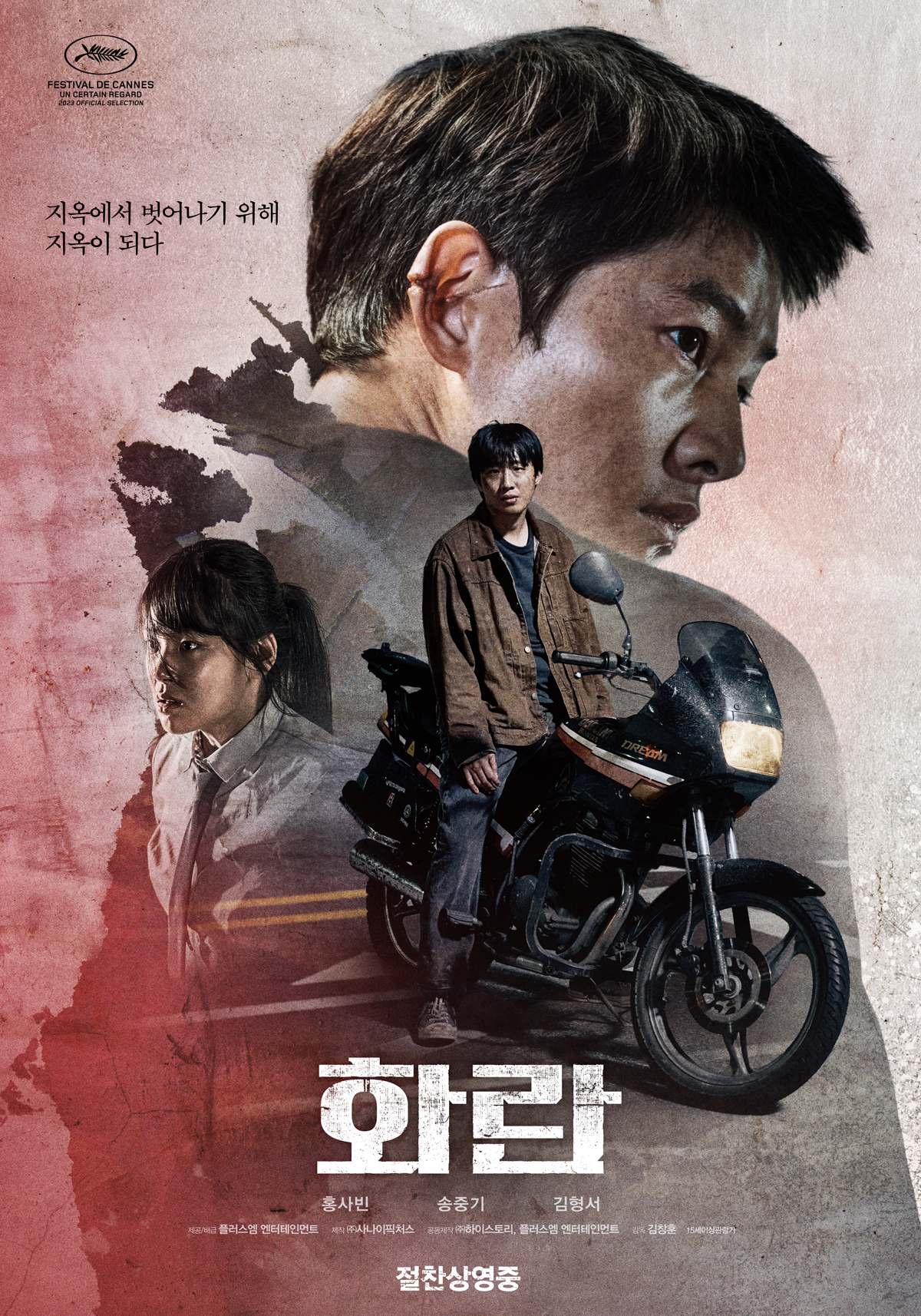
Hopeless (화란, Kim Chang-hoon, 2023)

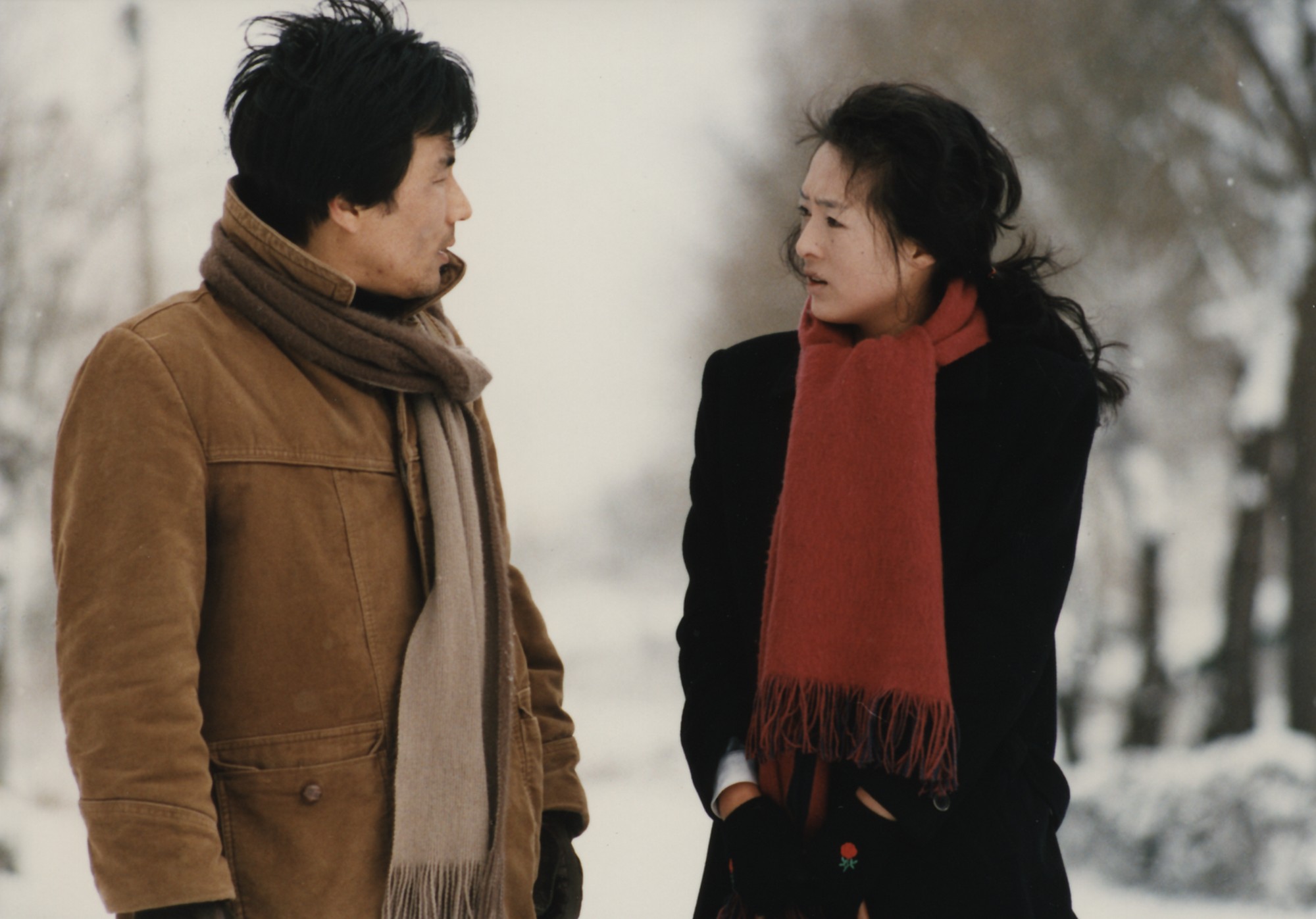
“Why is everyone out to get him?” the stepsister of the hero asks, wondering why it is that everything in his life seems to go wrong. As its name suggests, Kim Chang-hoon’s Hopeless (화란, Hwaran) take places in a city of despair in which lives are largely defined by violence and money while a young man dreaming of a utopian future in Holland is dragged even further towards an abyss of crime and immorality.

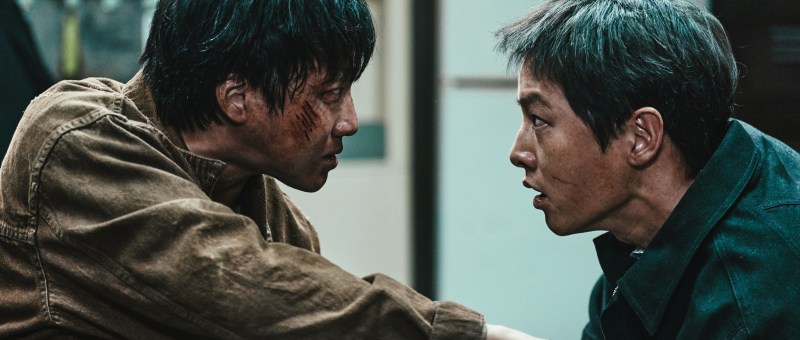
As the film opens, a school boy picks up a rock and hits another on the head. The boy, Yeon-gyu (Hong Xa-bin) goes on to explain that he couldn’t let it go as they live together, hinting at a possible slight against his step-sister Hayan (Bibi) that he avenged more out of a code of masculinity than a genuine desire to protect her. Then again, Yeon-gyun often masks his true feelings and struggles to express himself in any other language than violence. At home, Hayan is his protector against her father, a violent and embittered drunk who makes Yeon-gyun’s life an unending hell. 

Attacking his classmates gets them to leave Hayan alone, but also to double down attacking him while he’s also liable to pay a large settlement his family can’t afford. Yeon-gyu is gifted the money unexpectedly by sympathetic gangster Chi-geon (Song Joong-ki), but his life is upended once again once again when his step-father leaves him with a nasty scar around his eye. The boss at his part-time job fires him because of it and no one else will hire him leading him straight to the gang to ask for a job. 

Yet Yeon-gyu continues to dream of escape to peaceful Holland, looking at sunny scenes of windmills and flowers while torn over his new criminal career. Though bonding with Chi-geon over a shared sense of parental disappointment and emotional abandonment, Yeon-gyu is uncomfortable with the moral dimensions of his crimes in feeling sorry for the people they rob including a man whose young son is hospitalised and in a coma because of the gang’s violence. Meanwhile, it becomes clear that the gang has political ambitions and has been bankrolling a particular candidate for an upcoming election. When the gang discuss taking out a rival, Yeon-gyu suggests blackmailing him illicit photos instead so no one ends up getting hurt .

Yeon-gyu asks Gi-cheon questions about their violence and he often tells him that these are just things that they have to do as if it were an automatic operation of the gangster code. He describes himself as already dead, a ghost of the child who drowned when his father abandoned him on a lake but takes on a quasi-paternal role over Yeon-gyu seeing him as a younger version of himself equally betrayed by corrupted paternity. Yeon-gyu in turn looks up to him, but continues to mess things up for himself by trying to help the people they’re robbing.

It does indeed seem as if everyone is out to get Yeon-gyu who finds himself engulfed by despair and hopeless, unable to see a way out for himself from his desperate situation. The irony is that a lack of communication eventually results in a kind of tragedy, but one that one ultimately frees both Chi-geon and Yeon-gyu from a word of self-destructive violence allowing Yeong-gyu to renounce it once and all and seek a better future with Hayan in a less a less hopeless place. What Chi-geon had tried to offer was in effect brotherhood, a surrogate family and a home, explaining that Yeon-gyu would be a perfect fit yet Yeon-gyu struggles to play the role assigned to him unable to put aside his humanity to commit the acts of theft and violence the gang expects. 

The irony may be that Yeon-gyu’s mother only married the violent stepfather to protect herself from the unwanted attentions of another man, attempting to fight male violence with a male protector but finding herself once again victimised. Violence arises from insecurity and an inability to communicate and it’s no wonder that Yeon-gyu finds himself caught in its snares while struggling to break free of the futility that surrounds him. Kim captures his sense of despair in his steely camera contrasting the blue skies of Yeon-guy’s Dutch dream for the grimy streets of his rundown neighbourhood but does eventually discover renewed hope for a better future in the choice to walk away from a world of violence towards one of compassion and solidarity. 


Hopeless screened as part of this year’s London East Asia Film Festival.

International trailer (English subtitles)
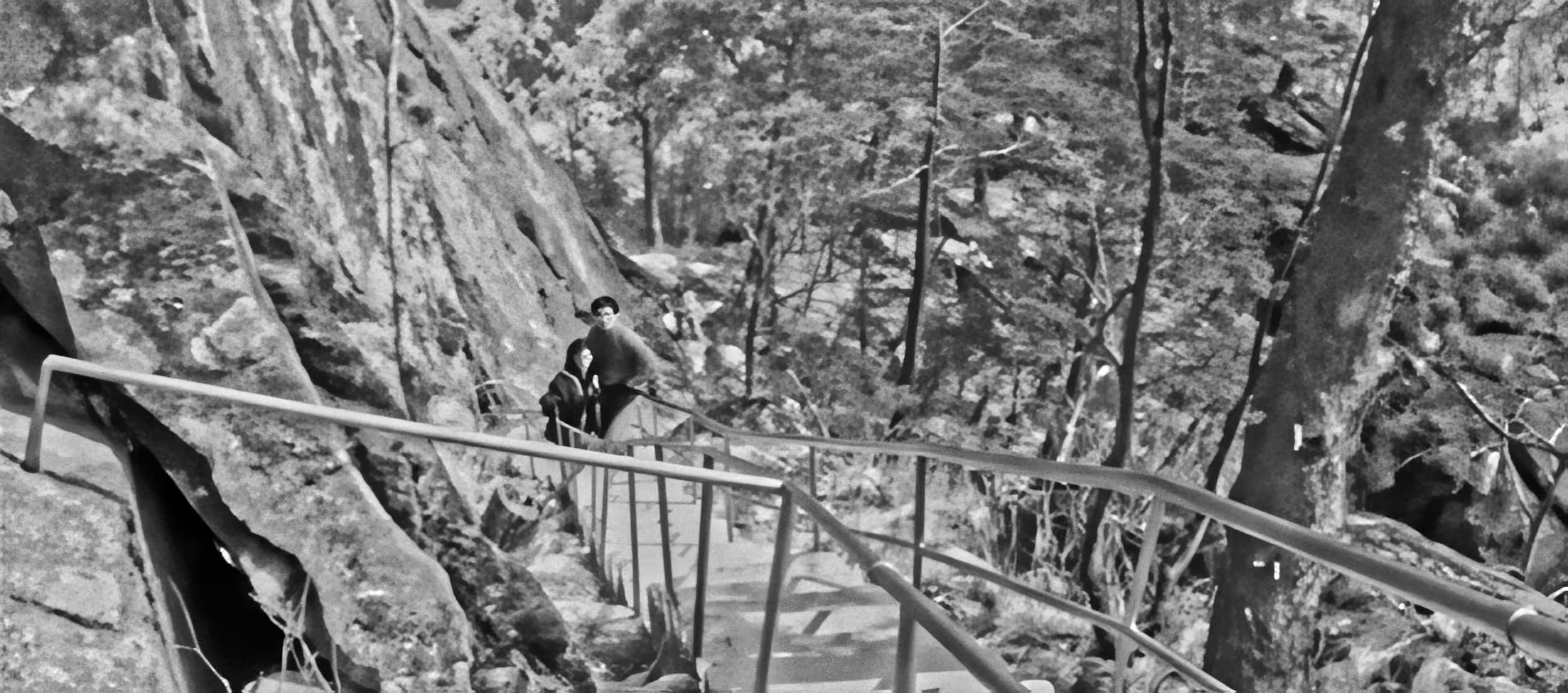
The Ghost Station (옥수역귀신, Jeong Yong-ki, 2022)

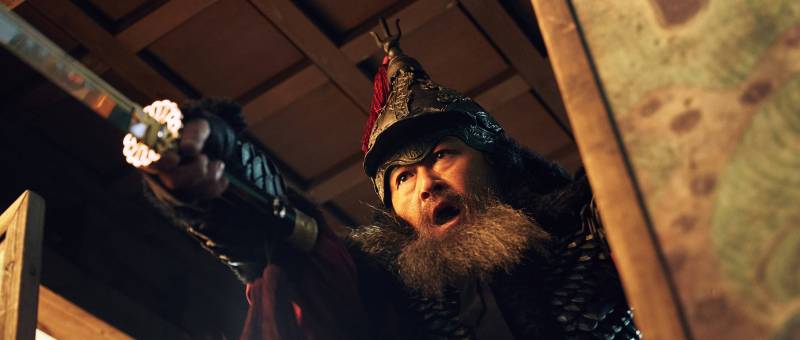
The biggest evil at the centre of Jeong Yong-ki’s homage to classic J-horror The Ghost Station (옥수역귀신, Ogsuyeog Gwisin) is perhaps capitalism or more simply modernity. At least, it stands to reason that those covering up a great evil for financial gain could be deemed even worse than the person who actually committed the crimes in turning a blind eye to injustice. It’s in the midst of this paradox that jaded rookie reporter Na-young (Kim Bo-ra) finds herself while beginning to uncover the dark secrets buried beneath a supposedly “haunted” station though mostly lured by the desire for easy clickbait to appease her hardline boss (Kim Su-jin). 

The reason that Na-young is in trouble, is that she was at the station snapping photos for social media without bothering to get a written release from her subjects. The person she took photos of turned out to be transgender and was accidentally outed by Na-young’s story for which she feels little remorse, mostly feeling sorry for herself on realising her job’s on the line and she’ll have to bring in some powerful scoops if she wants to make sure the paper has her back and will cover the compensation money if the woman sues her. 

It has to be said that, in the English subtitles at least, the film has a strongly transphobic vibe in which the photographed woman is constantly described as “a man” , using male pronouns and otherwise treated as a figure of fun, just another “weird” thing going on at the station. Even so, there’s clearly a mild rebuke intended against the contemporary trend of mocking strangers online with a young man falling victim to the station curse in the opening sequence after uploading a video of a woman he first assumes to be drunk or mentally distressed before noticing that in the video he can see a pair of bloody hands attacking her. 

Na-young has been doing pretty much the same kinds of things with her clickbait even while resentful of herself and the loss of her journalistic integrity working at a low level tabloid only interested in viral articles that will generate ad income. But she’s also slightly proud on spotting people reading her pieces on the station ghost as they ride, feeling like she’s doing real investigative journalism even if no one in the office really cares about the dark secrets lurking in the station. Even she later realises that she lost sight of the victim in the case and hadn’t even thought about contacting his family or trying to find out who he was and why he died. 

What she eventually discovers is that her paper may have been involved in a coverup operation which is why her boss becomes hostile as her reports become a little too “real”. It was in the interests of powerful people that the station be built, so anything that might delay its construction was quietly swept under the carpet. Na-young wants to drag it into the light, but finds herself frustrated and then at the centre of a supernatural curse while hoping to give voice to those who were denied any of their own. 

The quietly oppressive, haunting nature of these unseen forces is brought home by the ominous tapping of the ice blue fingernails of Na-young’s ever impatient boss perhaps embittered by her own decision to abandon journalistic integrity for the lure of easy money peddling gossip and distraction to an already apathetic readership. Though adapted from a web toon, the film is co-scripted by Hiroshi Takahashi and bears many of the hallmarks of classic J-horror including the presence of a well implying the contamination of the groundwater that feeds the contemporary society which the station itself in someways represents, along with the uncanny movement of living ghosts in the contemporary environment.

Like J-horror it finds otherworldly spirits trying to communicate through modern technology, in this case saying what first seem to be fragments of a phone number but turn out to have a different meaning indicating a desire to be heard and recognised, reprieved from the hell in which they’ve been placed by a cruel and heartless tormentor. Na-young thinks she can give them that but is perhaps naive, if already corrupted, overestimating the power of the press to offer corrective justice and end a curse by throwing the truth into the light. In the end, she too decides to pass the buck escaping the curse by passing it on as an ironic act of vengeance and liberation thrown like a bomb at an infinitely corrupt social system but more out of spite than retribution. A little shallow and cynical, the film never quite lands its punches or achieves the eeriness it’s looking for but does nevertheless point the finger at the literal skeletons in the closet of the contemporary society.


The Ghost Station is out now in the US on Digital, DVD, and blu-ray courtesy of Well Go USA.

US trailer (English subtitles)

INGtoogi: The Battle of Internet Trolls (잉투기, Um Tae-hwa, 2013)

A keyboard warrior enters a masculinity crisis after being ambushed in real life and taking a beating from an online rival in Um Tae-hwa’s graduation film, Ingtoogi: The Battle of the Internet Trolls (잉투기, Ingtoogi). Though the title may promise something more like a slacker comedy, Um subtly hints at the loserville of the contemporary Korean society which is, as the hero’s mother suggests, “only for the select few” leaving men like Tae-sik (Uhm Tae-goo), in contrast to the film’s title, losing the will to fight.

20-something and unemployed, Tae-sik still lives at home with his mother and fills his life with online fighting games. Lured to a park on the pretext of selling an online game item, Tae-sik is unexpectedly attacked by fellow gamer ManBoobs and becomes a laughing stock for getting beaten up in the street. Vowing revenge, Tae-sik makes his way to a mixed martial arts gym named Ingtoogi which as the coach explains means “we’re still fighting” and begins training in preparation to publicly call out Man Boobs for a fair fight on safer ground.

But Tae-sik is now traumatised and has become frightened of everything, hallucinating being punched in the face and in fact afraid of getting hit. It’s this sense of fear along with his wounded masculinity that he’s trying to avenge through violence and male dominance, but in order to do so has to resort to carrying around a kitchen knife as rather phallic replacement for his fractured manhood while otherwise trained by an equally disaffected teenage girl herself a former mixed martial arts champion.

Young-ja’s (Ryu Hye-young) high school class is perhaps surprisingly asked to debate capitalism in broadly positive terms only for her best friend to shock her by giving a detailed, text book answer about the loss of individuality later explaining that her nagging mother bribed the teacher to get the topic in advance so she could prepare. Young-ja is an orphan living alone though watched over by her martial arts expert uncle, Wook, but Tae-sik too has a nagging mother who is particularly disappointed in him for embarrassing himself by getting beaten up and going viral online. She wants to emigrate to Costa Rica vowing that it’s too hard to live in Korean society which is only for the elites. Tae-sik has no desire to move and in a pointed criticism states that though he and his mother live in the same space he does not feel as if they “live together” suggesting that the demands of contemporary capitalism and her job as an estate agent have placed a divide between them.

Indeed, when she suggests that Tae-sik learn the trade from her she in fact ends up in a physical altercation with a homeowner that is observed by the entire neighbourhood just standing and watching much as they’d watched Tae-sik getting beaten up online. The film seems keen to present his generation as one already beaten into submission and retreating behind the shield of their computer screens rather than taking risks in real life while those like Man Boobs who is later revealed to have been suffering with poor mental health are perhaps looking for something more “real” offline but have few ways to express themselves outside of violence. Even Man Boobs’ friend who set up the attack and filmed it is revealed to be a failed boy band star whose bid for fame in a capitalist society has crashed and burned leaving him with nothing. 

Yet for all that Tae-sik and his friend Hee-jun (Kwon Yul) who learns to take his knocks faster are fairly skeevy each attempting to ask out the teenage Young-ja despite being in their 20s, Hee-jun following up on a tip off from one of the other “loser” fighters about how to set up a date to take advantage of girl. Far from overcoming his powerlessness, what Tae-sik has to get used to is being beaten and effectively accept his “loserdom” if continuing a futile attempt to fight his dismal circumstances by less than productive means in simply not giving in and grinning through the blood no matter how many knocks he takes. The inane insults of online commenters present themselves as a kind of Greek chorus enshrouding Tae-sik in his self-loathing and powerlessness but do so only as a means of masking their own, ranting against the darkness from the comparative safety of their anonymous online personas. Though underlined by a quiet irony, Um paints a bleak picture of the contemporary city in which masochistic violence has become the only escape from an oppressive society.


INGtoogi: The Battle of Internet Trolls screened as part of this year’s London Korean Film Festival.

Trailer (English subtitles)

Soulmate (소울메이트, Min Yong-keun, 2023)

“Why should you step out for him?” one friend asks another, seemingly cutting to the quick of the fracture point in their relationship though ultimately unwilling to carry the conversation to its natural conclusion. A remake of Derek Tsang’s Soul Mate, Min Yong-keun’s frustrated love story is warmer and shorn of the icy angst which defined the original if also less certain in its implications and in the end profoundly melancholy in the missed opportunities and awkwardness of an unspoken affection. 

In the present day, a near 40-year-old Mi-so (Kim Da-mi) is called to a gallery to witness a giant and intricately drawn photorealistic portrait of herself attributed only to “Ha-eun.” The gallery owner has reason to believe the two women are friends and asks Mi-so to help her contact the reclusive artist, though she says that she knew only briefly in childhood and hasn’t been in contact with her for many years. This surprises the gallery owner as she’s uncovered a lengthy blog that outlines the entirety of their friendship in sometimes painful detail. 

The portrait staring back at her with her own gaze which is also the gaze of Ha-eun (Jeon So-nee) the artist confronts her with the painful realities of her past and the continuing absence of Ha-eun from her life. All we can know for the moment is that at some point they were separated and that Ha-eun has seemingly disappeared, though the Mi-so we see now seems so different from the one we encounter in childhood who is as Ha-eun describes her “free and also very delicate”. 

Inseparable for much of their youth, the relationship between the two women begins to fracture in adolescence as their paths begin to diverge. Ha-eun meets a boy, Jin-woo (Byeon Woo-seok), which necessarily disturbs their friendship by disrupting its dynamic. Unlike Tsang’s original in which it becomes clear that perhaps neither woman was in the end very interested in the boy who was himself a kind of proxy for the mutual attraction they could not articulate, Min presents him as a more conventional romantic rival albeit one who represents the sense of conventionality that the more conservative Ha-eun continues to cling to in contrast to the free spiritedness represented by Mi-so and her love of Janis Joplin. 

Ha-eun is confronted by the darker sides of Mi-so’s unconventionality during a trip in which she witnesses Mi-so get a bottle of wine out of a collection of drunk businessmen by offering to mix them drinks. An argument about money and power dynamics soon returns them to the fault line in their relationship, Jin-woo and their complex feelings for each other. Wilful misunderstandings lead to irresolvable resentments, each believing they are somehow in the way while equally hurt by the dissolution of their friendship and too proud to say so.

Min’s drama decreases the homoerotic undertones of Tsang’s original and opts instead for the defence of a deeply felt platonic friendship that may have developed into an unconventional family unit if given the opportunity. An exchange of earrings on two separate occasions seems much more convincing as an act of marriage than the more literal union between Ha-eun and Jin-woo. Yet maybe that’s the message the portrait was trying to deliver, a sign of an unspoken love that reunites Mi-so with the childhood self who knew it was possible to draw one’s feelings while seeing herself as Ha-eun saw her, Ha-eun’s own eyes reflected back at her. The two women in a sense switch places, becoming one while split in two and eternally connected if physically separated. 

The irony is that it’s the fear of losing it that erodes their relationship, and pride more than shame that divides them even if it’s ultimately the unwillingness to confront their feelings and the inability to articulate them that keeps them apart. Nevertheless, they eventually come to an acceptance of themselves as sun and moon, two halves one whole continually incomplete happiest only in each other’s company. Then again, there are some very unreliable narrators in play and perhaps we can’t be sure that everything we’ve been told is true yet even if not literally so still speaks of a deeper emotional truth and the deepening wound of lost love comforted only by memory and the act of recapturing it. 


Soulmate screened as part of this year’s London Korean Film Festival.

Trailer (English & Korean subtitles)

Dr. Cheon and the Lost Talisman (천박사 퇴마 연구소: 설경의 비밀, Kim Seong-sik, 2023)

The titular Dr. Cheon (Gang Dong-won) doesn’t believe in ghosts. Some may see him as a scammer or a conman, but he is a real doctor and sees what he’s doing as a kind of role-play therapy exorcising the demons that disrupt human relationships through, essentially, giving people what they want but were unable ask to ask for. Inspired by a popular webtoon, Kim Seong-sik’s charmingly quirky supernatural adventure Dr. Cheon and the Last Talisman (천박사 퇴마 연구소: 설경의 비밀, Cheonbaksa Toema Yeonguso: Seolgyeongui Bimil) has a pleasing retro quality that recalls classic serials along with the wisecracking heroes of old as Cheon exorcises a few demons of his own while trying to constrain a great evil. 

In a strange way, Cheon’s cynicism maybe a direct result of knowing that ghosts are real and one of them killed his brother and grandfather who was in fact the chief shaman. These days, Cheon is YouTube celebrity exorcist who runs what he calls a “high tech psych” company carrying out fake rituals with the aid of a series of special effects designed by “Apprentice Gang”, or more accurately his assistant In-bae (Lee Dong-hwi), featuring ominous wind and more dynamite than seems advisable. Kim has some fun casting the couple from the bunker in Parasite, on which he served as an AD, as wealthy homeowners with more money than sense convinced they’ve got a ghost largely because because their teenage daughter has recently become moody. Using Sherlock Holmes-like powers of deduction, Cheon assesses what’s at the heart problem in the family and gives each of them some spiritually endorsed advice such as that the husband should stop buying ugly statues his wife doesn’t like and the parents should cut the teenage daughter some slack. 

As he suggests, every one is happy so it doesn’t really matter that he lied to them or that the ritual was fake because they’ve still been cured of what ails them albeit through some psychological manipulation rather than religious reassurance. Then again, those around Cheon may find it somewhat embarrassing that their teachings are being exploited to make money out of desperate people even if Cheon seems to think it was alright to scam the wealthy family because they can after all afford it. Conversely, he tries to turn down a young woman who comes to the office judging from her clothes that she wouldn’t be able to pay only to change his mind when she flashes a bag full of cash. 

Unlike Cheon, Yoo-kyoung (Esom) actually can see ghosts and ought to be able to see through Cheon but perhaps chooses not to while he, refreshingly, does not take too long to re-accept the fact that ghosts are real after all and this one has a particular bone to pick with him personally. Kim casts the ghost world in shades of blue and gives them untold power, able to fly around in spirit form and possess one person after another in quick succession, while otherwise lending the empty streets a kind of warmth in the orange glow of the flares In-Bae uses to survey the landscape. With gorgeous production design and impressive effects, the film incorporates the trappings of shamanism from drums to lines of prohibition but deepens its lore with a series of key artifacts as Cheon finds himself reaccepting his destiny as a shaman while weilding the sword of justice.

In any case, the film seems to ask why not both, suggesting that Cheon’s fake shaman business is sort of real anyway and in its way provides healing not least to himself. They are all haunted by ghosts of the past whether they see them or not, while Cheon’s eventual quest is one of vengeance that would also allow him to lock away his trauma in a sealed room deep underground and bound by the chains of hell. The sight of the many sutras the villain had placed to possess and control the townspeople suddenly bursting into flames implies a kind of liberation or purification in which the dark presence has finally been lifted even if it may not be for long. Hugely entertaining and fantastically witty, Kim ends the film with a post-credits sequence teasing a potential series and the irresistably intriguing further adventures of Dr. Cheon, fake shaman and real exorcist, showman and swordsman battling evils both ancient and modern.


Dr. Cheon and the Lost Talisman screened as part of this year’s London Korean Film Festival.

International trailer (English subtitles)
Concrete Utopia (콘크리트 유토피아, Um Tae-hwa, 2023)

“They were just ordinary people” the heroine of Um Tae-hwa’s Concrete Utopia (콘크리트 유토피아) replies when asked about those who once lived in her apartment block. Considering what happened there, her words have a chilling quality hinting at the ways society breaks down and doesn’t in the wake of disaster and fear brings out our worst instincts. Yet on the other hand, perhaps it’s not so far from where we are now as Um’s housing crisis satire makes plain in a patriarchal and status-obsessed society.

“There’s no high and now low now. Everyone is equal,” according to Keum-ai (Kim Sun-young), head of the women’s association at the Hwang Gung apartment block, but of course that’s not true. An opening sequence featuring stock footage hints at the aspirational nature of post-war high rises that as one woman said were designed to give regular people a chance at homeownership though what most people enjoy is the convenience. The irony is that this is quite literally hierarchal living, though there are hierarchies even within hierarchies. When disaster strikes the city, Hwang Gung is inexplicably the only apartment complex left standing in what was previously a forest of concrete. Refugees from other other apartment blocks have made their way into the building, but some want to evict them and not least because they come from “Dream Palace” a more expensive and snooty complex across the way the residents of Hwang Gun believed looked down on them. 

With all these “outsiders” in the building, tensions begin to bubble. One couple wants to evict the non-residents because it took them 23 years to buy an apartment so they’re incredibly resentful that someone might usurp their privilege. Chaired by Keum-ai, a debate develops as what to what residency means with some firmly believing only home ownership is good enough, questioning the rights of civil servant Min-sung (Park Seo-joon) because he is still repaying his mortgage and therefore isn’t technically the owner of this home. In any case, most are unwilling to share despite knowing that many of the non-residents will die if left out in the post-disaster sub-zero temperatures. 

It’s also telling that when pressed to elect a leader, someone says that it has to be a man. Within the new system that emerges, the residents are divided along strict gender lines with the men serving in a kind of militia under the increasingly authoritarian rule of “Delegate” Young-tak (Lee Byung-hun) and women remaining in the building doing stereotypical female tasks. The rules state that the apartments are for residents only, while rations are awarded in proportion the perceived contribution to the community and it is forbidden to go outside. The residents develop a sense of themselves as chosen people, but are also feared by those around them for their cruelty with the rumour that their raiding parties are practicing cannibalism. 

The moral centre of the film, Min-sung’s wife Myeong-hwa (Park Bo-young) was against evicting the non-residents but largely goes along with the status quo until noticing the ways in which Young-tak’s authoritarianism is changing her husband, destroying his humanity and turning him into an obsequious lackey too afraid to resist. Then again, Min-sung was already a little more selfish and conservative than she may have been, secretly wanting to evict the non-residents in the hope of holding on to his property while unwilling to share the spoils with them. It’s this fear, their fear of displacement on losing the social status that comes with homeownership, that drives some towards cruelty even though in a world like this things like property values and job titles are obviously no longer relevant. 

This is may also explain Young-tak’s short term thinking, sending raiding parties out to find more food in the ruins and rubble rather than exploring options for growing new crops or securing water supplies. Flashbacks to conversations with his family reveal that this may have been a longterm problem for him with his wife criticising that he “never solved anything”. Her criticism undermines his sense of manhood in his inability to protect his family, not only unable to provide financial stability but even to keep a roof over their heads having apparently been swindled out of a house purchase. Male failure and insecurity by turns fuel his need for authoritarian power while the men under him, like Min-sung, mistakenly look to him as a leader and seek to emulate his code of masculinity in the desire to claim their own role as patriarchs protecting their families. 

As another member of the apartment block points out, no matter how bad the situation is there are things you should do and things you shouldn’t. Myeong-hwa does her best to maintain her humanity and is perhaps rewarded for it on encountering another group of good people much like herself while others find only more violence and misery. If they had only agreed to share in the beginning, come together and thought seriously about solutions for a better future all this could have been avoided but in the end traditional social values prove hard to abandon with homeownership still afforded special status amid the ruins of society even as Young-tak institutes a mini authoritarian fiefdom complete with secret police and public self-criticism sessions. Darkly comic in its satirical absurdity, Um’s drama is keen to point out what a crisis can do to “ordinary people” but also offers a ray of hope that there will in the end always be those less inclined to selfish cruelty than to an altruistic desire to find solutions that work for everyone.


Concrete Utopia screened as part of this year’s London East Asia Film Festival.

International trailer (English subtitles)
My Lovely Angel (내겐 너무 소중한 너, Lee Chang-won & Kwon Sung-mo, 2021)

“You’ve got to be brutal to survive in this world,” according to a coldhearted gangster remonstrating with down on his luck chancer Jae-sik (Jin Goo) for his seeming inability to be as bad as the world around him in Lee Chang-won & Kwon Sung-mo’s touching drama My Lovely Angel (내겐 너무 소중한 너, Naegen Neomu Sojunghan Neo), “You won’t get anywhere the way you handle stuff.” He might have a point, Jae-sik doesn’t really have the heart to be a heartless gangster but for the moment at least has been driven into cynicism by the futility of his life. 

When one of the women in the small troupe of performers at promotional events he drives round in his van doesn’t turn up for work, Jae-sik is irritated and not really all that remorseful on realising that the reason Ji-young hasn’t arrived is that she died in a freak accident. Like most of the other women, he doesn’t know much about her personal life hearing from the police that her family record only lists a seven-year-old daughter. Investigating her apartment he makes two important discoveries. Firstly, Ji-young’s lease is about to expire and there’s a 70,000 won deposit looking for a new owner. Secondly, Ji-young’s daughter Eun-hae (Jung Seo-Yeon) is still in the apartment though she behaves as if she doesn’t know he’s there and seems to survive on packets of bread her mother had left on the kitchen table. 

It takes Jae-sik quite a while to realise that Eun-hae is deafblind, but in any case he ends up moving into the apartment and superficially looking after her in the hope of claiming that he’s Ji-young’s common law spouse and entitled to the deposit money and anything else Ji-young might have to bequeath. But as he discovers, deafblind people find themselves trapped in an awkward limbo of the contemporary welfare system which recognises only deaf or blind people, leaving those who are unable to see or hear without any kind of support. Jae-sik tries to take Eun-hae to school, but she’s put in a class for blind children which is taught through spoken language that she is obviously unable to hear. Jae-sik complains that the classes are no good for her while she becomes obviously bored and frustrated by them, but the teacher’s only suggestion is that she also take the classes for deaf children which are taught in visual media she obviously can’t see. 

Of course, to begin with Jae-sik only accepts Eun-hae as a means of getting the money, otherwise little interested in what will happen to her now. He tries to ring her estranged birth father, but he rejects all responsibility for her presumably having walked out on the relationship because of his reluctance to care for a child with special needs. Jae-sik tells the landlady, who thinks he’s Eun-hae’s dad, that he’s looking for a nanny because he wouldn’t be able to care for her on his own while working only for the landlady to point out that Ji-young was managing it alright hinting at the patriarchal double standards which still see childcare as an inherently female domain. 

Still despite himself, Jae-sik begins to bond with Eun-hae who is after all completely dependent on him. He begins to communicate with her through teaching her words written in hangul by tracing them on her palm, while she seems to blossom in a new world of sensation when the pair embark on a road trip to the country. Though his past chases him, the further Jae-sik travels from the city the less cynical he seems to become no longer interested solely in money but beginning to care about those around him, not just Eun-hae but those he meets along his journey many of whom are also dealing with their own problems which sometimes echo his own as in a single-mother’s attempts to care for her ageing father as his dementia worsens. Lee & Kwon lend a golden glow to the expanses of the rural farmland where Jae-sik and Eun-hae find themselves taking refuge, Eun-hae in thrall to the natural world cheerfully dancing in the rain, smelling the flowers, and befriending animals even as the city snaps at their heels. Avoiding obvious sentimentality, the film nevertheless tells a poignant story of paternal redemption and the blossoming of a little girl finally finding a means to express herself.


My Lovely Angel screened as part of this year’s London Korean Film Festival.

Original trailer (English subtitles)
Nocturne (녹턴, Jeong Gwan-jo, 2019)

“Every day is a battlefield” the mother of Eun Seongho, one of the protagonists of Jeong Gwanjo’s documentary Nocturne (녹턴) exclaims while trying to keep her son in line during a difficult journey on the underground. Seongho is autistic and has learning difficulties. He is very dependent on his mother, Minseo, who raised him and his brother Geongi alone after their (never seen) father left the family. But while Minseo does her best to push Seongho towards a stable career as a classical musician, Geongi seems to flounder extremely resentful of his mother and brother in feeling both burdened and excluded. 

Geongi later claims that he does not feel part of the family and as a child assumed that his mother disliked him as all of her time was taken up with trying to care for Seongho. Now as an adult he struggles to settle, once training as a concert pianist himself but later dropping out of university to start a business which he says failed because of a scam. “There are no nice people in this world,” he sighs while openly wondering what sort of man he’d be if only he’d had the same love and attention poured on him as Seongho had heavily implying he’d have made much more of his life.

Seongho’s language skills are limited and he is easily distracted, unable to sit still and often jumping around like a child or else making high pitched noises to release some of his frustration. Of course, all of this is particularly difficult in the rarefied world of classical music which depends on a sense of formality and decorum. Minseo painstakingly rehearses with him, reminding Seong-ho to lift the tails of his suit as he sits at the piano and place his hand on the edge of the keyboard as he bows. His music teacher berates him for not practicing and then lying about it, telling Minseo he’s at the end of his tether as he feels he does not know how to get through Seongho while himself frustrated by his slow progress and knowing that only increases the pressure on Seongho who will then become avoidant and unwilling to play at all. 

Minseo seems to be hoping that Seongho will be able to support himself financially through his music and is acutely aware that caring for him will become more difficult as she ages while she obviously cannot be there for him forever. The manager of residential centre she takes him to grimly adds that many parents of children like Seongho hope that they will be able to bury their children with their own hands while Minseo wonders if she’d be able to go peacefully outliving him  by just a few moments.

All of which is the reason that she places so much pressure on Geongi to take care of his brother so that Seongho will be looked after once she’s gone. But that only deepens Geongi’s resentment feeling as if he only exists as a caretaker for Seongho and his own life is unimportant, wilfully sacrificed by his mother whom he cannot forgive for the sense of rejection he feels. He claims not to resent Seongho himself, but doesn’t see why he should sacrifice his life for him and firmly refuses the responsibility. Meanwhile, be becomes a heavy drinker working several low paying jobs to get by while practicing piano in his spare time. 

Yet after agreeing to accompany him to St. Petersburg where ends up playing the piano for him after a snafu with the sheet music, Geongi comes to a new understanding of his brother explaining that as they played together it finally felt as if they were really conversing and Seongho for the first time felt like a big brother to him. Echoing the universal language of music, the film never shies away from the difficulties faced by those responding to Seongho’s complex needs or his own in his inabilities to make himself understood or when his behaviour confuses others such as his need to touch things on the subway, but does ultimately discover a kind of rebalancing as Geongi finds new ways to connect with his brother along with a new acceptance of himself.


Nocturne screened as part of this year’s London Korean Film Festival.

Original trailer (UK subtitles)