Alone No More (得寵先生, Daniel Ho & Thomas Lee Chi-wai, 2024)

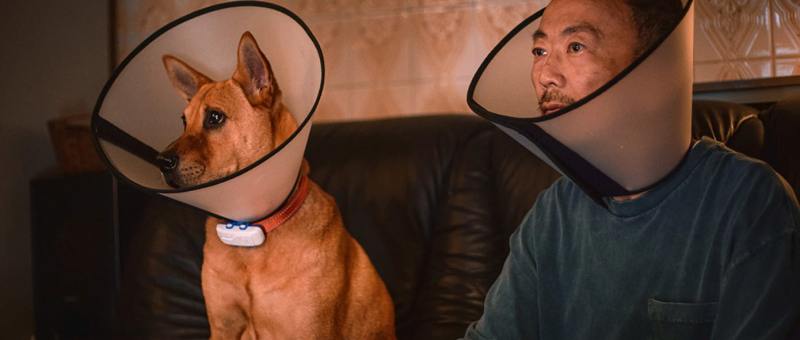
A little dog literally and more figuratively saves the life of a grumpy old man in Daniel Ho & Thomas Lee Chi-wai’s warmhearted drama Alone No More (得寵先生). Touching on themes of old age loneliness, familial estrangement, animal cruelty, and life’s stray dogs, the film makes the case that all lives are important, both human and canine, and that we should try to forgive each other in the same way that dogs seem to continually forgive us.

In any case, it’s difficult to see why stray dog Roast Piggy chooses the grumpy Kai (Lawrence Cheng Tan-shui) to be her owner despite his animosity towards her. Kai is hostile to pretty much everyone and appears to have a strained relationship with his remaining family members from the resentful brother who became his boss at work to the daughter Zoie (Fish Liew) who rarely returns his calls. Having recently retired, it seems that Kai has not much else left to live for which might be why he makes the decision to end his life and leave his retirement fund for Zoie and her daughter. Luckily, Roast Piggy arrives just in time to save Kai and alert Una (Amy Lo) who runs a dog sanctuary and had been trying to catch her.

Though Kai tries to chase Roast Piggy away, she always comes back to him and he eventually comes to accept her but only after getting a lesson in what the consequences of calling animal control can actually be. The film doesn’t go into why Hong Kong seems to have such a large problem with stray dogs but the man at the pound says they euthanise thousands a year many of which are microchipped but have owners who either can’t be contacted or simply refuse to take the dog back. It turns out the Roast Piggy was abandoned by her former owner because a fortune teller told him she was bad luck and it does seem like other of the dogs were similarly released into the wild either because their owners no longer wanted them or because they could not afford to pay for their medical treatment. Una had wanted to adopt Roast Piggy herself if Kai wouldn’t take her, but is cautioned by her boyfriend Chan (Jay Fung Wan-him) that it could get expensive if the problem turns out to be that Roast Piggy had heart worms. Though Roast Piggy seems friendly and used to people, it is clear some of the other stray dogs have unfortunately been mistreated and require further rehabilitation before they can be put up for adoption with a regular family. 

The same might be said of Kai who does begin to mellow after taking in Roast Piggy and getting a new lease of life helping out at the dog sanctuary. Nevertheless, his relationship with his daughter who is married to a Canadian man having moved there with her mother as a child is a little harder to repair. Though Una encourages him to make amends, she also has a strained relationship with her mother she is otherwise unwilling to work on though there is no real reason why she should. This sense of disconnection feeds back into her relationship with boyfriend Chan who, conversely, is under his father’s thumb and as always does exactly as he’s told. It’s Chan’s money that’s bankrolled the sanctuary which adds an additional layer of complication, though he is perhaps being slightly unreasonable when he’s hurt that Una doesn’t agree to suddenly drop everything and move to Edinburgh with him because she wants to stay in Hong Kong to save stray dogs. 

In a way, Kai and Una are the ones left behind, he by his age and loneliness and she by her regret and isolation. It’s clear that Una has replaced relationships with people with those with dogs whom she finds it easier to talk to. A subplot about a horrible person who’s been putting down poisoned meat because they don’t like the dogs being around hints at the callousness and cruelty that led to them becoming strays in the first place but also to the prejudices that see those like Kai and Una excluded from mainstream society even if Kai was indeed a very difficult person to be around before meeting Roast Piggy. Nevertheless they too find sanctuary at the Warm Heart dogs home along with purpose and compassion in caring for these kindhearted animals who have so much love and forgiveness even towards those that tried to cast them out.


UK trailer (English subtitles)
The Eighth Happiness (八星報喜, Johnnie To, 1988)

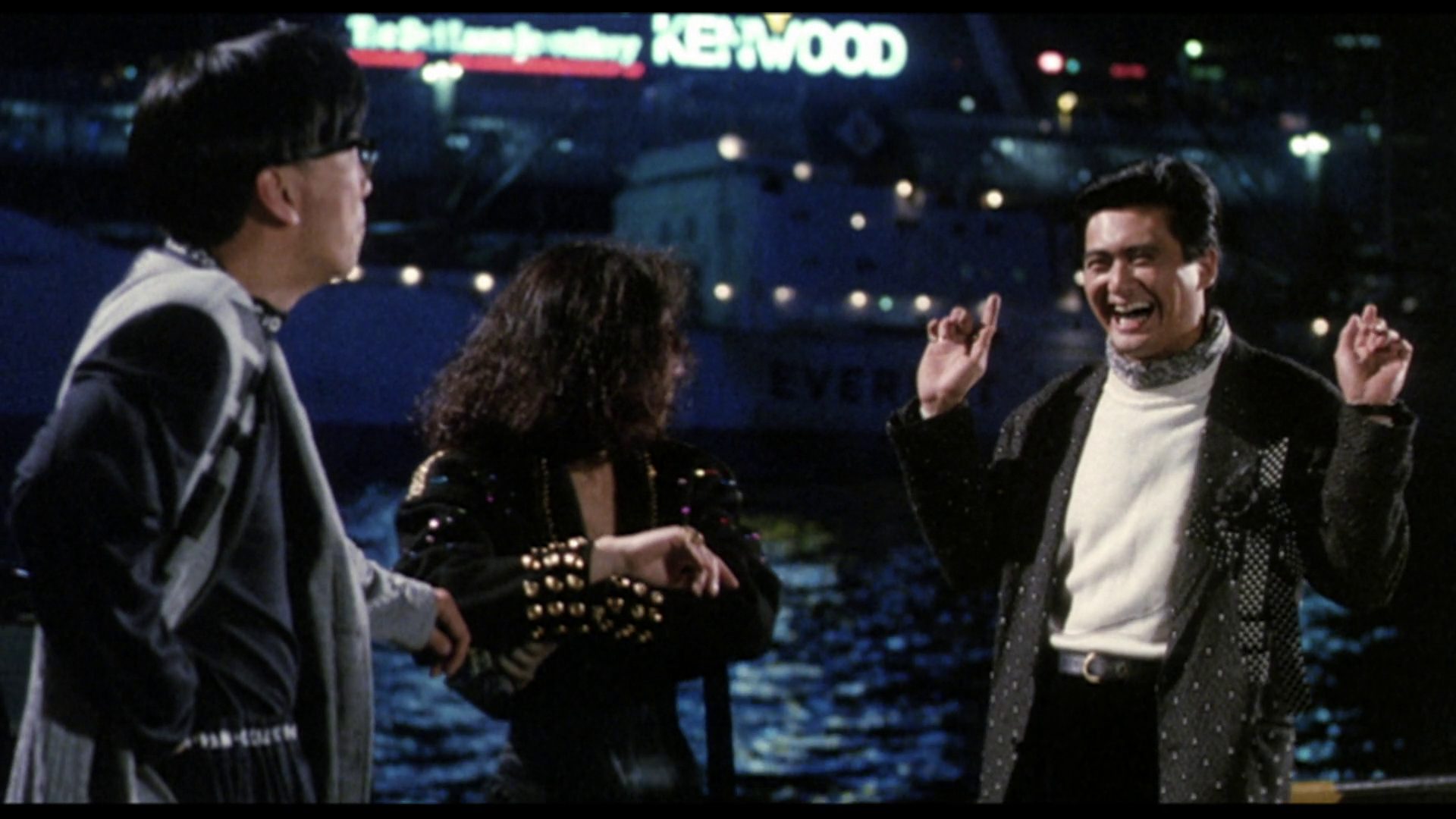
A literal series of crossed wires provoke romantic intrigue for three eccentric brothers in Johnnie To’s smash hit Cinema City Lunar New Year comedy, The Eighth Happiness (八星報喜). As so often in To’s subsequent films, a random instance of fatalistic chance changes each of brothers’ lives though not perhaps permanently as the surprisingly ironic coda makes plain. Even so, their parallel quests for love of one kind or another perhaps tell us something about the changing Hong Kong society in the midst of rising economic prosperity and looming Handover anxiety. 

Seemingly without parents, the three Fong brothers live together in a well-appointed multi-level home owned by oldest sibling Fai (Raymond Wong Pak-ming) who hosts a daytime television program titled Mainly Housewives which includes a cookery/agony aunt segment in which he attempts to solve someone’s relationship problems through food. As in many of Raymond Wong’s other roles in Cinema City comedies, Fai is feminised throughout not only in acting as the “mother” of the family preparing all the meals at home but also in his single status and the focus of his television show which nevertheless intros him with the James Bond theme. 

Second brother Long (Chow Yun-fat), meanwhile, actively camps it up claiming that he pretends to be gay in order to get girls after lulling them into a false sense of security. Despite being engaged to air hostess Piu Hung (Carol Cheng Yu Ling), he has a side mission going to sleep with a woman from each of Hong Kong’s 19 districts and is a relentless Casanova striking up an affair with unexpectedly chaotic department store assistant “Beautiful” (Cherie Chung Chor-hung). Youngest brother Sang (Jacky Cheung Hok-yau), meanwhile, is a painfully shy aspiring cartoonist who becomes an accidental white knight to a young woman caught up in a bizarre flashing incident in the local park only to be mistaken for the culprit himself. 

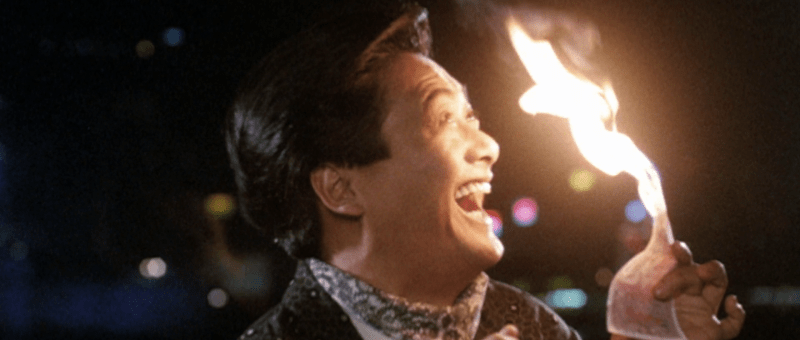
Each of the brothers is offered a new romantic possibility because of a telephone malfunction caused by an elderly lady driver forgetting her glasses and ploughing through local works mangling the lines. Sang is reunited with Ying Ying (and her martial arts champion swordsman mother) after overhearing a suicide attempt but ending up at her apartment by mistake, thereafter finding himself facing a challenge of masculinity on discovering that she already has a very buff and macho boyfriend who in his own way also seems jealous and insecure. Meanwhile, Long overhears a conversation between Beautiful and a colleague at the store about their ideal men, entering into passive aggressive courtship while discovering that her boyfriend is fabulously wealthy (or, at least, his father is) leading to a standoff in which he ends up proving his masculinity by burning money he doesn’t really have, smashing his own cheapo watch to intimidate the other guy into destroying his diamond Rolex, and then trashing the car he borrowed from Fai to expose the fact the other guy isn’t really wealthy or man enough to do the same because at the end of the day it’s his father’s money and he’s not so rich that these very expensive status symbols mean little to him. 

Fai meanwhile has a much more normal romance which is disrupted, mostly, by his brothers’ chaos and then near destroyed rather than forged through a misdirected phone call. After Long trashes his car, he asks Sang for the number for a repair guy but instead gets through to Fong (Fung Bo Bo) whose musician husband has just walked out on her seconds before which is why she’s quite rude to him on the phone, slamming the receiver down the second time he rings. Annoyed on a personal level Fai asks Long to troll her by ringing up at 3am every night causing her to injure her ankle and later fall on stage during a Cantonese opera performance. Then he ends up meeting her by chance in real life when she ends up buying the last of his favourite biscuits at a local cafe, only to discover she’s his interview for that day’s show where she’s supposed to talk about her art but finds his face so funny she can’t stop laughing. Had it not been for business with the telephone harassment they might have had a conventional romance, but the further machinations of the chaotic brothers soon convince her that Fai is not a reliable life partner. 

To convince her he’s really a good guy, Fai undertakes a grand gesture making himself the focus of his culinary/agony item by cooking up the spiciest soup imaginable and drinking it on live TV to atone but such a meaningless feat does nothing for Fong who doubtless is over romantic stunts and looking for something more concrete. Long’s grand gesture, by contrast, fares much better as he chases Piu Hung to a fancy hotel and makes a scene from the other side of the glass before falling in the pool while trying desperately to save an engagement ring while suddenly on the back foot after she learns about his philandering. Fai is only able to redeem himself through artifice, he and Fong signing through their romantic drama while performing Cantonese opera surrounded by the brothers and their girls trying at least to support him in his own romantic endeavour which their chaos has largely undermined. 

It’s another cosmic irony therefore that whereas the chaos of the misdirected telephone calls earns both Sang and Long everything they wanted in both career and romantic success, Fai who generally does the right thing ultimately loses out through another chaotic development while even Beautiful apparently achieves her dreams. Despite his earlier protestations during get phone call that Hong Kong was beautiful and there was no need to leave, Song and Ying Ying decide to travel the world perhaps expressing a degree of anxiety in pre-Handover Hong Kong, while Long is left with internalised anxiety over his new role as husband and father, and Fai is back pretty much where he started. A typical Lunar New Year nonsense comedy, there’s no disputing that much of the humour in The Eighth Happiness is of its time, but there is something of To’s later obsessions with comic fate and romantic farce that transcends Raymond Wong & Philip Cheng’s Cinema City silliness. 


Trailer (no subtitles)

Tales from the Occult (失衡凶間, Fruit Chan, Fung Chih-Chiang, Wesley Hoi Ip-Sang, 2022)

A collection of Hong Kongers contend with the hidden horrors of the contemporary society in the first instalment in a series of anthology horror films, Tales from the Occult (失衡凶間,). Veterans Fruit Chan and Fung Chih-Chiang are accompanied by Wesley Hoi Ip-Sang making his directorial debut as the three directors each tackle lingering terrors as the protagonists of the three chapters are quite literally haunted by past transgressions from a pop singer on the edge consumed with guilt over a teenage trauma, to a sleazy financial influencer who might inadvertently have killed a hundred people, and the denizens of a rundown tenement who are too afraid to report a possibly dangerous presence to the police lest it damage the property value of their flats. 

In Wesley Hoi Ip-Sang’s opening instalment The Chink, a carefree high school girl chasing a stray cat stumbles on the body of a burglar who apparently fell from the rooftops and was trapped in a tiny cavity between two buildings. Some years later Yoyi (Cherry Ngan) has become a successful pop star but is still haunted by her failure to report the body to the police all those years ago worried that perhaps if she had he might have been saved though he had obviously been dead for some time when she found him. Her kindly psychiatrist uncle Ronald (Lawrence Cheng Tan-shui) tries to assuage her anxiety but fails to consider that there might actually be a dark presence in her new flat. Meanwhile, she’s also under considerable stress given that she’s in an ill-defined relationship with Alan, her married manager, who eventually brands her “mentally unstable”, and she’s somehow oblivious to the fact her high school best friend is clearly in love with her. Even so, as it turns out, perhaps you can also be haunted by the living while there are some threats that even the most well-meaning of psychiatrists is ill-equipped to cure. 

It’s ironic in a sense that Yoyi was provided with her new apartment as a path towards an illusionary freedom which is really only a means for Alan to exert greater control over her life while the heroine of Fung Chih-Chiang’s final sequence The Tenement has in a sense chosen seclusion in installing herself in a moribund tenement block in order to concentrate on her writing. The contrast between the two buildings couldn’t be more stark but even the tenement dwellers are paranoid about house prices while assuming the creepy, water-drenched presence encountered by author of pulpy internet novels Ginny (Sofiee Ng Hoi Yan) is an attempt by developers to scare them out of their homes amid Hong Kong’s horrifyingly competitive housing market. Still, like Yoyi they are each haunted by past transgressions but pinning the blame on former gangster Frankie Ho (Richie Jen) who was once accused of drowning a man. What began as a haunting soon descends into farce as they realise the “water ghost” seems to be a young woman who has passed away in their stairwell and decide to “dispose” of her with Frankie’s help to avoid a scandal destroying the value of their homes. But then, all is not quite as it seems as the sudden appearance of a journalist investigating a scandalous “love crime” makes clear. 

Fruit Chan’s middle chapter Dead Mall also takes aim at internet investigators and dodgy “influencers” as sleazy financial snake oil vlogger Wilson (Jerry Lamb) fetches up at a shopping centre surrounded by shoppers in masks to advertise that the mall is actually doing fine despite the economic downturn produced by the pandemic which he describes as worse than that of SARS. In reality the mall is “dead” with barely any customers and rows of shuttered stores, Wilson is simply doing a paid post in an attempt to raise its fortunes not least because the original mall was destroyed in a fire 14 years previously started by a carelessly discarded cigarette. Wilson is pursued not only by those who claim they lost money because of his terrible financial advice, but by a paranormal live streamer who has a separate grudge against him while he continues to refuse any responsibility for his actions answering only that investment carries risk and there’s no opportunity without crisis. What he discovers is perhaps that you reap what you sow, Chan frequently cutting to hugely entertained netizens baying for his blood while he attempts to outrun his fiery karma. 

In each of the increasingly humorous storylines, Chan’s being a particular highlight of wit and irony, there is a lingering dissatisfaction with the contemporary society from the pressures of the fiercely competitive housing market to the kind of financial desperation and longing for connection that fuels the consumerist emptiness of influencer culture. The jury might be out on whether there’s really any such thing as “ghosts” but the haunting is real enough even if it’s only in your mind. 


Tales from the Occult screens at the Garden Cinema, London on 9th July as part of Focus Hong Kong’s Making Waves – Navigators of Hong Kong Cinema.

Original trailer (English subtitles)