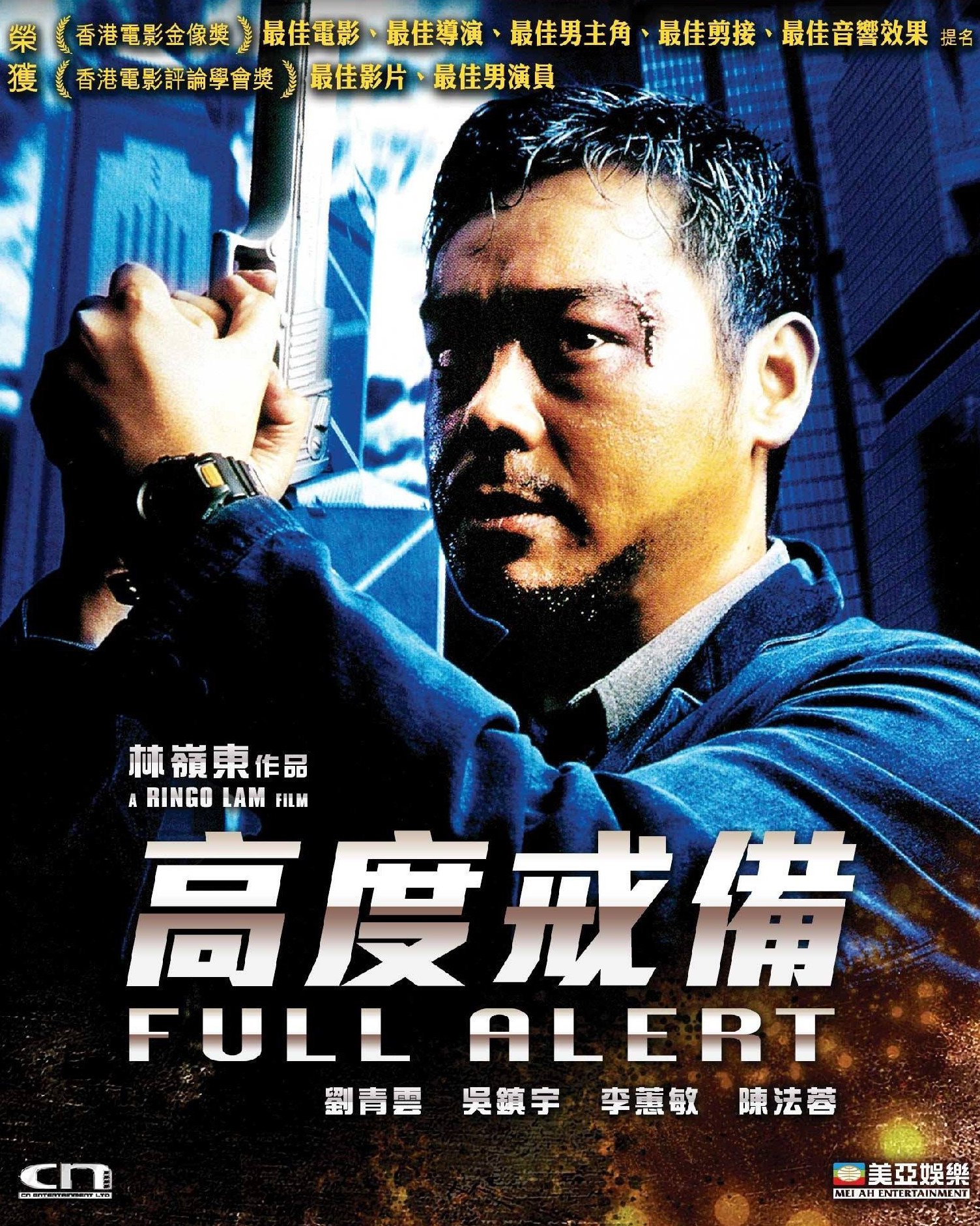
Full Alert (高度戒備, Ringo Lam Ling-Tung, 1997)

“Neither of us are normal people,” the antagonist of Ringo Lam’s Full Alert (高度戒備) points out to his opposite number, an increasingly compromised cop not so different from the man he is pursuing. Something is poisoning the waters of contemporary Hong Kong, and as it turns out there’s no real cure for this sickness. Neither man can escape the ghosts of his past, nor can he accommodate himself with this new reality of the coming post-Handover society defined by nothing other than nihilistic despair.

When residents of an apartment block begin falling ill, policeman Pao (Sean Lau Ching-wan) is called in only to discover the body of a man in the rooftop water tank. The image of his face floating in the water has a haunting, nightmarish quality that is only deepend by the anxiety of his killer who can’t be sure if he was really dead when they put him there, or ended up drowning all alone in the dark. His fate is ironically echoed in Kwan’s (Francis Ng Chun-yu) use of the sewer network to plot a heist on the Jockey Club on the busiest day of the year, emerging into a rain-drenched city only to be faced by despair and futility in the form of Pao.

Yet at times, Kwan is an oddly sympathetic villain. He comes across as a kind of everyman pushed to the brink by a society he feels is unjust and has treated him poorly. “I’ve come here to get back what I lost,” he explains as if he too were trying to find a way back to the pre-Handover society. He targets the Jockey Club in revenge for having his life ruined by gambling and hopes to make ironic use of his engineering background as an explosives expert fired for abusing his position to illegally sell explosive devices.

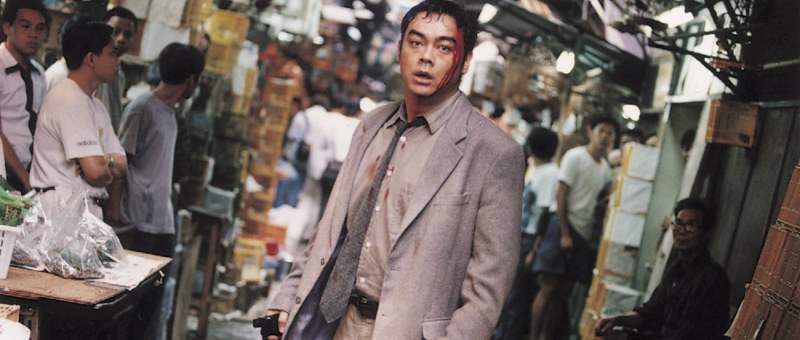
Pao, by contrast, is also a haunted man and not least by Kwan who comes to represent his other self. Just as Kwan is plagued by visions of the architect from the water tank, so Pao cannot escape the memory of having killed a man as a serving police officer. “It’s not easy to kill someone,” Kwan laments, reflecting that his transgression has changed him in untold ways that give him an odd kind of affinity for Pao. While chasing Kwan in a crowded marketplace, Pao loses his cool and fires his gun despite the risk to the general public, causing a motorcyclist to crash. When Kwan rings him, it’s less like taunting than a genuine sense of commiseration in which he likens Pao to a boy he knew at school who cried in the toilets after losing out on the number one spot that he had been fixated on taking. “That made me sad too,” he admits bearing out the inherent bond between rivals and the loneliness that exists outside it. Each man is, to an extent, motivated by fear and the desire to free themselves by destroying their other self.

“It’s just that we’re standing on different sides,” Kwan reflects, remarking that Pao is a good cop and he doesn’t mean to go against him, but believes he has no other choice. The Taiwanese gangsters may believe they have no other choice either, plotting either to rescue Kwan or neutralise him before he can expose their plans. Nevertheless, the loss of one of their men is directly contrasted with Pao’s loss of his fellow officer, arguably through his own recklessness and obsession with catching Kwan at all costs. Kwan, meanwhile, is conflicted too, apologising for involving Pao’s family and on some level self-aware that he’s destroying himself. He may not actually expect to survive but does his best to shield those he loves from the consequences of his actions, just as Pao wonders if he should quit the force to be there for his wife and son.

Shooting guerrilla style in the streets of Hong Kong, Lam captures a very real sense of panic and anxiety hanging over the city as the Handover draws closer. With the “reunification” coming, all that matters is peace, according to Pao’s superior officer, though peace is something Pao will never find, just as Kwan will never really find escape, not from himself or from a Hong Kong which seems to be in a state of total collapse. To that extent, they are each ghosts of a rapidly disappearing city fighting to take back what they’ve lost, but in the end finding only despair and loneliness. 

The Eighth Happiness (八星報喜, Johnnie To, 1988)

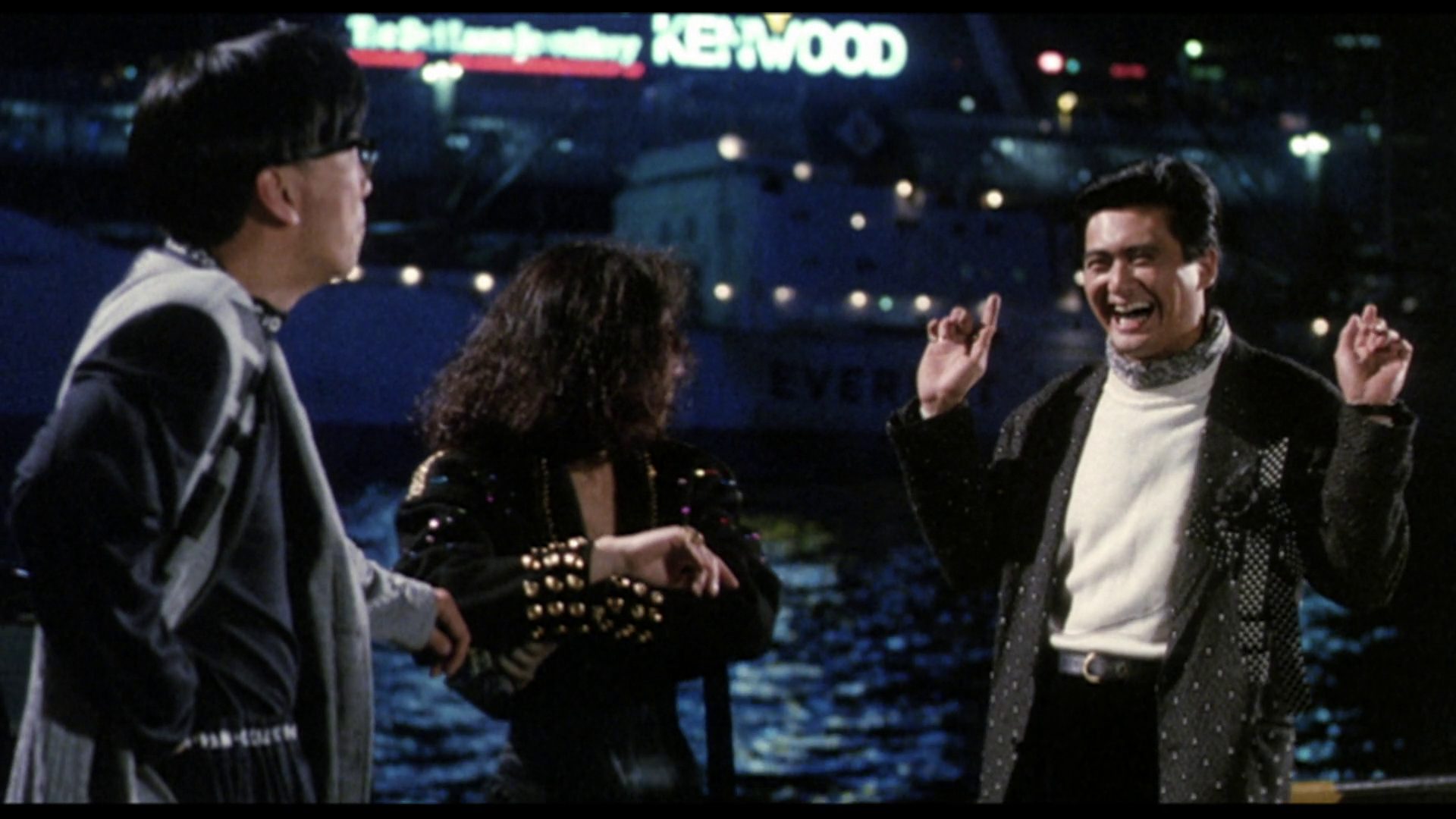
A literal series of crossed wires provoke romantic intrigue for three eccentric brothers in Johnnie To’s smash hit Cinema City Lunar New Year comedy, The Eighth Happiness (八星報喜). As so often in To’s subsequent films, a random instance of fatalistic chance changes each of brothers’ lives though not perhaps permanently as the surprisingly ironic coda makes plain. Even so, their parallel quests for love of one kind or another perhaps tell us something about the changing Hong Kong society in the midst of rising economic prosperity and looming Handover anxiety. 

Seemingly without parents, the three Fong brothers live together in a well-appointed multi-level home owned by oldest sibling Fai (Raymond Wong Pak-ming) who hosts a daytime television program titled Mainly Housewives which includes a cookery/agony aunt segment in which he attempts to solve someone’s relationship problems through food. As in many of Raymond Wong’s other roles in Cinema City comedies, Fai is feminised throughout not only in acting as the “mother” of the family preparing all the meals at home but also in his single status and the focus of his television show which nevertheless intros him with the James Bond theme. 

Second brother Long (Chow Yun-fat), meanwhile, actively camps it up claiming that he pretends to be gay in order to get girls after lulling them into a false sense of security. Despite being engaged to air hostess Piu Hung (Carol Cheng Yu Ling), he has a side mission going to sleep with a woman from each of Hong Kong’s 19 districts and is a relentless Casanova striking up an affair with unexpectedly chaotic department store assistant “Beautiful” (Cherie Chung Chor-hung). Youngest brother Sang (Jacky Cheung Hok-yau), meanwhile, is a painfully shy aspiring cartoonist who becomes an accidental white knight to a young woman caught up in a bizarre flashing incident in the local park only to be mistaken for the culprit himself. 

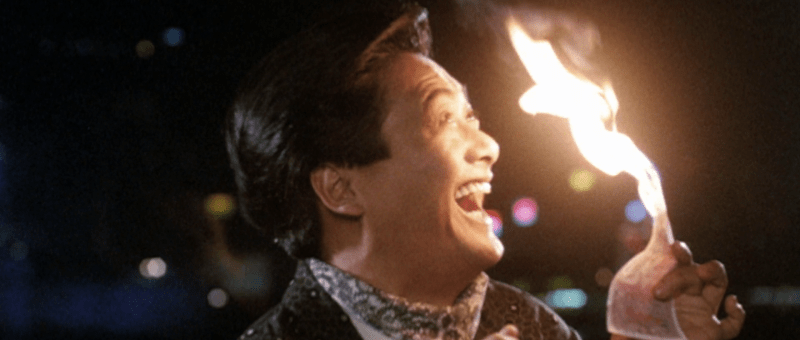
Each of the brothers is offered a new romantic possibility because of a telephone malfunction caused by an elderly lady driver forgetting her glasses and ploughing through local works mangling the lines. Sang is reunited with Ying Ying (and her martial arts champion swordsman mother) after overhearing a suicide attempt but ending up at her apartment by mistake, thereafter finding himself facing a challenge of masculinity on discovering that she already has a very buff and macho boyfriend who in his own way also seems jealous and insecure. Meanwhile, Long overhears a conversation between Beautiful and a colleague at the store about their ideal men, entering into passive aggressive courtship while discovering that her boyfriend is fabulously wealthy (or, at least, his father is) leading to a standoff in which he ends up proving his masculinity by burning money he doesn’t really have, smashing his own cheapo watch to intimidate the other guy into destroying his diamond Rolex, and then trashing the car he borrowed from Fai to expose the fact the other guy isn’t really wealthy or man enough to do the same because at the end of the day it’s his father’s money and he’s not so rich that these very expensive status symbols mean little to him. 

Fai meanwhile has a much more normal romance which is disrupted, mostly, by his brothers’ chaos and then near destroyed rather than forged through a misdirected phone call. After Long trashes his car, he asks Sang for the number for a repair guy but instead gets through to Fong (Fung Bo Bo) whose musician husband has just walked out on her seconds before which is why she’s quite rude to him on the phone, slamming the receiver down the second time he rings. Annoyed on a personal level Fai asks Long to troll her by ringing up at 3am every night causing her to injure her ankle and later fall on stage during a Cantonese opera performance. Then he ends up meeting her by chance in real life when she ends up buying the last of his favourite biscuits at a local cafe, only to discover she’s his interview for that day’s show where she’s supposed to talk about her art but finds his face so funny she can’t stop laughing. Had it not been for business with the telephone harassment they might have had a conventional romance, but the further machinations of the chaotic brothers soon convince her that Fai is not a reliable life partner. 

To convince her he’s really a good guy, Fai undertakes a grand gesture making himself the focus of his culinary/agony item by cooking up the spiciest soup imaginable and drinking it on live TV to atone but such a meaningless feat does nothing for Fong who doubtless is over romantic stunts and looking for something more concrete. Long’s grand gesture, by contrast, fares much better as he chases Piu Hung to a fancy hotel and makes a scene from the other side of the glass before falling in the pool while trying desperately to save an engagement ring while suddenly on the back foot after she learns about his philandering. Fai is only able to redeem himself through artifice, he and Fong signing through their romantic drama while performing Cantonese opera surrounded by the brothers and their girls trying at least to support him in his own romantic endeavour which their chaos has largely undermined. 

It’s another cosmic irony therefore that whereas the chaos of the misdirected telephone calls earns both Sang and Long everything they wanted in both career and romantic success, Fai who generally does the right thing ultimately loses out through another chaotic development while even Beautiful apparently achieves her dreams. Despite his earlier protestations during get phone call that Hong Kong was beautiful and there was no need to leave, Song and Ying Ying decide to travel the world perhaps expressing a degree of anxiety in pre-Handover Hong Kong, while Long is left with internalised anxiety over his new role as husband and father, and Fai is back pretty much where he started. A typical Lunar New Year nonsense comedy, there’s no disputing that much of the humour in The Eighth Happiness is of its time, but there is something of To’s later obsessions with comic fate and romantic farce that transcends Raymond Wong & Philip Cheng’s Cinema City silliness. 


Trailer (no subtitles)