My Name Ain’t Suzie (花街時代, Angie Chen, 1985)

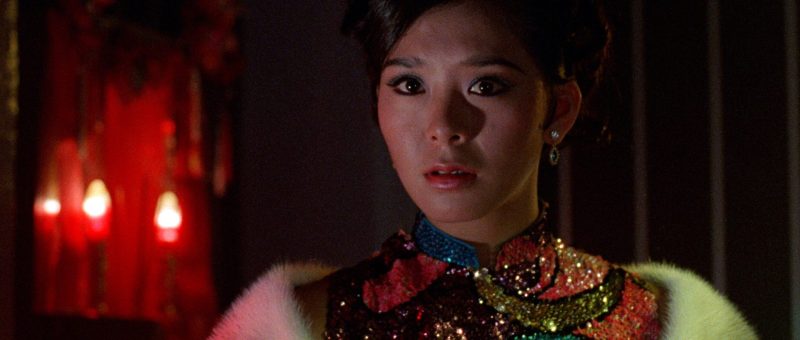
Angie Chen’s response to The World of Suzie Wong, My Name Ain’t Suzie (花街時代) opens in the present day with its heroine apparently a gothic mystery, a Miss Havisham-style recluse and ghost of old Hong Kong trapped within the apartment of a legendary madam from old Shanghai. This conception of her turns out to be something of a myth in itself, as accidental witness to history Dick recounts to a young man working as a delivery boy (Jacky Yeung Tak-Ngai) for his ever evolving chip shop that she is actually still a wildly successful restauranteur and fixture in the local nightclub scene. 

This small enclave of Wan Chai, however, seems to have become a kind of ghost town having been largely abandoned as the American sailors who were once its main clientele stopped coming after the twin waves of the Korean and Vietnam Wars. Shui Mei (Pat Ha Man-Jik) now owns this block which signals her eventual mastery over the world in which she lives, if also her loneliness and isolation, occasionally staying in Miss Xiao’s (Angela Yu Chien) old apartment as if unable to let go of the irresolvable past. Her story is then, at least in part, a chronicle of the nation’s own post-war history as she successfully adapts to the times, yet retains a sense of melancholy nostalgia for an older Hong Kong which is fast disappearing as the Handover looms closer.

Indeed, Shui Mei’s life begins in an impoverished fishing village which is set a stir by the return of Monroe, a seemingly glamorous woman dressed in the latest fashions and handing out sticks of gum to the awestruck locals. Sex work is seen as a pathway out of poverty and towards the new modern society that Monroe represents. Having been raped by three local boys, it is also in a way Shui Mei’s means of rejecting her victimisation and asserting full ownership over her body even if, in other ways, she is exploited by brothel owner Miss Xiao, herself an exile who fled to Hong Kong from the formerly glamorous and sophisticated international centre that was Shanghai.

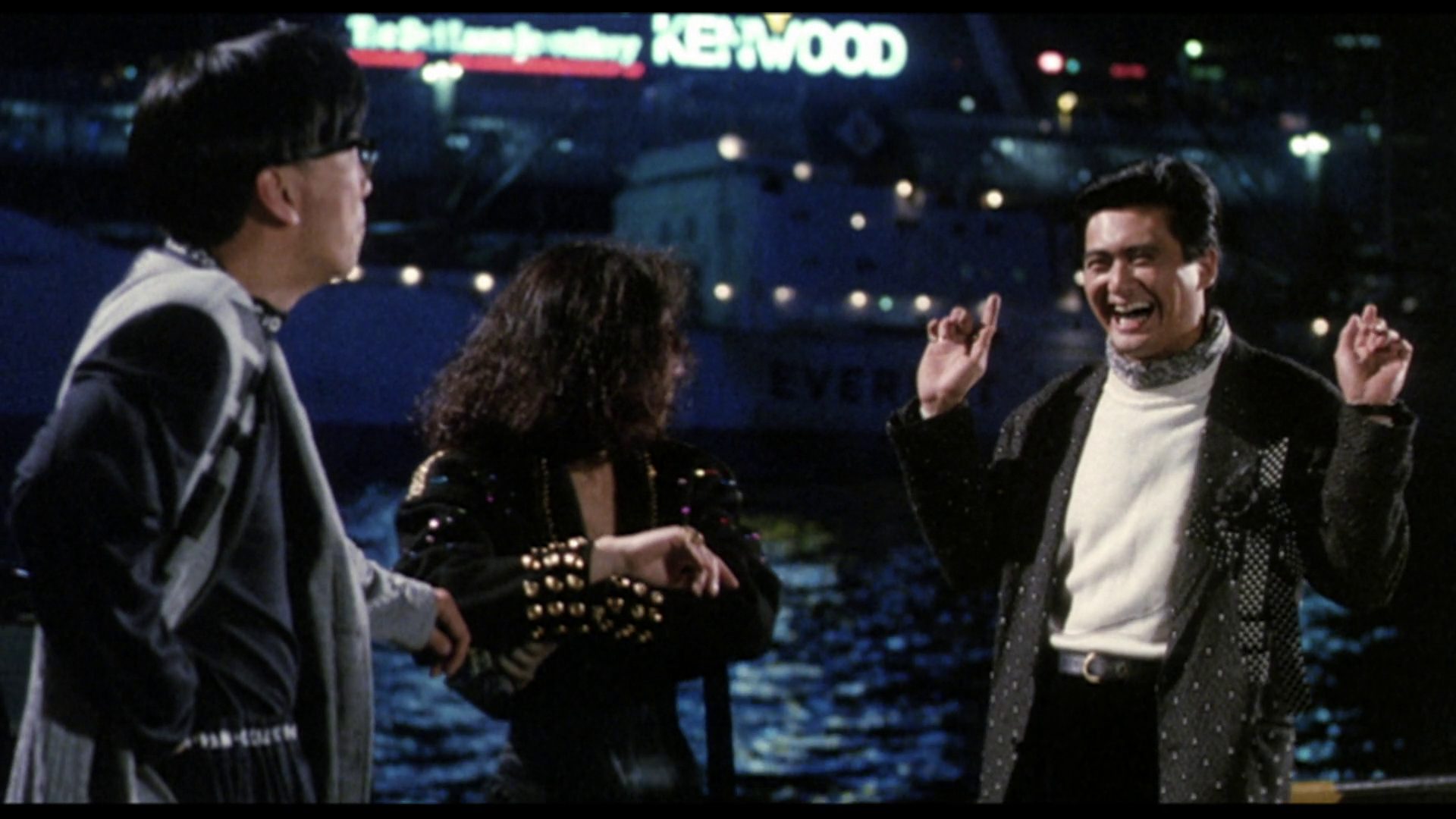
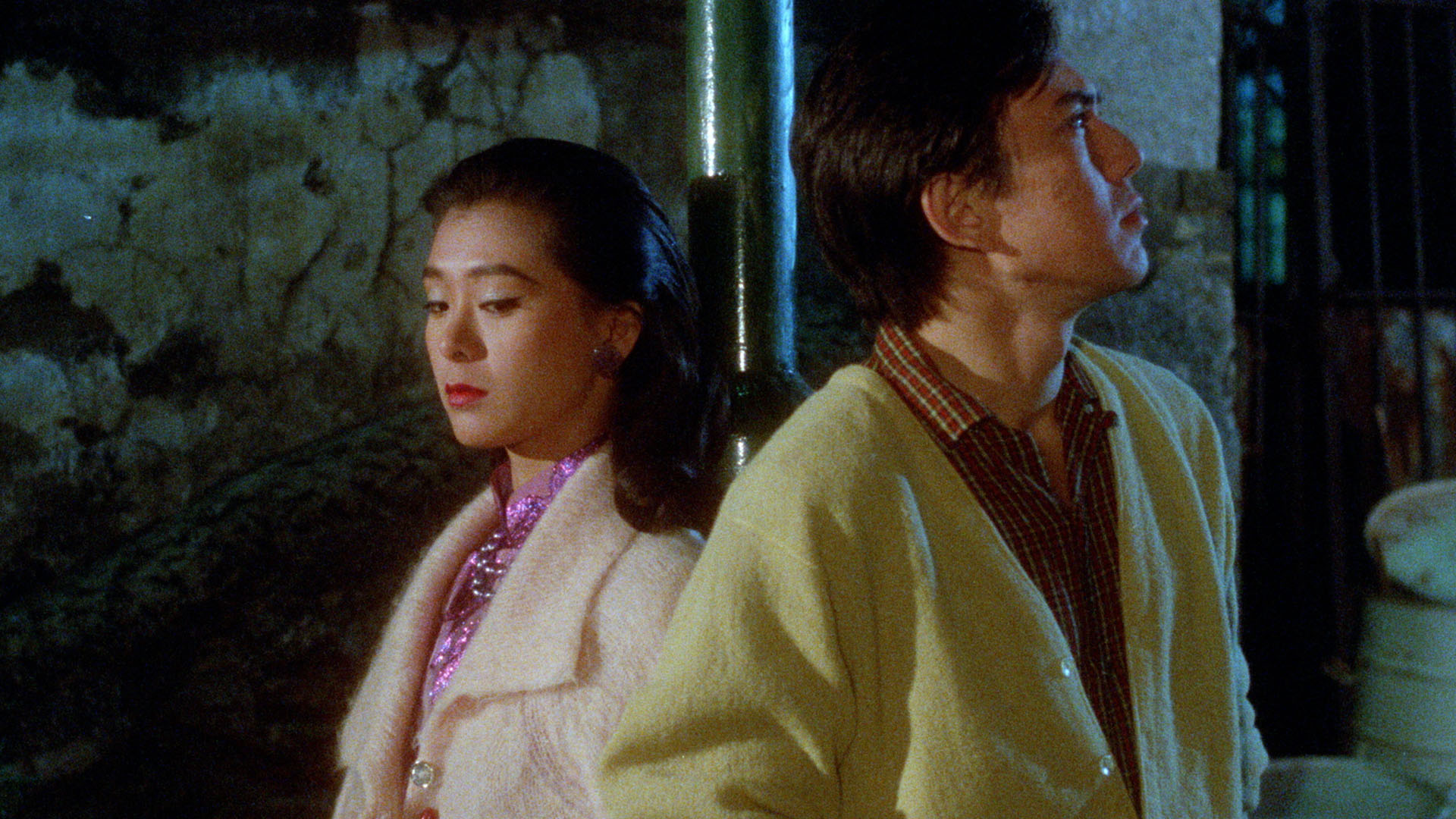
While working as a bar girl in Wan Chai, Shui Mei falls for Miss Xiao’s adopted son, Jimmy, on whom she has a quasi-incestuous fixation. Rather than casting an actor already under contract to Shaw Brothers, Chen cast a then unknown Anthony Wong, billed under the name Anthony Perry, through extensive auditions largely for the similarities he shared with the role. Like Jimmy, Wong was abandoned as a small child by his father, a British colonial official who already had a wife and children in the UK with whom he later emigrated to Australia. Jimmy’s idolisation of Hollywood icon James Dean and desperate search for his biological father, an American seaman, are symbolic of the search for cultural identity in a Hong Kong caught between a series of colonial influences while denied the kind of mastery over itself that Shui Mei eventually achieves.

Shui Mei’s relationship with Jimmy causes a rift with Miss Xiao that leads to her exile from Wan Chai, though Jimmy proves to be a faithless lover. After years of boasting of the revenge he’ll take for his mother’s suicide when he finds his father, Jimmy is seduced by promises of American wealth and comfort and accepts his invitation to return with him to the US, callously abandoning Shui Mei. Years later, when he returns with his two young sons, he has become in some ways very much Americanised. He complains that his first wife lacked a strong work ethic while having adopted an orientalist idea of the submissive hometown wife who will work hard in his business and raise his children. Though still resentful over her abandonment, Shui Mei harbours a lingering desire to rekindle the romance of her youth only to be cruelly disillusioned. Jimmy has forgotten her. He has not come back for Shui Mei, but is clearly in the market for a much younger woman, eventually marrying one of Shui Mei’s proteges at the bar she has opened in another part of the city after saving money made through temporarily working as a streetwalker.

This does, however, reinforce the idea that Shui Mei cannot rely on a man to save her but only on herself and female solidarity. When her new bar is targeted by triads, she enters a partnership with Sister Ying (Deanie Ip Tak-Han), the former wife of a gang boss who has pull in the underworld and a habit of chasing off gangsters with meat cleavers. Though the relationship is heavily implied as both a romantic and business partnership of equals, Shui Mei does not quite accept its validity due its same sex nature and wonders if she can really stay with Ying forever while tempted by the prospect of a more conventional, heterosexual union with Jimmy along with an easy life in America having run herself ragged creating a business empire and suffering the physical affects of a violent triad attack.

Though the end of her story may seem sad, Dick explains to his young delivery boy that Shui Mei refused to be beaten and got back up again each time she was knocked down, which perhaps provides a more positive prognosis in the shadow of the Handover. In one sense, she may have become a ghost of old Hong Kong as her silhouette now appears at Miss Xiao’s window, but may otherwise have avoided her fate. Despite their falling-out, an ageing Shui Mei returned to care for Miss Xiao who unlike her had been left behind by changing times, abandoned by all including her adopted son Jimmy who returns only after her death following many years of estrangement. Though Shui Mei may be consumed by an irresolvable nostalgia, like the nation itself she has progressed from her life in the impoverished fishing village to become an economic powerhouse while achieving total mastery over herself as an independent woman.


My Name Ain’t Suzie screened as part of Hong Kong Film Fest UK.

Trailer (English subtitles)
The Eighth Happiness (八星報喜, Johnnie To, 1988)

A literal series of crossed wires provoke romantic intrigue for three eccentric brothers in Johnnie To’s smash hit Cinema City Lunar New Year comedy, The Eighth Happiness (八星報喜). As so often in To’s subsequent films, a random instance of fatalistic chance changes each of brothers’ lives though not perhaps permanently as the surprisingly ironic coda makes plain. Even so, their parallel quests for love of one kind or another perhaps tell us something about the changing Hong Kong society in the midst of rising economic prosperity and looming Handover anxiety. 

Seemingly without parents, the three Fong brothers live together in a well-appointed multi-level home owned by oldest sibling Fai (Raymond Wong Pak-ming) who hosts a daytime television program titled Mainly Housewives which includes a cookery/agony aunt segment in which he attempts to solve someone’s relationship problems through food. As in many of Raymond Wong’s other roles in Cinema City comedies, Fai is feminised throughout not only in acting as the “mother” of the family preparing all the meals at home but also in his single status and the focus of his television show which nevertheless intros him with the James Bond theme. 

Second brother Long (Chow Yun-fat), meanwhile, actively camps it up claiming that he pretends to be gay in order to get girls after lulling them into a false sense of security. Despite being engaged to air hostess Piu Hung (Carol Cheng Yu Ling), he has a side mission going to sleep with a woman from each of Hong Kong’s 19 districts and is a relentless Casanova striking up an affair with unexpectedly chaotic department store assistant “Beautiful” (Cherie Chung Chor-hung). Youngest brother Sang (Jacky Cheung Hok-yau), meanwhile, is a painfully shy aspiring cartoonist who becomes an accidental white knight to a young woman caught up in a bizarre flashing incident in the local park only to be mistaken for the culprit himself. 

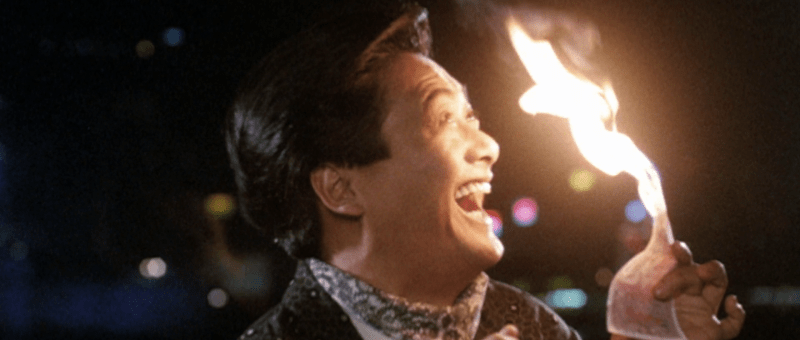
Each of the brothers is offered a new romantic possibility because of a telephone malfunction caused by an elderly lady driver forgetting her glasses and ploughing through local works mangling the lines. Sang is reunited with Ying Ying (and her martial arts champion swordsman mother) after overhearing a suicide attempt but ending up at her apartment by mistake, thereafter finding himself facing a challenge of masculinity on discovering that she already has a very buff and macho boyfriend who in his own way also seems jealous and insecure. Meanwhile, Long overhears a conversation between Beautiful and a colleague at the store about their ideal men, entering into passive aggressive courtship while discovering that her boyfriend is fabulously wealthy (or, at least, his father is) leading to a standoff in which he ends up proving his masculinity by burning money he doesn’t really have, smashing his own cheapo watch to intimidate the other guy into destroying his diamond Rolex, and then trashing the car he borrowed from Fai to expose the fact the other guy isn’t really wealthy or man enough to do the same because at the end of the day it’s his father’s money and he’s not so rich that these very expensive status symbols mean little to him. 

Fai meanwhile has a much more normal romance which is disrupted, mostly, by his brothers’ chaos and then near destroyed rather than forged through a misdirected phone call. After Long trashes his car, he asks Sang for the number for a repair guy but instead gets through to Fong (Fung Bo Bo) whose musician husband has just walked out on her seconds before which is why she’s quite rude to him on the phone, slamming the receiver down the second time he rings. Annoyed on a personal level Fai asks Long to troll her by ringing up at 3am every night causing her to injure her ankle and later fall on stage during a Cantonese opera performance. Then he ends up meeting her by chance in real life when she ends up buying the last of his favourite biscuits at a local cafe, only to discover she’s his interview for that day’s show where she’s supposed to talk about her art but finds his face so funny she can’t stop laughing. Had it not been for business with the telephone harassment they might have had a conventional romance, but the further machinations of the chaotic brothers soon convince her that Fai is not a reliable life partner. 

To convince her he’s really a good guy, Fai undertakes a grand gesture making himself the focus of his culinary/agony item by cooking up the spiciest soup imaginable and drinking it on live TV to atone but such a meaningless feat does nothing for Fong who doubtless is over romantic stunts and looking for something more concrete. Long’s grand gesture, by contrast, fares much better as he chases Piu Hung to a fancy hotel and makes a scene from the other side of the glass before falling in the pool while trying desperately to save an engagement ring while suddenly on the back foot after she learns about his philandering. Fai is only able to redeem himself through artifice, he and Fong signing through their romantic drama while performing Cantonese opera surrounded by the brothers and their girls trying at least to support him in his own romantic endeavour which their chaos has largely undermined. 

It’s another cosmic irony therefore that whereas the chaos of the misdirected telephone calls earns both Sang and Long everything they wanted in both career and romantic success, Fai who generally does the right thing ultimately loses out through another chaotic development while even Beautiful apparently achieves her dreams. Despite his earlier protestations during get phone call that Hong Kong was beautiful and there was no need to leave, Song and Ying Ying decide to travel the world perhaps expressing a degree of anxiety in pre-Handover Hong Kong, while Long is left with internalised anxiety over his new role as husband and father, and Fai is back pretty much where he started. A typical Lunar New Year nonsense comedy, there’s no disputing that much of the humour in The Eighth Happiness is of its time, but there is something of To’s later obsessions with comic fate and romantic farce that transcends Raymond Wong & Philip Cheng’s Cinema City silliness. 


Trailer (no subtitles)

Doubles Cause Troubles (神勇雙妹嘜, Wong Jing, 1989)

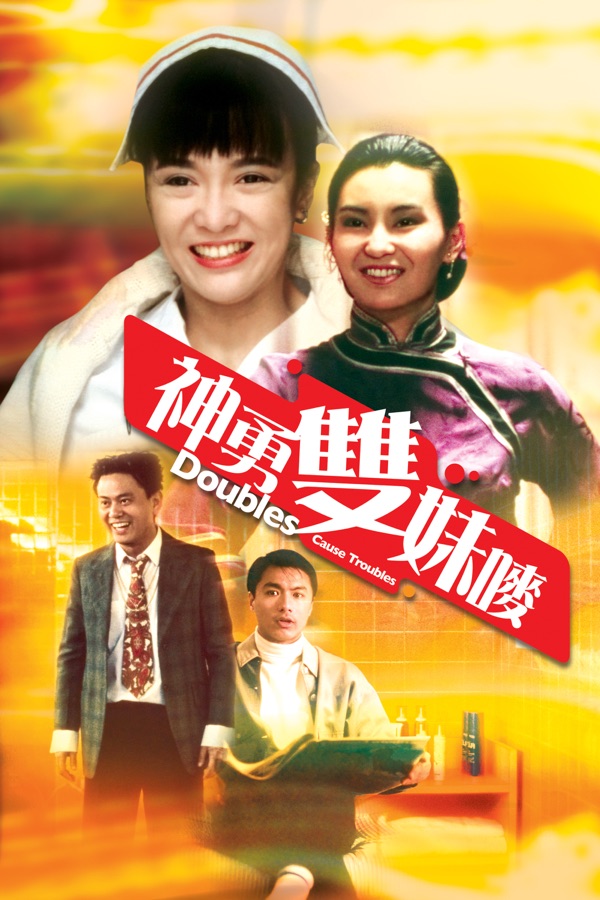
Doubles cause troubleWould you be willing to live with someone you hate for a whole year just to get a share in an apartment? According to the sheer prevalence of this plot device in comedies throughout the ages, the chances are most people would, especially in a city like Hong Kong where competition is fierce. In any case the duelling cousins at the centre of Wong Jing’s disappointingly normal farce Doubles Cause Troubles (神勇雙妹嘜) find themselves doing just that, only the situation turns out to be much more complicated than one might imagine.

When self-centred nurse Liang Shanbo (Carol “Do Do” Cheng Yu-Ling) receives a visit from a lawyer informing her that her grandmother has passed away she’s a little put out because the old lady owed her money. She’s comforted with the news that she’s been left an apartment, but less so when she learns there’s a catch. Shanbo’s grandma really wanted her to patch things up with her cousin, actress Zhu Yingtai (Maggie Cheung Man-Yuk), and has left the apartment to both of them with the caveat that they have to live there together for a period of one year after which they can sell it and inherit 50% of the proceeds each or else it’ll all go to charity. Neither Yingtai or Shanbo is very happy about the idea but it’s too good an opportunity to pass up and after all, it’s only for a year. When they arrive, however, they discover there’s another tenant – Ben (Poon Chun-Wai), a suave businessman who leaves them both smitten. Ben, it turns out, is not quite what he seems and staggers home on the first night to die in Yingtai’s arms after muttering something about a code.

Unlike most Hong Kong comedies of the era, Wong plays things disappointingly straight while remaining as broad as it’s possible to be. Odd couple Shanbo and Yingtai bicker and trade childish insults while throwing themselves first at the handsome Ben and then at his equally good-looking “brother” Sam (Wilson Lam Jun-Yin) without really giving too much thought to anything else that’s going on until they find themselves well and truly embroiled in a conspiracy. It turns out that Ben had been involved in a smuggling operation in which he betrayed his team and made off with a priceless Taiwanese “national treasure” that the rest of the gang would like to recover which is why Shanbo and Yingtai are being followed around by a “flamboyant” rollerskating henchman and a butch female foot-soldier.

The political realities of 1989 were perhaps very different, but there is an unavoidable subtext in the fact that the dodgy gangsters are all from the Mainland and are desperate to get their hands on a precious Taiwanese national treasure (which they intend to sell for a significant amount of money). The girls find themselves with ever shifting loyalties as they reassess Ben, come to doubt Sam, and fall under the influence of mysterious “inspector” Xu (Kwan Ming-Yuk) whose warrant card is “in the wash”. Completely clueless, they are helped/hindered by useless petty gangster Handsome (Nat Chan Pak-Cheung) and his henchman Fly (Charlie Cho Cha-Lee) who’ve been chasing Shanbo all along while Yingtai falls victim to Wong himself in one of his characteristically sleazy cameos as a lecherous businessman who has toilets instead of furniture in his living room and a boxes full of date rape drugs behind the bar (poor taste even for a Wong Jing movie).

Of course the real message is that blood ties and immediate proximity to danger can do wonders for a “difficult” friendship and so granny gets her wish after all even if not quite in the way she might have planned. Then again, why was Ben staying in her luxury apartment in the first place? Who can say. Setting a low bar it may be, but Doubles Cause Troubles is not even among Wong Jing’s funniest comedies though it does have its moments mostly born of sheer absurdity and enlivened by the presence of a young Maggie Cheung alongside a defiantly committed cast desperately trying to make the best of the often “risible” material.


Currently streaming via Netflix in the UK and possibly other territories too.

Celestial pictures trailer (English/traditional Chinese subtitles)

Prince Charming (青蛙王子, Wong Jing, 1984)

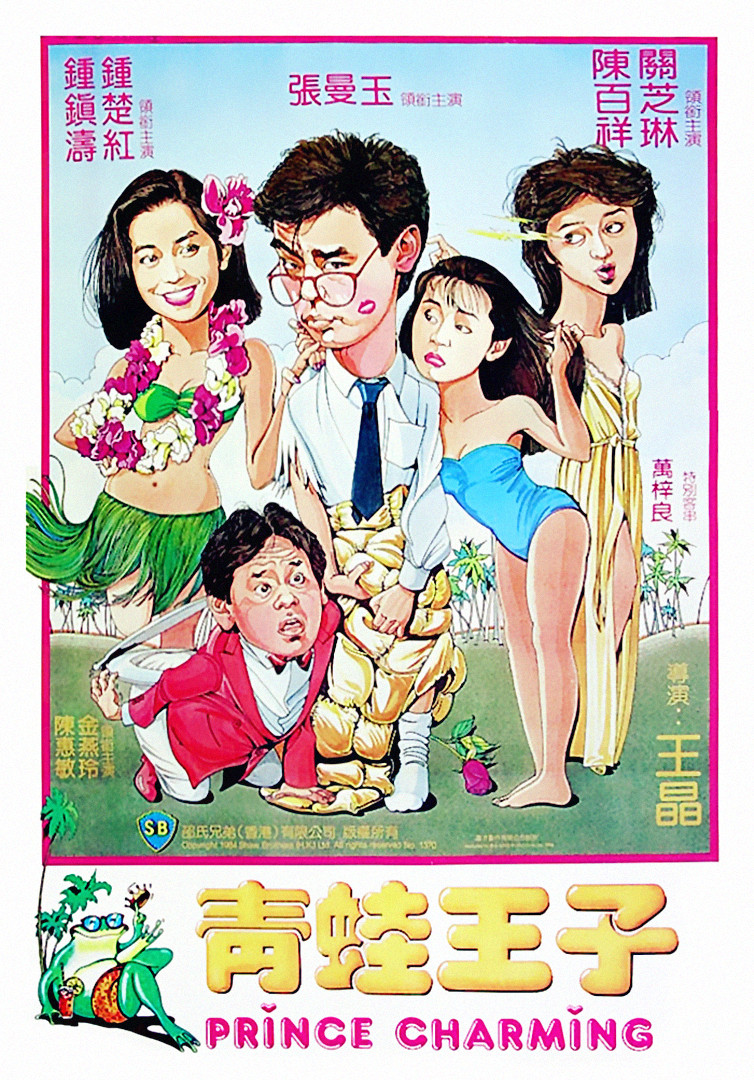
Prince charming 84 poster“This isn’t a film from the 1930s!” a confused sidekick exclaims part way through Wong Jing’s zany ‘80s comedy Prince Charming (青蛙王子). He’s right, it isn’t, but it might as well be for all the farcical goings on in Wong’s hugely populist, unabashedly zeitgeisty romp through a rapidly modernising society. Starring popstar Kenny Bee, Prince Charming also marks the feature film debut of the later legendary Maggie Cheung who would find herself making a fair few disposable comedies in the early part of her career. All the Wong trademarks are very much in evidence from the sometimes crude humour to the random narrative developments and deliberate theatricality but it has its charms, even if perhaps despite itself.

Signalling the “aspirational” atmosphere right away, Wong opens in “Hawaii” with Kenny Bee performing one of the many musical numbers which will be heard throughout the film (which is also a kind of idol movie as well as a populist Shaw Brothers Comedy). Chen Li Pen (Kenny Bee) is the son of an oil magnate and hotel chain manager but unlike his father, is a sensitive, nerdy young man who gets the hiccups around attractive women and has never had any luck with the opposite sex. Nevertheless, his mother wants to set him up with an arranged marriage – something which he vehemently opposes but understands will become harder for him fend off if he can’t find himself a love match in good time. Enter his old friend Lolanto (Nat Chan Pak-Cheung) who is a self-styled ladies man if a bit “common”. Lolanto has come to Hawaii on holiday and to hang out with Li Pen, but like any young guy he also wants to meet some girls.

The guys end up in a kind of sparring match with the two ladies staying in an adjacent room at the hotel, May (Cherie Chung Cho-Hung) and Kitty, (Maggie Cheung Man-Yuk) following a series of misunderstandings. When the girls drug them and then somehow leave them on a rock in the middle of the ocean, the boys are humiliated but don’t have too long to nurse their wounds because Li Pen’s dad sends them back to Hong Kong to investigate suspected embezzlement at head office. As luck would have it, both May and Kitty work for Li Pen’s family firm (which was perhaps why they were staying in the hotel). Another misunderstanding sees May assume Li Pen is a former triad looking for a new start, so she “bribes” the hiring department to get him a job as a chauffeur, while Lolanto ends up in the boss’ office posing as Li Pen. Hilarity ensues.

Aiming a squarely for the populist, Wong’s defiantly aspirational vision revolves around the fabulously wealthy and internationalised Li Pen who went to college in the US and lives most of his life in Hawaii, perhaps not quite understanding Hong Kong in the same way Lolanto does, both because of his outsider status and because of the freedom his wealth gives him. When the two swap roles they each get a kind of education, but their real quest (while halfheartedly investigating the embezzlement scandal) is winning over Kitty and May who think they’re dating a CEO and a chauffeur respectively. Despite their irritation when they realise their mistake, both May and Kitty perhaps come to realise that the deception is a part of what eventually drew them to the guys and they’re a better match than they might otherwise have imagined.

Meanwhile, Wong finally remembers the embezzlement plot and introduces a third woman, Puipui (Rosamund Kwan Chi-Lam), who is secretly a plant set up to seduce the pure hearted Li Pen and marry him because this will in some way prevent the embezzlement scam from coming to light. Puipui’s scheme eventually kicks off the ridiculous finale in which the gang find themselves chased by goons and having to play pool for their lives with hostages hooked up to electric chairs which will be triggered when a certain number of points are scored. Wong adds a host of cutesy touches from cartoon hearts around our lovelorn heroes and adorable doodles popping up as on screen graphics while Kenny Bee and Cherie Chung also get a completely bizarre musical number at the midway point where they pretend to be happy frogs marooned on a private lily pad. It doesn’t make any sense, but it really doesn’t matter. Completely throw away, but strangely fun.


Currently streaming on Netflix UK (and perhaps other territories)

Celestial Pictures trailer (English subtitles)