So Close (夕陽天使, Corey Yuen Kwai, 2002)

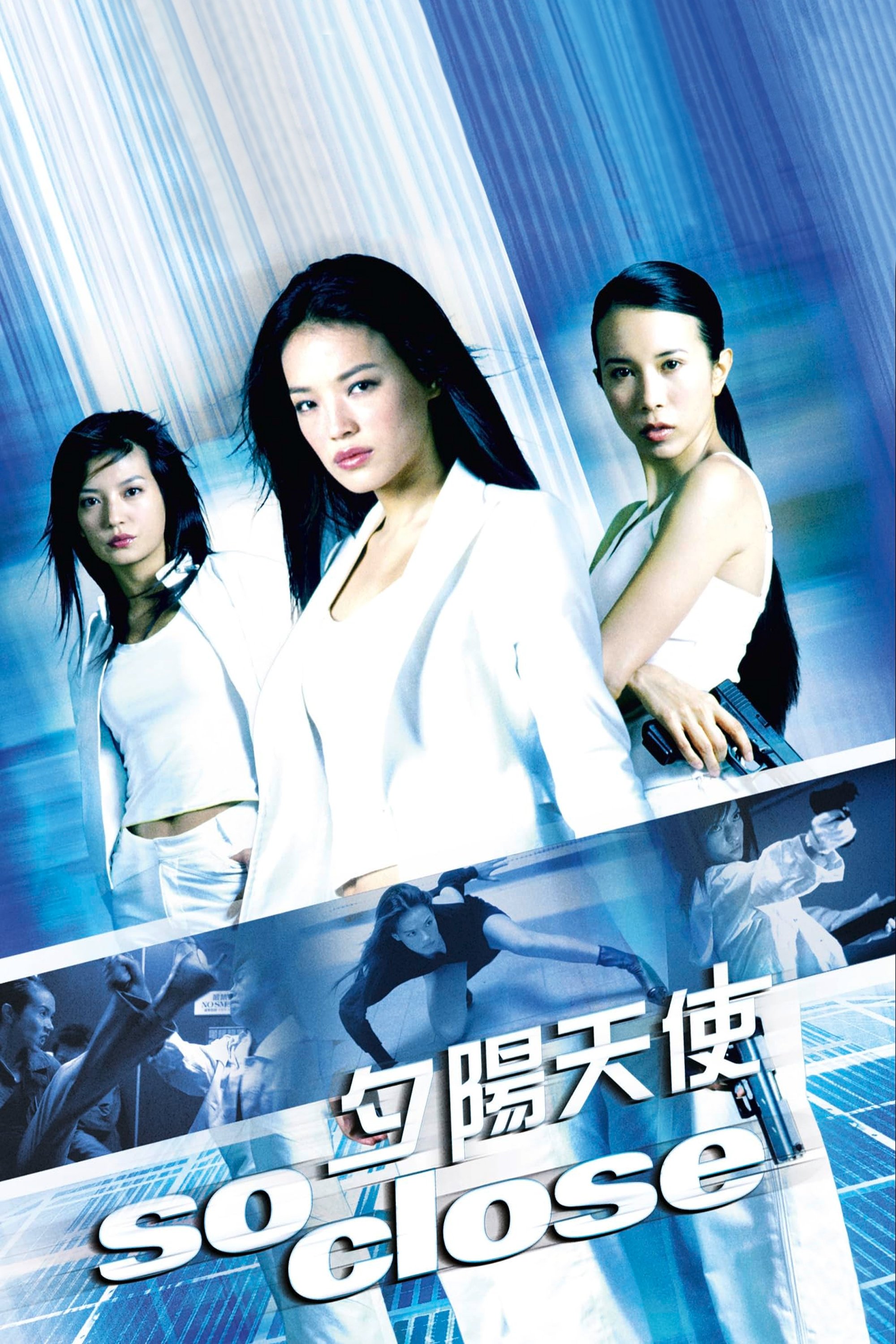
A latish entry in post-millennial cyber thrillers, Corey Yuen’s So Close (夕陽天使) finds two hit women sisters safeguarding next generation technology in keeping it out of the hands of corrupt businessmen who in fact murdered their father to get it. They claim he always intended to gift his all-powerful mass surveillance tool to the police, which either seems politically uncomfortable or incredibly naive, but have been using it themselves to earn their keep as killers for hire albeit justifying themselves in insisting on the moral bankruptcy of their targets.

In this case, that would be Chow Lui (Shek Sau) who according to “Computer Angel” made his “evil fortune” through drug smuggling. Infinitely smug, Chow thinks he has better technology but is soon proved wrong as Computer Angel admits she also sent the virus, or more accurately manifested it, to teach Chow a lesson. Yuen fills the film with 90s cyberpunk motifs, even having Computer Angel, later identified as Lynn (Shu Qi), jump off a building in a shot that is a clear homage to Ghost in the Shell while otherwise employing electronic imagery of cables and wires though the “World Panorama” system largely works through satellite.

In the opening sequence, Chow’s company is also revealed to be a global enterprise connected around a large table via the internet while futuristic systems allow him to have video calls with associates speaking Japanese and English. He suggests they simply pay the hackers to save their reputation which is apparently built on their world-class security systems though he himself perhaps remains sceptical abruptly shutting down his younger brother’s attempt to broker a deal investing in a company called Dragon. His office meanwhile has a bonsai tree in the background and his brother Nunn seems to have very close ties with a Japanese gangster hinting at a possible economic anxiety.

This fraternal conflict is eventually reflected in the fracturing relationship between the two sisters as field agent Lynn informs her sister Sue (Zhao Wei) that she wants to give up the killing trade after reuniting with an old boyfriend and deciding to get married. Techno wiz Sue has no other means of supporting herself and is resentful that Lynn always takes charge and won’t let her participate in missions, though Lynn is later vindicated when Sue’s hasty decision to take on a solo job goes just about as wrong as it can go. Meanwhile, their relationship is also strained by the presence of Hung (Karen Mok), a policewoman investigating Chow’s death who, as she later says, is strangely drawn to Sue who rollerblades around her at a record store with thinly concealed desire. 

There might be something in the fact that the actresses playing Sue and Lynn are from the Mainland and Taiwan respectively each performing their scenes in Mandarin but dubbed into Cantonese for the local release. They are indeed outsiders, firstly because of their unusual profession and secondly because of their all-powerful surveillance tool that allows them to carry out their missions yet also acting as a moral authority even if as Lynn later says they kill for money not conviction. World Panorama allows them to edit surveillance footage, placing fake avatars of themselves in the digital space and allowing them to otherwise recreate reality in a way that seems in keeping with the film’s otherwise low-key special effects which have an almost tongue-in-cheek quality parodying other more serious cyber thrillers from the mid-90s. 

The film’s English title comes from Yuen’s use of the Carpenters’ track (They Long to Be) Close to You, yet the Chinese is the more melancholy Sunset Angel which is most obviously refers to the film’s final scene if also perhaps calling time on the sisters’ roles of guardians of next-gen tech and avenging ghosts of the machine working out the bugs of corrupt gangster businessmen. In any case, they move through the “real” world like digital avatars performing incredible feats of human agility and not least in the high impact action scenes culminating in a lengthy katana fight in a tatami mat room which both echoes the cyberpunk aesthetics and reinforces an idea of corporatising colonialism finally blown away by the forces of female solidarity and an unlikely loves story between a soldier and a bandit. 


Trailer (English subtitles)

Love on Delivery (破壞之王, Stephen Chow & Lee Lik-Chi, 1994)

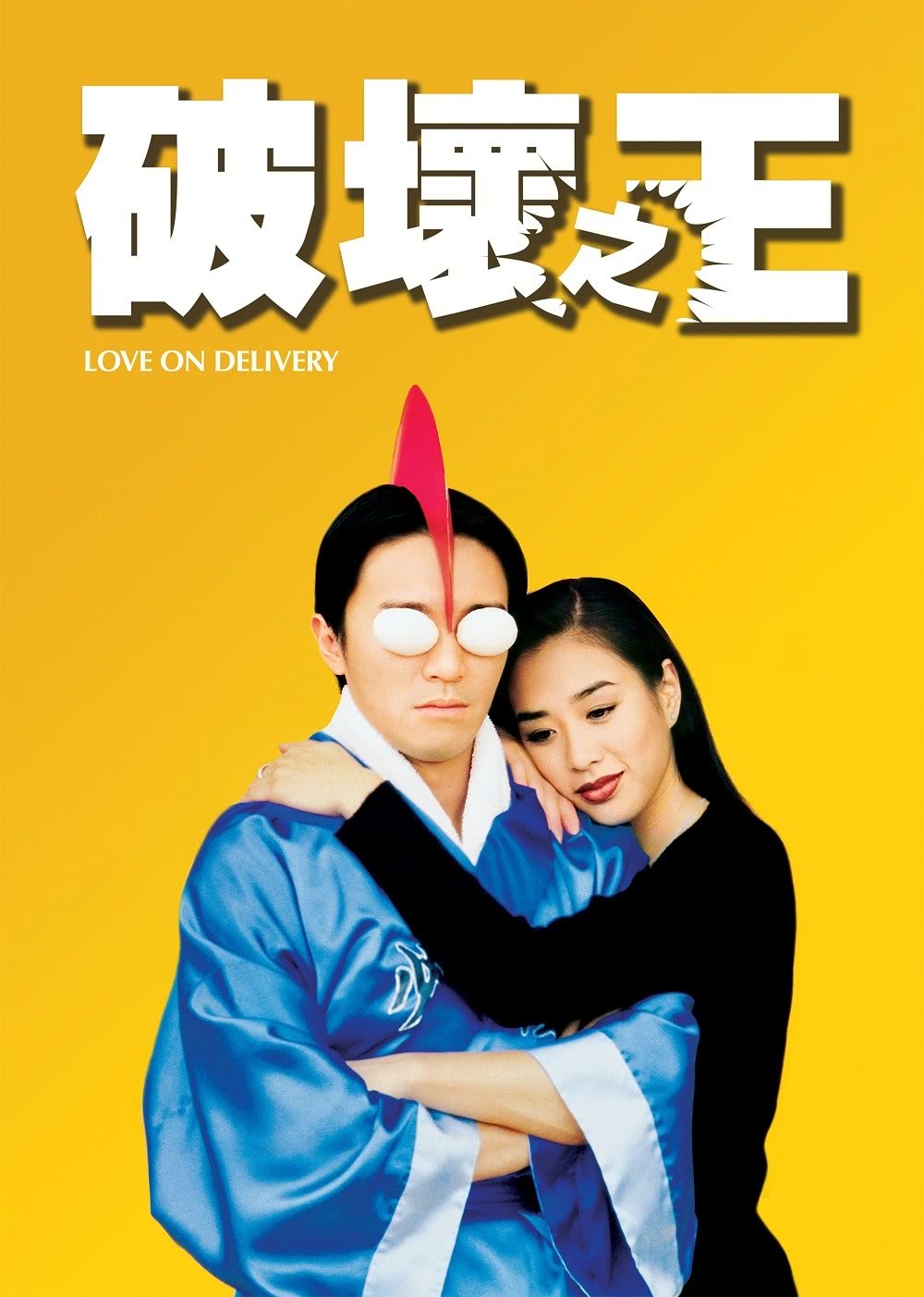
Love on Delivery posterBy the standards of ‘90s Hong Kong cinema, early Stephen Chow hit Love on Delivery (破壞之王) might seem refreshingly down to earth but make no mistake this under appreciated romantic comedy gem is as zany as you’d expect from the master of surrealist laugh a minute humour. A curious tale of cultural pollinations, Delivery once again stars Chow as an ineffectual loser trying to impress a girl but this time it’s a battle of wits he ends up winning when he unexpectedly finds himself standing up for “garbage” in the face of arrogant elitism.

The film opens not with its hero, but with judo champion Li (Christy Chung) who finds herself persistently sexually harassed by her slimy dojo leader who is apparently determined to win her because she’s the only woman capable of “throwing him over”. Seeing as his chat up lines are things like “my house is really big and my bed is really comfy come and see”, Li isn’t really interested which is why she ends up kissing in the right place at the right time delivery boy, He (not altogether against his will). He (Stephen Chow) is smitten, but Li has been looking for a “hero”, someone big, strong, and manly who can match her martial arts prowess but also respect her as a human being. Unfortunately, He is a weakling and a coward, as Li discovers when the boss of the dojo interrupts their first “date” and tries to thump He who activates his well honed coward skills and dodges the blow which lands squarely in the middle of Li’s face.

Fearing his romantic dreams have been well and truly shattered, He resolves to become stronger so he can fight back which is how he ends up meeting conman and stall owner “Devilish Muscle Man” (Ng Man Tat) who claims to be the last heir to “Ancient Chinese Boxing” as well as a close friend of Bruce Lee and Jackie Chan (only he doesn’t like to name drop). Devilish Muscle Man offers to “train” He in the ancient martial arts, for a “small” fee. Though all of Devilsh Muscle Man’s “training” is a sham, He starts to get quite good at it and eventually defeats the dojo boss whilst wearing a giant fluffy Garfield head. However, a new challenger soon enters the arena – a childhood friend of Li’s who went to Japan and has become an “elite” karate champion claims to be the mysterious Garfield head, stealing He’s thunder and Li’s heart along with it! 

Chow may be in a relatively restrained mood, but there are pop-culture references and in jokes galore which eventually culminate in a Hong-Kong vs Japan standoff in which Chow ends up inheriting Devilish Muscle Man’s kung fu persona which saw him fighting in a strange costume inspired by Ultraman (or possibly Chinese Ultraman rip off Inframan). Meanwhile, the big bad – Li’s ex Duan Shui Liu (Ben Lam Kwok-Bun), dresses in an old fashioned Japanese students’ uniform and rails about the “garbage” people of Hong Kong with their “garbage” kung fu which he plans to eradicate through affirming the primacy of karate as the best and only real martial art. He’s first problem is that he actually self identifies as “garbage” – he is only a poor delivery boy working for a tiny cafe which stoops to various scams to trick its customers out of their money and/or complaining and has no real prospects of being able to lift himself out of the gutter despite his new found fighting spirit and commitment to martial arts training. Nevertheless, He decides to own his “garbage” status to stand up for all the other “garbage” people resisting “Japanese imperialism” in the only way he knows how – by using his wits to trick Duan into allowing himself to be defeated.

He, a perpetually “nice guy” who gives away not only his entire wallet but all his clothes to a homeless father, eventually defeats the forces of “elitism” through an acknowledgement of his inferior fire power and an efficient use of the skills he does have to create a confusing atmosphere of chaos which ensures his final victory. A mildly subversive tale of fighting back against “the elite”, Love On Delivery is also a hilarious romantic comedy in which the nice guy gets the girl solely by demonstrating himself brave enough to face defeat with, well if not dignity, perhaps resolve.


Currently available to stream on Netflix in the UK (and possibly other territories)

Celestial Pictures trailer (Cantonese with English/Traditional Chinese subtitles)