Tracey (翠絲, Jun Li, 2018)

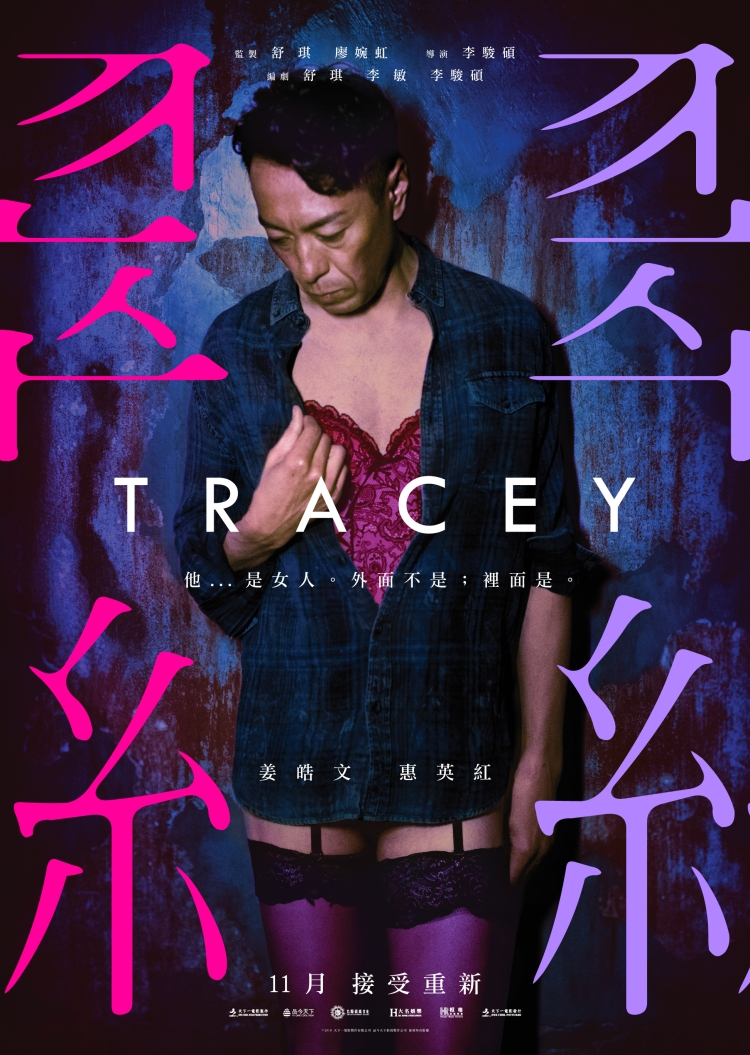
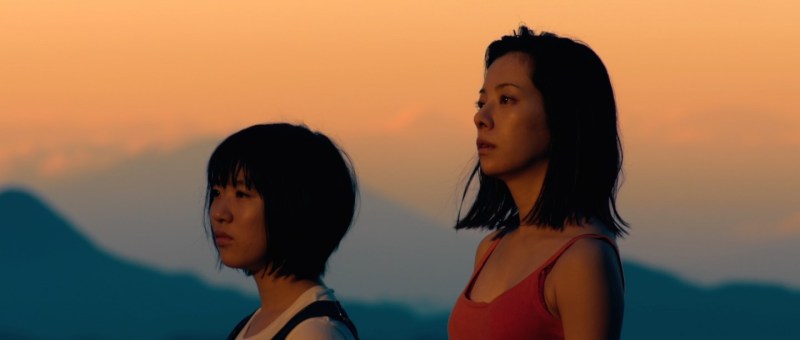
Tracey PosterHong Kong has often sought to present itself through its cinema as an ultramodern, cosmopolitan city, claiming a kind of cultural freedom from Mainland oppression. In truth, however, there are areas in which it may disappoint itself. Jun Li’s debut feature, Tracey (翠絲), is in many ways an empathetic attempt to redress the balance in making plain the destabilising effect emotional repression can exert across an entire society, causing nothing other than the mutual unhappiness which provokes one person to oppress another in service of nothing more than conventionality.

A married, 50-something father of two grown up children, Tai-hung’s (Philip Keung) conventional, ordered life is disrupted when he receives a phone call telling him that a treasured childhood friend, Ching, has been killed while working in Syria as a war photographer. Unbeknownst to anyone, and not quite admitted even to himself, Ching had been the love of Tai-hung’s life and his death finally forces him into a reconsideration of the feelings which are now, perhaps, a lost opportunity. The sense of loss is doubly brought home when he collects Ching’s partner, Bond (River Huang), from the airport and discovers that he had been legally married to another man in the UK though the pair’s marriage certificate is not valid in Hong Kong which presents a problem in trying to repatriate Ching’s ashes.

Bond, himself from Singapore where homosexuality is at least technically still illegal, knew of Ching’s love for Tai-hung and Tai-hung’s unrealised attraction to Ching but struggles with Tai-hung’s decision to not to embrace his sexuality, preferring to marry and have children in pursuit of a conventional life. Despite having grown up in an arguably even more oppressive society, Bond is 20 years younger and has perhaps benefitted from an increasingly liberal world in which greater awareness has afforded him the vocabulary to process Tai-hung’s complex identity with a delicacy that was not available to Tai-hung in his youth, nor to his quasi-mentor Brother Darling (Ben Yuen) – a performer of Chinese Opera who specialised in female roles and confided to Tai-hung that he identified as a woman but is unlikely to have ever come across the term “transgender” let alone claim it as an identity.

Nevertheless, Bond’s arrival begins to push Tai-hung’s long repressed longing to the surface even if his first attempt to explain to Bond that he too identifies as a woman is met with mild derision as Bond misunderstands him in assuming his claiming of a female identity is an attempt to reject his homosexuality. What Tai-hung tries to explain to him is that he does not see himself as a gay man but a straight woman and therefore felt that pursuing his love for Ching, a man who loved men, would never have been a possibility. Fearing his gender identity would never be accepted by anyone, Tai-hung kept his true self hidden even from his closest friends and unwittingly placed a wedge between himself and the man he loved.

Bond pushes him still further with the perhaps unfair charge that his entire life has been essentially selfish and founded on the continued deception of his wife and children. Despite its seeming conventionality, Tai-hung’s family life is not altogether happy. His wife, Anne (Kara Hui), is a fiercely conservative sort who prizes nothing so highly as respectability as she proves by rifling through the maid’s room in search of evidence of sexual indiscretion which she later uses as grounds to suggest firing her. As the couple’s son Vincent (Ng Siu-hin) points out, there is also an unpleasant racial component to her puritanical morality which objects to her Indonesian maid having a right to a private life, fearing that she will bring “disease” into the house by sleeping with another “foreigner”. This is perhaps why she objects to her pregnant daughter’s (Jennifer Yu) desire to divorce her highflying lawyer husband when she discovers that his serial philandering has resulted in a sexually transmitted disease which he has passed to her and which has thankfully been detected early enough to avoid harming the baby.

Despite Anne’s pleas with her daughter that you don’t reject someone for turning out to be different than you assumed them to be, she is obviously not ready to accept Tai-hung’s authentic self despite having been aware that there was always something slightly amiss within their marriage which prevented it from being a true and total union. It is perhaps this sense of nagging incompleteness and unhappiness which has pushed Anne’s need for respectable conventionality into overdrive, as if a superficially successful adherence to the rules could be a substitute for emotional fulfilment. Her own suffering then seeks to push her daughter into the same space as a self-sacrificing housewife who has exchanged personal happiness for the cold comfort of social respectability. 

Thanks to reuniting with a now elderly Brother Darling and finding himself accepted by the younger Bond, Tai-hung begins to find the courage to embrace his true self and discovers that many of his friends and relatives are more supportive than he might have assumed even if some of them may need time to get over the initial shock. As his mother tells him, the important thing in life is learning to find one’s peace of mind – something which could only be helped by abandoning the outdated Confucian ideas which continue to define the social order in favour of something warmer, freer, and fairer built on mutual acceptance and compassion.


Tracey screens as the closing night gala of the eighth season of Chicago’s Asian Pop-Up Cinema on April 24, 7pm, at AMC River East 21. It will also be screened in London as the closing night of this year’s Chinese Visual Festival on 9th May, 6pm, at BFI Southbank where members of the cast and crew will be attendance for a Q&A.

 Original trailer (English subtitles)

Small Talk (日常對話, Huang Hui-Chen, 2016)

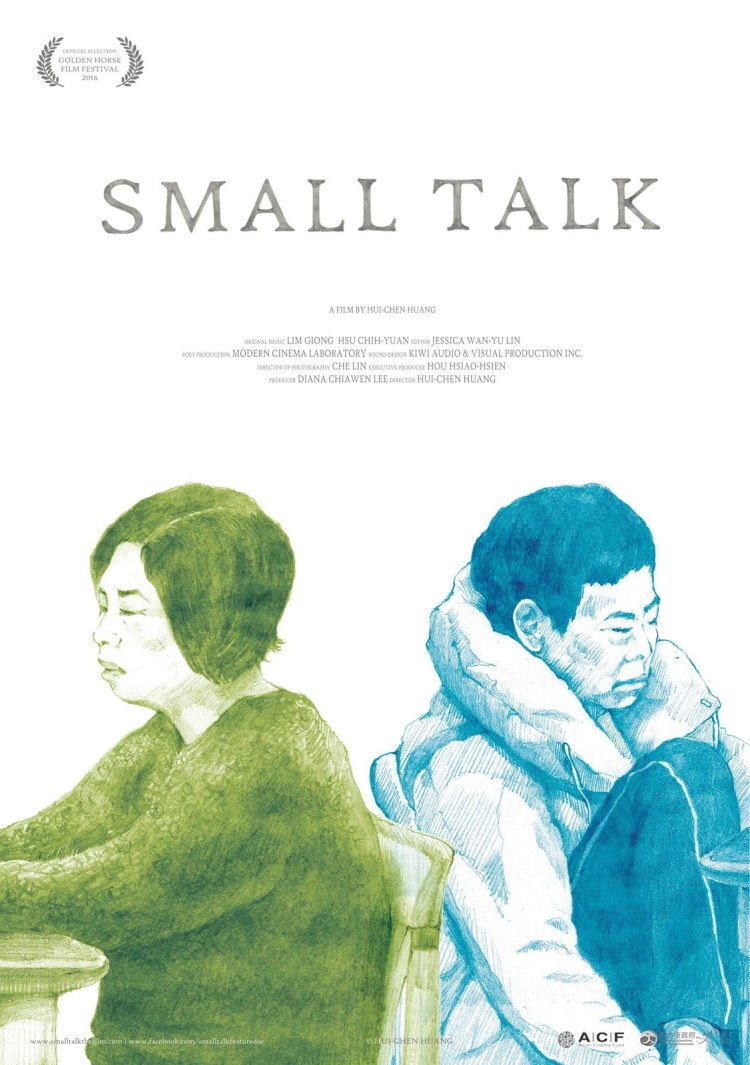
Small talk poster“Who would want to understand me?” asks the laconic mother of filmmaker Huang Hui-Chen early in her autobiographical documentary, Small Talk (日常對話, Rì Cháng Duì Huà). “We do” the director replies, “but you won’t let us”. Huang’s film is, in a sense, an attempt to break through an emotional fourth wall in order to make sense of her complicated relationship with her distant mother Anu if only to ensure that her own daughter never feels as rejected or isolated as she herself has done living under the same roof with a woman she cannot quite claim to know.

In fact, Huang’s childhood memories of her mother are mainly to do with her absence. Even her younger sister eventually remarks that she always felt as if her mother was uncomfortable at home, preferring to spend time out with her friends rather than with her children. Forced to join her mother in her Spirit Guide business rather than attend school like the other kids, Huang began to resent her but also longed to be close to Anu despite her continuing distance. This desire for closeness is, ironically, only achieved through the introduction of the camera, acting as an impartial witness somehow uniting the two and making it possible to say the things which could not be said and ask the questions which could not be asked.

For Huang, the central enigma of her mother’s life is why she married man and had two daughters if she always knew she was gay. That her mother is a lesbian is something Huang always seemed to just know – it’s not as if Anu ever sat her down and explained anything to her, she gradually inferred seeing as her mother had frequent female partners and seemed to prefer spending time with groups of other women. Putting the question to her extended family perhaps begins to illuminate part of an answer. Like Anu, they will not speak of it. They claim not to know, that they do not want to know, and that they would rather change the subject. Even Anu, who otherwise seems to have no interest in hiding her sexuality, remarks that it “isn’t a good thing to talk about”. Nevertheless, her marriage seems not to have been a matter of choice. In those days marriages were arranged by the family, which is perhaps how she ended up with a man her sister describes as “no good” who later became a tyrannical, violent drunk she eventually had to flee from and go into hiding with her two young daughters.

Abusive marriages become a melancholy theme as Anu briefly opens up to recall throwing away sleeping pills her own mother had begun to stockpile in desperation to get away from her violent husband. A former girlfriend also mentions having divorced her husband because he was abusive, but seems surprised to learn that Anu had been a victim too. According to her, Anu had told her she was married once but only for a week and that her two children were “adopted”. Of course, this is mildly upsetting for Huang to hear, but seems to amuse her in discovering her mother’s tendency to spin a different yarn to each of her lovers to explain the existence of her family while also distancing herself from it. This seems to be the key that eventually unlocks something of Anu’s aloofness. Humiliated by her capitulation to marriage and then by her mistreatment at the hands of her husband, she cannot reconcile the two sides of her life and has chosen, therefore, to reject the idea of herself as a mother. Something she later partially confirms in admitting that though she does not regret her daughters, given the choice she would not marry again, not even if same sex marriages were legal believing herself to be the sort of person best off alone.

Huang interrogates her mother with a rigour that is difficult to watch, often to be met only with silence or for Anu to walk away with one of her trademark “I’m Off”s. It may be true that most people have something they would rather not talk about, and perhaps Anu is entitled to her silence but if no one says anything, then nothing will change and the cycle of love and resentment will continue on in infinity. Using the camera as a shield, Huang brokers some painful, extremely raw truths to her elusive mother and does perhaps achieve a moment of mutual catharsis but is also too compassionate to satisfy for laying blame, exploring the many social ills from entrenched homophobia to persistent misogyny and even the class-based oppression hinted at by the use of native dialect rather than standard Mandarin which help to explain her mother’s complicated sense of identity. Yet she does so precisely as a means of exorcising ghosts more personal than political in the hope that her own daughter will grow up to know that she is loved, unburdened by a legacy of violence and shame, and free to live her life in whichever way she chooses.


Small Talk was screened as part of the Taiwan Film Festival UK 2019.

Original trailer (English subtitles)

Luxurious Bone (贅沢な骨, Isao Yukisada, 2001)

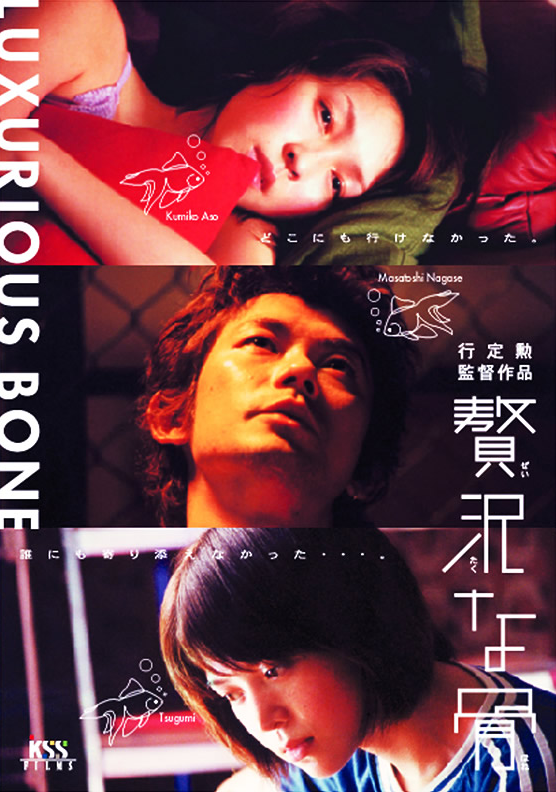
Luxurious Bone poster

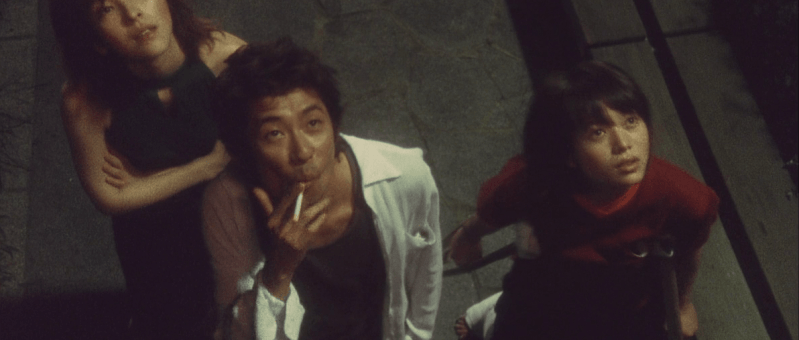
Isao Yukisada made his name with the 2004 hit Crying Out Love, in the Centre of the World, but even before becoming a “junai” pioneer his early films were far from strangers to melancholy, impossible romance. The strangely titled Luxurious Bone (贅沢な骨, Zeitakuna Hone, AKA Torch Song) is a case in point in its early, ambiguous treatment of same sex love and emotional repression. Though in some senses very much of its time, Yukisada’s sad chamber drama is a sensitive exploration of the path towards awakening, if ultimately not to happiness.

The drama begins when Miyako (Kumiko Aso) gets the titular “luxurious bone” lodged in her throat. In this case, it’s an eel bone which is a fish too expensive for either she or her roommate Sakiko (Tsugumi) to eat very often, hence its tinge of luxury even if there’s relatively little difference when it’s tickling your trachea. “Roommate” might not be the best way to describe exactly what Sakiko is to Miyako, though their relationship seems curiously ill-defined. The two women share a bed, and seemingly a life, but perhaps platonically. Sakiko wants to look for a job, but Miyako doesn’t quite want her to because she’s happy to support the pair of them on her wages as a sex worker. Likewise, Sakiko isn’t quite happy with Miyako’s line of work, not because she’s jealous or judgmental, but because she worries the job is unpleasant. Miyako reassures her that it’s fine because she feels nothing at all during sex so mostly it’s just dull.

All that changes however when Miyako meets unusual client Shintani (Masatoshi Nagase) who goes to the trouble of buying her a hamburger bento because he heard that’s the sort of thing you’re supposed to do in these situations. Shintani blows Miyako’s mind which isn’t something she was expecting or quite knows what to do with. On hearing the news Sakiko seems mildly worried, but following a strange series of events Shintani ends up becoming a minor part of their lives as the third wheel in their previously stable though somehow awkward relationship.

Miyako’s intense opening voice over makes reference to a secret she cannot bear to speak that will lie closed within her heart for all eternity. The fish bone becomes a symbol of the thing stuck in her throat, the truth she is too afraid to voice. Choking, Miyako gasps for air like a goldfish floundering in shallow water but cannot find the strength to swallow.

As we will later discover, this dark secret is bound up with her complicated feelings for Sakiko of which she seems to feel afraid and ashamed, wanting to possess her love in its entirety but also unable to access it and hating herself for her continuing need for possession and control. Her unexpected connection with Shintani is, after a manner of speaking, simply a more “acceptable” way of accepting her desire for Sakiko as she later reveals when confessing that she only ever thought of Sakiko when making love with Shintani which is presumably why only he was ever able to give her a satisfying experience.

Unable to cope with the intensity of her feelings, Miyako turns self destructive and attempts to lure Shintani into a sexual relationship with Sakiko who, apparently, is afraid of intimacy altogether having been raised in an abusive, neglectful home in which she was convinced that she was “dirty” and unloveable, an obstacle in the way of her father’s new relationship with a much younger step-mother (Makiko Watanabe).

Something of a cliché in itself, Luxurious Bone first attempts to delegitimise the feelings of the two women for each other by introducing the figure of Shintani to suggest that their problems are largely down to not having met a good man. Miyako sleeps with Shintani to feel closer to Sakiko, while Sakiko begins to move past her emotional trauma only thanks to the gentle machinations of Shintani. Their strange ménage à trois brings them together whilst driving them apart as the two women attempt to touch each other through Shintani while he remains detached and conflicted if perhaps wilfully used. Miyako’s self destructive impulses push her towards burning her world before facing what it is that frightens her. Only a strange encounter with another woman in a club shows her that her fear was not so much love as submission, while Sakiko tries to reconnect with her childhood self to move past her emotional trauma.

Despite its motion towards a positive resolution, Luxurious Bone cannot quite find the courage of its convictions and as quickly delegitimises the love as it tried to legitimise it through leaving Sakiko broadly where she started – lost, confused, and afraid, uncertain if unresolved longing is a natural condition of living. Perhaps of its time and overly simplistic in its treatment of complex issues from traumatic childhoods to shame and repressed sexuality, Luxurious Bone nevertheless has its heart (broadly) in the right place even if it leaves its lovelorn youngsters in the same position as many a Yukisada hero still looking for their place in a cruel and arbitrary world.


Original trailer (no subtitles)

Torch Song by The Humpbacks which features prominently throughout. The song was actually written for the film and is performed by Masatoshi Nagase.

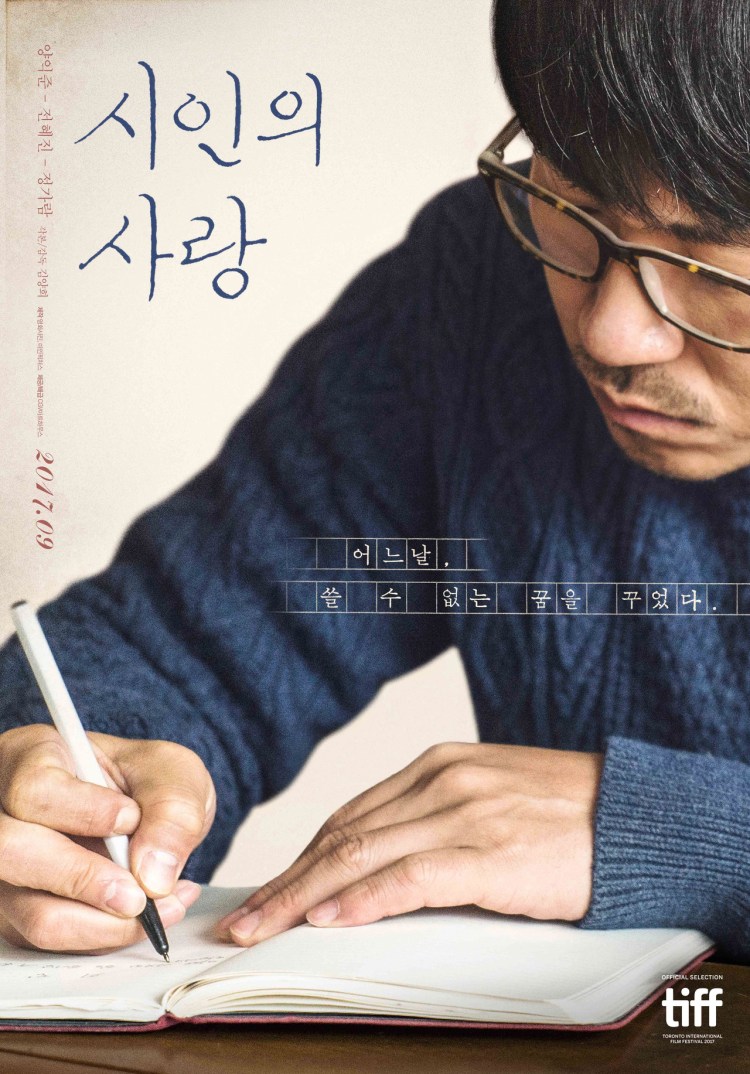
The Poet and the Boy (시인의 사랑, Kim Yang-hee, 2017)

Poet and the Boy posterA poet cries for the sorrow of the world, according to the hero of Kim Yang-hee’s melancholy drama, The Poet and the Boy (시인의 사랑, Sienui Sarang). Unfortunately for him, he lives in his own poet’s world, lonely and disconnected but never knowing the true depth of sadness which would give his verse meaning. Until, that is, he falls in love. Beauty turns out to be a doubled edged sword for a mild mannered yet emotionally brave artist struggling to comprehend his place in the world but discovering that some of it, at least, has already been decided for him.

Hyon Taek-gi (Yang Ik-june) is a 30-something aspiring poet married to a feisty shopkeeper. The couple have been married several years and though they are happy enough together, theirs is a marriage born more of convenience than passion. Having married “late” each has settled in to making the best of things, sure that a greater love will one day blossom between them. Mrs. Hyon (Jeon Hye-jin), feeling an absence in the family home, has been longing for a baby but Taek-gi has never been especially interested in that side of things and isn’t really keen on the idea of becoming a father.

Meanwhile, a brand new donut shop has just opened up in town which is good news for Taek-gi because donuts are one of his favourite things. Unsure whether it’s just his status as a purveyor of sweet goods, Taek-gi develops a fascination with the beautiful boy at the bakery (Jung Ga-ram) which is further inflamed when he accidentally catches sight of him in amorous moment with a female customer. To his mild surprise, Taek-gi finds himself captivated with the male physical form, experiencing feelings and desires he had not even known existed.

As his wife later puts it, a poet’s world is different. Taek-gi stops to appreciate the flowers, watches the children play, and makes a round about detour to a fast food restaurant to observe human life but he doesn’t quite live in the world he inhabits or allow himself to truly experience its beauty. As we first meet him, Taek-gi is writing a poem to open the map of his heart but quickly finds himself lost and wandering, unable to settle on a clear direction and ending up at a disappointingly familiar destination. The poem is interesting but imperfect, somehow hollow and inauthentic.

Taek-gi’s creative block is also an emotional one. What begins with a single moment of captivating beauty expands into something deeper and warmer as the poet gets to know the boy on a more intimate level. Seyun is a troubled young man from an impoverished family caring for his bedridden father while resenting his coldhearted mother. What he sees in Taek-gi is something between friend and father, both wary of and delighting in unsolicited kindness from a virtual stranger. Taek-gi’s wife teases him about his attraction to Seyun, probing him about the nature of their own strange relationship. She wonders if it’s really “love” without intense physical desire – something he has made repeatedly clear that he does not feel for her. Taek-gi insists that it is, citing another romanticised love which remained chaste as further evidence only for his wife to fire back that perhaps all he really wanted was the sadness of unfulfilled longing to complete his poetic world view.

Taek-gi later takes his words back, insisting that what he feels for his wife is not “love” and that their relationship was always doomed to fail. Yet it’s not carnal desire which brings him to this realisation so much a greater motion towards connection. Taek-gi who was always ill-equipped for life and never able to take care of himself, begins to look after the younger man both physically and emotionally asking for nothing in return other than his continued company. Despite his otherworldliness and alienation, there is something uniquely brave in Taek-gi’s willingness to tug on the thread of an unfamiliar feeling, uncertain what it is or might be but determined to find out. Disregarding the conservative values of his society which have led him to embrace conventionality in marrying “late”, supposedly “grateful” that someone allowed him the opportunity to marry at all, Taek-gi moves forward if cautiously, aware that his desires may not be accepted and may present a danger to those around him.

Then again, Taek-gi is a middle-aged man with a series of choices already behind him, many of which entail consequences and responsibilities it would be selfish and irresponsible to break even in the pursuit of individual happiness and fulfilment. Perhaps all he really wants is the grand failed romance that will open the map of his heart through breaking its spine, craving “sadness” to feed his art over “love” to feed his soul. True enough, sorrow does wonders for Taek-gi’s art even if he feels himself trapped by his previous choices and the restrictive social codes of his community but there is also something inescapably poetic in his magnanimity as he prepares to set the thing he loves free in a way he never was and believes he never can be.


The Poet and the Boy was screened as part of the 2018 London Korean Film Festival.

International trailer (English subtitles)

Keiko (Claude Gagnon, 1979)

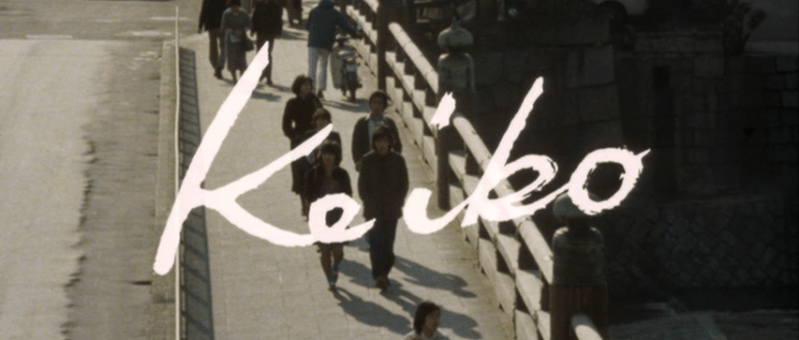
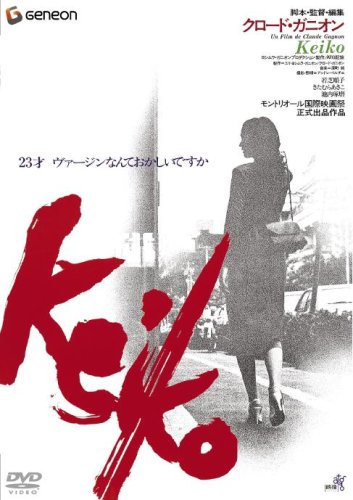
Keiko DVD coverThe Art Theatre Guild of Japan found itself in an awkward position in the late ‘70s. The kind of politically charged art cinema which had been its mainstay throughout the ‘60s was now out of fashion in the post-Asama Sanso world. The studio was then looking for new, young, dynamic voices who could potentially have something equally new and radical to offer to the the mid-’70s Japanese cinema scene which increasingly leaned towards the populist. That is perhaps how they came to work with émigré French Canadian filmmaker Claude Gagnon, distributing his independently produced debut feature Keiko. Gagnon’s film was nothing if not atypical of the time, dealing with the relatively taboo subject of female sexuality and the patriarchal society and doing it with a lens influenced more by European arthouse and New American cinema than by that of Japan or by the avant-garde movement which had forged ATG’s central ethos.

As the title implies, the tale revolves around the titular Keiko (Junko Wakashiba) – a 23-year-old office worker preoccupied with her lack of romantic success. Hoping to find a potential boyfriend, she spends her evenings in cafes, often staying until closing before going home alone. Embarrassed to still be a virgin at 23, she invites her old high school teacher (married with two children) out for a drink and they wind up in a love hotel but if Keiko thought losing her virginity would give her more confidence in dating she couldn’t be more wrong.

Soon enough she ends up in another “relationship” with a guy she meets in cafe but it’s obvious to everyone but Keiko that he is just using her for sex. Masaru (Takuma Ikeuchi), a photographer, constantly talks about himself and his work, refusing to go “out” on dates and preferring to simply arrive at Keiko’s flat and then leave again once he gets what he came for, claiming that his “mother” is waiting up for him at home. Eventually Keiko’s suspicions get the better of her and she finds out he is already married with children. The affair ends, leaving Keiko resentful and broken hearted. She drifts into a relationship with a colleague (Toshio Hashimoto) who is nice enough but Keiko isn’t really interested in him. Then something unexpected happens – a drunken experience with a female colleague leads to the most fulfilling and happiest period of her life but she is also plagued by calls from home about arranged marriages and “settling down”.

Told from Keiko’s perspective, Gagnon’s film paints a bleak picture of female existence in ‘70s Japan. Keiko’s office lady job is only really a stop gap ahead of a marriage and even at 23 she’s beginning to panic about finding a husband before her father finds one for her. She is shy and demure, modest and innocent as her society demands her to be, but she is also lonely. The camera finds her sitting alone at tables meant for four, the bars and cafes often completely empty save for her as they approach closing time. Keiko waits until the last minute, telling the girl behind the counter that she’s nothing much to do at home, but there’s nothing much to do in the bar either and she simply sits there all alone not talking to anyone, waiting for someone to take an interest only they rarely do.

Following the first few unsuccessful encounters with men, Keiko is initially confused by the unexpected interest from female colleague Kazuyo (Akiko Kitamura). Kazuyo, free spirited and independent, is perhaps portrayed more stereotypically with her short hair and tendency to dress in an overtly “masculine” fashion outside of work but few seem to have picked up on these seemingly “obvious” clues and she remains free to live her life in the way in which she chooses. Unlike Masaru who left in the middle of the night, Kazuyo is still around the next morning and not only that, she offers to cook breakfast and even takes a trip to the pharmacy to pick up some aspirin for Keiko’s sore head. Somewhat mystified by the whole affair and Kazuyo’s kindly consideration the morning after, Keiko tells her it might be better to forget about what happened the night before which Kazuyo again accepts without rancour.

Touched by all this maturity, Keiko begins to look at Kazuyo differently, and eventually decides to take a chance on something different. Before long they’ve taken an apartment together a little way out of town and begun building a life for themselves. Kazuyo is thinking about the future – she wants to start her own business and wants Keiko to help her, but the need for additional capital has her staying out evenings working in bars to earn extra money while Keiko is still getting letters from home about marriages.

Told entirely from Keiko’s perspective, Gagnon’s script veers away from its most interesting questions – why someone would willing abandon the greatest happiness they have ever felt and are certain they ever will feel to succumb to societal pressure to conform. Keiko’s oppression is almost taken as read, a constant background presence that never thinks to explain itself. Yet she is a grown woman (as she tries to point out to her father) who could simply have refused to take phone calls or answer letters. She has the power to say no to an arranged marriage, even if she perhaps does not have the power to live openly with Kazuyo as a married couple might. The film offers few explanations why she continues to placate a father she doesn’t like very much who lives a long way away save for leaving it at a need to be accounted “successful” in the eyes of society even if that conventional “success” is destined to make her very unhappy.

Gagnon’s approach is informed by European arthouse and to a lesser extent by contemporary New American cinema in attempting to create a kind of cinematic naturalism that exists in direct contrast to the expressive acting styles often found in more populist entertainment. He demonstrates the inertia of Keiko’s life by capturing her stillness, the scenes remain the same – only the outfits have changed. The camera pulls away from her as if it’s almost painful to do so, emphasising her loneliness and isolation as she remains trapped and alone in a society which abhors individualism but in reality cares little for individuals. The conformist society and its entrenched patriarchal social codes conspire to destroy happiness in order to maintain “stability”, condemning each to a particularly individual kind of misery from which it seems impossible to escape.


Original trailer (no subtitles)

A Crimson Star (真っ赤な星, Aya Igashi, 2018)

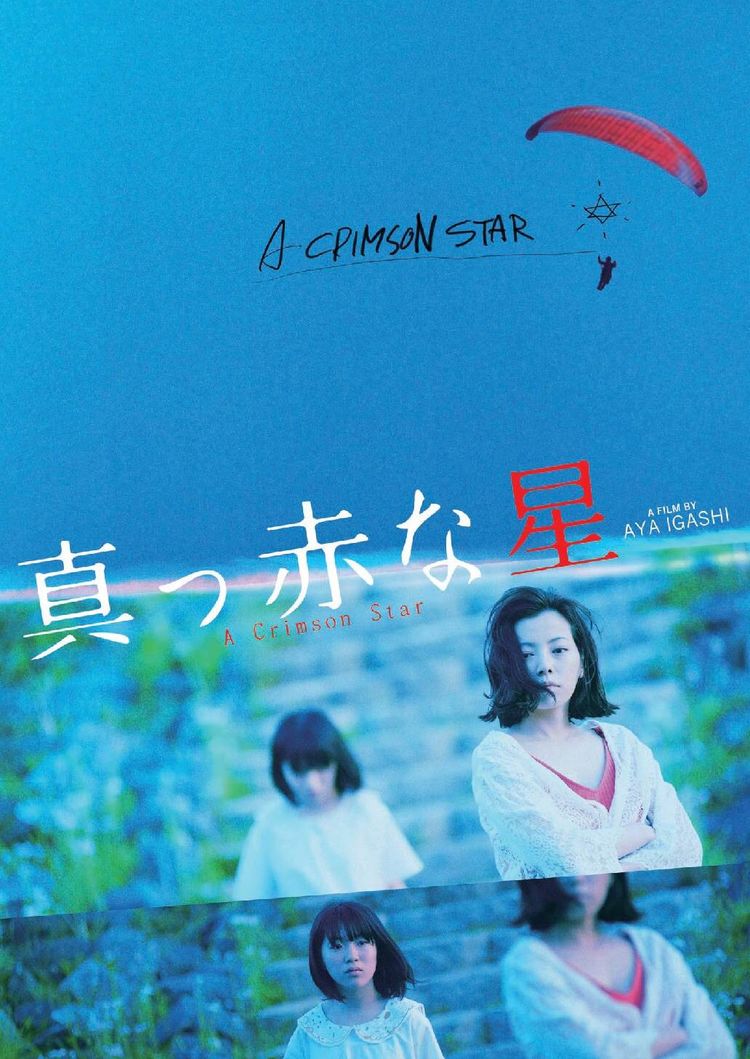
A Crimson Star posterFalling in love is, perhaps, like standing too close to the sun and for the young heroine of Aya Igashi’s debut feature A Crimson Star (真っ赤な星, Makkana Hoshi), it means nothing unless it burns. Set in the otherwise serene environment of a rural Japanese summer, full of blue skies and green fields bursting with life, A Crimson Star is the story of two ostensibly very different women in very different places who nevertheless develop an essential and inescapable bond in their shared sense of loneliness and isolation, but their relationship is also a problematic one in which the familial and the romantic have become inextricably linked.

14-year-old Yo (Miku Komatsu), undergoing a lengthy period of hospitalisation for an undisclosed illness, develops an intense fondness for her kindly nurse, Yayoi (Yuki Sakurai). On her discharge, however, Yo is stunned to learn that Yayoi has abruptly resigned and all but disappeared. Meanwhile, Yo’s family life continues to deteriorate. Her disinterested mother has got a new boyfriend who is often drunk and violent. In order to escape him, Yo takes a trip to the corner shop and makes a surprising discovery in a street of parked cars which turns out to be (as yet unknown to the the naive Yo) the secluded byroad used for secret assignations seeing as this is such a one horse little town that there isn’t even a love hotel. Yayoi has become an embittered sex worker and her lonely degradation breaks Yo’s heart. When her mother’s boyfriend eventually begins molesting her, it’s to Yayoi that Yo turns looking for care and support from a woman who had nursed her but is no longer a nurse.

The “crimson star” of the title most obviously refers to the wings of the paraglider gazed at so often by the earthbound Yo, but it is also echoed in the tiny scars and wounds which define the relationship between the two women. In the first scene of the film, the hospitalised Yo has a prominent bruise on her foot apparently caused by Yayoi nicking a vein when taking a blood sample. Even so, Yo leans in tell her that she is her favourite nurse – words which bring tears to Yayoi’s eyes and perhaps precipitate her decision to leave the hospital. For Yo, who is emotionally neglected by her mother and has never known true care and affection, the bruise becomes an odd kind of proof of love which she has come to associate with pain. Later, Yo spots an odd mark on Yayoi’s neck – she is of course too young to know what it is. Yayoi shows her, literally, by biting her slightly below the shoulder and creating another kind of “crimson star”.

Yo’s early attraction to the 27-year-old Yayoi has a distinctly maternal quality in which she looks for the same kind of compassionate care she experienced in hospital and which her mother refuses to give her. There is also, however, a nascent sexual attraction which provokes intense jealousy as Yo attempts to get closer to Yayoi but finds herself unable to achieve the kind of all encompassing love she is seeking. Given Yo’s extreme youth, the relationship is in many ways extremely inappropriate and infinitely confused, a combination of familial, platonic, and romantic longings which appear to be unbreakable but remain unresolved. Yo, almost becoming the thing she wants to find, begins to take care of the depressed, broken Yayoi – tidying the apartment, folding washing, and repairing external signs of damage, while Yayoi becomes care taker rather than care giver presenting her with an opportunity to reexamine her self-destructive tendencies including a dead end relationship with married paraglider Kengo (Katsuya Maiguma).

Kengo becomes a particular point of contention for Yo, not just for reasons of jealousy but because he causes Yayoi to suffer. Early on she spots him on his bike with his small daughter, every inch the doting dad which is, of course, something she never had. Kengo is also a symbol of familial betrayal as he undermines his seemingly happy family by continuing to string Yayoi along on what is, ironically enough, a no strings basis. Family has betrayed both women who find themselves adrift and alone with no clear anchor except perhaps each other.

Yet what Yo wants is to escape – to soar in the quiet skies high above all, free of earthly constraints like the paraglider she so often sees, but paragliders are crafts built for two and Yo wants to go with Yayoi, strapped together enveloped in a private world into which nothing else may enter. The “crimson star” then becomes the unattainable feeling of closeness and total connection that continues to elude her, furthering her view that love is pain and the pain she feels must be love. Backed by a crimson sky, the future is both hopeful and filled with light, but perhaps also tethered and marked by a melancholy resignation. Beautifully composed, Igarashi’s debut is a raw, often uncomfortable examination of an elemental bond forged between two lonely, damaged women each seeking impossible connection as an escape from a loveless existence.


A Crimson Star made its World Premiere at the 2018 Raindance Film Festival.

Original trailer (English subtitles)

Puppets Under Starry Skies (星空のマリオネット, Hojin Hashiura, 1978)

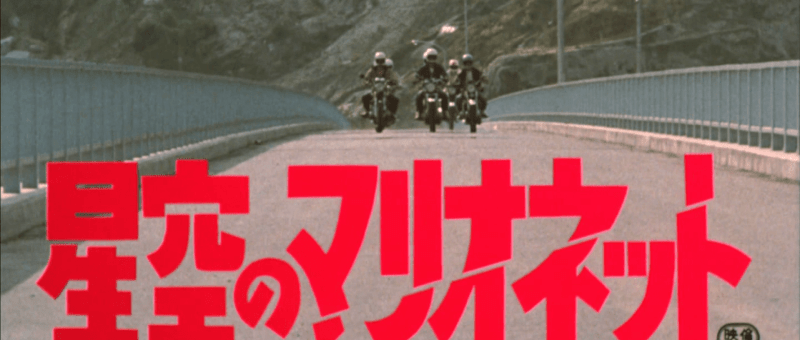
Puppets under starry skies posterThe youth movie had been the populist rebellion against the stately Japanese cinema of the golden age, but many of its representative directors had quickly tired of the restrictive studio system. Some had decamped into the “independent” arena which offered relative artistic freedom if without the resources and financial rewards of the commercial sector. The Art Theatre Guild had provided a valuable outlet for experimental film since it began to shift from distribution of foreign films into production of Japanese language art movies, but paradoxically the early 1970s saw it shift again as the studio’s “arthouse” aims fell by the wayside and more conventional youth films made a gradual return. Puppets Under Starry Skies (星空のマリオネット, Hoshizora no Marionette), the first of three films directed by Hojin Hashiura for ATG (aside from an earlier 16mm independent effort, the only films Hashiura would ever make), is very much a youth movie in the new ATG mould which is to say its tone is one of sadness rather than anger as its protagonists find themselves adrift in the changing 1970s society, unable to find their place in the world their parents have been building for them.

Hideo (Yoichi Miura), leader of small biker gang, is best friends with Hiroshi (Kazuhito Takei) – an effeminate young man from a wealthy family who likes to wear makeup and dress in (slightly) flamboyant outfits. The trouble starts when Hideo picks a fight with a rival gang boss and then charges in for a rematch to avenge his honour only to be set on by thugs, stabbed, and beaten so badly he winds up in hospital for over a week. Humiliated, Hideo loses all his gang member friends with only Hiroshi sticking by him. Later he takes up with a local bar girl, Akemi (Ako), who has a promiscuous past and is already pregnant with another man’s child. Together the three attempt to find a way forward into a more conventional adulthood but struggle to find a place for themselves within a rigidly conformist society which has already rejected them.

Parental disconnection seems to be a recurrent theme in the lives of each of the troubled youngsters. Hideo lost his mother young, not long after they’d moved into the town from the mountains. Never having been able to come to terms with his mother’s death he has a difficult relationship with his father and takes out his frustrations through meaningless violence and male posturing. Akemi too has a difficult family background but this time with a single mother who is a former sex worker turned publican. Working in a local bar (not her mother’s) Akemi is harassed by the customers but is well known for being open to casual sex, suffering a degree of social stigma both because of her liberated attitude and because of her mother’s former profession.

Hiroshi’s problems are perhaps of a different order. From an “elite” family, he feels himself entirely disconnected from normal family life and has been raised in an atmosphere of cold austerity rather than parental love. Hiroshi believes this is partly because he has “bad blood” and is cursed beyond redemption. He is not his father’s biological son but the child of a sperm donor enlisted to ensure an heir for his father’s bloodline. Hiroshi, however, is gay and will not be able fulfil the purpose he was born for, at least not in the way that was expected of him. He is also effeminate, something of which his family do not approve, and feels himself excluded from mainstream society because of his sexual orientation. To combat his feelings of intense alienation, Hiroshi has become a drug user, sniffing glue in order to send himself on psychedelic trips to outer space in which he merges with the deep blue vacuum free of all worldly concerns.

Hideo too gets in on the glue sniffing act but feels himself becoming one with the river of life and death, feeling it flow through him as he flows with it. The river itself, and the idea of passive resignation that comes of simply allowing oneself to float, becomes a grim symbol of the futility that faces Hideo as he struggles to reassemble an identity in a world which consistently denies him one. The future looks bleak for each of our protagonists, the only one with any sense of hope once again investing it in the system which has already betrayed her – the family. Youth looks for new models, new standards by which to live, but does not find them. Puppets of fate, the trio dance under starry skies until the sun comes up and they realise that the day holds nothing for them except the nihilistic desire for its end.


Spring Fever (春風沉醉的夜晚, Lou Ye, 2009)

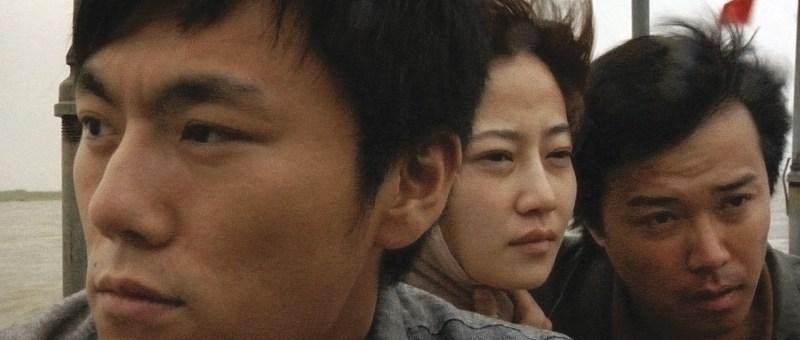
Spring fever posterLou Ye has never especially cared for the views of China’s famously draconian censorship board. 2006’s Summer Palace earned him a five year ban for its scenes of full frontal nudity and references to Tiananmen Square Massacre (or, as later claimed, for “failing to meet appropriate standards for sound and picture quality”). 2009’s Spring Fever (春風沉醉的夜晚, Chūnfēng Chénzuì de Yèwǎn) was therefore shot on the fly in Nanjing in direct contravention of the director’s loss of official status – something he later got around by listing the film as a Hong Kong/France co-production so it could be entered in the Cannes Film Festival in a move which can’t have done him any favours with SARFT. Once you’ve been banned, you might as well go all in and there can be few better ways of reminding China’s “conservative” censors that you didn’t ask for their opinion than opening with a lengthy and extremely matter of fact love scene between two men.

Lou opens with floating spring flowers giving way to two men in a car whose hands delicately brush as they approach their destination – a remote cottage in which they intend to have a secret tryst. The tryst, however, will not be so secret as they assume. Private investigator Luo Haitao (Chen Sicheng) has been tailing the men on the behest of a suspicious wife, Lin Xue (Jiang Jiaqi), who suspects her husband, Wang Ping (Wu Wei), is hiding a secret but never guessed it was another man, Jiang Cheng (Qin Hao). Luo dutifully reports his findings to Lin, but urges her not to look too closely at the photographs. Finally he points out her husband’s lover at his workplace, a travel agents with a conveniently large glass frontage. Wang Ping, in a motif that will be repeated, wants to introduce his wife to his lover, perhaps hoping to ease the blow or smooth a path towards maintaining both relationships simultaneously. Seeing as Lin Xue has already seen Jiang and knows perfectly well who he is, the plan goes wrong and provokes a confrontation which eventually sends Lin Xue storming into Jiang’s workplace to out him in front of his colleagues, at which point Jiang decides he’s had enough and breaks up with Wang. Wang, however, can’t seem to get over him.

Meanwhile, Luo has continued following Jiang even though the investigation is over. Through extended trips to drag bars and underground music venues, Luo eventually becomes involved with “the other man” but he too has a girlfriend, Li Jing (Tan Zhuo), who works in a factory and seems to have something going on with her shady, Cantonese-speaking boss.

Abandoning the overt political contexts of his previous films, Lou circles around two concentric love triangles each of which has Jiang Cheng in the centre. Though it’s unclear whether Jiang Cheng is living as an “openly” gay man – the reaction at his workplace to Lin Xue’s outburst would suggest not though it doesn’t seem to cause him any problems with his employment, he is the only one of the three men to exclusively embrace his homosexuality. He does not have a girlfriend, is well known as an artist at a local drag bar, and makes no real effort to hide who he is even if not making a particular point of it. Both Wang and Luo seem to struggle with the nature of their feelings for and relationship with Jiang, neither one quite able to give up on the idea of “conventional” life. Wang, apparently infatuated with Jiang and unable to live without him, still seems to want to remain within his marriage despite his wife’s increasingly possessive behaviour, dreaming of an arrangement where he could perhaps have the best of both worlds. Luo is less conflicted. He pursues Jiang while his relationship with Li Jing flounders, but feels himself responsible for her wellbeing and unable to abandon her entirely in the knowledge that she is in a fragile state.

Quickly fed up with all these girlfriend problems, Jiang never asks either man to make a choice even if he eventually feels there is no way either relationship can continue. As Jiang’s story, the women perhaps get short shrift with Lin Xue’s villainy eventually turning violent as she becomes the embodiment of a repressive society intolerant of homosexual relationships, berating Jiang for corrupting her husband, humiliating her, and ruining her marriage all in front of his gawping colleagues in an act intended to destroy his life completely. Li Jing, meanwhile, has a much more sympathetic reaction to discovering the true nature of the relationship between the two men, allowing the three to continue as a trio until she eventually decides she is probably a third wheel and needs to get on with her own life. Nevertheless, the three options available to our heroes appear to be suicide, violence, and melancholy. Jiang, remembering the painful poetry of Yu Dafu read to him by the now long absent Wang, laments that he has perhaps “missed the love” that was his “destiny” like a flower blooming in the wrong season.

Despite being among Lou’s most straightforward narratives, Spring Fever lacks the cohesion of the fractured Purple Butterfly and allows its minor political contexts to melt into a background of generalised melancholia as if in echo of a generation’s apathy and confusion, caught on the cusp of change but unable to decide on a direction. Jiang’s sadness endures as a romanticised notion of impossible loves, but floats away on a spring breeze, devoid of hope or purpose.


Available to stream on Mubi UK until 24th September 2018.

US trailer (English subtitles)

Bungee Jumping of Their Own (번지점프를 하다, Kim Dae-seung, 2001)

Bungee Jumping on theie own posterLove is a continuous stream, according to the debut film of Kim Dae-seung, Bungee Jumping of Their Own (번지점프를 하다, Bungee Jump Hada). The title may sound whimsical, but it’s less the physical act of fall and rebound we’re talking about here than a spiritual bounce, souls which spring from one body to another and eventually find their way home. Kim presents eternity as one great confluence and love as an enduring bond which survives not only death and time but transcends existence itself. Love is a spiritual cause, but, as the rather muddy philosophy goes on to suggest, perhaps not so free of social mores as it would like to believe itself to be.

In 1983 university student In-woo (Lee Byung-hun) meets the love of his life, Tae-hee (Lee Eun-ju), as she steals a place under his umbrella during a violent rainstorm. Shy and introverted, In-woo waits at the bus stop where Tae-hee abruptly left him hoping to see her again, finally encountering her by chance on his university campus. Despite his diffidence, the pair eventually become a couple and are very happy together but In-woo will shortly have to leave for his military service. He asks Tae-hee to meet him at the station, waiting once again only to be left alone on the platform as the trains fly by.

Flashforward 17 years to the start of a new millennium and In-woo is now a slick, confident man entering middle-age, married to someone else and with a small daughter of his own. He teaches high school and is the kind of inspirational teacher many dream of being, well-respected by his students for his patience and faith as he remains committed to stand up for them no matter what. In-woo might have thought he’d put the memory of Tae-hee to the back of his mind to go on living, but a strange young man, Hyun-bin (Yeo Hyeon-soo), begins to reawaken in him the buried memory of his first love. Seeing echoes of Tae-hee in the young male student, In-woo finds himself facing several different kinds of social and internal pressures to which he had previously given little thought.

Arriving in 2001, Bungee Jumping of Their Own is (sadly) one of the first “mainstream” films to touch on the theme of homosexuality, only the film itself is quite determined to negate any kind of homosexual reading into its central love affair – it is, after all, not “Hyun-bin” that In-woo is falling in love with, but the reincarnated soul of Tae-hee, which is to say a “female” soul and not a male one. Though Kim’s metaphor of existence as a great river through which love endures across time and societies ought to make gender and the physical body an irrelevance, same-sex love is relegated to an inappropriate absurdity. In a playful conversation about reincarnation in which In-woo and Tae-hee pledge their love to one another, In-woo jokingly asks what would happen if he were too were reincarnated as a girl, to which Tae-hee replies that they’d just have to wait for the next reincarnation. Despite the endurance of their love, it is apparently not viable outside of a traditional male/female pairing and any other iteration is tragedy to which the only solution is suicide and the hope for a quick reincarnation to find each other again in more socially appropriate forms.

Nevertheless, Kim does also do his best to criticise a still conservative society’s prejudice against homosexuality though this too has its problematic elements in unwittingly conflating two issues which ideally speaking are better not conflated. In-woo is a teacher falling in love with a boy who is not only a minor but also his student – a situation clearly inappropriate in any and all circumstances. However, the while the crusty old dinosaurs in the staffroom lament the new liberal society and fear being branded sex pests for leering at the girls, claiming it’s their own fault for “looking like that”, In-woo comes in for an especial level of vitriol targeted not at a pervy teacher but simply at a “gay” man while Hyun-bin is gradually ostracised by his friends simply for being the object of his affection and therefore tarred with the gay brush.

Meanwhile, the conflicted In-woo goes to see a doctor to correct his “sickness” only to be told that his responses indicate a “normal” heterosexual man with that caveat that he should also regard his interest in men as a “normal” part of life. Desperate to not to acknowledge his same-sex desire, In-woo becomes violent towards his wife in an effort to reinforce his masculinity, unwilling to discuss with her the real reasons their marriage has always been hollow – not his possible bisexuality, but that he has only ever loved Tae-hee and will only ever love Tae-hee in whichever form she appears.

In-woo makes a point of teaching his students that “different” does not mean “wrong” but it’s apparently not a lesson he’s able to internalise. Kim plays with dualities, idealises imperfect symmetries, and shows us that things which might seem “different” from one perspective are in essence the same, yet he walks back his message of acceptance to emphasise the importance of conforming to social norms rather than allowing the love between Tae-hee and In-woo to exist in the physical world in any other iteration than male/female. Nevertheless, Kim’s true intention of painting love as a continuous stream made possible by cosmic serendipity is a romantic notion difficult to resist and even if his reasoning proves occasionally hollow he has perhaps opened a door towards a greater understanding.


Bungee Jumping on Their Own was screened as part of the Rebels With a Cause series at the Korean Cultural Centre London.

Original trailer (no subtitles)

After My Death (죄 많은 소녀, Kim Ui-seok, 2017)

After my death posterKorea has one of the highest suicide rates in the world as the pressure cooker society conspires to railroad those who find themselves in someway excluded from its rigourously conformist demands toward inescapable despair. With the phenomenon so common, has it become true that society itself has become inured to its effects, seeking not to ease suffering but to control damage? For the clutch of schoolgirls at the centre of Kim Ui-seok’s After My Death (죄 많은 소녀, Choe Manheun Sonyeo), suicide has taken on its own allure as an escape from the demands they feel themselves unable to meet but there are few looking to guide them away from the abyss rather than to negate their own responsibility for failing to do so.

A high school student, Kyung-min, is missing. Her backpack and shoes have been found near a local bridge and it is feared that she may have committed suicide though there is no note or additional evidence to suggest that she has taken her own life nor have they found a body. With speculation rife, all eyes are on another student, Young-hee (Jeon Yeo-Bin), apparently one of the last people to have seen Kyung-min alive. Though Young-hee and Kyung-min had been good friends in the past, they were no longer close and had apparently run into each other by chance along with another friend of Young-hee’s, Han-sol. Han-sol’s testimony differs from Young-hee’s in that she says Kyung-min seemed “gloomy” and that the evening had taken an intense turn after she suddenly declared her love for Young-hee only for Young-hee to tell her to prove her devotion by dying.

Things get worse for Young-hee when the police track Kyung-min’s movements via CCTV and find footage from a nearby tunnel which appears to show a gentle kiss between the two girls. Hounded, Young-hee finds herself a target of persistent harassment by her school mates who insist that she is in someway cursed and “infects” people with “bad thoughts” while Kyung-min’s mother (Seo Young-hwa) has also started semi-stalking her hoping to find out “the truth” about what happened to Kyung-min.

The other girls, testifying to Kyung-min’s character, reinforce the view that she was “gloomy”, a loner who didn’t fit in. She didn’t like K-pop, didn’t socialise much, and was into depressing things. When suspicions rise regarding her possible suicide, the school is quick to leap to conclusions – that like many in South Korea she had become over anxious about college applications, but as her grades were good and Kyung-min was a diligent student this explanation seems unlikely which works out well for the school. Kyung-min’s teacher quickly goes into damage limitation mode, confirming that she had been withdrawn, struggled to communicate with her classmates, and was probably very lonely though he lays most of the blame on melancholy ‘90s shoegaze which he assumes must have somehow tipped her over the edge. What all of this means is that it’s not his fault, and he feels he has justification for “failing” in his duties of pastoral care towards a student whom by his own admission he suspected of being in distress.

During Young-hee’s questioning, she repeatedly tells the police officer in charge that she too is suicidal and that she told Kyung-min about her own plan to jump off a bridge because she thought it might help. Young-hee is quite clearly depressed even before all of these very difficult events but finds no one willing to listen to her distress, only making herself a magnet for further hostility from just about everyone with even her teacher berating her for stealing Kyung-min’s thunder in insisting that she stole her idea of jumping off the bridge rather than trying to commit suicide through an overdose of sleeping pills which, Young-hee claims, was her intention before she discouraged her lest she end up still alive but brain damaged.

The lingering doubt is to which “me” is the owner of “death” in the title, or to whom the Korean title of “unrighteous girl” might apply. The motives for Kyung-min’s (presumed) death may be beside the point as a policeman investigating the case suggests – perhaps she didn’t want “understanding” so much as oblivion. What we’re left with is a rather poignant love triangle and the suggestion that Young-hee’s intense depression is a result of repressed same sex attraction which opens another series of questions about which acts are “unrighteous” – suicide or love, with the unfortunate implication that perhaps one cannot but lead to the other. In any case, the problem is that all these kids want to die and the adults no longer want to stop them, only to avoid any potential responsibility for what the children in their care may or may not try to do. Melancholy and drenched in despair, After My Death has nothing but sympathy for its lonely teens but finds no possible escape from the crushing vice of a blame fuelled conformist society.


After My Death was screened as part of the New York Asian Film Festival 2018.

Original trailer (English subtitles)
Interview with director Kim Ui-seok from the 2017 Busan International Film Festival (English subtitles)