Salute! Sun Yat-Sen (UK Anime Network Review)

articlesubpic1597Reviewed the latest film from Blue Gate Crossing director Yee Chih-Yen Salute! Sun Yat-Sen for UK Anime Network. Also interviewed the director when he was here for the film’s screening as the closing night gala of the 2015 Chinese Visual Festival (under the old title of Meeting Dr Sun). This will also be getting a DVD/VOD release from Facet Film Distribution on 27th July if you didn’t manage to make it to the festival. Good movie, kind of cute but with bite too.


Salute! Sun Yat-Sen is the long awaited new film from Taiwanese director Yee Chih-Yen which arrives a massive 13 years after the award winning Blue Gate Crossing. Like Blue Gate Crossing, Salute! Sun Yat-Sen centres around the everyday life of teenagers with a subtle level of social commentary though this time it swaps sexuality for social inequality and complicated male friendships.

Lefty is a typical high school boy, at once giddy and lackadaisical. His major problem in life is that he’s behind on his school fees and despite his attempts to dodge the issue, it’s become an embarrassment for him around the school. Lefty lives with his grandmother who’s on a low income and he simply does not have the money to pay. That’s when he catches sight of an abandoned metal statue in a school storeroom and hatches on a plan to steal it and sell it for scrap. However, just when it looks like the plan is complete, Lefty and his friends discover another group of boys has hatched on the same idea! It’s then up to Lefty & co to figure out a way of getting to the statue before the other gang.

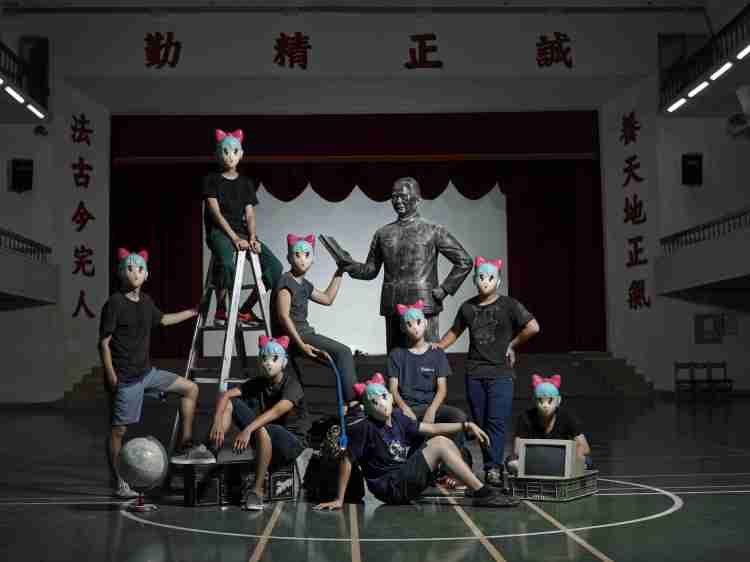
Salute! Sun Yat-Sen mixes comedy caper tropes with high school drama as the boys try to beat each other to this overly symbolic statue that they intend to sell for scrap. The plan is, of course, a little bit ridiculous – first of all the business of sneaking an extremely heavy and cumbersome metal statue out of the school with no one noticing and then simply taking it to a scrap metal merchant and selling it, all without anyone asking how exactly they came by this distinctive statue, is quite a childishly naive plan but one which makes for quite a lot of comedy. One of the best moments being the boys trying to buy masks to hide their faces from the security cameras and having to go for the cheapest one which happens to be a horrible anime style face which is so cheaply priced because it’s made from an awful plastic which gives you a rash and makes your face itch if you wear it too long.

Sun Yat-Sen is obviously a hugely important, inspirational and well known historical figure particularly in Taiwan but also across mainland China. However, it has to be said that he is not such a well known figure in the UK and, especially as his name is not even mentioned until a news report close to the end, UK viewers may find that the symbolism his name carries is largely lost on them as is the film’s subtle social commentary. Briefly put, Sun Yat-Sen was the “father of the Chinese Republic” who sought to steer China towards a democratic and more egalitarian society after the collapse of the Qing dynasty and the Chinese revolution in 1911. Sadly, his utopian vision for the new China was not to be but his idealism and humanitarian thinking are still widely praised in Chinese culture. He also still appears on Taiwanese bank notes and so may be primarily linked with money in the minds of these young boys, but there is a central irony that it’s a statue of the left leaning Sun Yat-Sen that these money strapped young men have chosen to steal and melt down to get the money they so desperately need to get by.

However, even without grasping all of the complex political allusions to Taiwanese cultural issues both historical and contemporary, Salute! Sun Yat-Sen still succeeds as a warm and amusing coming of age tale in which a group of teenage boys on the cusp of adulthood come to realise a few things about themselves and the culture they live in. Though the central two boys are in someways very different, in other ways they have a lot in common and it’s a fun ride seeing how their conflicting personalities rub up against each other until a tentative friendship eventually develops. The second boy (who repeatedly avoids telling Lefty his name throughout the film) is, in many ways, in a far worse position than Lefty which has made him bitter and devoid of hope for the future but thanks to Lefty’s optimism perhaps begins to think it’s not all as gloomy as he once thought.

Like Blue Gate Crossing, Salute! Sun Yat-Sen is a quiet sort of film where plot takes second place to character (although all the heist shenanigans are undeniably entertaining – especially one horror movie inspired episode). The film feels authentically youthful, manages to imbue its young cast with an unusual degree of realism and it’s very hard not to be charmed by Lefty’s giant smile and happy go lucky attitude. Simply put, Salute! Sun Yat-Sen is unlikely to spark a revolution but its quietly encouraging messages are certainly a good start.

Shanghai 13 (上海滩十三太保, Shàng Hǎi Tān Shí Sān Tài Bǎo, 1984)

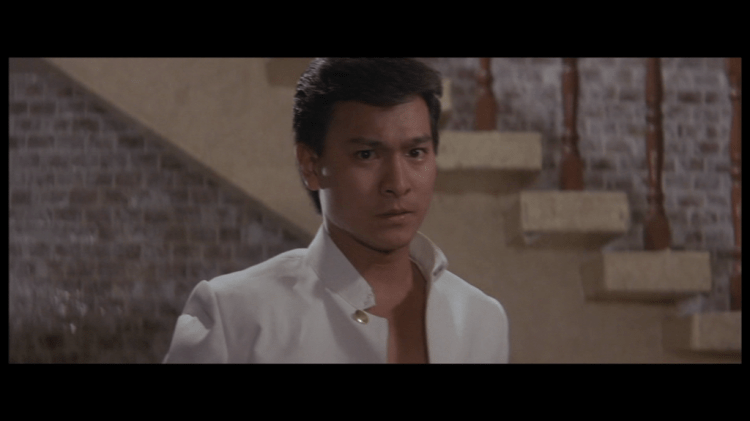
vlcsnap-2015-02-04-17h43m36s189Look at baby Andy Lau!!!

Review of Chang Cheh’s 1984 kung fu extravaganza Shanghai 13 up on UK Anime Network. Out now on UK DVD courtesy of Terracotta Distribution and their new Classic Kung Fu collection!


Shanghai 13 is the second in Terracotta Distribution’s new strand featuring Kung-fu classics. Directed by one of the masters of the genre, Chang Cheh himself who directed such well loved pictures as One Armed Swordsman and The Five Deadly Venoms, Shanghai 13 certainly falls into this category though its charms may be enhanced through the glow of nostalgia. Thin on plot but high on action, Shanghai 13 is not a film to give your brain much of a work out but it will get those fists flying!

Set during the Sino-Japanese war, a government official – mister Ko, has discovered he existence of a secret plot to collaborate with the Japanese. With the help of the famous safecracker Mr Blackhat, Ko obtains the incriminating documents and becomes a prime target for those behind the conspiracy. Mr Ko needs to get to Hong Kong where he can expose the conspiracy to sympathetic forces and enlists the aid of the famous “Shanghai 13” group of outlaws and heroes for protection. However, not all of the 13, it seems, are on his side!

Let’s be honest, not that many people really care about the plot of an action movie which is just as well because the plot of Shanghai 13 is about as thin as they come. Structurally, it’s akin to a video game where Mr Ko and his current protector must face a series of bosses with increasingly impressive fighting prowess in order to “level up” until they finally get Mr Ko to safety. The whistleblowers are the good guys and the people who are trying to stop them are the bad guys. It’s fairly black and white in that everyone on the “right” side is fighting for China and everyone else is either a traitor, Japanese sympathiser or just a soulless mercenary willing to sell out their country for a few coins. If you were looking for the kind of action movie with a nuanced plot, a bit of romance or emotional connection you’d best move along, there’s nothing to see here.

However, if killer action scenes are your bag you’ve come to the right place. Chang Cheh is not a legend for no reason even if Shanghai 13 is not his strongest effort. The film is sort of bookmarked by each of the titular 13 heroes who each have their own outlaw titles and particular fighting style. As usual, Chang has amassed some of his regulars which include some of the most famous names in kung-fu history such as Jimmy Wang Yu, Chiang Sheng and Lu Feng but he’s also made room for a few newcomers like an extremely young Andy Lau! The action scenes maybe fairly episodic but each are well designed and varied thanks to being entered around each of the fighter’s particular skills.  Again, they may not be reinventing anything, but each action sequence is impressively choreographed and exciting in its own right.

Shanghai 13 might not be the best example of its genre but it is certainly a typical one. Very much of its time, its appeal maybe be greater to those who view it through a heavy film of nostalgia but that’s not to say it isn’t often hugely entertaining to first time viewers too. The presentation is fairly pleasing and the disc includes both the original Cantonese language track plus an English dub for those who prefer it. The English subtitles are sometimes a little strange and riddled with obvious grammatical errors but not so much as to make them unintelligible though they may detract from some viewers enjoyment of the film. Shanghai 13 is undoubtedly a lesser offering from the great Chang Cheh, but fans of classic kung-fu are sure to plenty to admire nonetheless.


Greatful Dead (グレイトフルデッド, Eiji Uchida, 2013)

OEO9ONpIf there’s one thing Third Window Films have proved themselves adept at, it’s finding those smaller, off kilter and cultish films that often fall through the cracks. Greatful Dead, the deliberate misspelling the title of which is only the first sign of its oddness, is the latest find in what might be thought of as “weird cinema”. Evoking comparisons with Sion Sono’s Love Exposure thanks to its christianising themes, wry tone and sheer craziness, Greatful Dead is not all together as successful but is likely to find its own fans through its undeniably cultish appeal.

Nami, like many movie heroines, starts by recounting her childhood as a lonely, neglected child. The younger of two sisters, she desperately tries to get the attention of her mother who is only interested in saving disadvantaged children in other countries whilst ignoring the needs of her own two daughters, or her father who is so entirely wrapped up in their mother that he’s barely noticed the two girls either. Eventually after her mother leaves and her father slowly disintegrates, Nami becomes increasingly isolated. After inheriting a sizeable fortune, grown-up Nami wastes her time in idle pursuits before hitting on her favourite hobby – an amateur anthropological study of the “Solitarian” or those who have driven themselves completely mad through loneliness. Her favourite kind of Solitarian is randy old men whom she likes to watch as they spiral deeper into depravity before eventually reaching their end game. Old Mr. Shiomi, who was once something of a big shot but is now an embittered old man, is her perfect specimen but after he receives a visit from a pretty Korean Christian missionary and becomes “reborn” her observational project is ruined! Mr Shiomi’s been stolen by God, what lengths will Nami go to to get him back?

Of course, the irony is Nami is the biggest Solitarian of them all and the one she’ll never be able to identify. In the accompanying DVD interviews, the director states his intention to highlight the increasing numbers of lonely, older people in Japan thanks to the declining birth rate and fracturing of traditional community bonds but in actual fact many of the Solitarians Nami identifies are younger people and some of them even appear to have quite serious mental issues which require more serious intervention. Taking frequent field trips and noting down rare specimens in a little notebook like some deranged “twitcher”, Nami joyfully enjoys the darker side of her hobby as her favourite part seems to be watching lonely people die at the zenith of their craziness. Though in fact both she and Mr. Shiomi have both in some senses chosen their lonely lives as both have rejected the interest of family members – Nami the insistences of her sister that the normal is best and to be strived for and Mr Shiomi those of his son (who may or may not be mainly interested in his money).

There is then, obviously, a veneer of social commentary, though it feels fairly thin at best. The main appeal is in the degree of tonal shifts that occur throughout the film. Starting out in a similar way to many a quirky comedy as young Nami goes to extreme lengths just to get some kind of attention from her indifferent parents, to her carefree adult life the film plunges off a cliff face about two thirds of the way through thanks to Mr. Shiomi’s “betrayal”. Where another film would end with Nami meeting another lonely person and becoming slightly less unhinged, Greatful Dead veers into some seriously dark alleyways filled with blood, murder and pensioner rape among other perversions. The wildest thing is the resurgence of Mr. Shiomi as he decides he’s mad as hell and isn’t going to take this anymore! Fighting back in an equally strange way (why does no one ever just call the police? No, sharpening a mop into a spear seems like a more rational solution), the furious battle between subject and observer is quite literally in the lap of the gods.

Greatful Dead is an undeniably enjoyable, wild ride that escalates in a gently expert manner from its black comedy beginnings to exploitation ending but never quite coalesces into something more. Its views on the place of religion in this lonely world seem a little ambiguous – would Mr. Shiomi have opened his door to the male missionary quite as readily as he opened it to a pretty Korean girl and how long would his quite radical conversion really have lasted? Is the church actually helping some of these elderly people who might just want company or exploiting them? The film doesn’t seem sure, not that it’s that much of a problem. In the end, Grateful Dead is a wild ride through crazy town and destined to become another cult classic entry in to the world of wacky Japanese horror.


Review of Greatful Dead up at UK Anime Network – released courtesy of Third Window Films this coming Monday 26th January 2015.